Jupiter’s Lightning May Have the Force of Nuclear Weapons

How powerful is Jupiter’s lightning? Thick clouds cover the view, notes Science magazine. But using an instrument on NASA’s Juno spacecraft (orbiting Jupiter for the past decade), researchers determined Jupiter’s lightning bolts are 100 to 10,000 times more energetic than earth’s:

A single bolt of lightning on Earth releases about 1 billion joules of energy. That means the most extreme bolts of jovian lightning carry 10 trillion joules of energy, equivalent to 2400 tons of TNT, or one-sixth the power of the atomic bomb dropped on Hiroshima, Japan. Based on the rates of flashes seen by Juno, storms on this tempestuous world can unleash the force of multiple nuclear weapons every minute…

The four storms Juno studied were monstrous, says Michael Wong, a planetary scientist at the University of California, Berkeley and one of the study’s authors. There were three flashes per second on average, often emerging from the hearts of storms that are 3000 kilometers across, longer than the distance from New York City to Denver.
The researchers used the Hubble Space Telescope (and photographs from Juno’s camera) to track Jupiter’s storms with such precision that their radiometer could then pick out individual lightning flashes, according to the article.

“It’s just a massive ball of gas. It makes sense that there’s very energetic lightning happening,” says Daniel Mitchard, a lightning physicist at Cardiff University who wasn’t involved with the new study. But confirming such suspicions “is exciting,” he says, because lightning plays an important role in forging complex chemistry — including the sort that primordial life is built on.

Thanks to Slashdot reader sciencehabit for sharing the article.


Read more of this story at Slashdot.

Pints meet prop bets: Polymarket’s “Situation Room” pop-up bar in DC

Polymarket’s temporary makeover of a K Street bar as “The Situation Room” yielded a few notable differences from other Washington watering holes: more laptops open, more overheard conversations about cryptocurrency, and more screens—most of which were not showing sports.

The New York-based prediction market announced in a March 18 thread on X that it was opening what it called “the world’s first bar dedicated to monitoring the situation,” touting the availability of “live X feeds, flight radar, Bloomberg terminals, and Polymarket screens.” The bar would only be there for a three-day run.

The reality—as reported by journalists who showed up for a press-preview event Friday night—fell vastly short of that, with power and Wi-Fi problems that left all the displays dark. Polymarket fixed the screens the next day, however, and on my own visit on Sunday afternoon, dozens of displays offered a choice of CNN, CBS, the local Fox station, FS1, and various pages on Polymarket’s site. No normal bar would have CNBC or C-SPAN on, but those networks were a logical fit for this one.

Read full article

Comments

What Made Bell Labs So Successful?

Bell Labs “created many of the foundational innovations of the modern age,” writes Jon Gertner, author of The Idea Factory: Bell Labs and the Great Age of American Innovation — from transistors and telecommunications satellites to Unix and the C programming language.

But what was the secret to its success? he asks in a new article for the Wall Street Journal. Start with its lucky arrival in a “problem-rich” environment, suggests Arno Penzia, winner of one of Bell Labs’ 11 Nobel Prizes:

It was Bell Labs’ responsibility, in other words, to create technologies for designing, expanding and improving an unruly communications network of cables and microwave links and glass fibers. The Labs also had to figure out ways to create underwater conduits, as well as switching centers that could manage the growing number of customers and escalating amounts of data…. Money mattered, too. Being connected to AT&T, the largest company in the world, was an advantage. The Labs’ budget was enormous, and accounting conventions allowed its parent company to make huge and continuing investments in R & D. The generous funding, moreover, allowed scientists and engineers to buy and build expensive equipment — for instance, anechoic chambers to create the world’s quietest rooms…

The most fortunate part of Bell Labs’ situation, however, was that in being attached to a monopoly it could partake in long-term thinking… Without competition nipping at its heels, Bell Labs engineers had the luxury of working out difficult ideas over decades. The first conceptualization of a cellular phone network, for instance, came out of the Labs in the late 1940s; it wasn’t until the late 1970s that technicians began testing one in Chicago to gauge its potential. The challenge of deploying these technologies was immense. (The regulatory hurdles were formidable, too….)

The article also credits the visionary management of Mervin Kelly — who fortunately also “had access to funding in a decade when most executives and universities didn’t” to hire the brightest people. (By the early 1980s Bell Labs employed about 25,000 researchers, technicians and support staff, with an annual budget of $2 billion — roughly $7 billion in today’s dollars.) “The Labs’ involvement in World War II suggested to Kelly that an exciting postwar era of electronics was approaching, but that the technical problems would be so complex that they required a mix of expertise — not just physicists, but material scientists, chemists, electrical engineers, circuitry experts and the like.”

At Bell Labs, Kelly would sometimes handpick teams and create such a mix, as was the case for the transistor invention in the late 1940s. He came to see innovation arising not from like-minded or similarly trained people conversing with each other, but from a friction of ideas and approaches. It meant hiring researchers who had different personalities and favored a range of experimental angles. It also meant personally designing a campus in Murray Hill where departments were spread apart, so that scientists and engineers would be forced to walk, mingle and engage in serendipitous conversations and debate ideas. Meanwhile, under Kelly, the Labs focused on hiring people who were deeply curious, not just smart. Kelly saw it as his professional duty to do far more than what was expected, with his laboratory and vast resources, to create new technologies…

The breakup of AT&T’s monopoly, which led to a steady shrinking of Bell Labs’ staff, budget and remit, shows us that no matter how forward looking your employees and managers may be, they will not necessarily see the future coming. It likewise suggests that technological progress is too unpredictable for one organization, no matter how powerful or smart, to control. Famously, Bell Labs managers didn’t see value in the Arpanet, which eventually led to today’s internet.

And yet, for at least five decades, Bell Labs created a blueprint for the global development of communications and electronics. In understanding why it did so, I tend to think its ultimate secret may be hiding in plain sight. The secret has to do with Bell Labs’ structure — not only being connected to a fabulously profitable monopoly, but being connected to a company that could move theoretical and applied research into a huge manufacturing division that made telecom equipment (at Western Electric) and ultimately into a dynamic operating system (the AT&T network)… Scientists and engineers at the Labs understood their ideas would be implemented, if they passed muster, into the huge system its parent company was running.

Bell Labs racked up about 30,000 patents, according to the article, and celebrated its 100th anniversary last April.

It is now part of Finland-based Nokia.


Read more of this story at Slashdot.

Polygraphs have major flaws. Are there better options?

When George W. Maschke applied to work for the FBI in 1994, he had already held a security clearance for over 11 years. The government had deemed him trustworthy through his career in the Army. But soon, a machine and a man would not come to the same conclusion.

His application to be a special agent had passed initial muster. And so, in the spring of 1995, according to his account, he found himself sitting across from an FBI polygraph examiner, answering questions about his life and loyalties.

He told the truth, he said in an interview with Undark. But in a blog post on his website, he recalled the examiner told him that the polygraph machine—which measured some of Maschke’s physiological responses—indicated that he was being deceptive about keeping classified information secret, and about his contacts with foreign intelligence agencies.

Read full article

Comments

Disney Ends $1B OpenAI Investment After Sora’s Surprise Closure. What’s Next?

Just six days ago — and 30 minutes after a Disney-OpenAI meeting about a project with Sora — Disney’s team was “blindsided” with the news Sora was being discontinued, a person familiar with the matter told Reuters, describing OpenAI’s move as “a big rug-pull.”
Even some Sora employees were surprised by the cancellation. It was just 14 weeks ago Disney announced a $1 billion investment in OpenAI’s AI-powered video generation tool — plus a three-year licensing deal. But that deal “never closed,” Reuters adds, citing two other people familiar with the matter, “and no money changed hands.” (Although the two sides are still “discussing if there is another way they can partner or invest with one another, one of the people familiar with the matter said.”)

But Variety wonders if the end of the Sora deal is “a blessing in disguise” for Disney:

Before Disney’s officially sanctioned AI-generated versions of Mickey Mouse, Darth Vader, Baby Yoda, Deadpool and more debuted in OpenAI’s Sora, the AI company abruptly pulled the plug on the video app…

[M]any aficionados of Disney’s franchises were not, in fact, excited about what Sora’s video generator might do to the likes of the Avengers superheroes or the characters from Frozen or Moana. And despite [departed Disney CEO Bob] Iger’s bullishness on the Sora deal, other Disney execs were said to be concerned that going into business with OpenAI would expose the Magic Kingdom’s crown jewels to the risk of being turned into so much AI slop, according to industry sources. Hollywood unions — for which AI adoption has been a hot-button issue — weren’t thrilled about the Disney-Sora deal either. “Disney’s announcement with OpenAI appears to sanction its theft of our work and cedes the value of what we create to a tech company that has built its business off our backs,” the Writers Guild of America said in December… [S]ources say, Disney was encountering roadblocks in getting the OK from voice actors for the Sora pact…

At least publicly, Disney says it is still looking at ways it can tap into the AI ecosystem. The company, in a statement Tuesday, said, “we will continue to engage with AI platforms to find new ways to meet fans where they are while responsibly embracing new technologies that respect IP and the rights of creators.” But at this point, Disney may decide that “meeting fans where they are” means keeping its beloved and world-famous characters away from the AI machinery.

Or, as Gizmodo puts it, “Disney Says It Will Find Ways to Peddle Slop Elsewhere After Pulling Out of OpenAI Deal.”

But Deadline sees the deal’s collapses as a lost opportunity:

The OpenAI partnership was a template on which to build, potentially allowing for other deals that end the exploitation of human creativity by unscrupulous AI models. It was also the kind of partnership that was palatable for the Human Artistry Campaign and Creators Coalition on AI, lobby groups that have been critical of tech business models and command support from A-listers including Scarlett Johansson, Cate Blanchett and Joseph Gordon-Levitt.
Dr. Moiya McTier, an advisor to the Human Artistry Campaign, puts it this way: Part of the problem is getting “artsy people and the techie people to talk.” OpenAI sinking Sora will not make these discussions easier. It’s a move that starkly exposes Hollywood’s vulnerability to the capriciousness of big tech.


Read more of this story at Slashdot.

Do Emergency Microsoft, Oracle Patches Point to Wider Issues?

“Emergency out-of-band fixes issued by enterprise IT giants Microsoft and Oracle have shone a spotlight on issues around both update cycles and patching,” reports Computer Weekly:

Microsoft’s emergency update, KB5085516, addresses an issue that arose after installing the mandatory cumulative updates pushed live on Patch Tuesday earlier this month. According to Microsoft, it has since emerged that many users experienced problems signing into applications with a Microsoft account, seeing a “no internet” error message even though the device had a working connection. This had the effect of preventing access to multiple services and applications. It should be noted that organisations using Entra ID did not experience the issue.

But Microsoft’s emergency patch comes just days after it doubled down on a commitment to software quality, reliability and stability. In a blog post published just 24 hours prior to the latest update, Pavan Davuluri of Microsoft’s Windows Insider Program Team said updates should be “predictable and easy to plan around”.
Michael Bell, founder/CEO of Suzu Labs tells Computer Weekly that Microsoft’s patch for the sign-in bug follows “separate hotpatches for RRAS remote code execution flaws and a Bluetooth visibility bug. Three emergency fixes in eight days does not shout reliability era.”

Oracle’s patch, meanwhile, addresses CVE-2026-21992, a remote code execution flaw in the REST:WebServices component of Oracle Identity Manager and the Web Services Security component of Oracle Web Services Manager in Oracle Fusion Middleware. It carries a CVSS score of 9.8 and can be exploited by an unauthenticated attacker with network access over HTTP.


Read more of this story at Slashdot.

MacOS 26.4 Adds Warnings For ClickFix Attacks to Its Terminal App

An anonymous Slashdot reader writes: ClickFix attacks are ramping up. These attacks have users copy and paste a string to something that can execute a command line — like the Windows Run dialog, or a shell prompt.

But MacRumors reports that macOS 26.4 Tahoe (updated earlier this week) introduces a new feature to its Terminal app where it will detect ClickFix attempts and stop them by prompting the user if they really wanted to run those commands.

According to MacRumors, the warning readers “Possible malware, Paste blocked.”

“Your Mac has not been harmed. Scammers often encourage pasting text into Terminal to try and harm your Mac or compromise your privacy….”

There is also a “Paste Anyway” option if users still wish to proceed.


Read more of this story at Slashdot.

SystemD Contributor Harassed Over Optional Age Verification Field, Suggests Installer-Level Disabling

It’s FOSS interviewed a software engineer whose long-running open source contributions include Python code for the Arch Linux installer and maintaining packages for NixOS. But “a recent change he made to systemd has pushed him into the spotlight” after he’d added the optional birthDate field for systemd’s user database.

Critics saw it not merely as a technical addition, but as a symbolic capitulation to government overreach. A crack in the philosophical foundation of freedom that Linux is built on. What followed went far beyond civil disagreement. Dylan revealed that he faced harassment, doxxing, death threats, and a flood of hate mail. He was forced to disable issues and pull request tabs across his GitHub repositories…

Q: Should FOSS projects adapt to laws they fundamentally disagree with? Because these kinds of laws are certainly in conflict with what a lot of Linux users believe in.

A. Unfortunately, in a lot of cases, the answer is yes — at least for any distribution with corporate backing. The small independent distributions are much more flexible to refuse as a protest.

If we ignore regulations entirely, we risk Linux being something that companies are not willing to contribute to, and Linux may be shipped on less hardware. I’m talking about things like Valve and System76 (despite them very vocally hating these laws). That does not help us; it just lowers the quality of software contributions due to less investment in the platform and makes Linux less accessible to the average person. We need Linux and other free operating systems to remain a viable alternative to closed systems.

Q. Do you think regulations like these will reshape desktop Linux in the next 5-10 years where we might have “compliant Linux” and “Freedom-first Linux”?

A. Unfortunately, yes, to some degree this is likely. I imagine the split will be mostly along the lines of independent distributions and those with corporate backing.

We’re already seeing it as far as which distributions plan on implementing some sort of age verification and which ones are not, and that sucks. I’d rather nobody have to deal with this mess at all, but this is the reality of things now. As I said in the previous response, the corporate-backed distributions really have no choice in the matter. Companies are notoriously risk-adverse, but something like Artix or Devuan? Those are small and independent enough where the individual maintainers may be willing to take on more risk.

I was actually thinking about what this would look like if we added it to [Linux system installer] Calamares and chatting about that with the maintainers before that thread got brigaded by bad actors posting personal information and throwing around insults. I completely support the freedom for the distro maintainers to choose their risk tolerance. If the distribution is based out of Ireland or something (like Linux Mint) without these silly laws in the jurisdiction the developer operates in, I think that we should leave it up to them to make a choice here.
They think the installer should have a date picker with a flag to disable it, and “We can even default it to off, and corporate distributions using Calamares or those not willing to take the risk could flip it on if they need to. That way if maintainers of the distributions do not wish to collect the birth date, they won’t have to, and no forking is required to patch it out.”


Read more of this story at Slashdot.

IBM Quantum Computer Simulates Real Magnetic Materials and Matches Lab Data

“IBM says its quantum computer can now simulate real magnetic materials and match actual lab experiment results,” writes Slashdot reader BrianFagioli, “which is something people have been waiting years to see.”

Instead of just theoretical output, the system reproduced neutron scattering data from a known material, meaning it lines up with real world physics. It still relies on a mix of quantum and classical computing and this is a narrow use case for now, but it is one of the first times quantum hardware has produced results that scientists can directly validate against experiments, which makes it a lot more interesting than the usual hype.

Classical computers “are not great at modeling quantum systems,” according to this article at Nerds.xyz. “The math gets messy fast, and scientists end up relying on approximations… Quantum computers are supposed to solve that problem…”

If this direction continues, it could start to matter in areas like superconductors, battery tech, and even drug development. Those are the kinds of problems where better simulations can actually lead to better outcomes, not just nicer charts in a research paper.

“I am extremely excited about what this means for science,” said study co-author Allen Scheie from the Los Alamos National Laboratory. In an announcement from IBM, Scheie calls this “the most impressive match I’ve seen between experimental data and qubit simulation, and it definitely raises the bar for what can be expected from quantum computers.”


Read more of this story at Slashdot.

Watch the trailer for Science Saru’s Ghost in the Shell anime series

A new trailer has given us our best look yet at the upcoming The Ghost in the Shell anime. While it might not tell us all that much about the direction the show will go in plot-wise, it sure is aesthetically pleasing, with a throwback art style that looks a lot more like the original manga than we’ve seen with other adaptations. The series will be released on Prime Video this July. 

The Ghost in the Shell is being produced by Science Saru. The studio hasn’t revealed much about its story, only noting that it’s based on Masamune Shirow’s manga, so it isn’t entirely clear yet how closely it will follow the source material. The franchise has certainly seen its fair share of questionable adaptations over the years. But, this glimpse at the art style seems like a promising indicator. An exact release date hasn’t yet been announced, but July isn’t too far away now. 

This article originally appeared on Engadget at https://www.engadget.com/entertainment/streaming/watch-the-trailer-for-science-sarus-ghost-in-the-shell-anime-series-210147477.html?src=rss

Sony is Raising PlayStation 5 Prices Again, Between $100 and $150

Memory and storage shortages and price hikes have “steadily rippled outward across all kinds of consumer tech,” reports Ars Technica.

“Today’s bad news comes from Sony, which is raising prices for PlayStation 5 consoles in the US just eight months after their last price hike.”

The drive-less Digital Edition will increase from $500 to $600; the base PS5 with an optical drive will increase from $550 to $650; and the PS5 Pro is going up from $750 to a whopping $900. At the beginning of 2025, these consoles cost $450, $500, and $700, respectively…

RAM and flash memory chips are in short supply primarily because of demand from AI data centers — memory manufacturers have shifted more production toward making the kind of memory found in AI accelerators like Nvidia’s H200, leaving less for the consumer market. And the situation is unlikely to improve any time soon, barring a major shift in demand from the AI industry.


Read more of this story at Slashdot.

Thousands of Americans Treated With Psilocybin in 2025

In a new 4,000-word article, CNN tells the story of a retired appellate paralegal and grandmother in her early 70s who was treated for depression with psilocybin. CNN notes there’s now retreats featuring psilocybin in a few countries — and while psilocybin is illegal under United States federal law, “In Oregon, 5,935 clients received psilocybin services through Oregon’s state-regulated program in 2025.”

High doses of psilocybin are effective in treating depression, a growing body of research suggests, with promise for other conditions, like PTSD and addiction, said Dr. Albert Garcia-Romeu, associate director of the Center for Psychedelic and Consciousness Research at Johns Hopkins University… Some researchers suggest it disrupts entrenched traffic patterns in the brain or grows new neuron connections to change thinking. Others say the results from psilocybin could have to do with its anti-inflammatory effect, Garcia-Romeu said…

Colorado became the second state to make psilocybin legal with a 2023 law and issued its first healing center” last year. A law adopted in New Mexico last year established that state’s Medical Psilocybin Program, now in development… Psilocybin seems to be “knocking on the door of FDA approval,” said Dr. Lynn Marie Morski, president of the Psychedelic Medicine Association, which educates health care providers on the therapeutic use of psychedelics so they can answer patients’ questions through the lenses of clinical evidence and harm reduction. Psilocybin therapy first received a “breakthrough therapy” designation for treatment-resistant depression from the US Food and Drug Administration in 2018, and now psilocybin drug products are on track to be submitted to the FDA for possible approval in the not-too-distant future.

While psilocybin is illegal under United States federal law, more states are creating their own paths for legal use under state laws.


Read more of this story at Slashdot.

Austria is pursuing a social media ban for kids under 14

Austria is the latest country to prepare a social media ban for its children, but it’s going even further than others by including anyone under 14. In a press release, the Austrian government said it has introduced a comprehensive catalogue of measures meant to shield minors from the harms of social media. According to the press release, an official bill will be introduced by the end of June.

Andreas Babler, a vice chancellor and leader of the Social Democratic Party of Austria, said the government’s efforts would include the new age restriction, improved media literacy and clear rules for social media platforms. Austrian lawmakers didn’t detail what the upcoming rules would be, but the country is likely to follow in the footsteps of many others who have or are pursuing similar bans. While Australia was the first to implement a social media ban for anyone under 16, other European countries like Spain and the UK are also looking into comparable restrictions.

More recently, Indonesia approved new regulations that would prevent anyone under 16 from using social media platforms like TikTok, YouTube and Roblox. Indonesia’s social media ban just went into effect, but the country only specified that the law’s implementation would be carried out gradually until all platforms are in compliance, according to AP.

This article originally appeared on Engadget at https://www.engadget.com/social-media/austria-is-pursuing-a-social-media-ban-for-kids-under-14-190755295.html?src=rss

Google’s AI-Powered Live Translation Trick For Headphones Expands To iPhone

Google's AI-Powered Live Translation Trick For Headphones Expands To iPhone
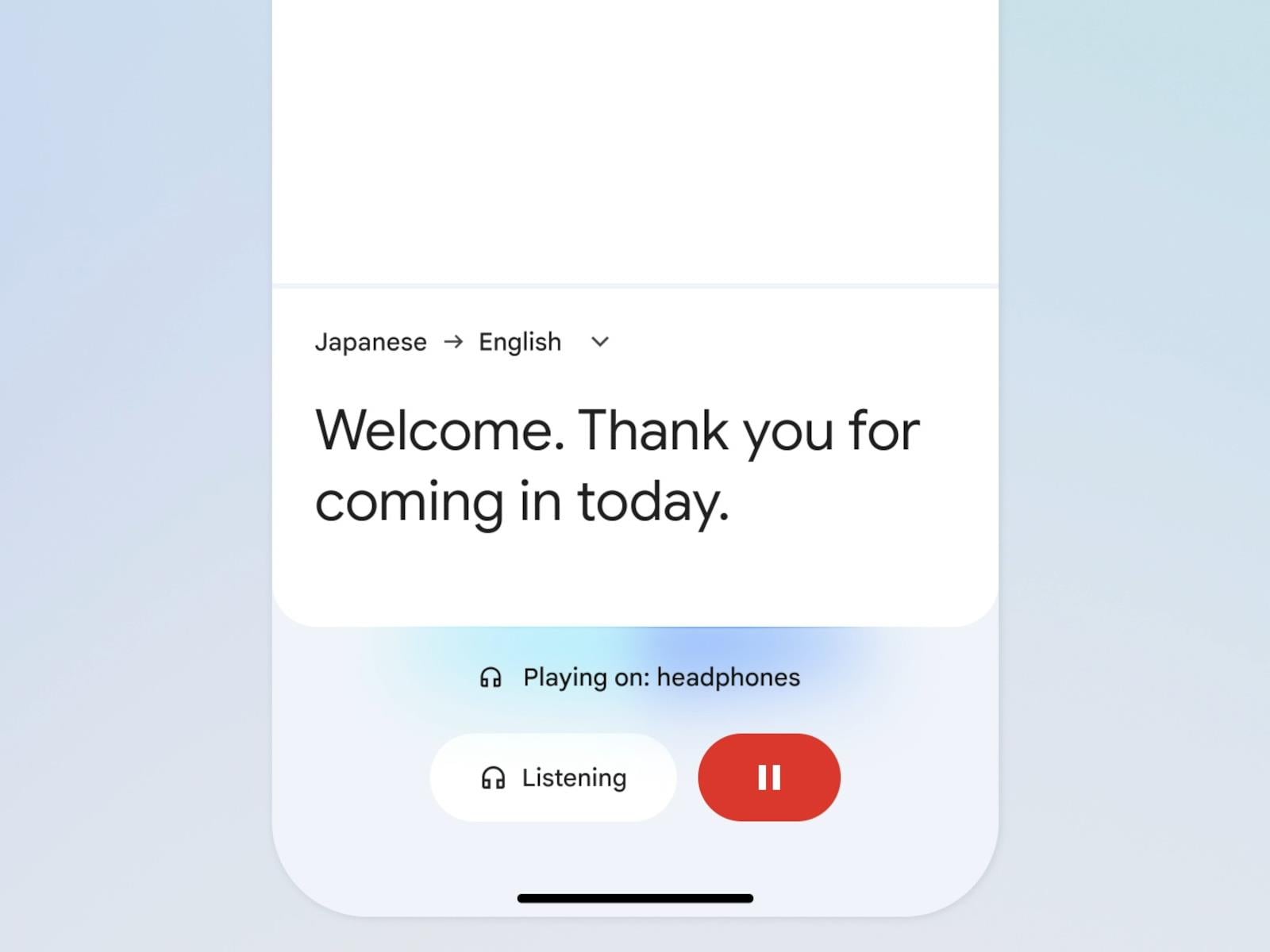
Google Translate’s new Gemini-powered, real-time voice translation feature is finally expanding from Android to iOS devices a well, including iPhones and iPads. The update also extends the new features to more countries and languages, including France, Germany, Italy, Japan, Spain, Thailand, and the U.K.

The blog post announcing that live

Linux Maintainer Greg Kroah-Hartman Says AI Tools Now Useful, Finding Real Bugs

Linux kernel maintainer Greg Kroah-Hartman tells The Register that AI-driven code review has “really jumped” for Linux. “There must have been some inflection point somewhere with the tools…”

“Something happened a month ago, and the world switched. Now we have real reports.” It’s not just Linux, he continued. “All open source projects have real reports that are made with AI, but they’re good, and they’re real.” Security teams across major open source projects talk informally and frequently, he noted, and everyone is seeing the same shift. “All open source security teams are hitting this right now….”

For now, AI is showing up more as a reviewer and assistant than as a full author of Linux kernel code, but that line is starting to blur. Kroah-Hartman has already done his own experiments with AI-generated patches. “I did a really stupid prompt,” he recounted. “I said, ‘Give me this,’ and it spit out 60: ‘Here’s 60 problems I found, and here’s the fixes for them.’ About one-third were wrong, but they still pointed out a relatively real problem, and two-thirds of the patches were right.” Mind you, those working patches still needed human cleanup, better changelogs, and integration work, but they were far from useless. “The tools are good,” he said. “We can’t ignore this stuff. It’s coming up, and it’s getting better….” [H]e said that for “simple little error conditions, properly detecting error conditions,” AI could already generate dozens of usable patches today.

The sudden increase in AI-generated reports and AI-assisted work has also spurred a parallel push to build AI into the kernel’s own review infrastructure. A key piece of that is Sashiko, a tool originally developed at Google and now donated to the Linux Foundation.

Kroah-Hartman said some patches are being generated with AI now. “You have a little co-develop tag for that now. We’re seeing some things for some new features, but we’re seeing AI mostly being used in the review.”


Read more of this story at Slashdot.

The White House app is just as weird and unnecessary as you’d expect

President Donald Trump may have a tendency to put his name on everything, but his administration decided to go with the more authoritative The White House App for his latest pursuit. Now available on the App Store and Google Play store, the official White House App claims to gives Americans “a direct line to the White House.”

From the press release, the app provides “unfiltered, real-time upgrades straight from the source.” In more practical terms, the White House App is a one-stop shop for official communications from the administration and more. On the app, you can find press releases, livestream announcements and even a photo gallery, along with turning on notifications so you get official communications as soon as they happen.

However, it only takes a few minutes of digging through the app to question its value. The White House App’s News tab features a carousel of about 35 articles that seem suspiciously cherry-picked with articles that favor the Trump administration. In the Affordability window, the app points out year-over-year prices that have dropped for things like eggs, milk and bread, but conveniently omits the recent swell in gas prices.

In the Social tab, there’s a button to “Text President Trump,” which auto-populates a new text with “Greatest President Ever!” before ultimately trying to get you to sign up for a marketing blast. The press release mentioned a way to “send your voice and feedback directly to the Administration” but the app’s functionality doesn’t seem to promote that. Most notably, there’s even a way to submit a tip to Immigration and Customs Enforcement in the app’s Get in Touch section.

While it’s convenient to have all your Trump administration announcements in one place, the White House App is mostly just a portal that ends up opening external websites. Traditionally, official White House accounts on social media platforms are passed on during the transition of presidents. However, it’s hard to say what will happen to the app after Trump leaves office, but one only has to look towards the lasting triumph of TrumpRx, Trump Mobile or even Trump University. 

This article originally appeared on Engadget at https://www.engadget.com/apps/the-white-house-app-is-just-as-weird-and-unnecessary-as-youd-expect-175354004.html?src=rss

NASA’s First Nuclear-Powered Interplanetary Spacecraft Will Send Helicopters to Mars in 2028

After decades of studying, this week NASA announced “a major step forward in bringing nuclear power and propulsion from the lab to space.”
NASA will launch the Space Reactor-1 Freedom, the first nuclear powered interplanetary spacecraft, to Mars before the end of 2028, demonstrating advanced nuclear electric propulsion in deep space. Nuclear electric propulsion provides an extraordinary capability for efficient mass transport in deep space and enables high power missions beyond Jupiter where solar arrays are not effective.

Steven Sinacore, NASA’s program executive for Fission Surface Power who will also oversee the SR-1 Freedom mission, emphasized to CNN that “On the ground the reactor is off. There’s no radiation coming from it. It doesn’t actually turn on until you’re up in space, and that’s where the radiation comes from.” NASA says they aim to develop the capabilities required “for sustained exploration beyond the Moon and eventual journeys to Mars and the outer solar system.”

And Space Reactor-1 Freedom will carry a fleet of tiny helicopters (much like Ingenuity) to explore Mars, reports Space.com:
Whereas Ingenuity was a technology demonstrator, however, the Skyfall fleet will have concrete tasks. Chief among them is scout: If all goes to plan, the little choppers will help NASA assess the potential of their target area (wherever that happens to be) to support human exploration. The Skyfall helicopters will carry cameras and ground-penetrating radar to scout a future landing site, to understand the slopes and hazards for human-scale landers,” Steve Sinacore, the program executive for NASA’s Space Reactors Office, said during the briefing. “They will also map and characterize the subsurface water ice to find out where the water ice deposits are, along with the size, depth and other important characteristics,” he added…
And that might not be the end of the line for SR-1 Freedom; NASA may decide to keep flying the spacecraft out into the solar system after it deploys the Skyfall choppers, according to Sinacore. The mission architecture, like much of NASA’s exploration portfolio, is not yet finalized.


Read more of this story at Slashdot.

GeForce RTX 60 Specs Leak Hints At Huge Memory Bandwidth And Ray Tracing Gains

GeForce RTX 60 Specs Leak Hints At Huge Memory Bandwidth And Ray Tracing Gains
NVIDIA’s GeForce RTX 60 Series GPUs will be powered by the Rubin architecture, which exists only for AI and data center use thus far. The Rubin CPX, for example, is built around NVIDIA’s GR212 chips, but new information shared with YouTuber RedGamingTech claims the RTX 60 Series chips will be the GR202 (RTX 6090), GR203 (RTX 6080), and GR205

‘Ads Are Popping Up On the Fridge and It Isn’t Going Over Well’

The Wall Street Journal reports:
Walking into his kitchen, Tim Yoder recoiled at a message on his refrigerator door: “Shop Samsung water filters.” Yoder, a supply-chain manager in Chicago, owns a Samsung Electronics Family Hub fridge. He paid $1,400 for an appliance that came with a 32-inch screen on the door that allows him to control other Samsung gadgets, pull up recipes or stream music. But since last fall, it’s been intermittently serving up ads, part of a pilot program being tested on some of Samsung’s smart fridges sold in the U.S. The response? Not warm. “I guess this is another place for somebody to shove an ad in your face,” said the 47-year-old Yoder, recalling the first time he noticed one…

The ads are only on certain Family Hub fridges that have screens and internet connectivity. They run as a rectangular banner at the bottom — part of a widget that also shows news, the weather and a calendar. Samsung declined to say how long the pilot might last or whether it would end. The firm recently unveiled a “Screens Everywhere” initiative that also includes washers, dryers and ovens…. Samsung launched the banner-type fridge ads that come as part of the widget via an October software update. In a footnote of a news release at the time, Samsung pledged to “serve contextual or non-personal ads” and respect data privacy. The banner ads can be turned off in settings.

Samsung said the purpose of the pilot is to explore whether ads relevant to home chores can be useful to owners, and that overall pushback has been negligible. The “turn-off” rate for the pilot ad program remains in the bottom single-digit range, it said… While owners can turn off the banner ads, doing so eliminates the widget altogether, a bummer for Brian Bosworth, a media-industry engineer who liked the feature. Bosworth thinks it’s wrong to take away the new feature as a condition. Wanting to keep the widget but not the ads, the 49-year-old in Edgewater, Md., made sure his home router’s ad-blocking software extended to his fridge. He hasn’t seen another since.

One 27-year-old plans to return his refrigerator after the entire display “lit up with a full-screen ad for Apple TV’s sci-fi show Pluribus,” according to the article. The all-caps ad beckoned him “with an oft-used refrain directed at protagonist Carol Sturka: ‘We’re Sorry We Upset You, Carol.'”

Thanks to Slashdot reader fjo3 for sharing the article.


Read more of this story at Slashdot.

Meta’s next AI glasses are reportedly designed with prescription lenses in mind

Two new models of Meta Ray-Ban AI glasses are on the way, and they’re going to be catered towards those who use prescription lenses, according to a Bloomberg report. While these are supposed to be announced next week, Bloomberg noted that these won’t be a “new generation” of Meta’s smart glasses.

You can already add prescription lenses to Meta Ray-Ban’s AI glasses, but the upcoming models will come in rectangular and rounded styles and will be sold through traditional prescription eyewear channels. Bloomberg didn’t specify how these new glasses will differ from existing options, but noted that it’s the first time Meta and Ray-Ban are releasing a pair of AI glasses specifically designed for this demographic.

The two models are likely the codenamed products Scriber and Blazer, which were first spotted by The Verge in filings with the Federal Communications Commission. The filings described the devices as production units, meaning Meta could be close to the actual product launch. Looking at the filings, it’s unlikely these upcoming prescription AI glasses will have a display like the Meta Ray-Ban Displays.

Meta CEO Mark Zuckerberg has hinted at AI glasses that are meant for prescription glasses wearers in a previous earnings call. As noted by Bloomberg, Zuckerberg previously said that “billions of people wear glasses or contacts for vision correction,” adding that, “it’s hard to imagine a world in several years where most glasses that people wear aren’t AI glasses.”

This article originally appeared on Engadget at https://www.engadget.com/wearables/metas-next-ai-glasses-are-reportedly-designed-with-prescription-lenses-in-mind-162730768.html?src=rss