After a Decade of Dead Ends, $70 Million Rides on Locating Flight MH370

More than a decade after Malaysia Airlines flight MH370 vanished over the Indian Ocean en route from Kuala Lumpur to Beijing, the marine robotics company that located Sir Ernest Shackleton’s Endurance is preparing to resume its hunt for the missing Boeing 777. Ocean Infinity, a UK and US-based seabed survey firm, began searching a 15,000 sq km priority area in the Indian Ocean in February but called off the expedition in April after 22 days due to poor weather conditions.

The company plans to resume operations on December 30 for 55 days under a $70 million “no find, no fee” contract from the Malaysian government. The company has already covered nearly 10,000 sq km and intends to search another 25,000 sq km. Richard Godfrey, an independent aviation investigator, estimates Ocean Infinity has spent “tens of millions of dollars” on ships and equipment. “I don’t think they’re in this for the monetary reward of $70m, because this search is very, very expensive,” Godfrey says. “I think they’re in this for the achievement and their ability to market themselves as the greatest underwater-search firm in the world because they found MH370.”

The search relies on Hugin 6000 autonomous underwater vehicles capable of mapping the ocean floor at depths up to 6,000 metres using sonar, laser, and acoustic technology. Each AUV can operate independently for 100 hours before surfacing. The machines carry magnetometers that can detect metal buried under several metres of sediment. The story adds: One of the biggest challenges Ocean Infinity faces is the risk of being very close to the MH370 wreckage and missing it because of difficult terrain or gaps in the survey data.


Read more of this story at Slashdot.

CD Projekt Founder Buys GOG, Promising Stability And Few Changes

CD Projekt Founder Buys GOG, Promising Stability And Few Changes
GOG has just been acquired by its original co-founder, Michał Kiciński, and in an industry where acquisitions usually signal disruption, consolidation, or slow erosion of consumer-friendly policies, the most notable thing about this one is just how little is expected to change about the GOG user experience. To be clear, that’s not a complaint;

NASA finally has a leader, but its future is no more certain

After a rudderless year and an exodus of around 4,000 employees due to Trump administration cuts, NASA got what may be its first piece of good news recently. On December 17, the Senate confirmed billionaire Jared Isaacman as the agency’s new administrator. He now holds the power to rehabilitate a battered engine of scientific research, or steer it towards even more disruption. 

Considering the caliber of President Trump’s other appointees, Isaacman is probably the best candidate for the job. Outside of being a successful entrepreneur, he has flown fighter jets and been to space twice as part of the Inspiration4 and Polaris Dawn private missions. One of those flights saw him complete the first commercial space walk, and travel farther from Earth than any human since the end of the Apollo program.   

“Perfect is the enemy of the good. Isaacman checks a lot of boxes,” says Keith Cowing, a former NASA employee and the founder of NASA Watch, a blog dedicated to the agency. “He’s passed every requirement to fly in a spacecraft that American astronauts at NASA are required to pass. He also went out of his way to have a diverse crew, and shove as much science as he could in those missions.” 

And yet if you’re a NASA employee or just someone who cares about the agency’s work, there are still plenty of reasons to be concerned for its future. When Trump first nominated Isaacman in the spring, the billionaire wrote a 62-page document detailing his vision for NASA. In November, Politico obtained a copy of that plan, titled Project Athena.

To some insiders, Project Athena painted a picture of someone who, at least at the time when it was written, fundamentally misunderstood how NASA works and how scientific discovery is funded in the US and elsewhere. It also suggests Isaacman may be more open to Trump’s NASA agenda than would appear at first glance.   

When asked about the plan by Politico, one former NASA official characterized it as “bizarre and careless.” Another called it “presumptuous,” given many of the proposed changes to the agency’s structure would require Congressional approval. In one section, Isaacman recommended taking “NASA out of the taxpayer funded climate science business and [leaving] it for academia to determine.” In another section, he promised to evaluate the “relevance and ongoing necessity” of every agency center, particularly NASA’s iconic Jet Propulsion Laboratory, saying the facility and others must increase the “output and time to science KPI.” 

A lot has changed since Isaacman first wrote that document. It came before the workforce cuts, before the future of Goddard Space Flight Center became uncertain and before Trump surprised everyone by renominating Isaacman. But during his Senate testimony earlier this month, the billionaire said “I do stand behind everything in the document, even though it was written seven months ago. I think it was all directionally correct.”  

He did appear to distance himself from some viewpoints expressed in or inferred by Project Athena, however. Isaacman stated that “anything suggesting that I am anti-science or want to outsource that responsibility is simply untrue.” He also came out against the administration’s plan to cut NASA’s science budget nearly in half, claiming the proposals would not lead to “an optimal outcome.”

One thing is clear, Isaacman is not your typical bureaucrat. “One of the pitfalls of some prior NASA administrators has been that they’ve shown too much reverence for the internal processes and bureaucratic structure of the agency to the detriment of decision-making and performance,” said Casey Drier, chief of space policy at The Planetary Society, a nonprofit that advocates for the exploration and study of space. “Isaacman has positioned himself as the opposite of that. Clearly, that’s something that could lead to a lot of political and congressional challenges if taken too far.”   

Even if Isaacman doesn’t follow through on any of the proposals made in Project Athena, there’s only so much a NASA administrator — even one sympathetic to civil servants working under them — can do. 

“Once a budget request goes out publicly, everyone in the administration has to defend it. Anything he does will have to be internal and private,” Drier explains. “He never explicitly criticized the administration during his hearing. He’s also coming relatively late in the budget process.”    

A lot of NASA’s future will depend on the White House Office of Management and Budget (OMB), which is responsible for implementing the president’s agenda across the executive branch. As a direct result of guidance the OMB issued over the summer, NASA awarded 25 percent fewer new grants in 2025 than it did on average between 2020 and 2024.   

“The OMB has added layers of requirements that scientists now have to go through to spend the money they’ve already been allocated. The administration has worked against its own stated goals of efficiency,” Drier said. “Isaacman can’t solve that himself. He can’t tell the OMB what to do. That’s going to be a serious challenge.” 

Looming over everything is the fact NASA still does not have a full-year budget for 2026. Congress has until January 30 to fund NASA and the rest of the federal government before the short-term funding bill it passed on November 12 runs out. “On paper, the official policy of the administration is still to terminate a third of NASA’s scientific capability,” Drier points out.

There are reasons to be cautiously optimistic. Publicly, both the House and Senate have come out against Trump’s funding cuts. And some science missions that were slated to be cancelled, such as OSIRIS-APEX, have been approved for another full year of operations.   

What NASA needs now is someone who will, as Drier puts it, “vigorously advocate” for the agency in whatever way they can. It remains to be seen if that’s Jared Isaacman.

This article originally appeared on Engadget at https://www.engadget.com/science/space/nasa-finally-has-a-leader-but-its-future-is-no-more-certain-201109072.html?src=rss

How Windows 10 Earned Its Good Reputation While Planting the Seeds of Windows 11’s Problems

Windows 10’s formal end-of-support arrived in October, and while the operating system is generally remembered as one of the “good” versions of Windows — the most widely used since XP — many of the annoyances people complain about in Windows 11 actually started during the Windows 10 era, ArsTechnica writes.

Windows 10 earned its positive reputation primarily by not being Windows 8. It restored a version of the traditional Start menu, rolled out as a free upgrade to Windows 7 and 8 users, and ran on virtually all the same hardware as those older versions. Microsoft introduced the Windows Subsystem for Linux during this period and eventually rebuilt Edge on Chromium. The company seemed more willing to meet users where they were rather than forcing them to change their behavior.

But Windows 10 also began collecting more information about how users interacted with the operating system, cluttered the lock screen with advertisements and news articles, and added third-party app icons to the Start menu without user consent. The mandatory Microsoft Account sign-in requirement — one of Windows 11’s most frequently complained-about features — was a Windows 10 innovation, easier to circumvent at the time but clearly a step down the road Windows 11 is currently traveling.

To be sure, Windows 11 has made things worse by stacking new irritants on top of old ones. The Microsoft Account requirement expanded to both Home and Pro editions, the SCOOBE screen now regularly nags users to “finish setting up” years-old installations and Microsoft’s Copilot push changed the default PC keyboard layout for the first time in 30 years.


Read more of this story at Slashdot.

So, I Tried an AI Shopping Cart

The first supermarket, the Piggly Wiggly in Memphis, opened its doors in 1916. It was the first time people could wander around a store and pick their items from a shelf instead of handing a list to a clerk who would gather everything for them—typically without any choice of brand or style. Grocery shopping remains a daily or weekly ritual for most people, and it can be a real chore—especially if you’re shopping for a large family. My own grocery lists aren’t all that long, but I still find myself juggling my phone and a scrap of paper as I walk around the store, checking for digital coupons and trying to do quick math. So when I read that one of the local grocery stores (a ShopRite) was rolling out Smart Shopping Carts powered by artificial intelligence (AI), I was intrigued.

I’m naturally dubious about a lot of AI tools, but grocery shopping seemed like a place where a little digital help might come in handy. So I headed out to see whether these fancy new carts would offer real benefits or just a lot of targeted advertisements.

What are caper carts?

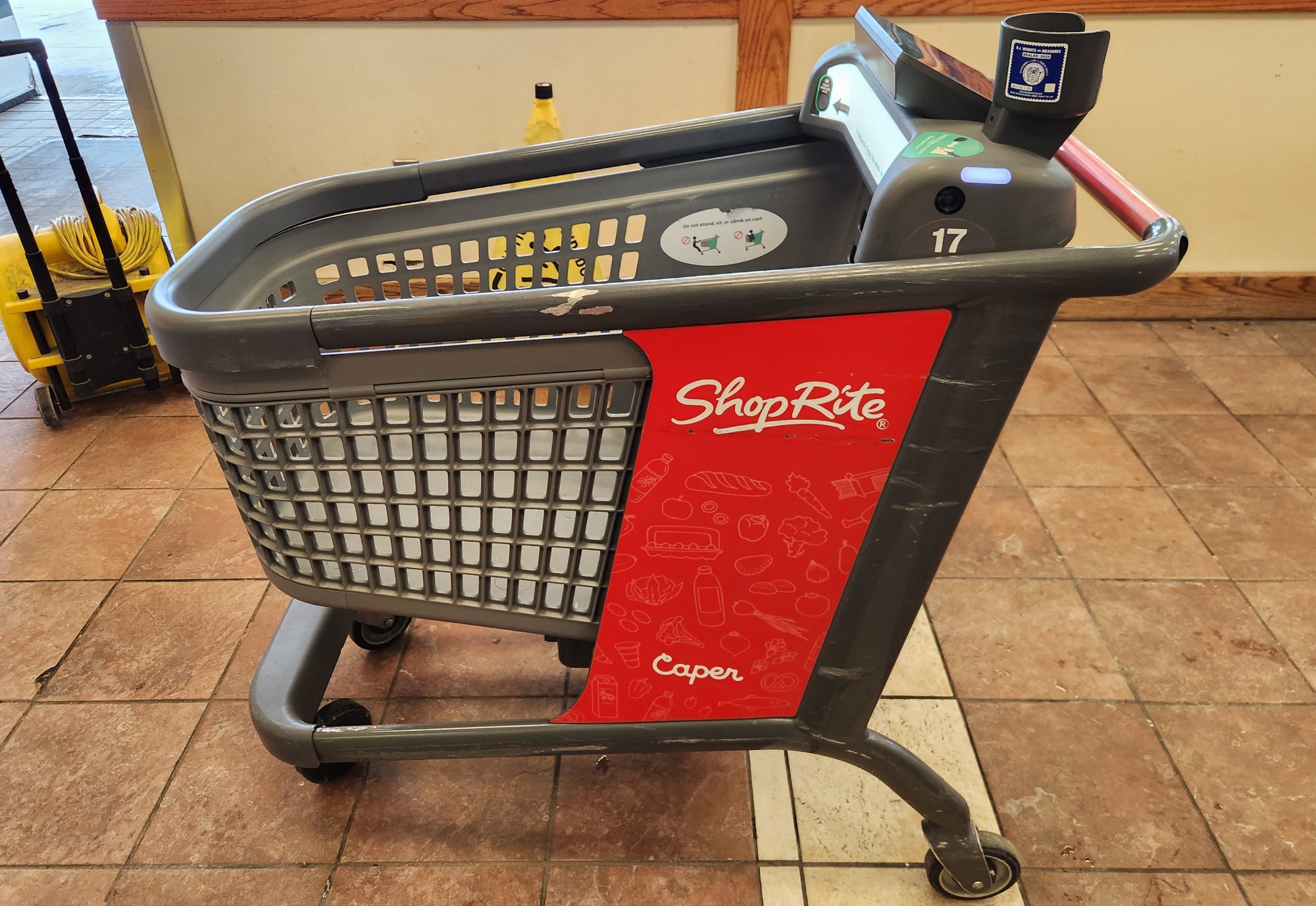
The carts in question are Caper Carts, which is owned by Instacart. They’re pretty large and tank-like, and kind of heavy to push.

A Caper Cart
The Caper Carts are pretty big and heavy.
Credit: Jeff Somers

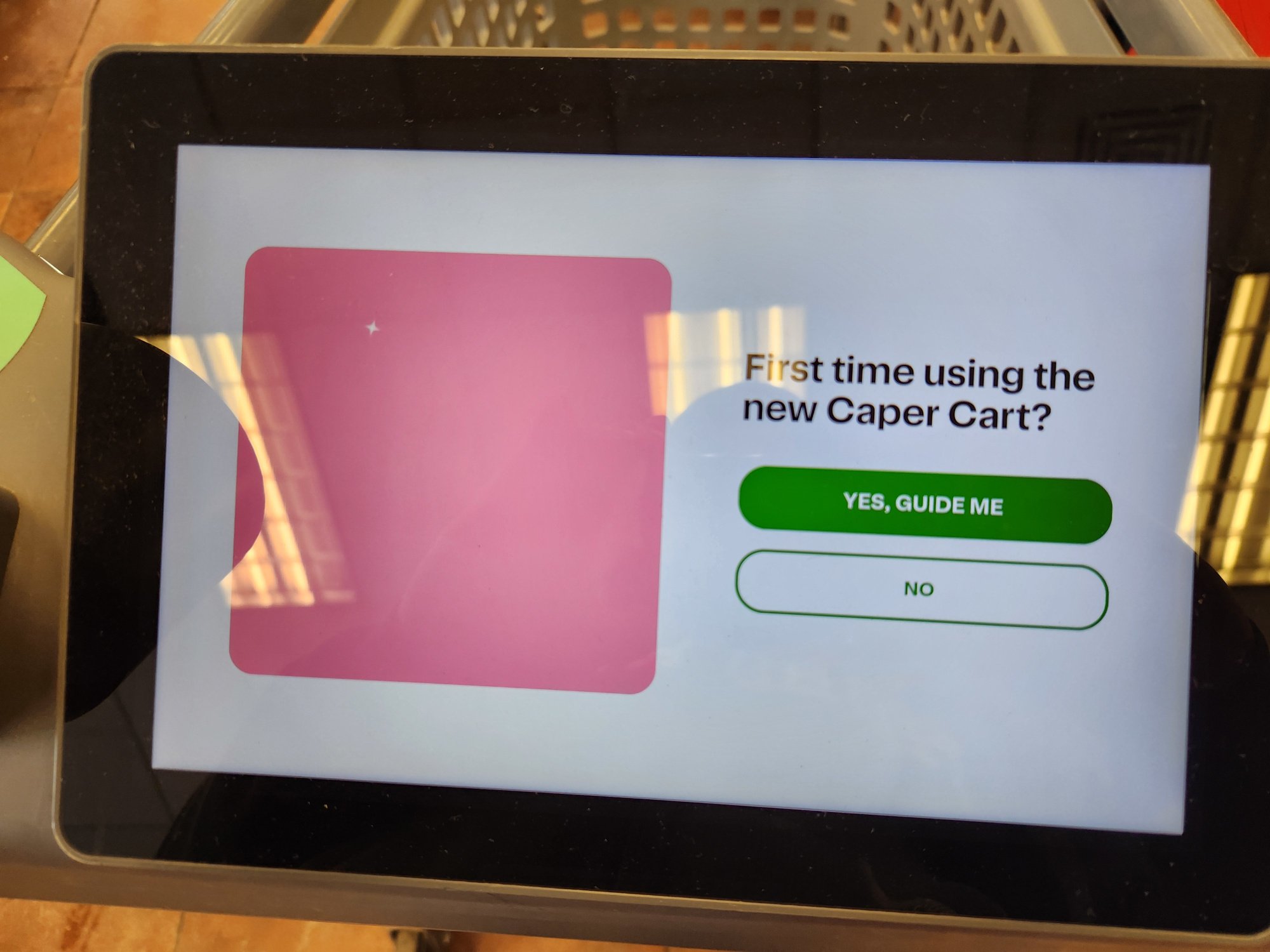
You need to have an account with ShopRite in order to use these carts, as they use your phone number to track your purchases; you can choose to store a credit card or other form of payment in there for convenience, but it’s not required. When you walk in the store, the Caper Carts are right there in the entrance area. When you pull one out, the screen lets you enter your phone number, then offers you a (mercifully brief) tutorial.

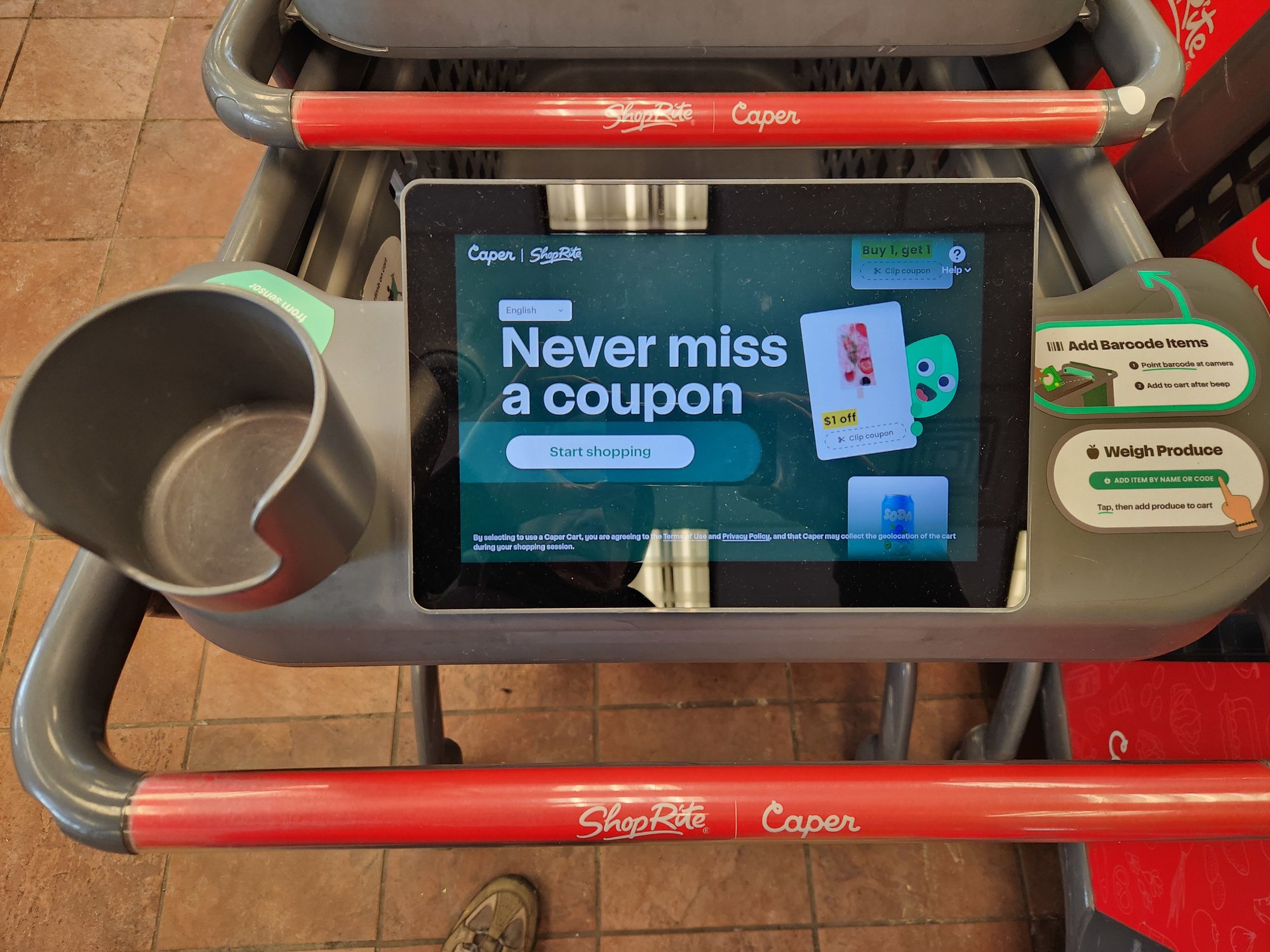
The Caper Cart screen
The welcome screen on the AI shopping cart.
Credit: Jeff Somers

The log-in screen
The log-in screen
Credit: Jeff Somers

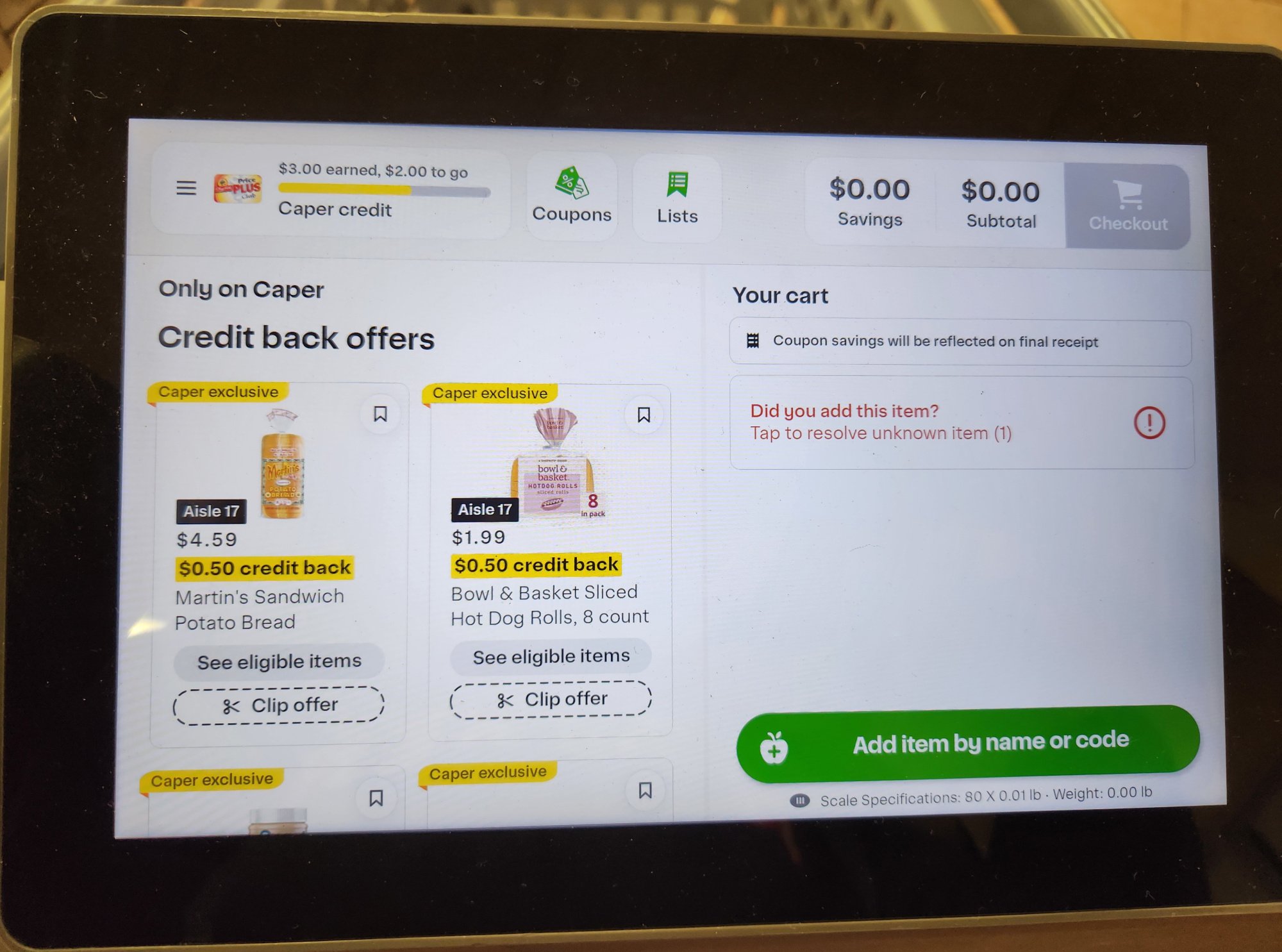
The carts have barcode scanners mounted on both sides of the back of the cart, and the cart itself is a scale, which is both how it ensures you’ve scanned everything in the cart and how it calculates the cost of loose produce. If you’ve ever used a self-checkout in a grocery store, it’s kind of similar: You hold items up to the scanners and then drop them into your cart. For produce, you look up what you’re buying and then drop it into the cart, where it’s weighed and added to the total. Along the way, the cart will look for potential coupons or deals you might be interested in. The carts can import your shopping lists from the store’s app, if you want, and will keep track of your loyalty points and rewards as well.

How to use a Caper Cart

The first Caper Cart I selected didn’t work; nothing would scan no matter how I held things up to the scanners. This wasn’t a big deal—I let the store folks know, logged out of the cart, and grabbed another. The second cart worked perfectly.

The  Caper Cart screen while shopping
The Caper Cart screen while shopping
Credit: Jeff Somers

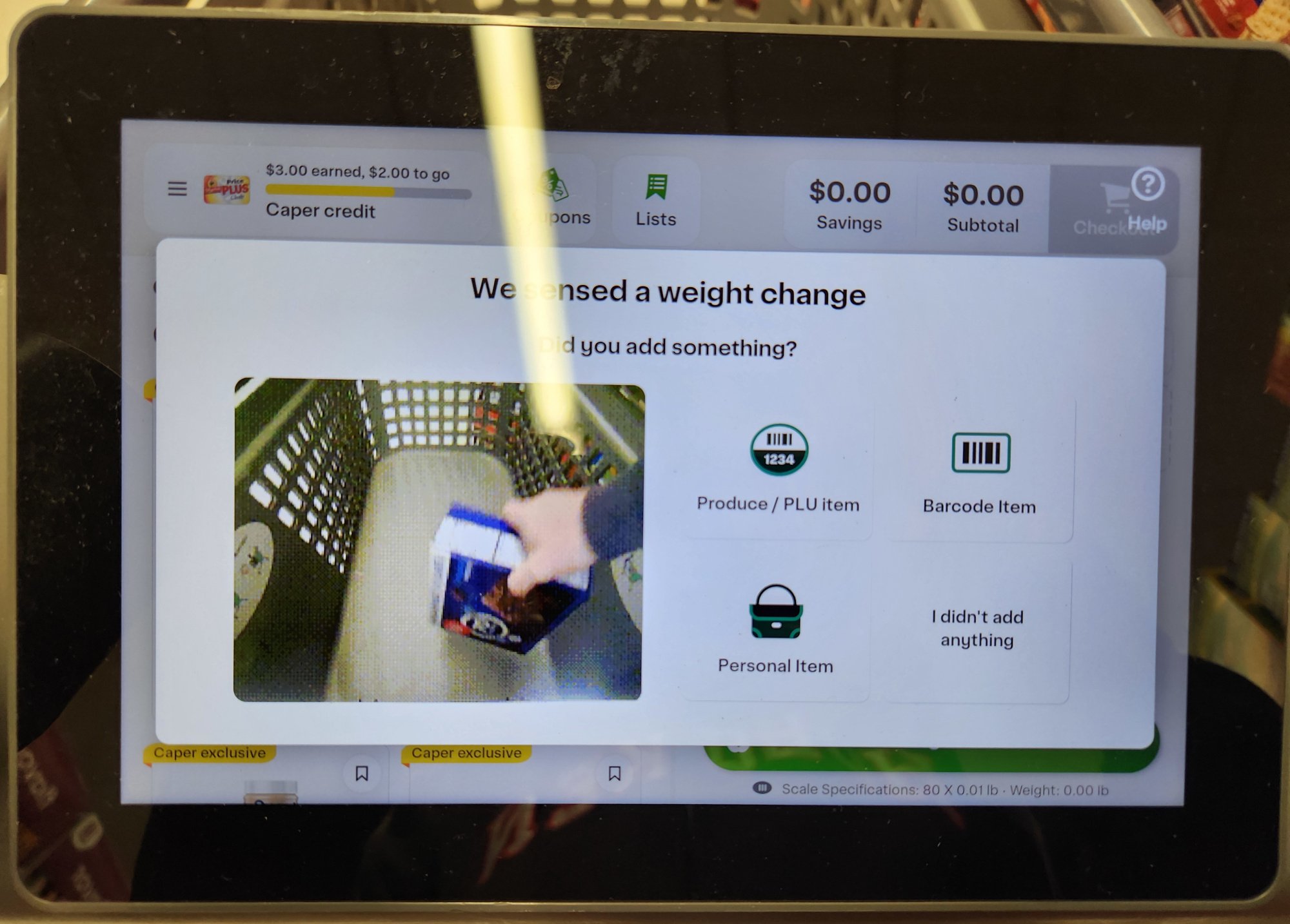
These carts are pretty heavy, and the second cart I used had a loose wheel which made it rumble loudly as I walked the aisles—you aren’t going to be racing these carts and jumping on for a quick glide. When I dropped an item in the cart without scanning it, the cart politely showed me a video of me placing the item (creepy) and asked if I wanted to fess up to adding something to the cart. It did, however, give me the option to declare a “personal item,” which is a solid feature.

A video pops up if you try putting an un-scanned item in the cart
Credit: Jeff Somers

I forgot to put my shopping bags in the cart, because I am frequently dumb. You’re supposed to bag as you go, which saves you time; I had to bag after checkout, which did not save me time. On the other hand, I don’t always shop in bagging order, so bagging as I go might result in some of my items getting crushed under heavier groceries, or me having to re-arrange everything in the middle of the shopping experience. I kind of like bagging at the end, when I can make decisions about how to arrange everything optimally.

If you change your mind about an item, you just remove it from the cart. The Caper system will notice and remove the item from your bill.

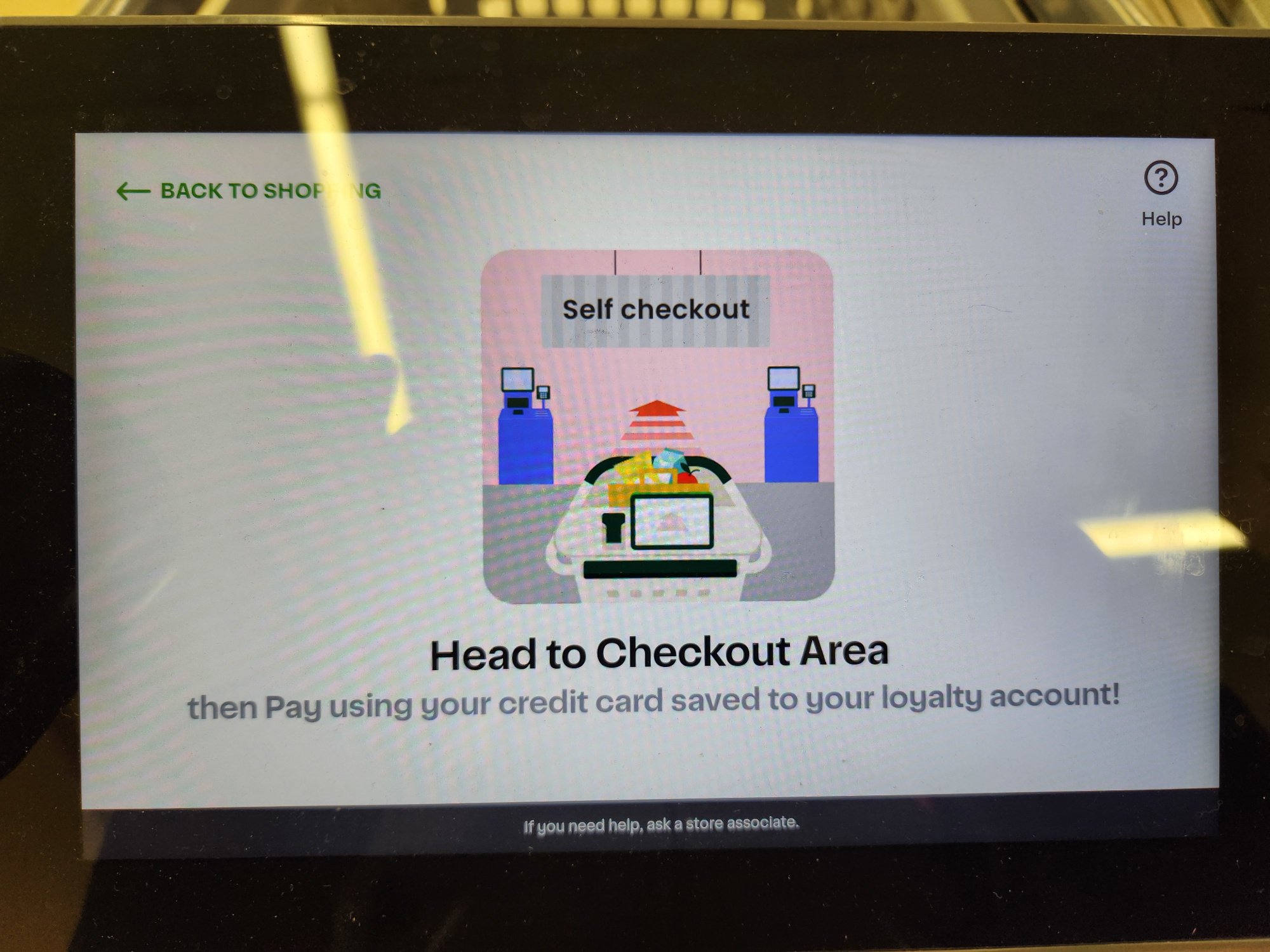
When you’re done, you just tap “Checkout” and head to the Checkout Area.

Checking out with a Caper Cart
Credit: Jeff Somers

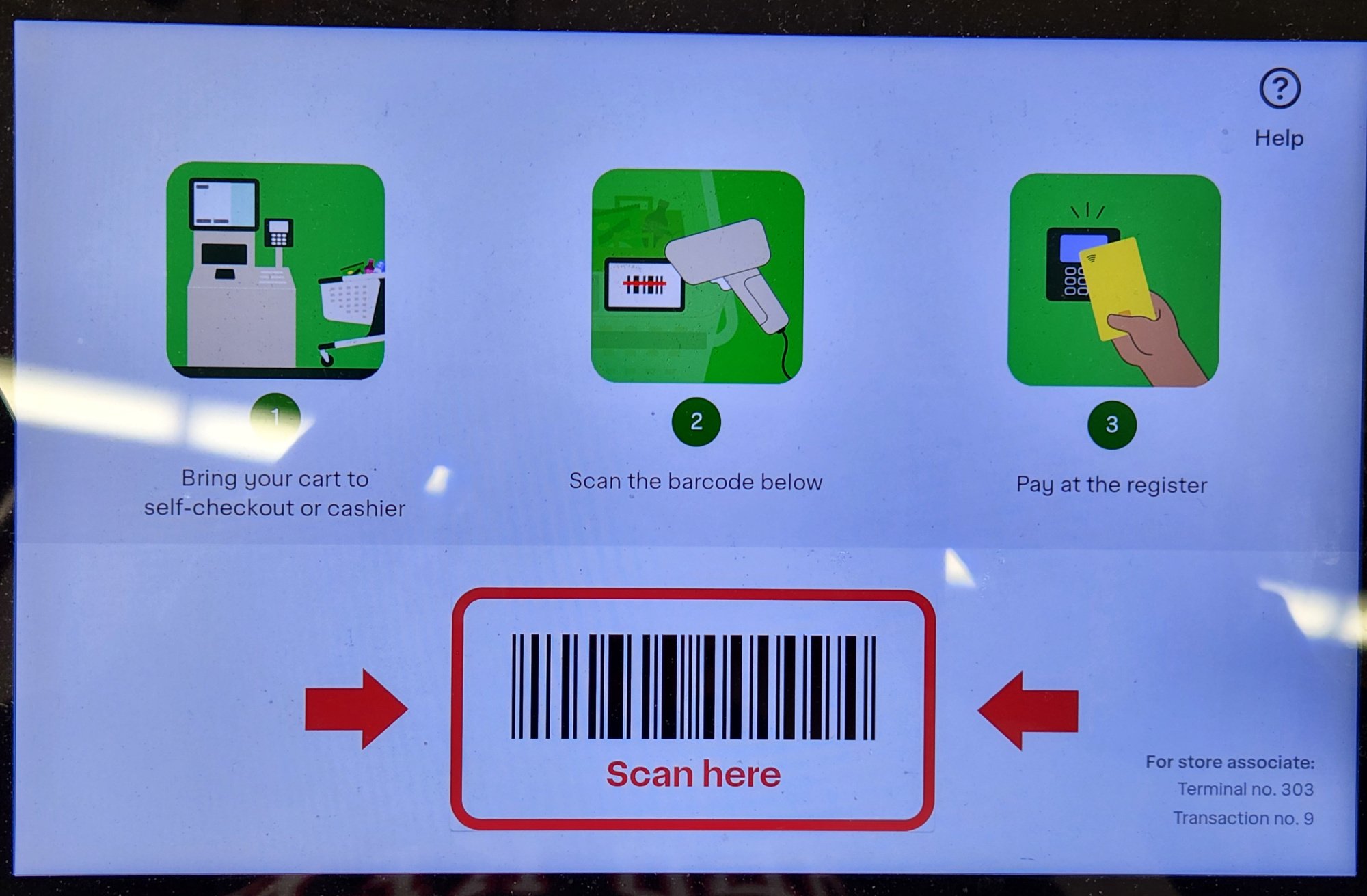
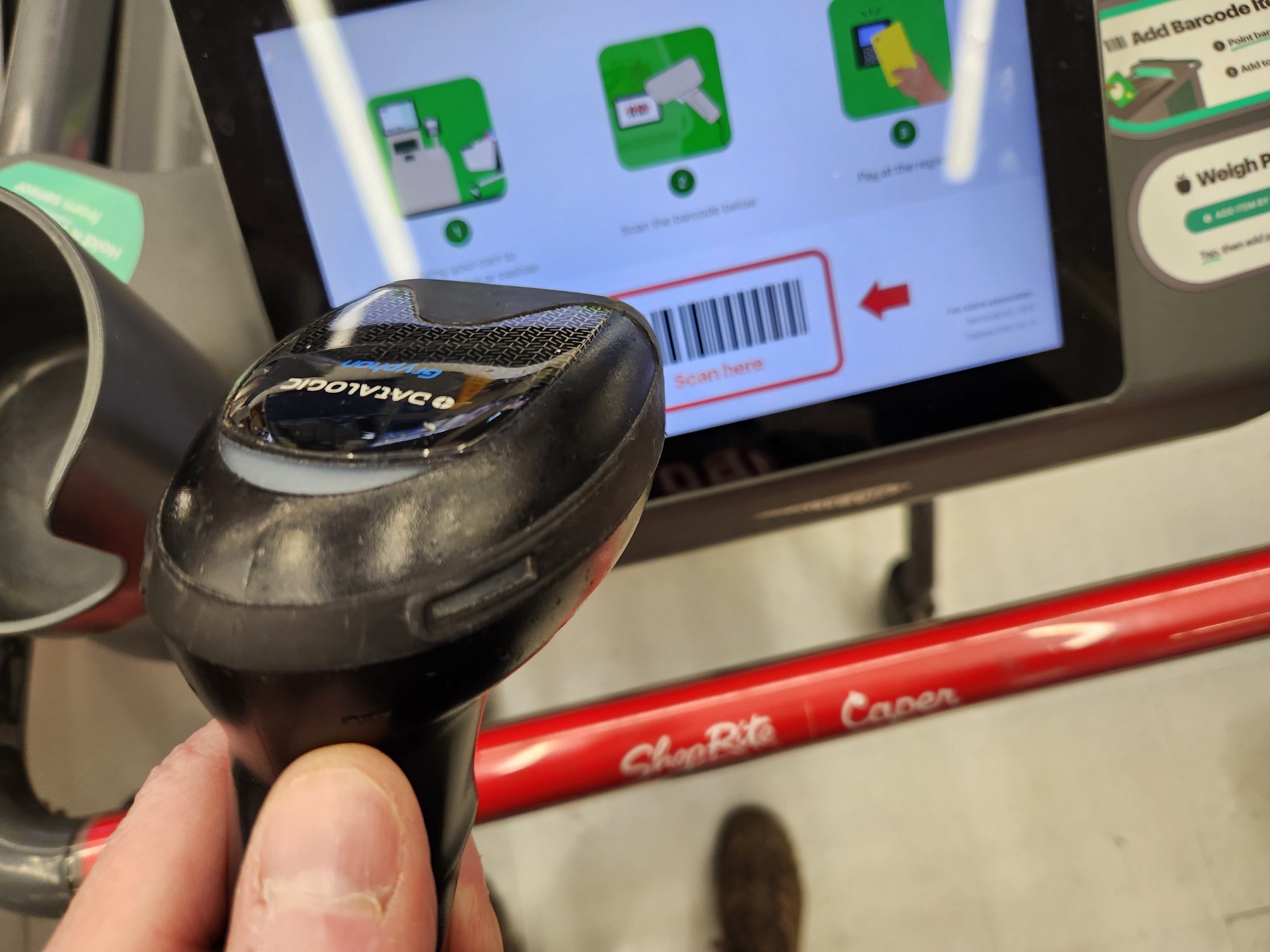
This will be different depending on the specific store you’re in—some stores don’t have checkout lanes for the Caper Carts, but this ShopRite did. There was only one lane for Caper Carts, and I had to wait behind someone as they checked themselves out. Then I scanned a barcode on my screen with a gun and tapped my card to pay while a security guard loomed nearby, presumably to discourage folks from making a run for it.

Barcode for checking out with a Caper Cart
Credit: Jeff Somers

Scanning the checkout barcode on a Caper Cart
Credit: Jeff Somers

The pros and cons of AI shopping carts

Overall, the AI shopping cart experience was a slight upgrade from typical grocery shopping. Bagging as you go is convenient, and checkout is a little easier because you scan a single barcode instead of two dozen. I didn’t receive many personalized coupons or recipe suggestions because this was my first time using the system, but I can see how that could become very useful if the cart is able to dig up coupons or offers that I missed.

A few specific notes:

  • The cart can accidentally scan a barcode if you get close to a shelf, which can cause confusion, though the cart will quickly delete it if the weight doesn’t change.

  • As noted above, the carts are pretty heavy. If you’re going to be buying a lot of groceries all at once, this could become a real workout.

  • Adding produce can be a little complicated: You have to locate the “price look up” (PLU) code for the specific produce you’re adding, then scan or type it into the screen before dropping it into the cart. That means sometimes hunting for those little stickers and tapping a bunch of numbers into your cart over and over again.

  • Seeing your total spend add up in real time is useful, especially if you’re tracking costs. If an item costs more than expected, you see it immediately, and if the overall cost is more than anticipated you have time to adjust your selections before you hit the checkout.

  • Because you have to go through a checkout lane as usual (and there was only one dedicated lane for Caper Carts), during busy times you might wind up waiting a long time to get out of the store, which kind of cancels out the convenience factor. Of course, as more people use these carts, ShopRite might add more dedicated Caper lanes.

Depending on how you shop for groceries, these AI shopping carts might be worth a try—but don’t expect a revolutionary experience.

Samsung TVs Will Turn Google Photos Into A Living Room Feature In 2026

Samsung TVs Will Turn Google Photos Into A Living Room Feature In 2026
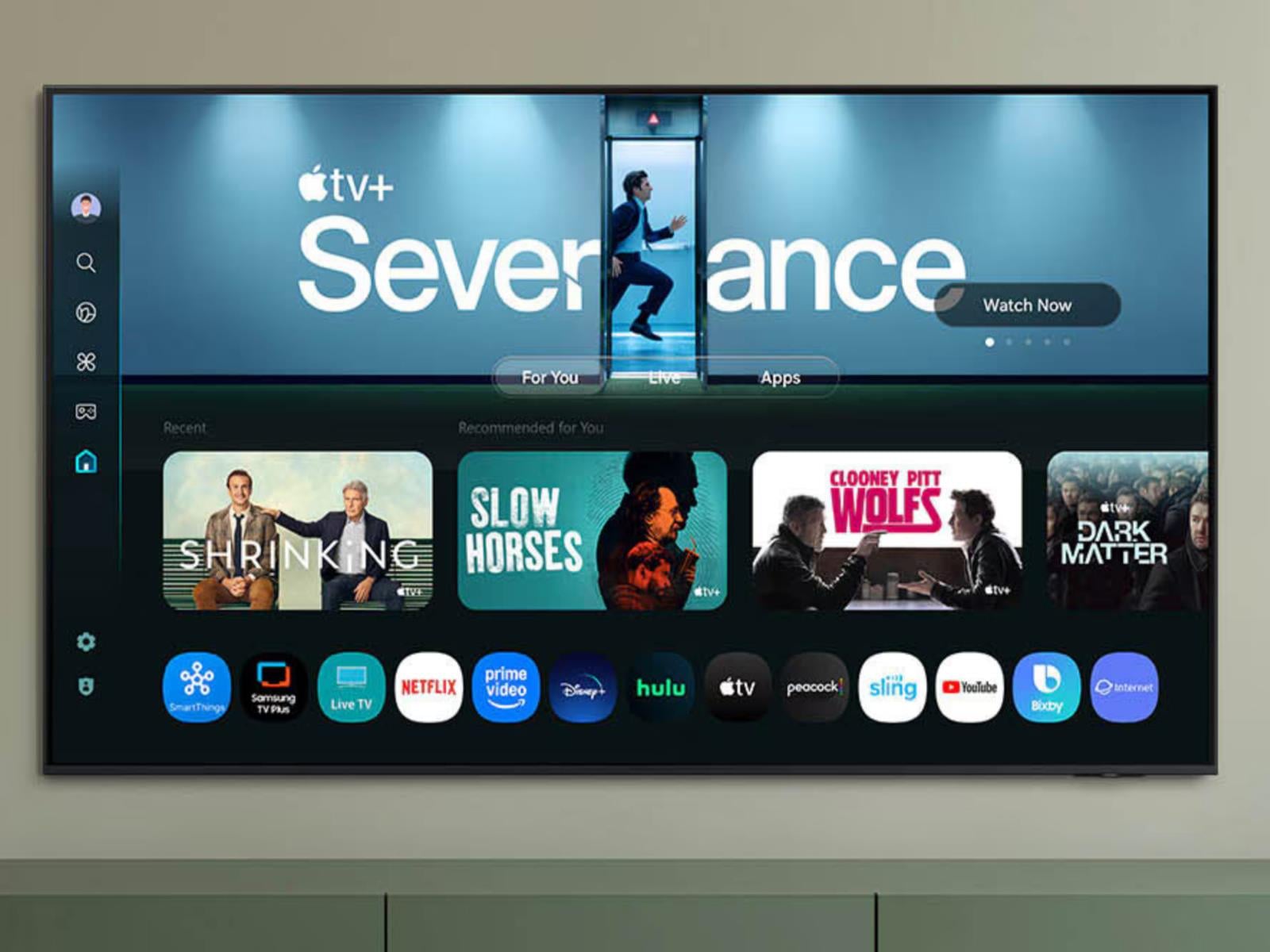
Samsung has been working to add apps and experiences that it hopes will win over users, including a partnership with Microsoft to bring Copilot AI to its TV sets. Now, the company is partnering with Google to integrate Google Photos into its Tizen OS as well, which should make it easier than ever to revisit special moments with friends and

Dell 16 Plus 2-in-1 Review: Mini-LED In A Big Convertible Laptop

Dell 16 Plus 2-in-1 Review: Mini-LED In A Big Convertible Laptop
Dell 16 Plus 2-In-1: $1,449 As Configured (On Sale For $1,199) Intel’s latest mobile platform and a large 16-inch display that rotates a full 360-degrees make the Dell 16 Plus an interesting 2-in-1 with powerful compute resources under its hood. Vibrant Mini-LED display Flexible 2-in-1 design Reliable performance Sturdy build and solid chassis…

Needs Gobs Of RAM? This 4TB DDR5 Memory Kit Is Only $76,999

Needs Gobs Of RAM? This 4TB DDR5 Memory Kit Is Only $76,999
Check out this memory kit from Nemix: 4096 TB of DDR5-6400 memory across sixteen 256GB sticks. The voltage is JEDEC-standard 1.1v, and the registered RAM supports multi-byte ECC, too. It’s only $76,999, which comes out to an eye-watering $18.80 per gigabyte, or $4,812 per module.

Nevermind that there currently aren’t any systems with 16-channel

WIRED Database Leak Exposes Millions And Hacker Threatens 40 Million More

WIRED Database Leak Exposes Millions And Hacker Threatens 40 Million More
2.3 million user records from the WIRED database have leaked and the hackers who did it claim that millions of other records from other Condé Nast-owned publications (like The New Yorker, Vanity Fair, and more) will also be released soon. Analysis of the leak from Infostealers seems to verify that the records are legitimate and worse yet,

Leonardo’s wood charring method predates Japanese practice

Yakisugi is a Japanese architectural technique  for charring the surface of wood. It has become quite popular in bioarchitecture because the carbonized layer protects the wood from water, fire, insects, and fungi, thereby prolonging the lifespan of the wood. Yakisugi techniques were first codified in written form in the 17th and 18th centuries. But it seems Italian Renaissance polymath Leonardo da Vinci wrote about the protective benefits of charring wood surfaces more than 100 years earlier, according to a paper published in Zenodo, an open repository for EU funded research.

Check the notes

As previously reported, Leonardo produced more than 13,000 pages in his notebooks (later gathered into codices), less than a third of which have survived. The notebooks contain all manner of inventions that foreshadow future technologies: flying machines, bicycles, cranes, missiles, machine guns, an “unsinkable” double-hulled ship, dredges for clearing harbors and canals, and floating footwear akin to snowshoes to enable a person to walk on water. Leonardo foresaw the possibility of constructing a telescope in his Codex Atlanticus (1490)—he wrote of “making glasses to see the moon enlarged” a century before the instrument’s invention.

In 2003, Alessandro Vezzosi, director of Italy’s Museo Ideale, came across some recipes for mysterious mixtures while flipping through Leonardo’s notes. Vezzosi experimented with the recipes, resulting in a mixture that would harden into a material eerily akin to Bakelite, a synthetic plastic widely used in the early 1900s. So Leonardo may well have invented the first manmade plastic.

Read full article

Comments

Americans Are Watching Fewer New TV Shows and More Free TV

Americans are settling into streaming habits that should worry Hollywood executives, as new Nielsen data analyzed by Bloomberg reveals that not a single new original series cracked the top 10 most-watched streaming shows in 2025 — the first time this has happened since Nielsen began publishing streaming data in 2020.

The shift extends beyond original programming as free, ad-supported streaming services are growing faster than their paid counterparts. YouTube has become the most-watched streaming service on American televisions, now larger than Netflix and Amazon combined. The Roku Channel and Tubi have nearly doubled in size over the past two years, while Peacock and Warner Bros.’ streaming services have stagnated at roughly half their free competitors’ viewership share.

Netflix still dominates when it comes to hits, accounting for about two-thirds of original programs appearing in Nielsen’s weekly top 10 lists. But that dominance is eroding — the company’s share of streaming viewership has fallen below 20%. Meanwhile, Disney’s streaming services haven’t increased their share of TV viewing in three years, and Amazon is closing in. The most-watched original series of 2025 was Squid Game’s final season, followed by returning shows Wednesday and Love Island.


Read more of this story at Slashdot.

How to watch the LG CES 2026 press conference

LG
LG

For years, LG has kicked off CES press day with the first event of the morning — and 2026 will be no different. The Korea-based corporation is theming its presentation as “Innovation in Tune with You,” and — if it follows the template of past presentations — it will highlight both the consumer electronics and large appliance sides of its mammoth global businesses.

Like nearly all tech-centric events these days, expect AI to be the binding theme of the LG presentation at CES 2026. Just be aware that, like Apple, LG has its own customized abbreviation for AI: “Affectionate Intelligence.” The company will share “its vision for elevating daily life through Affectionate Intelligence — delivering harmonized and seamlessly connected customer experiences.” In other words, the company is aiming for its devices to become more connected and self-automated than ever. Here’s how you can stream it and what you can expect.

How to watch LG’s CES 2026 presentation

The event will stream live from Las Vegas on Monday, January 5 at 11AM ET. You’ve got a few options for tuning in — watch the livestream on the LG website, the LG Global YouTube channel or the LG Global X channel. (We’ll embed the stream here once it appears on the channel.)

What to expect

LG will show its “portfolio of AI-powered solutions that combine world-class devices and solutions with advanced AI core technologies,” the company said in a press release. That, of course, sounds generic and indistinguishable from what we’ll get at pretty much every other CES press event.

Thankfully, LG has also started providing some more substantive details of its CES 2026 plan. For instance, the company has confirmed that it will debut its first Micro RGB TV, a display with a cutting-edge screen technology with multicolor backlights that should one-up mini LED displays. The size options are 100 inches, 86 inches and 75 inches.

This article originally appeared on Engadget at https://www.engadget.com/home/how-to-watch-the-lg-ces-2026-press-conference-190159378.html?src=rss
Researchers make “neuromorphic” artificial skin for robots

The nervous system does an astonishing job of tracking sensory information, and does so using signals that would drive many computer scientists insane: a noisy stream of activity spikes that may be transmitted to hundreds of additional neurons, where they are integrated with similar spike trains coming from still other neurons.

Now, researchers have used spiking circuitry to build an artificial robotic skin, adopting some of the principles of how signals from our sensory neurons are transmitted and integrated. While the system relies on a few decidedly not-neural features, it has the advantage that we have chips that can run neural networks using spiking signals, which would allow this system to integrate smoothly with some energy-efficient hardware to run AI-based control software.

Location via spikes

The nervous system in our skin is remarkably complex. It has specialized sensors for different sensations: heat, cold, pressure, pain, and more. In most areas of the body, these feed into the spinal column, where some preliminary processing takes place, allowing reflex reactions to be triggered without even involving the brain. But signals do make their way along specialized neurons into the brain, allowing further processing and (potentially) conscious awareness.

Read full article

Comments

GOG and CD Projekt Founder Acquires 100% Ownership of GOG

Michal Kicinski, who co-founded both CD Projekt and the DRM-free digital games store GOG back in 2008, has acquired 100% ownership of GOG from CD Projekt, bringing the platform full circle to one of its original creators.

GOG was already operating as part of CD Projekt through its Sp.z.o.o. subsidiary, but Kicinski now takes complete control of the company. The platform will continue operating independently and maintain its commitment to DRM-free gaming. “The mission stays the same: Make Games Live Forever,” GOG said in its announcement.

CD Projekt’s joint CEO Michal Nowakowski said the parent company’s focus on its development roadmap and franchise expansion made this the right time for the move. GOG has signed a distribution agreement ensuring all upcoming CD Projekt Red titles will release on the platform. Kicinski, describing himself as a “mature gamer” who plays classics, said he’s personally involved in developing several retro-spirited games slated for GOG in 2026.


Read more of this story at Slashdot.

‘GhostPairing’ Attacks Are Taking Over WhatsApp Accounts

If you use WhatsApp, you may be targeted by scammers looking to take over your account by pairing their browser to your number. This scheme, dubbed GhostPairing by researchers, uses WhatsApp’s device linking process to allow fraudsters to access all of your messages, impersonate you in chats, and perpetuate the scam to your contacts. Here’s how threat actors are hijacking WhatsApp accounts—and how to defend yours.

GhostPairing manipulates WhatsApp device linking

WhatsApp allows users to link their desktop or browser to their account without needing to enter login credentials in one of two ways: scanning a QR code and approving the session or confirming a numeric pairing code in the mobile app. While the GhostPairing scam could theoretically manipulate users in either approach, researchers found that the latter is much more common.

The fraud begins with a short message sent from a contact with a link that purportedly goes to a Facebook photo or some type of Facebook content. If you click through, you’ll be directed to a spoofed Facebook login page to enter your phone number—a familiar confirmation flow for Meta platforms. The next screen will likely show a numeric code with instructions to enter said code into WhatsApp to confirm the login (again, this may feel like a familiar two-step verification). If you’re not paying attention, you may not realize that this didn’t do anything on your end but instead registered the attacker’s browser as a linked device to your account.

The danger in this scam is that everything will seem normal on your device and in your account, as attackers haven’t hijacked your credentials to lock you out. However, they can do anything and everything in WhatsApp that you can, such as reading chats, receiving messages, viewing and downloading media, collecting information from your contacts, and forwarding the same phishing link. As they learn more about you and the people you know, they can potentially use that for ongoing scams.

How to protect your WhatsApp account

As always, be wary of links received via messaging platforms, even if they seem harmless or you think you know and can trust the sender. Threat actors frequently use social media and direct messaging to spread phishing lures. If you do click a link in WhatsApp (or any other communication), read all prompts carefully before providing or verifying any information to identify scams.

To protect your WhatsApp account specifically, you can set up two-step verification, which will also prevent attackers from adding or changing a connected email address. Go to Settings > Account > Two-step verification > Turn on or Set up PIN and add an email address when prompted. You can also check to see if there are any suspicious devices paired with your account under Settings > Linked devices and remove any you don’t recognize or regularly use.

Finally, if you have been targeted by this scam, let your WhatsApp contacts know, as threat actors may spread the malicious link by making it look like it came from you.

VC Sees AI-generated Video Gutting the Creator Economy

AI-generated video tools like OpenAI’s Sora will make individual content creators “far, far, far less valuable” as social media platforms shift toward algorithmically generated content tailored to each viewer, according to Michael Mignano, a partner at venture capital firm Lightspeed and who cofounded the podcasting platform Anchor before Spotify acquired it.

Speaking on a podcast, Mignano described a future where content is generated instantaneously and artificially to suit the viewer. The TikTok algorithm is powerful, he said, but it still requires human beings to make content — and there’s a cost to that. AI could drive those costs down significantly. Mignano called this shift the “death of the creator” in a post, acknowledging it was “devastating” but arguing it marked a “whole new chapter for the internet.”

In an email to Business Insider, Mignano wrote that quality will win out. “Platforms will no longer reward humans posting the same old, tried and true formats and memes,” he wrote. “True uniqueness of image, likeness, and creativity will be the only viable path for human-created content.”


Read more of this story at Slashdot.

Co-founder of CD Projekt Michał Kiciński has acquired GOG, the company’s game storefront

Michał Kiciński, co-founder of CD Projekt, has acquired total ownership of the DRM-free video game storefront GOG. The digital video game platform was started by CD Projekt in 2008 with a stated mission to preserve “Good Old Games” (hence the GOG acronym). CD Projekt is known for its game studio CD Projekt Red, the developers The Witcher series and Cyberpunk 2077.

GOG said Kiciński bought 100 percent of its shares for PLN 90.7 million ($25 million). The acquisition was fully financed through committed funding secured at the sale’s closing and did not involve the sale of any of Kiciński’s CD Projekt shares.

The storefront will continue to operate independently under its new owner, sticking with its DRM-free philosophy and ongoing work to keep classic titles playable on modern PCs. After the sale, CD Projekt and GOG signed a distribution agreement that will see CD Projekt Red games continue to be listed on GOG.

While the press release for the sale did not list a reason, a report posted Monday under the Regulatory Announcements section of the CD Projekt website states “the sale of shares in GOG is consistent with the CD PROJEKT Group growth strategy, which assumes focusing on the core business of the Company, i.e., developing and publishing video games and related projects based on the owned and new franchises.” The report also describes a “competitive sale process,” implying that Kiciński may not have been the only bidder.

While it seems Kiciński will have a hands-on role in GOG after its acquisition, his current involvement at CD Projekt is less clear. He remains a significant shareholder but is not listed on the company’s Management board or its Supervisory board.

This article originally appeared on Engadget at https://www.engadget.com/gaming/pc/co-founder-of-cd-projekt-micha%C5%82-kicinski-has-acquired-gog-the-companys-game-storefront-174853415.html?src=rss

You Might Soon Be Able to Change Your Gmail Address

One of the most annoying restrictions in Gmail is that, once you’ve picked an email address, you’re stuck with it. There are exceptions for third-party addresses, like work emails tied to a company’s domain, but for the typical @gmail.com account, no dice. Personally, I’ve had a number of loyalty programs and store accounts tied to an embarrassingly edgy email from high school for decades now, but finally, it seems like I’ll be able to change it.

A recently updated Google support page says the company is now “gradually rolling out” the ability to change your Gmail address, with some limitations. Oddly, the page is only available in Hindi for the moment, so I’ve reached out to Google for clarification about where and when the feature will be available and will update when I hear back. Still, the support page does say (through a machine translation) that the feature’s coming “to all users,” which implies it’ll see a global release at some point.

For good measure, I checked if I could change any of my personal gmail addresses, but no luck. But once the feature rolls out to you, here’s how you’ll be able to do it.

  1. On a computer or mobile device, navigate to myaccount.google.com/google-account-email.

  2. At the top of the page, click or tap “Personal Information.” On mobile, this may show up as “Personal Info.”

  3. Click or Tap on “Google Account Email.”

  4. From there, click or tap on “Change Your Google Account Email Address” and enter your updated email address.

Note that these instructions were filtered through a machine translation, so exact wording may differ depending on region. I’ll update with official English instructions when available, but the process does seem simple enough.

There are a couple of wrinkles, however. The big one is that emails sent to your old address will still be sent to your new one, and that your old email may still show up instead of your new one in some cases, like on Calendar events created before you changed your address. That’s because your former name will be listed as an alias for the account, rather than deleted. That could be a pain if you’re trying to leave old contacts behind, but it’ll also ensure important contacts don’t get lost in the shuffle, and it’ll keep anyone else from registering a new account with that email address. You’ll also still be able to use your old gmail address to sign into any accounts associated with it, and regardless of which name you sign in with, you’ll still have access to all of your messages, photos, and other files.

You can also revert to your old address at any time, but as for changing it to a new address, you can only do it once a year, and only three times total. So no changing it to a wacky new address every Halloween and then back to normal come November.

Still, it should be a major quality-of-life upgrade, and should help Google’s email service better catch up to more permissive email providers like Proton. No more sounding like an edgelord every time I talk to the checkout clerk at Sephora.

‘Why Academics Should Do More Consulting’

A group of researchers is calling on universities to treat consulting work as a strategic priority, arguing that bureaucratic obstacles and inconsistent policies have left a massive revenue stream largely untapped even as higher education institutions face mounting financial pressures. (Consulting work refers to academics offering their advice and expertise to outside organizations — industry, government, civil society — for a fee. It’s one of the most direct and scalable ways academics can shape the world beyond campus, and the projects are typically shorter in duration and easier to set up than alternatives like spin-out companies.)

Writing in Nature, the authors found that fewer than 10% of academic staff at nine UK universities engaged in consulting work, and the number of academic consulting contracts across the country fell 38% over the past decade — from around 99,000 in 2014-15 to fewer than 62,000 in 2023-24.

Academic consulting in the UK is currently worth roughly $675-810 million annually, a figure that represents just 0.6% of the country’s $124 billion management consulting market. The authors examined policies at 30 universities and surveyed 76 fellows from a UK Research and Innovation programme. Two-thirds of the surveyed institutions had publicly available consulting policies, and two outright prohibit private consulting. Permitted consulting time ranged from unlimited to 30 days or fewer per year, institutional charges varied from 10-40% of fees, and contract approval timelines stretched from 24 hours to several months.

Private consultancy firms are moving into this space, capturing opportunities that universities neglect. Small-scale projects under $6,750 are commonly sidelined by university contract offices because they represent too small an income for strained institutional resources. The authors propose standardized policies across institutions, shared consulting income with departments, and faster approval processes — reforms similar to those already implemented for university spin-out companies.


Read more of this story at Slashdot.

Samsung’s Galaxy S28 Could Ditch Snapdragon And Go All-In With Exynos

Samsung's Galaxy S28 Could Ditch Snapdragon And Go All-In With Exynos
For multiple generations, Samsung has used a mix of Qualcomm Snapdragon and its own Exynos SoCs in its Galaxy devices, depending on the region or price/performance target, but rumors are swirling that suggest Samsung plans to shift completely to in-house silicon by 2028.

Samsung keeps adding in-house silicon blocks. Makes it even harder