Meta has acquired an AI startup called Manus — known for its custom research and website-building agents — in a deal valued at more than $2 billion, according toThe Wall Street Journal. It’s reportedly one of the largest acquisitions yet involving a startup nurtured in China’s AI ecosystem.
Manus arrived in March 2025, shortly after another Chinese AI startup, DeepSeek appeared on the scene. The company (called Butterfly Effect at the time) originally described it as “the first general AI agent” to perform complex tasks autonomously, rather than just generating ideas. It draws from several third-party models, particularly Anthropic’s Claude 3.5 Sonnet and versions of Alibaba’s Qwen.
Manus is designed to automate certain tasks, like market research, coding, sales data analysis and website cloning and creation. (However, one skeptic called it “a product devilishly optimized for influencers, which is why it exploded so much.”) The company claims that Manu is “already serving the daily needs of millions of users and businesses” and has an annualized average revenue of more than $100 million only eight months after launch.
Manus laid off most of its Beijing employees this summer before moving its headquarters to Singapore in an effort to expand globally.The company was reportedly seeking a funding round that would have valued it at $2 billion when it was approached by Meta. “Joining Meta allows us to build on a stronger, more sustainable foundation without changing how Manus works or how decisions are made,” said Manus CEO Xiao Hong in a company news release.
This article originally appeared on Engadget at https://www.engadget.com/ai/meta-buys-startup-known-for-its-ai-task-automation-agents-140045275.html?src=rss
There were a lot of horrifying things in the news this year—a lot. But some of it was horrifying in a good way.
Extraordinary medical cases—even the grisly and disturbing ones—offer a reprieve from the onslaught of current events and the stresses of our daily lives. With those remarkable reports, we can marvel at the workings, foibles, and resilience of the human body. They can remind us of the shared indignities from our existence in these mortal meatsacks. We can clear our minds of worry by learning about something we never even knew we should worry about—or by counting our blessings for avoiding so far. And sometimes, the reports are just grotesquely fascinating.
Every year, there’s a new lineup of such curious clinical conditions. There are always some unfortunate souls to mark medical firsts or present ultra-rare cases. There is also an endless stream of humans making poor life choices—and arriving at an emergency department with the results. This year was no different.
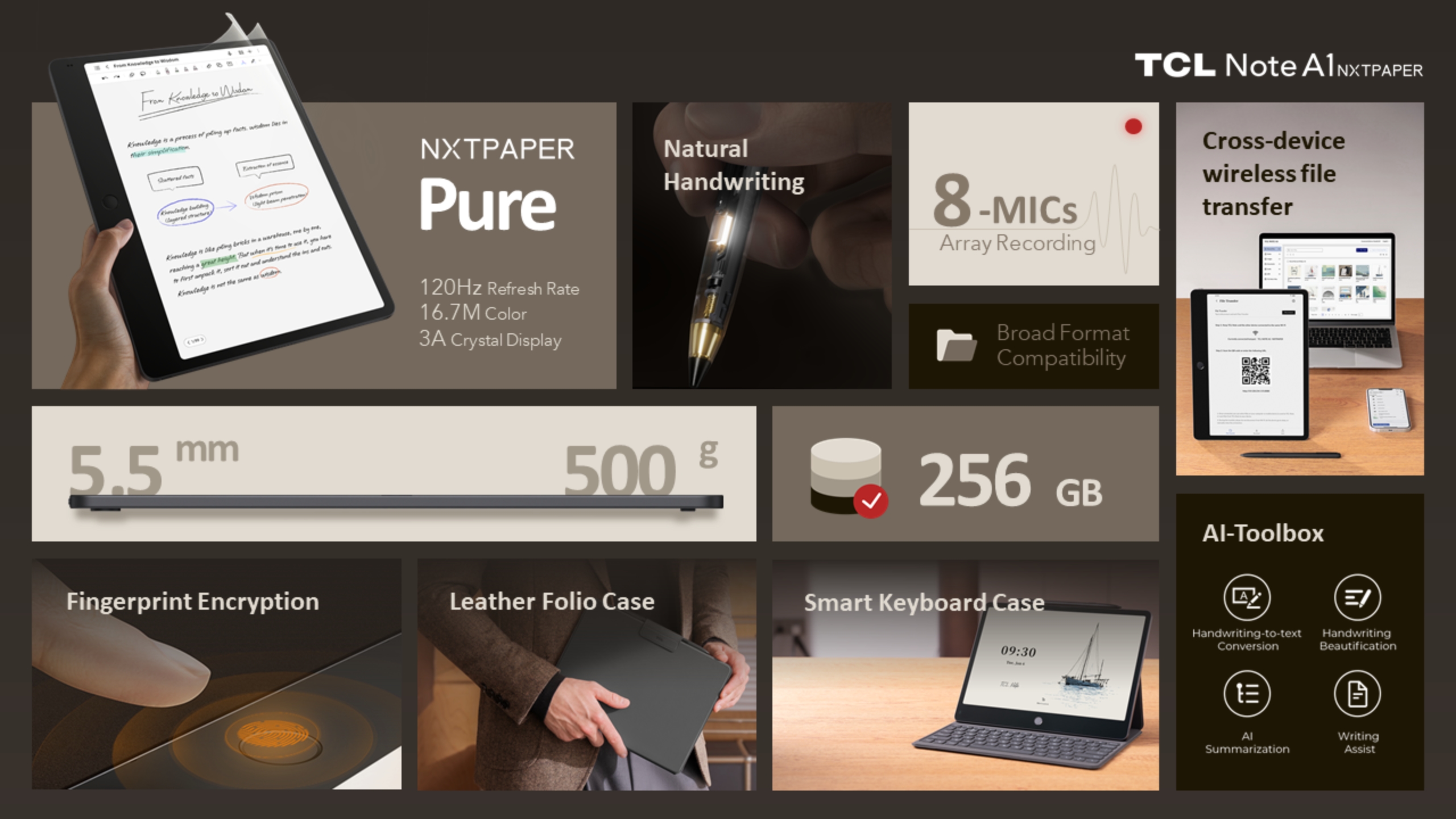
Hot on the tail of Amazon’s Kindle Scribe Colorosoft, TCL is introducing its own take on a distraction-free note-taking and reading device. Unlike the new Scribe, however, it doesn’t use E Ink. The TCL Note A1 NXTPAPER is the company’s latest device to use NXTPAPER, TCL’s custom paper-like LCD screen, which offers some of the qualities of E Ink without the limitations.
TCL says the 11.5-inch color “NXTPAPER Pure” display on the Note A1 has a 2,200 x 1,440 resolution and a 120Hz refresh rate, which should mean it looks clearer and feels much smoother to interact with than the color E Ink screen used on something like the reMarkable Paper Pro. The tablet supports TCL’s T-Pen Pro for taking notes and drawing on the screen, but also features eight built-in microphones for recording and transcribing audio. The Note A1 also has a 13-megapixel camera for scanning documents, an 8,000mAh battery and 256GB of storage, with the option to access cloud services like Google Drive or Microsoft OneDrive if you want it.
A diagram of different Note A1 NXTPAPER features arranged in a grid.
TCL
Unlike TCL’s past NXTPAPER tablets, the Note A1 doesn’t prioritize media consumption — it’s a productivity tool first and foremost. TCL says the device runs Android, but hasn’t shared whether it’ll have access to the Play Store. All the features the company has announced focus on taking notes and using AI to process and organize whatever you’ve written down. The device will also support real-time translation and “handwriting beautification,” among a collection of other AI-powered features.
Engadget has reached out to TCL for more information on the Note A1 NXTPAPER’s software. We’ll update this article if we hear back.
There will likely never be one “Goldilocks” version of these note-taking devices, but the Note A1 NXTPAPER’s combination of display and microphones does make it an intriguing, if limited, alternative to Boox’s E Ink tablets. Anyone interested in TCL’s new device won’t have to wait long to try it, either.
The TCL Note A1 NXTPAPER is available to order now through Kickstarter (with additional bonuses and discounts) and will officially go on sale for $549 at the end of February.
This article originally appeared on Engadget at https://www.engadget.com/mobile/tablets/tcl-introduces-its-own-take-on-a-color-kindle-scribe-140000207.html?src=rss
The six-decade flow of highly skilled Indian immigrants to the United States — a migration pattern that produced some of the country’s highest-earning households, several Nobel laureates, and the CEOs of Google, Microsoft, and Pepsi — appears to be grinding to a halt amid rising anti-Indian rhetoric from Republican officials and chaos in the visa system, according to New York Times.
Indian student arrivals at American universities fell 44% this year, even as Indians had just become the largest contingent of foreign students the previous year. The decline comes as top Trump administration officials have publicly accused Indian immigrants of gaming the system. Stephen Miller, the architect of the president’s immigration crackdown, declared on Fox News that Indians “engage in a lot of cheating on immigration policies that is very harmful to American workers.” Governor Ron DeSantis called the H-1B visa program “chain migration run amok.”
The hostility extends beyond policy circles. At a Hindu temple in Sugar Land, Texas, conservative Christian protesters gathered during the dedication of a 90-foot Hanuman statue, calling the deity “a demon god.” A U.S. Senate candidate wrote on social media: “Why are we allowing a false statue of a false Hindu God to be here in Texas? We are a CHRISTIAN nation.” Indian Americans’ median household income significantly outstrips that of white Americans, and about three-quarters hold at least a college degree. Foreign students have earned more engineering and computer science doctorates than American citizens and permanent residents for over two decades, according to the National Science Foundation. American tech giants have announced $67.5 billion in new investments in India in just the past few months.
If you received gift cards over the holidays, don’t throw them in a drawer and forget about them. While many gift card scams involve thieves demanding payments—for everything from taxes and fines owed to outstanding utility bills—via prepaid cards, there’s a less obvious type of fraud known as gift card draining.
How gift card draining scams work
If you forget how much money is on a gift card you received a while ago, you’re likely to check the balance online. You’ll typically need to enter your card number and PIN or security code, but some websites that claim to provide gift card balances are actually collecting that information to use it later. Always use the official site listed on the back of your card, or better yet, call or visit the retailer directly to confirm the balance.
In another version of this scam, fraudsters have set up sites offering to pay you for gift cards you don’t want or won’t use. They may claim to purchase your $100 card for $90—which sounds better than no money at all—but are simply out to steal the card information and drain the funds, and you’ll never actually see that cash. Sites promoting that type of deal are typically not legitimate.
When you purchase or receive a gift card, keep the receipt, note the starting balance, and register it with the retailer or transfer the funds from the gift card to your existing account if those options are available. If possible, change the PIN, and spend the funds sooner rather than later.
Gift card scams begin in the store
If you’re considering buying physical gift cards in the future, be sure to check for signs of a scam. Fraudsters will tamper with cards in stores by adding stickers over the barcode, so when you check out, the funds you pay go to their account rather than the card itself, which means the balance will be zero when the recipient goes to spend it. Scammers can also record the card number and activation PIN or security code, then reseal the packaging and replace the card on the rack—once the card is paid for or activated, they use the information to spend the funds.
Inspect gift cards purchased in-store carefully for added stickers, damage to the packaging, or scratch-off coating that has been removed. You can avoid some risk by purchasing gift cards online directly from the merchant’s website (as gift cards sold at steep discounts on social media or deal sites are often scams).
And if you do end up with a scam card, you can file a report with the gift card issuer, though your mileage may vary in terms of recovering funds. The Federal Trade Commission (FTC) has a list of fraud contacts for some of the most popular card retailers, including American Express, Visa, and Amazon.
2025 has been a tumultuous year for the car world. After years of EV optimism, revanchists are pushing back against things like clean energy and fuel economy. Automakers have responded, postponing or canceling new electric vehicles in favor of gasoline-burning ones. It hasn’t been all bad, though. Despite the changing winds, EV infrastructure continues to be built out and, anecdotally at least, feels far more reliable. We got to witness a pretty epic Formula 1 season right to the wire, in addition to some great sports car and Formula E racing. And we drove a whole bunch of cars, some of which stood out from the pack.
Here are the 10 best things we sat behind the wheel of in 2025.
10th: Lotus Emira V6
A Lotus Emira doesn’t need to be painted this bright color to remind you that driving can be a pleasure.
Credit:
Peter Nelson
Let’s be frank: The supposed resurgence of Lotus hasn’t exactly gone to plan. When Geely bought the British Automaker in 2017, many of us hoped that the Chinese company would do for Lotus what it did for Volvo, only in Hethel instead of Gothenburg. Even before tariffs and other protectionist measures undermined the wisdom of building new Lotuses in China, the fact that most of these new cars were big, heavy EVs had already made them a hard sell. But a more traditional Lotus exists and is still built in Norfolk, England: the Lotus Emira.
At CES 2025, NVIDIA spent the bulk of its presentation touting (what else) its leading position in the artificial intelligence arena. But it also spent time talking up new hardware, including its RTX 5000-series GPUs and Project Digits desktop supercomputer (later redubbed Spark). This year, the company’s website says it’s “lighting up CES 2026 with the power of AI.” To that end, NVIDIA is pulling out all the stops at its Vegas installation, promising hands-on demos in its booth at the Fontainebleau, replete with the “latest NVIDIA solutions driving innovation and productivity across industries.”
But don’t worry if you’re not on the ground in Vegas. Here’s how you can watch the livestream of the company’s January 5 press conference, and what to expect from NVIDIA at CES this year.
How to watch the NVIDIA CES 2026 keynote
NVIDIA CEO Jensen Huang will deliver a 90-minute keynote at CES 2026. The event will be livestreamed on January 5 at 4PM ET via NVIDIA’s website (and likely on YouTube as well). We’ll embed the link here once it’s available.
What to expect
NVIDIA’s game plan for CES is suitably vague so far, including “cutting-edge AI, robotics, simulation, gaming and content creation at the NVIDIA Showcase.” It also notes there will be more than 20 demos. Although we’re unsure if all of these will be shown during the keynote, we can at least expect to see them throughout the week of CES.
Given NVIDIA’s sky-high valuation and the fact that the health of the US and global economy seems increasingly linked to infrastructure spending on AI data centers – largely powered by chips from NVIDIA and its competitors — expect Huang’s remarks to be as closely followed by Wall Street investors as technology acolytes, if not more so. Will we get any insight on a successor to the company’s Blackwell chip? A more detailed look at how NVIDIA’s partners are applying AI to real-world robotics? Time will tell, but you might want to keep your stock portfolio in a split screen while taking in Huang’s presentation.
This article originally appeared on Engadget at https://www.engadget.com/computing/how-to-watch-the-nvidia-ces-2026-presentation-live-130028065.html?src=rss
An anonymous reader quotes a report from SecurityWeek: Insurance giant Aflac is notifying roughly 22.65 million people that their personal information was stolen from its systems in June 2025. The company disclosed the intrusion on June 20, saying it had identified suspicious activity on its network in the US on June 12 and blaming it on a sophisticated cybercrime group. The company said it immediately contained the attack and engaged with third-party cybersecurity experts to help with incident response. Aflac’s operations were not affected, as file-encrypting ransomware was not deployed.
[…] The compromised information, the insurance giant says, includes names, addresses, Social Security numbers, dates of birth, driver’s license numbers, government ID numbers, medical and health insurance information, and other data. “The review of the potentially impacted files determined personal information associated with customers, beneficiaries, employees, agents, and other individuals related to Aflac was involved,” Aflac said in a notification (PDF) on its website. The company is providing the affected individuals with 24 months of free credit monitoring, identity theft protection, and medical fraud protection services.
I was saddened to hear that Louis Gerstner passed this week. When I look back at the landscape of technology history, few turnarounds are as dramatic or as misunderstood as IBM’s near-death experience in the early 1990s. I was working at IBM during those turbulent times, before moving into the analyst world, and I had a front-row seat to the arrival of Louis V. Gerstner Jr in 1993.
The IBM I knew then was paralyzing itself. It was a massive, bureaucratic entity bleeding cash, fragmented into warring fiefdoms, and widely regarded by the market as a dinosaur destined for the tar pits. The common narrative is that Gerstner came in and fundamentally changed the company’s operations. While true to an extent, that view misses the crucial element of his success: Gerstner, the outsider from RJR Nabisco and American Express, understood something the entrenched IBM technologists didn’t—that in business, perception is reality.
The Heavy Lifting vs. the Vital Fix
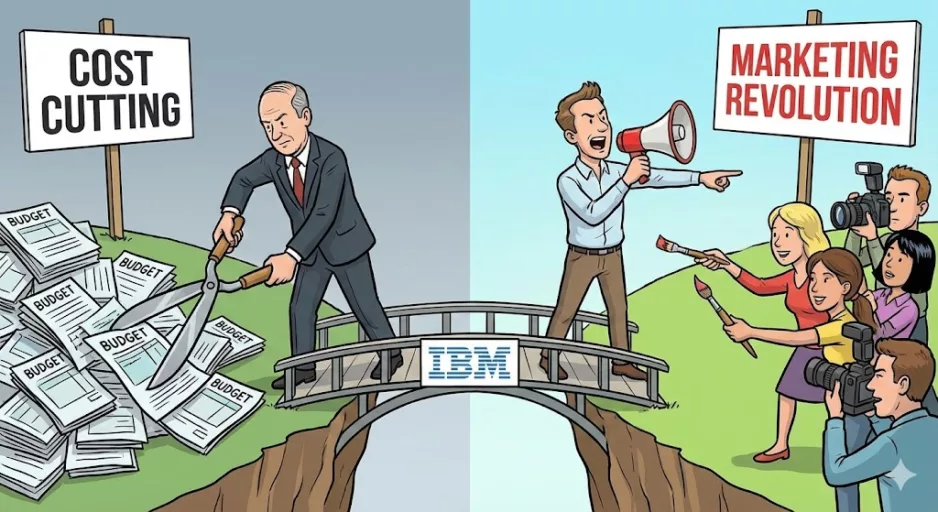
It is important to give credit where it is due. The operational restructuring of IBM—the brutal cost-cutting, the selling off of non-core assets and the financial stabilization—was largely the work of the board-selected Chief Financial Officer, Jerome “Jerry” York. York was the hatchet man IBM desperately needed to stop the financial hemorrhaging. He did the heavy lifting on the balance sheet.
However, as an analyst looking back, I can assure you that if York’s cuts were the only medicine administered, IBM would have simply become a smaller, more efficient corpse. The company’s brand was toxic. Enterprises were actively looking for alternatives because nobody wanted to bet their career on a company that the press and Wall Street had declared terminal. Gerstner recognized that you cannot cost-cut your way to growth if the market perceives you as irrelevant.
The Unprecedented Marketing Engine
This is where Gerstner’s genius truly lay, and it’s a lesson I fear the industry has largely forgotten. Upon arriving, he realized IBM’s marketing was a mess of disjointed messages from dozens of ad agencies, all confusing the customer.
Gerstner didn’t just tweak the marketing; he revolutionized it. He famously consolidated IBM’s entire global advertising account into a single agency, Ogilvy & Mather, a move of unprecedented scale. He understood that before IBM could sell its products, it had to sell its competence and its future.
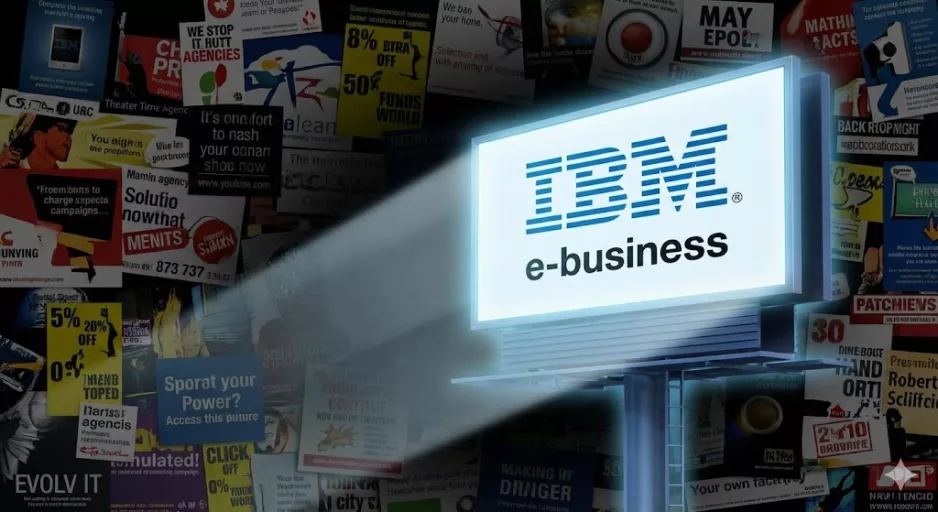
He funded a marketing effort that remains largely unmatched in terms of staffing, budget and, crucially, executive air cover. He empowered marketing leadership to reshape how the company talked, looked and acted. We saw the launch of the “Solutions for a Small Planet” campaign and the brilliant embrace of the term “e-business,” which positioned IBM not as a legacy hardware vendor, but as the essential architect of the internet age. Gerstner knew that to change the reality of IBM’s business, he first had to change the market’s perception of it. And it worked.
IBM’s Amnesia and the Industry’s Blind Spot
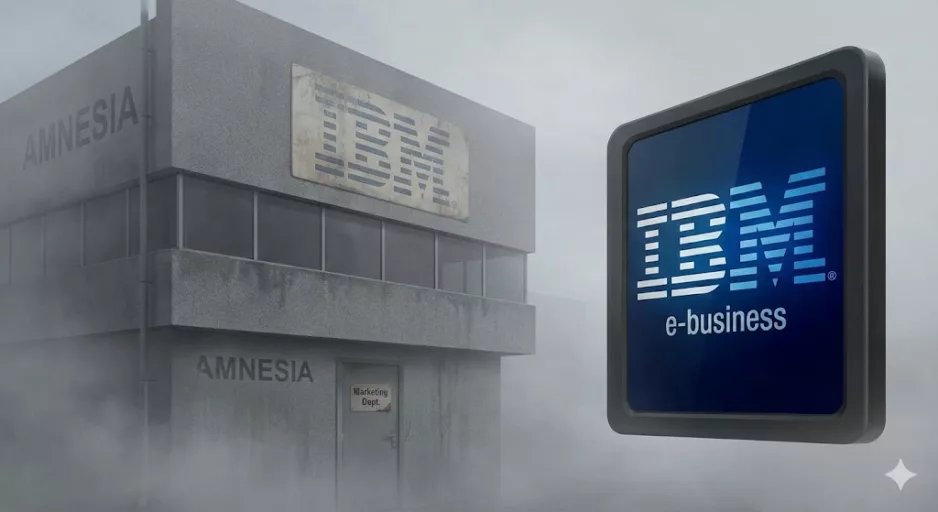
Sadly, IBM appears to have suffered a severe case of institutional amnesia regarding what actually saved it. Following Gerstner’s departure in 2002, the company slowly reverted to viewing marketing largely as a discretionary cost center rather than a strategic lever.
Today, IBM suffers from chronic under-marketing. Despite pioneering work in AI with Watson long before ChatGPT, and significant strengths in hybrid cloud and quantum computing, IBM’s brand presence is muted. It allowed competitors to define the narratives around cloud and AI because it stopped funding the massive, perception-shifting campaigns that defined the Gerstner era.
This isn’t just an IBM problem; it is a recurring failure mode in the tech industry. Too many engineering-led companies believe that “good products sell themselves.” They don’t. In a noisy marketplace, you need air cover. Companies struggling with valuation or market relevance today often look toward operational fixes when their real problem is a failure to manage perception aggressively. A CEO cannot succeed if the market believes their ship is sinking, regardless of how hard the crew is bailing water.
Gerstner’s Critical Flaw: Succession
For all my admiration of Gerstner’s execution, his tenure wasn’t perfect. His most significant failure—and the one that ultimately undid much of his legacy—was his inability to adequately select and train a successor who understood the entire playbook.
Gerstner’s handpicked successor, Sam Palmisano, was a brilliant sales leader and operator, but he lacked Gerstner’s intuitive grasp of brand stewardship. Palmisano, and subsequent CEOs, slowly dismantled the centralized marketing apparatus and reduced the investment in brand perception, focusing instead on financial engineering like stock buybacks. They inherited a healthy patient and slowly stopped administering the vitamins that kept it vibrant.
Wrapping Up
Louis Gerstner’s time at IBM serves as the ultimate case study in corporate turnaround psychology. He proved that while financial discipline keeps you alive, it is the vigorous management of market perception that gives you a life worth living. He bought IBM decades of additional relevance by spending aggressively to convince the world that IBM mattered. It is a lesson that IBM has tragically forgotten, but one that every current tech CEO should study if they wish to maintain their brand value and ensure their own tenure is deemed a success.
CES 2026 is right around the corner, and the pre-show hype cycle/ early reveals suggest, yes, there’s going to be an awful lot of AI-powered insert-product-category-here alongside, thankfully, some major announcements from the likes of Intel, Sony and NVIDIA.
Intel is finally unveiling its Panther Lake (Core Ultra Series 3) chips. The first chips built on Intel’s 2nm process could offer a 50 percent performance boost, which is sorely needed amid intense competition. NVIDIA’s Jensen Huang is taking the stage for a keynote expected to feature a lot of AI hype, while AMD’s Lisa Su will likely counter with new Ryzen 9000-series chips and the latest on AI upscaling tech.
LG
Over the years, CES has consistently been the show for TV innovation and heady next-gen displays. This year, we’ll be talking a lot about Micro RGB. LG is introducing a new Micro RGB Evo panel with over 1,000 dimming zones, while Samsung plans to launch a full range of Micro RGB TVs from 55 inches to 115 inches. In 2025, Sony introduced a new RGB LED panel that uses individual Mini LED backlights in red, green and blue to produce even brighter, more accurate colors. The company has trademarked “True RGB,” which could become what Sony calls its spin on RGB displays.
We’ll be covering all the keynotes, press conferences and big reveals in person. And figuring which of the 100s of AI-branded devices and gadgets are worth reporting on.
I’m also taking bets on the most niche celebrity appearance/endorsement at CES 2026. We’ve seen 50 Cent, Big Bird, Martha Stewart, Archbishop Desmond Tutu, Guillermo del Toro, Justin Bieber and will.i.am (multiple times), so who will join this pantheon of stars?
The Music Studio 5 and 7 will be on display at CES 2026.
Samsung
It isn’t just TVs with Samsung. The company has already teased a pair of new understated speakers. Likely inspired by the Samsung Frame, the new Wi-Fi speakers, called the Music Studio 5 and 7, blend into your living room. The Music Studio 5 has a four-inch woofer and dual tweeters, with a built-in waveguide to deliver better sound. The Music Studio 7 comes with a 3.1.1-channel spatial audio with top-, front-, left- and right-firing speakers. No prices yet. Expect to hear more at CES itself or once the speakers arrive in stores. And as the press image above suggests, we can’t wait to sit stoically in front of one, with a glass of water (?).
And a 1-inch sensor, 200MP telephoto camera and 3,500 nit display.
Xiaomi
Xiaomi’s latest smartphone is once again a spec beast. It features a 1-inch sensor 50MP f/1.67 main camera and 1/1.4-inch 200MP periscope telephoto camera. And it also has an interesting new mechanical feature: a manual zoom ring. This surrounds the rear camera unit.
Both the regular Xiaomi 17 Ultra and Leica edition come with a Snapdragon 8 Elite Gen 5 SoC with up to 16GB of LPDDR5X RAM and 1TB of UFS 4.1 storage, along with a 6.9-inch 120Hz AMOLED display that can hit up to 3,500 nits of peak brightness.
But the camera features are the standout elements. The 17 Ultra by Leica adds some very, well, Leica touches: a two-tone finish, red dot status symbol on the front, textured edges and film simulations, like Leica’s Monopan 50 black and white. Xiaomi says the zoom ring “[eliminates] the need for tedious screen taps… and can detect displacements as small as 0.03mm.” It can also be reprogrammed for manual focus.
Xiaomi’s 17 Ultra by Leica and the regular 17 Ultra start at CNY 7,999 ($1,140) and CNY 6,999 ($995), on par with the latest high-end Pixel 10s and Galaxy S25s.
A Google support page in Hindi says the feature is ‘gradually rolling out to all users.’
A Google support page in Hindi indicates the ability to change your Gmail address might be coming. The feature would allow you to replace your current @gmail.com address with another. Your old address would remain active as an alias on the account, and all your data would stick around, unaffected. The support page (translated) says “the ability to change your Google Account email address is gradually rolling out to all users.”
Meta has agreed to acquire viral AI agent startup Manus, “a Singapore-based AI startup that’s become the talk of Silicon Valley since it materialized this spring with a demo video so slick it went instantly viral,” reports TechCrunch. “The clip showed an AI agent that could do things like screen job candidates, plan vacations, and analyze stock portfolios. Manus claimed at the time that it outperformed OpenAI’s Deep Research.” From the report: By April, just weeks after launch, the early-stage firm Benchmark led a $75 million funding round that assigned Manus a post-money valuation of $500 million. General partner Chetan Puttagunta joined the board. Per Chinese media outlets, some other big-name backers had already invested in Manus at that point, including Tencent, ZhenFund, and HSG (formerly known as Sequoia China) via an earlier $10 million round.
Though Bloomberg raised questions when Manus started charging $39 or $199 a month for access to its AI models (the outlet noted the pricing seemed “somewhat aggressive… for a membership service still in a testing phase,”) the company recently announced it had since signed up millions of users and crossed $100 million in annual recurring revenue. That’s when Meta started negotiating with Manus, according to the WSJ, which says Meta is paying $2 billion — the same valuation Manus was seeking for its next funding round.
For Zuckerberg, who has staked Meta’s future on AI, Manus represents something new: an AI product that’s actually making money (investors have grown increasingly twitchy about Meta’s $60 billion infrastructure spending spree). Meta says it’ll keep Manus running independently while weaving its agents into Facebook, Instagram, and WhatsApp, where Meta’s own chatbot, Meta AI, is already available to users.
The Wall Street Journal reports that Boston’s once-booming biotech sector has hit a sharp downturn, leaving newly minted Ph.D.s struggling to find work as venture funding dries up, lab space sits empty, and companies downsize or relocate amid rising costs and policy uncertainty. The Wall Street Journal reports: Boston’s biotech sector, long a vital economic engine for one of America’s wealthiest metro areas, is sputtering. A double whammy of cutbacks in venture capital and government funding have taken a toll, leading to layoffs and struggles for job seekers. For workers who thought they would easily launch into a well-paying science career, the downturn has been especially harsh.
Massachusetts experienced a slight decline in its roughly 65,000 biotech research-and-development jobs in 2024 after years of mostly strong increases, including during the Covid-19 pandemic, according to federal data. The numbers indicate that job losses continued through at least June, while hiring remains sluggish. By the end of September, nearly 28% of greater Boston’s laboratory space sat empty, according to the latest estimates from real-estate firm CBRE. “Every stage of the life cycle has been impacted by policy or regulatory uncertainty this year,” said Kendalle Burlin O’Connell, chief executive of MassBio, an industry trade group. The impact has hit startups especially hard, she said.
A continued downturn poses risks for a region where workers will put up with sky-high real-estate costs if they can land high-paying jobs. Massachusetts faces competition from other states and China, which are eager to peel away talent and investment. “There are states and countries chasing us every single day,” Gov. Maura Healey said in an interview. In late October, the Democrat testified before the Massachusetts legislature in support of a $400 million “competitiveness agenda” that she is seeking to spur new investment and supplement research funding lost this year. Lawmakers are reviewing the bill, a House spokesman said.
Amid a global DDR5 shortage and soaring prices, Russian hardware enthusiasts are experimenting with do-it-yourself DDR5 RAM by sourcing empty PCBs and soldering memory chips by hand. Tom’s Hardware reports: The idea comes from Russian YouTuber PRO Hi-Tech’s Telegram channel, where a local enthusiast known as “Vik-on” already performs VRAM upgrades for GPUs, so this is a relatively safe operation for him. According to Vik-on, empty RAM PCBs can be sourced from China for as little as $6.40 per DIMM. The memory chips themselves, though, that’s a different challenge.
The so-called spot market for memory doesn’t really exist at the moment, since no manufacturer has the production capacity to make more RAM, and even if they did, they’d sell to better-paying AI clients instead. Still, you can find SK Hynix and Samsung chips across Chinese marketplaces if you search for the correct part number, as shown in the attached screenshots.
Moreover, the Telegram thread says it would cost roughly 12,000 Russian Rubles ($152) to build a 16 GB stick with “average” specs, which is about the same as a retail 16 GB kit. There’s also a ZenTimings snapshot showing CL28 timings, claiming that even relatively high-end DDR5 RAM can be built using this method, but it won’t be cost-effective. Therefore, it doesn’t make too much sense just yet to get the BGA rework station out and assemble your own DDR5. Things are expected to get worse, though, so maybe these Russians are on to something.
Longtime Slashdot reader theodp writes: MacRumors reports that Apple plans to expand iPhone and Apple Watch driver’s licenses to 7 U.S. states (CT, KY, MS, OK, UT, AR, VA). A recent convert is the State of Illinois, whose website videos demo how you can use your Apple Wallet license to display proof of identity or age the next time you get carded by a cop, bartender, or TSA agent. The new states will join 13 others who already offer driver’s licenses in the Wallet app (AZ, MD, CO, GA, OH, HI, CA, IA, NM, MT, ND, WV, IL).
There’s certainly been a lot of foot-dragging by the states when it comes to embracing phone-based driver’s licenses — Slashdot reported that Iowa was ready to launch a mobile driver’s license in 2014; they didn’t get one until nearly a decade later, in late 2023.
An anonymous reader quotes a report from Bloomberg: Most people use dating apps to find love. Tiffany Chau used one to hunt for a summer internship. This fall, the 20-year-old junior at California College of the Arts tailored her Hinge profile to connect with people who could offer job referrals or interviews. One match brought her to a Halloween party, where she networked in hopes of landing a product-design internship for the summer. While there, she got some tips from someone who had recently interviewed at Accenture. As for the connection with her date? Not so much. “I feel like my approach to the dating apps is it being another networking platform like everything else, like Instagram or LinkedIn,” Chau said.
Chau is among a cadre of workers who are using dating apps to boost their job searches. They’re recognizing that the online job hunt is broken as unemployed workers flood the system, AI screens out resumes and many job matching programs are overwhelmed. Automation has squeezed human contact out of hiring, which has pushed applicants to seek any path to a live hiring manager, no matter the means.
The overall US unemployment rate continued to climb throughout 2025, reaching 4.6%, according to the Bureau of Labor Statistics. And while the number of unemployed high school graduates held steady at about 4.4% in November, the rate for workers with a bachelor’s degree rose to 2.9% from 2.5% a year ago. About a third of dating app users said they had sought matches for job hook-ups, according to a ResumeBuilder.com survey of about 2,200 US dating site customers in October. Two-thirds targeted potential paramours who worked at a desirable employer. Three-quarters said they matched with people working in roles they wanted. “People are doing it to expand their networks, make connections, because the best way to get a job today is who you know,” said Stacie Haller, ResumeBuilder.com’s chief career advisor. “Networking is the only way people are rising above the horror show that the job search is today.”
OpenAI is offering a $555,000 salary (plus equity) to recruit a new “head of preparedness,” a high-pressure role tasked with anticipating and mitigating extreme AI risks. “This will be a stressful job, and you’ll jump into the deep end pretty much immediately,” said Sam Altman as he launched the hunt to fill “a critical role” to “help the world.” The Guardian reports: In what may be close to the impossible job, the “head of preparedness” at OpenAI will be directly responsible for defending against risks from ever more powerful AIs to human mental health, cybersecurity and biological weapons. That is before the successful candidate has to start worrying about the possibility that AIs may soon begin training themselves amid fears from some experts they could “turn against us.”
The successful candidate will be responsible for evaluating and mitigating emerging threats and “tracking and preparing for frontier capabilities that create new risks of severe harm.” Some previous executives in the post have lasted only for short periods. Altman said on X as he launched the job search: “We have a strong foundation of measuring growing capabilities, but we are entering a world where we need more nuanced understanding and measurement of how those capabilities could be abused, and how we can limit those downsides both in our products and in the world, in a way that lets us all enjoy the tremendous benefits. These questions are hard and there is little precedent.”
One user responded sardonically: “Sounds pretty chill, is there vacation included?” What is included is an unspecified slice of equity in OpenAI, a company that has been valued at $500 billion.
Nvidia has completed its previously announced $5 billion investment in Intel, buying over 214 million shares at a fixed price after the deal received clearance from Federal Trade Commission. “The leading AI chip designer said in September it would pay $23.28 per share for Intel common stock, in a deal that is seen as a major financial lifeline for the chipmaker after years of missteps and capital intensive production capacity expansions drained its finances,” reports Reuters.
Because the things that happen behind closed doors are usually the steamiest things to happen (especially in this case), YouTuber GopherDope (easily some of my favorite dope, beaverdope too) went and constructed a clear dishwasher to see what happens in there during a wash cycle. SPOILER: lots of water blasting everywhere. Looks like it gets the dishes pretty clean though. My dishwasher? It stops after it can’t see any more food particles, then starts licking the floor. “You’re talking about your dog.” You’re very perceptive. *offering plate* Care for a cookie? “I’ll pass.” Smart too.
Imran Ahmed’s biggest thorn in his side used to be Elon Musk, who made the hate speech researcher one of his earliest legal foes during his Twitter takeover.
Now, it’s the Trump administration, which planned to deport Ahmed, a legal permanent resident, just before Christmas. It would then ban him from returning to the United States, where he lives with his wife and young child, both US citizens.
After suing US officials to block any attempted arrest or deportation, Ahmed was quickly granted a temporary restraining order on Christmas Day. Ahmed had successfully argued that he risked irreparable harm without the order, alleging that Trump officials continue “to abuse the immigration system to punish and punitively detain noncitizens for protected speech and silence viewpoints with which it disagrees” and confirming that his speech had been chilled.
Stingless bees from the Amazon have become the first insects to be granted legal rights anywhere in the world, in a breakthrough supporters hope will be a catalyst for similar moves to protect bees elsewhere. From a report: It means that across a broad swathe of the Peruvian Amazon, the rainforest’s long-overlooked native bees — which, unlike their cousins the European honeybees, have no sting — now have the right to exist and to flourish. Cultivated by Indigenous peoples since pre-Columbian times, stingless bees are thought to be key rainforest pollinators, sustaining biodiversity and ecosystem health.
But they are faced with a deadly confluence of climate change, deforestation and pesticides, as well as competition from European bees, and scientists and campaigners have been racing against time to get stingless bees on international conservation red lists. Constanza Prieto, Latin American director at the Earth Law Center, who was part of the campaign, said: “This ordinance marks a turning point in our relationship with nature: it makes stingless bees visible, recognises them as rights-bearing subjects, and affirms their essential role in preserving ecosystems.”