Start 2026 With A New RTX 50 Gaming Laptop For Up To $500 Off

Start 2026 With A New RTX 50 Gaming Laptop For Up To $500 Off
If you’re not feeling the whole ‘New year, new me’ thing, then how about, ‘New year, new laptop’ instead? It’s an opportune time to buy a new gaming laptop because (A) the future is murky with RAM and storage prices trending in the wrong direction, and (B) there are a bunch of models with GeForce RTX 50 series firepower that are on sale right

Trump Mobile Blames Government Shutdown For $499 Gold T1 Android Phone Delay

Trump Mobile Blames Government Shutdown For $499 Gold T1 Android Phone Delay
Color us not surprised that the Trump Phone (a.k.a. T1) has been delayed yet again, with delivery now slated for sometime this year (happy New Year, btw). The phone, which has been promised as a golden bastion of free speech and high-end luxury, was first slated for an August 2025 release, then rescheduled for the end of the year. Trump blames

MSI Unveils 5-Layer Tandem 4K QD-OLED Gaming Monitors With Big Upgrades

MSI Unveils 5-Layer Tandem 4K QD-OLED Gaming Monitors With Big Upgrades
MSI is touting some significant image quality enhancements to its next round of QD-OLED gaming monitors that promise to deliver even inkier black levels, more uniform luminance, and a tougher screen surface that is more scratch resistance than its existing models. Not that you should be scratching your monitor, but if you own cats who like

The Man Taking Over the Large Hadron Collider

Mark Thomson, a professor of experimental particle physics at the University of Cambridge, takes over as CERN’s director general this week, and one of his first major decisions during his five-year tenure will be shutting down the Large Hadron Collider for an extended upgrade. The shutdown starts in June to make way for the high-luminosity LHC — a major overhaul involving powerful new superconducting magnets that will squeeze the collider’s proton beams and increase their brightness. The upgrade will raise collisions tenfold and strengthen the detectors to better capture subtle signs of new physics. The machine won’t restart until Thomson’s term is nearly over.

Thomson is far from disconsolate about the downtime. “The machine is running brilliantly and we’re recording huge amounts of data,” he told The Guardian. “There’s going to be plenty to analyse over the period.” Beyond the upgrade, Thomson must shepherd CERN’s plans for the Future Circular Collider, a proposed 91km machine more than three times the size of the current collider. Member states vote on the project in 2028; the first phase carries an estimated price tag of 15 billion Swiss francs (nearly $19 billion).


Read more of this story at Slashdot.

Apple Vision Pro’s Future Could Be In Big Trouble As Production Stalls

Apple Vision Pro's Future Could Be In Big Trouble As Production Stalls
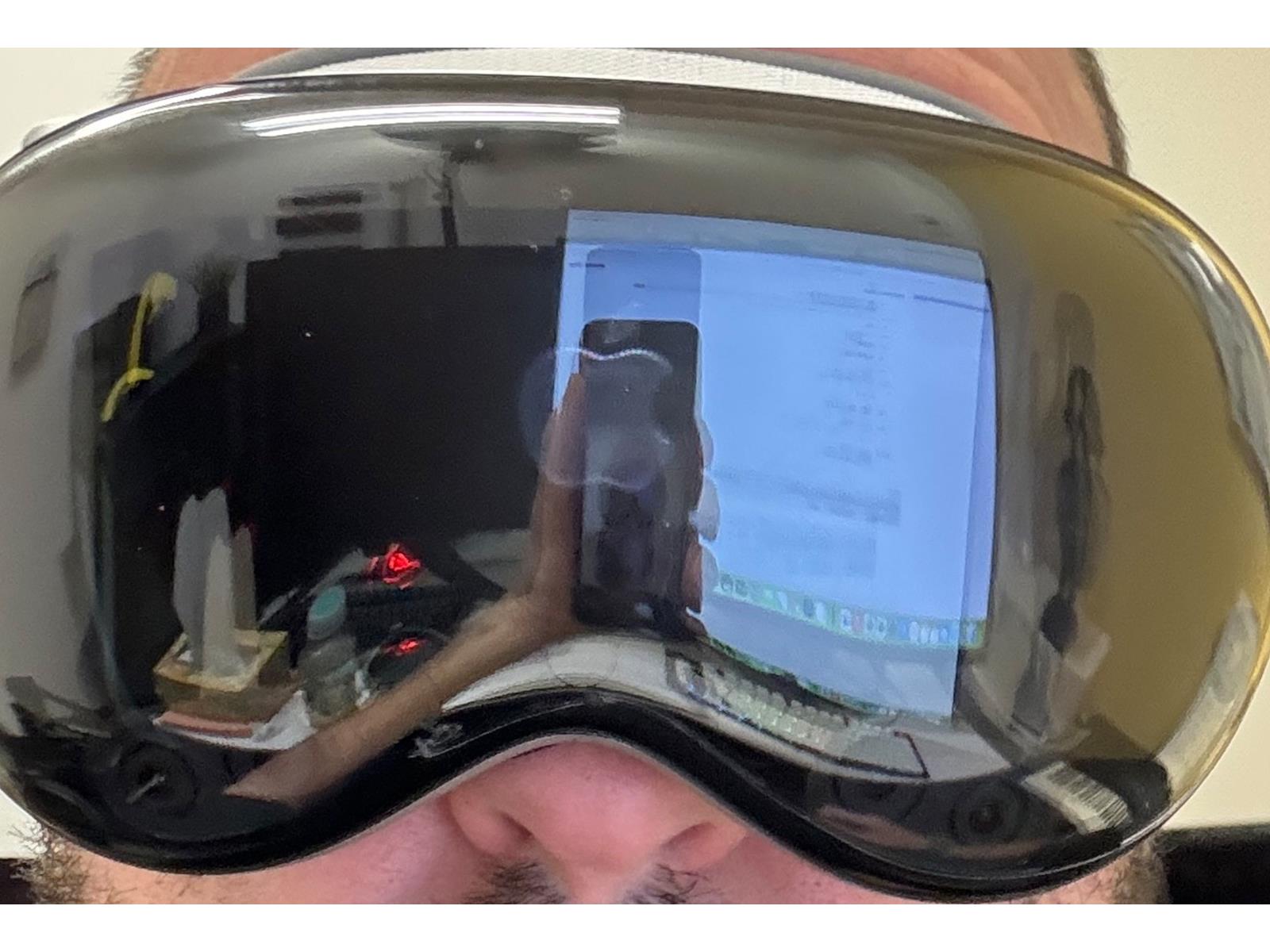
After all the chatter about a follow-up version of Apple’s Vision Pro headset, as well as a possible cheaper variant, it’s suddenly looking like the company’s VR headset could end up as little more than a footnote. We’re not there yet, though Apple is reportedly pulling back on its efforts to procure more shipments and market its pricey gadget

In 2025, quitting social media felt easier than ever

For a tech writer, being very offline is sort of like being a marathon coach who doesn’t run. So in 2025, I tried to reverse years of studied avoidance towards the most ubiquitous technological phenomenon on earth — I got back on social media. The change was short-lived. 

My first exodus from the feeds took some work — disabling notifications, removing apps from my homescreen and then deleting accounts entirely. This time, the phone put itself down. The whole thing has simply lost its luster.

I started with Instagram. Every experience went like this: I’d see a single post from one of the rare family members or IRL friends who are active on the platform. Next, I was fed a sponsored post, followed by suggestions to follow randos. After that, a series of influencer videos that, admittedly, appeal to my taste (funny/absurdist women and dissertations on urban planning). That was followed up with more sponsored posts, mostly from brands I’d looked up for work. Then it’d circle back to the influencers. My eyes glazed over and I tossed the phone aside.  

Years back, the platform gave off a jolt of quasi-social connection that I’d spend hours sucking up. I fed on pointless thoughts from an ex-coworker, vacation reels from a college roommate, a half-baked loaf of bread that an old friend dropped on the floor but took a picture of anyway. Now it’s a bare sliver of that stuff, shoehorned between towers of sponsored content and posts from people who make or promote their living on Instagram. The real people have left. The connection is gone. The FOMO is no more.   

I experienced some variation of the same disappointment on every platform I rejoined. When I got back on TikTok a few months after the ban, it felt like a frenzied shopping mall. Every video seems to be about four seconds long and most are promotional and/or shoppable. YouTube Shorts is drowning in AI-generated videos, and I don’t hit up social media to watch fake footage of desperate wild animal babies clambering onto the boats of helpful humans. My life has no need for simulated toddlers admonishing their pets. Occasionally, I’d hit on something compelling: a clip from late night TV, a stupidly decadent dessert recipe, people from other countries explaining cultural subtleties. 

But for me, these social media platforms are no longer velcro for the eyes. I remember losing focus, spending long hours on YouTube Shorts and IG. I’d look up bleary-eyed and shame-faced after hours scrolling TikTok’s For You Page. Now, after a few minutes, a bored ickiness sets in. I feel like I’m trapped in a carnival of bots hawking shampoo at me and I just want to go home. 

It’s not a mystery how or why things feel different; The answer is always money. These billion- and trillion-dollar companies have shareholders who prize year-over-year performance over anything else. So we get more sponsored posts on Instagram. TikTok purposefully, enthusiastically overloads itself with shoppable content (which isn’t going to change no matter who owns it). YouTube is obsessed with engagement so it ends up rewarding people who flood the platform with AI slop. These platforms aren’t about human connections and the spread of creativity — the stuff that used to draw me in — they’re thinly varnished ecommerce sites sprinkled with brute-forced AI oddities.   

I’d be sadder about the whole thing if I thought it could be any different. These companies are among the most valuable in the world. The fact that I can’t connect with my fellow common people using their services is not surprising. The change isn’t even driving everyone away. Instagram reported more users than ever this year, to the tune of 35 percent of the planet. Billions of users still scroll TikTok and watch YouTube Shorts. So maybe it’s just a me thing.  

And I have options. Over-monetization may have made me not want to engage with a few social media behemoths, but things aren’t so dire everywhere. Bluesky reminds me of Twitter before X. I take comfort in seeing posts that prove most people are as dismayed as I am over a government and wider economic system that are nakedly uninterested in serving the public. The hot takes aren’t quite as funny as they were on Twitter years back — maybe it’s just all been said before or perhaps things have gotten too dire for levity. I still don’t end up spending a lot of time on the platform, however. It’s not as weird as it was before the defection and I get tired of the stream of news headlines contextualized with tut-tutting and handwringing — I’m perfectly capable of doing that myself.  

It’d be easy to say that social media just isn’t my thing, but that’s not true because I can’t quit Reddit — the shining exception to my social media ennui. It feels filled with actual people. Ads exist, but in a subdued, manageable way. And every contributor, commenter and moderator I’ve come across on the app is militantly vigilant against the onslaught of artificially generated content. I also like the organizational structure. I know my Home tab will only expose me to my chosen subs and I derive great joy from happy cows, greeble-chasing cats, enigmatic night feelings and freaky abandoned spaces. I use my local subreddit r/Albuquerque daily to answer questions and keep tabs on the world (directly) around me. 

Sadly, Reddit is an outlier, a misfit exception to the rule, and now that it’s gone public, it may follow a similar monetization push. Bluesky is tiny, new and not yet profitable, so who knows where its financial journey will lead it (though the “world without Caesars” shirt gives us some hope). 

There’s something lamentable about the loss of the connections we gleaned from platforms that were once compelling, engrossing and rife with the creativity of our fellow humans. Ultimately, any public-facing company that prioritizes profits over everything else has no incentive to look out for its users. So I don’t expect any of the larger social platforms to pull back on their monetization marches. For now, I’ve decided I’m comfortable with my admittedly narrow interaction with the world of social media. As a Gen-Xer, online-first wasn’t how my relationship to the world started out. And I’m pretty confident I know enough about other tech-related stuff to be useful to my editors and readers without a black belt in social. (Ed. note: She is.) Besides, Karissa’s got us covered. 

This article originally appeared on Engadget at https://www.engadget.com/social-media/in-2025-quitting-social-media-felt-easier-than-ever-140000374.html?src=rss


You Can’t Trust Your Eyes To Tell You What’s Real Anymore, Says Instagram Head

Instagram head Adam Mosseri closed out 2025 by acknowledging what many have long suspected: the era of trusting photographs as accurate records of reality is over, and the platform he runs will need to fundamentally adapt to an age of “infinite synthetic content.”

In a slideshow posted to Instagram, Mosseri wrote that for most of his life he could safely assume photographs or videos were largely accurate captures of moments that happened, adding that this is clearly no longer the case. He predicted a shift from assuming what we see is real by default to starting with skepticism and paying attention to who is sharing something and why.


Read more of this story at Slashdot.

How to watch the Bosch CES 2026 press conference live

You may know Bosch as a home appliance brand (via its partnership with Siemens), but the German multinational is generally more focused on providing underlying technology and engineering solutions to auto, home and manufacturing partners across the globe. It’s fitting, then, that much of what it’s showing off at CES 2026 is more intended to be licensed to other companies versus Bosch-branded products you’ll be seeing on store shelves.

Case in point is Bosch’s automotive plans at CES. The company will present “AI in the car,” or more specifically, in the cockpit of the car. “Bosch’s AI-powered cockpit makes driving more comfortable, intuitive, and safer for all occupants,” Bosch board member Markus Heyn said in a press release. We’ll get into all the details below, as well as how to tune in to the press conference on Monday.

How to watch Bosch’s CES 2026 presentation

You can livestream the event on Monday, January 5 at 12PM ET via the Bosch press page. (If the stream is embeddable, we’ll also include it here.)

What to expect

Bosch will be setting up shop in the Central Hall of the Las Vegas Convention Center (booth 16203), where the company will be focusing on its three big themes — mobility, smart home integrations and manufacturing — all of which will include hardware, software and AI solutions.

Like many other CES 2026 exhibitors, look for Bosch to emphasize its partnerships with the big dogs of the AI space at the show. For instance, that AI-powered car cockpit mentioned above will feature integrations with both Microsoft and NVIDIA. For instance, Bosch is touting the ability to use voice commands to join a Teams call, while the car’s system will automatically activate adaptive cruise control. And it’s noting that NVIDIA’s software suites will help manage “real-time sensor processing and vision-language models.”

Here’s a glimpse of what the booth will look like:

This article originally appeared on Engadget at https://www.engadget.com/ai/how-to-watch-the-bosch-ces-2026-press-conference-live-130020898.html?src=rss

“Streaming stops feeling infinite”: What subscribers can expect in 2026

We’re far from streaming’s original promise: instant access to beloved and undiscovered titles without the burden of ads, bundled services, or price gouging that have long been associated with cable.

Still, every year we get more dependent on streaming for entertainment. Despite streaming services’ flaws, many of us are bound to keep subscribing to at least one service next year. Here’s what we can expect in 2026 and beyond.

Subscription prices keep rising, but perhaps not as expected

There’s virtually no hope of streaming subscription prices plateauing in 2026. Streaming companies continue to face challenges as content production and licensing costs rise, and it’s often easier to get current customers to pay slightly more than to acquire new subscribers. Meanwhile, many streaming companies are still struggling with profitability and revenue after spending years focusing on winning subscribers with content.

Read full article

Comments

The best gear to help you stick to your New Year’s resolutions

The start of a new year always feels like a reset button. Everyone’s talking about moving more, eating better, sleeping longer or finally taming their digital chaos. But resolutions rarely survive on willpower alone. The right tools or piece of tech can make those goals easier to keep by turning motivation into a habit. Whether you’re trying to close your rings, track your progress or just build better routines, these smart picks make self-improvement feel a little more achievable, and a lot more enjoyable.

Gear that can help you stick to your New Year’s resolutions

This article originally appeared on Engadget at https://www.engadget.com/the-best-gear-to-help-you-stick-to-your-new-years-resolutions-130000389.html?src=rss

Waymos Are Now Coming For Your Coveted San Francisco Parking Spots

An anonymous reader quotes a report from the San Francisco Chronicle: A long stretch of curb in San Francisco’s Mission District might contain a whole menagerie of parked vehicles: hatchbacks, SUVs, dusty pick-ups, chic Teslas. And recently, Waymo robotaxis. That’s what Kyle Grochmal saw walking through the northeast Mission District on Monday afternoon. Cutting down York Street, he glimpsed a tell-tale white electric Jaguar in one of the coveted one-hour spots, its sensors spinning. The Waymo sat there for at least 20 minutes, Grochmal said. He whipped out his cell phone and started recording. After the Waymo drove off, another one showed up within an hour and took the same spot.

“This is something I started to notice about six months ago,” Grochmal said, recalling how disorienting it was to be strolling down a largely deserted sidewalk, and suddenly hear the purring motor and soft click of autonomous vehicle cameras. He’d look up to see a Waymo “just sitting there, not loading anyone.” But Waymo’s use of public curb space raised questions for Grochmal, who wonders whether San Franciscans are prepared to have their infrastructure dominated by autonomous vehicles. “Say Tesla gets to self-driving, so people have personal AVs,” he said. “So then do people from Palo Alto get dropped off in San Francisco and let their cars drive around all day searching for free parking?”

Such a future seems particularly unsettling in the northeast Mission, where snug streets couldn’t handle much traffic, and competition for parking is already fierce. A recent influx of Artificial Intelligence companies brought many more workers and cars, as well as robotaxis that trawl the blocks, waiting for fares. It makes sense, to Grochmal, that some of them wind up squatting in one-hour spaces. […] Still, it’s conceivable that residents will lose patience with Waymo, and other AV companies, as the fleets scale up and the vehicles compete more aggressively with humans for parking.


Read more of this story at Slashdot.

Film Technica: Our top picks for the best films of 2025

Editor’s note: Warning: Although we’ve done our best to avoid spoiling anything too major, please note this list does include a few specific references that some might consider spoiler-y.

It’s been a strange year for movies. Most of the big, splashy tentpole projects proved disappointing, while several more modest films either produced or acquired by streaming platforms—and only briefly released in theaters—wound up making our year-end list. This pattern was not intentional. But streaming platforms have been increasingly moving into the film space with small to medium-sized budgets—i.e., the kind of fare that used to be commonplace but has struggled to compete over the last two decades as blockbusters and elaborate superhero franchises dominated the box office.

Add in lingering superhero fatigue—only one superhero saga made our final list this year—plus Netflix’s controversial bid to acquire Warner Bros., and we just might be approaching a sea change in how movies are made and distributed, and by whom. How this all plays out in the coming year is anybody’s guess.

Read full article

Comments

UK Company Sends Factory With 1,000C Furnace Into Space

A UK-based company has successfully powered up a microwave-sized space factory in orbit, proving it can run a 1,000C furnace to manufacture ultra-pure semiconductor materials in microgravity. “The work that we’re doing now is allowing us to create semiconductors up to 4,000 times purer in space than we can currently make here today,” says Josh Western, CEO of Space Forge. “This sort of semiconductor would go on to be in the 5G tower in which you get your mobile phone signal, it’s going to be in the car charger you plug an EV into, it’s going to be in the latest planes.” The BBC reports: Conditions in space are ideal for making semiconductors, which have the atoms they’re made of arranged in a highly ordered 3D structure. When they are being manufactured in a weightless environment, those atoms line up absolutely perfectly. The vacuum of space also means that contaminants can’t sneak in. The purer and more ordered a semiconductor is, the better it works.

[…] The company’s mini-factory launched on a SpaceX rocket in the summer. Since then the team has been testing its systems from their mission control in Cardiff. Veronica Viera, the company’s payload operations lead, shows us an image that the satellite beamed back from space. It’s taken from the inside of the furnace, and shows plasma – gas heated to about 1,000C — glowing brightly. […]

The team is now planning to build a bigger space factory — one that could make semiconductor material for 10,000 chips. They also need to test the technology to bring the material back to Earth. On a future mission, a heat shield named Pridwen after the legendary shield of King Arthur will be deployed to protect the spacecraft from the intense temperatures it will experience as it re-enters the Earth’s atmosphere.


Read more of this story at Slashdot.

NASA’s Largest Library Is Closing Amid Staff and Lab Cuts

NASA is closing its largest research library at the Goddard Space Flight Center amid budget cuts and campus consolidation, putting tens of thousands of largely non-digitized historical and scientific documents at risk of being warehoused or discarded. The New York Times reports: Jacob Richmond, a NASA spokesman, said the agency would review the library holdings over the next 60 days and some material would be stored in a government warehouse while the rest would be tossed away. “This process is an established method that is used by federal agencies to properly dispose of federally owned property,” Mr. Richmond said.

The shutdown of the library at NASA’s Goddard Space Flight Center in Greenbelt, Md., is part of a larger reorganization under the Trump administration that includes the closure of 13 buildings and more than 100 science and engineering laboratories on the 1,270-acre campus by March 2026. “This is a consolidation not a closure,” said NASA spokeswoman Bethany Stevens. The changes were part of a long-planned reorganization that began before the Trump administration took office, she said. She said that shutting down the facilities would save $10 million a year and avoid another $63.8 million in deferred maintenance.

Goddard is the nation’s premiere spaceflight complex. Its website calls it “the largest organization of scientists, engineers, and technologists who build spacecraft, instruments, and new technology to study Earth, the Sun, our solar system, and the universe.” […] The library closure on Friday follows the shutdown of seven other NASA libraries around the country since 2022, and included three libraries this year. As of next week, only three — at the Glenn Research Center in Cleveland, the Ames Research Center in Mountain View, Calif., and the Jet Propulsion Laboratory in Pasadena, Calif. — will remain open.


Read more of this story at Slashdot.

Heart Association Revives Theory That Light Drinking May Be Good For You

An anonymous reader quotes a report from the New York Times: For a while, it seemed the notion that light drinking was good for the heart had gone by the wayside, debunked by new studies and overshadowed by warnings that alcohol causes cancer. Now the American Heart Association has revived the idea in a scientific review that is drawing intense criticism, setting off a new round of debate about alcohol consumption. The paper, which sought to summarize the latest research and was aimed at practicing cardiologists, concluded that light drinking — one to two drinks a day — posed no risk for coronary disease, stroke, sudden death and possibly heart failure, and may even reduce the risk of developing these conditions.

Controversy over the influential organization’s review has been simmering since it was published in the association’s journal Circulation in July. Public health groups and many doctors have warned on the basis of recent studies that alcohol can be harmful even in small amounts. Groups like the European Heart Network and the World Heart Federation have stressed that even modest drinking increases the odds of cardiovascular disease. “It says in all our guidelines right now, ‘If you don’t drink, don’t start.’ There’s not enough evidence to suggest conclusively that it prevents heart disease,” said Dr. Mariell Jessup, the chief science and medical officer at the heart association, adding that the review was not meant to serve as a guideline and that the group’s advice to patients has not changed.

Critics argue that suggesting any heart-health benefits from alcohol is dangerous given its well-documented risks, and they accuse the heart association of selectively weighing studies. They also say a past tie to the alcohol industry by one author should have disqualified him from participating.

“The cardiovascular benefits of moderate drinking are questionable at best,” said Dr. Elizabeth Farkouh, an internist and alcohol researcher. “But even if there was a benefit, there are so many other ways to reduce cardiovascular risk that don’t come with an associated cancer risk.”

The new review’s conclusion is also at odds with the CDC’s guidance on alcohol, which notes that “even moderate drinking may increase your risk of death and other alcohol-related harms, compared to not drinking.” It also seems to diverge from the heart association’s diet and lifestyle recommendation to consume “limited or preferably no alcohol,” along with its 2023 statement that recent research suggests there is “no safe level of alcohol use.”


Read more of this story at Slashdot.

Warren Buffett Retires As Berkshire Hathaway CEO After 55 Years

Warren Buffett is retiring as CEO of Berkshire Hathaway at age 95, ending a 55-year run that reshaped how generations of Americans think about investing. “The 95-year-old, often referred to as the ‘Oracle of Omaha’ and the ‘billionaire next door,’ will relinquish the title after a career that saw him turn a failing textile firm into one of the most successful asset managers in the world,” reports NBC News. From the report: Greg Abel, the 63-year-old lesser-known CEO of Berkshire’s energy business, will take the helm of the conglomerate on Thursday. Buffett will remain its chairman.

Under Buffett’s leadership, Nebraska-based Berkshire has thrived at the intersection of Wall Street and Main Street, with investments in industries ranging from railroads and insurance to candy and ice cream.

Along the way, while living in the same house he bought for just over $30,000 in the late 1950s, he redefined investing for the American public with his folksy and practical advice, became one of the wealthiest people on Earth and dedicated much of that fortune to philanthropy. Berkshire’s most significant tech bet was initiated in 2016 when it invested $1 billion. Apple has since become Berkshire Hathaway’s largest single holding, representing over 20% of the portfolio and valued at more than $65 billion.

While Buffett largely avoided pure tech for decades, Buffett long considered technology a blind spot, famously saying “I wish I had” bought Apple earlier.

Throughout the years, Buffett expressed his disinterest in cryptocurrency and said he would “never own bitcoin,” referring to it as “probably rat poison squared” and a “gambling token.”


Read more of this story at Slashdot.

Stewart Cheifet, Computer Chronicles Host, Dies At 87

Pibroch(CiH) writes: According to the obituary linked, Stewart Cheifet of Computer Chronicles fame has died. The obituary states he passed Dec 28, 2025. Cheifet and Digital Research founder Gary Kildall hosted the public television show The Computer Chronicles starting in 1984, and Stewart continued to host the show well into the 1990s. He was well-known for his affable presence and adeptness at interviewing guests and finding out the straight dope about their products. He had recently undergone spinal surgery and had somewhat disappeared from public view after the death of his wife Peta in 2024.


Read more of this story at Slashdot.

Tech Startups Are Handing Out Free Nicotine Pouches to Boost Productivity

The Wall Street Journal reports that a growing number of tech startups are stocking offices with free nicotine pouches as founders and employees chase sharper focus and stamina in hyper-competitive AI-era work environments. The Wall Street Journal reports: Earlier this year, two nicotine startups — Lucy Nicotine and Sesh — made branded vending machines filled with flavored products for analytics company Palantir Technologies. Both machines are in the company’s Washington, D.C., offices. The pouches are free for employees and guests over the age of 21, a spokeswoman for Palantir said. Palantir pays to stock the nicotine products.

Alex Cohen, a startup founder based in Austin, Texas, said he was first exposed to nicotine pouches in the workplace after seeing tins of Zyns on the desks of his software engineers. His company, Hello Patient, makes AI-powered healthcare-communication software. “They were very productive, so I thought maybe there’s something here,” he said. Those engineers soon asked him if he could buy it for the office.

Cohen said he initially bought the nicotine pouches as a joke for social media. He posted a picture of a drawer in his startup’s office filled with nicotine pouches made by different brands with the caption, “We’re hiring.” “Then, I accidentally got addicted,” said Cohen. He said he uses around two to three pouches a day. His go-to flavors are mango or minty. Cohen said he has attention-deficit/hyperactivity disorder, or ADHD, and he has found that the pouches can provide a quick productivity boost. “It helps with reining in my focus because it is a stimulant,” he said. Today, Hello Patient has a nicotine-pouch fridge in its office kitchen.


Read more of this story at Slashdot.

DarkSpectre Hackers Spread Malware To 8.8 Million Chrome, Edge, and Firefox Users

An anonymous reader quotes a report from Cyber Press: A newly uncovered Chinese threat group, DarkSpectre, has been linked to one of the most widespread browser-extension malware operations to date, compromising more than 8.8 million users of Chrome, Edge, Firefox, and Opera over the past seven years. According to research by Koi.ai, the group operates three interconnected campaigns: ShadyPanda, GhostPoster, and a newly identified one named The Zoom Stealer, forming a single, strategically organized operation.

DarkSpectre’s structure differs from that of ordinary cybercrime operations. The group runs separate but interconnected malware clusters, each with distinct goals. The ShadyPanda campaign, responsible for 5.6 million infections, focuses on long-term user surveillance and e-commerce affiliate fraud. Its extensions have appeared legitimate for years, offering new tab pages and translation utilities, before secretly downloading malicious configurations from command-and-control servers such as jt2x.com and infinitynewtab.com. Once activated, they inject remote scripts, hijack search results, and track browsing activity.

The second campaign, GhostPoster, spreads via Firefox and Opera extensions that conceal malicious payloads in PNG images via steganography. After lying dormant for several days, the extensions extract and execute JavaScript hidden within images, enabling stealthy remote code execution. This campaign has affected over one million users and relies on domains like gmzdaily.com and mitarchive.info for payload delivery.

The most recent discovery, The Zoom Stealer, exposes around 2.2 million users to corporate espionage. These extensions masquerade as productivity tools or video downloaders while secretly harvesting corporate meeting links, credentials, and speaker profiles from more than 28 video conferencing platforms, including Zoom, Microsoft Teams, and Google Meet. The extensions use real-time WebSocket connections to exfiltrate data to Firebase databases, such as zoocorder.firebaseio.com, and to Google Cloud functions, such as webinarstvus.cloudfunctions.net.


Read more of this story at Slashdot.

OpenAI Is Paying Employees More Than Any Major Tech Startup in History

OpenAI is paying employees more than any major tech startup in history, with average stock-based compensation hitting roughly $1.5 million per worker in 2025. “That is more than seven times higher than the stock-based pay Google disclosed in 2003, before it filed for an initial public offering in 2004,” reports the Wall Street Journal. “The $1.5 million is about 34 times the average employee compensation of 18 other large tech companies in the year before they went public.” From the report: To keep its lead in the AI race, OpenAI is doling out massive stock compensation packages to top researchers and engineers, making them some of the richest employees in Silicon Valley. The equity awards are inflating the company’s heavy operating losses and diluting existing shareholders at a rapid clip. As an AI arms race intensified this summer, frontier labs such as OpenAI faced pressure to increase employee pay after Meta Platforms Chief Executive Mark Zuckerberg began offering pay packages worth hundreds of millions of dollars — and in some rare cases $1 billion — to top executives and researchers at rival companies.

Zuckerberg’s recruiting blitz swept up 20-plus OpenAI personnel, including ChatGPT co-creator Shengjia Zhao. In August, OpenAI gave some of its research and engineering staff a one-time bonus, with some employees receiving millions of dollars, The Wall Street Journal previously reported. The financial data, shared with investors over the summer, shows that OpenAI’s stock-based compensation was expected to increase by about $3 billion annually through 2030. The company recently told staff it would discontinue a policy that required employees to work at OpenAI for at least six months before their equity vests. That development could lead to further compensation increases.

OpenAI’s compensation as a percentage of revenue was set to reach 46% in 2025, the highest of any of the 18 companies except for Rivian, which didn’t generate revenue the year before its IPO. Palantir’s stock-based compensation equaled 33% of its revenue the year before its IPO in 2020, Google’s was 15% and Facebook’s was 6%, the analysis shows. On average, each company’s stock-based compensation made up about 6% of revenue among tech companies the Journal analyzed in the year before their IPOs, according to the Equilar data.


Read more of this story at Slashdot.