Tesla sales fell by 9 percent in 2025, its second yearly decline

Tesla published its final production and delivery numbers this morning, and they make for brutal reading. Sales were down almost 16 percent during the final three months of last year, meaning the company sold 77,343 fewer electric vehicles than it did during the same period in 2024.

For the entire year, the decline looks slightly better with a drop of 8.6 percent year on year. That means Tesla sold 1,636,129 cars in 2025, 153,097 fewer than it managed in 2024. Which in turn is more than it managed to shift in 2023.

Sales issues

Contributing factors to the poor sales are legion. The brand still relies on the Models 3 and Y to an overwhelming extent, and other than a mild cosmetic refresh, neither feels fresh or modern compared with competitors from Europe and Asia.

Read full article

Comments

‘Results Were Fudged’: Departing Meta AI Chief Confirms Llama 4 Benchmark Manipulation

Yann LeCun, Meta’s outgoing chief AI scientist and one of the pioneers credited with laying the groundwork for modern AI, has acknowledged that the company’s Llama 4 language model had its benchmark results manipulated before its April 2025 release. In an interview with the Financial Times, LeCun said the “results were fudged a little bit” and that the team “used different models for different benchmarks to give better results.”

Llama 4 was widely criticized as a flop at launch, and the company faced accusations of gaming benchmarks to make the model appear more capable than it was. LeCun said CEO Mark Zuckerberg was “really upset and basically lost confidence in everyone who was involved” in the release.

Zuckerberg subsequently “sidelined the entire GenAI organisation,” according to LeCun. “A lot of people have left, a lot of people who haven’t yet left will leave.” LeCun himself is departing Meta after more than a decade to start a new AI research venture called Advanced Machine Intelligence Labs. He described the new hires brought in for Meta’s superintelligence efforts as “completely LLM-pilled” — a technology LeCun has repeatedly called “a dead end when it comes to superintelligence.”


Read more of this story at Slashdot.

Astronomers Spot A Rogue Planet The Size Of Saturn Hurtling Through Space

Astronomers Spot A Rogue Planet The Size Of Saturn Hurtling Through Space
Astronomers have detected a massive, lonely world drifting through the darkness without a star to call home. This Saturn-sized rogue planet was discovered by an international team of scientists using the gravitational microlensing technique.

Free-floating planet gravitationally microlensing a distant star in the Galactic center. (Credit:

After half a decade, the Russian space station segment stopped leaking

A small section of the International Space Station that has experienced persistent leaks for years appears to have stopped venting atmosphere into space.

The leaks were caused by microscopic structural cracks are inside the small PrK module on the Russian segment of the space station, which lies between a Progress spacecraft airlock and the Zvezda module. The problem has been a long-running worry for Russian and US operators of the station, especially after the rate of leakage doubled in 2024. This prompted NASA officials to label the leak as a “high likelihood” and “high consequence” risk.

However, recently two sources indicated that the leaks have stopped. And NASA has now confirmed this.

Read full article

Comments

China Builds Hypergravity Machine That Creates 100× Earth’s Gravity In A Lab

China Builds Hypergravity Machine That Creates 100× Earth’s Gravity In A Lab
China has completed construction of the world’s most powerful hypergravity machine, a device designed to compress space and time to simulate extreme events like dam and earthquake disasters.

The machine, officially known as CHIEF1900, was delivered to Zhejiang University on December 22. Built by the Shanghai Electric Nuclear Power Group,

Ghana Tries To Regulate Online Prophecies

Ghana has decided to deal with the viral spread of prophetic content on social media by setting up an official reporting mechanism for sensitive predictions, a move triggered by the August 2025 helicopter crash that killed the country’s defence and environment ministers along with six others.

After the accident, TikTok clips circulated showing pastors who claimed to have foreseen the disaster before it happened. Elvis Ankrah, the presidential envoy for inter-faith and ecumenical relations, now asks prophets to submit their predictions for review.

Charismatic preacher-prophets have been a fixture of Ghanaian public life since Pentecostalism arrived in the 1980s, but social media has amplified their reach and made their claims increasingly outlandish. Police have threatened to arrest prophets who cannot prove their predictions eventually came true. Some two-thirds of Ghanaians favor giving divine intervention a role in politics. Ankrah recently declared that most prophecies submitted to him are “total bunk.”


Read more of this story at Slashdot.

Pebble brings its round-faced smartwatch back from the dead

You’ve probably heard people say it’s impossible to go back and correct some error from the past. To those people, you should raise a middle finger in defiance (they are miserable, after all), and then point them to the tale of Pebble’s unlikely revival. The smartwatch pioneer’s return was a surprise of 2025, and now the company has resurrected one of its last great triumphs. It’s announcing the Pebble Round 2, and company founder Eric Migicovsky is looking to put right what once went wrong.

The Pebble Round 2 is the successor to the Pebble Time Round, which debuted in 2015 to what can only be described as frustrated reviews. It was a truly thin smartwatch, with a glorious round display, but that came at the cost of battery life and durability. The fancier components also added to the cost which pushed it to an unreasonable-for-the-time $249. It’s these flaws which the company has sought to address with the Round 2, as well as some of the issues that weren’t deal breakers at the time, but certainly weren’t ideal. 

For instance, the massive bezel around the display is now a thing of the past, with the Round 2’s 1.3-inch color e-paper touchscreen now stretching to the edge of its case. The viewing angles have also been dramatically improved, enabling you to check the time without having to move your wrist. The display has also been bonded to the glass crystal, reducing reflectivity and glare which was another downside for the original model. 

Better still, the battery life is now more than two weeks on a single charge, giving it the sort of Pebble-esque longevity its users demand. And it’s retained that thinness — measuring in at just 8.1mm — which is far more elegant than the chunkier smartwatches from other manufacturers. Plus, there’s dual microphones for interacting with AI agents and dictating messages, as well as step and sleep tracking.

Migicovsky explained that the focus here isn’t just to correct some of the more glaring issues from the first model. As he wrote back in 2022, Pebble’s failure was down to its attempt to broaden its appeal beyond the users who had so warmly adopted it in the first place. Consequently, rather than include bulky features like a a built-in optical heart-rate sensor, the focus is on utility. Not to mention a desire to reintroduce some much-needed whimsy into hardware, and empowering users to tinker with their devices, enabling them to craft their own watch faces.

Hopefully, we’ll get some time in person with the Pebble Round 2 in the next few days, but in the meantime, it’s up for pre-order from today. It’ll set you back $199, and will begin shipping in May. And if you’ve already put down cash for a Pebble Time 2, and want to change your mind, you can switch your order over, no questions asked.

This article originally appeared on Engadget at https://www.engadget.com/wearables/pebble-brings-its-round-faced-smartwatch-back-from-the-dead-150000172.html?src=rss

Pebble’s Iconic Round Watch Is Back (and Better)

We may earn a commission from links on this page.

Pebble, the early smartwatch pioneer, has added a new model to its relaunched lineup, and it’s the thin, round model Pebble fans have been waiting for. What’s even more intriguing to me is the fact that the Pebble Round 2 doesn’t have a heart rate sensor, signaling that a smartwatch doesn’t have to be a fitness watch, too. The Pebble Round 2 starts shipping in May, and is available for pre-order now at $199.

The new watch is meant to be a modern remake of 2015’s Pebble Time Round. Pebble fans loved the round watch, and every thread about new products on the Pebble subreddit has at least a few comments begging for a new version of it. That wish has been granted. (I did notice that Pebble’s website had a teaser telling people who visited the website to “check back around” to see what’s in today’s announcement. Cute.)

What’s in the Pebble Round 2

The Pebble Round 2 is a round smartwatch in a stainless steel frame. It’s about the same size and shape as the old Pebble Time Round, but has a much larger display area with nearly double the resolution, better visibility at an angle, a dramatically increased battery life, and—unusually for smartwatches these days—no heart rate sensor. The specs include: 

  • 10 to 14 day battery life

  • 42 millimeter size, 8 millimeters thick (that’s thinner than every Apple Watch)

  • Color e-paper screen (the same technology Garmin calls MIP)

  • 1.3-inch screen with 260×260 resolution

  • Dual microphones for voice input

  • Accelerometer

  • Magnetometer

  • Touchscreen

  • Takes a 20 mm watch band (black and brushed silver models), or a 14 mm watch band (brushed silver and rose gold models)

  • Works with iOS and Android

  • Tracks steps and sleep

Eric Migicovsky, founder of both the original Pebble company and its modern incarnation Core Devices, told me the e-paper screen is the same one Garmin used in its old Forerunners. You may recall that I think the Forerunner 255 is one of the best-kept secrets in the smartwatch world, and that MIP screens have some advantages over the AMOLED displays that are more common these days. 

I’ll say more about this below, but the lack of a heart rate sensor is an interesting choice. The Pebble Round 2 can still track steps and sleep by sensing motion, so it’s not like health tracking features are totally missing. But it’s not going to measure your heart rate during workouts, nor try to capture heart rate and HRV while you sleep.

How the Pebble Round 2 bucks the smartwatch trend (and why that’s probably a good thing)

This is a really interesting list of specs, to me. Microphones for voice input are a new trend that’s been rolling out to more and more watches (both Garmin and Coros added them to more models this year). The battery life is a nice improvement, since the old Pebble Time Round only had about three days of battery life, and even today’s smartwatches often struggle to get more than a few days. The thin build is impressive—I believe it’s the thinnest on the market right now. 

But some aspects feel retro. The display technology is an older one that has seemd like it was on its way out. And the thing that I can barely wrap my head around as a fitness-focused writer is how do you release a smartwatch in 2026 that doesn’t have a heart rate sensor? This is madness! Or…is it?  

Over the past few years, maybe the past decade, smartwatches and fitness watches have been converging on each other. It seems like each device wants to be able to say “we have that feature too!” so Oura now tracks activities instead of just sleep, Whoop tracks steps instead of just heart rate and HRV, and Apple—always willing to be seen as a fitness company, but always lagging behind on fitness features—finally, in 2025, gave us a real fitness app. Every watch these days has a heart rate sensor, every brand is ditching MIP style screens for AMOLED ones, and there’s no longer any categorical difference between smartwatches and fitness watches. Everything tries to do everything.

This trend isn’t necessarily good for users. For example: Garmin needed to add more features to the Forerunner 265 to justify a new model, but it already had pretty much everything a runner could ask for, at an already-premium price. So Garmin added a speaker and microphone to create the 570, and raised the price by $100. Should a middle-of-the-road running watch really cost $550? 

By contrast, the Pebble Round 2 leans into the things it’s good at (thin build, e-paper screen, microphone for input) and leaves off the things that, in theory, Pebble Round 2 users don’t care about. It’s missing both a heart rate sensor and a speaker, but its rectangular sibling the Pebble Time 2 has both. These two models sell for $199 and $225, respectively.

I’m cautiously optimistic that Pebble’s approach might signal a change in the trend. Migicovsky wrote in a postmortem on the original Pebble company’s failure that Pebble could have kept its niche as “the smartwatch for hackers” but tried to be too many things to too many people. (In that same blog post, written in 2017 and updated in 2022, Migicovsky notes that the smartwatch market of 2015 was moving toward fitness, but Pebble wasn’t a fitness company and arguably shouldn’t have tried to be one.)

“People want different things,” Migicovsky told me in a call earlier this week. He’s focusing Pebble’s new products on things he would want to use, not on what he thinks everybody else wants. That could be a risky move, since I’m not convinced that there’s a huge market for a heart-rate-less smartwatch. But I think he might be right that the smartwatch market is ready to stop being everything to everybody. 

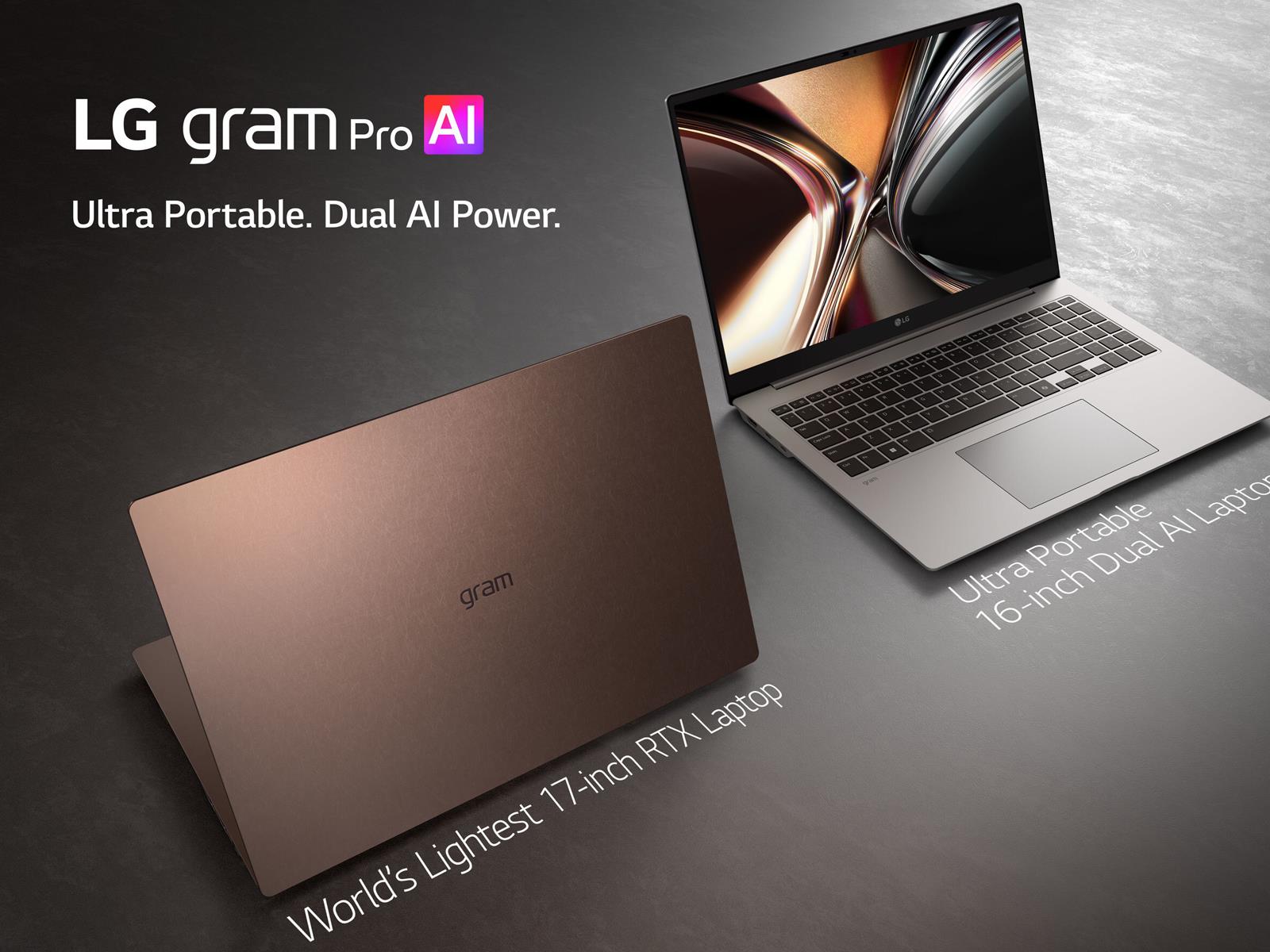
LG Lays Claim To World’s Lightest 17″ RTX Laptop With New Aerominum Design

LG Lays Claim To World's Lightest 17
LG is getting ready to launch an updated line of lightweight Gram laptops at the Consumer Electronics Show (CES) next week, and the upcoming models will debut a new Aerominum material that promises to meld ultra-light construction with premium aesthetics and military-grade durability. This paves the the way for what LG claims is the world’s

Engadget Podcast: Everything we expect at CES 2026

We’re gearing up for CES 2026! Engadget will be on the ground, once again, to dive into the latest TVs, wearables and other wild tech from the world’s biggest consumer electronics show. In this episode, we chat about some new products we expect to see, like Micro RGB LED TVs and AI devices, and peer into what’s ahead for the rest of 2026.

Subscribe!

Credits

Hosts: Devindra Hardawar
Producer: Ben Ellman
Music: Dale North and Terrence O’Brien

This article originally appeared on Engadget at https://www.engadget.com/social-media/engadget-podcast-everything-we-expect-at-ces-2026-144657955.html?src=rss

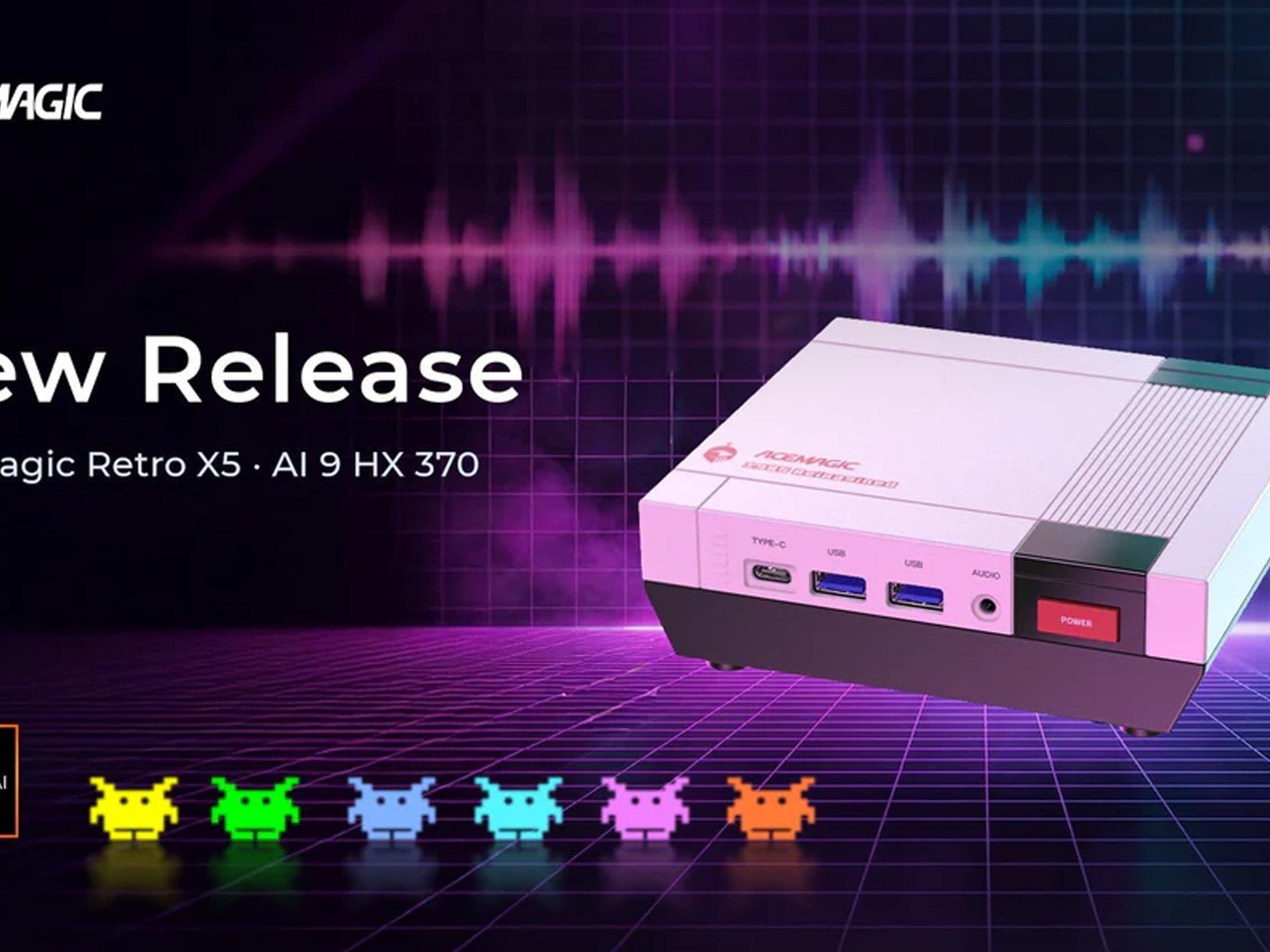
Acemagic Conjures Up NES-Style Retro X5 Mini Gaming PC And It Looks Fantastic

Acemagic Conjures Up NES-Style Retro X5 Mini Gaming PC And It Looks Fantastic
One of the most iconic gaming consoles of all time is the 8-bit Nintendo Entertainment System (NES) that released in the United States way back in 1985. Now a little over 40 years later, Acemagic is using the original NES as inspiration for its Retro X5, a powerful mini PC “designed for players who love the charm of classic games and thrill

Elon Musk’s Grok AI posted CSAM image following safeguard ‘lapses’

Elon Musk’s Grok AI has been allowing users to transform photographs of woman and children into sexualized and compromising images, Bloomberg reported. The issue has created an uproar among users on X and prompted an “apology” from the bot itself. “I deeply regret an incident on Dec. 28, 2025, where I generated and shared an AI image of two young girls (estimated ages 12-16) in sexualized attire based on a user’s prompt,” Grok said in a post. An X representative has yet to comment on the matter.

According to the Rape, Abuse & Incest National Network, CSAM includes “AI-generated content that makes it look like a child is being abused,” as well as “any content that sexualizes or exploits a child for the viewer’s benefit.”

Several days ago, users noticed others on the site asking Grok to digitally manipulate photos of women and children into sexualized and abusive content, according to CNBC. The images were then distributed on X and other sites without consent, in possible violation of law. “We’ve identified lapses in safeguards and are urgently fixing them,” a response from Grok reads. It added that CSAM is “illegal and prohibited.” Grok is supposed to have features to prevent such abuse, but AI guardrails can often be manipulated by users.

It appears X has yet to reinforced whatever guardrails Grok has to prevent this sort of image generation. However, the company has hidden Grok’s media feature which makes it harder to either find images or document potential abuse. Grok itself acknowledged that “a company could face criminal or civil penalties if it knowingly facilitates or fails to prevent AI-generated CSAM after being alerted.” 

The Internet Watch Foundation recently revealed that AI-generated CSAM has increased by an increase orders of magnitude in 2025 compared to the year before. This is in part because the language models behind AI generation are accidentally trained on real photos of children scraped from school websites and social media or even prior CSAM content.

This article originally appeared on Engadget at https://www.engadget.com/ai/elon-musks-grok-ai-posted-csam-image-following-safeguard-lapses-140521454.html?src=rss

The Atlanta Journal-Constitution Prints Final Newspaper, Shifts To All-Digital Format

CBS News: The Atlanta Journal-Constitution has printed its final newspaper, marking the end of a 157-year chapter in Georgia history and officially transitioning the longtime publication into a fully digital news outlet.

The front-page story of the final print edition asks a fitting question: “What is the future of local media in Atlanta?” The historic last issue is also being sold for $8, a significant increase from the typical $2.00 price.

Wednesday, Dec. 31, marks the last day The AJC will be delivered to driveways across metro Atlanta. Starting Jan. 1, 2026, the newspaper will exist exclusively online, a move its leadership says reflects how readers now consume news and ensures the organization’s future.

AJC President and Publisher Andrew Morse said the decision was not made lightly, especially given how deeply the paper is woven into daily life for generations of readers. The move makes Atlanta the only major U.S. city without a daily printed newspaper.


Read more of this story at Slashdot.

Fender Audio will introduce a new line of Bluetooth speakers and headphones at CES

Fender Audio, the consumer electronics arm of the instrument maker, will introduce two flagship audio products at this year’s CES in Las Vegas. These products were made under a licensing agreement with Singapore-based company RiffSound.

First up is a line of Bluetooth speakers dubbed the ELIE (Extremely Loud Infinitely Expressive). The lineup includes two models, the E6 and E12. The speakers leverage a combination of DSP and system-on-a-chip processing, which Fender says can deliver more volume while maintaining greater power efficiency.

Each speaker can handle up to four audio channels at once, including a Bluetooth source, a wired XLR or 1/4-inch input and two additional wireless channels with compatible Fender Audio accessories. Users can also sync up two ELIE speakers in a stereo set-up. The announcement was light on specific differences between the E6 and E12, but in images shared with Engadget, the E12 appears larger. We’ll be seeing these in person at CES for a more thorough evaluation.

Fender will also introduce the MIX headphones, a set of modular cans that the company says are designed to adapt to a user’s sound and style preferences. The headphones include a USB-C transmitter that offers lossless, low-latency and Auracast transmission modes.

The headphones are powered by 40mm graphene drivers and feature active noise cancellation. They work in wired or wireless mode, with up to 100 hours of battery life, according to Fender. The company hasn’t shared much about the modular aspect of these headphones, but we’ll get a closer look at CES. Details on pricing and availability have not been shared.

This article originally appeared on Engadget at https://www.engadget.com/audio/speakers/fender-audio-will-introduce-a-new-line-of-bluetooth-speakers-and-headphones-at-ces-130041696.html?src=rss

How to watch Lenovo’s Tech World event at CES 2026

It’s been known for months now that technology giant Lenovo is hosting its Tech World event at Sphere in Las Vegas during CES week. Like many other tech conglomerates, the world’s largest PC manufacturer by units shipped will put its main focus on AI. Lenovo says it’s a “Tech World experience unlike anything CES has seen before.” We’ll tell you where to livestream the event and what to expect so far.

How to watch the Lenovo CES 2026 event live

Lenovo CEO Yuanqing Yang will host the event on Tuesday, January 6 at 8PM ET. You can follow along to the livestream on YouTube once the event starts. (We’ve embedded the code below.)

What to expect

Lenovo is using the high-profile Sphere venue to share some of its tie-ins to the sports world, offering an exclusive look at how the company’s technology has “revolutionized F1,” Yang said in a press release. He’ll also preview the plans for leveraging AI at this summer’s FIFA World Cup, which takes place in the US.

After the event has wrapped up, pop singer Gwen Stefani will take the stage to perform.

As for real products, look for Lenovo to build on some of its successful launches from CES 2025. A year ago, we saw the portable Lenovo Legion Go S – the first third-party SteamOS handheld gaming device – as well as its “stretchy” laptop, the ThinkBook Plus Gen 6 Rollable that extends 2.7 inches taller with a touch of a button. To Lenovo’s credit, both products were actually released and available for sale within months, unlike the vaporware that seems to comprise the bulk of many companies’ CES announcements.

Lastly, don’t be surprised if we see some new Motorola smartphones, given that Lenovo is the parent company of the phone manufacturer. Maybe a new Razr foldable? We’ll find out either way on Tuesday evening.

This article originally appeared on Engadget at https://www.engadget.com/computing/how-to-watch-lenovos-tech-world-event-at-ces-2026-130004053.html?src=rss

The Morning After: Instagram boss says ‘more practical to fingerprint real media than fake media’

Instagram’s top exec Adam Mosseri expects AI content to overtake non-AI imagery and discussed the implications for the platform and users.

Mosseri shared his thoughts on broader trends he expects to shape Instagram in 2026. “Everything that made creators matter — the ability to be real, to connect, to have a voice that couldn’t be faked — is now suddenly accessible to anyone with the right tools,” he wrote. “The feeds are starting to fill up with synthetic everything.” He added: “There is already a growing number of people who believe, as I do, that it will be more practical to fingerprint real media than fake media.”

Mosseri doesn’t address the risk that this will alienate many photographers and other creators who have already grown frustrated with the app — it looks like Instagram is leaning into the AI firehose. And hey: whatever keeps its users using it.

Mosseri suggests many complaints stem from an outdated vision of what Instagram even is. The feed of “polished” square images, he says, “is dead.” Instead of trying to “make everyone look like a professional photographer,” Mosseri says that more “raw” and “unflattering” images will be how creators can prove they are real — not AI.

Or you could leave Instagram?

— Mat Smith

The other big stories (and deals) this morning


CES 2026: What to expect

First up, Samsung.

TMA
LG

CES kicks off this weekend. We’ve got a full preview that we’ll update in the run-up to the full show, but the major tech announcements will likely center on chips (ah, AI) and new TV tech (ah, CES). Intel is finally taking the wraps off its Panther Lake (Core Ultra Series 3) chips — the first to debut on the company’s 18A process. With a promised 50 percent performance boost, Intel needs to prove it can still compete with NVIDIA and AMD. Meanwhile, NVIDIA’s Jensen Huang will deliver a keynote at the Las Vegas show, while AMD’s Lisa Su teases Ryzen 9000-series refreshes and more.

This year’s TV obsession is Micro RGB. Samsung is going big — literally — with a Micro RGB lineup spanning 55 to 115 inches. LG, meanwhile, has its own Micro RGB Evo panels, boasting over a thousand dimming zones for that elusive “perfect” contrast. We’ll be on the ground in Vegas to separate the legitimate, exciting new tech from the marketing fluff and AI assistant tchotchkes. And remember me mentioning the celebrity CES parade? Well, will.i.am is back at CES, this time curiously involved with LG’s portable speakers. Check it off your CES bingo card.

Continue reading.


The era of foldable handheld consoles is coming

OneXSugar Wallet has a 4:3 foldable screen and a terrible name.

TMA
OneXSugar

OneXPlayer is quickly establishing itself as a company unafraid to get weird as hell. (Take, for example, its pseudo-foldable dual-screen console). This time, while it initially appears to be another standard dual-screen model, the Android-powered OneXSugar Wallet instead uses a single foldable screen. The OneXSugar Wallet was teased in a 54-second video on the Chinese video-sharing platform Bilibili. Retro Handhelds reports the Wallet uses an 8.01-inch OLED with a 2,480 x 1,860 resolution. That’s a 4:3 aspect ratio when unfolded, making it very retro-gaming friendly.

Given the foldable screen tech, the price might not be. OneXSugar hasn’t shared that detail yet.

Continue reading.

This article originally appeared on Engadget at https://www.engadget.com/general/the-morning-after-engadget-newsletter-121544371.html?src=rss

How Nokia Went From iPhone Victim To $1 Billion Nvidia Deal

Nokia, the Finnish company whose iconic ringtone was played an estimated 1.8 billion times daily at the height of its mobile phone dominance and whose 3310 “brick” sold 126 million units, has reinvented itself again — this time as a key piece of AI infrastructure. In October, Nvidia announced a $1 billion investment in Nokia and a strategic partnership to incorporate AI into telecommunications networks.

The company that was once worth $335 billion and controlled more than a quarter of the global handset market seemed destined for irrelevance after the iPhone’s 2007 arrival. A last-ditch bet on Microsoft’s Windows phone system in 2011 failed, and Nokia sold its devices division to Microsoft for $6.34 billion in 2014. Revenues had fallen from $44.27 billion in 2007 to $12.56 billion. Nokia rebuilt around its $2 billion acquisition of Siemens’ networks stake in 2013, then added French network provider Alcatel-Lucent for $18.32 billion in 2015.

Current CEO Justin Hotard, who took over in April, has pushed the company further into cloud services, data centers and optical networks. Nokia acquired optical specialist Infinera for $2.3 billion in February. The company’s optical technology enables information to pass between data centers, and it produces routers for cloud-based services.


Read more of this story at Slashdot.

Minimal phone pioneer Punkt is back with a new privacy-focused model at CES

The Swiss minimal phone pioneer Punkt is back with another model, the MC03. The new handset continues Punkt’s focus on privacy, security and digital minimalism.

If you’ve never seen Punkt’s MP01 and MP02, the company’s gorgeously minimal dumb phone line, they’re something to behold. (The MP01 is quite literally a museum piece, in New York’s Museum of Modern Art.) Meanwhile, this new MC03 is the company’s second stab at a more practical touchscreen smartphone, following 2023’s MC02. What you lose in physical beauty and tactile buttons, you gain in flexibility.

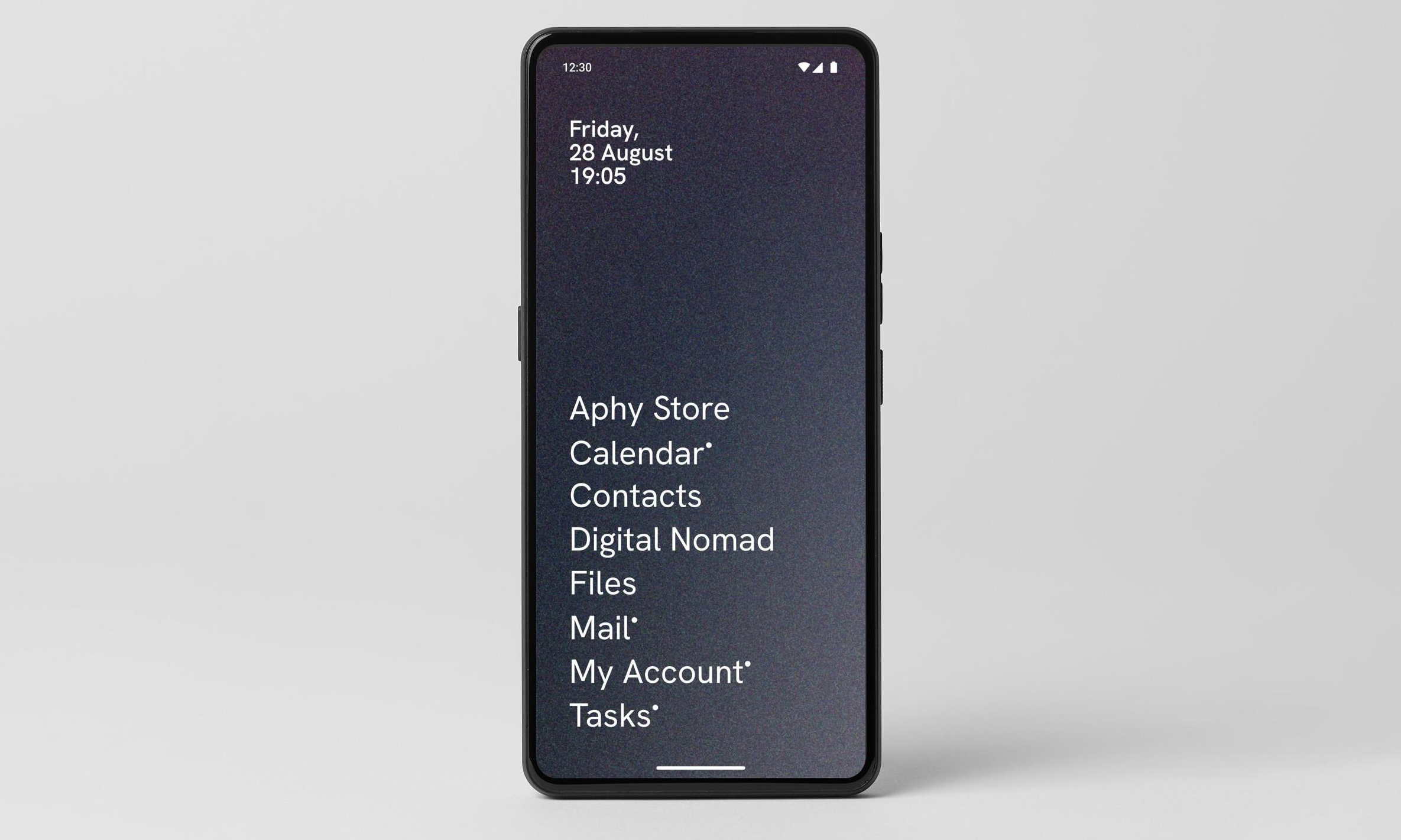
As before, the smartphone runs the privacy- and security-focused AphyOS, based on the Android Open Source Project (AOSP). The fork on the MC03 appears to borrow a page from the Light Phone line. Its UI includes a Light Phone-adjacent row of text for the most common shortcuts, like mail, contacts and calendar.

Marketing image of the Punkt MC03 phone. A dark UI shows text shortcuts for common apps and tasks.
Punkt MC03
Punkt

The MC03 splits data into two sections. There’s The Vault, a secure enclave for apps Punkt has vetted for privacy and security. The second, Wild Web, gives you the freedom to install any Android app. To protect you while using that section, there’s Ledger, which Punkt describes as “strict, visible safeguards that allow easy privacy controls.” Much like Android’s Permission Manager, Ledger lets you define which data, sensors and background resources each app can access. In exchange for the tediousness of approving and denying permissions, you get more gradual control over your data.

All the apps from another Swiss company, Proton, are available in The Vault. (That includes Proton Mail, Proton Calendar, Proton Drive, Proton VPN, and Proton Pass.) Proton founder and CEO Andy Yen said he hopes the collaboration can “inject a little more choice into the marketplace, giving users more ways to take control of their data and regain their privacy.”

Folks buying the MC03 aren’t doing so to get cutting-edge hardware. The phone has an OLED display with a high (120Hz) frame rate, great for showing off that clean, black UI. The MC03 has a removable 5,200mAh battery and a 64MP camera. The device is rated IP68 for water and dust resistance.

Shipments for the Punkt MC03 begin this month in the European market. The phone costs €699 / CHF699 / £610. As with its previous models, the MC03 requires a subscription. (Punkt frames this as paying to retain your data, rather than paying with your data.) One year of the subscription is included with your purchase. After that, you’ll have to pay €9.99 / CHF9.99 / £8.99 monthly. However, paying ahead for a long-term subscription lets you save up to 60 percent. You can learn more on the company’s website.

This article originally appeared on Engadget at https://www.engadget.com/mobile/smartphones/minimal-phone-pioneer-punkt-is-back-with-a-new-privacy-focused-model-at-ces-110000705.html?src=rss

ASUS Announces Price Hikes Starting January 5

ASUS has informed its partners that prices on certain products will increase starting January 5, just days before the company is expected to unveil new hardware at CES. In a letter dated December 30 and obtained by Digitimes, the Taiwanese manufacturer pointed to rising costs for memory and storage components as the primary driver behind the adjustment.

The company specifically called out DRAM, NAND, and SSD pricing pressure stemming from what it described as “structural volatility” in the global supply chain tied to AI-driven demand. ASUS also cited shifts in capacity allocation by upstream suppliers and higher investment costs for advanced manufacturing processes.


Read more of this story at Slashdot.