This Belkin charging case for the Switch 2 has a screen for checking battery life

Belkin just introduced the appropriately-named Charging Case Pro for Nintendo Switch 2 at CES. This is a high-end charging case specifically designed for Nintendo’s latest console.

The 10,000mAh power bank delivers up to 30W of fast charging, which is a decent enough metric. I’m more excited, however, about the bells and whistles. The Charging Case Pro boasts an LCD screen on the exterior, making it easy to keep track of remaining battery life. It also doubles as a tabletop stand, which is always nice. The built-in Switch 2 stand is better than what we got with the first Switch, but it’s still not the sturdiest thing in the world.

A charging case.
Belkin

It also includes a dedicated flap for game card storage and a hidden compartment for smart trackers. Take that, would-be Switch 2 thieves. Belkin promises this case has been made from premium materials and has been designed for “long-term durability.” The Charging Case Pro for Nintendo Switch 2 is available right now and costs $100.

The company also introduced a number of other charging accessories at CES. The UltraCharge Pro Power Bank juices up two devices at once and also costs $100, with availability in February. The BoostCharge power bank is an extremely slim unit that easily slides into pockets. That one starts at $60, but isn’t coming until later in the year.

This article originally appeared on Engadget at https://www.engadget.com/gaming/nintendo/this-belkin-charging-case-for-the-switch-2-has-a-screen-for-checking-battery-life-170029450.html?src=rss

Plaud’s latest AI wearable has a button for flagging key moments

Plaud is back with another conversation-recording AI wearable. This one, the NotePin S, is only a minor iteration on the original NotePin. This model adds… a button.

The recessed recording button replaces the squeeze-to-record mechanism on the 2024 original. A single long press starts recording. It also adds a new “press to highlight” feature. The idea is to flag what’s most important in a conversation, helping the AI learn what to emphasize in its summary.

Otherwise, you’re getting the same package as in the first NotePin. The capsule-sized “S” model still has two microphones, weighs 0.6 ounces and has an advertised reliable recording range of 9.8 feet. (Students may want to keep that last point in mind before considering one for classes in lecture halls.) It includes hardware to set it up as a pin / lapel, lanyard, wristband or clip.

The NotePin S is available today for $179. You can order it from Plaud’s website and Amazon. Just be sure to look out for your fellow humans and get their consent before recording them, okay?

This article originally appeared on Engadget at https://www.engadget.com/ai/plauds-latest-ai-wearable-has-a-button-for-flagging-key-moments-170000172.html?src=rss

Furiosa’s Energy-Efficient ‘NPU’ AI Chips Start Mass Production This Month, Challenging Nvidia

The Wall Street Journal profiles “the startup that is now one of a handful of chip makers nipping at the heels of Nvidia.”

Furiosa’s AI chip is dubbed “RNGD” — short for renegade — and slated to start mass production this month. Valued at nearly $700 million based on its most recent fundraising, Furiosa has attracted interest from big tech firms. Last year, Meta Platforms attempted to acquire it, though the startup declined the offer. OpenAI used a Furiosa chip for a recent demonstration in Seoul. LG’s AI research unit is testing the chip and said it offered “excellent real-world performance.” Furiosa said it is engaged in talks with potential customers.

Nvidia’s graphic processing units, or GPUs, dominated the initial push to train AI models. But companies like Furiosa are betting that for the next stage — referred to as “inference,” or using AI models after they’re trained — their specialty chips can be competitive. Furiosa makes chips called neural processing units, or NPUs, which are a rising class of chips designed specifically to handle the type of computing calculations underpinning AI and use less energy than GPUs. [Founder/CEO June] Paik said Furiosa’s chips can provide similar performance as Nvidia’s advanced GPUs with less electricity usage. That would drive down the total costs of deploying AI. The tech world, Paik says, shouldn’t be so reliant on one chip maker for AI computing. “A market dominated by a single player — that’s not a healthy ecosystem, is it?” Paik said…

In 2024, at Stanford’s prestigious Hot Chips conference, Paik debuted Furiosa’s RNGD chip as a solution for what he called “sustainable AI computing” in a keynote speech. Paik presented data showing how the chip could run the then-latest version of Meta’s Llama large language model with more than twice the power efficiency of Nvidia’s high-end chips. Furiosa’s booth was swarmed with engineers from big tech firms, including Google, Meta and Amazon.com, wanting to see a live demo of the chip. “It was a moment where we felt we could really move forward with our chip with confidence,” Paik said.


Read more of this story at Slashdot.

Xreal updates its entry-level personal cinema glasses at CES

If you’ve been on the fence about trying the sort of “AR glasses” that, until recently, were called “personal cinemas,” then check this out. Xreal has turned up to CES 2026 with an updated version of its entry level Xreal One glasses, first launched at the end of 2024. The new model, dubbed the 1S (yes, with a numeral rather than the word) gets marginally better specs and $50 knocked from the asking price.

If you’re unfamiliar, One is a wearable spatial display that connects over USB-C to any compatible device including smartphones, tablets, laptops and consoles. It has two teeny-tiny displays in the eyecups that, when worn close to the eyes, trick your brain into thinking you’re looking at a big screen. The average would measure in at around 171 inches, but it’s possible to push the view to a screen closer to 500 inches if your eyes are capable of focusing that far.

As for the changes, they’re all firmly in the welcome nip-and-tuck department, boosting many of the original’s key specs. For instance, the 1080p screens have been swapped out for 1200p full HD, while the field of view has gone from 50 degrees to 52. Brightness has been boosted from 600 nits on the old model to 700 nits here, while the aspect ratio has grown from 16×9 to 16×10. But the change Xreal is arguably most proud of is the drop in price, from $499 down to $449.

At the same time, the company is launching the Xreal Neo, an external battery-cum-DisplayPort hub for your glasses. Inside you’ll find a 10,000mAh power bank to keep your glasses going for longer and, more importantly, offers better connection for your Switch consoles. After all, before now, if you wanted to play with your Switch or Switch 2, you’d need to hook it up to its own dock. With the Neo, however, you can eliminate that from your bag when you’re playing out and about. That’s available as a standalone purchase for $99 which, like the new 1S, are ready to buy right now.

This article originally appeared on Engadget at https://www.engadget.com/wearables/xreal-updates-its-entry-level-personal-cinema-glasses-at-ces-140000544.html?src=rss

How to watch the Intel CES 2026 launch event

SOPA Images via Getty Images

We’re just hours away from the start of CES 2026, and with that comes Intel’s launch event. The chip giant is expected to provide more details on its AI PC initiative and the new processors powering it: The Core Ultra Series 3 CPUs (aka Panther Lake) are made using an 18A process — that’s 18 angstroms, or just under 2nm — and designed for high-end laptops and gaming devices.

For Intel, the stakes at CES are higher than ever. In the past 12 months, both NVIDIA and the US government acquired ownership stakes in the company, helping nearly double the stock price by the end of the year. But that’s still down over more than 20 percent since 2021, as rivals like TSMC, Qualcomm, AMD and NVIDIA have taken the leadership mantle in chip fabrication and AI hardware. 

How to watch Intel’s launch event

Senior VP of Intel’s Client Computing Group Jim Johnson will kick off the launch event on Monday, January 5 at 6PM ET. A livestream will be available on the Intel Newsroom YouTube channel, which we’ll post here when it’s live.

What to expect from Intel at CES 2026

As we noted above, Intel has publicly confirmed that it will be highlighting “the next generation of Intel-powered PCs, edge solution, and the AI experiences enabled by the new Intel Core Ultra Series 3 Processors.” We’ll be keen to hear if the company can address the profitability concerns that have surrounded those next-gen chips since at least last summer, when published reports indicated that yields were still under 50 percent. (In response, Intel told Engadget that it felt “very good” about its trajectory on Panther Lake, though it didn’t hit the late 2025 release date it had envisioned at the time.)

Will we get any updates on that NVIDIA partnership? It’s possible. But don’t expect to hear anything about Intel possibly fabricating the chips for that rumored new entry-level MacBook Air. If that comes to pass, the announcement will definitely be at a time and place of Apple’s choosing. 

This article originally appeared on Engadget at https://www.engadget.com/computing/how-to-watch-the-intel-ces-2026-launch-event-130040089.html?src=rss

Govee’s CES lineup includes a ceiling lamp that simulates skylights

Govee, which makes some of the more unique and interesting smart lighting products, has a new batch at CES 2026. That includes two ceiling lights (one of which simulates a skylight) and a floor lamp that supports trillions of colors.

Govee describes the new Ceiling Light Ultra as “the industry’s first ceiling light designed as a true creative canvas.” It uses 616 individually controlled LEDs (the highest in its class, according to Govee) to provide that level of detail. Using the Govee app, you can design visuals for it “with up to eight distinct layers of motion, color and shapes.”

Product marketing photo. A ceiling light with a complex aurora-style gradient of colors.
Govee Ceiling Light Ultra
Govee

The product will support an upcoming AI Lighting Bot 2.0 update. The new version of the scene creation chatbot lets other compatible lights (including the Gaming Pixel Light) “generate dynamic GIF animations.”

If your ceiling lamp needs are as simple as “look like a skylight, please,” there’s the Govee Ceiling Light with Blue Sky Effect. The company says it emulates natural skylights “with high accuracy.” (However, it’s also less flexible than the Ultra, with far fewer individually controlled LEDs.) You can also use it as a more traditional white-light fixture, and Govee says it’s good for spaces are large as 300 square feet.

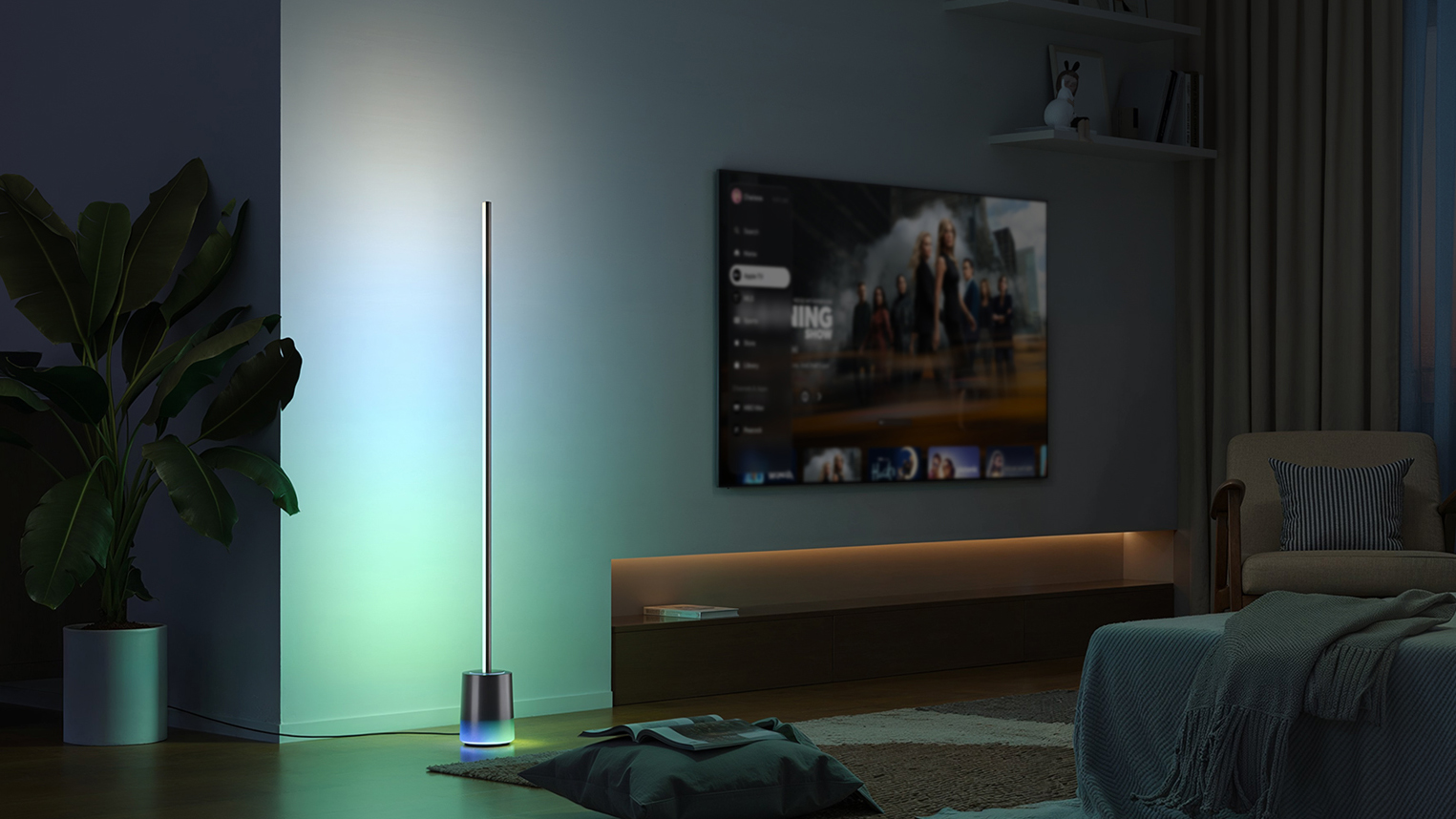
Product lifestyle marketing image. A futuristic-looking floor lamp casts subtle gradients of blue, green and white onto an otherwise dark living room.
Govee Floor Lamp 3
Govee

Finally, there’s the Govee Floor Lamp 3. The sleek light’s 16-bit RGBIC array allows it to reproduce over 281 trillion colors. Its white lighting capabilities range from 1000K to 10000K. It also supports a new DaySync system that can adjust lighting effects to match the time of day.

Unfortunately, we don’t yet know precisely when any of the new lights will be available — or how much they’ll cost. But we did learn that Govee lights will now work with Samsung SmartThings, joining their existing support for Matter, Alexa and Google Assistant.

This article originally appeared on Engadget at https://www.engadget.com/home/smart-home/govees-ces-lineup-includes-a-ceiling-lamp-that-simulates-skylights-130000611.html?src=rss

The US Effort to Break China’s Rare-Earth Monopoly

The New York Times checks in on U.S. university researchers and start-ups trying to create domestic rare-earth processing facility:

There is too little money to be made in rare earths for the elements to be of much interest to mining giants, so the challenge of reestablishing a domestic industry has fallen to small companies like Phoenix Tailings, a Boston-area startup that runs the metal-making plant in Exeter, New Hampshire. A handful of other companies in the United States are processing rare earths in small quantities, including MP Materials, which owns a mine in Mountain Pass, California, and recently began producing rare-earth metal in Fort Worth, Texas. Similar efforts are underway in Europe and Asia. “It’s small volumes of low-value materials that are very expensive to process,” said Elsa Olivetti, a materials science and engineering professor at the Massachusetts Institute of Technology. “Meaning it’s hard to make money.”

Phoenix Tailings’ New Hampshire operation is about 2 months old, housed in a converted medical device plant. The company buys metric-ton bags of powder — a mixture of neodymium and praseodymium bound with oxygen — from mining and refining companies in the United States, South America and Australia. It funnels that flour-like material into a drying oven and eventually into furnaces that heat it to the temperature of volcanic lava. This circuit takes up less than 15,000 square feet and is designed to generate no emissions other than those associated with the electricity Phoenix Tailings uses. The closed-loop design distinguishes this process from the more energy-intensive techniques used in China, where workers scoop up molten metal with ladles. That approach releases perfluorocarbons, potent greenhouse gases that do not break down easily.

In late 2024 the company was three weeks from bankruptcy — but it’s recently been valued at $189 million.


Read more of this story at Slashdot.

Reddit Surges in Popularity to Overtake TikTok in the UK – Thanks to Google’s Algorithm?

Reddit “has overtaken TikTok as Britain’s fourth most-visited social media service,” reports the Guardian:

The platform has undergone huge growth over the last two years, with an 88% increase in the proportion of UK internet users it reaches. Three in five Brits online now encounter the site, up from a third in 2023, according to Ofcom. Its popularity is rising fastest with younger internet users. It is now the sixth most visited organisation of any kind by UK users aged between 18 and 24, up from 10th a year earlier. More than three-quarters of that cohort now visit it….

The UK is a boom market for the platform, with the second largest user base behind the US, according to company records. A series of factors are behind its rise. However, a change in Google’s search algorithms last year to prioritise helpful content from discussion forums appears to have been a significant driver. A recent deal with Google that allows the company to train its AI model on Reddit’s content also appears to have provided a boost. Reddit is the most-cited source for Google AI overviews, which is likely to see more people directed to its forums. It has a similar deal with OpenAI, which owns the most popular AI chatbot, ChatGPT.

According to the article, Reddit “believes it is also benefiting from shifting internet habits, as younger users seek out human-generated reviews and opinions.”


Read more of this story at Slashdot.

New Tesla Video Shows Tesla Semi Electric Truck Charging at 1.2 MW

An anonymous reader shared this report from Electrek:

Tesla has released a new video showing a Tesla Semi truck charging at a massive 1.2 megawatts (MW), finally giving us a clear look at the charging speeds that will enable long-haul electric trucking…>

Tesla claimed the Semi would be able to charge 70% of its range in 30 minutes. For a truck with a 500-mile range and an estimated battery pack of around 800-900 kWh, that requires an incredibly high power output, well beyond the 250 kW or even 350 kW we see on passenger EVs in North America. Today, the official Tesla Semi account on X released a video showing exactly that. In the video, Tesla engineers are seen monitoring a charging session where the power output climbs to a peak of 1.2 MW (1,206 kW).

This is consistent with the capabilities Tesla announced for its new V4 Cabinet architecture earlier this year. The V4 cabinets are designed to support 400V-1000V vehicle architectures and can deliver up to 500 kW for cars (like the Cybertruck) and up to 1.2 MW for the Semi. There is some information missing from the video. For example, we don’t see the state-of-charge of the truck, so we don’t at what battery percentage Tesla Semi can achieve and maintain this charge rate. Peak speed is one thing, but sustaining that power without overheating the pack or the cable is the real challenge. The liquid-cooled charging cable and the immersion-cooled connector (part of the Megawatt Charging System or a high-power proprietary Tesla solution, though Tesla has been leaning toward MCS compatibility) seem to be doing their job….

This comes just as Tesla is gearing up for volume production of the Semi at its new factory expansion near Gigafactory Nevada. The automaker is targeting a start of production in the first half of 2026 and a ramp up to volume production in the second half.


Read more of this story at Slashdot.

What Happened When Alaska’s Court System Tried Answering Questions with an AI Chatbot?

An AI chatbot to answer probate questions from Alaska residents “was supposed to be a three-month project,” said Aubrie Souza, a consultant with the National Center for State Courts told NBC News. “We are now at well over a year and three months, but that’s all because of the due diligence that was required to get it right.”

“With a project like this, we need to be 100% accurate, and that’s really difficult with this technology,” said Stacey Marz, the administrative director of the Alaska Court System and one of the Alaska Virtual Assistant (AVA) project’s leaders… While many local government agencies are experimenting with AI tools for use cases ranging from helping residents apply for a driver’s license to speeding up municipal employees’ ability to process housing benefits, a recent Deloitte report found that less than 6% of local government practitioners were prioritizing AI as a tool to deliver services. The AVA experience demonstrates the barriers government agencies face in attempting to leverage AI for increased efficiency or better service, including concerns about reliability and trustworthiness in high-stakes contexts, along with questions about the role of human oversight given fast-changing AI systems. These limitations clash with today’s rampant AI hype and could help explain larger discrepancies between booming AI investment and limited AI adoption.

The chatbot was developed with Tom Martin, a lawyer/law professor who designs legal AI tools, according to the article. But the project “had to contend with the serious issue of hallucinations, or instances in which AI systems confidently share false or exaggerated information.”

“We had trouble with hallucinations, regardless of the model, where the chatbot was not supposed to actually use anything outside of its knowledge base,” Souza told NBC News. “For example, when we asked it, ‘Where do I get legal help?’ it would tell you, ‘There’s a law school in Alaska, and so look at the alumni network.’ But there is no law school in Alaska.” Martin has worked extensively to ensure the chatbot only references the relevant areas of the Alaska Court System’s probate documents rather than conducting wider web searches.

The article concludes that “what was meant to be a quick, AI-powered leap forward in increasing access to justice has spiraled into a protracted, yearlong journey plagued by false starts and false answers.” But the chatbot is now finally scheduled to be launched in late January. “It was just so very labor-intensive to do this,” Marz said, despite “all the buzz about generative AI, and everybody saying this is going to revolutionize self-help and democratize access to the courts.

“It’s quite a big challenge to actually pull that off.”


Read more of this story at Slashdot.

Google’s $250M Deal with California to Fund Newsrooms May Be Stalled

Remember how California’s government negotiated a 2024 deal where Google contributed millions to California’s local newsrooms to offset advertisers moving to the search engine?

“A year after it was cemented — and billed as a model that could succeed where entire countries and continents had fallen short — the agreement is tangled in budget cuts, bureaucratic infighting and unresolved questions about who controls the money,” reports Politico, “leaving journalists empty-handed and casting doubt on whether the lofty experiment will ever live up to its promise.”

The program, initially framed as a nearly $250 million commitment over five years, has secured just $20 million in new money for journalists in its first year, with no guarantee the funding will continue. It’s changed hands twice since the University of California, Berkeley withdrew its support [with school officials “worried they wouldn’t have enough of a say in how the money was distributed”]. Suggestions that other big tech players like ChatGPT-maker OpenAI could front more resources haven’t materialized. A $62.5 million “AI accelerator” tied to the deal hasn’t been set up yet.

Not a single newsroom has seen a dollar of funding, and there’s no definitive timeline spelling out when they will… [The article adds later that state officials “have yet to draft precise rules for how California will decide which newsrooms get cash…”] Conversations with at least 20 people involved in the deal’s rollout reveal how California’s budget shortfalls and intraparty spats among Democrats scrambled it… California’s struggle to launch its program has dampened hopes of replicating its model in other states such as Oregon, Illinois and New York, where lawmakers have tried but failed to make Big Tech pay for news…

When [California governor] Newsom unveiled his final state budget plan in May 2025 after a $12 billion deficit suddenly scrambled the state’s finances, California’s first-year commitment was reduced from $30 million to $10 million. Google followed suit within days and cut its first-year contribution from $15 million to $10 million… Whether the program even continues past 2026 is also unclear. Newsom’s office declined to confirm whether the state will provide its $10 million commitment to the fund in the coming 2026-27 state budget. Newsom will also be termed out in 2027, and there’s no requirement for his successor to honor the state’s agreement with Google.


Read more of this story at Slashdot.

Has Microsoft Discontinued Offline Activation of Windows?

An anonymous reader shared
this report from Neowin:

Offline Windows activation has been possible to do using the phone. However, it looks like Microsoft has quietly killed off that method as users online have found that they are no longer able to activate the OS using it… [As documented by Windows user Ben Kleinberg on his YouTube channel], Now when trying to activate the OS by attempting to call the phone number for Microsoft Product Activation, an automated voice response says the following: “Support for product activation has moved online. For the fastest and most convenient way to activate your product, please visit our online product activation portal at aka.ms/aoh”

If you are wondering, that link takes users to the Microsoft Product Activation Portal for online activation. Thus it appears that offline ways to activate Windows may no longer be available even though the official support documentation by the company may not reflect it yet.


Read more of this story at Slashdot.

The US Invaded Venezuela and Captured Nicolás Maduro – But ChatGPT and Perplexity Disagree

Why did the U.S. invade Venezuela and capture its leader Nicolás Maduro? “If you asked ChatGPT about it this morning, it told you that youâ(TM)re making it up,” Wired reported Saturday:

WIRED asked leading chatbots ChatGPT, Claude, and Gemini the same question a little before 9 am ET. In all cases, we used the free, default version of the service, since that’s what the majority of users experience. We also asked AI search platform Perplexity, which advertises “accurate, trusted, and real-time answers to any question…”

ChatGPT did not course-correct. Instead, it emphatically refuted that Maduro had been captured at all. “That didn’t happen,” it wrote. “The United States has not invaded Venezuela, and Nicolás Maduro has not been captured.” It then rationalized: ChatGPT did not course-correct. Instead, it emphatically refuted that Maduro had been captured at all. “That didn’t happen,” it wrote. “The United States has not invaded Venezuela, and Nicolás Maduro has not been captured.” It then rationalized:

“What’s likely going on is a mix-up with real events that are often described in dramatic or misleading ways online. Here’s what actually has happened… No U.S. military invasion of Venezuela. No arrest or capture of Nicolás Maduro… Maduro is still in power in Venezuela.” It went on to detail recent tensions between the US and Venezuela and explained that âoeconfusionâ can happen because of âoesensational headlines,â âoesocial media misinformation,â and âoeconfusing sanctions, charges, or rhetoric with actual military action.â

Perplexity was similarly scolding. âoeThe premise of your question is not supported by credible reporting or official records: there has been no invasion of Venezuela by the United States that resulted in capturing NicolÃs Maduro,â it responded. âoeIn fact, the U.S. has not successfully invaded or apprehended Maduro, and he remains the Venezuelan president as of late 2025. If youâ(TM)re seeing sensational claims, they likely originate from misinformation or hypothetical scenarios rather than factual events.â

Thanks to Slashdot reader joshuark for sharing the news.


Read more of this story at Slashdot.

SpaceX Lowering Orbits of 4,400 Starlink Satellites for Safety’s Sake

“Starlink is beginning a significant reconfiguration of its satellite constellation focused on increasing space safety,” announced Michael Nicolls, Starlink’s vice president of engineering:

“We are lowering all Starlink satellites orbiting at ~550 km to ~480 km (~4400 satellites) over the course of 2026. The shell lowering is being tightly coordinated with other operators, regulators, and USSPACECOM. Lowering the satellites results in condensing Starlink orbits, and will increase space safety in several ways… Starlink satellites have extremely high reliability, with only 2 dead satellites in its fleet of over 9000 operational satellites. Nevertheless, if a satellite does fail on orbit, we want it to deorbit as quickly as possible. These actions will further improve the safety of the constellation, particularly with difficult to control risks such as uncoordinated maneuvers and launches by other satellite operators.

But orbits are being lowered for another reason (besides quick de-orbiting), notes Space.com. Within the next four years the period of least solar activity is expected, a period which coincides with decreased atmospheric density, Nicolls added, “which means the ballistic decay time at any given altitude increases.”

[Bringing the satellites lower] will mean a >80% reduction in ballistic decay time in solar minimum, or 4+ years reduced to a few months,” Nicolls wrote in his X post. “Correspondingly, the number of debris objects and planned satellite constellations is significantly lower below 500 km, reducing the aggregate likelihood of collision….” The downward migration in 2026 involves roughly half of SpaceX’s Starlink megaconstellation, which currently consists of nearly 9,400 operational spacecraft (though that number is always growing).


Read more of this story at Slashdot.

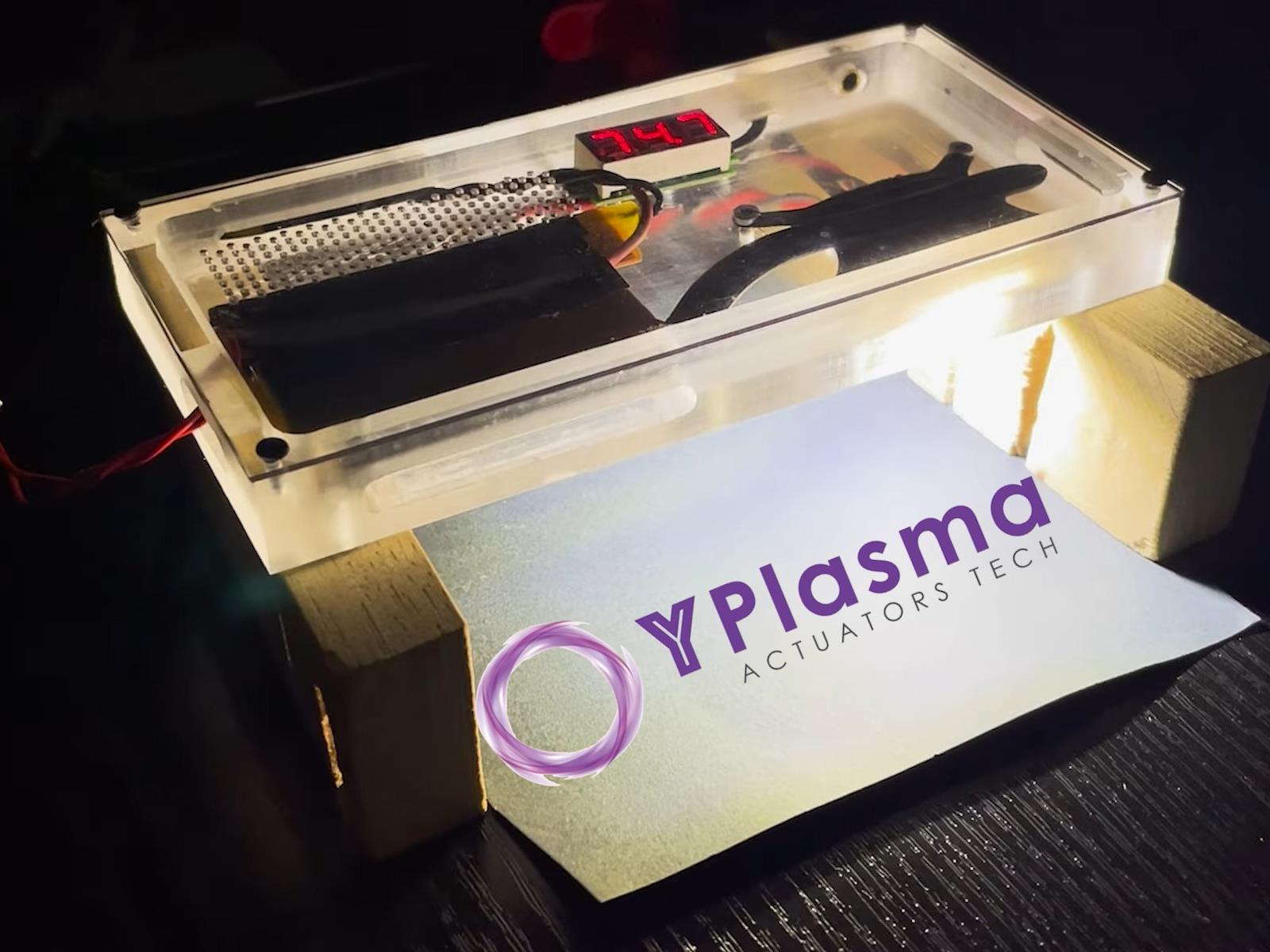
Noiseless Plasma Cooling May Be The Next Big Laptop Breakthrough At CES

Noiseless Plasma Cooling May Be The Next Big Laptop Breakthrough At CES
Computer cooling primarily happens with regular old fans blowing air through a fixed heatsink assembly. This has various complexities; fans need a relatively large amount of space, and they make a lot of noise due to the mechanical action by which they move air. YPlasma thinks it has a better way: micro-plasma actuators moving ionic wind that

Could AI Bring Us Four-Day Workweeks?

“While a growing number of U.S. employers are mandating workers return to the office five days a week,” reports the Washington Post, “some companies say AI is saving them enough time to launch or sustain a four-day workweek.

“More companies may move toward a shortened workweek, several executives and researchers predict, as workers, especially those in younger generations, continue to push for better work-life balance.” And “several companies — especially those with a largely remote workforce — have adjusted their work rhythm after delegating many tasks to AI…”

AI “has such a potential to have so much labor savings, you’ll see firms shift to a four-day week in an evolutionary way,” said Juliet Schor, an economist and sociologist at Boston College who has studied the subject. “There’s enough social consensus that people are exhausted and stressed….” Small and medium businesses often adopt shortened workweeks to compete with big salaries for new hires and retention, Schor said. That’s how Peak PEO, a London-based service that helps companies expand globally with teams in different locations, thought about its strategy… CEO Alex Voakes said that job openings that used to get two applications jumped to 350 after the change.

“Some of the world’s most influential business leaders have publicly suggested the shift may be inevitable,” adds Fortune:

Jamie Dimon, the CEO of JPMorgan Chase, has said advancing technology could eventually push the workweek down to just three-and-a-half days. Microsoft cofounder Bill Gates has gone further, openly questioning whether a two-day workweek could be the future. Elon Musk has taken the idea to its logical extreme, positing that the need to work altogether could cease… Tech innovation could “probably” lead to a transition toward four-day workweeks, [Nvidia CEO Jensen] Huang said on Fox Business in August…


Read more of this story at Slashdot.

Killjoy Microsoft Shuts Down Windows 11 Activation Without An Internet Connection

Killjoy Microsoft Shuts Down Windows 11 Activation Without An Internet Connection
Microsoft has seemingly disabled phone call activation for Windows 11, and perhaps older versions as well, making it impossible to activate Windows without an Internet connection.

This is an unwelcome development for users that want to airgap their systems and enthusiasts who want to activate older versions of Windows on retro hardware.

Volkswagen is bringing physical buttons back to the dashboard with the ID. Polo EV

We could be witnessing the start of the renaissance for real buttons in cars, courtesy of Volkswagen’s ID. Polo. The German automaker unveiled the interior of its upcoming compact EV, which features real buttons, switches and even a knob for audio controls.

“We have created an interior that feels like a friend from the very first contact,” Volkswagen’s chief designer, Andreas Mindt, said in a press release. “Clear physical buttons provide stability and trust, warm materials make it appealing, and charming details such as the new retro views of the instruments show the typical Volkswagen wink.”

Full view of the Volkswagen ID. Polo's dashboard
Volkswagen

Last year, Mindt told Autocar that Volkswagen would commit to reintroducing physical buttons for the most important functions “in every car we make from now on,” starting with the ID. 2all concept car that has since evolved to become the ID. Polo. The EV maker backed up those claims since the ID. Polo will feature tangible buttons underneath the infotainment display, along with a steering wheel that’s packed with even more clear buttons. Between the driver and passenger, Volkswagen even included a knob that can adjust audio volume or shuffle between tracks and radio stations.

Volkswagen's
Volkswagen

Besides the renewed emphasis on physical controls, Volkswagen still included a 10.25-inch digital cockpit behind the steering wheel. In the center, there’s a nearly 13-inch touchscreen that serves as the infotainment system. For a retro throwback, the ID. Polo can swap its cockpit display to one that’s inspired by the classic Golf I from the 1980s through a button on its steering wheel or with the infotainment touchscreen.

The ID. Polo is expected to be the first of four new EVs in Volkswagen’s small and compact car segment, which will see releases in European markets starting this year. However, it’s not all good news, since Volkswagen has no plans to release the compact EV in the US.

This article originally appeared on Engadget at https://www.engadget.com/transportation/evs/volkswagen-is-bringing-physical-buttons-back-to-the-dashboard-with-the-id-polo-ev-190246116.html?src=rss

Airlines Cancel Hundreds of Flights After U.S. Attack on Venezuela

CNBC reports that U.S. airlines have “canceled hundreds of flights to airports in Puerto Rico and Aruba, according to flight tallies from FlightAware and carriers’ sites.”

JetBlue, Southwest, and American Airlines were among the multiple airlines showing cancelled flights, which “included close to 300 flights to and from San Juan, Puerto Rico’s Luis Muñoz Marín International Airport, more than 40% of the day’s schedule, according to FlightAware.”

Airlines canceled flights throughout the Caribbean on Saturday following U.S. strikes on Venezuela after the Federal Aviation Administration ordered commercial aircraft to avoid airspace in parts of the region…. It wasn’t immediately clear how long the disruptions would last, though such broad restrictions are often temporary. Airlines said they would waive change fees and fare differences for customers affected by the airspace closures who could fly later in the month.

CNN cites a U.S. official who says more than 150 U.S. aircraft (including helicopters) launched from 20 different bases “on land and sea” during Friday’s attack.

The U.S. has said the lights were out in Caracas during the attack, presumably because of a targeted strike on their power grid. “Videos filmed by Caracas residents showed parts of the city in the dark,” reports the Miami Herald.

United Nations secretary-general António Guterres issued a statement via his spokesman saying he was “deeply concerned that the rules of international law have not been respected,” (according to a Reuters report cited by the Guardian). The Guardian adds that “a number of nations have called for an emergency meeting of the UN Security Council, in New York, today, as a result of the U.S.’s unilateral action.”


Read more of this story at Slashdot.

California introduces a one-stop shop to delete your online data footprint

Californians can now put a stop to their personal data being sold around on an online trading floor, thanks to a new free tool. On January 1, the state launched its Delete Request and Opt-out Platform, shortened to DROP, that allows residents to request to delete all of their personal information online that’s been harvested by data brokers.

According to the California Privacy Protection Agency (CalPrivacy), which was responsible for DROP’s release, it’s a “first of its kind” tool that imposes new restrictions on businesses that hoard and sell personal info that consumers didn’t provide directly. The process requires verifying your California residency before you can send a “single deletion request to every registered data broker in California.”

On the other end, CalPrivacy will require data brokers to register every year and to process any deletion requests from DROP. Data brokers will also have to report the type of information they collect and share, while also being subject to regular audits that check for compliance. If any data broker is found skirting the requirements, they could face penalties and fines.

Besides being the first in the country to offer this type of comprehensive tool that deletes online personal data, CalPrivacy said it’s one of four states, including Oregon, Texas and Vermont, to require data broker registration. According to the agency, data brokers will start processing the first deletion requests from DROP starting August 1, 2026.

This article originally appeared on Engadget at https://www.engadget.com/cybersecurity/california-introduces-a-one-stop-shop-to-delete-your-online-data-footprint-173102064.html?src=rss