Anyone can now try Alexa+, Amazon’s generative AI assistant, through a free early access program at Alexa.com. The website frees the AI, which Amazon released via early access in February, from hardware and makes it as easily accessible as more established chatbots, like OpenAI’s ChatGPT and Google’s Gemini.
Until today, you needed a supporting device to access Alexa+. Amazon hasn’t said when Alexa+’s early access period will end, but when it does, Alexa+ will be included with Amazon Prime memberships, which start at $15 per month, or cost $20/month on its own.
The above pricing suggests that Amazon wants Alexa+ to drive people toward Prime subscriptions. By being interwoven with Amazon’s shopping ecosystem, including Amazon’s e-commerce platform, grocery delivery business, and Whole Foods, Alexa+ can make more money for Amazon.
A Paris court has found 10 people guilty of cyberbullying Brigitte Macron, wife of President of France Emmanuel Macron, the BBC reports. The judge found that the defendants made false claims about Macron’s gender and sexuality, and “malicious remarks” about the 24-year age gap between Macron and her spouse.
The defendants, eight men and two women, received a range of sentences, including jail time up to eight months and mandatory online harassment awareness training. Five of the defendants will also lose access to their X accounts for six months, according to The New York Times.
Key to the lawsuit is the fringe belief that Brigitte Macron was born a man — proponents for some reason believe Macron is Jean-Michel Trogneux, her older brother — and transitioned to living as a woman at some point later in life. This style of “transvestigation” is an unfortunately common type of online conspiracy theory, a roundabout way to both spread hateful rhetoric about transgender people and bully cisgender people at the same time. The campaign against Macron has the added twist of her age: Brigitte Macron is 72, 24 years older than President Macron. The pair married in 2007, but their age difference has been an ongoing narrative throughout Emmanuel Macron’s political career.
In July 2025, Macron also filed a defamation lawsuit in the US against Candace Owens, a right-wing podcaster and conspiracy theorist. Owens has made multiple attempts since 2024 to spread false claims about Macron’s gender, and has said that she’s willing to stake her “entire professional reputation” that she’s right.
This article originally appeared on Engadget at https://www.engadget.com/social-media/paris-court-finds-10-people-guilty-of-cyberbullying-brigitte-macron-195500994.html?src=rss
Why is the world’s most valuable company reportedly bringing back such an antiquated graphics card? You know the answer. It’s the endless gaping maw known as AI. Tech companies have been hoovering up PC parts for AI applications with reckless abandon. It has become a legitimate challenge for a regular person to buy RAM and graphics cards, which has led to price increases across the board and companies like Crucial closing up shop.
It’s particularly difficult to get ahold of GDDR7 RAM, which is needed for the newer RTX 5060 cards. So NVIDIA’s solution looks to be a hop in the time machine to 2021. Gamers will need something, after all, and the 3060 technically gets the job done. Any downgrade in graphics and performance will be worth it once you watch an AI-generated video of Kurt Cobain singing in heaven with Albert Einstein, am I right? It’s hilarious because they never got to meet in real life.
One would think that five-year-old technology could easily hit a much lower price point, but NVIDIA has us in a chokehold here and it can pretty much charge whatever it wants. Again, no price is too high when considering the magical wonders of generative AI. You can watch Tupac hang out with Mr. Rogers for five seconds.
This article originally appeared on Engadget at https://www.engadget.com/ai/nvidia-is-reportedly-bringing-back-2021s-rtx-3060-gpu-because-ai-is-eating-all-of-the-newer-cards-194241706.html?src=rss
In late 2023, storage company Western Digital announced plans to split itself into two companies. One, which would still be called Western Digital, would focus on spinning hard drives, which are no longer used much in consumer systems but remain important to NAS devices and data centers. The other, called SanDisk, would handle solid-state storage, including the drives that Western Digital sold to consumers under its Blue, Black, Green, and Red brands.
That split effectively undid what Western Digital did a decade ago when it bought SanDisk for $19 billion. And we’re just now starting to see the way the split will affect the company’s existing consumer drives.
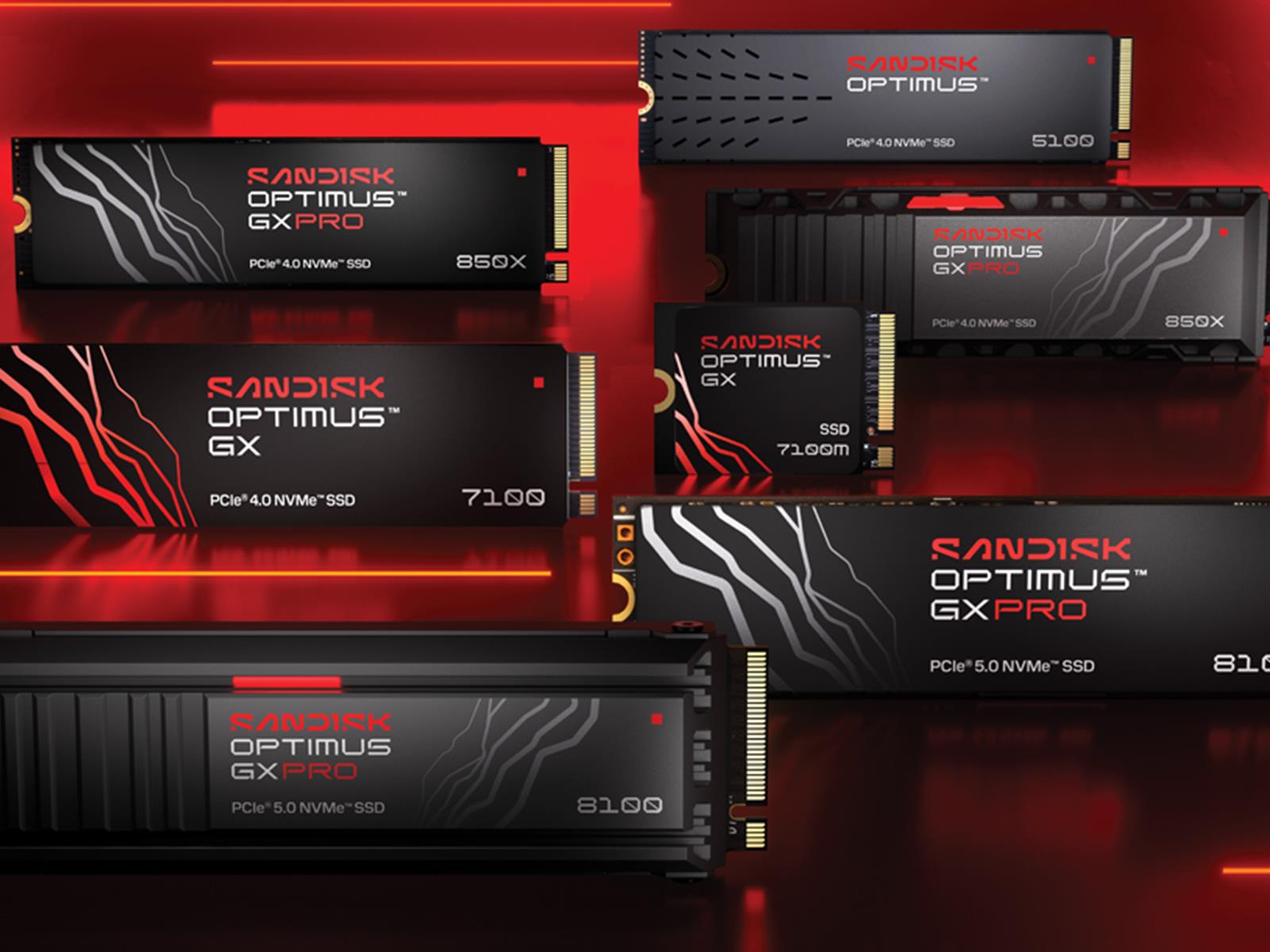
Today, SanDisk announced that mainstream WD Blue and WD Black SSDs would be discontinued and replaced by SanDisk Optimus-branded disks with the same model numbers.
Google is quietly killing Gmail’s ability to fetch mail from third-party email accounts using POP3, a long-standing feature that has allowed users to consolidate multiple inboxes into a single Gmail interface. The change takes effect this month and also ends Gmailify, the companion feature that applied Gmail’s spam filtering and inbox organization to linked third-party accounts.
Google buried the decision in a support note rather than making any formal announcement. The company’s suggested workaround — switching to IMAP — doesn’t work for all affected users. Users can still access third-party accounts through the Gmail mobile app, but the Gmail service itself will no longer retrieve messages from external providers.
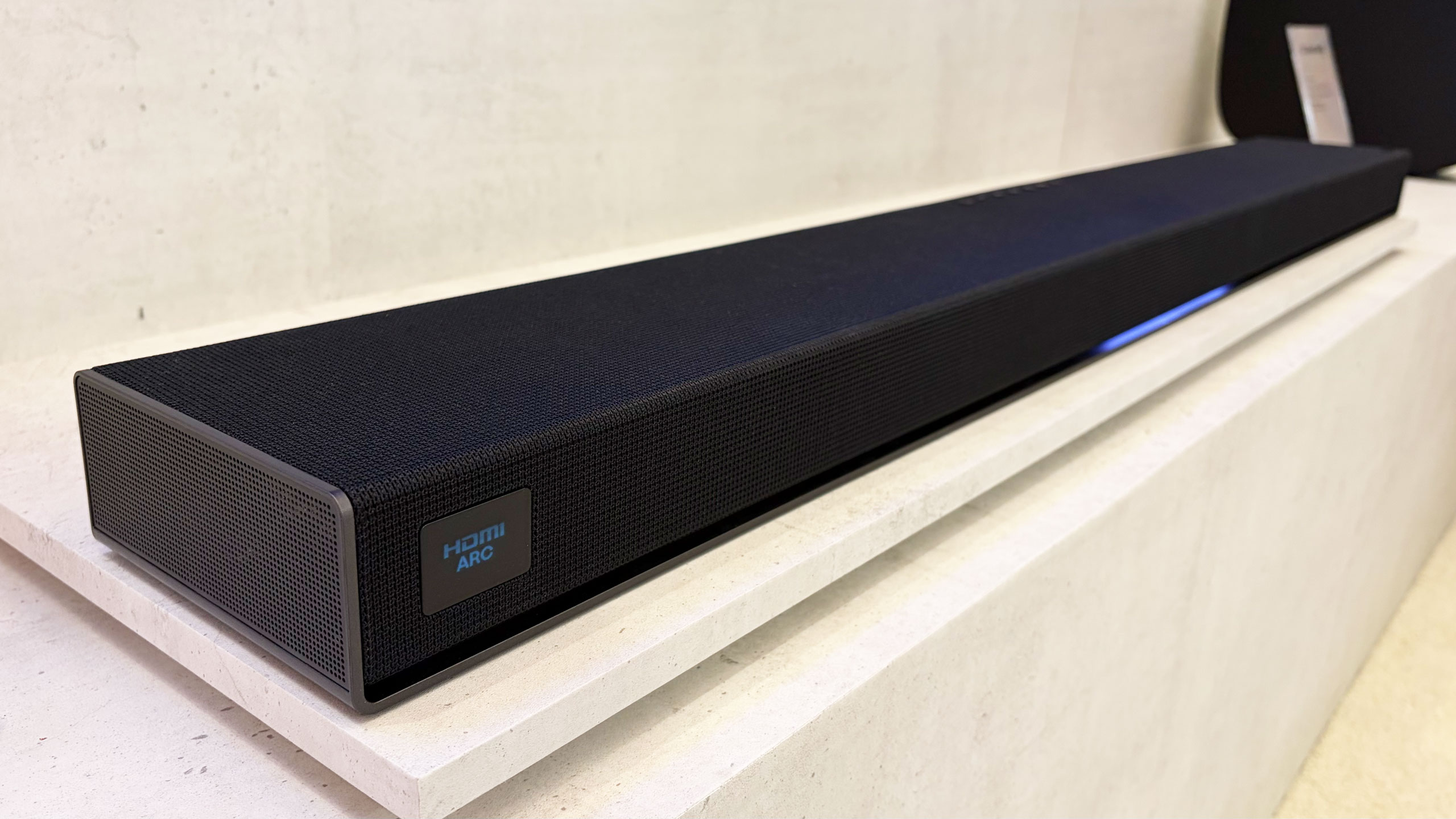
Dolby introduced its FlexConnect technology a few years ago, vowing that it would allow customers to position soundbars and speakers anywhere in a room. The company said the platform would then reconfigure the sound automatically, taking into account any locations that may be further away from the center sweet spot. At CES 2026, LG is the first to put Dolby Atmos FlexConnect in a soundbar, offering the so-called Sound Suite that also includes satellite speaker options and a subwoofer. You don’t need every member of the lineup to use Dolby’s tech, so you can pick and choose which items work best for your living room.
The centerpiece of the Sound Suite is the H7 soundbar. This 9.1.6-channel speaker is configured for spatial audio (Dolby Atmos) and supports lossless audio up to 24 bit/96kHz. The standout on the spec sheet for me is the six up-firing channels, which should enhance the sensation of overhead sounds. Most of the soundbars I review have only two of those.
What’s more, the H7 is equipped with a feature called Sound Follow that tracks the location of your phone to reconfigure the audio when your position changes. Maybe you move to a comfy chair instead of the sofa right in front of the TV. The idea is that you don’t have to suffer through subpar audio during a movie or show just because you aren’t in the best spot.
LG Sound Suite H7 soundbar
Billy Steele for Engadget
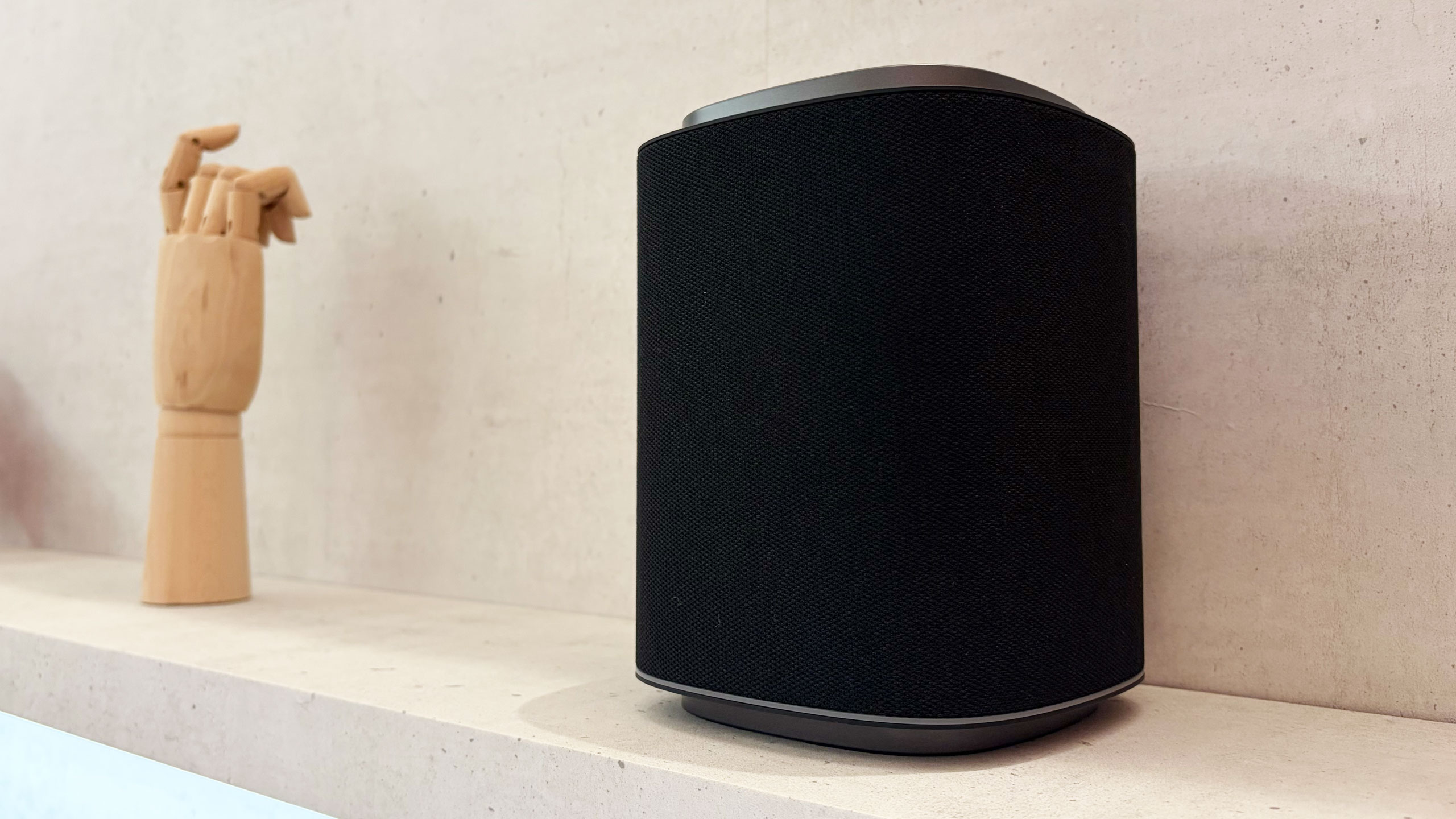
Then there are the M5 and M7 speakers. When used with the H7 soundbar, these are the satellite speakers, but LG cautioned me against calling them “rear” units. While it’s true a pair of them will be positioned behind most people’s sofas, the company explained that there’s more audio content coming out of them than traditional rear channels provide. As such, two of the M5s or M7s that are used to complement the speakers inside one of LG’s impressively thin TVs are doing more work than just beaming sounds that are designed to come from behind.
The M5 is a 1.1.1-channel speaker while the M7 is 2.1.1. Like the H7, both support Dolby Atmos and lossless music. What’s more, the entire Sound Suite arsenal has Wi-Fi and Bluetooth connectivity, including AirPlay 2, Google Cast and both Spotify and Tidal connect. The whole shebang also employs LG’s own AI Sound Pro and Room Calibration Pro, and all of the settings are customized in the ThinQ app for Android and iOS.
Each speaker can be used independently should the need arise, and as I already mentioned, you can pick and choose which components will work best for you — up to four total speakers. So you can opt for the H7, sub and two speakers or four of either the M5 or M7. You can also get a smaller setup with two speakers or just the soundbar and subwoofer. Dolby Atmos FlexConnect is still in play no matter what combination you decide on. I should note the optional W7 subwoofer is quite large, but you can use it standing upright or laying flat, according to LG.
LG Sound Suite M5 speaker
Billy Steele for Engadget
Of course, none of this means anything if Sound Suite doesn’t actually sound good. I’m happy to report LG’s collection of speakers are sonically impressive. I was able to get a good sense of how they’ll perform in a quite demo room at CES. Watching a variety of movie clips in Dolby Atmos, I flipped back and forth between a setup with four M7 speakers and a more robust configuration of the soundbar, subwoofer and M7 speakers. While I preferred the overall tone and tuning of the four M7s, I can concede the bigger collection offered more immersive sound and better directional audio. That said, they both provided excellent clarity and pristine detail.
With Sound Follow, you can quickly have Sound Suite reconfigure the audio based on the location of your phone with just a tap. Let’s say you move from the couch to a comfy chair and want to adjust the sound to that spot. You can do that in the app. And while I could tell a slight difference in a side-of-the-room location and the center sweet spot in front of the TV, the correction did offer an improvement over the unadjusted audio.
I was also able to test standalone mode, where you can quickly use any Sound Suite speaker individually for music. Sound quality was consistent here too, and the system allowed me to add a second M7 speaker for a stereo pair with a few taps in LG’s app. Overall, the Sound Suite lineup offers lots of flexibility in terms of features and configurations. In fact, LG says that between the H7, W7, M5 and M7, there are 50 possible combinations.
Unfortunately, LG hasn’t announced pricing or availability yet. Given the capabilities of the Sound Suite system, I don’t expect the more robust collections to come cheap. However, I do think the company will offer a few different bundles that will hopefully provide a discount over buying each component individually.
This article originally appeared on Engadget at https://www.engadget.com/home/home-theater/lg-sound-suite-hands-on-at-ces-2026-home-theater-powered-by-dolby-atmos-flexconnect-192709499.html?src=rss
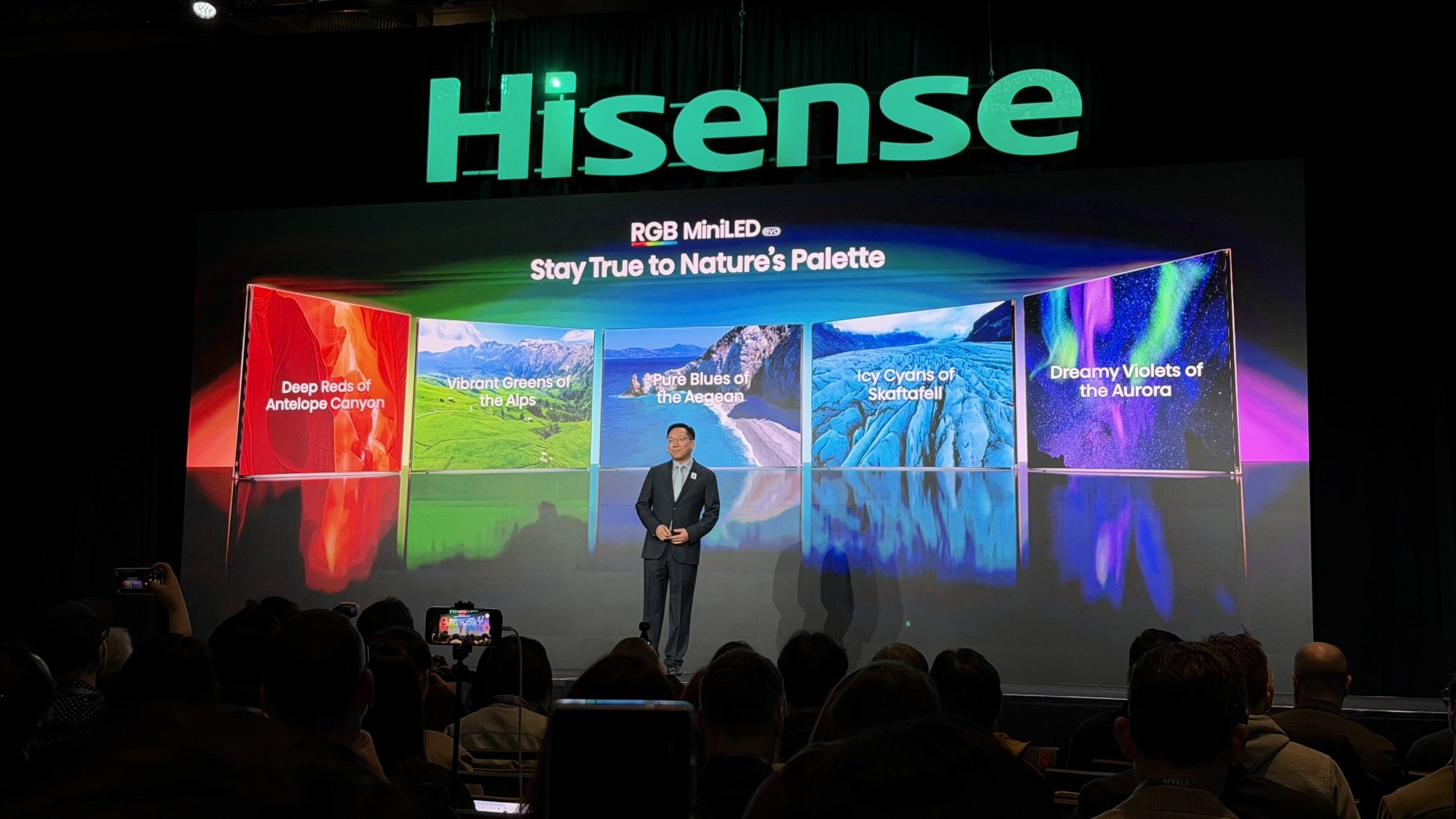
Hisense is all about TVs at this year’s CES—specifically, how those TVs display color. If the company’s keynote is any indication, Hisense is extremely invested in leading the charge in color reproduction. Though its tagline this year is “Innovating a Brighter Life,” the pitch is less on how bright their TVs are, and more on how true to life their colors are, especially when it comes to accurately displaying the filmmakers’ original intent. Will consumers buy a TV because their favorite movie looks a bit more how the director intended it to be? I’m not sure. But that’s largely the idea behind Hisense’s new RGB MiniLED Evo.
RGB MiniLED Evo
Credit: Lifehacker
Hisense’s biggest announcement of the day is its RGB MiniLED Evo. This iteration of the company’s RGB MiniLED technology comes with three key upgrades: First, there’s the “Chromagic” precision backlight. The company says this technology helps avoid color bleeding and tint shifting when watching content. It also boosts the colors offered by existing RGB MiniLED technology: Hisense says this new standard can display 110% of the BT.2020 color gamut with four-primary colors (red, green, blue, and sky blue, or cyan), while RGB MiniLED can achieve 100% BT.2020 with the standard three primary colors. The company says Evo also comes with AI-powered RGB color dimming with “134 bit precision.”
Second, RGB MiniLED Evo has a “Hi-View AI engine,” to sync color across the TV’s backlight. This engine comes with a three-core RISC CPU and a 2TOPS NPU for AI processing. Hisense claims the chip provides a 40% boost in computing performance, a 70% improvement in scenario recognition computing power, and 100% upgrade in scenario adaption computing capability. The company says the RGB MiniLED Evo can help display shows and movies as the original creators intended them to look. Hisense compared it to OLED, which it says displays content with too little brightness, and QD MiniLED, which it says compromises the color by being too bright.
Hisense’s RGB MiniLED—not necessarily just Evo—also supposedly cuts down on blue light. Hisense says its new display tech emits 60% “less harmful” blue light than QD OLED, though the science doesn’t necessarily support the claims that blue light is any worse for you than other light colors. The company also says RGB MiniLED is 30% more energy-efficient than QD OLED, though it didn’t include any references to back up those claims in the keynote. Finally, Evo comes with an AI calibration feature, which Hisense touts as a way for users to turn their TVs into professional reference monitors.
The company says RGB MiniLED evo is coming to its product lineup, including the U8, UX, U9, and U7 series, this year.
Other Hisense announcements at CES 2026
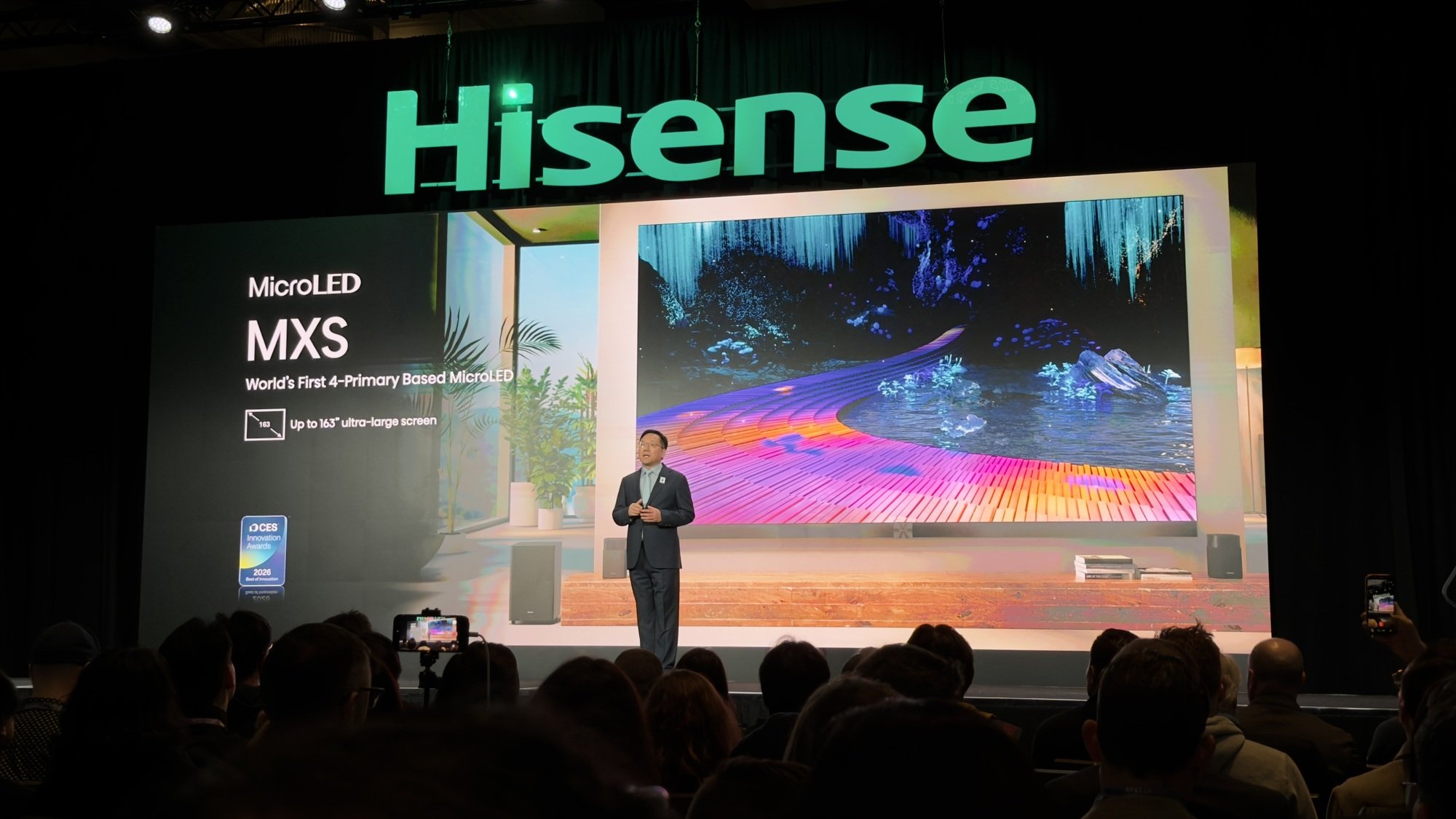
Credit: Lifehacker
While the RGB MiniLED Evo was undoubtedly Hisense’s biggest announcement this year, the company also ran through some other news at the keynote. First, there’s the XR10, a new projector that can reach up to 300 inches. It comes with liquid cooling, lens shift supporting a 4K projection, and 6,000 lumens of brightness.
The company also announced the MXS MicroLED TV, which can scale up to 163 inches. Despite devoting only a moment to the TV, company says the MXS won an CES 2026 Innovation Award. Hisense also made some announcements about its TV OS, including features like weather, calendar, and integrations with other smart home devices. But perhaps most notably, Hisense announced a partnership with Microsoft to bring both Copilot and Xbox Cloud Gaming to its TVs. That’s pretty big news.
Finally, if you’re both a Hisense and a FIFA fan, you can buy products from the “Hisense Elite Collection,” which are designed specifically for the 2026 FIFA World Cup. I’m not sure how big that crossover is, nor do I think I’d buy a TV because it was made for one soccer event, but it was part of Hisense’s announcement.
We’ll admit that we weren’t paying enough attention to the state of Anthem—BioWare’s troubled 2019 jetpack-powered open-world shooter—to notice EA’s July announcement that it was planning to shut down the game’s servers. But with that planned server shutdown now just a week away, we thought it was worth alerting you readers to your final opportunity to play one of BioWare’s most ambitious failures.
CES is once again where TV manufacturers lay out their plans for the year ahead, and CES 2026 is shaping up to be a showcase of both familiar rivalries and genuinely new display tech. While OLED and Mini LED remain central to most lineups, Micro RGB has emerged as one of the most talked-about developments at the show so far, especially at the higher end of the market.
Below are the TV announcements that stood out most from the pre-show events and early press conferences, with more expected as CES continues.
Samsung Micro RGB TVs
Samsung’s flagship Micro RGB TV
Engadget
Samsung’s Micro RGB push at CES 2026 isn’t just about big screens — it’s also about how the technology tries to redefine color accuracy and brightness in LCD-based TVs. Unlike traditional Mini LED backlights that rely on white LEDs and filters, Samsung’s Micro RGB TVs use microscopic red, green and blue LEDs in the backlight plane, which help deliver a wider color gamut and more precise local luminance control than conventional backlit LCDs.
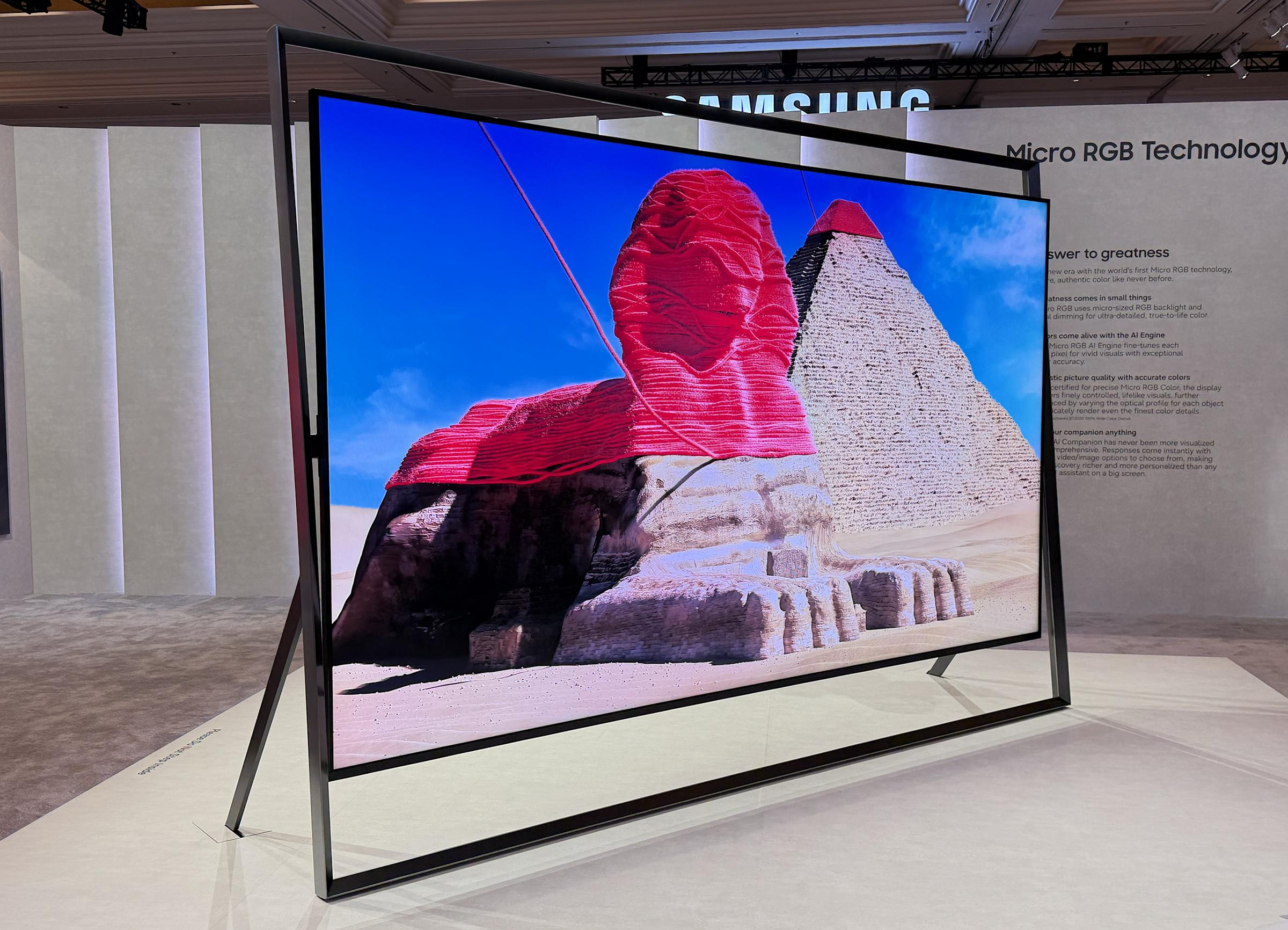
The standout of the lineup so far is the jaw-dropping 130-inch Micro RGB concept, shown suspended on a massive gallery-style stand at Samsung’s First Look event. It’s powered by Samsung’s Micro RGB AI Engine Pro, a processing suite that includes Micro RGB Color Booster Pro and Micro RGB HDR Pro to refine contrast and push color depth and detail frame by frame, with HDR10+ Advanced support built in. Compared with previous Micro RGB models, Samsung says this expanded family will start at more practical sizes — 55- and 65-inch — and go up to sizes as large as 75, 85 and 100 inches, all with next-gen AI-driven picture and sound features baked in.
Samsung’s Micro RGB sets also carry the company’s Glare Free anti-reflection finish and tie into its broader Vision AI platform, which supports things like conversational search and contextual content discovery. While the 130-inch concept may remain more of a statement piece than a consumer product, the move underscores how Samsung continues to push next-gen TV tech forward.
Samsung OLED TVs
Samsung’s new 2026 OLED slate — including the S95H, S90H and S85H models — continues the brand’s use of quantum dot-enhanced OLED panels, bringing brighter highlights and richer colors than older WOLED approaches. These TVs also benefit from Samsung’s continued refinement of processing and anti-glare screen treatments, which make them more adaptable in bright living rooms than traditional OLEDs.
The flagship S95H retains its position as the most premium, using a quantum dot layer to help improve brightness and color purity. Below that, the S90H brings glare-reducing optical layers and robust picture processing to a slightly more affordable price point, while the S85H is designed to offer core OLED benefits, like deep blacks and wide viewing angles, in a more accessible package that now includes a new 48-inch size for smaller spaces or gaming setups.
Across the OLED family, Samsung’s Vision AI-powered tools such as AI Motion Enhancer Pro and AI Sound Controller (which dynamically adjusts audio based on content) are also part of the story, making these sets not just about panel tech but about richer, more adaptable viewing experiences.
LG OLED evo W6 Wallpaper TV
LG’s 2026 Wallpaper wireless OLED TV
Devindra Hardawar for Engadget
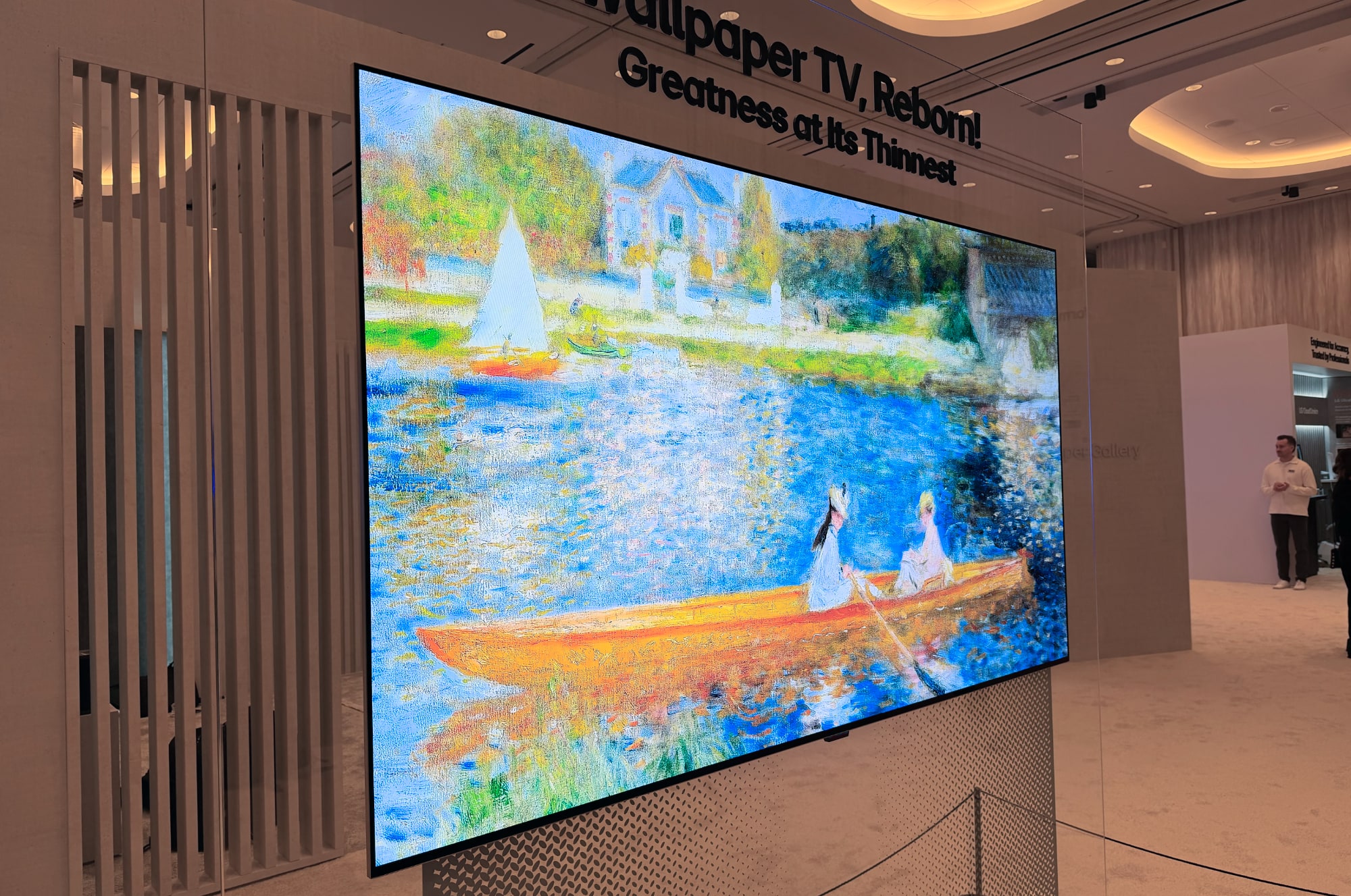
LG’s OLED evo W6 Wallpaper TV makes a striking return at CES 2026, and this year’s version manages to blend design flair with high-end performance. The panel itself is an astonishing 9mm thick, designed to sit almost flush against a wall, and pairs with a Zero Connect Box that hosts all inputs and delivers wireless video feeds up to 10 meters away.
Under the ultra-thin exterior, the W6 uses LG’s Hyper Radiant Color technology coupled with Brightness Booster Ultra to push improved brightness and color saturation compared with previous Wallpaper models. It also received Intertek’s “Reflection Free with Premium” certification, indicating some of the lowest reflectance levels yet on an OLED TV. Gaming shooters and fast action fans might appreciate support for up to 165Hz refresh rates and both G-SYNC and FreeSync Premium compatibility, making this one of the most technically ambitious Wallpaper designs LG has shown.
LG Micro RGB evo TVs
LG is also entering the premium RGB-backlit arena at CES with its Micro RGB evo lineup, bringing a similar focus on wider color gamut and intense brightness. Early coverage indicates the Micro RGB evo models will arrive in 75-, 86- and 100-inch sizes, and are built around LG’s α11 AI Processor Gen3, which handles advanced upscaling, local dimming and dynamic HDR optimization.
LG’s Micro RGB evo TVs have been certified for full coverage of BT.2020, DCI-P3 and Adobe RGB color spaces, suggesting an exceptionally wide palette and precise color fidelity. Under the hood, the Micro Dimming Ultra system is said to deliver 1,000+ local dimming zones, which narrows the gap between LCD-based displays and self-emissive technologies like OLED in terms of contrast management.
This early positioning of RGB LED tech by LG also highlights a growing industry shift, with multiple brands teasing similar systems designed to improve brightness and color performance on large screen sizes — especially where OLED’s peak luminance traditionally struggles.
LG OLED TVs (C6 and C6H)
OLED remains a core focus for LG, and CES 2026 brought updates to its popular C-series. The LG C6 OLED continues the company’s tradition of balancing performance and price, while the C6H OLED steps things up with a new Primary RGB Tandem panel designed to deliver higher brightness and improved color volume.
These models are clearly aimed at buyers who want OLED’s deep blacks and wide viewing angles without jumping to LG’s most expensive designs, making them likely to be among the most popular TVs LG releases this year.
TCL X11L SQD-Mini LED TV
TCL used CES 2026 to make a strong case for Mini LED’s continued relevance with the X11L SQD-Mini LED TV, its new flagship model aimed squarely at large-screen home theater setups. Rather than chasing Micro RGB, TCL is refining its own approach with SQD, or Super Quantum Dot, technology, which combines an enhanced quantum dot layer with a dense Mini LED backlight to improve color purity and brightness.
The headline number here is brightness. TCL claims the X11L can hit up to 10,000 nits peak brightness, putting it among the brightest TVs shown at CES this year. That’s paired with an extremely dense local dimming system, with up to 20,000 dimming zones, which is designed to improve contrast and keep blooming in check despite the extreme luminance. TCL also says the panel covers 100 percent of the BT.2020 color space, a bold claim that, if it holds up in real-world testing, would put it in rare company.
The X11L is a 4K TV available in 75-inch, 85-inch and 98-inch sizes, with the largest models clearly intended to rival premium OLED and Micro RGB sets in dedicated home theaters. It supports a 144Hz refresh rate, making it appealing for gaming as well as fast-moving sports, and includes support for advanced HDR formats, including Dolby Vision, with further enhancements expected via software updates.
With CES press day underway and the show floor opening on January 6, more TV announcements are expected from major manufacturers. As additional models are revealed or details are confirmed, we’ll continue updating this roundup with the latest information.
This article originally appeared on Engadget at https://www.engadget.com/home/home-theater/the-biggest-tv-announcements-at-ces-2026-190929976.html?src=rss
Lego bricks come in a ridiculously vast array of sizes and shapes, but the company is unveiling an entirely new take on its classic shape at CES 2026. Meet the Lego Smart Brick, a standard-sized 2 x 4 brick that’s packed with modern technology to enable sets that can respond to how they’re played with or the sets you build. It’s part of a new initiative called Smart Play, which encompasses the Smart Brick as well as Smart Minifigures and Smart Tags. While we obviously don’t know yet how Lego fans will take to this new system, it’s still fair to say it’s the biggest move Lego has every made to infuse its products with connected technology.
The Smart Brick has a 4.1mm ASIC chip inside of it that Lego says is smaller than a standard Lego stud. It runs something called the Play Engine that can sense things like motion, orientation and magnetic fields. Thanks to this and some integrated copper coils, the Smart Brick can sense distance, direction and orientation of other Smart Bricks near it when you’re building. The brick also has a tiny built-in speaker, an accelerometer and an LED array. Lego says the speaker can produce audio that is “tied to live play actions” rather than just playing pre-recorded clips.
The Smart Tag and Smart Minifigures are a lot simpler. The Tag is a 2 x 2 studless tile with a digital ID embedded in it that the Smart Brick can read via “near-field magnetic communication.” This obviously sounds a lot like NFC, but we can’t be sure that these new Lego pieces will be able to communicate with any other NFC devices. Similarly, the Smart Minifigure also has a digital ID readable by NFC.
The purpose of the Smart Tag as well as the similar tech in a Smart Minifigure is to let the Smart Brick know what kind of context it is being used in. As Lego puts it, “The role of the Smart Tag is to tell the Smart Brick how it should play back with you.” The Tag tells the Brick what kind of object, animal, vehicle and so forth it should become. A Smart Tag in a Lego Star Wars X-Wing set, for example, will contain the unique ID and instructions for how the Smart Brick should behave.
If this isn’t enough, Lego has also built a local wireless layer that connects this all together called BrickNet. It’s based on Bluetooth and uses Lego’s proprietary “Neighbor Position Measurement” system, which is what lets the Smart Bricks know how close they are to each other and how they’re oriented. Lego says that this lets the bricks “talk” to each other directly without the need for apps, internet connections or external controls. It sounds like the idea is all three of these new Smart pieces can communicate and interact without any need for setup, which should make it refreshingly like a traditional Lego set.
That said, these bricks naturally will need some power. Lego says that their batteries should still perform even after “years” of inactivity, and the coils and power system is designed so that multiple bricks can be charged wirelessly on a shared charging pad.
Lego Star Wars set with Smart Bricks
Lego
Speaking of sets, Lego is unsurprisingly launching the Smart Play system with its biggest licensed partner: Star Wars. There will be three “all-in-one” Star Wars sets available, all of which are on the smaller side and definitely geared towards kids, rather than the 1,000 piece and up sets that the company has released to get adults (like me) interested.
The prices are inflated compared to non-smart sets, but not outrageously so. Darth Vader’s TIE Fighter is a 473-piece set with a smart Darth Vader Minifigure, one Smart Brick and one Smart Tag, priced at $70. Luke’s Red Five X-Wing is a 584-piece set with two Smart Minifigures, one Smart Brick and five Smart Tags, priced at $100. The Throne Room Duel & A-wing is a 962-piece set with three Smart Minifigures, two Smart Bricks and five Smart Tags, priced at a slightly shocking $160.
It’s an entirely new direction for Lego, and you won’t have to wait long to check it out. The company is putting those three sets up for pre-order on January 9, and they’ll launch on March 1. There’s obviously a lot of technology here that’s entirely new to Lego, and as such it’s hard to imagine just how this will all look when it comes together — but we’re hoping that Lego will have some sets on hand here at CES so we can get a closer look at how the Smart Play system works.
In the meantime, you can find a few videos on how Smart Play works here.
This article originally appeared on Engadget at https://www.engadget.com/entertainment/lego-unveils-a-technology-packed-smart-brick-at-ces-2026-190000511.html?src=rss
There’s a huge emphasis on PC gaming at CES, and that’s understandable; gaming is the primary market keeping the PC alive as a platform. Still, people need PCs for both work and play, so MSI is launching a new family of PC products that are designed specifically for multi-tasking, image processing, remote collaboration, and “data-driven workloads.”
SanDisk is bidding farewell to its WD Black and WD Blue storage brands and replacing them with its new Optimus line, which it has broken down into three performance tiers: Optimus, Optimus GX, and Optimus GX Pro. A bolder design accompanies the rebrand, but what this really indicates for consumers is that SanDisk is keeping the storage party
Microsoft has started testing a “significant” visual overhaul for Edge in its Canary and Dev Channel preview builds, and the redesigned interface borrows heavily from the design language that first appeared in the company’s standalone Copilot app rather than the Fluent Design system used across Windows 11, Xbox, and Office.
The updated look touches context menus, the new tab page and settings areas, introducing rounder corners and the same color palette and typography found in Copilot. The new interface appears regardless of whether users have Copilot Mode enabled, though the new tab page reverts to MSN news articles and Bing search when Copilot Mode is turned off.
Edge is not alone in this shift, Windows Central writes. Microsoft is also applying the Copilot design language to Copilot Discover, an AI-powered version of MSN.com that may be internally codenamed “Ruby.” Windows and Xbox have not yet received similar treatment. The rollout remains uneven — the refreshed UI is not appearing on all test machines — and production releases are likely weeks away. If Microsoft continues down this path, Copilot, MSN and Edge will share a visual identity that looks noticeably different from the rest of the company’s software lineup, the publication adds.
Micro RGB TVs first arrived last year with little fanfare and a confusing name, so you may have mistaken it for other panel tech or not even noticed. That is not likely to be the case this year, though — it’s the hot new “luxury” display technology and is all over the place at CES 2026. So why do we even need these new TVs and how are they different from OLED, Micro LED and Mini LED models? Here’s how it works and how it compares.
A brief history of flat panel display tech
To better understand Micro RGB, it helps to see how flat panel display technology has evolved over the last 20 years. The first LCD TVs used liquid crystals that become transparent to light when voltage is applied, letting a rear backlight shine through as a pixel. Those pixels combine to create moving or still images, with color created via an RGB filter layer placed in front.
The main problem is that LCD crystals let some light partially leak through, so blacks are dark grey instead of pure black. And for a backlight, early LCD TVs used a white screen lit by dim and power-hungry fluorescent lights, which caused uneven light distribution. And finally, the RGB filter color layer reduced a panel’s brightness.
The next step up, then, was to use LED backlights instead, placed at first at the edges of the white screen and then later directly behind it (the first TV with this tech was Sony’s 2004 Qualia). That added the benefits of higher brightness, lower power consumption, improved color balance and even light distribution. It also allowed individual dimming zones that improve contrast by allowing near-pure blacks in shadow areas of an image.
Samsung’s Neo QLED 8K TV from CES 2025
Samsung
Quantum dot (QD) technology came on the scene around 2013 with Sony’s Triluminos televisions. This type of LCD panel employs a semiconductor nanocrystal layer (rather than an RGB filter layer) that can produce pure monochromatic red, green, and blue light when struck with a blue backlight. Unlike previous LCDs, they offer higher brightness and color accuracy thanks to the purity (narrowness) of the base RGB colors. The best-known TVs using this tech are Samsung’s QLED models.
The latest evolution of QD LED technology is Mini LED. That combines the accuracy of quantum dot tech with hundreds or even thousands of LED dimming zones. Those models offer high brightness and color accuracy along with good contrast, but still don’t deliver perfect blacks and can display “blooming” in scenes with bright points of light due to leakage into neighboring pixels.
Both of those problems were solved with OLED technology, which first came on the market in 2007 with Sony’s XEL-1 model. The panels are made using sheets coated with organic LEDs, each paired with a transistor that can switch the LED on or off. On regular OLED TVs, OLED pixels are white and a filter layer generates colors, much as with LED TVs. However, with QD-OLEDs, OLED pixels are blue and color is created via a quantum dot layer, like LED QD displays. The latest version of QD-OLED featured on several new monitors at CES 2026 (Samsung’s 5th-gen QD-OLED) uses an RGB stripe pattern to reduce color “fringing” on text.
This is the first, and still the only widely commercialized TV tech that can switch its light source off on a pixel-by-pixel basis, allowing perfect black levels and near-infinite contrast. However, due to their organic nature, OLED TVs suffer from a lack of brightness and the potential for “burn-in” that can kill pixels.
There is another type of self-illuminating tech called Micro LED. Rather than organic, it uses microscopic inorganic LEDs to form the individual pixel elements. Those can also be turned on or off individually, so they offer the same pure blacks and sky-high contrast as OLED. At the same time they’re potentially brighter than OLED and don’t suffer from burn-in. The tech is still prohibitively expensive to manufacture, though, so none have arrived to market other than Samsung’s The Wall, which costs a cool $40,000.
Micro RGB
Devindra Hardawar for Engadget
Before talking about Micro RGB, let’s look at color space and gamut both for HDR, which uses the BT.2020 standard, and SDR, commonly associated with the REC.709 standard. REC.709 is ideal for regular HD content like TV broadcasts and YouTube videos. It can display a limited set of colors and brightness is generally capped at 100 nits.
BT.2020, however, is designed for high-end HDR streaming and 4K or 8K content creation (via Dolby Vision, HDR 10 or HDR10+). It has a much wider color gamut, meaning it can display a wider variety of colors and a bigger chunk of the visible color spectrum. It’s also designed for significantly higher brightness levels of 1,000 nits or more.
To achieve the color accuracy required for BT.2020, TVs must have extremely accurate red, green and blue pixels. Up until last year, the most color-accurate TVs used quantum dot technology and achieved a maximum of around 85 percent BT.2020 coverage (some projectors can cover 100 percent or more of the BT.2020 spectrum as they use RGB lasers to create colors).
That brings us to Micro RGB (also known as RGB Mini LED), the most advanced LED panel yet. Unlike the uniform white or blue backlights found on Mini LED models, it features individually-controlled, precise red, green and blue LED backlights that shine through a liquid crystal layer. It also offers more local dimming zones. The net result is higher color accuracy and better contrast than regular Mini LED displays, but with potentially greater brightness than OLED. Since each pixel still can’t be turned on and off like OLED or Micro LED, though, contrast falls short of those technologies.
Wikipedia
So far, there is one and only one Micro RGB TV on the market, Samsung’s 115-inch 4K MR95F model. The color accuracy is impressive with 100 percent coverage of the challenging BT.2020 HDR standard, an industry-first and huge leap over quantum dot tech. That means it can produce billions of colors natively and display a higher percentage of them in the visible spectrum than any TV to date.
Samsung left out a few key specs like the local dimming zone count, only saying that it has four times more than its similarly-priced 115-inch Q90F QLED model (so likely around 3,600). The company also failed to disclose the total brightness in nits, but the figure should be impressive given the potential of Micro RGB.
We were gobsmacked with the MR95F Micro RGB model in person. Engadget editor Sam Rutherford said it produced “stunningly rich and vivid colors that put Samsung’s other top-tier TVs to shame,” including the aforementioned Q90F. It also came with an equally stunning $29,999 price tag.
A couple of other manufacturers including HiSense have also released RGB Mini LED models similar to Samsung’s Micro RGB, but they differ slightly in that the RGB modules are larger than the ones found on Samsung’s latest TVs.
Which companies will have Micro RGB tech at CES 2026?
Samsung
Luckily, the number of Micro RGB TVs is about to dramatically increase. Earlier this month, Samsung announced a full lineup using the technology with 55-, 65-, 75-, 85-, 100- and 115-inch screen sizes, saying they’d set “a new standard for premium home viewing.” Those sets will also offer 100 percent BT.2020 HDR coverage under a new certification standard called Micro RGB Precision Color 100. While certainly likely to carry more reasonable prices than the first model, they’ll probably still be Samsung’s most expensive TVs when released later this year.
And on Sunday, Samsung also revealed a 130-inch Micro RGB prototype meant to showcase the technology. Once again, it blew us away partially just because of the huge size, but also due to the incredible “color accuracy and richness,” as Engadget editor Devindra Hardawar put it. “I couldn’t help but notice how everyone just looked a bit stunned, like the monkeys from 2001 seeing the monolith for the first time,” he added.
At the same time, LG announced its first Micro RGB “evo” TV lineup in 75-, 86- and 100-inch models. The company is also promising 100 percent BT.2020 color gamut coverage and said the sets will have over a thousand local dimming zones for color control. Not only that, it said that its new TVs will deliver 100 percent coverage in SDR modes as well, both for Adobe RGB and the challenge P3 standard.
It was interesting to compare LG’s Wallpaper and other OLED sets with the new Micro RGB tech, with our editor Devindra again being amazed. “LG already announced its Micro RGB set a few weeks ago, but that didn’t prepare me for standing in front of the 100-inch demo TV it brought to CES,” he said. “Throughout a variety of clips, colors looked wonderfully rich, and the overall texture of the images looked surprisingly life-like.”
This article originally appeared on Engadget at https://www.engadget.com/home/home-theater/what-are-micro-rgb-tvs-and-why-are-they-everywhere-at-ces-2026-182441543.html?src=rss
Scientists at Melbourne’s Peter Doherty Institute for Infection and Immunity are working on a Crispr-based treatment — delivered as a nasal spray or injection — that could stop influenza infections by targeting the virus’s RNA and disrupting its ability to replicate inside human cells.
The approach uses the Cas13 enzyme, a lesser-known cousin of the DNA-cutting Cas9, which can be engineered to seek out conserved regions of influenza’s genetic code that are found in virtually all flu strains and are crucial to the virus’s survival. The delivery mechanism would use lipid nanoparticles to ferry two molecular instructions to flu-infected cells in the respiratory tract: an mRNA that tells cells to produce Cas13 and a guide RNA that directs the enzyme to specific parts of the influenza virus’s code.
Cas13 then cuts the viral RNA and effectively stops the infection at the genetic level, Sharon Lewin, the infectious diseases physician leading the project, told Wired. Early safety testing at Harvard’s Wyss Institute used a “lung on a chip” model to examine whether human cells producing Cas13 could fight off flu strains including H1N1 and H3N2. The institute’s founding director Donald Ingber says the studies showed no off-target effects.
Your phone is a one-stop shop for a lot of your personal information, from day-to-day activities logged in your calendar and email to financial data accessed via banking apps. If you let someone else use your device—whether you’re showing a friend a collection of photos or allowing a stranger to make an emergency call—there’s a lot you don’t want them to be able to see.
If you’re an iPhone user, there are several features you can enable to prevent others from snooping around your device.
Use Guided Access
If you don’t want someone using your device to see anything else on it, you can turn on Guided Access, which limits them to a single app (such as Phone or Photos). This essentially locks down your screen and prevents navigation outside of the specific features you make available.
First, go to Settings > Accessibility > Guided Access and toggle the feature on. Tap Passcode Settings to set up a specific passcode or flip the Face ID toggle to use biometrics to end Guided Access sessions.
To start a Guided Access session before handing over your phone, open the app and triple click the side button. You can circle specific areas of the screen you don’t want to respond to touch (such as swipes through Photos). Tap Session Settings at the bottom to set a time limit, disable the keyboard, and manage button press options. Then tap Start.
To end a Guided Access session, triple-click the side button and enter your passcode or double-click and authenticate with Face ID.
You can also lock or hide specific apps
Some mobile apps, like financial apps and password managers, already require you to log in or authenticate with your username and password combo or device biometrics every time you open them. You can also lock down other individual apps on iPhone so Face ID, Touch ID, or a passcode is required for access. To lock an app from your home screen, touch and hold the icon until the quick actions menu appears, then tap Require Face ID.
Alternatively, you can hide apps so others cannot see them on your device (let alone open them) unless you authenticate using Face ID, Touch ID or a passcode. To hide an app, tap and hold the icon on the home screen and tap Require Face ID in the quick actions menu. Tap Hide and Require Face ID > Hide App. If you need to open a hidden app, swipe left on your home screen to reach your App Library, locate the Hidden folder at the bottom, and tap and authenticate to unlock the folder followed by the app.
(Note that some native iOS apps, including Calculator, Camera, Clock, Contacts, Find My, Maps, Shortcuts, and Settings, cannot be locked, and system apps that come preinstalled cannot be hidden.)
Okay, we know — you’re tired of hearing about a hypothetical “Big Battlemage” GPU and just want Intel to launch the darn thing already. Hey, so do we! We can only report the news that comes to us, though, so until Intel pulls the trigger, we’re gonna keep posting proof that the new parts exist. This latest one is arguably the most concrete
Netflix just announced the pending release of a Stranger Things documentary, hot on the heels of the series finale. It premieres on January 12. One Last Adventure focuses on the making of season five, so it’s not a full series retrospective. This seems similar to what Disney+ does a few weeks after a popular Star Wars or Marvel show drops.
Still, it’s a documentary about the very last season of the show, so there’s likely to be some tearful goodbyes and all of that jazz. As a matter of fact, the trailer shows plenty of hugs along with sit-down interviews.
It’ll shine a light on how some of the stunts and set pieces came together, which is cool. Stranger Things, after all, is primarily a show about spectacle and season five had plenty to spare. The Duffer Brothers will also discuss how they came to write some of those final character arcs (no spoilers here.)
If you’re grieving the loss of Steve Harrington, Delightful Derrick, Eleven and the rest, this should make for a nice watch. It’s worth noting that while Stranger Things has doled out its last needle drop, the franchise itself is still going.
This article originally appeared on Engadget at https://www.engadget.com/entertainment/tv-movies/a-stranger-things-making-of-documentary-hits-netflix-next-week-175539720.html?src=rss
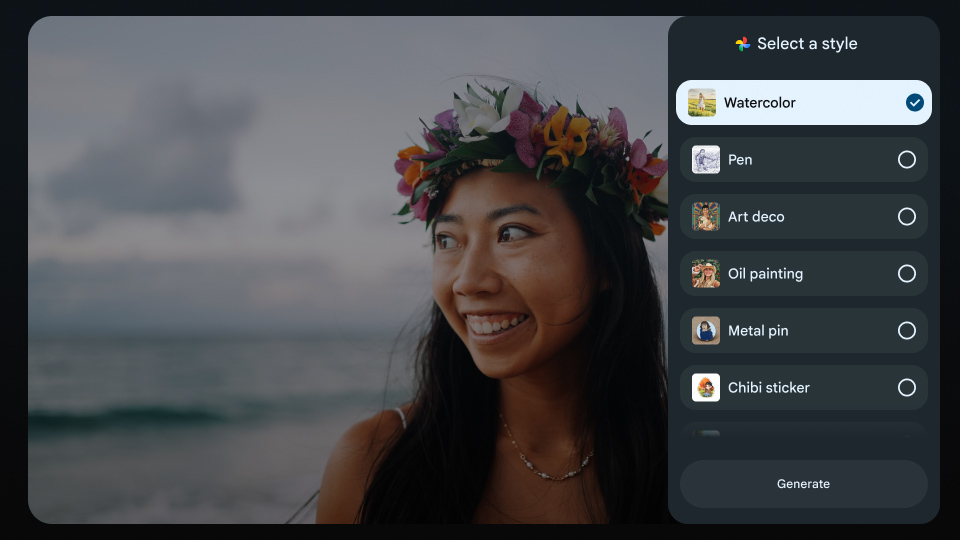
Soon, even loafing around on the couch won’t help you steer clear of AI. TV makers are busily integrating AI models into the experience, and Google is no different. At CES, the company announced a big expansion of Gemini features on the Google TV platform, starting with TCL smart TVs.
Google began integrating Gemini with the TV Streamer box this past fall, but the new expansion brings some of the company’s most popular AI features to TVs: Nano Banana (image) and Veo (video), which offered a huge leap in visual fidelity at launch and have only improved with subsequent updates. Both models will be part of the TV experience, allowing users to modify or create new content.
Google Photos AI remixing in Google TV.
Credit:
Google
The Google TV platform connects to Google Photos, allowing Gemini to access those images with your approval. Gemini can generate a slideshow of your choosing on the spot, but it can also feed those images into Veo or Nano Banana. Using Gemini voice controls, you can remix a photo or turn a still image into a video. You can also enter a solo prompt to generate a totally new image or video with Google’s AI on your TV.
It seems that instead of updating Grok to prevent outputs of sexualized images of minors, X is planning to purge users generating content that the platform deems illegal, including Grok-generated child sexual abuse material (CSAM).
On Saturday, X Safety finally posted an official response after nearly a week of backlash over Grok outputs that sexualized real people without consent. Offering no apology for Grok’s functionality, X Safety blamed users for prompting Grok to produce CSAM while reminding them that such prompts can trigger account suspensions and possible legal consequences.
“We take action against illegal content on X, including Child Sexual Abuse Material (CSAM), by removing it, permanently suspending accounts, and working with local governments and law enforcement as necessary,” X Safety said. “Anyone using or prompting Grok to make illegal content will suffer the same consequences as if they upload illegal content.”