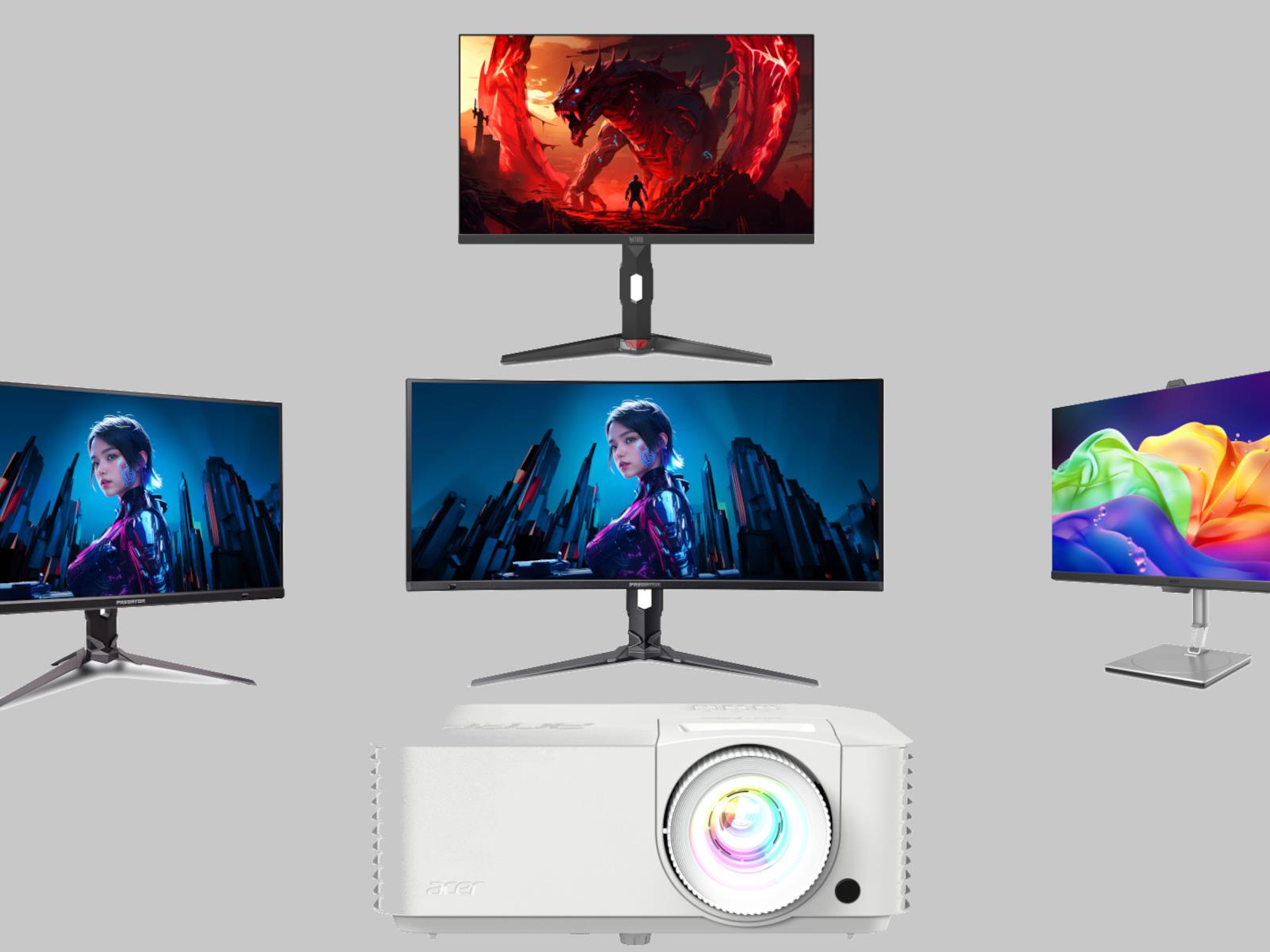
Acer is pulling up to CES 2026 with a surprisingly versatile range of displays, including an impressive laser RGB projector that can pull double duty as a 4K HDR home cinema projector (with an impressive 106% of BT.2020 wide color gamut coverage) or a 1080p 240Hz gaming beast. The increasing trend of displays allowing you to prioritize resolution
This year HP is making an important change by taking its name off its gaming hardware entirely and letting its HyperX branding take center stage. At CES 2026, the company is celebrating this transition in a big way with Omen Max 16, which is being heralded as the world’s most powerful gaming laptop with fully internal cooling.
Now the last part of that claim is a bit of a cop out, but considering that most gamers probably don’t want to lug around a notebook with hoses coming out the back, it’s an understandable qualifier. Plus, with a total platform power of 300 watts that includes support for the latest chips from Intel and AMD and up to an NVIDIA RTX 5090 GPU, this thing certainly won’t be lacking in speed. Under the hood, the Max 16 features a third cooling fan to prevent throttling under sustained workloads along with HP’s Fan Cleaner tech that reverses the direction of the laptop’s fans to prevent dust from building up inside.
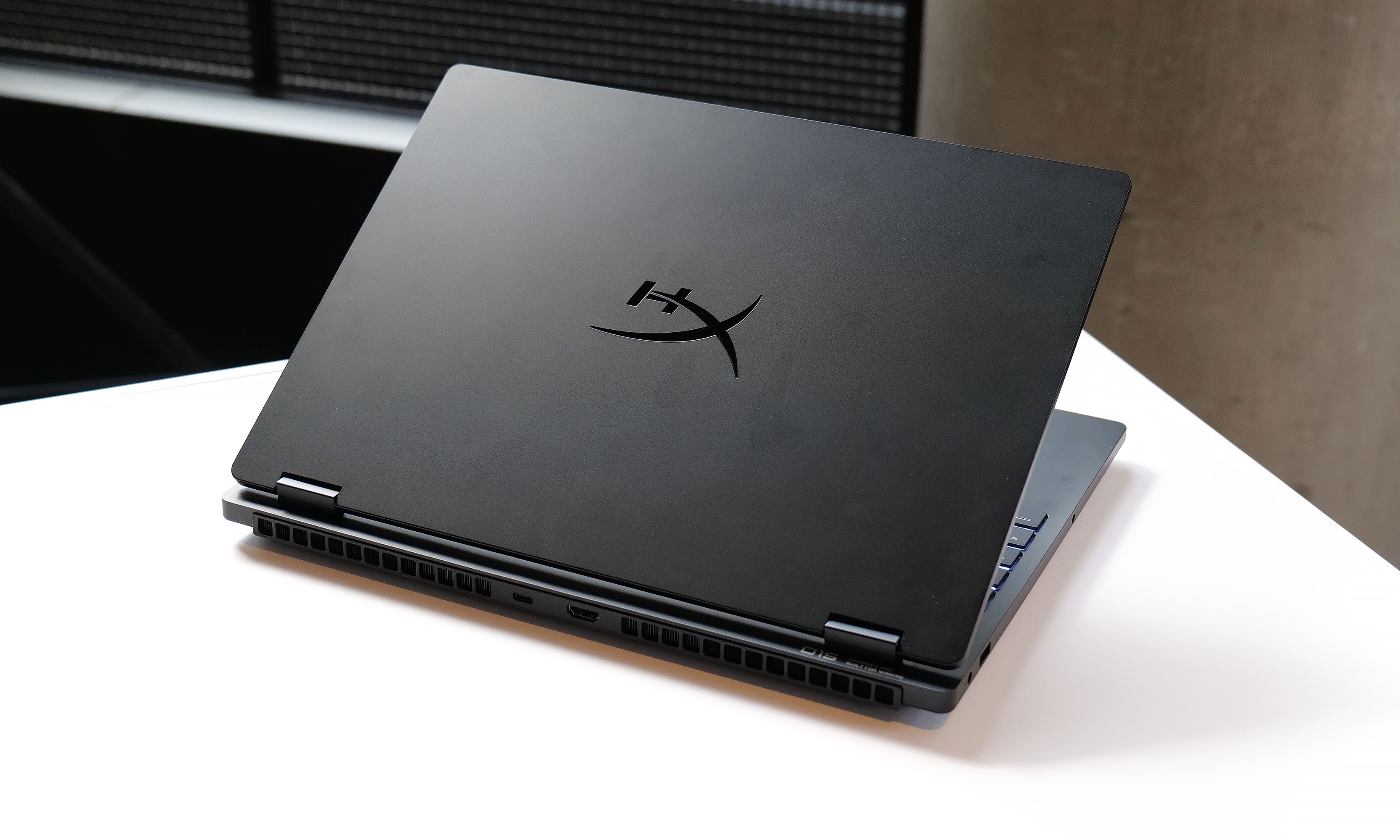
As for its design, the Max 16 doesn’t stray too far from HyperX’s signature matte black color scheme, though I do appreciate that the company kept a handful of accents like the RGB lightbar mounted on the laptop’s front lip. The notebook also features a per-key RGB backlit keyboard with a 1,000Hz polling rate, which should all but eliminate any issues with ghosting or rollover during hectic facerolling sessions.
However, one quirk about the system I noticed when checking it out first hand is that even with above average brightness of 500 nits for its 2.5K OLED display, the screen also comes with an unusually glossy coating. The benefit of this is that colors appear super saturated. The downside is that especially in well-lit rooms with a lot of sunlight, there’s more glare and reflections than you might expect.
Another nice improvement about the Max 16 that might go unnoticed if you only look at its spec sheet is that despite having a TPP of 300 watts, its power brick is relatively compact. It wasn’t all that long ago that a laptop with this kind of performance might have required dual power cables in order to supply the notebook with the amount of juice it needs. That said, weighing between 6.1 and 6.5 pounds depending on the exact configuration, the Max 16 still isn’t the kind of laptop you’re going to want to carry around on a frequent basis.
Regardless, if you’re in the market for what is essentially an old-school desktop replacement laptop without moving up to even larger 18-inch machines, HyperX’s latest flagship gaming laptop should be a strong contender that won’t be lacking in speed.
One change for 2026 is that HP is taking its name off of its gaming systems and letting the HyperX brand take center stage.
Sam Rutherford for Engadget
Unfortunately, HP doesn’t have concrete info about how much the HyperX Omen Max 16 will cost or when it will go on sale. However, we should know more when it becomes available sometime later this spring. And finally, if you’re looking for something slightly smaller or a more affordable system (we don’t have official pricing, but the Max 16 won’t come cheap), HP is also updating the Omen 15 and Omen 16 with fresh components and new HyperX branding for 2026 as well.
This article originally appeared on Engadget at https://www.engadget.com/computing/laptops/ces-2026-hp-says-the-hyperx-omen-max-16-is-the-most-powerful-16-inch-gaming-laptop-in-the-world-230000272.html?src=rss
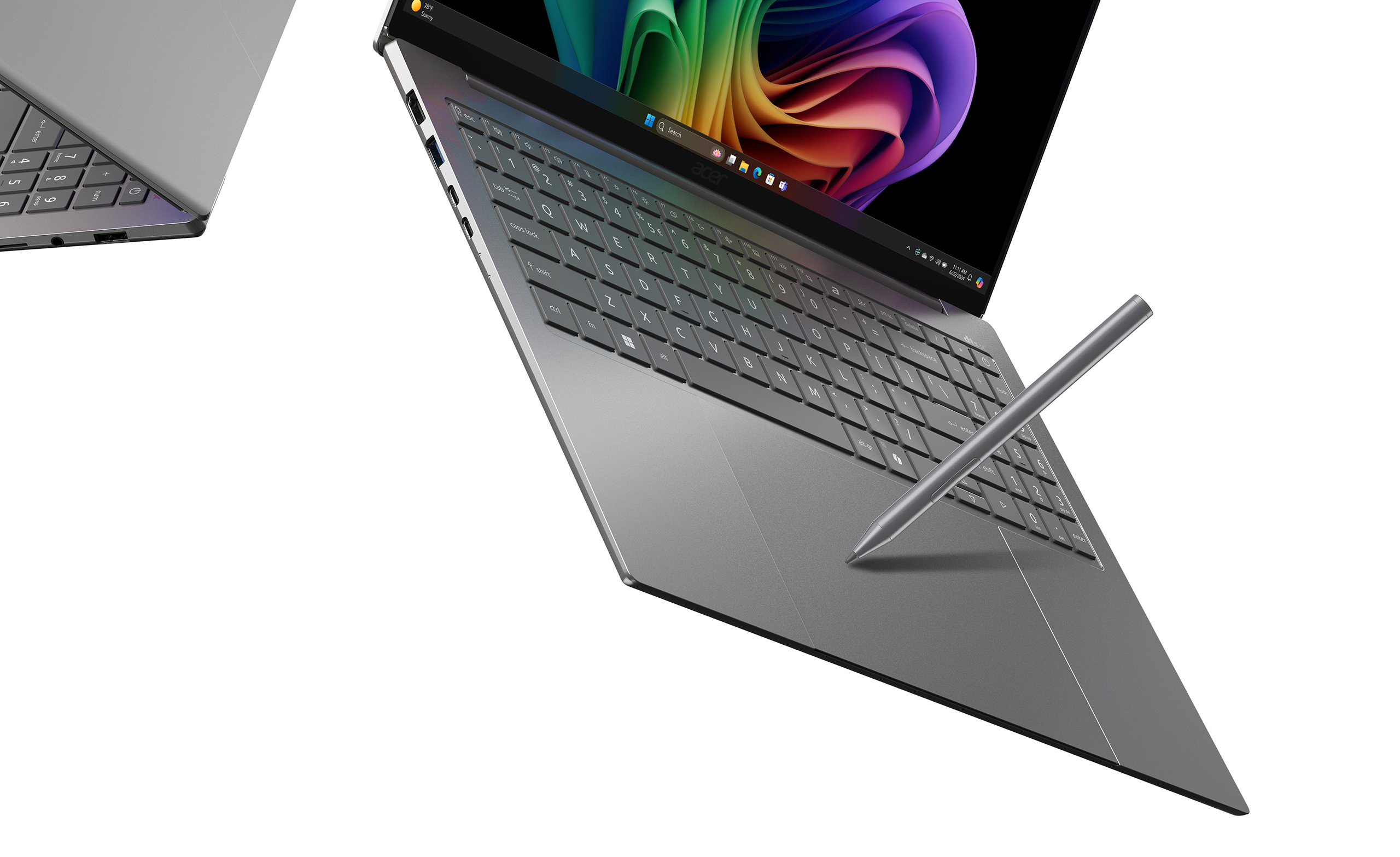
Acer has a handful of laptop updates at this year’s CES show. The headlining item is the addition of the Acer Swift 16 AI to the company’s flagship line. This laptop has what the company says is currently the world’s largest haptic touchpad at 5.5mm by 109.7mm, and it can support up to MPP 2.5 stylus inputs. The screen is a 16-inch 3K OLED WQXGA+ touch display with HDR, a 120 Hz refresh rate and 100% DCI-P3 color gamut. On the inside, the Swift 16 AI can be kitted with up to an Intel Core Ultra X9 388H processor with built-in Intel Arc B390 graphics. The whole package is in a 14.9mm thin chassis and the machine weighs 1.55kg (about 3.4 lbs).
Closeup of the trackpad on the Acer Swift 16 AI laptop
Acer (modified)
Another notable element in the company’s CES announcements is Acer Swift Edge 14 AI, one of two new lightweight laptops revealed at the event. The Swift Edge 14 AI measures just 13.95mm thick and weighs 0.99kg (about 2.2 lbs). It is powered by up to an Intel Core Ultra 9 processor 386H. The max spec 14-inch screen has a 3KWQXGA+ OLED touch display with 120 Hz refresh rate.
Both machines can have up to 32GB of RAM and are part of the Copilot+ PC program. Storage in the Swift 16 AI maxes out at 2TB while the Swift Edge 14 AI be up to 1TB.
This article originally appeared on Engadget at https://www.engadget.com/computing/laptops/acer-goes-big-on-the-haptic-trackpad-for-ces-with-the-swift-16-ai-laptop-230000750.html?src=rss
MSI has presented its refreshed Prestige lineup of business laptops, as well as its next-generation Raider, Stealth and Crosshair gaming models at this year’s CES. The Raider 16 Max HX is a 300w laptop, which the company says its its most powerful gaming model yet. It can supply 175w to its GeForce RTX 5090 or RTX 5080 GPU, while feeding 125w to its Intel Core Ultra 200HX processor at the same time under full-load conditions. To be able to handle that kind of power, MSI equipped it with a new cooling system consisting of three fans, six heat pipes, five exhaust vents and phase-change thermal compound. The Raider 16 Max also has a quick-access bottom panel that gives users an easy way to upgrade their storage and memory.
Meanwhile, the new Stealth 16 AI+ laptop’s selling point seems to be its portability. It’s just 16.6mm thin, weighs under two kilograms, comes equipped with RTX 50 series GPU and has dual memory and SSD slots. MSI has also introduced the new Crosshair 16 Max HX and Crosshair 16 HX laptops powered by Intel Core Ultra 200HX processors and NVIDIA GeForce RTX 50 series GPUs at the event. Buyers can pay extra for an optional QHD+ 165Hz OLED display if they want sharper visuals, as well.
In addition to its new gaming laptops, MSI has introduced its all-new Prestige 14 and Prestige 16 business laptops at CES. They’re slimmer with a more rounded silhouette compared to their predecessors, and they’re encased in full aluminum. The laptops are powered by the latest Intel Core Ultra Series 3 processors and are equipped with an 81Wh battery that can offer over 30 hours of video playback in 1080p. MSI has debuted the new Modern 14S and 16S series powered by the latest Intel Core Ultra Series 3 processors for everyday users, as well. Plus, the company has unveiled a Glacier Blue edition of its handheld gaming console, the Claw 8AI+, that’s powered by the Intel Core Ultra 200V processor with Arc Xe2 graphics.
This article originally appeared on Engadget at https://www.engadget.com/computing/laptops/msi-unveils-new-gaming-and-prestige-business-laptops-at-ces-2026-230000027.html?src=rss
Jensen Huang took to the CES stage on Monday to share the latest from NVIDIA, and while the presentation was more a refresher of technologies the company has been working on for the past few years, there were a couple of notable announcements.
NVIDIA announced Alpamayo, a family of open-source reasoning models designed to guide autonomous vehicles through difficult driving situations. The centerpiece of the release is Alpamayo 1 , a 10-billion parameter chain-of-thought system NVIDIA says is capable of approaching driving more like a human being would. The model works by breaking down unexpected driving situations into a smaller set of problems before finding the safest path forward. At each step of the way, the model can explain its reasoning.
A sister model named AlpaSim allows developers to do closed-loop training for driving scenarios that are rarely encountered in real life. Huang said the 2025 Mercedes Benz CLA will be the first vehicle to ship with NVIDIA’s entire AV stack, including Alpamayo. “Our vision is that someday, every single car, every single truck, will be autonomous,” Huang said.
Following the Alpamayo announcements, a pair of BD-1 droids from Star Wars Jedi: Fallen Order joined Huang on stage. We saw one join the executive at last year’s CES. After that, Huang turned to Vera Rubin. NVIDIA first announced the GPU architecture in 2024, and now the company has begun production on a super computer that makes use of the new tech. One Vera CPU has 88 custom Olympus cores and 1.5TB of system memory for a total of 227 billion transistors. Meanwhile, one Rubin GPU features 336 billion transistors. Each Vera Rubin supercomputer has a pair of both components.
For those hoping for some gaming-related announcements, Huang didn’t have anything to say about NVIDIA’s consumer GPUs, but we may get something later during CES.
This article originally appeared on Engadget at https://www.engadget.com/ai/everything-nvidia-announced-at-ces-2026-225653684.html?src=rss
When I first heard whispers about the Samsung Galaxy Z TriFold, I immediately felt conflicted. On one hand it felt like the natural evolution of bi-fold phones like the Z Fold 7. But on the other, all this fancy tech comes with an even higher price — around $2,500 based on current conversion rates from Korean won — not to mention the added bulk you get from a third folding panel. So even as someone who has used a foldable as my daily driver for almost a decade straight, it felt like Samsung’s latest high-end phone was going backwards in terms of both portability and affordability. But then at CES 2026, I got a chance to go hands-on with the Galaxy Z TriFold and all of my concerns pretty much instantly disappeared because with this thing, flexing is believing.
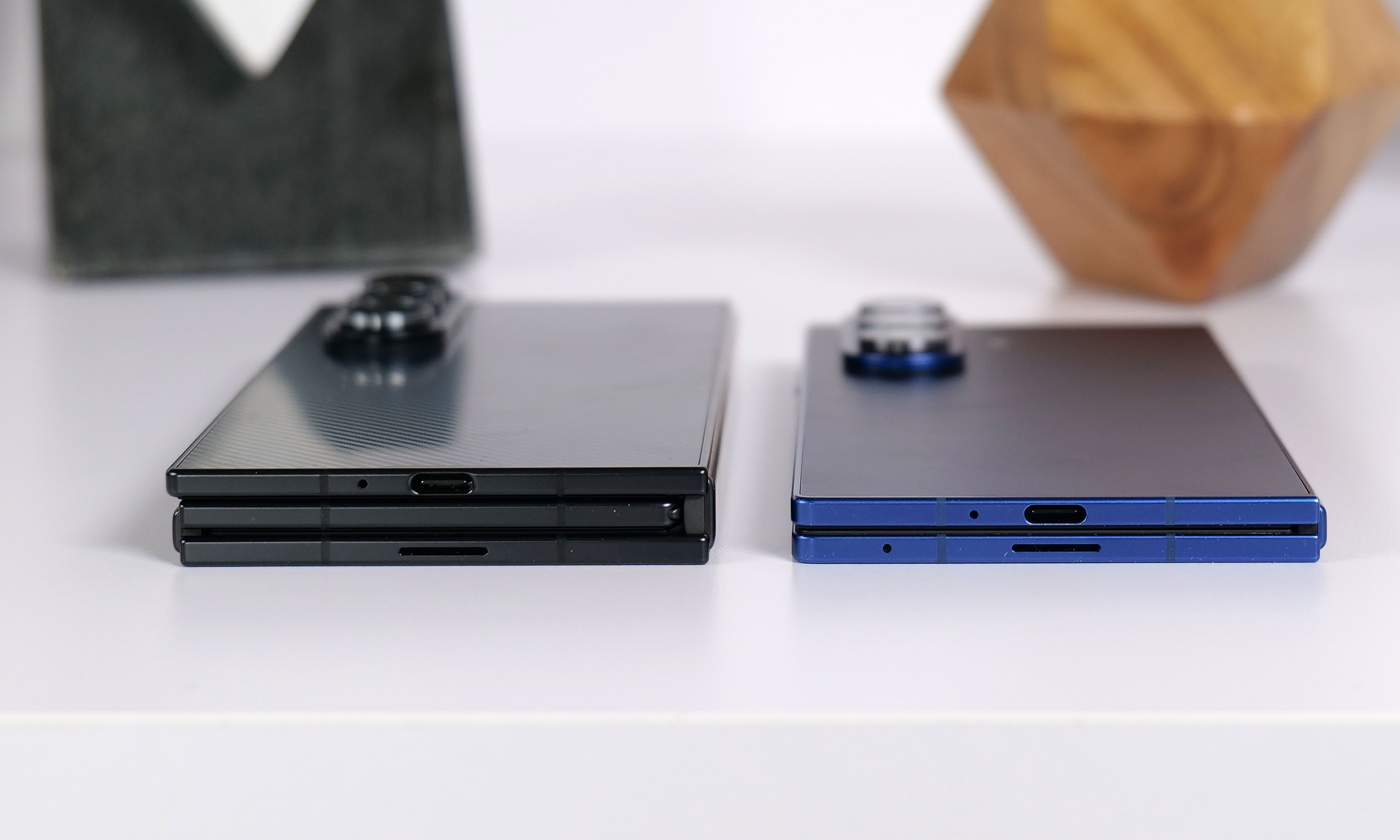
My initial consternation comes in large part from using the Z Fold 7, which hit a major milestone this year thanks to a revamped design that doesn’t come with any added size or weight even when compared to comparable candybar-style phones like the Galaxy S25 Ultra. That’s a major breakthrough considering how hefty and chunky the original Galaxy Fold was back in 2019. And when you compare the Z Fold 7’s dimensions (7.58 ounces and 8.9mm thick when folded) to the new TriFold (10.9 ounces and 12.9mm when folded), there’s no doubt that Samsung’s new flagship foldable comes with a lot of extra bulk. To put things into context, we have to go back several generations to the Z Fold 5 just to find a comparable phone with similar thickness (13.4mm). And even then, that handset is still significantly lighter than the TriFold at 8.92 ounces.
There’s simply no denying that the Z TriFold (left) is a much bulkier device than the Z Fold 7 (right).
Sam Rutherford for Engadget
But then I opened it up and my concerns were quickly pushed aside because suddenly you’re greeted with 10 inches of vivid AMOLED goodness. As a phone that can pull double duty as a tablet, the jump up from the Z Fold 7’s 8-inch main display cannot be understated. Not only does it make multitasking so much easier, when combined with Samsung’s DeX desktop mode, you basically get a miniature laptop experience from a device that fits in a pocket. Especially if you don’t mind carrying around a travel-friendly mouse and keyboard. Plus, you can connect the TriFold to an external display (either wired or wirelessly) to access even more screen space. Way more than with the Z Fold 7, I can honestly see myself leaving my PC at home and using the TriFold as my primary work device.
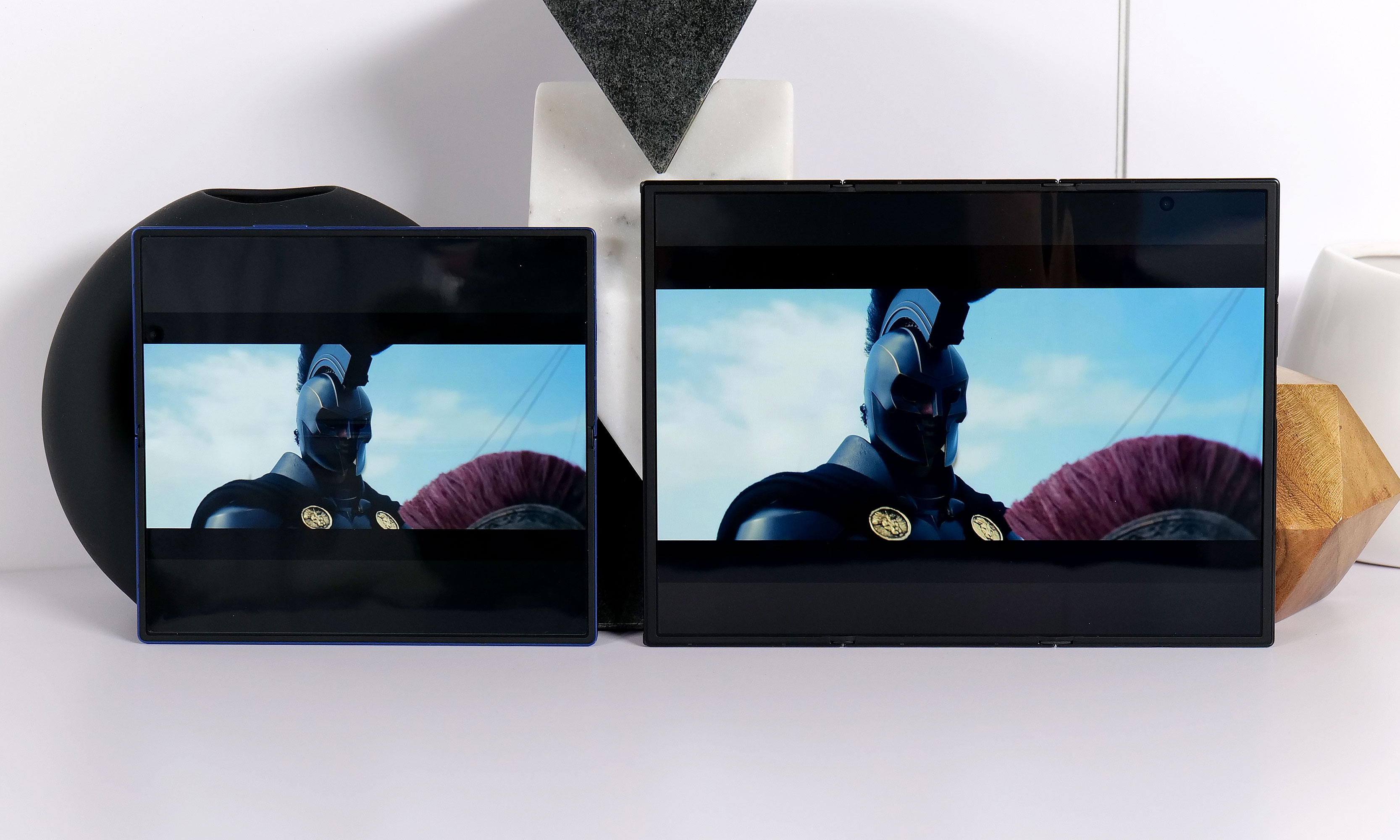
Another important but easily overlooked upgrade on the Galaxy Z Trifold is the 4:3 aspect ratio for its 10-inch main display. Compared to the Z Fold 7 and its almost perfectly square screen, you just get so much extra room on the sides for widescreen movies and shows. I tested this out by watching the trailer for Christopher Nolan’s The Odyssey, and even though that movie uses a super wide aspect ratio due to being filmed entirely on IMAX cameras, the viewing experience was just so much better. Peak watchability is something the regular Z Fold line has sort of left by the wayside as the company moved to larger exterior displays, which resulted in the series’ primary screen becoming more square. The one downside though is that the TriFold may make you more of a resolution snob, as it’s a lot easier to tell the difference between 1080p and 2K or 4K on a larger 10-inch panel.
The final pillar of the TriFold’s kit is all the engineering that Samsung put into making it easy to open and close. Simply moving from one hinge to two while adding a third folding panel undersells the complexity of its design. Samsung actually uses two different types of magnets that push or pull depending on where they are, which makes accessing the TriFold’s primary display practically just as easy as on the Z Fold 7. That’s no small feat. Opening and shutting this thing is just so satisfying on a tactile level, and that’s before you consider that there’s basically no downgrade in terms of image quality.
While there’s only one way to unfurl the TriFold, which might seem confusing at first, Samsung addressed that too by throwing up a warning and making the whole phone vibrate if you try to do it wrong. And then there are components like the glass-reinforced carbon panels Samsung uses to add strength and durability to its chassis while keeping it as thin as possible. The one potential concern in the future is that unlike Samsung’s older foldables, there’s not as much room for improvement to shrink its dimensions much further, as the TriFold’s slimness is currently limited by the size of its USB-C jack. So if the next model wants to make big gains there, it may need to go completely portless.
Here’s what The Odyssey trailer looks like on the Z TriFold (right) compared to the Z Fold 7 (left). It’s such a better experience.
Sam Rutherford for Engadget
On a certain level, I kind of hate how much I like the Galaxy Z TriFold. I really don’t want to go back to bigger, heavier phones that are even more bulky and expensive than the Z Fold 7. But the appeal is impossible to deny and for people who love a good multitasker, I can easily see how these tradeoffs are worth the upside of Samsung’s latest apex foldable.
The Samsung Galaxy Z TriFold is currently on sale in South Korea, though we’re still waiting for official pricing and availability for the US and North American market.
This article originally appeared on Engadget at https://www.engadget.com/mobile/smartphones/samsung-galaxy-z-trifold-hands-on-flexing-is-believing-at-ces-2026-224343480.html?src=rss
A viral Reddit “whistleblower” post accusing a major food delivery app of systemic exploitation is “most likely AI-generated,” reports the Verge. From the report: The original post by user Trowaway_whistleblow alleged that an unnamed food delivery company regularly delays customer orders, calls couriers “human assets,” and exploits their “desperation” for cash, among other indefensible actions. Nearly 90,000 upvotes and four days later, it’s become increasingly clear that the post’s text is probably AI-generated. Considering the delivery app industry track record of exploitation of its drivers, it’s easy to see why so many people believed this was the real thing.
The Verge put the original 586-word Reddit post through several free online AI detectors, in addition to Gemini, ChatGPT, and Claude. The results were mixed: Copyleaks, GPTZero, Pangram, Gemini, and Claude all pegged it as likely AI-generated, but ZeroGPT and QuillBot both reported it as human-written. ChatGPT played it down the middle. Reached by The Verge on Signal, Trowaway_whistleblow provided an image of an Uber Eats employee badge. That image was generated or edited with Google AI, according to Gemini. The image shows an Uber Eats logo above two black boxes, presumably covering an employee name and photo, and the words “senior software engineer.” It’s odd that an engineer’s badge would have the Uber Eats logo, and not the Uber logo, according to Gemini. That, in addition to slightly misaligned words and warped coloration at the edge of the green border, are reasons Gemini thinks it’s inauthentic. (Uber later confirmed that Uber Eats-branded employee badges do not exist.) “Not only are the claims fake, but they’re also dead wrong,” Uber spokesperson Noah Edwardsen told The Verge. Uber Eats’ Andrew Macdonald wrote on X, “This post is definitively not about us. I suspect it is completely made up. Don’t trust everything you read on the internet.”
DoorDash CEO Tony Xu also denied the redditor’s “appalling” allegations. “This is not DoorDash, and I would fire anyone who promoted or tolerated the kind of culture described in this Reddit post,” Xu said in a post on X.
I met up with a few people from Google at the Encore Villas during CES (which is just 2,500 feet from my hotel but took 28 minutes to walk to, thanks to Vegas’s pedestrian-averse design [also I got lost]). Once there, I saw what “more Gemini” will mean for people with a Google TV.
The AI integration ranged from useful to probably unnecessary. The most useful bit, for me at least, came at the end. It’s admittedly a boring, but now you an adjust your TV’s settings just by talking. In the demo, Salahuddin Choudhary, Google’s Gemini for Android product lead said, “Can you boost the dialogue?” and Gemini changed the mode accordingly, without leaving the golf game he was watching. I asked if it could turn off motion smoothing, the first thing I adjust on a new TV (and sometimes other people’s). Yes, it can.
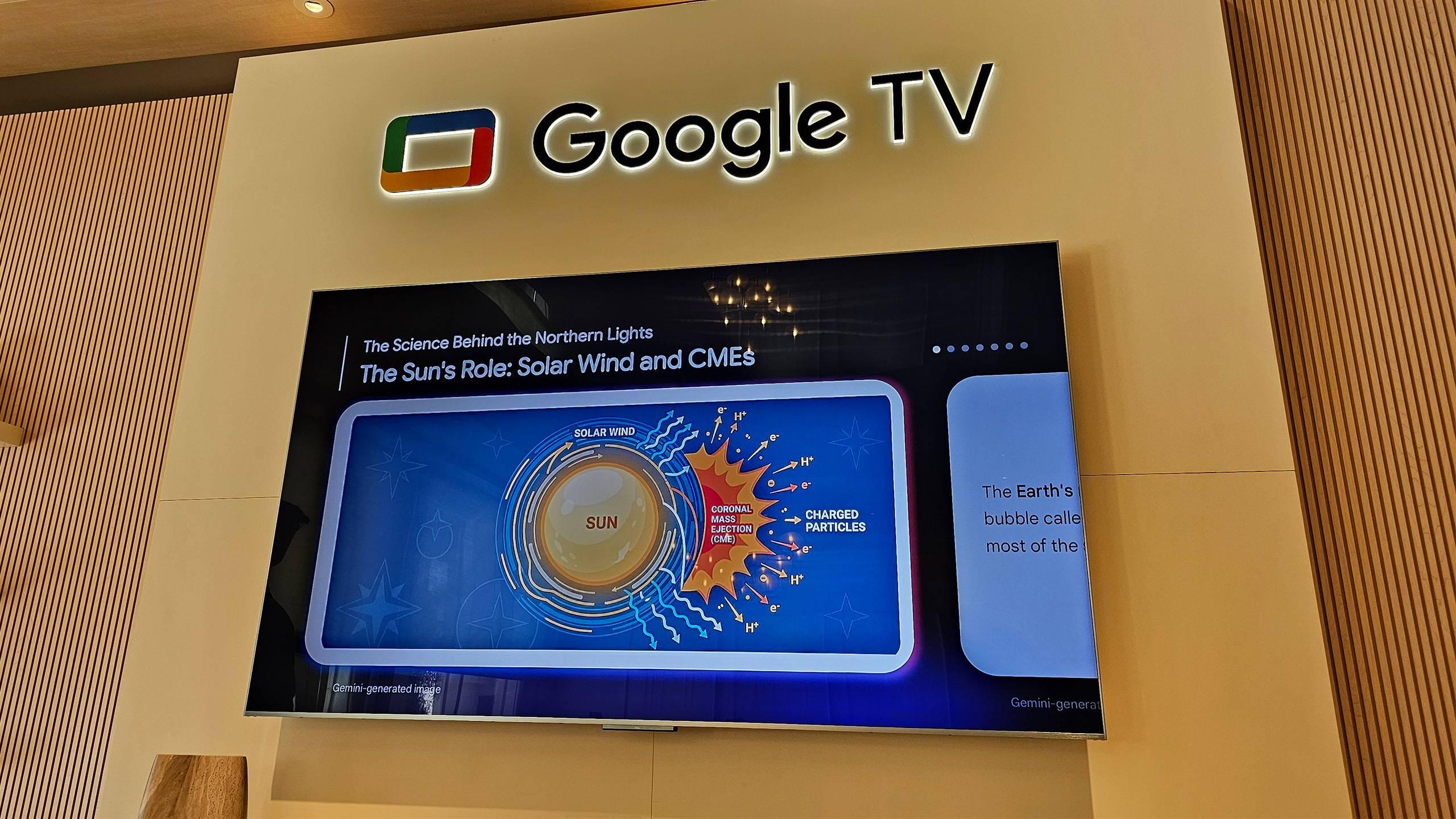
The “deep dive” Gemini feature could prove fairly useful, too. With it, asking for general information turns into a mini lesson on the subject, complete with generated images and narration. When Choudhary asked Gemini to “explain the Northern Lights to [his] eighth grader,” the screen filled with the standard Gemini answer: a brief definition and images and video tiles for further exploration. But a small Dive deeper button on the screen led to a narrated and illustrated tour of the science behind the phenomenon. My kid is at the age where he asks me questions I can’t answer about the fundamental makeup of the universe — maybe this could help.
The Google TV demo at CES showed an answer on the science behind how the northern lights are created
Amy Skorheim for Engadget
Google Photos is getting a much deeper integration with Google TVs, too. Choudhary asked for pics from a trip to the beach and snapshots of happy people amongst the sea and sand popped up on the screen. One particular shot would make a nice screen saver, I was told, and he asked Gemini to give the photo an oil painting makeover using the Remix feature.
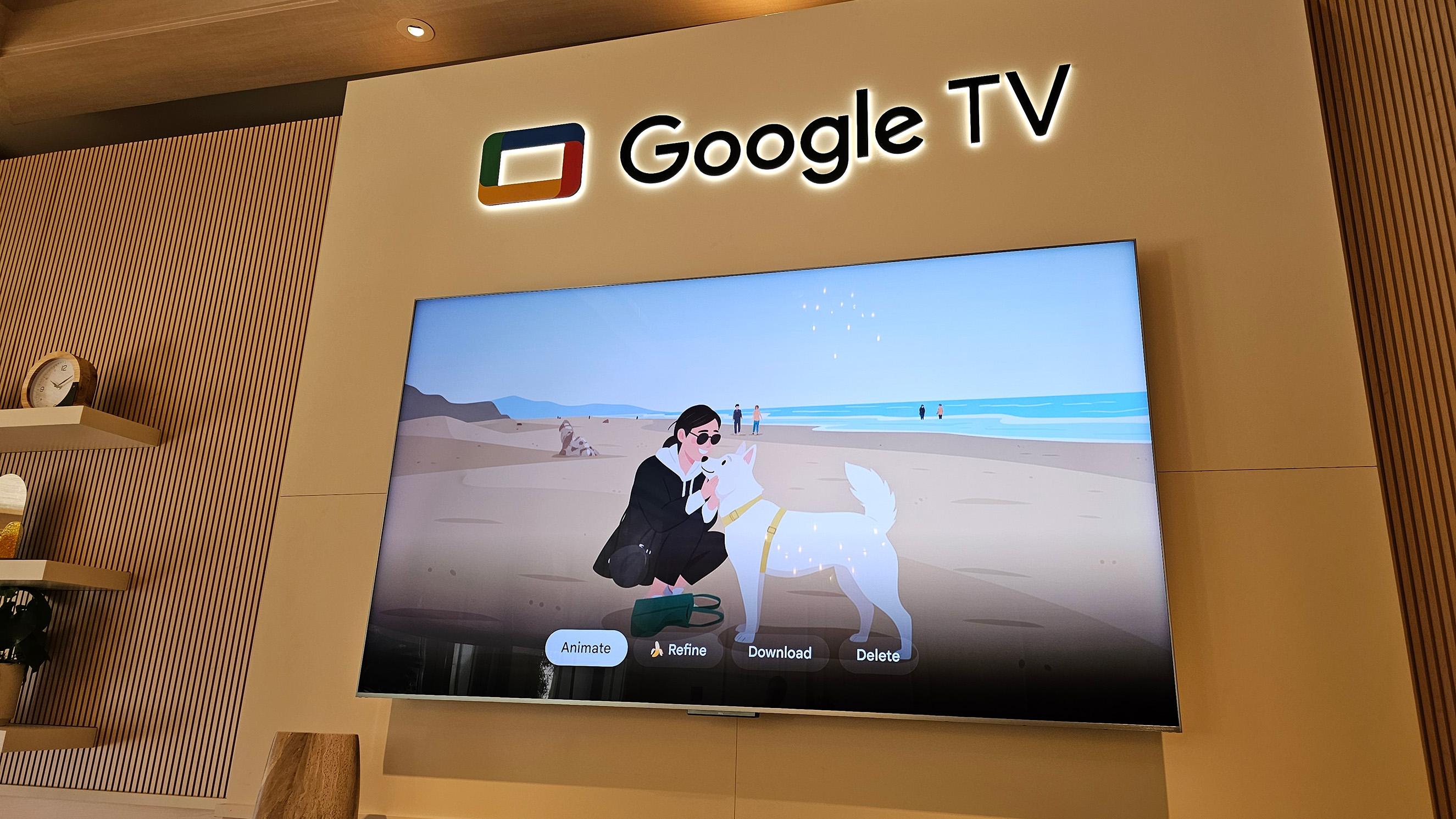
However, if you want your photo recast in a way not offered with Remix, you can use Nano Banana. Choudhary turned one of the personal photos into a cartoon just by asking. Using Veo turned the same image into an short (if slightly glitchy) animation of a person playing fetch with the dog in the photo.
Google TV used Neo to recast a picture as a cartoon.
Amy Skorheim for Engadget
Your ability to generate video will depend on your Gemini subscription tier, but I was told a purchase of a Google TV device would include most of the other AI capabilities that I saw demonstrated.
I’d classify the photo manipulation and video generation as decidedly less useful that the other features, but my kid would probably get a kick out of messing with them for a while. For people who use Gemini a lot, being able to do so on the biggest screen in the house may appeal. Ditto for those who like seeing your Google Photos in a giant format. Some folks will appreciate the AI image manipulation and generation, I’m sure, but I’m mostly excited about the admittedly boring part of not having to leave a show to boost the brightness of a scene.
This article originally appeared on Engadget at https://www.engadget.com/home/home-theater/google-tvs-new-gemini-features-range-from-useful-to-unnecessary-222900001.html?src=rss
In June, the White House released a budget proposal for fiscal year 2026 that slashed funding for NASA’s science programs by nearly 50 percent. Then, in July, the Trump administration began telling the leaders of dozens of space science missions to prepare “closeout” plans for their spacecraft.
Things looked pretty grim for a while, but then Congress stepped in. Congress, of course, sets the federal government’s budget. In many ways, Congress abdicated authority to the Trump administration last year. But not so, it turns out, with federal spending.
Throughout the summer and fall, as the White House and Congress wrangled over various issues, lawmakers made it clear they intended to fund most of NASA’s science portfolio. Preliminary efforts to shut down active missions were put on hold.
An anonymous reader quotes a report from TechCrunch: Amazon’s AI-powered overhaul of its digital assistant, now known as Alexa+, is coming to the web. On Monday, at the start of the Consumer Electronics Show in Las Vegas, the company announced the official launch of a new website, Alexa.com, which is now rolling out to all Alexa+ Early Access customers. The site will allow customers to use Alexa+ online, much as you can do today with other AI chatbots such as ChatGPT or Google’s Gemini.
[…] Related to this expansion, Amazon is updating its Alexa mobile app, which will now offer a more “agent-forward” experience. Or, in other words, it’s putting a chatbot-style interface on the app’s homepage, making it seem more like a typical AI chatbot. (While you could chat with Alexa before in the app, the focus is now on the chatting — while the other features take a back seat.) On the Alexa.com website, customers can use Alexa+ for common tasks — for instance, exploring complex topics, creating content, and making trip itineraries. However, Amazon aims to differentiate its assistant from others by focusing on families and their needs in the home.
[…] The Alexa.com website features a navigation sidebar for quicker access to your most-used Alexa features, so you can pick up where you left off on tasks like setting the thermostat, checking your calendar for appointments, reviewing shopping lists, and more. In addition, Amazon aims to convince customers to share their personal documents, emails, and calendar access with Alexa+, so its AI can become a sort of hub to manage the goings-on at home, from kids’ school holidays and soccer schedules to doctor’s appointments and other things families need to remember — like when the dog got its last rabies shot, or what day the neighbor’s backyard BBQ is taking place. “Seventy-six percent of what customers are using Alexa+ for no other AI can do,” says Daniel Rausch, VP of Alexa and Echo at Amazon.
“Ninety-seven percent of Alexa devices support Alexa+, and we see now in adoption from customers that they’re using Alexa across all those many years and many generations of devices,” Rausch adds. “We support all of Alexa’s original capabilities, the tens of thousands of services and devices that Alexa was integrated with already are carried forward to the Alexa+ experience.”
The report notes that Alexa.com will initially only be available to Early Access customers who sign in with their Amazon account.
Under anti-vaccine Health Secretary Robert F. Kennedy Jr., federal health officials on Monday announced a sweeping and unprecedented overhaul of federal vaccine recommendations, abruptly paring down recommended immunizations for children from 17 to 11.
Officials claimed the rationale for the change was to align US vaccine recommendations more closely with those of other high-income countries, namely Denmark, a small, far less diverse country of around 6 million people (smaller than the population of New York City) that has universal health care. The officials also claim the change is necessary to address the decline in public trust in vaccinations, which has been driven by anti-vaccine activists, including Kennedy.
“This decision protects children, respects families, and rebuilds trust in public health,” Kennedy said in a statement.
Californians are getting a new, supercharged way to stop data brokers from hoarding and selling their personal information, as a recently enacted law that’s among the strictest in the nation took effect at the beginning of the year.
According to the California Privacy Protection Agency, more than 500 companies actively scour all sorts of sources for scraps of information about individuals, then package and store it to sell to marketers, private investigators, and others.
The nonprofit Consumer Watchdog said in 2024 that brokers trawl automakers, tech companies, junk-food restaurants, device makers, and others for financial info, purchases, family situations, eating, exercising, travel, entertainment habits, and just about any other imaginable information belonging to millions of people.
An anonymous reader shares a report: Popular AI-powered integrated development environment solutions, such as Cursor, Windsurf, Google Antigravity, and Trae, recommend extensions that are non-existent in the OpenVSX registry, allowing threat actors to claim the namespace and upload malicious extensions.
These AI-assisted IDEs are forked from Microsoft VSCode, but cannot use the extensions in the official store due to licensing restrictions. Instead, they are supported by OpenVSX, an open-source marketplace alternative for VSCode-compatible extensions. As a result of forking, the IDEs inherit the list of officially recommended extensions, hardcoded in the configuration files, which point to Microsoft’s Visual Studio Marketplace.
The primary domain of Shadow library Anna’s Archive was taken offline, with annas-archive.org being put under the serverHold status. While Anna’s Archive recently made waves with a massive “backup” of Spotify, the shadow library’s operator said the music pirating doesn’t appear to be connected to the .org domain suspension. Anna’s Archive remains available at several other domains.
Anna’s Archive launched in 2022 in response to the US Department of Justice seizure of domains used by e-book pirate site Z-Library. Acting as a shadow library and a search engine for other shadow libraries, Anna’s Archive aims to archive books and other written materials and make them widely available via torrents. Its data sets have also been heavily used by AI companies to train large language models.
In addition to mirroring shadow libraries such as Sci-Hub, Library Genesis, and Z-Library, Anna’s Archive made a major move into music pirating two weeks ago with an announcement that it scraped Spotify and made a 300TB copy of the most streamed songs. Despite that development, the person behind Anna’s Archive said the domain suspension doesn’t seem to be related to the Spotify scraping.
Stewart Cheifet, the television producer and host who documented the personal computer revolution for nearly two decades on PBS, died on December 28, 2025, at age 87 in Philadelphia. Cheifet created and hosted Computer Chronicles, which ran on the public television network from 1983 to 2002 and helped demystify a new tech medium for millions of American viewers.
Computer Chronicles covered everything from the earliest IBM PCs and Apple Macintosh models to the rise of the World Wide Web and the dot-com boom. Cheifet conducted interviews with computing industry figures, including Bill Gates, Steve Jobs, and Jeff Bezos, while demonstrating hardware and software for a general audience.
From 1983 to 1990, he co-hosted the show with Gary Kildall, the Digital Research founder who created the popular CP/M operating system that predated MS-DOS on early personal computer systems.
Capita, the UK outsourcer that won a $323 million contract to administer the nation’s Civil Service Pension Scheme for 1.7 million members, has responded to a disastrous portal launch by asking users to hold off on complaints until its new AI chatbots go live.
The service launched on December 1 and immediately ran into problems including unrecognized passwords, broken links and placeholder text scattered across unfinished pages. In a December 17 email to members, The Register reports today, managing director Chris Clements said Capita was “working tirelessly” and promised “one of the biggest services in the United Kingdom with AI at its core” by March.
He asked users whose enquiries were not urgent to wait until the new year before contacting support again.
Anyone can now try Alexa+, Amazon’s generative AI assistant, through a free early access program at Alexa.com. The website frees the AI, which Amazon released via early access in February, from hardware and makes it as easily accessible as more established chatbots, like OpenAI’s ChatGPT and Google’s Gemini.
Until today, you needed a supporting device to access Alexa+. Amazon hasn’t said when Alexa+’s early access period will end, but when it does, Alexa+ will be included with Amazon Prime memberships, which start at $15 per month, or cost $20/month on its own.
The above pricing suggests that Amazon wants Alexa+ to drive people toward Prime subscriptions. By being interwoven with Amazon’s shopping ecosystem, including Amazon’s e-commerce platform, grocery delivery business, and Whole Foods, Alexa+ can make more money for Amazon.
A Paris court has found 10 people guilty of cyberbullying Brigitte Macron, wife of President of France Emmanuel Macron, the BBC reports. The judge found that the defendants made false claims about Macron’s gender and sexuality, and “malicious remarks” about the 24-year age gap between Macron and her spouse.
The defendants, eight men and two women, received a range of sentences, including jail time up to eight months and mandatory online harassment awareness training. Five of the defendants will also lose access to their X accounts for six months, according to The New York Times.
Key to the lawsuit is the fringe belief that Brigitte Macron was born a man — proponents for some reason believe Macron is Jean-Michel Trogneux, her older brother — and transitioned to living as a woman at some point later in life. This style of “transvestigation” is an unfortunately common type of online conspiracy theory, a roundabout way to both spread hateful rhetoric about transgender people and bully cisgender people at the same time. The campaign against Macron has the added twist of her age: Brigitte Macron is 72, 24 years older than President Macron. The pair married in 2007, but their age difference has been an ongoing narrative throughout Emmanuel Macron’s political career.
In July 2025, Macron also filed a defamation lawsuit in the US against Candace Owens, a right-wing podcaster and conspiracy theorist. Owens has made multiple attempts since 2024 to spread false claims about Macron’s gender, and has said that she’s willing to stake her “entire professional reputation” that she’s right.
This article originally appeared on Engadget at https://www.engadget.com/social-media/paris-court-finds-10-people-guilty-of-cyberbullying-brigitte-macron-195500994.html?src=rss
Why is the world’s most valuable company reportedly bringing back such an antiquated graphics card? You know the answer. It’s the endless gaping maw known as AI. Tech companies have been hoovering up PC parts for AI applications with reckless abandon. It has become a legitimate challenge for a regular person to buy RAM and graphics cards, which has led to price increases across the board and companies like Crucial closing up shop.
It’s particularly difficult to get ahold of GDDR7 RAM, which is needed for the newer RTX 5060 cards. So NVIDIA’s solution looks to be a hop in the time machine to 2021. Gamers will need something, after all, and the 3060 technically gets the job done. Any downgrade in graphics and performance will be worth it once you watch an AI-generated video of Kurt Cobain singing in heaven with Albert Einstein, am I right? It’s hilarious because they never got to meet in real life.
One would think that five-year-old technology could easily hit a much lower price point, but NVIDIA has us in a chokehold here and it can pretty much charge whatever it wants. Again, no price is too high when considering the magical wonders of generative AI. You can watch Tupac hang out with Mr. Rogers for five seconds.
This article originally appeared on Engadget at https://www.engadget.com/ai/nvidia-is-reportedly-bringing-back-2021s-rtx-3060-gpu-because-ai-is-eating-all-of-the-newer-cards-194241706.html?src=rss
In late 2023, storage company Western Digital announced plans to split itself into two companies. One, which would still be called Western Digital, would focus on spinning hard drives, which are no longer used much in consumer systems but remain important to NAS devices and data centers. The other, called SanDisk, would handle solid-state storage, including the drives that Western Digital sold to consumers under its Blue, Black, Green, and Red brands.
That split effectively undid what Western Digital did a decade ago when it bought SanDisk for $19 billion. And we’re just now starting to see the way the split will affect the company’s existing consumer drives.
Today, SanDisk announced that mainstream WD Blue and WD Black SSDs would be discontinued and replaced by SanDisk Optimus-branded disks with the same model numbers.