CES 2026 Day 1: The biggest tech news and gadgets you missed from the first official day of the show

CES 2026’s first official show day kept the pace up with a mix of near-term gaming upgrades, ambitious new form factors and a few reminders that not every gadget needs to do everything. NVIDIA announced important gaming news, we caught up with Samsung’s tri-fold phone and Lenovo marched out an army of impressive looking gaming laptops and concept tech. Here are the biggest stories from January 6.

NVIDIA

NVIDIA's G-Sync Pulsar is the next evolution of its VRR technology.
NVIDIA’s G-Sync Pulsar is the next evolution of its VRR technology.
NVIDIA

NVIDIA’s gaming updates focused on making motion look cleaner and boosting performance without forcing developers to rebuild everything from scratch.

The company introduced G-Sync Pulsar, a new display tech designed to reduce monitor-based motion blur by pulsing a screen’s backlight in sections rather than leaving it on continuously. NVIDIA says the approach gives pixels time to stabilize before they’re illuminated, which should make fast movement easier to track, particularly in esports.

The first Pulsar monitors are expected to come out starting January 7 from Acer, AOC, ASUS and MSI, all which are 27-inch 1440p IPS panels with a 360Hz refresh rate and up to 500 nits peak HDR brightness. Pulsar models also support Ambient Adaptive Technology for automatic color temperature and brightness adjustment based on room lighting.

On the software side, NVIDIA announced DLSS 4.5, which adds a second-generation Transformer-based Super Resolution model the company says improves temporal stability, reduces ghosting and improves anti-aliasing. DLSS 4.5 also introduces Dynamic Multi Frame Generation, intended to push performance toward your display’s refresh rate, with NVIDIA positioning it around high-end targets like 4K 240Hz path tracing. The 2nd Gen Super Resolution Transformer model is available now for RTX GPUs, while Dynamic 6x Frame Generation is expected in spring 2026 for RTX 50-series cards, with support rolling out across hundreds of games via the NVIDIA app.

Samsung
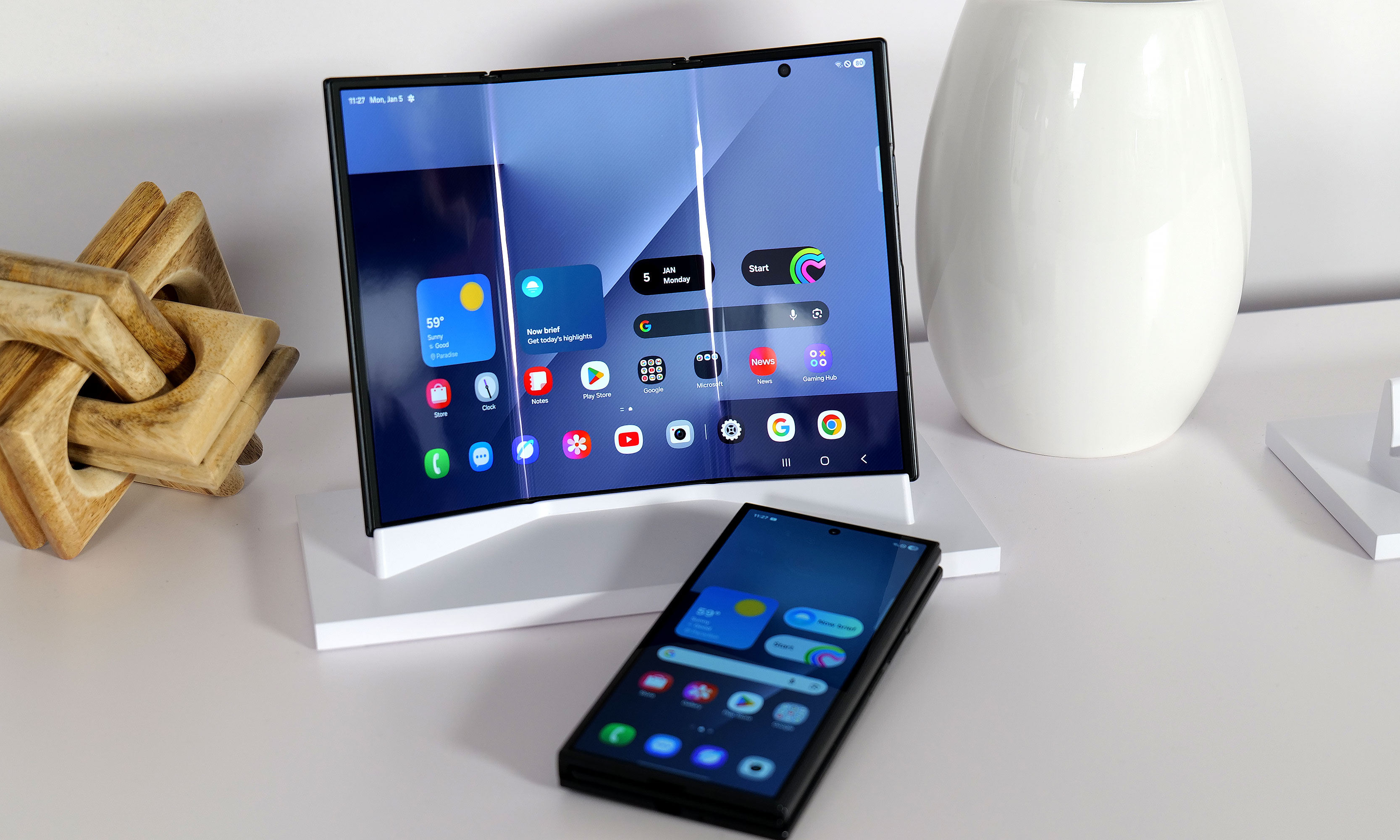
The Galaxy Z TriFold is the latest evolution in Samsung's growing lineup of fancy foldable phones.
The Galaxy Z TriFold is the latest evolution in Samsung’s growing lineup of fancy foldable phones.
Sam Rutherford for Engadget

Samsung’s Galaxy Z TriFold was unveiled in Asia before the show, but this was our first opportunity to see the superphone in person. It looked, at first glance, like the kind of idea that comes with obvious compromises: more weight, more thickness and a bigger price tag. In person, the pitch becomes easier to understand.

The main draw is the 10-inch AMOLED display, which is a meaningful leap from the 8-inch inner screen on Samsung’s current book-style foldables. That extra real estate makes multitasking feel less cramped, and when paired with DeX, it starts to resemble a travel-friendly laptop alternative if you’re comfortable carrying a small keyboard and mouse. The TriFold’s 4:3 aspect ratio also helps for video and general productivity, with fewer awkward tradeoffs than the squarer inner screens Samsung has leaned on in recent generations.

Samsung appears to have put real effort into the mechanics, too. The device uses two hinges and a magnet system designed to make opening and closing feel intuitive, with built-in warnings if you try to unfold it the wrong way. The obvious downsides are still there, including the bulk and cost, and it’s not clear how much thinner future versions can get when the USB-C port is effectively the limiting factor. For now, the TriFold is on sale in South Korea, with US and broader North American availability and pricing still pending.

Lenovo

While it normally has a 16-inch display, the Lenovo Legion Pro Rollable concept's screen can expand up to 23.8 inches across.
While it normally has a 16-inch display, the Lenovo Legion Pro Rollable concept’s screen can expand up to 23.8 inches across.
Sam Rutherford for Engadget

Lenovo arrived with a stack of concepts and a few more concrete products, making it clear that the company is still treating CES as its main playground for experimental form factors.

The most striking concept was the Legion Pro Rollable, a gaming laptop built around a flexible OLED panel that expands sideways from a standard 16-inch footprint to 21.5 inches or 23.8 inches, shifting aspect ratios from 16:10 to 21:9 or even 24:9. It’s the kind of idea that makes immediate sense for flight sims, racing games and open-world titles that benefit from ultrawide views, even if the mechanics felt a bit prototype-like up close.

Lenovo also showed the XD Rollable concept, which takes a more familiar rollable approach, expanding a 13.3-inch OLED screen to 16 inches at the push of a button. The twist is that the “extra” display wraps around the back of the lid to create a world-facing surface for mirrored content or a secondary view. It’s a clever way to avoid hiding unused panel real estate, even if the practical use cases still feel limited (maybe point-of-sale terminals?).

On the handheld front, Lenovo confirmed the Legion Go 2, which will be powered by SteamOS and will arrive in June starting at $1,199. It keeps the same core hardware, including an 8.8-inch OLED 144Hz VRR display, detachable controllers, a kickstand and two configuration tiers based on Ryzen Z2 chips. The big change is swapping SteamOS in place of Windows, which should appeal to anyone who wants a more console-like experience, even if it remains a large device at 2.2 pounds.

For laptops headed to market, Lenovo introduced the ThinkBook Plus Gen 7 Auto Twist, a notebook with a motorized display that can follow you during calls and presentations using a 10MP webcam and onboard AI. It also supports Intel Core Ultra Series 3 processors, up to 32GB RAM and 2TB storage, plus a strong port selection, and Lenovo says it starts at $1,649 with availability planned for June.

Finally, Lenovo teased an AI smart glasses concept that looks more like normal eyewear than most show-floor prototypes. Lenovo says the glasses are designed for live translation, image recognition and notification summaries, with an eight-hour battery claim. As with many Lenovo concepts, there’s no firm timeline for a retail release.

Pebble
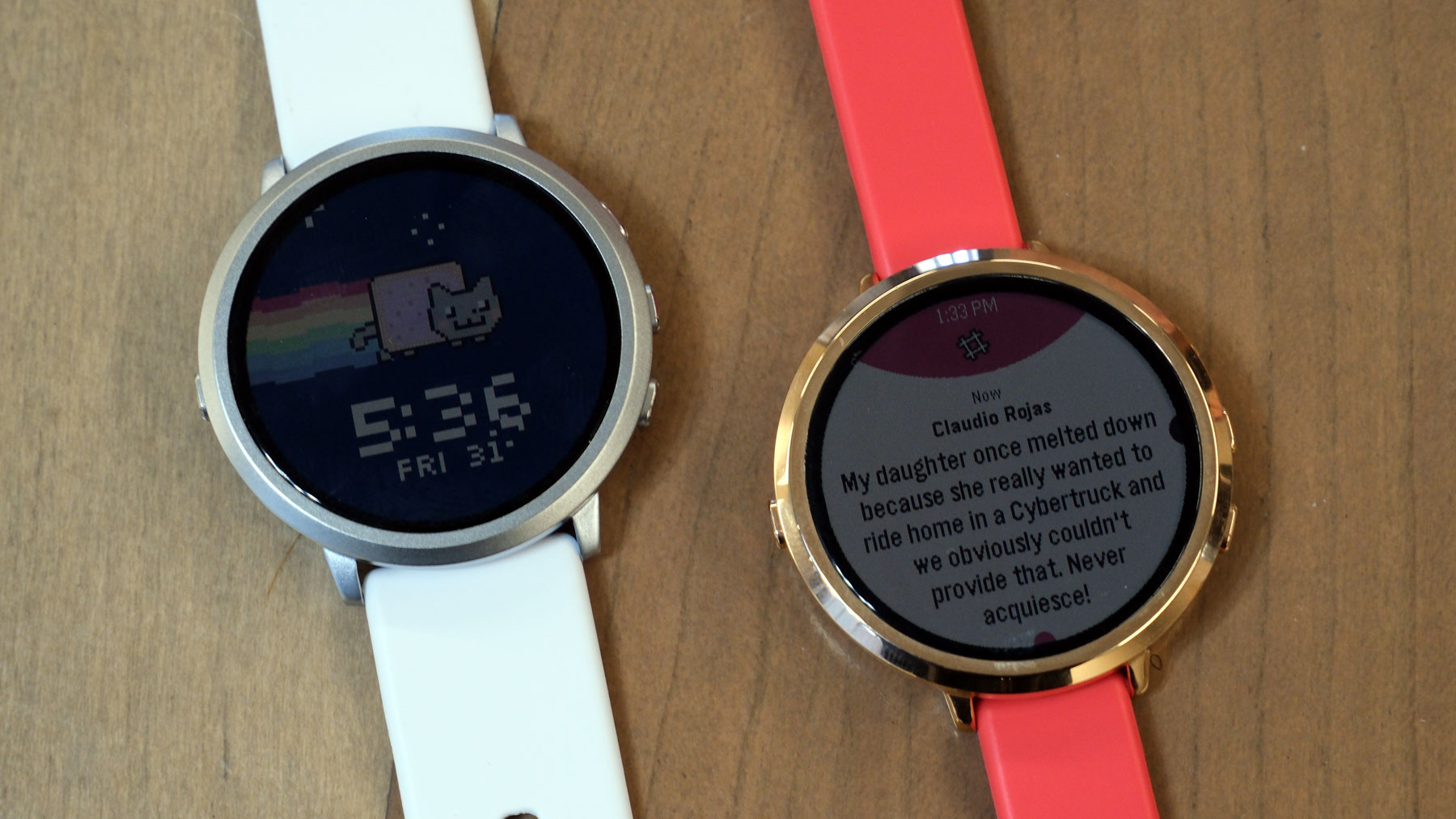
Image of two Pebble Round 2 units, one in silver, one in rose gold, side by side on a table.
The Pebble Round 2 reboots a smartwatch classic.
Daniel Cooper for Engadget

Pebble’s presence at CES this year felt like a counterpoint to the “more features, more sensors, more subscriptions” direction of other wearables.

The Pebble Round 2 aims to revive the brand’s original appeal: a lightweight watch that supplements your phone rather than trying to replace it. The new model uses a 1.3-inch color e-paper touchscreen that runs to the edge of the case, with Pebble claiming two weeks of battery life in the 8.1mm-thick watch. It also makes deliberate tradeoffs, skipping GPS, a speaker and an optical heart rate sensor to keep the device thin and focused.

Then there’s the Pebble Index 01, a simple AI ring built around a physical button you press to activate voice commands that you can use to ask questions, set reminders and the like. The pitch is reducing friction: no wake words, no gestures you have to get right every time. Pebble says the ring is water resistant and not rechargeable, instead using a sealed battery designed to last years depending on usage, with replacement handled when the battery is nearing the end of its life. It’s available for pre-order at an early bird price of $75, with shipping planned for May.

Segway

undefined

Segway expanded its presence well beyond scooters with two very different pitches: smarter yard care and more tech-forward e-bikes.

Under its Navimow brand, Segway introduced a new lineup of robotic lawn mowers spanning multiple tiers, including the X4 Series for large yards up to 1.5 acres with AWD and dual cutting motors, plus the more mainstream i2 Series with AWD and LiDAR options. Segway says pre-orders for the i2 AWD and X4 models begin January 16, with pricing ranging from around $1,000 to $3,000 depending on configuration.

On the mobility side, Segway announced two new e-bikes, the Myon and Muxi, along with an electric dirt bike called the Xaber 300. The headline is the company’s focus on sensor-driven ride smoothing, smart features like Find My integration and app-based controls, and tech meant to make starts, hills and traction feel more predictable. The Myon is available now for $2,000, while the Muxi is expected in March for $1,700.

Meta
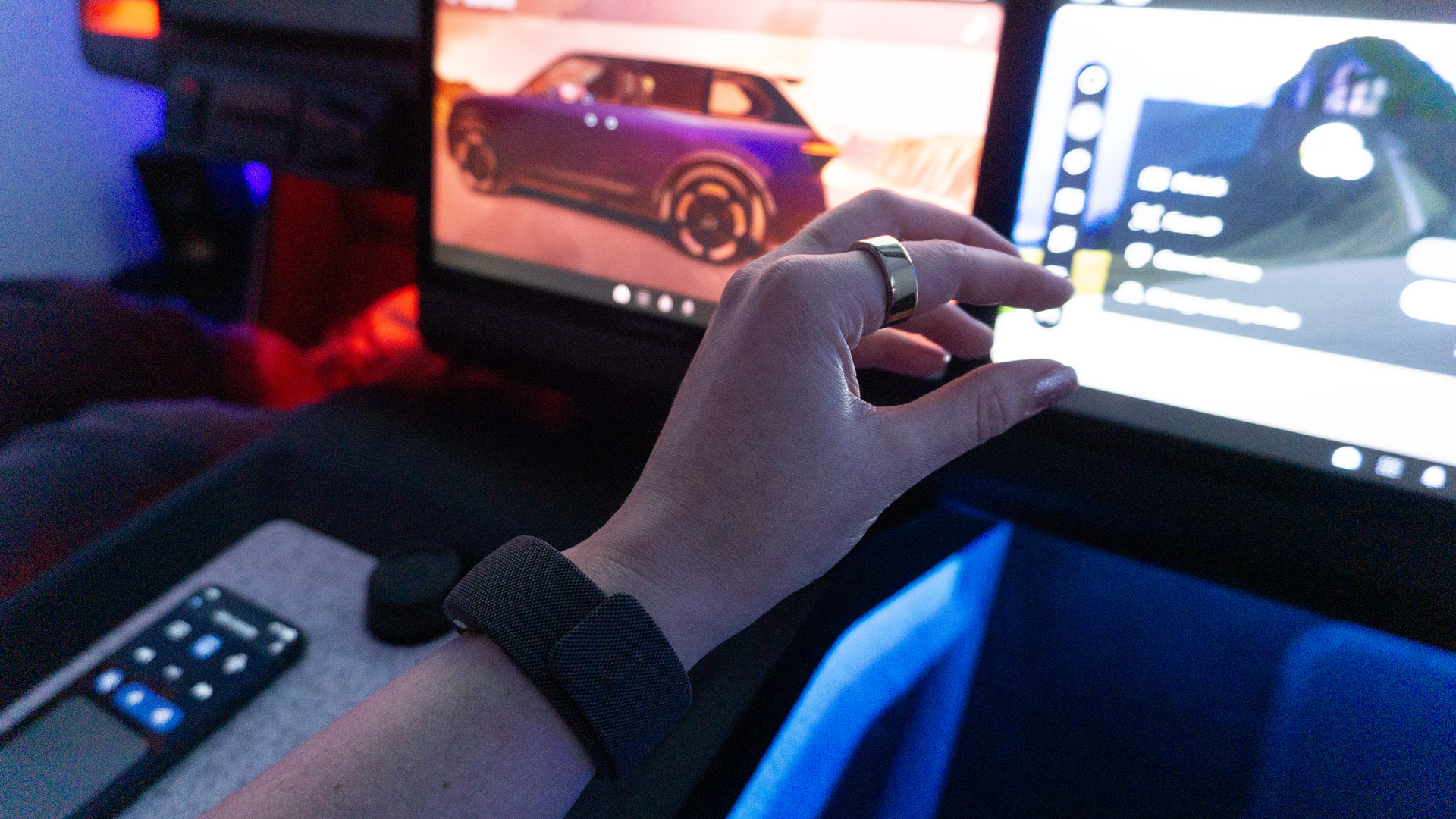
Meta's neural band in Garmin's Unified Cabin at CES 2026.
Meta’s neural band in Garmin’s Unified Cabin at CES 2026.
Karissa Bell for Engadget

Meta’s EMG wristband (that’s short for “electromyography,” the ability to recognize and translate small finger and wrist gestures) is starting to look like more than a companion accessory for smart glasses. Meta showed how its wrist-based neural controller could be used beyond its own eyewear, including an early demo with Garmin inside a concept car cockpit. The interaction was still basic — swipe and pinch gestures to navigate apps on an infotainment screen — but the larger idea is hands-free control of vehicle functions over time.

Meta also highlighted research work exploring how EMG control could help people with conditions that limit hand mobility interact with smart home devices like speakers, blinds and thermostats. If day one of the show had a theme beyond AI, it was that companies are still willing to gamble on new shapes and inputs, and they can work as long as they feel practical and immediately useful.

Razer

Razer's concept immersive gaming chair with light strips along the head cushions is pictured in front of a desk in a rocky outdoor environment between large puddles
Razer’s concept immersive gaming chair with light strips along the head cushions is pictured in front of a desk in a rocky outdoor environment between large puddles
Razer

Razer’s day-one news was split between a full-blown immersion concept and a more grounded chair refresh.

The company’s Project Madison concept is a gaming chair designed as a multisensory rig, combining reactive lighting, spatial audio and multi-zone haptics to match on-screen action. It’s not a product you can buy, but it’s a clear statement about where Razer thinks the “setup” category could go.

Razer also showed Project Motoko, a concept headset meant to blur the line between gaming gear and an AI wearable. It includes cameras for real-time object and text recognition and is designed to work with multiple AI assistants, with Razer positioning it as a platform that could eventually ship first as a developer kit and later as a retail product.

Birdbuddy
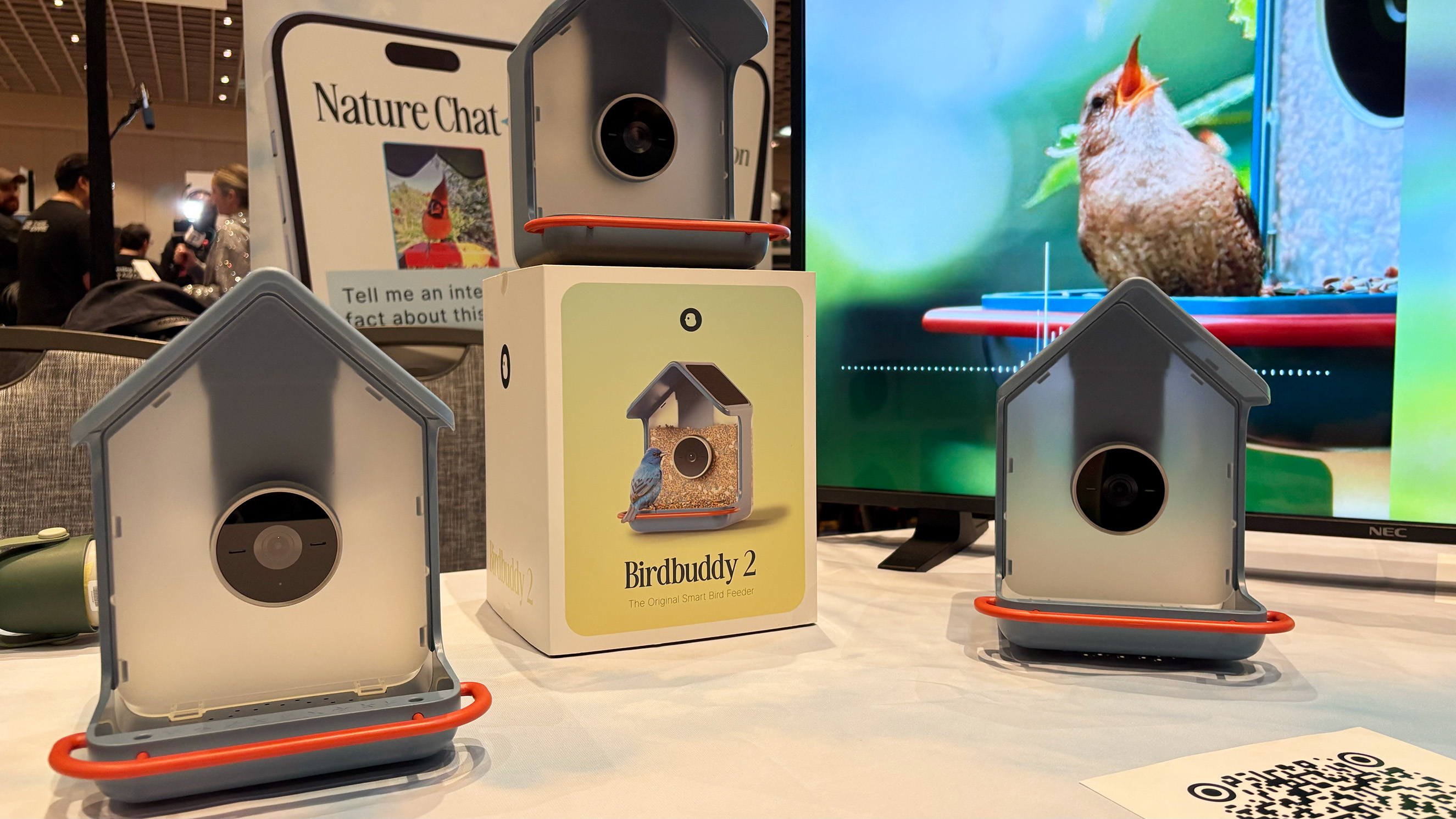
Two new Birdbuddy smart bird feeders displayed at CES.
Amy Skorheim for Engadget

Birdbuddy added a feature that makes its smart feeders feel closer to a true nature companion: birdsong identification. The Birdbuddy 2 and Birdbuddy 2 Mini both add microphones that help the system identify species by sound, alongside the usual camera-based detection. Birdbuddy also says the new models improve camera wake-up speed, use a more modular design for easier cleaning and protect the lens with Gorilla Glass since birds have a habit of pecking at it.

The Birdbuddy 2 is priced at $199 and is expected to ship pre-orders in February, with wider availability mid-2026, while the Birdbuddy 2 Mini costs $129 with pre-orders planned for summer.

Agibot
undefined

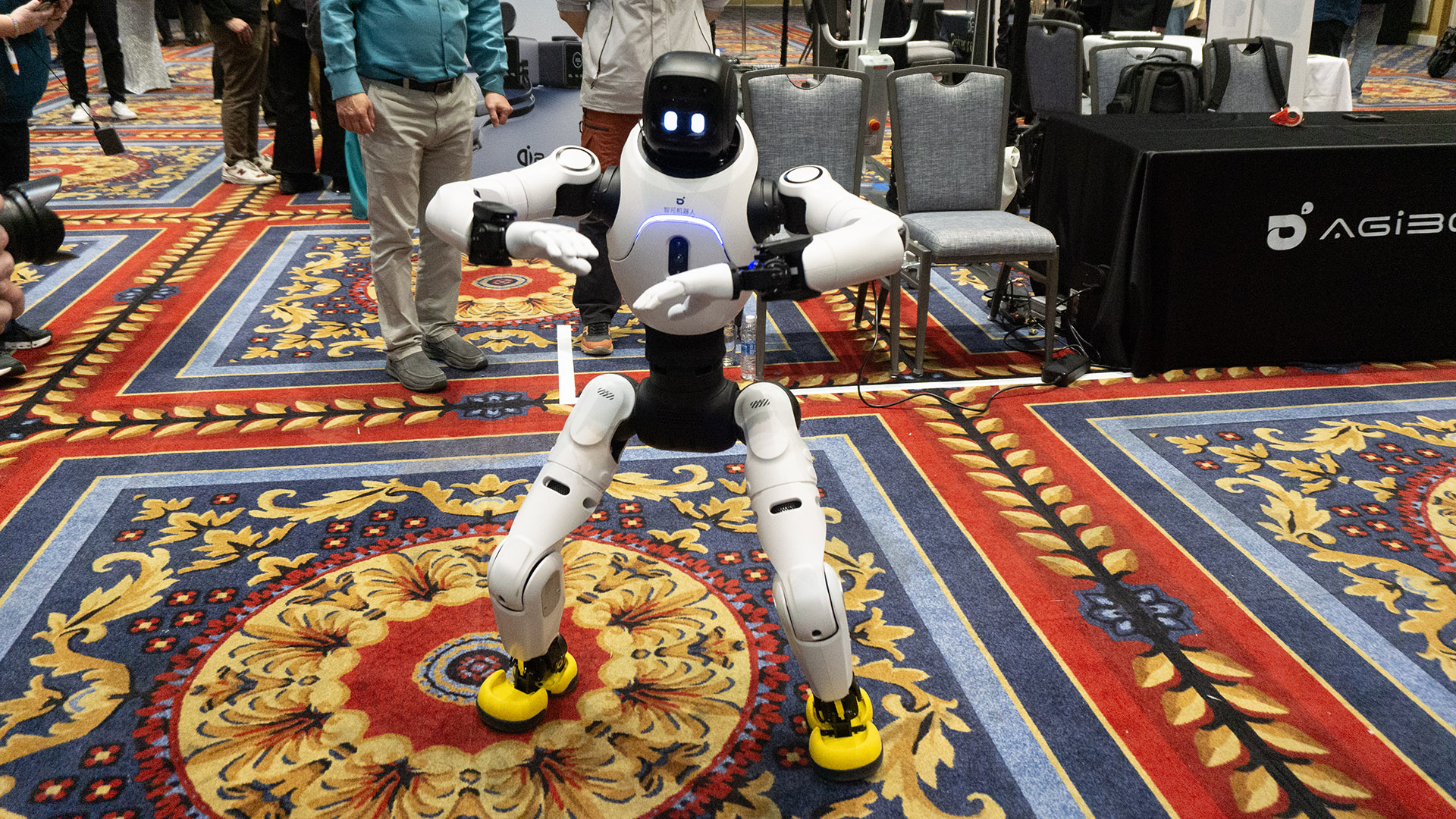
Humanoid robots are having another moment at CES this year, and Agibot’s demos leaned into movement, personality and practical service roles.

The company brought two robots, the larger A2 and smaller X2, both capable of walking around the floor, waving to attendees and dancing with surprising confidence. Agibot described the A2 as a potential hospitality helper for places like museums or conferences, while the X2 is framed more as an educational platform with slightly more human-like movement. Agibot also says its robots can learn actions from video, including training dance routines from TikTok clips, and the company plans to make its robots available in the US this year, though pricing and broader availability details weren’t shared.

Day one is in the books, but CES 2026 is far from over. With the show floor now fully open, expect more hands-ons, deeper dives and plenty of unexpected demos as the week continues, especially across laptops, wearables, mobility and smart home tech. We’ll be updating our CES coverage daily, with liveblogs, reviews and show-floor impressions throughout the week. You can follow along on Engadget for the latest news as it happens.

This article originally appeared on Engadget at https://www.engadget.com/big-tech/ces-2026-day-1-the-biggest-tech-news-and-gadgets-you-missed-from-the-first-official-day-of-the-show-144040174.html?src=rss

Polymarket Refuses To Pay Bets That US Would ‘Invade’ Venezuela

Polymarket is disputing that the mission to capture Nicolas Maduro constituted an invasion and said it will only settle a prediction contract if the US military takes control of Venezuelan territory. From a report: The decision by the prediction market has angered gamblers and added to the controversy surrounding a successful wager on the timing of Maduro’s capture that netted more than $400,000 in winnings for a mystery trader.

The dispute over the definition of “invade” highlights just one of the controversies faced by the mostly unregulated industry. Polymarket — which only recently gained regulatory approval to operate legally in the US — says on its website that it will resolve the “Will the US invade Venezuela by … ?” contract if the US “commences a military offensive intended to establish control over any portion of Venezuela” by one of three dates. “The resolution source for this market will be a consensus of credible sources,” it adds. Prediction platforms such as Polymarket do not typically make directional wagers in their own markets. Rather, they act as an intermediary matching long and short positions and adjudicating the outcome of events, collecting a fee in the process.


Read more of this story at Slashdot.

WheelMove gives manual wheelchairs the power and height to handle rough terrain

French startup WheelMove demonstrated a compact motorized wheelchair add-on at CES 2026 that not only acts as a power-assist device, but can also lift up a chair’s small front wheels so it can ride over rough terrain. The accessory upgrades a manual wheelchair with a 10-inch extra wheel and a 250W motor that can drive at up to six miles per hour (10 kilometers per hour) and handle slopes up to 10 percent, with a range of 15.5 miles (25km). The battery is swappable, too, so a person could pack an extra for a longer outing to avoid having to stop and recharge. 

As the WheelMove team showed at its booth, the accessory can be attached to a wheelchair in a matter of seconds while seated, and its control panel can be strapped onto an armrest or even a bodypart. There are five speed options, which also work to keep the speed consistent when a person is traveling on a downslope. With the WheelMove attached, its creators say a manual wheelchair user can traverse rough and uneven surfaces — like cobblestones, grass and dirt paths — as well as ramps with far less effort than would normally be required. In some cases, it could open up travel in places that would otherwise be completely inaccessible. 

The startup says it’s worked with wheelchair users who have field tested the device for months ahead of its launch. It weighs less than eight kilograms (17.6 lbs) and packs up in a backpack. Pre-orders for the WheelMove have opened for buyers in France, where it’s expected to ship later this year before expanding internationally. It costs roughly $6,000. 

This article originally appeared on Engadget at https://www.engadget.com/transportation/wheelmove-gives-manual-wheelchairs-the-power-and-height-to-handle-rough-terrain-143000560.html?src=rss

How to Choose the Right VPN for You

There are many good reasons to get a VPN (Virtual Private Network) app installed on your phone or laptop: They make it harder for anyone else to track your browsing, they keep your data safe when you’re on public wifi networks, and they even let you spoof your location so you can access geolocation-locked content.

You’ll also find plenty of choice when it comes to VPNs. Our own guides to the best paid VPNs and the best free VPNs show the wealth of impressive apps out there, and even when you narrow down the criteria, you’ve still got lots of options to pick from—see our recommendations for the best free VPNs for Android.

So what exactly should you be looking for when it comes to choosing the right VPN for you? These are the features and selling points that you’ll see mentioned when you’re browsing VPN comparisons, and what they mean (and once you’ve built up a shortlist from these criteria, then you can look at the prices and extras).

Browsing speed

One of the downsides of loading up a VPN is that your browsing speed can suffer, while your data gets pinged around multiple servers across the globe. Ideally, you want all the protection that a VPN offers, without too much of a hit on download and upload rates (no matter how many other people are using the same VPN).

Unfortunately, this isn’t really something you can gauge just by looking at VPN listings and ads, as most VPNs will claim to be the fastest. Either read benchmark tests put together by publications and authors you trust (watch out for sponsored content), or make use of as many free trials as you can and do some testing yourself.

Server locations

ExpressVPN servers
Even VPN service will tell you how many servers it has, and where they are.
Credit: ExpressVPN

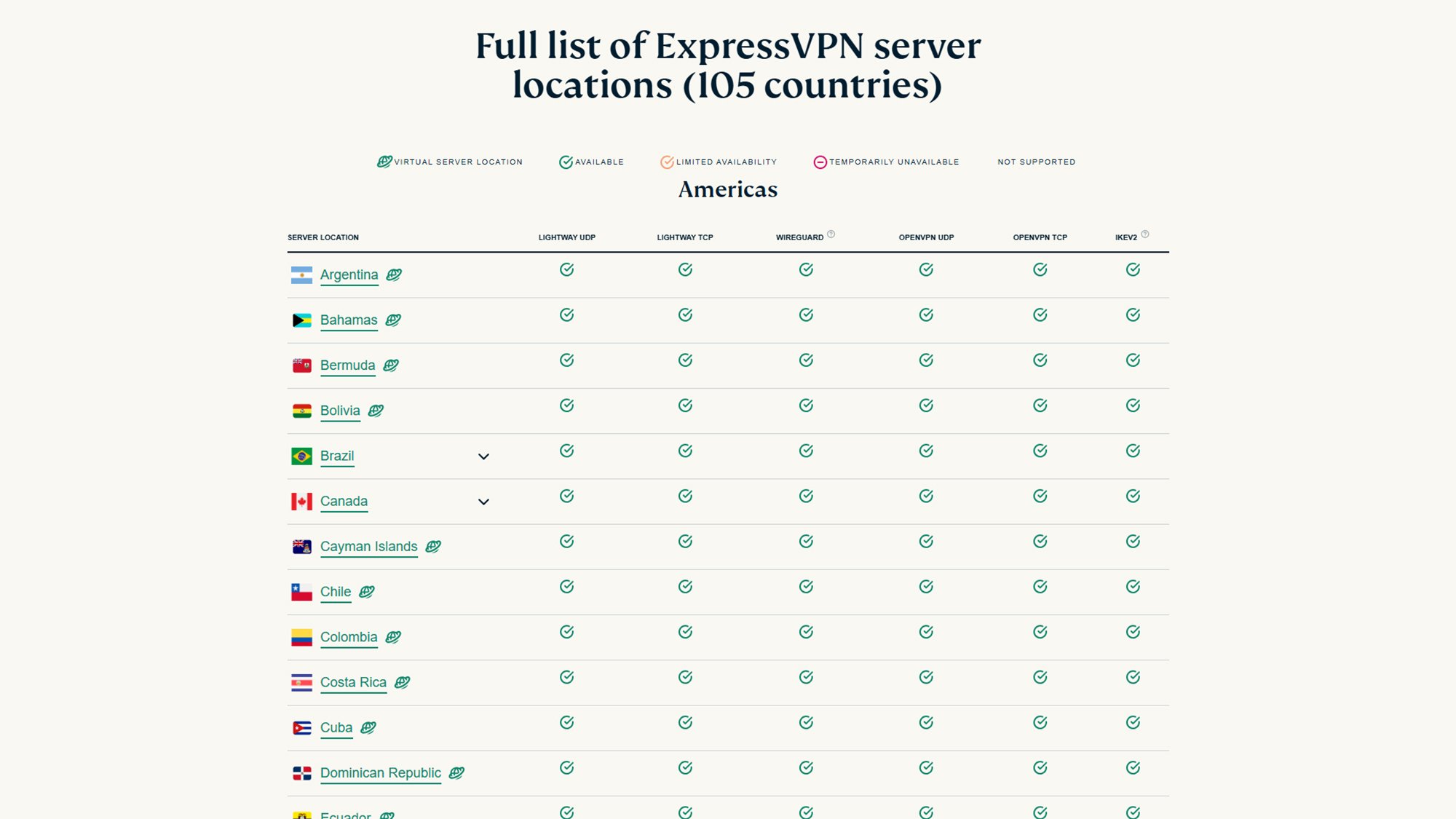
Your VPN of choice needs to reroute your internet traffic somewhere, and how many servers a particular VPN has around the world can make a substantial difference to speed and availability. It’s also going to determine where in the world you can pretend to be of course, if you want to jump to another country virtually.

Broadly speaking, the more servers the better, though as with VPN speeds you may have to do some testing of your own to check reliability and transfer rates. Look for server locations close to you (for speed), and outside of heavily censored or surveilled countries (for privacy), and check any technical specs that are given for them.

Split tunneling and kill switches

Something else to look out for is split tunneling, or the ability to send only some of your internet traffic through a VPN. This means you get better speeds (and less security and privacy) on data that’s not so important, if you’re just reading the news or learning a language. It’s a feature that many of the best VPNs now offer.

Another feature worth checking for is a kill switch. It sounds rather dramatic, but it’s simply a feature that shuts down your internet connection if the data encryption somehow fails—cutting you off from the internet, but preventing your connection and data from being exposed. Again, this is now fairly common, but not every VPN offers it.

No logs or zero logs

Mullvad VPN
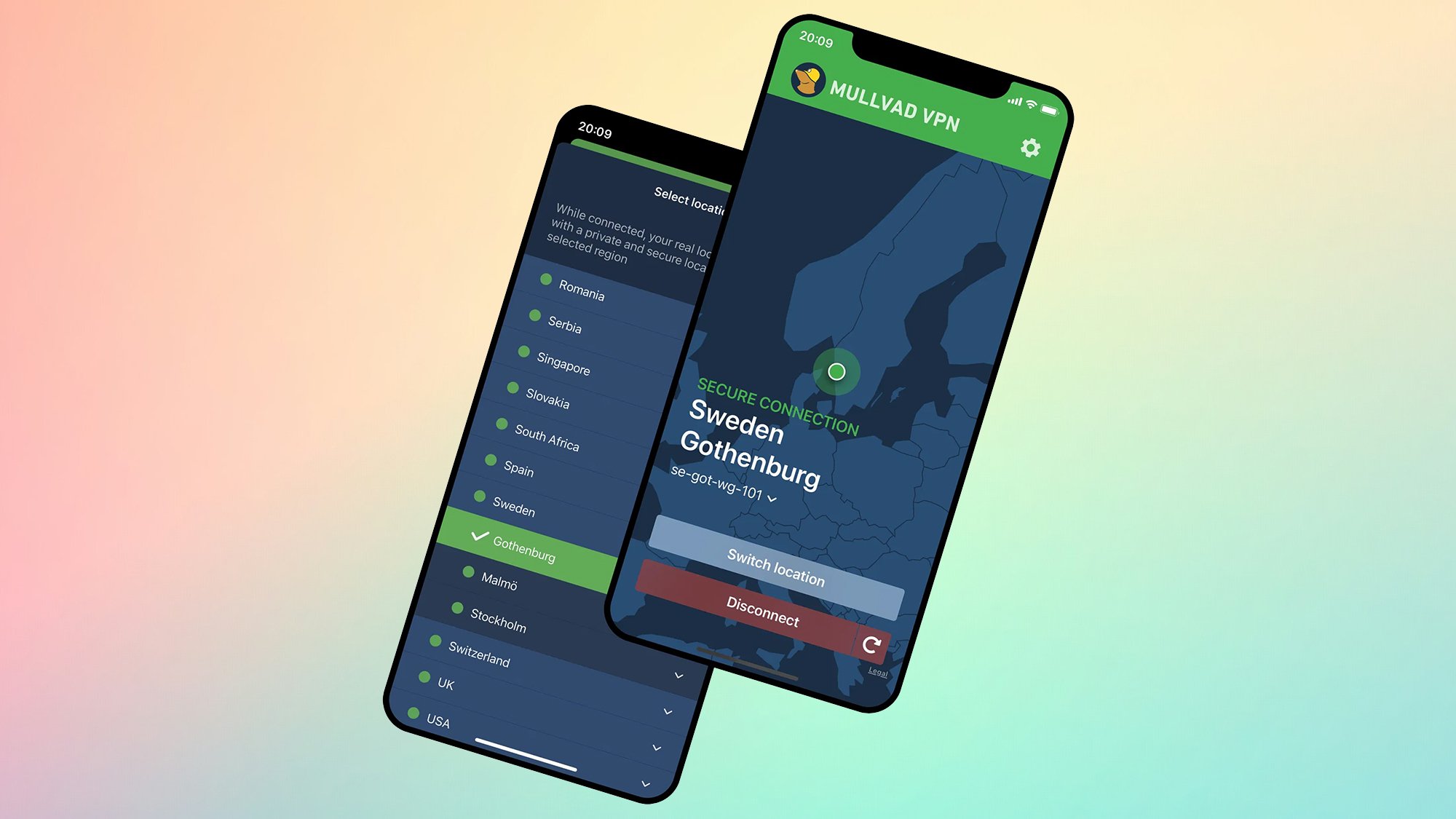
Mullvad VPN lets you pay by cash, if you don’t want to enter payment info.
Credit: Mullvad VPN

You should only consider VPNs that have clear no-logs policies (no browsing data is permanently retained) or zero-logs policies (supposedly even stricter, covering more data). Don’t take the VPN’s word for it. though: Look for third-party audits from independent security companies, carried out regularly, to verify these claims.

If these logs are retained, they might be sold to data brokers, or pulled by law enforcement agencies—so check the individual privacy policies for details of what happens when you’re connected to your VPN. Some VPNs go above and beyond when it comes to letting you stay anonymous: Mullvad VPN lets you pay by cash through the post, for example.

VPN protocol

A VPN protocol is the way that the VPN connects to the internet at large: It makes a major difference to speed and security, and you’ll often see it mentioned in VPN listings. However, as important as it is, it’s not something that’s easy to compare across different VPN services—most VPNs will simply say their protocol of choice is the best.

Once you’ve got a shortlist of VPNs together, do some background reading on the protocols they use: Look for independent assessments of their security and transparency, technical benchmarks, and protocols that have been open sourced so they can be analyzed. OpenVPN and WireGuard are two well-regarded protocols, for example.

Location and reputation

Proton VPN
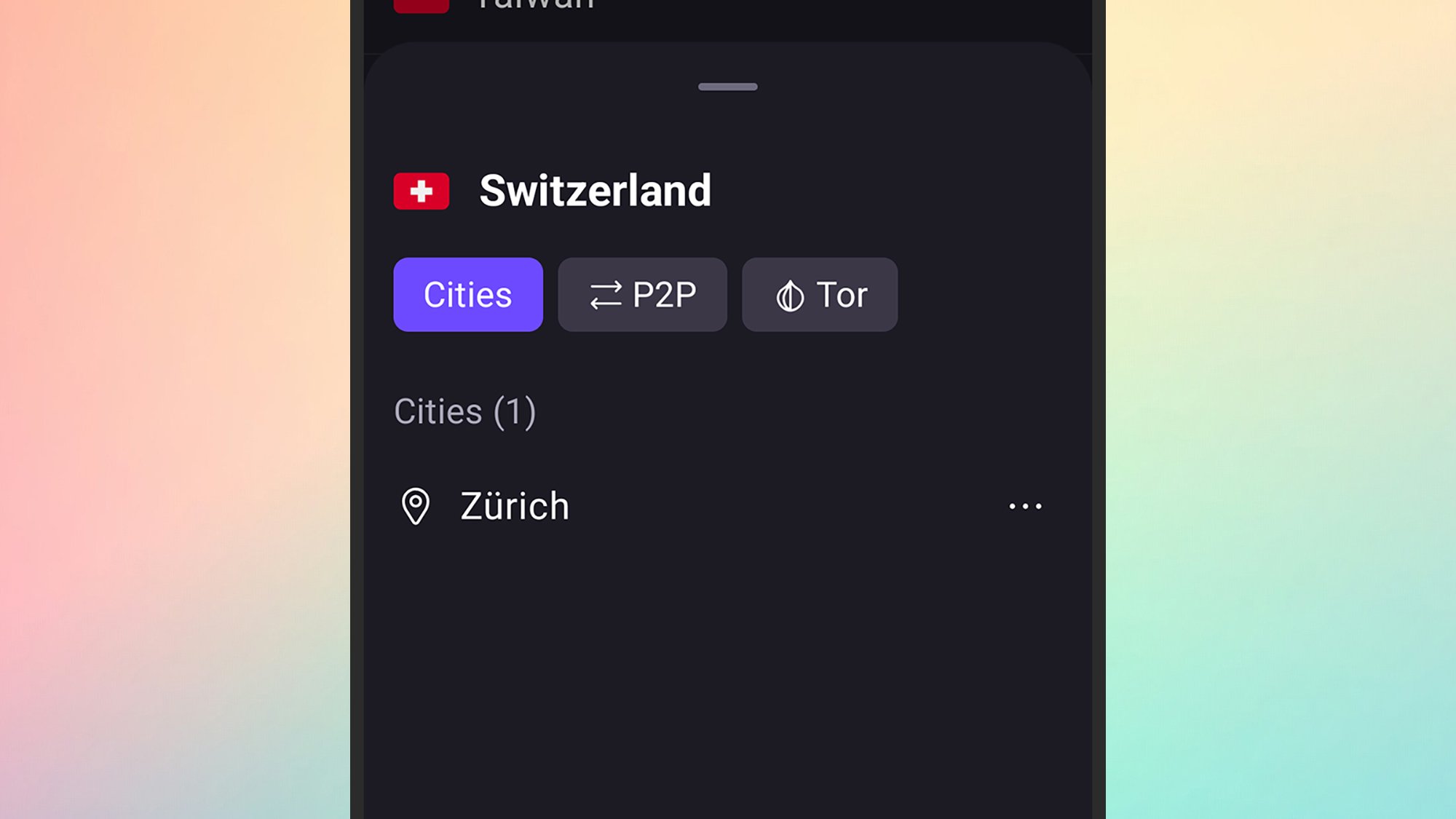
Where a VPN is based is important, as well as where it connects to.
Credit: Lifehacker

VPN companies are bound by the laws and regulations of the country that they’re based in—so it’s a good idea to look for ones based in places where surveillance regulation and government monitoring is less strict. If necessary, check the VPN’s policies on how it deals with data requests from the authorities and law enforcement in its local region.

It’s also worth weighinga VPN company’s reputation: How does it make money? What other services does it offer? What’s its record with data breaches? This is much more important with a VPN than it is with your streaming music provider, for example, because you’re trusting it with all of your online data while you’re connected.

Trials and money back

Generally speaking, it’s worth paying for a VPN, as you’re giving it so much responsibility in terms of your online access and security. The paid options are almost always going to give you a faster and more reliable service, and if you regularly make use of a VPN then the monthly fee is well worth the investment.

It is, however, worth looking for services that offer free trials and your money back if you’re not satisfied (usually after 30 days). Not only does it reflect well on the VPN company, it means you can see if the VPN suits your needs—and check how fast its servers are—before signing up for any kind of payment plan.

Warners Bros. Discovery board urges shareholders to reject amended Paramount bid

In a unanimous written determination, the Warner Bros. Discovery’s board is advising shareholders to once again reject Paramount Skydance’s “inadequate” hostile takeover bid. The letter to shareholders cites a number of concerns with the offer and reiterates its position that Netflix’s offer remains superior. Netflix and WBD have entered into a merger agreement in early December after the WBD board selected its offer over other bidders.

There are two key differences between the two options: Netflix is willing to pay $82 billion, but only for the Warner Bros., HBO and HBO Max divisions; Paramount Skydance’s latest offer came in at $108 billion and is for all of WBD’s assets, including CNN, HGTV, Food Network and many more. The Netflix deal leaves those assets in the hands of WBD shareholders, to be spun off as Discovery Global.

Paramount Skydance made three separate attempts to scoop up WBD before the company even opened the process up to other bidders. The third of those early offers was reportedly in the neighborhood of $24 per share, while this most recent hostile takeover stands at $30 per share.

But the WBD board has concerns. Among them, the extraordinary amount of debt required for Paramount, a studio with a market capitalization of just $14 billion, to take on an acquisition of this size. (Netflix’s market cap is over $400 billion.) This comes despite Larry Ellison, the father of Paramount CEO David Ellison, stepping in to guarantee $40 billion worth of the needed financing. The board also points out that Netflix’s offer is partially paid in the streaming giant’s shares, which it says have the potential to provide further value in the future.

At this stage in negotiations, the board also claims opting to go with Paramount Skydance’s offer would also result in WBD paying over $4 billion in termination fees.

“Your Board negotiated a merger with Netflix that maximizes value while mitigating downside risks, and we unanimously believe the Netflix merger is in your best interest,” the letter states. The merger with Netflix will still have to go before regulatory bodies in the United States and Europe.

This article originally appeared on Engadget at https://www.engadget.com/entertainment/streaming/warners-bros-discovery-board-urges-shareholders-to-reject-amended-paramount-bid-141513357.html?src=rss

Corsair Fuses Stream Deck Into New Galleon 100 SD Mechanical Gaming Keyboard

Corsair Fuses Stream Deck Into New Galleon 100 SD Mechanical Gaming Keyboard
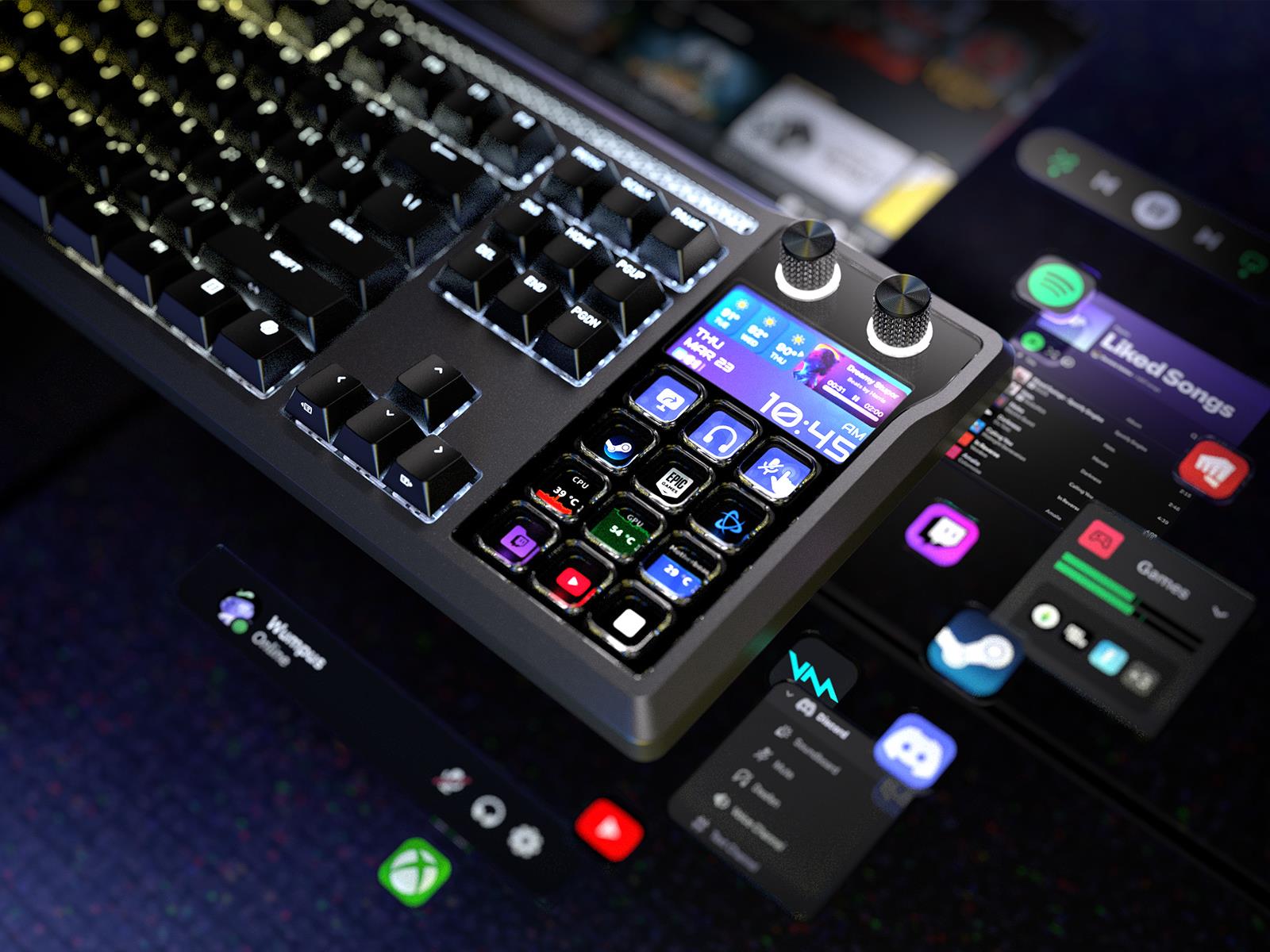
Why buy a mechanical gaming keyboard and Stream Deck separately when you can have them both in the same package? The easy answer is because an integrated all-in-one solution was never a solution…until now. Announced at CES 2026, Corsair’s new Galleon SD 100 is a full-size mechanical deck for gamers with a built-in Stream Deck situated where

Clear Drop is trying to do something about all those plastic bags under your sink

Even if you bring home as few bags as possible — using reusable bags, carrying purchases home with your own two hands — soft plastics sill accumulate. I certainly have a collection with one flimsy plastic sack filled with dozens or hundreds of others. I plan to do something with it… eventually.

Unfortunately, there aren’t a ton of options for what to do with those soft plastics, as most recycling facilities can’t accept them. But no one likes seeing them end up in oceans and rivers and stuck up in trees. So I was excited to see the Clear Drop Soft Plastic Compactor (CPC) at CES. It’s a pre-recycler for your home that turns hundreds of bags into a solid brick that’s easier to transport. Certain facilities can accept the bricks for recycling.

Clear Drop works with 95 percent of soft plastics, sucking up bags, bubble wrap, ziplocks, package wrap and cling film into its maw. It then compresses and heats the plastic to form a compact eight by twelve by four inch brick. I asked Matt Daly, Clear Drop’s head of product, what the compactor can’t take and I was told you can’t add ping pong balls, IV bags and camera film. Easy enough.

A compacted brick the Clear Drop CPC produced.
Amy Skorheim for Engadget

It was satisfying to see the little slot on the top gobble up the plastic bags Daly fed it. The Clear Drop wasn’t set to smash and heat at the show, but I was assured by another Clear Drop rep that any plastic smell produced during operation was minimal and the company performed safety tests to ensure the machine didn’t create any harmful emissions.

Daly said it would take about a month for most households to create a brick, which translates to around a 30 gallon trash bag full of other bags. Once that brick is created, it can be shipped to one of Clear Drop’s partner facilities and pre-paid USPS shipping envelops are included. They work with multiple US-based recycling facilities and do audits to ensure the bricks are actually being recycled.

Of course, I was a little disappointed the bricks couldn’t be tossed in my blue curbside bin, but Daly said they’re working to bring more recycling partners on board and the ultimate goal is to create an infrastructure that would eventually include municipal recycling. Shipping the bricks somewhere feels a little counterproductive, eco-wise. And the machine itself is not cheap. The price is split up over the course of two years, but it adds up to $1,400.

I’m happy to see someone somewhere is doing something to address a pretty clear problem. While it’s not perfect, this is probably the best household-level solution I’ve seen to that can ensure your bags don’t go down some sea turtle’s throat.

This article originally appeared on Engadget at https://www.engadget.com/home/smart-home/clear-drop-is-trying-to-do-something-about-all-those-plastic-bags-under-your-sink-140000254.html?src=rss

South Korea’s President Identifies a New Enemy: Baldness

South Korea’s President Lee Jae Myung asked at a televised policy meeting last month whether the country’s state-run healthcare plan could cover hair-loss treatment, framing it as a question about whether hair loss qualifies as a disease. The health minister told Lee that baldness is generally considered an aesthetic problem and therefore covered out-of-pocket, but the 61-year-old president — who himself has a full head of hair — pushed back, arguing that young people experiencing thinning hair view their situation as a “matter of survival.”

The proposal has divided the country. South Korea is known for a cultural phenomenon called “lookism,” where physical appearance carries significant weight in professional and social settings. The expression “your appearance is also a credential” is common, and nearly all job applications require a photograph, including those for part-time barista positions.

Lee first made the pledge to cover hair-loss treatment during his unsuccessful 2022 presidential campaign but dropped it when he ran again. He won a snap election in June and has now resurrected the idea as a way to appeal to younger voters who have grown more dissatisfied with him. The Korean Medical Association has called the proposal “questionable” given the health system’s stretched finances. The health ministry is currently reviewing whether the treatments are appropriate for coverage. More than three in four South Koreans believe everyone has concerns about hair loss, according to a recent Embrain Trend Monitor poll.


Read more of this story at Slashdot.

CES 2026: Everything You Need to Know About the World’s Biggest Tech Show

It’s CES week, when the tech world gathers in Las Vegas to check out the latest gadgets, prototypes, and innovations that will shape the future. Lifehacker’s tech team is on the ground at the convention, tracking down big stories and cool gear.

What is CES?

Billing itself as “The Most Powerful Tech Event in the World,” CES (short for “Consumer Electronics Show”) is the Consumer Technology Association’s trade convention. It began in 1967 as a small showcase for televisions and radios, but over the decades CES has become a gathering of the tribes for tech culture. Everyone is there, from huge companies like Samsung and Sony, to scores of journalists, to scrappy startups with big dreams. From innovative AI tools to electric vehicles, laptops, e-readers, and robotic dogs, CES is where tech companies show off their wares, journalists dig up the next big story, and tech insiders network and sneak a look into the future.

Where and when is CES 2026?

CES is held in Las Vegas from Jan. 6-9. The Las Vegas Convention Center hosts the main show floor, but there are CES-related events at the Fontainebleau Las Vegas, Mandalay Bay, The Sphere, and other locations across Las Vegas.

The biggest stories of CES 2026 so far

Along with the expected innovations in televisions and laptops, CES 2026 is crammed with artificial intelligence, robots, and mobility devices, and health-focused wearables. Here are some of the biggest announcements at CES 2026 so far.

  • At its keynote, NVIDIA unveiled Alpamayo, “the world’s first thinking, reasoning autonomous vehicle AI.” This could be serious competition for Tesla.

  • HP showed off a new mini desktop computer, The Eliteboard G1a. You just plug the keyboard into any monitor and go to town. Only time will tell if this is a gimmick or a new form factor.

  • Hyundai and Boston Dynamics showed off humanoid robot Atlas. But Hyundai didn’t show off any new electric vehicles, suggesting a cautious outlook for the near future.

  • Broadcom showed off Wi-Fi 8 routers and chips, providing a practical look into the future.

CES 2026 Event Schedule

Below is a guide to some of the major events at CES 2026.

Sunday, January 4: Media Day 1 at Mandalay Bay

Monday, January 5: Media Day 2 at Mandalay Bay. C-Space: 9 AM – 5 PM

Tuesday, January 6: Show Floor Press Conferences, Exhibits: 10 AM-6 PM, C-Space: 9 AM – 5 PM

Wednesday, January 7: Show Floor Press Conferences, Exhibits: 9 AM-6 PM, C-Space: 9 AM – 5 PM

Thursday, January 8: Exhibits: 9 AM-6 PM, C-Space: 9 AM – 5 PM

Friday, January 9: Exhibits: 9 AM-4 PM

Can’t-miss keynotes and conferences at CES 2026

Sunday, January 4

  • CES Unveiled Las Vegas – The Official Media Event of CES 2026 with innovative product previews – 4:00-7:00 PM

Monday, January 5

  • AMD Chair and CEO Dr. Lisa Su, 6:30 PM, The Venetian

Tuesday, January 6

  • Siemens President and CEO Dr. Roland Busch, 8:30 AM, The Venetian

  • Lenovo Chairman and CEO Yuanqing Yang, 5:00 PM, Sphere

Wednesday, January 7

  • Caterpillar CEO Joe Creed, 9:00 AM, The Venetian

Can you attend CES 2026?

CES is a trade-only event, so it’s not open to the general public, but if you’re affiliated with the tech industry in some way, you can register at CES’s official site. If you’re not a tech insider, you can check out the official CES livestream and read Lifehacker’s CES 2026 live blog.

Lego Smart Play hands-on: Using technology to get kids to play together

Lego’s new Smart Play system, announced at CES earlier this week, is an embrace of digital technology the likes of which we haven’t seen from the company before. And while the demonstration it gave on Monday was a good start towards showing just what Lego’s Smart Brick is capable of, there’s no substitute for seeing it in person. Fortunately, an extended demo answered a lot of my questions on how the system will work once kids and adults get their hands on the first round of sets with Smart Play.

As I detailed yesterday, the Smart Play system contains three elements. The Smart Brick is packed with technology like proximity sensors, an accelerometer, color sensors and a speaker, all powered by a tiny chip. It’s crucial to know that each Smart Brick is identical at this point; to really bring a set to life, you need to combine it with Smart Tags or Smart Minifigures. Both the Tags and Minifigures contain specific instructions that help the Brick understand the context that it is placed in.

The demo started out simply, with three small Lego builds: a car, a helicopter and a duck. Each of those builds had a unique Smart Tag that the Smart Brick uses to understand how it should respond to real-world stimulus. The car started making the sound of a revving engine, and when playing with it to drive it faster and more aggressively, the engine made more noise. Tilting the car would cause it to make some screeching sounds as if it was taking corners hard, and flipping it over would make the sound of a car wreck.

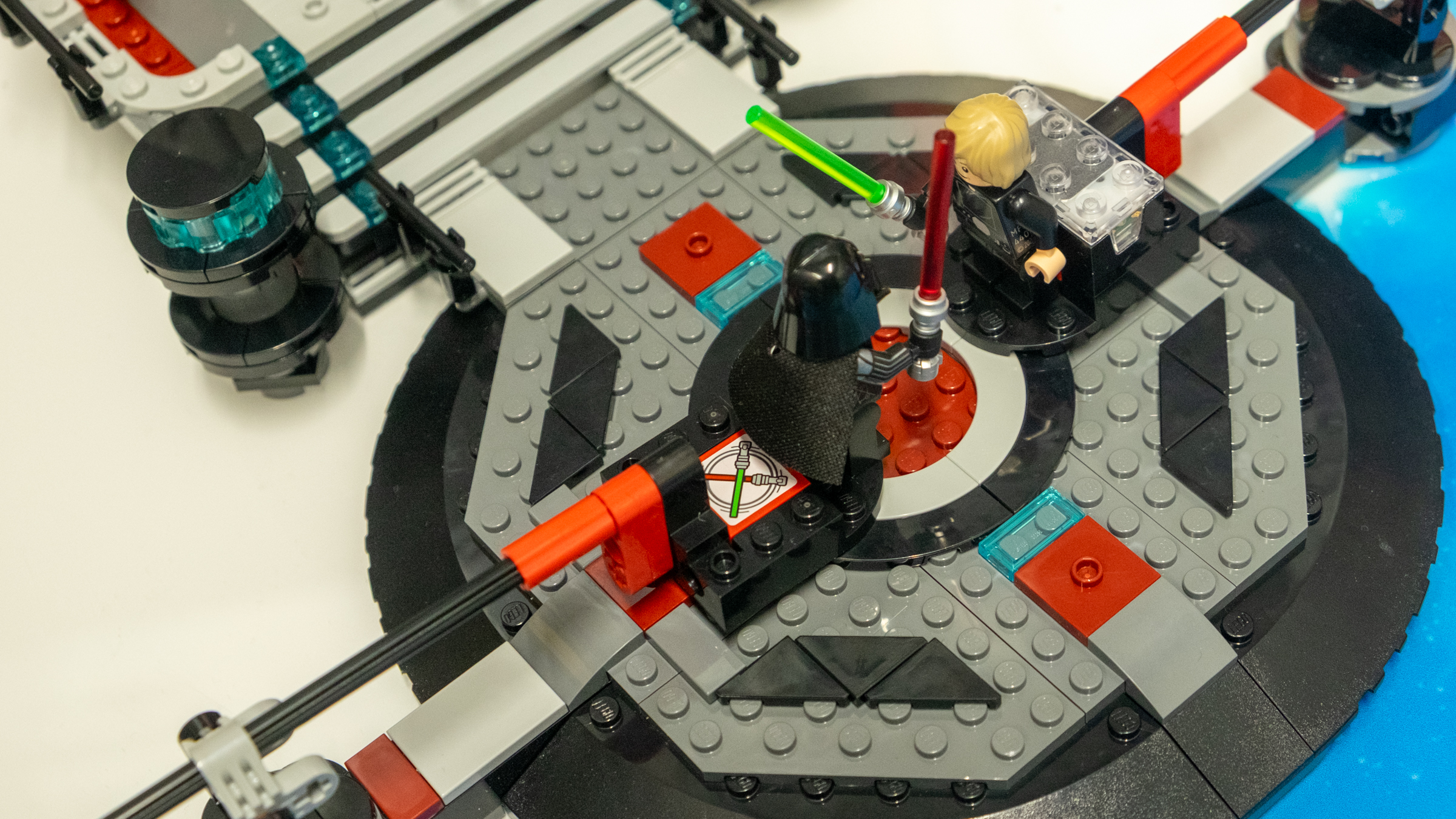
The Smart Brick can similarly sense what specific Smart Minifigures is near it and respond accordingly. Since the first three Smart Play sets are all based on Star Wars, it’s a little easier to explain how they interact with the Smart Brick. Take the Throne Room Duel & A-Wing set — it includes Smart Minifigs for Darth Vader, Luke Skywalker and Emperor Palpatine, and there are also Smart Tags that correspond to various actions the characters can take. If you place a Smart Brick behind Palpatine’s throne, the classic “Imperial March” theme will ring out and Palpatine himself will chatter a bit. The Minifigures don’t actually say real words, but they can still embody their characters well enough. Vader, for example, offers his classic breathing sound and exclaim if he’s defeated in a light saber duel.

Lego Smart Play Star Wars sets
Nathan Ingraham for Engadget

That duel is a clever part of this set. There are moveable mounts you can place Luke and Vader on, along with a Smart Brick. To complete the battle scene, a Smart Tag tells the brick to take on the characteristics necessary for a light saber battle. As such, when you place the Minifigures in the mount, you’ll hear the classic sound of a light saber humming to life. And if you move the characters around and crash them together, you’ll hear the sounds of battle. Finally, knocking a Minifigure off its spot will tell the brick associated with that character to make their trademark sound of defeat — in Vader’s case, that’s the iconic “noooooooo.”

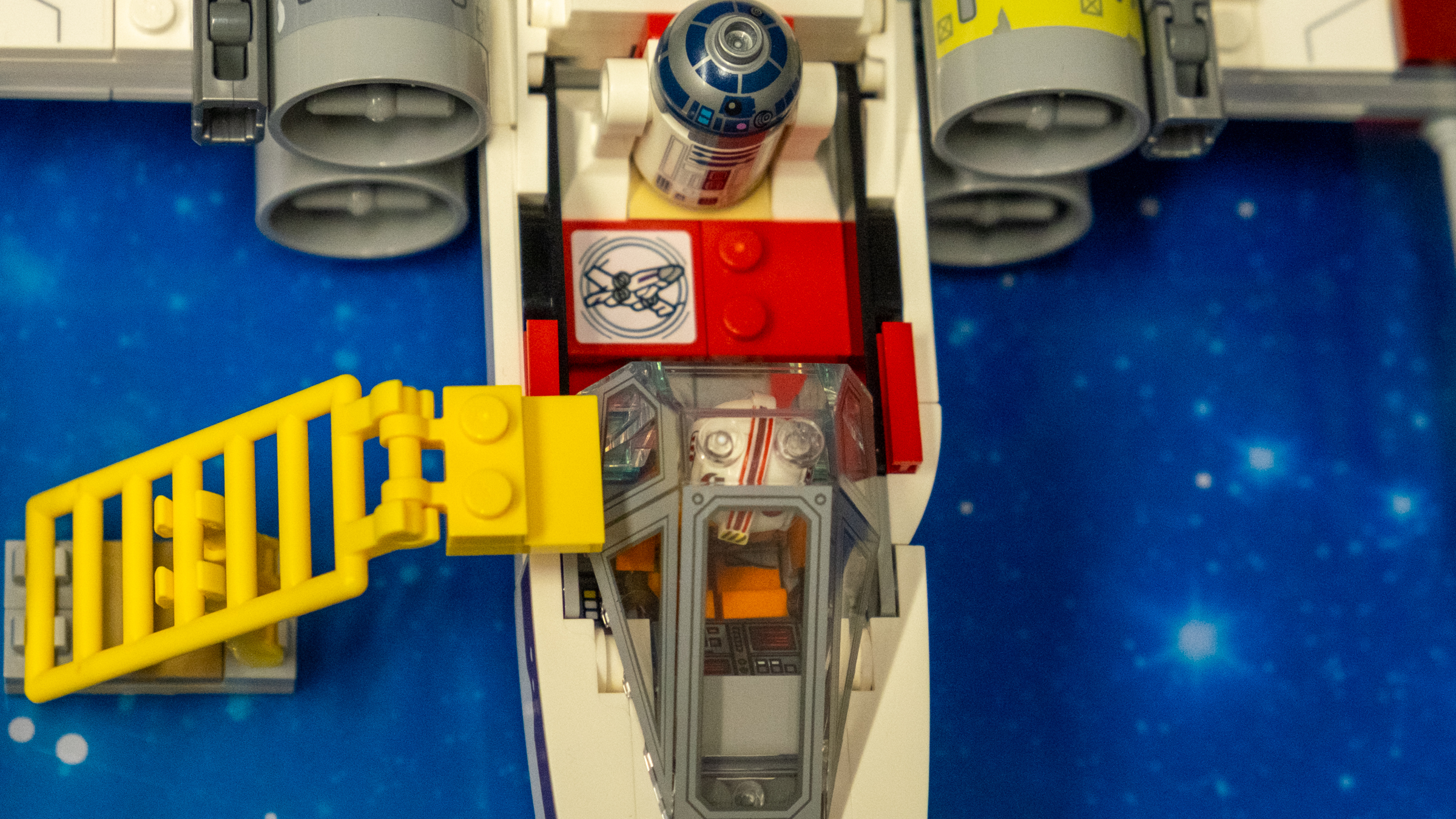
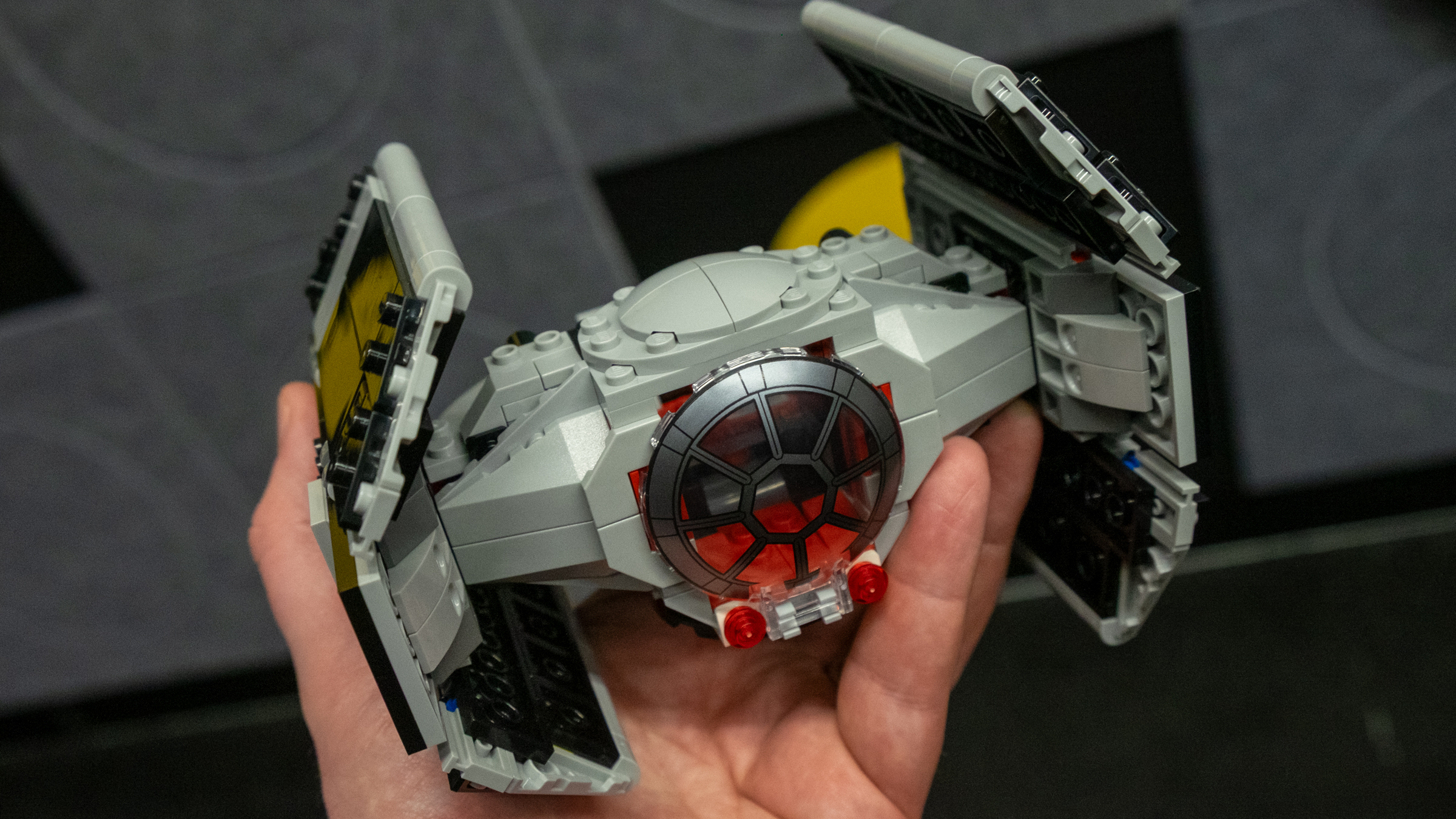
The other two new Smart Play sets are Darth Vader’s TIE Fighter and Luke’s Red Five X-Wing — an ideal pair for some space-based dogfighting. The X-Wing shows off how good the Smart Brick is at handling multiple inputs. Adding it to the X-Wing will make sounds of the ship humming to life, thanks to the X-Wing-specific Smart Tile. Sit Luke in the cockpit and you’ll hear the Jedi theme music play, and seating R2-D2 in the back will make the Droid chatter at you in its familiar tones.

The Smart Tile is how the Smart Brick identifies this set as an X-Wing figher.
Nathan Ingraham for Engadget

Pitting the two ships against each other shows off more of the Smart Brick’s capabilities. Grabbing the ships and whooshing them through the air will make the Smart Brick play sounds that aren’t just generic engine noises — you can definitely hear the difference between the X-Wing and the TIE fighter. Each ship also has lasers you can activate, and if two kids are in the same room flying ships around and firing off lasers, you’ll hear the ships taking “damage” as well. Firing enough shots while aiming at another ship will eventually cause it to play some exploding sounds to indicate that it has gone up in flames — the Minifigures associated with the ship will also make sounds of dismay, as well.

At first glance, the sets themselves don’t feel wildly different than other smaller-scale Star Wars sets, but the people from the Lego Group giving the demo pointed out a few notable characteristics. The TIE fighter and X-Wing are both specifically designed to withstand more abuse from active play scenarios than the average Lego set, and they’re also specifically designed to fit will in a kid’s hand so they can run around and propel them through the air. The Throne Room set, meanwhile, has a detachable area where Luke and Vader can battle — you can remove and re-attach it to the throne area easily enough, but it’s good to separate it out for more aggressive light saber battles.

Lego Smart Play Star Wars sets
Nathan Ingraham for Engadget

All told, I’m quite excited to see where Lego goes with its Smart Play system from here. Starting out with some simpler sets from a massive franchise like Star Wars is a logical way to introduce the system. There are obvious play scenarios that make perfect sense as a way to show off the Smart Brick. But I’m looking forward to a time when Lego starts selling tiles and Minifigures that can expand the capabilities of existing sets, whether they’re licensed or not. And the idea of smushing together Star Wars with some of the many other properties that Lego has access to (Jurassic World? DC or Marvel? Despicable Me or Bluey?) feels like just the kind of chaotic fun kids will love having.

That’s perhaps the most important point about Smart Play. While Lego has made major overtures for capturing the hearts and wallets of adult Lego fans, Smart Play is very clearly aimed at kids right now. There are no screens, apps or setup needed for Smart Play — it seems exceedingly easy to just pick up and start playing. Furthermore, Lego is using this technology to make Lego sets more interactive, something the company hopes will encourage more social play amongst kids. That’s a solid use of the technology packed into a Smart Brick if you ask me.

This article originally appeared on Engadget at https://www.engadget.com/entertainment/lego-smart-play-hands-on-using-technology-to-get-kids-to-play-together-133000436.html?src=rss

Klipsch Atlas HP-1 hands-on: A return to hi-fi headphones at CES 2026

Klipsch hasn’t debuted new headphones in years, but that’s going to change in 2026. At CES, Klipsch announced the upcoming Atlas hi-fi series that includes wireless and both closed and semi-open back models. All three are expected to arrive this summer, but the company hasn’t announced pricing or many details on any of them just yet. However, I was able to listen to the Atlas HP-1, the wireless model with active noise cancelation (ANC).

Without going into specifics, Klipsch says the HP-1 is designed for both daily wear and travel. This is thanks to the combination of light weight, comfort and “standout” battery life. Inside, coaxial drivers provide the company’s warm signature sound profile. Third-party support for spatial audio and hearing compensation is also in the works. This concludes the info Klipsch announced this week.

After seeing the HP-1 in person at CES, I can tell you they look quite similar to Bowers & Wilkins recent headphones designs. Klipsch has opted for wood accents on the outside of the ear cups, likely as a nod to its speaker heritage. But the combination of leather and metal, as well as the headband and ear cups, remind me a lot of B&W’s Px7.

Klipsch Atlas HP-1
Klipsch Atlas HP-1
Billy Steele for Engadget

During my brief time with the HP-1, the excellent sound quality was the thing that stood out most. Klipsch is demoing the headphones with lossless audio over USB-C, so it will be interesting to see what the audio is like in wireless mode. However, the company’s trademark warmth and deft tuning is immediately apparent, giving preference to highs and mids without overbearing bass. There’s ample low-end tone, but it compliments everything else and didn’t overpower in the Rage Against The Machine songs and other tracks I listened to.

It’s difficult to paint a comprehensive picture here since I wasn’t only really able to observe sound quality — and only for a short time. But the HP-1 is certainly a premium set of headphones that are comfy to wear (at least for the few minutes I wore them) and definitely sound good. The biggest downside will likely be price, which I expect to be at least $500.

This article originally appeared on Engadget at https://www.engadget.com/audio/headphones/klipsch-atlas-hp-1-hands-on-a-return-to-hi-fi-headphones-at-ces-2026-130000415.html?src=rss

Founder of Spyware Maker PcTattletale Pleads Guilty To Hacking, Advertising Surveillance Software

An anonymous reader quotes a report from TechCrunch: The founder of a U.S.-based spyware company, whose surveillance products allowed customers to spy on the phones and computers of unsuspecting victims, pleaded guilty to federal charges linked to his long-running operation. pcTattletale founder Bryan Fleming entered a guilty plea in a San Diego federal court on Tuesday to charges of computer hacking, the sale and advertising of surveillance software for unlawful uses, and conspiracy.

The plea follows a multi-year investigation by agents with Homeland Security Investigations (HSI), a unit within U.S. Immigration and Customs Enforcement. HSI began investigating pcTattletale in mid-2021 as part of a wider probe into the industry of consumer-grade surveillance software, also known as “stalkerware.”

This is the first successful U.S. federal prosecution of a stalkerware operator in more than a decade, following the 2014 indictment and subsequent guilty plea of the creator of a phone surveillance app called StealthGenie. Fleming’s conviction could pave the way for further federal investigations and prosecutions against those operating spyware, but also those who simply advertise and sell covert surveillance software. HSI said that pcTattletale is one of several stalkerware websites under investigation.


Read more of this story at Slashdot.

Here are the launches and landings we’re most excited about in 2026

Last year delivered doses of drama and excitement in the space business, with a record number of launches, breathtaking vistas of other worlds, and a multitude of breakthroughs and setbacks. 2026 is shaping up to be another thrilling year in the cosmos.

For the first time in more than 54 years, astronauts are training to travel to the vicinity of the Moon, perhaps within the next couple of months. NASA, SpaceX, Blue Origin, and other companies are poised to take major steps toward actually landing humans on the Moon, perhaps within a few years.

New rockets are slated to debut in 2026, and scientists hope to open new windows on the Universe. Here, we list the most anticipated space missions scheduled for this year, ranked according to our own anticipation for them. We also assess the chances of these missions actually happening in the next 12 months. Unless specified, we don’t assess the chances of a successful outcome.

Read full article

Comments

MTV Rewind is a developer’s tribute to 24/7 music video channels

MTV shut down its remaining 24/7 music channels in several countries, including the UK and Australia, at the end of 2025. The main MTV network shifted its focus to reality shows long ago and it occasionally dips back into music with things like the Video Music Awards, but this shutdown felt like the end of an era. If you yearn for the days when MTV actually played music videos, though, you might be in luck. A developer who goes by the name of Flexasaurus Rex has paid tribute to the MTV of old with a web app that has several channels of non-stop streaming music. 

MTV Rewind has 11 channels at the time of writing, including one that features videos from the original channel’s first day of existence in 1981. There’s a channel dedicated to MTV Unplugged performances, a rap-focused stream, one for each decade from the ‘70s to the ‘20s and (my personal faves) 120 Minutes and Headbangers Ball options. MTV Rewind has so far pulled in more than 33,000 music videos. That’s over two months worth of music, as Loudwire notes.

“MTV was a cultural institution that changed music, fashion and youth culture. Then they stopped showing music videos and became reality TV,” Flexasaurus Rex said. “I felt a wave of sadness when the announcement hit. Nothing felt like it could fill that void. So I started coding. Built it in 48 hours: MTV Rewind.”

Each channel plays videos in a random order and there’s a shuffle all option if you can’t decide which stream to watch. If a song isn’t hitting for you, just tap the skip button. There are some era-appropriate ads too. For instance, I hadn’t seen this one from the Got Milk? campaign before it popped up. It reminded me of the J. Walter Weatherman gag from Arrested Development:

The app’s database is powered by IMVDb (The Internet Music Video Database). The videos are all pulled from YouTube, one of the things that helped spell the demise of MTV’s 24/7 music channels. There wasn’t exactly a strong case for Total Request Live to stay on the air, for instance, when we have access to practically every music video ever at our fingertips.  

One of my favorite things about MTV Rewind is that it has a hit counter like the Geocities of old. So very ‘90s. In fact, the whole thing is rad. Tubular, some might say. 

MTV Rewind isn’t associated with MTV or its parent company. However, it does use MTV’s name. Here’s hoping Paramount’s lawyers don’t crack down on this. It’s nice to have fun things on the internet. 

This article originally appeared on Engadget at https://www.engadget.com/entertainment/music/mtv-rewind-is-a-developers-tribute-to-247-music-video-channels-120000424.html?src=rss

Philips Hue ‘SpatialAware’ feature harmonizes all the lights in a room

Philips Hue has introduced a new software feature called SpatialAware at CES 2026 designed to ensure that all the lights in a space are in harmony with each other. Available exclusively for the Hue Bridge Pro, it takes into account each light point in a room and tailors the colors to ensure a natural representation. “In a sunset scene, for example, the lights on one side of the room emit warm yellow tones to mimic the setting sun, while the ceiling lights on the opposite side reflect darker shades,” the company wrote on its blog. The new feature is set to launch in the spring of 2026.

To use the feature, you scan a room with your smartphone camera and use augmented reality to determine the positions of individual lights. A smart algorithm then ensures each light point is coordinated. Any lamps added after setup will be taken into account. Then, you use SpatialAware to select a scene like “Lake Mist” and activate the mode. 

Philips Hue SpatialAware
Philips Hue room without SpatialAware
Philips Hue

In the example at top, the company shows how all the lights in a room are “no linger mixed together in a colorful jumble [above] but are perfectly coordinated. The same applies, for example, to the gradient color transitions of corresponding products, where SpatialAware even takes the orientation into account.”

Philips Hue also introduced a few other features. To start with, the company is adding support for migrating multiple Hue Bridges to a single Bridge Pro during the setup process. In addition, the Hue Secure Camera, Hue Secure video doorbell and Hue contact sensors will soon work with Apple Home. Users will also see live video with picture-in-picture mode on Apple TV and get real-time alerts on the Apple Home app. 

The Hue AI assistant has been updated so you can now creation automations based on natural language requests — for instance, “wake me up at 6:45 AM every day except on Wednesdays.” New AI assistant languages have been added (Dutch, German and Spanish) and the Hue app will start showing automations within the rooms and zones they’re set to control, so you won’t need to jump around in the app as much. All those new features are set to arrive in Q1 2026. 

This article originally appeared on Engadget at https://www.engadget.com/home/smart-home/philips-hue-spatialaware-feature-harmonizes-all-the-lights-in-a-room-101843600.html?src=rss

Congressman Introduces Legislation To Criminalize Insider Trading On Prediction Markets

Ritchie Torres has introduced a bill to ban government officials from using insider information to trade on political prediction markets like Polymarket. The bill was prompted by reports that traders on Polymarket made large profits betting on Nicolas Maduro’s removal, raising suspicions that some wagers were placed using material non-public information. “While such insider trading in capital markets is already illegal and often prosecuted by the Justice Department and Securities and Exchange Commission, online prediction markets are far less regulated,” notes Axios. From the report: Rep. Ritchie Torres’ (D-N.Y.) three-page bill, a copy of which was obtained by Axios, is called the Public Integrity in Financial Prediction Markets Act of 2026. It would ban federal elected officials, political appointees and bureaucrats from making insider trades on prediction sites sites such as Polymarket. Specifically, the bill prohibits such government officials from trading based on information that is not publicly available and that “a reasonable investor would consider important in making an investment decision.” […] It’s not clear if House Speaker Mike Johnson (R-La.) would put Torres’ bill to a vote in the House or if President Trump would sign it. “We’re looking at the specifics of the bill, but we already ban the activity it cites and are in support of means to prevent this type of activity,” said Elisabeth Diana, a spokesperson for the prediction website Kalshi.

Diana added that the “activity from the past few days” did not occur on their platform.


Read more of this story at Slashdot.

MSI Shows Off Stylish New Laptops And A Sleek New Handheld At CES 2026

MSI Shows Off Stylish New Laptops And A Sleek New Handheld At CES 2026
Of course, not to be left out, MSI’s at CES 2026 with a pile of premium products. In this post, we’re taking a short look at the three lines of laptops that MSI brought to the show as well as a new version of the Claw gaming handheld that resolves one of our biggest complaints about the original Claw 8 AI+.

We’re fans of MSI’s Prestige

MSI Cubi NUC AI+ 3MG Boasts Intel Panther Lake In A Half-Liter Form Factor

MSI Cubi NUC AI+ 3MG Boasts Intel Panther Lake In A Half-Liter Form Factor
MSI is joining the modern NUC race and showing off one of the first Intel Panther Lake mini PCs of its kind at CES 2026. Meet the MSI Cubi NUC AI+ 3MG, the latest in MSI’s Cubi NUC AI+ series, which you can outfit with up to an Intel Core Ultra 9 386H. That’s is one of the highest-end Core Ultra Series 3 offerings, flaunting 16 cores and a

An AI-Generated NWS Map Invented Fake Towns In Idaho

National Weather Service pulled an AI-generated forecast graphic after it hallucinated fake town names in Idaho. “The blunder — not the first of its kind to be posted by the NWS in the past year — comes as the agency experiments with a wide range of AI uses, from advanced forecasting to graphic design,” reports the Washington Post. “Experts worry that without properly trained officials, mistakes could erode trust in the agency and the technology.” From the report: At first glance, there was nothing out of the ordinary about Saturday’s wind forecast for Camas Prairie, Idaho. “Hold onto your hats!” said a social media post from the local weather office in Missoula, Montana. “Orangeotild” had a 10 percent chance of high winds, while just south, “Whata Bod” would be spared larger gusts. The problem? Neither of those places exist. Nor do a handful of the other spots marked on the National Weather Service’s forecast graphic, riddled with spelling and geographical errors that the agency confirmed were linked to the use of generative AI.

NWS said AI is not commonly used for public-facing content, nor is its use prohibited. The agency said it is exploring ways to employ AI to inform the public and acknowledged mistakes have been made. “Recently, a local office used AI to create a base map to display forecast information, however the map inadvertently displayed illegible city names,” said NWS spokeswoman Erica Grow Cei. “The map was quickly corrected and updated social media posts were distributed.”

A post with the inaccurate map was deleted Monday, the same day The Washington Post contacted officials with questions about the image.
Cei added that “NWS is exploring strategic ways to continue optimizing our service delivery for Americans, including the implementation of AI where it makes sense. NWS will continue to carefully evaluate results in cases where AI is implemented to ensure accuracy and efficiency, and will discontinue use in scenarios where AI is not effective.” A Nov. 25 tweet out of the Rapid City, South Dakota, office also had misspelled locations and the Google Gemini logo in its forecast. NWS did not confirm whether the Rapid City image was made with generative AI.


Read more of this story at Slashdot.

CES 2026: Nvidia’s Updated DLSS Makes Games Run Worse on Older GPUs

Unless you run an AI data center, Nvidia’s announcements this CES have been more on the quiet end. There were updates to GeForce Now cloud streaming and its DLSS upscaling tech, but no new graphic cards. That’s fine—it’s normal for Nvidia to have a quiet year on consumer tech every now and then, and the RTX 50-series GPUs just came out last year. Unfortunately, it turns out those DLSS updates are actually making games run worse on older GPUs.

The new version of DLSS, called DLSS 4.5, is pretty great when it works. It already makes lighting appear far more realistic even when ray tracing or HDR isn’t being used, and in the spring, it will introduce dynamic frame generation, which can adjust how many AI frames are inserted into your game on the fly, so that it doesn’t waste compute producing more frames than necessary, or than your monitor can produce. I saw examples of both of these use cases in person at CES, and as someone who mostly plays without upscaling when I can, I was impressed enough that I might want to get a new GPU and make the swap.

And I stress that “new GPU” part. Unfortunately, DLSS 4.5 only seems to work best on Nvidia’s newest cards. It released in beta for all Nvidia GeForce RTX cards yesterday, but gamers on older RTX 3000-series cards are already reporting issues. According to a report from X user Mostly Positive Reviews (via Tom’s Hardware), users on the Nvidia GeForce RTX 3080 Ti GPU could see up to a 24% dip in performance in Cyberpunk 2077, and a 14% drop in The Last of Us Part 2. Those are just a few examples, but others in the comments posted their own headaches, as did users on Reddit.

That’s not a small issue. The RTX 3080 Ti might be a few generations behind, but it was near the top of the line when it was current. More importantly, according to Steam’s own data, the RTX 3060 is currently the most common graphics card on Steam, and it’s weaker than the RTX 3080 Ti. And technically, DLSS 4.5 is available for the even weaker RTX 2000-series, which are bound to run into even more severe problems.

So where’s this massive performance loss coming from, and what can you do about it? Likely, it has to do with the new AI transformer model powering DLSS, which Nvidia said was built with RTX 40-series and RTX 50-series cards in mind. While you can use DLSS 4.5 with an older GPU, it doesn’t seem like it’s intended.

Thankfully, if you decided to try out DLSS 4.5 on an older card and you don’t like what you’re seeing, you’re not stuck with it. Currently, public DLSS 4.5 implementation is in beta, and needs to be applied to games by choosing either the “Model M” or “Model L” preset in the Nvidia app (under “Latest” and “Custom,” respectively). Choosing another model, like Model K, should get you back to normal. When DLSS 4.5 gets a full release on January 13, I assume this will get even simpler.

Still, it’s not a great look that most Nvidia gamers can’t use its exciting new feature. Because it can be reversed, it doesn’t break anything, but it also shows that Nvidia is starting to leave all but its most loyal GPU customers behind. And as someone who mostly only uses upscaling while on weaker hardware like the Steam Deck, what I find especially weird is that upscaling is already all about using software to improve performance when you’re lacking raw power. That should theoretically make gamers with weaker cards the target audience.

GeForce Now app on Amazon Fire TV

Credit: Michelle Ehrhardt

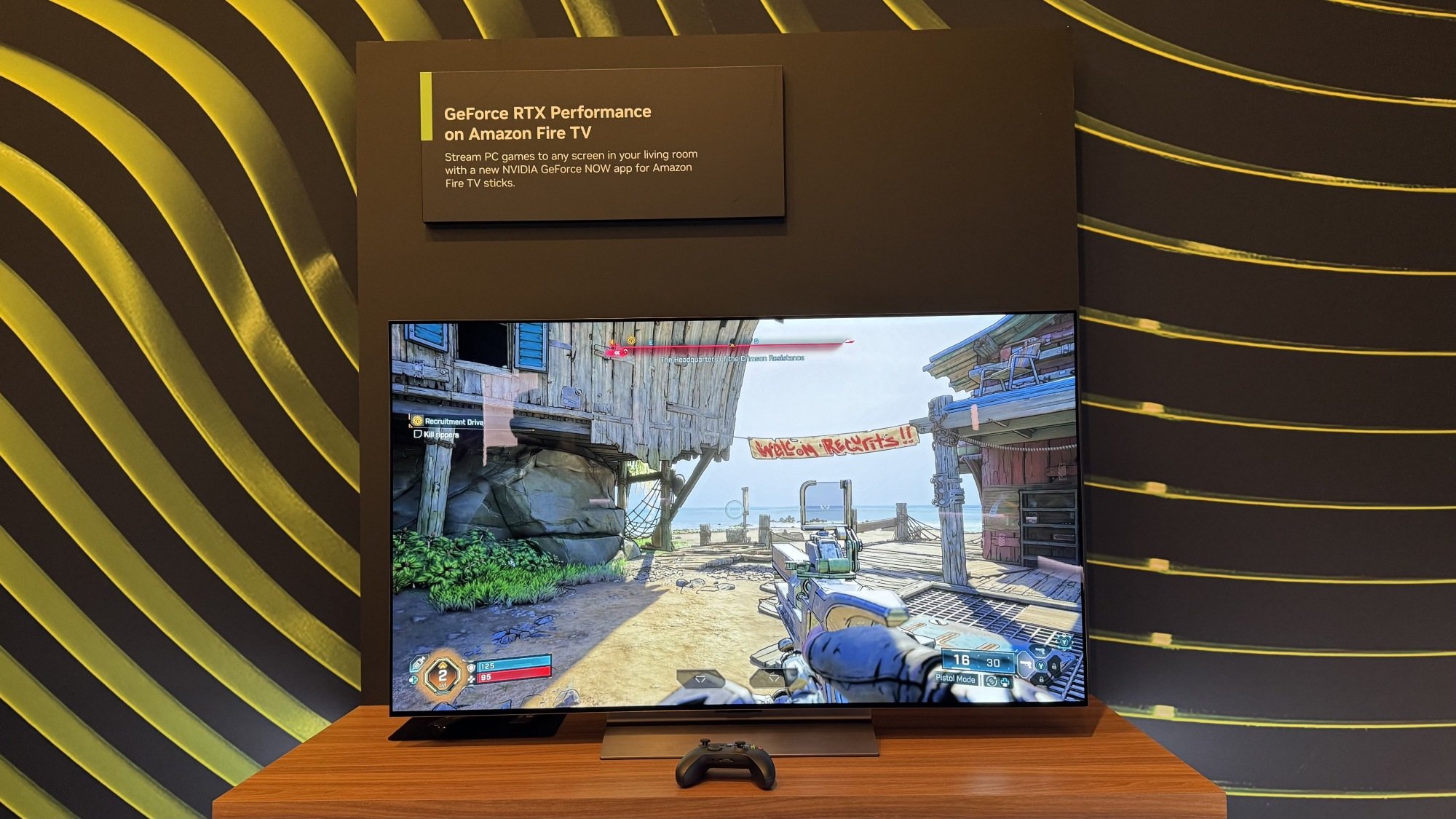
But it’s not all doom-and-gloom for my fellow cheap gamers. Alongside DLSS 4.5, Nvidia also announced a native Linux client for Nvidia GeForce Now, alongside a native Amazon Fire TV app. That extends the cloud gaming platform to even more users, and because GeForce Now has a free tier, it’s a pretty sweet deal. Play it right, say by getting a Fire TV on sale and loading up a free game, and you could game using Nvidia’s latest GPUs on the big screen while spending less than $20. Sure, you might have to deal with some latency and video compression while doing it—as is the tradeoff with cloud gaming—but as DLSS 4.5 shows, even using local hardware comes with its own problems.