CES 2026 Day 2: All of the coolest tech we saw on the show floor during the second day

CES 2026’s second day was all about hands on time with new tech. From Lego’s most ambitious play experiment yet to assistive mobility tech, smart home ideas that actually feel affordable and robots that might one day fold your laundry, here’s what stood out most on January 7.

Lego Smart Play
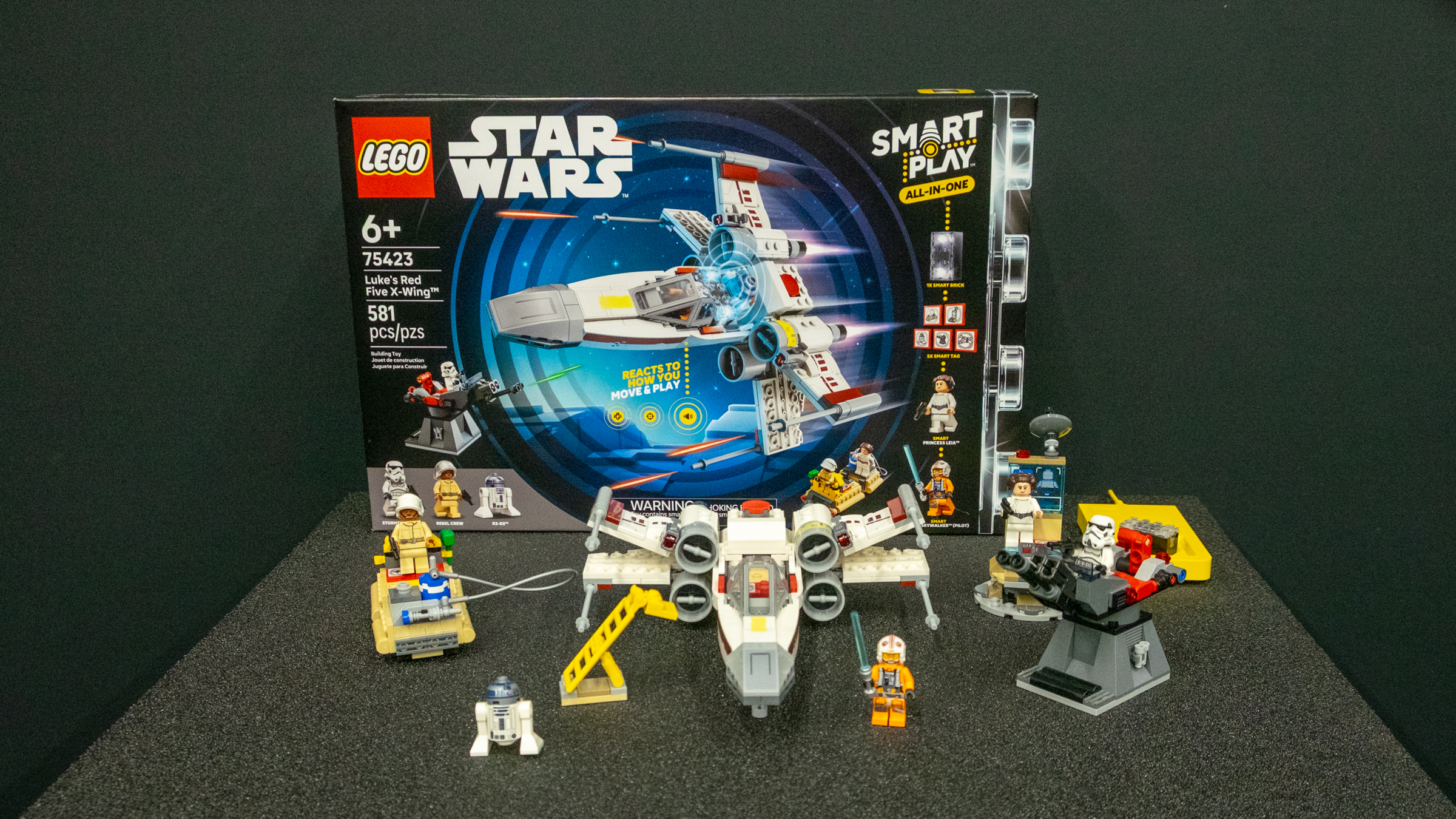
Lego Star Wars Smart Play: Luke's Red Five X-Wing
Lego Star Wars Smart Play: Luke’s Red Five X-Wing
Nathan Ingraham for Engadget

LEGO’s new Smart Play system feels far more compelling in person than it did on stage. The Smart Brick, combined with Smart Tags and Smart Minifigures, responds dynamically to movement, proximity and context, triggering sounds and interactions without screens or apps. Seeing kids physically act out Star Wars battles while the bricks reacted in real time made it clear this is designed first and foremost for active social play, not digital distraction.

WheelMove
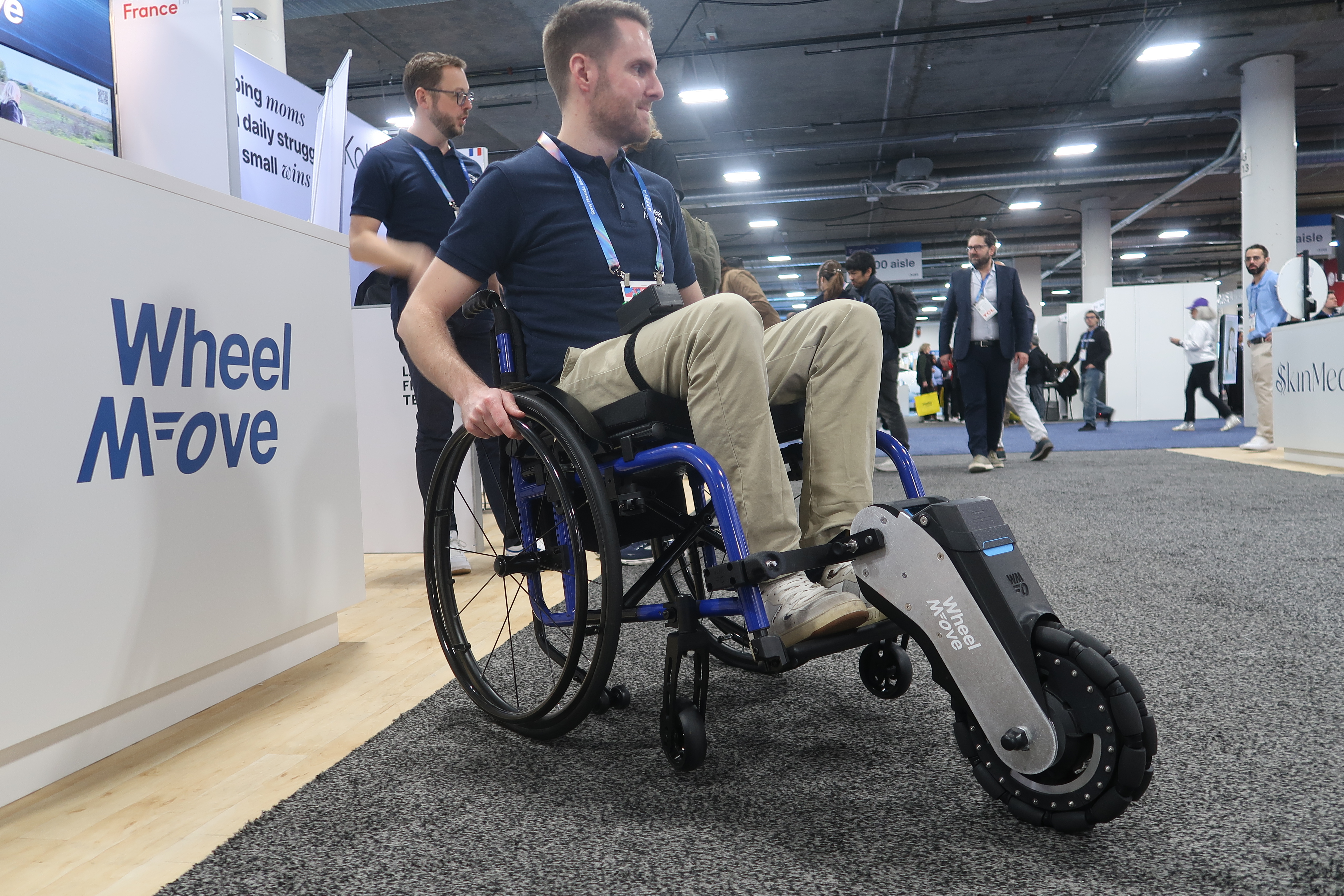
A man sits in a manual wheelchair with an add-on attached that gives it a large central front wheel and raises the casters off the ground
Cheyenne MacDonald for Engadget

WheelMove’s motorized wheelchair attachment is compact, surprisingly quick to install and genuinely empowering in action. The add-on lifts a chair’s front wheels and adds powered assistance, making grass, cobblestones and slopes far easier to navigate. After seeing it demonstrated on uneven surfaces, it’s easy to imagine this opening up spaces that would otherwise be exhausting or inaccessible for manual wheelchair users.

Throne

Image of the Throne Toilet Computer perched on the side of a toilet.
Daniel Cooper for Engadget

Throne’s toilet-mounted health tracker is exactly as strange as it sounds, but it’s also thoughtfully designed. Using computer vision to analyze bowel movements and urination, the device aims to establish a personal baseline and flag changes over time, with gut health and GLP-1 users firmly in mind. It’s too early to judge accuracy, but seeing it in person made it feel less gimmicky and more like a niche wellness tool worth testing.

IKEA smart home gear
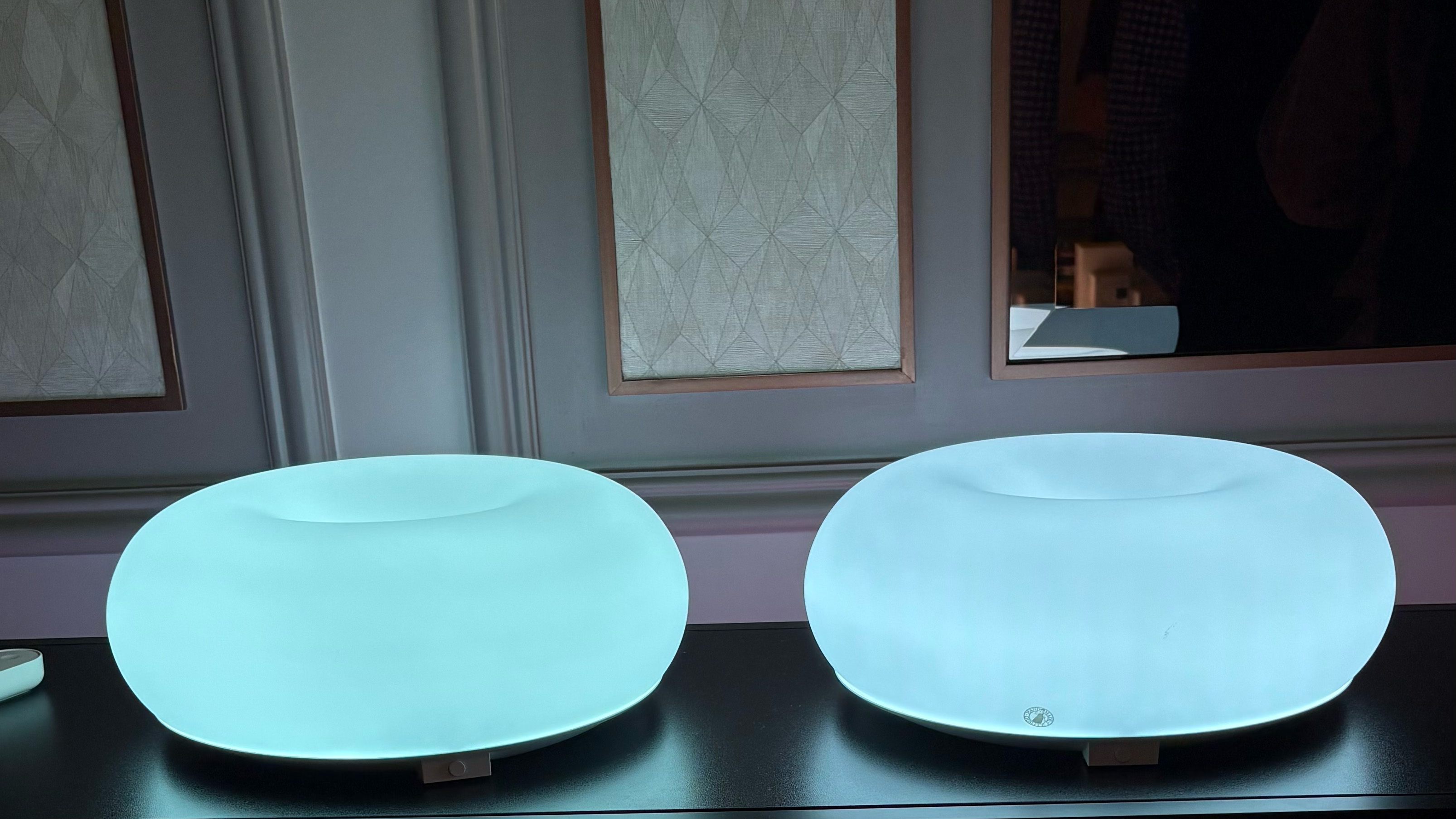
The popular VARMBLIXT donut lamp is now smart.
Amy Skorheim for Engadget

IKEA’s first CES appearance leaned heavily into what it does best: simple, affordable design. The new Matter-compatible smart home range includes bulbs, plugs, remotes and sensors priced low enough to make smart homes feel accessible again. Standouts like the magnetically mounted BILREA remote and playful TEKLAN lamps showed that IKEA hasn’t sacrificed charm in its push toward interoperability.

SwitchBot
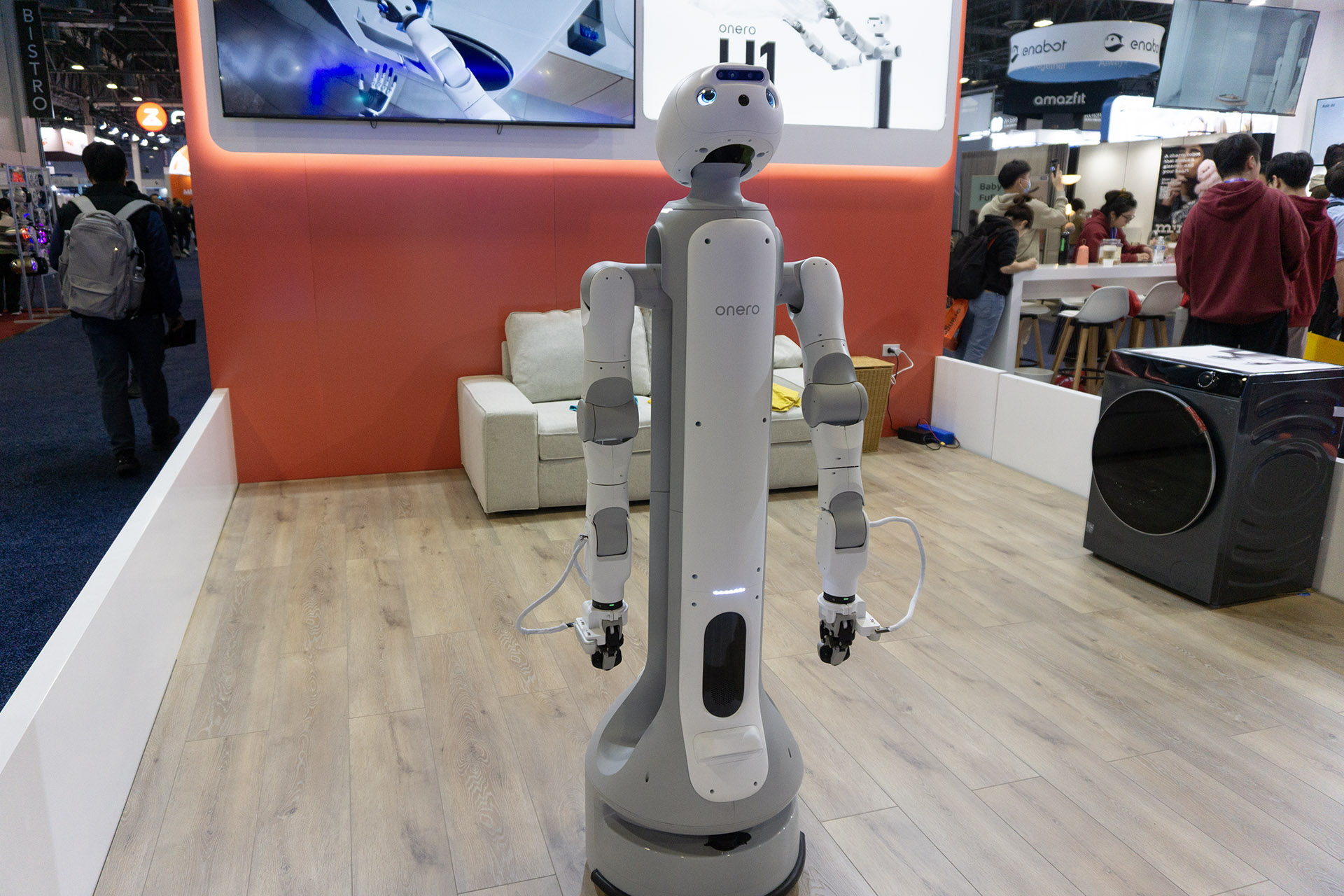
Switchbot's Onero H1.
Switchbot’s Onero H1.
Karissa Bell for Engadget

SwitchBot’s Onero H1 was one of the most intriguing robots on the show floor because it’s meant to ship this year. The wheeled humanoid robot uses articulated arms and onboard AI to perform household chores, like loading a washing machine, albeit at a deliberate pace. Watching it work made the case that speed matters less than reliability when a robot can handle tasks while you’re not home.

Eyebot vision testing
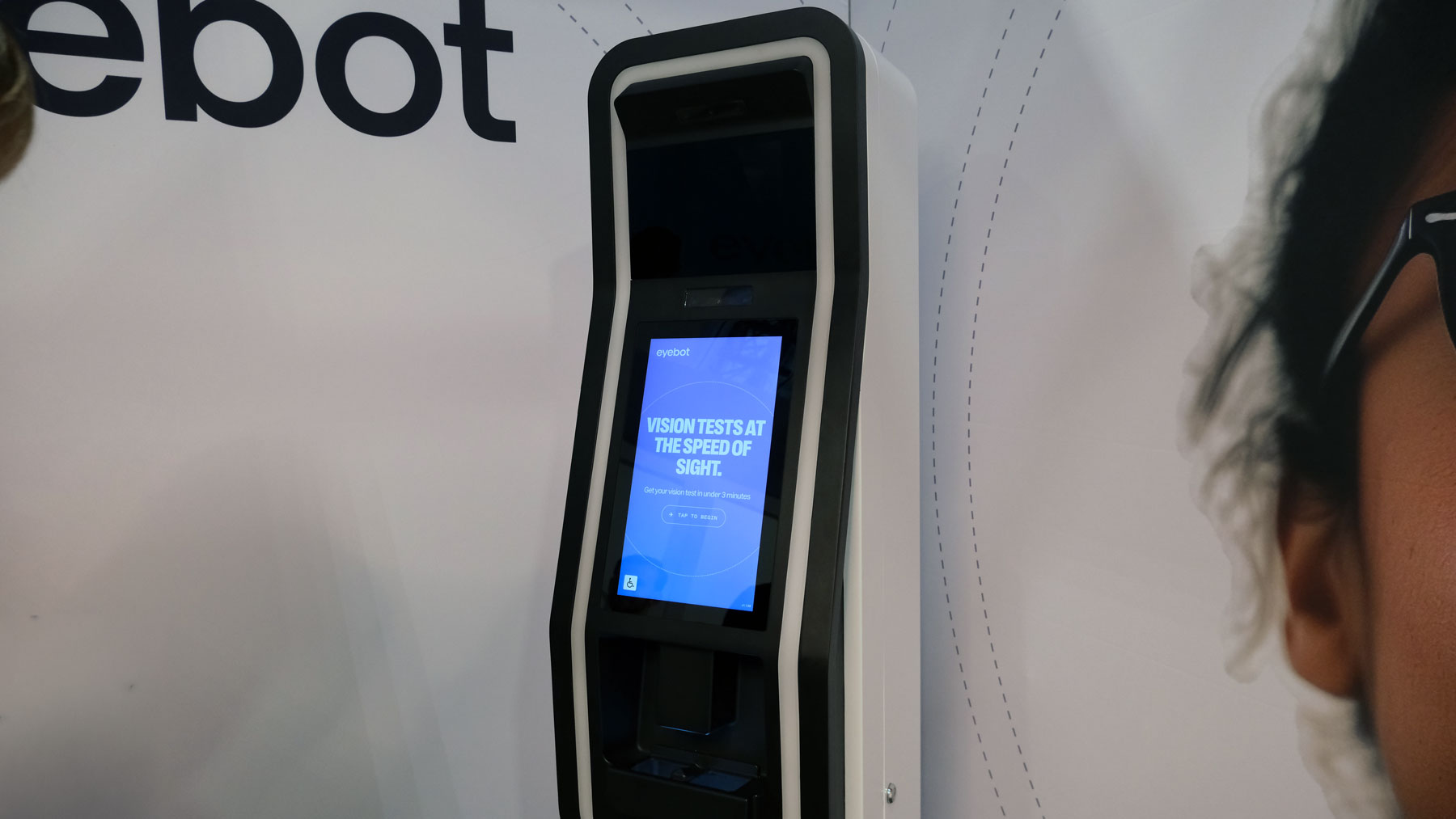
Image of the Eyebot Kiosk
Daniel Cooper for Engadget

Eyebot’s self-service vision testing kiosk turns a 20-minute optometrist visit into a process that takes just a few minutes. The test is guided by a large touchscreen and reviewed remotely by a licensed eye doctor, striking a balance between automation and oversight. After comparing results with a recent traditional exam, the accuracy felt reassuring, even if it doesn’t replace full eye health screenings.

Dephy Sidekick sneakers
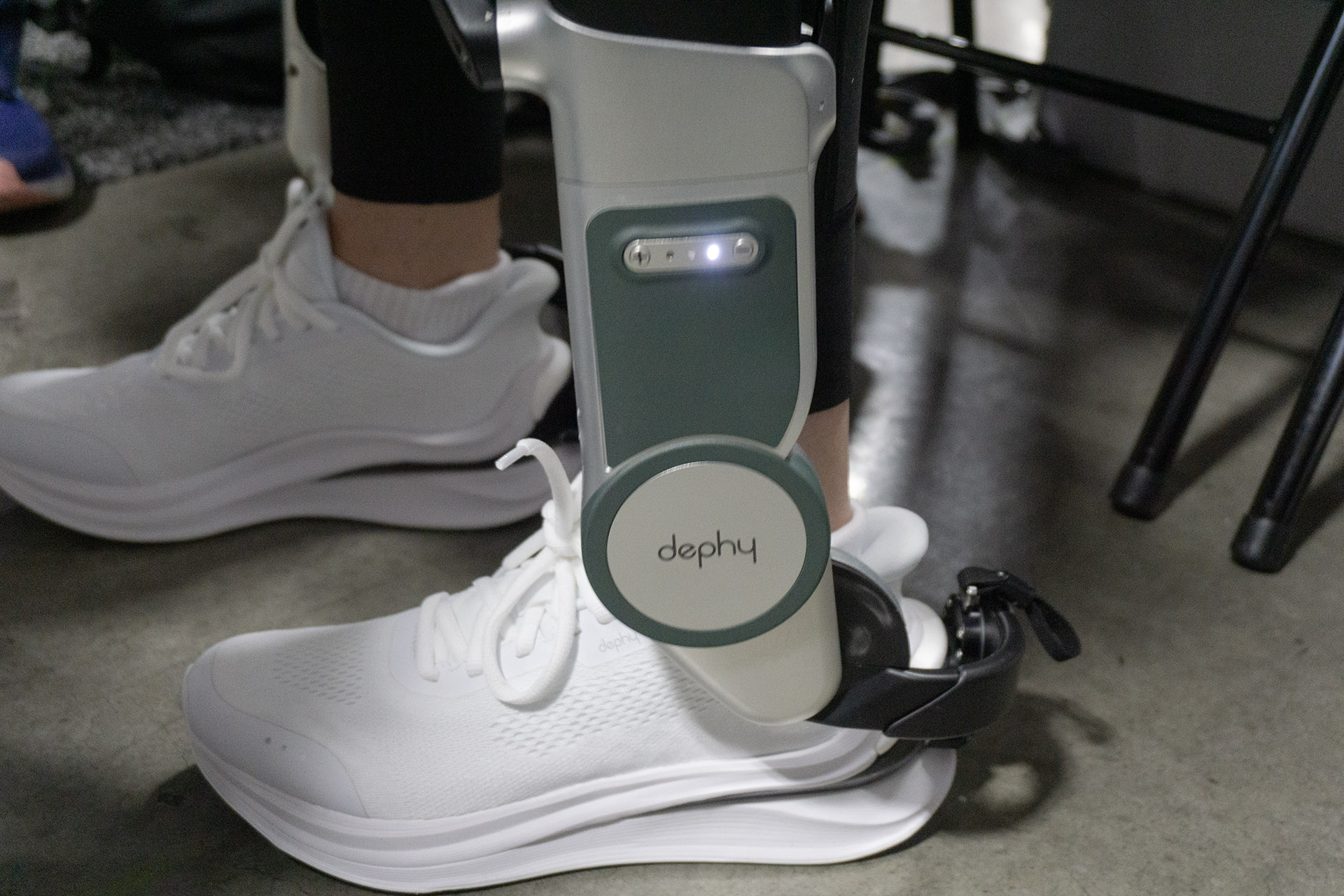
Dephy's Sidekick, which the company describes as "footwear."
Dephy’s Sidekick, which the company describes as “footwear.”
Karissa Bell for Engadget

Dephy’s Sidekick robotic sneakers deliver a subtle but noticeable boost with each step. The ankle-mounted exoskeleton adapts to your gait, and walking with it feels bouncy rather than overpowering, especially at lower assist levels. It’s not for everyone, but after hours on the CES floor, the idea of powered help for people with limited mobility started to make a lot of sense.

Klipsch headphones
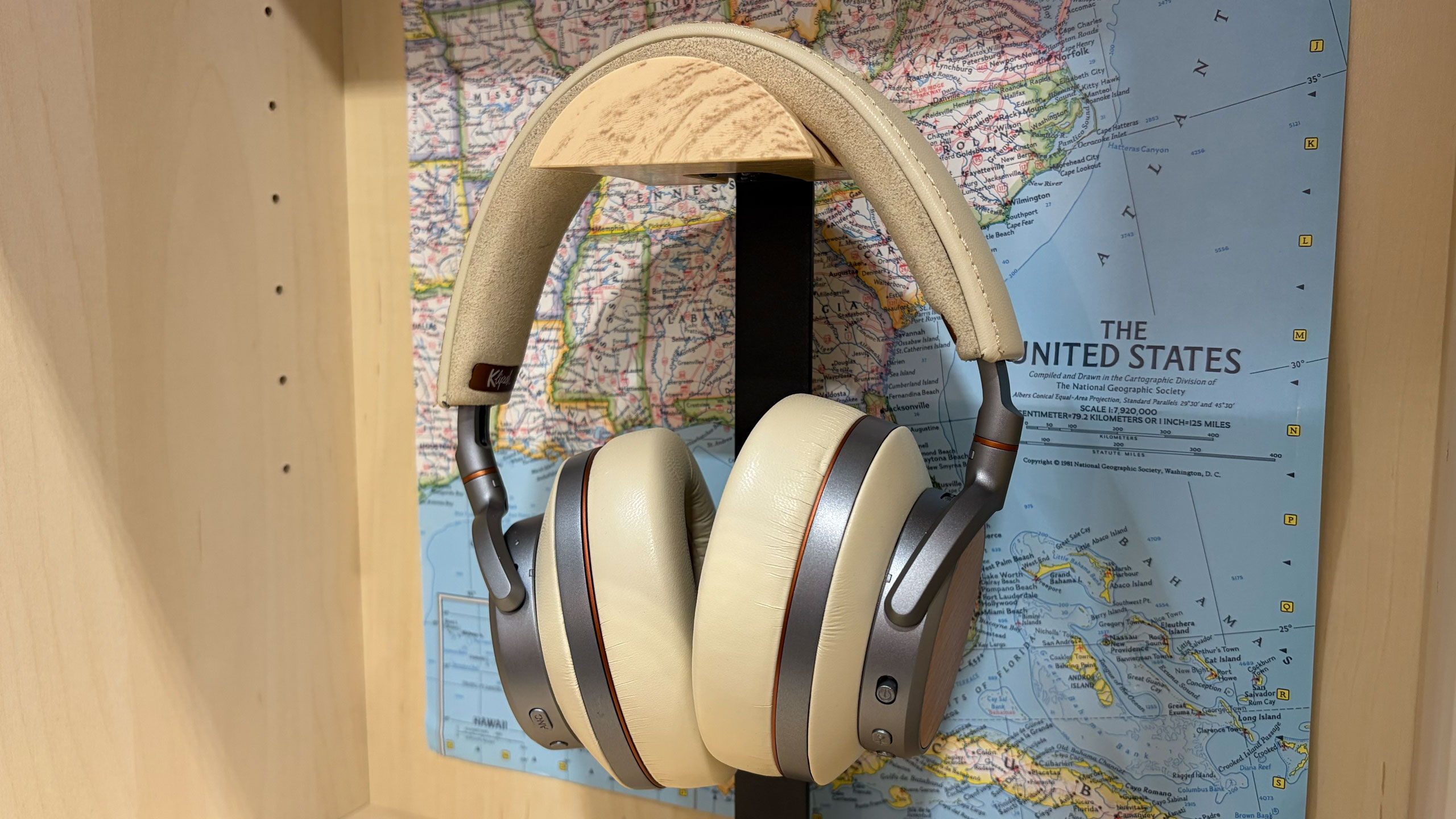
Klipsch Atlas HP-1
Klipsch Atlas HP-1
Billy Steele for Engadget

Klipsch’s return to headphones starts strong with the Atlas HP-1. The wireless ANC model looks premium, borrows familiar design cues and delivers the brand’s warm, balanced sound in early demos. Pricing is still unknown, but based on build quality and audio alone, these feel positioned firmly at the high end.

Clear Drop
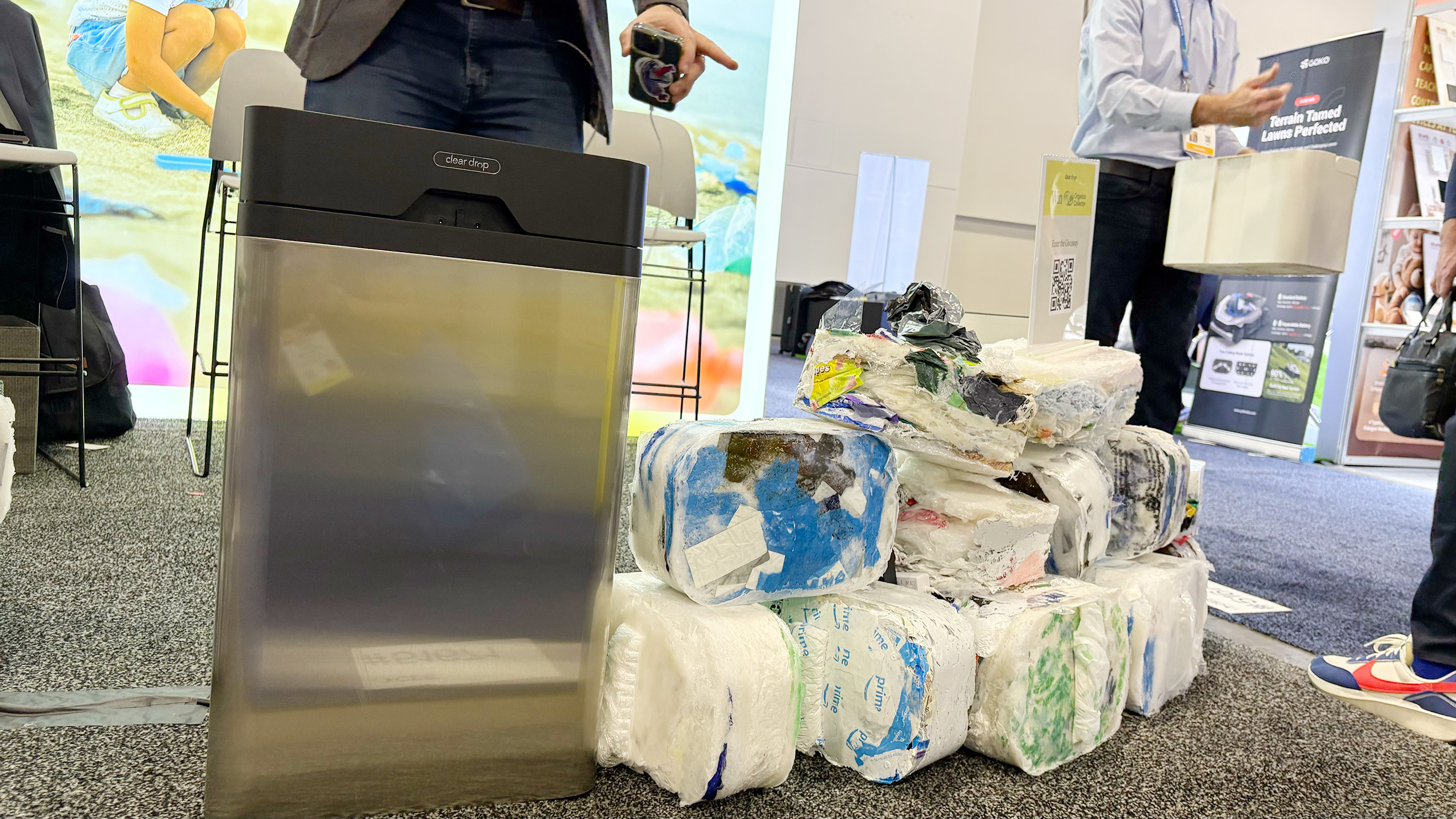
The Clear Drop soft plastics compactor next to a pile of the bricks it produces.
Amy Skorheim for Engadget

Clear Drop’s home plastic compactor tackles a real recycling problem most households face. The machine takes bags and wraps them into dense bricks that can be shipped to partner recycling facilities, and watching it swallow soft plastics was oddly satisfying. It’s expensive and not perfect, but it’s one of the more practical attempts at dealing with waste outside municipal systems.

Nosh cooking robot
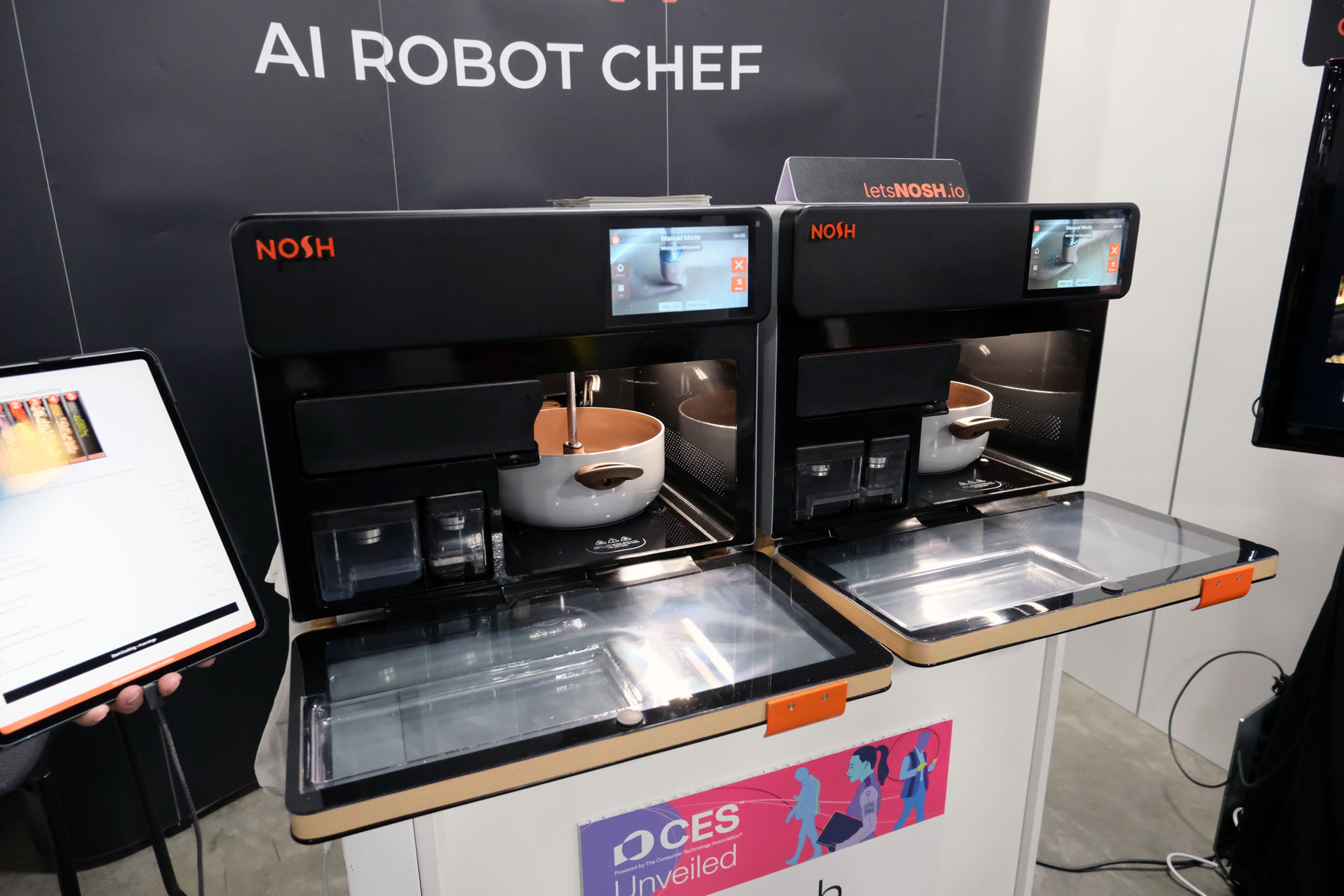
Nosh
Nosh
Daniel Cooper for Engadget

Nosh is an AI cooking robot designed for low-effort, sauce-heavy meals like soups, curries and pasta. Multiple ingredient trays allow you to prep meals ahead of time, then slide them in when you’re ready to eat. It’s not replacing real cooking anytime soon, but as an alternative to microwaved meals, it’s more appealing than expected.

Day two leaned heavily toward tech you could physically interact with, whether that meant flying Lego ships through the air, watching a robot load laundry or testing a vision exam in a kiosk. With more show-floor time still ahead, we’ll be back with additional hands-ons, impressions and daily recaps as CES 2026 continues.

This article originally appeared on Engadget at https://www.engadget.com/big-tech/ces-2026-day-2-all-of-the-coolest-tech-we-saw-on-the-show-floor-during-the-second-day-134608348.html?src=rss

The weirdest tech we’ve seen at CES 2026 so far

CES is famous for ushering in big TVs, faster chips and serious upgrades to the tech we already use every day. It’s also where companies feel emboldened to ask some very strange questions, like whether your toilet should analyze your poop or your nails should change color on command. From experimental laptops to health tech that probably didn’t need a camera, these are the weirdest gadgets we spotted at CES 2026.

Throne toilet computer

Image of the Throne Toilet Computer perched on the side of a toilet.
The Throne device perched on the side of a toilet.
Daniel Cooper for Engadget

Throne is a toilet-mounted computer that uses cameras and microphones to analyze your bowel movements, which is a sentence we did not expect to type this week. Designed to establish a personal “baseline” for your bathroom habits, it aims to flag changes that could indicate digestive or metabolic issues, including for people on GLP-1 drugs. We can’t speak to its effectiveness yet… but if knowledge is power, this thing might know way too much.

Vivoo Hygienic FlowPad smart menstrual pad

Image of Vivoo's FlowPad
Vivoo’s FlowPad
Vivoo

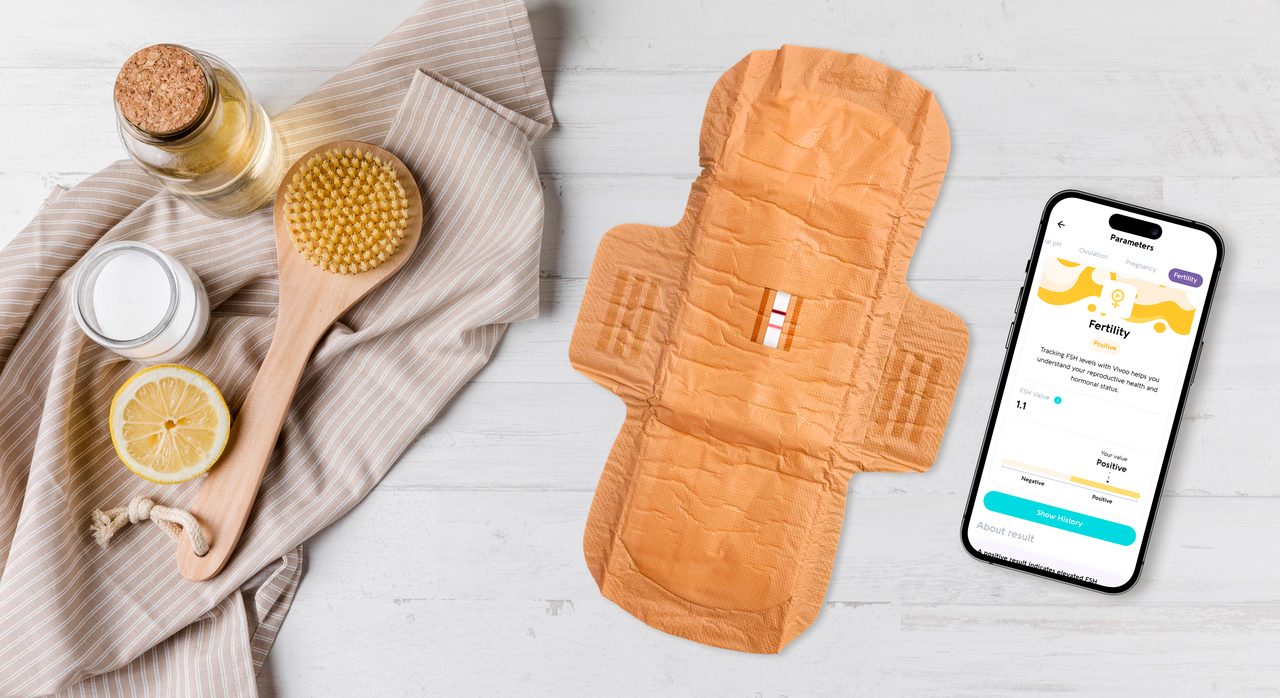
Vivoo looked at at-home health tracking and decided the bathroom was still underutilized. Alongside its clip-on smart toilet that analyzes your hydration by literally monitoring your pee, the company also unveiled a menstrual pad infused with microfluidics that can track fertility and hormone markers once you scan it with your phone. It’s a bold reminder that CES 2026 is fully committed to quantifying everything — even the stuff we’d rather not discuss over brunch.

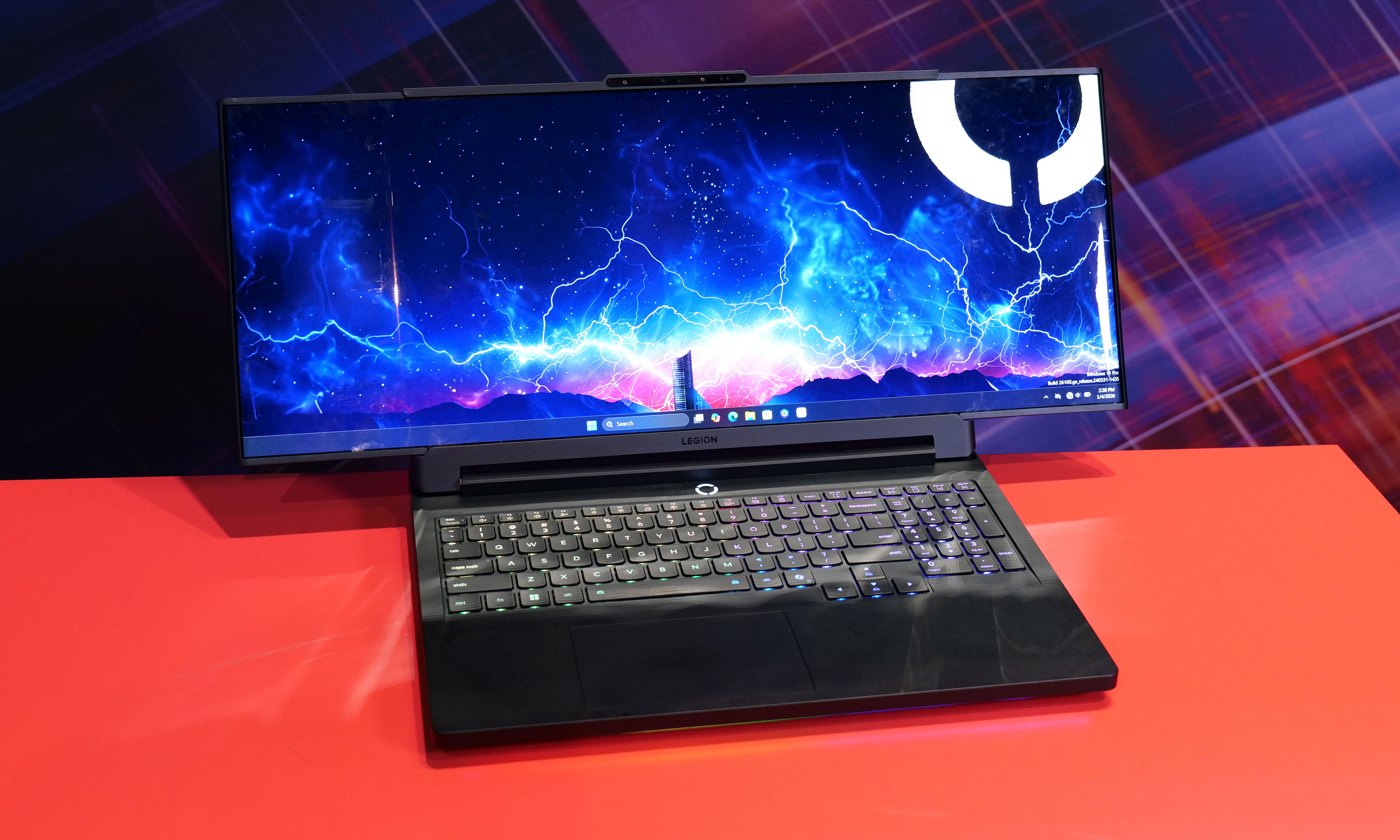
Lenovo Legion Pro Rollable

While it normally has a 16-inch display, the Lenovo Legion Pro Rollable concept's screen can expand up to 23.8 inches across.
While it normally has a 16-inch display, the Lenovo Legion Pro Rollable concept’s screen can expand up to 23.8 inches across.
Sam Rutherford for Engadget

Lenovo’s Legion Pro Rollable is what happens when a gaming laptop decides it wants to be a widescreen monitor mid-match. Its 16-inch display can physically expand sideways into ultra-wide formats, turning flight sims and racing games into full cockpit experiences at the press of a couple of keys. It’s impractical, faintly ridiculous and absolutely the kind of CES concept we hope survives long enough to escape the demo floor.

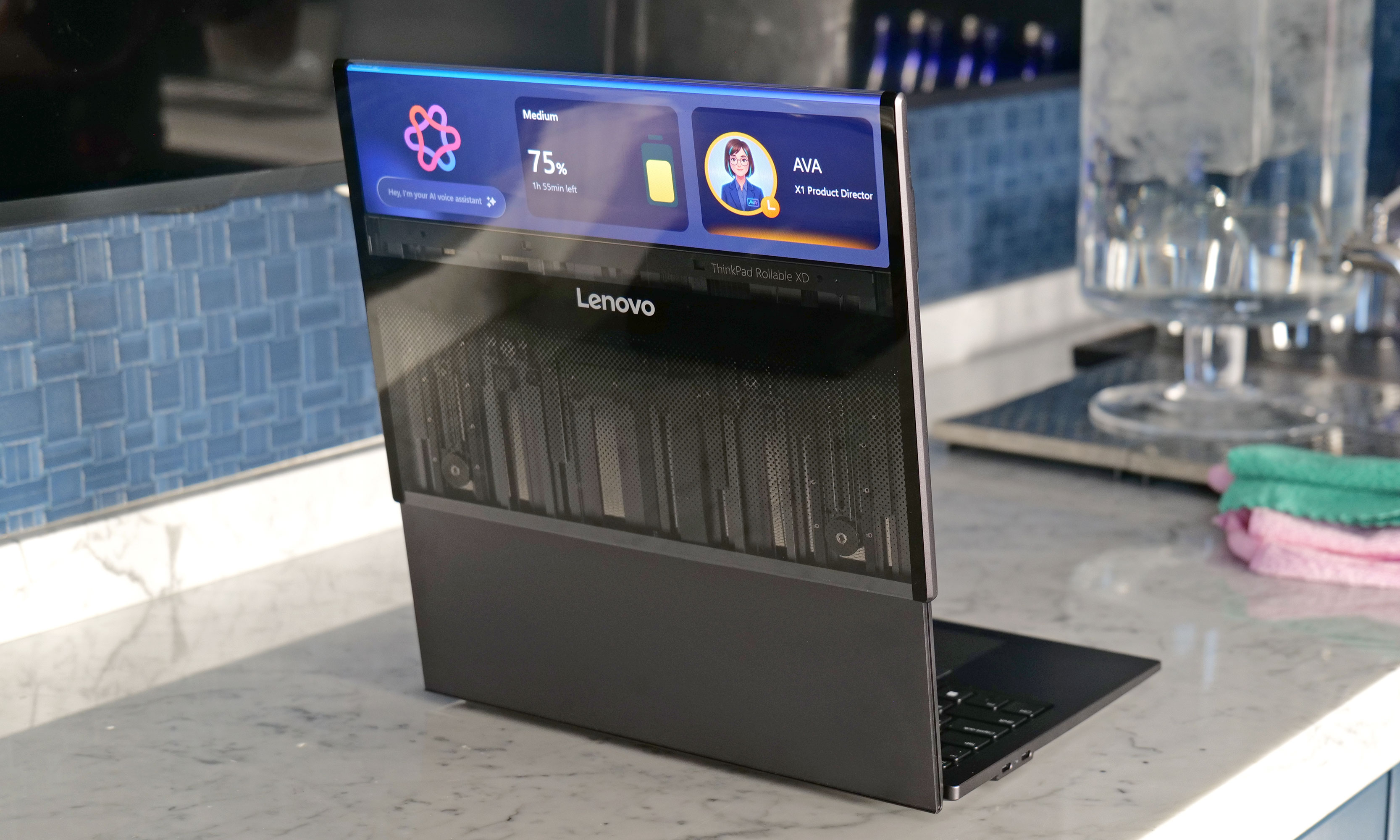
Lenovo ThinkBook XD Rollable

With its XD Rollable concept, Lenovo took the Thinkbook Plus Gen 6's basic design and made it even more futuristic by allowing its flexible display to wrap around onto its lid.
With its XD Rollable concept, Lenovo took the Thinkbook Plus Gen 6’s basic design and made it even more futuristic by allowing its flexible display to wrap around onto its lid.
Sam Rutherford for Engadget

If the Legion Pro Rollable is excessive, the ThinkBook XD Rollable is philosophically confusing. Its flexible display doesn’t just grow taller, it wraps over the lid to create a “world-facing” screen for people sitting across from you, which feels either futuristic or deeply unnecessary depending on your mood and situation (maybe this is the perfect device for hotel check-ins and other points of sale?). Still, it’s a gorgeous piece of hardware theater and proof Lenovo is determined to roll screens onto every surface it can reach.

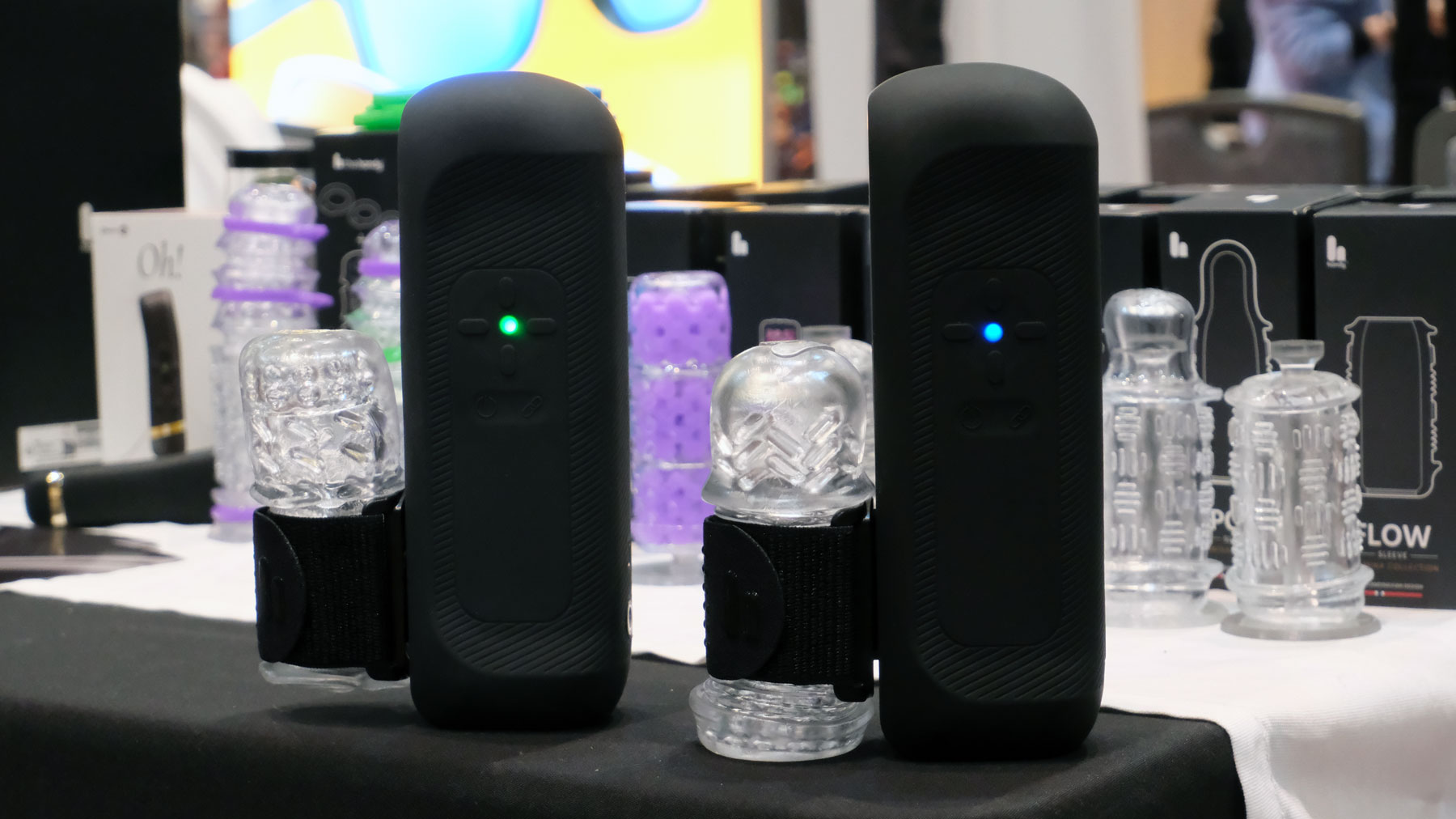
OhDoki Handy 2 Pro

Image of The Handy 2 and Handy 2 Pro
Daniel Cooper for Engadget

OhDoki’s Handy 2 Pro arrived at CES with one clear message: more power, fewer limits and absolutely no chill. The upgraded sex toy model cranks battery life up to five hours and unlocks a Turbo mode so aggressive it was described as “overclocked,” which is not a term we expected to hear in this category. It can also charge your phone, because apparently even pleasure tech needs to justify itself with productivity.

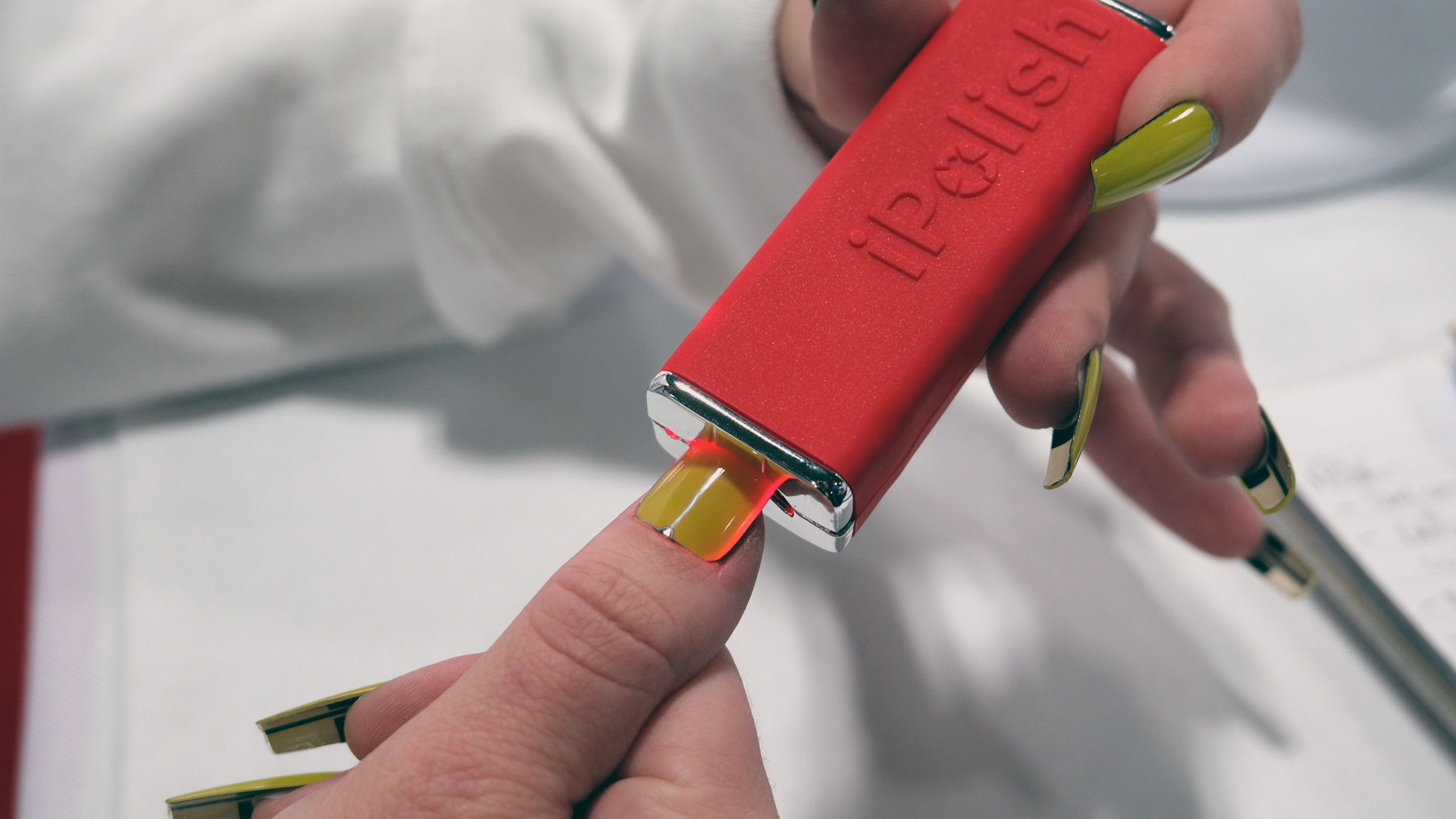
iPolish

iPolish
iPolish
Daniel Cooper for Engadget

iPolish finally made Total Recall nail tech real, minus the dystopia and Schwarzenegger. These press-on acrylic nails use an electric charge to switch between hundreds of colors in seconds, letting you change your manicure as often as your outfit. It’s delightfully impractical, surprisingly affordable and the most convincing argument yet for treating your nails like a customizable display.

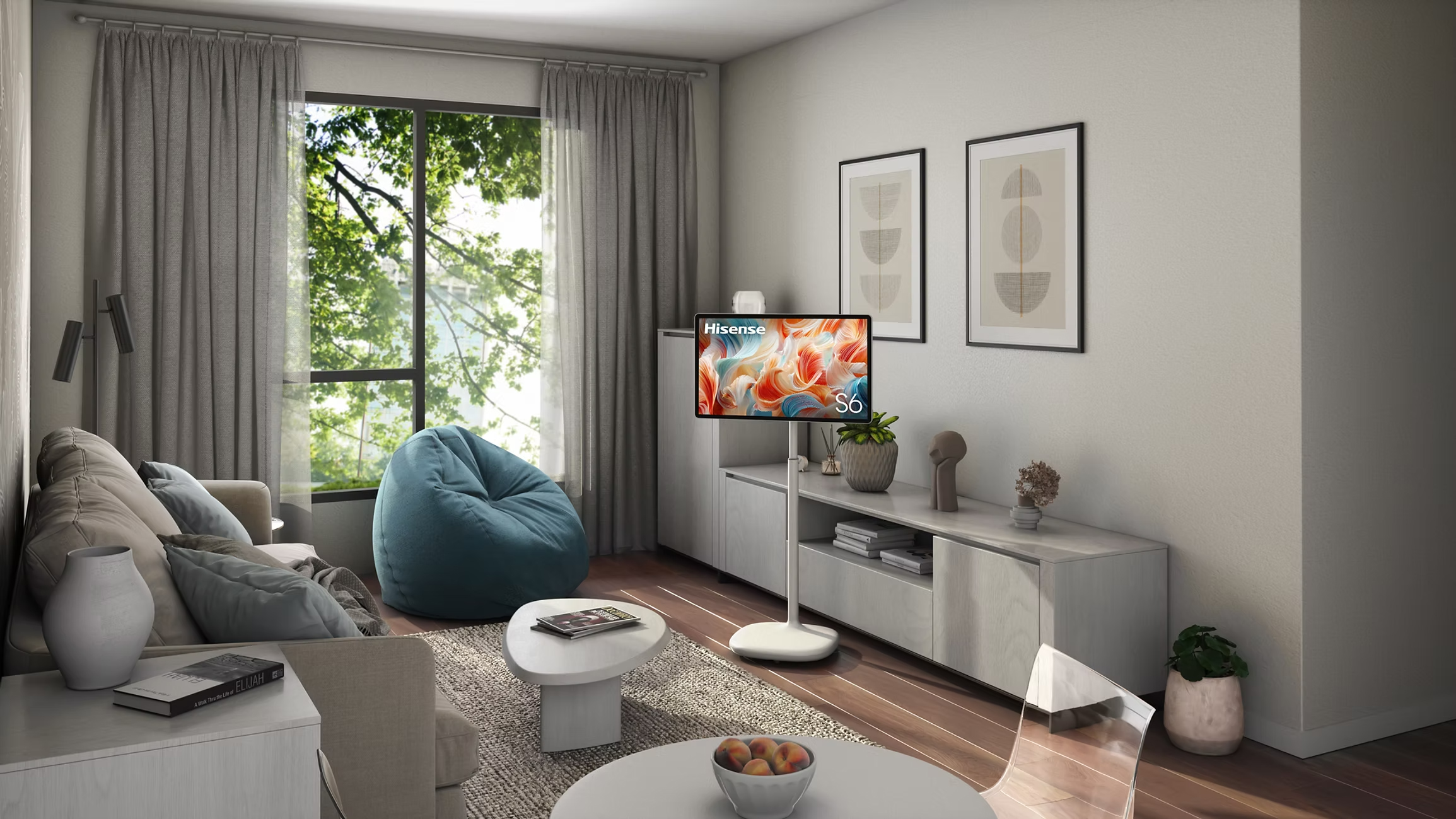
Hisense S6 FollowMe display

Hisense S6 FollowMe display
Hisense

Hisense’s FollowMe display is a screen that physically follows you around the room — which no one really asked for, but CES happily delivered anyway. Designed to reposition itself automatically so content stays in view, it feels like the logical endpoint of smart TVs becoming increasingly clingy. We haven’t seen it in action yet, but the idea of a display that refuses to be ignored is deeply on brand for 2026.

This article originally appeared on Engadget at https://www.engadget.com/the-weirdest-tech-weve-seen-at-ces-2026-so-far-134056504.html?src=rss

Google announces AI Overviews in Gmail search, experimental AI-organized inbox

Gmail made us all rethink how email could work when it debuted more than 20 years ago. Google thinks we’re in the process of another email transformation courtesy of AI. The company has unveiled a new round of AI features that will make Gemini an even more integral part of Gmail. The new Gemini experiences are coming to paying subscribers starting today, and a collection of previously premium-only AI features are rolling out widely.

AI Overviews first appeared in Gmail last year to summarize email chains, and now it’s expanding to Gmail search. This is closer to the AI Overview experience to which you are accustomed in Google’s web search. You can enter a natural language search, and the robot churns through your messages to generate a response.

Gmail AI Overview

In the example above, the user looks up a past plumbing quote. Traditionally, Gmail would show emails that are likely matches for your search. With AI Overview, you instead get a nicely formatted AI answer that includes all the relevant information and cites the email. That sounds all well and good, assuming it works. AI Overviews in search is notoriously inaccurate when summarizing search results, but grounding it in your email could make it less likely to screw up. Maybe.

Read full article

Comments

Volvo’s EX60 electric crossover promises 400 miles of EPA range

Ahead of a launch later this month, Volvo has teased some impressive details about its upcoming electric crossover. The EX60, which slots between the EX40 and EX90, will offer an EPA range of 400 miles, beating all other Volvos and most EVs in general. It will also be the first Volvo car to use a megacasting process designed to reduce weight and boost manufacturing efficiency. 

“With our new electric vehicle architecture, we directly address the main worries that customers have when considering a switch to a fully electric car,” said Volvo CTO Anders Bell. “The result is class-leading range and fast charging speeds, marking the end of range anxiety.” 

Volvo EX60 Electric crossover
Volvo

Volvo considered that main worry to be range anxiety, so it focused on maximizing endurance to the largest extent possible. Key to that is Volvo’s advanced SPA3 EV architecture, which integrates the battery directly into the structure of the car with cell-to-body technology. Volvo also developed its e-motors in-house to improve efficiency and reduce weight. 

The company also made the EX60 fast to charge with an 800-volt electrical system and support for up to 400kW fast charging, letting you add up to 168 miles of range in just 10 minutes. New lighter materials and lower heat generation aid in that, “meaning the EX60 can add over 100 miles or range in just a few minutes,” Volvo wrote on its blog. 

Volvo EX60 Electric crossover
Volvo

The megacasting, meanwhile, helped Volvo replace hundreds of smaller parts with a single, high-precision casting to reduce weight. The Volvo EX60 will be revealed on January 21, 2026 at a livestream on Volvo’s website. 

This article originally appeared on Engadget at https://www.engadget.com/transportation/evs/volvos-ex60-electric-crossover-promises-400-miles-of-epa-range-130008964.html?src=rss

The gaming monitors that caught our eye at CES 2026

CES is about many things, but primarily it’s about screens. TVs and laptops get the most attention, but you’ll find all kinds of new PC monitors, too. At CES 2026, several companies are using the trade show as an opportunity to update their gaming monitor lineups. This year expanding what OLED panels can do in terms of refresh rates, brightness and color production is the big focus, but there’s some more unusual options, too, like a glasses-free 3D monitor. The collection below are some of our favorite gaming monitors that have already been announced: 

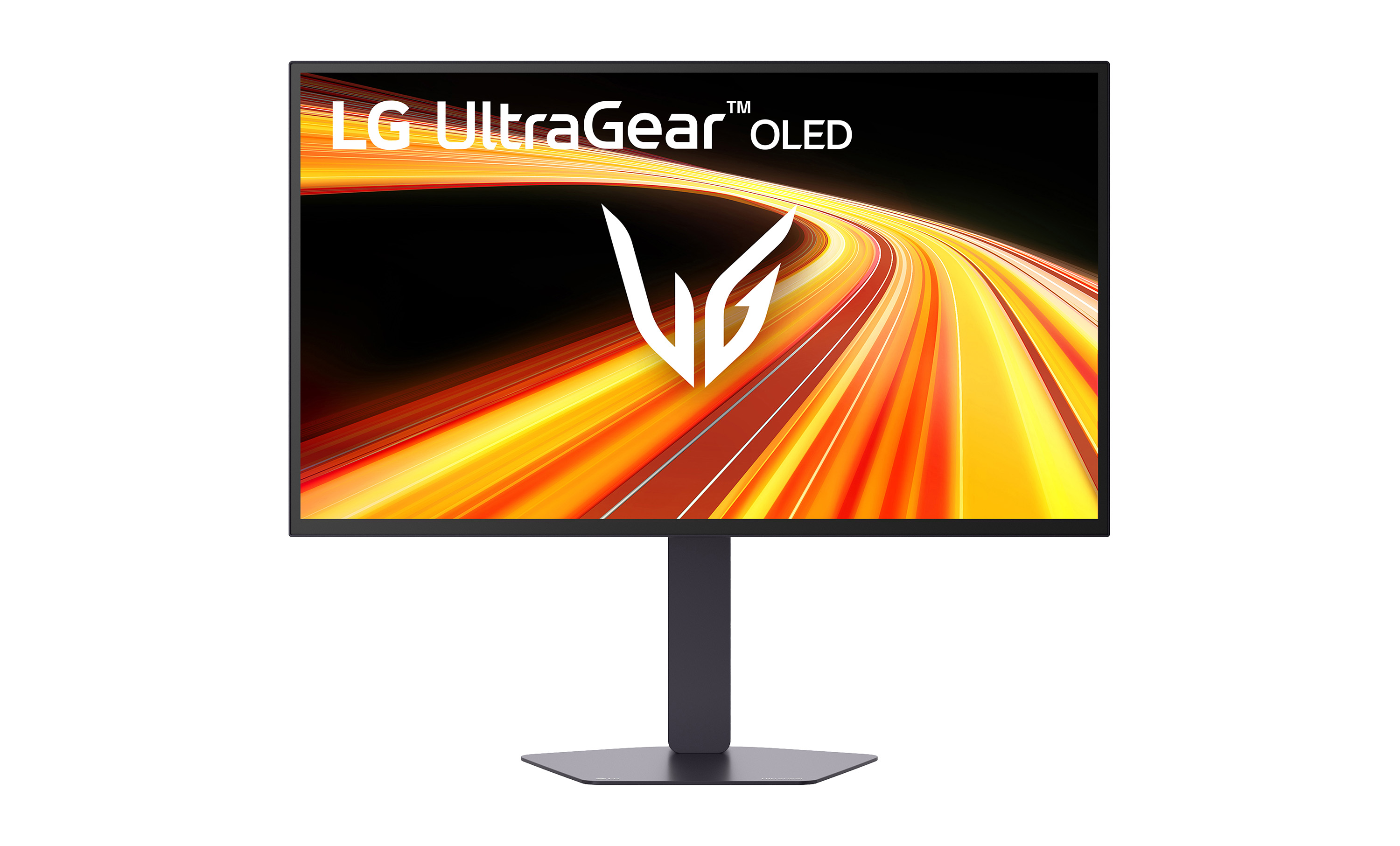
LG UltraGear GX7

LG's new UltraGear OLED monitor on a white background.
LG’s latest QHD OLED gaming monitor is its brightest to date
LG

The LG UltraGear GX7 is the fastest and brightest gaming monitor LG has offered so far and a gaming-focused showcase for LG Display’s 4th-gen RGB Tandem 2.0 OLED technology. The new display tech splits up the yellow layer of the company’s 3rd-gen OLED tech into distinct red and green layers that, when stacked with blue layers, create brighter, more energy-efficient screens.

In the case of the UltraGear GX7, the new 27-inch monitor reaches a typical brightness of 335 nits, and is VES DisplayHDR True Black 500 certified, for deeper contrast between the dark and bright parts of the screen. LG touts the display’s Dual Mode, which lets discerning gamers switch between two distinct settings: a 540Hz refresh rate mode at QHD resolution, when image quality is what you care about most, or a 720Hz refresh rate mode at HD resolution, when speed is your priority.

Whichever mode you choose, LG promises the monitor will offer a smooth and stutter free experience. It has a 0.02ms response time and supports both NVIDIA G-Sync and AMD FreeSYNC Premium Pro, so you should be set, regardless of what your computer’s specialty is. For $1,000, the LG UltraGear GX7 seems like a high watermark for OLED gaming monitors.

Samsung Odyssey 3D and Odyssey OLED G8

A motorcycle bursting out a of a Samsung Odyssey 3D monitor.

Samsung’s new Odyssey 3D monitor is the “world’s first 6K display with glasses-free 3D,” with a 6,144 x 3,456 resolution, and the ability to take games “beyond 2D” by tracking the position of your eyes, and enhancing terrain, distance and object separation. Even if you’re not interested in playing formerly 2D games like Lies of P: Overture with an added sense of depth, a 32-inch LCD screen with a 165Hz refresh rate that’s capable of being boosted to 330Hz through Samsung’s Dual Mode is nothing to sneeze at, especially with a 1ms response time.

On top of its big 3D monitor, Samsung is also pushing its own updated OLED tech at CES. The company’s new 32-inch Odyssey OLED G8 uses a 4K QD-OLED panel with a 240Hz refresh rate and a glare-free treatment for added visibility. The monitor has a VESA DisplayHDR True Black 500 certification, but unlike LG’s display, its brightness is capped at 300 nits.

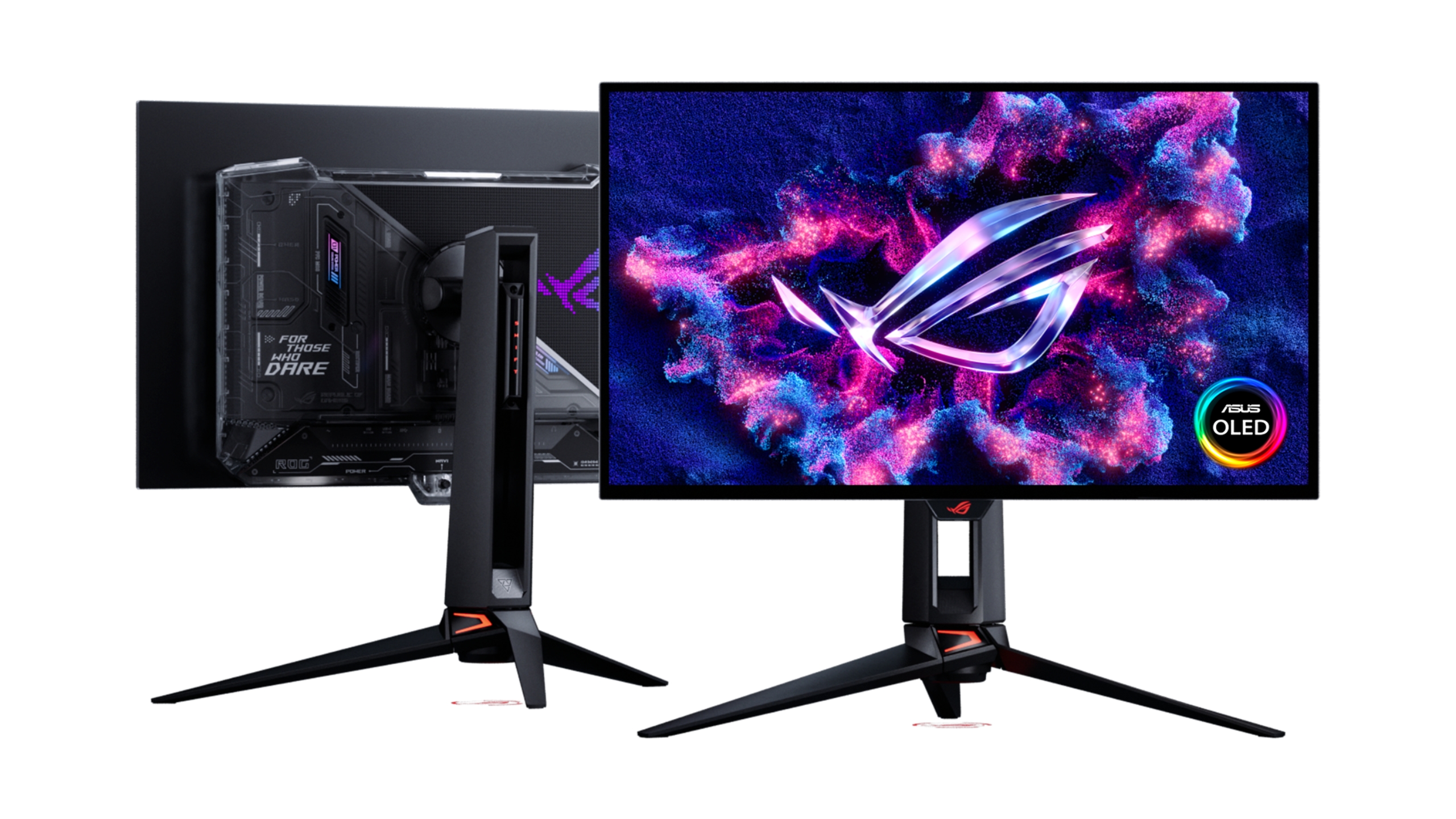
ASUS ROG Swift OLED PG27UCWM and ROG Strix Pulsar XG27AQNGV

The back and front of ASUS' new ROG Swift monitor with a Tandem OLED panel.
The back and front of ASUS’ new ROG Swift monitor with a Tandem OLED panel.
ASUS

While the ASUS ROG Swift OLED PG27UCWM uses a Tandem OLED panel – a panel with two light-emitting layers, like the Ultra XDR Retina display on Apple’s recent iPad Pros – the big change ASUS is focused on at CES 2026 is its new RGB Stripe OLED layout, technology LG helped pioneer. These updated panels use “a full RGB sub-pixel arrangement” to produce sharper text and more accurate color reproduction when compared to the QD-OLED panels the company has used in the past.

The 27-inch ROG Swift OLED PG27UCWM can be run at 4K with a 240Hz refresh rate or at FHD with a 480Hz refresh rate. The display also has a 0.03ms minimum response time for smooth and clear action, and 99 percent DCI-P3 color gamut coverage for more vibrant and accurate color reproduction. The OLED monitor also includes a “Neo PRoximity Sensor” which automatically turns the screen off when you’re not looking at it, to prevent burn-in.

NVIDIA’s new G-Sync Pulsar tech, which uses variable backlighting to reduce blur, is specifically meant for competitive gamers, and ASUS’ new ROG Strix Pulsar XG27AQNGV monitor is one of the first to support the new tech. The monitor features a 27-inch, 1440p  panel with a 360Hz refresh rate and “the fastest response time” ASUS has ever achieved in a 1440p LCD display. The monitor also includes DisplayPort, HDMI 2.1 and multiple USB 3.2 Gen 1 Type-A ports for whatever devices you want to connect to it.

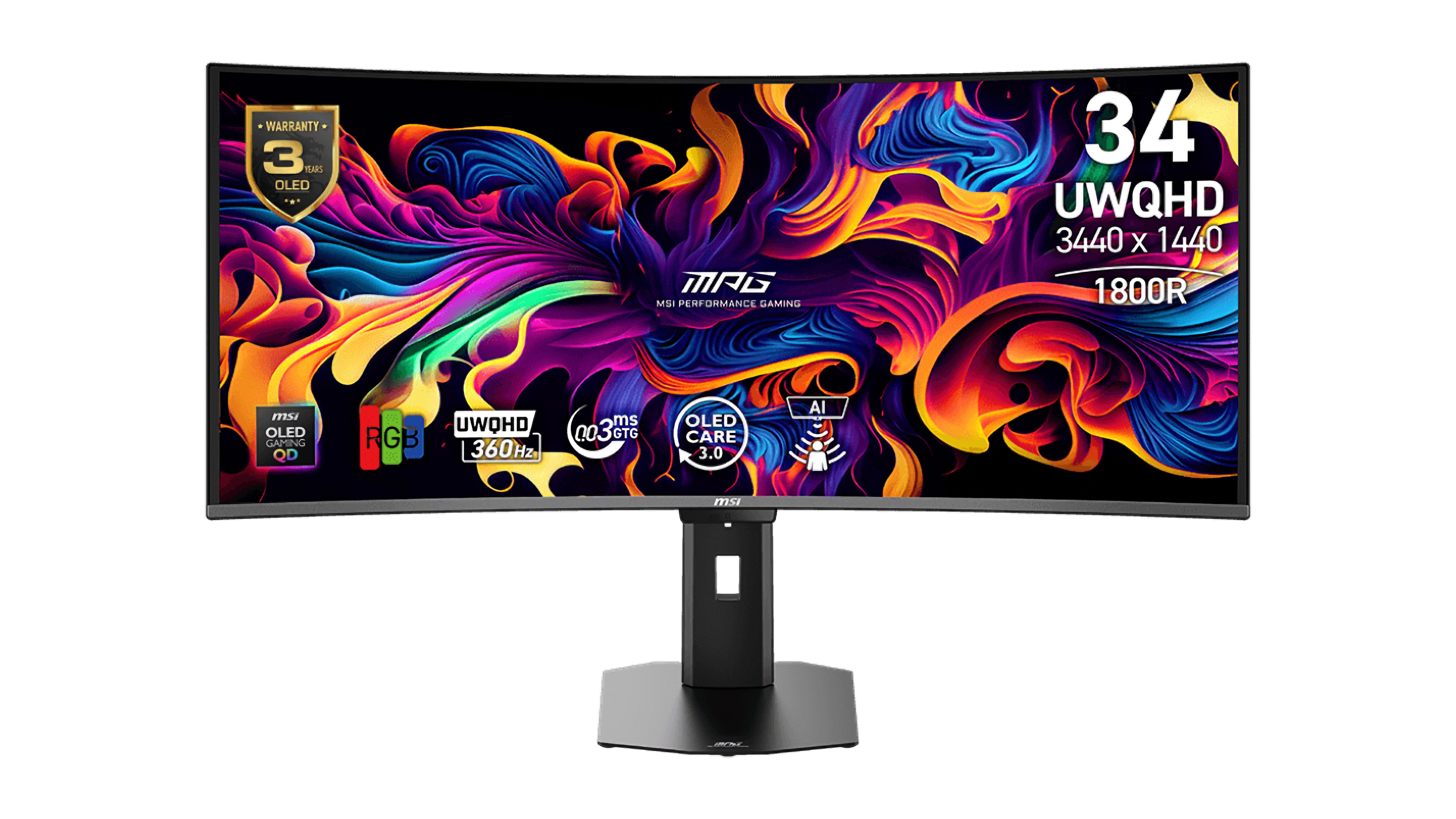
MSI MPG 314CQR QD-OLED X36

MSI's new curved MPG monitor with a QD-OLED panel.
MSI’s new curved MPG monitor with a QD-OLED panel.
MSI

The star monitor of MSI’s new products at CES 2026 is the wordily titled MSI MPG 341CQR QD-OLED X36, a curved, 34-inch ultrawide monitor, with new OLED panel. Like Asus, MSI is mixing different OLED display technologies for better results. This new monitor uses a 5th-gen Tandem QD-OLED panel with an “RGB Stripe sub-pixel layout” for sharper visuals. MSI also applies what it calls “DarkArmor Film” to “enhance light absorption,” eliminate the reddish tint some QD-OLED panels have under ambient light, and boost black levels by “up to 40 percent.”

As an ultrawide, the MPG 341CQR QD-OLED X36 has a resolution of 3,440 x 1,440, an aspect ratio of 21:9 and a refresh rate of 360Hz. MSI says the monitor can reach a peak brightness of 1,300 nits, and the company provides multiple HDR modes to switch between depending on your needs. Similar to ASUS, the monitor also includes a sensor for detecting whether a human is in front of the screen – MSI calls it an AI Care Sensor – so that the monitor can power-off or enter standby mode when not in active use.

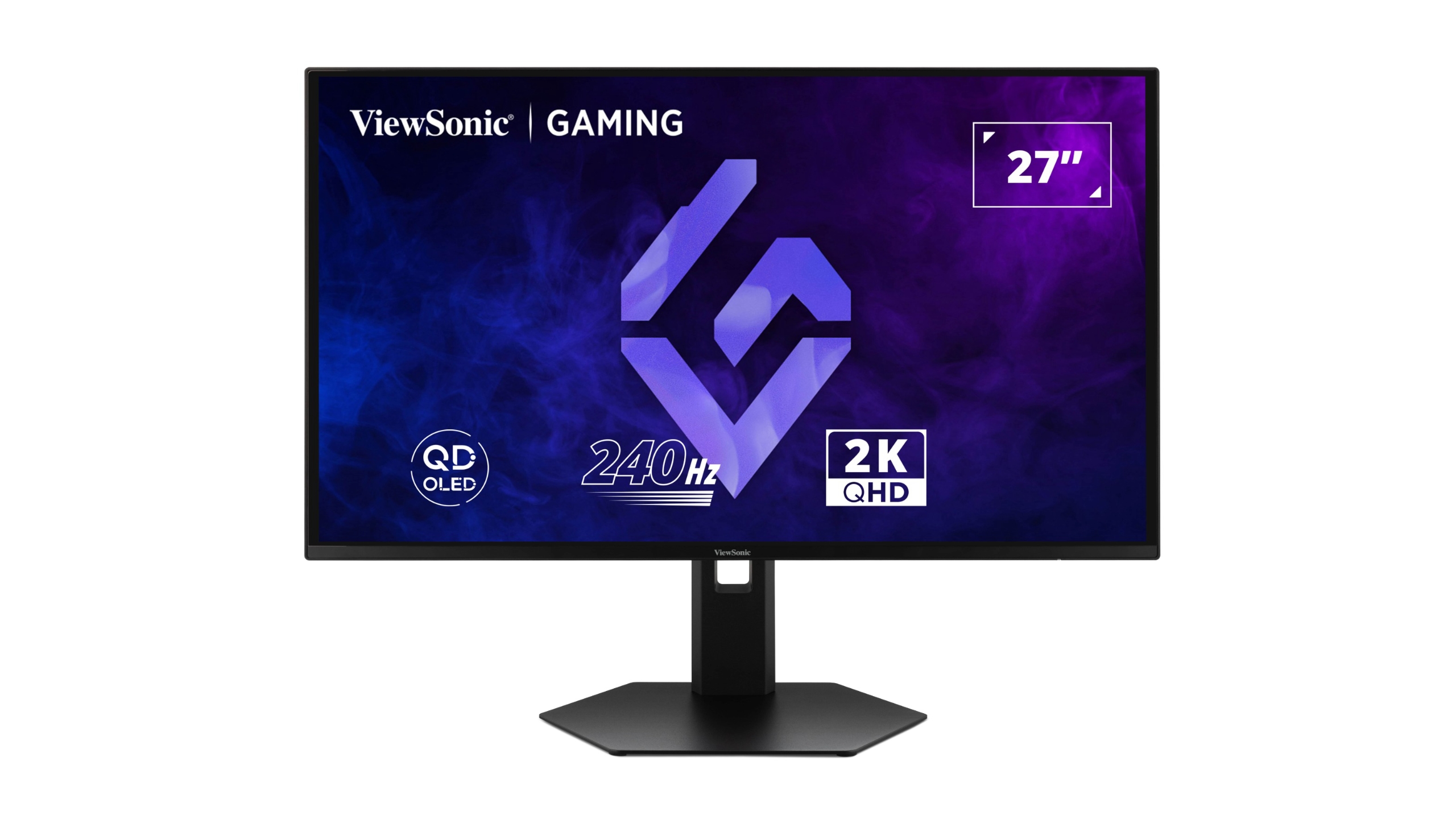
ViewSonic VX2738 2K OLED Gaming Monitor

ViewSonic's new 24-inch OLED monitor.
ViewSonic’s new 24-inch OLED monitor.
ViewSonic

ViewSonic’s new gaming monitors are more approachable and (presumably) more affordable than the options from competitors, but not necessarily less performant. The company top-of-the-line model, the ViewSonic VX2738 2K OLED Gaming Monitor has a 27-inch 2K QHD QD-OLED panel with a 240Hz refresh rate and up to 0.03ms response time.

The monitor supports AMD FreeSync Premium and NVIDIA G-Sync for smoother gameplay. The VX2738 also has the ability to scale down its image via a 24.5-inch “esports mode” for competitive settings. ViewSonic says the monitor will include HDMI 2.1 and DisplayPort 1.4 ports and be available for $500.

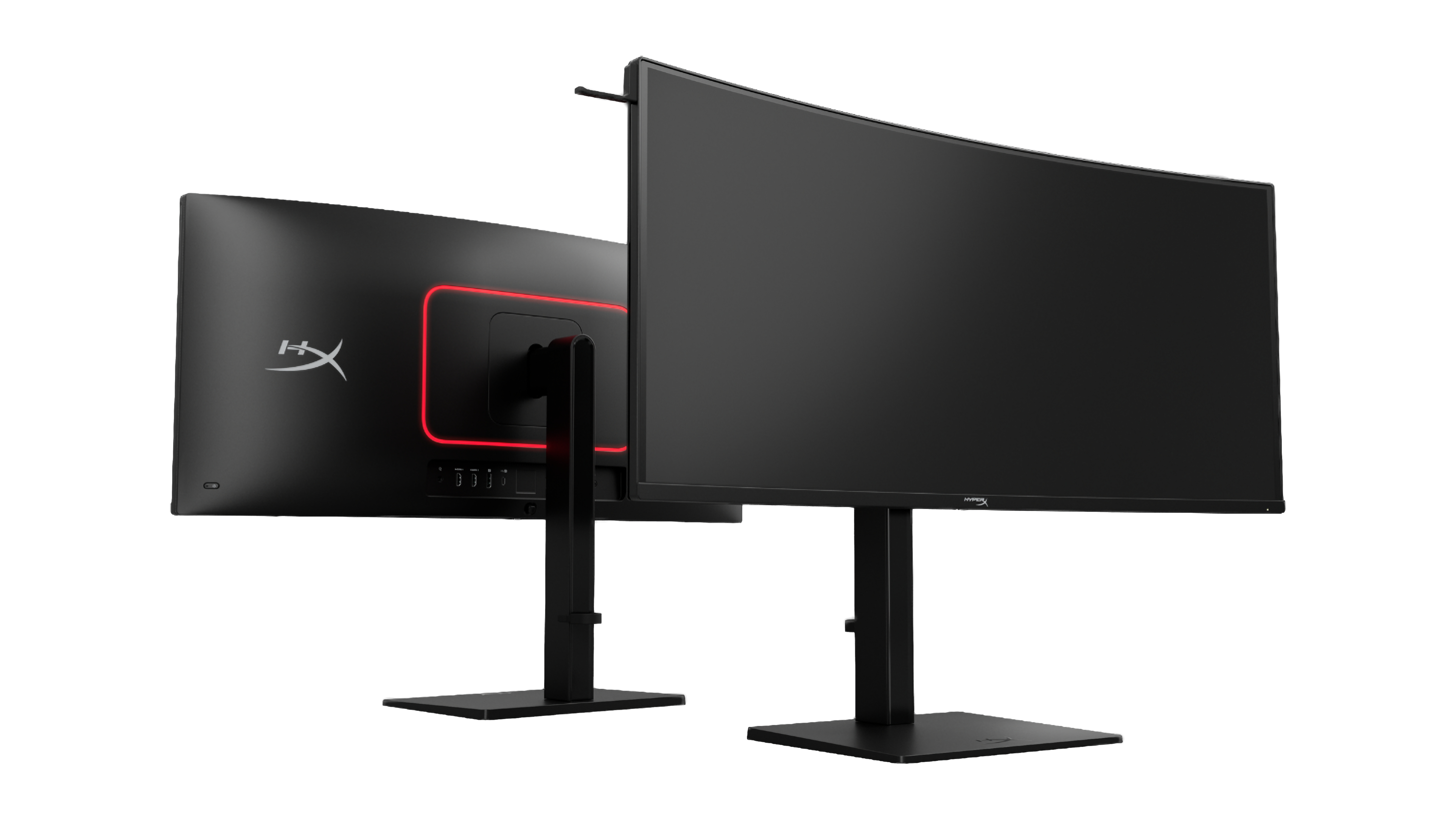
HP HyperX Omen OLED 34

HP's new curved OLED monitor with a headphone hook.
HP’s new curved OLED monitor with a headphone hook.
HP

HP’s newest monitor under its unified HyperX Omen gaming brand is the HyperX Omen OLED 34, a curved 34-inch monitor with a QD-OLED panel. HP says the monitor uses V-stripe QD-OLED tech, which like in MSI and ASUS’ monitors, means sharper text and better color accuracy. The HyperX Omen OLEd 34 has an aspect ratio of 21:9, a 360Hz refresh rate and a 0.03ms response time.

The monitor has 100W USB-C power delivery for whichever laptop you decide to connect to it, and a built-in KVM switch, HP says. Plus, the company is offering a customizable, 3D-printable headphone hook, if you want to store your accessories nearby.

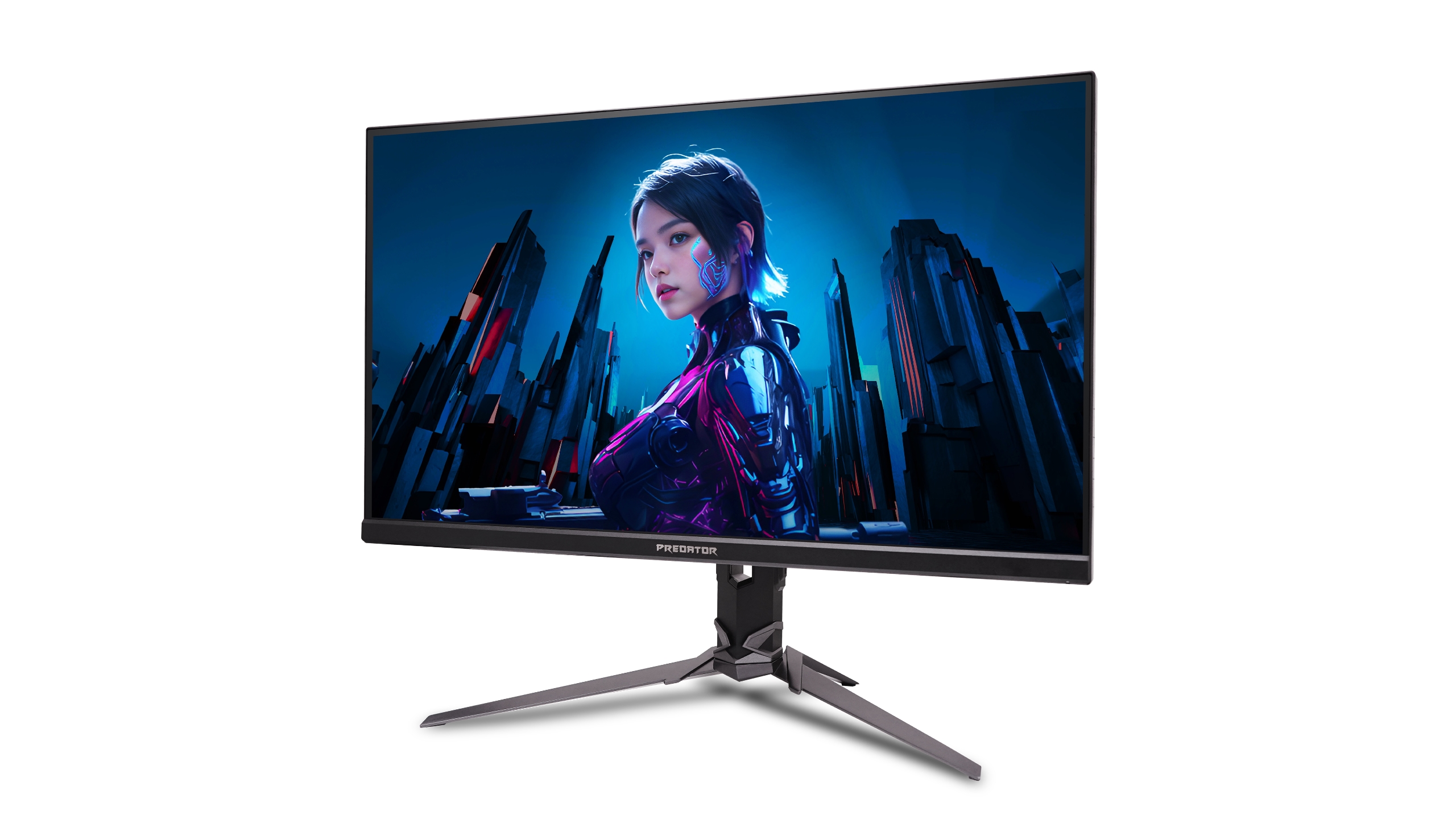
Acer Predator XB273U F6 Gaming Monitor

An Acer Predator monitor on a white background.

Acer is showing off multiple new monitors at CES 2026, but the Predator XB273U F6 Gaming Monitor stands out for its ridiculously fast refresh rate. Acer says the 27-inch screen has a 500Hz refresh rate by default, that can be boosted to 1000Hz at a 1,280 x 720 resolution if you use the company’s Dynamic Frequency and Resolution (DFR) mode. 

The Predator XB273U F6 otherwise features a 2,560 x 1,440 IPS panel with a brightness of 350 nits, that’s calibrated to cover 95 percent of the DCI-P3 and 99 percent of the sRGB color gamut. The monitor also has 2-watt speakers built-in, and includes HDMI2.1, DisplayPort 1.4 and audio out ports for connecting to the rest of your PC gaming setup. Acer says the Predator XB273U F6 will be available for $800 when it launches in Q2 2026 in North America.

This article originally appeared on Engadget at https://www.engadget.com/computing/accessories/the-gaming-monitors-that-caught-our-eye-at-ces-2026-130000433.html?src=rss

Gmail is getting a Gemini AI overhaul

In a move that should surprise nobody, Google is stuffing more Gemini AI into Gmail. A host of new features, some of which are already familiar to Workspace users, are rolling out today for Gmail users in the US. Some are free, while others require a Google AI Pro or Ultra subscription.

The first premium feature is AI Overviews, the same name as a similar feature in Google Search. Gmail’s version lets you ask questions about your messages in the search bar, using natural language. Google uses the example of, “Who was the plumber that gave me a quote for the bathroom renovation last year?” It’s hard to imagine that saving much time over a basic search for “plumber quote” or “plumbing estimate,” but maybe it could help in some situations.

There’s also a free portion of AI Overviews that summarizes mail threads for easy catch-ups. However, the ability to ask your inbox questions requires a subscription.

Meanwhile, Proofread is a subscription-only feature that’s essentially Grammarly for Gmail. As you’d guess, it suggests improvements in grammar, word choice, conciseness, voice and sentence structure.

Google marketing image for an AI catch-up feature coming to Gmail.
AI Inbox
Google

Finally, there’s the AI Inbox, a feature that “filters out the clutter so you can focus on what’s most important.” Google says it’s like a personal briefing that flags to-dos and catches you up on what it thinks is most important. (It identifies VIPs based on frequent contacts, your contact list, and inferred relationships.) The company claims, without adding further detail, that this all “happens securely with the privacy protections you expect from Google.” AI Inbox is another subscription-only feature.

Now onto the free stuff. Help Me Write is a tool for all Gmail users that generates email copy from a prompt. This kind of thing should be well-familiar by now, as Big Tech increasingly encourages users to avoid drafting anything from scratch. And Suggested Replies can draft replies for you that mimic your tone and style. (Google describes it as a next-gen version of Smart Replies.) Help Me Write and Suggested Replies are rolling out to everyone (no subscription required) today.

The new Gemini-powered features begin rolling out to Gmail today. Although they’re starting with English speakers in the US, Google says they’ll arrive in more languages and regions “in the coming months.”

This article originally appeared on Engadget at https://www.engadget.com/ai/gmail-is-getting-a-gemini-ai-overhaul-130000422.html?src=rss

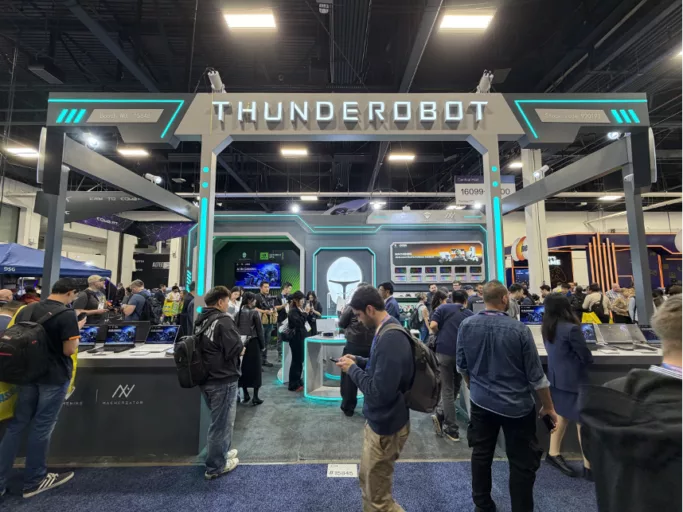
THUNDEROBOT at CES 2026: Zero Air Equipped with Intel Panther Lake Unlocks a High-Performance Mobile Experience

Recently, at the Consumer Electronics Show (CES 2026) in Las Vegas, thousands of brands from around the world showcased their cutting-edge technologies and products. Among them, ThundeRobot, located at booth 15845, attracted numerous tech enthusiasts, esports players, and media with its lightweight gaming laptops, Mini PCs, peripheral products, and a future-tech-themed booth design.

Laptop: Breaking the Conflict Between Portability and Performance

At CES, the ZERO Air was one of the most highly anticipated new products from THUNDEROBOT. This product attempts to provide a new solution in a dimension that has long been considered difficult to balance: achieving a dual full power release of 160W (CPU 45W + GPU 115W) within a body weighing approximately 1.58kg and measuring 15.9mm in thickness.

The ZERO Air features an Intel® Core™ Ultra Series 3 processor and an NVIDIA® GeForce RTX™ 50 series GPU. Its core significance lies not only in being “lighter” or “stronger,” but in redefining the capability boundaries of lightweight gaming laptops.

During on-site experiences, the changes brought by this design were quite intuitive: a lightweight body no longer represents a trade-off between portability and performance but has become a new normal.

If the ZERO Air addresses the long-standing conflict between “lightness” and “performance,” the aibook 14 Pro seems to respond to another question: when daily work heavily overlaps with long battery life and high computational demands, can a lightweight laptop still handle only basic tasks?

Weighing about 1kg, the aibook 14 Pro combines a carbon fiber structure to achieve a sustained performance output of 45W. At CES, this product was primarily showcased in areas focused on content creation and mobile office environments, emphasizing its stable output capabilities in real-world usage scenarios. The aibook 14 Pro raises the performance ceiling of 1kg lightweight laptops once again. The emergence of such products reflects a trend: lightweight devices are transitioning from “supplementary devices” to “primary computing terminals.”

MINI PC: High-Performance Workstation in a Compact Size, Revolutionizing Desktop Computing Experience

Moving through the mobile computing area, the core message of the desktop computing zone is “breakthrough”—overcoming the conflict between size and computing power, and balancing cooling with silence, allowing mini PCs to support top-tier performance requirements.

Mini PCs have long been viewed as a compromise between size and performance, but THUNDEROBOT has provided a more aggressive interpretation of this category at CES.

THUNDEROBOT MIX G2: Achieving a maximum performance release of 230W within a body size of approximately 3L.
THUNDEROBOT STATION: Featuring the AMD Ryzen™ AI Max+ 395 processor, positioned as a Mini PC workstation for high-performance local AI computing scenarios.

These two products point in a common direction: Mini PCs are no longer just “smaller versions of desktops” but are beginning to handle local AI inference, content creation, and high-load computing tasks. During live demonstrations, local AI computing, model inference, and multitasking processing were key highlights, resonating strongly with current trends in AI PC development.

Peripheral Experience: FPS-Focused Design to Maximize Competitive Core Performance

In the peripheral interaction area, the focus is on FPS scenarios, emphasizing low latency and high-precision control to create a series of professional esports gear.

The MACHENIKE F1 dual 8K fully customizable game controller features wired and 2.4G dual 8K feedback rates, providing almost imperceptible latency for shooting and aiming. This product is deeply designed to meet the control needs of FPS games, featuring a full grip-compatible structure, three adjustable micro-motion triggers, and twelve optical micro switches that support customizable programming, with fully hot-swappable keys designed for high-intensity competitive use.

The Shadow Hunter EX68 optical axis keyboard utilizes Razer’s third-generation optical technology, offering an ultra-low latency of 0.125ms for high-frequency key presses. Its metal body combined with RGB backlighting balances aesthetic and visual effects, promising a new experience for optical axis keyboards.

Future Forms of Gaming Hardware: Presenting Three Core Directions

THUNDEROBOT’s overall presentation at CES 2026 wasn’t just a simple product showcase, but a concentrated expression of the future forms of gaming hardware.

Firstly, the era of lightweight laptops has arrived, breaking the inherent conflict between lightness and performance, providing a significant leap in mobile gaming experiences, and offering greater efficiency in mobile work capabilities. Secondly, MINI PCs are moving towards high-performance workstation tracks, delivering significant energy in a compact size and providing flexible solutions for esports and local AI-assisted training. Thirdly, peripherals are initiating a tactile revolution focused on FPS design, upgrading various aspects from latency control and precision to durability, targeting the core usage scenarios of esports.

On the first day of the exhibition, the renowned esports team XEN, known for its outstanding performance in “Call of Duty” and “Fortnite,” also visited the THUNDEROBT’s booth, where they highly praised the exceptional competitive experience of its products.

The CES 2026 exhibition is still ongoing, and THUNDEROBOT’s booth, located at LVCC Central Hall, Booth 15845, remains open for global tech enthusiasts, industry observers, and media to experience firsthand.

AMD at CES 2026: The Triumph of Competence and the Quiet Void in Marketing

As the dust settles on the spectacle that is CES 2026 in Las Vegas, one thing is abundantly clear: Advanced Micro Devices (AMD) is an execution machine operating at peak efficiency. The opening keynote, delivered by CEO and Chair Dr. Lisa Su, was a relentless barrage of product announcements spanning client AI, gaming dominance, and data center supremacy.

Yet, watching the presentation, I was struck by a familiar duality that defines AMD in its current golden era. On one hand, the company is delivering silicon that genuinely pushes the boundaries of computing. On the other, their major events often lack the cohesive, narrative “pop” that defines competitors like NVIDIA (though this year NVIDIA wasn’t really on their game) or customers like Lenovo (who set the bar this year). This isn’t a product failing; it is a structural one. AMD continues to execute brilliantly on engineering, but at hyper-hyped events like CES, they are perceptibly hampered by the lack of a dedicated, top-tier Chief Marketing Officer (CMO).

The IBM Pedigree: Substance Over Sizzle

Before diving into the silicon, it is necessary to acknowledge the force behind it: Dr. Lisa Su. I have long admired Dr. Su, not just for turning AMD around, but for how she did it. She embodies the best traditions of her IBM background—a culture rooted in deep technical competence, rigorous roadmap execution, and an aversion to vaporware.

At CES 2026, this competence was on full display. Dr. Su doesn’t need gimmicks; she has specs. Her presentation style is disciplined, grounded in engineering reality, and focused on delivering measurable value to customers. In an industry often choking on hype, her steady hand is refreshing. She is the ultimate engineer’s CEO, prioritizing the “what” and the “how” over the theatrical “why.” This IBM-forged discipline is why AMD is trusted by everyone from hyperscalers to hardcore gamers.

Relentless Client and Gaming Execution

The press announcements from the keynote underscore this relentless execution. In the client space, AMD isn’t just participating in the AI PC revolution; they are attempting to define its performance tier.

The new Ryzen™ AI 400 Series processors, built on the “Zen 5” architecture, are a prime example. By offering up to 60 TOPS of NPU compute, AMD isn’t just meeting the requirements for Microsoft Copilot+ PCs; they are exceeding them significantly. This is crucial for enabling next-generation, on-device AI experiences that don’t rely on the cloud.Furthermore, AMD reiterated its commitment to its core constituency: gamers. The announcement of the Ryzen™ 9850X3D utilizing 2nd Gen AMD 3D V-Cache™ technology to claim the title of “world’s fastest gaming processor” is a direct strike at Intel’s remaining strongholds.

Perhaps most interesting for the ecosystem is the push on software. The 10x year-over-year increase in ROCm downloads indicates that AMD is finally chipping away at NVIDIA’s CUDA moat, providing developers with viable alternatives for local AI workloads on products like the new Ryzen AI Halo mini-PC.

The Data Center Moonshot

If the client side was about solidifying leadership, the data center announcements were about pure ambition. AMD’s execution here is terrifying to its competitors.

The unveiling of the full MI400 Series lineup, led by the “Helios” blueprint for yotta-scale compute, demonstrates that AMD is thinking way beyond the current AI boom. Delivering up to 3 AI exaflops in a single rack is an astounding engineering claim aimed squarely at training trillion-parameter models.

Even more audacious was the tease of the MI500 Series for 2027. Projecting a 1,000x increase in AI performance compared to the MI300X using CDNA™ 6 architecture and 2nm process technology is the kind of long-range roadmap confidence that only a company sure of its execution engine can provide.

The Missing Ingredient: The CMO Gap

Given this incredible array of technology, why did the keynote feel somewhat utilitarian? This brings us back to the missing piece of the puzzle.

When a CEO as capable as Lisa Su has to also serve as the de facto Chief Marketing Officer during the year’s biggest tech stage, something gets lost. A great CMO doesn’t just sell products; they weave a unified mythology around the brand. They connect the dots between a gaming chip, a data center rack, and an embedded automotive processor into a singular, irresistible narrative about the future.

While Dr. Su eloquently described the parts, the presentation lacked the cohesive emotional resonance that a dedicated marketing leader brings. The announcements were a list of wins, rather than a story of conquest. Without a CMO to manage the “sizzle,” AMD relies entirely on the “steak.” Fortunately for them, the steak is world-class. But at CES, one can’t help but wonder how much bigger the impact would be if the marketing machinery matched the excellence of the engineering machinery.

Wrapping Up

AMD’s showing at CES 2026 was a testament to Dr. Lisa Su’s disciplined, competence-first leadership, a style honed in the best traditions of IBM. The company is executing flawlessly across client AI, high-end gaming, and data center infrastructure, delivering products that lead their respective categories. However, the event also highlighted a persistent weakness: the absence of a high-profile CMO to elevate these technical achievements into an industry-defining narrative. AMD has the best engines in the world; they just need a better storyteller in the passenger seat.

Disney+ is launching vertical videos this year

Disney+ will add vertical videos to its service in the US sometime this year, in hopes that they can entice viewers to engage with its app every day. The company has made the announcement at its Tech + Data Showcase event at CES 2026. Disney first dabbled in vertical content with Verts, which launched for the ESPN app in August 2025, giving it the insight it needed on how its users respond to the video format.

Erin Teague, Disney Entertainment’s EVP of Product Management, told Deadline that the company will use the format for all kinds of content. The service isn’t just planning to use it as a vehicle for movie and series teasers, but also for original short-form programming. She didn’t say what kinds of original programming Disney+ will be adding as vertical videos to its app, but vertical micro-dramas have become incredibly popular over the past year.

“We’re obviously thinking about integrating vertical video in ways that are native to core user behaviors,” Teague said. “So, it won’t be a kind of a disjointed, random experience.” The company is targeting Gen Z and Gen Alpha users, in particular, since they’re not inclined to sit and watch long-form content on their phones for hours. Disney said in a statement that the experience will “evolve as it expands across news and entertainment” and will be personalized for users, with making the service “a must-visit daily destination” as its goal. After all, if a user is already in the app, they’re more likely to explore and watch the service’s programming.

This article originally appeared on Engadget at https://www.engadget.com/entertainment/streaming/disney-is-launching-vertical-videos-this-year-120000776.html?src=rss

You won’t be able to buy Samsung’s household Ballie robot after all

For years, we’ve been wondering when Samsung would actually bring Ballie, its cute household companion robot, to market and now we finally have our answer: it won’t. After the planned summer 2025 release window came and went, the company has opted not to release the gizmo as a consumer product, at least not for the foreseeable future. 

According to Bloomberg, Samsung has “indefinitely shelved” the robot. A spokesperson told the publication that the company will keep Ballie around as an “active innovation platform” internally. “After multiple years of real-world testing, it continues to inform how Samsung designs spatially aware, context-driven experiences, particularly in areas like smart home intelligence, ambient AI and privacy-by-design,” the spokesperson added. 

There’s a sliver of a chance that Samsung will eventually bring Ballie to market, but that seems unlikely as things stand. So, six years after we first clapped eyes on the robot at CES 2020, (and two years after a redesigned larger version debuted), it appears to be doomed as a consumer device. 

It’s a bit of a shame, as Ballie seemed like a fun gadget. In fairness to Samsung, companies are now likely having to be more judicious about what products — especially more experimental ones — go into full production amid rising costs of things like RAM. 

This article originally appeared on Engadget at https://www.engadget.com/home/smart-home/you-wont-be-able-to-buy-samsungs-household-ballie-robot-after-all-104529942.html?src=rss

Rubin Observatory Spots an Asteroid That Spins Fast Enough To Set a Record

Astronomers using the Vera C. Rubin Observatory have discovered a record-setting asteroid, known as 2025 MN45, nearly half a mile wide and spinning once every 1.88 minutes — the fastest known rotation for an object of its size. “This is now the fastest-spinning asteroid that we know of, larger than 500 meters,” said Sarah Greenstreet, University of Washington astronomer and lead author of the study. The findings have been published in the The Astrophysical Journal Letters. GeekWire reports: 2025 MN45 is one of more than 2,100 solar system objects that were detected during the observatory’s commissioning phase. Over time, the LSST Camera tracked variations in the light reflected by those objects. Greenstreet and her colleagues analyzed those variations to determine the size, distance, composition and rate of rotation for 76 asteroids, all but one of which are in the main asteroid belt between the orbits of Mars and Jupiter. (The other asteroid is a near-Earth object.)

The team found 16 “super-fast rotators” spinning at rates ranging between 13 minutes and 2.2 hours per revolution — plus three “ultra-fast rotators,” including 2025 MN45, that make a full revolution in less than five minutes. Greenstreet said 2025 MN45 appears to consist of solid rock, as opposed to the “rubble pile” material that most asteroids are thought to be made of. “We also believe that it’s likely a collisionary fragment of a much larger parent body that, early in the solar system’s history, was heated enough that the material internal to it melted and differentiated,” Greenstreet said. She and her colleagues suggest that the primordial collision blasted 2025 MN45 from the dense core of the parent body and sent it whirling into space.


Read more of this story at Slashdot.

Volvo says new EX60 has 400-mile range, charges up to 400 kW

Later this month, Volvo will unveil its new EX60 SUV. The Swedish automaker has adopted some of the latest trends in electric vehicle design for the EX60, like a structural battery pack and the use of very large castings. As always with automakers teasing a new car, concrete details are only emerging slowly ahead of the official reveal on January 21, but we can say that range and recharging speeds were a priority during the design process.

“With our new electric vehicle architecture, we directly address the main worries that customers have when considering a switch to a fully electric car. The result is class-leading range and fast charging speeds, marking the end of range anxiety,” said Anders Bell, Volvo’s CTO.

Volvo says that its SUV will be best-in-class for range, which means 400 miles (644 km) from a fully charged battery under the EPA test cycle (although an official EPA range number isn’t due yet). Fast charging should also live up to the name. Providing you plug into a 400 kW DC fast charger, the EX60 should add 168 miles (270 km) of range in 10 minutes, although we don’t know how long it requires to fast charge from 10–80 percent.

Read full article

Comments

How Bright Headlights Escaped Regulation

Longtime Slashdot reader schwit1 shares a report from Autoblog: … the problem is that the federal brightness standards for automotive headlights have not changed for decades. The Federal Motor Vehicle Safety Standard No. 108 hasn’t had significant updates since 1986, with an addition allowing Adaptive Driving Beam (ADB) headlights coming only in 2022. The NHTSA last investigated (PDF) the issue of headlamp glare in 2003. The current standards include huge loopholes for auto manufacturers to emit as much light as desired, as long as the manufacturer meets the requirements of the other parts of the regulation.

LEDs can be made to focus light using lasers, and auto manufacturers use this ability to their advantage. The regulatory standard prohibits excessive light in certain areas by referencing old technologies, but manufacturers design the areas in question to be shaded so that the total light output can still be increased greatly overall. Manufacturers want as much light as possible in order to get a high score for the IIHS headlight safety ratings. […] Although the U.S. finally approved the ADB technology in 2022, manufacturers are wary of implementing it because of conflicting regulations, with a few exceptions, such as Rivian.

To fix this problem, the first step is to update Standard 108 with a cap on the maximum allowable brightness for LED technology. Next, states should begin requiring headlight alignment inspection during vehicle inspections. Finally, NHTSA should enforce a ban against the sale of aftermarket LEDs that exceed the allowed brightness, at least for on-road use. The Soft Lights Foundation has collected over 77,000 signatures calling for federal action to limit headlight brightness. People are frustrated with being temporarily blinded while driving, and it’s high time some regulation was put into place. Vehicles have become cleaner and safer through smart regulation; the same just needs to be done with headlights.


Read more of this story at Slashdot.

The Official ‘Best of CES’ 2026 Award Winners Were Announced, Featuring 22 Remarkable Advances in Technology

In the middle of the Las Vegas Convention Center, amidst the world’s largest tech trade show, an awards show was taking place. The audience included nominees ranging from large companies like Nvidia to scrappy startups introducing themselves to the world, alongside journalists, tech insiders, and enthusiasts gathering to watch the Best of CES 2026 awards. After days of scouring showroom floors, speaking with innovators about their new technologies, and deliberating for six hours, finalists and winners were chosen by experts from CNET, PCMag, Mashable, ZDNET, and Lifehacker. I had the privilege of helping to judge and present several awards, and aside from my gratitude for the experience, my takeaway was simple: There’s a lot of new technology worth being excited about.

The audience at the Best of CES 2026 awards

Credit: Joe Maldonado

CNET Group, in partnership with the Consumer Technology Association, awarded winners across 22 categories, plus a ‘Best Overall’ award. To qualify for a Best of CES award, a product or service had to be an official exhibitor at CES 2026 and either include a compelling new concept or idea, solve a major consumer problem, or set a new bar in performance, design, or quality. The official Best of CES 2026 winners were announced live Wednesday, Jan. 7, at 4 p.m. PT. Here are all the finalists and winners of Best of CES 2026.

Best of CES 2026 award winners

Best Age Tech

  • Tombot Jennie (Winner)

    Tombot’s Jennie has been capturing hearts at CES for years, but the realistic robot puppy is finally launching in 2026. Designed to comfort seniors with dementia and help combat loneliness, Jennie is packed with sensors and motors, allowing it to move its head to look at you, raise its eyebrows, wag its tail, and bark when you ask if it wants a treat. Seniors at a memory care facility we visited loved Jennie.

  • iGuard

    iGuard is a smart stove shutoff that helps older adults age in place. This new version of the device uses radar to tell when a person is in the kitchen, and has a configurable five-minute grace period. It can also report to a caregiver app if your loved one didn’t show up in the kitchen to make breakfast as usual.

Best AI Tech

  • Lenovo Motorola Qira (Winner)

    Qira is Lenovo’s answer to Apple Intelligence, a hybrid AI assistant that leverages a mix of on-device processing and cloud-based models for a powerful personalized assistant that’s available anywhere, even as you switch from the phone in your pocket to the laptop or tablet in your hand.

  • Nvidia Rubin

    Nvidia is once again the talk of CES, and the biggest announcement by the world’s most profitable company is the Rubin AI platform. Nvidia’s six new Rubin chips work together to reduce the costs of data processed by AI, known as tokens. That’s important for big tech companies, and all of us, as AI models become more compute-intensive.

  • Pebble Index 01

    This AI wearable brings it back to basics. Users can jot down quick notes throughout their day that they don’t want to forget by clicking on the button and speaking into the ring. Then, an LLM on the app will process what you said for easy access and even take actions for you.

Best Audio Tech

  • Samsung Music Studio 5 (Winner)

    The Samsung Music Studio 5 houses a 4-inch woofer and dual tweeters in one of the most compelling designs we’ve seen in a home speaker. In addition to Bluetooth and Wi-Fi connectivity, it supports the Samsung Seamless Codec for compatibility with other Samsung Galaxy ecosystem products.

  • xMEMS Sycamore-N loudspeaker chip

    As smartglasses become more mainstream, they require an audio chip that is as advanced as their AI features. The xMEMS Sycamore-N loudspeaker chip enhances the smartglasses audio experience. Based on our listening tests, they provide a high-fidelity listening experience, and at one millimeter thin, directly aid in keeping smartglasses form factors thinner and lighter.

  • LG H7 FlexConnect soundbar

    As a part of LG’s Sound Suite, the H7 Soundbar extends the usefulness of Flex Connect to any TV with an HDMI input. The soundbar looks good and it sounded great with movies. The only drawback is that you can only add LG branded Flex Connect speakers to the soundbar and not those from other brands.

Best Deep Computing Tech

  • Intel Core Ultra 300 (Panther Lake) (Winner)

    Intel’s Core Ultra 300 Series “Panther Lake” platform is our winner for delivering bar-raising integrated graphics performance to the mass consumer market. The top chip offers up to 12 new “Xe3” Xe cores for (by far) the best-ever integrated graphics performance from Intel silicon, enabling graphics and gaming workloads for a huge range of portable laptop categories through 2026 and beyond.

  • Qualcomm Snapdragon X2 Plus

    It’s all about the TOPS: The mainstream version of Qualcomm’s Snapdragon X2 laptop processor family maintains the 80 trillion operations per second of the higher end X2 Elite chips. Expected in laptops starting around $800, it promises field leading NPU performance at a lower price.

  • AMD Ryzen AI Max Plus 392, AI Max Plus 388

    AMD’s expanded Ryzen AI Max+ platform democratizes workstation power with the 392 and 388 models, featuring 40 RDNA 3.5 GPU cores, 60 TFLOPS of compute, and 192GB unified memory. These chips bring elite local AI and GPU-free performance to thinner, more affordable devices with a superior price-to-performance ratio.

Best Energy Tech

  • Willo (Winner)

    After developing alignment-free wireless power for two years, Willo demonstrated the ability to deliver power over the air for multiple devices simultaneously, regardless of their position or movement. This represents a breakthrough in energy technology, offering wireless charging without the need for a pad, coil, or dock.

  • Jackery Solar Mars Bot

    Jackery’s solar energy-seeking robot showed an ability to follow you around like a puppy, but its real job is to follow the sun, collecting energy with its retractable 300W solar panels. The idea is that this autonomous bot can always find the sun, and then bring you the power when you need it.

  • Superheat

    A water heater that automatically generates bitcoin with daily use. It utilizes the excess heat generated from bitcoin mining to heat running water in a home, offsetting up to 80 percent of electricity and water costs with the earnings from the process. You can control and manage it with an app or web console for ease of use.

Best Future Tech

  • Lego Smart Play System (Winner)

    A single 2-by-8 Lego brick filled with light, sound, and proximity sensors to enable new ways to play. This little block, and the tinier snap-on tab that gives it instructions, can drive anything from lightsaber duels to board games, adding color and sound effects based on what you build and how you play.

  • Ixana Wi-R

    Ixana’s Wi-R is a chip that sends data through a hyperlocal field generated by your body. This alternative to Bluetooth and WiFi is still a concept, but it has some upsides to conventional data protocols such as less power drain and less potential for clogged signal.

Best Gaming

  • Lenovo Legion Pro Rollable Concept (Winner)

    Rollable OLED displays have been a thing for a couple years, but they’ve been limited to enterprise laptops, if they ever even come out. The Lenovo Legion Pro Rollable concept uses this tech to bring ultrawide gaming to a laptop for the first time. Is the future rollable? We don’t know, but either way it’d be the perfect portable battlestation.

  • Asus ROG Zephyrus Duo

    A gaming PC with multiple monitors has become the norm, and while portable monitors have been around for a while, there haven’t been many ways to have this experience built-in to a laptop. The Asus Zephyrus Duo takes the multiple-display idea Asus has been playing with since the original Zephyrus Duo and expands it to something actually useful: a full second display.

  • Asus ROG Xreal R1

    Xreal’s AR glasses are some of the best, and now PC company ASUS is partnering with Xreal to make them better, especially for gamers. These AR glasses have everything even the pickiest player needs, giving you a virtual 171-inch screen right on your face. That screen is OLED and 1080p, but the real kicker is the 240hz refresh rate. It’s smooth big-screen gaming, on the go.

Best Kitchen Tech

  • Ecoldbrew (Winner)

    The Ecoldbrew combines a portable grinder and brewer into a compact gadget that whips up a batch of cold brew coffee in five minutes. The cleverly designed device slots onto its own thermos, but it’s a common size so you can easily attach it to the top of your own thermos if you have one that you love. Slated to launch on Kickstarter soon, it starts at an affordable $99.

  • C-200 UltraSonic chef’s knife

    Seattle Ultrasonics’ C-200 UltraSonic Chef’s Knife has a Japanese steel blade that vibrates about 30,000 times per second. Its movement is so subtle that you can’t see or hear it move, but you will notice how effortlessly it slices through food without clinging to it. The C-200 retails for $399, a similar price point as other nice knives. The first batch ships this month.

  • AISO AI Smart Oven

    We’ve covered our fair share of smart ovens at CES but Apecoo has boiled it down to the essentials. This compact cooker uses a camera above and scale below to ID food type and size and then deploys a precise cooking program pulled from a deep AI algorithm. Perfectly cooked steak, anyone? This machine can determine the exact thickness of meat or volume of veggies like no oven before it. The oven even recognizes multiple types of food at once and uses appropriate cooking times and temps for each. Best of all, it’s about half the size of a typical smart oven.

Best Laptop

  • Lenovo ThinkPad X1 Carbon Gen 14 Aura Edition (Winner)

    Modular laptop designs for greater serviceability and sustainability are a definite trend at CES 2026, and the latest ThinkPad X1 Carbon is the best example of it. Lenovo’s flagship business laptop introduces its Space Frame design that lets you access and replace individual parts when something breaks instead of needing to buy a new laptop.

  • MSI Stealth 16 AI Plus

    Yes, it’s clearly inspired by the MacBook Pro, but MSI’s big, redesigned Stealth pours on the special sauce. This thin rig deploys Intel’s Core Ultra 300 (Panther Lake) CPUs and GeForce graphics up to a roaring RTX 5090, alongside amped-up cooling and airflow. Plus, a new, subtler MSI design and a 240Hz Gorilla Glass panel will excite gamers and prosumer creators alike.

  • Asus ZenBook Duo (2026)

    Asus’ Zenbook Duo is a niche device, but it’s the most elegant expression of a dual-screen laptop we’ve seen yet. The 2026 Zenbook Duo has matured on its design with notable improvements from last year: thinner bezels, a more sturdy kickstand, and a better hinge. Powered with up to an Intel Core Ultra 9 386H CPU, it’s well-equipped for diverse creative workloads.

Best Mobile Tech

  • Samsung Galaxy Z TriFold (Winner)

    The culmination of Samsung’s efforts to make a sleeker and more versatile folding phone. It’s a true hybrid gadget that’s a standard phone when closed and opens up to a sprawling 10-inch display, making this a practical, two-in-one device that fits securely in your pocket.

  • Motorola Razr Fold

    The Motorola Razr Fold is a solid entry in the book-style folding phone category thanks to its large screens, clean software, and powerful cameras. Together with stylus support, it’s a fine option for those who need a device that’s focused on productivity

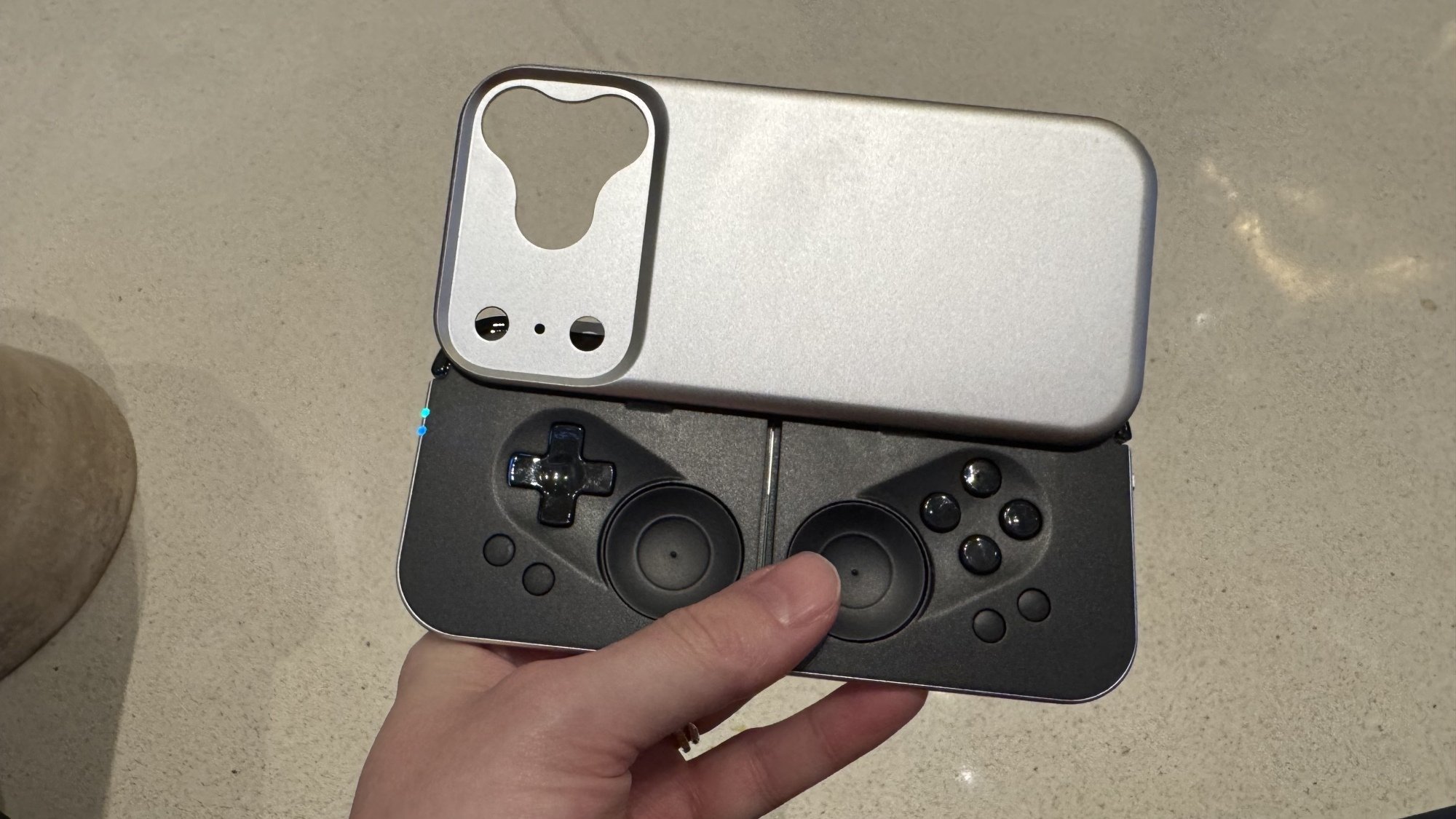
  • OhSnap Mcon

    The OhSnap Mcon is a Bluetooth controller with a slide-out plate to mount your iPhone (via MagSafe) or Android phone (via magnets) for a portable gaming experience. The pocketable accessory can be used in three ways: as a mounted handheld device, a wireless gaming controller, and a docked gaming console when your phone is connected to an external monitor.

Best Parent Tech

  • Coro (Winner)

    Coro feels like a product that should have existed for years. It solves the problem of measuring how much your baby is eating in a simple and meaningful way. I wish it was around when my babies were young.

  • Earflo

    Earflo is a medical device designed to look and work like a sippy cup for kids as young as two. When you sip from the cup, a small mask forms a seal on your nose, and with each swallow, air flows through the nose. The pressure on the nasal cavity helps releasing trapped fluid in the ear. In a peer-reviewed study, after four weeks of Earflo use, 90 percent of children did not need ear tube surgery three months later.

  • Lego Smart Play System

    Kids and parents already spend quality time building with Lego. Now, in Lego’s CES debut, the company is launching its new Smart Bricks as part of its new Smart Play platform, which brings Lego creations and characters to life. Lego Smart Brick includes a tiny chip inside that enables Legos to tell color, direction, distance, sound and more. Now Lego creations can interact with families, enabling more time together.

Best Pet Tech

  • Satellai Collar Go (Winner)

    Satellai’s new collar (Satellai Collar Go) and software (Petsense AI) are proactive tools that could flag subtle behavioral shifts in your dog before they become obvious health problems. It can also warn you when your dog has left your yard, and retails for a reasonable $79.

  • Pawport

    Pawport launched its smart pet door in late 2025. The pet door uses ultra-wideband technology, which can detect how close your dog is to the door. That lets you customize how close your dog needs to be before the door opens, both coming in and out of the house. It also extends the collar tags’ battery life from 12 to 18 months.

  • Petkit Yumshare Daily Feast

    One of the devices debuting is the Yumshare Daily Feast, an automatic wet cat food feeder Petkit describes as its first entry into robotic wet feeding. The unit can dispense scheduled meals over seven days while monitoring consumption through an integrated camera, and can automatically discard spoiled and leftover food.

Best Robot

  • Boston Dynamics Atlas (Winner)

    Of the many humanoid robots to have made their debut at CES 2026, it’s Boston Dynamics’ Atlas that stands out as the best of the bunch. The prototype version demoed at the show impressed us with its naturalistic walking gait, meanwhile the sleek product version is ready to be deployed into Hyundai manufacturing facilities from this year, where it might just be working on your next car.

  • Jackery Solar Mars Bot

    The Solar Mars Bot may never make it to Mars, but it solves several problems with portable generators. It’s far easier to move wherever you need and it can chase the sun without intervention.

  • Beatbot RoboTurtle

    RoboTurtle is both a perfect study in biomimicry and a robot with a mission. This swimming robot is designed for environmental research and once deployed, will monitor underwater ecosystems with minimal impact on wildlife.

Best Smart Home Tech

  • Roborock Saros Rover (Winner)

    The Roborock Saros Rover can traverse the biggest obstacle for robot vacuums: stairs. It’s the first model that can navigate to different floors on its own without the help of a separate attachment. It pulls off this feat thanks to a pair of bendable legs that it controlls independently to avoid obstacles, and it can even clean stairs as it climbs.

  • Lockin V7 Max

    The Lockin V7 Max is a new smart lock that doesn’t require recharging or replacing its batteries. Instead of using a removable battery, the V7 Max uses Lockin AuraCharge, an external device that you plug in approximately four meters away, sending a light beam to a receiver on the lock. The lock converts the light into energy to charge its battery.

  • Robotin R2

    The Robotin R2 is the first robot vacuum that can wash and dry a carpet, just like a carpet cleaner. It comes with a core module and two modular attachments that let it switch from vacuuming and mopping to carpet washing and drying. It takes about one hour to clean a 300-400 square foot room and two hours to dry. There’s also an absolutely massive base station with two clean water tanks, a large dustbin and a dirty water tank.

Best Startup

  • Allergen Alert (Winner)

    This might save lives. A French startup has created a $200 portable device to test food samples for allergens. The startup, Allergen Alert, only had mock-up devices at CES, but it’s licensing the tech from French biofirm bioMérieux. If the startup can pull off the food testing, the impact could be huge. Expect it to arrive in this year’s second half.

  • Pebble 2 Duo

    If the name sounds familiar, it’s because Pebble was the first company to popularize smartwatches in 2010s. After several company moves, the brand is back as a startup with a new lineup of affordable watches with battery life improvements and improved form factors. It also has a new AI ring.

  • Nirva AI jewelry

    The Nirva AI jewelry is a startup that aims to continuously learn from your real-world behavior by recording your audio throughout the day. From those recordings, it offers advice on work, relationships and everyday decision-making. Nirva positions itself as a personal AI companion, designed to understand your life as you live it. Think of it as “audio journaling” after a long day.

Best Sustainability Tech

  • Clear Drop Soft Plastic Compactor (Winner)

    Anxious about plastic waste? Clear Drop’s Soft Plastic Compactor can mash them into dense bricks to send off to be recycled into products like patio furniture. Clear Drop’s product and subscription ensures none of your recycled soft plating ends up in a landfill.

  • Beatbot RoboTurtle

    RoboTurtle is both a perfect study in biomimicry and a robot with a mission. This swimming robot is designed for environmental research and once deployed, will monitor underwater ecosystems with minimal impact on wildlife.

  • Cambridge Consultants Ouroboros smartwatch

    Ushering in the new age of right-to-repair legislation is this concept smartwatch design from Cambridge Consultants. It’s proof that you can make a smartwatch that allows for self repair without compromising on design or user experience.

Best Transportation

  • Strutt Ev1 (Winner)

    There’s plenty of talk about autonomy in cars, but Stutt brings the next-generation technology to an accessible application. The Ev1 mobility scooter can map and then navigate spaces autonomously, allowing people to get around via voice commands. It can also autocorrect manual navigation to prevent bumping into obstacles. This is the rare device that combines mobility, accessibility and autonomy, and it’s hard not to be impressed.

  • Pioneer Sphera

    Dolby Atmos adds a literal new dimension to car audio. However, not everyone can buy a new luxury car just to upgrade their listening experience. Pioneer’s Sphera receiver allows almost anyone to add Dolby Atmos via Apple CarPlay to the car they already own with the speakers already installed and immerse themselves in spatial audio.

  • Donut Labs solid-state battery

    Promising huge improvements in energy density, charging speed and safety, solid state battery tech is a holy grail for electric cars, home energy, drones and a host of other applications. Donut Lab is first to market with a solid state battery in a production EV which can be found in partner Verge Motorcycles’ TS Pro Gen 2.

Best Travel Tech

  • WheelMove (Winner)

    Wheelchairs are available at airports, hotels, resorts, theme parks, and cruises, but standard wheelchairs require ongoing effort, and they can struggle through difficult terrain. WheelMoves is a portable wheelchair attachment that turns any standard wheelchair into an electric one, allowing people to travel more easily wherever they are.

  • Jitlife Rideable Luggage

    The Jitlife JS07i is a rideable suitcase that travelers can use to drive long distances through airports. It’s the size of a standard cabin bag but carries up to 250 pounds, has a maximum speed of 8 miles per hour, and can travel six miles on a charge. Already popular overseas, rideable luggage is making its way to the US, and Jitlife is the best we tried.

Best TV or Home Theater Tech

  • Samsung S95H (Winner)

    The Samsung S95H is the most impressive TV we saw at CES for a number of reasons, firstly, it’s 35 percent brighter than before. Secondly, it’s a wired TV which is great for gaming, but it has a wireless option for a cleaner look and which enables more connections. Thirdly, it’s the first OLED that can show artwork from the Samsung Art Store — the S95H has anti-burn-in technology that enables it to work like a Frame TV, but with even better image quality.

  • Hisense 116UXS

    The 116UXS builds on the still very new and promising RGB LED TV concept by adding even more color to the mix. Its mini-LED backlight array uses red, green, and blue LEDs, then adds a fourth sky blue (cyan) LED that Hisense says lets it cover 110 percent of the BT.2020 color range.

  • LG W6

    The W6 is LG’s “wallpaper” TV, an OLED TV only 9mm deep that can be mounted nearly flush against a wall. It’s one of LG’s brightest OLEDs yet, and it’s almost completely wireless thanks to its Zero Connect box you can place up to 30 feet away to send it video and its Dolby Atmos FlexConnect-powered LG Sound Suite support for building a spatial audio system around it.

Best Weird Tech

  • Lepro Ami AI soulmate (Winner)

    Having a tiny animated girl living on a small screen inside a physical cylander case is certainly very weird. Lepro’s new AI companion Ami is exactly that. Its not quite an AI assistant meant to help with actual tasks. Its an AI meant for a loney person looking for some interaction. The characters dance and gyrate inside the case and can do so at the user’s request as well, upping the weirdness factor.

  • Lollipop Star

    Suck on this lollipop and listen to a song directly from your mouth to your ears using bone conduction technology, so you can “experience music you can taste.” I tried it out, and though you had to bite down on it a bit to hear the music, it did work. It’s a weird, fun novelty item. It costs $8.99.

  • iPolish digital nail polish

    iPolish touts itself as the “world’s first digital color-changing nails.” They take the form of press-on nails that you can individually put into a little wand to instantly change the color via a selection of over 400 shades on an app.

Best Wellness Tech

  • Peri (Winner)

    Perimenopause affects people transitioning to menopause, and is commonly marked by symptoms such as anxiety, hot flashes, and night sweats. Peri is a wearable designed to track those symptoms, and help you make informed decisions about how to manage them — whether that’s through lifestyle changes and supplements alone, or hormone replacement therapy.

  • OhmBody

    A majority of those who menstruate report severe period pain. This wearable neurostimulation device aims to reduce period symptoms and cramps. By attaching near the ear and delivering gentle neurostimulation, the device targets the auricular branches of the trigeminal and vagus nerves to regulate menstrual cycle symptoms and help the body return to a rested state.

  • Allergen Alert

    Food allergies are common and can cause a wide range of unpleasant symptoms. Severe reactions can be deadly. Allergen Alert is a mini, portable lab that allows you to test food for common allergens on the spot at a restaurant, school, or anywhere you dine out. A single-use pouch analyzes the food sample inserted into the device and displays results within minutes.

Best Yard or Outdoor Tech

  • Beatbot AquaSense X ecosystem (Winner)

    Beatbot has introduced the world’s first self-emptying pool robot cleaner. In addition to its industry leading navigation and suction, the AquaSense x Ecosystem removes the worst chore associated with robot vacs — cleaning the debris baskets filled with soggy leaves, slime and bugs. The standalone cleaning dock empties debris into a disposable bag in a bin waiting below. Next, it rinses the internal mechanisms with fresh water fed from an attached hose, keeping the filter, debris baskets and vents clear and clean.

  • Luba 3 AWD

    The Luba 3 AWD stole the show at CES 2026, easily climbing slopes up to 80 percent thanks to its four-wheel drive design. This smart mower also offers wire free navigation enhanced by LiDAR and AI vision, plus adjustable cutting heights. This attractive robot lawnmower can also overcome and avoid obstacles in your yard, from tennis balls to rogue hedgehogs.

  • Birdfy Hum Bloom

    Birdfy’s smart 4K hummingbird feeder has a beautiful, unique design that more closely resembles an actual flower. Most importantly, it captures slow-motion video at 120 frames per second, letting you see the flap of hummingbirds’ wings as they flit through your backyard. Using AI and its 8MP camera, the Hum Bloom will identify 150 different species of avian visitors.

Best Overall

Samsung Galazy Z Trifold (Winner)

A vanguard in melding eye-catching design with genuine utility, the Samsung Galaxy Z TriFold achieves CES’s highest honor, Best Overall. This slim device lives up to the promise of a foldable, full size tablet-phone hybrid that’s as functional as it is pocketable. Its futuristic allure and seamless practicality elevate the tech while keeping it within reach.

Japan’s Nuclear Watchdog Halts Plant’s Reactor Safety Screening Over Falsified Data

An anonymous reader quotes a report from the Associated Press: Japan’s nuclear watchdog said Wednesday it is scrapping the safety screening for two reactors at the Hamaoka nuclear power plant in central Japan, after its operator was found to have fabricated data about earthquake risks. It was a setback to Japan’s attempts to accelerate nuclear reactor restarts. Less than a quarter of commercial nuclear reactors are operational in the wake of the 2011 Fukushima Daiichi meltdowns, but rising energy costs and pressure to reduce carbon emissions have pushed the government to prioritize nuclear power.

Chubu Electric Power Co. had applied for safety screening to resume operations at the No. 3 and 4 reactors at the Hamaoka plant in 2014 and 2015. Two other reactors at the plant are being decommissioned, and a fifth is idle. The plant, about 200 kilometers (125 miles) west of Tokyo, is located on a coastal area known for potential risks from so-called Nankai Trough megaquakes. The Nuclear Regulation Authority said it started an internal investigation last February, after receiving a tip from a whistleblower that the utility had for years provided fabricated data that underestimated potential seismic risks. The regulator suspended the screening for the reactors after it confirmed the falsification and the utility acknowledged the fabrication in mid-December, said Shinsuke Yamanaka, the watchdog’s chair. The NRA is also considering inspecting the utility headquarters.

[…] The scandal surfaced Monday when Chubu Electric President Kingo Hayashi acknowledged that workers at the utility used inappropriate seismic data with an alleged intention to underestimate seismic risks. He apologized and pledged to establish an independent panel for investigation. The screening, including data that had been approved earlier, would have to start from scratch or possibly be rejected entirely, Yamanaka said. The NRA will decide on the case next week, without waiting for the utility’s probe results, he said. “Ensuring safety is the first and foremost responsibility for nuclear plant operators,” Yamanaka said. “It is outrageous and it’s a serious challenge to safety regulation.”


Read more of this story at Slashdot.

CES 2026: I Saw a Robot Vacuum With Legs Climb a Flight of Stairs

Robot vacuums are a convenient way to keep your house clean without actually putting in much work, but they’ve all got one major problem—what if your house has multiple stories? At CES this year, I saw two attempts to fix this problem, but one of them was much more fabulous than the other.

Roborock has a robot vacuum with legs

This is the more unique of your stair climbing robot vacuums, and the one that’s new for this year. At CES 2026, robot vacuum company Roborock introduced the Roborock Saros Rover, which has two fold-out and individually articulated legs built into it, with wheels on either one.

This lets it act like a standard robot vacuum when it’s on flat terrain, but when it hits a pair of stairs, it will use its legs to slowly pull itself up and over them. And because those legs are individually articulated, unlike other solutions, it can clean those stairs while it climbs.

Plus, it can also run through fun programmable routines, like dancing and even hopping. Honestly, it looks a lot more cute than the other bipedal robots I’ve seen littering this year’s CES. Maybe that’s because it still serves a concrete purpose.

The problem? You’ll need to get the new model to benefit from the stair climbing, whereas competitors are introducing solutions that work with existing vacuums.

The Roborock Saros Rover also doesn’t have hard pricing or a release date yet, but Roborock assured me it isn’t a concept, and will make its way to market eventually. I was told the goal is this year, but the company couldn’t confirm that.

Dreame’s stair climbing robot vacuum dock

Dreame Cyber X docking

Credit: Michelle Ehrhardt

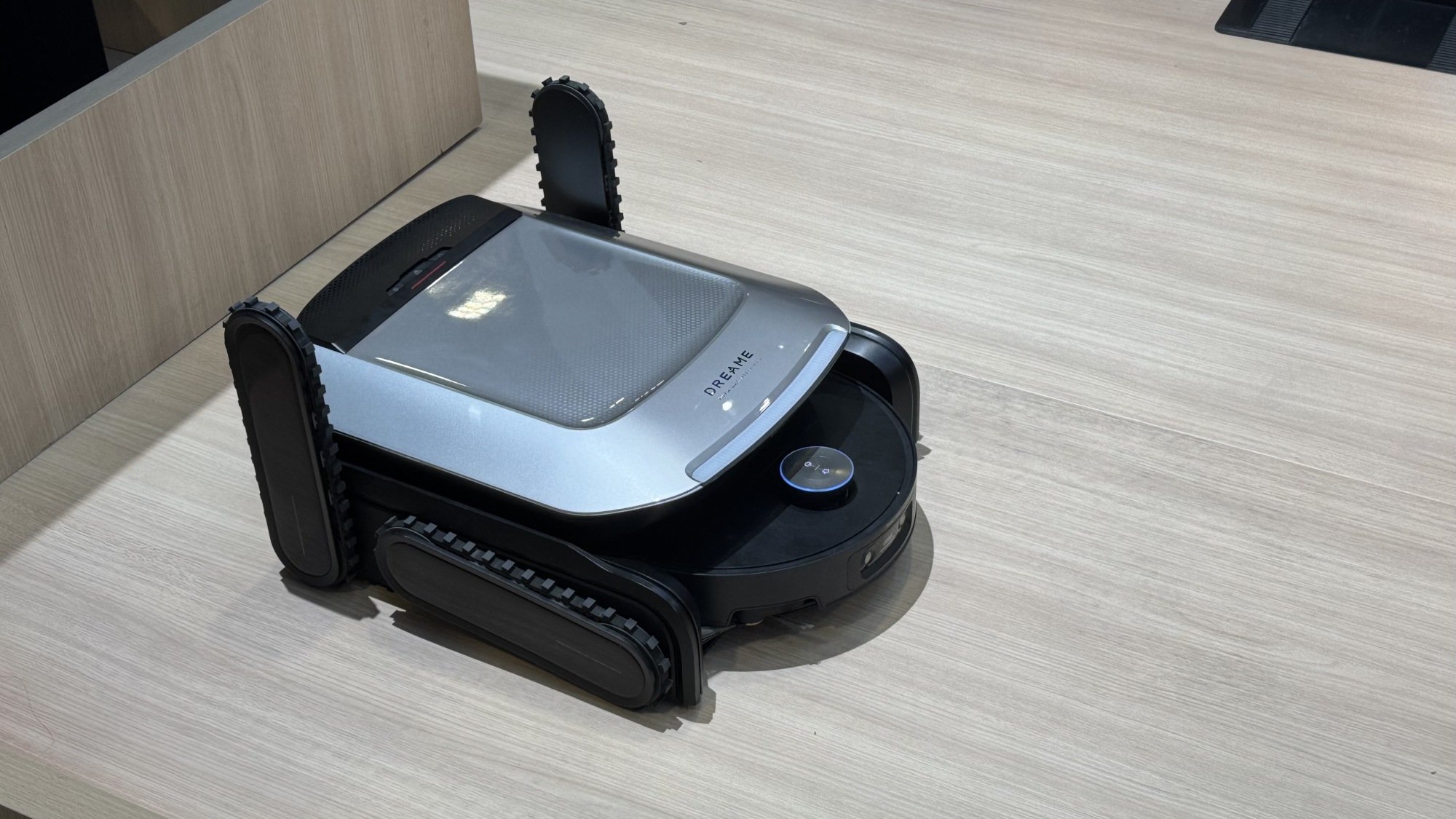
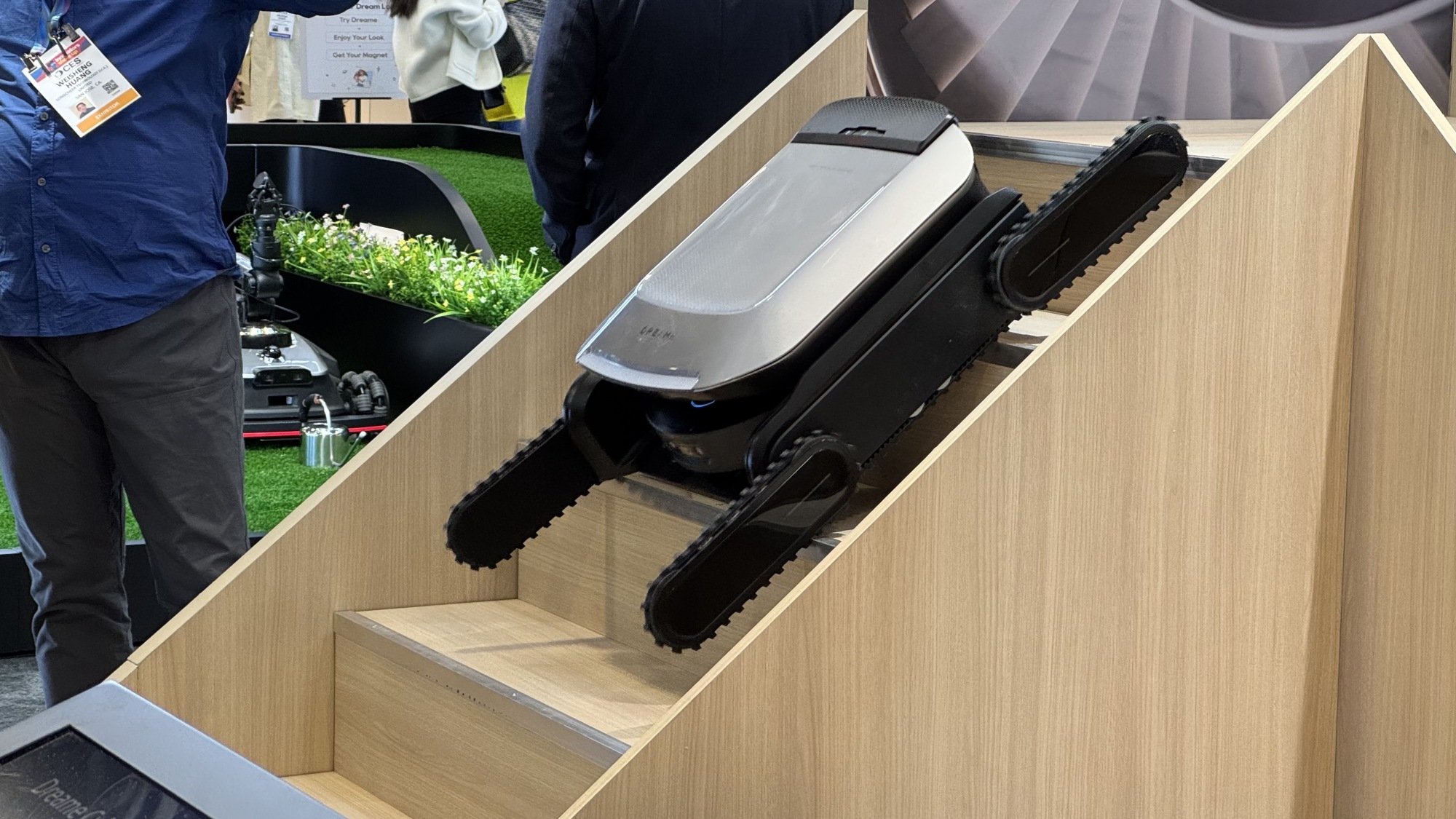
Next to Roborock’s booth, I also saw another approach to a stair climbing robot vacuum from competitor Dreame. This actually showed up at German tech conference IFA last year, but it’s still worth bringing up, if only to highlight how different the Roborock is. Essentially, instead of building a single robot vacuum model with individual legs, Dreame instead built a dock that your existing robot vacuum can drive into, and then the dock will take it up the stairs like a taxi.

The catch is that, because the dock needs to be able to drive to the stairs, it does not use individually articulated legs to climb, and instead uses treads that move in sync with each other. This gets it up and down stairs with no problem, but unlike Roborock’s solution, it’s not able to clean while doing so.

Dreame CyberX going downstairs

Credit: Michelle Ehrhardt

However, I’ll note that I did personally see Dreame’s dock go down a flight of stairs, something Roborock’s unit didn’t do in the demo I watched. Maybe this is a more stable approach.

Unfortunately, while Roborock said it’s definitely planning on bringing the Saros Rover to market, Dreame’s dock, called the Cyber X, is still just a concept, and may not actually ever make it to consumers.

CES 2026: Gaming Controllers Are Going Modular This Year

Gaming controllers are just one of those things that I love to collect, but living in a small New York apartment, eventually enough is enough. At CES this year, I saw three new controllers that are all trying to be the last ones I’ll ever need to buy (for specific systems, at least). It seems like modularity is in, and all three of these devices want to meet all of your needs. However, they’re not settled on what the best approach is.

GameSir x Hyperkin X5 Alteron

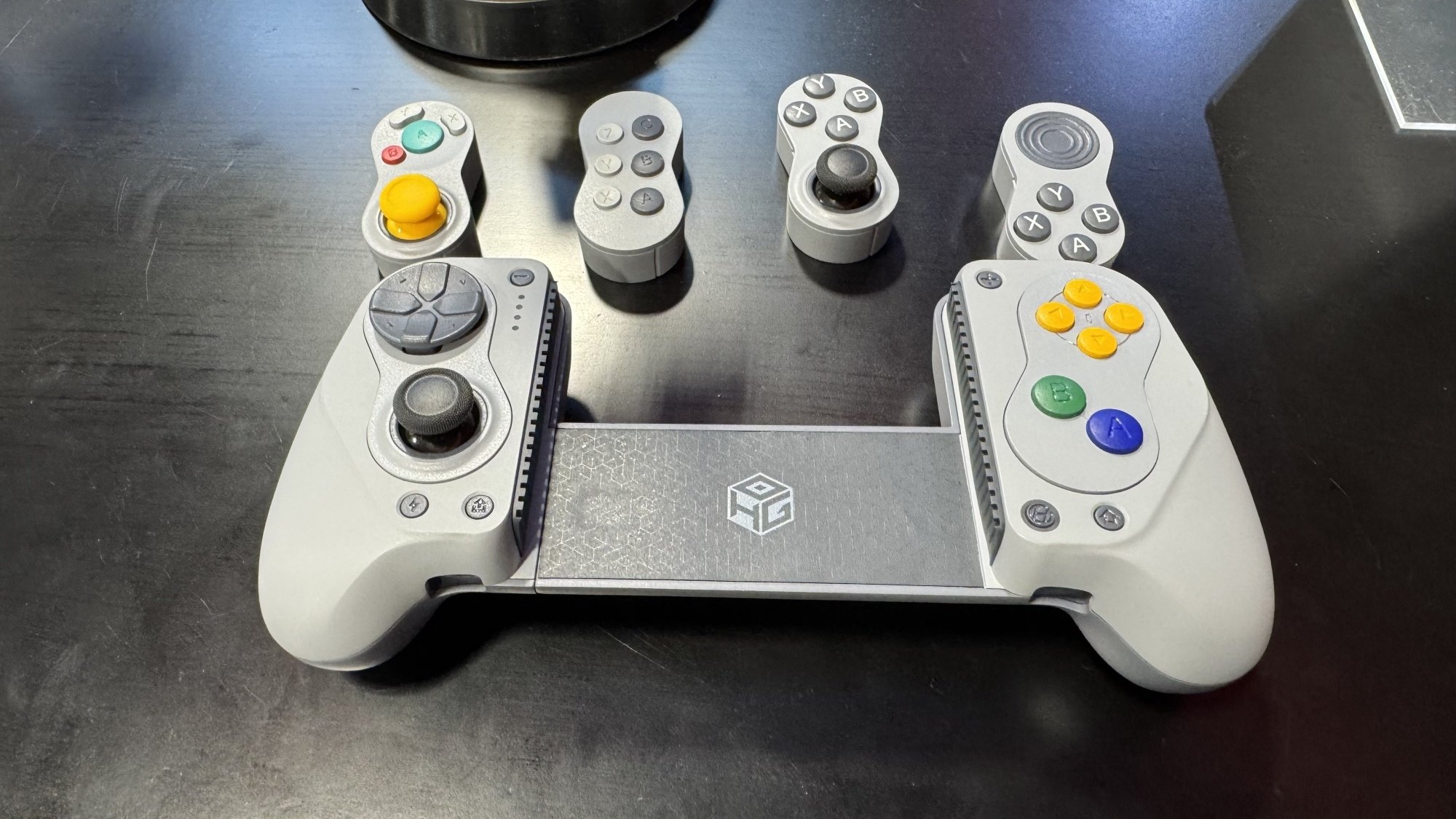
The GameSir x Hyperkin X5 Alteron is probably the cutest controller on this list, especially if you grew up playing GameCube or Nintendo 64. Essentially, it’s a telescopic mobile controller that stretches to fit around your phone or small tablet, but the gimmick is that all of the face buttons and sticks come in hot swappable modules, and can be freely mixed-and-matched for multiple configurations.

GameSir x Hyperkin X5 Alteron

Credit: Michelle Ehrhardt

You could do a standard Xbox style layout. You could opt for a layout with symmetrical, PlayStation style thumbsticks instead. You could use GameCube or Nintendo 64 style face button configurations, which is a unique touch. There are even options for a 6-button arcade style layout or a Steam Deck style trackpad.

Essentially, play your cards right, and this thing could fit any need you might possibly have, so long as you’re playing on mobile. You could even get weird and slot in a GameCube layout for your left hand and a Nintendo 64 layout for your right hand.

The different configurations all pop in and out easily, but don’t feel loose when you’re using the controller. And there are also bells and whistles like back paddles and trigger stops, for extra buttons and quicker reaction times. The sticks are also capacitive, which essentially means they shouldn’t drift, but also won’t cause magnetic interference like Hall Effect or TMR sticks (other popular anti-drift technology) can.

The catch? While this isn’t a concept, pricing and availability aren’t set in stone yet. GameSir also told me it’s still figuring out distribution, so it’s unclear how many control modules will come with the controller, if you’ll be able to buy them separately, and how much they’ll cost if you do. The company did say it’s targeting a $100 release, but that could change, and it’s still figuring out how to make that a reality.

The other issue, of course, is that this is mobile only, although GameSir said it might make a more traditional version in the future. This isn’t the first controller with hot swappable modules, but others are usually pro-level and don’t have nearly as many options as the X5 Alteron does.

8BitDo Ultimate 3e

8BitDo is one of my favorite controller companies, especially for retro style controllers. Last year, it already dipped its toes into modularity with the 8BitDo Pro 3. That was a PlayStation style controller that allowed you to individually swap out any of the main four face buttons to place them in whatever order you wanted, which made it easier to swap between Xbox (ABXY) and Nintendo (BAYX) style layouts. Now, the 8BitDo Ultimate 3e is taking that concept and really running with it.

8Bitdo Ultimate 3e

Credit: Michelle Ehrhardt

Officially licensed by Xbox but also compatible with PC and mobile devices, the 8BitDo Ultimate 3e looks like a standard Xbox controller at first, but has a removable face plate that gives you access to a bunch of options. Take it off, and you can lift out the sticks, D-Pad, or face buttons to swap them for ones with a different feel.

8BitDo Ultimate 3e modularity

Credit: 8BitDo

Your overall control layout will still be the same—there’s no mimicking the GameCube, swapping the order of the ABXY buttons, or changing your stick position here. But you could opt for either a four-way or circular D-Pad or sticks with different lengths or grips, for instance. The ABXY button modules also come in both quiet silicone versions or clicky, micro-switch versions.

That’s a lot of control, and it comes on top of 8BitDo’s standard Ultimate controller features, like the included charging dock, extra macro buttons, trigger stops, a gyroscope, and 1,000hz polling.

8BitDo says the Ultimate 3e controller will cost $150 and will come with all your control options. It’s set to ship later this year.

New models for the MCON

When I reviewed the MCON magnetic gaming controller late last year, I wanted to love it. It was my favorite product from last CES, but when it came to market, I had a few issues with it that made me feel like it wasn’t quite complete. Well, they’re still in the prototype phase, but MCON makers OhSnap are now working on two new MCON models that are looking to fix pretty much all of my problems with the original device.

MCON Slim (left) and MCON Lite (right) attached to Galaxy phones
Credit: Michelle Ehrhardt

Called the MCON Slim and the MCON Lite, these versions of the device are much smaller and should be much cheaper than the version that’s on the market now, but retain almost all of its features. There are a few compromises to make that happen, but ultimately, they look like moves in the right direction.

First, both the MCON Slim and the MCON Lite have manual sliding mechanisms for their controls. That means the controls normally slip tucked away behind your phone, but can be pulled out like an old-school Android keyboard. I actually prefer this. The original MCON instead uses a spring-loaded sliding mechanism, and it’s pretty violent, and can send your phone flying if you’re not careful.

Second, when I say these are smaller, I mean it. If the original MCON felt like attaching a MagSafe battery bank to your phone, these feel a lot more like using a MagSafe wallet. I didn’t mind the size of the original too much, but it really is impressive how much the new models have slimmed down.

Finally, while pricing isn’t finalized yet, MCON told me to expect the new models to be somewhere between 1/3rd to half the price of the current one. That’s a huge markdown on the pricey $150 original, even as these fix some of my problems with it.

To be fair, you do lose out on a little bit here, but not much. The MCON Slim and MCON Lite still have a kickstand mode, and still feature a full set of buttons, but they handle their shoulder buttons and thumbsticks differently. Both the Slim and Lite have “inline” shoulder buttons, which means the L1/R1 and L2/R2 buttons are next to each other horizontally rather than stacked. Not a big deal for me, but some people may prefer a console-like layout. The bigger differences come in the thumbsticks.

MCON Slim
MCON Slim
Credit: Michelle Ehrhardt

The MCON Slim uses 3DS-style circle pads instead of Switch-style thumbsticks, which is how it’s able to save so much space. They aren’t my favorite, but I’ve never had any problems making them work. The MCON Lite, then, uses dual-trackpads instead of thumbsticks. That makes it even smaller than the Slim, but I’ve never had great luck using trackpads for analog style inputs. It could be useful for games that need a mouse, though.

MCON Lite
MCON Lite
Credit: Michelle Ehrhardt

So, what makes these modular? Well, aside from giving you more model options and carrying forward the removable kickstand mode from the original MCON, part of what allows these models to be so thin is that they use custom backplates designed for certain phones, whereas the original model used a bulkier solution that fits all phones.

The MCON Slim and MCON Lite are the most conceptual of the devices on this list, but OhSnap assured me that at least one will make its way to market, hopefully this year. Apparently, there are still internal debates about whether the model with trackpads is worth releasing or not.

A crew member’s “medical concern” foils a planned spacewalk outside the ISS

A planned spacewalk outside the International Space Station has been postponed due to a “medical concern” with one of the crew members aboard the orbital complex, NASA announced Wednesday.

The excursion was set to begin Thursday morning. Astronauts Mike Fincke and Zena Cardman planned to head outside the space station for six-and-a-half hours to prepare for the installation of new roll-out solar arrays set to arrive later this year. The arrival of the new solar arrays will be the final major upgrade to the lab’s electrical system before the space station’s decommissioning in 2030.

Privacy paramount

NASA said the crew member’s medical concern arose Wednesday afternoon, and officials will reschedule the spacewalk.

Read full article

Comments

AI Chip Frenzy To Wallop DRAM Prices With 70% Hike

Samsung Electronics and SK hynix are projected to raise server memory prices by up to 70% in early 2026, according to Korea Economic Daily. “Combined with 50 percent increases in 2025, this could nearly double prices by mid-2026,” reports the Register. From the report: The two Korean giants, alongside US-based Micron, dominate global memory production. All three are reallocating advanced manufacturing capacity to high-margin server DRAM and HBM chips for AI infrastructure, squeezing supply for PCs and smartphones. Financial analysts have raised their earnings forecasts for the firms in response, as they look to benefit from the AI infrastructure boom that is driving up prices for everyone else. Taiwan-based market watcher TrendForce reports that conventional DRAM prices already jumped 55-60 percent in a single quarter.

Yet despite the focus on server chips, supply of these components continues to be strained too, with supplier inventories falling and shipment growth reliant on wafer output increases, according to TrendForce. As a result, it forecasts that server DRAM prices will jump by more than 60 percent in the first quarter of 2026. Prior to Christmas, analyst IDC noted the “unprecedented” memory chip shortage and warned this would have knock-on effects for both hardware makers and end users that may persist well into 2027.


Read more of this story at Slashdot.

CES 2026: Ford Is Launching Its Own AI Assistant

Listen up, Ford drivers: You’re getting a new AI assistant this year. During a decidedly low-key CES keynote, the company announced Ford AI Assistant, a new AI-powered bot coming to Ford customers in the early half of 2026.

While the company has plans to integrate the assistant into Ford vehicles directly, that isn’t how you’ll first experience this new AI. Instead, Ford is rolling out Ford AI Assistant to an upgraded version of its Ford app first, and plans on shipping cars with the assistant built-in sometime in 2027. In effect, Ford has added a proprietary version of ChatGPT or Gemini to its app.

How Ford AI Assistant works

Ford’s idea here is to offer users a smart assistant experience directly tied to their Ford vehicle. In one example, the company suggests a customer could visit a hardware store looking to buy mulch. Said customer could take a photo of a pile of bags of mulch, and ask the assistant “how many bags can I fit in the bed of my truck?” Ford AI Assistant could then run the numbers, and offer an educated estimate to how much mulch the customer can buy and take with them at one time.

Of course, other AI assistants can do similar calculations. Send ChatGPT the same photo, and ask the same question—specifying the model of your truck—and the bot will run the numbers itself. The difference, in Ford’s view, is that Ford AI Assistant is connected to your vehicle specifically. It can read all the sensors in your car, so it knows, for example, how many people are currently traveling with you, your current tire pressure, or, really, anything and everything about your car. According to Doug Field, Ford’s Chief Officer of EVs, Digital, and Design, the company’s goal with the assistant is to offer answers customers can’t get from other sources. ChatGPT certainly doesn’t have access to your every sensor embedded in your car, so Ford does have the advantage there.

Ford didn’t go out and build its AI tech by scratch, however. The company tells TechCrunch that Ford AI Assistant is hosted by Google Cloud, and is run using “off-the-shelf LLMs.” Still, that likely won’t have much of an impact on whether or not customers use this new assistant. Instead, that will come down to how useful they find the AI assistant in the app.

Will Ford AI Assistant actually be useful?

As someone who rarely uses AI assistants, I’d imagine I’d find little use for it if I owned a Ford. That being said, there are some times when it could genuinely be useful to have external access to your car’s information. I could probably eyeball how many bags of mulch would fit in my trunk, but I can’t tell you my exact odometer reading without starting up my car. The same goes for my tire pressure: It’d be helpful to know my tire pressure before getting in my car, to know whether I should be headed somewhere I can fill up before going to my destination.

Of course, there’s also a privacy discussion to be had here. Modern cars are already privacy nightmares, but there’s something a bit unnerving about an AI assistant that knows everything about my car.