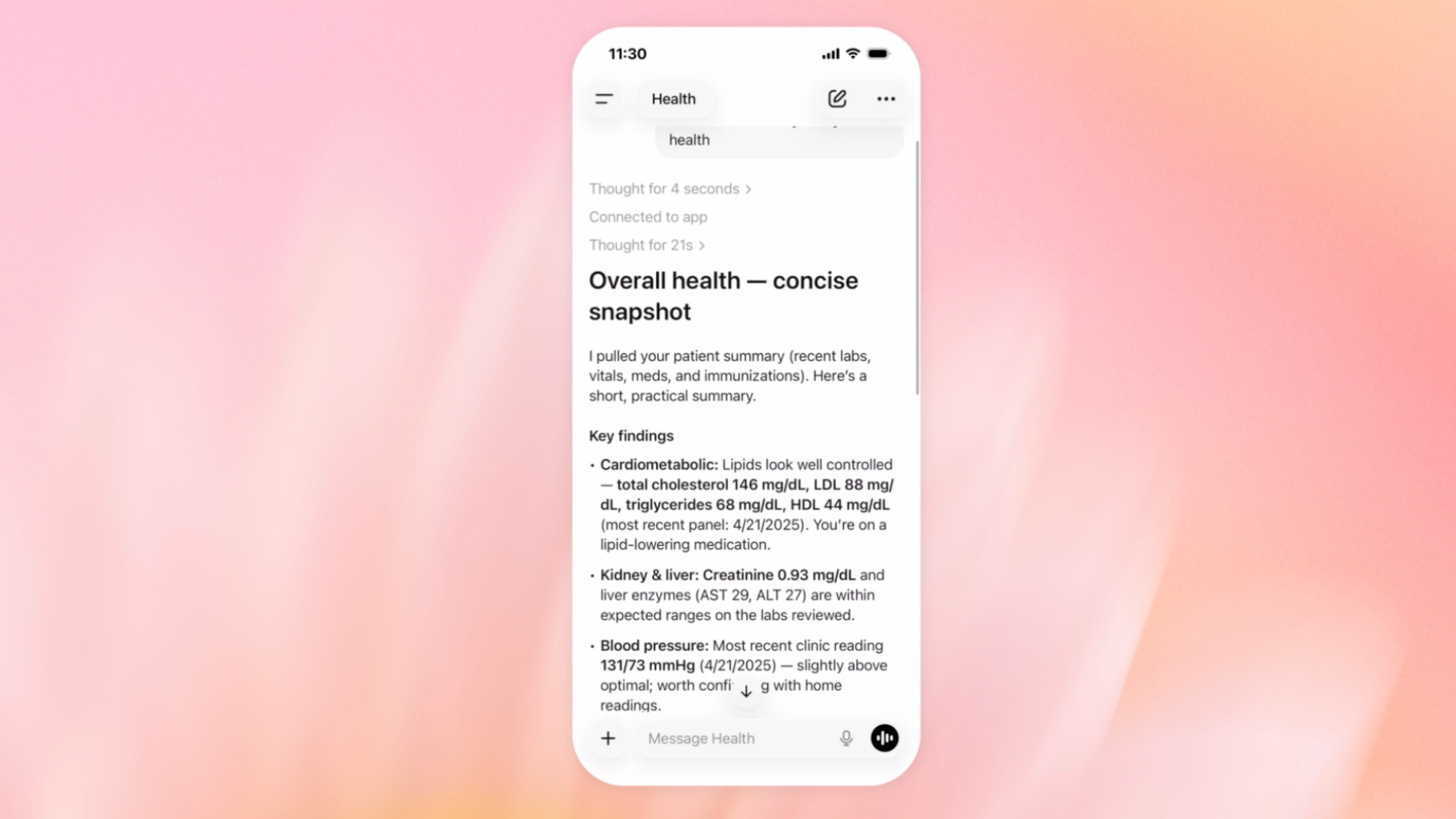
This week, OpenAI announced its new ChatGPT Health feature, which will let users upload their medical records and ask health related questions. However, I certainly won’t be making use of it, it might not be the best idea for you to do it either, for both reliability and privacy reasons.
The new ChatGPT Health feature will be a sandboxed tab inside the app that is isolated from your conversation history in other conversations with the chatbot. This tab also allows users to connect a variety of health-tracking apps like Apple Health, MyFitnessPal, and Peloton, as well as uploading medical records directly.
Credit: OpenAI
It’s important to note that this is a lot of really personal information to hand over to any tech company—but especially one that isn’t primarily focused on providing medical services. OpenAI says that the ChatGPT Health space operates with “enhanced privacy to protect sensitive data,” but it doesn’t use end-to-end encryption to secure that data. And while the company says data collected via Health isn’t used to train its foundation models, it’s impossible to know whether that may change in the future. Security breaches can also occur (and have in the past), potentially leaving your medical records exposed.
There’s also the question of whether the risk of uploading your data is worth it in the first place. According to OpenAI’s own data, around 5% of all messages to ChatGPT are already users asking questions about their health, and ChatGPT (and other LLM tools) have a nasty habit of providing inaccurate diagnostic information. This is perhaps why OpenAI says that its new ChatGPT Health feature is “not intended for diagnosis or treatment.”
Currently, there’s a waitlist to sign up for ChatGPT Health, and over time it will roll out to all users. At the very least, that means that until the feature is available, it’s probably a good idea not to ask the regular version of ChatGPT about your health concerns. At the very least, wait until the enhanced privacy sandbox is available. In the meantime, consider whether it makes more sense to just talk to your doctor directly if you have questions or concerns about your health.
In a new executive order, President Donald Trump has declared that the United States will withdraw from 66 international organizations and bodies, including several focused on tackling climate change. Trump made his disregard for climate change clear when he withdrew the US from the Paris climate agreement for a second time in early 2025, but these new withdrawals further confirm the second Trump administration is against global collaboration in general.
Among the organizations targeted, the US will no longer participate in the UN Framework Convention on Climate Change, the Intergovernmental Panel on Climate Change and organizations focused on trade, conservation, reproductive rights and immigration, like International Trade Centre, the International Union for the Conservation of Nature, the UN Population Fund and the Global Forum on Migration and Development. In the case of the United Nations-affiliated organizations, the US ending its participation also means withdrawing funding.
According to the White House, the organizations the US is leaving “promote radical climate policies, global governance and ideological programs that conflict with US sovereignty and economic strength.” Withdrawing is supposed to save taxpayers money, though the White House’s fact sheet on the executive order neglects to say how much will be saved or how that saved money will be spent now that it’s not supporting the United Nations.
“By withdrawing from the IPCC, UNFCCC, and the other vital international partnerships, the Trump administration is undoing decades of hard-won diplomacy, attempting to undermine climate science and sowing distrust around the world,” Former Vice President Al Gore said in a statement responding to the executive order.
While losing financial backing likely doesn’t help anyone, the actual impact of the US’sdec withdrawals is a bit of an unknown, The Washington Post reports. For example, the US remains involved with the International Energy Agency, which works on global clean energy solutions. Also, many of the organizations the White House decided to exit were deliberative bodies, or ones that the US was only marginally involved in, according to a UN official The Post spoke to.
Directly pushing back against global organizations and regulation has been a consistent theme of the second Trump administration, particularly in regards to tech regulation. The US withdrew from trade talks with Canada in June 2025 over the country’s digital services tax, and just last month the US banned former EU commissioner Thierry Breton from entering the US for his role in the creation of the Digital Services Act.
This article originally appeared on Engadget at https://www.engadget.com/big-tech/the-us-withdraws-from-dozens-of-international-bodies-including-climate-focused-organizations-195259578.html?src=rss
Have a hankering for some audiobooks? Audible is holding one heck of a sale right now, giving users three months of access for $3. That’s a dollar per month. This is something of a winter tradition for the Amazon-owned platform and the promotion ends on January 21.
An Audible subscription grants one audiobook per month to keep. This can be selected from a massive catalog of new releases and bestsellers. The collection here has just about everything.
However, it’s easy to plow through a single book in a month. Users also get streaming access to thousands of curated titles. Think of it like Netflix for audiobooks. The catalog is limited, but it gets the job done in a pinch. Subscribers do get access to all Audible original content and they will receive discounts on purchasing audiobooks outright.
In other words, it’s a neat little service and well worth a buck. The regular price is $15, so make sure to cancel at the end of that three months if you aren’t enjoying the platform.
We may earn a commission from links on this page. Deal pricing and availability subject to change after time of publication.
The latest AirPods Pro are a big step up from the first-generation buds. The third (and newest) generation comes with OTA updates that the AirPods Pro 2 also get to enjoy—but considering the second and third generations are the same price right now, why not go with the newer version? The AirPods Pro 3 are down to $199 (originally $249.99), which they briefly hit back in December during the holiday sales—the lowest price yet, according to price tracking tools.
The AirPods Pro 3 improve on already great premium earbuds with new features (like a heart rate sensor) without increasing the list price. You’ll get Personalized Spatial Audio (so you can hear sounds seemingly coming from different directions as you move your head) and the ability to use head gestures to tell Siri “yes” or “no” (this also works for answering or denying calls). Apple added a live translation feature to both the second- and third-generation AirPods Pro when iOS 26 rolled out earlier this year. You’ll also get features like Conversation Awareness, which lowers your music volume when your AirPods detect that you’re talking to someone; Transparency Mode, which lets you better hear your surroundings while your earbuds are in; and Adaptive Audio, which combines ANC and Transparency mode to adjust ANC levels based on the noise around you.
Since these are in-ear earbuds (as supposed to regular earbuds like the AirPods 4) the ANC is much better since it naturally blocks out the noise with a tight seal, but the ANC technology itself has also improved—as has the sound quality, thanks to the new H3 chip, as PCMag detailed in its “exemplary” review, calling them the best earbuds your money can buy. You can expect about eight hours of juice, depending on your usage, and another 24 hours from the charging case.
TV manufacturers at CES 2026 in Las Vegas this week unveiled a wave of AI features that frequently consume significant screen space and take considerable time to deliver results — all while global TV shipments declined 0.6% year over year in Q3, according to Omdia. Google demonstrated Veo generating video from a photo on a television, a process that took about two minutes to produce eight seconds of footage, The Verge writes in a column. Samsung presented a future where viewers ask their sets for sports predictions and recipes to share with kitchen displays. Hisense showed an AI agent that displays real-time stats for every soccer player on screen, a feature requiring so much space the company built a prototype 21:9 aspect ratio display to accommodate it.
Demos repeatedly showed video shrinking to make room for sports scores and information when viewers asked questions — noticeable on 70-inch displays and likely worse on anything 50 inches or smaller. Amazon’s Alexa Plus can jump to Prime Video scenes based on verbal descriptions. LG’s sets switch homescreen recommendations based on voice recognition of individual family members.
As an unabashed fan of electric vehicles, even I have to admit that most of them are pretty boring. Their smooth, quiet and calm demeanors don’t offer much in the way of intrinsic personality, which has led to many brands slapping on outré designs and fake engine sounds to try and dial up the excitement.
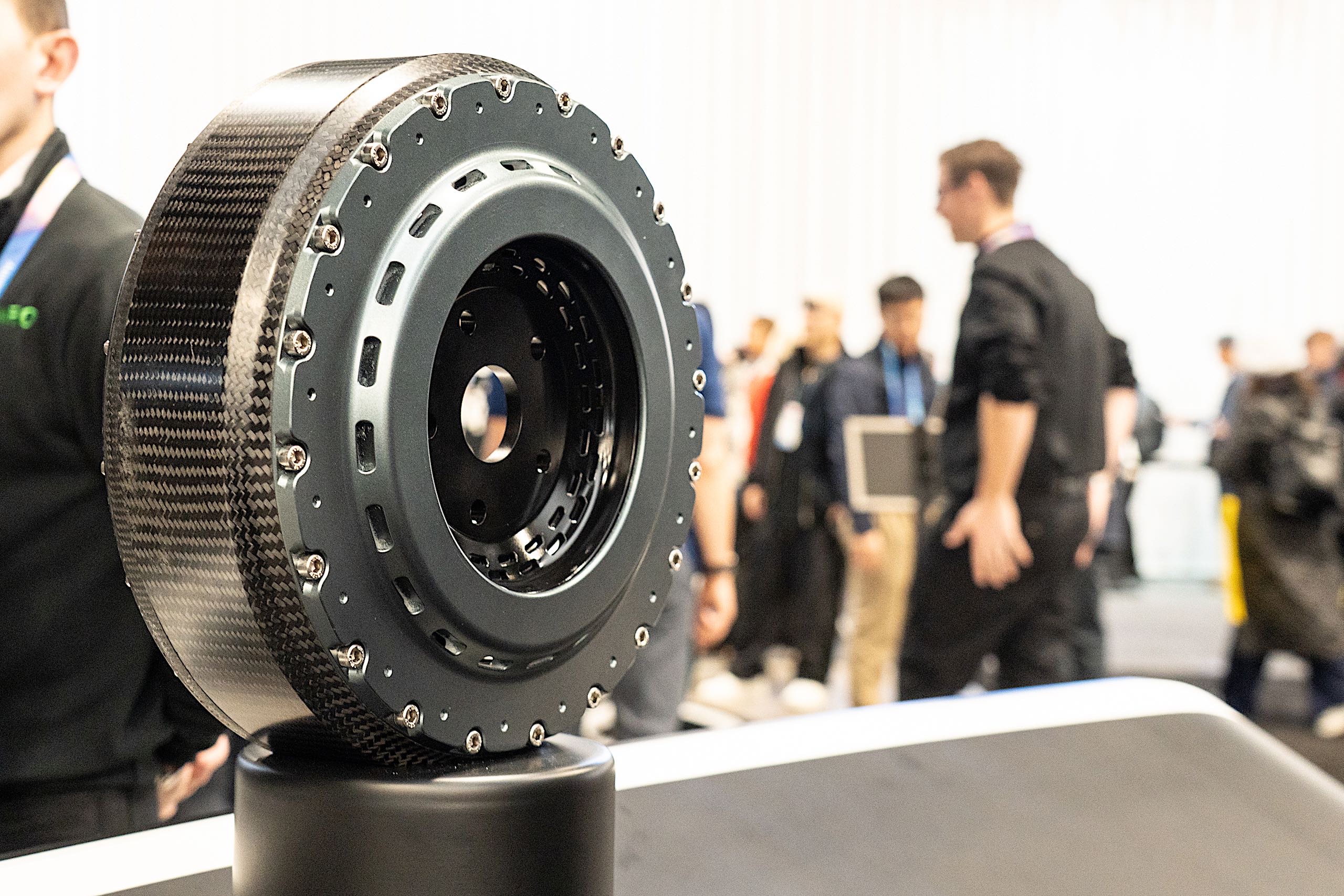
To that end, a pair of offerings coming soon from UK-based EV startup Longbow Motors looks to deliver exactly that. The Speedster and Roadster are high-performance electric machines built using advanced in-wheel motors from Donut Labs. Those motors and a bespoke design enable an astonishing curb weight of just 2,200 pounds.
For comparison’s sake, that’s over 100 pounds less than a Mazda Miata, the current king of lightweight roadsters. Longbow brought just the Speedster to CES 2026, displaying it on the show floor at the Donut Lab booth. Donut is a spinoff of Verge Motorcycles, which was the debut platform for the company’s hub-less electric motor, creating a unique, Tron-style aesthetic.
But the technology is about a lot more than creating physics-defying motorcycles. Donut Lab is expanding its motors to all sorts of platforms, from scooters to heavy-duty trucks, creating a platform for easy adoption by electrified startups.
Donut Labs’ motors in the Longbow Motors Speedster
Tim Stevens for Engadget
Of all those platforms, though, Longbow’s implementation is the most compelling I’ve seen. The appeal starts with the style. Co-founders Daniel Davey and Mark Tapscott (who, with Jenny Keisu, founded Longbow after stints at Tesla and Lucid) told me they wanted to offer a classic but also modern and compelling look. The roofless Speedster has an edge over its glass-topped Roadster in terms of visual simplicity, but a complete lack of any protection from the elements — even a token windscreen — will make it viable only for the most committed of open-air enthusiasts.
Exposed or protected, you’ll find yourself situated in an extremely spartan interior. Things like the gauge cluster and primary controls were covered, set to be revealed later, so I can’t say for sure exactly what the Longbow looks like on the inside. But it was designed to be basic and minimal to an extreme, an abject rejection of the rest of the touchscreen-laden machines on the road today.
There is one seemingly unnecessary piece of equipment in the interior, though, and that’s a shift knob. EVs, of course, rarely have transmissions, so there’s no outright need to shift. The purpose of that lever is also a mystery for now, as neither Davey nor Tapscott would confirm its function, but it seems safe to expect some sort of simulated gearshift action, a la the Hyundai Ioniq 5 N.
The Longbow machines don’t just lack a transmission, they lack a traditional drivetrain layout at all. The direct-drive Donut Lab motors are situated right inside the wheel, freeing up space inside the vehicle’s chassis and helping it to maintain its pert dimensions.
Longbow Motors Speedster
Billy Steele for Engadget
They also provide a distinctive look, filling up the wheels as they do. There is a downside to this arrangement, that being the heft of these motors hanging on the outer edges of the vehicle. The suspension, then, has to work a bit harder. But co-founder Mark Tapscott told me that the positives outweigh the negatives, and that the handling benefits of having multiple motors alone are worth it.
To keep the rest of the Longbow’s weight centralized, the car uses a battery pack that runs largely along the center of the machine, stacked vertically rather than spread throughout the floor. This keeps the mass centralized in the vehicle while also enabling the kind of ultra-low seating you want in a machine like this.
It looks like it’ll be quite a fun package to drive, and while exact power output from those Donut Lab motors hasn’t been confirmed yet, the Speedster is said to sprint to 60 mph in just 3.5 seconds. That’s supercar-like performance, but unfortunately, that performance won’t come cheap.
The Speedster starts at ₤84,995, or just under $100,000 by current conversion rates. The Roadster is a fair bit more attainable at ₤64,995, or about $75,000. However, given the wonderfully chaotic state of international tariffs right now, expect the actual pricing here to be somewhat higher when they go into production later this year. Reservations are open now on the company’s site.
That’s a little too rich for my blood, sadly, but if you’ve got the budget, a left-hand drive version will be available. And yes, it’ll be fully road-legal in the U.S.
This article originally appeared on Engadget at https://www.engadget.com/transportation/evs/ces-2026-longbow-motors-shows-off-its-speedster-ev-with-donut-labs-in-wheel-motors-192329111.html?src=rss
TikTok and FIFA are teaming up for World Cup matches. On Thursday, FIFA said its media partners will be able to broadcast “parts of matches” on the social platform. The “preferred platform” partnership will run through the end of 2026.
How long the live clips will be is anyone’s guess because “parts of matches” is as specific as the announcement got. We emailed TikTok for clarification and will update this story if we learn more.
FIFA said the collaboration is designed to bring fans “closer to the action.” Getting more to the point, TikTok’s global head of content said live sports on the platform are shown to transform “fandom into measurable business results for our sports partners, with fans being 42 percent more likely to tune in to live matches after watching sports content on TikTok.”
TikTok’s World Cup content will include filters, stickers and other “gamification” features. FIFA will also give “a select group of global TikTok creators” access to press conferences and training sessions to create content. “As football grows and evolves — uniting an increasing number of people — so should the way it is shared and promoted,” FIFA secretary general Mattias Grafstrom wrote in the announcement.
The World Cup runs from June 11 to July 19. It will take place in 16 cities across Canada, the US and Mexico.
This article originally appeared on Engadget at https://www.engadget.com/social-media/tiktok-will-broadcast-some-unknown-portion-of-the-2026-world-cup-live-192035507.html?src=rss
Accessory maker Logitech provides users with an extensive suite of software to manage and customize its lineup of popular mice and innovative keyboards. Unfortunately, the company failed to maintain a necessary certificate on the macOS versions of these apps, leaving users in a lurch as their hardware no longer worked as intended. Thankfully,
When it comes to cognitive ability, not all dogs are created equal. Most dogs can learn simple action cues like “sit” or “down.” But so-called “gifted word learner” (GWL) dogs exhibit a remarkable ability to learn the names of objects—for example, learning the names of specific toys so well that they can retrieve them from a large pile of toys on command. And according to a new study published in the journal Science, they can even learn labels for new toys just by overhearing their owners talking about those toys. Per the authors, this suggests that GWL dogs have sociocognitive skills that are functionally comparable to those of 18-month-old human toddlers.
Co-author Claudia Fugazza of Eötvös Loránd University in Budapest, Hungary, has been studying canine behavior and cognition for several years as part of the Genius Dog Challenge. For instance, the group’s 2022 study discovered that dogs store key sensory features about their toys—notably what they look like and how they smell—and recall those features when searching for the named toy. Prior studies had suggested that dogs typically rely on vision, or a combination of sight and smell, to locate target objects. GWL dogs can also identify objects based on verbal labels.
In that 2022 study, all the dogs—regardless of whether they were GWL dogs or typical dogs—successfully picked out the target toys in both light and dark conditions, though it took them longer to locate the toys in the dark. Most relied on visual cues, even though dogs possess an excellent sense of smell. However, the dogs sniffed more frequently and longer when searching for the toy in the dark.
For weeks, xAI has faced backlash over undressing and sexualizing images of women and children generated by Grok. One researcher conducted a 24-hour analysis of the Grok account on X and estimated that the chatbot generated over 6,000 images an hour flagged as “sexually suggestive or nudifying,” Bloomberg reported.
While the chatbot claimed that xAI supposedly “identified lapses in safeguards” that allowed outputs flagged as child sexual abuse material (CSAM) and was “urgently fixing them,” Grok has proven to be an unreliable spokesperson, and xAI has not announced any fixes.
A quick look at Grok’s safety guidelines on its public GitHub confirms they were last updated two months ago. The GitHub also indicates that, despite prohibiting such content, Grok maintains programming that could make it likely to generate CSAM.
When shopping for cordless power tools, you’d think you could simply purchase the best option of each to fit your needs. But there’s a big problem that makes this a lot harder (and more expensive) than it should be: battery incompatibility. By design, you can’t simply pop a Ryobi battery into a DeWalt tool and expect it to work. Engineering decisions aside, using proprietary batteries allows companies to create a sort of obligatory brand loyalty, forcing you to stick with their line of tools unless you want to invest in a whole new set of batteries for every new tool you buy.
If you’ve been building your cordless tool collection for some time, you may wind up with four or five different chargers and multiple batteries cluttering your workspace. And that clutter can be expensive, because you wind up buying more chargers and batteries than you might not need if batteries were interchangeable.
But it turns out they are, sort of. You can actually swap batteries between brands—you just need the right adapters.
Adapters let you swap tool batteries between brands
There are two kinds of battery adapters to consider:
These adapters are a fairly simple solution to the problem of incompatible battery systems. If you have a lot of DeWalt tools, for example, you can purchase a Milwaukee tool without a battery (which will be cheaper) and just use an adapter to plug in one of the DeWalt batteries you already have.
Of course, these batteries weren’t specifically designed for these tools, so there can be some trade-offs. While tool performance has been found to be broadly similar (and some tools even performed better when using batteries from different brands), for some tools (like grinders and some circular saws) there’s a dropoff in power and performance when using an adapter. That said, you might not notice it if you’re just looking to tackling simple DIY projects around the house.
Another caveat to consider: You might lose some features. Some tools are designed to communicate with the battery to modulate power draw in order to extend the life of the battery, and using an adapter will remove this functionality. But again, if you’re simply using a power drill for basic maintenance tasks, this might not be a huge issue for you.
Universal adapters are a good solution if you own a bunch of brands
If you’ve got a bunch of disparate tool brands, of course, buying multiple adapters might not seem like much of an improvement over your collection of batteries and chargers. If this is you, consider something like the Ceenr PDNation Universal Battery System, which provides an 18-volt battery and a series of adapters that allow it to be used in a wide range of power tools, including major brands like Ryobi, Milwaukee, and DeWalt.
For example, you can buy a battery with an adapter for DeWalt tools, then buy a second adapter for the same battery that will work with Makita tools. This means you can standardize on one battery system for pretty much any tool you buy (it’s not a truly universal system, since you’re dependent on the range of adapters they offer, but it’s probably close enough for most people).
As with other adapters, there can be some performance loss using a universal adapter, but by and large, it’s probably not a big issue if you’re doing work around the house, as opposed to working professionally on a job site.
Samsung SmartTag 2 trackers are back on sale if you’re willing to pick up a bundle. Woot has a four-pack down to just $45, which undercuts the previous all-time low we’ve seen on Amazon ($55) by $10. That’s a discount of 55 percent from the retail price of $100. It’s a compelling opportunity to stock up if you’re already in Samsung’s ecosystem.
We named the SmartTag 2 the best Bluetooth tracker for Samsung devices. The companion SmartThings Find app is easy to use, showing locations on a Google Maps-based interface. Much like Apple’s Find My network, the location of a SmartTag is pinpointed using nearby Samsung phones. While nothing can beat the sheer size of Apple’s tracking infrastructure given the number of iPhones in the US, it still worked well in our tests.
The SmartTag 2’s design is more practical than some competitors since the oblong fob has a built-in hole that lets you easily attach your keys without buying an extra accessory. It’s IP67 rated for water and dust resistance, and uses a replaceable battery that Samsung says offers about 16 months of juice. The volume on the tag is pretty loud and users can select from multiple ringtones. Additionally, a double-squeeze of the SmartTag 2 will ping your handset, something you can’t do with an AirTag.
The tracking is not quite as precise as Apple’s AirTag, but it’s a solid option for Samsung users looking to keep track of their things and can be scooped up at a bargain price.
This article originally appeared on Engadget at https://www.engadget.com/deals/you-can-get-a-four-pack-of-samsung-smarttag-2-trackers-for-just-45-173936230.html?src=rss
Google is adding a slate of AI features to Gmail that could save some of the hassle of searching for important information buried in messages and threads. Many users will soon see a more personalized inbox with AI-powered suggestions, summaries, and proofreading support. Plus, some AI functionality that was previously available only to paid subscribers will be rolling out to all Gmail users, including Help Me Write, AI Overviews for threaded emails, and Suggested Replies.
See personalized, AI-powered snapshots
Gmail users will soon have an AI Inbox view with two sections. “Suggested to-dos” will show immediate action items found in your inbox, such as bills to be paid and appointments to be confirmed. The task will be bolded and followed by a summary and a link to the relevant email or thread. Below that, “Topics to catch up on” includes items that are less urgent (but still important), such as order status and event updates.
AI Inbox is an optional toggle in the Gmail side panel. You won’t see it immediately, though—the feature is being made available to those in Google’s Trusted Tester program before launching for users more broadly “in the coming months.”
Get AI Overviews via Gmail search
Google AI Pro and Ultra subscribers will also be able to get AI Overviews from natural language questions typed into the Gmail search bar (just like a Google search). Instead of a running standard keyword search and clicking through multiple message threads, you’ll be able to ask things like “Who was the plumber that gave me a quote for the bathroom renovation last year?” and get a detailed summary of information pulled from emails in your inbox. The response will also provide citations to specific threads.
AI will proofread your emails
Finally, Gmail will have a built-in, AI-powered proofreading feature that will check grammar, tone, and style and analyze your emails for clarity and structure. Similar to third-party tools like Grammarly, you’ll see one-click suggestions for fixing typos, simplifying sentence structure, selecting improving word choice, and making writing more concise.
Like AI Overviews, Proofread will be limited to paid subscribers. Note that these AI features are optional and can be disabled, and Google says it does not use personal information or content to train its AI models.
Texas Attorney General Ken Paxton has secured a temporary restraining order against Samsung, blocking the company from continuing to collect data through its smart TVs’ Automated Content Recognition technology.
The ACR system captured screenshots of what users were watching every 500 milliseconds, according to the state’s lawsuit, and did so without consumer knowledge or consent. The District Court found good cause to believe Samsung’s actions violated the Texas Deceptive Trade Practices Act. The TRO prohibits Samsung and any parties working in concert with the company from using, selling, transferring, collecting, or sharing ACR data tied to Texas consumers.
Samsung is one of five major TV manufacturers the Texas Attorney General’s office has sued over ACR deployment. Paxton previously secured a similar order against Hisense.
Intel’s new Core Ultra Series 3 processors (codenamed Panther Lake) offer extremely impressive integrated graphics performance, as we noted in our brief testing yesterday. They’re also based on what is arguably the most advanced manufacturing process in the world, Intel’s 18A, which boasts exclusive features like RibbonFET and PowerVia. That
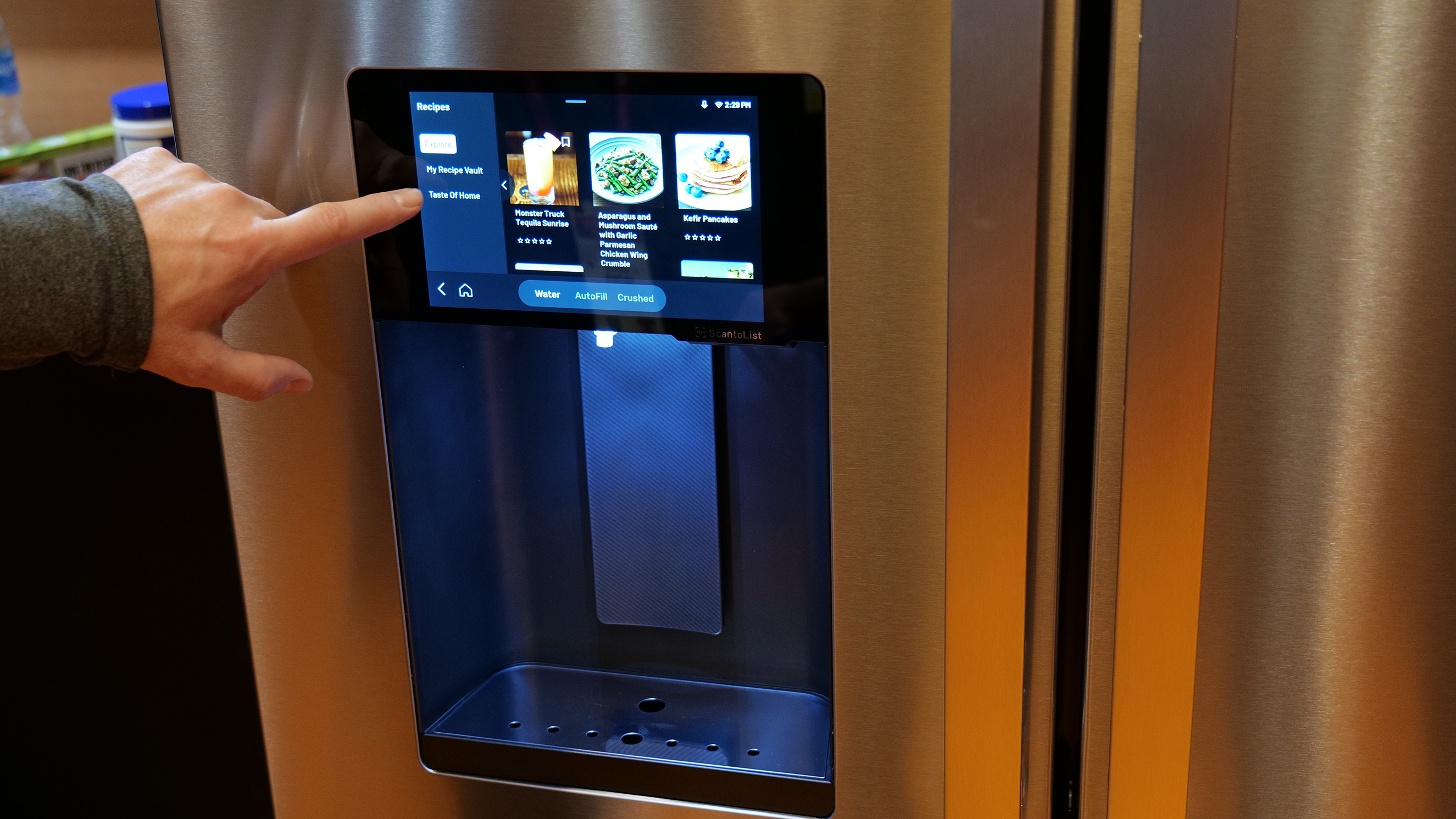
If you’ve ever bought a bag of spinach only to come home and realize you already had a bag of spinach, you may appreciate this fridge. I had a chance to check out the GE Profile Smart Fridge with Kitchen Assistant at CES and was surprised to find I kinda wanted one. To be perfectly honest, most attempts I’ve seen at the show to “stick some AI in it” are at best amusing but usually completely unnecessary.
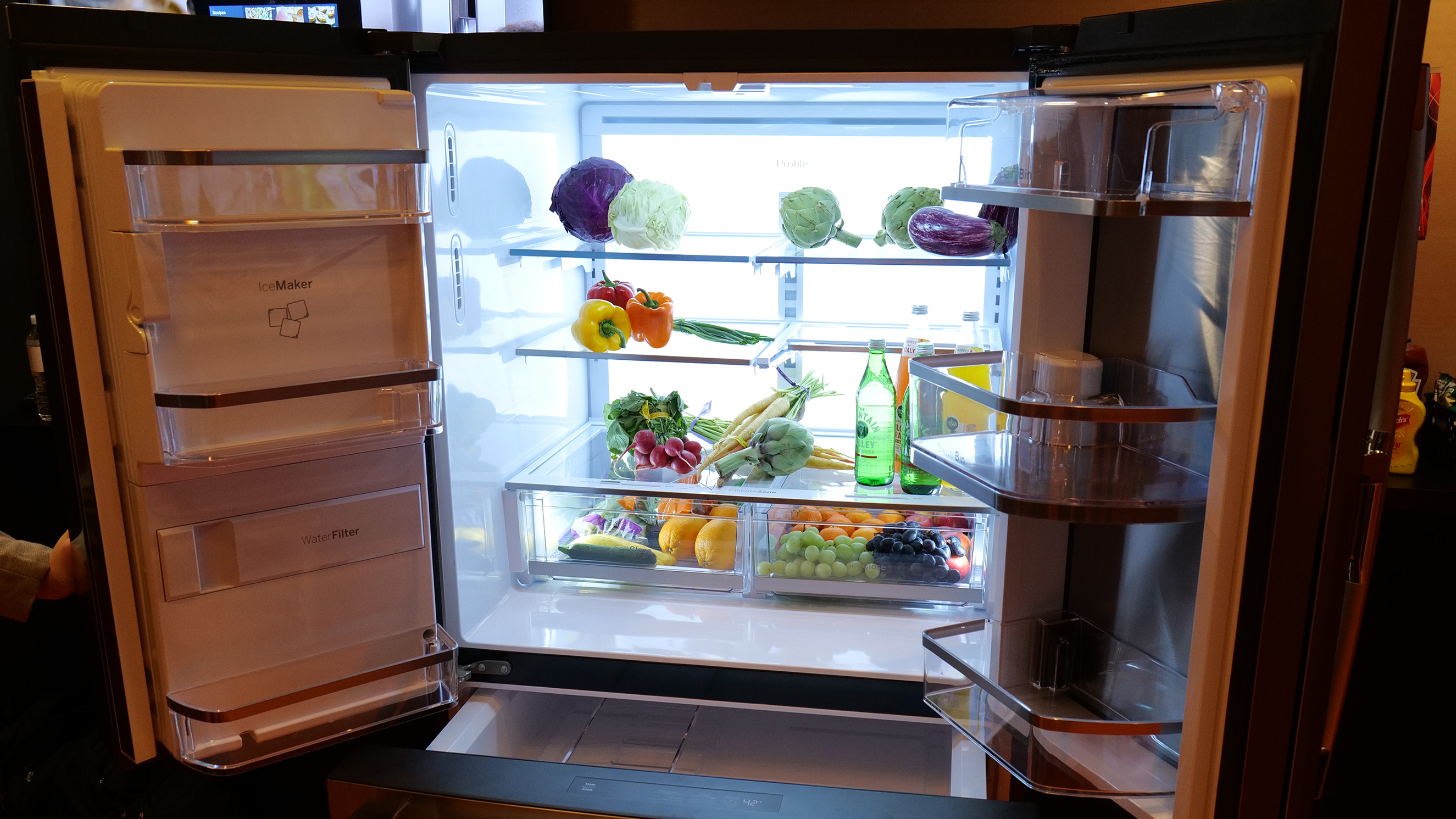
Here, though, the AI has a purpose. After seeing how the autofill water dispenser worked, I asked the GE Appliance reps how easy it was to change the fridge’s water filter. Jason May, a GE Appliances product management executive, walked up to the fridge’s (appropriately sized) touchscreen and said “Hey HQ, where’s my water filter?” (HQ is short for SmartHQ, GE Profile’s assistant). Then, relying on information it had gathered from this model’s user manual, the AI assistant explained exactly where to find it (in the left hand door below the ice maker). It took another rep about two seconds to pop out the filter and, justlikethat, the task was on its way to done.
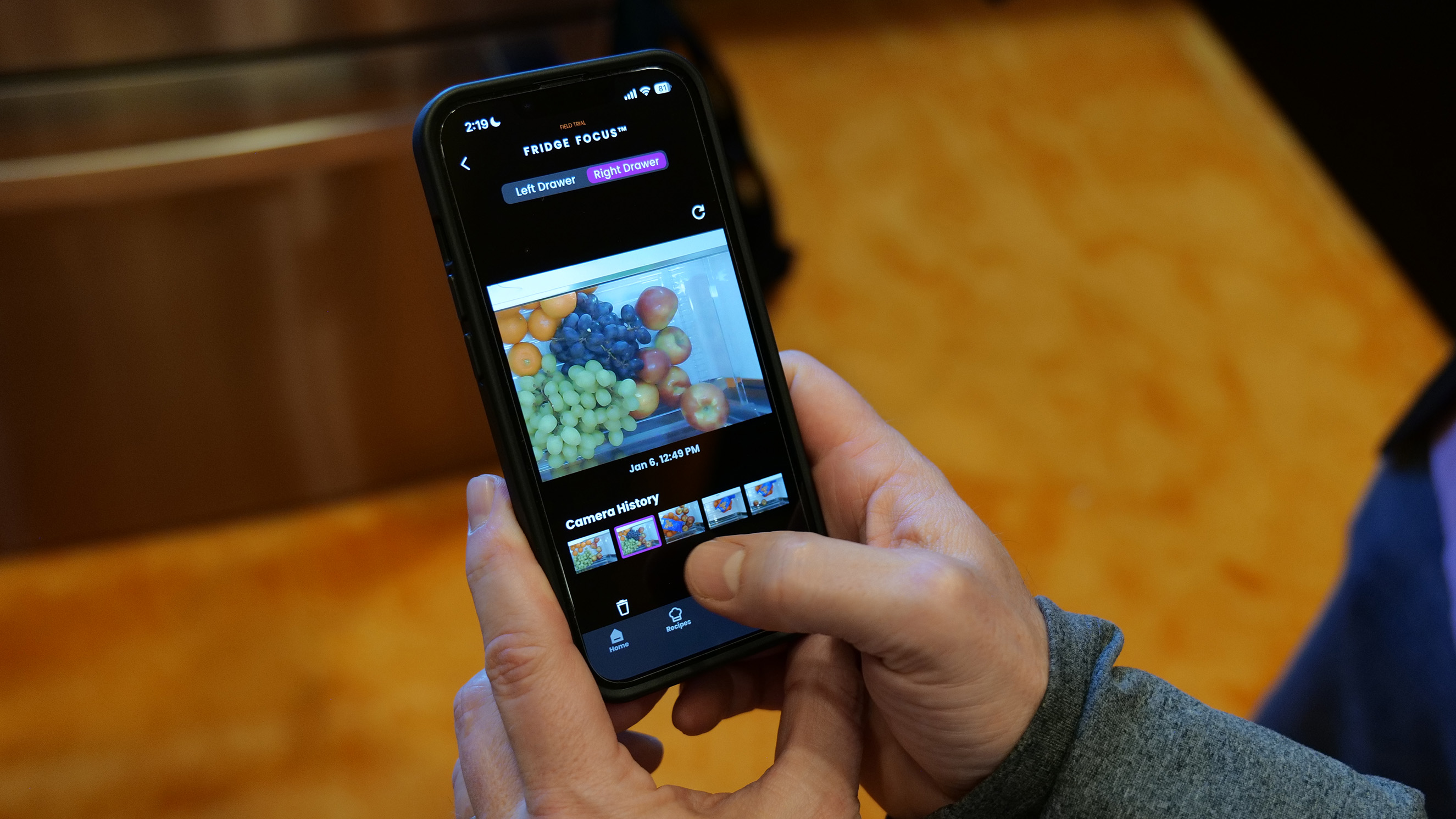
As for the spinach conundrum, that’s handled by a crisper drawer camera, called Fridge Focus. Each time you open the drawers, a built-in camera (that you can physically shutter or turn off in the app) takes a video snapshot of what’s left when you’re done. So if you’re at the store and wondering how much kale you already have, you can take a peek and see.
Checking out what’s in the crisper drawer using the Fridge Focus feature.
Sam Rutherford for Engadget
Wendy Treinen, GE Appliances’ senior director of product communications, told me the camera can see what’s in the crisper drawer, but can’t see who accessed it. So if you’re hoping your fridge will rat out whoever at the last of the grapes, you’re out of luck. It can however, help that grape-eater easily add more fruit to the family shopping list.
That’s the most unique feature the fridge offers: a patented, built-in barcode scanner. It lives in the water dispenser and when you walk up, a little green light activates and scans the barcode of whatever you hold up to it. So if you’re drinking the last of the almond milk, you scan the container and it’ll automatically add it to your list.
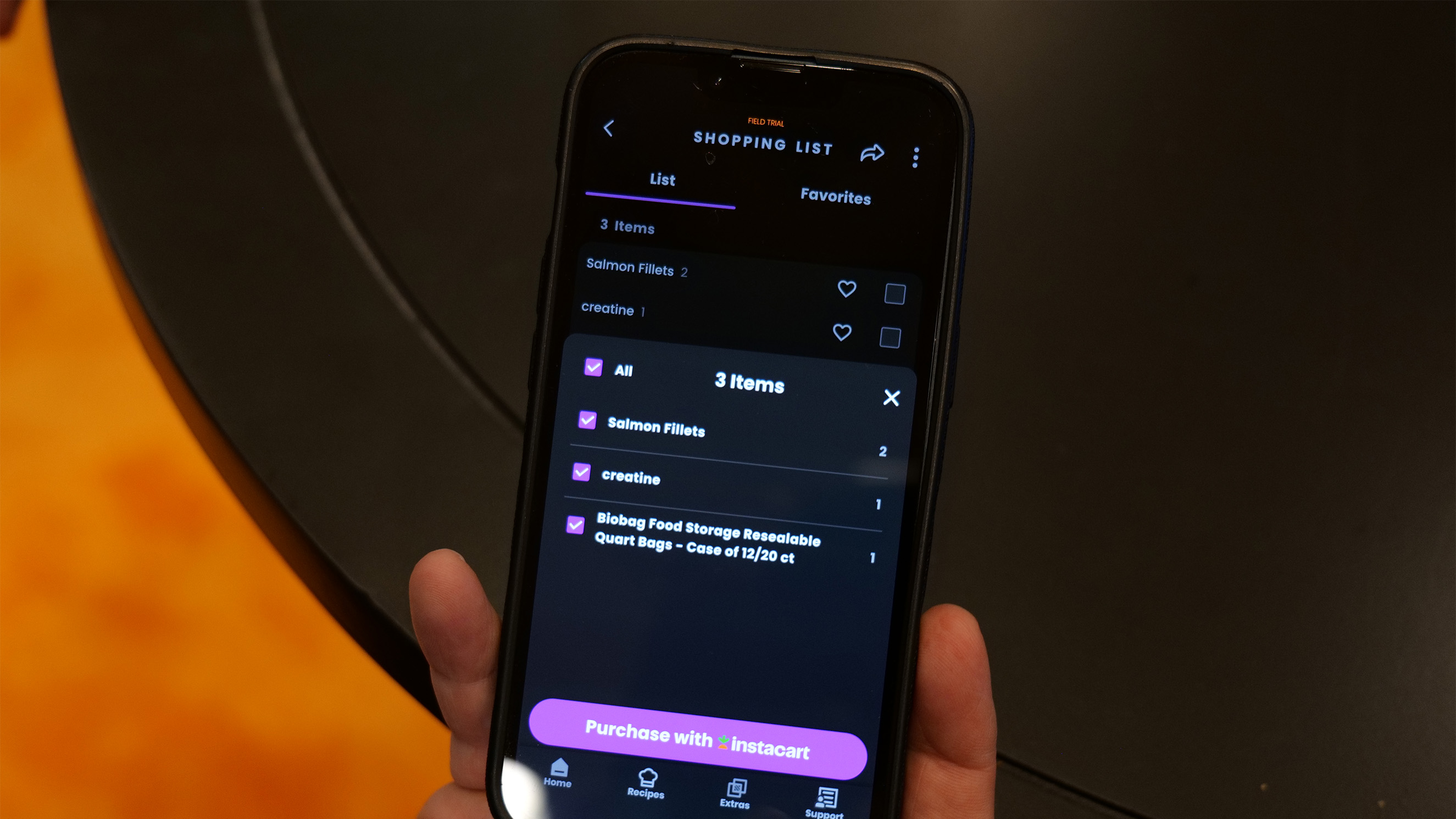
That list can be accessed through the SmartHQ app which you can either check off at the grocery store or, if you really want to get deluxe about it, use the Instacart integration and have it delivered to your door. I scanned a few products — a box of vitamin C mix and a package of cinnamon raisin bagels — both of which quickly popped up on the screen and joined the running list.
Adding grocery items to Instacart with one button.
Sam Rutherford for Engadget
The scanner can recognize four million products, including household items like paper towels and trash bags, but you can add things a other ways too. The easiest is probably just asking your fridge to do so, saying “Hey HQ, add paper towels to my shopping list.” The app allows manual additions and you can add items using the recipe function as well.
For the launch of the fridge, GE Profile has partnered with Taste of Home and will send 50 recipes each month to the fridge for users to try. Once you see the ingredients list, you can add anything you’re missing to your shopping. Those 50 recipes will cycle out at the end of the month to make way for a new 50, so if you cook something and like it, you’ll need to to add it to your personal recipe vault.
The AI assistant can also create recipes for you. The GE rep snapped a picture of an array of produce and asked SmartHQ what he could make with it. A list of recipe suggestions popped up and they all looked quite tasty (to be fair, I hadn’t eaten yet and it was already 2PM).
The recipe created from a picture of produce. Sam Rutherford for Engadget
I mentioned the water dispenser’s hands-free auto-fill feature earlier. That’s been available on GE Profile fridges for a while and lets you select your glass capacity and walk away while it fills. You can also ask for, say, a half cup of water for a recipe. A new “precise fill” feature will dispense larger amounts in sequence. Say you need ten cups of water for soup. Since you can’t fit a huge vat in the water dispenser tray, you can instead use a smaller jug and the auto-filler will fill it the correct amount of times.
Another of my favorite bits is the screen. Fridges with giant, interactive screens make my eyes roll. Yes, it’s novel and eye-catching and perhaps amusing, but what possible problem is it trying to solve? The screen here is eight inches, which is enough to display scanned items, show recipes, and display the weather atop a pretty image when you’re not actively using the interface.
Finally! A reasonably sized fridge screen.
Sam Rutherford for Engadget
The GE Appliances reps were eager to point out that this is just the beginning of what they want to do with the fridge. My college Sam Rutherford asked whether the fridge would be able to alert you before your lettuce went bad, and we were told something that addresses that problem is on the horizon. It would likely work by recognizing when you purchased a perishable, and how long that perishable typically lasts. The company is also working with a chef on a feature that can reimagine your leftovers to create something new.
During the demo, May told me that the whole idea around the fridge’s design was to do something other than just “put a big screen on it with a bunch of apps that don’t have ay relevance to anything.” Instead the engineers started with problems people actually have — knowing what to buy at the store, knowing what’s already in the fridge, answering the eternal, unrelenting “What’s for dinner?” question — and designed the fridge around that.
I’d have to live with it a while to know whether those problems were solved, but so far, I can say this is the most intrigued I’ve felt about a smart fridge yet. The GE Profile Smart Fridge with Kitchen Assistant will be available in March from geappliances.com for $4,899.
A good amount of organization.
Sam Rutherford for Engadget
This article originally appeared on Engadget at https://www.engadget.com/home/kitchen-tech/the-ge-profile-smart-fridge-stops-you-from-buying-too-much-kale-172433059.html?src=rss
NASA has postponed an International Space Station (ISS) spacewalk that was scheduled for Thursday. “The agency is monitoring a medical concern with a crew member that arose Wednesday afternoon aboard the orbital complex,” the agency wrote. On Thursday, NASA added that ending Crew-11’s mission early was on the table.
The unnamed crew member is stable, according to NASA. Space News notes that Kimiya Yui of the Japan Aerospace Exploration Agency (JAXA) was heard on an open comms channel on Wednesday requesting a private medical conference with a flight surgeon. However, those requests are routine on the ISS, so we can’t assume the events were related.
“The matter involved a single crew member who is stable,” NASA wrote. “Safely conducting our missions is our highest priority, and we are actively evaluating all options, including the possibility of an earlier end to Crew-11’s mission.”
NASA astronaut Zena Cardman in her pressurized spacesuit, checking its comms and power systems ahead of the (now postponed) spacewalk
NASA
Crew-11 was scheduled to remain on board the ISS until at least the second half of February. Its replacement, Crew-12, isn’t slated to blast off until February 15 at the earliest.
NASA astronauts Mike Fincke and Zena Cardman had planned to exit the airlock on Thursday for the six-and-a-half-hour spacewalk. The short trip’s mission was to install a kit and cables in preparation for a new roll-out solar array that will arrive on a future mission.
The agency said it will provide further updates within 24 hours.
This article originally appeared on Engadget at https://www.engadget.com/science/space/nasa-delays-spacewalk-due-to-a-medical-concern-with-a-crew-member-171900024.html?src=rss
Star Trek is in a weird place right now. Less than three years ago we were living in a golden age with five shows on the air, all with different styles and intended audiences. But the universe rapidly contracted, with Picard ending while four other shows were cut short. Strange New Worlds still has another two seasons left, sure, but even that final season got truncated. As it stands, there’s only one project with a firm future right now, and that’s a brand-new show, Starfleet Academy, premiering January 15 on Paramount+.
How this show is received could very well determine the future of Star Trek. That’s a lot to put on it, but there’s something very appropriate given the subject matter. Starfleet Academy takes place in the 32nd century, 900 years after the adventures of James T. Kirk and company, and it takes place at the titular academy, meaning its principal cast is a collection of teens representing the next generation of Starfleet officers. That focus on a younger cadre has led to fans online derisively calling the series “CW Trek” without seeing a single episode.
As Starfleet Academy is technically a Discovery spinoff, it picks up some of that series’ traits. The sleek, shiny sets are back, as well as a few plot threads originally set up in Discovery. The most notable is the collapse of the United Federation of Planets and the rebuilding of both the Federation and Starfleet. In fact, the series picks up on that as early as its second episode, with the Academy hosting a delegation from a once stalwart Federation planet that’s now gone isolationist.
Scenes from Star Trek: Starfleet Academy
John Medland/Paramount+
While many complaints about the series have focused on how what fans wanted was an academy show set during the 24th century (the time of The Next Generation, Deep Space Nine, et al.), this particular episode plot works precisely because of the distant future in which it is set. In a fully-functioning galactic democracy like the United Federation of Planets, there’s no logical reason for the average 18-year-old college freshman to be involved in interplanetary diplomacy. But in the 32nd century, the Federation is a lot scrappier and the individuals involved might be asked to wear many hats. It’s a lot like an early-stage tech startup.
The setting also lets the show be a little more creative with its cast: where TNG featured the first Klingon in Starfleet (Worf), 900 years of progress have created a Starfleet where no one bats an eye when a Klingon cadet like Jay-Den Kraag (played by Karim Diané) shows up to study science. There’s also a holographic cadet, Sam, who is the first of her kind to attend the academy (and she’s super excited to do so). A few new species are present as well: Darem Reymi (George Hawkins) is a Khionian and Genesis Lythe (Bella Shepard) is a Dar-Sha, both aliens making their debut in the Star Trek universe.
The cast of Star Trek: Starfleet Academy
John Medland/Paramount+
However, the show does still lean on some Trek stalwarts, and it’s these characters that have gotten the most chatter from fans. Mary Weisman as Sylvia Tilly was originally slated for the cast, and there was even a backdoor pilot-esque episode of Discovery to tie her in to the new show, but she’s no longer a regular and is nowhere to be seen in the first two episodes. Instead, we have Jett Reno (played by the wonderful Tig Notaro) as supporting cast, and Admiral Vance (Oded Fehr) appearing in a few episodes. And old school fans have been abuzz by the inclusion of The Doctor, who first appeared on Voyager (and later Prodigy). As a hologram, he’s practically immortal so his presence doesn’t need any convoluted explanation, and after 800 years he’s still the same gregarious blowhard (and it’s delightful).
They’re joined by new characters like Lara Thok, a part Klingon, part Jem’Hadar security officer and a Lanthanite chancellor, Nahla Ake, played by Academy Award Winner Holly Hunter. And Hunter isn’t even the only Oscar winner on the cast, with a major villain, Nus Braka, being portrayed by Paul Giamatti.
It’s a stellar cast, and the show’s sets certainly rise up to meet the challenge. Like in the shows of old, a good portion of Starfleet Academy is clearly shot on location, though not in the familiar water reclamation plant that was used back during the TNG and DS9 era. This time it’s all being shot in Ontario, with the outdoor scenes in particular being filmed in Waterloo. Regardless of where it’s shot, it looks enough like sunny California to work.
Scenes from Star Trek: Starfleet Academy
John Medland/Paramount+
The indoor scenes, shot at Toronto’s Pinewood Studios, have a pleasant convention center quality to them, with lots of wide hallways and large windows in contrast to Discovery’s cramped ship corridors. The hallways are full of students and teachers going to and fro, including some from species that would normally be off-limits to a show with a limited budget. But here robots and strange aliens roam freely in the background. The CGI can’t have been cheap.
And that’s ultimately my biggest question about Starfleet Academy. Exactly how much is this costing Paramount? So much of it is being shot on real sets instead of green screens, established actors like Hunter and Giamatti couldn’t have been cheap, and plentiful CG points to a robust special effects budget. Though Paramount doesn’t release official numbers, estimates have put an average episode of Strange New Worlds at $10 million, so it figures that Starfleet Academy is probably more than that, with some online estimates as high as $20 million per episode.
With 10 episodes scheduled, that’s on par with a major motion picture budget but without the promise of blockbuster box office returns. No wonder Paramount has been doing so much cost-cutting, which includes axing every other Star Trek show.
That said, Starfleet Academy is carrying a lot on its shoulders. Just as the success or failure of its class of Starfleet cadets will determine the future of Starfleet and the Federation, the success of the show may even affect whether this era of Star Trek continues. As a Star Trek fan, this can be nerve-wracking; no one wants the franchise to go dormant again. But Starfleet Academy has so far shown itself to be up to the challenge.
This article originally appeared on Engadget at https://www.engadget.com/entertainment/star-trek-starfleet-academy-deftly-balances-teen-drama-with-intergalactic-intrigue-170253808.html?src=rss
Garmin, maker of fitness watches (among other things), announced this week that the subscription tier of the Garmin Connect app will now include nutrition tracking. According to the company, the app can identify foods based on a photo, and can set your calorie targets based on your activity data.
Garmin announced this feature during CES 2026, although a new feature announcement isn’t exactly traditional CES fare—I was hoping it would show off a new watch. Still, I did get a chance to try out the feature on my own phone (and watch), and thought it worked well.
How Garmin Connect+’s nutrition logging works
Credit: Screenshots by Beth Skawrecki
Garmin’s nutrition logging is pretty similar to the nutrition logging features on other apps, including my fave free app Cronometer. Identifying food items from a photo is a common feature, but it’s often locked behind a premium tier—which finally makes Garmin’s $6.99/month Connect+ subscription start to make sense. If you were going to pay for a premium nutrition app anyway, or if you already subscribe to one, you can consolidate those subscriptions by only paying for Garmin.
If you currently have MyFitnessPal linked to Garmin, you may get a message saying that it’s been disabled. This connection still works, but you can’t use both that and the new nutrition feature—Garmin Connect needs to have one source for nutrition information.
One nice thing about doing your nutrition in Garmin Connect rather than another app is that the setup process uses your activity history to help you pick a calorie target. This way you don’t have to guess whether you’re “moderately active” versus “lightly active.” Calorie estimates from fitness apps are never totally accurate, but they tend to be a pretty good starting place if you have no idea what number to pick.
The nutrition feature also allows you to view your calories from your watch, and to log favorite or recent foods. (For a full search, you’ll still need to use the app.) This watch feature is available natively on newer watches, and through a ConnectIQ app for slightly older watches—the Forerunner 255 and Fenix 6 are covered with the latter app.
Germany’s Harz mountains, once known for their verdant spruce forests, have become a graveyard of skeletal trunks after a bark beetle outbreak ravaged the region starting in 2018 — an infestation made possible by successive droughts and heatwaves that fatally weakened the trees. Between 2018 and 2021, Germany lost half a million hectares of forest, nearly 5% of the country’s total.
Since 2010, EU land carbon absorption has declined by a third, and Germany is now almost certain to miss its carbon sequestration targets, according to Prof Matthias Dieter, head of the Thunen Institute of Forestry. “You cannot force the forest to grow — we cannot command how much their contribution should be towards our climate targets,” he said.
Foresters in the Harz are responding by abandoning monoculture plantations in favor of mixed-species approaches. Pockets of beech, firs, and sycamore are now being planted around surviving spruce. A 2018 study in Nature found tree diversity was the best protection against drought die-offs, and more recent PNAS research found that species richness protected tree growth during prolonged drought seasons. The approach marks a shift from Germany’s pioneering modern forestry methods, which relied on single-species plantations now proved vulnerable to climate-driven disasters.