Four Ways to Speed Up Your Hot Water (Without Installing a Tankless Water Heater)

Despite all of the technological advances that have made our lives so comfortable and convenient, from on-demand movies to smart devices that can be controlled from a handheld computer in our pockets, there are still some primitive situations we have to endure. For example, that seemingly endless time spent shivering in the shower while you wait for the water to heat up. Or that painful moment when you go to wash your hands and water that feels like it’s being pumped directly from the Arctic splashes you.

Waiting for the water to heat up is an age-old problem caused by simple laws of physics: Your water heater is far away from the tap or shower head, and it takes time to flush out the cold water in the pipes. But there are ways to speed up your hot water delivery. The easiest is to install a tankless water heater, but those can cost thousands of dollars to install, and require a lot of space your house may not have. If you want to speed up your hot water without taking on that much of an expense, you have a few more affordable choices.

Install a recirculating pump

One reason it takes a while for hot water to arrive is time: When you turn off the faucet, the hot water sitting in the pipes starts to cool off. The next time you turn on the tap, that cooled water has to be pushed out of the hot water pipes before the hot water can arrive.

To solve this, you can have a recirculating pump installed at a cost typically under $1,000. These pumps are installed on your existing water heater, and work by continuously circulating the water in the pipes so it never sits there, cooling off. Because it’s installed at the water heater, it speeds up hot water to your appliances, as well, including washing machines and dishwashers, which can help them operate more efficiently.

Point-of-use tankless heaters

While a whole-house tankless water heater can be a big and expensive project, what’s known as a “point-of-use” tankless water heater can be a more manageable and affordable solution. These are small enough to install under a sink, and are designed to provide hot water on demand just at that point of use. The heaters themselves typically run a few hundred bucks, with installation typically running less than $1,000. Because of their small size, it’s feasible to install one of these yourself if you’re comfortable with plumbing and electrical work, but they can require careful calibration, so hiring a professional plumber is probably your best move.

Insulate

Since part of the problem with slow hot water is heat loss as the water sits in the pipes, you can sometimes improve the situation just by insulating your hot water pipes thoroughly. This is definitely a DIY job if you can identify and access your hot water pipes, and it’s not a terribly expensive job to hire out, costing as little as $350 on average. It’s just a matter of wrapping the pipes with insulating cuffs, then taping everything off so it’s sealed up nicely. This can help keep water hot while it sits, so the next time you turn on the faucet, you get the hot water you expect.

Adjust restrictors

Cold water has to drain out of your pipes for the hot water to hit your faucet or showerhead, so one possible way to speed things up is to remove any flow regulators/restrictors that have been installed. These simple devices do exactly what it sounds like: They restrict the flow of water, conserving energy and water and keeping your utility bills lower. But since they restrict flow, they also mean it can take longer for cold water to drain off and hot water to arrive, so removing or adjusting them can reduce the time it takes for that hot water to get to you.

This Is Why You’re Having Trouble Resizing Windows in macOS Tahoe

Apple’s latest crop of updates was met with a bit of a mixed reaction. While some users love the new Liquid Glass design across iPhone, iPad, and Mac, others decidedly do not—which is likely what led Apple to introduce a dedicated setting to control the intensity of the effect. I’m partial to it, but I understand for some users, it’s a tad too much, especially if it makes certain UI elements more difficult to see.

But Liquid Glass isn’t the only thing Apple users have complained about, especially with regards to macOS Tahoe. Mac users reported various problems with performance and stability across macOS 26.0 and macOS 26.1, and have criticized design choices like overly rounded corners. Myself, I held out on updating my M3 Pro Mac until macOS 26.2, where many of these issues appeared to be fixed, but my M1 iMac is still on macOS Sequoia for the time being. All that to say, macOS 26 hasn’t had the smoothest start compared to some of Apple’s previous Mac updates. If you’ve been noticing, for example, that your Mac’s window management isn’t as cooperative as it’s been in the past, you’re not alone. In fact, there seems to be a clear explanation for what’s behind the issues.

The issue with windows on macOS Tahoe

As with other versions of macOS, you can resize and adjust your Mac apps’ windows by clicking and dragging from the bottom corners. The issue, however, is that as of Apple’s newest update, it can be fairly difficult to grab the corner of the window. You might, instead, find you click on the bottom corner of the app or website instead, leading to unintended actions. Clicking the top right corner of Chrome, for example, will drag the whole app window, rather than resize it. Clicking the bottom left corner and dragging will start to highlight everything in the app window instead, perhaps sending you all around the screen as well.

If you slowly hover your cursor over the corner of the window, eventually you’ll find a spot that turns your cursor into a resize icon, and you’ll know you’re good to click and drag to resize. But why is this so much more difficult to do quickly than it was in macOS Sequoia or beyond?

Norbert Heger, a software developer, seemingly has an answer. In a blog post on Sunday, Heger explains that those rounded corners Apple designed for Tahoe are having a negative impact on the clickable area of the window. With a square corner, most of the clickable area—Heger says 62% of it—lies within the corner of the window itself. That gives users a relatively large area to click within the corner in order to grab onto the window, and a little bit of room outside the window to click, as well. But these new rounded corners don’t seem to take that into consideration. Instead, they’re relying on the same click area as before, but because there’s less corner to work with now, the actual clickable area of the window is far less. Heger says about 75% of the clickable area now exists outside the window itself, giving users just 25% to work with in the actual corner of the window.

If you’re running macOS Tahoe, you can try this out for yourself right now: Move your cursor to the corner of the window, and wait for it to change into the resize icon. If you’re hovering within the window itself, it won’t change until you’re just about to move outside the window. You can keep going a bit, and see you can get pretty darn far outside the window before the cursor changes back.

macos tahoe resize window
Why am I able to resize the window from outside the window, Apple?
Credit: Lifehacker

This seems like a relatively easy fix on Apple’s part, assuming they’re aware of the issue. Maybe a patch will even make it into macOS 26.3. That said, the company has not publicly acknowledged the quirk, so it’s anyone’s guess. Until a potential fix, those of us on macOS Tahoe will just need to retrain our muscle memories around window resizing. For anyone who hasn’t upgraded yet, you can simply carry on as usual.

Revolutionary Eye Injection Saved My Sight, Says First-Ever Patient

Doctors say they have achieved the previously impossible — restoring sight and preventing blindness in people with a rare but dangerous eye conditon called hypotony. From a report: Moorfields hospital in London is the world’s first dedicated clinic for the disorder and seven out of eight patients given the pioneering treatment have responded to the therapy, a pilot study shows. One of them — the first-ever — is Nicki Guy, 47, who is sharing her story exclusively with the BBC.

She says the results are incredible: “It’s life-changing. It’s given me everything back. I can see my child grow up. “I’ve gone from counting fingers and everything being really blurry to being able to see.” Currently, she can see and read most lines of letters on an eye test chart. She is one line away from what is legally required for driving – a massive change from being partially sighted, using a magnifying glass for anything close up and having to navigate around the house and outside largely using memory.

“If my vision stays like this for the rest of my life it would be absolutely brilliant. I may not ever be able to drive again but I’ll take that!” she says. With hypotony, pressure within the eyeball becomes dangerously low, leading it to cave in on itself.


Read more of this story at Slashdot.

You Don’t Need to Worry About That Security Email From Instagram

If you received an unsolicited password reset email from Instagram in recent days, you don’t need to panic. These messages don’t appear to be the result of a new data breach or account compromise, but rather a bug that Meta claims it has now fixed.

Following a wave of suspicious account recovery requests, antivirus software provider Malwarebytes posted a warning on Jan. 9 that threat actors had stolen personal information from 17.5 million Instagram accounts. As BleepingComputer reports, there have been various claims that hackers have obtained Instagram account data from multiple API scraping incidents in the last several years but notes that there haven’t been any confirmed incidents nor definitive proof of a new breach. Meta has said the issue was the result of a bug that allowed threat actors to request password reset emails, which it has since patched, and denies that user data has actually been compromised.

Of course, data breaches aren’t uncommon, and Meta platforms have been targeted in the past. So you should still practice good digital hygiene and stay vigilant to phishing attempts that could indicate account compromise.

How to keep your Instagram account secure

If you do receive an Instagram password reset email that you didn’t request, you don’t need to do anything with it. You can just ignore and delete the message. In general, you should avoid clicking links in security-related messages that seem urgent or sound scary (again, if you didn’t initiate account recovery) as these can be phishing attempts designed to steal your credentials or other sensitive information. If you do want to change a password or update other security details for any account, you should go directly to the website or app and do so there.

If you haven’t already, you can (and should) enable two-factor authentication (2FA) for Instagram. On the mobile app, open the Menu from your profile page and go to Accounts Center > Password and security > Two-factor authentication. You can choose to receive login codes via authentication app (like Google Authenticator or Duo), SMS, or WhatsApp. As I’ve written, not all 2FA methods are created equal: SMS codes are especially easily phished, so an authentication app is probably your best option here.

Finally, you can check for suspicious devices logged into your Instagram account under Accounts Center > Password and security > Where you’re logged in. If you see any devices you don’t recognize, select it and tap Log out.

Apple chooses Google’s Gemini over OpenAI’s ChatGPT to power next-gen Siri

The “more intelligent” version of Siri that Apple plans to release later this year will be backed by Google’s Gemini language models, the company announced today. CNBC reports that the deal is part of a “multi-year partnership” between Apple and Google that will allow Apple to use Google’s AI models in its own software.

“After careful evaluation, we determined that Google’s technology provides the most capable foundation for Apple Foundation Models and we’re excited about the innovative new experiences it will unlock for our users,” reads an Apple statement given to CNBC.

Today’s announcement confirms reporting by Bloomberg’s Mark Gurman late last year that Apple and Google were nearing a deal. Apple didn’t disclose terms, but Gurman said that Apple would be paying Google “about $1 billion a year” for access to its AI models “following an extensive evaluation period.”

Read full article

Comments

Paramount won’t quit, files suit against Warner Bros. Discovery over rejected bid

Paramount Skydance just does not want to take no for an answer. After having multiple bids to acquire Warner Bros. Discovery (WBD) rejected, including a recent hostile bid that the WBD board recommended that shareholders reject, Paramount is turning to the courts and mounting a proxy fight.

In a letter to shareholders on Monday, Paramount CEO David Ellison said the company has filed suit in Delaware Chancery Court seeking more disclosure about WBD’s pending Netflix deal and the process that led to its acceptance. Paramount argues WBD hasn’t provided “basic information” shareholders need to evaluate competing offers, including how WBD valued the planned cable-networks spinout Discovery Global (or Global Networks, depending on the filing). The Netflix acquisition would leave Discovery Global to become its own publicly traded company, while the Paramount offer included these assets.

Paramount is also escalating the corporate pressure campaign, with Ellison saying it intends to nominate a slate of directors for election at WBD’s 2026 annual meeting. The end goal would be installing a board that would “engage” on Paramount’s offer under the terms of WBD’s merger agreement with Netflix.

If WBD were to call a special meeting to approve the Netflix transaction before the annual meeting, Paramount says it will solicit proxy votes against the deal. It also plans to push a bylaw change requiring shareholders to approve any separation of Discovery Global. This change seems like Paramount stoking the flames (whether real or imagined) surrounding shareholders having their WBD shares bought out without the value of Discovery Global built-in under the Netflix merger.

Paramount remains convinced that its offer is “superior” to that of Netflix, while WBD maintains Paramount’s bid offers “insufficient value” and that Paramount has failed to submit a true best proposal “despite clear direction from WBD on both the deficiencies and potential solutions.” The lawsuit now aims to force WBD to spell out exactly how it arrived at recommending the Netflix deal over Paramount’s bid.

WBD expressed concerns over whether a potential Paramount deal would even reach closing, citing the substantial debt the smaller studio would have to take on to pull off a leveraged buyout.

This article originally appeared on Engadget at https://www.engadget.com/entertainment/paramount-wont-quit-files-suit-against-warner-bros-discovery-over-rejected-bid-175317166.html?src=rss

My Favorite Amazon Deal of the Day: The 77-inch Sony Bravia A95L OLED TV

We may earn a commission from links on this page. Deal pricing and availability subject to change after time of publication.

As is usually the case during CES, older models get big discounts, making it one of the best times to shop for premium tech. If you’ve been looking for a massive OLED TV with a massive discount, it doesn’t get much better than the 77-inch Sony Bravia A95L OLED TV, currently going for $3,498 (originally $4,999.99). This is the lowest price this premium TV has ever reached, according to price-tracking tools.

The 77-inch Bravia A95L uses the same QD-OLED panel technology that has been successful with Samsung’s OLED TVs, and it combines it with their best-in-class Cognitive Processor XR. This makes the color volume, peak brightness in HDR content, and motion handling one of the best in OLED TVs, even in 2026. This makes it a great OLED TV for people who want a premium theater TV that can also look great while gaming.

The A95L comes with the Google TV smart interface, which is my personal favorite since it makes casting to the TV from your phone or laptop easy, and has an internal microphone for hands-free voice control. There aren’t many options for 77-inch premium OLED TVs, and even fewer that have withstood the test of time. The Bravia A95L is still relevant in 2026 for its quality, size, but most importantly, its price. If you can afford it and have a wall big enough for it, this massive OLED is a bargain.

Deals are selected by our commerce team

Why It Is Difficult To Resize Windows on MacOS 26

The dramatically larger corner radius Apple introduced in macOS 26 Tahoe has pushed the invisible resize hit target for windows mostly outside the window itself — roughly 75% of the 19Ö19 pixel clickable area now lies beyond the visible boundary. In previous macOS versions, about 62% of that resize target would fall inside the window corner.

Apple removed the visible resize grippy-strip from window corners in Mac OS X 10.7 Lion in July 2011. The visual indicator had served two purposes: showing users where to click and signaling whether a window could be resized at all. Users since then have relied on muscle memory and the reasonable assumption that clicking near the inside corner would initiate a resize. DaringFireball’s John Gruber advice: don’t upgrade to macOS 26, or downgrade if you already have. he wrote Monday: “Why suffer willingly with a user interface that presents you with absurdities like window resizing affordances that are 75 percent outside the window?”


Read more of this story at Slashdot.

Is this the beginning of the end for GameStop?

Six and a half years ago—after a failed corporate sale attempt, massive financial losses, and the departure/layoff of many key staff—I wrote about what seemed at the time like the “imminent demise” of GameStop. Now, after five years of meme stock mania that helped prop up the company’s finances a bit, I’ll admit the video game and Funko Pop retailer has lasted much longer as a relevant entity than I anticipated.

GameStop’s surprisingly extended run may be beginning to come to an end though, with Polygon reporting late last week that GameStop has abruptly shut down 400 stores across the US, with even more closures expected before the end of the month. That comes on top of 590 US stores that were shuttered in fiscal 2024 (which ended in January of 2025) and stated plans to end operations for hundreds of remaining international stores across Canada, Australia, and Europe in the coming months, per SEC filings.

GameStop still had just over 3,200 stores worldwide as of February 1, 2025, so even hundreds of new and planned store closures don’t literally mean the immediate end of the company as a going concern. But when you consider that there were still nearly 6,000 GameStop locations worldwide as of 2019—nearly 4,000 of which were in the US—the long-term trend is clear.

Read full article

Comments

The New Dyson Purifier Hot+Cool Is Nearly 25% Off Right Now

We may earn a commission from links on this page. Deal pricing and availability subject to change after time of publication.

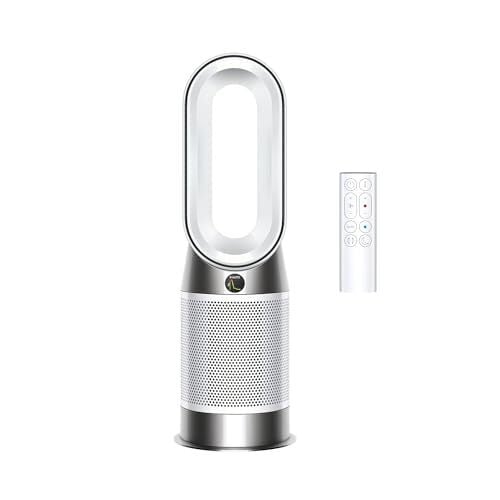
Winter makes the comfort gaps in your home impossible to ignore. Cold corners, stale air, rooms that never feel evenly warm, no matter how long the heater runs. You can try smaller fixes first—blocking drafts, layering rugs, or improving airflow, which actually helps rooms feel warmer without cranking the thermostat. But if you’re still juggling space heaters, fans, and an air purifier, this deal on the Dyson Purifier Hot+Cool HP1 is worth a closer look. It’s currently $499.95, down from $659.99, and price trackers show this is the lowest it’s ever been.

In winter, the heating mode does most of the heavy lifting. The HP1 warms up quickly and pushes heat out evenly instead of blasting one hot stream at your ankles. Its wide oscillation (up to 350 degrees) helps circulate warm air throughout the room, which can make a space feel comfortable faster and more consistently. That circulation also keeps the air from feeling heavy or damp, especially in closed-up winter homes. When the heater isn’t needed, it works as a cooling fan, and year-round it runs as a sealed HEPA air purifier. Cooking smells, pet dander, and lingering indoor air all clear out faster than you’d expect. That said, filters need replacing about once a year, at around $79.99, which adds to the long-term cost.

Living with it day to day feels very Dyson. The HP1 is tall but slim, with a small base that doesn’t eat up floor space. At about 12 pounds, it’s light enough to carry from room to room. The front-facing LED screen shows temperature, air quality, fan speed, and remaining filter life without forcing you into the app. Most controls happen through the magnetized remote, which snaps to the top of the unit, making the MyDyson app optional. The real benefit of the app is being able to control the HP1 remotely, which is useful if you want the room warmed up before you get there. This still isn’t a small purchase, even on sale, but for homes short on space or anyone tired of juggling separate heaters, fans, and purifiers, it does make daily life simpler without demanding much attention once it’s set up.


Deals are selected by our commerce team

Exercise is as Effective as Medication in Treating Depression, Study Finds

A major new review by the Cochrane collaboration — an independent network of researchers — evaluated 73 randomized controlled trials involving about 5,000 people with depression and found that exercise matched the effectiveness of both pharmacological treatments and psychological therapies.

The biological mechanisms overlap considerably with antidepressants. “Exercise can help improve neurotransmitter function, like serotonin as well as dopamine and endorphins,” said Dr. Stephen Mateka, medical director of psychiatry at Inspira Health. Dr. Nicholas Fabiano of the University of Ottawa added that exercise triggers the release of brain-derived neurotrophic factor, or BDNF, which he calls “Miracle-Gro for the brain.”

Exercise has been adopted as a first-line treatment in depression guidelines globally, though Fabiano noted it remains underutilized. The meta-analysis found that combining aerobic exercise and resistance training appeared more effective than aerobic exercise alone, and that 13 to 36 workouts led to improvements in depressive symptoms. Light to moderate exercise proved as beneficial as vigorous workouts, at least initially.


Read more of this story at Slashdot.

UK probes X over Grok CSAM scandal; Elon Musk cries censorship

Elon Musk’s X is currently under investigation in the United Kingdom after failing to stop the platform’s chatbot, Grok, from generating thousands of sexualized images of women and children.

On Monday, UK media regulator Ofcom confirmed that X may have violated the UK’s Online Safety Act, which requires platforms to block illegal content. The proliferation of “undressed images of people” by X users may amount to intimate image abuse, pornography, and child sexual abuse material (CSAM), the regulator said. And X may also have neglected its duty to stop kids from seeing porn.

“Reports of Grok being used to create and share illegal non-consensual intimate images and child sexual abuse material on X have been deeply concerning,” an Ofcom spokesperson said. “Platforms must protect people in the UK from content that’s illegal in the UK, and we won’t hesitate to investigate where we suspect companies are failing in their duties, especially where there’s a risk of harm to children.”

Read full article

Comments

Microsoft Ends This Decades-Old Offline Activation Method For Windows

Microsoft Ends This Decades-Old Offline Activation Method For Windows
Microsoft has officially retired the traditional phone-based activation system for Windows and Office that served as a reliable fallback for users for over two decades.

Indeed, the “slui 4” command has up until now been served PC builders, privacy advocates, and IT administrators well since the days of XP. It allowed users to activate a

Apple Partners With Google on Siri Upgrade, Declares Gemini ‘Most Capable Foundation’

Apple has struck a multi-year partnership with Google to power a more capable version of Siri using Gemini AI models, ending months of speculation about which company would help the iPhone maker catch up in the generative AI race. In a statement, Apple said it had determined after “careful evaluation” that “Google’s technology provides the most capable foundation for Apple Foundation Models.”

The deal comes after Apple delayed its planned Siri AI upgrade last March, acknowledging that the project was taking “longer than we thought.” Bloomberg had reported in August that Apple was in early talks with Google about using a custom Gemini model. Apple also explored potential partnerships with OpenAI, Anthropic and Perplexity, and CEO Tim Cook has said the company plans to integrate with more AI companies over time. The upgraded Siri is expected to perform actions on users’ behalf and understand personal context.


Read more of this story at Slashdot.

The Chevrolet Bolt is back… but for how long?

The new Chevrolet Equinox EV is a solid entry into the compact crossover market, and with a (just) sub-$35,000 starting price, it also counts as affordable by the standards of 2026. But if you think that’s too rich for your blood, or that the Equinox is still too large for your needs, take heart—the Chevrolet Bolt is back in dealerships now as well.

The Bolt was GM’s first modern electric vehicle, following on from the hand-built, pre-lithium ion EV1 and the compliance car that was the Spark EV. We’re big fans of the Bolt here at Ars Technica. It offered well more than 200 miles of range in a mass-produced EV at a reasonable price well before Tesla’s Model 3 started clogging up our roads, it got more efficient over time, and it managed to be fun to drive in the process.

General Motors (which owns Chevrolet) probably feels less well-disposed toward the Bolt. It lost thousands of dollars on each car it sold, even before the entire fleet had to be recalled for a costly battery replacement. The issue was due to improperly folded tabs on some cells that could cause a battery fire, giving GM (and its battery partner LG) plenty of bad press in the process. That recall alone cost $1.8 billion.

Read full article

Comments

New research shows how shunning ultraprocessed foods helps with aging

Older adults can dramatically reduce the amount of ultraprocessed foods they eat while keeping a familiar, balanced diet—and this shift leads to improvements across several key markers related to how the body regulates appetite and metabolism. That’s the main finding of a new study my colleagues and I published in the journal Clinical Nutrition.

Ultraprocessed foods are made using industrial techniques and ingredients that aren’t typically used in home cooking. They often contain additives such as emulsifiers, flavorings, colors, and preservatives. Common examples include packaged snacks, ready-to-eat meals, and some processed meats. Studies have linked diets high in ultraprocessed foods to poorer health outcomes.

My team and I enrolled Americans ages 65 and older in our study, many of whom were overweight or had metabolic risk factors such as insulin resistance or high cholesterol. Participants followed two diets low in ultraprocessed foods for eight weeks each. One included lean red meat (pork); the other was vegetarian with milk and eggs. For two weeks in between, participants returned to their usual diets.

Read full article

Comments

India is proposing another far-reaching security rule for smartphones

India is considering new smartphone security rules that would require device makers to allow government access to source code for “vulnerability analysis.” It would also require companies to notify the government of major software updates and security patches before rollout, according to Reuters.

This is the latest in a raft of unprecedented proposals by the Indian government under the guise of security, as it weighs making a package of 83 security standards drafted in 2023 legally binding in the world’s second-largest smartphone market with nearly 750 million smartphones.

Under the proposals, any source code review would be analyzed and potentially tested at designated labs in India. Major phone manufacturers have reportedly warned the Indian government that such a move risks revealing proprietary information.

The source code proposal comes alongside a series of additional recommendations such as restrictions on background permissions for apps and the option to remove all preinstalled apps. Reuters also reports the package would mandate periodic malware scanning and require phones to store system logs for at least 12 months, requirements that industry groups told the publication would drain battery life, run into storage limits and slow the rollout of necessary security updates.

The nation’s IT ministry told Reuters it “refutes the statement” that it is proposing manufacturers hand over their source code. This was despite a review of internal government and industry documents as part of the reporting. Government officials and industry executives are reportedly due to meet Tuesday for more discussions.

Last month, India was set to require a state-owned cybersecurity app be preinstalled on every smartphone in the nation before backpedaling after intense backlash. Just two days later, there was reportedly a proposal to require that smartphones keep location services on at all times with no way to turn them off.

This article originally appeared on Engadget at https://www.engadget.com/cybersecurity/india-is-proposing-another-far-reaching-security-rule-for-smartphones-155204829.html?src=rss

Apple’s Siri AI will be powered by Gemini

Apple has confirmed reports that it will use Google Gemini’s models to help it power the new version of Siri and other generative AI features. “After careful evaluation, we determined that Google’s technology provides the most capable foundation for Apple Foundation Models and we’re excited about the innovative new experiences it will unlock for our users,” Apple said, according to CNBC. The outlet reported that Apple and Google have a multi-year agreement in place.

This story is developing; please refresh for updates…

This article originally appeared on Engadget at https://www.engadget.com/ai/apples-siri-ai-will-be-powered-by-gemini-153636649.html?src=rss

Lenovo Leads PC Market Boom As Shipments Rebound But Will 2026 Be A Bust?

Lenovo Leads PC Market Boom As Shipments Rebound But Will 2026 Be A Bust?
Panic over soaring memory costs in the second half of last year didn’t stop the PC market from rebounding in a big way, with global shipments of desktops, laptops, and workstations surging 10.1% to 59 75 million units in the fourth quarter of 2025, according to Omdia. The last-quarter surge propelled the full-year tally to 279.5 million units