NASA, Department of Energy To Develop Lunar Surface Reactor By 2030

NASA and the U.S. Department of Energy plan to deploy a nuclear fission reactor on the Moon by 2030 to provide continuous, long-duration power for lunar bases, science missions, and future Mars exploration. space & defense reports: NASA said fission surface power will provide a critical capability for long-duration missions by delivering continuous, reliable electrical power independent of sunlight, lunar night cycles or extreme temperature conditions. Unlike solar-based systems, a nuclear reactor could operate for years without refuelling, supporting habitats, science payloads, resource utilisation systems and surface mobility.

NASA Administrator Jared Isaacman said achieving long-term human presence on the Moon and future missions to Mars will require new approaches to power generation. He said closer collaboration with the Department of Energy is essential to delivering the capabilities needed to support sustained exploration and infrastructure development beyond Earth orbit. The fission surface power system is expected to produce safe, efficient and scalable electrical power, forming a foundational element of NASA’s Moon-to-Mars architecture. Continuous power availability is seen as a key enabler for permanent lunar bases, in-situ resource utilisation and expanded scientific operations in permanently shadowed regions. Further reading: You Can Now Reserve a Hotel Room On the Moon For $250,000


Read more of this story at Slashdot.

Iran Shuts Down Musk’s Starlink For First Time

Thelasko shares a report from Forbes: We have not seen this before. Iran’s digital blackout has now deployed military jammers, reportedly supplied by Russia, to shut down access to Starlink Internet. This is a game-changer for the Plan-B connectivity frequently used by protesters and anti-regime activists when ordinary access to the internet is stopped. “Despite reports that tens of thousands of Starlink units are operating inside Iran,” says Iran Wire, “the blackout has also reached satellite connections.” It is reported that about 30 percent of Starlink’s uplink and downlink traffic was (initially) disrupted,” quickly rising “to more than 80 percent” within hours. The Times of Israel reports “the deployment of (Starlink) receivers is now far greater in Iran” than during previous blackouts. “That’s despite the government never authorizing Starlink to function, making the service illegal to possess and use.” “While it’s not clear how Starlink’s service was being disrupted in Iran,” The Times says, “some specialists say it could be the result of jamming of Starlink terminals that would overpower their ability to receive signals from the satellites.”

Multiple reports suggest Russia’s military technology may be responsible. Channel 4 News describes Russia’s activities as a “technological race with Starlink,” which it says “is known to deploy trucks which deploy radio noise to disrupt satellite signals.”

Simon Migliano, Head of Research at Top10VPN.com, said “Iran’s current nationwide blackout is a blunt instrument intended to crush dissent,” and this comes at a stark cost to the country, underpinning the regime’s desperation. “This ‘kill switch’ approach comes at a staggering price, draining $1.56 million from Iran’s economy every single hour the internet is down.” He added: “Iranian authorities have proven they are prepared to weaponize connectivity, even at a tremendous domestic cost. We are looking at losses already exceeding $130 million. If the 2019 shutdown is any indicator, the regime could maintain this digital siege for days, prioritizing control over their own economic stability.”


Read more of this story at Slashdot.

Doubt Cast On Discovery of Microplastics Throughout Human Body

An anonymous reader quotes a report from the Guardian: High-profile studies reporting the presence of microplastics throughout the human body have been thrown into doubt by scientists who say the discoveries are probably the result of contamination and false positives. One chemist called the concerns “a bombshell.” Studies claiming to have revealed micro and nanoplastics in the brain, testes, placentas, arteries and elsewhere were reported by media across the world, including the Guardian.

There is no doubt that plastic pollution of the natural world is ubiquitous, and present in the food and drink we consume and the air we breathe. But the health damage potentially caused by microplastics and the chemicals they contain is unclear, and an explosion of research has taken off in this area in recent years. However, micro- and nanoplastic particles are tiny and at the limit of today’s analytical techniques, especially in human tissue. There is no suggestion of malpractice, but researchers told the Guardian of their concern that the race to publish results, in some cases by groups with limited analytical expertise, has led to rushed results and routine scientific checks sometimes being overlooked.

The Guardian has identified seven studies that have been challenged by researchers publishing criticism in the respective journals, while a recent analysis listed 18 studies that it said had not considered that some human tissue can produce measurements easily confused with the signal given by common plastics. There is an increasing international focus on the need to control plastic pollution but faulty evidence on the level of microplastics in humans could lead to misguided regulations and policies, which is dangerous, researchers say. It could also help lobbyists for the plastics industry to dismiss real concerns by claiming they are unfounded. While researchers say analytical techniques are improving rapidly, the doubts over recent high-profile studies also raise the questions of what is really known today and how concerned people should be about microplastics in their bodies.


Read more of this story at Slashdot.

Pentagon Device Linked To Havana Syndrome

“Since the United States reopened its embassy in Cuba in 2015, a number of personnel have reported a series of debilitating medical ailments which include dizziness, fatigue, problems with memory, and impaired vision,” writes longtime Slashdot reader smooth wombat. “For ten years, these sudden and unexplained onsets have been studied with no conclusive evidence one way or the other. Now comes word that a device, purchased by the Pentagon, has been tested which may be linked to what is known as Havana Syndrome.” From a report: A division of the Department of Homeland Security, Homeland Security Investigations, purchased the device for millions of dollars in the waning days of the Biden administration, using funding provided by the Defense Department, according to two of the sources. Officials paid âoeeight figuresâ for the device, these people said, declining to offer a more specific number. […]

The device acquired by HSI produces pulsed radio waves, one of the sources said, which some officials and academics have speculated for years could be the cause of the incidents. Although the device is not entirely Russian in origin, it contains Russian components, this person added. Officials have long struggled to understand how a device powerful enough to cause the kind of damage some victims have reported could be made portable; that remains a core question, according to one of the sources briefed on the device. The device could fit in a backpack, this person said.

[…] One key concern now for some officials is that if the technology proves viable it may have proliferated, several of the sources said, meaning that more than one country could now have access to a device that may be capable of causing career-ending injuries to US officials. Further reading: ‘Havana Syndrome’ Debate Rises Again in US Government


Read more of this story at Slashdot.

Meta Closes Three VR Studios As Part of Its Metaverse Cuts

Meta is shutting down three acquired VR studios as part of Reality Labs layoffs and a strategic pivot away from VR content toward AI-powered smart glasses. UploadVR reports: Meta shut down Twisted Pixel Games (Deadpool VR), Sanzaru Games (Asgard’s Wrath), and Armature Studio (Resident Evil 4 VR). […] Twisted Pixel Games was founded in 2006 and mostly made Xbox games published by Microsoft for the first decade of its existence. In fact, Microsoft owned the studio from 2011 until 2015, when it became an independent company again. On contract from Facebook, between 2017 and 2019 Twisted Pixel released four VR games: Wilson’s Hearth (Rift); B-Team (Go/Quest); Defector (Rift); and Path of the Warrior (Rift/Quest). In 2022, Twisted Pixel Games was acquired by Meta. And just two months ago, it released what it had been working on since then: Deadpool VR, the latest Quest-exclusive VR game. […]

Sanzaru Games was also founded in 2006, and made a combination of its own games and contract titles for companies such as Sony, porting the original God of War series to PS Vita. Sanzaru Games was also contracted by Facebook to build VR games for the Oculus Rift and its Touch controllers, between 2016 and 2019: Ripcoil (2016); VR Sports Challenge (2016); Marvel Powers United VR (2018); and Asgard’s Wrath (2019). In 2020, Sanzaru Games was acquired by Facebook, and in 2023 released Asgard’s Wrath 2, taking the core essence of Asgard’s Wrath to Quest 2 and Quest 3 standalone, with a semi-open world and a campaign more than 60 hours long. Exactly one year ago, Sanzaru released the last major content update for Asgard’s Wrath 2, stating that it was now working on the “next big thing” with no detail released on what that would be before the studio closed.

Founded in 2008, Armature Studio was mainly a porting studio, bringing PC titles to consoles and console titles to PS Vita. Like Twisted Pixel and Sanzaru, Armature too was contracted by Facebook to build early consumer VR games: Fail Factory (2017); Sports Scramble (2019); and Resident Evil 4 VR (2021). Armature was acquired by Meta in 2022, and many VR gamers had been eagerly anticipating what it had been working on since. Whatever it was, Armature too is now shut down.


Read more of this story at Slashdot.

Senate Passes a Bill That Would Let Nonconsensual Deepfake Victims Sue

The U.S. Senate unanimously passed the Disrupt Explicit Forged Images and Non-Consensual Edits Act (DEFIANCE Act), giving victims of sexually explicit AI deepfakes the right to sue the individuals who created them. The Verge reports: The bill passed with unanimous consent — meaning there was no roll-call vote, and no Senator objected to its passage on the floor Tuesday. It’s meant to build on the work of the Take It Down Act, a law that criminalizes the distribution of nonconsensual intimate images (NCII) and requires social media platforms to promptly remove them. […] Now the ball is again in the House leadership’s court; if they decide to bring the bill to the floor, it will have to pass in order to reach the president’s desk.


Read more of this story at Slashdot.

Global Tech-Sector Layoffs Surpass 244,000 In 2025

An anonymous reader quotes a report from Network World: The global technology sector eliminated some 244,851 jobs in 2025, according to a report from RationalFX. The U.K.-based financial services company says the worldwide downsizing reflects how companies in 2025 restructured their operations to focus on efficiency, profitability, and AI-driven productivity. The RationalFX analysis, which examined layoffs reported by TrueUp, TechCrunch, and multiple state WARN databases, points to economic uncertainty, elevated interest rates, and accelerating AI and automation adoption as reasons that 2025 marked “another year of sustained downsizing following the post-pandemic correction that began in 2022.”

Companies indicated that AI and automation were among the most frequently cited drivers for layoffs in 2025. Some companies retrained employees when faced with the technology; many replaced roles entirely, RationalFX reports. “Tech sector layoffs in 2025 displaced hundreds of thousands of workers worldwide as companies accelerated structural resets rather than short-term cost corrections,” said Alan Cohen, analyst at RationalFX, in a statement. “While macroeconomic pressures such as high interest rates, trade restrictions, and geopolitical uncertainty continued to weigh on business confidence, the dominant force behind last year’s job cuts was the rapid adoption of automation and artificial intelligence.”

The analysis also uncovered that U.S.-headquartered technology companies were responsible for the majority of job losses, accounting for approximately 69.7% of all global tech layoffs. This resulted in more than 170,000 employees being cut across both domestic and offshore operations from U.S. tech companies. California spearheaded layoffs in the U.S. tech sector this year, with 73,499 job cuts accounting for roughly 43.08% of all tech layoffs in the country, according to the RationalFX report. The report also points out that Washington has seen 42,221 tech jobs cut since the start of the year, accounting for 24.74% of all U.S. tech layoffs. Intel contributed the single largest number of layoffs last year, reducing its headcount from 109,000 people at the end of 2024 to around 75,000 by the end of 2025. Other major U.S. tech companies with large-scale layoffs last year include Amazon (more than 20,000 jobs cut), Microsoft (approximately 19,215 layoffs), Verizon (15,000 employees), Accenture (11,000 employees), IBM (9,000 job cuts), and HP (6,000 roles).


Read more of this story at Slashdot.

Wine 11.0 Released

BrianFagioli writes: Wine 11.0 has officially landed, wrapping up a year of development with more than 6,000 code changes and a broad set of upgrades that touch gaming, desktop behavior, and long-standing architectural work. The biggest milestone is the completion of the new WoW64 model, which is now considered fully supported and allows 32-bit and even 16-bit applications to run in a cleaner way inside 64-bit prefixes. Wine also gains support for the NTSYNC kernel module now bundled in Linux 6.14, which cuts overhead from thread synchronization and should deliver observable performance benefits in games and multi-threaded applications. A single unified wine binary now replaces the old wine64 launcher, and several system behaviors align more closely with modern Windows, including syscall numbering and NT reparse points.

Graphics and desktop integration received more polish, including deeper Vulkan support (up to API 1.4.335), hardware-accelerated H.264 decoding through Direct3D, and further improvements to Wine’s Wayland driver, which now supports clipboard operations, IMEs, and shaped windows. X11 users gain better window activation and fullscreen handling, and legacy DirectX features continue to expand under Wine’s Vulkan renderer. Device support also moves forward, with better joystick handling, improved Bluetooth visibility and pairing, and working TWAIN scanning on 64-bit apps. Broad multimedia updates, DirectMusic refinements, .NET/XNA improvements, and developer-facing tools round out a release that appears focused on smoothing sharp edges rather than introducing flashy experiments. As always, source is live now and distro packages are rolling out.


Read more of this story at Slashdot.

BMW’s first electric M car is coming in 2027—with one motor per wheel

Late last year, we drove BMW’s new iX3. It’s the first of a series of electric BMWs to use a newly developed platform, known as the “Neue Klasse.” Later this year, we’ll see the first fully electric version of the 3 Series when the i3 sedan debuts. And next year, BMW enthusiasts will finally find out what the brand’s M division—which infuses motorsport into the vehicles like few others—can do with an EV.

There have been M-tuned EVs before now, more powerful variants of the i4, iX, and i7. And each time we’ve driven them, BMW has been at pains to point out that these weren’t true M cars, not like the M3 or M5. Honestly, they weren’t better than the cheaper, less powerful versions, something that won’t be allowed for next year’s performance EV, which might be called something like the iM3, assuming the naming convention remains logic-based.

“The next generation of models are set to establish a new benchmark in the high-performance vehicle segment,” says Franciscus van Meel, managing director of BMW M GmbH. “With the latest generation of Neue Klasse technology, we are taking the BMW M driving experience to a new level and will inspire our customers with outstanding, racetrack-ready driving dynamics for everyday use.”

Read full article

Comments

This Bose Waterproof Bluetooth Speaker Is $100 Right Now

We may earn a commission from links on this page. Deal pricing and availability subject to change after time of publication.

A rugged mini speaker is an essential you’ll get use out of all year, from house parties to camping trips. In the warmer months, you can take it to the beach or BBQs, and in the winter, it’s durable enough to handle snowy adventures and warm up with your favorite playlist during a hot shower. The Bose SoundLink Micro 2nd Gen Bluetooth Speaker is a tiny yet powerful option that fits the bill for all of the above, and right now it’s 23% off at its lowest price ever: $99 (originally $129).

The second-gen Bose SoundLink Micro has richer audio and clarity, as well as battery life that lasts up to 12 hours (twice as long as the first generation). Its appearance is similar to the first, but it’s slightly heavier and larger, measuring 4.0 by 4.0 by 1.7 inches and weighing 11.6 ounces. It comes with a strap that can attach the speaker to bags, handlebars, and more. The controls are located in a groove on the front, including a Shortcut button that lets you pair multiple speakers or activate Spotify Tap. 

Beyond its powerful sound, it’s also one of the most durable mini speakers on the market with an IP67 rating that makes it waterproof and dustproof (though not safe to submerge for extended periods). It’s a mono speaker with a single driver that connects via Bluetooth 5.4 and supports the AAC and SBC codecs, as well as Google Fast Pair. PCMag, which gives it an “excellent rating,” notes that while it includes a USB-A-to-USB-C cable, it would’ve been more helpful to include a standard USB-C cable. 

Despite its high rating, it also doesn’t have the ability to reproduce low frequencies or support high-resolution audio. And unlike the first generation, this model doesn’t have a speakerphone to use for phone calls. The sound performs well despite its portability, and while the bass response isn’t the deepest, it’s impressive for the updated SoundLink Micro’s size. Compared to speakers with fully adjustable EQ, the Bose app EQ is somewhat no-frills and only has three adjustable bands.

Ultimately, if you’re looking for a durable portable speaker with high-quality sound, long battery life, and a versatile strap (but don’t mind that it doesn’t have high-resolution audio or a more advanced equalizer), the Bose Soundlink Micro 2nd Gen Bluetooth Speaker is a solid option worth considering at its current discounted $100 price point. 

Deals are selected by our commerce team

NVIDIA’s N1X Arm Chip For Consumers Spotted In Dell Laptop But Is A Launch Imminent?

NVIDIA's N1X Arm Chip For Consumers Spotted In Dell Laptop But Is A Launch Imminent?
Enthusiast sleuth Gray (@Olrak29_ on Xwitter) has been digging into the shipping logs again, and this time the rabbit hole leads straight into NVIDIA’s long-rumored Arm ambitions for consumer PCs. This time around, he spotted a particularly telling entry in NBD Data shipping records, where buried in the usual logistics soup was this rather

Senate passes Defiance Act for a second time to address Grok deepfakes

The Senate has passed the Disrupt Explicit Forged Images and Non-Consensual Edits (DEFIANCE ) Act with unanimous consent, according to the bill’s co-sponsor Senator Dick Durbin (D-IL). The bill lets the subjects of nonconsensual, sexually explicit deepfakes take civil action against the people who create and host them.

Deepfakes are a known issue online, but without the proper protections, easy access to AI-powered image and video generation tools has made it possible for anyone to create compromising content using another person’s likeness. This has become a particular problem on X, where the integration of Grok, the AI assistant created by X’s parent company xAI, makes it possible for anyone to turn the content of another person’s post into an image-generating prompt. Over the last month, that’s allowed users to create sexually explicit images of children, just by replying to a post with @grok and a request. 

In response, Ofcom, the UK’s media regulator, has already opened an investigation into X for potentially violating the Online Safety Act. The chatbot has also been outright blocked in Malaysia and Indonesia. The DEFIANCE Act won’t prevent Grok or other AI tools from generating nonconsensual deepfakes, but it would make creating or hosting that content potentially very expensive for anyone on the receiving end of a lawsuit.

The Senate passed an earlier version of the DEFIANCE Act in 2024, but it stalled in the House. Given the urgency of Grok’s deepfake problem, the hope is this new version of the bill won’t see the same resistance. Congress passed an earlier piece of deepfake regulation last year, the Take It Down Act, with bipartisan support. That bill was focused on the companies who host nonconsensual, sexually explicit content, rather than the people exploited by it.

This article originally appeared on Engadget at https://www.engadget.com/ai/senate-passes-defiance-act-for-a-second-time-to-address-grok-deepfakes-212151712.html?src=rss

Taiwan Issues Arrest Warrant for OnePlus CEO for China Hires

Prosecutors in Taiwan issued an arrest warrant [non-paywalled source] for the chief executive officer of the Chinese smartphone company OnePlus, stepping up the island’s efforts to block China’s tech players from recruiting Taiwanese talent. From a report: The Shilin district prosecutors office issued the warrant for CEO and co-founder Pete Lau and indicted two Taiwanese citizens who worked for him, according to an indictment by the office. OnePlus, a niche player whose phones run on a customized version of Android, is suspected of illegally recruiting more than 70 engineers in Taiwan.

The autonomous territory has stepped up its efforts to stop Chinese companies from raiding workers, who are often coveted because of their technical knowledge and experience. The Taiwanese officials put such limitations in place because they say recruiting from the semiconductor sector and other tech operations could jeopardize national security.


Read more of this story at Slashdot.

Check This iPhone Setting to Make Texting Better for Everyone

Hey, would you mind doing me a favor real quick? If you’re on an iPhone, can you double check that you’ve got RCS chat enabled for me? Thanks, I appreciate it. See, as an Android user, I don’t get to use all the fun iMessage features, but RCS lets us share some of them. The only problem is, iPhones seem to sometimes disable RCS for some chats after an update. Or for no reason at all.

RCS has been around for a while, but since it needs to be supported on both the carrier and device level, it’s taken some time to reach ubiquity. Understandably, you might have seen some chat conversations between iOS and Android users that still default to the older SMS-style texting, and just gone about your day. However, these days, if you’re chatting with your Android friends and you don’t see read receipts, or your pictures and videos are coming through in potato quality, there’s probably an easy fix.

To check if RCS is enabled on your phone:

  1. Open the Settings app on your iOS device, then go to Apps.

  2. Go to Messages > RCS Messaging

  3. Enable the RCS Messaging toggle.

And that’s it! If you text your contacts from multiple devices, it’s also worth checking for RCS support on each of them. It might be a little annoying, but trust me, your Android friends will thank you.

If you’re the one using an Android phone, it can also be worth double-checking that RCS support is enabled, although it’s less likely to be a problem. While iOS devices support both iMessage and RCS as robust texting options, Android only has RCS. Both platforms can fall back to SMS, but your Android phone probably reaches for RCS as a default.

Still, it can’t hurt to check. The specific directions will differ based on manufacturer, but generally you can go to your default messaging app’s settings and look for an “RCS Chats” section to make sure the protocol is enabled on your end as well.

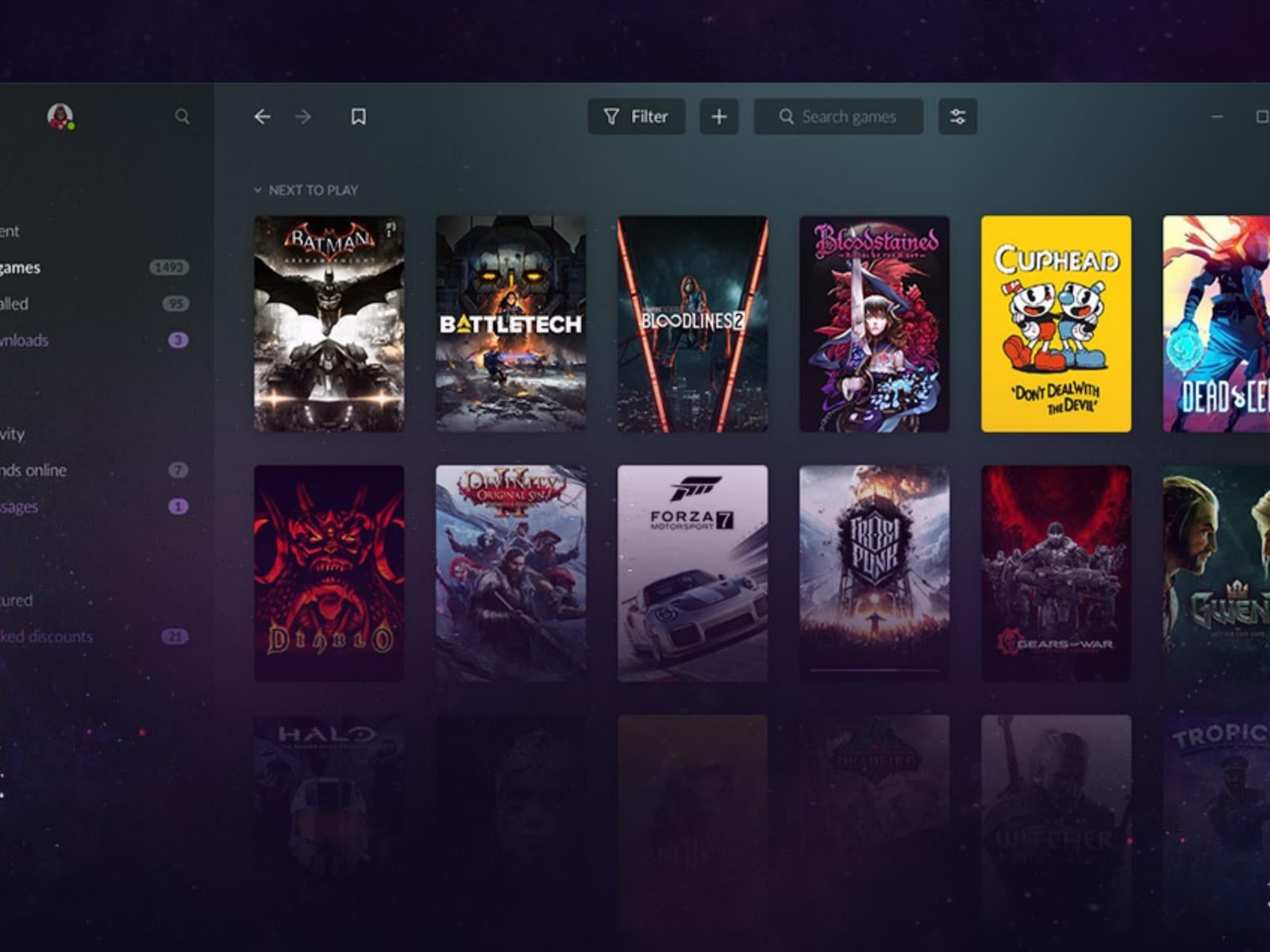
GOG’s New Boss Plans To Challenge Steam With Curation, Classics And Zero DRM

GOG’s New Boss Plans To Challenge Steam With Curation, Classics And Zero DRM
GOG’s recent move to become an independent outfit saw the return of one its original cofounders, Michał Kiciński, and promised a continuation of the service its users know and love. Now, Kiciński is sharing what the company hopes to accomplish going forward, including challenging the behemoth of Steam that recently hit a milestone of 42 million

EV Roadside Repairs Easier Than Petrol or Diesel, New Data Suggests

Electric vehicles are more likely to be fixed at the roadside than petrol or diesel cars despite public fears to the contrary, according to new breakdown data from the AA. From a report: New research from Autotrader and the AA, carried out in December among more than 2,000 consumers, found 44% of respondents are concerned about the risk of breakdowns or roadside repairs when considering switching to an EV. Concern was highest among drivers aged 75 and over, with 56% saying they were worried.

The North East recorded the highest level of concern at 52%, while women were slightly more likely to express reservations than men – 46% versus 41%. Even so, AA call-out data indicates EVs are more likely to be successfully repaired at the roadside than a 12-volt battery in a petrol or diesel car.

Separately, industry data continues to indicate growing readiness to service electric cars. A recent Society of Motor Manufacturers and Traders (SMMT) survey of aftermarket businesses found 81.2% of UK workshops are already equipped to work on EVs, according to the campaign partners.


Read more of this story at Slashdot.

This Budget 65-Inch Hisense QLED TV Is Over $300 Off

We may earn a commission from links on this page. Deal pricing and availability subject to change after time of publication.

Budget TVs have improved dramatically over the years, and the Hisense U6 Series is a great example of what you can get today for a “budget” price. This is a QLED Mini LED TV, so while it’s not at the quality that OLED TVs can offer, it makes up for it with a much lower price. Right now, the 65-inch Hisense Class U6 Series TV is $529.96 (originally $847.99), the lowest price it has been, according to price-checking tools.

Don’t let the budget price fool you; this is a quality TV. The best one of 2025, according to PCMag’s “outstanding” review. Its main attributes are its incredible levels of brightness, peaking at 1,024 nits, and its beautiful colors. This is expected from a QLED Mini LED TV, but not for under $550 for a 65-inch TV. It is also packed with features and specs that you won’t find in other TVs at this price.

The refresh rate is 144Hz with VRR and AMD FreeSync Premium Pro, making it a good option to play games. You’ll get an input lag of 4.6 ms at 1080p and 13.1 ms at 4K. For those who pay premium in their streaming apps for HDR, you’ll be able to take advantage of HDR10+ and Dolby Vision IQ. If you have a surround sound system, you’ll also be able to take advantage of Dolby Atmos for a more immersive, 3D sound.

The biggest downside, in my opinion, is that the OS is Amazon’s Fire TV, but that’s fixable with a TV stick, and also down to preference. While there is no hands-free voice control, there is Apple AirPlay for casting devices.

If you’re looking for a 65-inch TV that punches above its price tag, is at a great discount, offers great colors, brightness, and features, get the Hisense Class U6 Series TV.

Deals are selected by our commerce team

Meta has closed three VR studios as part of its metaverse cuts

Several of Meta’s VR studios have been affected by the company’s metaverse-focused layoffs. The company has shuttered three of its VR studios, including Armature, Sanzaru and Twisted Pixel. VR fitness app Supernatural will no longer be updated with fresh content.

Employees at Twisted Pixel, which released Marvel’s Deadpool VR in November, and Sanzaru, known for Asgard’s Wrath, posted on social media about the closures. Bloomberg reported that Armature, which brought Resident Evil 4 to Quest back in 2021 has also closed and that the popular VR fitness app Supernatural will no longer be updated with fresh content, though the current version will continue to be supported. 

A spokesperson for Meta confirmed the closures. “We said last month that we were shifting some of our investment from Metaverse toward Wearables,” the spokesperson said in a statement to Engadget. “This is part of that effort, and we plan to reinvest the savings to support the growth of wearables this year.”

The cuts raise questions about Meta’s commitment to supporting a VR ecosystem it has invested heavily in. The company hasn’t announced any new VR headsets since the Quest 3S in 2024, and last month it “paused” planned Horizon OS headsets from Asus and Lenovo. Now, it’s also pulling back on in-house game development too. 

Meta is claiming, internally at least, that it remains committed to supporting the industry. “These changes do not mean we are moving away from video games,” Oculus Studios director Tamara Sciamanna wrote in the memo reported by Bloomberg. “With this change we are shifting our investment to focus on our third-party developers and partners to ensure long-term sustainability.”

Have a tip for Karissa? You can reach her by email, on X, Bluesky, Threads, or send a message to @karissabe.51 to chat confidentially on Signal.

This article originally appeared on Engadget at https://www.engadget.com/ar-vr/meta-has-closed-three-vr-studios-as-part-of-its-metaverse-cuts-202720670.html?src=rss

Microsoft vows to cover full power costs for energy-hungry AI data centers

On Tuesday Microsoft announced a new initiative called “Community-First AI Infrastructure” that commits the company to paying full electricity costs for its data centers and refusing to seek local property tax reductions.

As demand for generative AI services has increased over the past year, Big Tech companies have been racing to spin up massive new data centers for serving chatbots and image generators that can have profound economic effects on the surrounding areas in which they are located. Among other concerns, communities across the country have grown concerned that data centers are driving up residential electricity rates through heavy power consumption and by straining water supplies due to server cooling needs.

The International Energy Agency (IEA) projects that global data center electricity demand will more than double by 2030, reaching around 945 TWh, with the United States responsible for nearly half of total electricity demand growth over that period. This growth is happening while much of the country’s electricity transmission infrastructure is more than 40 years old and under strain.

Read full article

Comments

Apple: You (Still) Don’t Understand the Vision Pro

Analyst Ben Thompson, sharing the experience of watching an NBA game on the Vision Pro: When I started the broadcast [on Apple Vision Pro’s immersive view of the Bucks vs. Lakers NBA game] I had, surprise surprise, a studio show, specially tailored for the Apple Vision Pro. In other words, there was a dedicated camera, a dedicated presenter, a dedicated graphics team, etc. There was even a dedicated announcing team! This all sounds expensive and special, and I think it was a total waste.

Here’s the thing that you don’t seem to get, Apple: the entire reason why the Vision Pro is compelling is because it is not a 2D screen in my living room; it’s an immersive experience I wear on my head. That means that all of the lessons of TV sports production are immaterial. In fact, it’s worse than that: insisting on all of the trappings of a traditional sports broadcast has two big problems: first, because it is costly, it means that less content is available than might be otherwise. And second, it makes the experience significantly worse.

[…] I have, as I noted, had the good fortune of sitting courtside at an NBA game, and this very much captured the experience. The biggest sensation you get by being close to the players is just how tall and fast and powerful they are, and you got that sensation with the Vision Pro; it was amazing. The problem, however, is that you would be sitting there watching Giannis or LeBron or Luka glide down the court, and suddenly you would be ripped out of the experience because the entirely unnecessary producer decided you should be looking through one of these baseline cameras under the hoop […]


Read more of this story at Slashdot.