Man got $2,500 whole-body MRI that found no problems—then had massive stroke

A New York man is suing Prenuvo, a celebrity-endorsed whole-body magnetic resonance imaging (MRI) provider, claiming that the company missed clear signs of trouble in his $2,500 whole-body scan—and if it hadn’t, he could have acted to avert the catastrophic stroke he suffered months later.

Sean Clifford and his legal team claim that his scan on July 15, 2023, showed a 60 percent narrowing and irregularity in a major artery in his brain—the proximal right middle cerebral artery, a branch of the most common artery involved in acute strokes. But Prenuvo’s reviews of the scan did not flag the finding and otherwise reported everything in his brain looked normal; there was “no adverse finding.” (You can read Prenuvo’s report and see Clifford’s subsequent imaging here.)

Clifford suffered a massive stroke on March 7, 2024. Subsequent imaging found that the proximal right middle cerebral artery progressed to a complete blockage, causing the stroke. Clifford suffered paralysis of his left hand and leg, general weakness on his left side, vision loss and permanent double vision, anxiety, depression, mood swings, cognitive deficits, speech problems, and permanent difficulties with all daily activities.

Read full article

Comments

Scientists sequence a woolly rhino genome from a 14,400-year-old wolf’s stomach

A 14,400-year-old wolf puppy’s last meal is shedding light on the last days of one of the Ice Age’s most iconic megafauna species, the woolly rhinoceros.

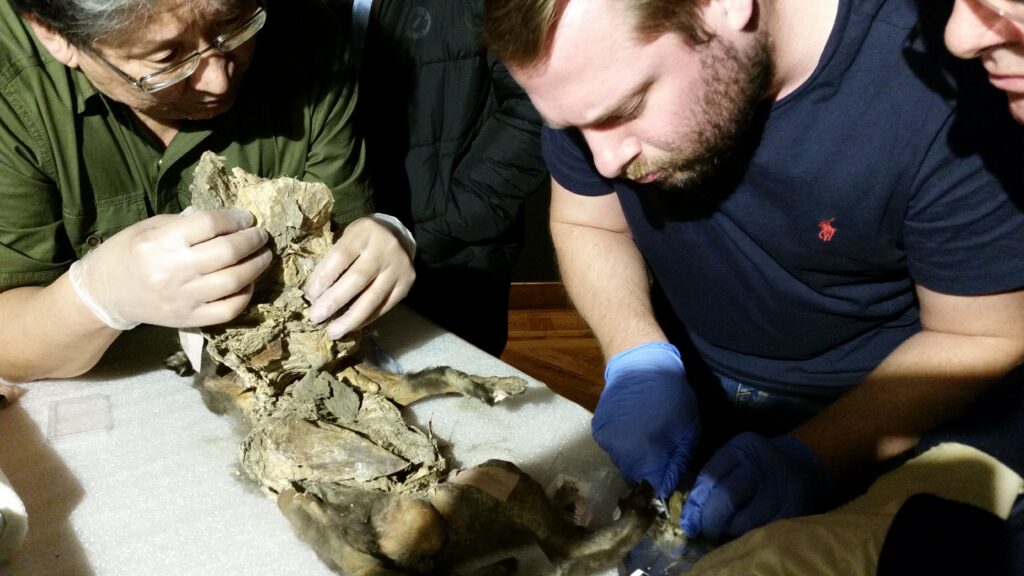
When researchers dissected the frozen mummified remains of an Ice Age wolf puppy, they found a partially digested chunk of meat in its stomach: the remnants of the puppy’s last meal 14,400 years ago. DNA testing revealed that the meat was a prime cut of woolly rhinoceros, a now-extinct 2-metric-ton behemoth that once stomped across the tundras of Europe and Asia. Stockholm University paleogeneticist Sólveig Guðjónsdóttir and her colleagues recently sequenced a full genome from the piece of meat, which reveals some secrets about woolly rhino populations in the centuries before their extinction.

photo of a mummified wolf corpse being dissected by two people.
Scientists carefully autopsy the remains of a wolf puppy who lived and died 14,400 years ago near Tumat village in Sibera.
Credit:
Guðjónsdóttir et al. 2026

One bad day for a rhino, one giant leap for paleogenomics

“Sequencing the entire genome of an Ice Age animal found in the stomach of another animal has never been done before,” said Uppsala University paleogeneticist Camilo Chacón-Duque, a coauthor of the study, in a recent press release.

Read full article

Comments

NVIDIA Reportedly Cuts 16GB RTX 5060 Ti And 5070 Ti Shipments As VRAM Prices Spike

NVIDIA Reportedly Cuts 16GB RTX 5060 Ti And 5070 Ti Shipments As VRAM Prices Spike
Another week, another NVIDIA industry rumor—and unfortunately, this one seems likely to be true, even if it may be worse for some end customers. If the reports are indeed true, NVIDIA will be focusing shipments of its GeForce RTX 5060 Ti and 5070 Ti GPUs to the 8GB models in order to maximize cards shipped during the ongoing RAM shortage.

Bezos’s Vision of Rented Cloud PCs Looks Less Far-Fetched

Amazon founder Jeff Bezos once told an audience that he views local PC hardware the same way he views a 100-year-old electric generator he saw in a brewery museum — as a relic of a pre-grid era, destined to be replaced by centralized utilities that users simply rent rather than own. The anecdote, shared at a talk a few years ago, positioned Amazon Web Services and Microsoft Azure as the inevitable successors to the desktop tower. Bezos argued that users would eventually abandon local computing for cloud-based solutions, much as businesses once abandoned on-site power generation for the electrical grid.

Current market dynamics have made that prediction feel more plausible. DRAM prices have become increasingly untenable for consumers, and companies like Dell and ASUS have signaled price increases across their PC ranges. Micron has shut down its consumer DRAM operations entirely, prioritizing AI datacenter demand instead. SSD storage is expected to face similar constraints. Cloud gaming services from Amazon Luna, NVIDIA GeForce Now and Xbox are seeing steady growth.

Microsoft previously developed a consumer version of its business-grade Windows 365 cloud PC product, though the company deprioritized it — the economics didn’t work when cheap laptops remained available. That calculus could shift. Xbox Game Pass’s 1440p cloud gaming runs $30 monthly and NVIDIA recently imposed a 100-hour cap on its cloud platform. The infrastructure remains expensive to operate, but rising local hardware costs may eventually close that gap.


Read more of this story at Slashdot.

HotHardware’s 12 Best Of CES 2026: Top Tech To Watch For This Year

HotHardware’s 12 Best Of CES 2026: Top Tech To Watch For This Year
This year’s Consumer Electronics Show (CES) in Las Vegas has officially ended, and with the HotHardware crew back home, it’s time to look back on the trip and highlight some of our favorite, stand-out products. As is usually the case, CES 2026 was packed with an array of new technologies, from high-powered AI accelerators to low-power…

The first-gen Bose QuietComfort Ultra headphones are $150 off right now

The first-generation Bose QuietComfort Ultra headphones are on sale right now for $280, marked down from $430. That 35 percent savings is an even steeper discount than we saw last year Black Friday.

In our review of the first-generation Ultras, we gave them a score of 86 out of 100, noting their best-in-class active noise cancellation (ANC) and comfort. Bose improved its stock tuning for these headphones, which we could immediately tell sounded warmer and clearer. Bose has typically lagged behind the likes of Sony and Sennheiser in raw sound quality, but the first-generation QuietComfort Ultra was a big step toward catching up.

Bose added “Immersive Audio” to this model, which is the company’s take on spatial audio. The company claims this feature effectively puts you in the acoustic sweet spot of a set of stereo speakers. In our testing, we felt this didn’t always make songs sound better, but it did make them louder and in some cases made certain details more noticeable.

The Ultras offer up to 24 hours of battery life with ANC turned on and about 18 hours with both ANC and Immersive Audio enabled. In our testing, however, we were actually able to beat Bose’s estimates for battery life.

The second generation of these headphones are currently our top pick for best noise-canceling headphones, but when this older model is heavily on sale, the differences between them are less dramatic. If you’re in the market for a pair of great noise-canceling cans, consider checking these out.

Follow @EngadgetDeals on X for the latest tech deals and buying advice.

This article originally appeared on Engadget at https://www.engadget.com/deals/the-first-gen-bose-quietcomfort-ultra-headphones-are-150-off-right-now-164826329.html?src=rss

Gemini can now scan your photos, email, and more to provide better answers

Google has toyed with personalized answers in Gemini, but that was just a hint of what was to come. Today, the company is announcing extensive “personal intelligence” in Gemini that allows the chatbot to connect to Gmail, Photos, Search, and YouTube to craft more useful answers to your questions. If you don’t want Gemini to get to know you, there’s some good news. Personal intelligence is beginning as a feature for paid users, and it’s entirely optional.

By every measure, Google’s models are at or near the top of the AI heap. In general, the more information you feed into a generative AI, the better the outputs are. And when that data is personal to you, the resulting inference is theoretically more useful. Google just so happens to have a lot of personal data on all its users, so it’s relatively simple to feed that data into Gemini.

As Personal Intelligence rolls out over the coming weeks, AI Pro and AI Ultra subscribers will see the option to connect those data sources. Each can be connected individually, so you might choose to allow Gmail access but block Photos, for example. When Gemini is allowed access to other Google products, it incorporates that data into its responses.

Read full article

Comments

Why TikTokers Are Injecting Salmon Sperm Into Their Faces

Scroll through TikTok or Instagram, and you’ll find influencers swearing by unconventional treatments, posting dramatic before-and-after photos and glowing testimonials about their rejuvenated skin. And the skincare “It Girl” of the moment? It’s salmon sperm. Yeah.

As we kick off the new year—prime time for beauty resolutions!—a growing number of people are seeking out “salmon sperm facials.” Before your imagination paints an extra fishy picture (pun intended), understand that people aren’t really smearing straight-up salmon sperm on their face. The secret ingredient is something called PDRN, or polydeoxyribonucleotide, a compound extracted from salmon DNA. So, what exactly is this secret ingredient, and is it truly the next frontier in anti-aging skincare?

The science behind the hype

PDRN isn’t totally snake oil; the compound has legitimate clinical backing for its regenerative properties. Research suggests that PDRN can stimulate tissue repair, promote collagen production, and improve skin elasticity by activating adenosine receptors in cells. Several sources claim it’s been used in medical applications since the 1980s in Italy and South Korea. Whatever the actual origins, PDRN has gradually made its way into mainstream skincare.

The treatment typically involves a series of micro-injections delivered directly into the skin, similar to mesotherapy or microneedling procedures. In the U.S., however, PDRN is only legal to use topically, since the FDA qualifies it as a beauty product and not a drug. Proponents claim it can reduce fine lines, improve skin texture, minimize scarring, and create an overall more youthful appearance. Unlike other cosmetic procedures that simply fill or temporarily plump the skin, PDRN is said to actually stimulate the skin’s natural healing processes. But as always, there’s a significant gap between reality and what you see online.

The reality check

Social media thrives on transformation narratives, and skincare content is no exception. The algorithms favor dramatic reveals, leading creators to emphasize stunning results while downplaying less glamorous details—like the fact that these injections can be quite painful according to some. “While PDRN has legitimate clinical data supporting skin repair and regeneration,” says Dr. Claudia Kim, “viral content often exaggerates results and glosses over who is—and isn’t—an appropriate candidate. Context and medical supervision matter.” When it comes to the injections specifically, these treatments can cause temporary swelling and bruising. At the very least, they could require multiple sessions to see results.

Again: If you’re in the U.S., and there’s a syringe full of salmon sperm headed straight for you, it might not be FDA-approved. That means its purity, safety, and effectiveness are not regulated. As with any medical aesthetic procedure, you shouldn’t sign up for PDRN treatments without careful consideration—considerations that extend beyond the promise of better skin. Do you know which salmon DNA procedure you’re signing up for? Is it an injection, or is it technically microneedling? Did you opt for PDRN or PN (polynucleotides), a purer and more concentrated form of PDRN? To make things even more confusing, these treatments can go by different names, from “salmon skin facials,” to “salmon sperm injections,” or “PDRN facials” to the brand name Rejuran. One thing is sure: As demand grows, so does the risk of unqualified practitioners offering the treatment, potentially leading to complications or disappointing results.

The bottom line

The salmon sperm trend may sound bizarre, but there is science backing it up. And when your favorite beauty influencer credits their glowing skin to a specific treatment, it’s tempting to believe you can achieve the same results. Social media will always continue to drive beauty trends, and there’s nothing inherently wrong with being inspired by what you see online. But for your looks and your safety, you need to understand the difference between a carefully curated social media moment and the full reality of medical aesthetic procedures.

If you’re intrigued by PDRN treatments after seeing them online, consult with a qualified dermatologist or licensed aesthetic practitioner. They can assess whether you’re an appropriate candidate, explain realistic expectations, discuss potential side effects, and ensure the treatment is administered safely. As more advanced treatments become increasingly accessible and visible online, don’t let TikTok influencers replace professional medical consultation.

Deny, deny, admit: UK police used Copilot AI “hallucination” when banning football fans

After repeatedly denying for weeks that his force used AI tools, the chief constable of the West Midlands police has finally admitted that a hugely controversial decision to ban Maccabi Tel Aviv football fans from the UK did involve hallucinated information from Microsoft Copilot.

In October 2025, Birmingham’s Safety Advisory Group (SAG) met to decide whether an upcoming football match between Aston Villa (based in Birmingham) and Maccabi Tel Aviv could be held safely.

Tensions were heightened in part due to an October 2 terror attack against a synagogue in Manchester where several people were killed by an Islamic attacker.

Read full article

Comments

The latest Animal Crossing: New Horizons expansion has arrived earlier than expected

For a number of very obvious reasons, we don’t want to roll back the clock to early 2020. No thank you. But if there was a feel-good lockdown story, it was the perfectly timed arrival of Animal Crossing: New Horizons, which allowed friends who could no longer meet up IRL to do so virtually on their carefully pruned islands.

The game will almost certainly never be as popular as it was back then again, but Nintendo is hoping a good chunk of lapsed islanders will return for its latest DLC drop, which has arrived a day earlier than planned. As spotted by Eurogamer, the free Animal Crossing: New Horizons 3.0 update is available to download now and, as previously announced, brings a host of new features to the cozy life sim, including a brand new resort hotel on the pier that you can help decorate.

There are new items and quality-of-life additions too, as well as the ability to build fresh islands with your friends and family in the “Slumber Island” dream world. All you need to do is go to the New Horizons game icon on your Switch’s home screen and download the software update.

Nintendo also announced last year that New Horizons would be coming to Switch 2 on January 15, improving the visuals, unlocking mouse controls and GameChat functionality, and expanding the online multiplayer capacity from eight players to 12. As of now, the Switch 2 edition of the game remains locked, so you’ll be stuck with the standard Switch version until tomorrow. Upgrading costs $5, while first-time players can purchase the Switch 2 version of Animal Crossing: New Horizons for $65.

This article originally appeared on Engadget at https://www.engadget.com/gaming/nintendo/the-latest-animal-crossing-new-horizons-expansion-has-arrived-earlier-than-expected-160739040.html?src=rss

Matthew McConaughey Trademarks Himself To Fight AI Misuse

Matthew McConaughey is taking a novel legal approach to combat unauthorized AI fakes: trademarking himself. From a report: Over the past several months, the “Interstellar” and “Magic Mike” star has had eight trademark applications approved by the U.S. Patent and Trademark Office featuring him staring, smiling and talking. His attorneys said the trademarks are meant to stop AI apps or users from simulating McConaughey’s voice or likeness without permission — an increasingly common concern of performers.

The trademarks include a seven-second clip of the Oscar-winner standing on a porch, a three-second clip of him sitting in front of a Christmas tree, and audio of him saying “Alright, alright, alright,” his famous line from the 1993 movie “Dazed and Confused,” according to the approved applications. “My team and I want to know that when my voice or likeness is ever used, it’s because I approved and signed off on it,” the actor said in an email. “We want to create a clear perimeter around ownership with consent and attribution the norm in an AI world.”


Read more of this story at Slashdot.

Gemini can now pull context the rest of your Google apps, if you let it

Gemini is adding a feature that’s designed to feel more tailored to individual users. Once enabled, “Personal Intelligence” can pull context from across your Google ecosystem, including Gmail, Google Photos, Search and YouTube History, to gain specific insight that will shape its answers and recommendations. Personal Intelligence is available starting today in the US for Google AI Pro and Ultra subscribers. The feature is opt-in only and is off by default.

Gemini Personal Intelligence
Google

Google says users will have the ability to control what apps Gemini pulls from and, in the future, which chats it uses Personal Intelligence for. The company says this new feature might still make some mistakes, such as “over-personalization” where it draws connections between unrelated things.

According to Google, Gemini will not train directly on the data it pulls for personalization like your photos and emails, but will instead train on your prompts and its responses. Users can also prompt Gemini to “try again” without personalization and will have the option to delete chat histories.

For now, Personal Intelligence works in the Gemini app across web, Android and iOS for personal Google accounts. Google says it’s coming to Search’s AI Mode soon, with plans to expand to more countries and the free tier down the line.

Google has been on a tear integrating Gemini into everything, including Gmail, TVs and Chrome on mobile. This week, Apple announced that Siri AI will be powered by Gemini as part of a multi-year collaboration. AI remains an imperfect tool, and Google’s AI has a long history of malfunctions like explaining made-up idioms, calling itself a “failure” in a depressing doom loop and generating images of the Founding Fathers as people of color.

This article originally appeared on Engadget at https://www.engadget.com/ai/gemini-can-now-pull-context-the-rest-of-your-google-apps-if-you-let-it-160039468.html?src=rss

Google Gemini Is About to Get to Know You Way Better

Since the days when Google Gemini was still called Bard, it’s been able to connect with the company’s other productivity apps to help pull context from them to answer your questions—but you still had to connect those apps to the AI manually using extensions. And even after bringing your apps together, you usually had to tell Gemini where to look for your data to get much use out of its abilities. For Instance, if you wanted it to pull information from your emails, you might have started a prompt with “Search my email.”

Now, Google is making it easier to connect Gemini to its various services, and adding “reasoning” when pulling context from across your Google Workspace. It’s calling the feature “Personal Intelligence.”

Rolling out in beta for paid subscribers in the U.S. today (and coming to other countries and free users “soon”), Personal Intelligence is an opt-in feature that currently works with Gmail, Photos, YouTube, and Search, all of which you can connect in one tap while setting up the feature.

That alone makes it more convenient than a collection of extensions, but there are supposedly a few upgrades to general usability as well. The biggest is that Gemini will apparently be able to “learn” about you from a grab bag of sources all at once, without you having to specify where to look, and use that information to answer your questions.

Gemini Personal Intelligence example

Credit: Google

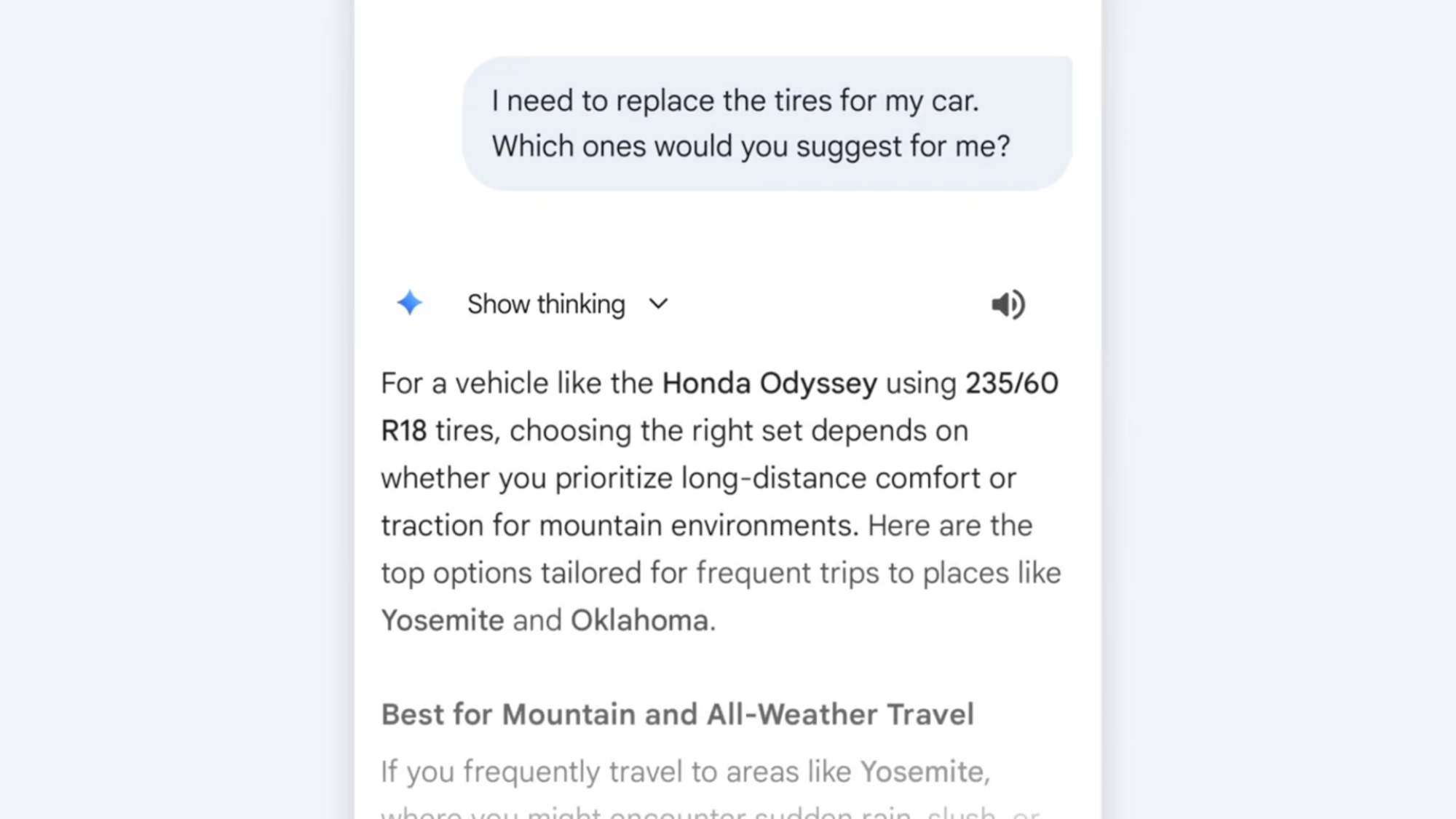
In an example, Google has a user say “I need to replace the tires for my car. Which ones would you suggest for me?” The bot then runs through multiple reasoning steps, pulling from all the data available to it, to find out what car the prompter drives and which tires would be best for it. This can take a while, which is why there’s an “Answer now” button next to the reasoning progress bar to stop the bot from getting stuck. In the example, it took about 10 seconds for the AI to generate a response.

Google is promising its typical Workspace privacy guarantees with Personal Intelligence, saying “because this data already lives at Google securely, you don’t have to send sensitive data elsewhere to start personalizing your experience.” In other words, it’s not going to move the needle on how much data about you Google can access, but at least it’ll prevent you from having to connect your Workspace to third parties.

Google also says, “Gemini will try to reference or explain the information it used from your connected sources so you can verify it,” although we don’t have any examples of that in action yet. It’s worth keeping an eye out, though, if you’re worried about hallucinations. To that end, the company does suggest asking Gemini for more information about what it used to come to its answers if you’re unsatisfied, and to correct it “if a response feels off,” perhaps by saying something like “Remember, I prefer window seats.” Theoretically, Gemini will then remember this for next time, using its existing chat history feature. If you’re continually unsatisfied, you can hit the thumbs down button on responses to provide feedback.

How to turn on Personal Intelligence in Google Gemini

Google says that eligible users should see an invitation to try Personal Intelligence on the Gemini home screen as soon as it’s rolled out to them, but if you don’t, you can turn it on manually by following these steps:

  1. Open Gemini and click or tap Settings.

  2. Click or Tap Personal Intelligence.

  3. Under Connected Apps, select which apps you would like Personal Intelligence to take information from.

And that’s it! Remember, Personal Intelligence is off by default and is only available for paid subscribers for now, so it may be some time until you can actually use it. Google also stresses the Gemini might not personalize every response, as that will save time on more simple requests. The company also said Personal Intelligence for AI Mode in Google Search is currently planned, but does not have a set release date.

NASA Plans To Put A Nuclear Reactor On The Moon By 2030 As Space Race Intensifies

NASA Plans To Put A Nuclear Reactor On The Moon By 2030 As Space Race Intensifies
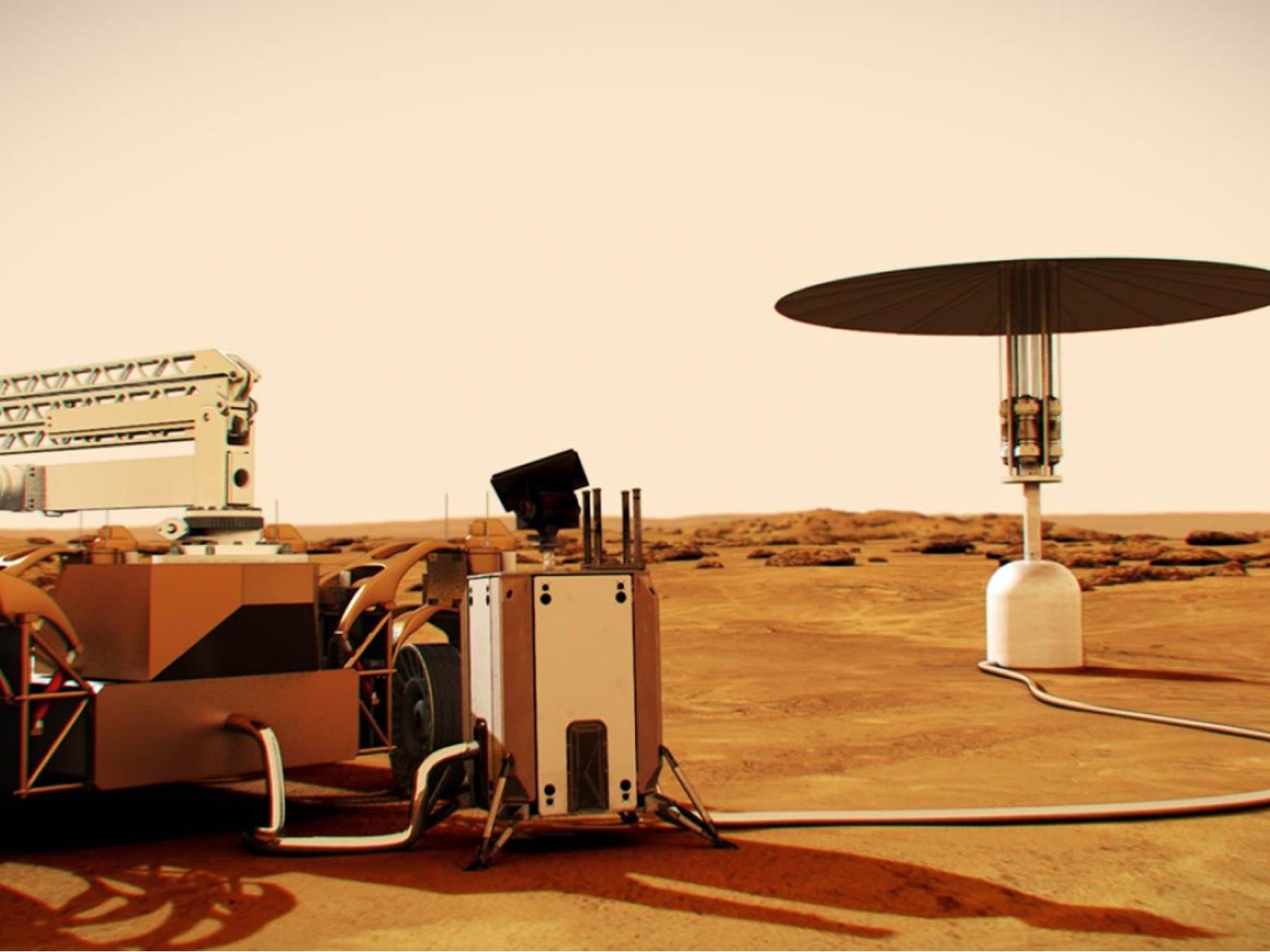
NASA and the Department of Energy have officially embarked on an ambitious goal to plant a nuclear reactor on the Moon’s surface by 2030, which when completed, will have enough output to power multiple lunar households for up to 10 years.

U.S. Secretary of Energy Chris Wright (left) and NASA Administrator Jared Isaacman (right) meet at

These MSI Laptop And Apple MacBook Deals For Hundreds Off Are Selling Out Fast

These MSI Laptop And Apple MacBook Deals For Hundreds Off Are Selling Out Fast
Recent auditing by the folks at market research firm Omdia indicates that the PC market rebounded last year and finished the last quarter of 2025 especially strong. A likely reason for the strong finish is a rush to get ahead of looming price increases caused an AI-driven shortage of memory chips. There’s still time to get ahead, though, with

UK Police Blame Microsoft Copilot for Intelligence Mistake

The chief constable of one of Britain’s largest police forces has admitted that Microsoft’s Copilot AI assistant made a mistake in a football (soccer) intelligence report. From a report: The report, which led to Israeli football fans being banned from a match last year, included a nonexistent match between West Ham and Maccabi Tel Aviv.

Copilot hallucinated the game and West Midlands Police included the error in its intelligence report without fact checking it. “On Friday afternoon I became aware that the erroneous result concerning the West Ham v Maccabi Tel Aviv match arose as result of a use of Microsoft Co Pilot [sic],” says Craig Guildford, chief constable of West Midlands Police, in a letter to the Home Affairs Committee earlier this week. Guildford previously denied in December that the West Midlands Police had used AI to prepare the report, blaming “social media scraping” for the error.


Read more of this story at Slashdot.

YouTube adds more parental controls, including a way to block teens from watching Shorts

YouTube is rolling out some additional parental controls, including a way to set time limits for viewing Shorts on teen accounts. In the near future, parents and guardians will be able to set the Shorts timer to zero on supervised accounts. “This is an industry-first feature that puts parents firmly in control of the amount of short-form content their kids watch,” Jennifer Flannery O’Connor, YouTube’s vice president of product management, wrote in a blog post. Along with that, take-a-break and bedtime reminders are now enabled by default for users aged 13-17. 

The platform is also bringing in new principles, under which it will recommend more age-appropriate and “enriching” videos to teens. For instance, YouTube will suggest videos from the likes of Khan Academy, CrashCourse and TED-Ed to them more often. It said it developed these principles (and a guide for creators to make teen-friendly videos) with help from its youth advisory committee, the Center for Scholars and Storytellers at UCLA, the American Psychological Association, the Digital Wellness Lab at Boston Children’s Hospital and other organizations.

Moreover, an updated sign-up process for kid accounts will be available in the coming weeks. Kid accounts are tied to parental ones, and don’t have their own associated email address or a password. YouTube says users will be able to switch between accounts in the mobile app with just a few taps. “This makes it easier to ensure that everyone in the family is in the right viewing experience with the content settings and recommendations of age-appropriate content they actually want to watch,” O’Connor wrote.

This article originally appeared on Engadget at https://www.engadget.com/entertainment/youtube/youtube-adds-more-parental-controls-including-a-way-to-block-teens-from-watching-shorts-151329673.html?src=rss

Google Pixel 10a Design, Pricing And Launch Info Exposed In Multiple Leaks

Google Pixel 10a Design, Pricing And Launch Info Exposed In Multiple Leaks
Google is accelerating its hardware timeline once again, according to new reports suggesting the mid-range Pixel 10a could arrive on retail shelves as early as mid-February 2026.

According to retail leaks, the Pixel 10a will be dropping on February 17, pushing the launch forward by a full month compared to the Pixel 9a, which debuted in

This App Brings Some of My Favorite Windows Features to Mac

As someone who regularly switches between the Mac and PC, I really can’t live without the PowerToys app on Windows. It adds little missing features that I really like on the Mac, like a Spotlight Search alternative, auto dark mode, screen awake, on-screen OCR (which lets you pull text from images), and more.

But the reverse is also true. When I’m on MacOS, I start to miss the little features and commands that I’ve been used to Windows having for decades now (I started using Windows in school, but was only exposed to macOS when I was in college).

It’s the little things, like not being able to cut and paste files in Finder. And why must I accidentally open the Music app every time I press the play button? This is just the beginning.

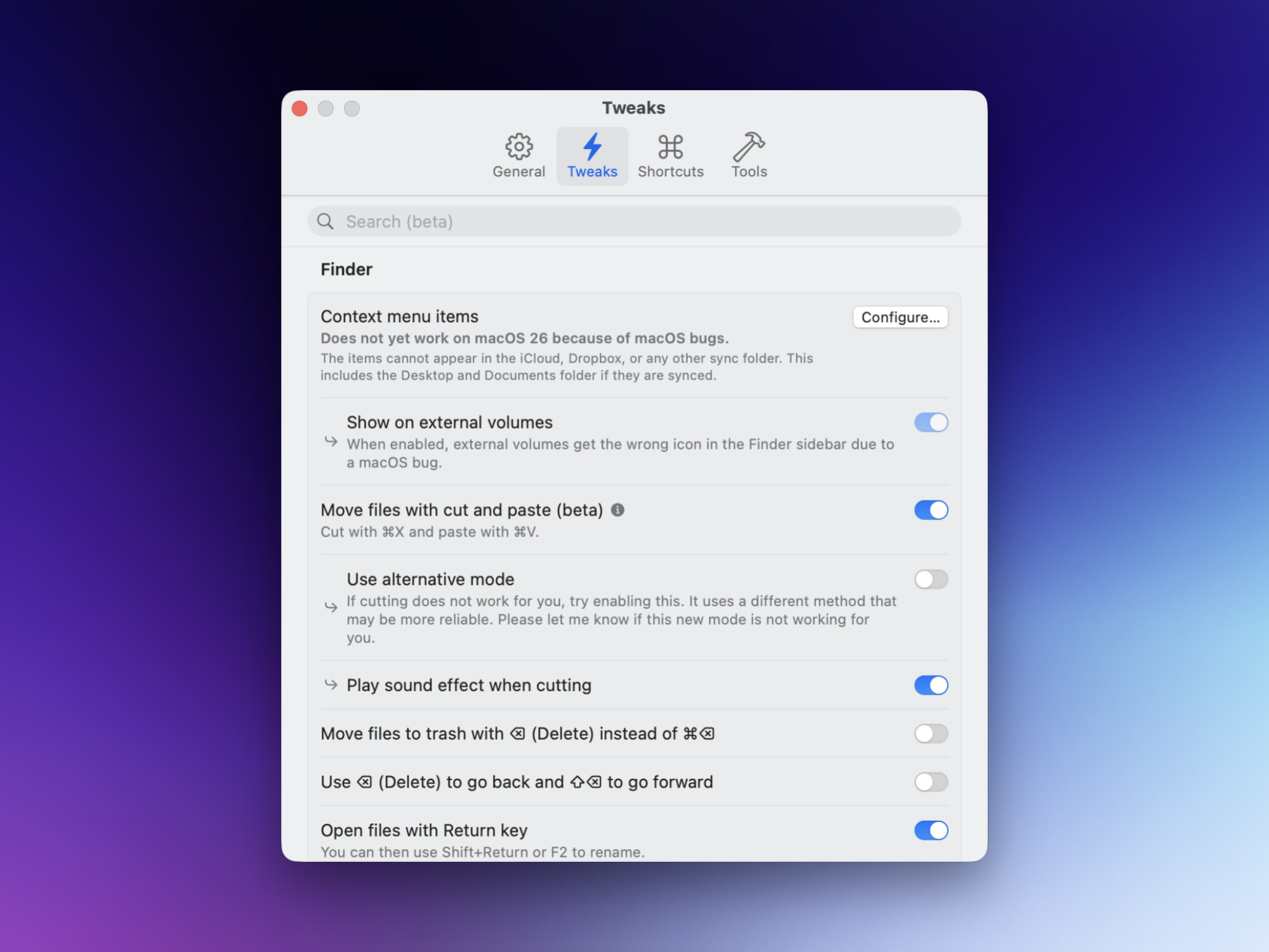
Enter Supercharge, a utility from prolific indie developer Sindre Sorhus. Think of it not as a single app, but as a Swiss army knife for your menu bar—a collection of micro-utilities designed to patch the specific usability holes that Apple has left open, many of which Microsoft has already plugged. The app offers an unlimited free trial (with a prompt to upgrade every 12 hours), or you can buy it outright for $18. It’s also available as part of a Setapp subscription.

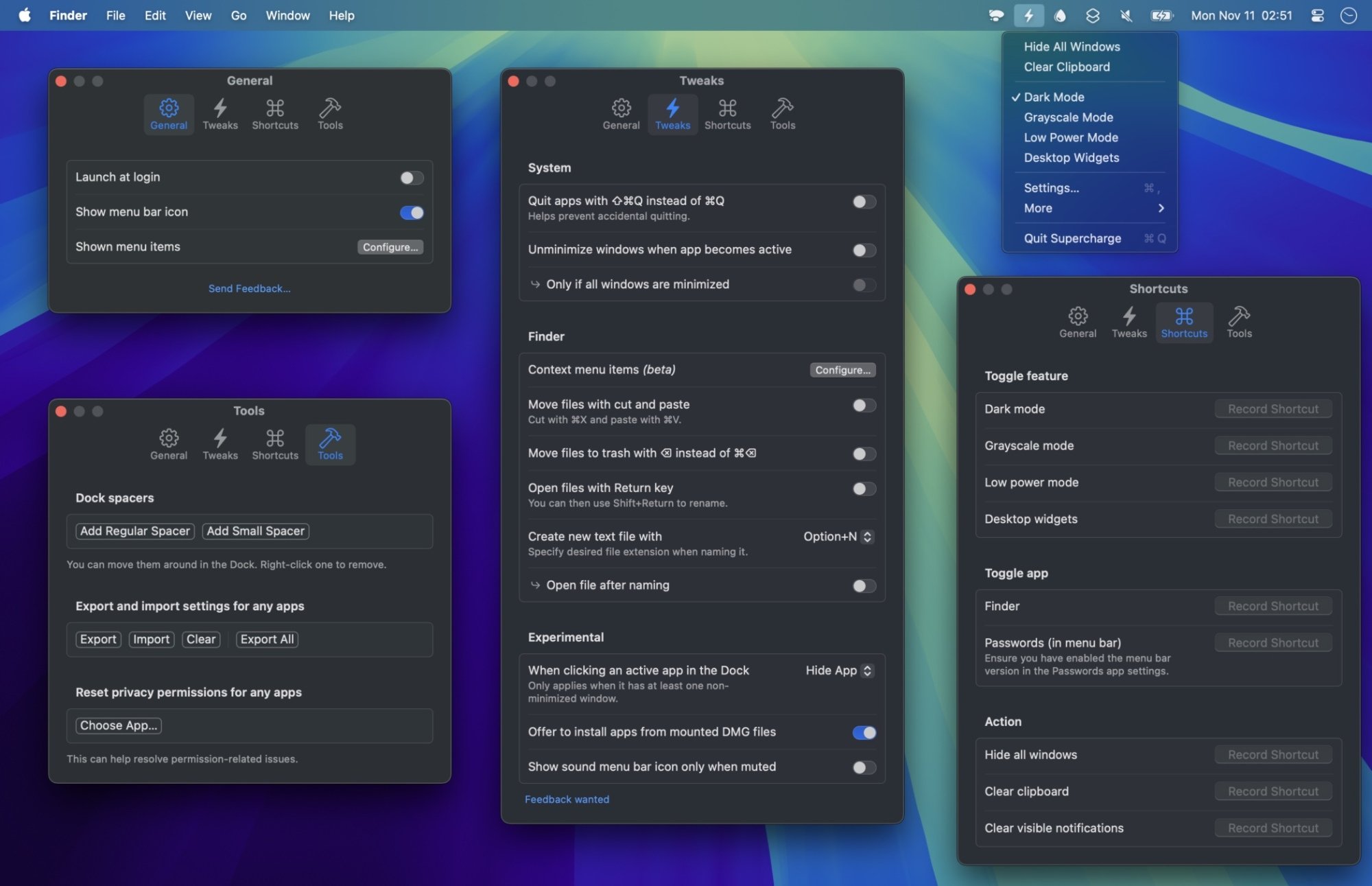
Supercharge settings for Mac.

Credit: Supercharge

The best Supercharge tweaks that you should enable

The Supercharge app works in two ways. The first is by giving you a set-and-forget settings menu. Secondly, it adds a menu bar app where you can quickly access small features on the fly.

The tweaks part, to me, is a lot more interesting. Once the app is installed, open the menu bar app and go to Settings. Go to the Tweaks tab and take some time to customize your Mac’s behavior.

Make Finder work more like Windows File Explorer

Finder tweaks in Supercharge.

Credit: Khamosh Pathak

The Finder is where Supercharge shines, fixing legacy behaviors that have frustrated Windows switchers for years. The first thing I enabled was the “Cut and Paste” functionality. Finally, you can use Cmd+X to cut a file and Cmd+V to move it, eliminating the awkward Cmd+C followed by Cmd+Option+V dance required by default.

Beyond moving files, the app allows you to enable the Option+N shortcut to instantly create a new text file in your current folder—another Windows muscle memory I’ve had for decades. Additional tweaks include toggling the Enter key to open a file instead of renaming it, and an option to show hidden files by default.

Mission Control features

Apple’s Mission Control provides a bird’s-eye view of all your windows, but it’s hardly interactive. Supercharge changes that by adding window management buttons directly to the overlay. You can now add dedicated Close, Minimize, and Quit buttons for every window inside Mission Control, helping you clear cluttered app windows in seconds, and in a fairly visual way.

Dock enhancements

Supercharge also brings much-needed flexibility to the Dock, making it more like the taskbar on Windows or Linux. Enable the Click-to-Hide feature, and you can minimize or hide an app simply by clicking on the app icon. My favorite, though, is the option to open folders directly in the Finder from the Dock. You can also set Supercharge to add spacers to the Dock, and quit apps using the middle-click mouse button.

The Apple Music app fix

Perhaps the most useful fix in the entire suite is the ability to stop Apple Music from launching automatically. This feature stops the app from popping up when you press Play on your keyboard or Bluetooth headphones. If you are a dedicated Spotify user or simply dislike it when your headphones accidentally wake up Apple Music, this feature alone makes a Supercharge installation worth it.

Other useful features

The Supercharge app includes several other quality-of-life improvements. The Notification Nuke feature allows you to set a global hotkey to instantly clear all notifications from Notification Center, acting as a panic button for focus. To prevent accidents, you can also enable Accidental Quit Prevention, which requires a double-press or a Shift + Cmd + Q combo to actually quit an application.

Add these features to the Supercharge menu bar app

Array of options for Supercharge menu bar app.

Credit: Khamosh Pathak

The second part of the equation here is the menu bar app. Here, you can add small missing features that usually require downloading separate apps. There are more than two dozen options. Go to Settings > General > Show Menu Items to see the whole list.

Here, you can add options to quickly capture and copy any text from an image (or translate it). There are one-click options for hiding all windows, showing the desktop, quitting all apps except the current one, clearing all notifications, and more. There’s also a simple Keep Awake feature that will keep your Mac active even when the screen is off.

And there’s also a simple default browser switcher built-in, though I prefer using Sindre’s dedicated Default Browser app.