YouTube channel Hardware Unboxed is reporting that NVIDIA has “effectively” discontinued the RTX 5070 Ti and 5060 Ti 16GB due to the ongoing memory crunch. In its most recent video, the channel states ASUS “explicitly” told it the RTX 5070 Ti is “currently facing a supply shortage.” As a result, the company has “placed the model into end of life status,” and no longer plans to produce it.
Hardware Unboxed also spoke to retailers in Australia, who told the channel the 5070 Ti is “no longer available to purchase from partners and distributors,” adding they expect that to be the case throughout at least the first quarter of the year. The 5060 Ti 16GB “is almost done as well,” with ASUS stating it no longer plans to produce that model going forward either. Both GPUs are 16GB models, making them more expensive to produce in the current economic climate. And while there might be some hope of the 5070 Ti and 5060 Ti 16GB returning later this year, the channel suggests both are unlikely to make a comeback. NVIDIA will reportedly focus on 8GB models like the RTX 5050, 5060, and 5060 Ti 8GB, with the 12GB 5070 set to stick around for now.
NVIDIA did not immediately respond to Engadget’s comment request. We’re also waiting to hear back from ASUS. We’ll update this article when the companies respond.
The AI boom has created an insatiable demand for RAM and other computer components from data center infrastructure companies. In response, many memory manufacturers have shifted their production lines to focus on high bandwidth memory for those clients at the expense of their regular offerings, leading to dramatically increased prices among consumer RAM kits, GPUs and SSDs. In December, Micron Technology announced it would wind down its consumer-facing Crucial brand to focus exclusively on providing components to the AI industry.
ASUS is the first of NVIDIA’s add-in board (AIB) partners to comment on the memory crunch. AIBs are the companies that produce the majority of GPUs you can buy from NVIDIA and AMD. Historically, NVIDIA has provided its board partners with both the GPU die and memory needed to make a graphics cards. However, a recent rumor suggested the company told its partners they would need to start sourcing memory on their own.
If this is in fact the demise of the 5070 Ti and 5060 Ti 16GB, it’s sad news for PC enthusiasts. Many modern AAA games demand more than 8GB of VRAM, making the 16GB GPUs from both NVIDIA and AMD the ones you want to buy if you’re building a new system or upgrading your current rig.
This article originally appeared on Engadget at https://www.engadget.com/gaming/pc/asus-has-stopped-producing-the-rtx-5070-ti-and-5060-ti-16gb-saying-theyve-reached-end-of-life-162012275.html?src=rss
Apple, which spent years as TSMC’s undisputed top customer and helped the Taiwanese foundry become the semiconductor industry’s most important manufacturer, is now fighting for production capacity as Nvidia’s AI chip orders consume an ever-larger share of the company’s leading-edge wafer supply.
TSMC CEO CC Wei visited Cupertino last August to deliver unwelcome news: Apple would face the largest price increase in years and the iPhone maker would no longer have guaranteed access to production capacity across TSMC’s nearly two dozen fabs.
According to Culpium analysis and its supply chain sources, Nvidia likely overtook Apple as TSMC’s largest customer in at least one or two quarters of 2025. TSMC’s revenue climbed 36% last year to $122 billion, the company reported Thursday.
Ford has just unleashed the 2026 Mustang Dark Horse SC, a supercharged beast designed to bridge the massive gap between the standard 500-horsepower Dark Horse and the $325,000 limited-run Mustang GTD.
Revealed ahead of the 2026 Detroit Auto Show, the SC (supercharged) designation marks the return of the factory-blown V8 to the Mustang lineup.
Yesterday, your phone might have been borderline unusable—at least, when you were away from wifi. That was due to Verizon’s nationwide outage, which impacted roughly two million customers across the United States. If you were among them, you couldn’t use your phone when you were on the go, which is sort of the idea behind cellphones in general. This included the ability to use navigation apps in your car, send emails or messages for work, or make calls outside of SOS mode, which basically limited you to emergency services. Worse, some users are still experiencing issues this morning following Verizon’s official resolution, though there’s likely a quick fix for that.
I don’t have Verizon, but if I did, I’d be a bit ticked off. Outages happen, but this one was massive, and the company still hasn’t offered much of an explanation for what actually happened. In spite of this (or, perhaps because of it) the company does seem keen to smooth the whole thing over. When Verizon announced that it had resolved the outage yesterday evening, it also noted that it would reach out to affected customers directly to issue account credits. It’s a pain to deal with interruptions to services as important as your wireless network, but at least Verizon wants to compensate you for the problem, right? Just don’t expect much.
Verizon’s account credits might seem a bit low
At 9:42 a.m. ET, Verizon made a new post on X, once again apologizing for yesterday’s issues, and revealing what each affected account can expect to receive as compensation: $20.
Verizon says this number represents “multiple days of service” on average, and that no credit can make up for what happened. That might be true, but in my humble opinion, a larger credit could perhaps get a bit closer to making up for what happened. Maybe this is greater than the on-paper dollar value of losing a day of service, but it’s not like customers think of their bills as paying for their usage. They pay Verizon quite a bit, expecting that their smartphones to be connected at all times within Verizon’s coverage map. Considering the upheaval a day of disconnection no doubt caused, I’m not sure $20 is going to cut it.
But I digress: $20 is the number, and $20 is what affected customers can expect to receive. If you’re among them, Verizon says you can log into the myVerizon app to claim your recompense.
On Thursday, the Wikimedia Foundation announced licensing deals with Microsoft, Meta, Amazon, Perplexity, and Mistral AI, expanding its effort to charge major tech companies for using Wikipedia content to train the AI models that power AI assistants like Microsoft Copilot and OpenAI’s ChatGPT.
While these same companies previously scraped Wikipedia without permission, the deals mean that most major AI developers have now signed on to the foundation’s Wikimedia Enterprise program, a commercial subsidiary that sells API access to Wikipedia’s 65 million articles at higher speeds and volumes than the free public APIs provide. The foundation did not disclose the financial terms of the deals.
The new partners join Google, which signed a deal with Wikimedia Enterprise in 2022, as well as smaller companies like Ecosia, Nomic, Pleias, ProRata, and Reef Media. The revenue helps offset infrastructure costs for the nonprofit, which otherwise relies on small public donations while watching its content become a staple of training data for AI models.
The White House has announced a 25% tariff on certain advanced computing chips, including NVIDIA’s H200 silicon based on its Hopper architecture and AMD’s Instinct MI325X accelerator based on CDNA 3, both of which now have the green light to ship into China. Interestingly, the levy is described as a tariff on chip imports, not exports.
Wikipedia turns 25 today, and the online encyclopedia is celebrating that with an announcement that it has signed new licensing deals with a slate of major AI companies — Amazon, Microsoft, Meta Platforms, Perplexity and Mistral AI. The deals allow these companies to access Wikipedia content “at a volume and speed designed specifically for their needs.” The Wikimedia Foundation did not disclose financial terms.
Google had already signed on as one of the first enterprise customers back in 2022. The agreements follow the Wikimedia Foundation’s push last year for AI developers to pay for access through its enterprise platform. The foundation said human traffic had fallen 8% while bot visits — sometimes disguised to evade detection — were heavily taxing its servers.
Wikipedia founder Jimmy Wales said he welcomes AI training on the site’s human-curated content but that companies “should probably chip in and pay for your fair share of the cost that you’re putting on us.” The site remains the ninth most visited on the internet, hosting more than 65 million articles in 300 languages maintained by some 250,000 volunteer editors.
If you’re looking for something to entertain your kids for the next several months (and potentially longer), YouTube would like you to know that more than 100 classic episodes of Sesame Street are now streaming on the platform.
The partnership between Sesame Street creator Sesame Workshop and YouTube was first announced last year and encompasses both old episodes as well as new content. Some of the themed compilations that have also been added to YouTube and YouTube Kids focus on specific educational topics such as ABCs and STEM, while others have broader themes like “Adventure & Imagination” and “Friendship & Play.”
Media history enthusiasts also have good reason to check out the new Sesame Street archive. The very first episode, which aired in 1969, is included, back when Kermit the Frog was still hanging out with the likes of Big Bird and Bert.
The YouTube partnership is not to be confused with the deal Sesame Workshop also recently penned with Netflix, which saw new episodes of Sesame Street — now in its 56th season — move to the streamer and PBS from its former home on HBO. The network opted not to renew a partnership that lasted a decade.
This article originally appeared on Engadget at https://www.engadget.com/entertainment/streaming/more-than-100-classic-episodes-of-sesame-street-are-now-streaming-on-youtube-and-youtube-kids-151959561.html?src=rss
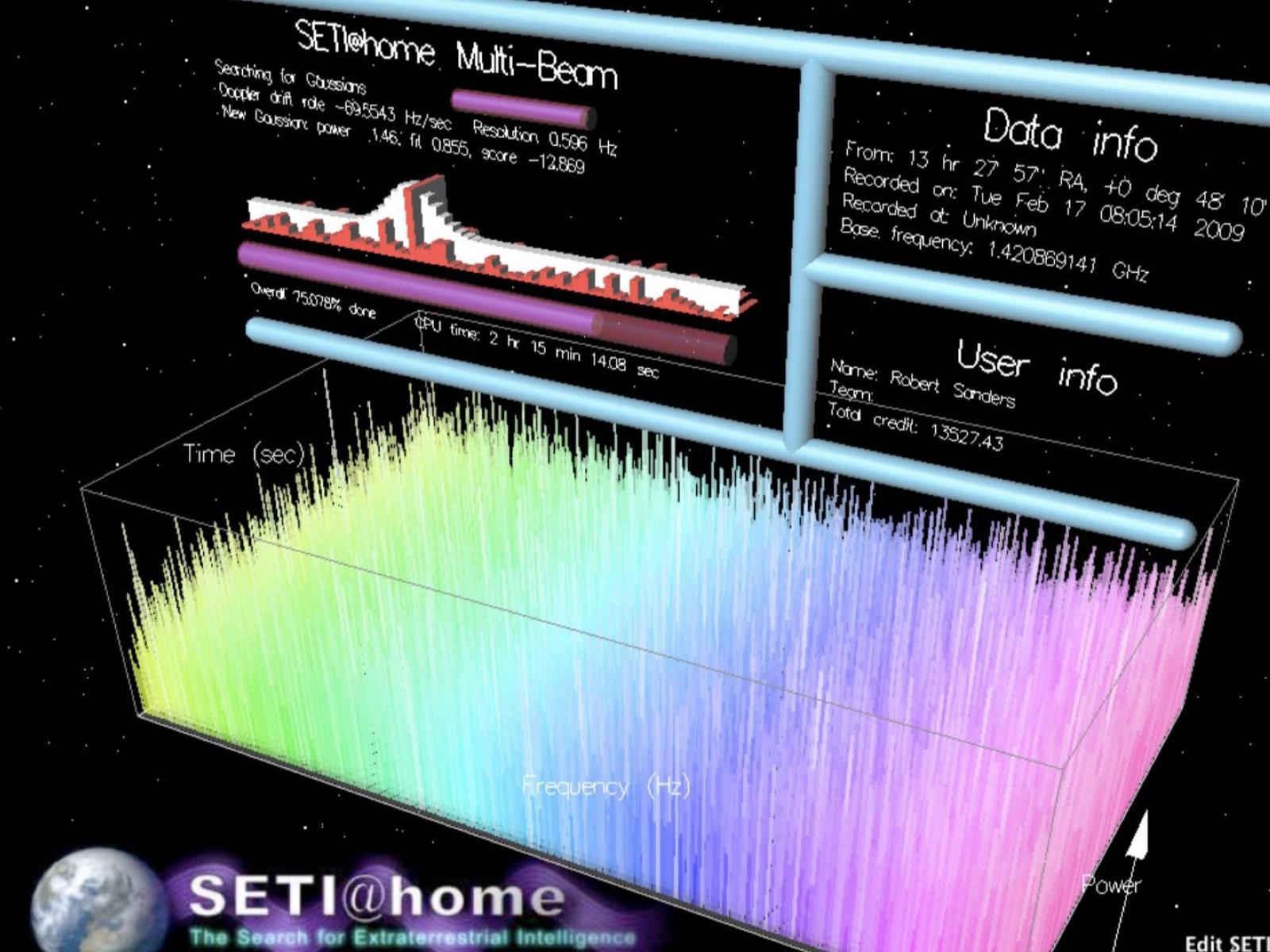
After two decades of quiet data processing on millions of crowd-sourced home computers, the SETI@home project has narrowed down billions of space whispers to 100 signals. Could one of these point to intelligent alien life?
Launched in 1999, SETI@home turned the search for extraterrestrial intelligence into a global phenomenon by allowing
In remarks this week to a Texas space organization, a key Senate staff member said an “extension” of the International Space Station is on the table and that NASA needs to accelerate a program to replace the aging station with commercial alternatives.
Maddy Davis, a space policy staff member for US Sen. Ted Cruz, R-Texas, made the comments to the Texas Space Coalition during a virtual event.
Cruz is chairman of the Senate Committee on Commerce, Science, and Transportation and has an outsized say in space policy. As a senator from Texas, he has a parochial interest in Johnson Space Center, where the International Space Station Program is led.
Mentra will soon start shipping its first smart glasses, the Mentra Live. At first glance, there’s nothing obvious setting Mentra’s glasses apart from its more well-known competitors, but they come with their own dedicated app store, and employ an open-source OS with an SDK that developers have had access to since early 2025.
Mentra says the MiniApp Store is the first app store of its nature for smart glasses, and it will be available to iOS and Android users through the Mentra app. It might be a bit of a reach to call it the smartphone-ification of smart glasses at this early stage, but that seems to be Mentra’s aim. Apps might do something as simple as saving hand-written notes on the fly, but a more specific example is “Chess Cheater,” which will use the front-facing camera and AI to analyze your position and literally whisper a suggested next move to you.
Mentra
As for the glasses themselves, they’re powered by a Mediatek MTK8766 chipset and feature a 12-megapixel camera with a 119-degree FOV. There are three microphones and built-in stereo speakers. The front-facing camera also does HD video, with livestreaming functionality supported to the likes of X, YouTube, Twitch and Instagram. You can also listen to music and take calls from WhatsApp, FaceTime and any other calling app you might use.
At 43 grams, Mentra says its specs are among the lightest smart glasses you can buy, while battery life is said to be more than 12 hours, with 50+ hours of additional charge stored in the 2,200mAh charging case. The Mentra Live smart glasses are prescription-ready and cost $299. 1,000 pairs were made available for the first batch, which will ship on February 15. Batch two will include a limited amount of glasses available to ship on February 28th.
This article originally appeared on Engadget at https://www.engadget.com/wearables/mentras-first-smart-glasses-are-open-source-and-come-with-their-own-app-store-150021126.html?src=rss
During CES 2026, Samsung unveiled plenty of new TVs, monitors and other hardware. However, the company is also looking to expand further into video games and has announced a significant refresh to its Gaming Hub on smartphones.
Engadget spoke with Samsung’s Jong Woo, VP of Game Services, who explained that the update will offer more personalized, faster ways to play and place greater emphasis on up-and-coming titles. Now available on Galaxy devices, with further updates planned, the new hub wants to be a more active space for the latest mobile games.
“We believe that gamers want to find new content that is personalized to them,” said the VP of Samsung Games Services. He continued: “We want to bring content to users and make it immediately available for them to play. We have instant plays where, through our cloud streaming technology, we can take Android-native games and put them in the cloud, so that when users want to try them, they don’t have to go through the friction of downloading them first.”
According to Samsung, the mobile Gaming Hub attracts over 160 million users across smartphones and other devices. However, the VP of Game Services at Samsung believes that, despite the vast library of games across many genres available to mobile users, “mobile game discovery is broken.”
Samsung
Initially, the mobile Gaming Hub was a supplemental app for all purchased games, allowing users to track their collection. With this update, all games purchased from both Google Play and the Galaxy Store are stored in the Gaming Hub. It’s designed to be a single place for players to view their owned games, find recommendations, access cloud streaming for select games and even watch highlights from content creators.
According to Woo, the larger goal of the new Samsung mobile Gaming Hub is to personalize and guide the mobile gaming experience for players, which has remained nebulous compared with gaming discovery experiences on PC and consoles.
“We’re getting a lot of feedback from the users, a lot of it from focus testing and beta testing, and what we’re finding is that we believe we are solving pain points for mobile gamers,” said Woo about rebuilding the Gaming Hub. “We’re getting an idea of gamer preferences at the individual, personalized level. Based on all of that, we’re able to provide different types of recommendations.”
Another reason for the new changes to the Samsung Gaming Hub was to help foster a community for mobile gamers, including players and developers. In addition to sharing YouTube videos and content from gaming creators and streamers, the company plans to add more social elements to the Gaming Hub to make mobile gaming feel more active and less isolating.
“Mobile is a very personal experience, right? It’s your personal device, and oftentimes when you play games on mobile, it feels like a solitary experience,” said Woo. Currently, the revamped Mobile Gaming Hub is only available for Galaxy smartphones and tablets. Users on non-Galaxy devices will still use the previous version of the Gaming Hub, for now.
Compared with PC and console online hubs like Steam and PlayStation Network, it’s clear that mobile platforms are still figuring out how to create an equally compelling space for engagement. Even with the vast user base, mobile game hubs tend to be a go-between for users to get to the products. There’s more work to do, but the new Gaming Hub could be the first step in the right direction.
This article originally appeared on Engadget at https://www.engadget.com/gaming/samsung-refreshed-mobile-gaming-hub-150010632.html?src=rss
If you have Verizon, yesterday might have been a bit chaotic. The wireless carrier’s coverage was down for large swaths of the country for much of the day, leading to confusion, frustration, and, for some, conspiracy theories. I saw some users on X post cryptic messages like “This is how it starts,” and “These are the end times.” It’s good to know in times of service disruption, we can all keep a level head.
But despite claims to the contrary, the world didn’t end yesterday, and Verizon fixed the issue. The company issued a statement at 10:20 p.m. ET, confirming the outage had been resolved, and that Verizon would contact affected customers directly to issue account credits. While that doesn’t necessarily make up for a full day of network downtime, at least Verizon users can get back online and make calls when not connected to wifi.
But some customers out there aren’t back to normal. In fact, they’re still seeing the same “SOS” alert on their phones they saw yesterday. For these users, the outage is very much still happening, as they cannot access the internet or communicate with others without either going through satellite connectivity, or finding a wifi connection. When you need to be out and about, especially on the road, that isn’t an option.
How to get your Verizon phone out of SOS mode
Luckily, there’s a simple solution here, one that Verizon shared in its post about the outage’s resolution: restart your phone. It doesn’t matter if you already restarted your phone yesterday during the outage: In order to see results, you’ll need to power off your phone and turn it back on after Verizon implemented its fix.
Different smartphones have different restart methods, but here are some tips for the most popular models:
Restarting an iPhone: Press and hold one of the volume buttons together with the side (power) button, until you see the power-off slider. Slide to power off, then wait for the screen to go totally black. After about 30 seconds, you can press and hold the side button to power it back on. Note: If your iPhone has a Home button, you can simply press and hold the side button to pull up the power-off slider.
Restarting a Samsung Galaxy: Press and hold the volume down button and side button until you see power options appear. Here, choose “Restart,” then tap “Restart” again.
Restarting a Pixel: If you have a Pixel 6 or newer, press and hold the volume up button and side button for a few seconds, then tap “Restart” when it appears. If you have a Pixel 5 or older, simply hold the side button until the phone restarts.
If your phone model isn’t listed here, you can search the internet for specific instructions on how to restart it. Typically, though, the process involves holding both the side button and one of the volume buttons.
Anthropic’s fourth installment of its Economic Index, drawing on an anonymized sample of two million Claude conversations from November 2025, finds that AI is changing how people work rather than whether they work at all. The study tracked usage across the company’s consumer-facing Claude.ai platform and its API, categorizing interactions as either automation (where AI completes tasks entirely) or augmentation (where humans and AI collaborate). The split came out to 52% augmentation and 45% automation on Claude.ai, a slight shift from January 2025 when augmentation led 55% to 41%.
The share of jobs using AI for at least a quarter of their tasks has risen from 36% in January to 49% across pooled data from multiple reports. Anthropic’s researchers also found that AI delivers its largest productivity gains on complex work requiring college-level education, speeding up those tasks by a factor of 12 compared to 9 for high-school-level work.
Claude completes college-degree tasks successfully 66% of the time versus 70% for simpler work. Computer and mathematical tasks continue to dominate usage, accounting for roughly a third of Claude.ai conversations and nearly half of API traffic.
IO Interactive raised a few eyebrows last week when it announced the minimum and recommended PC specs for 007 First Light. To run the James Bond adventure at in 1080p at 60 fps, IOI initially said you’d need to have a rig with at least 32GB of RAM and a GPU with 12GB of VRAM. The studio has now revised those numbers and other elements of the specs after “the community flagged some inconsistencies in an earlier version of the listing.”
The developer blamed an “internal miscommunication” which led to it sharing an older version of the specs. One of the recommended GPUs in the original version was an NVIDIA GeForce RTX 3060 Ti, which has 8GB of VRAM — not enough to meet the supposed recommended VRAM settings.
It seems a little odd to think that it took IOI over a week and an enormous pile of negative press and online reaction before addressing the inconsistency (not to mention the demand for 32GB of RAM for relatively modest 1080p, 60 fps performance). The studio says it updated the specs after “a thorough re-examination and additional testing.”
We are providing today an update to the PC system requirements for 007 First Light after the community flagged some inconsistencies in an earlier version of the listing.
The earlier mistake was due to an internal miscommunication leading to an older version of the specs to be… pic.twitter.com/2M8BBoCjWX
In the recommended hardware section of the latest version, IOI revised down the VRAM from 12GB to 8GB and it halved the RAM requirement to 16GB. IOI also “fixed” the minimum CPU info. The original specs stipulated that gamers would need at least an Intel Core i5 9500K or AMD Ryzen 5 3500. The former has now been revised down to an Intel Core i5 9500K.
For the tape, then, the minimum PC specs to run 007 First Light with a performance target of 1080p at 30 fps are:
The required operating system is the same on both counts with a 64-bit version of Windows 10 or 11. The storage space needed is also the same at 80GB.
IOI apologized for “the confusion” it caused with the mixup. It promised to share more details about 007 First Light ahead of the game’s arrival on May 27 — including details of additional performance targets. Given the way RAM and GPU prices are going, here’s hoping IOI isn’t looking for too much more to run the game at 1440p or 4K at a decent framerate.
This article originally appeared on Engadget at https://www.engadget.com/gaming/007-first-light-dev-admits-it-messed-up-pc-specs-announcement-143000670.html?src=rss
US President Donald Trump has announced new tariffs on Nvidia and AMD as part of a novel scheme to enact a deal with the technology giants to take a 25 percent cut of sales of their AI processors to China.
In December, the White House said it would allow Nvidia to start shipping its H200 chips to China, reversing a policy that prohibited the export of advanced AI hardware. However, it demanded a 25 percent cut of the sales.
The new US tariffs on certain chips, announced on Wednesday, were designed to implement these payments and protect the unusual arrangement from legal challenges, according to several industry executives.
Verizon confirmed that it has resolved a frustrating service outage that left many wireless subscribers scrambling through posts on social media to see what was going on. Details are still light, but those who found their way to X (formerly Twitter) in search of answers on why their service suddenly went dark would have seen rivals AT&T and
White-collar workers stuck in a cycle of layoffs and stagnant wages might want to look past the traditional tech, finance and media job postings to an unexpected source of opportunity: the blue-collar sector, which faces a labor shortage and is seeing rapid transformation through private-equity investment. These jobs are generally less vulnerable to AI, and the earning trajectory can be steep, the WSJ writes.
At Crash Champions, a car-repair chain that has grown from 13 locations in 2019 to about 650 shops across 38 states, service advisers start at roughly $60,000 after a six-month apprenticeship and can double that within 18 months, according to CEO Matt Ebert. Directors overseeing multiple locations earn more than $200,000. Power Home Remodeling, a PE-backed construction company, says tech sales professionals earning $85,000 to $100,000 could make lateral moves after a 10-week training program.
The share of workers in their early 20s employed in blue-collar roles rose from 16.3% in 2019 to 18.4% in 2024, according to ADP — five times the increase among 35- to 39-year-olds.
After a widely hyped and successful Kickstarter campaign, Valerion’s 4K VisionMaster Max laser projector has finally arrived. It’s the company’s new flagship model in the VisionMaster series, offering better image quality and more convenience than its other models. However, it’s quite expensive and has some stiff competition from Anker’s Nebula X1 and XGIMI’s Horizon 20 Max.
I was eager to see how it compared to those models and if it delivers on Valerion’s promise of “pure cinema.” It does offer better image quality, but the difference isn’t quite enough to justify the big jump in price for most users.
Features and design
The VisionMaster Max has a classy squarish design with a glossy black finish up front and chrome fins on the side that house two 12W speakers. It’s smaller and fit my decor better than Nebula’s tall, plasticky X1, though to be fair the latter is also designed for outdoor use. The VisionMaster Max has a similar form factor to XGIMI’s Horizon 20 Max, but that model pivots on its stand, while the Valerion uses a kickstand-like support.
For setup, the VisionMaster Max is quite flexible. It comes with a 0.9-1.5x optical zoom, so it can be installed between 7.8 and 13 feet away for a 120-inch screen size, which covers a wide range of scenarios. It also features a +/- 105 percent vertical shift option that helps you get an optically perfect screen fit without moving the projector or employing digital “keystone” adjustments that affect picture quality.
If that still doesn’t work, you can swap out the included lens with a long-throw 0.9-2.0:1 option once it becomes available. The company has even promised an anamorphic lens for users with CinemaScope screens. Both of those items will be available for purchase separately with the prices yet to be disclosed.
Steve Dent for Engadget
For my space, I placed the VisionMaster Max on a table about 12 feet from my 120-inch screen and centered it horizontally as there’s no horizontal shift option (it can also be ceiling mounted, of course). Then, I went into the auto-alignment setting, made sure that the projected image was larger than my screen and hit “start alignment” to get a perfect fit to my screen. Though it lacks a motorized lens gimbal like the Nebula X1, the lens shift option provides the same flexibility, so setup was just as easy.
For inputs, the VisionMaster Max comes with three HDMI 2.1 ports, including one with eARC for a sound bar, along with S/PDIF optical and 3.5mm audio outputs. Impressively, it includes a gigabit ethernet connection so you can either hardwire it to the internet or connect via Wi-Fi.
The VisionMaster Max lacks liquid cooling like the Nebula X1, but Valerion claims a similar fan noise level of 28db. When I compared them side by side, it was only a touch louder than the X1 and not at all bothersome.
Google TV is built in for streaming and projector control via the high-quality, partially backlit remote. It provides a large library of apps via Google Play along with a familiar interface. You get certified versions of Netflix, YouTube, Prime Video, Disney+, Max and others, plus Chromecast and AirPlay support, and Google Assistant for voice control. With 4GB of RAM and 128GB of ROM, the software felt a bit more responsive than Google TV on the Nebula X1.
Image quality
Steve Dent for Engadget
The VisionMaster Max has a number of features designed to optimize image quality. It’s one of the few consumer projectors with a dynamic iris and a feature called Enhanced Black Level (EBL) for improved contrast. It uses an RGB triple-laser light source (rated for 25,000 hours) paired with a 0.47-inch DLP chip that projects 1080p natively or 4K video via pixel shifting. This same chip is used on almost every consumer-level 4K projector, but XGIMI’s upcoming Titan Noir Max projector will pack a much larger 0.78-inch DMD chip that should deliver a sharper picture.
The VisionMaster Max also supports every HDR format, including Dolby Vision and Samsung’s HDR10+, along with Valerion’s own tone-mapping HDR setting. You can choose from seven picture modes for SDR, eight for HDR, three for Dolby Vision and four for HDR10+. The projector handled most HDR content well, though it occasionally lost detail in extra-bright shots. However, that can largely be fixed using the extensive manual color controls.
With all those features, the VisionMaster Max can output 4K 60 fps video at up to 3,500 ANSI lumens with a 50,000:1 contrast ratio, easily besting its main rivals. On top of that, it promises an impressive 110 percent of the Rec.2020 HDR color spectrum, with a delta E (color accuracy) value of less than 0.8 straight out of the box (any delta E less than 2 is undetectable by the human eye). Another key feature is reduction of the rainbow effect that can occur with DLP projectors.
After some fine-tuning that’s typically required with new projectors, I was highly impressed with the image quality. Brightness was high enough in “standard” mode to watch content like sports or TV shows without lowering the blinds, and can be increased if you don’t mind compromising color accuracy.
When used in ideal conditions like a darkened room, the VisionMaster Max’s image quality is the best of any projector I’ve tested to date. In Filmmaker mode (with the EBL setting enabled), contrast levels are outstanding, with true blacks showing in dark-lit scenes instead of the washed-out greys seen on most projectors. However, I kept the EBL mode at the minimum setting as I noticed it caused some color shifting at the other levels. Dynamic iris projectors can cause excessive “pumping” or sudden changes in light levels, but after adjusting the iris to a medium setting, I saw no signs of that.
The famously dark Game of Thrones Night King battle scene was easy to see on the VisionMaster Max.
Steve Dent for Engadget
Color accuracy is outstanding straight out of the box both in HDR and non-HDR modes, particularly, again in Filmmaker mode. Visually, I couldn’t detect any anomalies when looking at color bars or other charts, though my Calibrite Color Checker told me that the gamut of hues was slightly less than what Valerion claims (under 100 percent of BT.2020).
Still, the Max’s high color accuracy allowed me to see TV series and movies exactly as the filmmakers intended for a range of HDR and non-HDR movies including White Lotus season 3, Once Upon a Time in Hollywood, Andor and Dune 2. The projector’s excellent dynamic range and contrast revealed shadow details in Game of Thrones’ Night King battle, which has famously dark scenes that are difficult to see on some TVs.
I have a slight amount of sensitivity to the “rainbow” effect, but the RBE Reduction feature effectively eliminated that visual artifact for me. However, it also introduced a slight amount of noise, so I disabled it. The feature might be a godsend for some users who are particularly susceptible, but it still needs a bit more refinement.
Audio and gaming
Of all the luxury projectors I’ve tested to date, the VisionMaster Max is the best for gaming — even compared to some dedicated models. It delivers latency as low as 4ms and a refresh rate up to 240Hz at 1080p, and 15ms for 4K at 60Hz. I tested a couple of PC titles including Cyberpunk 2077 and Hollow Knight: Silksong and found them to be as responsive as I’ve seen on any TV, but with far more immersion thanks to the huge, bright and color-accurate image.
Steve Dent for Engadget
You can output audio via the S/PDIF optical output, 3.5mm headphone jack, HDMI 2.1 ports and even USB 3.0 Type A ports. The built-in 12W stereo speakers work well and are fairly loud, so you can use them in a pinch. However, since it supports both DTS:X and Dolby Atmos, you’ll ideally want to connect it to a nice home theater audio system with support for at least 5.1 surround sound.
In comparison, the Nebula X1 doesn’t have Dolby Atmos support, but it does give you the option to purchase and easily connect stereo Bluetooth speakers at a relatively cheap price. For around the same cost as the Valerion Max, Anker is also offering the Nebula X1 Pro that comes with a giant outdoor sound system and does support Dolby Atmos.
Wrap-up
The Valerion VisionMaster Max is a highly capable indoor projector that offers the best image quality I’ve seen thanks to the dynamic iris and Enhanced Black Level features. However, it’s also a lot more expensive than rival models at $5,000. It’s pretty hard to justify that extra money, unless you’re really fussy about picture accuracy and gaming performance, or need other features like the 1Gbps ethernet port.
Most buyers would be better off spending a lot less on Valerion’s own $2,699 VisionMaster Pro2, Anker’s $2,999 Nebula X1 or the $2,999 XGIMI Horizon 20 Max. Again, the difference in picture quality is too slight to justify the huge price jump to the VisionMaster Max. You might also want to wait to see how much XGIMI’s incoming Titan Noir Max 4K costs, as it also offers a dynamic iris but has a much bigger DLP chip.
This article originally appeared on Engadget at https://www.engadget.com/home/home-theater/valerion-visionmaster-max-projector-review-near-perfect-image-quality-comes-at-a-price-140045939.html?src=rss
President Trump has signed a proclamation imposing a 25 percent tariff on “certain advanced computing chips,” the White House has announced. As The New York Times notes, the administration previously threatened much bigger and broader tariffs for chips. Trump even said that he was going to impose a 100 percent tariff on companies unless they invest on semiconductor manufacturing in the United States.
The new tariff will only affect advanced chips imported into the US and are meant to be re-exported to other countries to sell. In its announcement, the White House specifically named AMD MI325X and NVIDIA H200 as two products that will be affected by the tariff. The president recently approved H200 for export to China, saying that it isn’t NVIDIA’s most advanced AI chip anyway and that the company now has newer and more powerful products, such as its Blackwell semiconductors. “[W]e’re going to be making 25 percent on the sale of those chips, basically,” Trump said.
Semiconductors imported into the US for use in products to be sold in America or for use in data centers in the country, will not be affected by the new tariff. “This tariff will not apply to chips that are imported to support the buildout of the US technology supply chain and the strengthening of domestic manufacturing capacity for derivatives of semiconductors,” the White House wrote. But that could still change: The administration said that it may still impose broader tariffs on semiconductor imports and the products that use them in the near future.
This article originally appeared on Engadget at https://www.engadget.com/big-tech/trump-administration-imposes-a-25-percent-tariff-on-high-end-chips-140000138.html?src=rss