ASRock’s New Rock Series Motherboards Go Hard With Wi-Fi 7, 64MB BIOS ROMs and More

ASRock's New Rock Series Motherboards Go Hard With Wi-Fi 7, 64MB BIOS ROMs and More
Can you smell what ASRock is cooking? Tired wrestling references aside, what ASRock is cooking looks pretty darn tasty — especially for something called “Rock”. Four new motherbords in a new family are the inaugural components: the Socket AM5-based B850 Rock Wi-Fi and the LGA 1851-equipped B860 Rock Wi-Fi, both available in full-sized ATX

Windows 11 Update Breaks Shutdown On Some PCs, Here’s The Workaround

Windows 11 Update Breaks Shutdown On Some PCs, Here's The Workaround
Users of specific versions of Microsoft’s Windows 11 can no longer properly shutdown or enter hibernation, and are instead being forced to restart unless the correct Command Prompt command is made, as part of the latest update to Windows 11 Version 23H2. The versions of Windows 11 impacted by the issue are Windows 11 Enterprise and Windows

Anthropic opens up its Claude Cowork feature to anyone with a $20 subscription

Claude Cowork, Anthropic’s AI assistant for taking care of simple tasks on your computer, is now available for anyone with a $20 per month Pro subscription to try. Anthropic launched Cowork as an exclusive feature for its Max subscribers, who pay a minimum of $100 per month for more uses of Claude’s expensive reasoning models and early access to experimental features. Now Claude Cowork is available at a cheaper price, though Anthropic notes “Pro users may hit their usage limits earlier” than Max users do.

Like other AI agents, the novelty of Claude Cowork is its ability to work on its own. If you have the macOS Claude app and a Pro subscription, you can prompt Claude Cowork to work on tasks on your local computer, like creating documents based on files you have saved or organizing your folders. The feature is an evolution of Claude Code, Anthropic’s AI coding agent, and can similarly use connectors and the Claude Chrome plugin to work with other apps and the web.

As part of this expanded rollout, Anthropic has included a few fixes inspired by early user feedback. You’ll now be able to rename sessions with Claude Cowork (“Tasks” in the parlance of the Claude app) and the company says the AI assistant will offer better file format previews, more reliable use of connectors to other apps and confirmation messages before it deletes files.

Coding agents top the list of applications of AI that have gained real traction in the last year, so Anthropic applying what it learned with Claude Code to a more general collection of computer tasks makes sense. Claude Cowork is still limited to macOS and Anthropic’s paid subscribers, but assuming the AI agent continues to be popular, it wouldn’t be surprising if the company brought it to other platforms.

This article originally appeared on Engadget at https://www.engadget.com/ai/anthropic-opens-up-its-claude-cowork-feature-to-anyone-with-a-20-subscription-194000021.html?src=rss

ARC Raiders Dev Confirms New Maps For 2026 And Some Will Be Massive

ARC Raiders Dev Confirms New Maps For 2026 And Some Will Be Massive
Arc Raiders was one of the breakout hits of 2025 and rack up an impressive number of players on Steam. The game has been able to keep its momentum going thanks to a steady stream of content drops, and developers Embark have revealed in an interview with GamesRadar+ that players can look forward to even more this year, including fresh maps.

Virgil

OpenAI is bringing ads to ChatGPT

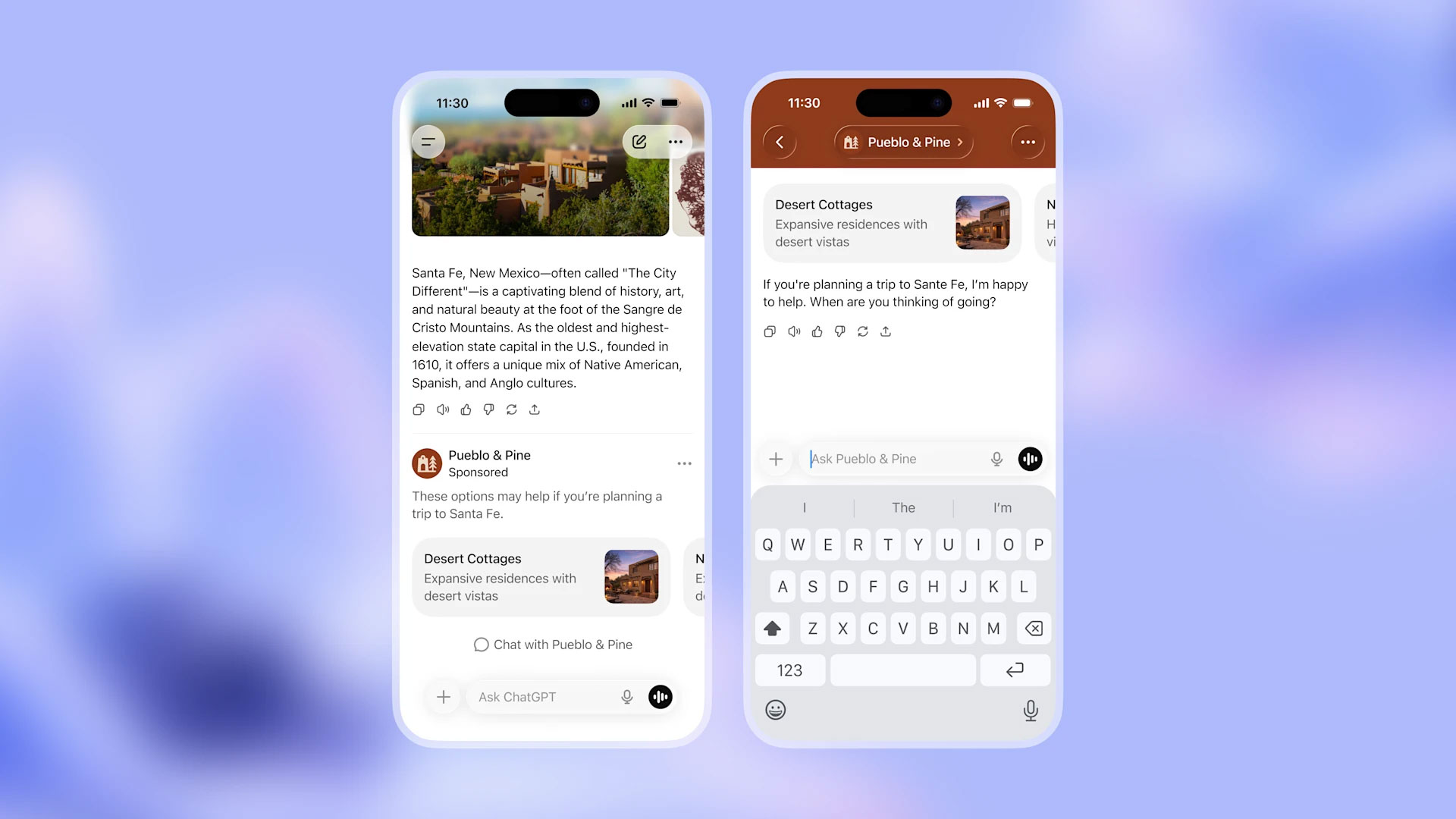
OpenAI plans to start testing ads inside of ChatGPT “in the coming weeks.” In a blog post published Friday, the company said adult users in the US of its free and Go tiers (more on the latter in a moment) would start seeing sponsored products and services appear below their conversations with its chatbot. “Ads will be clearly labeled and separated from the organic answer,” OpenAI said, adding any sponsored spots would not influence the answers ChatGPT generates. “Answers are optimized based on what’s most helpful to you.” 

OpenAI says people won’t see ads appear when they’re talking to ChatGPT about sensitive subjects like their health, mental state of mind or current politics. The company also won’t show ads to teens under the age of 18. As for privacy, OpenAI states it won’t share or sell your data with advertisers. The company will also give users the option to disable ad personalization and clear the data it uses to generate sponsored responses. “We’ll always offer a way to not see ads in ChatGPT, including a paid tier that’s ad-free,” OpenAI adds. Users can dismiss ads, at which point they’ll be asked to explain why they didn’t engage with it.   

Users will be able to ask follow-up questions about sponsored content.
OpenAI

“Given what AI can do, we’re excited to develop new experiences over time that people find more helpful and relevant than any other ads. Conversational interfaces create possibilities for people to go beyond static messages and links,” OpenAI said. However, the company was also quick to note its “long-term focus remains on building products that millions of people and businesses find valuable enough to pay for.”

To that point, OpenAI said it would also make its ChatGPT Go subscription available to users in the US. The company first launched the tier in India last August, marketing it as a low-cost alternative to its more expensive Plus and Pro offerings. In the US, Go will cost $8 per month — or $12 less than the monthly price of the Plus plan — and offer 10 times higher rate limits for messages, file uploads and image creation than the free tier. The subscription also extends ChatGPT’s memory and context window, meaning the chatbot will be better at remembering details from past conversations. That said, you’ll see ads at this tier. To go ad-free, you’ll need to subscribe to one of OpenAI’s more expensive plans. For consumers, that means either the Plus or Pro plans.       

According to reports, OpenAI had been testing ads inside of ChatGPT since at least the end of last year. As companies continue to pay a high cost for model training and inference, all chatbots are likely to feature ads in some form.

This article originally appeared on Engadget at https://www.engadget.com/ai/openai-is-bringing-ads-to-chatgpt-192831449.html?src=rss

Partly AI-Generated Folk-Pop Hit Barred From Sweden’s Official Charts

An anonymous reader shares a report: A hit song has been excluded from Sweden’s official chart after it emerged the “artist” behind it was an AI creation. I Know, You’re Not Mine — or Jag Vet, Du Ar Inte Min in Swedish — by a singer called Jacub has been a streaming success in Sweden, topping the Spotify rankings.

However, the Swedish music trade body has excluded the song from the official chart after learning it was AI-generated. “Jacub’s track has been excluded from Sweden’s official chart, Sverigetopplistan, which is compiled by IFPI Sweden. While the song appears on Spotify’s own charts, it does not qualify for inclusion on the official chart under the current rules,” said an IFPI Sweden spokesperson. Ludvig Werber, IFPI Sweden’s chief executive, said: “Our rule is that if it is a song that is mainly AI-generated, it does not have the right to be on the top list.”


Read more of this story at Slashdot.

The mother of one of Elon Musk’s children is suing xAI over nonconsensual deepfake images

Although X removed Grok’s ability to create nonconsensual digitally undressed images on the social platform, the standalone Grok app is another story. It reportedly continues to produce “nudified” deepfakes of real people. And now, Ashley St. Clair, a conservative political strategist and mother of one of Elon Musk’s 14 children, has sued xAI for nonconsensual sexualized images of her that Grok allegedly produced.

In the court filing, St. Clair accused xAI’s Grok chatbot of creating and disseminating deepfakes of her “as a child stripped down to a string bikini, and as an adult in sexually explicit poses, covered in semen, or wearing only bikini floss.” In some cases, the chatbot allegedly produced bikini-clad deepfakes of St. Clair based on a photo of her as a 14-year-old. “People took pictures of me as a child and undressed me. There’s one where they undressed me and bent me over, and in the background is my child’s backpack that he’s wearing right now,” she said.

“I am also seeing images where they add bruises to women, beat them up, tie them up, mutilated,” St. Clair told The Guardian. “These sickos used to have to go to the dark depths of the internet, and now it is on a mainstream social media app.”

St. Clair said that, after she reported the images to X, the social platform replied that the content didn’t violate any policies. In addition, she claims that X left the images posted for up to seven days after she reported them. St. Clair said xAI then retaliated against her by creating more digitally undressed deepfakes of her, therefore “making [St. Clair] the laughingstock of the social media platform.”

She accused the company of then revoking her X Premium subscription, verification checkmark and ability to monetize content on the platform. “xAI further banned [her] from repurchasing Premium,” St. Clair’s court filing states.

On Wednesday, X said it changed its policies so that Grok would no longer generate sexualized images of children or nonconsensual nudity “in those jurisdictions where it’s illegal.” However, the standalone Grok app reportedly continues to undress and sexualize photos when prompted to do so.

WASHINGTON, DC - JUNE 23: Google CEO Sundar Pichai (L) and Apple CEO Tim Cook (R) listen as U.S. President Joe Biden speaks during a roundtable with American and Indian business leaders in the East Room of the White House on June 23, 2023 in Washington, DC. Biden and Indian Prime Minister Narendra Modi held the meeting to meet with a range of leaders from the tech and business worlds and to discuss topics including innovation and AI. (Photo by Anna Moneymaker/Getty Images)
Neither Apple nor Google has removed the Grok app despite explicit policy violations.
Anna Moneymaker via Getty Images

Apple and Google have thus far done, well, absolutely nothing. Despite the multi-week outrage over the deepfakes — and an open letter from 28 advocacy groups — neither company has removed the X or Grok apps from their app stores. Both the App Store and Play Store have policies that explicitly prohibit apps that generate such content.

Neither Apple nor Google has responded to multiple requests for comment from Engadget. That includes a follow-up email sent on Friday, regarding the Grok app continuing to “nudify” photos of real women and other people.

While Apple and Google fail to act, many governments have done the opposite. On Monday, Malaysia and Indonesia banned Grok. The same day, UK regulator Ofcom opened a formal investigation into X. California opened one on Wednesday. The US Senate even passed the Defiance Act for a second time in the wake of the blowback.

“If you are a woman, you can’t post a picture, and you can’t speak, or you risk this abuse,” St. Clair told The Guardian. “It’s dangerous, and I believe this is by design. You are supposed to feed AI humanity and thoughts, and when you are doing things that particularly impact women, and they don’t want to participate in it because they are being targeted, it means the AI is inherently going to be biased.”

Speaking about Musk and his team, she added that “these people believe they are above the law, because they are. They don’t think they are going to get in trouble, they think they have no consequences.”

This article originally appeared on Engadget at https://www.engadget.com/ai/the-mother-of-one-of-elon-musks-children-is-suing-xai-over-nonconsensual-deepfake-images-191451979.html?src=rss

Calif. counters FCC attack on DEI with conditions on Verizon/Frontier merger

Verizon has received all approvals it needs for a $9.6 billion acquisition of Frontier Communications, an Internet service provider with about 3.3 million broadband customers in 25 states. Verizon said it expects to complete the merger on January 20.

The last approval came from the California Public Utilities Commission (CPUC), which allowed the deal in a 5–0 vote yesterday. There were months of negotiations that resulted in requirements to deploy more fiber and wireless infrastructure, offer $20-per-month Internet service to people with low incomes for the next decade, and other commitments, including some designed to replace the DEI (diversity, equity, and inclusion) policies that Verizon had to end because of demands by the Trump administration.

“The approval follows extensive public participation, testimony from multiple parties, and negotiated settlement agreements with consumer advocates and labor organizations,” the CPUC said yesterday.

Read full article

Comments

This Samsung Ultra-Wide Curved Monitor Is 33% Off Right Now

We may earn a commission from links on this page. Deal pricing and availability subject to change after time of publication.

If you’re dreaming of ditching a multi-monitor gaming setup without sacrificing too much screen space, the  Samsung 49-inch ViewFinity S95UC monitor delivers that idea in a single curved panel. A versatile option for both multi-tasking at work and casual gaming, it’s currently 33% off at $799 (originally $1,199).

This entry-level gaming monitor is ultra-wide (32:9) with a Dual QHD display (5,120 x 1,440) with HDR400 support, a height-adjustable stand, and built-in speakers, which maximize your desk space even more. While its giant display with tons of usable space is the main draw, its 120Hz refresh rate offers smooth visuals and fast reactions, but may not suffice for pro-gamers who need an ultra-fast 240Hz-plus performance for competitive play. 

VESA DisplayHDR 400 gives you solid color accuracy and brightness, though it can’t match the contrast of an OLED panel, and users may experience a slight gamma shift at the edges of this panel due to its width. USB-C with up to 90 W charging and a KVM Switch, which allows users to connect and control two sources to the display at the same time from a single keyboard and mouse, makes it an effective dock-style hub for laptops and desktops. 

If you’re looking more screen real estate in a single monitor, smoother visuals than a basic office monitor, and an option that you can toggle between both during work and after hours for your gaming needs, the Samsung 49-inch ViewFinity S95UC monitor may not be the fastest or HDR-impressive compared to higher-end OLED models. But at around $800, this ultra-wide display is a capable, all-in-one alternative to a dual-monitor setup that also helps you reclaim more desk space.

Deals are selected by our commerce team

Lego’s latest educational kit seeks to teach AI as part of computer science, not to build a chatbot

Last week at CES, Lego introduced its new Smart Play system, with a tech-packed Smart Brick that can recognize and interact with sets and minifigures. It was unexpected and delightful to see Lego come up with a way to modernize its bricks without the need for apps, screens or AI. 

So I was a little surprised this week when the Lego Education group announced its latest initiative is the Computer Science and AI Learning Solution. After all, generative AI feels like the antithesis of Lego’s creative values. But Andrew Silwinski, Lego Education’s head of product experience, was quick to defend Lego’s approach, noting that being fluent in the tools behind AI is not about generating sloppy images or music and more about expanding what it means by teaching computer science.

“I think most people should probably know that we started working on this before ChatGPT [got big],” Silwinski told Engadget earlier this week. “Some of the ideas that underline AI are really powerful foundational ideas, regardless of the current frontier model that’s out this week. Helping children understand probability and statistics, data quality, algorithmic bias, sensors, machine perception. These are really foundational core ideas that go back to the 1970s.” 

To that end, Lego Education designed courses for grades K-2, 3-5 and 6-8 that incorporate Lego bricks, additional hardware and lessons tailored to introducing the fundamentals of AI as an extension of existing computer science education. The kits are designed for four students to work together, with teacher oversight. Much of this all comes from learnings Lego found in a study it commissioned showing that teachers often find they don’t have the right resources to teach these subjects. The study showed that half of teachers globally say “current resources leave students bored” while nearly half say “computer science isn’t relatable and doesn’t connect to students’ interests or day to day.” Given kids’ familiarity with Lego and the multiple decades of experience Lego Education has in putting courses like this together, it seems like a logical step to push in this direction. 

In Lego’s materials about the new courses, AI is far from the only subject covered. Coding, looping code, triggering events and sequences, if/then conditionals and more are all on display through the combination of Lego-built models and other hardware to motorize it. It feels more like a computer science course that also introduces concepts of AI rather than something with an end goal of having kids build a chatbot.

In fact, Lego set up a number of “red lines” in terms of how it would introduce AI. “No data can ever go across the internet to us or any other third party,” Silwinski said. “And that’s a really hard bar if you know anything about AI.” So instead of going to the cloud, everything had to be able to do local inference on, as Silwinski said, “the 10-year-old Chromebooks you’ll see in classrooms.” He added that “kids can train their own machine learning models, and all of that is happening locally in the classroom, and none of that data ever leaves the student’s device.”

Lego also says that its lessons never anthropomorphize AI, one of the things that is so common in consumer-facing AI tools like ChatGPT, Gemini and many more. “One of the things we’re seeing a lot of with generative AI tools is children have a tendency to see them as somehow human or almost magical. A lot of it’s because of the conversational interface, it abstracts all the mechanics away from the child.” 

Lego also recognized that it had to build a course that’ll work regardless of a teacher’s fluency in such subjects. So a big part of developing the course was making sure that teachers had the tools they needed to be on top of whatever lessons they’re working on. “When we design and we test the products, we’re not the ones testing in the classroom,” Silwinski said. “We give it to a teacher and we provide all of the lesson materials, all of the training, all of the notes, all the presentation materials, everything that they need to be able to teach the lesson.” Lego also took into account the fact that some schools might introduce its students to these things starting in Kindergarten, whereas others might skip to the grade 3-5 or 6-8 sets. To alleviate any bumps in the courses for students or teachers, Lego Education works with school districts and individual schools to make sure there’s an on-ramp for those starting from different places in their fluency.

While the idea of “teaching AI” seemed out of character for Lego initially, the approach it’s taking here actually reminds me a bit of Smart Play. With Smart Play, the technology is essentially invisible — kids can just open up a set, start building, and get all the benefits of the new system without having to hook up to an app or a screen. In the same vein, Silwinski said that a lot of the work you can do with the Computer Science and AI kit doesn’t need a screen, particularly the lessons designed for younger kids. And the sets themselves have a mode that acts similar to a mesh, where you connect numerous motors and sensors together to build “incredibly complex interactions and behaviors” without even needing a computer.

For educators interested in checking out this latest course, Lego has single kits up for pre-order starting at $339.95; they’ll start shipping in April. That’s the pricing for the K-2 sets, the 3-5 and 6-8 sets are $429.95 and $529.95, respectively. A single kit covers four students. Lego is also selling bundles with six kits, and school districts can also request a quote for bigger orders. 

This article originally appeared on Engadget at https://www.engadget.com/ai/legos-latest-educational-kit-seeks-to-teach-ai-as-part-of-computer-science-not-to-build-a-chatbot-184636741.html?src=rss

Ads Are Coming To ChatGPT in the Coming Weeks

OpenAI said Friday that it will begin testing ads on ChatGPT in the coming weeks, as the $500 billion startup seeks new revenue streams to fund its continued expansion and compete against rivals Google and Anthropic. The company had previously resisted embedding ads into its chatbot, citing concerns that doing so could undermine the trustworthiness and objectivity of responses.

The ads will appear at the bottom of ChatGPT answers on the free tier and the $8-per-month ChatGPT Go subscription in the U.S., showing only when relevant to the user’s query. Pro, Business, and Enterprise subscriptions will remain ad-free. OpenAI expects to generate “low billions” of dollars from advertising in 2026, FT reported, and more in subsequent years. The revenue is intended to help fund roughly $1.4 trillion in computing commitments over the next decade. The company said it will not show ads to users under 18 or near sensitive topics like health, mental health, or politics.


Read more of this story at Slashdot.

Seattle is Building Light Rail Like It’s 1999

Seattle was late to the light rail party — the city rejected transit ballot measures in 1968 and 1971, missing out on federal funding that built Atlanta’s MARTA, and didn’t approve a plan including rail until 1996 — but the Pacific Northwest city is now in the middle of a multibillion-dollar building boom that has produced the highest post-pandemic ridership recovery of any US light rail system.

The Link system opened its first line in 2009, funded largely by voter-approved tax measures from 2008 and 2016. The north-south 1 Line now stretches 41 miles after a $3 billion extension to Lynnwood opened in June 2025 and a $2.5 billion leg to Federal Way debuted in December. Ridership is up 24% since 2019, and 3.4 million people rode Link trains in October 2025.

Test trains have been running since September across the I-90 floating bridge over Lake Washington — what Sound Transit claims is the world’s first light rail on a floating structure — preparing for a May 31 opening. The Crosslake Connection is part of the 2 Line, a 14-mile, $3.7 billion extension voters approved in 2008 that was originally slated to open in 2020. The expansion hasn’t come without problems. Sound Transit faces a roughly $30 billion budget shortfall, and a planned Ballard extension has ballooned to $22 billion, double original estimates.


Read more of this story at Slashdot.

Millions of Earbuds and Headphones Have a Serious Android Security Vulnerability

If you’re an Android owner who uses wireless headphones or earbuds, remove them for a second and listen up: As first reported by WIRED, millions of audio devices from reputable brands like Sony, JBL, Anker, Sonos, and even Google itself are now facing a major security vulnerability that could allow hackers to eavesdrop on your conversations or track your location. There are ways to plug the hole, but you’ll need to jump through a few hoops to do it.

How the “WhisperPair” attack works

The vulnerability was first discovered by Belgium’s KU Leuven University Computer Security and Industrial Cryptography Group, and is being dubbed “WhisperPair.” It takes advantage of Android’s Fast Pair feature, which allows for convenient, one-tap connections to nearby Bluetooth devices, similar to what might pop up on your iPhone screen if you open an AirPods case near it. Unfortunately, according to the researchers, they’ve discovered that it’s possible for a malicious actor to essentially hijack the pairing process, giving them a hidden window into your audio device while still letting it connect to your phone or tablet, leaving you none the wiser.

“You’re walking down the street with your headphones on, you’re listening to some music. In less than 15 seconds, we can hijack your device,” KU Leuven researcher Sayon Duttagupta told WIRED.

OK, so a hacker can listen in on your headphones. Big whoop. But yes, actually. Big whoop indeed.

How this puts you at risk

Once a hacker pairs with your audio device, they can use it to eavesdrop on your microphones, listen in on any private conversations that might be coming through your speakers, play their own audio at whatever volume they want, and, if your device has Google Find Hub support, possibly even track your location.

That last vulnerability is the most concerning to me, although it’s also the hardest for hackers to pull off. Right now, it’s only been documented in the Google Pixel Buds Pro 2 and five Sony products, and requires you to have not previously connected them to an Android device or paired them with a Google account.

Still, even without location tracking, it’s certainly not ideal for a hacker to essentially have access to a microphone in your house at all times.

How to protect yourself

The researchers reached out to Google, which has come up with a series of recommended fixes—but here’s where the problems come in: These fixes need to be implemented by the accessory makers on an individual basis, and you’ll likely need to install them manually.

What that will look like differs based on what device you have. JBL, for instance, told WIRED that it has started pushing out over-the-air updates to plug the vulnerability, while Logitech said it has “integrated a firmware patch for upcoming production units.” Lifehacker is reaching out to other companies with affected products, and I will update this post when we hear back.

To ensure you get your device’s fixes when they roll out to you, the researcher who discovered WhisperPair suggests downloading its corresponding app—something most audio devices offer these days. “If you don’t have the [Sony app], then you’ll never know that there’s a software update for your Sony headphones,” KU Leuven researcher Seppe Wyns told WIRED.

On the plus side, if you happen to own an affected Google audio device, you should be in the clear—the company says it has already sent out fixes for them. Unfortunately, Google isn’t magic. The company also said it tried to update Find Hub to block the location tracking vulnerability for all devices, whether their manufacturer has updated them or not. Unfortunately, the KU Leuven researchers said they were able to bypass that one-size-fits-all fix within a few hours.

Unfortunately, Fast Pair can’t be disabled, so until your device’s manufacturer rolls out its own update, it will be vulnerable. There is a panic button you can hit if you notice unusual behavior in the meantime, as the researchers say that factory resetting your audio device will clear it of any hackers who have already paired to it. Unfortunately, that still leaves it vulnerable for new hackers going forward.

The risk is real but mostly theoretical for now

On the bright side, while the concerns here are quite real, Google says you don’t need to worry too much yet. The company told WIRED it has, “not seen any evidence of any exploitation outside of this report’s lab setting.” That means the researchers in question might be the first people to discover WhisperPair, although the researchers themselves are being a bit more cautious, as they question Google’s ability to observe audio hijacking for devices from other companies.

On that note, if you’re a smug iPhone user reading this, you shouldn’t feel too comfortable: WhisperPair could affect you too. While the vulnerability can’t originate on an Apple device, if you happen to connect a device that has already been hacked on an Android to your iPhone or iPad, then you’re in the same boat.

How to know if you’re at risk

I wish I could offer a simple solution that would instantly beef up the security on all of your devices, but unfortunately, staying safe from WhisperPair will take some vigilance on your part—in particular, looking out for an update from your device’s manufacturer. To check whether the WhisperPair vulnerability affects you, visit the researchers’ website and search for your device. It’ll tell you the manufacturer, whether it’s vulnerable, and what steps you can take to plug the vulnerability. Note that the short list that first pops up under the search bar doesn’t include every vulnerable device, so don’t assume you’re safe just because you don’t see yours there—search for it first.


Canada cuts tariffs on Chinese EVs as part of new deal

Canada has agreed to drastically reduce its tariffs on imported Chinese EVs from 100 percent to 6.1 percent as part of a new deal between the two countries. In return, China will be reducing tariffs on Canadian canola seeds from 84 percent to about 15 percent.

The move is a break from the United States, which maintains a 100 percent tariff on EVs from China, effectively banning them in the country. Mexico currently tariffs the vehicles at 50 percent after increasing its rate last year.

Under the agreement, which Canadian Prime Minister Mark Carney called “preliminary,” Canada will allow up to 49,000 Chinese EVs into the country, with that number rising to 70,000 after five years. Until now the three major North American trading partners had been aligned in trying to protect their domestic electric vehicle manufacturing. Chinese EV companies benefit from state subsidies, and as such can often be priced at a far better value than domestic alternatives.

“Our relationship has progressed in recent months with China. It is more predictable and you see results coming from that,” Carney said to reporters. A warmer relationship may be forming in response to the Trump administration’s tariff policies, with China hoping that alienated nations may seek a better relationship with the Eastern power.

As to concerns that cheaper electric vehicles from China could hurt the Canadian auto market, the prime minister was unconcerned, saying “it’s still in low, single-digit proportion of the size of the Canadian auto sector,” Carney added, “Canadians buy about 1.8 million autos a year.” China remains Canada’s second-largest trading partner after the United States.

This article originally appeared on Engadget at https://www.engadget.com/transportation/evs/canada-cuts-tariffs-on-chinese-evs-as-part-of-new-deal-174241990.html?src=rss

X has been down for most of the morning

X is still struggling with an outage that has intermittently taken the service offline and made it slow to load for much of the morning. According to X’s developer platform page, there is an ongoing incident related to streaming endpoints that’s caused increased errors. The incident started at 7:39AM PT, according to the page.

That roughly coincides with a spike in reports at Down Detector. The issues seems to be somewhat intermittent. At some points, X’s website has loaded partially and only shown older posts. At other times, the app and website have failed to load at all.

As of 9:30AM PT, X’s Explore and trending pages were loading, but the “following” tab wasn’t showing posts and instead suggested users “find some people and topic to follow” (as shown in the screenshot below).

Posts aren't loading.
Posts aren’t loading.
X

X didn’t immediately respond to a request for comment on the outage. As TechCrunch notes, this is the second time this week that X has experienced significant issues. The service also went down for many users around the world on Tuesday.

But while the current issues are widespread, it does seem that some posts are still managing to go through. Rival Bluesky, which earlier in the week changed its profile picture on X to its butterfly logo in a bikini, to took the opportunity to throw some shade.

Bluesky changed its profile photo earlier in the week.
X

Developing…

This article originally appeared on Engadget at https://www.engadget.com/social-media/x-has-been-down-for-most-of-the-morning-171843527.html?src=rss

Verizon Offers $20 Credit After Nationwide Outage Stranded Users in SOS Mode For Hours

Verizon is offering affected customers a $20 account credit following a nationwide network outage on Wednesday that left users across the US unable to connect, forcing phones into SOS mode for roughly ten hours before the carrier restored service around 10:15PM ET.

Customers will receive a text message when the credit becomes available and can redeem it through the myVerizon app by clicking “Take action.”


Read more of this story at Slashdot.

The latest Legend of Zelda Lego set pays tribute to Ocarina of Time’s final battle

We already knew something Ocarina of Time-related was coming from Nintendo and Lego in 2026, and now we know exactly what that set will look like. Weighing in at a surprisingly modest 1,003 pieces, the typically word salad-y Lego The Legend of Zelda: Ocarina of Time – The Final Battle is the second Lego Zelda set, following the 2,500-piece Great Deku Tree set in 2024.

While the latter lets you choose between building either a Breath of the Wild or OoT-themed replica of the wise old guardian of the forest, the upcoming set is aimed squarely at fans of the series’ debut 3D outing. As you can probably guess from the name, it’s a brick-built tribute to Link and Princess Zelda’s climactic battle with Ganondorf in the seminal Nintendo 64 game, in what remains of the castle. Inside the rubble are three recovery hearts.

It’s hard to see how this works without a video, but Lego says you can release Link’s nemesis by pressing a button that raises him from the debris. As well as the minifigures for Zelda and Link — complete with his Master Sword and Hylian Shield — you also get a suitably transparent Navi to display. And then there’s the large poseable Ganon (the pig demon version of Ganondorf), which is probably the highlight of the whole set.

Interestingly, the new Ocarina of Time set is the first high-profile Lego announcement since unveiling its new Smart Brick at CES, but it looks like we’ll be playing with regular dumb Lego only here. You’ll just have to do the final Hyrule-saving “Hyah!” yourself, I guess.

Lego The Legend of Zelda : Ocarina of Time – The Final Battle is available to pre-order from today and will be available from March 1, priced at $130.

This article originally appeared on Engadget at https://www.engadget.com/gaming/nintendo/the-latest-legend-of-zelda-lego-set-pays-tribute-to-ocarina-of-times-final-battle-172212137.html?src=rss

AMD Ryzen AI Max+ 392 Puts Up Strong Fight Vs 7900X3D In Benchmark Leak

AMD Ryzen AI Max+ 392 Puts Up Strong Fight Vs 7900X3D In Benchmark Leak
In case you missed it, at CES 2026 AMD actually did have a few consumer announcements despite that the keynote was almost entirely about AI and data center products. Among those were a couple of new Strix Halo products: the Ryzen AI Max+ 388, and the Ryzen AI Max+ 392. Now we have our first benchmark leak giving us a look at the performance

TikTok sued by former workers over alleged union-busting

You know things are messed up when a Big Tech company fights accusations of union-busting by insisting it was only AI layoffs. That’s where things stand after a group of fired TikTok moderators in the UK filed a legal claim with an employment tribunal. The Guardian reported on Friday that around 400 TikTok content moderators who were unionizing were laid off before Christmas.

The workers were sacked a week before a vote was scheduled to establish a collective bargaining unit. The moderators said they wanted better protection against the personal toll of processing traumatic content at a high speed. They accused TikTok of unfair dismissal and violating UK trade union laws.

“Content moderators have the most dangerous job on the internet,” John Chadfield, the national officer for tech workers at the Communication Workers Union (CWU), said in a statement to The Guardian. “They are exposed to the child sex abuse material, executions, war and drug use. Their job is to make sure this content doesn’t reach TikTok’s 30 million monthly users. It is high pressure and low paid. They wanted input into their workflows and more say over how they kept the platform safe. They said they were being asked to do too much with too few resources.”

TikTok denied that the firings were union-busting, calling the accusations “baseless.” Instead, the company claimed the layoffs were part of a restructuring plan amid its adoption of AI for content moderation. The company said 91 percent of transgressive content is now removed automatically.

The company first announced a restructuring exercise in August, just as hundreds of moderators in TikTok’s London offices were organizing for union recognition. At the time, John Chadfield, CWU’s National Officer for Tech, said the workers had long been “sounding the alarm over the real-world costs of cutting human moderation teams in favour of hastily developed, immature AI alternatives.”

“That TikTok management have announced these cuts just as the company’s workers are about to vote on having their union recognised stinks of union-busting and putting corporate greed over the safety of workers and the public,” Chadfield said.

This article originally appeared on Engadget at https://www.engadget.com/big-tech/tiktok-sued-by-former-workers-over-alleged-union-busting-170446921.html?src=rss

TSMC says AI demand is “endless” after record Q4 earnings

On Thursday, Taiwan Semiconductor Manufacturing Company (TSMC) reported record fourth-quarter earnings and said it expects AI chip demand to continue for years. During an earnings call, CEO C.C. Wei told investors that while he cannot predict the semiconductor industry’s long-term trajectory, he remains bullish on AI.

TSMC manufactures chips for companies including Apple, Nvidia, AMD, and Qualcomm, making it a linchpin of the global electronics supply chain. The company produces the vast majority of the world’s most advanced semiconductors, and its factories in Taiwan have become a focal point of US-China tensions over technology and trade. When TSMC reports strong demand and ramps up spending, it signals that the companies designing AI chips expect years of continued growth.

“All in all, I believe in my point of view, the AI is real—not only real, it’s starting to grow into our daily life. And we believe that is kind of—we call it AI megatrend, we certainly would believe that,” Wei said during the call. “So another question is ‘can the semiconductor industry be good for 3, 4, 5 years in a row?’ I’ll tell you the truth, I don’t know. But I look at the AI, it looks like it’s going to be like an endless—I mean, that for many years to come.”

Read full article

Comments