10 Shows Like ‘A Knight of the Seven Kingdoms’ You Should Watch Next

We may earn a commission from links on this page.

We’re going back to Westeros, baby! Not that we ever really left, given that we’re merely between seasons of that other Game of Thrones spin-off, and with several more allegedly in development. It seems the only place the Game of Thrones universe is completely stalled is on the page—but I digress.

Where the original series saw a kingdom in decline and House of the Dragon takes us back to the Targaryen Dynasty at its height, A Knight of the Seven Kingdoms occurs roughly in-between, shifting the focus from the realm’s power players to more tangential (at least for now) smallfolk: Ser Duncan the Tall (Peter Claffey), a lowborn hedge knight, and his faithful squire Egg (Dexter Sol Ansell), who may have a greater destiny. It’s that relationship to power that sets the show apart from the rest of the wider franchise, and that’s also what ties together these 10 “streamalikes,” whether they’re solidly in the fantasy genre or works of historical fiction.

Alchemy of Souls (2022 – 2023)

This popular two-season South Korean import can go toe-to-toe with Knight when it comes to juicy drama and medieval-style action. It’s set in the fictional Daeho, a country reminiscent of Korea during the Joseon era. Lee Jae-wook stars as Jang Uk, a noble of questionable parentage who had his natural mage powers taken at birth. Nak-su (Jung So-min), meanwhile, is an assassin who is killed by a rival family. Fortunately, she’s able to survive (via alchemy) by transferring her soul into the body of a weak, blind woman. When Uk and Nak-su (in her new body) meet up and he discovers her real identity, they strike a deal: She’ll publicly act as his squire while also teaching him everything she knows about fighting and magic, provided he helps her get revenge. Stream Alchemy of Souls on Netflix.


House of the Dragon (2022 – )

An obvious choice, given that it’s a Game of Thrones spin-off, since (vague spoiler for the new show!) House of the Dragon also focuses in on the Targaryen family—members of which are always up to something. Where Thrones caught up with the dragon riders in their downward spiral and Knight is set a bit before that, House of the Dragon goes back further to show us the royal dynasty at its height, before all that incest and indolence sent them completely ’round the bend. Stream House of the Dragon on HBO Max.


Merlin (2008 – 2012)

This one’s on the lighter side, at least compared to anything going on in Westeros, but we still get a couple of ill-matched buddies, one with a larger destiny, adventuring through a medieval type landscape. Colin Morgan plays the title warlock, who arrives in Camelot to find that magic has been outlawed—which doesn’t stop a dragon with the voice of John Hurt from explaining to him that he needs to protect the king’s only son (Bradley James), a boy who will grow up to unite the land. (The kid’s name is Arthur, in case that weren’t obvious.) Stream Merlin on Prime Video and Tubi.


Shōgun (2024 – )

Set at the tail-end of Japan’s Warring States period, this adaptation of the James Clavell novel finds ambitious English maritime pilot John Blackthorne (Cosmo Jarvis) shipwrecked on the island and in the power of leading warlord Lord Yoshii Toranaga (Hiroyuki Sanada)—each of them with something to offer the other. Blackthorne is made Toranaga’s Hatamoto, a flag-bearer and most trusted retainer. Reluctantly serving as translator between the two is Toda Mariko (Anna Sawai), highly loyal to Toranaga, but with a complicated past. The main characters all have real-life analogues, and much of the plot mirrors world history, so there’s a verisimilitude to everything in this (mostly) Japanese-language drama that stands up to anything in George R.R. Martin ever dreamed up. Stream Shōgun on Hulu.


The Wheel of Time (2021 – 2025)

An effective bit of fantasy storytelling, The Wheel of Time follows a group of young people taken from a secluded village by Moiraine Damodred (Rosamund Pike), a powerful magic user who believes that one of them is the reborn Dragon—a being who will either heal the world, or destroy it The show’s sweep is more epic than A Knight of the Seven Kingdoms, but it smartly places its focuses on the unworldly villagers, who are experiencing the wider world’s dangers at the same time as the audience. The show was cancelled following a third season that just found it getting into its groove, taking us through roughly the first four books of Robert Jordan’s lengthy fantasy series, so I suppose could always jump into it with plans to finish the story on the page—rather the reverse of Game of Thrones, which gave us the ending George R.R. Martin has yet to get down on paper. Stream The Wheel of Time. on Prime Video.


Vinland Saga (2019 – 2023)

In this handsome anime series, it’s England in 1013 CE, and conqueror Sweyn Forkbeard lies near death, his status setting off battles of succession between his sons Harald and Canute (true story!). Amidst this turmoil, the show follows Thorfinn Karlsefni, a dramatized version of the real-life Icelandic explorer who ultimately travelled to Greenland and then on to Vinland (roughly modern-day Newfoundland and Labrador). Initially a vengeful mercenary in the service of a Viking warlord, Thorfinn maneuvers the complex politics of his world before coming to understand the horrors of the bloodshed that he’s seen and been responsible for. It’s one of the most impressively realized anime series’ of the past decade. Stream Vinland Saga on Prime Video, Hulu, and Netflix.


The Witcher (2019 – )

Kicking off with a slightly overcomplicated timey-wimey narrative structure in which we follow multiple threads at various points in time, The Witcher ultimately settles into a groove as a show about a big guy who fights creatures in a Tolkien-esque kingdom. Played first by Henry Cavill and more recently, by Liam Hemsworth, the title Witcher is Geralt of Rivia, a genetically engineered (sort of) magical monster hunter who refuses to kill a young woman accused of monstrosity by a jerk of a mage—a decision that puts him on a path that involves protecting and mentoring Ciri (Freya Allan), a crown princess who lots of people want to kill. Stream The Witcher on Netflix.


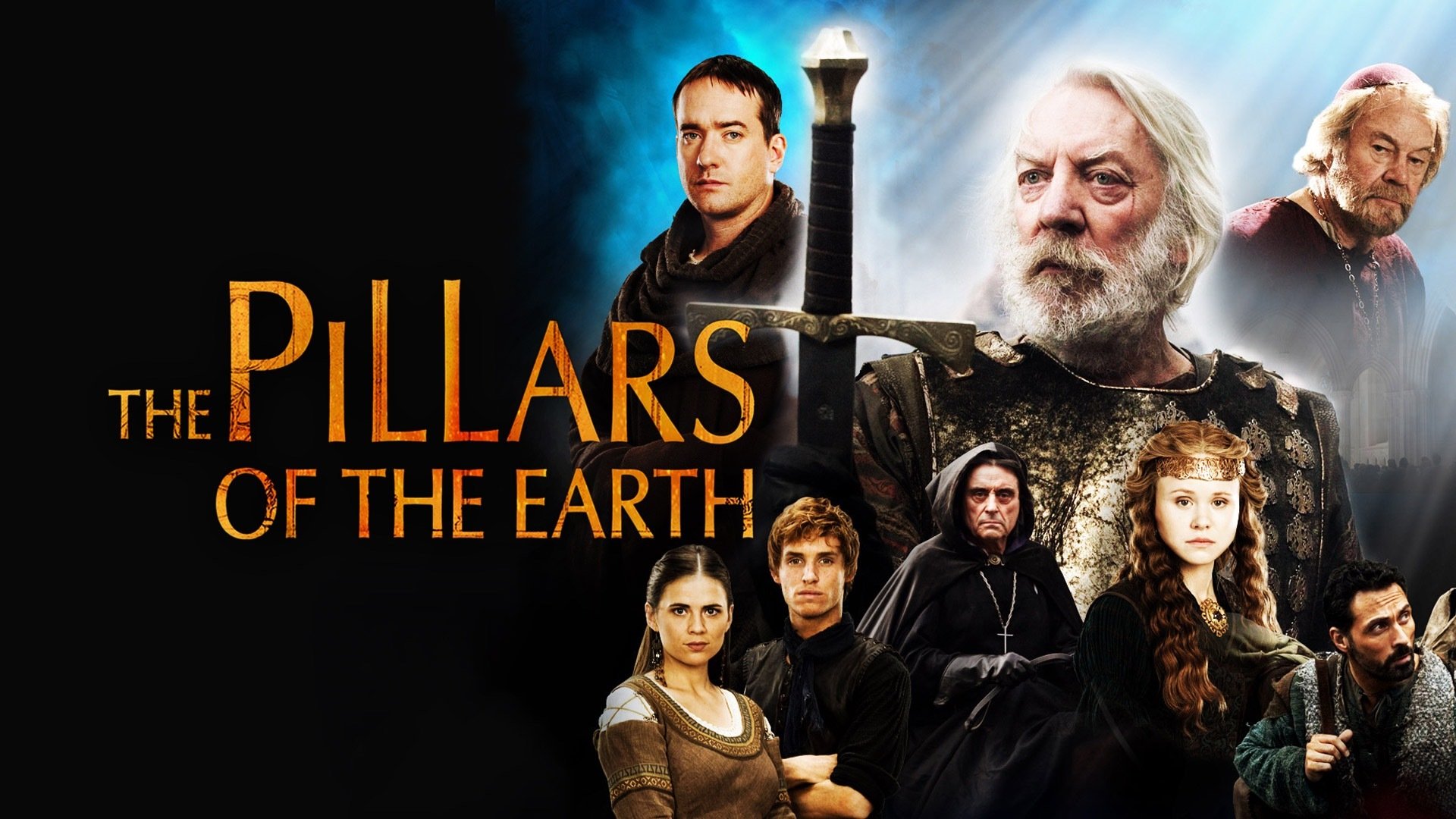
The Pillars of the Earth (2010)

There are relatively few knights and no fantasy elements in this historical drama (adapted from the Ken Follett novel), but Pillars shares with A Knight of the Seven Kingdoms a roughly medieval setting (literally medieval in this case) and a story involving individuals with tangential relationships with power navigating extremely fraught times. Set amid England’s Anarchy, during which designated heir Matilda battled Stephen of Blois over the throne, the series involves appropriately named mason Tom Builder (Rufus Sewell), tasked with constructing a cathedral in the town of Knightsbridge after he and his family have lost nearly everything. Ian McShane, Matthew Macfadyen, Eddie Redmayne, and Hayley Atwell lead the stacked cast. Rent The Pillars of the Earth from Prime Video.

Those About to Die (2024)

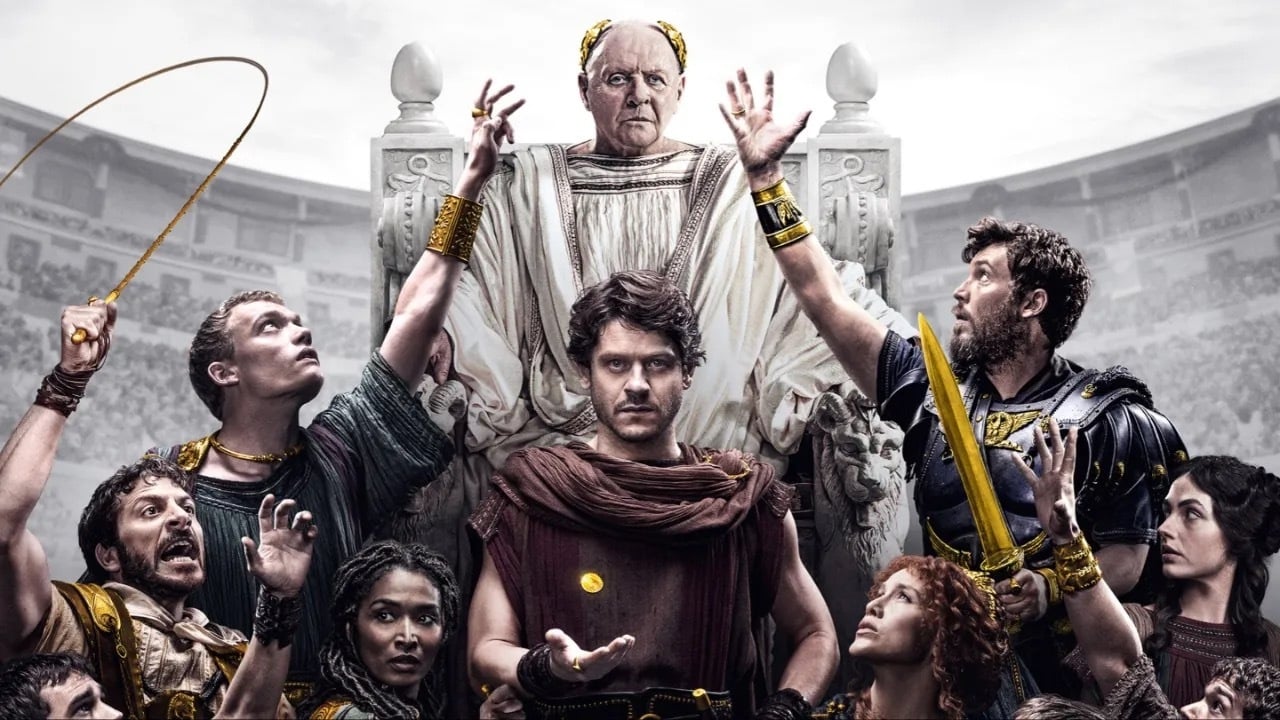
Once again we’re talking about people on the fringes of power during dodgy times (or maybe they’re all dodgy). Roland Emmerich is one of the primary names behind this short-lived series, which gives you a sense of the vibe: It’s big, loud, and frequently obvious—but also an awful lot of fun. Think of it as a soap opera set during the opening days of the Roman Colosseum under Emperor Vespasian (Anthony Hopkins): While the emperor’s sons struggle for dominance, Tenax (Iwan Rheon), the proprietor of Rome’s largest betting tavern, forms an unlikely alliance with Cala (Sara Martins), a black Numidian who came to Rome in pursuit of her children, who were taken into slavery by Roman soldiers. There’s nothing (nothing) she won’t do to secure their safety. Stream Those About to Die on Peacock.

The Lord of the Rings: The Rings of Power (2022 – )

You want prequels? Here’s a prequel. While quite different in tone and execution, both Martin’s Westeros and J.R.R. Tolkien’s Middle Earth represent efforts to shape unique fantasy worlds form the raw clay of Western European history and mythology. There are a lot of threads to follow in this story set a few thousand years before The Lord of the Rings, but our main character is almost certainly the young(-er) Galadriel (Morfydd Clark). When the helpful but mysterious Annatar offers to aid the elves in forging the title’s rings of power, Galadriel is the only one who clocks that something isn’t quite right. As with The Hobbit and LOTR, it’s the less overtly powerful folk who are the most impacted by the machinations of Middle Earth’s elite. Stream The Lord of the Rings: The Rings of Power on Prime Video.

The Prince of Persia: The Sands of Time remake among six games canceled by Ubisoft

Two high-profile upcoming Ubisoft games have been starting to look more and more like vaporware with each passing year. One of them is Beyond Good & Evil 2, which we were assured is still in development last year. The other is the Prince of Persia: The Sands of Time remake, which is now officially canceled, along with five other games on Ubisoft’s release slate.

The news came in a media briefing attended virtually by VGC, in which the French company also announced delays to seven other games as part of a major restructuring. As reported by VGC, the only canceled game currently named by Ubisoft is the remake of its 2003 classic, which was first announced in 2020 and has by all accounts been in various stages of development hell ever since. Three of the others were original new IPs and one was a mobile game.

Ubisoft isn’t putting names to the more than half dozen delayed games either, but VGC’s report says one was supposed to come out in the first quarter of this year, and will now release before April 2027. While it’s yet to be officially announced, a remake of Assassin’s Creed: Black Flag has been heavily rumored for several months and is likely one of the games that has slipped.

Ubisoft also outlined its new organizational model, which will see the company split into five “creative houses” that function as independent business units. One of these is the previously announced, Tencent-backed Vantage Studios, which will oversee a number of the company’s flagship franchises, including Rainbow Six, Assassin’s Creed and Far Cry.

In its Wednesday briefing, Ubisoft also confirmed recent reports that it’s closing its Stockholm and (recently unionized) Halifax studios, with others, including Star Wars Outlaws developer Massive Entertainment due to be restructured as a result of the new model. Ubisoft declined to tell VGC exactly how many layoffs could occur in the wake of the large-scale reorganization of the company.

This article originally appeared on Engadget at https://www.engadget.com/gaming/the-prince-of-persia-the-sands-of-time-remake-among-six-games-canceled-by-ubisoft-175801132.html?src=rss

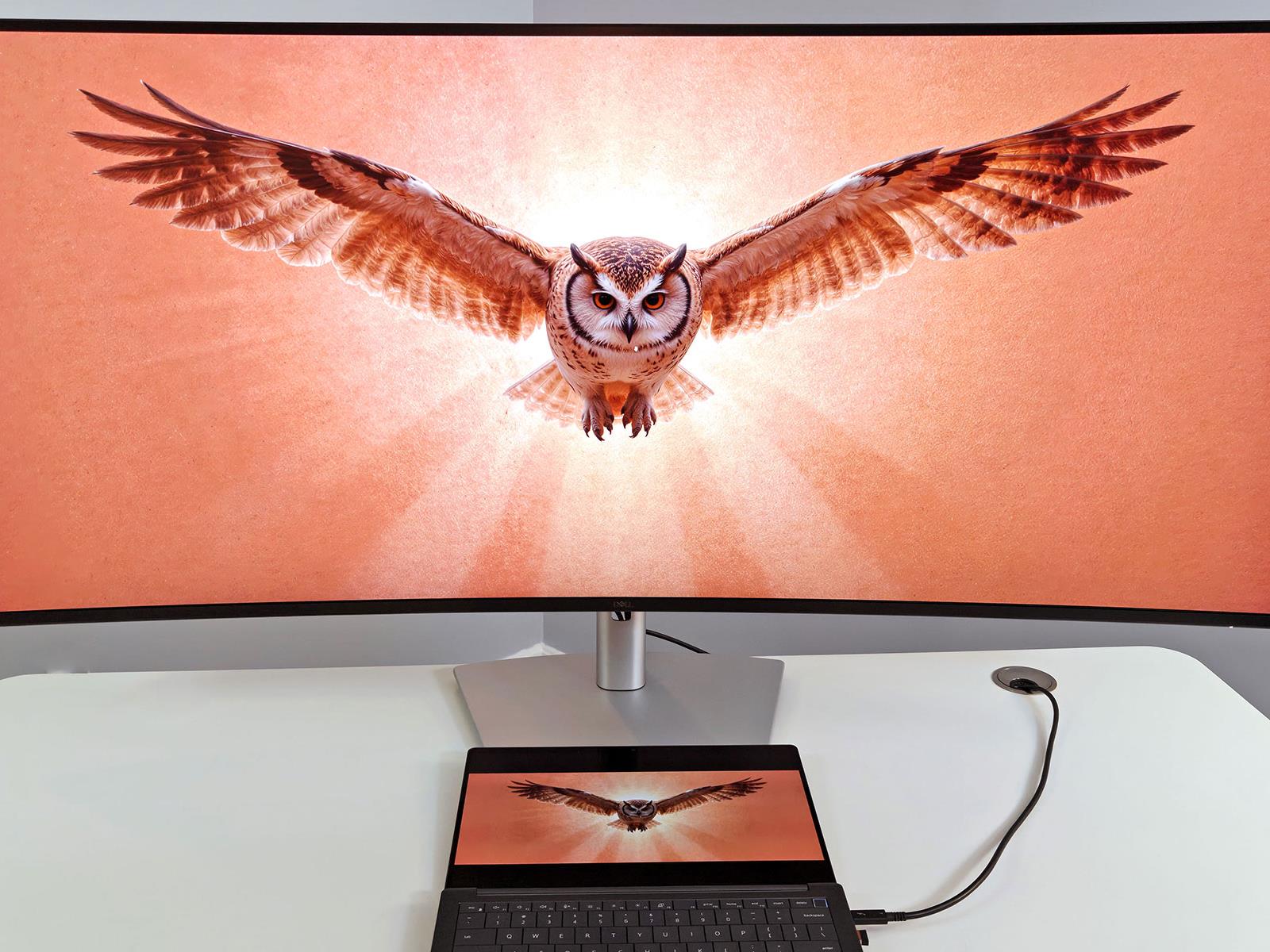
Dell UltraSharp 52 Review: A Massive 6K IPS Black Monitor For Power Users

Dell UltraSharp 52 Review: A Massive 6K IPS Black Monitor For Power Users
Dell UltraSharp 52 Thunderbolt Hub Monitor (U5226KW) MSRP $2899.99 (W/ Stand), $2799.99 (Without Stand)  The Dell UltraSharp 52 (U5226KW) is a massive, beautiful, gently curved Thunderbolt Hub-enabled monitor featuring a 6K2K resolution, 120Hz variable refresh rate and IPS Black panel technology. It’s ideal for analysts, creators…

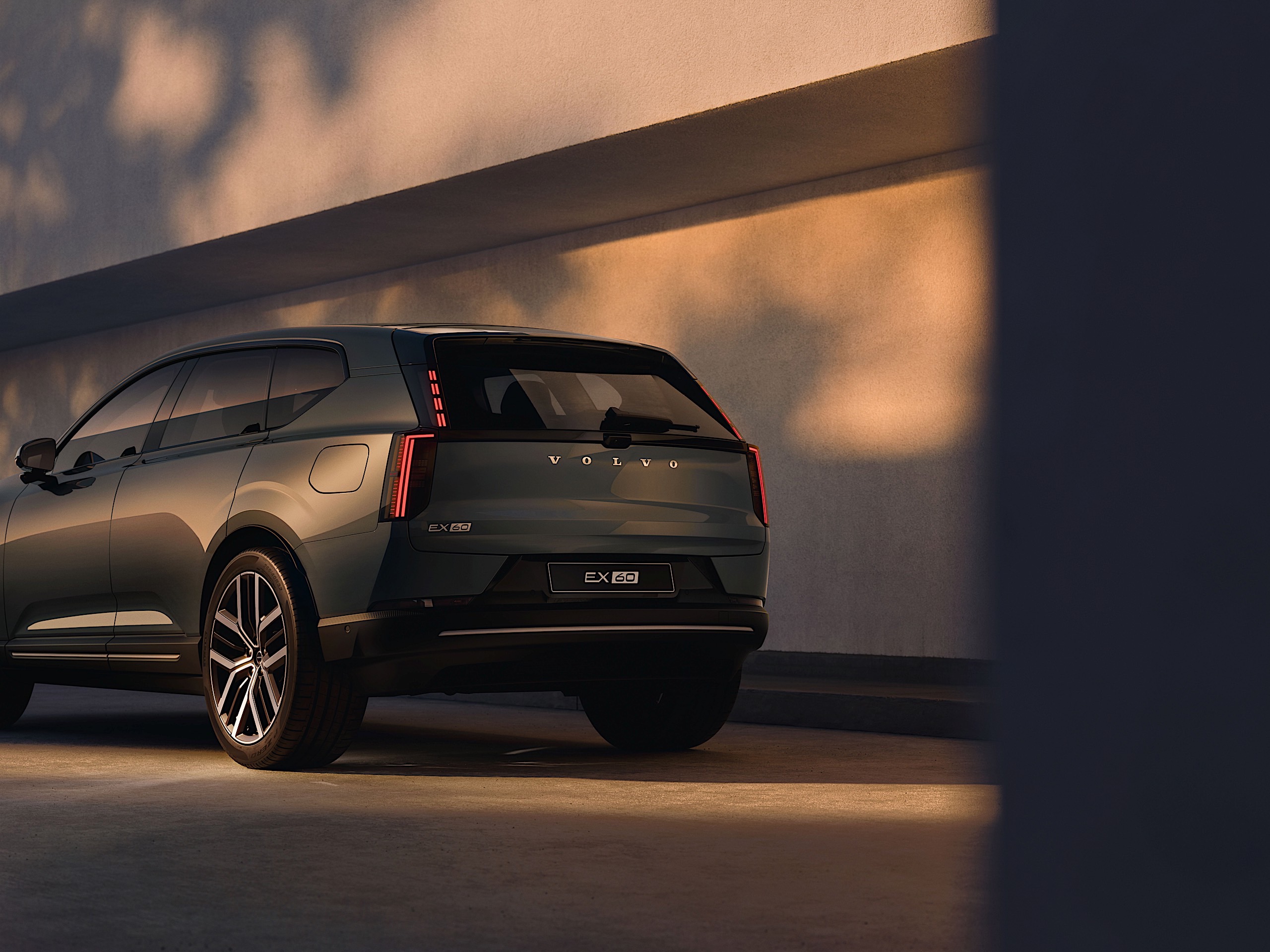
Here’s Volvo’s new EX60 $60,000 electric midsize SUV

After a teaser campaign that included a world exclusive with Ars, Volvo has officially unveiled its next electric vehicle, the EX60. We already knew it would have up to 400 miles of range, according to the US EPA test cycle, and be capable of charging at rates of up to 400 kW. And we learned last week that the EX60 is packed full of powerful computer hardware from Nvidia and Qualcomm, enabling both advanced driver assistance systems and a new AI personal assistant. Today, we got full tech specs for the three different EX60 powertrain variants, as well as a pair of rugged EX60 Cross Country models.

P6, P10, P12

The entry-level version of Volvo’s next midsize crossover is the EX60 P6. This is a single-motor variant, with 369 hp (275 kW), 354 lb-ft (480 Nm) on tap at the rear wheels. The 80 kWh (usable, 83 kWH gross) battery pack can charge at up to 320 kW and can take as little as 18 minutes to DC charge from 10 to 80 percent. The EX60 will also be the first Volvo model on sale in the US with a built-in NACS port. Range for the P6 version is 310 miles (490 km) when fitted with 20-inch wheels; subtract 10 miles (16 km) for the 21-inch wheels and 20 miles (32 km) for the 22-inch wheels. 0–60 mph (0–98 km/h) takes 5.7 seconds, and like all modern Volvos, the EX60 is speed-limited to 112 mph (180 km/h).

(Again, all range estimates are based on the US EPA test cycle; if you see different numbers online at non-US publications, those are using Europe’s WLTP test.)

Read full article

Comments

Volvo EX60 SUV preview: 400-mile range, 670 hp and Google Gemini onboard

Volvo hasn’t exactly had a great run of EVs lately. The rollout of its flagship EX90 was stymied out of the gate by a bevy of software glitches. The EX30, meanwhile, was too expensive when it launched — the promised $35,000 model was incompatible with the currently chaotic global tariff situation.

Now, it’s time for a new generation of EV from Volvo, one that’s radically different at its core with a gigacast frame, a much higher-density battery and enough digital and literal horsepower to impress the most jaded of automotive enthusiasts. Mix in high-performance chipsets from both NVIDIA and Qualcomm, plus Google’s Gemini AI onboard, and on paper, it has a lot to offer. After getting an early look at the thing at its unveiling in Sweden, I feel like this EV is ready and able to face off against BMW’s new iX3 and Mercedes-Benz’s upcoming GLC.

Let’s start with the basics: The EX60 slots in the Volvo product lineup right alongside the existing XC60, Volvo’s most popular model in the U.S. It’s a two-row, mid-size SUV that seats five, the sort of thing perfect for those with small families or big dogs. It’ll be available in three different basic configurations, starting with the single-motor, rear-drive, 369-horsepower, 310-mile EX60 P6. Next up is the AWD dual-motor, 503-hp, 320-mile P10, and finally the top-shelf, 670-hp, 400-mile P12.

670 horsepower in an SUV of this size seems frankly excessive to me, but then it does have a lot of weight to move around — 5,137 pounds to be exact. That’s thanks in large part to the P12’s 112-kilowatt-hour net battery pack which is about 50 percent bigger than the one inside a Tesla Model Y. The P6 is a relatively svelte 4,663 pounds thanks to its smaller 80-kWh net battery pack, while the P10 has 91 kWh.

Volvo EX60
Volvo EX60
Volvo

Beyond the powertrain divisions, the Volvo EX60 will also be available in a variety of different trims with varying amounts of equipment, including the Volvo Cross Country edition with air suspension and a 20mm boost of ride height. Prices are said to start “around $60k” for an EX60 P10 Plus with a 21-speaker Bose system, but a 28-speaker Bowers & Wilkins system with Dolby Atmos will be available for those who really need all the channels.

Of course, Atmos support is no good without a good source, and to that end, the EX60 will be the first Volvo with Apple Music built in. That’ll be part of the company’s Android Automotive-based infotainment system, running on a curved 15-inch OLED screen and powered by a Qualcomm 8255 chipset. It’s paired with a low, wide gauge cluster set far back on the dashboard behind the steering wheel.

This will also be Volvo’s first car with integrated Gemini, and indeed one of the first cars on the road with Google’s smart agent. You can, of course, do typical Gemini things like ask about the weather or the nuances of René Descartes’s concepts on dualism. Beyond that, Volvo CTO Anders Bell said that it will eventually gain access to the car’s outward-looking cameras, meaning you’ll be able to ask for more details on whatever it is you can see looming on the horizon.

Volvo EX60
Volvo EX60
Volvo

Volvo calls the car’s software-defined architecture and the hardware that powers it HuginCore, named for Huginn, the raven of Norse mythology and represents Odin’s mind and senses. Qualcomm powers the infotainment side of the avian experience, but when it comes to active safety, the EX60 relies on an NVIDIA Drive AGX Orin chipset. Unlike the EX90, the EX60 will not use a LiDAR sensor.

Volvo CTO Bell downplayed the absence of the sensor. “We realized we can now achieve many more meaningful and safe automated functions without LiDAR than we could have years ago,” he said. Per Bell, LiDAR was never really in the plan for the EX60 anyway, a decision looking all the brighter given the recent bankruptcy of Volvo’s former LiDAR partner Luminar.

The car’s cameras and radar sensors all tuck nicely into the new exterior of the EX60, which certainly doesn’t look miles off from the EX90 or indeed the current, gas-powered XC60. But the pronounced flares on the front fenders are a nice touch of personality on an otherwise understated SUV.

At the core of the EX60 is a new platform Volvo calls SPA3, with a chassis made using gigacasting. This refers to the force required to inject molten aluminum into massive castings, allowing more of the car to be made from fewer components. Volvo says the carbon footprint of the EX60 is lower even than that of the much smaller EX30.

The battery packs use the on-trend cell-to-pack construction method, which means all the cells are lumped together into a single unit. Typically, this boosts density at the cost of repairability, a tradeoff most manufacturers seem willing to make in pursuit of higher range and lower costs. However, Bell said that the company has actually made pack maintenance easier by optimizing the layout of the ancillary equipment.

Volvo EX60
Volvo EX60
Volvo

“The absolute vast majority, 90 percent of anything that ever needs to be repaired on a battery pack is electronics,” he said. In the EX60, Volvo positioned the battery electronics beneath the rear seat to make them even easier to access. “We save a lot of weight, save a lot of cost.”

The EX60 will be Volvo’s first car to use the Tesla-style NACS charging standard, and the largest two packs will support charging speeds up to 370 kW. That drops to 320 kW on the 80-kWh net P6.

In practical terms, though, they’re all roughly the same. Each model charges from 10 to 80 percent in less than 20 minutes, adding between 160 and 173 miles of range in 10 minutes. That’s not quite the 200 miles BMW’s iX3 can manage in the same time, but it is close.

The iX3 will probably be the EX60’s fiercest competition when Volvo opens up orders later this spring. The EX60’s $60,000 price for a midrange P10 Plus puts it right in line with the $60,000 that BMW says to expect for its iX3. Mercedes hasn’t set American pricing for its GLC yet, but that, too, will be on a lot of shoppers’ lists to compare.

I’ve already been impressed by how both the iX3 and the GLC drive. Sadly, Volvo wouldn’t let me behind the wheel of its EX60 just yet, but hopefully I can report back with impressions soon to start to see how all these stack up on the road. 

This article originally appeared on Engadget at https://www.engadget.com/transportation/evs/volvo-ex60-suv-preview-400-mile-range-670-hp-and-google-gemini-onboard-173000033.html?src=rss

It’s Not Just You, Microsoft 365 Is Down

Heads up, workers of the world: Microsoft 365 is currently down. Microsoft’s flagship work suite, which includes tools like Microsoft Teams and Microsoft Outlook, is currently experiencing issues impacting users. It’s not yet clear exactly why these problems are occurring, but according to Downdetector (owned by Lifehacker parent company Ziff Davis) thousands of users are reporting issues.

There are any number of causes that could trigger a widespread outage like this, and in all likelihood, Microsoft will have the issue isolated and fixed soon—especially considering how many companies and users rely on Microsoft 365 to function. But it does follow a number of high-profile outages this week. Just this morning, Yahoo! and AOL were both down. Last week, X experienced an outage, as did Verizon—quite famously, I might add.

While we wait for a fix, there’s not much you can do on your end. If your Microsoft apps are acting up, you can try to work with any of the offline tools you have access to. If you have other means of communication other than Teams, run with that. There’s nothing short of Microsoft issuing a patch on their end that will bring back online functionality here.

Ireland Wants To Give Its Cops Spyware, Ability To Crack Encrypted Messages

The Irish government is planning to bolster its police’s ability to intercept communications, including encrypted messages, and provide a legal basis for spyware use. From a report: The Communications (Interception and Lawful Access) Bill is being framed as a replacement for the current legislation that governs digital communication interception. The Department of Justice, Home Affairs, and Migration said in an announcement this week the existing Postal Packets and Telecommunications Messages (Regulation) Act 1993 “predates the telecoms revolution of the last 20 years.”

As well as updating laws passed more than two decades ago, the government was keen to emphasize that a key ambition for the bill is to empower law enforcement to intercept of all forms of communications. The Bill will bring communications from IoT devices, email services, and electronic messaging platforms into scope, “whether encrypted or not.”

In a similar way to how certain other governments want to compel encrypted messaging services to unscramble packets of interest, Ireland’s announcement also failed to explain exactly how it plans to do this. However, it promised to implement a robust legal framework, alongside all necessary privacy and security safeguards, if these proposals do ultimately become law. It also vowed to establish structures to ensure “the maximum possible degree of technical cooperation between state agencies and communication service providers.”/i


Read more of this story at Slashdot.

Elon Musk is reportedly trying to take SpaceX public

Elon Musk is reportedly looking to finally take SpaceX public after years of resistance, according to sources who spoke to The Wall Street Journal. The company has long said it wouldn’t choose an IPO until it had established a presence on Mars. That isn’t happening anytime soon.

So why now? Company insiders have suggested it’s because Musk wants to build AI data centers in space. Google recently announced it was looking into putting a data center in space, with test launches scheduled for 2027. Musk reportedly wants to beat his rival to the punch, but SpaceX would need the billions of dollars in capital that an IPO would deliver. Putting a giant center in space isn’t cheap.

Our TPUs are headed to space! 

Inspired by our history of moonshots, from quantum computing to autonomous driving, Project Suncatcher is exploring how we could one day build scalable ML compute systems in space, harnessing more of the sun’s power (which emits more power than 100… pic.twitter.com/aQhukBAMDp

— Sundar Pichai (@sundarpichai) November 4, 2025

Sources say that Musk wants to complete the IPO by July. SpaceX is reportedly expected to select banks to lead the stock offering in the near future.

This is also being seen as an attempt to boost xAI, which trails behind rivals like OpenAI and Google in the AI race. If SpaceX were to be successful in putting data centers in space, it’s likely that xAI would get a sweetheart deal given that Musk runs both companies. Then they could pass money to one another in perpetuity, which seems to be the AI way.

Other companies have also begun considering jettisoning data centers into the great beyond. Blue Origin CEO Jeff Bezos recently suggested that shifting data centers to orbit makes sense. OpenAI CEO Sam Altman has been looking into partnering or purchasing a rocket maker called Stoke Space for a similar reason.

Of course, putting data centers in space is an extraordinary undertaking. There are serious issues that must be overcome, from latency to heat dissipation and radiation. Components must be launched and the structure must be built in space. WSJ reports that SpaceX made a breakthrough of some sort last year, but the company hasn’t announced specifics.

If we need giant data centers to generate Garfield memes or whatever, I’d rather them in space. Microsoft’s latest AI data center in Wisconsin takes up 325 acres. Meta recently announced a data center that would be nearly the size of Manhattan. These structures hoover up energy and water, strain local resources, create pollution and offer just a few long-term local jobs.

This article originally appeared on Engadget at https://www.engadget.com/science/space/elon-musk-is-reportedly-trying-to-take-spacex-public-170337053.html?src=rss

What’s New on Netflix in February 2026

Netflix’s February slate is heavy on returning original series, not least of which is the second half of Bridgerton season four. The last four episodes of the period romance drop on Feb. 26. In the third installment of thriller The Night Agent (Feb. 19), FBI agent Peter Sutherland, played by Gabriel Basso, investigates a dark money network alongside a journalist while trying not to get killed by assassins. The Lincoln Lawyer (Feb. 5) and Love Is Blind (Feb. 11) are back as well.

For Olympics fans, there’s docuseries Glitter & Gold: Ice Dancing (Feb. 1), which goes behind the scenes with the couples competing in ice dancing in the 2026 Winter Games. Also on the sports lineup is season 8 of Formula 1: Drive to Survive (date TBD). Other documentary releases include Queen of Chess (Feb. 6), which tells the story of chess legend Judit Polgár, and Being Gordon Ramsay (Feb. 18).

Taylor Tomlinson has a new comedy special—Prodigal Daughter (Feb. 24)—as do Sommore (Chandelier Fly, Feb. 17) and Mo Gilligan (In The Moment, Feb. 3).

Finally, catch the new adult animated series Strip Law (Feb. 20), featuring performances from Adam Scott, Janelle James, and Stephen Root. The 10-episode show sees a Vegas lawyer team up with a local magician to “bring some flash and pizzazz to the stupidest cases the city can throw at them.”

Here’s everything else coming to Netflix in February, and everything that’s leaving.

What’s coming to Netflix in February 2026

Coming soon

New episodes

  • Star Search—Netflix Live Event

Available February 1

  • Glitter & Gold: Ice Dancing—Netflix Documentary

  • The American President

  • The Bucket List

  • Crazy, Stupid, Love.

  • Ex Machina

  • Flipped

  • Focus

  • The Glass House

  • Heartland: Season 18

  • Hell or High Water

  • Homefront

  • How to Train Your Dragon

  • How to Train Your Dragon 2

  • Independence Day

  • Lee Daniels’ The Butler

  • Letters to Juliet

  • Mike and Dave Need Wedding Dates

  • The Mirror Has Two Faces

  • Mississippi Grind

  • Mrs. Doubtfire

  • Night at the Museum

  • Night at the Museum: Battle of the Smithsonian

  • Night at the Museum: Secret of the Tomb

  • Rumor Has It…

  • Vertical Limit

  • The Way Home: Season 3

  • You’ve Got Mail

  • Zero Dark Thirty

Available February 3

Available February 4

Available February 5

Available February 6

Available February 9

Available February 10

Available February 11

Available February 12

Available February 13

Available February 15

  • The Hunting Party: Season 1

  • Stargate SG-1: Seasons 1-10

Available February 17

  • Sommore: Chandelier Fly—Netflix Comedy Special

  • Star Search—Netflix Live Event

Available February 18

  • Being Gordon Ramsay—Netflix Documentary

Available February 19

Available February 20

  • The Addams Family

  • The Addams Family 2

  • The Expendables

  • The Expendables 2

  • The Expendables 3

  • The Expendables 4

  • Firebreak—Netflix Film

  • Laggies

  • Mike & Molly: Seasons 1-6

  • The Orphans—Netflix Film

  • Pavane—Netflix Film

  • Strip Law—Netflix Series

Available February 24

Available February 26

Available February 27

  • Trap House

What’s leaving Netflix in February 2026

Leaving February 1

  • 28 Days Later

  • Charlie’s Angels

  • Cloudy with a Chance of Meatballs

  • Did You Hear About the Morgans?

  • Dr. Dolittle

  • Dr. Dolittle 2

  • Forever My Girl

  • Groundhog Day

  • I Still Know What You Did Last Summer

  • Kath and Kim: Seasons 1-4

  • Licorice Pizza

  • Memoirs of a Geisha

  • Parasite

  • Radio

  • RV

  • The Patriot

  • The Terminator

  • What Lies Beneath

Leaving February 5

  • Election

  • Mean Girls

Leaving February 6

  • Bride Wars

Leaving February 8

  • Spencer

Leaving February 15

  • Everybody’s Fine

Leaving February 16

  • Warrior: Seasons 1-3

Leaving February 17

  • Zodiac

Leaving February 18

  • Don’t Say a Word

  • The Texas Chainsaw Massacre

Leaving February 20

  • Operation Finale

  • Shakespeare in Love

Leaving February 21

  • Cocaine Cowboys 2

Leaving February 22

  • Red

Leaving February 24

  • The Island

Leaving February 26

  • Brooklyn Nine-Nine: Seasons 3-4

Leaving February 27

  • Bones & All

  • Bottoms

Detachable Robot Hand Crawls, Climbs And Grips Multiple Objects At Once

Detachable Robot Hand Crawls, Climbs And Grips Multiple Objects At Once
Forget Thing T. Thing from The Addams Family (yes, that’s the full name); modern science has officially brought us a detachable robot hand that can actually skitter across the floor, grab you a beer, and creep the heck out of your guests.

In an engineering development that straddles the line between revolutionary and nightmare fuel, researchers

YouTube CEO promises more AI features in 2026

YouTube is just as wary of the rise of AI slop as you, and that’s why more AI-generated content is coming to the platform in the near future. In a lengthy blog post outlining YouTube’s 2026 plans, CEO Neal Mohan said the company will continue to embrace this new “creative frontier” by soon allowing its creators to throw together Shorts using their AI-generated likeness.

Mohan didn’t elaborate further about how this feature will work when it launches, but acknowledged the “critical” issue of deepfakes currently polluting the web, and reaffirmed his company’s support for new legislation such as the NO FAKES Act. YouTube also allows its own creators to protect themselves against unauthorized use of their likeness using a detection feature that scans newly uploaded videos for matches.

Other fresh AI (note: in no way slop) features referenced in the post include the currently-in-beta no-code Playables platform, which lets you make games using Gemini 3 with a single text prompt, as well as new music creation tools. At the same time, Mohan said YouTube is building on its existing systems designed to combat spam, clickbait and “low quality AI content.” He added that an average of six million daily viewers watched more than 10 minutes of AI autodubbed content in December, despite the issues that rival platforms have had with similar features.

Mohan didn’t say when we can expect the new AI likeness generation feature for Shorts, but if that sounds like the sort of content you’d rather not encounter on your lunch break, here’s a little PSA: the company now allows you to omit its short-form videos from your YouTube search results altogether.

This article originally appeared on Engadget at https://www.engadget.com/entertainment/youtube/youtube-ceo-promises-more-ai-features-in-2026-162409452.html?src=rss

Japan Restarts World’s Largest Nuclear Plant as Fukushima Memories Loom Large

New submitter BeaverCleaver shares a report: Japan has restarted operations at the world’s largest nuclear power plant for the first time since the 2011 Fukushima disaster forced the country to shut all of its reactors. The decision to restart reactor number 6 at Kashiwazaki-Kariwa north-west of Tokyo was taken despite local residents’ safety concerns. It was delayed by a day because of an alarm malfunction and is due to begin operating commercially next month.

Japan, which had always heavily relied on energy imports, was an early adopter of nuclear power. But in 2011 all 54 of its reactors had to be shut after a massive earthquake and tsunami triggered a meltdown at Fukushima, causing one of the worst nuclear disasters in history. This is the latest installment in Japan’s nuclear power reboot, which still has a long way to go. The seventh reactor at Kashiwazaki-Kariwa is not expected to be brought back on until 2030, and the other five could be decommissioned. That leaves the plant with far less capacity than it once had when all seven reactors were operational: 8.2 gigawatts.


Read more of this story at Slashdot.

Sony’s Newest Earbuds Are Clip-Ons

We may earn a commission from links on this page.

It took me a while to get comfortable with wearing earbuds. I grew up in the era of headphones, and never quite liked the idea of sticking something into my ears on the regular. If that sounds like you, Sony’s got your back. Its newest earbuds, the Linkbuds Clip, are clip-ons.

Sony’s not the first brand to take this idea to market—Anker’s Soundcore brand has a number of more affordable options. But for premium clip-on earbuds, it’s pretty much this, the slightly more expensive Bose, and the slightly sportier Shokz.

Compared to that competition, Sony’s new model is looking like a solid choice. These earbuds fit snugly around your ear with an adjustable ear cushion, and include the niceties that Sony’s Linkbuds have become known for. That means an optional built-in voice boost mode to help you hear vocals better; adaptive audio that can raise or lower your volume based on your environment; a motion sensor for tapping gestures (which you can actually perform near your ear instead of on the earbuds themselves); and—new with this model—a bone-conduction sensor.

Sony’s pitching that last bit as being especially good for calls, as the bone conduction sensor will be able to detect specifically when you are speaking, and, working alongside some “AI noise reduction,” should be able to reduce background noise.

Battery life has also been improved over Sony’s last Linkbuds, the Linkbuds Open. There, you got 22 hours of battery life with the case, but here, Sony is promising up to 37. The buds themselves should provide up to nine hours of battery life.

Speaking of the Linkbuds Open, that model also had a unique design, as the bulk of the earbud was designed to sit in your upper ear, while a ring that actually produced the sound sat just outside your ear canal. It was a design that aimed for an experience akin to “open-back” headphones, meaning you’d be able to completely hear your surroundings with the earbuds in without needing a transparency mode.

Sony Linkbuds Clip worn in-ear

Credit: Sony

The Linkbuds Clip want to keep that same open-back experience, while allowing for greater comfort and flexibility. Sony told me that the Linkbuds Open do sit closer to the eardrum if worn correctly, which can provide a better listening experience, but that differing ear shapes made it hard for some customers to use as intended. I was sent a pair of Linkbuds Clip for review, and while I haven’t had much time to test them yet, I can confirm that they fit pretty snugly on my ears right out of the box.

Over the next week, I’m excited to try the Linkbuds Clip both while out and about in New York City, and while exercising. Aside from enhanced comfort over in-ear earbuds, you’ll be fully aware of your surroundings while wearing these, which should help with safety or any spur-of-the-moment conversations you might need to have (Sony is also marketing these towards parents who might need to constantly keep an ear out for their kids). I also sometimes feel like my in-ear earbuds can block airflow while I’m doing cardio, which I worry makes it harder for me to cool off, so I’m curious to see if these can help with that.

The one downside is that, as is the case with open-back headphones, there can be some sound leakage, which means others might be able to hear whatever you’re listening to. That’s something I’ll need to test over time, although Sony does say it has an optional sound leakage reduction mode.

There’s also no noise canceling, but that’s to be expected when the idea is to stay aware of your surroundings.

I’ve been a big fan of Sony’s audio products over the years, especially its software and listening modes. My full review of the Linkbuds Clip will be coming soon, but if you’re already convinced, you can snag your own pair for $230 over at Sony’s website, or through stores like Amazon. The case comes in four colors, but you can also grab a silicone case cover, which covers half of the case, to help you mix and match over on Sony’s website for $12.50. Extra air cushions of any color are also available alongside upper case covers, while bottom case covers come with a keychain.

Sony LinkBuds Clip review: Open-fit benefits aren’t enough to stand out

I vividly remember when Bose announced the Ultra Open Earbuds. While I applauded the company for trying something different, I wasn’t sure if the clip-on design would take hold. Well, here we are almost two years later and most earbud makers now have something akin to Bose’s fashion experiment. You can now count Sony among those as the company revealed its LinkBuds Clip ($230) open-fit earbuds today. 

These aren’t the first open-wear earbuds in Sony’s LinkBuds lineup. The company has two generations of the LinkBuds Open (originally called just LinkBuds) under its belt, giving users a more traditional earbud fit with donut-shaped drivers that let ambient sounds in. Now Sony is taking a cue from Bose and others with a clip-on design that attaches securely and comfortably to the ear while leaving the ear canal unobstructed. It’s clear companies believe customers like this type of earbuds, but Sony’s challenge is to make the LinkBuds Clip unique among the growing list of alternatives.

Design and fit

Sony isn’t offering anything distinctive in terms of design here, but that’s okay. To be fair, I haven’t seen too much innovation in terms of aesthetics in these clip-on-style earbuds. For the most part, they all have similar shapes: two cylindrical cases connected by short, flexible cable. True to its predecessors, Sony put the drivers in a squatty housing while the bulk of the components are in a larger one that sits behind your ear lobe. 

Sony kept the weight of the LinkBuds Clip low, and it avoided the bulk of the Ultra Open Earbuds. Both of these factors contribute to a very comfortable fit, so the IPX4-rated earbuds can be easily worn all day without becoming a burden. And while I didn’t need them, Sony includes a pair of flexible silicone “fitting cushions” in the box. These clip on to the short, flat cable of the newest LinkBuds for a more secure fit. During my tests, the LinkBuds Clip stayed in place just fine without them, but there also wasn’t any decreased comfort when I did install them. 

The last design-related item I’ll mention is the touch controls. On the LinkBuds Clip, the flat connector between the two housings accepts taps for playback controls, volume changes, cycling through sound modes and more. You can tap along this area to make an adjustment, and you don’t have to do so right in the center. The LinkBuds Clip were pleasantly responsive during this review, quickly completing the task without delay or repeated taps. That is, except for volume, because you have to keep tapping for that change to happen. 

LinkBuds Clip features

Controls are situated along the connector between the two cylindrical housings
Billy Steele for Engadget

Sony typically throws a whole host of features at its earbuds. Even though they’re technically the company’s midrange line, the LinkBuds family has a robust set of conveniences that make them well suited for both productivity and leisure. Unfortunately, the LinkBuds Clip doesn’t have as much to offer here. The company gives you the basics, like the ability to fine-tune the tap controls or customize the EQ, and there’s even the Adaptive Audio tool that lets you customize settings based on activity or location (Sony calls them “scenes”). But there are some handy features I’ve come to expect from Sony that are notably absent. 

The LinkBuds Clip doesn’t support speak-to-chat, Sony’s voice recognition feature that pauses audio and activates ambient sound when you start talking. Quick attention mode, the tool that lowers the volume and lets in ambient sound for brief chats, isn’t here either. These earbuds don’t even have wear detection, and you have to settle for regular ol’ DSEE audio upscaling instead of an enhanced version of that tech.  

Sony did equip the LinkBuds Clip with unique listening modes meant to enhance the audio performance in two scenarios. First, Voice Boost increases the volume of voices when you’re on a call or listening to podcasts or audiobooks. The company says this is designed for noisy environments where the ambient sound is overly raucous. During my testing, I found the setting to be an extreme treble boost and volume increase — something that’s definitely not well-suited for music. 

Next, Sound Leakage Reduction dials back high-pitched tones to avoid annoying your neighbors in the office or coffee shop. To me, this is the opposite of Voice Boost, removing the highs for a more mid- and bass-heavy tuning, but it doesn’t sound very good compared to the default setting. Plus, my family wasn’t really able to hear any leakage on the LinkBuds Clip anyway, unless I had the volume cranked uncomfortably high. I’ll also note that any EQ customization/presets and DSEE upscaling are only available in Standard (default) listening mode. 

Sound and call quality

The LinkBuds Clip have both noise reduction and bone conduction tech for calls
Billy Steele for Engadget

Open-fit earbuds typically struggle to muster adequate low-end tone, and the LinkBuds Clip meets the same fate. However, it’s not all bad in the audio department as these earbuds have great clarity and provide a solid soundstage so overall quality doesn’t suffer to the point of being unpleasant. The lack of bass is most apparent in booming genres, like hip-hop and synth-heavy electronic tunes. 

The LinkBuds Clip doesn’t fare much better with more chaotic music styles like rock and metal. Spiritbox’s “Holy Roller” doesn’t have the depth that it does on closed-fit earbuds like the AirPods Pro 3 or over-ear headphones like Sony’s WH-1000XM6. As such, the band’s songs aren’t nearly as immersive or impactful without adequate amounts of bass. So if pristine, enveloping sound quality is your primary aim, you’ll want to look elsewhere, and you’ll want to tread carefully with any other open-type earbuds. 

The open nature of the LinkBuds Clip makes them well-suited for calls. Since your ears aren’t plugged, you can clearly hear your own voice so you never feel like you need to shout. Sony says these earbuds have AI noise reduction and a bone conduction sensor for voice pickup, both of which are supposed to keep you sounding good. During the course of this review, I found the background noise reduction worked well without making me sound overly processed. However, the overall voice quality is average at best, which means you can get by with using these for calls, but there are better options if you really value clarity here.   

Battery life on the LinkBuds Clip

When it comes to battery life, Sony says you can expect up to nine hours of use on a charge with up to 37 hours when you factor in the case. That means the LinkBuds Clip alone is enough to get you through a full workday, especially if you’re pausing for the occasional office chat or in-person meeting. And you’ll get more if you’re docking the earbuds in their case once or twice a day. If you do find yourself with a depleted battery though, a three-minute charge will give you an hour of play time. 

I’m still conducting battery tests on the LinkBuds Clip. In my first attempt at a full, nine-hour run down, I wasn’t able to hit Sony’s stated figure, so I’m doing more testing before I offer any final observations here. 

The competition

The including "fitting cushion" (left) can help with a secure fit
The including “fitting cushion” (left) can help with a secure fit
Billy Steele for Engadget

Based on my testing, the Bose Ultra Open Earbuds are still the best in this emerging clip-on category. However, they’re the bulkiest and the most expensive at $299. While they offer all the perks of open wear, sound quality can vary based on how they fit your ears and the lack of multipoint Bluetooth could be a deal breaker for some. 

If you’re hoping to pay less than either Bose or Sony, Anker’s Soundcore line offers the AeroClip for $170. Or if you’re truly ballin’ on a budget, JLab has the Flex Open Earbuds that are now just $40. JBL just announced a new $150 set during CES too, but those won’t be available until March. I’ve only given these two a casual listen without any in-depth testing, so I won’t make a definitive call on which one stacks up best against the LinkBuds Clip. But they’re also just three of currently available options, and there are many more if none of these seem compelling. 

Wrap-up

The LinkBuds Clip expands Sony’s midrange lineup with a completely different design that comes with inherent perks. They’re plenty comfortable and exploit the benefits of open-type designs while doing basic earbud functionality well. Subpar bass performance and the omission of some of Sony’s more attractive features (and even some basic ones) mean the company hasn’t done enough to distinguish the Clip from the competition in an obvious way. Sure, these earbuds work as intended without being flashy or overly complicated, but there are plenty of other options that do that too.

This article originally appeared on Engadget at https://www.engadget.com/audio/headphones/sony-linkbuds-clip-review-open-fit-benefits-arent-enough-to-stand-out-160000140.html?src=rss

Mars Rover’s Stunning Discovery Suggests Red Planet Was Once A Blue Planet

Mars Rover's Stunning Discovery Suggests Red Planet Was Once A Blue Planet
New data and analysis are rewriting the biography of the Red Planet as evidences suggest that Mars could have held more water (and potential life) than previously thought, where it once hosted a vibrant, blue world dominated by a massive northern ocean.

Delta deposits that appeared on the images of Mars with the coastline. (Credit: ESA/ExoMars,TGO/CaSSIS/Ignatius

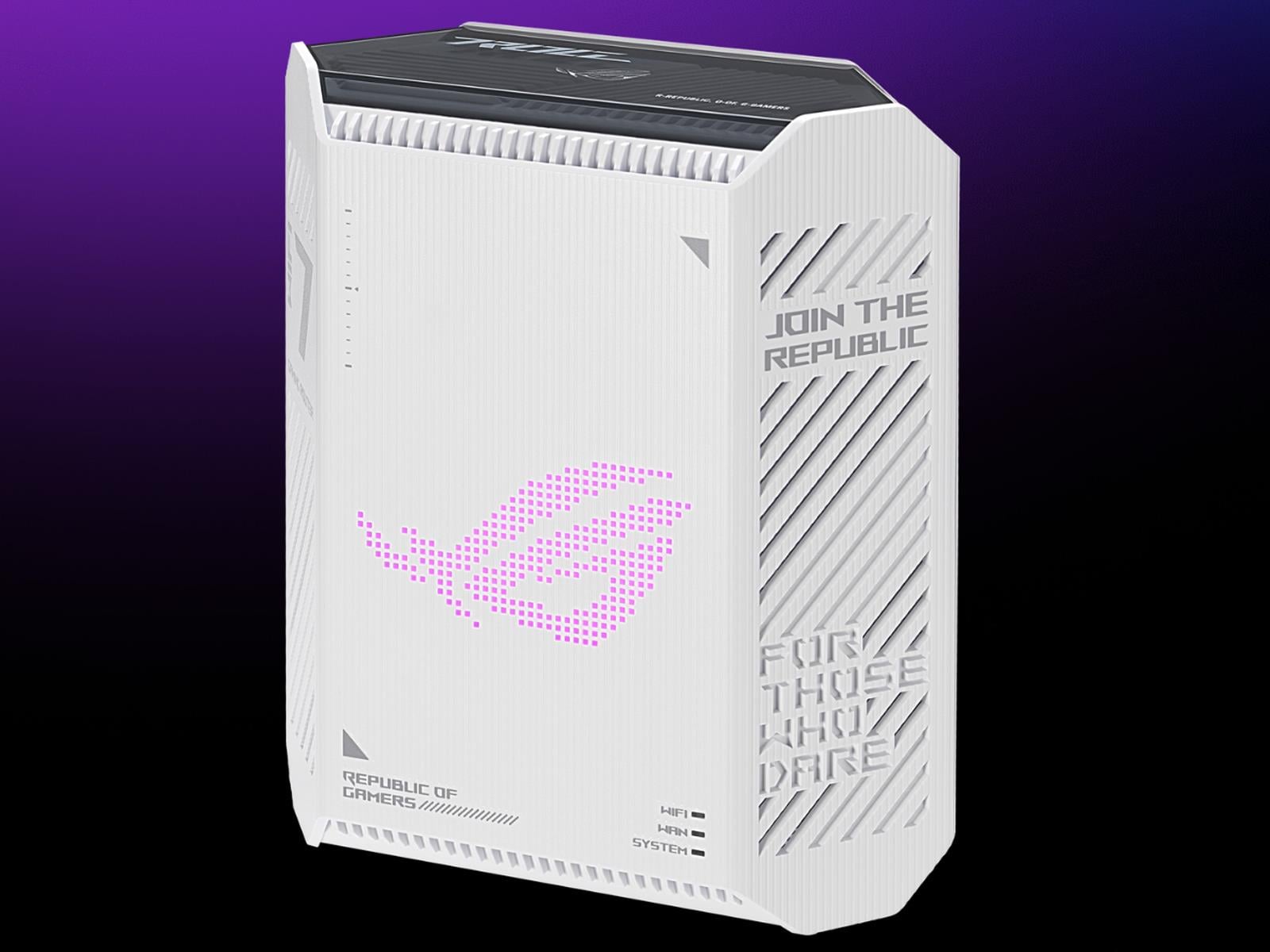
ASUS ROG Strix GS-BE7200 Wi-Fi 7 Router Packs Dual Dedicated Gaming Ports

ASUS ROG Strix GS-BE7200 Wi-Fi 7 Router Packs Dual Dedicated Gaming Ports
ASUS is rolling out a new Wi-Fi 7 router with a comparatively subdued design aesthetic from past models we’ve seen, trading the aggressive headcrab design found on the ROG Rapture GT-AX11000 we reviewed (as well as some newer models) for more of a block-shaped profile. Make no mistake though, new ROG Strix GS-BE7200 still stands out for a

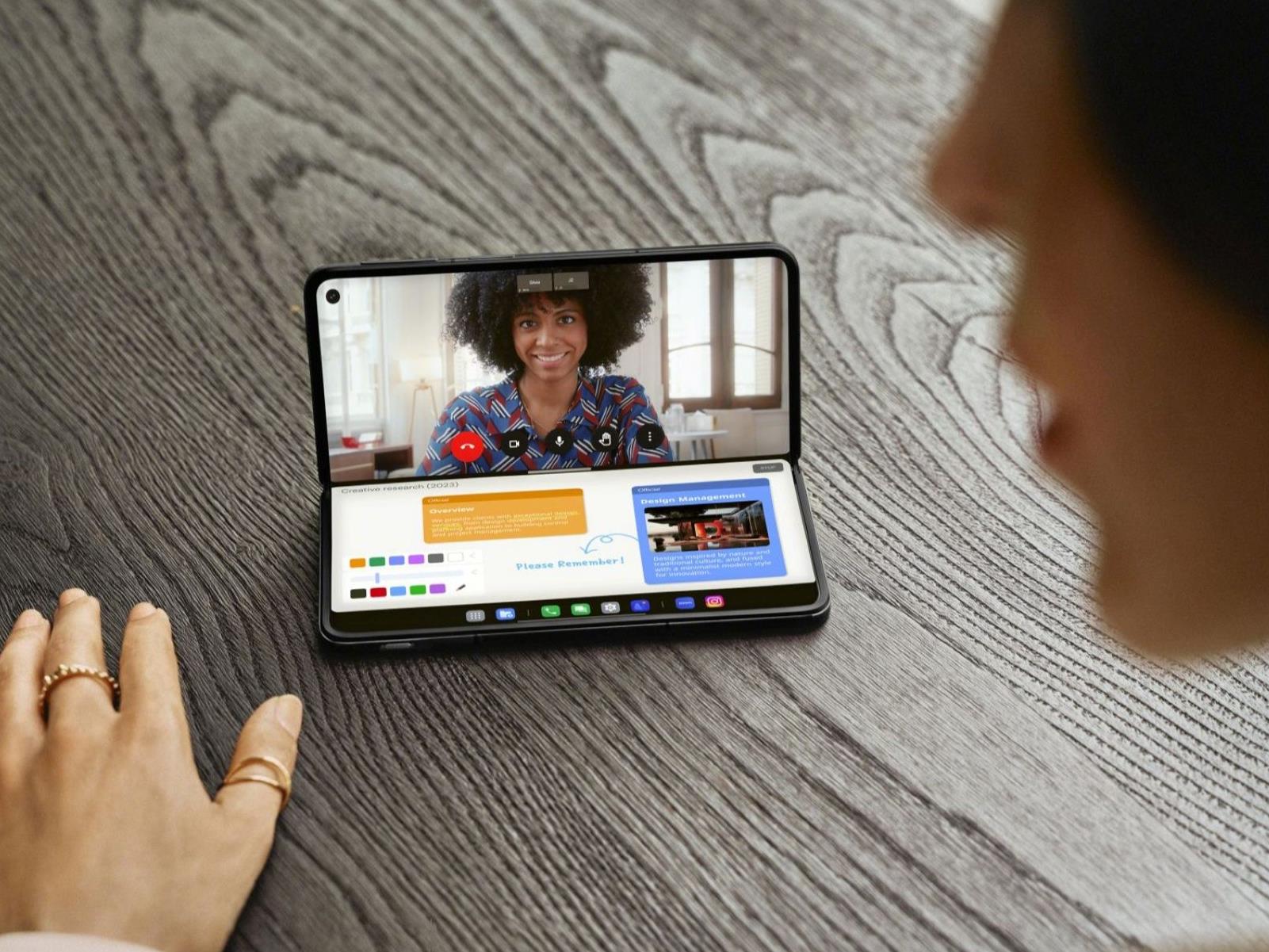
OnePlus Responds To Bombshell Claim That The Brand Is Being Shut Down

OnePlus Responds To Bombshell Claim That The Brand Is Being Shut Down
The ‘Never Settle’ spirit is facing its most existential crisis yet as reports emerge that OnePlus, the revered flagship killer, is being systematically dismantled by its parent company, Oppo. OnePlus has denied the claims, but signs have been pointing to some kind of downsizing or eventual exit from certain markets.

OnePlus 15 In Sandstorm

How to Tap Into a ‘Flow State’ In Your Workouts

My number one hack to consistently exercise is my ability to lose myself in the moment. When the music fades, your doubts quiet, and you’re simply there—fully immersed in the rhythm of your workout—is what psychologists call a “flow state.” And it’s not reserved for marathon runners, or professional dancers, musical geniuses or chess masters, or what have you. Whether you’re lifting weights in your garage, following a YouTube yoga video, or taking a morning jog, tapping into flow can transform your workout from a chore into something genuinely energizing.

What is a flow state?

Flow state, a concept popularized by psychologist Mihaly Csikszentmihalyi, describes a mental state of complete absorption in an activity. In this state, you’re so focused that everything else—your to-do list, your insecurities, even your sense of time—seems to dissolve. You’re not overthinking each movement or judging your performance. You’re just moving.

“A flow state is experienced when we are in harmony with the breath, the mind, and the body,” says Marcela Christjansen, a yoga teacher and wellness expert at Bay Club. “It is a state that comes and goes and cannot necessarily be manipulated or controlled. Yet, the more you direct and focus your attention, the more this state will seemingly be experienced.” Think of it as the difference between anxiously counting down the minutes left in your workout versus suddenly realizing twenty minutes have passed without you noticing. 

How flow state affects your workouts

When you hit a flow state during exercise, the benefits extend far beyond the session itself. Physically, you may find yourself moving more efficiently, with better form and less perceived effort. Your breathing synchronizes with your movements. Your body seems to know what to do without your conscious mind micromanaging every rep or step.

Mentally, flow creates a kind of meditation in motion. The constant chatter of worry and self-criticism quiets. You’re not thinking about how you look or whether you’re doing it “right”—you’re simply experiencing the workout as it unfolds. A little ironic, but it really feels like a huge weight off your shoulders. 

“It is a moment of being fully with what is, in this case a workout,” Christjansen says. “This flow state is, as I like to say, is like an alchemy—there’s a change within us that makes us feel more alive, more balanced, less preoccupied.” This alchemical transformation is what keeps people like me coming back to their workouts. Flow makes exercise feel intrinsically rewarding rather than something you endure for future benefits.

How to achieve a flow state

While Christjansen says that flow “cannot necessarily be manipulated or controlled,” there are practical steps you can take to create the conditions where flow is more likely to emerge.

Eliminate digital distractions

Your phone is probably the biggest barrier between you and flow. Constant notifications, the temptation to check messages between sets, or even tracking every metric of your workout can keep you in your head rather than in your body.

If you use your phone for music or workout videos, enable Do Not Disturb mode. Better yet, download your playlist or video in advance so you’re not connected to the internet at all. The goal is to create an environment where your attention isn’t constantly being pulled away.

Connect with your breath

Breathing is the bridge between mind and body, and it’s your most reliable anchor to the present moment. Rather than breathing on autopilot, bring conscious awareness to each inhale and exhale.

“You could say that flow state is invited, if you will, as we bring our attention, our focus to the breath, to the sensations in the body, and our senses, really to only and all of what is being experienced in the moment,” Christjansen says. “This way, the mind connects with the body rather than the mind wandering all over the place.”

Notice the pace of your breath. Is it quick and shallow or deep and steady? Notice the texture—is it smooth or ragged? You don’t need to change anything; simply observing creates the connection that invites flow.

Be in the moment

Flow emerges when you’re fully engaged with sensory experience rather than lost in thought. This means actively directing your attention to what you’re actually experiencing (as opposed to what you’re thinking about experiencing).

“A flow state asks for concentration therefore, to enter and then stay longer in a flow state it is a good idea to practice mindfulness: Be aware in the moment,” Christjansen says. “Even when you notice your thoughts and mind wandering about everything else but the moment, then you just begin again: Notice what’s moving, changing, new, different.”

During a run, feel how your feet strike the ground. During strength training, notice the specific muscles engaging and releasing. In a dance workout, pay attention to how your weight shifts from one leg to the other. When your mind wanders to dinner plans or work emails—and it will—simply return your attention to these concrete sensations.

Choose the right challenge level

Flow tends to emerge when an activity is challenging enough to demand your full attention but not so difficult that you’re overwhelmed with frustration. If your workout is too easy, your mind wanders because it’s boring. But if it’s too hard, you become self-conscious and anxious about whether you can do it. Find the sweet spot where you’re stretched but not strained. This might mean adjusting weights, trying a more complex choreography pattern, or picking up your pace slightly. 

Make it intentional

“I don’t believe this state can be rushed, yet it can be intentional,” Christjansen says. “It’s a decision you actively take to practice as mentioned above. Focus, sense, breathe consciously, direct the mind to the task at hand.”

Before you begin your workout, take a moment to set an intention. This small act of commitment can shift your entire approach.

Build consistency

Like any skill, accessing flow becomes easier with practice. The first few times you try to stay present during a workout, you might find your mind wandering constantly. That’s completely normal!

“The more you work out this way, the more and longer you’ll be noticing the experience of a flow state, which in turn will motivate you to keep practicing and keep consistency on your workouts,” Christjansen says.

Each time you redirect your attention back to your breath or your body’s sensations, you’re strengthening your capacity for focus. Over time, those moments of flow will come more frequently and last longer. And that positive feedback loop—where flow makes workouts more enjoyable, which makes you more likely to work out—becomes self-sustaining.

The bottom line

Ultimately, tapping into flow during workouts isn’t going to look like some transcendent state of perfection. It’s about the simple practice of being where you are, and how much more enjoyable it becomes to work out. It’s something you invite through attention, breath, and the willingness to fully show up for your body in motion. So the next time you lace up your sneakers or roll out your yoga mat, try this: Put your phone on airplane mode, take three conscious breaths, and commit to noticing what’s actually happening in your body. 

Comic-Con Bans AI Art After Artist Pushback

San Diego Comic-Con changed an AI art friendly policy following an artist-led backlash last week. From a report: It was a small victory for working artists in an industry where jobs are slipping away as movie and video game studios adopt generative AI tools to save time and money. Every year, tens of thousands of people descend on San Diego for Comic-Con, the world’s premier comic book convention that over the years has also become a major pan-media event where every major media company announces new movies, TV shows, and video games. For the past few years, Comic-Con has allowed some forms of AI-generated art at this art show at the convention.

According to archived rules for the show, artists could display AI-generated material so long as it wasn’t for sale, was marked as AI-produced, and credited the original artist whose style was used. “Material produced by Artificial Intelligence (AI) may be placed in the show, but only as Not-for-Sale (NFS). It must be clearly marked as AI-produced, not simply listed as a print. If one of the parameters in its creation was something similar to ‘Done in the style of,’ that information must be added to the description. If there are questions, the Art Show Coordinator will be the sole judge of acceptability,” Comic-Con’s art show rules said until recently.


Read more of this story at Slashdot.

Has Gemini surpassed ChatGPT? We put the AI models to the test.

The last time we did comparative tests of AI models from OpenAI and Google at Ars was in late 2023, when Google’s offering was still called Bard. In the roughly two years since, a lot has happened in the world of artificial intelligence. And now that Apple has made the consequential decision to partner with Google Gemini to power the next generation of its Siri voice assistant, we thought it was high time to do some new tests to see where the models from these AI giants stand today.

For this test, we’re comparing the default models that both OpenAI and Google present to users who don’t pay for a regular subscription— ChatGPT 5.2 for OpenAI and Gemini 3.2 Fast for Google. While other models might be more powerful, we felt this test best recreates the AI experience as it would work for the vast majority of Siri users, who don’t pay to subscribe to either company’s services.

As in the past, we’ll feed the same prompts to both models and evaluate the results using a combination of objective evaluation and subjective feel. Rather than re-using the relatively simple prompts we ran back in 2023, though, we’ll be running these models on an updated set of more complex prompts that we first used when pitting GPT-5 against GPT-4o last summer.

Read full article

Comments