A rival smart glasses company is suing Meta over its Ray-Ban products

Meta is being sued by Solos, a rival smart glasses maker, for infringing on its patents, Bloomberg reports. Solos is seeking “multiple billions of dollars” in damages and an injunction that could prevent Meta from selling its Ray-Ban Meta smart glasses as part of the lawsuit.

Solos claims that Meta’s Ray-Ban Meta Wayfarer Gen 1 smart glasses violate multiple patents covering “core technologies in the field of smart eyewear.” While less well known than Meta and its partner EssilorLuxottica, Solos sells multiple pairs of glasses with similar features to what Meta offers. For example, the company’s AirGo A5 glasses lets you control music playback and automatically translate speech into different languages, and integrates ChatGPT for answering questions and searching the web.

Beyond the product similarities, Solos claims that Meta was able to copy its patents because Oakley (an EssilorLuxottica subsidiary) and Meta employees had insights into the company’s products and road map. Solos says that in 2015, Oakley employees were introduced to the company’s smart glasses tech, and were even given a pair of Solos glasses for testing in 2019. Solos also says that a MIT Sloan Fellow who researched the company’s products and later became a product manager at Meta, brought knowledge of the company to her role. According to the logic of Solos’ lawsuit, by the time Meta and EssilorLuxottica were selling their own smart glasses, “both sides had accumulated years of direct, senior-level and increasingly detailed knowledge of Solos’ smart glasses technology.”

Engadget has asked both Meta and EssilorLuxottica to comment on Solos’ claims. We’ll update this article if we hear back.

While fewer people own Ray-Ban Meta smart glasses than use Instagram, Meta considers the wearable one of its few hardware success stories. The company is so convinced it can make smart glasses happen that it recently restructured its Reality Labs division to focus on AI hardware like smart glasses and hopefully build on its success.

This article originally appeared on Engadget at https://www.engadget.com/wearables/a-rival-smart-glasses-company-is-suing-meta-over-its-ray-ban-products-205000997.html?src=rss

Core Ultra Series 3 launch may be hampered by chip shortages, says Intel

Intel reported its earnings for the fourth quarter of 2025 yesterday, and the news both for the quarter and for the year was mixed: year-over-year revenue was down nearly imperceptibly, from $53.1 billion to $52.9 billion, while revenue for the quarter was down about four percent, from $14.3 billion last year to $13.7 billion this year. (That number was, nevertheless, on the high end of Intel’s guidance for the quarter, which ranged from $12.8 to $13.8 billion.)

Diving deeper into the numbers makes it clear exactly where money is being made and lost: Intel’s data center and AI products were up 9 percent for the quarter and 5 percent for the year, while its client computing group (which sells Core processors, Arc GPUs, and other consumer products) was down 7 percent for the quarter and 3 percent for the year.

That knowledge makes it slightly easier to understand the bind that company executives talked about on Intel’s earnings call (as transcribed by Investing.com). In short, Intel is having trouble making (and buying) enough chips to meet demand, and it makes more sense to allocate the chips it can make to the divisions that are actually making money—which means that we could see shortages of or higher prices for consumer processors, just as Intel is gearing up to launch the promising Core Ultra Series 3 processors (codenamed Panther Lake).

Read full article

Comments

The Great Graduate Job Drought

Global hiring remains 20% below pre-pandemic levels and job switching has hit a 10-year low, according to a LinkedIn report, and new university graduates are bearing the brunt of a labor market that increasingly favors experienced candidates over fresh talent.

In the UK, the Institute of Student Employers found that graduate hiring fell 8% in the last academic year and employers now receive 140 applications for each vacancy, up from 86 per vacancy in 2022-23. US data from the New York Federal Reserve shows unemployment among recent college graduates aged 22-27 stands at 5.8% versus 4.1% for all workers.

Recruiter Reed had 180,000 graduate job postings in 2021 but only 55,000 in 2024. In a survey of Reed clients last year, 15% said they had reduced hiring because of AI. London mayor Sadiq Khan said the capital will be “at the sharpest edge” of AI-driven changes and that entry-level jobs will be first to go.


Read more of this story at Slashdot.

Retro handheld maker Anbernic has a new gamepad with a screen and heart rate sensor

File this one under “Things that make you go, ‘Hmmm…'” Retro handheld maker Anbernic is launching a new controller with a screen. But unlike Nintendo’s Wii U controller, there’s no second-screen gaming capability here. Instead, the display is designed to “make customization intuitive and effortless.” Oh, and the controller also has a heart rate sensor. Because, hey, if you’re going weird, I say fully commit!

The Anbernic RG G01 has a 2.5-inch HD display that the company describes as an “HD smart screen.” The idea is to remap buttons, program macros and change other settings without requiring software on a connected device.

A person's hands holding a gamepad that has a screen on it. It shows their heart rate.
You, too, can monitor your heart rate while gaming.
Anbernic

Meanwhile, Anbernic says the heart rate detection helps you “monitor your well-being during intense sessions.” I would hope that folks with heart conditions would use something other than a gamepad to monitor their pulse. And I don’t know why anyone else would be worried about that while gaming. (Too many Red Bulls?) Regardless, Anbernic seems to be leaning into the novelty / curiosity space here, so at least it fits the motif.

The RG G01 connects in three ways: Bluetooth 5.0, 2.4Ghz wireless and over a wire. It supports onboard calibration for the triggers, joystick and 6-axis gyroscope. There are four programmable buttons (including macro support) on the backside. The company promises a 1,000Hz polling rate in wired and wireless modes. The gamepad is compatible with PC, Switch, Android and iOS.

We don’t yet know when this glorious oddity will arrive, other than “coming soon.” We also don’t know how much it will cost. But you can watch the launch video below and see if it’s your type of strange.

This article originally appeared on Engadget at https://www.engadget.com/gaming/retro-handheld-maker-anbernic-has-a-new-gamepad-with-a-screen-and-heart-rate-sensor-201651899.html?src=rss

DHS keeps trying and failing to unmask anonymous ICE critics online

The Department of Homeland Security (DHS) has backed down from a fight to unmask the owners of Instagram and Facebook accounts monitoring Immigration and Customs Enforcement (ICE) activity in Pennsylvania.

One of the anonymous account holders, John Doe, sued to block ICE from identifying him and other critics online through summonses to Meta that he claimed infringed on core First Amendment-protected activity.

DHS initially fought Doe’s motion to quash the summonses, arguing that the community watch groups endangered ICE agents by posting “pictures and videos of agents’ faces, license plates, and weapons, among other things.” This was akin to “threatening ICE agents to impede the performance of their duties,” DHS alleged. DHS’s arguments echoed DHS Secretary Kristi Noem, who has claimed that identifying ICE agents is a crime, even though Wired noted that ICE employees often post easily discoverable LinkedIn profiles.

Read full article

Comments

Wall Street Pushes Solo 401(k)s as More Americans Work for Themselves

An anonymous reader shares a report: A niche retirement plan favored by freelancers is quickly becoming a hot Wall Street sales pitch, as more and more Americans look for ways to shelter a bigger chunk of their paychecks from taxes. Known as solo 401(k)s, they allow the self-employed to contribute $72,000 a year into tax-advantaged retirement accounts. That’s nearly three times the maximum for typical salaried workers in the US.

While they’ve existed for decades serving a workforce that often struggled to earn enough to max out those contributions, wealth planners like JPMorgan Chase & Co. and Betterment are now racing to tap into burgeoning demand from a newer, and wealthier cohort: Post-pandemic contractors and self-employed DIY savers looking to shelter more income, grow assets tax-deferred or tax-free, all with the click of a button.

The pitch is simple: Because of a quirk in the tax code, self-employed workers effectively contribute twice to their 401(k)s — once as an employee on their own behalf and then again as a business owner making matching contributions. The platforms take care of the paperwork and clients get institutional-level tax planning and investment flexibility. More than three-quarters of America’s record 36 million small businesses now have just a single employee, the owner. Cerulli Associates projects that total 401(k) plans in the U.S. will surpass 1 million by 2030, and the fastest growth is expected in sub-$5 million “micro” accounts.


Read more of this story at Slashdot.

Google Chrome Is About to Drop Support for These Macs

Nothing lasts forever, and technology is no exception. As shiny and new as your computer was when you first bought it, eventually, developers will drop support for it. There’s no telling when exactly, but at some point, you’ll open an app to find a message that reads something like: “This device does not support the latest version of this app. Please update your hardware.”

That goes for Macs, as well. You might forget that fact, since Apple’s computers tend to stick around for a long time. But inevitably, the shadow of end-of-life policies comes for them, too. If you’re still rocking an older Mac, I have some bad news, specifically if you use Chrome: Google is officially planning its last supported version of the browser.

Google Chrome is dropping support for macOS Monterey

Google quietly announced the news in a post on the Chrome Platform Status site. The company confirmed that Chrome 150 will be the last version of the browser to support macOS 12, otherwise known as macOS Monterey. Once Google eventually releases Chrome 151, users on macOS 12 will not be able to install it, and will forever be stuck on Chrome 150. Google hasn’t said when Chrome 150 will actually drop (we’re currently on Chrome 143), but MacRumors estimates it’ll be sometime in mid-2026, based on past releases.

Before you panic, know there are a couple caveats here. First, Chrome will not stop working on macOS 12 once version 151 drops. You’ll still be able to use Chrome as you always have. In fact, you might not even notice the difference, minus any new features and changes that Google rolls out in future software versions. You will see an alert that your browser is out of date, but it’ll still get you to YouTube, Gmail, and Lifehacker.

This version of macOS is also fairly outdated. Google isn’t just picking last year’s macOS version, or the one before that. We’re currently on macOS 26, which for these purposes, could be read as macOS 16. It’s the fourth version of macOS since Monterey, meaning unless you know your Mac is running macOS 12, there’s a good chance you’re running something that Chrome still supports.

If you aren’t sure, click the Apple in the top-left corner, then choose “About This Mac.” Here, you’ll find the macOS version next to “macOS.”

Security concerns with using Chrome on macOS 12

Let’s say your Mac is running macOS 12. If so, you really should stop using Chrome once version 151 drops. That’s because you’ll no longer receive Google’s latest security updates for the browser, which puts your machine (and its data) at risk.

Once Chrome 150 drops, bad actors will look for security vulnerabilities in the code to exploit. Google will do the same, and will patch any it or any third-party researchers find. Once 151 comes out, it’ll include those patches, but Chrome 150 users will be left behind. The risk only grows as new vulnerabilities are discovered, and new versions of Chrome come out.

As such, you have a couple of options if you’re running macOS 12. The first is to update your OS, if you have that choice. If your Mac does support macOS 13 or newer, updating will open you up to new versions of Chrome. Of course, perhaps the reason you’re running macOS 12 is because you cannot update. While that largely affects Macs that are at least 10 years old, there are still plenty of these machines out there. There are alternative ways to update your older Mac, even if Apple won’t let you, such as with OpenCore Legacy Patcher, but that might be too technical a route for some.

The other option here is to stop using Chrome, and switch to a browser that does support macOS 12. Firefox, for example, supports macOS 10.15 or later, and Microsoft Edge fully supports macOS 12 and later. (Safari itself hasn’t been updated on macOS 12 since July 2024.)

It isn’t fun watching your tech grow old, but you don’t need to chuck your Mac just because Chrome will end support this year—even if the newest ones are really good.

ASUS Breaks Silence On Ryzen 7 9800X3D Failures And Launches Investigation

ASUS Breaks Silence On Ryzen 7 9800X3D Failures And Launches Investigation
You’ve probably heard about AMD Ryzen 3D V-Cache (“X3D”) CPUs failing in ASRock motherboards, but ASRock is far from the only vendor seeing these failures, and it may not even be the most prominent one. ASUS has now formally acknowledged the rare issue in a statement published today on its website, titled “Official ASUS statement on recent

Fable Release Window Is Finally Revealed After Massive Developer Direct Deep Dive

Fable Release Window Is Finally Revealed After Massive Developer Direct Deep Dive
It’s been a long time coming, but Fable is finally back in a shiny new rebooted form, with a confirmed multi-platform release window for Autumn of this year across Xbox consoles & services including Play Anywhere, PC, and PlayStation 5. A deep-dive on the new Fable, as well as this release window confirmation, came out with Xbox’s Developer

China Makes Too Many Cars, and the World Is Increasingly OK With It

After years of Western governments raising alarms about Chinese automotive overcapacity and erecting tariff barriers, an unexpected pivot is now underway as major economies cautiously open their markets to Chinese electric vehicles, Bloomberg writes. Beijing itself has started acknowledging the problem at home. Chinese regulators last week warned of “severe penalties” for automakers defying efforts to rationalize pricing in the country’s car market, and earlier this month a government ministry urged battery makers to curtail expansion and cutthroat competition.

The European Union imposed steep tariffs on Chinese EV imports in 2024 and is now considering replacing them with minimum import price agreements. Canada’s Prime Minister Mark Carney last week decided to allow 49,000 Chinese EVs annually at a 6.1% tariff rate, removing a 100% surtax. Germany announced this week that its $3.5 billion EV subsidy program will be open to all manufacturers including Chinese brands. Germany’s environment minister Carsten Schneider dismissed concerns during a January 19 press conference: “I cannot see any evidence of this postulated major influx of Chinese car manufacturers in Germany, either in the figures or on the roads.”

BYD registered an eightfold increase in sales in Germany last year and pulled ahead of Tesla, though Volkswagen still registered around 2,300 vehicles for every one BYD sold.


Read more of this story at Slashdot.

Apple will begin showing more App Store ads starting in March

More ads are coming to App Store search results starting in March, Apple shared on an advertising help page. The company first said that it would increase the number of App Store ads last month, and this new rollout of search ads will begin on Tuesday, March 3, according to a developer email viewed by MacRumors.

“Search is the way most people find and download apps on the App Store, with nearly 65 percent of downloads happening directly after a search,” Apple says. “To help give advertisers more opportunities to drive downloads from search results, Apple Ads will introduce additional ads across search queries.” Up until this point, ads for related apps have appeared at the top of search results, but now they’ll also appear “further down in search results,” according to Apple.

App Store activity makes up a significant portion of what Apple calls its “services” business. The company makes money on every App Store transaction, whether it’s an app download or an in-app purchase, and increasingly, by selling ad space to companies looking to reach users. App Store ads are hardly new, but the number of ads has steadily increased over the years. Apple added ads to the Today tab in 2022 — a space that’s already home to editorial curation that doubles as marketing — and in 2025, Bloomberg reported the company planned to bring ads to Apple Maps.

Apple’s decision to rebrand its advertising business from Apple Search Ads to Apple Ads in April 2025 was maybe the best indication that the company was interested in expanding the number of places it would help partners try and reach customers. And it makes sense: the company’s billions of devices, each pre-installed with default apps, are some of the most valuable real estate it owns.

This article originally appeared on Engadget at https://www.engadget.com/apps/apple-will-begin-showing-more-app-store-ads-starting-in-march-192031226.html?src=rss

10 Shows Like ‘Landman’ You Should Should Watch Next

We may earn a commission from links on this page.

Taylor Sheridan and Billy Bob Thornton are such a natural pairing that it’s not at all surprising that Landman has been yet another hit for the creator behind Yellowstone and it’s many spin-offs. Thornton plays Billy Norris, a crackerjack consultant, fixer, and general hired gun for a major oil conglomerate in present-day West Texas. Beyond the complicated economics and politics of the oil industry, the poor guy’s also dealing with extremely complicated family drama, debt, criminal ties, and substance-abuse issues. Call it Dallas for a new generation.

You can stream Landman on Paramount+, and check out these similar shows after your binge is complete.

Mayor of Kingstown (2021– )

Another Taylor Sheridan creation, this one stars Jeremy Renner as Mike McLusky, head of a family that’s been keeping the peace, more or less, in the title’s company town for decades. The “business” of the corrupt burg just happens to be incarceration, and the McLuskys thrive when business is up, even if Mike himself has slightly different ideas about how to run things. The show deals, at least broadly, with systemic racism and inequality in the prison system, but mostly it’s a modern day western about bringing justice to a corrupt town. Stream Mayor of Kingstown on Paramount+.


Dallas (2012 – 2014)

It’s tempting to direct you back to the original series’ 14-season run, but that one’s a harder to stream—and besides, this direct continuation is still pretty fun. Patrick Duffy, Linda Gray and Larry Hagman (as the original’s J.R.) are all back, joined by a new generation lead by Josh Henderson, Jesse Metcalf, and Jordana Brewster. They’re every bit as scheming, conniving, horny, and oil obsessed as their parents. Stream Dallas on Tubi.


Yellowstone (2018 – 2024)

The Taylor Sheridan drama that launched an empire, as well as a thousand spin-offs (well, seven, including those in development). The Dutton family of Montana, owners of the largest cattle ranch in the state, deal with family and political drama—a bit like a modern Dallas, but with the vibes of HBO’s Succession. Though the main series ended after five seasons, mostly to accommodate the departure of Kevin Costner, there’s plenty more to explore in the past and future of the Yellowstone universe. Stream Yellowstone on Peacock.


Empire (2015 – 2020)

Terrence Howard leads a truly impressive cast (among them Taraji P. Henson, Gabourey Sidibe, and Vivica A. Fox) in this juicy, glossy, hip-hop infused soap opera. Howard plays Lucious Jackson (neé drug dealer Dwight Walker), who changed his own fortunes by building Empire Entertainment from the ground up. As the series begins, the music mogul is diagnosed with ALS and given a life expectancy of only a few more years. Refusing to watch his life’s work die, he sets his three sons at odds to determine who’ll be the one to control things when he’s gone. His schemes are complicated by the release from prison of Cookie Lyon (Henson), the co-founder of the company and Jackson’s ex-wife. As the kids say: drama! There’s a little bit of Dallas and a little bit of Succession (which Empire predates) here, sharing with those shows and Landman the whole family dynasty thing, but with hip-hop rather than black gold. Stream Empire on Hulu and Tubi.


Goliath (2016 – 2021)

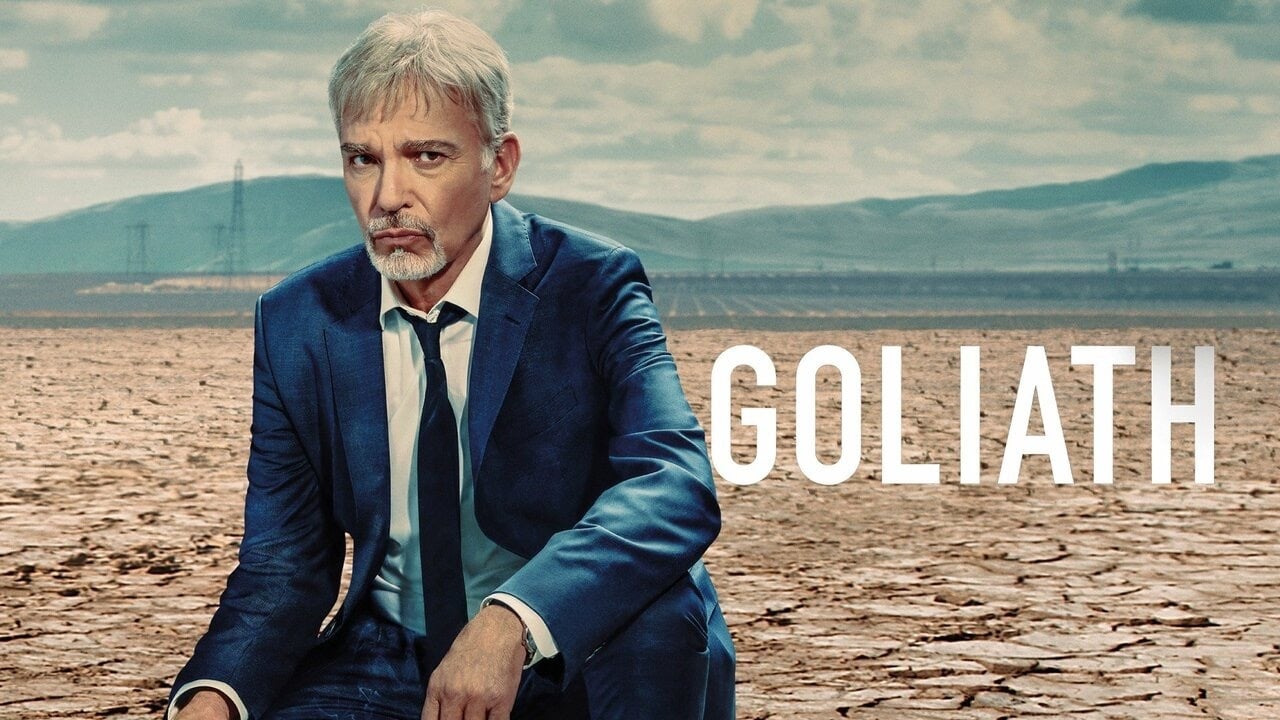
If the pull of Landman is Billy Bob Thornton as a complicated anti-hero with substance abuse issues, this David E. Kelley legal drama will work just fine as a streamalike, even in the absence of oil wells. Here, Thornton plays Billy McBride, a once-successful lawyer who left the firm he built after a murder suspect he’d gotten acquitted went on to kill his family. After a long run of doing not much other than drinking, he’s drawn back into the fray when a dead man’s sister asks for his help on a case involving his old firm, a major corporation, and some very crooked cops. Stream Goliath on Prime Video.


Mine (2021)

American TV shows tend to view the wealthy with nuance, even when they’re engaged in overtly criminal behavior. South Korean creators, on the other hand, have no problem criticizing the 1% (Parasite and Squid Game are hardly outliers), particularly the plutocratic chaebol families who control huge portions of the country’s economy. The minseries Mine centers the women who are jockeying for control of the massive, fictional Hyowon Group from within their family’s outrageously opulent (and extremely photogenic) residential compound. The plans of two increasingly powerful women who married into the family, Hi-soo and Seo-hyun, are thrown into disarray when the new housemaid begins a romantic relationship with one of the male heirs, while a new tutor seems ready to expose old family secrets. It’s very much a Dynasty-style soap opera, with various family members crawling over each other seeking control and a sense of identity. Stream Mine on Netflix.


The Waterfront (2025)

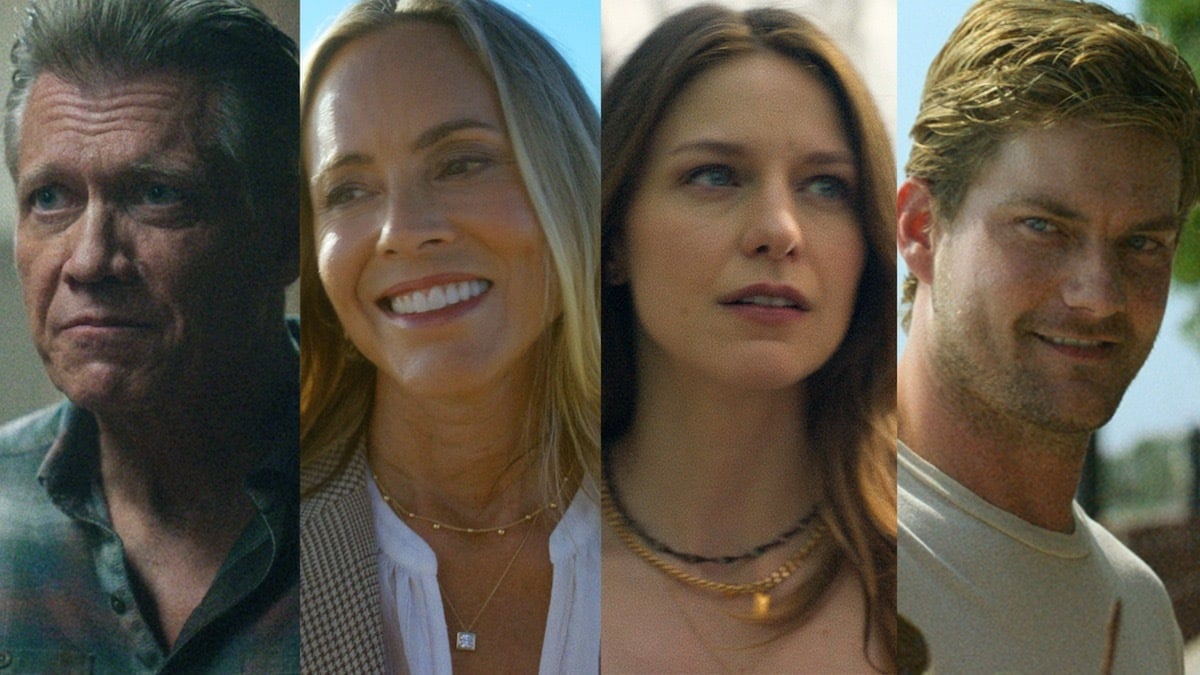
Swapping big-time oil for a family fishing business may seem like a big leap, but we’ve still got plenty of crime and drugs in this Netflix series. Holt McCallany plays Harlan Buckley, returning to manage the family business, one which is tied up with multiple dueling drug cartels, as well as unreliable family members and at least one (Supergirl‘s Melissa Benoist) who’s looking to escape her own legal problems by working with the FBI against her father and brother. Stream The Waterfront on Netflix.


Joe Pickett (2021 – 2023)

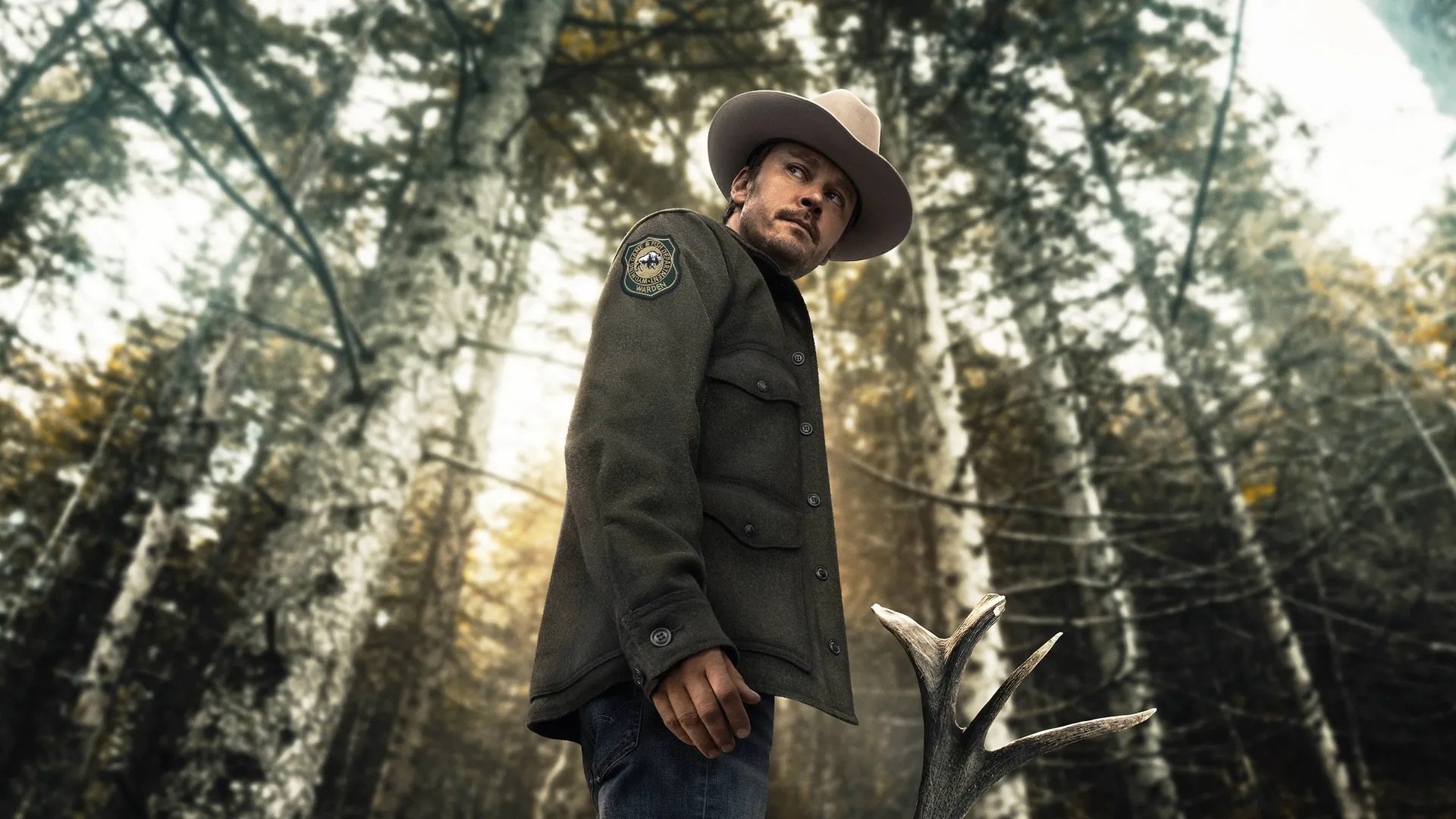
A vibe match that, while it doesn’t replicate Landman‘s family and business drama, still runs with the neo-western feel that defines a Taylor Sheridan show. Michael Dorman stars as Joe Pickett, a Wyoming game warden with a violent past and, well, a violent present too. Dorman’s Pickett is less of a tough action hero type, and more of a likable, everyday guy who just happens to be wrapped up in a murder via his day job. It’s not a comedy, but is definitely a bit weirder and more surreal than the more literal style of something like Landman, which lacks flourishes like Pickett‘s memorable emu wrestling scene. Stream Joe Pickett on Paramount+.


Queen Sugar (2016 – 2022)

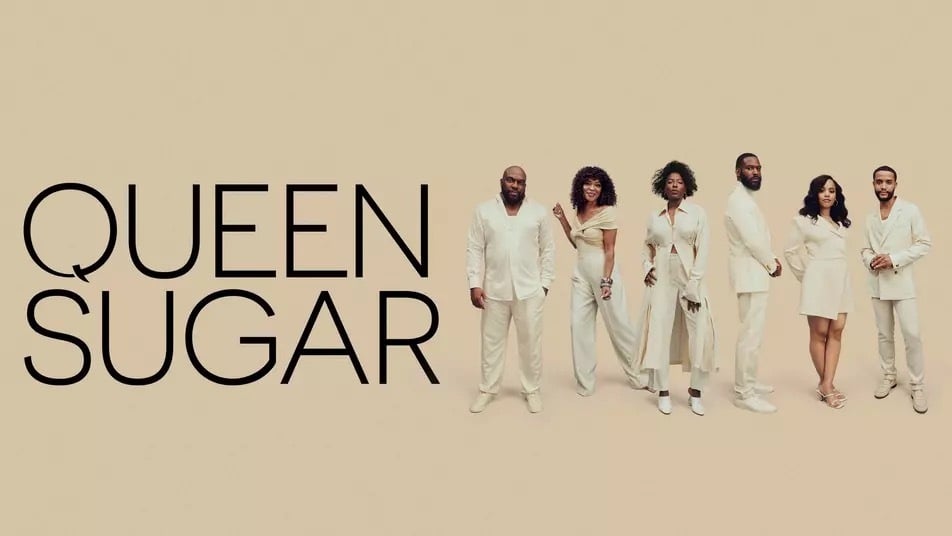
Another intense family business drama with a dash of a succession crisis: In Queen Sugar, three largely estranged siblings in distant cities are brought together by the death of their father, who has left them each an equal share in an 800-acre sugarcane farm in rural Louisiana. The Ava DuVernay-produced (and sometimes directed) series offers plenty of scandal and soapy drama, but ultimately, it’s a show about a family coming back together to preserve its legacy. The siblings (Rutina Wesley, Dawn-Lyen Gardner, and Kofi Siriboe) are a bit less gritty and troubled than the Norris family (they’re mostly trying to do the right thing), but they still generate enough drama to fuel seven successful seasons. Stream Queen Sugar on Hulu.


The Son (2017 – 2019)

The popularity of Taylor Sheridan-esque neo-westerns leads us, inevitably, to something closer to an actual western. In this series, adapting Philipp Meyer’s 2013 Pulitzer Prize-finalist novel of the same name, Pierce Brosnan plays Eli McCullough, a ruthless cattle baron making moves to get in on the burgeoning oil industry in the Rio Grande Valley of 1915. A parallel narrative sees Eli as a young man, kidnapped and raised among a Nʉmʉnʉʉ family. While his backstory lends the character welcome complexity, in the present, he’s as determined to build his empire as he is to prepare his son and grandson to take over when he’s gone. Stream The Son on Prime Video and AMC+.

White House alters arrest photo of ICE protester, says “the memes will continue”

The Trump White House yesterday posted a manipulated photo of Nekima Levy Armstrong, a Minnesota civil rights attorney who was arrested after protesting in a church where a pastor is allegedly also an Immigration and Customs Enforcement (ICE) official.

Secretary of Homeland Security Kristi Noem posted what seems to be the original photo of Armstrong being led away by an officer yesterday morning. A half hour later, the official White House X account posted an altered version in which Armstrong’s face was manipulated to make it appear that she was crying.

“The White House shared an AI-edited photo of Nekima, depicting her in tears and scared when, in actuality, she was poised, determined, and unafraid,” NAACP President and CEO Derrick Johnson said yesterday.

Read full article

Comments

Vimeo lays off most of its staff just months after being bought by private equity firm

Vimeo just got hit by a brutal round of layoffs, according to a report by Business Insider. Staffers are posting on various social media sites that the layoffs have impacted most of the company, including the entire video team. Vimeo is a video-hosting platform, so that sounds bad.

“Yesterday, following Vimeo’s recent acquisition by a private equity firm, I learned that I, along with a large portion of the company, was impacted by layoffs,” wrote the company’s former vice president of Global Brand & Creative, Dave Brown. He is referring to a firm called Bending Spoons that bought Vimeo for $1.38 billion in the latter half of 2025.

We don’t know why parent company Bending Spoons conducted such a massive round of layoffs, but the equity firm is known for purchasing tech companies and aggressively cutting costs via layoffs. It did the same thing to Evernote back in 2023 and WeTransfer in 2024. Engadget has reached out to Vimeo to inquire about the exact number of employees that were laid off and will update this post when we hear back.

“I can confirm that a layoff was announced at Vimeo on January 20, 2026. To respect the privacy of those departing, we cannot provide additional details at this time,” a Bending Spoons spokesperson told Gizmodo in an emailed statement. “Going forward, Bending Spoons remains committed to growing Vimeo to meet the needs of its diverse user base.”

Reviving this account to say: Almost everyone at Vimeo was laid off yesterday, including the entire video team. If you’re looking for talented engineers, there are a few on the market.

Sucks to see something I built killed by private equity in a technology company skin suit.

— Derek Buitenhuis (@daemon404) January 21, 2026

It’s good to know the company “remains committed to growing Vimeo” after firing just about everyone that works there. One former employee said on X that it “sucks to see something I built killed by private equity in a technology company skin suit.”

Vimeo has been around a long time. The platform was founded a full year before YouTube and has positioned itself as being a premium alternative for hosting creative and business-adjacent videos. We have no idea what it’ll look like with a minimal staff and no video team.

This article originally appeared on Engadget at https://www.engadget.com/big-tech/vimeo-lays-off-most-of-its-staff-just-months-after-being-bought-by-private-equity-firm-184556023.html?src=rss

Super Mario Wonder’s Talking Flower Becomes A Real Gadget With Time And Temp Quips

Super Mario Wonder’s Talking Flower Becomes A Real Gadget With Time And Temp Quips
Nintendo has a rich history of releasing unique accessories, like the R.O.B (Robotic Operating Buddy) during the Nintendo Entertainment System era and the more recent Alarmo designed to help fans start the day. And the company has a new one on the way based on the Talking Flower from the Super Mario Bros. Wonder game.

The Talking Flower

Solar and Wind Overtake Fossil Fuels in the EU

Wind and solar power overtook fossil fuels last year as a source of electricity in the EU for the first time, a new report found. Semafor adds: The milestone was hit largely thanks to a rise in solar power, which generated a record 13% of electricity in the EU, according to Ember. Together, wind and solar hit 30% of EU electricity generation, edging out fossil fuels at 29%.

The shift is especially important with the bloc’s alternative to Russian LNG — Washington — becoming increasingly unreliable and willing to weaponize economic tools. The US Commerce Secretary threw shade at the bloc’s renewable push during Davos, warning that China uses net zero goals to make allies “subservient” by controlling battery and critical mineral supply chains.

Still, renewables now provide nearly half of EU power, with wind and solar outpacing all fossil sources in more than half of member countries. “The stakes of transitioning to clean energy are clearer than ever,” the Ember report’s author said.


Read more of this story at Slashdot.

Tesla paywalls lane centering on new Model 3 and Model Y purchases

Tesla just objectively decreased the value of the Model 3 and Model Y. On Thursday, the company said it’s paywalling its lane-centering feature, Autosteer, for new purchases of the two EVs in the US and Canada. This was previously a standard feature. Lane centering is now part of the Full Self-Driving Supervised (FSD) package, which costs $99 per month.

Speculating on why Tesla would do this doesn’t require much imagination. Remember the pay package Tesla shareholders approved for Musk in November? One of his requirements for receiving up to $1 trillion is reaching 10 million active FSD subscriptions.

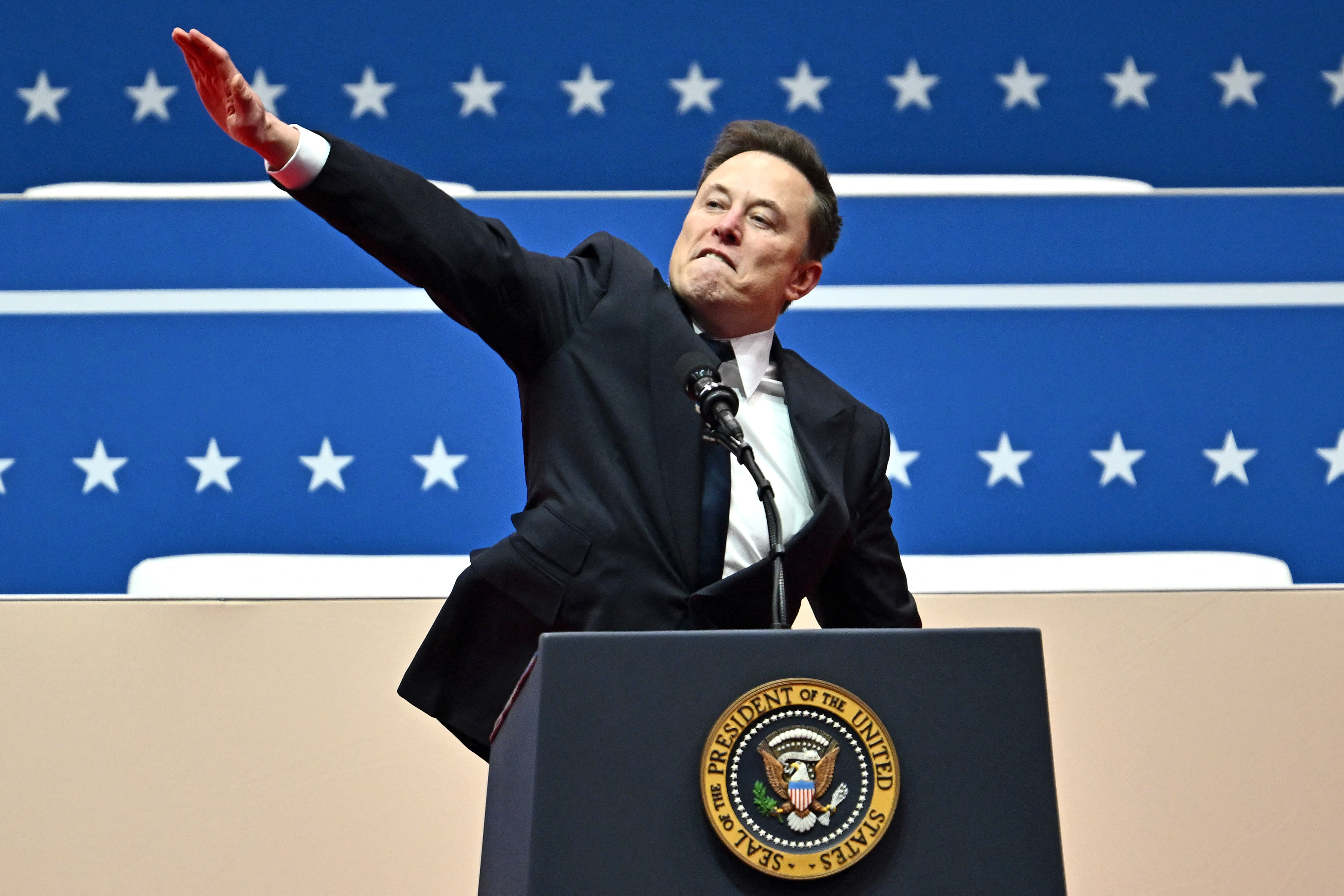
TOPSHOT - Tesla and SpaceX CEO Elon Musk gestures as he speaks during the inaugural parade inside Capitol One Arena, in Washington, DC, on January 20, 2025. (Photo by ANGELA WEISS / AFP) (Photo by ANGELA WEISS/AFP via Getty Images)
One of Musk’s stipulations for receiving $1 trillion is reaching 10 million active FSD subscriptions. (Photo by ANGELA WEISS/AFP via Getty Images)
ANGELA WEISS via Getty Images

As for the details, Tesla killed the Basic Autopilot feature that was standard on the Model 3 and Model Y. That package included both Autosteer and Traffic-Aware Cruise Control (TACC). Now, the latter will remain a standard feature, but Autosteer now requires that $99-per-month FSD subscription. The change applies only to new purchases, not existing owners.

The move comes ahead of FSD’s switch to a subscription-only service. After February 14, you’ll no longer be able to buy the package for a one-time $8,000 upfront fee. If you want FSD (or just lane centering) from now on, your annual cost will be $1,188.

Making matters worse, Musk warned that FSD won’t remain at $99 monthly forever. “I should also mention that the $99/month for supervised FSD will rise as FSD’s capabilities improve,” the Tesla CEO posted on X. He didn’t indicate when that might happen or what the increase would be.

This article originally appeared on Engadget at https://www.engadget.com/transportation/evs/tesla-paywalls-lane-centering-on-new-model-3-and-model-y-purchases-184000707.html?src=rss

Telly’s “free” ad-based TVs make notable revenue—when they’re actually delivered

Telly, a company that accepts advertising data instead of cash for its TVs, has reportedly had a hard time getting its “free” TVs into people’s homes.

Telly debuted in May 2023. Its dual-screen design can show ads, even when people aren’t watching. Although the smaller, secondary screen can be used for more helpful applications, like showing the weather or sports scores, its primary purpose is to serve as a billboard south of the 55-inch primary display. Owners cannot disable tracking or cover up the secondary screen (or they have to pay for the TV, which Telly claims is worth $1,000), and they must fill out a lengthy, detailed survey to get one.

When it debuted its TV, Telly said it expected to ship 500,000 devices that summer. In June 2023, the startup said 250,000 people signed up to get a Telly. In a 2024 press release, Telly said that it planned to ship “millions more in 2024.”

Read full article

Comments

Tesla Has Dropped This Basic Autopilot Feature, Forcing US Drivers Into Subscriptions

If you’re in the market for a new Tesla, your fancy new electric car is going to be a little less smart—unless you pony up for a subscription. According to reporting from Elektrek and buying experiences from drivers, the company is ditching the basic Autopilot mode that used to come standard in new vehicles, and is now pushing buyers to subscribe to Full Self-Driving instead.

Before, Autopilot consisted of two minor but helpful driving assist features. The first was Traffic Aware Cruise Control, which automatically adjusts speed based on the speed limit and surrounding cars, and the second was Autosteer, which helps keep you in the center of your lane. The idea was that, while highway driving, you could turn on Autopilot and essentially let your car drive itself (while still remaining attentive and aware, of course).

Now, though, Autosteer will only be available as part of a Full Self-Driving, or FSD, subscription. Traffic Aware Cruise Control will still come standard on new vehicles, but highway drivers who aren’t paying Tesla a monthly fee will now need to make tiny corrections every once in a while to keep from veering into the wrong lane.

Making its cars dumber by default is an odd move for a company that wants to be seen as cutting-edge, although if removing Autopilot encourages more FSD subscriptions, that would see more users with Tesla’s most-advanced self-driving tech on the road. Unfortunately, that goal will be pretty costly for consumers. A Full Self-Driving subscription currently costs $99 per month, although until Feb. 14, you are able to buy a lifetime FSD subscription for $8,000.

Which features you’d get with an FSD sub depends on what’s legally available in your area, but in addition to bringing back Autosteer, upgrading could also net you assistance with parking, pickups, and lane changes. However, if all you want is to get your basic functionality back, disgruntled drivers are pointing out that the discontinued features continue to be offered standard on lower-cost models from competing brands, like Toyota.

The move to push Full Self-Driving subscriptions also comes alongside a promise from Tesla owner Elon Musk that pricing for the feature will go up as it improves, although the statement seemed to mostly focus on hopes of a future unsupervised FSD mode rather than more minor upgrades.

At any rate, it’s getting more expensive to buy a Tesla that lives up to the futuristic dreams the marketing promises. The company does still offer a slightly less expensive $6,000 “Enhanced Autopilot” add-on in some international regions, which combines the features from basic Autopilot with a few FSD features, but North American customers will now have no choice but to subscribe.

TikTok deal is done; Trump wants praise while users fear MAGA tweaks

The TikTok deal is done, and Donald Trump is claiming a win, although it remains unclear if the joint venture he arranged with ByteDance and the Chinese government actually resolves Congress’ national security concerns.

In a press release Thursday, TikTok announced the “TikTok USDS Joint Venture LLC,” an entity established to keep TikTok operating in the US.

Giving Americans majority ownership, ByteDance retains 19.9 percent of the joint venture, the release said, which has been valued at $14 billion. Three managing investors—Silver Lake, Oracle, and MGX—each hold 15 percent, while other investors, including Dell Technologies CEO Michael Dell’s investment firm, Dell Family Office, hold smaller, undisclosed stakes.

Read full article

Comments