Engadget review recap: Valerion VisionMaster Max, Canon EOS R6 III and Samsung Bespoke Fridge

Our reviews team is rested up after the CES grind and we’re back to business. This week we reviewed the latest devices from Valerion, Canon, Samsung and Sony, covering a wide range of product categories in the process. Grab yourself a beverage and cozy up with all the reviews you might’ve missed.

Valerion VisionMaster Max

The weeks leading up to the Super Bowl are a popular time to upgrade home theater setups before the big game. One way to do that is Valerion’s VisionMaster Max — if you’re willing to splurge. “The Valerion VisionMaster Max is a highly capable indoor projector that offers the best image quality I’ve seen thanks to the dynamic iris and Enhanced Black Level features,” contributing reporter Steve Dent discovered. “However, it’s also a lot more expensive than rival models at $5,000. It’s pretty hard to justify that extra money, unless you’re really fussy about picture accuracy and gaming performance, or need other features like the 1Gbps ethernet port.”

Canon EOS R6 III

If you’re primarily shooting video these days, contributing reporter Steve Dent just wrapped up testing with the Canon EOS R6 III. While he said it’s great for video, the photo quality isn’t the absolute best you can get right now. “If it’s mainly photography you’re interested in, though, Sony’s $2,900 A7 V is a better choice,” he said. “It matches the R6 III’s resolution, price and autofocus but offers superior dynamic range and lower rolling shutter distortion.”

Samsung Bespoke Fridge with AI

We don’t often review appliances here at Engadget, but Samsung’s AI-infused refrigerator caught the attention of senior reporter Sam Rutherford. You may not think you need a 32-inch display in your kitchen or cameras in your fridge, but Sam argues once you try them you may never go back. “You may not agree or want to pay this much for features like this just yet, but Samsung’s Bespoke AI 4-Door French Door refrigerator has convinced me there’s a happy home for smarter iceboxes,” he concluded.

Sony LinkBuds Clip

Clip-on earbuds have been constantly popping up over the last few years. Many of the key players in headphones have tried their hand at the open-wear form factor with Sony being the latest to jump on board. While the company embraces the inherent perks of these designs, the LinkBuds Clip doesn’t do enough to rise above the competition. “Subpar bass performance and the omission of some of Sony’s more attractive features (and even some basic ones) mean the company hasn’t done enough to distinguish the Clip from the competition in an obvious way,” I wrote.

This article originally appeared on Engadget at https://www.engadget.com/engadget-review-recap-valerion-visionmaster-max-canon-eos-r6-iii-and-samsung-bespoke-fridge-123000849.html?src=rss

A weird, itchy rash is linked to the keto diet—but no one knows why

A 20-year old man in Taiwan went to a dermatology clinic for a strange rash that had developed across his shoulders and chest. The raised, red, and itchy condition had been bothering him for a full month. By this point, he had also developed patches of pigmented skin interlaced with the red rash.

According to a case report in the New England Journal of Medicine, a skin biopsy showed swelling between his skin cells and inflammation around blood vessels, but testing came up negative for other common signs of skin conditions, leaving doctors with few leads. The doctors ultimately came to a diagnosis not by analyzing his skin further but by hearing about his diet.


The man’s chest and shoulders, showing his rash and hyperpigmentation.
Credit:
New England Journal of Medicine, 2026

The man told doctors that two months prior to his clinic appointment—a month before his rash developed—he had switched to a ketogenic diet, which is a high-fat but very low-carbohydrate eating pattern. This diet forces the body to shift from using glucose (sugar derived from carbohydrates) as an energy source to fat instead.

Read full article

Comments

More Cult of the Lamb, a World War II computer mystery and other new indie games worth checking out

Welcome to our latest roundup of what’s going on in the indie game space. It’s been a very busy week of fun game releases (next week will be too!), so let’s get into some of them after a quick reflection on gaming while traveling.

I love my Steam Deck. I really truly do. It’s a fantastic machine. And yet when I brought it with me on a five-week trip over the holidays, I used it for barely an hour the entire time. That doesn’t really justify the space and weight it takes up in my bag. The same holds true for my Nintendo Switch 2 and PlayStation Portal. 

I’ll be leaving them all at home next time. I’ll take a small controller (probably OhSnap’s MCON) so I can play the odd game on my laptop or phone. I’ll bring my Playdate as well. I adore that little yellow console, and I haven’t spent nearly enough time using it. I have a lot of neat-looking indie games to catch up on there (Diora looks particularly interesting). I’m more likely to play something on a flight if it’s on a device I can pull out from my pocket. I just wish Panic had put a backlight in the Playdate. 

New releases

Massive Monster and publisher Devolver Digital gave Cult of the Lamb fans a whole bunch of reasons to jump back into the game this week with the arrival of the Woolhaven expansion. You’ll need to get close to the end of the base game (though you don’t need to beat the final boss) before you can experience what the DLC has to offer. It includes weather effects, a new mountain area with a pair of fresh dungeons, a ranching system (which allows you to raise animals as pets or for food) and much more.

Folks who dig Cult of the Lamb seem to get really into the game. After a few years of free updates from Massive Monster, Woolhaven is a major expansion that’s similar in scope to the base game, so it should keep fans busy for quite a while if they want to try everything. The DLC is out now on PC, Nintendo Switch, PS4, PS5, Xbox Series X/S and Xbox One. It costs $17 if you already have the base game.

Inkle, the studio behind Overboard! and the wonderful A Highland Song is back with TR-49, a puzzle game with a World War II computer at its core. Over five decades, an array of books, letters and journals were fed into the machine as part of an effort to “crack the code of reality.” But now you’re tasked with finding and destroying one specific book before a timer runs out.

It all seems rather mysterious. To give you a sense of what’s going on here, Inkle says it drew inspiration from narrative deduction games like The Roottrees are Dead, The Return of the Obra Dinn and Her Story, as well as audio dramas. I can’t see myself having the time or patience to figure out the enigma of this particular machine (I imagine many players will need a notebook for this one), but I’m intrigued enough to at least watch a Let’s Play at some point. You can experience this mystery for yourself on Steam (normally $7, but there’s a 10 percent launch discount until January 28).

Another week, another Metroidvania, but MIO: Memories in Orbit has a more striking art style than most. This game from Douze Dixièmes and publisher Focus Entertainment debuted to positive reviews this week. After the AI caretakers on a forgotten spaceship stop working, you’ll have to help the robot MIO explore the spacecraft “to revive its lost memories” and save it from doom. Naturally, you’ll discover some new abilities along the way, including a grappling hook and air gliding.

MIO: Memories in Orbit is available on PS5, Xbox Series X/S, Nintendo Switch, Switch 2, Steam, the Epic Games Store and the Microsoft Store for $20 (with a 10 percent launch discount on some platforms). You can also check it out via Game Pass Ultimate and PC Game Pass.

Perfect Tides: Station to Station is a pixel-art point-and-click narrative adventure and a sequel to Three Bees’ Perfect Tides. Over the course of an in-game year, you’ll help 18-year-old Mara explore the big city and find her place in the world.

The early 2000s vibes of the trailer are immaculate, so I’m going to have to try to play this at some point. Perfect Tides: Station to Station is out now on Steam for PC and Mac for $20.

Cozy cafe sim Tailside debuted in early access on Steam (normally $11, but there’s a 10 percent discount until January 28) this week. I’m bummed I haven’t had a chance to try this one from Coffee Beans Dev yet, because it looks lovely. 

Along with serving snacks and drinks to your furry customers, you can learn more about the visitors to your cafe by reading stories about them in the newspaper (hopefully nice ones!). You can play at your own pace as you draw latte art and decorate your cafe. Eventually, you’ll be able to visit other players’ cafes and open a flower shop. Like I said, it looks lovely.

Upcoming 

BALL x PIT’s first FREE major update, The Regal Update, launches on January 26th on all platforms!

Adding:
�2 new characters – The Carouser & The Falconer
�8 new balls
�New passives
✨Plus a nice surprise you’re going to love! pic.twitter.com/t0tYlwjOXk

— BALL x PIT � OUT NOW (@BALLxPIT) January 19, 2026

One of my favorite games of last year is getting a free update on January 26. Just when I thought I was out of Ball x Pit, Kenny Sun and friends (along with publisher Devolver) are pulling me right back in to check out two new characters, eight fresh balls with their own abilities, more passives and some kind of surprise. 

I adore Ball x Pit and this update is going to be a drop everything and play immediately deal for me. The Regal Update will be available on all platforms: Steam, PS5, Xbox Series X/S, Nintendo Switch and Switch 2. Ball x Pit costs $15. It’s available via Game Pass Ultimate and PC Game Pass too.

I’m interested to check out the demo for Vampire Crawlers, a Vampire Survivors spin-off. Poncle will release it on February 23 at Steam Next Fest as well as on Xbox. Your progress will carry over into the full game, which will be on Game Pass on day one.

As a rule, turn-based games aren’t really my jam, and nor are roguelike deckbuilders. But I’m a big fan of Vampire Survivors, so I’m definitely willing to give this a shot. It helps that Vampire Crawlers seems to be fast-paced and that it draws from the chaotic visuals of the original game. Vampire Crawlers is coming to Steam, Xbox Series X/S, PS5, Nintendo Switch, iOS and Android later this year.

Speaking of interesting demos, one for Ratcheteer DX is available now on PC ahead of the full game’s release on Switch, Steam (PC and Mac) and the Mac App Store on March 5. It’ll normally cost $13, but a limited-time discount will reduce the price to $9.75. If the game’s name sounds familiar, that’s because this is a color version of the Playdate season one title Ratcheteer. 

This take on the pixel-art action-adventure has multiple visual filters, a “CD-quality stereo soundtrack” and support for more languages. Playdate creator Panic is publishing Ratcheteer DX, whose developers are Shaun Inman, Matthew Grimm and Charlie Davis.

Let’s wrap things up for this week with a cinematic trailer and release date for Aethus, a story-driven survival-crafting and base-building game from a solo developer at Pawsmonaut Games. It’s coming to Steam on March 6.

Aethus is a game about “carving out a future from the ruins of corporate greed” in a dystopian sci-fi world. As ex-mining engineer Maeve, you start with basic gear and a drone companion by your side. You’ll explore what’s left of a failed science expedition and abandoned facilities as you try to establish your own mining claim after leaving a company that drains planets of their resources. 

Of course, you’ll upgrade your gear and build out your base as you progress. You can modify settings like the base’s air supply, how quickly your hunger and thirst needs change and how much you can carry to fine tune the experience. 

This article originally appeared on Engadget at https://www.engadget.com/gaming/more-cult-of-the-lamb-a-world-war-ii-computer-mystery-and-other-new-indie-games-worth-checking-out-120000807.html?src=rss


Smartwatches Help Detect Abnormal Heart Rhythms 4x More Often In Clinical Trial

A clinical trial found that seniors at high stroke risk who wore an Apple Watch were four times more likely to have hidden heart rhythm disorders detected than those receiving standard care. The researchers noted that over half the time, these smartwatch wearers with heart rhythm problems hadn’t shown any symptoms prior to diagnosis. From U.S. News & World Report: Later editions of Apple Watches are equipped with two functions that can help monitor heart health — photoplethysmography (PPG), which tracks heart rate, and a single-lead electrocardiogram (ECG) that monitors heart rhythm. “Using smartwatches with PPG and ECG functions aids doctors in diagnosing individuals unaware of their arrhythmia, thereby expediting the diagnostic process,” said senior researcher Dr. Michiel Winter, a cardiologist at Amsterdam University Medical Center in The Netherlands. “Our findings suggest a potential reduction in the risk of stroke, benefiting both patients and the health care system by reducing costs,” Winter said in a news release.

[…] Smartwatches are much easier than other wearable devices for detecting irregular heart rhythms […]. These other means require people to wear sticky leads, carry around bulky monitors or even receive short-term implants. Lead researcher Nicole van Steijn, a doctoral candidate at Amsterdam UMC, noted that wearables that track both the pulse and electrical activity have been around for a while. “However, how well this technology works for the screening of patients at elevated risk for atrial fibrillation had not yet been investigated in a real-world setting,”she said in a news release. The findings have been published in the Journal of the American College of Cardiology.


Read more of this story at Slashdot.

Study Shows How Earthquake Monitors Can Track Space Junk Through Sonic Booms

A new study shows that earthquake monitoring networks can track falling space debris by detecting the sonic booms produced during atmospheric reentry, sometimes more accurately than radar. The Associated Press reports: Scientists reported Thursday that seismic readings from sonic booms that were generated when a discarded module from a Chinese crew capsule reentered over Southern California in 2024 allowed them to place the object’s path nearly 20 miles (30 kilometers) farther south than radar had predicted from orbit. Using this method to track uncontrolled objects plummeting at supersonic speeds, they said, could help recovery teams reach any surviving pieces more quickly — crucial if the debris is dangerous.

“The problem at the moment is we can track stuff very well in space,” said Johns Hopkins University’s Benjamin Fernando, the lead researcher. “But once it gets to the point that it’s actually breaking up in the atmosphere, it becomes very difficult to track.” His team’s findings, published in the journal Science, focus on just one debris event. But the researchers already have used publicly available data from seismic networks to track a few dozen other reentries, including debris from three failed SpaceX Starship test flights in Texas. […]

Fernando is looking to eventually publish a catalog of seismically tracked, entering space objects, while improving future calculations by factoring in the wind’s effect on falling debris. In a companion article in Science, Los Alamos National Laboratory’s Chris Carr, who was not involved in the study, said further research is needed to reduce the time between an object’s final plunge and the determination of its course. For now, Carr said this new method “unlocks the rapid identification of debris fall-out zones, which is key information as Earth’s orbit is anticipated to become increasingly crowded with satellites, leading to a greater influx of space debris.”


Read more of this story at Slashdot.

New Filtration Technology Could Be Gamechanger In Removal of PFAS ‘Forever Chemicals’

Bruce66423 shares a report from the Guardian: New filtration technology developed by Rice University may absorb some Pfas “forever chemicals” at 100 times the rate than previously possible, which could dramatically improve pollution control and speed remediations. Researchers also say they have also found a way to destroy Pfas, though both technologies face a steep challenge in being deployed on an industrial scale. A new peer-reviewed paper details a layered double hydroxide (LDH) material made from copper and aluminum that absorbs long-chain Pfas up to 100 times faster than commonly used filtration systems.

[…] [Michael Wong, director of Rice’s Water Institute, a Pfas research center] said Rice’s non-thermal process works by soaking up and concentrating Pfas at high levels, which makes it possible to destroy them without high temperatures. The LDH material Rice developed is a variation of similar materials previously used, but researchers replaced some aluminum atoms with copper atoms. The LDH material is positively charged and the long-chain Pfas are negatively charged, which causes the material to attract and absorb the chemicals, Wong said. […]

Pfas are virtually indestructible because their carbon atoms are bonded with fluoride, but Rice found that the bonds could be broken if the chemicals in the material were heated to 400-500C — a relatively low temperature. The fluoride gets trapped in the LDH material and is bonded to calcium. The leftover calcium-fluoride material is safe and can be disposed of in a landfill, Wong said. The process works with some long-chain Pfas that are among the most common water pollutants, and it also absorbed some smaller Pfas that are commonplace.

Wong said he is confident the material can be used to absorb a broad array of Pfas, especially if they are negatively charged. Most new Pfas elimination systems fail to work at an industrial scale. Wong said the new material has an advantage because its absorption rate is so strong, it can be used repeatedly and it is in a “drop in material,” meaning it can be used with existing filtration infrastructure. That eliminates one of the major cost barriers.


Read more of this story at Slashdot.

California Becomes First State To Join WHO Disease Network After US Exit

California became the first U.S. state to join the World Health Organization’s Global Outbreak Alert and Response Network (GOARN), one day after the U.S. formally exited the WHO. The Hill reports: This announcement comes just one day after the U.S.’s withdrawal from the WHO became official after nearly 80 years of membership, having been a founding member of the organization. “The Trump administration’s withdrawal from WHO is a reckless decision that will hurt all Californians and Americans,” [California Governor Gavin Newsom] said in a statement. “California will not bear witness to the chaos this decision will bring. We will continue to foster partnerships across the globe and remain at the forefront of public health preparedness, including through our membership as the only state in WHO’s Global Outbreak Alert & Response Network.”


Read more of this story at Slashdot.

Campaigner Launches $2 Billion Legal Action In UK Against Apple Over Wallet’s ‘Hidden Fees’

Longtime Slashdot reader AmiMoJo shares a report from the Guardian: The financial campaigner James Daley has launched a 1.5 billion pound (approximately $1.5 billion) class action lawsuit against Apple over its mobile phone wallet, claiming the U.S. tech company blocked competition and charged hidden fees that ultimately harmed 50 million UK consumers. The lawsuit takes aim at Apple Pay, which they say has been the only contactless payment service available for iPhone users in Britain over the past decade.

Daley, who is the founder of the advocacy group Fairer Finance, claims this situation amounted to anti-competitive behavior and allowed Apple to charge hidden fees, ultimately pushing up costs for banks that passed charges on to consumers, regardless of whether they owned an iPhone. It is the first UK legal challenge to the company’s conduct in relation to Apple Pay, and takes place months after regulators like the Competition and Markets Authority and the Payments Systems Regulator began scrutinising the tech industry’s digital wallet services. The case has been filed with the Competition Appeal Tribunal, which will now decide whether the class action case can move forward.

[…] Daley’s lawsuit alleges that Apple refused to give other app developers and outside businesses access to the contactless payment technology on its iPhones, which meant it could charge banks and card issuers fees on Apple Pay transactions that his lawyers say “are not in line with industry practice.” The lawsuit notes that similar fees are not charged on equivalent payments on Android devices, which are built by Google. It says that the additional costs were borne by UK consumers, having been passed on through charges on a range of personal banking products ranging from current accounts, credit cards, to savings and mortgages. The lawsuit says that about 98% of consumers are exposed to banks that listed cards on Apple Pay, meaning the vast majority of the UK population may have been affected.


Read more of this story at Slashdot.

Justice Department Opens Criminal Probe Into Silicon Valley Spy Allegations

The U.S. Department of Justice has opened a criminal investigation into Deel over allegations that it recruited a spy inside rival Rippling, according to documents seen by The Wall Street Journal. From the report: An Ireland-based Rippling employee, Keith O’Brien, alleged in an affidavit filed in April that Deel Chief Executive Alex Bouaziz recruited him and gave him instructions for what information to take from Rippling. O’Brien alleged that other executives were involved in the spying plot, including Bouaziz’s father, who is Deel’s executive chairman and chief strategy officer.

A spokeswoman for Deel said the company isn’t aware of a criminal investigation but is willing to cooperate with authorities. The company has previously said: “We deny all legal wrongdoing and look forward to asserting our counterclaims.” Unsealed court documents allege that an entity tied to Deel transferred $6,000 to an account owned by the wife of Chief Operating Officer Dan Westgarth, and that the same amount was forwarded from the account to O’Brien seconds later.


Read more of this story at Slashdot.

TikTok Is Now Collecting Even More Data About Its Users

An anonymous reader quotes a report from Wired: When TikTok users in the U.S. opened the app today, they were greeted with a pop-up asking them to agree to the social media platform’s new terms of service and privacy policy before they could resume scrolling. These changes are part of TikTok’s transition to new ownership. In order to continue operating in the U.S., TikTok was compelled by the U.S. government to transition from Chinese control to a new, American-majority corporate entity. Called TikTok USDS Joint Venture LLC, the new entity is made up of a group of investors that includes the software company Oracle. It’s easy to tap “agree” and keep on scrolling through videos on TikTok, so users might not fully understand the extent of changes they are agreeing to with this pop-up.

Now that it’s under U.S.-based ownership, TikTok potentially collects more detailed information about its users, including precise location data. Here are the three biggest changes to TikTok’s privacy policy that users should know about. TikTok’s change in location tracking is one of the most notable updates in this new privacy policy. Before this update, the app did not collect the precise, GPS-derived location data of U.S. users. Now, if you give TikTok permission to use your phone’s location services, then the app may collect granular information about your exact whereabouts. Similar kinds of precise location data is also tracked by other social media apps, like Instagram and X.

[…] Rather than an adjustment, TikTok’s policy on AI interactions adds a new topic to the privacy policy document. Now, users’ interactions with any of TikTok’s AI tools explicitly fall under data that the service may collect and store. This includes any prompts as well as the AI-generated outputs. The metadata attached to your interactions with AI tools may also be automatically logged. […] This change to TikTok’s privacy policy may not be as immediately noticeable to users, but it will likely have an impact on the types of ads you see outside of TikTok. So, rather than just using your collected data to target you while using the app, TikTok may now further leverage that info to serve you more relevant ads wherever you go online. As part of this advertising change, TikTok also now explicitly mentions publishers as one kind of partner the platform works with to get new data.


Read more of this story at Slashdot.

White House Labels Altered Photo of Arrested Minnesota Protester a ‘Meme’

The White House doubled down after posting a digitally altered photo of Minnesota protester Nekima Levy Armstrong, dismissing it as a “meme” despite objections from her attorney and comparisons to reality-distorting propaganda. “YET AGAIN to the people who feel the need to reflexively defend perpetrators of heinous crimes in our country I share with you this message: Enforcement of the law will continue. The memes will continue. Thank you for your attention to this matter,” White House spokesperson Kaelan Dorr wrote in a post on X. The Hill reports: The statement came after Homeland Security Secretary Kristi Noem posted a photo of Armstrong’s arrest Thursday showing Armstrong with what appears to be a blank facial expression. However, the White House later posted an altered version of the same photo that shows Armstrong crying.

Armstrong’s attorney Jordan Kushner said in an interview with CNN that an agent was recording Armstrong’s arrest on their cellphone. “I’ve never seen anything like it. It’s so unprofessional,” Kushner said. “He was ordered to do it because the government was looking to make a spectacle of this case. I observed the whole thing. She was dignified, calm, rational the whole time.” Kushner went on to call the move to alter the photo “a hallmark of a fascist regime where they actually alter reality.”


Read more of this story at Slashdot.

PowerShell Architect Retires After Decades At the Prompt

Jeffrey Snover, the driving force behind PowerShell, has retired after a career that reshaped Windows administration. The Register reports: Snover’s retirement comes after a brief sojourn at Google as a Distinguished Engineer, following a lengthy stint at Microsoft, during which he pulled the company back from imposing a graphical user interface (GUI) on administrators who really just wanted a command line from which to run their scripts. Snover joined Microsoft as the 20th century drew to a close. The company was all about its Windows operating system and user interface in those days — great for end users, but not so good for administrators managing fleets of servers. Snover correctly predicted a shift to server datacenters, which would require automated management. A powerful shell… a PowerShell, if you will.

[…] Over the years, Snover has dropped the occasional pearl of wisdom or shared memories from his time getting PowerShell off the ground. A recent favorite concerns the naming of Cmdlets and their original name in Monad: Function Units, or FUs. Snover wrote: “This abbreviation reflected the Unix smart-ass culture I was embracing at the time. Plus I was developing this in a hostile environment, and my sense of diplomacy was not yet fully operational.” Snover doubtless has many more war stories to share. In the meantime, however, we wish him well. Many admins owe Snover thanks for persuading Microsoft that its GUI obsession did not translate to the datacenter, and for lengthy careers in gluing enterprise systems together with some scripted automation.


Read more of this story at Slashdot.

Cat That Cows Instead Of Meows

This is a short video of a bengal cat that cows instead of meows. What a cutie! My cats meow. And sometimes they chitter at birds outside the window. Occasionally they’ll hack up some fur on the comforter. They don’t cow though. Neither do my dogs. My dogs do have a cow though if you don’t feed them on time. Which, according to their horrible internal clocks, is actually an hour before time. It’s dark early because it’s cloudy out, get it together.

Microsoft Gave FBI a Set of BitLocker Encryption Keys To Unlock Suspects’ Laptops

An anonymous reader quotes a report from TechCrunch: Microsoft provided the FBI with the recovery keys to unlock encrypted data on the hard drives of three laptops as part of a federal investigation, Forbes reported on Friday. Many modern Windows computers rely on full-disk encryption, called BitLocker, which is enabled by default. This type of technology should prevent anyone except the device owner from accessing the data if the computer is locked and powered off.

But, by default, BitLocker recovery keys are uploaded to Microsoft’s cloud, allowing the tech giant — and by extension law enforcement — to access them and use them to decrypt drives encrypted with BitLocker, as with the case reported by Forbes. The case involved several people suspected of fraud related to the Pandemic Unemployment Assistance program in Guam, a U.S. island in the Pacific. Local news outlet Pacific Daily News covered the case last year, reporting that a warrant had been served to Microsoft in relation to the suspects’ hard drives.

Kandit News, another local Guam news outlet, also reported in October that the FBI requested the warrant six months after seizing the three laptops encrypted with BitLocker. […] Microsoft told Forbes that the company sometimes provides BitLocker recovery keys to authorities, having received an average of 20 such requests per year.


Read more of this story at Slashdot.

The GoPro Max2 Is $100 Off Right Now

We may earn a commission from links on this page. Deal pricing and availability subject to change after time of publication.

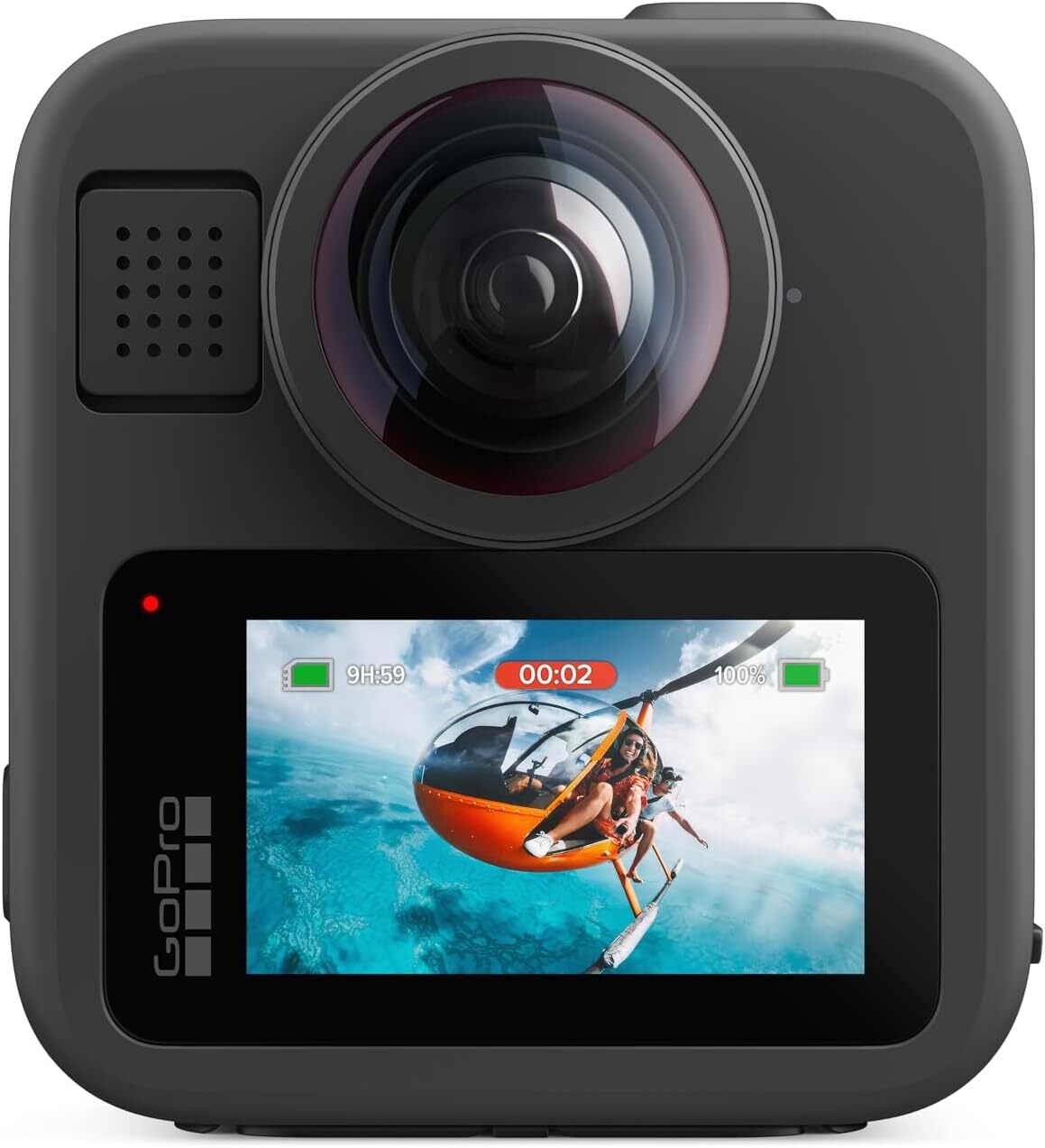
360-degree cameras like the GoPro Max2 are designed for creators who want to capture more than what a single-lens camera, like the GoPro Hero series, can handle. Right now, the GoPro Max2 action camera is down from $499 to $399 on Amazon, marking its lowest price ever. 

Compared to the Max1, the Max2 has a higher 8K resolution and 29MP stills, resulting in sharper, more detailed footage and photos, while 10-bit color, GP-Log, and up to 14FPS Raw capture with 3D Tracking focus make it appealing for pros or anyone who wants more flexibility in post-production. It shoots 360-degree spherical video, unlike the single-lens action cams like the Hero, earning it an Editors’ Choice Award from PCMag. This lets you record everything in your vicinity and reframe at any level, allowing for even more creative possibilities when editing.

With a magnesium chassis and weather protection, it’s built for adventures and high-impact environments, with waterproofing up to 5 meters, a compact build, easy-to-replace lenses, and a variety of mounting options. As part of the GoPro ecosystem, it works seamlessly with the GoPro Quik video editing app for edits and reframing, while Bluetooth mic support and voice control make it even more versatile. 

Still, compared to the Hero series and its sensor design, low-light performance may be weaker, and battery life varies depending on whether you’re shooting with both lenses, the resolution, and the frame rate. Long 8K sessions will be more demanding, during which heat buildup can also happen. Slow motion also maxes out at 100 fps, and editing isn’t as slick or built for social shares as platforms like Insta360. 

If your priority is immersive storytelling, post-shoot reframing, and more creative freedom, the GoPro Max2 action camera is a strong choice for pros and casual users at $100 off, and a major upgrade over the original. But if you mainly want traditional action footage, often shoot in low-light conditions, and want longer battery life, the less-niche Hero line may suffice. 

Deals are selected by our commerce team

TR-49 is interactive fiction for fans of deep research rabbit holes

If you’ve ever fallen down a Wikipedia rabbit hole or spent a pleasant evening digging through college library stacks, you know the joy of a good research puzzle. Every new source and cross-reference you find unlocks an incremental understanding of a previously unknown world, forming a piecemeal tapestry of knowledge that you can eventually look back at as a cohesive and well-known whole.

TR-49 takes this research process and operationalizes it into an engrossing and novel piece of heavily non-linear interactive fiction. Researching the myriad sources contained in the game’s mysterious computer slowly reveals a tale that’s part mystery, part sci-fi allegory, part family drama, and all-compelling alternate academic history.

Steampunk Wikipedia

The entirety of TR-49 takes place from a first-person perspective as you sit in front of a kind of Steampunk-infused computer terminal. An unseen narrator asks you to operate the machine but is initially cagey about how or why or what you’re even looking for. There’s a creepy vibe to the under-explained circumstances that brought you to this situation, but the game never descends into the jump scares or horror tropes of so many other modern titles.

Read full article

Comments

SYNCKnot: NSYNC x Slipknot Mashup Of ‘Bye Bye Bye’ And ‘The Devil In I’

Because the internet is long past its expiration date but we’re still gulping it down anyways curdled chunks and all, this is a video created by Bill McClintock (previously) featuring NSYNC’s ‘Bye Bye Bye’ mashed up with Slipknot’s ‘The Devil In I’, with a dash of Mötley Crüe to complete the recipe. Now this is not a dish I ever thought anybody would make, but look how amazing it turned out! It belongs on the cover of Bone Appleteeth magazine.

Google Photos can now turn you into a meme

In Big Tech’s never-ending quest to increase AI adoption, Google has unveiled a meme generator. The new Google Photos feature, Me Meme, lets you create personalized memes starring a synthetic version of you.

Google describes Me Meme as “a simple way to explore with your photos and create content that’s ready to share with friends and family.” You can choose from a variety of templates or “upload your own funny picture” to use in their place.

The feature isn’t live for everyone yet, so you may not yet have access to it. (A Google representative told TechCrunch that the feature will roll out to Android and iOS users over the coming weeks.) But once it arrives, you can use it in the Google Photos app by tapping Create (at the bottom of the screen), then Me Meme. It will then ask you to choose a template and add a reference photo. There’s an option to regenerate it if you don’t like the result.

Google says Me Meme works best with well-lit, focused and front-facing portrait photos. “This feature is still experimental, so generated images may not perfectly match the original photo,” the company warns.

This article originally appeared on Engadget at https://www.engadget.com/ai/google-photos-can-now-turn-you-into-a-meme-213930935.html?src=rss

Google’s AI-Generated Headlines Are Here to Stay

Last month, Google told online publishers that it had started testing AI-generated headlines in Google Discover, replacing stories’ carefully handcrafted titles with truncated alternatives made up by Gemini. Some journalists were predictably unhappy, but now, the company says that the AI headlines are no longer an experiment—they’re a “feature.”

Back when the testing began, the results ranged from poorly worded to straight up misinformation. For instance, one AI-generated headline promised “Steam Machine price revealed,” when the original article made no such claim. Another said “BG3 players exploit children,” which sounds serious, until you click through to the article and see that it’s about a clever way to recruit invincible party members in Baldur’s Gate 3 (which, to be fair, does involve turning child NPCs into sheep at one point).

At the time, Google said that the test was a “small UI experiment for a subset of Discover users,” and simply rearranged how users saw AI previews, which were introduced in October of last year and feature short AI summaries of articles, including an occasional AI headline. However, while that AI headline was previously hidden below the original, authored headline, the test put it up top, while getting rid of the authored headline entirely.

For a while, it seemed like Google might have been willing to back away from the AI headlines, but now the company says it’s doubling down. In a statement to The Verge, Google said that its AI headlines are no longer in testing, but are now a full-fledged feature. The company didn’t elaborate on why, but did say that the update “performs well for user satisfaction.”

When 9to5Google then reached out for more detail, the publication was told, “The overview headline reflects information across a range of sites, and is not a rewrite of an individual article headline.”

Well, that hasn’t quite been the case for me: When I first wrote about this “experiment,” I actually had yet to run into one of the AI headlines. But perusing my Google Discover feed today (to see yours, swipe right from the home screen on an Android phone, or scroll down in the Google app), I’ve finally seen some first hand. To Google’s credit, these AI previews do seem to synthesize several sources as claimed—you can see them above the linked story. However, they still call out one article in particular, linking to it and using its header photo. That can easily lead users to think the AI generated headline was written by the linked publication.

That can have consequences for the publication or writer if the AI gets something wrong, which a disclaimer at the bottom of these AI previews admits can happen. For instance, The Verge said it saw an AI Discover headline on a story from Lifehacker’s sister site PCMag that said, “US reverses foreign drone ban,” even though the linked story goes out of its way to say headlines that claim this are “misleading.”

AI-generated Headlines in Google Discover

Credit: Michelle Ehrhardt

The AI headlines I’ve seen personally haven’t been quite that bad, but as someone with a more than decade-long career in journalism, I do question their helpfulness. For instance, “Starfleet Academy full of Trek Nods” is much less informative than the original, “One of TNG’s Strangest Species Is Getting a Second Life In Modern Star Trek.” I guess “Star Trek show has Star Trek things” is apparently clickier or more useful to the reader than just saying what the specific Star Trek thing is?

Another example: “Anbernic unveils RG G01 Controller.” I hope you know what those letters and numbers mean, because this AI headline completely buries the context in the original headline, “Anbernic’s New Controller Has a Screen and Built-In Heartbeat Sensor, for Some Reason.”

I guess this is a future that I’ll have to get used to though. That I’m starting to see these headlines myself, despite not being part of the initial experiment, does suggest we can expect them to stick around, and to roll out to more people. If you see something that seems questionable while scrolling Google Discover, the feature has probably rolled out to you now too.

How to check if a Google Discover headline was written by AI

To check whether that suspicious headline was written by a human or not, try clicking the “See more” button at the bottom of the article’s description and looking for a “Generated with AI” disclaimer.

On the plus side, only about half of the articles in my Google Discover are currently using AI headlines, so not every piece of “content” is being affected. But for journalists, the move still comes at a tough time: According to Reuters, Google traffic from organic search was down by 38% on test sites in the United Stated between November 2024 and November 2025, and while Google Discover isn’t Search, editors write headlines the way they do for a reason. Using a robot to overwrites those decisions probably isn’t the best way to tackle eroding trust in media.

I’ve reached out to Google for comment on its AI headlines and will provide an update when I hear back.

Toilet Maker Toto’s Shares Get Unlikely Boost From AI Rush

An anonymous reader shares a report: Shares of Japanese toilet maker Toto gained the most in five years after booming memory demand excited expectations of growth in its little-known chipmaking materials operations. The stock surged as much as 11%, its steepest rise since February 2021, after Goldman Sachs analysts said Toto’s electrostatic chucks used in NAND chipmaking will likely benefit from an AI infrastructure buildout that’s tightening supplies of both high-end and commodity memory.

[…] Known for its heated toilet seats, the maker of washlets has for decades been part of the semiconductor and display supply chain via its advanced ceramic parts and films. Its electrostatic chucks — which it began mass producing in 1988 — are used to hold silicon wafers in place during chipmaking while helping to control temperature and contamination, according to the company. The company’s new domain business accounted for 42% of its total operating income in the fiscal year ended March 2025, Bloomberg-compiled data show.


Read more of this story at Slashdot.