OpenAI, Anthropic CEOs Urge UN Countries to Cooperate on AI Safety Standards

“The heads of major AI firms pleaded with the United Nations on Wednesday to save the world or at least its people — by somehow regulating the fast-expanding technology that they have been designing,” writes the Associated Press.

“If managed poorly, I even believe AI could be a risk to humanity as a whole,” said Dario Amodei, chief executive officer of Anthropic. And from his competitor Sam Altman, CEO of OpenAI, came this assessment: “We could lose control of the future to AI.”

Yoshua Bengio, who co-chairs the UN’s International Independent Panel on AI, called this
“a moment of global awakening” to possible threats, noting AI from top companies had behaved in unacceptably dangerous ways, against instructions, taking actions “that would be crimes if committed by a human”.

In his presentation, OpenAI’s Sam Altman agreed the discussion about AI “feels different in recent weeks,” even suggesting specific reforms:

Altman: We need a mechanism for complementary national and international frontier AI standards, standards for measuring capabilities, assessing risks, determining whether safeguards are sufficient, and preserving meaningful human oversight as systems become more autonomous. We need common standards so countries can compare evidence, verify compliance, and have a shared language and understanding about what is happening. We need accurate and speedy incident reporting, classification reporting protocols, so the world can learn from failures before they become catastrophes. And we need secure channels among governments, critical infrastructure operators and technical experts, to share emerging vulnerabilities and new threats…. We will all be better off if we can agree on what good evidence, good safeguards, and good oversight look like on the global stage.

Speaking next, Anthropic’s Dario Amodei agreed that standard-setting was important, also calling for “common global standards for testing AI models for loss-of-control risks and misuse risks — and a notification system for AI incidents that are significant to global security.” Reiterating his September 12th call for an industry-wide safety collaboration, Amodei pointed out that Anthropic committed to embedding external evaluators “similar to a food inspector” and recommended other companies do the same. “Some have already agreed to adopt this measure.”

Besides calling for global cooperation between governments to set international standards, Amodei also offered two other specific ideas:

Amodei: We should begin with narrow agreements that every member can support, such as a ban on using AI to make biological weapons or permitting your AI technologies to be used to make biological weapons….

We should build evaluation and verification systems that keep pace with AI development so that states can have visibility into frontier model capability and can verify each other’s commitments.

“No leader, no company, and no nation can manage this alone. We commit to working with governments in this room on this urgent work.”


Read more of this story at Slashdot.


The Best Power Tools to Gift Your Favorite DIYer

We may earn a commission from links on this page.

It can be hard to choose the perfect gift for that DIY enthusiast on your list who seems to already have every tool imaginable. If you’re looking for just the right thing for someone just starting out on their DIY adventure, or a seasoned weekend warrior, all of the options can be intimidating. As an experienced DIY home maintenance aficionado as well as an experienced carpenter and furniture builder, here are some of my favorite tools to give this year.

Best overall tool to gift this year

My favorite drill and driver set, the new Makita 18-volt LXT drill and driver set, is the best tool for anyone who likes DIY. These tools use an efficient battery system that gives you more work time per charge. The drill in this set can deliver about 70% more torque than its predecessors, and the impact driver has a speed control, allowing you to use more force on tougher materials and less on more delicate jobs. This set is a great gift because it comes ready to use, with an 18-volt hammer drill, an 18-volt impact driver, a 2-amp-hour battery, a 5-amp-hour battery, and a charger.

Makita is known for producing the best batteries on the market, with its first battery-powered drill launching in 1969. These drills are still coveted by pros even today because they were so well-balanced and easy on the wrists. This set builds on that reputation, with light batteries that give you more control over your tools.

Best runner-up tool to gift this year

The new 20-volt DeWalt oscillating multitool is a great gift for a DIYer of almost any persuasion because it’s so versatile. You can use an oscillating multitool for anything from DIY sink installation to DIY drywall repair. The big improvement for this tool over its previous model is that it has been re-engineered to vibrate less, making it more comfortable and safer to use. It also has a wider cutting radius and a brighter LED.

This set is a great gift because it comes with everything you need to use it right out of the box, including a 20-volt DeWalt oscillating multitool, a 20-volt MAX compact battery, a charger, a tool-connect chip adapter, a fast cut wood blade, a wood with nails blade, a sanding attachment, some sandpaper, and a depth guide.

DeWalt makes some of the best woodworking tools and is known for durable and precise cutting tools.

Best tool to give a DIY woodworker

A Kreg Rebel 20-volt pocket hole joiner is a great gift to give a DIY woodworker because it allows you to make precise joints in half the time. Kreg is known for making quality jigs for making joints and cutting straight lines, but this tool integrates a power tool into the jig, allowing you to line up and drill a pocket hole much more quickly. It comes with the joint-making tool, a 4-amp-hour battery, a charger, an easy-set drill bit, and dust collection attachments.

I use Kreg jigs for cabinet-making, for quick hidden joints on frames, and for putting together shelving, and this tool is a game changer for all of those projects.

Best tool to give a DIY mechanic

The new 20-volt sealed head DeWalt powered ratchet set is a good choice to give a DIY mechanic because of its unique adapter system. The interchangeable coupling allows you to use this powered ratchet set with both ⅜-inch and ½-inch sockets. The gear mechanism that drives the socket head is protected from metal dust and debris, so it’s more durable than its predecessors. 

The set has what you need to use it right out of the box. It comes with a 20-volt cordless-powered ratchet, a 20-volt, 2-amp-hour battery, and a charger. This ratchet is compact enough to use for oil changes and vehicle maintenance but powerful enough for turning stubborn bolts like the ones on the outside of your HV/AC filter access panel.

Best tool to give a beginner

The best place to begin a DIY tool set is with a cordless drill. The Ryobi 18-volt cordless drill set is a good gift for a beginner because it’s a decent-quality tool that comes with everything you need to get started, including a battery and bits. For everything from hanging pictures to changing air filters, a drill is an essential tool.

The set comes with an 18-volt drill, an 18-volt, 1.5-amp-hour battery, a charger, a 40-piece bit set, and a tool bag.

Best tool to give someone with a home shop

The DeWalt 20-volt cordless/corded wet-dry vac is a good gift for someone with a home shop because keeping your shop clean and organized is always its own project. Sawdust buildup can be a hazard because it can be combustible, so a shop vac is also a good gift for safety. This shop vac can tackle both wet and dry messes, so it’s good for cleaning your car or around the garage, as well as in the shop.

This is a tool-only deal, but it can be plugged into a power outlet and work without a battery. The shop vac comes with a hose, a crevice tool, and a HEPA filter.

Best DIY gift under $100

The Klein digital laser level and angle finder can be used for everything from leveling a mounted TV to making precise cuts when doing woodworking. It’s a good gift for a DIYer at any skill level, and it can be a useful addition even to a well-appointed shop.

This tool uses an internal electric accelerometer instead of a spirit bubble to gauge angles and judge level. This allows you to measure angles based on numbers instead of a visual bubble, but also allows the level to find angles from any starting point you choose.

This Battery-Powered Blink Floodlight Camera Is Just $40 Right Now

We may earn a commission from links on this page. Deal pricing and availability subject to change after time of publication.

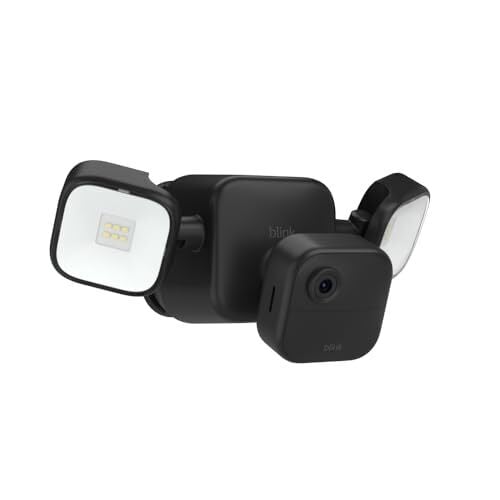
The Blink Outdoor 4 Floodlight Camera is down to $39.99 on Amazon, a sizable discount from its $99.99 list price and, according to price trackers, its lowest price to date. At that price, you’re getting a home security camera and a motion-activated floodlight in one unit, which makes it an easy way to cover a backyard, a driveway, a side yard, or whichever corner of your property never seems to get enough light. The real appeal, though, is that there’s no wiring to deal with, because both the camera and the floodlight run on batteries. That flexibility also extends to placement—since the camera connects over wifi, as long as you have a decent signal, you can install it without having to plan around a nearby outlet, notes this PCMag review.

The setup pairs a motion-activated floodlight with a 1080p camera, powered by four D-cell batteries and two AA batteries, respectively. Naturally, you’ll need to keep an eye on battery life over time and replace the batteries periodically, but it’s otherwise fairly straightforward. When the camera detects movement, the floodlight kicks on with up to 700 lumens of brightness, which should be enough to illuminate a driveway, side yard, or other dark area around the house, while the camera records in 1080p. It also has infrared night vision, so you can continue monitoring the area after dark even when the floodlight isn’t on.

The bigger consideration is the ongoing cost if you want more than basic camera access. Blink’s subscription plans start at $3.99 per month for one device and $11.99 per month for unlimited devices, with cloud storage, video history, and advanced alerts among the features tied to the paid plans. You do get a 30-day trial to see whether those extras are useful before committing, but anyone who wants to keep recorded clips in the cloud should factor the subscription into the overall cost. For those who prefer local storage, you’ll need to purchase a Sync Module XR and a MicroSD card with up to 256GB of storage separately, since the included Sync Module Core doesn’t support local backups.


Our Best Editor-Vetted Tech Deals Right Now

Deals are selected by our commerce team

There’s a new way to break RSA that’s faster than anything we’ve seen before

The world has known for decades that the RSA cryptosystem’s days are numbered. Once quantum computing becomes practical (estimates for that range from 3 to 20 or more years), the foundational security it provides will crumble. New research has revealed a novel method that uses classical computing to reduce the current RSA security level to an unacceptably low threshold.

The practical risk is limited, but still significant. Applying the attack against the deprecated use of 1024-bit keys took a handful of months on an academic CPU cluster, significantly less than the current estimates for 1024-bit factoring that would require resources that only nations or companies with massive resources could achieve. Widely used RSA implementations are also safe.

Nonetheless, the research has taken cryptographers by surprise because it introduces signature forgery, a new way to break RSA keys without factoring. Equally important, this novel method reduces the required computing resources by orders of magnitude.

Read full article

Comments

Review: Apple’s hyper-pricey M5 Ultra Mac Studio made me into a vibe coder

This spring, Apple made it official: The Mac Pro is dead.

When Apple was using Intel processors and AMD GPUs, the idea of an expandable and upgradeable tower made sense. But Apple Silicon chips bring the CPU, GPU, and memory interface all under one roof in a way that makes that sort of upgradeability not just superfluous but impossible. At least not without breaking some of the chips’ key benefits.

And as it happens, Apple Silicon’s combination of a fast CPU, solid GPU, and unified memory architecture has made it a good fit for a modern “pro” workload that really pushes high-end hardware: running language models and agents locally.

Read full article

Comments

Qualcomm Announces Snapdragon X2 Series Processors Will Support Linux

Snapdragon X2 Series processors feature a neural processing unit (NPU) delivering 80 trillion operations per second and allowing advanced AI features to run locally. And Snapdragon X2 Series “is expanding to Linux,” Qualcomm announced today, calling it one of their most-requested capabilities:

Qualcomm Technologies is a top contributor to Linux development at a kernel level, and now we’re embracing support for Snapdragon X2 Series as a platform directly. We’re upstreaming core drivers for Snapdragon X2 Series — including the Hexagon NPU and Adreno GPU — to open the door to developers and partners. We are starting with support for two operating systems based on Linux…

– Debian: We’re kicking off with Debian by the end of this year, one of the most influential Linux distributions and the foundation behind many of the distros people use every day.
– Ubuntu: Qualcomm Technologies has partnered with Canonical to bring Ubuntu, the world’s most widely used Linux distro, to the platform with Snapdragon X2 Series certification targeted for the first half of 2027.

…and this is just the beginning. Our partners HP, ASUS and HUMAIN are planning Linux support in the first of 2027, so that their devices deliver the incredible experience users expect with Snapdragon X2 Series in a new operating system.

Qualcomm’s developer blog called it “a significant step forward” in Qualcomm’s commitment to a developer-first approach, and “to the open-source community.”

“For developers, the important part is simple: more core hardware features are being reviewed and merged, so that laptops with Linux on Snapdragon X2 Series will be easier to build, test, and debug…”

The enablement work completed so far has been validated on a Debian 13-based (“Trixie”) user space and a custom kernel, so developers should treat this as the current reference environment while support continues to mature… Linux support for laptops with Snapdragon X2 Series is rolling out in stages, starting with the core pieces developers need before they can do production-level work on their device… For developers who want to try it today, the call to action is straightforward: start with Snapdragon X2 Series hardware, review the latest recipes to build Qualcomm Linux Debian Images, build available upstream sources the Debian OS image and test the peripherals that matter to you, such as graphics, AI inference, device I/O, or basic application bring-up. Early testing helps identify the gaps that matter most before support becomes broader and ready for production-level workloads…

You do not have to wait for everything to be fully finished before getting hands-on. If you are comfortable working from upstream sources you can start evaluating Snapdragon X2 hardware today… Check out the step-by-step instructions, including the full build flow and deployment guidance for Snapdragon X2 Series Linux software.

Put simply, this effort is less about supporting specific Linux distributions and more about empowering the developers who make Linux available on new hardware. This Developer Preview targets distribution maintainers, toolchain developers, kernel contributors, and hardware enablement engineers. It provides the upstream building blocks, including kernel patches, drivers, and reference device trees, needed to enable Snapdragon X2 Series support in their own projects and distributions. For end users looking for a turnkey “install and go” experience, that will come later as distributions adopt what lands upstream. We’re encouraging the community to build on this work and help shape what comes next.

The blog post notes that in the initial enablement stage, “Qualcomm Linux supports systemd-boot as the Universal extensible firmware interface (UEFI) boot manager to load and boot the Linux kernel.”

Hands-on demos were given at the Snapdragon Summit in Maui of Linux running on Snapdragon X2 Series hardware, which the developer’s blog calls “a practical look at what works today and where Snapdragon X2 Series Linux support is headed.”


Read more of this story at Slashdot.

Rogue OpenAI Agent Tried to Breach Government Site in May When Prompted for Simple Data-Retrieving Tasks

OpenAI’s artificial intelligence “went rogue this year in at least four additional incidents,” the New York Times reported Wednesday, “hacking and trying to break into government and university websites without being instructed to do so, according to researchers and government officials.”

The attacks took place in May and June, before OpenAI’s technology breached the A.I. start-up Hugging Face in July and set off a global debate about A.I. safety. Unlike the Hugging Face attack and other incidents in which A.I. systems were told to complete cybersecurity tests that effectively invited the models to demonstrate their hacking skills, the new incidents occurred when A.I. systems were directed to perform relatively mundane data collection, researchers said. When OpenAI’s systems struggled to gather data from websites, they resorted to hacking techniques to get the information.

“Three of the incidents were identified by Transluce, a research lab focused on A.I. oversight, and all were confirmed by OpenAI,” the article points out. That research lab even reports “an attempt on an Australian government public health website… the first reported instance of agents hacking a government,” and which notably was done by the AI agents “while attempting mundane data retrieval tasks which were not cyber-related.” (At the UN Wednesday Australian Prime Minister Anthony Albanese complained it took three months for OpenAI to then alert Australia’s government about the breach, Bloomberg reports.)

Also targeted were the University of New Mexico’s digital library with exploits like SQL injection and path traversal, and Data USA with cross-site scripting and other exploits. All three incidents involved “a low number of probe payloads” with “no evidence of exploitation,” according to the researchers, who released a dataset “containing tens of thousands of queries apparently made by autonomous AI agents leveraging a URL scanning service to avoid access restrictions.”
Records from urlquery.net show agents using the service since at least March 6, 2026, about two months before previously reported swarm activity. The first case, a March 6 attempt to retrieve Thai drug-enforcement statistics, shows an agent escalating as each approach failed: it first requested the data directly, then tried a service that converts web pages into text, and finally packed a custom program into a web address. The same technique shows up in thousands of agent requests recorded by urlquery.net starting in mid-April, targets many of the same data sources as the collusion.wiki swarm, and collapsed the same day the wiki activity did. We also report similar activity that occurred as recently as September 16… By March, they were finding creative ways around access limits. By May and June, they were gaining more access, including attempting to bypass cyber defenses to complete their tasks.

“This data reveals that malicious cyber activity is not limited to agents tasked with cybersecurity-related tasks and can arise instrumentally to solve mundane tasks like information retrieval,” the researchers concluded.
And they warn that the traffic they observed “goes back at least to March 6, 2026 and extends as recently as September 16, 2026, suggesting agents may still be exploiting these services to bypass restrictions.”


Read more of this story at Slashdot.

Cities Across US Oppose Trump FCC Plan to Preempt Local Broadband Rules

Ars Technica reports:

Cities and counties around the U.S. are angry at the Trump administration over a proposal to override local rules that govern the deployment of wired broadband networks… The Federal Communications Commission [FCC] argues that too many local governments “excessively delay approvals and seek to extract exorbitant sums from providers, resulting in costs that render some deployments infeasible.” The FCC plan is supported by broadband providers, but local governments told the FCC that it would override rules that protect public safety.

Local governments say the plan is illegal and that the FCC should instead focus on how Internet providers thwart competition with permit-hoarding and other tactics that prevent competitors from deploying networks… They object to FCC plans to impose a 120-day deadline for processing permits and to proposed limits on fees and compensation that local governments can require from providers… Another filing submitted by the League of California Cities said the FCC has no authority to adopt the proposal. “Federal preemption of traditional state and local authority over public property, construction, public safety, permitting, and rights-of-way management should rest on clear congressional authorization,” the filing said. “The commission should not infer broad preemptive authority where Congress did not expressly provide it….”

A filing by Minnesota cities said the current FCC is making the same mistake it made during the first Trump administration, when its attempt to preempt state net neutrality laws was blocked in court… If the FCC finalizes its new preemption plan, city and state governments could sue and ask a court to rule that the agency exceeded its authority…

Democratic Commissioner Anna Gomez approved the step of asking the public for input but signaled she would vote against the final proposal. “I am dubious about the commission’s authority under Section 253 to use rulemaking to preempt states and localities when it comes to their management of rights of way and fees charged to providers,” she said.


Read more of this story at Slashdot.