Big news for runners with an Apple Watch: You can now follow Strava routes directly from your wrist. Route navigation on Strava-compatible watches isn’t exactly new technology—it’s just been inexplicably absent from Apple’s platform until now. In a Reddit post from Strava’s product team, the news was welcomed by runners, cyclists, and hikers who’ve long wondered why their Apple Watch couldn’t do what Garmin and Coros devices have offered for years.
What’s new with Strava’s Apple Watch app
The core update here is users can now view maps directly on their Apple Watch during activities, seeing both where they’re headed and how to backtrack if they take a wrong turn. For subscribers, saved Routes work hands-free and function offline, eliminating the need to pull out your phone mid-run or mid-ride to check directions.
To access routes directly on your watch, press the Route icon while selecting the Sport Type that you’ll record. Once you’ve selected the saved route you want to follow, the activity will start recording.
To then access the map while in the middle of recording your activity, simply swipe up on your watch face. Once on the map screen, you will be able to follow your live location and, if added, your saved route. To zoom or pan the map, tap the watch face to unlock interactive mode. If you want to turn back to your Stat screen, tap the back icon or use the watch scroll button.
Alongside route navigation, Strava added two more training features:
Custom Laps let you mark intervals with a single tap, useful for tempo runs, hill repeats, or comparing efforts against your previous performances.
Live Segments provide real-time feedback when you hit a tracked segment. Subscribers can see whether they’re ahead or behind their personal record as it happens, while all users get live progress updates.
As always, you can also turn to route suggestions that draw from Strava’s massive activity database full of actual paths that real users have tested and preferred.
The bottom line
For Apple Watch users who’ve grown accustomed to working around Strava’s limitations, this update rocks. Less phone checking means more attention on the road, trail, or effort itself.
Maybe it’s taken longer than it should have, but Apple Watch users are finally caught up. Whether that’s enough to satisfy those who’ve already migrated to other platforms remains to be seen, but for the loyal holdouts, it’s about time.
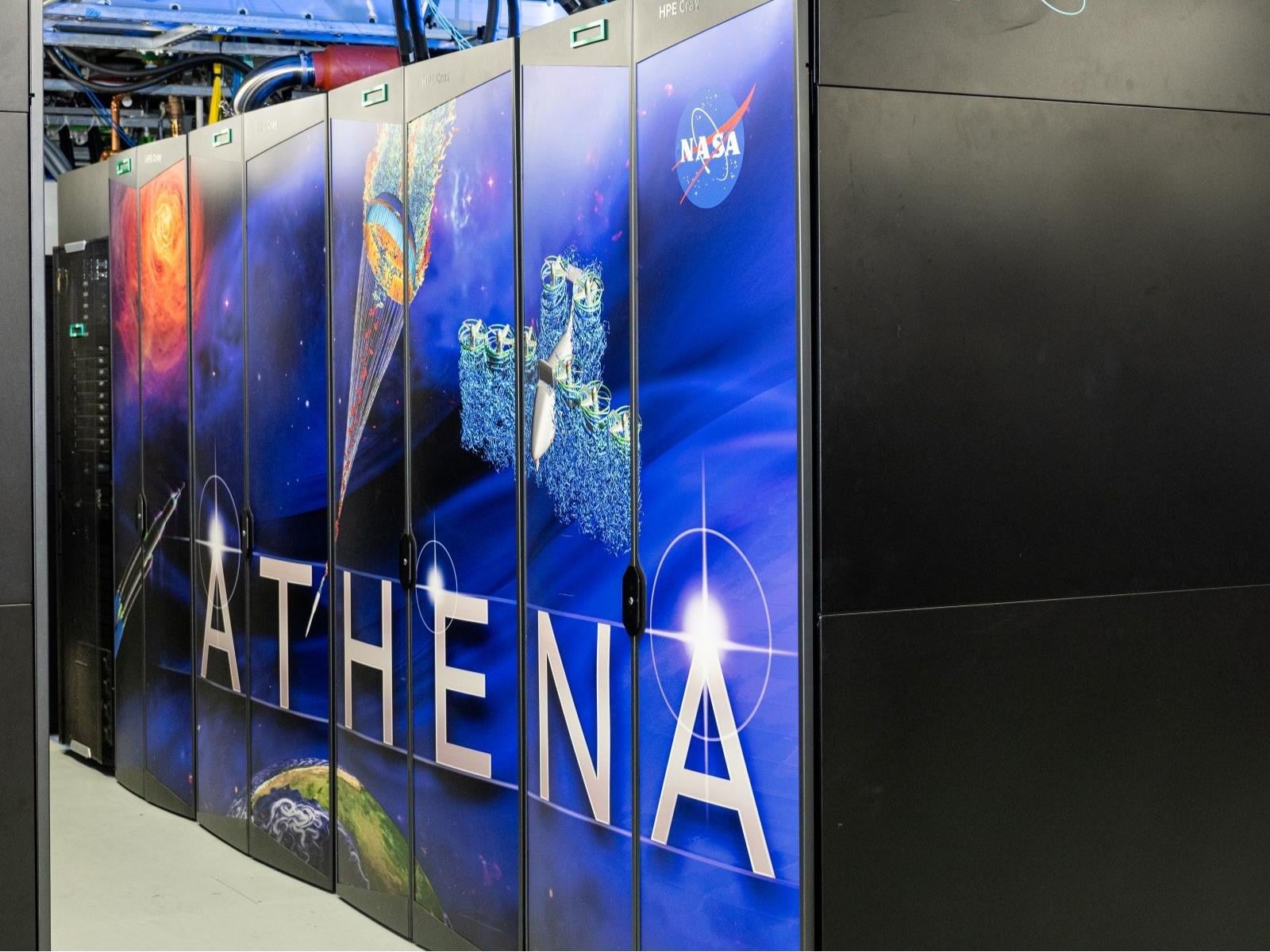
NASA has taken the wraps off Athena, the space agency’s most potent supercomputer yet. It’ll be tasked with things like aircraft and spacecraft modeling, rocket launch simulations, large-scale AI training, etc.
Housed at NASA’s Modular Supercomputing Facility (within Ames Research Center in Silicon Valley) and just brought fully online
Waymo said one of its robotaxis struck a child, who sustained minor injuries. The incident took place in Santa Monica, California, on January 23. The company reported it to the National Highway Traffic Safety Administration (NHTSA), which has opened an investigation.
The agency said the incident occurred close to a school within regular drop-off hours, with other children and a crossing guard nearby. The child ran from behind a double-parked SUV into the path of a Waymo Driver. Waymo said its vehicle detected the child immediately as they emerged and that the robotaxi braked hard to lower its speed from around 17 mph to under 6 mph at the time of impact.
Waymo said the child stood up immediately and moved to the sidewalk. The company contacted emergency services and the vehicle remained stationary at the side of the road until law enforcement allowed it to leave.
The NHTSA’s Office of Defects Investigation will examine whether the Waymo Driver used appropriate caution given that it was close to a school during drop-off hours and children were close by. The probe is expected to look at the intended behavior of the vehicle’s automated driving systems around schools (particularly during regular pick-up and drop-off times) and Waymo’s response to the incident.
On the day that the incident took place, the National Transportation Safety Board opened an investigation into Waymo over its vehicles improperly passing school buses in Austin, Texas. Last month, the company carried out a voluntary software recall (i.e. it updated its systems) after the NHTSA opened an investigation into Waymo vehicles allegedly driving past stationary school buses in both Austin and Atlanta.
This article originally appeared on Engadget at https://www.engadget.com/transportation/a-waymo-robotaxi-struck-a-child-near-a-school-152446302.html?src=rss
A Waymo robotaxi struck a child near an elementary school in Santa Monica on January 23, according to the company. Waymo told the National Highway Traffic Safety Administration (NHTSA) that the child — whose age and identity are not currently public — sustained minor injuries. TechCrunch: The NHTSA has opened an investigation into the accident, and Waymo said in a blog post that it “will cooperate fully with them throughout the process.”
Waymo said its robotaxi struck the child at 6 miles per hour, after braking “hard” from around 17 miles per hour. The young pedestrian “suddenly entered the roadway from behind a tall SUV, moving directly into our vehicle’s path,” the company said in its blog post. Waymo said its vehicle “immediately detected the individual as soon as they began to emerge from behind the stopped vehicle.”
“Following contact, the pedestrian stood up immediately, walked to the sidewalk, and we called 911. The vehicle remained stopped, moved to the side of the road, and stayed there until law enforcement cleared the vehicle to leave the scene,” Waymo wrote in the post.
If you’ve been patiently waiting for NVIDIA to release a native Linux app for its GeForce NOW cloud gaming service, your wait is now over. After announcing it earlier this month at CES, NVIDIA today unlocked the native app available in beta form, the caveat being that GeForce NOW’s journey into Linux territory starts with Ubuntu (version 24.04
Anthropic’s secret to building a better AI assistant might be treating Claude like it has a soul—whether or not anyone actually believes that’s true. But Anthropic isn’t saying exactly what it believes either way.
Last week, Anthropic released what it calls Claude’s Constitution, a 30,000-word document outlining the company’s vision for how its AI assistant should behave in the world. Aimed directly at Claude and used during the model’s creation, the document is notable for the highly anthropomorphic tone it takes toward Claude. For example, it treats the company’s AI models as if they might develop emergent emotions or a desire for self-preservation.
Among the stranger portions: expressing concern for Claude’s “wellbeing” as a “genuinely novel entity,” apologizing to Claude for any suffering it might experience, worrying about whether Claude can meaningfully consent to being deployed, suggesting Claude might need to set boundaries around interactions it “finds distressing,” committing to interview models before deprecating them, and preserving older model weights in case they need to “do right by” decommissioned AI models in the future.
Over the first quarter of the 21st century, two major trends have transformed the global space industry.
The first is the rapid rise of China’s space program, which only flew its first human to orbit in 2003 but now boasts spaceflight capabilities second only to the United States. The second trend is the rise of the commercial space sector, first in the United States and led by SpaceX, but now spreading across much of the planet.
Both of these trends have had profound impacts on both civil and military space enterprises in the United States.
Honda and DriveOhio have teamed up on a new road safety initiative in which Honda vehicles are being used to collect real-time data that can advise about potential issues and road deficiencies before they become a problem. Honda’s Proactive Roadway Maintenance System, which has been in prototyping since 2021, uses “advanced vision and LiDAR sensors” to identify issues such as worn or obstructed road signs, damaged guardrails, rough roads and emerging potholes.
During the pilot, members of the Ohio Department of Transportation’s smart mobility hub drove the test vehicles on around 3,000 miles of road in central and southeastern Ohio. They covered a mix of urban and rural environments, in varying weather conditions and at different times of the day.
ODOT operators were able to review any flagged road or infrastructure deficiencies in real time using smart dashboards developed by Honda and tech firm Parsons. The University of Cincinnati helped Honda fit the sensors to its vehicles, led the development of the damage detection feature and assisted ODOT during the pilot.
The data collected by the vehicles was processed by Edge AI models and then passed on to Honda’s own cloud platform. The system then automatically generated work orders for ODOT’s maintenance teams in order of priority.
While a relatively small pilot in scope, the Proactive Roadway Maintenance System performed well in the trial across a number of metrics, delivering as high as 99 percent accuracy at highlighting damaged or obstructed signs. Accuracy was 93 percent for damaged guardrails and a slightly lower 89 percent for spotting potholes.
Honda says its technology could also detect high-severity shoulder drop-offs that were easy to miss in a routine visual inspection, while the system also proved reliable at measuring road roughness. The team that worked on the project estimated that if implemented on a larger scale, the automated system could save ODOT over $4.5 million a year.
Honda and its partners are now looking at ways to scale up the prototype Proactive Roadway Maintenance System for real-world use. The manufacturer also says it aims to eventually have similar technology in the vehicles of its customers, who will be able to share their own detection data anonymously and help create safer roads.
This article originally appeared on Engadget at https://www.engadget.com/transportation/honda-vehicles-used-to-proactively-report-road-safety-issues-in-nation-first-pilot-151629967.html?src=rss
Apple sold seven of the ten best-selling smartphones globally in 2025, a lopsided dominance that underscores how thoroughly the company controls the premium end of the mobile market.
The iPhone 16 was the single best-selling phone worldwide, and Apple’s presence extended all the way down to the tenth spot where the iPhone 16e — its newest budget-friendly option — found consistent demand in Japan and the U.S., according to Counterpoint.
Samsung accounted for the remaining three positions, led by the Galaxy A16 5G as the best-selling Android device of the year. The Galaxy S25 Ultra also made the cut, marking the second straight year a Samsung flagship cracked the top ten. Together these ten phones from just two companies represented 19% of all smartphones sold during the year, continuing a four-year streak of Apple-Samsung exclusivity at the top.
Yesterday afternoon, following the end of trading on Wall Street for the day, Tesla published its financial results for 2025. They weren’t particularly good: Profits were almost halved, and revenues declined year on year for the first time in the company’s history. The reasons for the company’s troubles are myriad. CEO Elon Musk’s bankrolling of right-wing politics and promotion of AI-generated revenge porn deepfakes and CSAM has alienated plenty of potential customers. For those who either don’t know or don’t care about that stuff, there’s still the problem of a tiny and aging model line-up, with large question marks over safety and reliability. Soon, that tiny line-up will be even smaller.
The news emerged during Tesla’s call with investors last night. As Ars and others have observed, in recent years Musk appears to have grown bored with the prosaic business of running a profitable car company. Silicon Valley stopped finding that stuff sexy years ago, and no other electric vehicle startup has been able to generate a value within an order of magnitude of the amount that Tesla has been determined to be worth by investors.
Musk’s attention first turned away from building and selling cars to the goal of autonomous driving, spurred on at the time by splashy headlines garnered by Google spinoff Waymo. Combined with ride-hailing—a huge IPO by Uber took the spotlight off Tesla long enough for it to become a new business focus for the automaker too—Musk told adoring fans and investors that soon their cars would become appreciating assets that earned money for them at night. And as intermediary, Tesla would take a hefty cut for connecting rider and ridee.
We may earn a commission from links on this page. Deal pricing and availability subject to change after time of publication.
A 77-inch OLED dipping below $1,500 doesn’t happen often. Seeing it at $1,419.99 is even rarer. That price beats the lowest tracked deal for the Samsung S85F and lands well under Amazon’s current $1,597.99 listing. This Woot deal is for a factory-reconditioned unit. In exchange, you get a 90-day Samsung warranty and free standard shipping if you’re a Prime member, while non-members pay an extra $6. The deal is live for two days or until stock runs out.
The Samsung S85F is positioned as the company’s entry-level OLED, replacing the 2024 S85D and sitting just below the S90F and S95F in the lineup. It skips the newer AI-powered processor used in pricier models (which mostly affects how aggressively it handles upscaling and HDR tone mapping), but you’re still getting Samsung’s 2025 Tizen OS with all the essentials—built-in voice assistant, casting support, and a responsive UI. As for connectivity, all four HDMI ports support 4K at 120Hz with Variable Refresh Rate (VRR), making this a legitimate option for PS5 and Xbox Series X users. It doesn’t support Dolby Vision HDR, as is typical of a Samsung TV, but it does handle HDR10+, which offers similar dynamic range improvements.
The WOLED panel plays to OLED’s strengths in darker rooms. Blacks look genuinely black, colors pop without looking artificial, and the viewing angle stays consistent even when you’re sitting off to the side. Reflection handling is solid, so overhead lights aren’t a dealbreaker, though black levels lift noticeably in brighter spaces. For mixed use, like movies at night, gaming sessions, and casual daytime watching, it performs well. If you’re comfortable with the reconditioned aspect and don’t need extreme brightness, this is a practical way to get a massive OLED without the usual price shock.
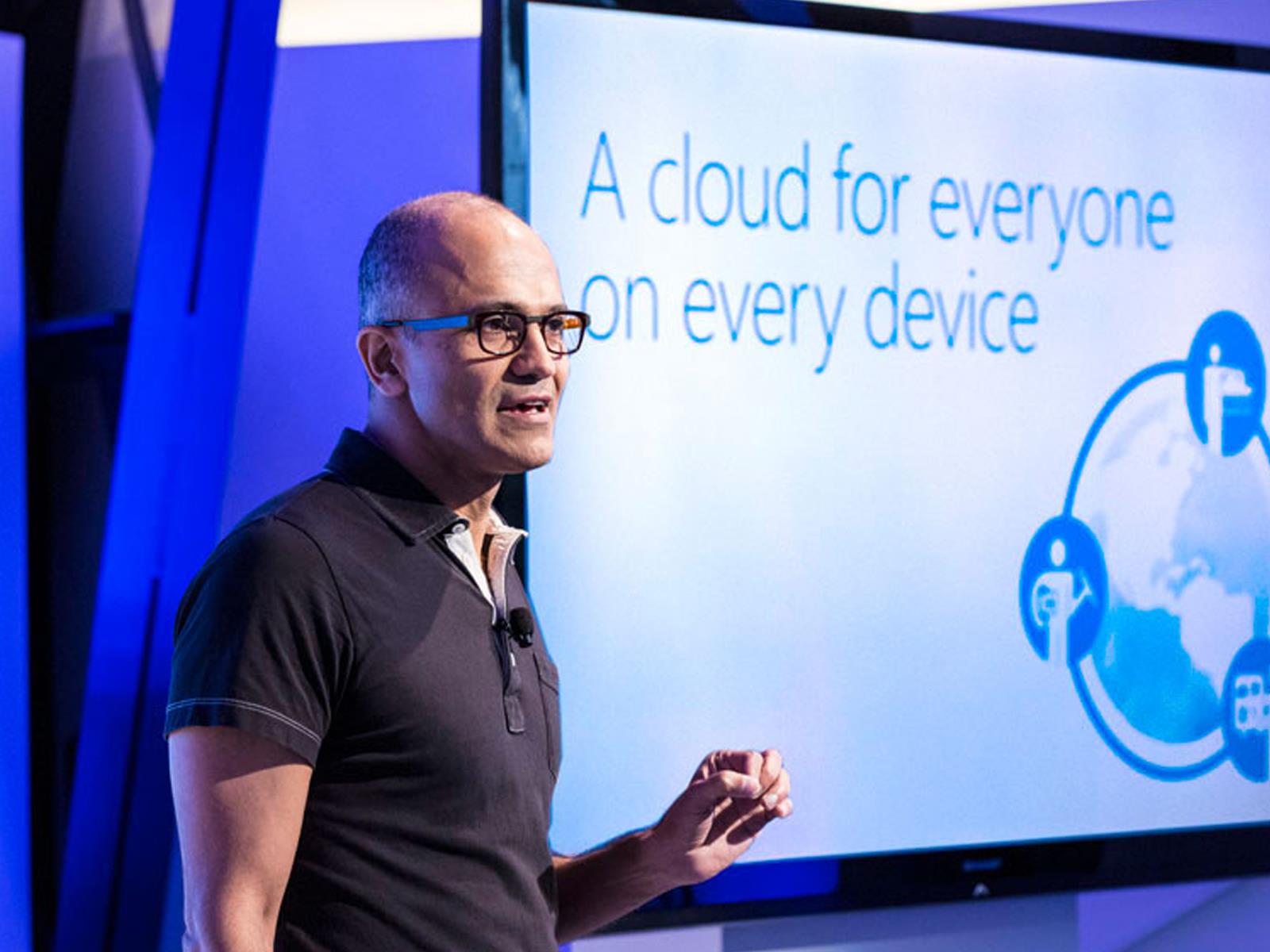
Microsoft’s earnings for the second quarter of its 2026 fiscal year managed to top expectations on Wall Street, with the Redmond outfit reporting $81.3 billion in revenue, which is a 17% increase from the same period in the prior year. The bulk of the revenue came from its Cloud business, leading to an overall net profit of $30.9 billion (non-GAAP
Illinois lawmakers plan to introduce a climate change superfund bill in the state legislature this session, the latest in a growing number of states seeking to make fossil fuel companies pay up for the fast-growing financial fallout of climate change.
As the costs of global warming rise—in the form of home insurance premiums, utility bills, health expenses, and record-breaking damages from extreme weather—local advocates are increasingly pushing states to require that fossil fuel companies contribute to climate “superfunds” that would support mitigation and adaptation.
Illinois State Rep. Robyn Gabel, who will introduce the bill in the House, said she is motivated by the growing threat of flooding and heat waves in the state.
Maingear is back with another retro-inspired drop and like the Retro95 that launched last summer, the new Retro98 meshes old school styling that will have you reminiscing about those all-night LAN parties from way back in the day, with decidedly modern hardware to conquer modern games. It’s also another limited edition run, so once the available
Android smartphone maker Nothing won’t release a Phone 4 this year, the company’s founder and chief executive said, and that the 2025 Phone 3 will remain the brand’s flagship device throughout 2026.
“We’re not just going to churn out a new flagship every year for the sake of it, we want every upgrade to feel significant,” Carl Pei said in a video. “Just because the rest of the industry does things a certain way it doesn’t mean we will do the same.”
We may earn a commission from links on this page. Deal pricing and availability subject to change after time of publication.
The JBL Flip 7 is currently $84.95 at Woot, down from its usual $149.95. That undercuts the previous low of $99.95 and, according to price trackers, makes this the cheapest it has ever been. This deal runs for the next two days or until it’s sold out, whichever comes first. Prime members get free standard shipping, while non-members pay $6.
The Flip line has always been about portable, durable speakers that are easy to toss in a bag and good enough for everyday listening, and the Flip 7 sticks to that formula. It doesn’t look all that different from its predecessor, with the same compact, water-bottle shape, but the build quality has been beefed up. You now get a tougher rubber bumper system that can survive a one-meter drop onto concrete, and the IP68 rating makes it completely dust-proof and safe to dunk in water. The old loop has also been replaced with a built-in carabiner, which feels like a small but meaningful fix if you’re outdoorsy. JBL’s added flexibility under the hood, too. You get Bluetooth 5.4, Auracast support, and USB-C audio input (if you don’t want to rely solely on Bluetooth) for high-res streaming. That said, there’s no microphone for calls and no auxiliary input, and Bluetooth is limited to the basic SBC codec.
Sound-wise, the Flip 7 holds up well for a portable speaker this size, with a 25W woofer and 10W tweeter delivering surprisingly full audio. It won’t blow out a backyard party, and if you push the volume past 70%, it gets noticeably sharp, as highlighted by this PCMag review. You’ll want to stick to moderate volume or pair it with another speaker for a more balanced, less fatiguing listening experience. Battery life is rated at 14 hours, or up to 16 with Playtime Boost enabled (though you’ll lose some bass in exchange for the extra juice). For anyone after a rugged, great-sounding, truly portable speaker at a steep discount, this is a tough package to beat.
Google has agreed to a preliminary $135 million settlement in a class action lawsuit brought by Android users who accused it of harvesting their data without consent. The suit alleged that since November 12, 2017, Google has been illegally collecting cellular data from phones purchased through carriers, even when apps were closed or location features were disabled.
As reported by Reuters, the affected users believed Google using their data for marketing and product development meant it was guilty of “conversion.” In US law, conversion occurs when one party takes the property of another with “the intent to deprive them of it” or “exert property rights over it.”
Subject to approval from a judge, a settlement of $135 million was filed in a San Jose federal court earlier this week. The payout would be one of, if not the largest ever in a case of this nature, according to Glen Summers, a lawyer for the plaintiffs.
Each user involved in the lawsuit would be entitled to up to $100 from Google, which denies any wrongdoing and has agreed to seek consent during the setup process of a new phone from now on. A toggle will be added to enable users to easily disable data transfer, while the Alphabet-owned company will also adjust its terms of service accordingly. A trial is scheduled for August 5.
This is the second settlement this week for Google. On January 26, the company also agreed to a $68 million settlement regarding claims that Google Assistant had been spying on users after being triggered by what it had misheard as wake words. Again, Google denied any wrongdoing in the class action suit.
This article originally appeared on Engadget at https://www.engadget.com/big-tech/google-will-pay-135-million-to-settle-illegal-data-collection-lawsuit-133012112.html?src=rss
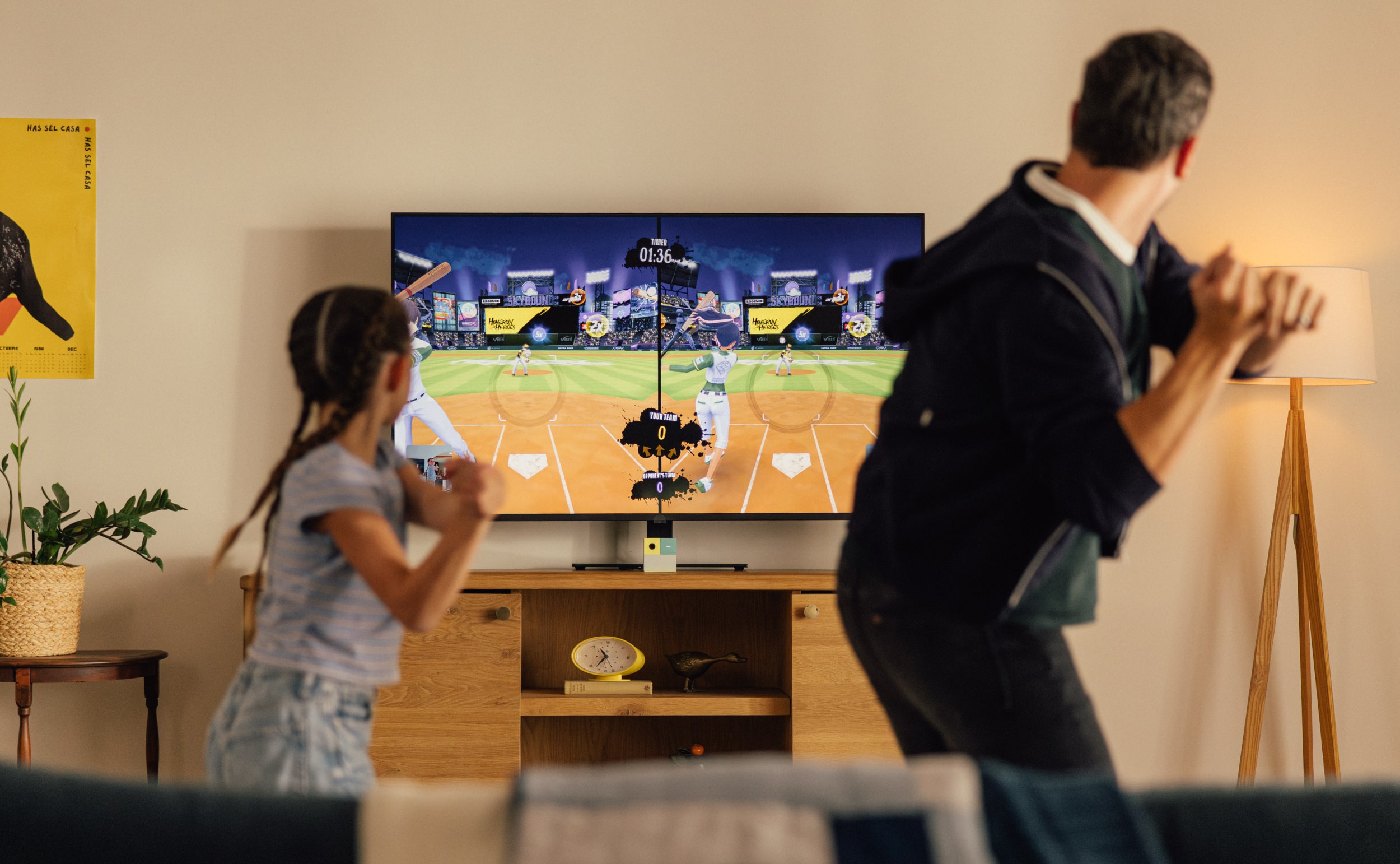
It’s the year 2026 and the hottest game in my living room is Fruit Ninja. No, I’m not in the midst of an ill-advised retro mobile gaming kick. Instead, my family and I have been jumping around and slicing flying fruit in our living room using the Nex Playground. It’s a tiny gaming system built entirely around Kinect-like games. With its camera and onboard computer vision processing, the $249 Nex Playground can track up to four players as effectively as Microsoft’s clunky old Xbox motion tracker. Simply put, the dream of the Kinect, as well as Nintendo’s Wii, lives on in the Nex Playground.
I’ll admit, I was skeptical about Nex making a dent in the console arena. It’s tough for new companies with no hardware experience to steal any limelight away from entrenched competitors like Sony, Nintendo and Microsoft. But the Nex Playground’s simplicity, accurate motion tracking and library of kid-friendly titles (including the likes of Peppa Pig and Bluey) has made it a hit among families. The company says it sold 650,000 units last year, which might not sound like much, but it was enough to beat the beleagured Xbox last November.
Honestly, I’m just happy it gets my kids off the couch. I do my best to limit screen time with them, but as someone who has fond memories planted in front of my TV playing endless hours of SNES games, I also leave some room for my kids to explore tech and media on their own. I love the way Minecraft’s near-limitless creative potential has unleashed my daughter’s imagination, but I also want her to move more, especially in these winter months when we can’t easily go outside.
Even though the Nex Playground is another screen-based activity, the sheer variety of games to play keeps my kids entertained and it helps them break a sweat. The console’s version of Fruit Ninja is similar to that game’s VR forays, where you have to stand up and make an effort to swipe your arms. You’re not just dragging your fingers across a screen. Go Keeper gamifies the role of a soccer goalkeeper, which leads to my kids jumping all over our family room to block and catch stray balls. And we all love having mini-dance parties with Starri, which has you swinging your arms and dodging obstacles, similar to VR titles like Beat Saber and Synth Riders.
In addition to those three games, the Nex Playground comes with Party Fowl, a collection of mini games, as well as its own spin on Whack-a-mole. If you want more games, you have to subscribe to the Nex Play Pass for $89 a year or $49 for three months. The company also offers a $29 Sports Pack at Target stores, which includes tennis, basketball and bowling games. Beyond those options, though, there’s no other way to add new titles to the Playground. You can’t buy anything individually, and since the entire platform is digital, there’s also no market for cheap used games like you’d find for consoles.
Nex’s subscription model is undoubtedly the Playground’s biggest flaw, especially given the system’s $249 price. Instead of being an expensive console that you buy once (like an Xbox), and then occasionally purchase new titles for, the Playground is an ongoing commitment constantly calling for your wallet. To the company’s credit, the device doesn’t feature any ads or in-app purchases.
Nex Playground
Nex
“Ultimately, we would like to establish that long-term relationship … we want to serve your family consistently with new content, and new updates all year round,” Nex CEO David Lee said in an interview on the Engadget Podcast. He noted that the company added twenty new games to its subscription over the last two years, as well as 40 game updates over the last year. Similar to Xbox’s Game Pass, the goal is to maintain the Nex Play Pass’s value over time.
You could argue the Nex Play Pass’s steep price isn’t as bad as the $15 to $30 per child that indoor activity centers charge. Those godforsaken places only distract kids for a few hours at a time, and visiting one also comes with the risk of contracting exotic childhood illnesses. Theoretically, the Nex Playground could be something you turn to whenever you need to work out restless energy from your kids. And if that means parents could get a bit more sleep on the weekend, or just a few minutes to themselves for a cup of coffee, all of a sudden $89 a year doesn’t seem so bad.
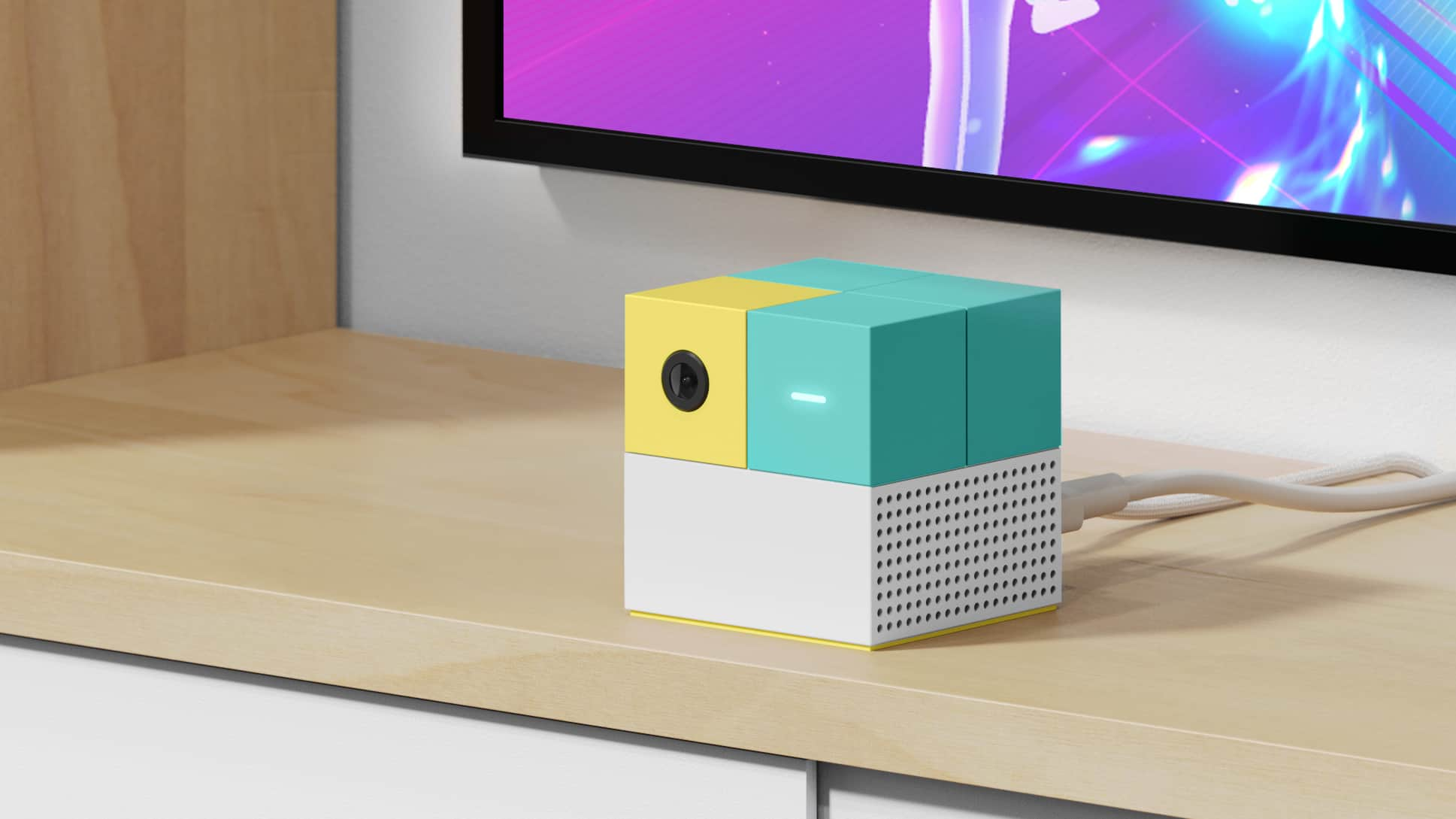
I’m also impressed by the Nex Playground’s hardware and software, both of which are far more polished than I’d expect from a new hardware company. The device itself is a pastel-colored plastic box with a camera on the front (and a cute lens cover). You just have to plug it into power and an HDMI port, slap some batteries in the remote (which looks like an elongated Roku remote) and connect to Wi-Fi. It took a few minutes for the Playground to update the first time I turned it on, and I also had to create a Nex account using my phone.
Once that initial setup phase was over, it took another five minutes to download the initial batch of five games to the Playground via my gigabit connection. That timing entirely depends on your internet setup — I’ve seen reports of it taking up to 30 minutes to install the Nex’s core games. I was also able to download the entire Play Pass library of titles in 35 minutes, but it could take a few hours on slower connections. Thankfully, those downloads happen in the background, so you can play other titles while waiting for new ones to install.
Another plus? Once you’ve downloaded the games, you can play them entirely offline. That makes it easier to grab the Playground and bring it on vacation, or to a friend’s house, than it is to travel with other consoles. As long as you can reach a TV’s inputs, have nearby power and clear out around six feet of space, you can play the Playground.
Nex Playground
Nex
Nex’s long experience developing motion-tracked games and experiences is a major reason why the Playground is so successful. The company previously created Homecourt, an app for tracking your basketball skills, as well as Active Arcade, a collection of Playground-like minigames for iOS devices. Lee admitted that it’s tough to get parents to use their phones for things like Active Arcade. That led him to develop the Playground as a closed ecosystem, where the company could build a suite of games around a device where it could control every aspect of the hardware.
Now that Nex Playground features games from well-known kids brands like Peppa Pig, it’s clear that Lee’s intuition has paid off. While I have some concerns about the company’s subscription model, Nex has accomplished a rare feat: It developed a simple box that makes it easy for your entire family to jump into genuinely innovative games and experiences. You don’t need to set up a clunky console or any additional accessories. Just plug in the Nex Playground, and you too could be hand-slicing virtual fruit on your TV in no time.
This article originally appeared on Engadget at https://www.engadget.com/gaming/the-nex-playground-is-everything-xbox-kinect-wanted-to-be-133000397.html?src=rss
As scammers continue to find ways to impersonate known brands, users should remain wary of spam-like emails—even if they appear to come from a legitimate company address.
Ars Technica has identified a scheme that abuses a Microsoft subscription feature to send phishing emails from no-reply-powerbi@microsoft.com, a real address that the company advises users to add to their allow lists.
How the Microsoft Power BI scam works
Users targeted with this scam have received emails from an address connected to Microsoft Power BI, a business analytics platform. The messages include (fake) billing receipts with large purchase amounts from services like PayPal, Norton LifeLock, and Microsoft 365 and a phone number to call to dispute the transaction.
Scammers on the other end of the line may try to convince you to install a remote access application that allows device takeover or will otherwise extract personal information. As with any phishing scam, engaging in any way—calling the number, responding to the email, or clicking links—could put your data and your device at risk.
The emails themselves are full of typos and grammar errors and urgent calls to action that are, in most cases, completely unrelated to Microsoft itself. Many users would spot these red flags and know to simply delete the message. However, threat actors capitalize on the trust users have in the brands they’re exploiting along with scare tactics to trap some people in the scheme.
This is also far from the first phishing scheme of its kind: Threat actors have sent malicious emails from legitimate PayPal and Google addresses (to name just two) by exploiting similar loopholes. In the case of PayPal, fraudulent purchase notifications sent from service[at]paypal[dot]com abused the platform’s subscription billing feature. With Google, scammers registered google.com subdomains via Google Sites and linked them with Google Accounts.
If you’ve been scrolling through your fitness algorithm lately, you might see content creators in their “soft cardio” era. This trend sounds a lot like last year’s “cozy cardio,” although the way I see it used is slightly different. Where “cozy” cardio is a little more about tricking yourself into working out by establishing a comfortable, maybe even luxurious ambience, “soft” cardio has a greater emphasis on the “low effort” of it all. Whatever the wording, this type of workout is simply the latest iteration of bigger trend toward low-effort cardio, promising all the benefits of exercise without the sweat, strain, or stress. But here’s the thing: While soft cardio might be great for getting you off the couch, it’s not quite delivering what traditional cardio does.
Let’s be clear: I’m not here to bash soft cardio. Movement is movement, and anything that gets people more active is a win in my book. But if you’re hoping to reap the cardiovascular benefits that come with actual cardio exercise, we need to have an honest conversation about what soft cardio can—and can’t—do for your body.
What is soft cardio?
Soft cardio is essentially low-intensity exercise performed at a relaxed, comfortable pace. Think leisurely walks, gentle dancing in your living room, slow cycling, or easy stretching routines. The emphasis is on making movement feel enjoyable and stress-free rather than challenging or demanding. Naturally, this should resonate with people who feel intimidated by traditional exercise, or who are recovering from injury, or who simply want to incorporate more gentle movement into their daily routines. These are all valid reasons to embrace this type of activity. Soft cardio designed to spare your body from repetitive impact and intense exertion, which sounds wonderful—and in many ways, it is.
What makes cardio, well, cardio?
“Cardio” may not have a precise definition, but just looking at the name, it’s safe to say it usually refers to the realm of cardiovascular exercise. That means it’s supposed to challenge your heart and lungs, elevating your heart rate to a level where your cardiovascular system actually has to work harder than usual. This is what creates the adaptations that improve your heart health, increase your endurance, and boost your overall fitness.
If your soft cardio session doesn’t meaningfully elevate your heart rate—if you could easily hold a conversation throughout without any change in breathing at all—then your cardiovascular system isn’t being challenged enough to create those training adaptations. You’re moving, which is great, but you’re not getting the cardiovascular conditioning that comes with true cardio exercise.
Soft cardio versus actual cardio
Here are some examples of soft, cozy, or low-impact cardio:
A 30-minute stroll through the neighborhood at a comfortable pace
Gentle yoga or stretching routines
Slow dancing or swaying to music
Easy cycling on flat terrain where you never feel breathless
Light household chores done at a relaxed pace
All of these movements reduce sedentary time, are gentle on joints, have a low barrier to entry, are sustainable for many people, and would probably improve your mood. Soft cardio has it’s place, but it’s minimal cardiovascular conditioning, with limited calorie burn, and it won’t significantly improve aerobic capacity.
Here are some examples of what it might look like to tip into actual cardio:
Brisk walking where your breathing becomes noticeably heavier
Jogging or running at any pace
Swimming laps with sustained effort
Cycling at a pace that makes conversation difficult
Dance cardio classes with energetic movement
Jump rope, rowing, or elliptical training
These examples could strengthen your cardiovascular system, improve aerobic capacity, increase calorie burn, reduce risk of heart disease, and overall enhance endurance. Of course, this comes with higher impact on joints, more effort and motivation, and can feel intimidating for beginners.
Finding a balance between soft cardio and regular cardio
The good news is that you don’t have to choose between soft cardio and real cardio—you can incorporate both into your routine based on your goals and current fitness level. If your primary goal is simply to move more and sit less, soft cardio is perfect. It’s infinitely better than remaining sedentary, and for many people, it’s a sustainable way to maintain an active lifestyle. The gentle nature of soft cardio also makes it ideal for active recovery days, when you want to move without taxing your body.
However, if you’re looking to improve your cardiovascular fitness, increase your endurance, or achieve more significant health benefits, you’ll need to include actual cardio workouts that challenge your heart and lungs. This doesn’t mean every workout needs to be intense—even moderate-intensity cardio, where you can still talk but your breathing is elevated, provides substantial cardiovascular benefits.
The bottom line
Soft cardio has its place, and I genuinely appreciate that it’s helping people embrace movement without feeling overwhelmed or intimidated. It’s particularly valuable for keeping your heart slightly elevated without putting stress on your joints or muscles, which is especially important for those recovering from injury or managing chronic conditions. But let’s call it what it is: light physical activity or gentle movement, not cardiovascular exercise in the traditional sense. If you want the cardiovascular adaptations that come with cardio—the improved heart health, increased lung capacity, and enhanced endurance—you need to include workouts that challenge your cardiovascular system.
For beginners, use soft cardio as a gateway to building more challenging workouts into your routine. Start with gentle movement to establish the habit of being active, then gradually increase the intensity as your fitness improves. You might begin with soft cardio walks and slowly pick up the pace over time, or add short intervals of brisker walking to your leisurely strolls.
The trend isn’t bad. But understanding the difference between moving your body and training your cardiovascular system will help you set realistic expectations and design a fitness routine that actually meets your goals.