Why Private Equity Is Suddenly Awash With Zombie Firms

The private equity industry is experiencing a quiet reckoning as hundreds of midsize firms find themselves trapped between investors who have lost patience and portfolios of companies they cannot sell at acceptable prices.

“There is existential risk for a number [of funds] because of the fundraising environment,” said Sunaina Sinha Haldea, global head of private capital advisory at Raymond James. “If existing investors don’t come and support them, new investors are highly unlikely to.”

According to data from Preqin, the average buyout fund that closed in 2025 spent 23 months fundraising, up from 16 months in 2021, and the total number of funds raised fell to 1,191 from 2,679 over the same period. New York’s Vestar Capital scrapped plans for its eighth fund in late 2024 and has not invested in a new portfolio company since 2023. The firm’s assets under management dropped from $7 billion fifteen years ago to $3.3 billion in 2024.

Three-year annualized returns through June 2025 for the Cambridge Associates U.S. Private Equity Index stand at 7.4%, trailing the MSCI World stock index by 11 percentage points annually. The average holding period for buyout deals has stretched to 6.3 years from 5.1 years in 2020. Blue-chip megafunds continue raising capital normally, but smaller firms face existential pressure.


Read more of this story at Slashdot.

Google’s Project Genie lets you generate your own interactive worlds

This past summer, Google DeepMind debuted Genie 3. It’s what’s known as a world world, an AI system capable of generating images and reacting as the user moves through the environment the software is simulating. At the time, DeepMind positioned Genie 3 as a tool for training AI agents. Now, it’s making the model available to people outside of Google to try with Project Genie.

To start, you’ll need Google’s $250 per month AI Ultra plan to check out Project Genie. You’ll also need to live in the US and be 18 years or older. At launch, Project Genie offers three different modes of interaction: World Sketching, exploration and remixing. The first sees Google’s Nano Banana Pro model generating the source image Genie 3 will use to create the world you will later explore. At this stage, you can describe your character, define the camera perspective — be it first-person, third-person or isometric — and how you want to explore the world Genie 3 is about to generate. Before you can jump into the model’s creation, Nano Banana Pro will “sketch” what you’re about to see so you can make tweaks. It’s also possible to write your own prompts for worlds others have used Genie to generate.

One thing to keep in mind is that Genie 3 is not a game engine. While its outputs can look game-like, and it can simulate physical interactions, there aren’t traditional game mechanics here. Generations are also limited to 60 seconds, as is the presentation, which is capped at 24 frames per second and 720p. Still, if you’re an AI Ultra subscriber, this is a cool opportunity to see the bleeding edge of what DeepMind has been working over the past couple of years.

This article originally appeared on Engadget at https://www.engadget.com/ai/googles-project-genie-lets-you-generate-your-own-interactive-worlds-183646186.html?src=rss

County pays $600,000 to pentesters it arrested for assessing courthouse security

Two security professionals who were arrested in 2019 after performing an authorized security assessment of a county courthouse in Iowa will receive $600,000 to settle a lawsuit they brought alleging wrongful arrest and defamation.

The case was brought by Gary DeMercurio and Justin Wynn, two penetration testers who at the time were employed by Colorado-based security firm Coalfire Labs. The men had written authorization from the Iowa Judicial Branch to conduct “red-team” exercises, meaning attempted security breaches that mimic techniques used by criminal hackers or burglars.

The objective of such exercises is to test the resilience of existing defenses using the types of real-world attacks the defenses are designed to repel. The rules of engagement for this exercise explicitly permitted “physical attacks,” including “lockpicking,” against judicial branch buildings so long as they didn’t cause significant damage.

Read full article

Comments

15 Shows Like ‘Euphoria’ You Should Watch Next

We may earn a commission from links on this page.

Zendaya is busy. Euphoria, which she produces in addition to starring in, is finally set to return for its third season on April 12, four years after our last visit to East Highland, and nearly seven since it premiered.

As frustrating as these between-season breaks can be, they leave plenty of time to explore other tales of the wild lives of high schoolers. It’s all relative, though: While growing up in never a picnic, there’s drama, and then there’s drama. These 15 streamalikes vary widely in tone and style, but they all make clear that being a young person in the 21st century is not f*cking easy. Stream the first two seasons of Euphoria on HBO Max.

The Sex Lives of College Girls (2021 – 2025)

Kimberly (Pauline Chalamet) is an endlessly naïve scholarship student; Bela (Amrit Kaur) is an aspiring comedy writer on the make for the hottest guys; Whitney (Alyah Chanelle Scott) is an overachieving athlete and senator’s daughter;and Leighton (Reneé Rapp) is a closeted sorority girl. They’re all randomly assigned to room together as freshmen at the fictional Essex College in Vermont. Created by Mindy Kaling and Justin Noble, this comedy-drama isn’t nearly as salacious as its title suggests. There’s sex for sure, but like Sex and the City before it, the funny, queer-friendly show is more about female friendship. Stream The Sex Lives of College Girls on HBO Max.


My Mad Fat Diary (2013 – 2015)

Period drama is having a moment, and this one goes way, way back…to the 1990s. This British comedy-drama stars the brilliant Sharon Rooney (you might know her as Lawyer Barbie) as Rae Earl, a 16-year-old who just spent several months in a psychiatric hospital for a cocktail of mental health issues, poor body image being near the top of that list. Heading back to school, she tries to conceal the truth of her absence and ongoing challenges—with expectedly mixed results. Despite the show’s comedy elements, it’s about as good a narrative about growing up with serious mental health issues as you’re likely to find. Rooney won a well-deserved Best Actress BAFTA for her performance. Stream My Mad Fat Diary on Prime Video, Hulu, and Tubi.


Boarders (2024 – )

This British import feels a bit like a latter-day Skins, featuring a scholastic setting and a talented cast of young stars-in-waiting (including leads Josh Tedeku and Jodie Campbell). At the (fictional) prestigious boarding school St. Gilbert’s, five Black teens are newly attending on scholarships, but their integration into the existing cliques is less than smooth. The blend of coming-of-age drama with a willingness to take the piss when it comes to the whole “rich private school thing” makes this Tubi original a smashing good time. Stream Boarders on Tubi.


Gossip Girl (2007 – 2012)

Teen drama at its finest and most bitchy, Gossip Girl follows the many scandals of a group of young Upper East Side socialites and hangers-on. The tangled teenage lives of Serena van der Woodsen (Blake Lively), her best frenemy Blair Waldorf (Leighton Meester), scholarship kid Dan Humphrey (Penn Badgley), and plenty more pretty young boys and girls are chronicled in meticulous detail by the title’s mysterious, omnipresent Gossip Girl (voiced by Kristen Bell). This one shares with Emily an impeccable sense of style, as its leads never miss a fashion beat. It all seems a bit tame when help up to Euphoria, but the show carved a path nonetheless, scandalizing parents in the mid-aughts. (The two-season 2021 follow-up is also available on HBO Max.) Stream Gossip Girl on HBO Max and Netflix.


Prisma (2022 – 2024)

Andrea and Marco are twin brothers (both played by Mattia Carrano) with a broad circle of friends living in modern day Italy. Marco has a history of self-harm that impacted his burgeoning swimming career, while Andrea has a secret social media life,messaging men while presenting as a woman. Sexual and gender exploration is the prime mover here, but the show also deals realistically with issues like drugs and bullying and any number of other coming-of-age trials. A bit of a hidden gem. Stream Prisma on Prime Video.


Elite (2018 – 2024)

With a bit of Gossip Girl’s juicy style, Elite follows a group of working-class friends who wind up with scholarships to Las Encinas, a fictional private school that is, in the show’s universe, the most exclusive in Spain. What they find there is snobbery, for sure, but also mystery, murder, and lots and lots of sex (between and among characters of various sexual orientations and numerical groupings). The smart, wonderfully trashy show ran for an almost shocking (in our modern streaming era) eight seasons, with a couple of regional remakes. Stream Elite on Netflix.


Blood & Water (2020 – )

This top-tier teen drama stars Ama Qamata as Puleng Khumalo, a teenage girl who’s lived her entire life in the shadow of a sister who was taken as a baby by human traffickers (Puleng’s parents still hold a birthday celebration for the sister each year). When invited to a party by popular Fikile Bhele (Khosi Ngema), a student at an elite school in Cape Town, Puleng can’t help noticing their similarities. Steeped in the story of her sister, Puleng transfers to the school to get to the bottom of things. There’s plenty of juicy high school drama and family secrets in the mix, but the show is elevated by its unexpected dramatic heft and a multitude of queer characters and storylines. (This is ostensibly a South Africa remake of Elite, but its flavor and sense of identity are so unique that you’d hardly notice.) Stream Blood & Water on Netflix.


Overcompensating (2025 – )

Comedian Benito Skinner plays himself, sort of, in this buzzy comedy that sees a former high school jock facing his freshman year in college while desperately trying to convince himself and everyone else that he’s as straight as they come (relatable, except for the jock part). Much of the appeal is in its deft blending of tones: It’s a frequently raunchy college comedy and simultaneously a sweet coming-of-age story about accepting yourself without worrying about what everyone else thinks. The cast includes Adam DiMarco (The White Lotus) and Rish Shah (Ms. Marvel) and while it definitely doesn’t go as hard as Euphoria, there are moments of real drama and heartbreak. Stream Overcompensating on Prime Video.


Sex Education (2019 – 2023)

Many of us come from families with philosophies that could be described as less than sex positive. Which is not great. This popular British series imagines the life of a teenager with a parent on the opposite end of that spectrum: Mom (Gillian Anderson) is a sex therapist who’s not particularly good at romantic relationships. As a result, Asa Butterfield’s Otis Milburn grew up with an ambivalence toward the topic—a lack of interest that held until he realized that his inside knowledge of doing the deed could earn him friends (and paying customers) at school. Alongside some classmates, he establishes his own clinic to help his fellow students with their sexual concerns. In the process, Otis, and the show, address a wide range of issues, from birth control and abortion, to masturbation, sexually transmitted diseases, and developing sexual identities. Emma Mackey and Ncuti Gatwa (Doctor Who) also star. Stream Sex Education on Netflix.


Industry (2020 – )

Industry isn’t concerned with a power struggle among people at the top of the ladder; instead, its focus is the fight to climb said ladder. The young wannabe investment bankers it follows would all love to be the terrible rich people from that other show. The main characters come from a variety of backgrounds, but they’re all competing for a limited number of permanent positions at the fictional Pierpoint & Co., a London bank, and they’ll do anything it takes to earn their shot at the big prize. The setting here is seemingly very different from Euphoria‘s vague greater Los Angeles, and the whole investment banking thing hardly doesn’t line up with the trials of high school, but there’s a a definite vibe match, as young people face high pressure situations and fight to stay above water in a world rife with traps and temptations. Stream Industry on HBO Max.


We Are Who We Are (2020)

Director Luca Guadagnino (Challengers, Queer) created this series about two American teenagers, Fraser (Jack Dylan Grazer) and Caitlin (Jordan Kristine Seamón), living with their families on a U.S. military base in Chioggia, Italy. Fraser’s two moms are both in the army, but he’s new to base life. Caitlin, on the other hand, has lived in Chioggia for years with her conservative father. Over the course of a summer, the two gradually bond over their mutual feelings of isolation, as well as their explorations of gender and sexuality. Stream We Are Who We Are on HBO Max.


Baby (2018 – 2020)

As with many teen dramas, Baby kicks off at an elite boarding school (poor kids come of age too, ya know), but this one has a fairly wild spin: It’s based (quite loosely) on a real-life Italian scandal involving teen sex workers. Benedetta Porcaroli (Immaculate) stars as Chiara, a rich kid who makes a new bestie in Ludovica (Alice Pagani), who needs money and happens to know a very sketchy guy who might be able to help her earn it. The tone is somehow less lascivious than the premise suggests, although the sex-work-as-teenage-rebellion angle is not for every taste. Stream Baby on Netflix.


Heartbreak High (2022 – )

There’s a lot of backstory here that you don’t really need to know to enjoy the show, but in brief, Heartbreak High is a sorta soft-reboot of a popular and long-running 1990s show in Australia, which was itself a spin-off from a 1993 movie. There’s a solid blend of teen drama (sealing with issues related to gender identity, race, and teen sexuality) and comedy (the main characters corralled into the Sexual Literacy Tutorial, with the unfortunate acronym SLT). It all starts with Amelie and Harper, two students at a diverse Sydney high school, who set off a firestorm when they create a detailed map of the sexual exploits of the student body. Stream Heartbreak High on Netflix.


Riverdale (2017 – 2023)

“What the hell is this doing here?” you’re probably asking yourself. And, fair. But hear me out: This reimagining of the once entirely wholesome Archie comics universe is generally way over-the-top, but it tackles the trials and tribulations of growing up (including recurring storylines involving substance abuse) in a similarly…let’s say “operatic” fashion. It veers wildly between genres, starting out by blending several coming-of-age storylines with a hot-for-teacher whodunnit: The dour, elderly Miss Grundy of the comics is younged up and is having an affair with Archie in the series opener, leading in to a bloody murder mystery. Before long, we’re folding in supernatural horror and alternate universes, things made all the weirder by the way the show seems to take itself absolutely seriously in the face of one bonkers plot twist after another. It’s the whackadoo comic-book version of Euphoria. Steam Riverdale on Netflix.


Skins (2007 – 2013)

The popular and controversial British series launched names like Nicholas Hoult, Daniel Kaluuya, and Dev Patel while dealing with hot-button issues like mental illness, substance abuse, and bullying. The show also never forgets—not even for one episode—that it’s about teenagers, and doesn’t shy away from the sex lives of its large (and ever-changing) cast of characters. There’s a pretty straight line to be drawn between the success of Skins and that of Euphoria. Stream Skins on Hulu.

Geeek’s $69 EXO 1 Is A Lightweight Open‑Air Case With Big GPU Support

Geeek’s $69 EXO 1 Is A Lightweight Open‑Air Case With Big GPU Support
What’s the purpose of a computer chassis? If you said “to protect my parts from the environment,” (or to protect your home from your parts), you might as well click off this post right now. If you instead said “to hold my parts in place,” well, we’ve got exactly the minimalist Micro-ATX chassis for you. Check out Geeek’s new EXO 1, an open-air

Apple’s Second-Biggest Acquisition Ever Is a Startup That Interprets Silent Speech

Apple has acquired Q.AI, a secretive Israeli startup whose technology can analyze facial skin micro-movements to interpret “silent speech,” in a deal valued at close to $2 billion that marks the iPhone maker’s second-largest acquisition ever, according to backer GV (formerly Google Ventures).

The four-year-old company was founded in Tel Aviv in 2022 by Aviad Maizels, Yonatan Wexler and Avi Barliya. Patents filed by Q.AI show its technology being deployed in headphones or smart glasses to enable non-verbal communication with an AI assistant. The acquisition comes as Meta’s Ray-Ban smart glasses already let wearers talk to its AI, and Google and Snap are preparing to launch competing devices later this year.


Read more of this story at Slashdot.

Some of Sony’s Best Budget Earbuds Are Half Off Right Now

We may earn a commission from links on this page. Deal pricing and availability subject to change after time of publication.

If you need a pair of basic, true wireless earbuds at a low price and don’t need features like noise cancellation, the Sony WF-C510 earbuds are worth considering. Known for their comfort and balanced sound, these affordable buds check most of the everyday features people are looking for (like Ambient Sound Mode and multipoint Bluetooth) at a fraction of the cost—and right now, Grade A refurbished Sony WF-C510 wireless earbuds is available on Woot for $34.99, which is less expensive than their lowest recorded price on Amazon, according to price-trackers.

The WF-C510 earphones are Sony’s most affordable option, combining comfort for long listening sessions with a functional design and solid sound. They have a compact, lightweight charging case and work with Sony’s companion app. With a small, stemless design, on-bud physical buttons, and swappable ear tips, they closely resemble the brand’s more expensive earbuds. 

According to this PCMag review, the earbuds deliver “deep bass and high-end clarity without distortion” and perform similarly to pricier buds. While they don’t have noise cancellation, they do have Ambient Mode, which lets you hear your surroundings naturally while they’re on. Battery life lasts up to 11 hours with Ambient Mode off, and the case holds an additional 11 hours. While the earbuds are generally comfortable thanks to customizable tips and a snug fit, pressing the buttons can push them slightly into your ear, which may cause discomfort for sensitive users. That said, others may prefer physical controls over touch controls, which can be overly sensitive and lead to accidental activations.

They have an IPX4 rating, which protects against splashing and light rain, but shouldn’t be submerged in water. They have 6mm drivers that produce frequencies between 20Hz and 20kHz and support. While they have limited codec support (they only use AAC and SBC rather than LDAC), they support Bluetooth multipoint connections with up to two devices. Despite the low price, these refurbished Sony WF-C510 wireless earbuds deliver respectable audio performance, a comfortable build, and a compact case with an extra charge. If you don’t need high-resolution Bluetooth codecs, touch controls, or noise-cancelling features, they’re a dependable option, especially at just $34.99. 

Woot only ships to the 48 contiguous states in the U.S, and if you have Amazon Prime, you get free shipping; otherwise, it’ll be $6 to ship. The earbuds may come with signs of wear, but with a Grade A rating, these will be very limited. If you do run into any issues, they come with a  1 Year eReplacements Limited Warranty.

Deals are selected by our commerce team

New OpenAI tool renews fears that “AI slop” will overwhelm scientific research

On Tuesday, OpenAI released a free AI-powered workspace for scientists. It’s called Prism, and it has drawn immediate skepticism from researchers who fear the tool will accelerate the already overwhelming flood of low-quality papers into scientific journals. The launch coincides with growing alarm among publishers about what many are calling “AI slop” in academic publishing.

To be clear, Prism is a writing and formatting tool, not a system for conducting research itself, though OpenAI’s broader pitch blurs that line.

Prism integrates OpenAI’s GPT-5.2 model into a LaTeX-based text editor (a standard used for typesetting documents), allowing researchers to draft papers, generate citations, create diagrams from whiteboard sketches, and collaborate with co-authors in real time. The tool is free for anyone with a ChatGPT account.

Read full article

Comments

Maingear’s latest retro gaming desktop takes you back to the Quake era

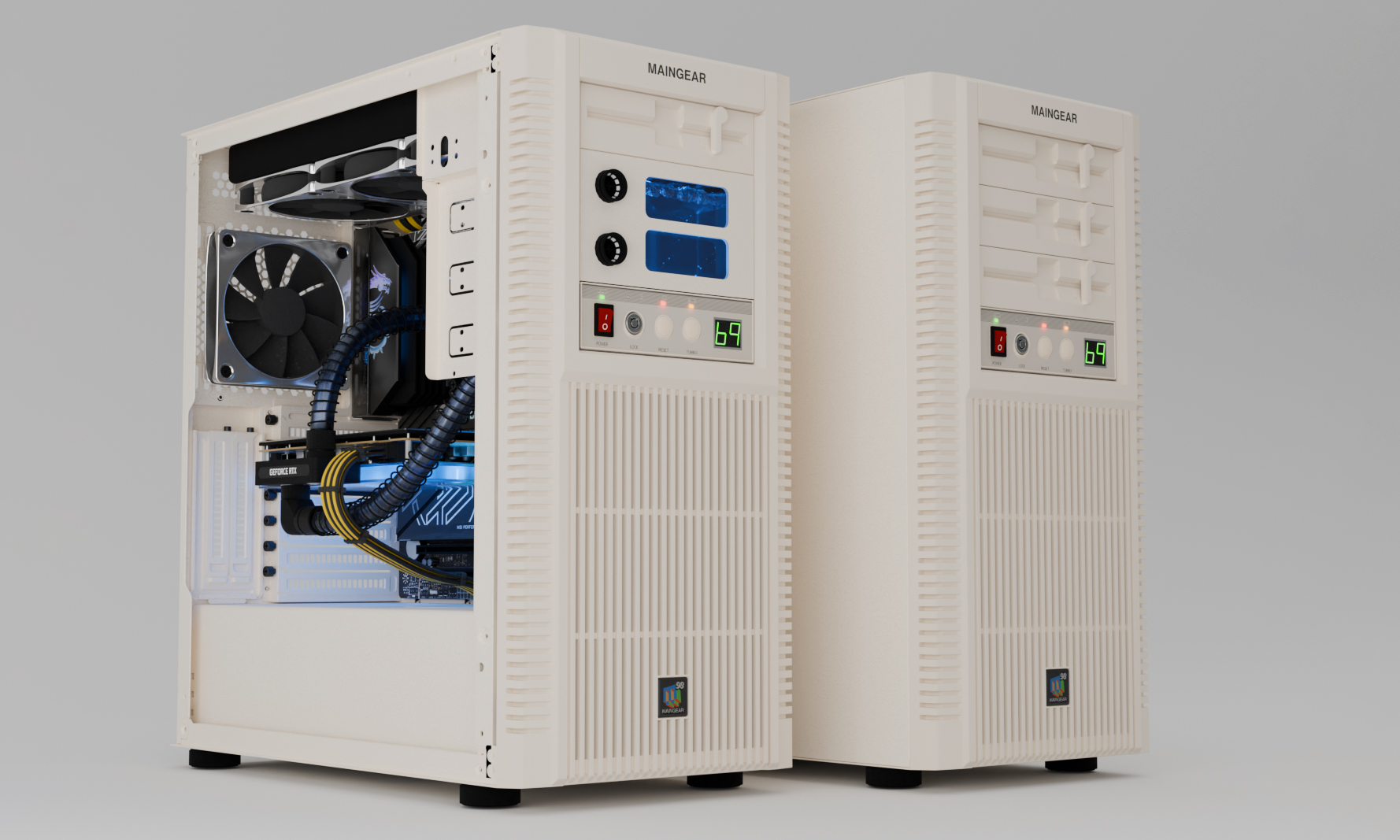
Maingear is back with another nostalgia-fueled gaming PC. The Retro98 may look like it’s made for playing Quake while you wait for The Phantom Menace trailer to drop. But on the inside, the beige box is powerful enough to slay today’s most demanding AAA games. “You’re not going to find this PC at your local Radio Shack,” Maingear promises.

If you’re at least middle-aged, the Retro98’s exterior is instantly familiar. The hand-built tower includes an LED fan-speed display, a working turbo button and a power-lockout key. Sticking with the nostalgic motif, its front I/O is hidden behind the Maingear logo. I can already hear The Beastie Boys’ “Intergalactic” playing in the background.

Fortunately, you won’t be limited to 1998 games. (Dope as they are.) It has up to a Ryzen 9 9950X3D processor, GeForce RTX 5090 graphics, 64GB Kingston Fury RAM and 4TB Kingston FURY Renegade NVMe Gen5 SSD. The maxed-out version (described by Maingear as “unapologetically overkill”) even includes open-loop liquid cooling.

Two beige-tower PCs that look like they were ripped from 1998. One is opened, revealing modern components inside.
The Retro98 starts at $2,500 and goes all the way up to $9,799.
Maingear

Now for the bad news. As you might expect from a retro novelty PC like this, you’ll have to pay a pretty penny. The base model (Intel Core Ultra 7 265K / NVIDIA GeForce RTX 5070) costs $2,499. There are two other standard tiers, priced at $3,499 and $4,999. Finally, the open-loop-cooled “Alpha” build is a whopping $9,799. Hey, those aren’t 1998 prices!

The Retro98 also has an extremely limited run. Maingear is producing only 32 standard units and six alpha units. The company says it won’t bring this build back once those sell out. However, there is a workaround for tinkerers: Since it’s based on the SilverStone FLP02 tower PC case, you could grab one of those and build your own.

Those wealthy and nostalgic enough to take the plunge can order the Retro98 today from Maingear’s website.

This article originally appeared on Engadget at https://www.engadget.com/gaming/pc/maingears-latest-retro-gaming-desktop-takes-you-back-to-the-quake-era-174958445.html?src=rss

Massive AI Chat App Leaked Millions of Users Private Conversations

An anonymous reader shares a report: Chat & Ask AI, one of the most popular AI apps on the Google Play and Apple App stores that claims more than 50 million users, left hundreds of millions of those users’ private messages with the app’s chatbot exposed, according to an independent security researcher and emails viewed by 404 Media. The exposed chats showed users asked the app “How do I painlessly kill myself,” to write suicide notes, “how to make meth,” and how to hack various apps.

The exposed data was discovered by an independent security researcher who goes by Harry. The issue is a misconfiguration in the app’s usage of the mobile app development platform Google Firebase, which by default makes it easy for anyone to make themselves an “authenticated” user who can access the app’s backend storage where in many instances user data is stored.

Harry said that he had access to 300 million messages from more than 25 million users in the exposed database, and that he extracted and analyzed a sample of 60,000 users and a million messages. The database contained user files with a complete history of their chats with the AI, timestamps of those chats, the name they gave the app’s chatbot, how they configured the model, and which specific model they used. Chat & Ask AI is a “wrapper” that plugs into various large language models from bigger companies users can choose from, Including OpenAI’s ChatGPT, Anthropic’s Claude, and Google’s Gemini.


Read more of this story at Slashdot.

Spotify has a group messaging feature now

Spotify is adding group chats to the messaging service it premiered last year. In an addendum to the original blog post introducing Messages, the company announced that users can initiate chats with up to 10 of their friends to share the podcasts, playlists and songs they are listening to.

The in-app messaging feature, which was released last August, works to keep users on the app instead of navigating to another platform to share content with friends. Since its introduction, Spotify has added functionality bit by bit. Earlier this month, the company added the ability to share what you’re listening to in real-time. Users can also invite chat participants to join a Jam, the app’s collaborative listening tool.

Spotify isn’t the only content platform trying to make in-app messaging a thing. Late last year, YouTube said it would be testing DMs, after originally adding the feature in 2017 before removing it in 2019.

This article originally appeared on Engadget at https://www.engadget.com/entertainment/streaming/spotify-has-a-group-messaging-feature-now-173734450.html?src=rss

Who Can Get a Piece of Google’s $135 Million Android Settlement

To avoid a court proceeding, Google has agreed to a $135 million class-action settlement over its data collection practices with Android. News of the settlement was first reported by Reuters. Upon approval by a judge, the settlement could see Android users in the U.S. getting up to $100 each, provided they qualify.

The settlement was filed in San Jose, California on Tuesday evening, and focused on claims that Google collected unnecessary cellular data from customers even when Google apps were closed, location-sharing was disabled, and screens were locked. The lawsuit alleges that Google collected the data with the intent of “conversion,” a legal term that in this case would likely mean using the captured data for product development and targeted advertising.

Google denied any wrongdoing, but as part of the settlement, agreed to not transfer data during Android set-up without consent from the user. The company will also initiate new toggles within Android to stop further cellular data transfers, and disclose any data transfers in its Google Play terms of service.

According to Glen Summers, a lawyer for the plaintiffs, the $135 million payout is the largest ever in a conversion case. While the settlement is still awaiting approval from a judge, given Summers’ comments, it’s likely the plaintiffs will accept it. Here’s how to determine if you can claim your slice of that pie.

Who is eligible for a payment in the Android settlement?

Google’s settlement covers a fairly wide swath of users: anyone who has used an “Android-powered mobile device” since Nov 12, 2017. However, there appear to be a few caveats. Specifically, because the class-action applies to cellular data, it’s unlikely to apply to users of any wifi-only devices, like many Android tablets.

How much you can get in the Android settlement

Payments for the class-action settlement cap out at $100 per class member, although it’s unclear whether all users can expect to get that much. Reuters states that lawyers for the class-action may seek up to roughly 30% of the settlement in legal fees, and while there aren’t any official numbers on how many Android users there are in the U.S., estimates from third-party firms place the count at roughly 40% of the mobile market overall. As such, $135 million might be spread pretty thin across all eligible class members.

When payments could go out

An initial trial date for the case was originally scheduled for Aug. 5, although the judge could approve the settlement prior to then. Class-action settlements can take anywhere from a few weeks to a few months to be approved, in order to ensure the settlement is fair to all class members and doesn’t show any signs of collusion.

How you’ll know when a payment has been sent

The methods of contacting eligible class members varies from case to case. In some instances, payment is automatic. However, in many cases, a website is set up where users must file a claim, and physical mail and emails are sent out with PIN numbers and IDs to ensure as many class members know about their eligibility as possible. The company offering the settlement is often involved in sending out these notices, so if you believe you’re affected, keep an eye out for an email or physical letter from Google, as well as for a settlement website to be set up.

If you believe you’re eligible but don’t receive any communication, there will also usually be an email address you can contact. This email address will usually be specific to the case, and while it hasn’t been revealed yet, it might be worth reaching out to Google Support if you’re worried about missing any deadlines.

Other current Google settlements you may qualify for

Google’s data collection settlement isn’t its only big class action payout as of late. The company also recently agreed to pay $68 million in another settlement involving Google Assistant after an accusation that it listened in on users without their consent. Google also denied wrongdoing in this instance.

If approved, the settlement will apply to anyone who had at least one device with Google Assistant pre-installed on it as early as 2016. Those who purchased the device will receive anywhere from $18 to $56, while those who lived in a household with one of these devices in it could earn $2 to $10. Steps for receiving your money will likely be similar to those in the Android data collection case.

Custom machine kept man alive without lungs for 48 hours

Humans can’t live without lungs. And yet for 48 hours, in a surgical suite at Northwestern University, a 33-year-old man lived with an empty cavity in his chest where his lungs used to be. He was kept alive by a custom-engineered artificial device that represented a desperate last-ditch effort by his doctors. The custom hardware solved a physiological puzzle that has made bilateral pneumonectomy, the removal of both lungs, extremely risky before now.

The artificial lung system was built by the team of Ankit Bharat, a surgeon and researcher at Northwestern. It successfully kept a critically ill patient alive long enough to enable a double lung transplant, temporarily replacing his entire pulmonary system with a synthetic surrogate. The system creates a blueprint for saving people previously considered beyond hope by transplant teams.

Melting lungs

The patient, a once-healthy 33-year-old, arrived at the hospital with Influenza B complicated by a secondary, severe infection of Pseudomonas aeruginosa, a bacterium that in this case proved resistant even to carbapenems—our antibiotics of last resort. This combination of infections triggered acute respiratory distress syndrome (ARDS), a condition where the lungs become so inflamed and fluid-filled that oxygen can no longer reach the blood.

Read full article

Comments

Samsung’s Innovative PM9E1 Gen5 SSD Is Optimized For AI And NVIDIA DGX Spark

Samsung's Innovative PM9E1 Gen5 SSD Is Optimized For AI And NVIDIA DGX Spark
Remember the Samsung 9100 PRO? We reviewed it back in August. It’s an amazing performer, and despite being a high-end PCI Express 5.0 SSD offering sequential speeds in excess of 13GB/second, it actually runs pretty cool thanks to the use of a custom 5nm “Presto” SSD controller. If you wanted an SSD 9100 PRO but you’ve only got an M.2-2242

Google Just Updated These Android Theft Protection Features

Phones are valuable targets. If someone can steal your device, especially if they know how to break into it, they have access to a huge amount of your sensitive data. As such, good security features can mean the difference between losing that data, or protecting it entirely—even if your phone is long gone. Google has a number of anti-theft features baked in Android, appropriately called “Theft Protection Features.” While the company isn’t announcing a slate of new features today, it did announced new updates to its existing Android Theft Protection features in a post on the company’s Security Blog Tuesday. Here’s what’s new:

Google’s updated Theft Protection Features for Android

First, the company announced updates to authentication safeguards, which apply to all Android devices running Android 16 or newer. That includes a new dedicated toggle in settings for Failed Authentication Lock, which automatically locks your screen after someone tries to guess your password too many times. Now, you can choose whether or not to keep this feature on right from settings.

Google is also increasing the amount of time your phone locks up after too many failed passcode attempts, which reduces the chance for someone to break into your phone. I wouldn’t have thought of this, but Google notes that it has included protections against children that try to break into your phone, by not counting identical passcode attempts against this retry limit. And while it isn’t new, Google highlighted that since late 2025, all features and apps that use Android Biometric Prompt now work with Identity Check, which prevents unauthorized users from changing sensitive settings without a successful biometric authentication—meaning a face or fingerprint scan.

The company also announced enhancements to features that are available to devices running at least Android 10. First is an update to Remote Lock, which lets you lock up your phone from a web browser if it is stolen or goes missing. Now, you can set up a security question as part of the unlocking procedure. Even if someone knows your credentials, they’d need to know the answer to your security challenge before they could unlock your device. Tip: If you make the answer something nonsensical, you’ll be even more protected (e.g., What is your mother’s maiden name? h7r_t*2#). Just be sure to file that answer somewhere safe, like a password manager.

Users in Brazil also have two new security settings enabled by default. The first is Theft Detection Lock, which can detect when your device has been snatched out of your hand in a likely theft situation. The second is Remote Lock, so users in Brazil can take advantage of the above benefits without having to set anything up first—other than the option security challenge question, of course.

These updates might not be revolutionary, but they should help boost your Android’s security a bit—and prevent your kids from locking you out of your phone for the day.

Costco Display PCs Stripped Of RAM And GPUs As Theft Concerns Rise

Costco Display PCs Stripped Of RAM And GPUs As Theft Concerns Rise
Forget rotisserie chicken and oversized barrels of mayo, Costco’s hottest commodity right now just might be RAM and GPUs. With prices of computer memory, storage, and graphics cards going for two to three times more than normal, shoplifters have been hitting big box stores like Costco and Walmart, and those business are now taking action.

Costco

This Pixel Bug Leaked Audio to Incoming Callers, and Google’s Fix Might Not Be Enough

A recent Google Pixel feature is reportedly turning on the microphone when it’s not supposed to, and Google’s finally acknowledged that there’s a bug. Reports started as early as last September and gained traction last week, and now, Google has removed the feature on some older phones.

Called “Take a Message,” the buggy feature was released last year and is supposed to automatically transcribe voicemails as they’re coming in, as well as detect and mark spam calls. Unfortunately, according to reports from multiple users on Reddit (as initially spotted by 9to5Google), the feature has started turning on the microphone while taking voicemails, allowing whoever is leaving you a voicemail to hear you. Audio leaks are bad in any circumstance, but they must feel especially nasty if you’re trying to pretend you’re not there.

Affected users have have found that while the caller can hear the audio from the person receiving the voicemail, there’s no indication on the receiver’s end that their audio can be heard, aside from the green microphone indicator possibly turning on.

The issue has been reported affecting Pixel devices ranging from the Pixel 4 to the Pixel 10, and on a recent support page, Google’s finally acknowledging it. However, the company’s action might not be enough, depending on how cautious you want to be.

According to Community Manager Siri Tejaswini, the company has “investigated this issue,” and has confirmed it “affects a very small subset of Pixel 4 and 5 devices under very specific and rare circumstances.” The post doesn’t go any further on the how and why of the diagnosis, but says that Google is now disabling Take a Message and “next-gen Call Screen features” on these devices.

Next-gen Call Screen is a separate feature that allows Google’s AI to ask a caller their name and the purpose of their call before taking a message. No bugs have been reported for it, but Google says it’s disabling both features out of “an abundance of caution.”

While this should prevent the issue from popping up for users with those phones, it’s a bit of a heavy-handed fix. I’ve reached out to Google to check if Take a Message is only being removed temporarily while the company fixes the bug, or if it will now be permanently gone. In the meantime, Tejaswini does say that Pixel 4 and 5 owners will still be able to use manual and automatic Call Screening, which provide basic protection against spam. The post also suggests that affected users can rely on any call screening features provided by their cellular carriers.

How to disable Take a Message on your Pixel phone

While it’s encouraging that Google is taking action on the Take a Message bug, the company only seems to be acknowledging it for Pixel 4 and Pixel 5 models, at least for now. I’ve asked Google whether owners of other Pixel models should be worried, as user reports seem split on this. Still, because some have mentioned an issue with even the most up-to-date Pixel phone, if you want to practice your own abundance of caution, it might be worth disabling Take a Message on your device, regardless of its model number.

To do this, open your Phone app, then tap the three-lined menu icon at the top-left of the page. Navigate to Settings > Call Assist > Take a Message, and toggle the feature off.

Windows 11 Has Reached 1 Billion Users Faster Than Windows 10

An anonymous reader shares a report: Windows 11 now has one billion users. Microsoft hit the milestone during the recent holiday quarter, meaning Windows 11 has managed to reach one billion users faster than Windows 10 did nearly six years ago.

“Windows reached a big milestone, 1 billion Windows 11 users,” said Microsoft CEO Satya Nadella on the company’s fiscal Q2, 2026 earnings call. “Up over 45 percent year-over-year.” The growth of Windows 11 over the past quarter will be related to Microsoft’s end of support for Windows 10, which also helped increase Microsoft’s Windows OEM revenues.


Read more of this story at Slashdot.

Strava Finally Brought Route Navigation to the Apple Watch

Big news for runners with an Apple Watch: You can now follow Strava routes directly from your wrist. Route navigation on Strava-compatible watches isn’t exactly new technology—it’s just been inexplicably absent from Apple’s platform until now. In a Reddit post from Strava’s product team, the news was welcomed by runners, cyclists, and hikers who’ve long wondered why their Apple Watch couldn’t do what Garmin and Coros devices have offered for years.

What’s new with Strava’s Apple Watch app

The core update here is users can now view maps directly on their Apple Watch during activities, seeing both where they’re headed and how to backtrack if they take a wrong turn. For subscribers, saved Routes work hands-free and function offline, eliminating the need to pull out your phone mid-run or mid-ride to check directions.

To access routes directly on your watch, press the Route icon while selecting the Sport Type that you’ll record.  Once you’ve selected the saved route you want to follow, the activity will start recording. 

To then access the map while in the middle of recording your activity, simply swipe up on your watch face. Once on the map screen, you will be able to follow your live location and, if added, your saved route. To zoom or pan the map, tap the watch face to unlock interactive mode. If you want to turn back to your Stat screen, tap the back icon or use the watch scroll button.

Alongside route navigation, Strava added two more training features:

  • Custom Laps let you mark intervals with a single tap, useful for tempo runs, hill repeats, or comparing efforts against your previous performances.

  • Live Segments provide real-time feedback when you hit a tracked segment. Subscribers can see whether they’re ahead or behind their personal record as it happens, while all users get live progress updates.

As always, you can also turn to route suggestions that draw from Strava’s massive activity database full of actual paths that real users have tested and preferred.

The bottom line

For Apple Watch users who’ve grown accustomed to working around Strava’s limitations, this update rocks. Less phone checking means more attention on the road, trail, or effort itself.

Maybe it’s taken longer than it should have, but Apple Watch users are finally caught up. Whether that’s enough to satisfy those who’ve already migrated to other platforms remains to be seen, but for the loyal holdouts, it’s about time.