iPhone Fold rumors: Everything we know so far, including the leaked design

Apple has yet to announce a foldable iPhone, but after years of speculation, the outlines of what’s often referred to as the iPhone Fold are starting to come into focus. Multiple analysts and leakers now agree that Apple is targeting a late-2026 launch window for its first foldable phone, positioning it as a premium flagship rather than a niche experiment.

As with all pre-launch Apple products, nothing here is official. Plans can change, features can be dropped and timelines can slip. Still, recent reports paint the clearest picture yet of how Apple might approach a foldable iPhone and how it plans to differentiate itself from rivals like Samsung and Google.

Below is a roundup of the most credible iPhone Fold rumors so far, covering its possible release timing, design, display technology, cameras and price. We’ll continue to update this post as more rumors and details become available.

When could the iPhone Fold launch?

Rumors of a foldable iPhone date back as far as 2017, but more recent reporting suggests Apple has finally locked onto a realistic window. Most sources now point to fall 2026, likely alongside the iPhone 18 lineup.

Mark Gurman has gone back and forth on timing, initially suggesting Apple could launch “as early as 2026,” before later writing that the device would ship at the end of 2026 and sell primarily in 2027. Analyst Ming-Chi Kuo has also repeatedly cited the second half of 2026 as Apple’s target.

Some reports still claim the project could slip into 2027 if Apple runs into manufacturing or durability issues, particularly around the hinge or display. Given Apple’s history of delaying products that it feels aren’t ready, that remains a real possibility.

What will the iPhone Fold look like?

Current consensus suggests Apple has settled on a book-style foldable design, similar to Samsung’s Galaxy Z Fold series, rather than a clamshell flip phone.

When unfolded, the iPhone Fold is expected to resemble a small tablet like the iPad mini (8.3 inches). Based on the rumor mill, though, the iPhone Fold may be a touch smaller, with an internal display measuring around 7.7 to 7.8 inches. When closed, it should function like a conventional smartphone, with an outer display in the 5.5-inch range.

CAD leaks and alleged case-maker molds suggest the device may be shorter and wider than a standard iPhone when folded, creating a squarer footprint that better matches the aspect ratio of the inner display. Several reports have also pointed to the iPhone Air as a potential preview of Apple’s foldable design work, with its unusually thin chassis widely interpreted as a look at what one half of a future foldable iPhone could resemble.

If that theory holds, it could help explain the Fold’s rumored dimensions. Thickness is expected to land between roughly 4.5 and 5.6mm when unfolded, putting it in a similar range to the iPhone Air, and just over 9 to 11mm when folded, depending on the final hinge design and internal layering.
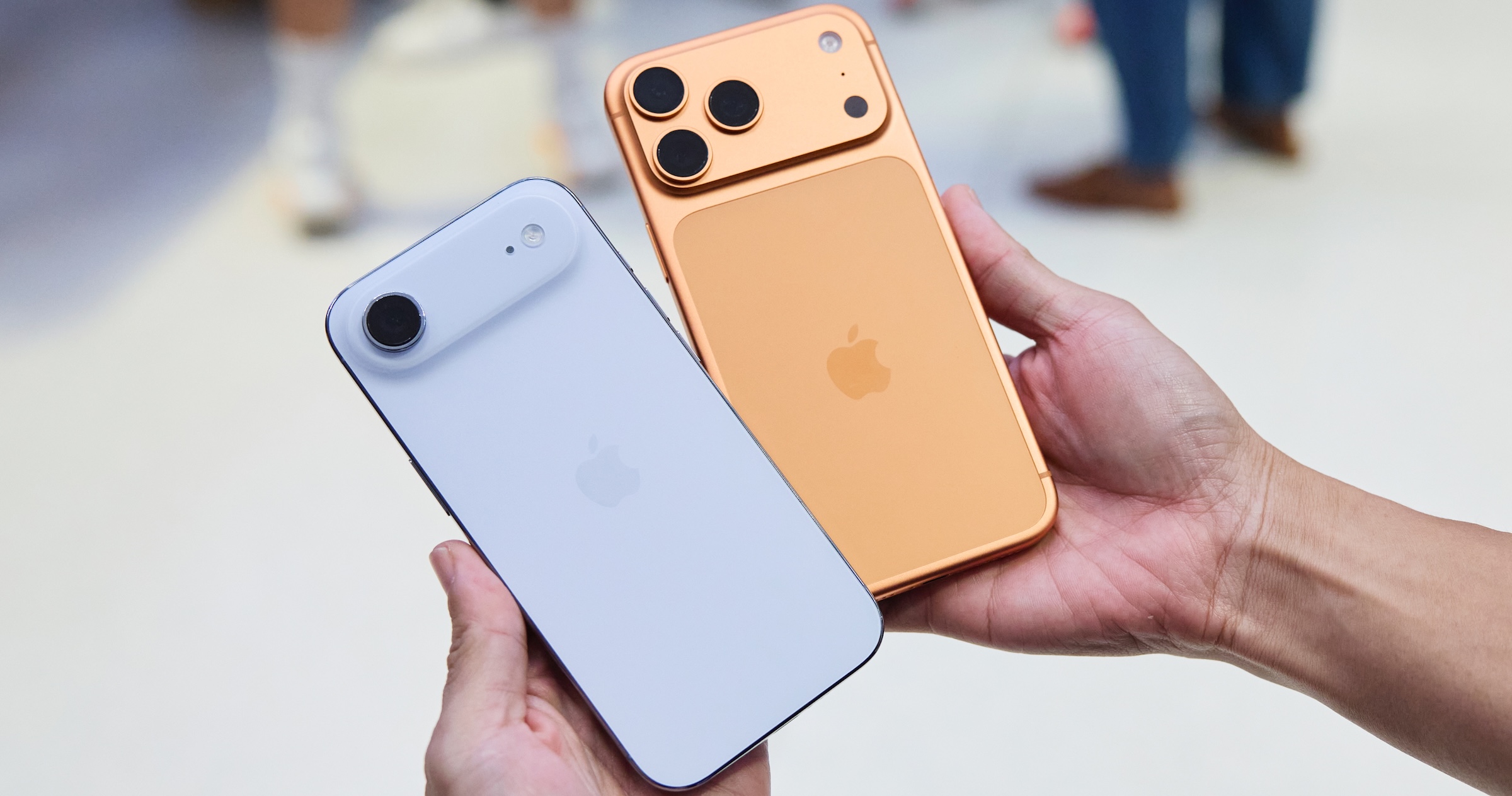
iPhone 17 Pro, iPhone Air
Engadget

Display and the crease question

The display is arguably the biggest challenge for any foldable phone, and it’s an area where Apple appears to have invested years of development.

Multiple reports say Apple will rely on Samsung Display as its primary supplier. At CES 2026, Samsung showcased a new crease-less foldable OLED panel, which several sources — including Bloomberg — suggested could be the same technology Apple plans to use.

According to these reports, the panel combines a flexible OLED with a laser-drilled metal support plate that disperses stress when folding. The goal is a display with a nearly invisible crease, something Apple reportedly considers essential before entering the foldable market.

If Apple does use this panel, it would mark a notable improvement over current foldables, which still show visible creasing under certain lighting conditions.

Cameras and biometrics

Camera rumors suggest Apple is planning a four-camera setup. That may include:

  • Two rear cameras (main and ultra-wide, both rumored at 48MP)

  • One punch-hole camera on the outer display

  • One under-display camera on the inner screen

Several sources claim Apple will avoid Face ID entirely on the iPhone Fold. Instead, it’s expected to rely on Touch ID built into the power button, similar to recent iPad models. This would allow Apple to keep both displays free of notches or Dynamic Island cutouts.

Under-display camera technology has historically produced lower image quality, but a rumored 24MP sensor would be a significant step up compared to existing foldables, which typically use much lower-resolution sensors.

iPhone Fold’s hinge and materials

The hinge is another area where Apple may diverge from competitors. Multiple reports claim Apple will use Liquidmetal, which is a long-standing trade name for a metallic glass alloy the company has previously used in smaller components. While often referred to as “liquid metal” or “Liquid Metal” in reports, Liquidmetal is the branding Apple has historically associated with the material.

Liquidmetal is said to be stronger and more resistant to deformation than titanium, while remaining relatively lightweight. If accurate, this could help improve long-term durability and reduce wear on the foldable display.

Leaks from Jon Prosser also reference a metal plate beneath the display that works in tandem with the hinge to minimize creasing — a claim that aligns with reporting from Korean and Chinese supply-chain sources.

Battery and other components 

Battery life is another potential differentiator. According to Ming-Chi Kuo and multiple Asian supply-chain reports, Apple is testing high-density battery cells in the 5,000 to 5,800mAh range.

That would make it the largest battery ever used in an iPhone, and competitive with (or larger than) batteries in current Android foldables. The device is also expected to use a future A-series chip and Apple’s in-house modem.

Price

None of this will come cheap, that’s for certain. Nearly every report agrees that the iPhone Fold will be Apple’s most expensive iPhone ever.

Estimates currently place the price between $2,000 and $2,500 in the US. Bloomberg has said the price will be “at least $2,000,” while other analysts have narrowed the likely range to around $2,100 and $2,300. That positions the iPhone Fold well above the iPhone Pro Max and closer to Apple’s high-end Macs and iPads.

Despite years of rumors, there’s still plenty that remains unclear. Apple hasn’t confirmed the name “iPhone Fold,” final dimensions, software features or how iOS would adapt to a folding form factor. Durability, repairability and long-term reliability are also open questions. For now, the safest assumption is that Apple is taking its time and that many of these details could still change before launch.

This article originally appeared on Engadget at https://www.engadget.com/mobile/smartphones/iphone-fold-rumors-everything-we-know-so-far-including-the-leaked-design-130000516.html?src=rss
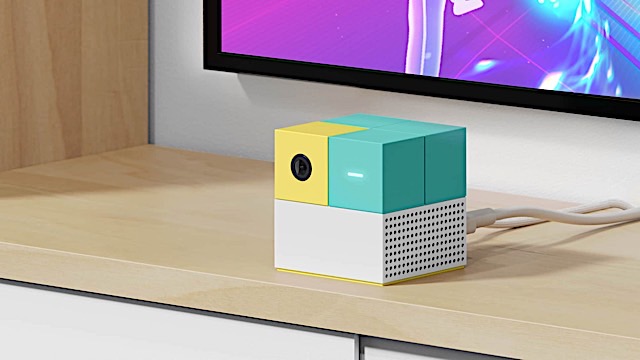
The Morning After: The Nex Playground channels the spirit of Xbox’s Kinect

You might not have heard of the Nex Playground, but it’s a tiny gaming system built entirely around Kinect-like games. With its camera and computer vision processing, the $249 Nex Playground can track up to four players as effectively as Microsoft’s old Xbox motion tracker, according to Engadget’s Devindra Hardawar.

NEX
NEX
NEX

The hardware is cute and well-designed, there are plenty of games, and it works offline. The only issue is the ongoing subscription needed to access most games. Check out our full review to learn more.

— Mat Smith

The biggest stories you might have missed

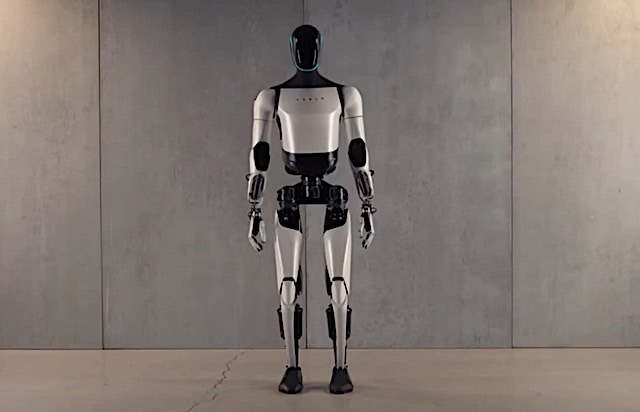
Tesla is killing off its Model S and X cars to make robots

Even if demand for Optimus is still unknown.

TMA
TMA
Tesla

Tesla is going to wrap up production of its Model S and X EVs next quarter, CEO Elon Musk has announced. It’s less of a major shift for the company than it sounds: The newer Model 3 and Y now make up the bulk of the company’s sales. Tesla delivered over 1.5 million Model 3 and Y vehicles but sold under 450,000 Model S and X units. Musk added that Tesla’s long-term goal is to manufacture 1 million Optimus robots in the current Model S and X production space.

Continue reading.

Snap makes its AR glasses into a separate business

It’ll still be under the umbrella of Snap.

Snap’s augmented reality glasses business will now be its own company called Specs Inc. It’ll still be fully owned by Snap, though. The company has been trying to figure out ways to raise outside money for its AR glasses to better compete with Meta, which has a lot more money to spend on development. Earlier this week, Mark Zuckerberg said his Reality Labs will (eventually) stop losing so much money as it doubles down on AI glasses and shifts away from virtual reality. According to the Meta boss, the company’s smart glasses sales “more than tripled” in 2025.

How can Snap’s Specs match the might of Meta? Well, its next pair will apparently be lighter, smaller and more capable than its older smartglass model, which was pretty dev-focused.   One request: make them not look awful.  

Continue reading.

The best TV deals ahead of Super Bowl 2026

Maybe it’s time for an upgrade.

Hosting a Super Bowl party? Maybe you’ve been thinking about replacing an aging set, or you’re itching for a full refresh of your home theater setup — either way, if you’re looking for a good deal on a new TV, we’ve got you covered. TV prices steadily decrease after a new model comes out. The 2026 TV models were announced at CES and are expected to arrive this year, making now a good time to look for discounts on 2025 sets. Aside from the holiday shopping season, this is one of the best times of the year to save on a TV — it’s like the manufacturers know there’s a Super Bowl.

Continue reading.

This article originally appeared on Engadget at https://www.engadget.com/general/the-morning-after-the-nex-playground-channels-the-spirit-of-xboxs-kinect-121500965.html?src=rss

Rocket Report: How a 5-ton satellite fell off a booster; will SpaceX and xAI merge?

Welcome to Edition 8.27 of the Rocket Report! If all goes well this weekend, NASA will complete a wet dress rehearsal test of the Space Launch System rocket in Florida. This is the final key test, in which the rocket is fueled and brought to within seconds of engine ignition, before the liftoff of the Artemis II mission. This is set to occur no earlier than February 6. Ars will have full coverage of the test this weekend.

As always, we welcome reader submissions, and if you don’t want to miss an issue, please subscribe using the box below (the form will not appear on AMP-enabled versions of the site). Each report will include information on small-, medium-, and heavy-lift rockets as well as a quick look ahead at the next three launches on the calendar.

Why did the UK abandon Orbex? European Spaceflight explores the recent announcement that British launch company Orbex is preparing to sell the business to The Exploration Company in close cooperation with the UK government. This represents a reversal from early 2025, when the United Kingdom appeared prepared to back Orbex as a means of using British rockets to launch British satellites into space. Now the government is prepared to walk away. So what happened? “There are still too many unknowns to count, and the story is far from told,” the publication states.

Read full article

Comments

Inside Nvidia’s 10-year effort to make the Shield TV the most updated Android device ever

It took Android devicemakers a very long time to commit to long-term update support. Samsung and Google have only recently decided to offer seven years of updates for their flagship Android devices, but a decade ago, you were lucky to get more than one or two updates on even the most expensive Android phones and tablets. How is it, then, that an Android-powered set-top box from 2015 is still going strong?

Nvidia released the first Shield Android TV in 2015, and according to the company’s senior VP of hardware engineering, Andrew Bell, supporting these devices has been a labor of love. And the team at Nvidia still loves the Shield. Bell assures us that Nvidia has never given up, even when it looked like support for the Shield was waning, and it doesn’t plan to stop any time soon.

The soul of Shield

Gaming has been central to Nvidia since its start, and that focus gave rise to the Shield. “Pretty much everybody who worked at Nvidia in the early days really wanted to make a game console,” said Bell, who has worked at the company for 25 years.

Read full article

Comments

Former Google Engineer Found Guilty of Stealing AI Secrets For Chinese Firms

Longtime Slashdot reader schwit1 shares a report from CBS News: A former Google engineer has been found guilty on multiple federal charges for stealing the tech giant’s trade secrets on artificial intelligence to benefit Chinese companies he secretly worked for, federal prosecutors said. According to the U.S. Attorney’s Office for the Northern District of California, a jury on Thursday convicted Linwei Ding on seven counts of economic espionage and seven counts of theft of trade secrets, following an 11-day trial. The 38-year-old, also known as Leon Ding, was hired by Google in 2019 and was a resident of Newark.

According to evidence presented at trial, Ding stole more than 2,000 pages of confidential information containing Google AI trade secrets between May 2022 and April 2023. He uploaded the information to his personal Google Cloud account. Around the same time, Ding secretly affiliated himself with two Chinese-based technology companies. Around June 2022, prosecutors said Ding was in discussions to be the chief technology officer for an early-stage tech company. Several months later, he was in the process of founding his own AI and machine learning company in China, acting as the company’s CEO. Prosecutors said Ding told investors that he could build an AI supercomputer by copying and modifying Google’s technology.

In late 2023, prosecutors said Ding downloaded the trade secrets to his own personal computer before resigning from Google. According to the superseding indictment, Google uncovered the uploads after finding out that Ding presented himself as CEO of one of the companies during an Beijing investor conference. Around the same time, Ding told his manager he was leaving the company and booked a one-way flight to Beijing. “Silicon Valley is at the forefront of artificial intelligence innovation, pioneering transformative work that drives economic growth and strengthens our national security. The jury delivered a clear message today that the theft of this valuable technology will not go unpunished,” U.S. Attorney Craig Missakian said in a statement.


Read more of this story at Slashdot.

Radiologists Catch More Aggressive Breast Cancers By Using AI To Help Read Mammograms, Study Finds

A large Swedish study of 100,000 women found that using AI to assist radiologists reading mammograms reduced the rate of aggressive “interval” breast cancers by 12%. CBC News reports: For the study — published in Thursday’s issue of the medical journal The Lancet — more than 100,000 women had mammography screenings. Half were supported by AI and the rest had their mammograms reviewed by two different radiologists, a standard practice in much of Europe known as double reading. It is not typically used in Canada, where usually one radiologist checks mammograms.

The study looked at the rates of interval cancer, the term doctors use for invasive tumors that appear between routine mammograms. They can be harder to detect and studies have shown that they are more likely to be aggressive with a poorer prognosis. The rate of interval cancers decreased by 12 percent in the groups where the AI screening was implemented, the study showed. […] Throughout the two-year study, the mammograms that were supported by AI were triaged into two different groups. Those that were determined to be low risk needed only one radiologist to examine them, while those that were considered high risk required two. The researchers reported that numerically, the AI-supported screening resulted in 11 fewer interval cancers than standard screening (82 versus 93, or 12 per cent).

“This is really a way to improve an overall screening test,” [said lead author, Dr. Kristina Lang]. She acknowledged that while the study found a decrease in interval cancer, longer-term studies are needed to find out how AI-supported screening might impact mortality rates. The screenings for the study all took place at one centre in Sweden, which the researchers acknowledged is a limitation. Another is that the race and ethnicity of the participants were not recorded. The next step, Lang said, will be for Swedish researchers to determine cost-effectiveness.


Read more of this story at Slashdot.

Universal Basic Income Could Be Used To Soften Hit From AI Job Losses In UK, Minister Says

An anonymous reader quotes a report from the Guardian: The UK could introduce a universal basic income (UBI) to protect workers in industries that are being disrupted by AI, the investment minister Jason Stockwood has said. “Bumpy” changes to society caused by the introduction of the technology would mean there would have to be “some sort of concessionary arrangement with jobs that go immediately”, Lord Stockwood said. The Labour peer told the Financial Times: “Undoubtedly we’re going to have to think really carefully about how we soft-land those industries that go away, so some sort of [universal basic income], some sort of lifelong mechanism as well so people can retrain.”

A universal basic income is not part of official government policy, but when asked whether people in government were considering the need for UBI, Stockwood told the FT: “People are definitely talking about it.” […] While he has previously been a vocal proponent of a wealth tax in the UK, Stockwood told the FT he had not repeated his calls for the government to go further on taxing the rich. However, he added: “If you make your money and the first thing you do is you speak to a tax adviser to ask: ‘Where can we pay the lowest tax?’ we don’t want those people in this country, I’d suggest, because you’re not committed to your communities and the long-term success in this country.”


Read more of this story at Slashdot.

Comcast Keeps Losing Customers Despite Price Guarantee, Unlimited Data

Comcast’s attempt to slow broadband customer losses still isn’t stopping the bleeding as fiber and fixed wireless competition intensifies. In Q4 2025 alone, Comcast lost 181,000 broadband subscribers, even as it leans harder into wireless bundling and other business lines like Peacock and theme parks. Ars Technica reports: The Q4 net loss is more than the 176,000 loss predicted by analysts, although not as bad as the 199,000-customer loss that spurred [Comcast President Mike Cavanagh’s] comment about Comcast “not winning in the marketplace” nine months ago. The Q4 2025 loss reported today is also worse than the 139,000-customer loss in Q4 2024 and the 34,000-customer loss in Q4 2023.

“Subscriber losses were 181,000, as the early traction we are seeing from our new initiatives was more than offset by continued competitive intensity,” Comcast CFO Jason Armstrong said during an earnings call today, according to a Motley Fool transcript. Comcast’s residential broadband customers dropped to 28.72 million, while business broadband customers dropped to 2.54 million, for a total of 31.26 million.

Armstrong said that average revenue per user grew 1.1 percent, “consistent with the deceleration that we had previewed reflecting our new go-to-market pricing, including lower everyday pricing and strong adoption of free wireless lines.” Armstrong expects average revenue per user to continue growing slowly “for the next couple of quarters, driven by the absence of a rate increase, the impact from free wireless lines, and the ongoing migration of our base to simplified pricing.” Comcast Connectivity & Platforms chief Steve Croney said the firm is facing “a more competitive environment from fiber” and continued competition from fixed wireless. “The market is going to remain intensely competitive,” he said.


Read more of this story at Slashdot.

Cory Doctorow On Tariffs and the DMCA In Canada

Longtime Slashdot reader devnulljapan writes: In 2012, Canada passed anti-circumvention law Bill C-11, cut-and-pasted from the U.S. DMCA, in return for access to U.S. markets without tariffs. Trump has tariffed Canada anyway, so Cory Doctorow suggests it sounds like like a good idea to ditch Bill C-11 and turn Canada into a “Disenshittification Nation” and go into the business of “disenshittify[ing] America’s defective tech exports.” Some of the specific ways Canada could respond include legalize jailbreaking, allow alternative app stores/clients, force companies to offer repair tools, and open firmware that break monopoly lock-ins. Cory’s pitch is equal parts economic strategy (capture the rents Big Tech extracts) and national security (reduce dependence on U.S. tech stacks that can be switched off or weaponized).


Read more of this story at Slashdot.

Linux Gaming Developers Join Forces To Form the Open Gaming Collective

A group of Linux gaming-focused distros and developers have formed the Open Gaming Collective to pool work on shared components like kernels, input systems, and Valve tooling. The Verge reports: Universal Blue, developer of the gaming-focused Linux distribution Bazzite, announced on Wednesday that its helping to form the OGC with several other groups, which will collaborate on improvements to the Linux gaming ecosystem and âoecentralize efforts around critical components like kernel patches, input tooling, and essential gaming packages such as gamescope.” The other founding members of the OGC include Nobara, ChimeraOS, Playtron, Fyra Labs, PikaOS, ShadowBlip, and Asus Linux.

[…] It’s worth noting that this will mean some changes to Bazzite, which is switching to the OGC kernel, replacing HHD with InputPlumber as its input framework, and integrating features like RGB and fan control into the Steam UI. Bazzite also added that, “We’ll be sharing patches we’ve made to various Valve packages with the OGC and attempting to upstream everything we can.”


Read more of this story at Slashdot.

An AI Toy Exposed 50K Logs of Its Chats With Kids To Anyone With a Gmail Account

An anonymous reader quotes a report from Wired: Earlier this month, Joseph Thacker’s neighbor mentioned to him that she’d preordered a couple of stuffed dinosaur toys for her children. She’d chosen the toys, called Bondus, because they offered an AI chat feature that lets children talk to the toy like a kind of machine-learning-enabled imaginary friend. But she knew Thacker, a security researcher, had done work on AI risks for kids, and she was curious about his thoughts.

So Thacker looked into it. With just a few minutes of work, he and a web security researcher friend named Joel Margolis made a startling discovery: Bondu’s web-based portal, intended to allow parents to check on their children’s conversations and for Bondu’s staff to monitor the products’ use and performance, also let anyone with a Gmail account access transcripts of virtually every conversation Bondu’s child users have ever had with the toy.

Without carrying out any actual hacking, simply by logging in with an arbitrary Google account, the two researchers immediately found themselves looking at children’s private conversations, the pet names kids had given their Bondu, the likes and dislikes of the toys’ toddler owners, their favorite snacks and dance moves. In total, Margolis and Thacker discovered that the data Bondu left unprotected — accessible to anyone who logged in to the company’s public-facing web console with their Google username — included children’s names, birth dates, family member names, “objectives” for the child chosen by a parent, and most disturbingly, detailed summaries and transcripts of every previous chat between the child and their Bondu, a toy practically designed to elicit intimate one-on-one conversation. More than 50,000 chat transcripts were accessible through the exposed web portal. When the researchers alerted Bondu about the findings, the company acted to take down the console within minutes and relaunched it the next day with proper authentication measures.

“We take user privacy seriously and are committed to protecting user data,” Bondu CEO Fateen Anam Rafid said in his statement. “We have communicated with all active users about our security protocols and continue to strengthen our systems with new protections,” as well as hiring a security firm to validate its investigation and monitor its systems in the future.


Read more of this story at Slashdot.

Apple just reported its best-ever quarter for iPhone sales

Apple shared its latest quarterly financial results today and the news is once again very, very good for the Cupertino company. The quarter ending December 27, 2025 marked “the best-ever quarter” for iPhones, which generated a record high revenue of nearly $85.27 billion for the business. Apple doesn’t disclose the number of devices sold any more, but even with the prices for many of its latest generation of smartphones surpassing $1,000 a pop, that’s still got to be a heck of a lot of iPhones. 

“The demand for iPhone was simply staggering,” CEO Tim Cook said on the conference call to discuss the results. “This is the strongest iPhone lineup we’ve ever had and by far the most popular.”

That wasn’t the only massive number in the earnings report. Services revenue also logged its biggest quarter yet, growing 14 percent over the same period last year to reach just over $30 billion. It was also Apple’s biggest quarter to date for total revenue, which was nearly $143.76 billion for the already fabulously wealthy company.

This article originally appeared on Engadget at https://www.engadget.com/mobile/smartphones/apple-just-reported-its-best-ever-quarter-for-iphone-sales-234135513.html?src=rss

Having that high-deductible health plan might kill you, literally

Having a health insurance plan with a high deductible could not only cost you—it could also kill you.

A new study in JAMA Network Open found that people who faced those high out-of-pocket costs as well as a cancer diagnosis had worse overall survival and cancer-specific survival than those with more standard health plans.

The findings, while perhaps not surprising, are a stark reminder of the fraught decisions Americans face as the price of health care only continues to rise, and more people try to offset costs by accepting insurance plans with higher deductibles—that is, higher out-of-pocket costs they have to pay before their health insurance provider starts paying its share.

Read full article

Comments

US spy satellite agency declassifies high-flying Cold War listening post

The National Reconnaissance Office, the agency overseeing the US government’s fleet of spy satellites, has declassified a decades-old program used to eavesdrop on the Soviet Union’s military communication signals.

The program was codenamed Jumpseat, and its existence was already public knowledge through leaks and contemporary media reports. What’s new is the NRO’s description of the program’s purpose, development, and pictures of the satellites themselves.

In a statement, the NRO called Jumpseat “the United States’ first-generation, highly elliptical orbit (HEO) signals-collection satellite.”

Read full article

Comments

Thermaltake TR300 Case Brings A Front PSU Mount And Big Display To Gaming PCs

Thermaltake TR300 Case Brings A Front PSU Mount And Big Display To Gaming PCs
With its latest TR300 Series TG (and WS) cases, Thermaltake includes a 6-inch 1480 x 720 display for users that want to take their customization to the next level. We’ve seen case mods integrate mini-monitor before, and ASRock even sold an entire 1080p monitor made to be attached to your case, but this is one of the more practical solutions

Amazon discovered a ‘high volume’ of CSAM in its AI training data but isn’t saying where it came from

The National Center for Missing and Exploited Children said it received more than 1 million reports of AI-related child sexual abuse material (CSAM) in 2025. The “vast majority” of that content was reported by Amazon, which found the material in its training data, according to an investigation by Bloomberg. In addition, Amazon said only that it obtained the inappropriate content from external sources used to train its AI services and claimed it could not provide any further details about where the CSAM came from. 

“This is really an outlier,” Fallon McNulty, executive director of NCMEC’s CyberTipline, told Bloomberg. The CyberTipline is where many types of US-based companies are legally required to report suspected CSAM. “Having such a high volume come in throughout the year begs a lot of questions about where the data is coming from, and what safeguards have been put in place.” She added that aside from Amazon, the AI-related reports the organization received from other companies last year included actionable data that it could pass along to law enforcement for next steps. Since Amazon isn’t disclosing sources, McNulty said its reports have proved “inactionable.”

“We take a deliberately cautious approach to scanning foundation model training data, including data from the public web, to identify and remove known [child sexual abuse material] and protect our customers,” an Amazon representative said in a statement to Bloomberg. The spokesperson also said that Amazon aimed to over-report its figures to NCMEC in order to avoid missing any cases. The company said that it removed the suspected CSAM content before feeding training data into its AI models. 

Safety questions for minors have emerged as a critical concern for the artificial intelligence industry in recent months. CSAM has skyrocketed in NCMEC’s records; compared with the more than 1 million AI-related reports the organization received last year, the 2024 total was 67,000 reports while 2023 only saw 4,700 reports. 

In addition to issues such as abusive content being used to train models, AI chatbots have also been implicated in several dangerous or tragic cases involving young users. OpenAI and Character.AI have both been sued after teenagers planned their suicides with those companies’ platforms. Meta is also being sued for alleged failures to protect teen users from sexually explicit conversations with chatbots.

This article originally appeared on Engadget at https://www.engadget.com/ai/amazon-discovered-a-high-volume-of-csam-in-its-ai-training-data-but-isnt-saying-where-it-came-from-224749228.html?src=rss

People complaining about Windows 11 hasn’t stopped it from hitting 1 billion users

Complaining about Windows 11 is a popular sport among tech enthusiasts on the Internet, whether you’re publicly switching to Linux, publishing guides about the dozens of things you need to do to make the OS less annoying, or getting upset because you were asked to sign in to an app after clicking a sign-in button.

Despite the negativity surrounding the current version of Windows, it remains the most widely used operating system on the world’s desktop and laptop computers, and people usually prefer to stick to what they’re used to. As a result, Windows 11 has just cleared a big milestone—Microsoft CEO Satya Nadella said on the company’s most recent earnings call (via The Verge) that Windows 11 now has over 1 billion users worldwide.

Windows 11 also reached that milestone just a few months quicker than Windows 10 did—1,576 days after its initial public launch on October 5, 2021. Windows 10 took 1,692 days to reach the same milestone, based on its July 29, 2015, general availability date and Microsoft’s announcement on March 16, 2020.

Read full article

Comments

Nvidia GeForce NOW Is Now Available Natively On Linux

NVIDIA has officially launched a native GeForce NOW client for Linux as a Flatpak, giving Linux gamers access to cloud-rendered RTX gaming. Phoronix reports: While confined to a Flatpak, for now NVIDIA is just “officially” supporting it on Ubuntu 24.04 LTS and later. Granted, thanks to Flatpak it should run on other non-Ubuntu distributions too but in terms of the official support and where they are qualifying their builds they are limiting it just to Ubuntu 24.04 LTS and later. […] At launch the Flatpak build is also just for x86_64 Linux with no AArch64 Linux builds or similar at this time.

Running GeForce NOW on Linux while games are rendered in NVIDIA’s cloud with Blackwell GPUs, you still need to be using a modern GPU with H.264 or H.265 Vulkan Video support NVIDIA isn’t yet supporting Vulkan Video AV1 with GeForce NOW on Linux but just H.264/H.265. If you are using NVIDIA graphics the NVIDIA R580 series or newer is recommended while using the X.Org session. If you are using Intel or AMD Radeon graphics, Mesa 24.2+ is recommended and using the Wayland session.

When you are up and running with GeForce NOW on Linux, you have access to over 4,500 games. The free tier of GeForce NOW provides standard access to the gaming servers and limited session caps for an introductory-level experience. It’s with the performance tier where you can enjoy RTX ray-tracing and 1440p @ 60 FPS performance and up to six hour sessions. With GeForce NOW’s Ultimate tier is where you are running on GeForce RTX 5080 GPU servers with support for up to 5K @ 120 FPS gaming or 1080p @ 360 FPS with up to eight hour gaming sessions in length.


Read more of this story at Slashdot.

Lord Of The Rings Sauron’s Helmet Gets An Official LEGO Set

Because printing money is easy for some companies, LEGO has announced an official Lord Of The Rings Sauron’s Helmet build set. The kit will be released March 1st for $70 and include 538 pieces, including a Sauron minfig holding the One Ring. Honestly, $70 is still expensive, but after all the $200 and $300 sets they’ve been releasing lately it almost seems like a steal. It isn’t though, just to be clear. When completed (provided you didn’t eat any crucial pieces), the set makes a 13″ x 5″ replica of Sauron’s helmet. And what a helmet it is! Has anybody ever cosplayed as sloppy Sauron and made a Sauron beer helmet? Because that’s a convention-stealing cosplay idea right there. If you use it though I get half the costume contest prize money.

How often do AI chatbots lead users down a harmful path?

At this point, we’ve all heard plenty of stories about AI chatbots leading users to harmful actions, harmful beliefs, or simply incorrect information. Despite the prevalence of these stories, though, it’s hard to know just how often users are being manipulated. Are these tales of AI harms anecdotal outliers or signs of a frighteningly common problem?

Anthropic took a stab at answer ingthat question this week, releasing a paper studying the potential for what it calls “disempowering patterns” across 1.5 million anonymized real-world conversations with its Claude AI model. While the results show that these kinds of manipulative patterns are relatively rare as a percentage of all AI conversations, they still represent a potentially large problem on an absolute basis.

A rare but growing problem

In the newly published paper “Who’s in Charge? Disempowerment Patterns in Real-World LLM Usage,” researchers from Anthropic and the University of Toronto try to quantify the potential for a specific set of “user disempowering” harms by identifying three primary ways that a chatbot can negatively impact a user’s thoughts or actions:

Read full article

Comments