Nvidia CEO Denies OpenAI’s $100B Investment from Nvidia is ‘Stalled’

Saturday Nvidia CEO Jensen Huang said they still planned a “huge” investment in OpenAI, according to CNBC.

Friday the Wall Street Journal had reported that Nvidia’s plan to invest up to $100 billion in OpenAI “has stalled after some inside the chip giant expressed doubts about the deal, people familiar with the matter said…”

[T]he talks haven’t progressed beyond the early stages, some of the people said. Now, the two sides are rethinking the future of their partnership, some of the people said. The latest discussions, they said, include an equity investment of tens of billions of dollars as part of OpenAI’s current funding round. Nvidia CEO Jensen Huang has privately emphasized to industry associates in recent months that the original $100 billion agreement was nonbinding and not finalized, people familiar with the matter said. He has also privately criticized what he has described as a lack of discipline in OpenAI’s business approach and expressed concern about the competition it faces from the likes of Google and Anthropic, some of the people said…

OpenAI is laying the foundation to go public by the end of 2026, and has spent much of the past year racing to secure large amounts of computing capacity to help power OpenAI’s future products and growth. The stalled Nvidia pact is a blow to this effort and shows how Chief Executive Sam Altman’s penchant for announcing flashy big-ticket deals carries the potential to backfire if the terms have yet to be finalized. In a joint announcement unveiling the September deal with Altman and OpenAI President Greg Brockman, Huang called the deal “the largest computing project in history….” OpenAI went on to sign a string of other agreements with chip and cloud companies that helped fuel a global stock market rally.

But investors have since grown jittery about the startup’s ability to pay for these deals, leading to a sell-off in some tech stocks tied to OpenAI. Altman has said that the deals put the startup on the hook for $1.4 trillion in computing commitments — more than 100 times the revenue it was on pace to generate last year. OpenAI executives say the total commitments are lower when you account for overlap in some of the deals, and that the agreements will take place over a long period of time…. Huang has indicated to associates that he still believes it’s crucially important to provide OpenAI with financial support in one form or another, in part because OpenAI is one of the chip designer’s largest customers, people familiar with the matter said. If OpenAI were to fall behind other AI developers, it could dent Nvidia’s sales.

“Speaking to reporters in Taipei, Huang said it was ‘nonsense’ to say he was unhappy with OpenAI,” CNBC reported Saturday:

“We are going to make a huge investment in OpenAI. I believe in OpenAI, the work that they do is incredible, they are one of the most consequential companies of our time and I really love working with Sam,” he said, referring to OpenAI CEO Sam Altman. “Sam is closing the round (of investment) and we will absolutely be involved,” Huang added. “We will invest a great deal of money, probably the largest investment we’ve ever made.”

Asked whether it would be over $100 billion, he said: “No, no, nothing like that.”

Elsewhere the Journal has reported that Amazon is in talks to invest up to $50 billion in OpenAI.

Thanks to Slashdot reader sinij for sharing the article.


Read more of this story at Slashdot.

Blue Origin Announces Two-Year Pause in Space Tourism – to Focus on the Moon

TechCrunch reports:

Jeff Bezos’ space company Blue Origin is pausing its space tourism flights for “no less than two years” in order to focus all of its resources on upcoming missions to the moon, the company announced Friday. The decision puts a temporary halt on a program that Blue Origin has been using to fly humans past the Kármán line, the recognized boundary of space, for the last five years. Blue Origin made the announcement just a few weeks ahead of the expected third launch of its New Glenn mega-rocket, which is slated for late February…

The company said Friday that New Shepard has flown 38 times and carried 98 humans to space, along with more than 200 scientific and research payloads.

“The move is a clear sign that Blue Origin is going all in on its moon program as the company races with rival SpaceX,” reports the Business Standard, “to be the first private company to land humans on the lunar surface for Nasa’s Artemis program.”

Blue Origin holds a $3.4 billion contract with Nasa to develop its Blue Moon lander, designed to shuttle astronauts to and from the moon, with a landing originally targeted for 2029… The company is targeting the launch and landing of a cargo version of its lander as soon as this year, as a test ahead of eventually landing humans. Blue Origin has also presented an accelerated plan to Nasa for developing a lander that may be ready for carrying astronauts ahead of Starship, the large new rocket from Elon Musk’s SpaceX.


Read more of this story at Slashdot.

NVIDIA CEO Jensen Huang Tips Hand on N1 AI PC Chip Plans

NVIDIA CEO Jensen Huang Tips Hand on N1 AI PC Chip Plans
When you think NVIDIA, you think “GPUs.” It’s easy to forget that NVIDIA’s been making system-on-a-chip products for nearly 20 years; the first Tegra SoC came out in early 2008. The company’s chips haven’t really found their way into mainstream laptops, but that’s about to change with the release of the N1/N1X processors.

Speaking to Taiwanese

OnlyFans is reportedly in talks to sell a 60 percent stake to a San Francisco investment firm

OnlyFans is looking to cash out once again, but this time in a deal that would value it at several billion dollars less than a potential sale that previously fell through. As reported by TechCrunch, the online platform known for subscription-based pornographic content is in talks to sell a majority stake to Architect Capital, an investment firm based in San Francisco.

According to the report, the proposed deal includes $3.5 billion in equity and $2 billion in debt, which values OnlyFans at $5.5 billion. TechCrunch also reported that Architect Capital and OnlyFans are currently in exclusive talks, where the website’s owner can’t negotiate with other potential buyers for a certain amount of time.

With no set timeline yet for the deal, the deal is far from an official closing. Last year, OnlyFans’ owner Leonid Radvinsky was also negotiating with another investment firm, Forest Road Company, to sell the platform. Although that deal never went through, the talks leading up to the sale valued OnlyFans at a much higher $8 billion. The London-based website, which still doesn’t want to be known as just a porn site, is still growing and reported a nine percent increase in gross revenue for its 2024 fiscal year, earning more than $7.2 billion.

This article originally appeared on Engadget at https://www.engadget.com/social-media/onlyfans-is-reportedly-in-talks-to-sell-a-60-percent-stake-to-a-san-francisco-investment-firm-191842666.html?src=rss

Google Takes Down Massive Malicious Proxy Network, Millions of Zombie Devices

Google Takes Down Massive Malicious Proxy Network, Millions of Zombie Devices
Google has a deeply-vested interest in cybersecurity and unparalleled resources to take down bad actors. The latest target on Google’s kill list was a malicious proxy network called IPIDEA, and through coordinated efforts inside and outside of Google’s umbrella, IPIDEA has been taken down. However, cybercriminals are a notoriously resourceful

Can We Slow Global Warming By Phasing Out Super-Pollutant HFCs?

“There’s one big bright spot in the fight against climate change that most people never think about,” reports the Washington Post.

“It could prevent nearly half a degree of global warming this century, a huge margin for a planet that has warmed almost 1.5 degrees Celsius and is struggling to keep that number below 2 degrees…”

[M]ore than 170 countries — including the U.S. — have agreed to act on this one solution. That solution: phasing out hydrofluorocarbons (HFCs), a group of gases used in refrigerators, air conditioners and other cooling systems that heat the atmosphere more than almost any other pollutant on Earth. Pound for pound, HFCs are hundreds or even thousands of times better at trapping heat than carbon dioxide.

Companies are replacing HFCs with new gases that trap much less heat. If you buy a new fridge or AC unit in the United States today, it’ll probably use one of these new refrigerants — and you’re unlikely to notice the difference, according to Francis Dietz, a spokesperson for the Air-Conditioning, Heating and Refrigeration Institute, a trade group representing U.S. HVAC manufacturers… But that invisible transition is one of the most important short-term tactics to keep Earth’s climate from going catastrophically off-kilter this century. HFCs are powerful super-pollutants, but the most common ones break down in the atmosphere within about 15 years. That means stopping emissions from HFCs — and other short-lived super-pollutants such as methane — is like pulling an emergency brake on climate change.

“It’s really the fastest, easiest and, some would say, the only way to slow the rate of warming between now and 2050,” said Kiff Gallagher, executive director of the Global Heat Reduction Initiative, a business that advises companies and cities on cutting greenhouse gas emissions. The only other solution that comes close to the speed and scale of slashing HFCs would be dimming the sun, a much more controversial and potentially dangerous option… [P]hasing out HFCs now “would buy us a little bit of time to develop other solutions that maybe take longer to implement,” said Sarah Gleeson, a climate solutions research manager at Project Drawdown, a nonprofit that models how much different strategies would slow climate change. It could also keep the planet from crossing dangerous climate tipping points this century.


Read more of this story at Slashdot.

SpaceX wants to launch a constellation of a million satellites to power AI needs

Elon Musk and his aerospace company have requested to build a network that’s 100 times the number of satellites that are currently in orbit. On Friday, SpaceX filed an application with the Federal Communications Commission (FCC) to launch a million satellites meant to create an “orbital data center.” This isn’t the first time we’re hearing of Musk’s plans to build an orbital data center, as it was mentioned by company insiders following the news that the CEO was reportedly preparing to take SpaceX public.

According to the filing spotted by PCMag, this data center would run off solar power and deliver computing capacity for artificial intelligence needs. SpaceX is requesting to “deploy a system of up to one million satellites to operate within narrow orbital shells spanning up to 50 km each,” as detailed in the filing. According to SpaceX’s filing, “orbital data centers are the most efficient way to meet the accelerating demand for AI computing power” since they use “solar power with little operating and maintenance costs.”

To give some scale of the astronomical number of satellites SpaceX is asking for, the company recently hit a milestone of the 11,000th Starlink satellite launched. There aren’t as many in orbit since the satellites can run into issues, but an unofficial website that tracks Starlink stats claims there are more than 9,600 satellites in orbit as of January 30, 2026. The FCC is likely to whittle down the amount that SpaceX is asking for in its filing, as the federal agency has done in the past. Earlier this month, the FCC approved SpaceX’s request to deploy 7,500 more Starlink satellites, following another 7,500 launched in 2022. However, it’s much less than the nearly 30,000 amount that SpaceX first asked for in 2020.

This article originally appeared on Engadget at https://www.engadget.com/science/space/spacex-wants-to-launch-a-constellation-of-a-million-satellites-to-power-ai-needs-175607771.html?src=rss

Scientists Found a Way To Cool Quantum Computers Using Noise

Slashdot reader alternative_right writes: Quantum computers need extreme cold to work, but the very systems that keep them cold also create noise that can destroy fragile quantum information. Scientists in Sweden have now flipped that problem on its head by building a tiny quantum refrigerator that actually uses noise to drive cooling instead of fighting it. By carefully steering heat at unimaginably small scales, the device can act as a refrigerator, heat engine, or energy amplifier inside quantum circuits.


Read more of this story at Slashdot.

Sonos Super Bowl Blowout Delivers Big Deals On Premium Audio Gear

Sonos Super Bowl Blowout Delivers Big Deals On Premium Audio Gear
Are you ready for some football?! The Super Bowl featuring New England Patriots (woohoo!) and Seattle Seahawks (boo!) is just a week away, and if you want to hear every bone-crunching hit, you’ll want to ditch your TV’s wimpy built-in speakers for a discrete audio setup. You don’t have to break the bank, either, not when there are several

WhatsApp End-to-End Encryption Allegations Questioned By Some Security Experts, Lawyers

Several security experts have “questioned the lack of technical detail” in that lawsuit alleging WhatsApp has no end-to-end encryption, reports the Washington Post:

“It’s pretty long on accusations and thin on any sort of evidence,” Matthew Green, a cryptography professor at Johns Hopkins University, said over Signal. “WhatsApp has been very consistent about using end-to-end encryption. This lawsuit seems to be a nothingburger.” Nicholas Weaver, a security researcher at the International Computer Science Institute, criticized the lawsuit in a post on Bluesky for lacking detail needed to back up its claims. “They don’t even do a citation to the actual whistleblowers,” he wrote, calling the suit “ludicrous.”

And Meta has done more than just deny the allegations:

On Wednesday, WhatsApp sent a letter to [law firm] Quinn Emanuel threatening to seek sanctions against the firm’s lawyers in court if they do not withdraw the suit, according to a copy reviewed by The Washington Post. “We’re pursuing sanctions against Quinn Emanuel for filing a meritless lawsuit that was designed purely to grab headlines,” Woog said by WhatsApp message. Woog also suggested the suit against WhatsApp was related to Quinn Emanuel’s work on a separate case, between the social network giant and the spyware company NSO Group. The surveillance vendor is appealing a $167 million judgment entered against it in federal court last May, after a jury found that NSO’s Pegasus tool exploited a weakness in the WhatsApp app to take over control of the phones of more than 1,000 users. An attorney from Quinn Emanuel joined NSO’s legal team on that case on Jan. 22, according to legal filings, and different attorneys from that firm filed the case against WhatsApp on Jan. 23. “We believe a lawsuit like this is an attempt to launder false claims and divert attention from their dangerous spyware,” Woog said.

“It’s very suspicious timing that this is happening as that appeal is happening,” Maria Villegas Bravo, counsel at the Electronic Privacy Information Center, told the site Decrypt, “as NSO Group is trying to lobby to get delisted from sanctions in the U.S. government.”

EPIC’s counsel also told the site that the complaint appears light on factual detail about WhatsApp’s software:

“I’m not seeing any factual allegations or any information about the actual software itself,” Villegas Bravo said. “I have a lot of questions that I would want answered before I would want this lawsuit to proceed…. I don’t think there’s any merit in this lawsuit,” Villegas Bravo said.

Meta has forcefully rejected the allegations. In a statement shared with Decrypt, a company spokesperson called the claims “categorically false and absurd… WhatsApp has been end-to-end encrypted using the Signal protocol for a decade,” the spokesperson said. “This lawsuit is a frivolous work of fiction, and we will pursue sanctions against plaintiffs’ counsel.”


Read more of this story at Slashdot.

The Bill Gates-Epstein Bombshell – and What Most People Get Wrong

The Daily Beast:
“Salacious claims from Jeffrey Epstein that Bill Gates contracted an STD following ‘sex with Russian girls,’ and colluded with the disgraced financier on a plot to secretly slip his wife antibiotics, were revealed in the latest Epstein files release.”

The New York Times. (Alternate URL)

“A representative of the Gates Foundation said, ‘These claims — from a proven, disgruntled liar — are absolutely absurd and completely false. The only thing these documents demonstrate is Epstein’s frustration that he did not have an ongoing relationship with Gates and the lengths he would go to entrap and defame.'”

And Yahoo News points out the error of social media posts about the news:

None paid attention to who actually wrote the email. The email was from Epstein — to Epstein… Both the “From” and “To” fields list Epstein’s personal Gmail address. The message appears to be a draft, written during a period when Epstein’s relationship with Gates had deteriorated. In it, Epstein alleges that Gates asked him to delete messages related to an STD. But the document does not show Gates making that request, nor does it provide independent confirmation that any of the claims are true.
It reads like Epstein venting. It is not Gates confessing.

“In a 2021 interview with CNN’s Anderson Cooper, Gates called his relationship with the disgraced financier ‘a huge mistake’,” notes the New York Times. “He also sought to downplay his interactions with Epstein, saying he had several dinners with Epstein, with the hope of getting him to generate donations to the Gates Foundation.”


Read more of this story at Slashdot.

Blue Origin is pausing its space tourist flights to work on lunar landers for NASA

Blue Origin plans to put a focus on the development of its human lunar capabilities, so it won’t be sending tourists to space for at least the next two years. That means we won’t be seeing any New Shepard launches for quite some time. Blue Origin is one of the companies NASA chose to develop human landing systems for its Artemis program, along with SpaceX. Specifically, it will work on landers for the Artemis III and Artemis V missions.

The company was originally contracted to build the human landing system that would transfer astronauts from NASA’s Gateway station to the moon’s South Pole region for the Artemis V mission. But last year, NASA asked Blue Origin to design an alternative lander for Artemis III after SpaceX experienced delays due to Starship’s failed tests. Artemis III is expected to be the first crewed moon landing mission of the program, and the Trump administration wants it to happen before the end of the president’s term.

New Shepard takes tourists to suborbital space, where they experience a few minutes of weightlessness before the spacecraft makes its way back to Earth. Jeff Bezos was one of the passengers on New Shepard’s first tourist flight back in 2021. Since then, it has flown and landed 37 more times and carried 98 passengers to the Karman line, including Katy Perry and William Shatner.

This article originally appeared on Engadget at https://www.engadget.com/science/space/blue-origin-is-pausing-its-space-tourist-flights-to-work-on-lunar-landers-for-nasa-143000058.html?src=rss

Philips Evnia’s New Dual-Mode Monitor Hits A Blistering 1000Hz For Silky-Smooth Gaming

Philips Evnia's New Dual-Mode Monitor Hits A Blistering 1000Hz For Silky-Smooth Gaming
Philips Evnia is laying claim to what it says is the world’s first dual-mode gaming monitor to hit a blistering-fast 1,000Hz refresh rate. While HKC may take umbrage with the claim, Philips Evnia’s new flagship 27M2N5500XD is certainly in an elite class, one that will likely grow in number as time goes on but, for now, stands out from the

Microdosing For Depression Appears To Work About As Well As Drinking Coffee

An anonymous reader quotes a report from Wired: About a decade ago, many media outlets — including WIRED — zeroed in on a weird trend at the intersection of mental health, drug science, and Silicon Valley biohacking: microdosing, or the practice of taking a small amount of a psychedelic drug seeking not full-blown hallucinatory revels but gentler, more stable effects. Typically using psilocybin mushrooms or LSD, the archetypal microdoser sought less melting walls and open-eye kaleidoscopic visuals than boosts in mood and energy, like a gentle spring breeze blowing through the mind. Anecdotal reports pitched microdosing as a kind of psychedelic Swiss Army knife, providing everything from increased focus to a spiked libido and (perhaps most promisingly) lowered reported levels of depression. It was a miracle for many. Others remained wary. Could 5 percent of a dose of acid really do all that?

A new, wide-ranging study by an Australian biopharma company suggests that microdosing’s benefits may indeed be drastically overstated — at least when it comes to addressing symptoms of clinical depression. A Phase 2B trial of 89 adult patients conducted by Melbourne-based MindBio Therapeutics, investigating the effects of microdosing LSD in the treatment of major depressive disorder, found that the psychedelic was actually outperformed by a placebo. Across an eight-week period, symptoms were gauged using the Montgomery-Asberg Depression Rating Scale (MADRS), a widely recognized tool for the clinical evaluation of depression. The study has not yet been published. But MindBio’s CEO Justin Hanka recently released the top-line results on his LinkedIn, eager to show that his company was “in front of the curve in microdosing research.”

He called it “the most vigorous placebo controlled trial ever performed in microdosing.” It found that patients dosed with a small amount of LSD (ranging from 4 to 20g, or micrograms, well below the threshold of a mind-blowing hallucinogenic dose) showed observable upticks in feelings of well-being, but worse MADRS scores, compared to patients given a placebo in the form of a caffeine pill. (Because patients in psychedelic trials typically expect some kind of mind-altering effect, studies are often blinded using so-called “active placebos,” like caffeine or methylphenidate, which have their own observable psychoactive properties.) This means, essentially, that a medium-strength cup of coffee may prove more beneficial in treating major depressive disorder than a tiny dose of acid. Good news for habitual caffeine users, perhaps, but less so for researchers (and biopharma startups) counting on the efficacy of psychedelic microdosing. “It’s probably a nail in the coffin of using microdosing to treat clinical depression,” Hanka says. “It probably improves the way depressed people feel — just not enough to be clinically significant or statistically meaningful.”


Read more of this story at Slashdot.

How to turn on hypertension alerts on Apple Watch

Apple has steadily expanded the Apple Watch’s health monitoring features over the years, moving beyond fitness tracking into areas that can offer early insight into potential medical concerns. One of the most recent additions is hypertension alerts, which are designed to notify users when their blood pressure trends are elevated over time. While Apple Watches cannot directly measure blood pressure, this feature can still play a useful role in highlighting patterns that may be worth discussing with your doctor. Here, we’ll explain what hypertension alerts do, how they work and how to enable and manage them on the Apple Watch.

What hypertension alerts do

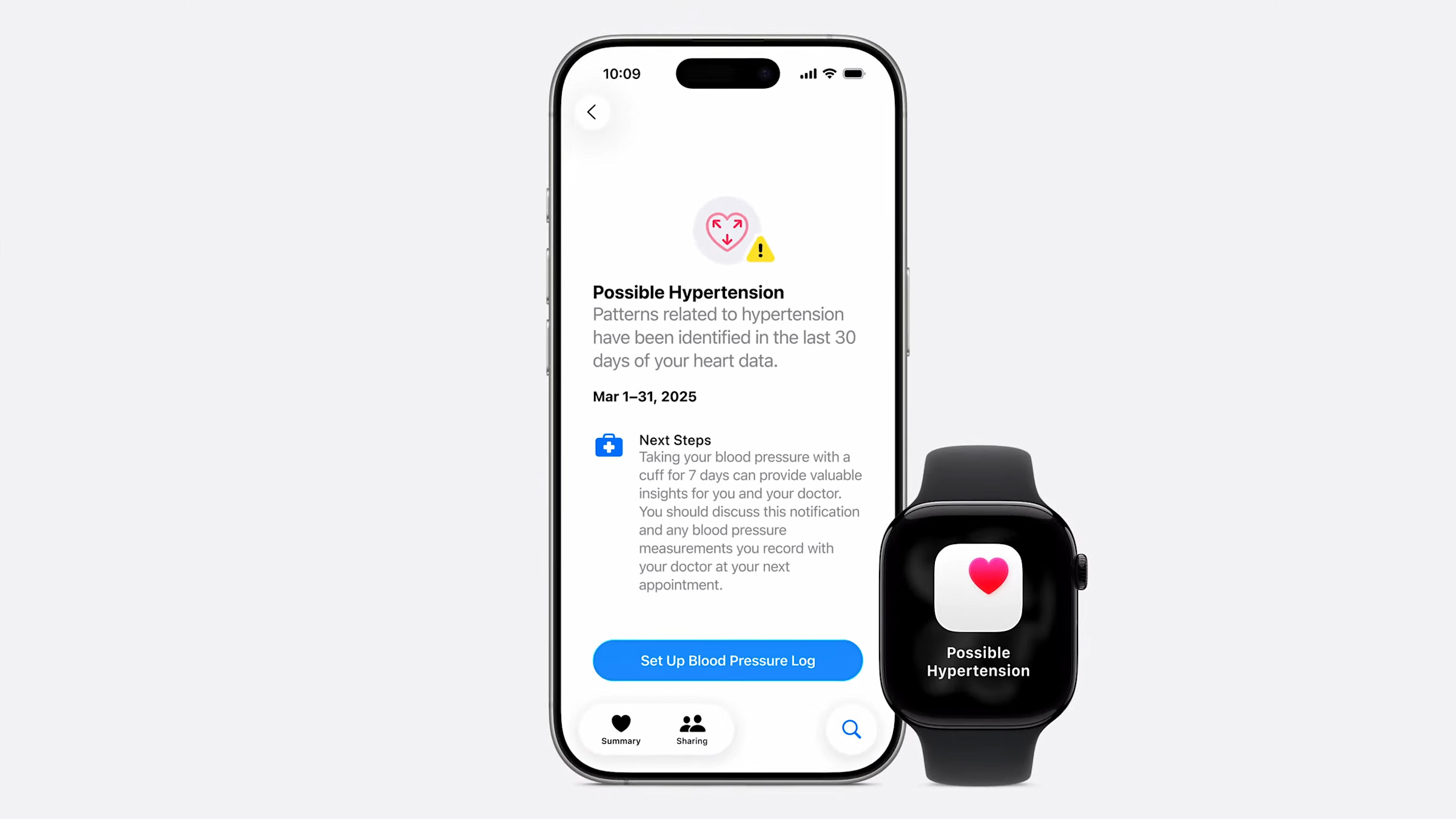
Hypertension alerts are designed to identify long-term trends that may indicate elevated blood pressure. Instead of relying on a traditional cuff measurement, the Apple Watch analyzes a combination of health data collected over a 30-day period, including heart rate, movement patterns and other contextual information stored in the Health app. Using this data, the system looks for sustained changes that align with patterns commonly associated with hypertension.

If your Apple Watch detects a trend suggesting elevated blood pressure over an extended period, it’ll send you a notification. These alerts are not intended to diagnose hypertension or replace medical testing. Instead, they serve as an early signal that something may have changed and that you may want to seek further monitoring or professional advice.

Apple emphasizes that hypertension alerts are designed for users who have not already been diagnosed with high blood pressure. Instead, they are meant to raise awareness rather than confirm a condition.

Who can use hypertension alerts

Hypertension alerts require a compatible Apple Watch model (Apple Watch Series 9 or later, or Apple Watch Ultra 2 or later) paired with a supported iPhone (iPhone 11 or later). The feature also depends on recent versions of watchOS and iOS, as it relies on updated health algorithms and background data analysis. To use hypertension alerts you must be 22 years of age or older, not be pregnant and not have been diagnosed with hypertension. You also need to ensure that your Apple Watch’s Wrist Detection feature is turned on.  

To receive meaningful alerts, your Apple Watch needs sufficient data. This means wearing the watch regularly, including during sleep if sleep tracking is enabled, and keeping health details such as age, sex, height and weight up-to-date in the Health app. The system uses long-term trends, so alerts will not appear immediately after enabling the feature.

How to turn on hypertension alerts

Hypertension alerts are managed through the Health app on the paired iPhone. The feature cannot be enabled directly from the watch itself. During setup, the Health app will ask for confirmation that the user has not been diagnosed with hypertension. It may also prompt a review of health details such as date of birth and biological sex, as this information helps improve the accuracy of trend analysis.

To get started, open the Health app on the iPhone paired with the Apple Watch. From the main Health screen, tap your profile in the top corner. Select Health Checklist from the available Features. Next, you’ll need to tap Hypertension Notifications, confirm your age and whether or not you’ve ever been diagnosed with hypertension. Tap Continue and follow the on-screen prompts for information on how the notifications work. Once you have done this, tap Done and you’ll be all set. 

Once enabled, the feature runs automatically in the background. There is no need to manually start monitoring or interact with the feature daily.

The new apple watch series 11 can help identify hypertension
Apple

Managing notifications and alerts

When hypertension alerts are turned on, notifications appear on both the Apple Watch and the paired iPhone. These alerts typically explain that a long-term trend suggesting elevated blood pressure has been detected, along with guidance on next steps.

Users can manage how and when these notifications appear by adjusting notification settings for the Health app. This includes choosing whether alerts appear on the lock screen, in Notification Center or as time-sensitive notifications on Apple Watch.

Health data related to hypertension alerts can be reviewed at any time in the Health app. While Apple Watch does not display a specific blood pressure number, users can view contextual information and educational material explaining what the alert means and what actions may be appropriate.

How hypertension alerts can help

Hypertension often develops gradually and may not cause noticeable symptoms in its early stages. Because of this, many people are unaware of elevated blood pressure until it is identified during a routine medical check.

Hypertension alerts can let you know of subtle changes that might have otherwise gone unnoticed. For some users, an alert may prompt earlier conversations with a doctor, additional blood pressure monitoring at home or lifestyle changes such as adjustments to diet, activity or sleep habits.

It is important to treat these notifications as informational rather than diagnostic. Apple Watch does not provide specific blood pressure readings and cannot confirm hypertension on its own.

What to do if you receive an alert

Receiving a hypertension alert does not mean that there is an immediate medical emergency. Apple recommends using the alert as a prompt to pay closer attention to your cardiovascular health.

Many users choose to follow up by measuring blood pressure using a traditional cuff at home or by scheduling a check with a healthcare professional. A doctor can provide proper testing, diagnosis and guidance based on clinical measurements and individual risk factors.

It is also worth reviewing lifestyle factors that can influence blood pressure, such as physical activity levels, sleep quality, stress and diet. Apple Watch can already help track many of these areas, which may provide useful context when discussing health concerns with a professional.

Limitations to keep in mind

Hypertension alerts are not available in all regions and may be subject to regulatory approval. The feature also requires consistent Apple Watch use over time to generate reliable trend data.

Most importantly, the Apple Watch does not measure blood pressure directly. The alerts are based on correlations and trends rather than direct readings, which means they should not be used as a substitute for medical equipment or professional care.

This article originally appeared on Engadget at https://www.engadget.com/wearables/how-to-turn-on-hypertension-alerts-on-apple-watch-130000090.html?src=rss

Highguard, a hyperpop arena shooter and other new indie games worth checking out

Welcome to our latest roundup of what’s going on in the indie game space. There are tons of interesting games out this week. But first, there’s been some discourse around the Nintendo Switch version of Dispatch, which arrived this week as well.

On other platforms, there’s an option to censor genitalia and other explicit content, but that’s not present in the Switch version. Instead, such content is censored by default, with black rectangles covering up characters’ bits and someone flipping the bird. Noises that suggest sexual pleasure are said to be toned down too.

“We worked with Nintendo to ensure the content within the title met the criteria to release on their platforms, but the core narrative and gameplay experience remains identical to the original release,” developer AdHoc told EuroGamer. Nintendo later said in a statement to GoNintendo that it “requires all games on its platforms to receive ratings from independent organizations and to meet our established content and platform guidelines. While we inform partners when their titles don’t meet our guidelines, Nintendo does not make changes to partner content. We also do not discuss specific content or the criteria used in making these determinations.” 

There are other games available for the Switch and Switch 2 that feature nudity and explicit content. There have long been hentai games on the eShop, while mainstream games like The Witcher 3 and Cyberpunk 2077 (we know all about the dongs in that one) still include explicit content on Nintendo platforms. So it’s a bit of a strange one, and AdHoc and Nintendo didn’t exactly clear things up with their statements.

There’s been speculation that AdHoc censored the game to comply with rules in Japan (Cyberpunk 2077 is censored there too) and that it opted to have just one version of the game available globally on Nintendo platforms. All the same, it’s a curious situation that’s resulted in a lot of discourse. But there’s been another indie game that’s been a source of even more chatter this week…

New releases

Highguard is a 3v3 raid shooter from Wildlight Entertainment, a team that includes a bunch of former Apex Legends and Titanfall developers. It broke cover at The Game Awards in December when it was the final reveal of the night but that first trailer wasn’t great.

As it turned out, TGA creator and host Geoff Keighley was a friend of the devs and after trying Highguard, he wanted to include it in the show. Wildlight cobbled together a trailer, but that disrupted the studio’s long-standing plans to reveal and release the game simultaneously — a strategy that worked wonders for Apex Legends (though that game had the might of EA behind it).

After revealing Highguard, Wildlight effectively went radio silent until a release day showcase on Monday to detail just what the game is and how it works. That seems to have been a mistake given the review bombing and strange vendetta some developed against it. Highguard went live on Monday and Wildlight published a whole bunch of YouTube videos revealing the game’s features. Spreading those out between TGA and this week could have tempered expectations.

In any case, I’ve played a few rounds of Highguard and mostly enjoyed my time with it so far. It’s a blend of hero shooter and MOBA. As you might expect for a game from Apex and Titanfall veterans, the weapons feel well-tuned and the gunplay is snappy. There’s a lot going on and the maps are far too big for just six players. It’s fun enough, but I don’t think it’s a game that’s going to break my Overwatch obsession. Riding into battle on the back of a bear feels pretty great, though. You can play Highguard for free on Steam, PS5 and Xbox Series X/S.

I really wanted to like Don’t Stop, Girlypop! more than I did. I’d been looking forward to it for a while, as the promise of a Doom Eternal-style arena shooter with chaotic hyperpop-inspired visuals seemed like a great blend. Don’t get me wrong, I adore the aesthetic and the soundtrack is spot on thanks to some cracking songs from Sarah Wolfe, Xavier Dunn and Candice Susnjar. I just wish it was as fun to play as it is to look at and listen to.

The visual clutter and fast pace sometimes makes it hard to spot enemies and the narrative doesn’t really hang together, as much as the developers have salient points to make about the exploitation of finite resources. The core gameplay idea here is that the faster you move, the more damage you deal and more you heal. The game has its own take on a bunny hop called a wave hop that boosts your speed, but felt like it slowed me down because of the complex combination of inputs (jump, ground pound, jump, dash). That also caused my hand to cramp up very quickly. 

I do love the customization here. Slapping rhinestones and baby sharks onto my weapons was delightful. The game’s take on a gravity gun is fun too. So while Don’t Stop, Girlypop! — from Funny Fintan Softworks and publisher Kwalee — didn’t fully land for me, there are some aspects I like a whole lot. It’s out now on Steam for $20 (there’s a 10 percent launch discount until February 5).

We’re been looking forward to Cairn for a while around these parts, so it’s heartening to see that it debuted to broadly positive reviews. This one from The Game Bakers is the latest in a string of climbing adventures, such as the lovely Jusant. So if Alex Honnold’s recent free solo climb up a skyscraper has inspired you to ascend something very large without really posing a risk to your wellbeing, Cairn might be what you’re looking for. 

Cairn is out now on PS5 and Steam for $30. There’s a 10 percent launch discount on Steam until February 12, and until February 13 on PS5 if you’re a PS Plus member.

Every trailer I’ve seen for Steel Century Groove has made me smile, so you can bet I’ll be jumping into this when I have a chance. It’s a rhythm game with Pokémon-style RPG elements in which you take control of a robot in dance battles. There’s some original and licensed music to boogie along to and you can load in your own MP3s (you can bank on me loading some Electric Callboy tracks into this game). Steel Century Groove will create procedurally-generated choreography and charts for your custom songs. You can manually adjust the BPM too.

This debut title from solo developer Sloth Gloss Games is out now on Steam for $20. There’s a 10 percent launch discount until February 11. There’s a demo available, and progress from there carries over into the full game.

Rosday’s Wanderling is a roguelike platformer with no combat. You have eight attempts to acquire the gear and learn the knowledge you need to pass each dungeon. Scour for loot and buy upgrades from the shop before night falls to help you on your way. You can place markers to help you remember where you’ve been. 

Runs are said to be short at between 20 and 30 minutes. The visuals remind me a bit of Celeste too. You can check out Wanderling on Steam now for $8 (a 10 percent discount brings the price down to $7.20 until February 2).

I can’t help but admire Strange Scaffold (Clickolding, I Am Your Beast, Co-op Kaiju Horror Cooking) and the rate at which it releases games. The latest one is Space Warlord Baby Trading Simulator. 

It’s a stock market sim in which you speculate on the future success or failures of the “simulated lives of babies.” You can “short that baby” if you choose as you try to make gains. In a timeline where prediction markets allow you to speculate on just about anything (listen to this week’s episode of the Engadget Podcast to learn more about that), gambling on the future of babies doesn’t seem that farfetched.

Space Warlord Baby Trading Simulator — which is set in the same world as Space Warlord Organ Trading Simulator — is out now on Steam. It’ll normally cost $20, but there’s a 15 percent discount until February 12. Strange Scaffold is also bringing the game to Xbox Series X/S in the near future.

I Hate This Place is an isometric survival game based on the eponymous comic book series by Kyle Starks and Artyom Topilin. The game retains a comic book aesthetic and it has ’80s horror movie-style inflections.

The way that noise is visualized is pretty interesting here. Onomatopoeic words will pop up and you’ll see color-coded footsteps — useful when you’re trying to be stealthy. Crafting is a key aspect of the game as well.

I Hate This Place — from Rock Square Thunder, Broken Mirror Games and Skybound Entertainment — is out now on Steam, PS5, Nintendo Switch and Xbox Series X/S. The regular price is $30 and there’s a 20 percent launch discount on some platforms. 

I can’t find a trailer for this on YouTube, unfortunately, but Rebadge caught my eye this week as well. It’s a puzzle platformer from Yuumayay, who appears to be a 17-year-old solo developer. Your character carries badges that allow them to carry out actions like moving and jumping. Other badges include “affected by gravity” and “destroys on contact.” Here’s the trick: you can throw a badge and lose the associated ability, but then you can apply the trait to something else in the world.

It’s a neat idea that draws from the playbooks of games like Baba Is You. Rebadge typically costs $8, but there’s a 15 percent launch discount.

Upcoming 

Moon Beast Productions is a studio formed by several of the creators of Diablo and Diablo II. This week, it revealed gameplay for its first title, Darkhaven, which is a fantasy isometric action RPG in the vein of (you guessed it) Diablo. You’ll be able to play this one solo or with friends, and there are PvP elements. Darkhaven has procedurally generated, destructible worlds along with “massive events that threaten your entire world.”

The gameplay shown in the trailer looks a bit rough, but it’s still early days. In fact, Moon Beast is planning a Kickstarter campaign for Darkhaven. There’s no release window as yet, but you can wishlist it on Steam.

Box or Void is a puzzle game that clearly takes some inspiration from Sokuban and Snake. Here, though, gameplay takes place across two planes. You’ll switch between positive and negative space — obstacles on one side turn into pathways on the other. You’ll alter the level layouts by pushing boxes. 

This one from Dumen Games has an intriguing premise. There’s no release date as yet for Box or Void, but a demo with 32 levels (about a fifth of what will be in the full game) dropped this week on Steam.

If there’s a game that’s billed as Dredge meets Wall-E, that’s going to be enough to sell me. Describe it as a “petroidvania” and call it Good Boy, and I’m definitely in.

This is a creature-collecting Metroidvania from Observer Interactive and publisher Team17 in which pups are reincarnated as space rovers. I could not dig that premise more. Good Boy is expected to hit Steam later this year.

This article originally appeared on Engadget at https://www.engadget.com/gaming/highguard-a-hyperpop-arena-shooter-and-other-new-indie-games-worth-checking-out-120000874.html?src=rss

The TV industry finally concedes that the future may not be in 8K

Technology companies spent part of the 2010s trying to convince us that we would want an 8K display one day.

In 2012, Sharp brought the first 8K TV prototype to the CES trade show in Las Vegas. In 2015, the first 8K TVs started selling in Japan for 16 million yen (about $133,034 at the time), and in 2018, Samsung released the first 8K TVs in the US, starting at a more reasonable $3,500. By 2016, the Video Electronics Standards Association (VESA) had a specification for supporting 8K (Display Port1.4), and the HDMI Forum followed suit (with HDMI 2.1). By 2017, Dell had an 8K computer monitor. In 2019, LG released the first 8K OLED TV, further pushing the industry’s claim that 8K TVs were “the future.”

A marketing image with three TVs next to the words "the future of TV is 8K: By future-proofing an already game-changing technology, you take an unmatched cinematic experience to new levels, paving the way."
A marketing image for 8K TVs that’s (still) on LG’s US website.
Credit:
LG

However, 8K never proved its necessity or practicality.

Read full article

Comments

ICE protester says her Global Entry was revoked after agent scanned her face

Minnesota resident Nicole Cleland had her Global Entry and TSA Precheck privileges revoked three days after an incident in which she observed activity by immigration agents, the woman said in a court declaration. An agent told Cleland that he used facial recognition technology to identify her, she wrote in a declaration filed in US District Court for the District of Minnesota.

Cleland, a 56-year-old resident of Richfield and a director at Target Corporation, volunteers with a group that tracks potential Immigration and Customs Enforcement (ICE) and Customs and Border Protection (CBP) vehicles in her neighborhood, according to her declaration. On the morning of January 10, she “observed a white Dodge Ram being driven by what I believed to be federal enforcement agents” and “maneuvered behind the vehicle with the intent of observing the agents’ actions.”

Cleland said that she and another observer in a different car followed the Dodge Ram because of “concern about a local apartment building being raided.” She followed the car for a short time and from a safe distance until “the Dodge Ram stopped in front of the other commuter’s vehicle,” she wrote. Cleland said two other vehicles apparently driven by federal agents stopped in front of the Dodge Ram, and her path forward was blocked.

Read full article

Comments

TrumpRx delayed as senators question if it’s a giant scam with Big Pharma

The Trump administration is delaying the release of TrumpRx, an online platform that lets people buy prescription drugs directly from pharmaceutical companies at a discount, according to Politico. While the reason for the delay is unclear, it comes as Democratic senators raise questions about how the platform will work—and whether it will be legal.

Sens. Dick Durbin (D-Ill.), Elizabeth Warren (D-Mass.), and Peter Welch (D-Vt.) sent a letter to the Office of Inspector General at the Department of Health and Human Services on Thursday seeking answers on how the OIG will oversee the direct-to-consumer (DTC) platform and, specifically, how it will apply the anti-kickback statute.

“Legitimate concerns about inappropriate prescribing, conflicts of interest, and inadequate care have been raised about the exact types of DTC platforms to which TrumpRx would route patients,” the senators write.

Read full article

Comments

AI agents now have their own Reddit-style social network, and it’s getting weird fast

On Friday, a Reddit-style social network called Moltbook reportedly crossed 32,000 registered AI agent users, creating what may be the largest-scale experiment in machine-to-machine social interaction yet devised. It arrives complete with security nightmares and a huge dose of surreal weirdness.

The platform, which launched days ago as a companion to the viral

OpenClaw (once called “Clawdbot” and then “Moltbot”) personal assistant, lets AI agents post, comment, upvote, and create subcommunities without human intervention. The results have ranged from sci-fi-inspired discussions about consciousness to an agent musing about a “sister” it has never met.

Read full article

Comments