Apple Revamps Online Store With Custom Macs—But You Can Save Elsewhere

Apple Revamps Online Store With Custom Macs—But You Can Save Elsewhere
Apple is taking a partial page from bulk OEM system builders and boutique PC outfits by now offering a similar part-by-part configuration process, rather than the old way of serving up a selection of preconfigured models. The component options haven’t changed, but the way you go about piecing together a Mac feels a little more personal and

The Out-of-Touch Adults’ Guide to Kid Culture: Humans Are in a Dance Battle With AI Babies

Your social media feed is probably showing you something totally different, but this week, young people are fleeing TikTok (or at least posting about fleeing TikTok), AI and humanity are locked in a high-stakes dance battle, AI food is yelling at everyone, and we’re learning a lot about “young hos.”

TikTok refugees head to Upscrolled

Since it was released in 2017, social media platform TikTok has been the way young people communicate, but that could be changing. Alarm over recent changes in the app’s privacy policy and accusations that its new, American owners are messing up the algorithm have some users deleting their accounts and leaving. Or at least saying they’re leaving. But where will they go?

The last time this kind of thing happened, TikTokers headed to another Chinese social media app called RedNote, but this time, a lot of people say they’re migrating to Upscrolled. The app, which briefly hit number one on the app store charts, was created by Palestinian-Jordanian-Australian entrepreneur Issam Hijazi. Upscrolled promises an antidote to the “Double standards, algorithmic bias, selective censorship, and profit over principle” of other social media platforms. The app doesn’t allow “hate speech” but promises less censorship of ideas, no shadow-banning, no data-sharing, and “No black-box AI” for curation, all delivered in a form-factor that’s familiar to users.

So, what’s the downside? Well, it’s a small team and it seems to be having some issues with the number of downloads. More troubling are reports of a flood of antisemitic material appearing on the site. In a statement to The Jewish Telegraphic Agency, Upscrolled spokeperson Gabriella Bord wrote, “Our content moderation hasn’t been able to keep up with the massive rise of users this week,” and “We’re working with digital rights experts to grow our Trust & Safety team and are beefing up our content moderation to prevent this,” so maybe the moderation team is just having some growing pains.

Viral video of the week: human vs. AI baby dancing

This week’s viral video is more of a viral video trend, and it involves a battle of dancing babies.

It starts with the post below, from @mindalchemy0236, which I apologize for in advance.

An ad for the “Baby Dance” app, this video has been viewed over 100 million times. It became so overplayed on TiKTok that users fought back in the only way they could: Through dance. In a modern re-enactment of the American myth of John Henry vs. the Steam Engine, users on TikTok are locked in dance battle with AI. People responded to the annoying ad with videos of their human children doing the same dance for real, joking that it was to save $1.98, the app’s price.

Kids got into it, throwing shade at AI at the same time.

Then grown-ups got in on it,

Grannies started doing it,

and celebrities like Lisa Rinna got into the act.

So it turned into a whole thing, and according to some users, human users ended up winning because TikTok’s algorithm is showing more human remakes than the original ad that annoyed everyone. What does it all mean? Is this how the robot-human war will be decided? How does it relate to the original dancing baby, one of our first internet memes? Is history turning back on itself and should we invest in Ally McBeal reruns? I just don’t know, but for what it’s worth, John Henry won the battle with the steam shovel, but the effort exhausted him and he died.

AI food yelling videos: brain rot that’s good for you

I’m always trying to find good things about artificial intelligence. So far I got:

But I’m adding videos of food yelling at people.

For real though. This growing meme format involves asking AI to make videos of food angrily telling you how to properly and safely prepare and store it. They’re entertaining, educational, and if one person remembers to throw away rice that’s left out, it could save a life and be worth all that cooling water. Kids need to know all this junk and for some reason they like brain rot. Check out these meaty boys:

And these angry fellas:

I can’t vouch for the accuracy of every food tip on the hashtag, but I watched a bunch of these videos and so far, they’re solid.

What does “young ho” mean?

I’m sure you know what both “ho” and “young” mean, but put them together and it becomes something else, both a reclamation of the word “ho” and an expression of youth-based solidarity.

The trend started with mildly insulting, older-people-bag-on-youngins posts on X like this one:


This Tweet is currently unavailable. It might be loading or has been removed.

But over on TikTok, @kensdremgurl went viral by laying down a mini-manifesto for young hos:

Summing up the list with, “all a young ho is is someone who’s freed themself from being inconvenienced.”

Other TikTokers started listing which young ho traits they share

and making their own observations, adding these traits to the list:

The latest iPad mini is $100 off right now

We’ve finally made it to February, but, with the ongoing long nights, you might want a pick-me-up to get you through the rest of winter. Take the Apple iPad mini with the A17 Pro chip, which is on sale for $400, down from $500. Its small size is perfect for cozying up on the couch or to use on your daily commute. 

Apple released this iPad mini in late 2024 and it was a solid update. We gave it an 83 in our review thanks to the power of its A17 Pro chip and that it comes with a minimum of 128GB of storage. The model currently on sale comes with 128GB, Wi-Fi and all four color options: Blue, Purple, Space Gray and Starlight. 

We named the Apple iPad mini our favorite compact iPad — though, to be fair, its only competitor is itself. Still, it’s a good iPad with an 8.3-inch Liquid Retina display, Apple Intelligence and 12MP Wide back and 12MP Ultra Wide cameras. For 20 percent off, it’s a great option for a light, useful way to entertain yourself through the rest of winter and beyond. 

Check out our coverage of the best Apple deals for more discounts, and follow @EngadgetDeals on X for the latest tech deals and buying advice.

This article originally appeared on Engadget at https://www.engadget.com/deals/the-latest-ipad-mini-is-100-off-right-now-140900983.html?src=rss

China’s Decades-Old ‘Genius Class’ Pipeline Is Quietly Fueling Its AI Challenge To the US

China’s decades-old network of elite high-school “genius classes” — ultra-competitive talent streams that pull an estimated 100,000 gifted teenagers out of regular schooling every year and run them through college-level science curricula — has produced the core technical talent now building the country’s leading AI and technology companies, the Financial Times reported Saturday.

Graduates of these programs include the founder of ByteDance, the leaders of e-commerce giants Taobao and PDD, the billionaire behind super-app Meituan, the brothers who started Nvidia rival Cambricon, and the core engineers behind large language models at DeepSeek and Alibaba’s Qwen. DeepSeek’s research team of more than 100 was almost entirely composed of genius-class alumni when the startup released its R1 reasoning model last year at a fraction of the cost of its international rivals.

The system traces to the mid-1980s, when China first sent students to the International Mathematical Olympiad and a handful of top high schools began creating dedicated competition-track classes. China now graduates around five million STEM majors annually — compared to roughly half a million in the United States — and in 2025, 22 of the 23 students it sent to the International Science Olympiads returned with gold medals. The computer science track has overtaken maths and physics as the most popular competition subject, a shift that accelerated after Beijing designated AI development a “key national growth strategy” in 2017.


Read more of this story at Slashdot.

Sony’s Massive 85-Inch Bravia 5 Mini LED 4K TV Is $700 Off Right Now

We may earn a commission from links on this page. Deal pricing and availability subject to change after time of publication.

Mini LED tech has finally filtered down to more mainstream big-screen TVs, but the pricing jumps fast once you start looking at premium brands and larger screen sizes—that’s why the current price on Sony’s 85-inch Bravia 5 stands out. It’s selling for $1,698 on Amazon (down from $2,399.99) which is the lowest it’s been so far, according to price trackers. At this size, that discount meaningfully shifts the math, especially if you’re after a large screen from a brand known for dependable processing and a polished smart TV experience, rather than chasing raw specs alone.

The Bravia 5 steps is the successor to Sony’s X90L, swapping full-array local dimming for Mini LED backlighting and adding a higher number of dimming zones. It runs Google TV (version 12), supports Dolby Vision, and handles DTS audio passthrough. There’s also a practical perk for Sony soundbar owners: the TV’s built-in speakers can function as a center channel. On the gaming side, two HDMI 2.1 ports support 4K at 120Hz, along with variable refresh rate and G-sync compatibility. That said, Game Mode isn’t flawless. Pixel response times are on the slower side, which can introduce noticeable motion blur, particularly in fast-paced titles. SDR brightness is strong enough for daytime viewing, but HDR output doesn’t deliver the kind of punch you might expect from a Mini LED panel at this size and price.

Where the Bravia 5 struggles most is contrast consistency and viewing flexibility. Despite the upgraded backlight, black levels and overall contrast don’t represent a major leap over the older X90L, and reflections can still be distracting in brighter rooms. The narrow viewing angle also limits its appeal for wide seating layouts. If pure picture performance is the priority, competing Mini LED models from TCL or Hisense, or even some OLED options, offer stronger contrast for similar money. Still, for buyers who value Sony’s processing, Google TV’s clean interface, and long-term brand reliability, this price drop makes the 85-inch Bravia 5 a far more compelling option than it usually is.

NASA gears up for one more key test before launching Artemis II to the Moon

If all goes according to plan Monday, NASA’s launch team at Kennedy Space Center in Florida will load 755,000 gallons of super-cold propellants into the rocket built to send the Artemis II mission toward the Moon.

The fuel loading is part of a simulated countdown for the Space Launch System rocket, a final opportunity for engineers to rehearse for the day NASA will send four astronauts on a nearly 10-day voyage around the far side of the Moon and back to Earth. The Artemis II mission will send humans farther from Earth than ever before. The astronauts will be the first to launch on NASA’s SLS rocket and the first people to travel to the vicinity of the Moon in more than 53 years.

Charlie Blackwell-Thompson, NASA’s launch director for the Artemis II mission, will supervise the practice countdown from a firing room inside the Launch Control Center a few miles away from the SLS rocket at Kennedy Space Center. In a recent briefing with reporters, she called the Wet Dress Rehearsal—”wet” refers to the loading of liquid propellants—the “best risk reduction test” for verifying all is ready to proceed into the real countdown.

Read full article

Comments

This Eufy Outdoor Camera Bundle Is $250 Off Right Now

We may earn a commission from links on this page. Deal pricing and availability subject to change after time of publication.

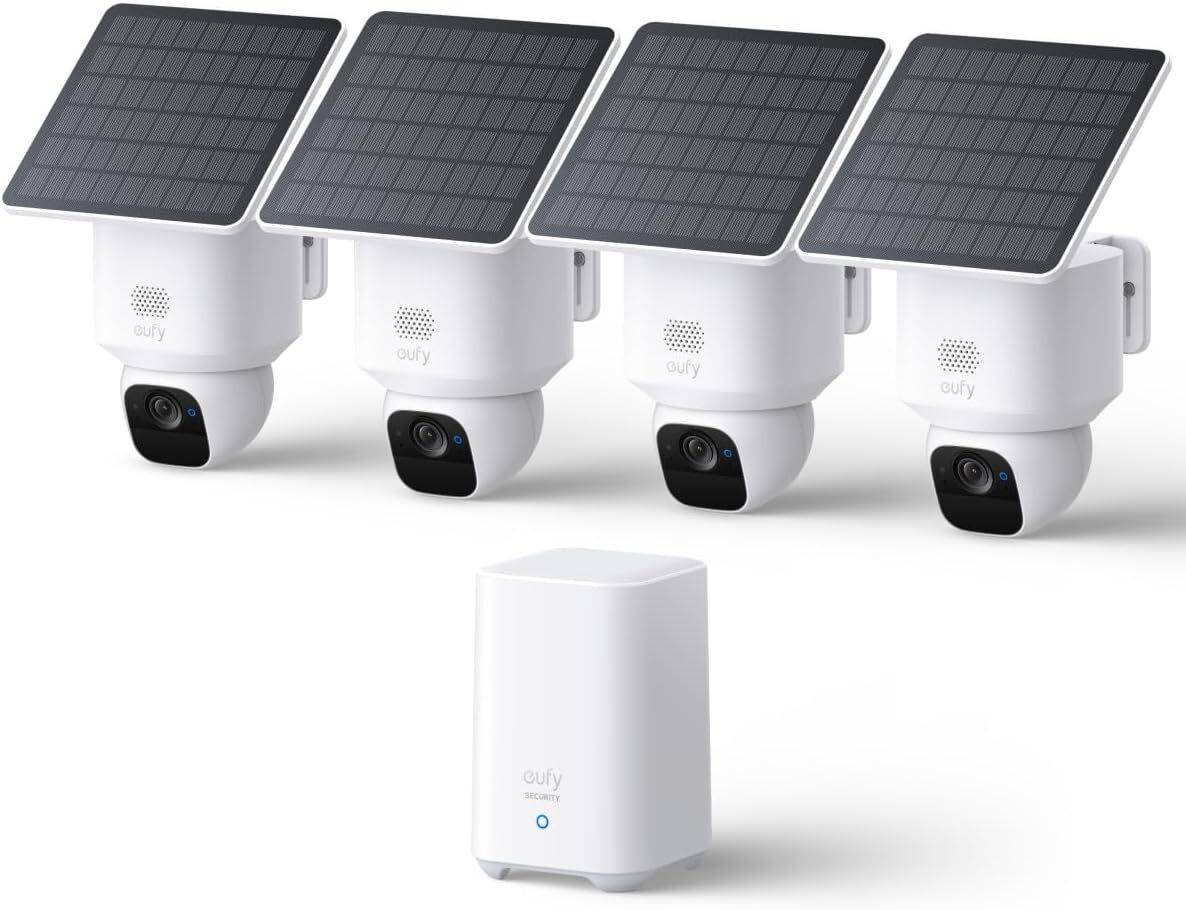
Adding outdoor security cameras to your home setup can get expensive fast, especially once you factor in subscriptions and extra hardware. This deal on a Eufy SoloCam E30 four-pack makes that math a little more palatable. It’s currently $299.99 on Amazon, down from its usual $549.99 price, which is the lowest price it’s ever been, according to price-tracking tools. That brings each camera to about $75, which still isn’t cheap, of course—but unlike many other camera brands, these don’t require a monthly subscription, which is a great perk.

Each of these IP65-rated cameras runs on internal batteries that last about three months between charges, depending on how often motion is detected. Solar support helps extend that. Eufy says around two hours of direct sunlight per day is enough to keep them topped up. You can also hardwire the cameras if you want continuous recording, including short pre-roll clips, though the power cables are sold separately. You also get 360-degree pan and 70-degree tilt coverage per unit, which helps cut down on blind spots around driveways or yards. Video is captured in enhanced 2K resolution with an f/1.6 aperture, making nighttime footage via infrared night vision fairly crisp. There’s no built-in spotlight, so there’s no color night vision here, but for general monitoring, black-and-white is often enough.

Footage can be stored locally on the included HomeBase S280, which has 16GB built in, or on a microSD card up to 128GB (sold separately) if you want more space. Smart home support includes Alexa and Google Assistant, but Apple HomeKit is not supported. Two-way audio is included, and the HomeBase can support up to 16 cameras, so expanding later is an option. This setup is not for people who want cloud storage or advanced smart home integrations. It makes more sense for those who want local control, predictable costs, and broad coverage without wiring the entire house.

Is AI Really Taking Jobs? Or Are Employers Just ‘AI-Washing’ Normal Layoffs?

The New York Times lists other reasons a company lays off people. (“It didn’t meet financial targets. It overhired. Tariffs, or the loss of a big client, rocked it…”)

“But lately, many companies are highlighting a new factor: artificial intelligence. Executives, saying they anticipate huge changes from the technology, are making cuts now.”

A.I. was cited in the announcements of more than 50,000 layoffs in 2025, according to Challenger, Gray & Christmas, a research firm… Investors may applaud such pre-emptive moves. But some skeptics (including media outlets) suggest that corporations are disingenuously blaming A.I. for layoffs, or “A.I.-washing.” As the market research firm Forrester put it in a January report: “Many companies announcing A.I.-related layoffs do not have mature, vetted A.I. applications ready to fill those roles, highlighting a trend of ‘A.I.-washing’ — attributing financially motivated cuts to future A.I. implementation….”

“Companies are saying that ‘we’re anticipating that we’re going to introduce A.I. that will take over these jobs.’ But it hasn’t happened yet. So that’s one reason to be skeptical,” said Peter Cappelli, a professor at the Wharton School… Of course, A.I. may well end up transforming the job market, in tech and beyond. But a recent study… [by a senior research fellow at the Brookings Institution who studies A.I. and work] found that AI has not yet meaningfully shifted the overall market. Tech firms have cut more than 700,000 employees globally since 2022, according to Layoffs.fyi, which tracks industry job losses. But much of that was a correction for overhiring during the pandemic.

As unpopular as A.I. job cuts may be to the public, they may be less controversial than other reasons — like bad company planning.

Amazon CEO Jassy has even said the reason for most of their layoffs was reducing bureaucracy, the article points out, although “Most analysts, however, believe Amazon is cutting jobs to clear money for A.I. investments, such as data centers.”


Read more of this story at Slashdot.

TikTok says it’s ‘back to normal’ after winter storm-related outages

TikTok is finally “back to normal” in the US after days of technical issues and outages tied to winter storms. Less than a week after companies like Oracle took ownership of TikTok’s domestic operations, the platform faced a major power outage when one of its primary US data center sites — run by Oracle — got taken down by the storm. 

The problems started last Monday, January 26, when TikTok announced it was working on a “major infrastructure issue” and warned of bugs, time-out requests, missing earnings, and more. The next day TikTok shared that progress has been made but there were still some issues. It added, “Creators may temporarily see ‘0’ views or likes on videos, and your earnings may look like they’re missing. This is a display error caused by server timeouts; your actual data and engagement are safe.”

Then, yesterday, February 1, TikTok claimed the problem was straightened out and that users shouldn’t experience any more related issues. “We’re sorry about the issues experienced by our U.S. community. We appreciate how much you count on TikTok to create, discover, and connect with what matters to you,” the platform stated in its update. “Thank you for your patience and understanding.”

A number of US users have uninstalled TikTok in response to its new ownership and technical issues. Some users also claimed that TikTok was censoring what they could post or what others saw. For instance, The Guardian reports that many people faced issues sharing videos about ICE agents killing Alex Pretti and general anti-ICE content. 

On January 26, analytics firm Sensor Tower told CNBC that uninstalls of the app had increased by over 150 percent during the five days since its change in ownership, when compared to the three months before. At the same time, independent app and competitor UpScrolled saw a surge in downloads. 

This article originally appeared on Engadget at https://www.engadget.com/apps/tiktok-says-its-back-to-normal-after-winter-storm-related-outages-114848212.html?src=rss

Linux Kernel Developer Chris Mason’s New Initiative: AI Prompts for Code Reviews

Phoronix reports:

Chris Mason, the longtime Linux kernel developer most known for being the creator of Btrfs, has been working on a Git repository with AI review prompts he has been working on for LLM-assisted code review of Linux kernel patches. This initiative has been happening for some weeks now while the latest work was posted today for comments… The Meta engineer has been investing a lot of effort into making this AI/LLM-assisted code review accurate and useful to upstream Linux kernel stakeholders. It’s already shown positive results and with the current pace it looks like it could play a helpful part in Linux kernel code review moving forward.

“I’m hoping to get some feedback on changes I pushed today that break the review up into individual tasks…” Mason wrote on the Linux kernel mailing list. “Using tasks allows us to break up large diffs into smaller chunks, and review each chunk individually. This ends up using fewer tokens a lot of the time, because we’re not sending context back and forth for the entire diff with every turn. It also catches more bugs all around.”


Read more of this story at Slashdot.

Is the TV Industry Finally Conceding That the Future May Not Be 8K?

“Technology companies spent part of the 2010s trying to convince us that we would want an 8K display one day…” writes Ars Technica.

“However, 8K never proved its necessity or practicality.”

LG Display is no longer making 8K LCD or OLED panels, FlatpanelsHD reported today… LG Electronics was the first and only company to sell 8K OLED TVs, starting with the 88-inch Z9 in 2019. In 2022, it lowered the price-of-entry for an 8K OLED TV by $7,000 by charging $13,000 for a 76.7-inch TV. FlatpanelsHD cited anonymous sources who said that LG Electronics would no longer restock the 2024 QNED99T, which is the last LCD 8K TV that it released.

LG’s 8K abandonment follows other brands distancing themselves from 8K. TCL, which released its last 8K TV in 2021, said in 2023 that it wasn’t making more 8K TVs due to low demand. Sony discontinued its last 8K TVs in April and is unlikely to return to the market, as it plans to sell the majority ownership of its Bravia TVs to TCL.

The tech industry tried to convince people that the 8K living room was coming soon. But since the 2010s, people have mostly adopted 4K. In September 2024, research firm Omdia reported that there were “nearly 1 billion 4K TVs currently in use.” In comparison, 1.6 million 8K TVs had been sold since 2015, Paul Gray, Omdia’s TV and video technology analyst, said, noting that 8K TV sales peaked in 2022. That helps explain why membership at the 8K Association, launched by stakeholders Samsung, TCL, Hisense, and panel maker AU Optronics in 2019, is dwindling. As of this writing, the group’s membership page lists 16 companies, including just two TV manufacturers (Samsung and Panasonic). Membership no longer includes any major TV panel suppliers. At the end of 2022, the 8K Association had 33 members, per an archived version of the nonprofit’s online membership page via the Internet Archive’s Wayback Machine.

“It wasn’t hard to predict that 8K TVs wouldn’t take off,” the article concludes. “In addition to being too expensive for many households, there’s been virtually zero native 8K content available to make investing in an 8K display worthwhile…”


Read more of this story at Slashdot.

EU Deploys New Government Satcom Program in Sovereignty Push

The EU “has switched on parts of its homegrown secure satellite communications network for the first time,” reports Bloomberg, calling it part of a €10.6 billion push to “wean itself off US support amid growing tensions.”

SpaceNews notes the new government program GOVSATCOM pools capacity from eight already on-oribit satellites from France, Spain, Italy, Greece and Luxembourg — both national and commercial. And they cite this prediction by EU Defense and Space Commissioner Andrius Kubilius.

The program could expand by 2027.

“All member states can now have access to sovereign satellite communications — military and government, secure and resilient, built in Europe, operated in Europe, and under European control,”
[Kubilius said during his opening remarks at the European Space Conference]… Beginning in 2029, GOVSATCOM is expected to integrate with the 290 satellites in the Infrastructure for Resilience, Interconnectivity and Security by Satellite constellation, known as IRIS2, and be fully operational… “The goal is connectivity and security for all of Europe — guaranteed access for all member states and full European control.”


Read more of this story at Slashdot.

What Go Programmers Think of AI

“Most Go developers are now using AI-powered development tools when seeking information (e.g., learning how to use a module) or toiling (e.g., writing repetitive blocks of similar code).” That’s one of the conclusions Google’s Go team drew from September’s big survey of 5,379 Go developers.

But the survey also found that among Go developers using AI-powered tools, “their satisfaction with these tools is middling due, in part, to quality concerns.”

Our survey suggests bifurcated adoption — while a majority of respondents (53%) said they use such tools daily, there is also a large group (29%) who do not use these at all, or only used them a few times during the past month. We expected this to negatively correlate with age or development experience, but were unable to find strong evidence supporting this theory except for very new developers: respondents with less than one year of professional development experience (not specific to Go) did report more AI use than every other cohort, but this group only represented 2% of survey respondents. At this time, agentic use of AI-powered tools appears nascent among Go developers, with only 17% of respondents saying this is their primary way of using such tools, though a larger group (40%) are occasionally trying agentic modes of operation…

We also asked about overall satisfaction with AI-powered development tools. A majority (55%) reported being satisfied, but this was heavily weighted towards the “Somewhat satisfied” category (42%) vs. the “Very satisfied” group (13%)… [D]eveloper sentiment towards them remains much softer than towards more established tooling (among Go developers, at least). What is driving this lower rate of satisfaction? In a word: quality. We asked respondents to tell us something good they’ve accomplished with these tools, as well as something that didn’t work out well. A majority said that creating non-functional code was their primary problem with AI developer tools (53%), with 30% lamenting that even working code was of poor quality.

The most frequently cited benefits, conversely, were generating unit tests, writing boilerplate code, enhanced autocompletion, refactoring, and documentation generation. These appear to be cases where code quality is perceived as less critical, tipping the balance in favor of letting AI take the first pass at a task. That said, respondents also told us the AI-generated code in these successful cases still required careful review (and often, corrections), as it can be buggy, insecure, or lack context… [One developer said reviewing AI-generated code was so mentally taxing that it “kills the productivity potential”.]

Of all the tasks we asked about, “Writing code” was the most bifurcated, with 66% of respondents already or hoping to soon use AI for this, while 1/4 of respondents didn’t want AI involved at all. Open-ended responses suggest developers primarily use this for toilsome, repetitive code, and continue to have concerns about the quality of AI-generated code.

Most respondents also said they “are not currently building AI-powered features into the Go software they work on (78%),” the surveyors report, “with 2/3 reporting that their software does not use AI functionality at all (66%).”

This appears to be a decrease in production-related AI usage year-over-year; in 2024, 59% of respondents were not involved in AI feature work, while 39% indicated some level of involvement. That marks a shift of 14 points away from building AI-powered systems among survey respondents, and may reflect some natural pullback from the early hype around AI-powered applications: it’s plausible that lots of folks tried to see what they could do with this technology during its initial rollout, with some proportion deciding against further exploration (at least at this time).

Among respondents who are building AI- or LLM-powered functionality, the most common use case was to create summaries of existing content (45%). Overall, however, there was little difference between most uses, with between 28% — 33% of respondents adding AI functionality to support classification, generation, solution identification, chatbots, and software development.


Read more of this story at Slashdot.

Anthropic’s $200M Pentagon Contract at Risk Over Objections to Domestic Surveillance, Autonomous Deployments

Talks “are at a standstill” for Anthropic’s potential $200 million contract with America’s Defense Department, reports Reuters (citing several people familiar with the discussions.”) The two issues?

– Using AI to surveil Americans
– Safeguards against deploying AI autonomously

The company’s position on how its AI tools can be used has intensified disagreements between it and the Trump administration, the details of which have not been previously reported… Anthropic said its AI is “extensively used for national security missions by the U.S. government and we are in productive discussions with the Department of War about ways to continue that work…”

In an essay on his personal blog, Anthropic CEO Dario Amodei warned this week that AI should support national defense “in all ways except those which would make us more like our autocratic adversaries.

A person “familiar with the matter” told the Wall Street Journal this could lead to the cancellation of Anthropic’s contract:

Tensions with the administration began almost immediately after it was awarded, in part because Anthropic’s terms and conditions dictate that Claude can’t be used for any actions related to domestic surveillance. That limits how many law-enforcement agencies such as Immigration and Customs Enforcement and the Federal Bureau of Investigation could deploy it, people familiar with the matter said. Anthropic’s focus on safe applications of AI — and its objection to having its technology used in autonomous lethal operations — have continued to cause problems, they said.

Amodei’s essay calls for “courage, for enough people to buck the prevailing trends and stand on principle, even in the face of threats to their economic interests and personal safety…”


Read more of this story at Slashdot.

Is Meta’s Huge Spending on AI Actually Paying Off?

The Wall Street Journal says that Meta “might be reaping some of the richest benefits from the AI boom so far.”

Meta’s revenue grew 22% year over year in 2025 to $201 billion, and the company expects even bigger gains in the current quarter, potentially as high as 34%. That is huge growth for a company that brought in nearly $60 billion in the latest three-month period. And Zuckerberg signaled that Meta was just scratching the surface of AI’s potential. “Our world-class recommendation systems are already driving meaningful growth across our apps and ads business. But we think that the current systems are primitive compared to what will be possible soon,” he said on a call with investors and analysts…

[Meta’s Chief Financial Officer Susan] Li said the company doubled the number of graphics-processing units that it used to train its ad-ranking model in the fourth quarter and adopted a new learning architecture. Those actions led users to click on ads on Facebook 3.5% more often and to a gain of more than 1% in conversions, meaning purchases, subscriptions or leads, on Instagram, she said. Other AI-related improvements led to a 3% increase in conversions across its family of apps. On the ad-buying side, Meta has also been working toward using AI to automate ad creation for businesses that want to advertise their products or services on Facebook and Instagram. On the call, Li said the combined revenue run rate of video-generation tools hit $10 billion in the fourth quarter.

In short, CNBC reported, Meta’s stock price surged over 10% this week “after showing signs that AI investments are boosting the bottom line.”

Benjamin Black, an internet analyst at Deutsche Bank, explained the connection to the Wall Street Journal. “The more compute the ad platform gets, the far better it performs, and that’s a real structural advantage that Meta has. If you can see that yesterday’s spend is driving this month’s growth, then as a good business person, you’re going to continue to feed the beast.”

CNBC says now Meta “plans to spend between $115 billion and $135 billion on its AI build-out this year. That’s nearly double what it spent in 2025.”


Read more of this story at Slashdot.

Bitcoin Drops 40% in Four Months. Bloomberg Blames Absence of Buyers and Belief

October saw Bitcoin reach $123,742. But less than four months later, “The world’s largest cryptocurrency slipped below $76,000…” Bloomberg reports, “dropping about 40% from its 2025 peak…”

“What began as a sharp crash in October has morphed into something more corrosive: a selloff shaped not by panic, but by absence of buyers, momentum and belief.”

Unlike the October drawdown, there’s been no obvious spark, cascading liquidations or systemic shock — just fading demand, thinning liquidity, and a token that’s untethered to broader markets. Bitcoin has failed to respond to geopolitical stress, dollar weakness, or risk rallies. Even during gold and silver’s violent swings in recent weeks, crypto saw no rotation. Bitcoin fell nearly 11% in January, marking its fourth straight monthly decline — the longest losing streak since 2018, during the crash that followed the 2017 boom in initial coin offerings…

Even more striking than the drop itself is the relative lack of optimism around it on social media. In a space known for relentless bravado and “number go up” memes, Bitcoin’s slide has been met with little cheerleading or dip-buying fanfare… [Despite legislative wins and some institutional investments] Many investors say that optimism was front-run. Prices rallied early — and then stalled. Meanwhile, spot ETFs continue to bleed, a sign of weakening conviction among mainstream buyers — many of whom are now underwater after buying at higher prices.

On Thursday, Bitcoin closed at 88,228. By Sunday it had plunged another 13%, to 76,790…


Read more of this story at Slashdot.

Apex Legends won’t be playable on Nintendo Switch after its next season

Apex Legends developer Respawn said it’s ending Nintendo Switch support for the game this summer, with the release of Season 30. After that point, it’ll work with the Switch 2 and all other currently supported platforms, but not the original Switch. “Season 29 will be the final update for Apex Legends on Nintendo Switch,” the team wrote in a post on X.

Hey legends, we want to share an important update about Apex Legends on the Nintendo Switch.

Season 29 will be the final update for Apex Legends on Nintendo Switch. Future seasons of Apex Legends will continue to be available on Nintendo Switch 2.

– Starting August 4, 2026…

— Apex Legends (@PlayApex) January 30, 2026

The change will take place on August 4, 2026, so Switch players still have several months left to enjoy Apex Legends on the console and make preparations for their shift to a different platform, if they plan to do so. “All players progress, purchases, and earnings are tied to their individual EA accounts,” Respawn said. “Everything that has been earned or purchased, including Apex Coins and cosmetics, will carry over to Nintendo Switch 2, even if you purchase Nintendo Switch 2 after August 4, 2026.” 

The Switch 2 undoubtedly offers a better playing experience for Apex Legends than the earlier model, but the news is still a blow for current Switch 1 players who didn’t have plans of upgrading any time soon. Apex Legends first came to Switch in 2021, two years after the game’s launch on other platforms.

This article originally appeared on Engadget at https://www.engadget.com/gaming/nintendo/apex-legends-wont-be-playable-on-nintendo-switch-after-its-next-season-214153353.html?src=rss

Apple is already thinking about its second foldable iPhone, and it may be a clamshell

We may not have a concrete release date for the first foldable iPhone, but Apple may already be looking into a smaller device that will follow it up. According to Bloomberg‘s Mark Gurman, Apple is exploring a “square, clamshell-style foldable phone,” with the caveat that this potential device is “far from guaranteed to reach the market” and only “under consideration” right now.

If this eventually leads to a smaller foldable iPhone, that means Apple believes it can compete against existing options on the market, including Samsung’s latest Galaxy Z Flip 7 and Motorola’s revamped Razr foldable. Gurman’s report also signaled that Apple may be very optimistic about the success of its first foldable iPhone, which is rumored to be released sometime later this year, and wants to have follow-up plans ready to capitalize on the potential demand generated.

It’s not the first time that we’ve heard of a clamshell foldable iPhone, since a previous report from The Information revealed that Apple created prototypes in this form factor. On the other end of the spectrum, Gurman’s Power On newsletter mentioned that Apple is considering a larger foldable that opens like a book. Previously, Gurman said that Apple considered a foldable that’s more akin to the size of an iPad. However, the company ran into issues developing such a large device and may be delaying a potential launch to 2029, according to Gurman.

This article originally appeared on Engadget at https://www.engadget.com/mobile/smartphones/apple-is-already-thinking-about-its-second-foldable-iphone-and-it-may-be-a-clamshell-202312700.html?src=rss

Walmart Begins Building Out Nationwide EV Charging Network Across America

Walmart, the world’s largest retailer, will be adding spaces for electric vehicle charging to parking lots in 19 different states, reports MLive:

The move follows up on a plan announced in 2023 to build a network of charging stations at Walmart and Sam’s Club stores throughout the U.S… “With a store or club located within 10 miles of approximately 90% of Americans, we are uniquely positioned to deliver a convenient charging option that will help make EV ownership possible whether people live in rural, suburban or urban areas,” wrote Walmart Senior Vice President of Energy Transformation, Vishal Kapadia in 2023. Walmart plans to have the nationwide network operating by 2030.

Walmart plans to have the nationwide network operating by 2030.

Thanks to long-time Slashdot reader Geoffrey.landis for sharing the news.


Read more of this story at Slashdot.

When 20-Year-Old Bill Gates Fought the World’s First Software Pirates

Long-time Slashdot reader destinyland writes: Just months after his 20th birthday, Bill Gates had already angered the programmer community,” remembers this 50th-anniversary commemoration of Gates’ Open Letter to Hobbyists. “As the first home computers began appearing in the 1970s, the world faced a question: Would its software be free?”

Gates railed in 1976 that “Most of you steal your software.” Gates had coded the BASIC interpreter for Altair’s first home computer with Paul Allen and Monte Davidoff — only to see it pirated by Steve Wozniak’s friends at the Homebrew Computing Club. Expecting royalties, a none-too-happy Gates issued his letter in the club’s newsletter (as well as Altair’s own publication), complaining “I would appreciate letters from any one who wants to pay up.”

But freedom-loving coders had other ideas. When Steve Wozniak and Steve Jobs released their Apple 1 home computer that summer, they stressed that “our philosophy is to provide software for our machines free or at minimal cost…” And early open-source hackers began writing their own free Tiny Basic interpreters to create a free alternative to the Gates/Micro-Soft code. This led to the first occurrence of the phrase “Copyleft” in October of 1976.

Open Source definition author Bruce Perens shares his thoughts today. “When I left Pixar in 2000, I stopped in Steve Job’s office — which for some reason was right across the hall from mine… ” Perens remembered. “I asked Steve: ‘You still don’t believe in this Linux stuff, do you…?'” And Perens remembers how that movement finally won over Steve Jobs and carried the day. “Three years later, Steve stood onstage in front of a slide that said ‘Open Source: We Think It’s Great!’ as he introduced the Safari browser, which at that time was based on the browser engine developed by the KDE Open Source project!”


Read more of this story at Slashdot.