Infrastructure delivering updates for Notepad++—a widely used text editor for Windows—was compromised for six months by suspected China-state hackers who used their control to deliver backdoored versions of the app to select targets, developers said Monday.
“I deeply apologize to all users affected by this hijacking,” the author of a post published to the official notepad-plus-plus.org site wrote Monday. The post said that the attack began last June with an “infrastructure-level compromise that allowed malicious actors to intercept and redirect update traffic destined for notepad-plus-plus.org.” The attackers, whom multiple investigators tied to the Chinese government, then selectively redirected certain targeted users to malicious update servers where they received backdoored updates. Notepad++ didn’t regain control of its infrastructure until December.
Hands-on keyboard hacking
Notepad++ said that officials with the unnamed provider hosting the update infrastructure consulted with incident responders and found that it remained compromised until September 2. Even then, the attackers maintained credentials to the internal services until December 2, a capability that allowed them to continue redirecting selected update traffic to malicious servers. The threat actor “specifically targeted Notepad++ domain with the goal of exploiting insufficient update verification controls that existed in older versions of Notepad++.” Event logs indicate that the hackers tried to re-exploit one of the weaknesses after it was fixed but that the attempt failed.
Microsoft is reevaluating its AI strategy on Windows 11 and plans to scale back or remove Copilot integrations across built-in apps after months of sustained user backlash, according to a Windows Central report citing people familiar with the company’s plans.
Copilot features in apps like Notepad and Paint are under review and could be pulled entirely or stripped of their Copilot branding in favor of a more streamlined experience. The company has paused work on adding new Copilot buttons to any other in-box apps. Windows Recall, the screenshot-based search feature delayed by an entire year in 2024 over security and privacy concerns, is separately under review — Microsoft internally considers the current implementation a failure and is exploring ways to rework or rename the feature rather than scrap it entirely, the report said.
The Environmental Protection Agency (EPA) cracked down on lead-based products—including lead paint and leaded gasoline—in the 1970s because of its toxic effects on human health. Scientists at the University of Utah have analyzed human hair samples spanning nearly 100 years and found a 100-fold decrease in lead concentrations, concluding that this regulatory action was highly effective in achieving its stated objectives. They described their findings in a new paper published in the Proceedings of the National Academy of Sciences.
We’ve known about the dangers of lead exposure for a very long time—arguably since the second century BCE—so why conduct this research now? Per the authors, it’s because there are growing concerns over the Trump administration’s move last year to deregulate many key elements of the EPA’s mission. Lead specifically has not yet been deregulated, but there are hints that there could be a loosening of enforcement of the 2024 Lead and Cooper rule requiring water systems to replace old lead pipes.
“We should not forget the lessons of history. And the lesson is those regulations have been very important,” said co-author Thure Cerling. “Sometimes they seem onerous and mean that industry can’t do exactly what they’d like to do when they want to do it or as quickly as they want to do it. But it’s had really, really positive effects.”
When Google acquired Fitbit in 2021, it announced that all users would eventually need to link their devices to a Google account to continue using Fitbit’s features and services. Google initially set a deadline sometime in 2025 for the mandatory migration, then pushed it to February 2, 2026—a date that seemed final at the time. Now, Google has granted yet another extension.
Now, if you’re still using a legacy Fitbit account (an account from before 2021), Google has extended the deadline for migrating Fitbit accounts to Google accounts for the second time, giving users until May 19, 2026, to make the switch.
How to switch over to a Google account
For those who’ve been procrastinating, the migration process itself is straightforward and should only take a few minutes. Google provides step-by-step instructions on the Fitbit support page that walk users through linking their existing Fitbit data to a Google account.
To move your Fitbit account to a Google Account:
Open the Fitbit app.
Sign in to your Fitbit account.
Tap Settings and select Move account.
Follow the on-screen instructions.
During the migration, you can review and make changes to your Fitbit data and setup. After that, you can then manage your Fitbit data from your Google Account settings and the Fitbit app. And if you change your mind, you can cancel until the final step. Again, you have until May 19, 2026, to complete the transition.
It’s worth noting that anyone who created a new Fitbit account or purchased a device in roughly the last two years is already using the Google-based system. The migration requirement only affects users with older, pre-acquisition accounts.
For users who refuse to migrate, there’s still an option to preserve or erase your data. Google has set July 15, 2026, as the final date to download or delete your Fitbit account and all associated health information. And if you’re choosing to leave the platform entirely, keep in mind that deleting your data is the safest choice for privacy and security reasons.
There also seems to be general migration issues, like for young Fitbit users. Some parents have reported that Supervised Google accounts—designed for children and teenagers—cannot log into the Fitbit app, creating a roadblock for families who purchased devices for their kids.
Despite the extensions and the complaints, the direction is clear: Google is moving forward with integrating Fitbit into its ecosystem. Whether you embrace the change or walk away from your tracker, the clock is ticking on making that decision.
The ongoing AI-fueled shortages of memory and storage chips has hit RAM kits and SSDs for PC builders the fastest and hardest, meaning it’s likely that, for other products that use these chips, we’ll be seeing price hikes for the entire rest of the year, if not for longer.
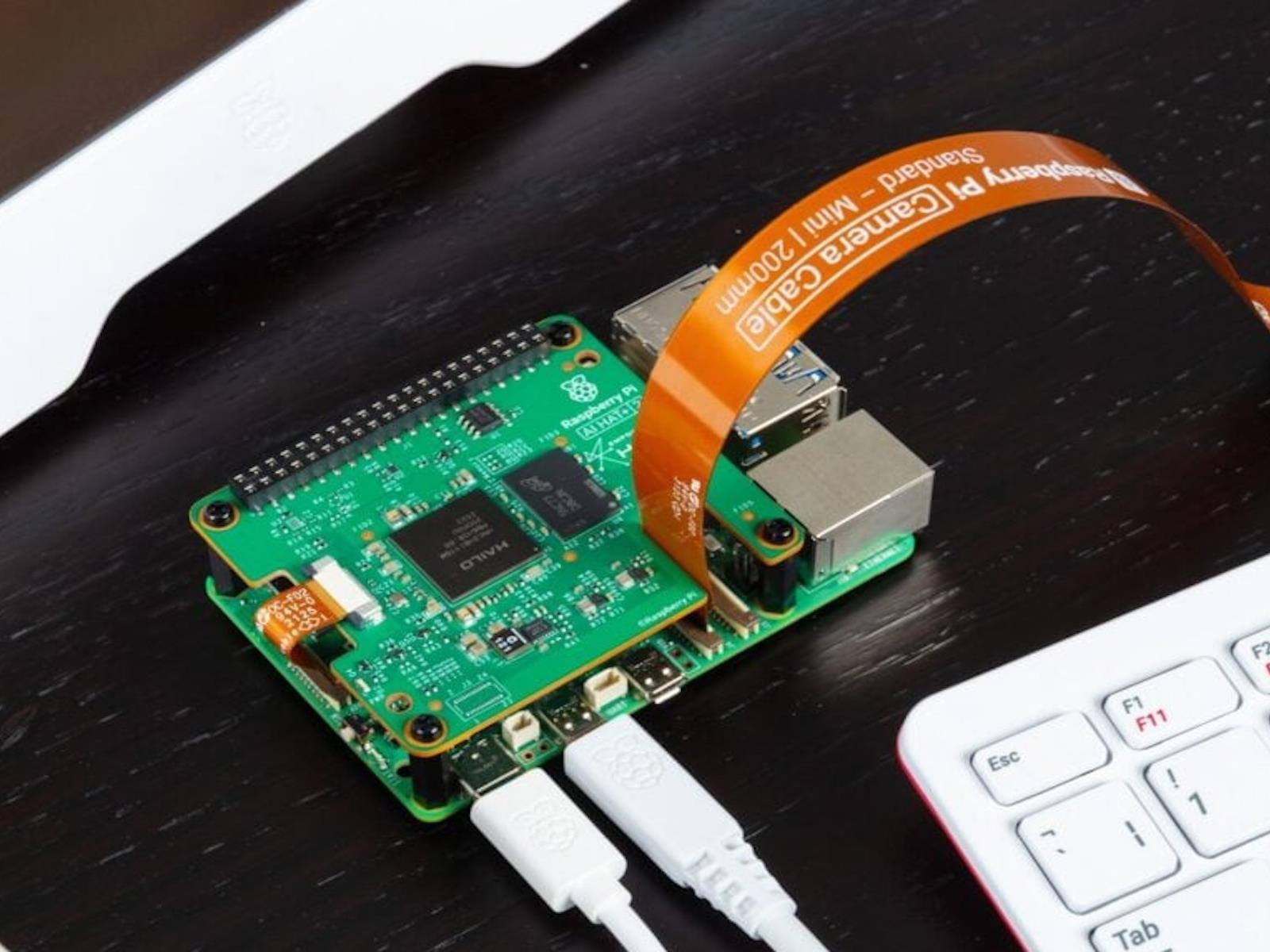
The latest price hike news comes courtesy of Raspberry Pi CEO Eben Upton, who announced today that the company would be raising prices on most of its single-board computers for the second time in two months.
Prices are going up for all Raspberry Pi 4 and Raspberry Pi 5 boards with 2GB of more of LPDDR4 RAM, including the Compute Module 4 and 5 and the Raspberry Pi 500 computer-inside-a-keyboard. The 2GB boards’ pricing will go up by $10, 4GB boards will go up by $15, 8GB boards will go up by $30, and 16GB boards will increase by a whopping $60.
The Raspberry Pi has been one of the most affordable ways to jump into single-board computing, but even these devices haven’t been able to avoid price increases due to the current DRAM shortage. A mere two months after announcing an initial price hike, the organization is having to raise prices yet again because of an “unprecedented rise in
Sony’s long-anticipated flagship WF-1000XM6 earbuds have leaked online, according to a report by The Walkman Blog and posts on Reddit. The retailer Power Buy posted a listing for the earbuds, complete with multiple photos and some specs.
Let’s get to the specs. We don’t know a lot, but the listing does suggest the earbuds will boast an IPX4 water-resistance rating and ANC/transparency modes. None of this is all that surprising, though we don’t have any details regarding the audio drivers or anything like that.
The Walkman Blog / Power Buy / Sony
We do know what they look like, assuming the listing is accurate. There are two colorways, black and white, with a pill-shaped design that differs from the previous iterations. The case looks like a standard earbud case.
One interesting design aspect is that the eartips are slightly bigger than with previous models. This could indicate a larger air channel, which would translate to an increased bass response. Earbuds tend to struggle with bass, so this could be a nifty little upgrade.
However, that’s conjecture and we won’t know more until Sony does its own official drop. It’s been well over two years since the company released the WF-1000XM5 earbuds, so the refresh is long overdue.
This article originally appeared on Engadget at https://www.engadget.com/audio/headphones/sonys-flagship-wf-1000xm6-earbuds-have-been-leaked-on-a-retail-site-194146960.html?src=rss
On Friday, a judge ruled that the Trump administration violated the law in forming its Climate Working Group, which released a report that was intended to undercut the rationale behind greenhouse gas regulations. The judge overseeing the case determined that the government tried to treat the Climate Working Group as a formal advisory body, while not having it obey many of the statutory requirements that govern such bodies.
While the Department of Energy (DOE) later disbanded the Climate Working Group in the hopes of avoiding legal scrutiny, documents obtained during the proceedings have now revealed the group’s electronic communications. As such, the judge ruled that the trial itself had essentially overcome the government’s illegal attempts to hide those communications.
Legal and scientific flaws
The whole saga derives from a Supreme Court Ruling that compelled the Environmental Protection Agency (EPA) to evaluate the risks posed to the US public by greenhouse gases. During the Obama administration, this resulted in an endangerment finding that created the foundation for the EPA to regulate carbon emissions under the Clean Air Act. The science underlying the endangerment finding was so solid that it was left unchallenged during the first Trump administration.
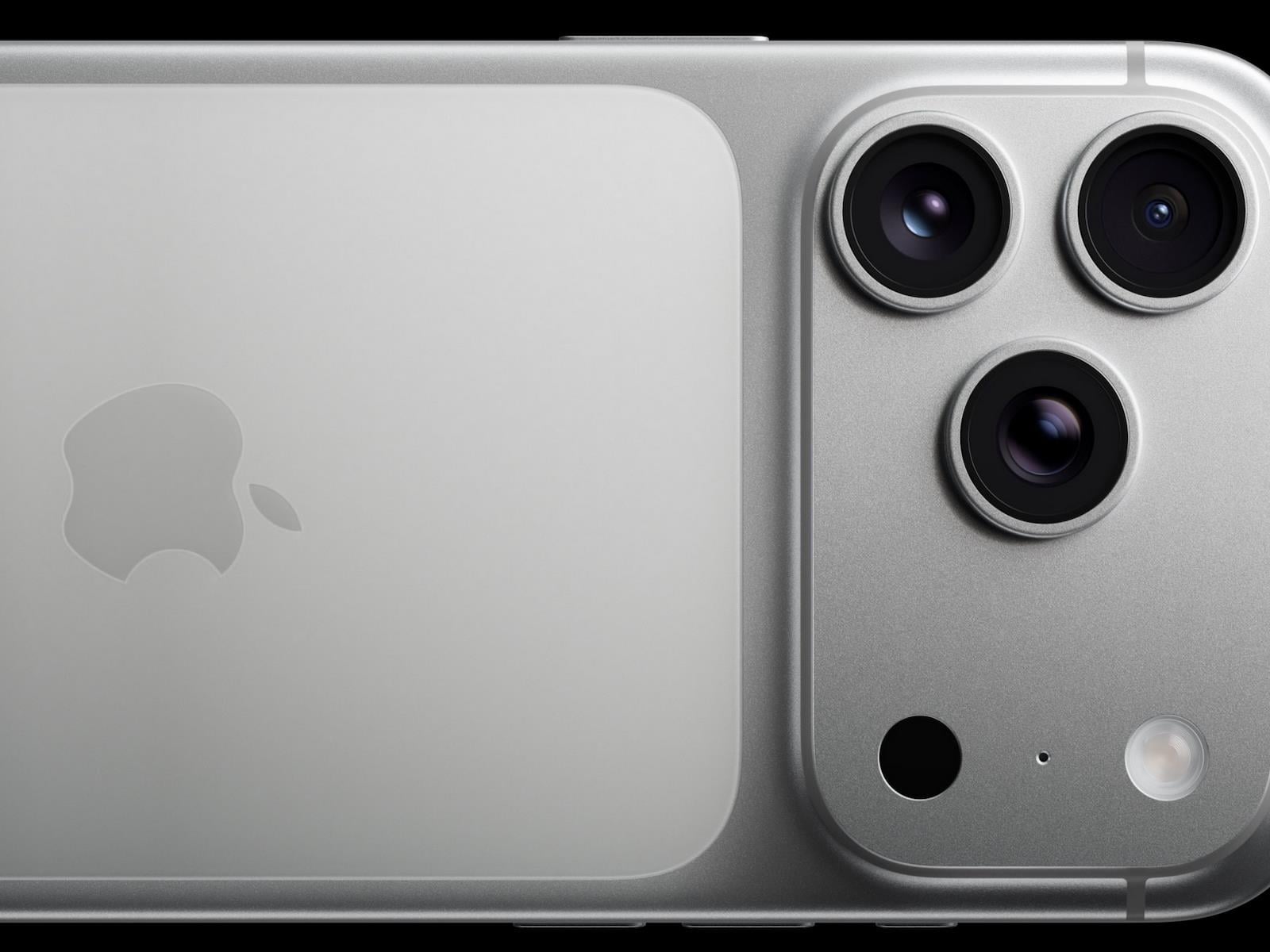
Apple has reportedly been exploring new designs to invigorate sales of its ubiquitous iPhone. Even though sales of the sleek iPhone Air didn’t set any records, Apple doesn’t seem to be changing course and still plans to release totally new designs. It has long been rumored that a foldable iPhone, similar to the Samsung Galaxy Z Fold, is on
I love getting things done around the house. I’m not the greatest carpenter, electrician, or plumber, but I like learning how things work and even enjoy learning from my mistakes (sometimes). And most of all, I like saving a bucket of money on home maintenance and repairs. None of this means that DIY isn’t an incredible amount of work, however.
Luckily, living in a consumption-based society means companies are always inventing new gadgets for me to buy, and some of them are incredibly useful for DIYers. The eight tool accessories below are ones I truly recommend. Each can help make your next project a little faster, easier, and/or safer.
A multipail makes painting and cleaning neater
This is one of those simple ideas that seems so obvious it’s hard to believe it took this long to be invented. The Multipail is a simple concept: A standard five-gallon bucket with a dustpan built in. It can also be used with a paint roller as a tray replacement, and has a drip-proof spout for pouring liquids without making a mess. You need a five-gallon bucket anyway, so why not use one that has these useful features molded in, instead of buying two or three wonky attachments?
Flashlight gloves are a super convenient way to shed light on your work
There are a lot of ways to illuminate your work site, from standard flashlights to headband lamps to bendable LED lights. But sometimes you need to get light into a small space, and you need to be able to illuminate what you’re doing just by pointing at things. These flashlight gloves are cheap, waterproof, and make it easy to see what you’re doing without having to hold a separate light.
An attachable bit holder will keep all your drill bits at hand
Cordless drills are one of the most commonly-used tools in DIY projects, but they come with one major frustration: All those damn bits. If you’re constantly swapping out different-size drill bits and different screwdriver bits, you know how hard it can be to keep them organized (and how hard it is to not lose them).
Enter this nifty drill bit holder that attaches to the bottom of your drill’s battery. It holds not just bits, but just about anything, from utility blades to fasteners. Designed to work with just about any manufacturer, it attaches to the bottom of the battery and lets you carry whatever you need right there on the tool.
The Backsaver will eliminate the strain from low-down drilling
This drill attachment is probably overkill for most DIYers (and it isn’t cheap!), but if you’ve got a job requiring a lot of drilling down low, it might be the difference between a pleasant day of work and a broken back. Instead of getting on your hands and knees or even lying down in order to see what you’re drilling into, the Backsaver lets you work in a comfortable standing position while drilling at foot-level. It takes a bit of practice before you can just dive in, but your back will definitely thank you for taking the time.
A panel carrier can help you lug around drywall and plywood
Carrying large sheets or panels like drywall or plywood can be challenging. It’s hard to maintain your grip and your balance, and navigating around corners and tight spaces often results in dropped items or scraped knuckles.
This panel carrier from Gator Lift just clamps onto whatever you’re hauling around (up to two sheets at a time) and makes it very easy to carry it one-handed—which means you can actually open doors and easily maneuver while carrying these awkward, heavy sheets around.
A ladder hook could save your neck
I don’t know about you, but whenever I have to climb up to my roof to inspect or repair something (or clean out the gutters), there’s always at least one terrifying moment when the ladder shakes and shimmies, and I think I’m about to die. Ladders are always incredibly dangerous, but they’re especially dangerous when you’re working on your roof. This ladder hook from Lock Jaw clamps onto the roof and ensures the ladder doesn’t move, giving you an extra boost of safety.
A clamping outlet will keep your power running safely
Running power to wherever you’re working is sometimes a logistical challenge. There are plenty of ways to run a power strip to your project, but ensuring that you have easy, safe access to the strip sometimes involve some seriously janky engineering involving zipties, duct tape, or precariously balanced equipment.
This clamping power strip is a lot more civilized. It ensures you’ll have plenty of outlets no matter where you’re working. It can clamp to a ladder, to a joist or rafter, a table, railing—literally anywhere. Power will always be nearby, and you won’t have to remember to plug in your corded tools before you climb up the ladder ever again.
A ladder leveler will help you reach new heights without the risk
If you’ve got a standard extending ladder, you know that your greatest enemy is uneven ground. An unbalanced ladder is a disaster waiting to happen, but most DIYers have climbed onto a shaking, leaning ladder at least once in their life, hoping their luck holds out long enough to get some quick bit of work done.
Instead, invest in a ladder stabilizer. Install it on your ladder and it automatically adjusts the legs on each side so you have a perfectly balanced, perfectly stable ladder to climb no matter how uneven the ground might be. Considering that half a million people go to the ER for ladder-related injuries every year, everyone should probably have this installed on their ladder.
Buying a good budget phone can be a challenge. High-end handsets continue to get more features, but on the other end of the spectrum, there are only so many things you can skimp on before a device becomes too compromised. With the Galaxy A17, Samsung is trying to balance both sides of that equation with something that sports a solid design, a bright screen, decent cameras and respectable battery life for just $200. And despite some flaws, the company has succeeded at making a capable phone that fits into almost every budget.
Design and display
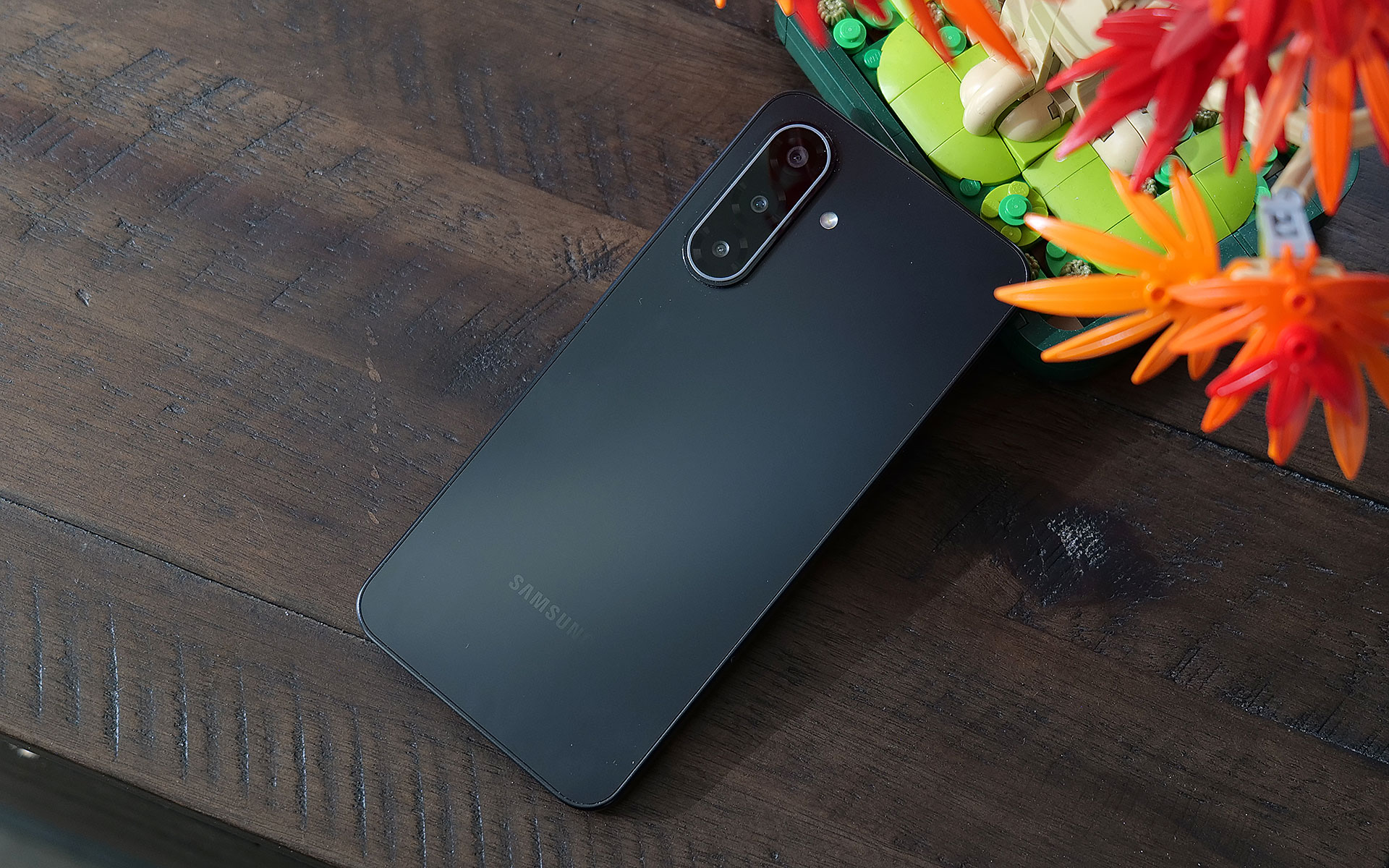
The Galaxy A17 does a good job of demonstrating how all plastics aren’t the same. Despite having a polycarbonate frame and back, the phone never feels cheap. Everything from its buttons to its camera module feels nice and tight. The optical image stabilization system used for its rear shooters rattles, though that’s something even $1,000 flagships suffer from, so it’s not a big deal. Some small concessions for cost savings include a teardrop cutout for its front selfie cam and a small chin beneath its display, but considering its price, they’re very forgivable. There’s also only a single mono speaker and instead of an in-screen fingerprint sensor, Samsung built one into the power button on its side. Though for some, the latter might actually be a bonus.
The Galaxy A17’s 6.7-inch OLED display is one of the phone’s best components thanks to solid brightness and a 90Hz refresh rate.
Sam Rutherford for Engadget
Meanwhile, one thing the A17 has that you don’t get on high-end handsets anymore is a microSD card slot (that’s shared with its SIM tray) for expandable storage. This gives you a cheap way to increase the phone’s base 128GB of space and considering how rare this is nowadays, it’s another win for people looking for a truly affordable device.
The Galaxy A17’s screen is also surprisingly nice for its price, as it sports a 6.7-inch OLED display with up to 800 nits of brightness. Granted, its refresh rate tops out at 90Hz instead of the 120Hz you get on more expensive fare. But once again, considering how much it costs, I’m not complaining. Especially when you remember that base iPhones were still saddled with 60Hz panels as recently as 2024.
Performance
One area where budget phones often struggle is performance because skimping on RAM or the processor can save manufacturers a lot of money. And while the Galaxy A17 is generally fine considering its price bracket, I really wish Samsung had opted for a slightly newer chip. The phone comes with just 4GB of RAM (though there are slightly pricier versions with more), 128GB of onboard storage and an Exynos 1330 SoC, the latter of which is nearly three years old.
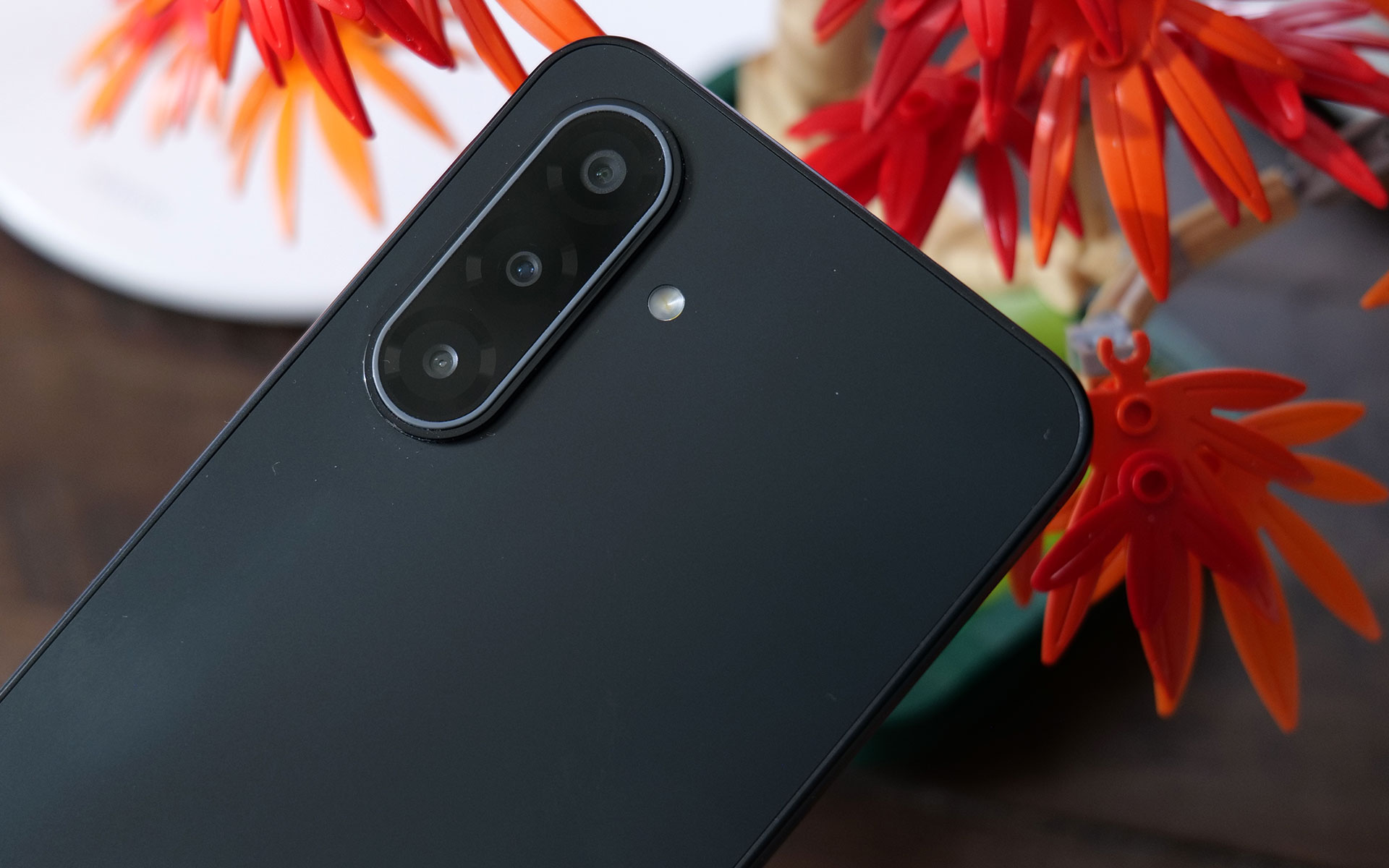
The Galaxy A17 comes with three rear cameras, but its really more like two because one of those is a 2MP macro cam.
Sam Rutherford for Engadget
At first, I was really worried because during the initial setup, the phone was a laggy, stuttery mess. Thankfully, after signing in, giving the phone some time to download updates in the background and making sure all of its apps were up to date, performance improved significantly. To be clear, this thing still isn’t a speed demon and when you’re multitasking or quickly switching between heavy apps, you may notice some slowdown. I also wish touch input felt a bit more responsive because sometimes when you tap an icon, there’s a small delay before anything happens. But thankfully, it’s relatively minor, and in most situations, the phone is snappy enough.
Cameras
The A17 comes with a 13-megapixel selfie camera and three rear shooters, though in practice it’s really more like two because one of those is a 2MP macro cam, which doesn’t get much use unless you take a lot of up-close photos. That said, the phone takes better pictures than you might expect given its price. In well-lit conditions, both its 50MP main and 5MP ultrawide cams don’t give you much to complain about. Images look sharp and sport vivid colors.
However, in low-light situations, there’s an obvious difference in quality between the A17 and more expensive midrange phones like Pixel 9a. In a shot of some fruit in my dimly lit kitchen, the A17’s pic looks soft and features washed-out colors compared to what Google’s phone produced. Then, when I went outside and snapped a photo of a car still buried after the recent snowstorm, textures on the slush in the road, along with various highlights and shadows looked worse in the A17’s images. So while the phone can hold its own, camera quality is still one of the biggest reasons you might want to consider upgrading to a more expensive handset.
Battery life
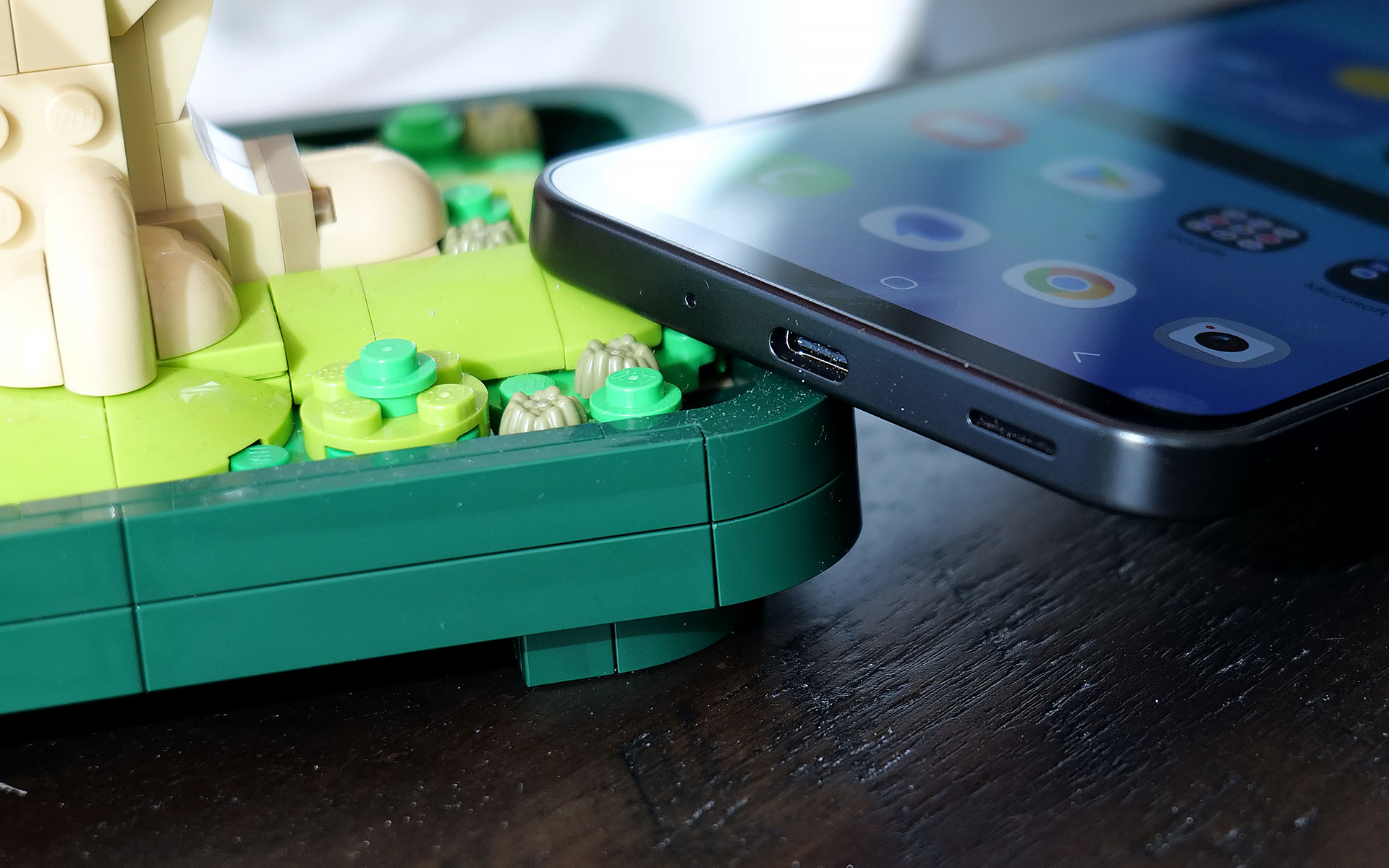
The bottom of the Galaxy A17 features the phone’s USB-C port and its single, mono speaker.
Sam Rutherford for Engadget
For a phone with a 5,000mAh battery and a low-power chip, the Galaxy A17 didn’t last quite as long as I expected. On our local video rundown test, it lasted just over 23 hours (23:08), which is decent, but also five hours less than the Pixel 9a (28:04). On the other hand, its wired charging speed of 25 watts is more than enough. Just don’t be surprised when you plop it on a wireless charging pad and nothing happens because the phone doesn’t support that.
Wrap-up
If you are hard-capped at $200, the Samsung Galaxy A17 is a surprisingly impressive device. It’s got a solid build, decent cameras with a handful of different lenses, respectable battery life and even a built-in microSD card slot for extra storage. You even get six years of OS and security updates, which is significantly longer than almost all of its similarly-priced rivals. And while its performance could be smoother, it’s not laggy enough to get truly bothered about on a phone this affordable.
Even though the Galaxy A17 is made out of plastic, the phone still doesn’t feel cheap.
Sam Rutherford for Engadget
For those with wiggle room in their gadget allowance, I would seriously consider looking at a version with 8GB of RAM, which is just $30 more. Alternatively, the Pixel 9a remains my favorite Android phone when it comes to value for money and it’s $399 (down from its launch price of $499). But if money is tight, the Galaxy A17 delivers everything you need without blowing up your budget.
This article originally appeared on Engadget at https://www.engadget.com/mobile/smartphones/samsung-galaxy-a17-5g-review-a-respectable-and-affordable-android-option-190000154.html?src=rss
Apple’s long-standing dominance over its electronics supply chain is eroding as AI companies outbid the iPhone maker for critical components like chips, memory and specialized glass fiber, giving suppliers the leverage to demand that Apple pay more. CEO Tim Cook acknowledged the pressure during a Thursday earnings call, noting constraints in chip supplies and significant increases in memory prices.
Nvidia has overtaken Apple as TSMC’s largest customer, CEO Jensen Huang said on a podcast; Apple had held that position by a wide margin for years. DRAM prices are set to quadruple from 2023 levels by year-end and NAND prices will more than triple, according to TechInsights.
The firm estimates Apple could pay $57 more for memory in the base iPhone 18 due this fall compared to the base iPhone 17 currently on sale — a significant hit on a device that retails for $799.
The Epstein files released by the Department of Justice on Friday included at least a few dozen unredacted nude photos and names of at least 43 victims, according to news reports.
The DOJ missed a December 19 deadline set by the Epstein Files Transparency Act by more than a month, but still released the files without fully redacting nude photos and names of Jeffrey Epstein’s victims. The New York Times reported yesterday that it found “nearly 40 unredacted images that appeared to be part of a personal photo collection, showing both nude bodies and the faces of the people portrayed.”
While the people in the photos were young, “it was unclear whether they were minors,” the article said. “Some of the images seemed to show Mr. Epstein’s private island, including a beach. Others were taken in bedrooms and other private spaces.” The photos “appeared to show at least seven different people,” the article said.
The Kithara is the company’s first open-back planar magnetic gaming headset. ROG says it was designed to please gamers who “demand absolute clarity, precision and realism.” The headphones feature 100mm planar magnetic drivers that have been “tuned specifically for gaming.”
The company says this results in a wide frequency response, low distortion and a “level of detail that reveals subtle positional cues such as footsteps, reloads and distance movement.” ROG boasts that these audio cues remain distinct even during moments of chaotic gameplay, potentially making the headphones a great choice for competitive gamers.
The open-back design allows for clear separation across bass, mids and treble, which should also make the headphones great for listening to music. It features a full-band boom microphone with a high signal-to-noise ratio. There are separate signal paths for audio and microphone inputs, which significantly reduces crosstalk.
ASUS ROG
The headphones have been built for maximum versatility, so there’s a balanced headphone cable with swappable plugs. They support various connection types, including 3.5mm, 4.4mm and 6.3mm. They also ship with a USB-C to dual 3.5mm adapter.
These are gaming headphones, so comfort is also a priority. The metal frame features an adjustable fit and there’s a multi-layer padded headband and two sets of interchangeable ear cushions. The ROG Kithara headphones are available now and cost $300.
This article originally appeared on Engadget at https://www.engadget.com/audio/headphones/rog-made-a-gaming-headset-for-audiophile-nerds-184737937.html?src=rss
Since last spring, OpenAI has offered Codex. What started life as the company’s response to Claude Code is becoming something more sophisticated with the release of a new dedicated macOS app. At its most basic form, Codex is a programming agent capable of writing code for users, but now it can also manage multiple AI assistants that can work together to complete more complex tasks.
OpenAI gives an example of how this could work in practice. The company used Codex to create a Mario Kart-like racing game, complete with a selection of different playable cars, eight tracks and a collection of powerups players can use against the competition. For a single AI agent, generating a game from scratch, with all the needed visual assets, would be a tough ask, but Codex was able to complete the task because it could delegate the work of making the game to different models with complementary capabilities.
For example, it turned to GPT Image for the visual assets, while a separate model simultaneously coded the web game. “It took on the roles of designer, game developer and QA tester to validate its work by actually playing the game,” OpenAI says of the process.
If that sounds complicated, OpenAI has tried to make it more approachable with a section of the app titled Skills. The feature bundles “instructions, resources, and scripts so Codex can reliably connect to tools, run workflows, and complete tasks according to your team’s preferences,” the company explains. “The Codex app includes a dedicated interface to create and manage skills. You can explicitly ask Codex to use specific skills, or let it automatically use them based on the task at hand.”
As you might imagine, Codex can also automate repetitive tasks. A dedicated Automations section of the app allows you to schedule tasks, which the software will complete in the background. “At OpenAI, we’ve been using Automations to handle the repetitive but important tasks, like daily issue triage, finding and summarizing CI failures, generating daily release briefs, checking for bugs, and more,” the company said.
The release of the Codex macOS app comes as AI startups explore what a group of AI agents working in parallel can accomplish. At the start of the year, Anysphere, the company behind Cursor, found it was possible to build a working web browser from scratch using such an approach, though it did encounter problems along the way.
For a limited time, OpenAI is making Codex available to ChatGPT Free and Go users so they can see what’s possible with this new software. At the same time, the company is doubling rates for Plus and Pro subscribers.
This article originally appeared on Engadget at https://www.engadget.com/ai/openai-brings-its-codex-coding-app-to-mac-with-new-multi-agent-abilities-included-183103262.html?src=rss
Some iOS users are getting an extra layer of privacy when it comes to how their location data is shared. Limit Precise Location is a new setting that prevents some Apple devices from broadcasting specific locations to cell carriers.
Precise location sharing is useful, even essential, in some cases, such as when you’re navigating with your maps app. But you may not want to constantly be sending your exact address to your phone provider, where it could be used for malicious purposes. If you enable Limit Precise Location, your iOS device will share your general area instead.
Precise location sharing comes with privacy risks
As TechCrunch points out, precise location sharing introduces a whole host of privacy and security risks. Cell carriers have been targeted by hackers, compromising sensitive customer data. Surveillance vendors and law enforcement agencies may also use location information broadcast via cellular networks for the purposes of real-time and ongoing tracking.
Users already have the option to disable precise location sharing at the app level on both iOS and Android for apps that don’t need GPS coordinates to function—which is most of them. This allows you to prevent companies from receiving (and selling) your exact location data when a general location is sufficient. Limit Precise Location won’t change these app-specific settings.
For now, the feature is available only on select Apple models—the iPhone Air, iPhone 16e, and iPad Pro (M5) Wi-Fi + Cellular—running iOS 26.3 with a limited number of global carriers:
U.S.: Boost Mobile
UK: EE, BT
Germany: Telekom
Thailand: AIS, True
Apple says that even with this setting enabled, emergency responders will still be able to pinpoint exact location during an emergency call.
How to disable precise location sharing
If you have a supported device with a partner carrier, go to Settings > Cellular and tap Cellular Data Options (you may need to select the specific line under SIMs if you have more than one). Scroll down and toggle Limit Precise Location sharing off.
Intel’s Core Ultra lineup of desktop and laptop processors has been frustrating to review. None of them has been across-the-board awful or totally without redeeming qualities. But Intel has struggled mightily this decade to produce new processors that are straightforward, easy-to-recommend improvements over their predecessors.
The company’s 12th- and 13th-generation Core chips offered big boosts to CPU performance over the 11th-generation CPUs, for example, but they also usually came with a significant hit to battery life, and they only minimally improved the GPU. The first-generation Core Ultra chips, codenamed Meteor Lake, improved the GPU but couldn’t beat the CPU performance of older chips. Last year’s Core Ultra 200V series, codenamed Lunar Lake, boasted good battery life and solid graphics performance but weaker CPU performance; better-performing Core Ultra 200H chips (codenamed Arrow Lake) improved CPU performance but came with lesser GPUs and some other missing features.
The Core Ultra Series 3 processors, codenamed Panther Lake, finally put an end to the years of uneven zig-zagging advancement we’ve seen in the last half-decade.
A debilitating infection from the parasitic Guinea worm is inching closer to global eradication, with an all-time low of only 10 human cases reported worldwide in 2025, the Carter Center announced.
If health workers can fully wipe out the worms, it will be only the second human disease to be eradicated, after smallpox.
Guinea worm (Dracunculus medinensis) is a parasitic nematode transmitted in water. More specifically, it’s found in waters that contain small crustacean copepods, which harbor the worm’s larvae. If a person consumes water contaminated with Guinea worm, the parasites burrow through the intestinal tract and migrate through the body. About a year later, a spaghetti noodle-length worm emerges from a painful blister, usually in the feet or legs. It can take up to eight weeks for the adult worm to fully emerge. To ease the searing pain, infected people may put their blistered limbs in water, allowing the parasite to release more larvae and continue the cycle.
Moltbook, a Reddit-like social network that launched last week and bills itself as a platform “built exclusively for AI agents,” had a security vulnerability that exposed private messages shared between agents, the email addresses of more than 6,000 human owners, and over a million credentials, according to research published Monday by cybersecurity firm Wiz.
The flaw has since been fixed after Wiz contacted Moltbook. Wiz cofounder Ami Luttwak called it a classic byproduct of “vibe coding.” Moltbook creator Matt Schlicht posted on X last Friday that he “didn’t write one line of code” for the site. He did not immediately respond to a request for comment when reached out by Reuters. Luttwak said the vulnerability also allowed anyone to post to the site, bot or human. “There was no verification of identity,” he said.
Today, OpenAI launched a macOS desktop app for Codex, its large language model-based coding tool that was previously used through a command line interface (CLI) on the web or inside an integrated development environment (IDE) via extensions.
By launching a desktop app, OpenAI is catching up to Anthropic’s popular Claude Code, which already offered a macOS version. Whether the desktop app makes sense compared to the existing interfaces depends a little bit on who you are and how you intend to use it.
The Codex macOS app aims to make it easier to manage multiple coding agents in tandem, sometimes with parallel tasks running over several hours—the company argues that neither the CLI nor the IDE extensions are ideal interfaces for that.