Anthropic Raises $30 Billion at $380 Billion Valuation, Eyes IPO This Year

Anthropic has raised $30 billion in a Series G funding round that values the Claude maker at $380 billion as the company prepares for an initial public offering that could come as early as this year. Investors in the new round include Singapore sovereign fund GIC, Coatue, D.E. Shaw Ventures, ICONIQ, MGX, Sequoia Capital, Founders Fund, Greenoaks and Temasek. Anthropic raised its funding target by $10 billion during the process after the round was several times subscribed.

The San Francisco-based company, founded in 2021 by former OpenAI researchers, now has a $14 billion revenue run rate, about 80% of which comes from enterprise customers. It claims more than 500 customers spending over $1 million a year on its workplace tools. The round includes a portion of the $15 billion commitment from Microsoft and Nvidia announced late last year.


Read more of this story at Slashdot.

It took two years, but Google released a YouTube app on Vision Pro

When Apple’s Vision Pro mixed reality headset launched in February 2024, users were frustrated at the lack of a proper YouTube app—a significant disappointment given the device’s focus on video content consumption, and YouTube’s strong library of immersive VR and 360 videos. That complaint continued through the release of the second-generation Vision Pro last year, including in our review.

Now, two years later, an official YouTube app from Google has launched on the Vision Pro’s app store. It’s not just a port of the iPad app, either—it has panels arranged spatially in front of the user as you’d expect, and it supports 3D videos, as well as 360- and 180-degree ones.

YouTube’s App Store listing says users can watch “every video on YouTube” (there’s a screenshot of a special interface for Shorts vertical videos, for example) and that they get “the full signed-in experience” with watch history and so on.

Read full article

Comments

Intel Nova Lake Compute Tile Die Sizes Leak Highlighting Massive L3 Cache Expansion

Intel Nova Lake Compute Tile Die Sizes Leak Highlighting Massive L3 Cache Expansion
Intel’s Nova Lake-S desktop processors, likely to be branded the “Core Ultra 400” series and expected to launch late this year or early next year, are the topic of tons of speculation. The company’s current-generation chips have a specific weakness in the area of gaming performance, so DIY-ers have avoided them like the plague, and the hope

GTA 6’s Massive Download Could Take Several Days To Install

GTA 6’s Massive Download Could Take Several Days To Install
Grand Theft Auto 6 is on the horizon for major releases this year, and players intent on downloading the game may be in for a long wait. The good news is that per an official Take-Two statement to Variety, the physical release of the game will not be delayed to prevent spoilers. The bad news is that if your system either does not have or does

EU reportedly opens another probe into Google’s ads pricing

The European Commission has opened a new probe into Google, this time focused on the company’s massive online advertising business, Bloomberg reports. European Union regulators have already fined Google billions for violating the Digital Markets Act, and being found guilty of anticompetitive behavior in online advertising could add to that total.

While the Commission has yet to announce a formal investigation, Bloomberg writes that it has started contacting Google’s customers and competitors for information about its dominance across multiple online advertising markets. Regulators are particularly concerned that Google could be “artificially increasing the clearing price” of ad auctions “to the detriment of advertisers.” If the company is found to be violating the EU’s competition rules, Google could be fined 10 percent of its global annual sales.

Google’s approach to advertising to minors was reportedly already under investigation by the EU as of December 2024, and besides fines, regulators have ordered the company to open up Android to competing AI assistants and share search data with rivals. In the US, there’s also precedent for finding Google’s approach to online advertising anticompetitive.

A US federal judge found that Google is a monopolist in online advertising in April 2025, the conclusion of a legal battle that started with a Department of Justice lawsuit accusing the company of dominating the ad market and using its control to charge more and keep a larger portion of ad sales. The DOJ ultimately wants Google to sell its ad tech business, but a final decision hasn’t been reached as to how the company’s anticompetitive behavior should be remedied.

This article originally appeared on Engadget at https://www.engadget.com/big-tech/eu-reportedly-opens-another-probe-into-googles-ads-pricing-194435095.html?src=rss

Attackers prompted Gemini over 100,000 times while trying to clone it, Google says

On Thursday, Google announced that “commercially motivated” actors have attempted to clone knowledge from its Gemini AI chatbot by simply prompting it. One adversarial session reportedly prompted the model more than 100,000 times across various non-English languages, collecting responses ostensibly to train a cheaper copycat.

Google published the findings in what amounts to a quarterly self-assessment of threats to its own products that frames the company as the victim and the hero, which is not unusual in these self-authored assessments. Google calls the illicit activity “model extraction” and considers it intellectual property theft, which is a somewhat loaded position, given that Google’s LLM was built from materials scraped from the Internet without permission.

Google is also no stranger to the copycat practice. In 2023, The Information reported that Google’s Bard team had been accused of using ChatGPT outputs from ShareGPT, a public site where users share chatbot conversations, to help train its own chatbot. Senior Google AI researcher Jacob Devlin, who created the influential BERT language model, warned leadership that this violated OpenAI’s terms of service, then resigned and joined OpenAI. Google denied the claim but reportedly stopped using the data.

Read full article

Comments

Apple’s Big Siri Overhaul Reportedly Trips Up In Testing And Faces More Delays

Apple's Big Siri Overhaul Reportedly Trips Up In Testing And Faces More Delays
When Apple and Google announced a massive deal that would see Apple use Google’s Gemini AI to train its own models, it seemed like the company was set to finally delivering on the promises it made all the way back in 2024. However, that initial optimism may have been wishful thinking, according to a report by Bloomberg’s Apple insider Mark

Antitrust head overseeing Netflix-Warner merger resigns

The head of the antitrust division is out at the US Department of Justice. Gail Slater, a former JD Vance adviser and Fox Corp VP, reportedly clashed with Attorney General Pam Bondi. Their longstanding feud is said to have centered around Slater’s skepticism of corporate mergers.

“It is with great sadness and abiding hope that I leave my role as [Assistant Attorney General] for Antitrust today,” Slater posted on X. “It was indeed the honor of a lifetime to serve in this role.”

Although Slater technically resigned, The Guardian reports that she was forced out. The fallout was said to be over her differences with Bondi (who just yesterday yelled, insulted and deflected her way through a hearing over the DOJ’s stonewalling of the Epstein files). In recent weeks, Bondi reportedly reiterated to the White House that Slater’s views on the antitrust division’s direction made the pair’s relationship irreconcilable.

WASHINGTON, DC - FEBRUARY 11: U.S. Attorney General Pam Bondi testifies before the House Judiciary Committee in the Rayburn House Office Building on February 11, 2026 in Washington, DC. Bondi is expected to face questions on her department’s handling of the files related to the convicted sex offender Jeffrey Epstein, President Trump’s investigations into political foes and the handing of the two fatal ICE shootings of U.S. citizens. (Photo by Win McNamee/Getty Images)
Attorney General Pam Bondi (Photo by Win McNamee/Getty Images)
Win McNamee via Getty Images

The tensions reportedly began simmering last summer, when Slater sought to block the merger between Hewlett-Packard Enterprise and Juniper Networks. She opposed the deal out of concerns that it would create a duopoly in cloud computing and wireless networking. In addition, Slater reportedly told Bondi that US intelligence hadn’t raised any concerns about blocking the merger. However, CIA Director John Ratcliffe later claimed that blocking it would pose national security risks because it could lead to the loss of business to China. The Trump administration’s merger-friendly DOJ ultimately approved the deal.

Alongside Bondi, Slater was overseeing the DOJ’s review of Netflix’s proposed acquisition of Warner Bros. Discovery. In December, Trump said he would be involved in the regulatory review. That followed intense lobbying by Netflix and Paramount, the latter of which launched a hostile takeover bid. Earlier this month, The Wall Street Journal reported that the department was investigating whether Netflix was involved in anticompetitive practices during the process.

Slater’s ousting also comes weeks ahead of the DOJ’s antitrust trial against Ticketmaster owner Live Nation. The department’s lawsuit was filed during the Biden administration. It claims that Live Nation is operating as a monopoly, harming competition, fans, industry promoters and artists.

This article originally appeared on Engadget at https://www.engadget.com/big-tech/antitrust-head-overseeing-netflix-warner-merger-resigns-192854114.html?src=rss

Palo Alto Chose Not To Tie China To Hacking Campaign For Fear of Retaliation From Beijing

An anonymous reader shares a report: Palo Alto Networks opted not to tie China to a global cyberespionage campaign the firm exposed last week over concerns that the cybersecurity company or its clients could face retaliation from Beijing, according to two people familiar with the matter. The sources said that Palo Alto’s findings that China was tied to the sprawling hacking spree were dialed back following last month’s news, first reported by Reuters, that Palo Alto was one of about 15 U.S. and Israeli cybersecurity companies whose software had been banned by Chinese authorities on national security grounds.

A draft version of the report by Palo Alto’s Unit 42, the company’s threat intelligence arm, said that the prolific hackers — dubbed “TGR-STA-1030” in a report published on Thursday of last week — were connected to Beijing, the two people said. The finished report instead described the hacking group more vaguely as a “state-aligned group that operates out of Asia.” Attributing sophisticated hacks is notoriously difficult and debates over how best to assign blame for digital intrusions are common among cybersecurity researchers.


Read more of this story at Slashdot.

Bringing the “functionally extinct” American chestnut back from the dead

Very few people alive today have seen the Appalachian forests as they existed a century ago. Even as state and national parks preserved ever more of the ecosystem, fungal pathogens from Asia nearly wiped out one of the dominant species of these forests, the American chestnut, killing an estimated 3 billion trees. While new saplings continue to sprout from the stumps of the former trees, the fungus persists, killing them before they can seed a new generation.

But thanks in part to trees planted in areas where the two fungi don’t grow well, the American chestnut isn’t extinct. And efforts to revive it in its native range have continued, despite the long generation times needed to breed resistant trees. In Thursday’s issue of Science, researchers describe their efforts to apply modern genomic techniques and exhaustive testing to identify the best route to restoring chestnuts to their native range.

Multiple paths to restoration

While the American chestnut is functionally extinct—it’s no longer a participant in the ecosystems it once dominated—it’s most certainly not extinct. Two Asian fungi that have killed it off in its native range; one causes chestnut blight, while a less common pathogen causes a root rot disease. Both prefer warmer, humid environments and persist there because they can grow asymptomatically on distantly related trees, such as oaks. Still, chestnuts planted outside the species’ original range—primarily in drier areas of western North America—have continued to thrive.

Read full article

Comments

Unique structure of elephant whiskers give them built-in sensing “intelligence”

An elephant’s trunk is a marvelous thing, flexible enough to bend and stretch as it forages for food, but also stiff enough to grasp and maneuver even delicate objects like peanuts or a tortilla chip. That’s because the trunk is highly sensitive when it comes to sensing touch. Scientists have determined that the whiskers lining the trunk are crucial for that sensitivity thanks to their unique structure, amounting to a kind of innate “material intelligence, according to a new paper published in the journal Science.

As previously reported, there is a long history of studying whiskers (vibrissae) in mammals. Rats, cats, tree squirrels, manatees, harbor seals, sea otters, pole cats, shrews, tammar wallabies, sea lions, and naked mole-rats all share strikingly similar basic whisker anatomies, according to various prior studies. Among other potential applications, such research could one day enable scientists to build artificial whiskers as tactile sensors in robotics, as well as learn more about human touch.

Whiskers are much more complex than one might think, both in structure and function. Rats, for instance, have about 30 large whiskers and dozens of smaller ones, part of a complex “scanning sensorimotor system” that enables the rat to perform such diverse tasks as texture analysis, active touch for path finding, pattern recognition, and object location, just by scanning the terrain with its whiskers.

Read full article

Comments

The Steam Deck Is Completely Sold Out Right Now, and Valve Hasn’t Told Us Why

We may earn a commission from links on this page.

If you’re a PC gamer who’s been looking into getting a Steam Deck to help you play your games on the go, then I’ve got some bad news for you: On Valve’s official Steam Deck store page—the only place to buy new Steam Decks in the United States—every single model is sold out right now. That includes the discontinued LCD model, both versions of the Steam Deck OLED, and even refurbished options.

The shortage was first spotted last night by deals hunter Wario64, who at the time noted that the Steam Deck was sold out in the U.S., but still available in other countries. Unfortunately, since then, both Tom’s Hardware and Windows Central have reported that the handheld isn’t available in some Asian countries either. There does still seems to be some hope for gamers in Europe, as Windows Central’s Adam Hales said he could still see available stock in his native U.K., including the discontinued Steam Deck LCD.

Valve has yet to comment on the sudden disappearance of the Steam Deck from its site, although I’ve reached out and will update this post if I hear back.

Why is the Steam Deck out of stock?

While Valve hasn’t provided an official reason for the Steam Deck shortage, an obvious culprit is the ongoing RAM crisis, which has seen the cost for consumer memory components double or even triple as AI data centers eat up the available supply. It’s possible this shortage is finally affecting the Steam Deck, although that’s just speculation until Valve officially confirms it.

That said, the explanation would align with a post Valve made to its blog last week, in which the company said its upcoming Steam Machine and Steam Frame hardware are being impacted by “memory and storage shortages.” While the company didn’t outright announce a delay for these devices, saying it still plans to ship them “in the first half of the year,” it also noted “we must revisit our exact shipping schedule and pricing.”

It’s possible the situation with “limited availability and growing prices of these critical components,” as Valve put it it that post, is now affecting the Steam Deck too, though there are other possible explanations. The simplest, and most hopeful, is that this is simply a minor hiccup in availability, and it will be corrected by the end of the week. Alternatively, it’s possible the shortage could be related to tariffs, as while whole smartphones and computers are exempt from increased tariffs, it’s unclear whether that applies to gaming devices, or to any individual components Valve might purchase to construct new Steam Decks.

At any rate, we can’t know for sure until we hear back from the Half-Life company itself. Perhaps slim pickings or higher prices are in the Steam Deck’s future, but there’s no way to know right now.

What to buy instead during the Steam Deck shortage

While we don’t yet know how long the Steam Deck will stay sold out, it might be worth looking into getting a different handheld gaming PC if the situation drags on. While you can buy Steam Decks from unofficial sellers, I wouldn’t advise it, as these would all be from the secondhand market. Most come with heavily marked up prices, and it’s impossible to know what kind of condition your device will be in when it arrives. A more trustworthy alternative could be GameStop, as the retailer does sell its own certified refurbished Steam Decks, which are cleaned up in a separate process from Valve’s. Unfortunately, these are also out of stock at the moment.

Instead, I would suggest looking at alternatives like the Lenovo Legion Go S, which starts at $600, is slightly more powerful than the Steam Deck, has a higher resolution screen, and in an official partnership with Valve, comes equipped with the same operating system as the Steam Deck. (I actually prefer the Legion Go S to the Steam Deck myself.)

If you’ve got cash to burn, you could look at a premium upgrade. The obvious ones here are the Lenovo Legion Go 2, which ups the power and packs a gorgeous OLED screen; and the Asus ROG Xbox Ally X, which may be more welcoming to console gamers. (That said, the Xbox handheld’s software wasn’t quite there yet, at least when I reviewed it).

Whatever your choice, you have no shortage of options for PC gaming handhelds to keep you occupied while you wait for the Steam Deck to come back in stock. Gamers will always find a way to play.

2026 Nissan Leaf review: The best budget EV on sale right now

Years before the Chevrolet Bolt or Tesla Model 3, the Nissan Leaf was a good-faith attempt by a major automaker to bring electric vehicles to the mass market. But even in its second-generation, the Leaf was hamstrung by poor battery management and was soon left behind. For its third take on the Leaf, Nissan fixed the earlier cars’ key flaw by adding liquid-cooling for the battery pack. Better yet, the new Leaf is built on a dedicated EV platform that offers better interior space and range efficiency than the hatchback it replaces, despite taking up less road space.

Our first drive of the car took place last year in San Diego, a region where the roads tend to flatter a car. Our first impression was positive enough to place the Leaf first among the cars we drove in 2025. Sure, if money were no object, I’d take that hybrid Porsche 911 that came in second, but you could buy five fully loaded Leafs for the same price as a bare-bones Carrera GTS. And for those of us in the real world, money usually is an object. But a longer test with the Leaf was in order to see how the electric Nissan held up in the day-to-day grind.

Price and specs

In time, Nissan will offer an entry-level Leaf with a 52 kWh battery pack and a bit less power. For now, though, the company is only importing cars with a 75 kWh (usable) pack and a 214 hp (160 kW), 262 lb-ft (355 Nm) electric motor, which drives the front wheels. Nissan has managed to keep the price sensible, too; the S+ trim starts at $29,990. Riding on the smallest 18-inch wheels, the S+ has the longest range at 303 miles (488 km), but this version does without some of the features many EV drivers may consider essential, like heated front seats and a heat pump.

Read full article

Comments

Microsoft Plans Smartphone-Style Permission Prompts for Windows 11 Apps

Microsoft is planning to bring smartphone-style app permission prompts to Windows 11, requiring apps to get explicit user consent before they can access sensitive resources like the file system, camera and microphone. The company’s Windows Platform engineer Logan Iyer said the move was prompted by applications increasingly overriding user settings, installing unwanted software, and modifying core Windows experiences without permission.

A separate initiative called Windows Baseline Security Mode will enforce runtime integrity safeguards by default, allowing only properly signed apps, services, and drivers to run. Both changes will roll out in phases as part of Microsoft’s Secure Future Initiative, which the company launched in November 2023 after a federal review board called its security culture “inadequate.”


Read more of this story at Slashdot.

Apple Just Patched Its First Zero-Day Security Vulnerability of 2026

It’s once again time to update your Apple devices. The company just released a whole host of security patches, including a fix for an actively exploited zero-day affecting iOS 26, iPadOS 26, and macOS Tahoe. These updates arrived alongside the official release of iOS 26.3, which includes features like more seamless data transfer between iPhone and Android. Other security patches address bugs in Photos, VoiceOver, and Screenshots, to name a few.

iOS 26.3 patches a zero-day affecting dyld

According to Apple’s latest security bulletin, the zero-day—tracked as CVE-2026-20700—is a memory corruption issue in dyld, Apple’s “Dynamic Link Editor.” The flaw could allow attackers with memory write capability to execute arbitrary code—or, in other words, run their own code on your device.

Apple says that the vulnerability may have been exploited in an “extremely sophisticated attack against specific targeted individuals” in earlier versions of iOS alongside CVE-2025-14174 and CVE-2025-43529. Those at greatest risk with this bug are likely high-profile users with access to sensitive data—users who might be inclined to use Apple’s Lockdown Mode—but everyone should install the update to patch the issue.

The patch for this flaw is available for the following iOS and iPadOS devices, in addition to all Macs that run macOS Tahoe:

  • iPhone 11 and later

  • iPad Pro 12.9-inch 3rd generation and later

  • iPad Pro 11-inch 1st generation and later

  • iPad Air 3rd generation and later

  • iPad 8th generation and later

  • iPad mini 5th generation and later

How to install the latest security update for iPhone

You should have automatic updates enabled to ensure you receive critical security patches ASAP, but you can confirm that you’re on the latest OS version under Settings > General > Software Update. As a reminder, Apple won’t message you urging you to click links, download attachments, or install apps related to security updates. Always go through your device settings to receive official fixes.

Apple’s Big AI Siri Plans Are Once Again Delayed

If you’re an Apple fan who closely follows tech news, you might have been looking forward to Siri’s big AI overhaul for some time now—specifically, since the company initially announced it at WWDC 2024. But despite delay after delay, rumors have strongly suggested that the next generation of Siri is set to launch with iOS 26.4. And seeing as Apple just released iOS 26.3 this week, AI Siri is closer than ever, right? Wrong.

As reported by Bloomberg’s Mark Gurman, Apple has once again kicked Siri’s big updates down the road. According to Gurman, the company really did intend to release AI Siri with iOS 26.4, which is reportedly planned to release sometime in March. However, due to testing “snags,” the company is instead planning to break up Siri’s major updates and distribute them across several iOS updates. Gurman notes that likely means iOS 26.5, which could launch in May, and iOS 27, which will likely release in September, if it follows Apple’s usual release dates. But looking at Apple’s track record here, don’t hold your breath.

AI Siri’s upcoming features are a struggle

According to Gurman’s sources, Apple is struggling to get Siri to “properly process queries,” or to actually respond fast enough, both of which would defeat the purpose of using a smart assistant. Apple is reportedly pushing engineers to use iOS 26.5 to test these features, particularly the ability for Siri to use your personal data to answer questions. Users may be able to flip a switch in Settings to “preview” these features, and may treat the rollout as a beta.

Engineers are also struggling to get Siri’s app intents to work, or the feature that lets Siri take actions on your behalf. You could ask Siri to open an image, edit it, then share it with a friend, but only if the feature itself actually works. This, too, may roll out with iOS 26.5, but it’s unclear due to reliability issues. Siri is also cutting off user prompts too soon, and sometimes taps into ChatGPT instead of using Apple’s underlying tech—which would look pretty bad for the company.

Apple is also testing new AI features for iOS 26.5 that we haven’t heard of yet. One is a new web search tool that functions like other AI search features from companies like Perplexity and Google. You ask a question to search on the web, and it returns a report with summaries and links. The other new feature is a custom image generation tool, that builds on Image Playground, but that too is hitting development hurdles.

Looking even further ahead, Apple is planning more Siri advancements—namely, giving the assistant chatbot features, à la ChatGPT. (That said, it will reportedly use Gemini to power these features.) This version of Siri may even have its own app.

What’s going on with AI Siri?

It seems Siri really is Apple’s albatross. Despite arguably popularizing smart assistants for the general population, Siri quickly fell behind compared to the likes of Alexa and Gemini (née Google Assistant). Now, the latter have fully embraced modern generative AI, offering features like contextual awareness and natural language commands. While Amazon and Google users can ask their assistants increasingly complicated questions, Siri still feels designed mostly to handle setting alarms and checking the weather.

That was going to change with iOS 18, alongside Apple Intelligence as a whole. Apple’s initial pitch for AI Siri was an assistant that could see what’s on your phone to better understand questions you ask, and take actions on your behalf—i.e., app intents. You could ask Siri to edit an image you have pulled up on your Photos app, and because the assistant is contextually aware, it would know what image you mean, and apply the edits you ask for. Or, you could ask when your friend was set to arrive, and the assistant would be able to scan messages and emails to know that, one, your friend is visiting town this weekend, and two, that they sent you their flight itinerary that gets them into the airport at 3:55 p.m.

This Siri has never launched, however. While the company has rolled out iterative updates to Siri with some AI-powered features, its overhaul with these ambitious features have been a trial for Apple’s AI team. It all stems from Apple’s issues with AI in general: The company was caught off guard by the generative AI wave kicked off in late 2022 by OpenAI’s ChatGPT, and following some resistance from corporate leadership, have been scrambling to keep up ever since. Apple Intelligence launched half-baked with issues of its own, but rather than launch a half-baked AI Siri, the company has been struggling to build up the assistant internally.

Part of the problem is privacy-related: Unlike other tech companies, who have no problem hoovering up user data to train their models with, Apple still wants to preserve privacy while rolling out AI features. As such, that complicates their situation, as they need to ensure both the hardware and software involved meet those standards. You can’t have Siri pull user data into the cloud without strict security measures if you want to ensure your users’ data remains private. The company is also focused on building its own hardware for cloud-based AI processing, rather than focus on simply buying up GPUs as many other companies have.

Apple is the second most valuable tech company in the world, but a host of factors—including with software, hardware, and leadership—have made it so even Apple can’t magically produce an AI assistant. Though, I’m not sold that an AI Siri will move units for Apple in the first place. I can’t imagine Gemini moves people to Android, and you can download ChatGPT on any device you own. It’s even now built into your iPhone.

How to get F1TV with your Apple TV subscription

Last year Apple secured the exclusive rights to broadcast Formula 1 racing in the United States from 2026 to 2030. Apple TV subscribers can now watch every practice and qualifying session as well as every sprint and Grand Prix of a race weekend on the F1TV app by linking their Apple account.

Right now, those with an existing F1TV subscription will still see an active status in their “my subscription” page on desktop that shows the plan’s renewal date. However, after logging in via Apple with an Apple TV subscription, a second active F1TV subscription appears with an Apple TV logo and the label “Official U.S. broadcaster of Formula 1.” Users are advised to cancel the duplicate subscription they had directly with F1TV, which can be done in the F1TV app.

For those that don’t have an existing F1TV account, simply create one and activate it using your Apple account. Users who don’t pay for Apple TV can still view “select races” and practice sessions throughout the season.

Apple has yet to release precise details on what content will be viewable from within the Apple TV app compared to the F1TV app, where users are accustomed to features like multi-view, onboard cameras, live team radios and live timing and telemetry. With the first race of the F1 season kicking off March 7 in Australia, we should have these answers soon.

Fans can currently check out preseason testing taking place in Bahrain this week and next through the F1TV app.

This article originally appeared on Engadget at https://www.engadget.com/entertainment/streaming/how-to-get-f1tv-with-your-apple-tv-subscription-171534300.html?src=rss

Border Officials Are Said To Have Caused El Paso Closure by Firing Anti-Drone Laser

An anonymous reader shares a report: The abrupt closure of El Paso’s airspace late Tuesday was precipitated when Customs and Border Protection officials deployed an anti-drone laser on loan from the Department of Defense without giving aviation officials enough time to assess the risks to commercial aircraft, according to multiple people briefed on the situation.

The episode led the Federal Aviation Administration to abruptly declare that the nearby airspace would be shut down for 10 days, an extraordinary pause that was quickly lifted Wednesday morning at the direction of the White House. Top administration officials quickly claimed that the closure was in response to a sudden incursion of drones from Mexican drug cartels that required a military response, with Transportation Secretary Sean Duffy declaring in a social media post that “the threat has been neutralized.”

But that assertion was undercut by multiple people familiar with the situation, who said that the F.A.A.’s extreme move came after immigration officials earlier this week used an anti-drone laser shared by the Pentagon without coordination with the F.A.A. The people spoke on the condition of anonymity because they were not authorized to speak publicly. C.B.P. officials thought they were firing on a cartel drone, the people said, but it turned out to be a party balloon. Defense Department officials were present during the incident, one person said.


Read more of this story at Slashdot.

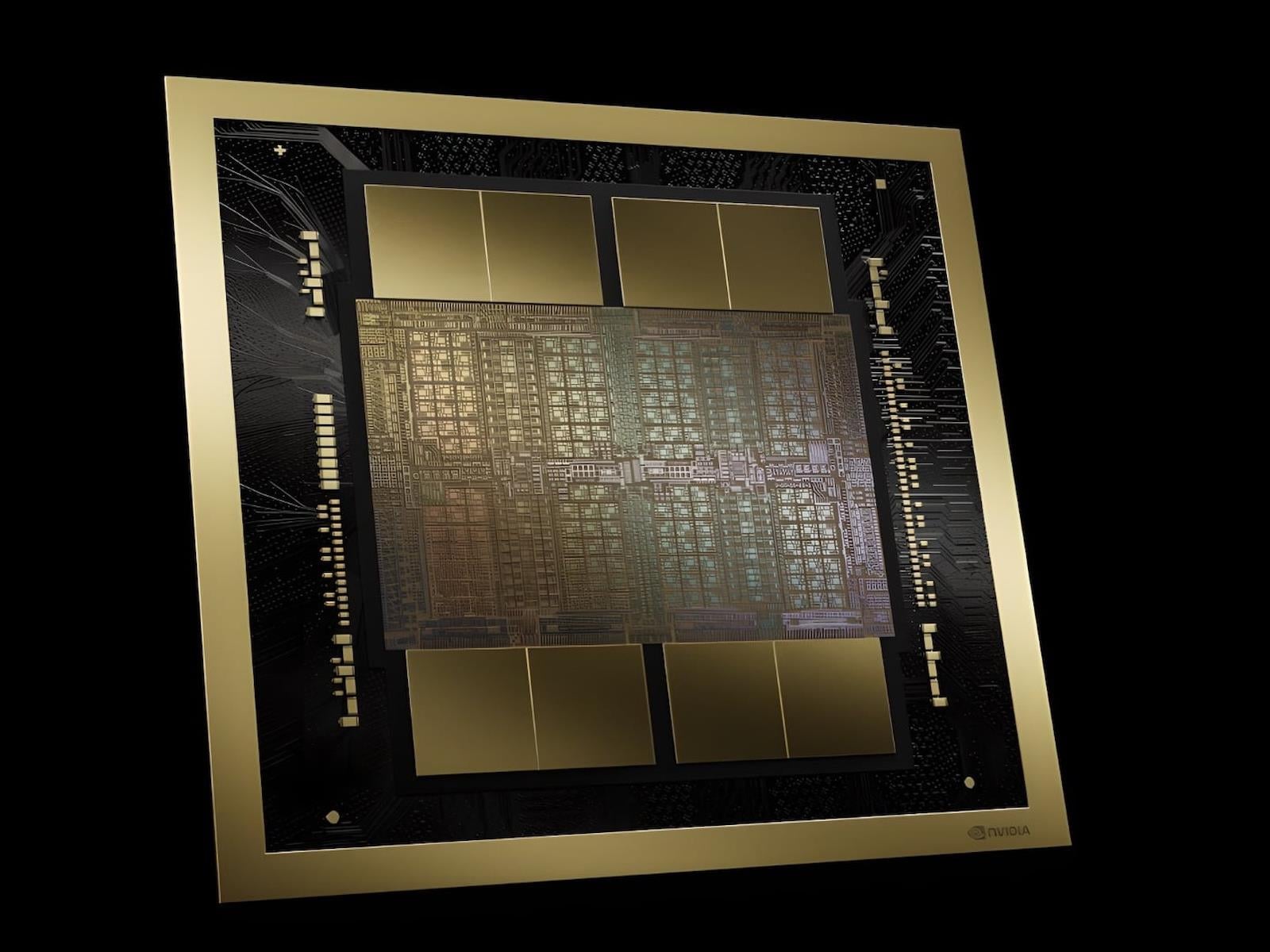
NVIDIA Shows Blackwell Slashing AI Inference Costs By 10X With Open Models

NVIDIA Shows Blackwell Slashing AI Inference Costs By 10X With Open Models
Do you sell AI services? Then NVIDIA wants you to buy Blackwell hardware and host those services yourself, even if you already have perfectly functional Hopper machines. According to NVIDIA, the “tokenomics”—a portmanteau of “tokens”, the most basic unit of AI intelligence, and “economics”—of running open-source AI models on Blackwell hardware

Apple Vision Pro finally gets a YouTube app today

Apple’s Vision Pro is a curious product — it initially wowed me two years ago, but it was hard to ignore that the visionOS platform felt incomplete without dedicated apps for YouTube and Netflix. Well, it seems that Google has finally decided to take the Vision Pro seriously, as it’s launching a YouTube app on the platform today. Previously, you could only view YouTube videos via Safari, or through third-party apps like Tubular Pro.

According to an Apple representative, the YouTube Vision Pro app features every video on on the service, including shorts, 360, 3D and VR 180 content. I haven’t tried it myself yet, but it certainly couldn’t be worse than trying to navigate through YouTube’s desktop app via finger gestures. Now that Google is spinning up its Android XR ecosystem, the company probably couldn’t avoid the Vision Pro for long. And don’t forget, we may also see a cheaper Vision Air next year.

Your move, Netflix.

This article originally appeared on Engadget at https://www.engadget.com/ar-vr/apple-vision-pro-finally-gets-a-youtube-app-today-170000886.html?src=rss