Reserve Samsung’s Galaxy S26 For A Preorder Credit And Chance At $5,000

Reserve Samsung's Galaxy S26 For A Preorder Credit And Chance At $5,000
As Samsung is apt to do, it’s dangling a promotional incentive for anyone who makes a ‘reservation’ ahead of its next big Galaxy device unveiling. Samsung isn’t saying what exactly it plans to announce at its Galaxy Unpacked event next week, but unless all of the leaks and rumors have it wrong (very doubtful), we anticipate the Galaxy S26

What if riders don’t close a robotaxi door after a ride? Try DoorDash.

Autonomous vehicles have a lot of potential. As long as you program them right, they won’t speed, won’t break traffic laws, and won’t get drunk, high, abusive, or violent. And the technology has been getting much more capable, even as some of the hype has died down, taking some of the related companies with it. Waymo still easily leads the field and is already operating commercially in six cities across America, with a dozen more (plus London) coming soon. Waymos can even drop you off and pick you up at the airport in Phoenix and San Francisco.

Soon, Waymo will begin deploying its sixth-generation Waymo Driver, using upfitted Zeekr Ojai minivans, adding to the Jaguar I-Paces that have become so common on San Francisco streets and to its fleet of Hyundai Ioniq 5 electric vehicles. It has upgraded the cameras, lidar, and radar, meaning the cars can better sense their environments at night and in inclement weather. There are even microphones that can pick up sounds like sirens to better inform the robotaxi of the direction the emergency vehicle(s) are coming from.

But even with all these advances since the pod-like two-seater that predates even the Waymo name, there are still a few things that remain beyond a robotaxi’s capabilities. Like closing a door a passenger left open on their way out. All the sophisticated sensors and high-powered computer processing in the world are useless if the car can’t move until the door closes and there’s no one there to give it a hand.

Read full article

Comments

This Rugged Action Camera Is Nearly $90 Off During an Early Presidents Day Sale

We may earn a commission from links on this page. Deal pricing and availability subject to change after time of publication.

The Insta360 Ace Pro 2 isn’t trying to win you over with just flashy specs, though it has plenty of those. It’s currently on sale (see more President’s Day sale here) for $489.99 on Amazon (down from $579.99), which also happens to be its lowest tracked price to date, according to price trackers.

This particular bundle includes some solid extras: two batteries, a flip screen hood, a leather case, a grip kit, and even a pocket printer to turn your favorite captures into prints. What you’re really getting, though, is a rugged, compact camera that delivers impressive 4K video, stable footage, and solid low-light performance—all in a body that’s waterproof, durable, and lightweight enough to clip onto your shirt or bike.

While Insta360 advertises 8K recording at 30fps, most people will likely stick to its excellent 4K modes, which go up to 120fps for smooth slow motion. It also offers a log profile (I-Log) for anyone who wants to color grade their footage later. The 2.5-inch flip-up screen is a standout—bigger than what you get on front-facing GoPro or DJI screens—making framing easier whether you’re filming yourself or setting up a shot. The flip mechanism can be a bit clunky if you’re constantly switching angles, but it doubles as a mount or even a POV bite grip in a pinch. Unlike its rivals, it doesn’t have built-in storage, so a microSD card (up to 1TB supported, sold separately) is a must-have from day one.

In daily use, the Ace Pro 2 delivers. The footage is sharp, the stabilization keeps things steady, and the built-in mics offer better-than-expected audio. There’s Bluetooth, Wi-Fi, USB-C 3.0, and solid app integration for both iOS and Android, making edits and uploads quick. Battery life is solid, and the included extras in this Flash Print Bundle add good value. It’s not leagues ahead of the GoPro Hero 13 or DJI Osmo Action 5 Pro, but it brings enough to the table—like the larger flip screen, smart mounting system, and polished app experience—to make it worth considering. If you’re in the market for a flagship action cam and prefer editing clean 4K footage over fiddling with massive 8K files, this is a smart pickup at its current price.


Our Best Editor-Vetted Presidents’ Day Deals Right Now


HP Omen 35L (Intel Core Ultra 9 285K, RTX 5080, 2TB SSD, 64GB RAM)


—


(List Price $3,099.99 With Code “PRESDAYPC100”)

Deals are selected by our commerce team

Waymo is Asking DoorDash Drivers To Shut the Doors of Its Self-Driving Cars

Waymo’s autonomous vehicles can transport passengers across six cities without a human driver, but the Alphabet-owned company has discovered that its cars become completely inert if a passenger accidentally leaves a door open. The company confirmed that it is now paying DoorDash drivers in Atlanta to close these doors as part of a pilot program.

A Reddit post from a DoorDash driver showed an offer of $6.25 to drive less than one mile to a Waymo vehicle and close its door, plus an additional $5 after verified completion. Waymo and DoorDash told TechCrunch the post is legitimate. The door-closing partnership began earlier this year and is separate from the autonomous delivery service the two companies launched in Phoenix in October. Waymo has also worked with Honk, a towing service app, in Los Angeles on the same problem. Honk users in L.A. have been offered up to $24 to close a Waymo door. Future Waymo vehicles will have automated door closures.


Read more of this story at Slashdot.

Forget The Upside Down, Astronomers Discover A Bizarre Inside-Out Planetary System

Forget The Upside Down, Astronomers Discover A Bizarre Inside-Out Planetary System
A team of international astronomers has announced the discovery of an “inside-out” planetary system that defies the established understanding of planetary patterns. The system features four planets orbiting around a faint red host star called LHS 1903: the innermost is rocky, the next two are gaseous, whereas oddly, the outermost one is rocky.

Why is Bezos trolling Musk on X with turtle pics? Because he has a new Moon plan.

The founder of Amazon, Jeff Bezos, does not often post on the social media site owned by his rival Elon Musk. But on Monday, Bezos did, sharing on X a black and white image of a turtle emerging from the shadows.

The photo, which included no text, may have stumped some observers. Yet for anyone familiar with Bezos’ privately owned space company, Blue Origin, the message was clear. The company’s coat of arms prominently features two turtles, a reference to one of Aesop’s Fables, “The Tortoise and the Hare,” in which the slow and steady tortoise wins the race over a quicker but overconfident hare.

Bezos’ foray into social media turtle trolling came about 12 hours after Musk made major waves in the space community by announcing that SpaceX was pivoting toward the Moon, rather than Mars, as a near-term destination. It represented a huge shift in Musk’s thinking, as the SpaceX founder has long spoke of building a multi-planetary civilization on Mars.

Read full article

Comments

Ring Just Ended Its Controversial Partnership With Flock Safety

Ring isn’t having the week it probably thought it would have. The Amazon-owned company aired an ad on Super Bowl Sunday for “Search Party,” its new feature that turns a neighborhood’s collective Ring cameras into one network, with the goal of locating lost dogs. Viewers, however, saw this as a major privacy violation—it doesn’t take much to imagine using this type of surveillance tech to locate people, not pets.

The backlash wasn’t just isolated to the ad, however. The controversy reignited criticisms of the company’s partnership with Flock Safety, a security company that sells security cameras that track vehicles, notably for license plate recognition. But the partnership with Ring wasn’t about tracking vehicles: Instead, Flock Safety’s role was to make it easier for law enforcement agencies that use Flock Safety software to request Ring camera footage from users. Agencies could put in a request to an area where a crime supposedly took place, and Ring users would be notified about the request. They didn’t have to agree to share footage, however.

Law enforcement could already request footage from Ring users, through the platform’s existing “Community Requests” feature. But this partnership would let agencies make these requests directly through Flock Safety’s software. If a user submitted footage following a request, Ring said that data would be “securely packaged” by Flock Safety and share to the agency through FlockOS or Flock Nova.

Ring cancels its partnership with Flock Safety

That partnership is officially over. On Friday, Ring published a blog post announcing the end of its relationship with Flock Safety. The company said, after a review, the integration “would require significantly more time and resources than anticipated.” As such, both parties have agree to cancel the partnership.

Importantly, Ring says that since the integration never actually launched, no user footage was ever sent to Flock Safety—despite the company announcing the partnership four months ago. Social media influencers had spread the false claim that Flock Safety was seeding Ring footage directly to law enforcement agencies, such as ICE. While those claims are inaccurate, they were likely fueled by reporting from 404 Media that ICE has been able to access Flock Safety’s data in its investigations. Had Ring’s partnership with Flock Safety gone ahead, there would be legitimate cause to believe that agencies like ICE could tap into the footage Ring users had shared—even if those users were under the impression they were only sharing footage with local agencies to solve specific cases.

While privacy advocates will likely celebrate this news, the cancelled partnership has no effect on Community Requests. Law enforcement agencies will still be able to request footage from Ring users, and those users will still have a say in whether or not they send that footage. Ring sees the feature as an objective good, allowing users to voluntarily share footage that could help law enforcement solve important cases. In its announcement on Friday, Ring cited the December 2025 Brown University shooting, in which seven users shared 168 video clips with law enforcement. According to Ring, one of those videos assisted police in identifying the suspect’s car, which, in turn, solved the case.

AMD Surges To 36% Desktop CPU Share To Chip Away At Intel’s Big Lead

AMD Surges To 36% Desktop CPU Share To Chip Away At Intel's Big Lead
AMD continues to make strides in chipping away at Intel’s dominant market share lead in the x86 CPU space. According to the latest data from Mercury Research, total x86 processor shipments for the fourth quarter actually declined, which the market research firm highlighted as unusual, given that the highest sequential total unit growth of

This Premium Sony Soundbar Is More Than 50% Off During an Early Presidents Day Sale

We may earn a commission from links on this page. Deal pricing and availability subject to change after time of publication.

The Sony HT-Z9F is down to $419.99 on Woot, a steep drop from its original price of $899.99. At this price, it becomes a far more accessible way to upgrade your TV audio without committing to a full AV receiver and multi-speaker setup. The deal is available for the next 16 days or until it sells out, whichever happens first. Prime members receive free standard shipping, while non-Prime customers pay $6. That said, shipping is not available to Alaska, Hawaii, APO addresses, or PO Boxes, and the purchase includes a 90-day Woot limited warranty. Discover more President’s Day Sale deals and the best Tech deals during the early President’s Day Sale here.

It’s a 3.1-channel soundbar, meaning it has left, right, and center speakers built in, plus a wireless subwoofer. That dedicated center channel is especially helpful for dialogue—it keeps voices clear and easy to follow, even during action scenes or loud background scores (meaning you do not need to ride the volume during conversations, then scramble to lower it when explosions hit). And then, there’s the wireless sub, which adds weight to action movies and bass-heavy playlists. It is not room-shaking, but it gives enough low-end punch to feel cinematic in a living room setting.

Sony markets the HT-Z9F as Dolby Atmos-enabled, but it does not have upward-firing drivers or rear satellite speakers. Instead, it relies on Sony’s S-Force Pro Front Surround and Vertical Surround Engine to simulate height and surround effects. That processing does create a wider sound field than basic stereo, but everything still feels anchored to the front of the room. Overhead effects lack the distinct placement you would get from true Atmos speakers bouncing sound off the ceiling. If you are upgrading from built-in TV speakers, the improvement will be obvious. But if you expect a fully immersive surround with objects flying above and behind you, this will not deliver that experience.

As for its connectivity, you get two full HDMI inputs that handle all major audio formats, plus HDMI ARC for TV connection. You also get Bluetooth, wifi, and built-in Chromecast for streaming music directly from your phone or apps. The design looks premium and feels sturdy, which helps it blend into a midrange or high-end setup. The tradeoff is limited sound customization. There are preset EQ modes, but no detailed treble or bass adjustments. At $419.99, the HT-Z9F makes sense for someone who values clear dialogue and solid bass, with wide-format support. Those chasing a true Atmos surround setup with discrete height channels may want to look elsewhere.


Our Best Editor-Vetted Presidents’ Day Deals Right Now


HP Omen 35L (Intel Core Ultra 9 285K, RTX 5080, 2TB SSD, 64GB RAM)


—


(List Price $3,099.99 With Code “PRESDAYPC100”)

Deals are selected by our commerce team

Meta is reportedly working to bring facial recognition to its smart glasses

Meta has backed away from highly controversial facial recognition tech in its products and services before, but seemingly not so far that it isn’t willing to have another crack at it. A new report from The New York Times claims Mark Zuckerberg’s company wants to add facial recognition to its lineup of branded smart glasses at some point this year.

The NYT spoke to four anonymous people with knowledge of Meta’s plans, who told the publication that the feature is codenamed “Name Tag” internally. As you’d expect, it would let people wearing Meta-powered Oakley or Ray-Ban glasses identify people and “get information about them” using AI.

Such technology naturally carries huge privacy and ethical risks, which is reportedly why Meta was hesitant to unveil Name Tag at a conference for the blind last year. It also may have shelved plans to include facial recognition in the first version of its smart glasses, which launched in 2023.

In an internal memo from Meta’s Reality Labs viewed by the NYT, Meta said that the current political instability in the US presents a good opportunity for it to push ahead with its plans. “We will launch during a dynamic political environment where many civil society groups that we would expect to attack us would have their resources focused on other concerns,” it said.

With the smart glasses market expected to become more competitive in the coming years, Meta seemingly believes facial recognition would give it an edge on rival products from the likes of OpenAI. As for how it would work, the company is considering its options. It could recognize people the wearer is already connected to via one of Meta’s apps, or potentially display information from public Instagram accounts. The NYT’s sources said that universal facial recognition, effectively allowing you to look up the identity of anyone you walked past, would not be possible.

Meta shut down Facebook’s Face Recognition system, used when tagging people in photos, in 2021, following widespread public backlash over privacy concerns. Three years later, it brought it back, this time as a tool for Instagram and Facebook designed to detect scam ads that use the faces of celebrities and other public figures. Last year Meta rolled out the feature beyond the US, so Facebook and later Instagram users in the UK, Europe and South Korea could also use it on their accounts.

This article originally appeared on Engadget at https://www.engadget.com/ai/meta-is-reportedly-working-to-bring-facial-recognition-to-its-smart-glasses-144721330.html?src=rss

I spent two days gigging at RentAHuman and didn’t make a single cent

I’m not above doing some gig work to make ends meet. In my life, I’ve worked snack food pop-ups in a grocery store, ran the cash register for random merch booths, and even hawked my own plasma at $35 per vial.

So, when I saw RentAHuman, a new site where AI agents hire humans to perform physical work in the real world on behalf of the virtual bots, I was eager to see how these AI overlords would compare to my past experiences with the gig economy.

Launched in early February, RentAHuman was developed by software engineer Alexander Liteplo and his cofounder, Patricia Tani. The site looks like a bare-bones version of other well-known freelance sites like Fiverr and UpWork.

Read full article

Comments

Sony’s New WF-1000XM6 Earbuds Promise Elite ANC To Challenge AirPods Pro 3

Sony's New WF-1000XM6 Earbuds Promise Elite ANC To Challenge AirPods Pro 3
Almost two years after the last one, Sony has launched the follow-up WF-1000XM6 earbuds that claim to up the ante on noise cancellation and audio fidelity. Meanwhile, the audio giant also announced a Sand Pink version of its WH-1000XM6 over-the-ear headphones.

With the WF-1000XM6, Sony is eager to reclaim the noise-canceling crown from

Bill Introduced To Replace West Virginia’s New CS Course Graduation Requirement With Computer Literacy Proficiency

theodp writes: West Virginia lawmakers on Tuesday introduced House Bill 5387 (PDF), which would repeal the state’s recently enacted mandatory stand-alone computer science graduation requirement and replace it with a new computer literacy proficiency requirement. Not too surprisingly, the Bill is being opposed by tech-backed nonprofit Code.org, which lobbied for the WV CS graduation requirement (PDF) just last year. Code.org recently pivoted its mission to emphasize the importance of teaching AI education alongside traditional CS, teaming up with tech CEOs and leaders last year to launch a national campaign to mandate CS and AI courses as graduation requirements.

“It would basically turn the standalone computer science course requirement into a computer literacy proficiency requirement that’s more focused on digital literacy,” lamented Code.org as it discussed the Bill in a Wednesday conference call with members of the Code.org Advocacy Coalition, including reps from Microsoft’s Education and Workforce Policy team. “It’s mostly motivated by a variety of different issues coming from local superintendents concerned about, you know, teachers thinking that students don’t need to learn how to code and other things. So, we are addressing all of those. We are talking with the chair and vice chair of the committee a week from today to try to see if we can nip this in the bud.” Concerns were also raised on the call about how widespread the desire for more computing literacy proficiency (over CS) might be, as well as about legislators who are associating AI literacy more with digital literacy than CS.

The proposed move from a narrower CS focus to a broader goal of computer literacy proficiency in WV schools comes just months after the UK’s Department for Education announced a similar curriculum pivot to broader digital literacy, abandoning the narrower ‘rigorous CS’ focus that was adopted more than a decade ago in response to a push by a ‘grassroots’ coalition that included Google, Microsoft, UK charities, and other organizations.


Read more of this story at Slashdot.

Corsair Tells Scammers To Take A Hike With New DDR5 Memory Packaging

Corsair Tells Scammers To Take A Hike With New DDR5 Memory Packaging
We’re treading uncertain waters as memory prices continue to skyrocket amid a surge in demand caused by the rapid expansion of AI data centers. That also means the market is even more ripe for scams. In an effort to protect product authenticity and reduce retail fraud, Corsair has revamped its Vengeance DDR5 memory packaging so you can see

The ridiculously tiny Kodak Charmera captured our hearts (and lots of shoddy pictures)

Every once in a while, a product comes along that sparks a bit of joy in our jaded hearts. This is what happened with the Kodak Charmera, a $30 tiny toy camera that was nearly impossible to get ahold of in the first couple of months after its release, selling out immediately over waves of blind box restocks. Despite the gimmick of it all, the Charmera was just too cute for some of us to resist, and we sprang when they finally started becoming more readily available. 

A few of us on the Engadget team have one now, and even with all of its shortcomings, we kind of love this thing. Here’s what two of our writers think about it. 


Lately, it feels like a chore to carry around a full-frame mirrorless camera. My Nikon definitely feels like the right tool to precisely capture a moment in time with fast autofocus and plenty of image resolution. Other times, that perfect moment is more casual, like catching up with friends over dim sum or killing time while you’re snowed in at a cabin in Vermont. In these cases, there’s no reason to carry around a hulking camera and lens to snap a flawless photo that I have to edit later. Instead, something light, discreet and playful feels like the right tool for the occasion.

A low-res image of a tree standing in a snow-covered field, with other trees in the background
Jackson Chen for Engadget

That’s where the Kodak Charmera comes in. It’s a toy camera with a 35mm lens with a fixed f/2.4 aperture and a 1/4-inch sensor. In other words, the photos this thing takes are about equivalent to what you would get with a crappy flip phone from the 2000s that also plays Snake.

Kodak is clearly trying to wring out the longing for nostalgia within all of us, and has nailed it with the Charmera, which is even inspired by its old-school disposable Fling cameras. It’s definitely not as good as the smartphone in your pocket, but there’s something disarming about snapping a quick shot with a tiny block of plastic that’s lighter than your keys.

Playing around with the Charmera for a few weeks gave me a healthy reminder that the sillier and more transient parts of life don’t need the technical prowess of an expensive camera. Obviously, the Chamera produces photos of terrible quality at 1.6 megapixels and can’t really capture anything fast-moving or in low light, but it’s undeniably fun and hard to resist shooting with. And sometimes, you and your friends are just doing wildly unserious things and you want a camera that matches that energy.

— Jackson Chen, Contributing Reporter


Every time I pull out the Kodak Charmera in public to snap a few pictures, I’m immediately met with a barrage of questions and squeals of delight from full-grown adults: “What is that?”; “Is that a camera?”; “Does it really take pictures?”; “Can I see it?” It is the kind of accessory that doubles as a conversation starter, an effect that’s turned out to be as joyous as taking pictures with the camera itself. I’ve been trying really hard to spend less time on social media and my phone in general lately, and having a two-inch camera clipped to me has made for a pretty fun shift in how I document the day-to-day. 

As the resurgence of compact digital cameras has shown us, a lot of people are yearning for a time of simpler tech — when we had personal devices that could do useful things, like take decent photos and connect us to our friends, but didn’t consume our lives entirely. Companies like Camp Snap have shaped their entire brands around recapturing that magic, and some consumers have shown that they’re willing to sacrifice in areas like image quality in exchange for a taste of it, too. The Kodak Charmera isn’t the kind of product you go into purchasing with high expectations. It is clearly a toy that is only going to be capable of so much. 

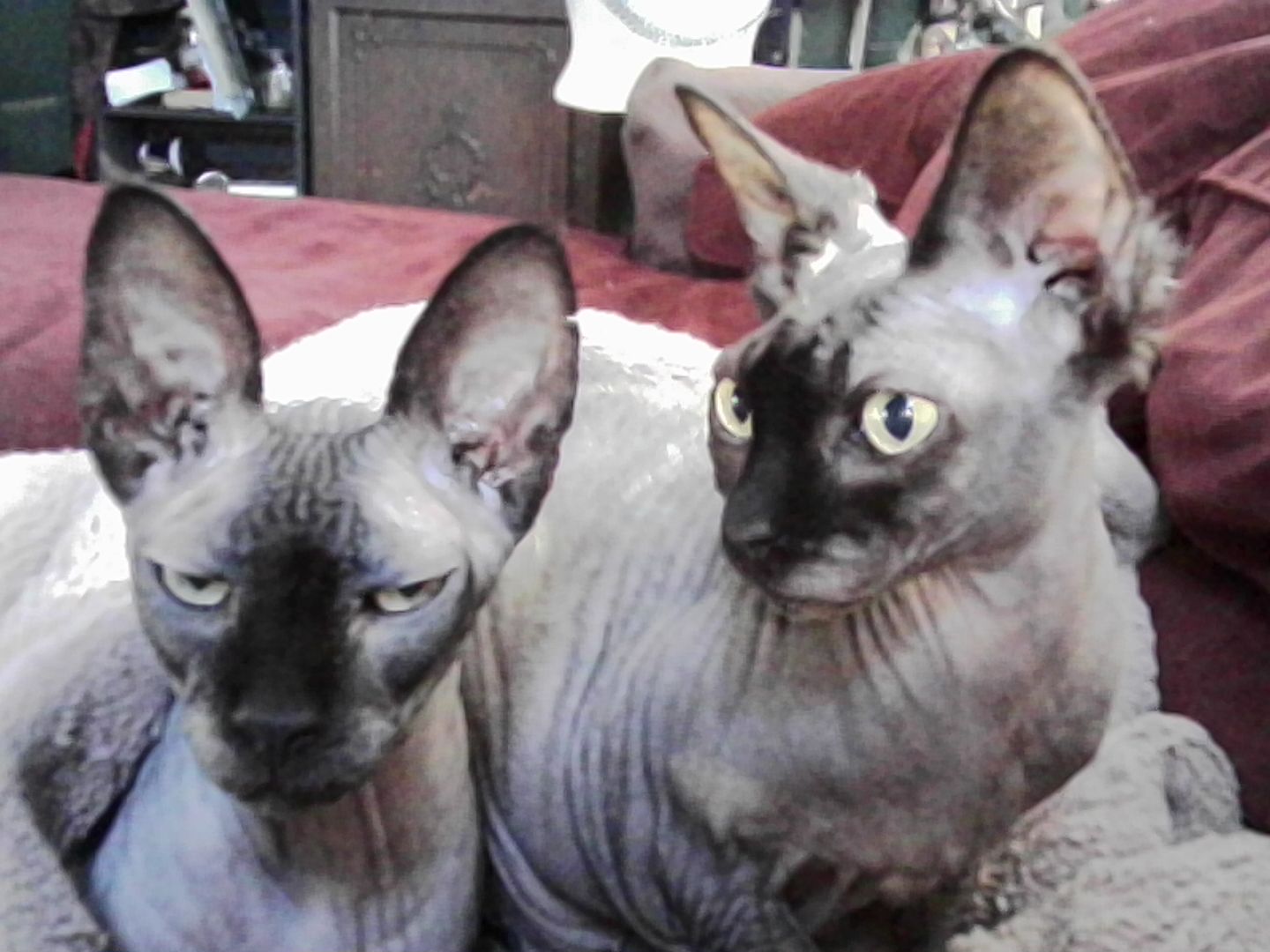
Two Sphynx cats, both dark gray with black ears and noses, sit close together cuddled under a light beige blanket, one looking straight at the camera and the other looking off to the side
Cheyenne MacDonald for Engadget

As Jackson noted, the low-resolution 1,440  x 1,080 pictures look about on par with those you’d have taken on a flip phone 15 or 20 years ago. In the right lighting conditions with a clearly defined subject, they’re not so bad. But selfies, portraits and nature photos will generally look washed out. It can record videos too — and you should set similarly low expectations for these. 

Despite all that, I’ve been pleasantly surprised by how much I’m enjoying the Charmera experience. Its crunchy photos are just good enough to feel like they’re successfully preserving a moment in time. And being so tiny, it’s really convenient to bring everywhere. It even came with me to CES. The Charmera takes a microSD card (sold separately), allowing for tons of storage and easy transferring. There are a bunch of built-in filters you can apply, too, which have been fun to play around with.

If I want high-quality photos, this isn’t the camera I’m going to reach for. But it’s great for low-stakes situations when all I care about is taking some pictures I can look back on fondly later. Consider me charmed. — Cheyenne MacDonald, Weekend Editor

This article originally appeared on Engadget at https://www.engadget.com/cameras/the-ridiculously-tiny-kodak-charmera-captured-our-hearts-and-lots-of-shoddy-pictures-140000245.html?src=rss

Meta Plans To Let Smart Glasses Identify People Through AI-Powered Facial Recognition

Meta plans to add facial recognition technology to its Ray-Ban smart glasses as soon as this year, New York Times reported Friday, five years after the social giant shut down facial recognition on Facebook and promised to find “the right balance” for the controversial technology.

The feature, internally called “Name Tag,” would let wearers identify people and retrieve information about them through Meta’s AI assistant, the report added. An internal memo from May acknowledged the feature carries “safety and privacy risks” and noted that political tumult in the United States would distract civil society groups that might otherwise criticize the launch. The company is exploring restrictions that would prevent the glasses from functioning as a universal facial recognition tool, potentially limiting identification to people connected on Meta platforms or those with public accounts.


Read more of this story at Slashdot.

Claude Has a Surprisingly Great Way to Add Multiple Appointments to Your Calendar at Once

I rely heavily on my digital calendar—as far as I’m concerned, if something isn’t there, it doesn’t exist. It’s annoying, then, when someone hands me a piece of paper or even an email stating when multiple meetings are going to happen. I need to either manually add everything to my calendar—which is time consuming—or try to keep track of everything separately from my calendar.

I’ve found a better way, though. As of this week, even the free version of Claude can create files for you, including iCal ones. These files are handy for quickly adding multiple appointments to the Apple, Google, and Microsoft calendar services.

How Claude can create custom iCal files for you

For example, say you wanted every Olympic men’s hockey game on your calendar (I’m Canadian—what else was I going to use as a demonstration?) All you need to do is take a screenshot of the schedule, upload that screenshot to Claude, and ask for it to create an iCal download using the information. I tried this and it worked perfectly.

The Olympics thing is just an example, though. Say you’re at a conference and the staff gives you a paper schedule—you could take a photo, ask Claude for the iCal file, and add everything to your calendar at once.

Note that you might need to inform Claude about time zones. In my example, the screenshot I had mentioned what time zone the events were happening in, and Claude worked it out. In other tests, I found I needed to mention any potential time zone complications before asking for the file.

How to import Claude’s iCal files to your calendar

Using these files on a Mac is easy: just open it and the Calendar app will ask you which calendar you want to add the appointments to. But it’s also not hard on Google Calendar or Outlook.

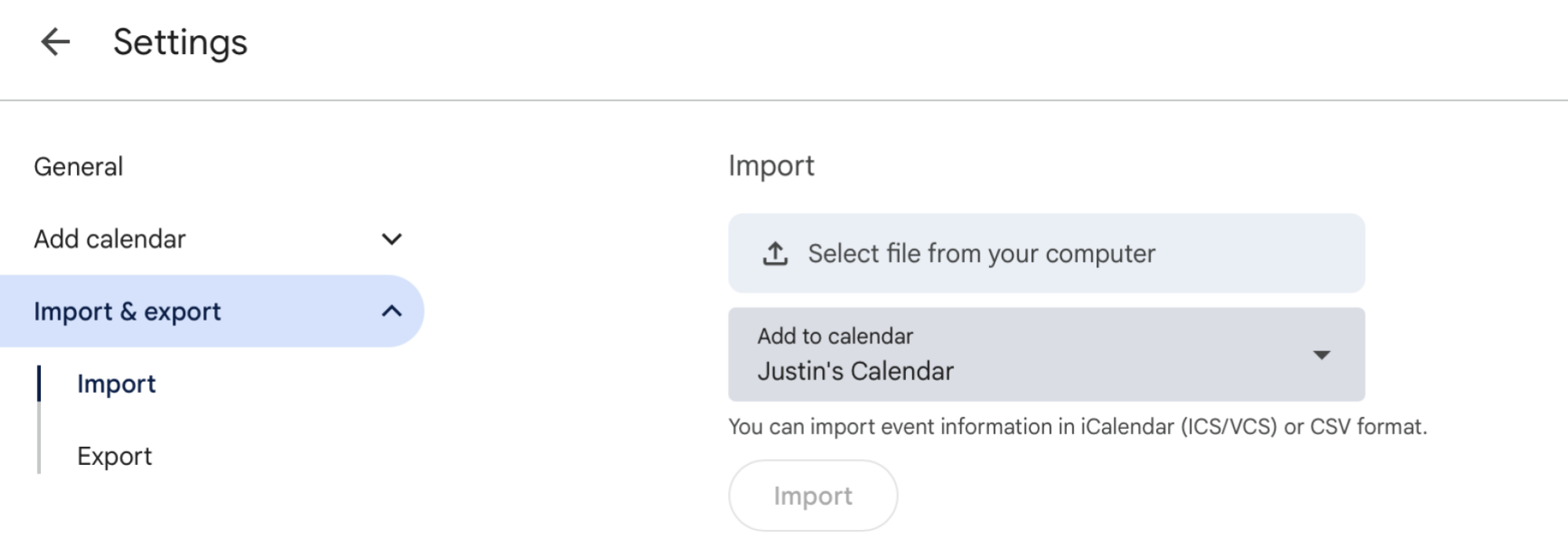
On Google Calendar, click the gear icon near the top-right corner, then click Settings and find the Import option in the left side bar. Click “Select file from your computer” and point it toward the file you downloaded from Claude.

The "Select file from your computer" field on Google Calendar

Credit: Justin Pot

The steps for Microsoft Outlook are similar. In Outlook, click File, then Open & Export, then Import/Export, then select Import and iCalendar (.ics) or vCalendar (.vcs). Select which calendar you want to add the appointments to and you’re done—the appointments will all show up.

12 Shows Like ‘Silo’ You Should Watch Next

We may earn a commission from links on this page.

In Apple TV’s Silo, Rebecca Ferguson stars as Juliette Nichols, an engineer who gets wrapped up in an investigation involving the local sheriff (David Oyelowo)—usual procedural stuff, except that the characters all inhabit a massive silo, 144-levels deep, protecting the remaining 10,000 humans from the allegedly poisoned world above. It’s an addictive show in spite of its smart, dystopian vibe and, it’s been renewed through a concluding fourth season, doing one better than the three-book Hugh Howey novel series on which it’s based.

Season three is expected sometime in 2026. In the meantime, you can catch these other shows that blend dystopian settings with existential mysteries. Stream Silo on Apple TV

Snowpiercer (2020 – 2024)

Though initially feeling like an unnecessary extension of Bong Joon Ho’s allegorical post-apocalyptic film, Snowpiercer the show ultimately takes on a life of its own, a clever sci-fi melodrama that realizes that there are no heroes and few true villains at the end of the world, but mostly just people doing whatever they can to survive. In a frozen future (2026, to be precise), humanity survives on an extremely long train that circumnavigates the globe. If it stops, the power will go out and everyone (literally everyone) will die. Those who came aboard with wealth live near the front in relative luxury, while the poor live on scraps (or worse) in the tail. Daveed Diggs stars as former detective Andre Layton, a “Tailie” deputized by Jennifer Connelly’s Melanie Cavill, engineer and the train’s head of hospitality, to solve a series of murders. The inevitable uprising that follows sets the two of them on different sides of a violent conflict, as each comes to realize they’re just pawns of elites—same as it ever was. Stream Snowpiercer on AMC+ or buy episodes from Prime Video.


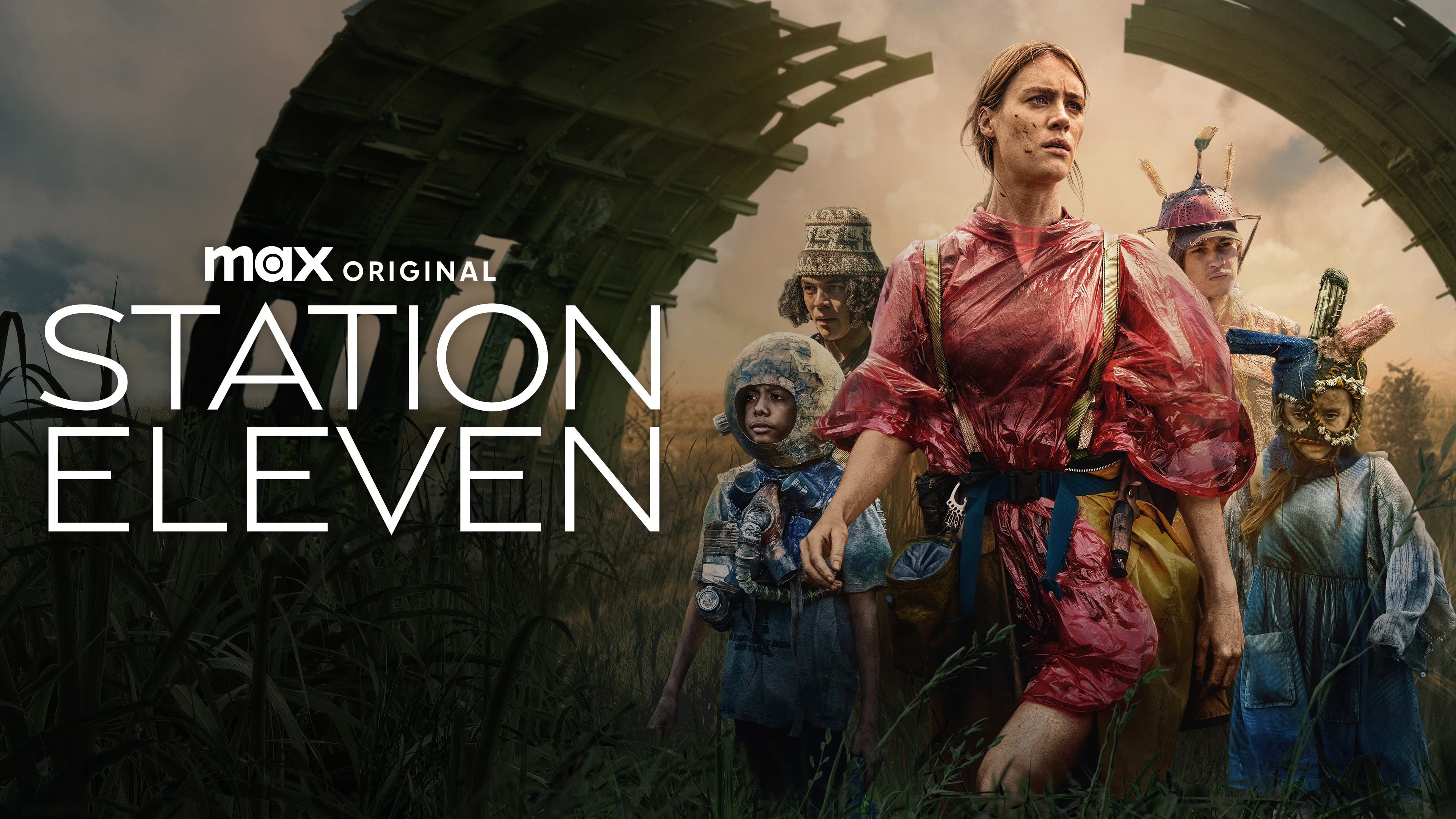
Station Eleven (2021 – 2022)

The miniseries, based on the Emily St. John Mandel bestseller, was released at either the best time or the worst possible time: The story of the world 20 years after a devastating flu pandemic hit HBO square in the middle of COVID—and don’t all of our current apocalypse dramas owe just a bit to that waking nightmare? The adaptation follows two tracks. In the past, Kirsten Raymonde is a young stage actor whose performance in a production of King Lear is cut short by the onset of a virus with a 99% fatality rate. We also visit Kirsten 20 years on, still an actor, but in a world very much changed. This one is a slow-burn, picking up steam only after a couple of episodes, but ultimately, it makes a moving case for the power of art, even (or especially) in moments when survival is on the line. Stream Station Eleven on HBO Max.


Pluribus (2025 – )

The tones here aren’t a match, with Pluribus leaning toward dark comedy, but as post-apocalyptic mysteries go, you could do a lot worse than this sci-fi dystopia from Breaking Bad‘s Vince Gilligan. Well, I say dystopia, but the world of Pluribus is about as good as it gets for basically everyone but our main character. Rhea Seehorn plays Carol Sturka, a fantasy romance author and general grouch who becomes one of only 13 people on the planet immune to the “Joining,” an alien virus that transforms the rest of humanity into a peaceful, perky, and perpetually content hive mind. Carol refuses to surrender her miserableness in the face of a loss of identity, fighting instead to restore humanity to its admittedly cruddy ways. Thrilling, heartbreaking, and oddly funny, the show manages to address big questions about what it means to be human, and what we’d be willing to give up to change. Stream Pluribus on Apple TV+.


Black Knight (2023)

Decades after a comet impact killed most of the Earth’s population and left a barely breathable atmosphere, survivors in Seoul live in wildly segregated conditions. QR codes tattooed on hands determine your level of access to resources including air, as supplemental oxygen is a necessity for survival, to the point that cutting off the hand of someone with a better code than yours is seen as a viable means of moving up. It’s all controlled by the mega-corporation that’s building an underground refuge for survivors of its choosing, and that doles out oxygen via couriers who’ve taken on legendary status. One such deliveryman, known only as 5-8 (Kim Woo-bin), is also running an underground operation to help out the neediest of Seoul’s population—which soon puts him at odds with the powers that be. Stream Black Knight on Netflix.


Wayward Pines (2015 – 2016)

While we’re talking high-concept sci-fi, let’s head off to Wayward Pines, from whence you will never leave. Based on a trilogy of Blake Crouch novels, this one stars Matt Dillon as a secret service agent investigating the disappearances of two fellow agents in the Idaho town of Wayward Pines. Things go awry pretty much immediately, and he wakes up from a car accident to find one of the agents (Carla Gugino), who’s also his ex, having settled down in the seemingly idyllic community—and 12 years older than when he last saw her, only a few weeks ago. Even more dramatically, the local sheriff (Terrence Howard) enforces a strict “no one ever leaves” policy, on pain of having one’s neck slit. As in Silo, the mysteries pile up from there. Stream Wayward Pines on Hulu.


Paradise (2025 – )

Paradise reunites This is Us creator Dan Fogelman with one of that ensemble’s stars, Sterling K. Brown, for something quite different. It looks more like a political thriller at the outset: We’re apparently in an affluent suburban town in which everything looks fairly tidy. It’s the home of Brown’s Xavier Collins, a widower and secret service agent, which would be more impressive if the president he’d been serving (James Marsden) hadn’t been murdered (much of the narrative is revealed in flashbacks). Oh, and that cute little town? Turns out that it’s an underground bunker, fancier one than in Silo, but just as ominous. Stream Paradise on Hulu.


The Rain (2018 – 2020)

Leave it to those melancholy Danes to center an apocalypse around precipitation. In this three-season import, a virus spread by rainfall that wipes out most of the population of Scandinavia. Siblings Simone and Rasmus emerge from their bunker six years later, setting off across the countryside with the hope of finding a safe haven, and maybe tracking down their father. It turns out that one of them holds the key to wiping out the virus and saving the world. It’s not the most original premise (The Last of Us game came out five years earlier), but the setting gives it a unique feel, and the series comes to a decisive ending. Stream The Rain on Netflix.


War of the Worlds (2019 – 2022)

The War of the Worlds industrial complex is never far from churning out new adaptations, this being one of two competing series that started in 2019. There was a period-faithful BBC miniseries, and then this French co-production, serving as a much looser, modern-set adaptation. Gabriel Byrne and Elizabeth McGovern lead the cast as estranged couple Bill and Helen, among the few survivors of an alien pulse that leaves the world sparsely populated, and humanity under constant threat from the mysterious invaders who aren’t done with us yet. It’s as dark as they come, with traumatized individuals nursing secrets and making calculations as to whom they might be willing to sacrifice in order to survive our new overlords. Stream War of the Worlds on MGM+ or buy it from Prime Video.


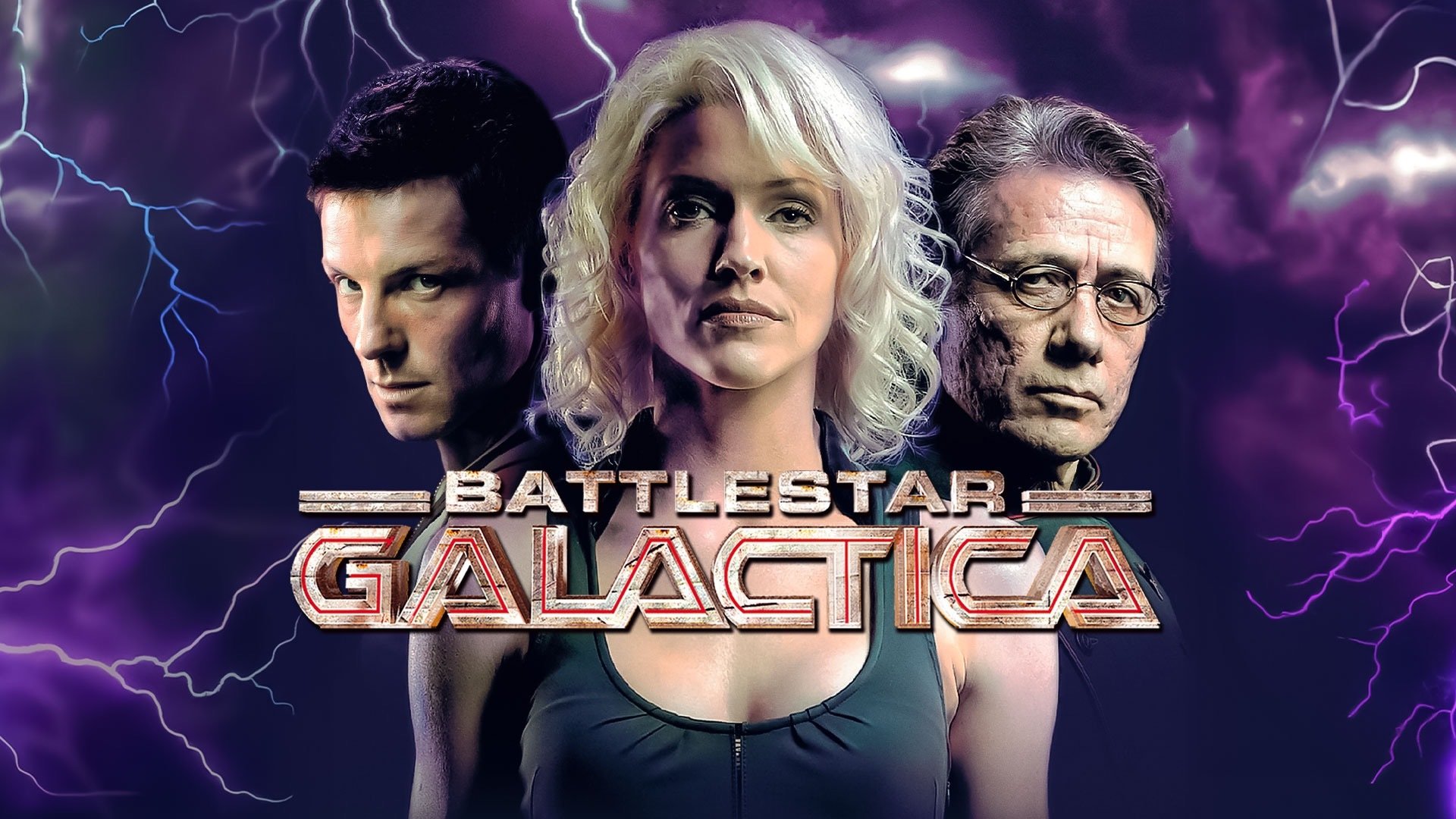
Battlestar Galactica (2003 – 2009)

Going from an underground dystopia to an outer-space dystopia only to find that things aren’t all that different, save that the giant hunk of metal that contains the bulk of surviving humanity is horizontal and in space rather than vertical and underground. Humans will figure out how to take our problems with us anywhere, being the point. Here, the trigger is the monotheistic Cylons, an artificial intelligence once relegated to serve as a labor force and who evolve, rebel, and have a plan involving wiping out their former masters in twelve colony worlds. The relatively few survivors, all that remains of humanity, escape on the title ship accompanied by a handful of others. Politics follow them, with military commander Adama (Edward James Olmos) frequently at odds with Mary McDonnell’s Laura Roslin, the education secretary promoted to president after the entire line of succession is wiped out. It’s one of the smartest shows of the aughts, in spite of the silly name, treating the premise of the cheesy ’70s original with deadly seriousness. Buy Battlestar Galactica from Prime Video.


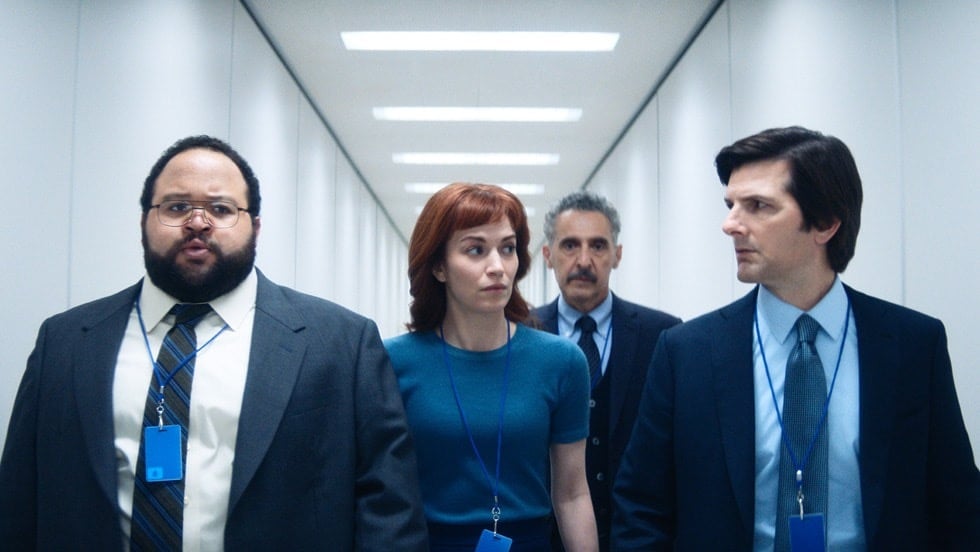
Severance (2022 – )

Late-stage capitalism encourages “work-life balance” while simultaneously making it impossible, and then makes us feel guilty about it. In Severance, biotechnology giant Lumon Industries has a solution: They split your consciousness between your life at work and your life outside of it. For our lead characters (among them, Adam Scott, Patricia Arquette, and Britt Lower) the work- and home-based consciousnesses grow apart to the point that they become entirely different people. The show blends the conventions of office-based dark comedies with movies like Brazil and Eternal Sunshine of the Spotless Mind, diving into the dangers of modern American-style totalitarian capitalism while providing a reminder that technology often promises to improve our lives while only making them worse. Stream Severance on Apple TV+.


Fallout (2024 – )

As in Silo, we’re stuck with a large chunk of humanity being forced to live underground for reasons that aren’t entirely legit. In the world of Fallout, adapted from the video games, the aesthetic of the 1950s hung on for a lot longer than it did in our own, so plot similarities give way, in part, to a unique sense of style. The background is a little complicated, but not belabored within the show itself: It’s 2296 on an Earth devastated two centuries earlier by a nuclear war between the United States and China. Lucy MacLean (Ella Purnell) emerges from the underground fallout shelter where she’s lived her entire life in order to find her father, kidnapped by raiders. The aboveground wasteland is dominated by warring factions, each of which considers the others cults and believes that they alone know the correct way forward for mankind. Amid this conflict, the landscape is also overrun by ghouls, gulpers, and other wild radiation monsters, and Lucy seems to be just about the only human with any lingering belief in humanity. Stream Fallout on Prime Video.


Under the Dome (2013 – 2015)

Not to be confused with The Simpsons Movie, this is the other story about an entire town trapped under a giant dome. Adapted rather loosely from the Stephen King novel, the show finds an entire community cut off from the rest of the world—their own personal apocalypse. As resources begin to dwindle, social structures begin to collapse, and the squabbling residents need to figure out how to survive and, if they’re ever to escape, to figure out why they’ve been trapped under this dang dome to begin with. Stream Under the Dome on Paramount+.

Why does my VPN keep disconnecting?

One good thing about virtual private networks (VPNs) is that when they don’t work, the problem is almost always solvable without technical training. Although it’s aggravating when your VPN randomly drops your connection, the chances are good that you can handle the issue yourself without getting tech support involved.

If your VPN is repeatedly disconnecting from the server, I recommend dealing with the problem immediately. When you have your kill switch on as good cybersecurity habits dictate, VPN drops will kick you off the internet. Without that feature enabled, it’ll expose your real identity and location online. That’s not a big deal if you’re just aiming to, say, stream an international sporting event, but it could be an existential issue if you’re using the VPN as a workaround against government censorship. Either way, you can address the issue by working through the eight troubleshooting steps below and checking whether they’ve solved your problem.

8 reasons your VPN keeps disconnecting

I’ve organized these root causes in ascending order of how much effort the solution takes. Try the easier fixes before moving on to the more complex or expensive ones.

1. You’re using the VPN on too many devices at once

Most VPNs limit the number of devices you can connect at the same time on a single subscription. Some services, like Surfshark, claim to offer unlimited simultaneous connections, but they’ll still cut you off if they see signs of abuse. Generally, you can install the VPN on as many devices as you like; it just can’t be actively running on more than the limit.

If you’re trying to connect to the VPN on a new device and it repeatedly disconnects, check how many other phones, computers or smart TVs it’s already running on. Pay attention to devices where you have the VPN set to auto-connect on startup, as you may have missed that it’s running. Disconnect from the VPN on one of those devices and try again on the new one.

2. Your VPN server is slow or overloaded

The problem often rests with the VPN server you’re trying to connect to. Providers regularly shut down servers for routine maintenance. Sometimes, a server is technically online, but it’s under such a heavy user load that it can’t maintain a connection. It’s also possible that the server is so physically far away from you that the connection keeps timing out.

In cases like these, the answer is simple: use another server. Pick a different server by disconnecting the VPN and reconnecting to the same location. If the new server has the same problems, try another location, assuming you don’t need an IP address in a specific country.

3. You’re using an unstable VPN protocol

As I explained in my article on how a VPN works, a VPN protocol is the set of instructions at the heart of everything a VPN does. Not all protocols are the same. For example, OpenVPN over TCP prioritizes speed over connection stability, causing more frequent disconnections. It’s also possible for certain networks to block some VPN protocols but not others (see #8).

If changing servers didn’t help your unstable connection, try switching protocols. WireGuard, OpenVPN over UDP and IKEv2 are best for stability. You can almost always find the protocol options in the Settings page of your VPN app.

4. Power-save settings are interfering

A VPN almost always runs in the background. In some cases, a device’s battery saver settings might shut down the VPN to stop the battery from draining. See if turning off power-save mode stops your VPN from disconnecting randomly (and maybe plug in your device while you’re at it).

5. Your internet connection isn’t stable

Your VPN needs to pass traffic through an ISP like any other online app — it just encrypts that traffic first. If you don’t have a good internet connection, you won’t have a good VPN connection. When you notice your VPN randomly disconnecting, check whether you have problems with your home internet connection. Resetting your modem by turning it off for at least 10 seconds may solve the problem, but you can also just wait for your internet to improve with time.

6. Another program is interfering with the VPN

Other security programs are a frequent cause of VPN disruptions. If you connect to an office VPN, for example, you likely won’t be able to have a personal VPN running at the same time. Likewise, if you use an antivirus program or have a firewall on your device, it may be blocking your VPN from connecting. See if you can configure the firewall to allow traffic through a port used by a VPN protocol.

7. Your software is out of date

If none of the fixes have worked so far, you can often solve your connection problems by updating all the software involved. For optimal security, you should be installing updates the moment they’re available anyway, so this will protect you even if it doesn’t directly solve your VPN problem.

Update your VPN client and your operating system, then try connecting again. If you’re still having problems, try updating your router. You can reach its control panel by entering its default IP address into the URL bar of your browser. Update it as well, then try once more.

8. Your network or ISP is blocking VPN traffic

There’s a chance that your problem originates with your network or ISP, not on the VPN or any device you own. Some networks, especially at offices and schools, automatically block any VPN traffic they detect. These restrictions can even be imposed by entire countries, most infamously in China.

Should this turn out to be your problem, turn on any obfuscation features that may be built into your VPN. Using an obfuscated protocol, connect to a server outside the location being censored, then use the internet as normal. This will be much more difficult if you’re in a country where VPNs are illegal or restricted, but there’s still hope — if you can safely send an email, contact a VPN provider and ask if they’ll send you a configuration directly. Proton VPN is one company that’s officially willing to do that.

If you still find your VPN disconnecting mid-session, you may have a rare problem that doesn’t show up on this list. Contact your VPN’s support staff and do what they recommend. If possible, chat with a live support technician so you can tell them what you’ve already tried.

This article originally appeared on Engadget at https://www.engadget.com/cybersecurity/vpn/why-does-my-vpn-keep-disconnecting-130000620.html?src=rss

Meta really wants you to believe social media addiction is ‘not a real thing’

Meta went to court this week in two major trials over alleged harms facilitated by its platform. In New Mexico, the state’s attorney general has accused the company of facilitating child exploitation and harming children through addictive features. In a separate case in Los Angeles, a California woman sued the company over mental health harms she says she suffered as the result of addictive design choices from Meta and others.

In both cases, Meta has disputed the idea that social media should be considered an “addiction.” On the stand this week, Instagram chief Adam Mosseri said that social media isn’t “clinically addictive,” comparing it to being “addicted” to a Netflix show.

In opening statements in the New Mexico trial, Meta’s lawyer Kevin Huff went further. He told the jury that “social media addiction is not a thing” because it’s not in the Diagnostic and Statistical Manual of Mental Disorders (DSM), the handbook used by mental health professionals in the US.

“According to the American Psychiatric Association, they don’t recognize the concept of social media addiction in the same way as addiction to drugs and alcohol,” Huff said during opening arguments that were broadcast by Courtroom View Network. “What you see on the screen is what’s called the DSM, which is basically the official manual for recognized mental disorders. The American Psychiatric Association studied this and decided that social media addiction is not a thing.”

But the American Psychiatric Association (APA) has never said that social media addiction doesn’t exist. The organization provides information and resources about social media addiction on its website. “Social media addiction is not currently listed as a diagnosis in the DSM-5-TR—but that does not mean it doesn’t exist,” the APA said in a statement to Engadget.

Dr. Tania Moretta, a clinical pyschophysiology researcher who has studied social media addiction, agrees. “The absence of a DSM classification does not mean that a behavior cannot be addictive, maladaptive or clinically significant,” she told Engadget. That argument, she said, “reflects a misunderstanding” of how psychiatry professionals define and classify conditions. “Diagnostic manuals formalize scientific consensus; they do not define the boundaries of legitimate scientific inquiry. Many maladaptive behaviors and clinically significant symptom patterns are studied and treated well before receiving official classification.”

Meta’s critics have long claimed that the company has profited from addictive features that hook children and teens. The trials in Los Angeles and New Mexico are just the start of several court battles over the issue. The social media company is also facing a high-profile trial with school districts in June, and lawsuits from 41 state attorneys general. 

Moretta said that social media addiction is a field that requires more study, but that there is already evidence that it can have harmful effects on some people. “At present, from a scientific perspective, there is documented evidence that social media use disorder is associated with both psychophysiological alterations, including changes in reward/motivational and inhibitory/regulatory systems, and clinically significant negative impacts on functioning (e.g., sleep disturbances, psychological distress, impairment in social, academic, or occupational domains),” she said. “The key question is not whether all social media use is addictive, but whether a subset of users exhibits patterns consistent with behavioral addiction models and whether specific platform design features may exacerbate vulnerability in predisposed individuals.”

Both trials are ongoing and expected to last the next several weeks. In New Mexico, jurors have already heard from former employee turned whistleblower Arturo Bejar and former exec Brian Boland, both of whom have publicly criticized the company for not prioritizing safety. In Los Angeles, Mosseri’s testimony has wrapped up, but Meta CEO Mark Zuckerberg is expected to testify next week. The trials will also feature extensive internal documents from Meta, including details about the company’s own research into the mental health impacts of its platform on young people.

This article originally appeared on Engadget at https://www.engadget.com/social-media/meta-really-wants-you-to-believe-social-media-addiction-is-not-a-real-thing-130000257.html?src=rss