Hideki Sato, known as the father of Sega hardware, has reportedly died

Hideki Sato, who led the design of Sega’s beloved consoles from the ’80s and ’90s, died on Friday, according to the Japanese gaming site Beep21. He was 77. Sato worked with Sega from 1971 until the early 2000s, but he’s best known for his involvement in the development of the Sega arcade games and home consoles that defined many late Gen X and early millennial childhoods, starting with the SG-1000 to the Genesis, Saturn and Dreamcast.  

Sato went on to serve as Sega’s president from 2001 to 2003. In the post announcing his death, Beep21, which interviewed Sato numerous times over the years, wrote (translated from Japanese), “He was truly a great figure who shaped Japanese gaming history and captivated Sega fans all around the world. The excitement and pioneering spirit of that era will remain forever in the hearts and memories of countless fans, for all eternity.” Sato’s passing comes just a few months after that of Sega co-founder David Rosen, who died in December at age 95. 

This article originally appeared on Engadget at https://www.engadget.com/gaming/hideki-sato-known-as-the-father-of-sega-hardware-has-reportedly-died-230634768.html?src=rss

India’s New Social Media Rules: Remove Unlawful Content in Three Hours, Detect Illegal AI Content Automatically

Bloomberg reports:

India tightened rules governing social media content and platforms, particularly targeting artificially generated and manipulated material, in a bid to crack down on the rapid spread of misinformation and deepfakes. The government on Tuesday (Feb 10) notified new rules under an existing law requiring social media firms to comply with takedown requests from Indian authorities within three hours and prominently label AI-generated content. The rules also require platforms to put in place measures to prevent users from posting unlawful material…

Companies will need to invest in 24-hour monitoring centres as enforcement shifts toward platforms rather than users, said Nikhil Pahwa, founder of MediaNama, a publication tracking India’s digital policy… The onus of identification, removal and enforcement falls on tech firms, which could lose immunity from legal action if they fail to act within the prescribed timeline.

The new rules also require automated tools to detect and prevent illegal AI content, the BBC reports. And they add that India’s new three-hour deadline is “a sharp tightening of the existing 36-hour deadline.”

[C]ritics worry the move is part of a broader tightening of oversight of online content and could lead to censorship in the world’s largest democracy with more than a billion internet users… According to transparency reports, more than 28,000 URLs or web links were blocked in 2024 following government requests…

Delhi-based technology analyst Prasanto K Roy described the new regime as “perhaps the most extreme takedown regime in any democracy”. He said compliance would be “nearly impossible” without extensive automation and minimal human oversight, adding that the tight timeframe left little room for platforms to assess whether a request was legally appropriate. On AI labelling, Roy said the intention was positive but cautioned that reliable and tamper-proof labelling technologies were still developing.

DW reports that India has also “joined the growing list of countries considering a social media ban for children under 16.”

“Young Indians are not happy and are already plotting workarounds.”


Read more of this story at Slashdot.

Sam Bankman-Fried Requests New Trial in FTX Crypto Fraud Case

While serving his 25-year prison sentence, “convicted former cryptocurrency mogul Sam Bankman-Fried on Tuesday requested a new federal trial,” reports Courthouse News, “based on what he says is newly discovered evidence concerning his company’s solvency and its ability to repay all FTX customers for what prosecutors portrayed as the looting of $8 billion of his customers’ money…”

Bankman-Fried says evidence disclosed since his trial disproves prosecutors’ case about Bankman-Fried’s hedge fund running a multi-billion deficit of FTX customer funds, and instead shows that FTX always had sufficient assets to repay the cryptocurrency platform’s customer deposits in full. “What it faced was a short-term liquidity crisis caused by a run on the exchange, not insolvency,” he wrote…

Bankman-Fried also accuses the Department of Justice of coercing a guilty plea and cooperation deal from Nishad Singh — a close friend of Bankman-Fried’s younger brother — who testified at trial as a cooperating witness… Bankman-Fried says in the motion that prior to being pressured into a guilty plea, Singh’s initial proffer to investigators “contradicted key parts of the government’s version of events. But following threats from the government, Mr. Singh changed his proffers to fit the government’s narrative and pleaded guilty to charges carrying up to 75 years in prison, with a promise from the prosecution that it would recommend little or no jail time if it concluded that his assistance in prosecuting Mr. Bankman-Fried was ‘substantial,'” he wrote in the petition…

Additionally, Bankman-Fried requested that U.S. District Judge Lewis Kaplan, who presided over his 2023 trial, recuse himself from ruling on this motion, “because of the manifest prejudice he has demonstrated towards Mr. Bankman-Fried.”

“Bankman-Fried’s mother, Stanford Law School professor Barbara Fried, filed his self-represented bid for a new trial on his behalf in Manhattan federal court…”


Read more of this story at Slashdot.

Terminator Zero showrunner confirms the Netflix anime has been canceled after one season

If you’ve been wondering what’s next for Netflix’s Terminator Zero in the time since its first season, we finally have an update, and it’s a bummer. Responding to a fan on social media, showrunner Mattson Tomlin said this weekend that the show has been canceled. Despite being generally well received, Tomlin noted that “at the end of the day not nearly enough people watched it.”

It was cancelled. The critical and audience reception to it was tremendous, but at the end of the day not nearly enough people watched it. I would’ve loved to deliver on the Future War I had planned in season’s 2 and 3, but I’m also very happy with how it feels contained as is. https://t.co/Dh7G6gkBF7 pic.twitter.com/dqCSXHIytg

— mattson tomlin (@mattsontomlin) February 13, 2026

Season one of Terminator Zero was released in August 2024 and focused on the events around Judgment Day — August 29, 1997, as established in Terminator 2 — and its aftermath, jumping forward to 2022, more than two decades into a war between humans and machines. In the post about the show’s cancellation, Tomlin wrote, “I would’ve loved to deliver on the Future War I had planned in season’s 2 and 3, but I’m also very happy with how it feels contained as is.”

Tomlin went on to praise the marketing team in additional replies for “trying to really make the show work,” as well as the hundreds of people who worked on the show. Offering a bit of insight, Tomlin wrote, “Generally speaking, anime audiences skew younger. Terminator audiences skew older. Terminator Zero asked them to meet in the middle, and they didn’t in the way the corporation needed to justify the spend to continue. I’m extremely grateful to the people who have watched it.”

This article originally appeared on Engadget at https://www.engadget.com/entertainment/streaming/terminator-zero-showrunner-confirms-the-netflix-anime-has-been-canceled-after-one-season-211656840.html?src=rss

Space Station returns to a full crew complement after a month

A Crew Dragon spacecraft docked with the International Space Station on Valentine’s Day, and astronauts popped open the hatches at 5:14 pm ET (22:14 UTC) on Saturday evening.

The arrival of four new astronauts as part of the Crew 12 mission—Jessica Meir and Jack Hathaway of NASA, Sophie Adenot of the European Space Agency, and Andrey Fedyaev of Roscosmos—brought the total number of crew on board the space station to seven, giving the US space agency a full complement in orbit.

The number of astronauts living on board the station fluctuates over time, depending on crew rotations and private astronauts making shorter stays, but since Crew Dragon began flying regularly at the end of 2020 NASA has sought to keep at least four “USOS” astronauts on board at all time. This stands for “US Orbital Segment,” and means astronauts from the United States, Canada, Europe, and Japan who are trained to operate the areas of the station maintained by NASA and its partner astronauts.

Read full article

Comments

The official Pokémon pinball machine has an animatronic Pikachu and a Master Ball plunger

At a staggering starting price of $6,999, you have a better chance of buying a bicycle in Cerulean City than getting your hands on the official Pokémon pinball machine. The collaboration between The Pokémon Company International and Stern Pinball is undoubtedly nostalgic, letting you battle with a team that includes Bulbasaur, Charmander, Squirtle and Pikachu, as well as catch up to 182 different Pokémon, mostly from the Kanto region, with more to be added.

Besides catching ’em all and tracking your growing Pokédex on Stern Pinball’s dedicated app, you can do Gym Battles in four different biomes and eventually face off against Team Rocket. The pinball machine draws a lot of inspiration from the original cartoon, including a monitor that plays clips from the show, an animatronic Pikachu, and speakers that can play the iconic theme song.

Stern Pinball developed Pro, Premium and Limited Edition models, which can cost all the way up to $12,999. For the most expensive option, you’ll get one of the 750 limited edition machines that include a Master Ball plunger, a numbered plaque and a signed certificate of authenticity. For Pokémon fans that can’t afford to spend that much money on a pinball machine, you can soon find them at arcades and bowling alleys instead.

This article originally appeared on Engadget at https://www.engadget.com/gaming/nintendo/the-official-pokemon-pinball-machine-has-an-animatronic-pikachu-and-a-master-ball-plunger-204915013.html?src=rss

Amazon’s Ring Ends Flock Partnership After Privacy Firestorm

Amazon’s Ring Ends Flock Partnership After Privacy Firestorm
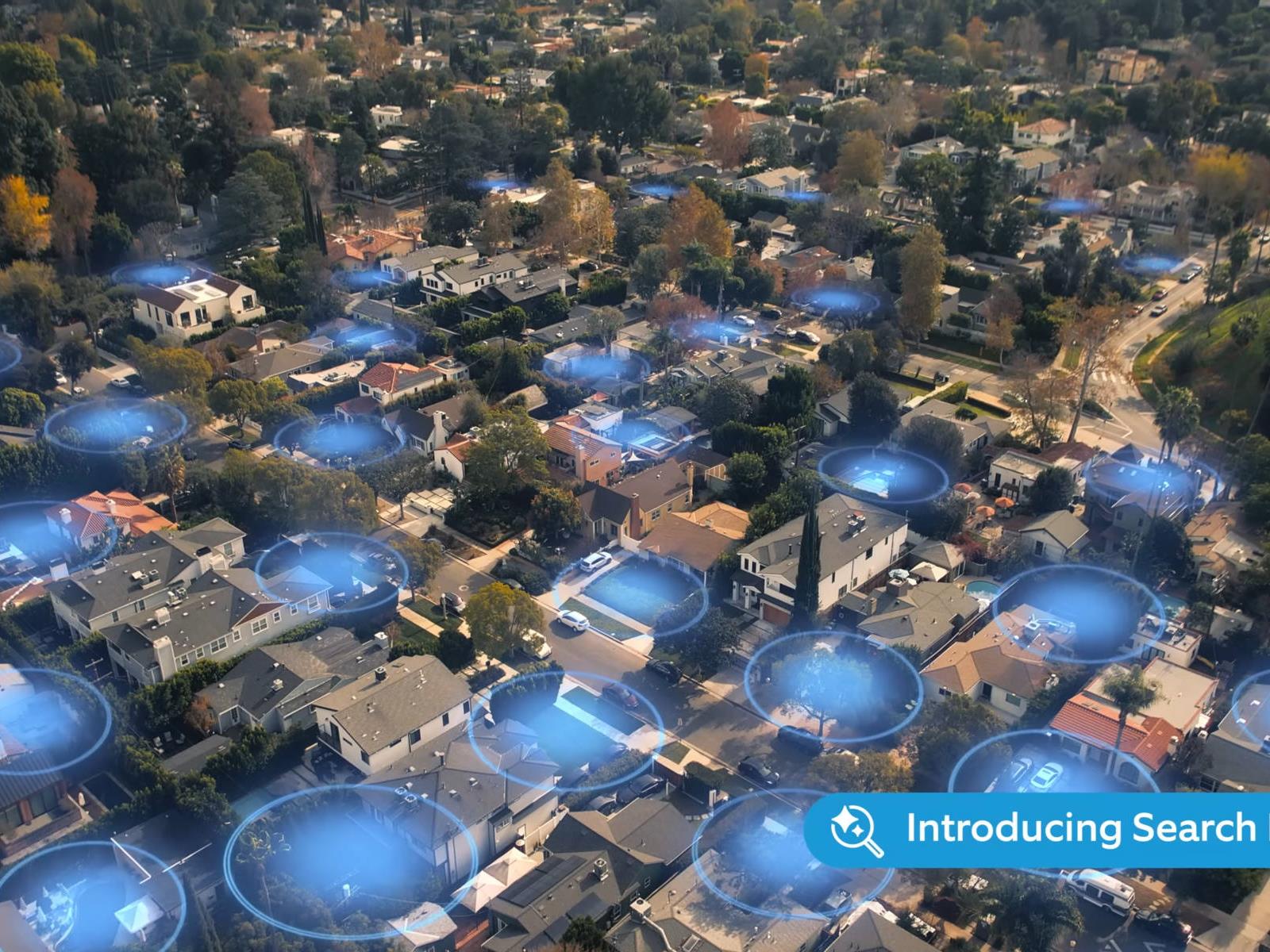
During the Super Bowl, Amazon’s Ring advertised a feature called Search Party in collaboration with Flock Safety, which was billed as an AI-accelerated way to make it easy for Ring customers to “help families find lost dogs” and help users “be a hero in your neighborhood”. The backlash was swift and widespread, citing privacy concerns due

Ancient Mars was warm and wet, not cold and icy

A recent study showed that Mars was warm and wet billions of years ago. The finding contrasts with another theory that this era was mainly cold and icy. The result has implications for the idea that life could have developed on the planet at this time.

Whether Mars was once habitable is a fascinating and intensely researched topic of interest over many decades. Mars, like the Earth, is about 4.5 billion years old and its geological history is divided into different epochs of time.

The latest paper relates to Mars during a time called the Noachian epoch, which extended from about 4.1 to 3.7 billion years ago. This was during a stage in solar system history called the Late Heavy Bombardment (LHB). Evidence for truly cataclysmic meteorite impacts during the LHB are found on many bodies throughout the solar system.

Read full article

Comments

‘Babylon 5’ Episodes Start Appearing (Free) on YouTube

Cord Cutters News reports:

In a move that has delighted fans of classic science fiction, Warner Bros. Discovery has begun uploading full episodes of the iconic series Babylon 5 to YouTube, providing free access to the show just as it departs from the ad-supported streaming platform Tubi… Viewers noticed notifications on Tubi indicating that all five seasons would no longer be available after February 10, 2026, effectively removing one of the most accessible free streaming options for the space opera. With this shift, Warner Bros. Discovery appears to be steering the property toward its own digital ecosystem, leveraging YouTube’s vast audience to reintroduce the show to both longtime enthusiasts and a new generation.

The uploads started with the pilot episode, “The Gathering,” which serves as the entry point to the series’ intricate universe. This was followed by subsequent episodes such as “Midnight on the Firing Line” and “Soul Hunter,” released in sequence to build narrative momentum. [Though episodes 2 and 3 are mis-labeled as #3 and #4…] The strategy involves posting one episode each week, allowing audiences to experience the story at a paced rhythm that mirrors the original broadcast schedule…

For Warner Bros. Discovery, this initiative could signal plans to expand the franchise’s visibility, especially amid ongoing interest in reboots and spin-offs that have been rumored in recent years.

Babylon 5 creator J. Michael Straczynski answered questions from Slashdot’s readers in 2014.

Long-time Slashdot reader sandbagger offers this summary of the show “for those not in the know… In the mid-23rd century, the Earth Alliance space station Babylon Five, located in neutral territory, is a major focal point for political intrigue, racial tensions, and a major war as Earth descends into fascism and cuts off relations with its allies.”


Read more of this story at Slashdot.

Apple may be adding a splash of color to its upcoming budget-friendly MacBook

The hardest choice to make for building your next MacBook might be selecting a color. According to Bloomberg‘s Mark Gurman, Apple has tested colors including light yellow, light green, blue and pink for its next entry-level MacBook that’s aimed at students and enterprise users.

Beyond the more vibrant colors, Gurman said that Apple has also trialed its classic silver and dark gray colorways for its cheaper laptop. Gurman added that not all of these six colors will make it to the final product, but Apple has recently shown it’s not afraid to dip into flashier options. Apple refreshed the iMac in 2024 with a total of seven colors and swapped out the space gray option for sky blue for the latest MacBook Air.

Color choices aside, the latest rumors point to the upcoming MacBook having a price tag that’s anywhere between $699 and $799. To achieve that lower price point, Apple is expected to port over its chips designed for iPhones, like the A18 Pro that we first saw with the iPhone 16 Pro Max. We’re also anticipating Apple will compromise on specs, ports, or even the display, but Gurman reported that the company won’t be skimping when it comes to the shell. According to Gurman, Apple will employ a new manufacturing process to craft aluminum shells for the affordable MacBook, instead of opting for a cheaper material like plastic to cut costs. We may not have to wait long to see the official colors of the budget MacBook, as Gurman reported that it will be announced during an event in March.

This article originally appeared on Engadget at https://www.engadget.com/computing/laptops/apple-may-be-adding-a-splash-of-color-to-its-upcoming-budget-friendly-macbook-192740002.html?src=rss

DNA Mutations Discovered In the Children of Chernobyl Workers

Researchers performed genome sequencing scans on 130 people whose fathers were Chernobyl cleanup workers. Comparing the scans to control groups, they found evidence for the first time for “a transgenerational effect” from the father’s prolonged exposure to low-dose ionizing radiation.

ScienceAlert reports:

Rather than picking out new DNA mutations in the next generation, they looked for what are known as clustered de novo mutations (cDNMs): two or more mutations in close proximity, found in the children but not the parents. These would be mutations resulting from breaks in the parental DNA caused by radiation exposure. “We found a significant increase in the cDNM count in offspring of irradiated parents, and a potential association between the dose estimations and the number of cDNMs in the respective offspring,” write the researchers in their published paper…

What’s more, a higher radiation dose for the parent tended to mean a higher number of clusters in the child. This fits with the idea that radiation creates molecules known as reactive oxygen species, which are able to break DNA strands — breaks which can leave behind the clusters described in this study, if repaired imperfectly.

The good news is that the risk to health should be relatively small: children of exposed parents weren’t found to have any higher risk of disease. This is partly because a lot of the cDNMs likely fall in ‘non-coding’ DNA, rather than in genes that directly encode proteins.


Read more of this story at Slashdot.

Editor’s Note: Retraction of article containing fabricated quotations

On Friday afternoon, Ars Technica published an article containing fabricated quotations generated by an AI tool and attributed to a source who did not say them. That is a serious failure of our standards. Direct quotations must always reflect what a source actually said.

That this happened at Ars is especially distressing. We have covered the risks of overreliance on AI tools for years, and our written policy reflects those concerns. In this case, fabricated quotations were published in a manner inconsistent with that policy. We have reviewed recent work and have not identified additional issues. At this time, this appears to be an isolated incident.

Ars Technica does not permit the publication of AI-generated material unless it is clearly labeled and presented for demonstration purposes. That rule is not optional, and it was not followed here.

Read full article

Comments

Tesla CarPlay is coming but it’s reportedly being held back by low iOS 26 adoption numbers

We’re still waiting for Apple CarPlay compatibility for Tesla EVs, but it’s been pushed back thanks to a slight hitch with iOS 26, according to Bloomberg‘s Mark Gurman. In the latest Power On newsletter, Gurman said that Tesla’s plans to adopt CarPlay have been delayed due to app compatibility issues as well as low adoption rates for iOS 26.

It’s been a long wait for Tesla drivers who want CarPlay compatibility, especially since initial rumors indicated a late 2025 rollout and Bloomberg reported that Tesla was testing CarPlay in its vehicles in November. However, Gurman’s latest newsletter revealed that there were some compatibility issues between Apple Maps and Tesla’s in-house navigation software, which also supports the self-driving features.

To address this, Apple released an iOS 26 update that would better synchronize the two navigation apps, especially when a driver would use Tesla’s autonomous driving options. Still, Tesla is reportedly concerned enough about the low adoption rates of iOS 26 to delay delivering CarPlay to its vehicles. Gurman also noted that iOS 26 adoption rates were lower than usual, but are already going up, citing Apple’s latest numbers that 74 percent of all iPhones released in the last four years are running iOS 26. 

There’s still no official date for when CarPlay arrives in Teslas, but including the beloved in-car feature could be a way to boost sales for the company. According to the January registration estimates in the US, Tesla saw sales slip for the fourth month in a row.

This article originally appeared on Engadget at https://www.engadget.com/transportation/evs/tesla-carplay-is-coming-but-its-reportedly-being-held-back-by-low-ios-26-adoption-numbers-173812736.html?src=rss

Oldest Active Linux Distro Slackware Finally Releases Version 15.0

Created in 1993, Slackware is considered the oldest Linux distro that’s still actively maintained. And more than three decades later… there’s a new release! (And there’s also a Slackware Live Edition that can run from a DVD or USB stick…)
.

Slackware’s latest version was released way back in 2016, notes the blog It’s FOSS:

The major highlight of Slackware 15 is the addition of the latest Linux Kernel 5.15 LTS. This is a big jump from Linux Kernel 5.10 LTS that we noticed in the beta release. Interestingly, the Slackware team tested hundreds of Linux Kernel versions before settling on Linux Kernel 5.15.19. The release note mentions… “We finally ended up on kernel version 5.15.19 after Greg Kroah-Hartman confirmed that it would get long-term support until at least October 2023 (and quite probably for longer than that).”

In case you are curious, Linux Kernel 5.15 brings in updates like enhanced NTFS driver support and improvements for Intel/AMD processors and Apple’s M1 chip. It also adds initial support for Intel 12th gen processors. Overall, with Linux Kernel 5.15 LTS, you should get a good hardware compatibility result for the oldest active Linux distro.

Slackware’s announcement says “The challenge this time around was to adopt as much of the good stuff out there as we could without changing the character of the operating system. Keep it familiar, but make it modern.”

And boy did we have our work cut out for us. We adopted privileged access management (PAM) finally, as projects we needed dropped support for pure shadow passwords. We switched from ConsoleKit2 to elogind, making it much easier to support software that targets that Other Init System and bringing us up-to-date with the XDG standards. We added support for PipeWire as an alternate to PulseAudio, and for Wayland sessions in addition to X11. Dropped Qt4 and moved entirely to Qt5. Brought in Rust and Python 3. Added many, many new libraries to the system to help support all the various additions.

We’ve upgraded to two of the finest desktop environments available today: Xfce 4.16, a fast and lightweight but visually appealing and easy to use desktop environment, and the KDE Plasma 5 graphical workspaces environment, version 5.23.5 (the Plasma 25th Anniversary Edition). This also supports running under Wayland or X11. We still love Sendmail, but have moved it into the /extra directory and made Postfix the default mail handler. The old imapd and ipop3d have been retired and replaced by the much more featureful Dovecot IMAP and POP3 server.

“As usual, the kernel is provided in two flavors, generic and huge,” according to the release notes. “The huge kernel contains enough built-in drivers that in most cases an initrd is not needed to boot the system.”

If you’d like to support Slackware, there’s an official Patreon account.
And the release announcement ends with this personal note:

Sadly, we lost a couple of good friends during this development cycle and this release is dedicated to them. Erik “alphageek” Jan Tromp passed away in 2020 after a long illness… My old friend Brett Person also passed away in 2020. Without Brett, it’s possible that there wouldn’t be any Slackware as we know it — he’s the one who encouraged me to upload it to FTP back in 1993 and served as Slackware’s original beta-tester. He was long considered a co-founder of this project. I knew Brett since the days of the Beggar’s Banquet BBS in Fargo back in the 1980’s… Gonna miss you too, pal.

Thanks to long-time Slashdot reader rastos1 for sharing thre news.


Read more of this story at Slashdot.

“It ain’t no unicorn”: These researchers have interviewed 130 Bigfoot hunters

It was the image that launched a cultural icon. In 1967, in the Northern California woods, a 7-foot-tall, ape-like creature covered in black fur and walking upright was captured on camera, at one point turning around to look straight down the lens. The image is endlessly copied in popular culture—it’s even become an emoji. But what was it? A hoax? A bear? Or a real-life example of a mysterious species called the Bigfoot?

The film has been analysed and re-analysed countless times. Although most people believe it was some sort of hoax, there are some who argue that it’s never been definitively debunked. One group of people, dubbed Bigfooters, is so intrigued that they have taken to the forests of Washington, California, Oregon, Ohio, Florida, and beyond to look for evidence of the mythical creature.

But why? That’s what sociologists Jamie Lewis and Andrew Bartlett wanted to uncover. They were itching to understand what prompts this community to spend valuable time and resources looking for a beast that is highly unlikely to even exist. During lockdown, Lewis started interviewing more than 130 Bigfooters (and a few academics) about their views, experiences, and practices, culminating in the duo’s recent book “Bigfooters and Scientific Inquiry: On the Borderlands of Legitimate Science.”

Read full article

Comments

Fake Job Recruiters Hid Malware In Developer Coding Challenges

“A new variation of the fake recruiter campaign from North Korean threat actors is targeting JavaScript and Python developers with cryptocurrency-related tasks,” reports the Register.

Researchers at software supply-chain security company ReversingLabs say that the threat actor creates fake companies in the blockchain and crypto-trading sectors and publishes job offerings on various platforms, like LinkedIn, Facebook, and Reddit. Developers applying for the job are required to show their skills by running, debugging, and improving a given project. However, the attacker’s purpose is to make the applicant run the code… [The campaign involves 192 malicious packages published in the npm and PyPi registries. The packages download a remote access trojan that
can exfiltrate files, drop additional payloads, or execute arbitrary commands sent from a command-and-control server.]

In one case highlighted in the ReversingLabs report, a package named ‘bigmathutils,’ with 10,000 downloads, was benign until it reached version 1.1.0, which introduced malicious payloads. Shortly after, the threat actor removed the package, marking it as deprecated, likely to conceal the activity… The RAT checks whether the MetaMask cryptocurrency extension is installed on the victim’s browser, a clear indication of its money-stealing goals…

ReversingLabs has found multiple variants written in JavaScript, Python, and VBS, showing an intention to cover all possible targets.

The campaign has been ongoing since at least May 2025…


Read more of this story at Slashdot.

Analysis of JWST Data Finds – Old Galaxies in a Young Universe?

Two astrophysicists at Spain’s Instituto de Astrofísica de Canarias analyzed data from the James Webb Space Telescope — the most powerful telescope available — on 31 galaxies with an average redshift of 7.3 (when the universe was 700 million years old, according to the standard model). “We found that they are on average ~600 million years old old, according to the comparison with theoretical models based on previous knowledge of nearby galaxies…”

“If this result is correct, we would have to think about how it is possible that these massive and luminous galaxies were formed and started to produce stars in a short time. It is a challenge.”

But “The fact that some of these galaxies might be older than the universe, within some significant confidence level, is even more challenging.”

The most extreme case is for the galaxy JADES-1050323 with redshift 6.9, which has, according to my calculation, an age incompatible to be younger than the age of the universe (800 million years) within 4.7-sigma (that is, a probability that this happens by chance as statistical fluctuation of one in one million).

If this result is confirmed, it would invalidate the standard Lambda-CDM cosmological model. Certainly, such an extraordinary change of paradigm would require further corroboration and other stronger evidence. Anyway, it would be interesting for other researchers to try to explain the Spectral Energy Distribution of JADES-1050323 in standard terms, if they can … and without introducing unrealistic/impossible models of extinction, as is usually done.

The findings are published in the journal Monthly Notices of the Royal Astronomical Society.


Read more of this story at Slashdot.

Additional Benefits For Brain, Heart, and Lungs Found for Drugs Like Viagra and Cialis

“Research published in the World Journal of Men’s Health found evidence that drugs such as Viagra and Cialis may also help with heart disease, stroke risk and diabetes,” reports the Telegraph, “as well as enlarged prostate and urinary problems.”

Researchers found evidence that the same mechanism may benefit other organs, including the heart, brain, lungs and urinary system. The paper reviewed a wide range of published studies [and] identified links between PDE5 inhibitor use and improvements in cardiovascular health. Heart conditions were repeatedly cited as an area where improved blood flow and muscle relaxation may offer benefits. Evidence also linked PDE5 inhibitors with reduced stroke risk, likely to be related to improved circulation and vascular function. Diabetes was another condition where associations with improvement were identified… The review also found evidence of benefit for men with an enlarged prostate, a condition that commonly causes urinary symptoms.


Read more of this story at Slashdot.

Your Friends Could Be Sharing Your Phone Number with ChatGPT

“ChatGPT is getting more social,” reports PC Magazine, “with a new feature that allows you to sync your contacts to see if any of your friends are using the chatbot or any other OpenAI product…”

It’s “completely optional,” [OpenAI] says. However, even if you don’t opt in, anyone with your number who syncs their contacts are giving OpenAI your digits. “OpenAI may process your phone number if someone you know has your phone number saved in their device’s address book and chooses to upload their contacts,” the company says…

But why would you follow someone on ChatGPT? It lines up with reports, dating back to April, that OpenAI is building a social network. We haven’t seen much since then, save for the Sora generative video app, which exists outside of ChatGPT and is more of a novelty. Contact sharing might be the first step toward a much bigger evolution for the world’s most popular chatbot.
ChatGPT also supports group chats that let up to 20 people discuss and research something using the chatbot. Contact syncing could make it easier to invite people to these chats…

[OpenAI] claims it will not store the full data that might appear in your contact list, such as names or email addresses — just phone numbers. However, the company does store the phone numbers in its servers in a coded (or hashed) format. You can also revoke access in your device’s settings. 09


Read more of this story at Slashdot.

Small Crowd Pays to Watch a Boxing Match Between 80-Pound Chinese Robots

Recently a small crowd paid to watch robots boxing, reports Rest of World. (Almost 3,000 people have now watched the match’s 83-minute webcast.)

The match was organized by Rek, a San Francisco-based company, and drew hundreds of spectators who had paid about $60-$80 for a ticket to watch modified G1 robots go at each other. Made by Unitree, the dominant Chinese robot maker, they weighed in at around 80 pounds and stood 4.5 feet tall, with human-like hands and dozens of joint motors for flexibility. The match had all the bells and whistles of a regular boxing bout: pulsing music, cameras capturing all the angles, hyped-up introductions, a human referee, and even two commentators. The evening featured two bouts made up of five rounds, each lasting 60 seconds. The robots pranced around the cage, throwing jabs and punches, drawing ohs and ahs from the crowd. They fell sometimes, and needed human intervention to get them back on their feet.

The robots were controlled by humans using VR interfaces, which led to some odd moments with robots hitting into the air, throwing multiple punches that failed to even connect with their opponents. One robot controller was a former UFC fighter, the article points out, but “The crowd cheered as a 13-year-old VR pilot named Dash beat his older competitor….”

The company behind this event plans more boxing matches with their VR-controlled robots, and even wants to develop “a league of robot boxers, including full-height robots that weigh about 200 pounds and are nearly 6 feet tall.”


Read more of this story at Slashdot.