Ring could be planning to expand Search Party feature beyond dogs

Ring CEO Jamie Siminoff has indicated that the company’s controversial Search Party feature might not always be just for lost dogs, according to emails obtained by 404 Media. A creepy surveillance tool being used to surveil. Who could have predicted that?

“I believe that the foundation we created with Search Party, first for finding dogs, will end up becoming one of the most important pieces of tech and innovation to truly unlock the impact of our mission,” Siminoff wrote in an email to staffers. “You can now see a future where we are able to zero out crime in neighborhoods. So many things to do to get there but for the first time ever we have the chance to fully complete what we started.”

The Ring<->Flock partnership is even worse than imagined, it was setup to be a AI powered mass surveillance system from the start. See this email from the Ring Founder, Jamie Siminoff (https://t.co/kLbZdR6Is1) pic.twitter.com/W9TFQpriRh

— Maricopa County Libertarian Party (@LPMaricopa) February 18, 2026

The words “zero out crime in neighborhoods” are particularly troubling. It is, however, worth noting that this is just an email and doesn’t necessarily indicate a plan by the company. Siminoff wrote the email back in October when Search Party first launched, which was months before the public backlash started. He did end the thread by noting he couldn’t “wait to show everyone else all the exciting things we are building over the years to come.”

One of those things could be the recently-launched “Familiar Faces” tool, which uses facial recognition to identify people that wander into the frame of a Ring camera. It seems to me that a combination of the Search Party tech, which uses the combined might of connected Ring cameras, with the Familiar Faces tech could make for a very powerful surveillance tool that excels at finding specific individuals.

Siminoff also suggested in an earlier email to staffers that Ring technology could have been used to catch Charlie Kirk’s killer by leveraging the company’s Community Requests feature. This is a tool that allows cops to ask camera owners for footage, thanks to a partnership with the police tech company Axon.

Here’s that Ring #SuperBowl commercial: pic.twitter.com/1gAxIJATdz

— philip lewis (@Phil_Lewis_) February 9, 2026

Ring had planned an expansion of this program via a partnership with a surveillance company called Flock Safety. The companies canceled this partnership after a Super Bowl ad spotlighting the Search Party tool triggered public outcry. Ring didn’t cite public sentiment for this decision, rather saying the integration would require “significantly more time and resources than anticipated.”

Ring has responded to 404 Media’s reporting, saying in an email that Search Party “does not process human biometrics or track people” and that “sharing has always been the camera owner’s choice.” This response did not provide any information as to what the future will hold for the company’s toolset.

The organization has been friendly with law enforcement since inception. “Our mission to reduce crime in neighborhoods has been at the core of everything we do at Ring,” founding chief Jamie Siminoff said when Amazon bought the company for $839 million back in 2018. 

This article originally appeared on Engadget at https://www.engadget.com/big-tech/ring-could-be-planning-to-expand-search-party-feature-beyond-dogs-175805706.html?src=rss

Google announces Gemini 3.1 Pro, says it’s better at complex problem-solving

Another day, another Google AI model. Google has really been pumping out new AI tools lately, having just released Gemini 3 in November. Today, it’s bumping the flagship model to version 3.1. The new Gemini 3.1 Pro is rolling out (in preview) for developers and consumers today with the promise of better problem-solving and reasoning capabilities.

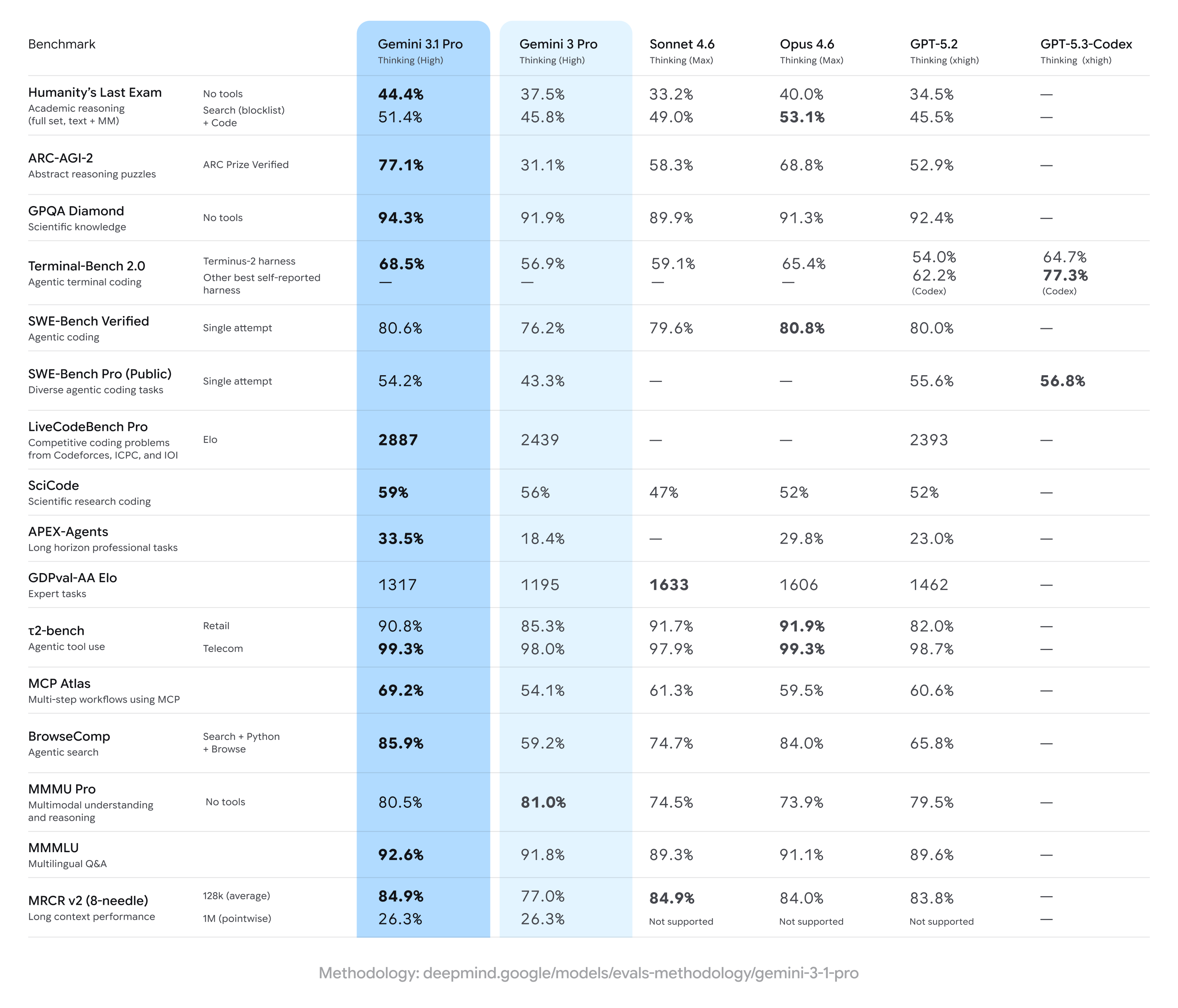
Google announced improvements to its Deep Think tool last week, and apparently, the “core intelligence” behind that update was Gemini 3.1 Pro. As usual, Google’s latest model announcement comes with a plethora of benchmarks that show mostly modest improvements. In the popular Humanity’s Last Exam, which tests advanced domain-specific knowledge, Gemini 3.1 Pro scored a record 44.4 percent. Gemini 3 Pro managed 37.5 percent, while OpenAI’s GPT 5.2 got 34.5 percent.

Gemini 3.1 Pro benchmarks
Credit:
Google

Read full article

Comments

YouTube is bringing the Gemini-powered ‘Ask’ button to TVs

YouTube’s “Ask” button is making its way to the living room. The Gemini-powered feature is now rolling out as an experiment on smart TVs, gaming consoles and streaming devices. 9to5Google first spotted a Google support page announcing the change.

Like on mobile devices and desktop, the feature is essentially a Gemini chatbot trained on each video’s content. Selecting that “Ask” button will bring up a series of canned prompts related to the content. Alternatively, you can use your microphone to ask questions about it in your own words.

Screenshot of a Daily Show video on YouTube. The "Ask about this video" AI window is active to the right.
The “Ask about this video” feature on desktop
YouTube

Google says your TV remote’s microphone button (if it has one) will also activate the “Ask” feature. The company listed sample questions in its announcement, such as “what ingredients are they using for this recipe?” and “what’s the story behind this song’s lyrics?”

The conversational AI tool is only launching for “a small group of users” at first. Google promises that it will “keep everyone up to speed on any future expansions.”

This article originally appeared on Engadget at https://www.engadget.com/ai/youtube-is-bringing-the-gemini-powered-ask-button-to-tvs-173900295.html?src=rss

New Study Tracks How Businesses Quietly Replaced Freelancers With AI Tools

A new study [PDF] from Ramp’s economics lab has found that businesses are steadily replacing freelance workers hired through platforms like Upwork and Fiverr with AI tools from OpenAI and Anthropic, and the substitution is happening at a fraction of the cost.

The paper, authored by Ryan Stevens, Ramp’s Director of Applied Sciences, tracked firm-level spending data from Q3 2021 to Q3 2025 across thousands of companies on Ramp’s expense management platform. The share of total business spend going to online labor marketplaces fell from 0.66% in Q4 2021 to 0.14% in Q3 2025, while AI model provider spending rose from zero to 2.85% over the same period.

More than half the businesses that used freelance marketplaces in Q2 2022 had stopped entirely by Q2 2025. The cost dynamics are particularly notable. Firms most exposed to AI — those that historically spent the most on freelancers — substituted at a rate of roughly $1 in reduced freelance spend for every $0.03 in AI spend. A middle-exposure group showed a ratio of $1 to $0.30. The study uses a difference-in-differences design built around the launch of ChatGPT in October 2022 as a natural experiment. Stevens notes that micro-level substitution does not imply aggregate job loss, as demand for workers who build and maintain AI systems could grow faster than displacement.


Read more of this story at Slashdot.

Rivian rolls out an Apple Watch app with vehicle controls and digital key support

Rivian suggests that vehicle owners can leave their phone at home (or perhaps in a glove box) and instead control some aspects of their EV using a new Apple Watch app. With a tap of your watch, you can unlock and lock the doors, sound the alarm and vent the windows. After the digital key is set up, R1S and R1T Gen 2 owners can unlock their vehicle automatically simply by walking up to it thanks to the passive car key feature.

It’s possible to set the cabin temperature and a target state of charge by turning the digital crown on an Apple Watch. You also can choose four quick controls to put front and center in the app and add a battery status indicator to your watch face if you so wish. Rivian says it will update its Apple Watch app with new features in the future.

Rivian first enabled digital car key support on Apple, Google Pixel and Samsung devices back in December. Apple started supporting digital car keys on iPhone and Apple Watch in 2020 and a boatload of automakers have adopted the tech. 

This article originally appeared on Engadget at https://www.engadget.com/transportation/evs/rivian-rolls-out-an-apple-watch-app-with-vehicle-controls-and-digital-key-support-172642545.html?src=rss

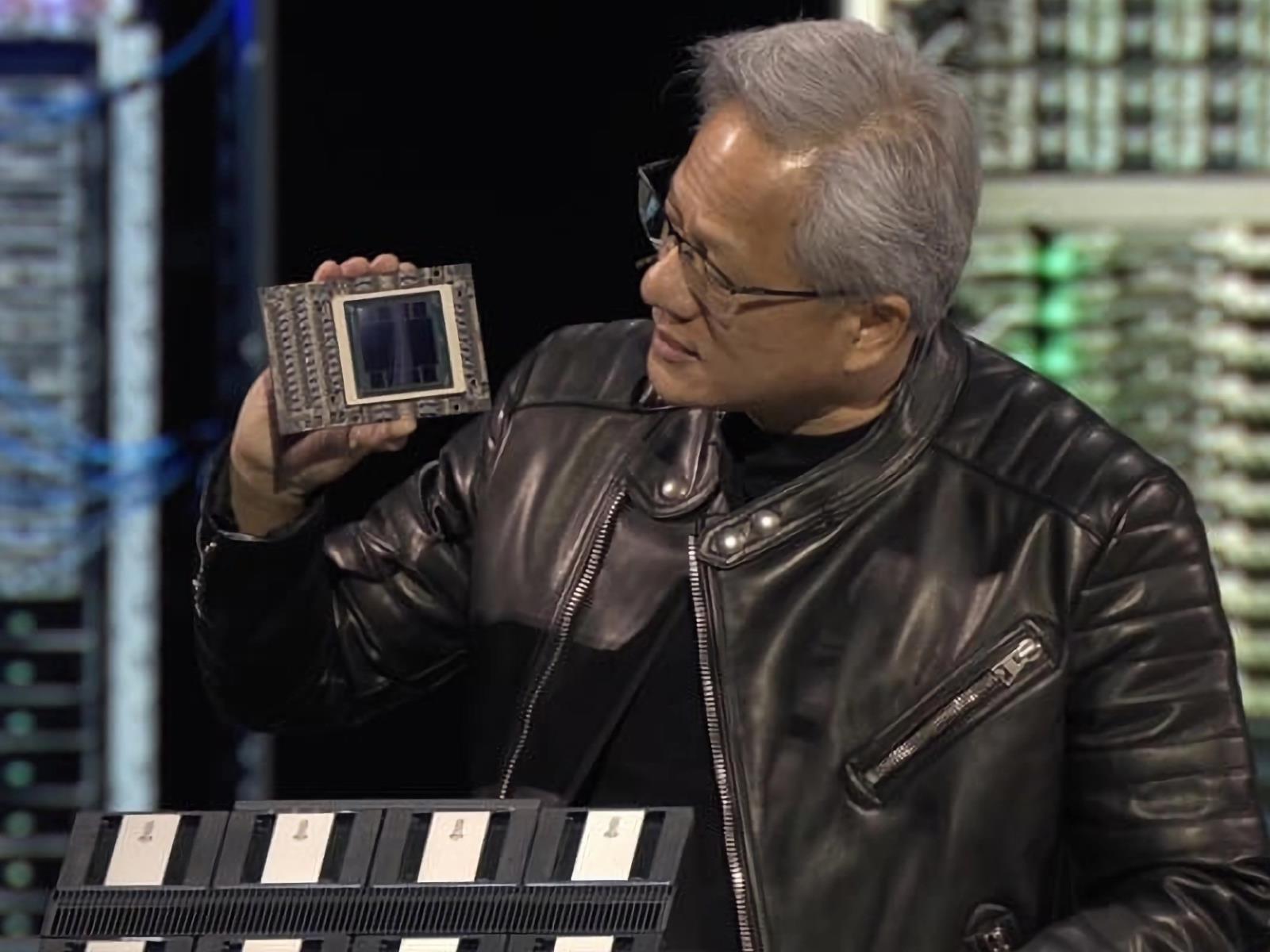
NVIDIA CEO Teases Mystery Chip That Will Surprise The World At GTC 2026

NVIDIA CEO Teases Mystery Chip That Will Surprise The World At GTC 2026
Everyone’s favorite leather jacket enthusiast and AI goldmine architect Jensen Huang gave an exclusive interview to Korea Economic Daily where he made some pretty interesting remarks, and key among them was the statement that NVIDIA has “prepared some new chips that the world has never seen before.” But what was he actually talking about?

When

Orbital AI data centers could work, but they might ruin Earth in the process

At the start of the month, Elon Musk announced that two of his companies — SpaceX and xAI  — were merging, and would jointly launch a constellation of 1 million satellites to operate as orbital data centers. Musk’s reputation might suggest otherwise, but according to experts, such a plan isn’t a complete fantasy. However, if executed at the scale suggested, some of them believe it would have devastating effects on the environment and the sustainability of low Earth Earth orbit.     

Musk and others argue that putting data centers in space is practical given how much more efficient solar panels are away from Earth’s atmosphere. In space, there are no clouds or weather events to obscure the sun, and in the correct orbit, solar panels can collect sunlight through much of the day. In combination with declining rocket launch costs and the price of powering AI data centers on Earth, Musk has said that within three years space will be the cheapest way to generate AI compute power. 

Ahead of the billionaire’s announcement, SpaceX filed an eight-page application with the Federal Communications Commission detailing his plan. The company hopes to deposit the satellites in this massive cluster in altitudes ranging between 500km and 2000km. They would communicate with one another and SpaceX’s Starlink constellation using laser “optical links.” Those Starlink satellites would then transmit inference requests to and from Earth. To power the entire effort, SpaceX has proposed putting the new constellation in sun-synchronous orbit, meaning the spacecraft would fly along the dividing line that separates the day and night sides of the planet. 

What a data center would endure in orbit

Almost immediately the plan was greeted with skepticism. How would SpaceX, for instance, cool millions of GPUs in space? At first glance, that might seem like a weird point to get hung up on — much of space being around -450 Fahrenheit — but the reality is more complicated. In the near vacuum of space, the only way to dissipate heat is to slowly radiate it out, and in direct sunlight, objects can easily overheat. As one commenter on Hacker News succinctly put it, “a satellite is, if nothing else, a fantastic thermos.”

Scott Manley, who, before he created one of the most popular space-focused channels on YouTube, was a software engineer and studied computational physics and astronomy, argues SpaceX has already solved that problem at a smaller scale with Starlink. He points to the company’s latest V3 model, which has about 30 square meters of solar panels. “They have a bunch of electronics in the middle, which are taking that power and doing stuff with it. Now, some of that power is being beamed away as radio waves, but there’s a lot of thermal power that’s being generated and then having to be dissipated. So they already have a platform that’s running electronics off of power, and so it’s not a massive leap to turn into something doing compute.”

The larger V3 @Starlink satellites that will deploy from Starship will bring gigabit connectivity to users and are designed to add 60 Tera-bits-per-second of downlink capacity to the Starlink network.

That’s more than 20 times the capacity added with every V2 Mini launch on… pic.twitter.com/N0Vl9psbm3

— SpaceX (@SpaceX) October 13, 2025

Kevin Hicks, a former NASA systems engineer who worked on the Curiosity rover mission, is more skeptical. “Satellites with the primary goal of processing large amounts of compute requests would generate more heat than pretty much any other type of satellite,” he said. “Cooling them is another aspect of the design which is theoretically possible but would require a ton of extra work and complexity, and I have doubts about the durability of such a cooling system.”  

What about radiation then? There’s a reason NASA relies on ancient hardware like the PowerPC 750 CPU found inside the Perseverance rover: Older chips feature larger transistors, making them more resilient to bit flips — errors in processing caused most often by cosmic radiation — that might scramble a computation. “Binary ones and zeroes are about the presence or absence of electrons, and the amount of charge required to represent a ‘one’ goes down as the transistors get smaller and smaller,” explains Benjamin Lee, professor of computer and information science at the University of Pennsylvania. Space is full of energized particles traveling at incredible velocities, and the latest GPUs are built on the smallest, most advanced processing nodes to create transistor-dense silicon. Not a great combination.

“My concern about radiation is that we don’t know how many bit flips will occur when you deploy the most advanced chips and hundreds of gigabytes of memory up there,” said Professor Lee, pointing to preliminary research by Google on the subject. As part of Project Suncatcher, its own effort to explore the viability of space-based data centers, the company put one of its Trillium TPUs in front of a proton beam to bombard it with radiation. It found the silicon was “surprisingly radiation-hard for space applications.” 

While those results were promising, Professor Lee points out we just don’t know how resilient GPUs are to radiation at this scale. “Even though modern computer architectures can detect and sometimes correct for those errors, having to do that again and again will slow down or add overhead to space-based computation,” he said.   

Space engineer Andrew McCalip, who’s done a deep dive on the economics of orbital data centers, is more optimistic, pointing to the natural resilience of AI models. “They don’t require 100 percent perfect error-free runs. They’re inherently very noisy, very stochastic,” he explains, adding that part of the training for modern AI systems involves “injecting random noise into different layers.”   

Even if SpaceX could harden its GPUs against radiation, the company would still lose satellites to GPUs that break down. If you know anything about data centers here on Earth, it’s that they require constant maintenance. Components like SSDs and GPUs die all the time. Musk has claimed SpaceX’s AI satellites would require “little” in the way of operating or maintenance costs. That’s only true if you accept the narrowest possible interpretation of what maintaining a fleet of AI satellites would entail.

“I think that there’s no case in which repair makes sense. It’s a fly till you die scenario,” says McCalip. From an economic perspective, McCalip argues the projected death rate of GPUs in space represents “one of the biggest uncertainties” of the orbital data center model. McCalip’s put that number at nine percent on the basis of a study Meta published following the release of its Llama 3 model (which, incidentally, measured hardware failures on Earth.) But the reality is no one knows what the attrition rate of those chips will be until they’re in space. 

Orbital data centers also likely wouldn’t be a direct replacement for their terrestrial counterparts. SpaceX’s application specifically mentions inference as the primary use case for its new constellation. Inference is the practical side of running an AI system. It sees a model apply its learning to data it hasn’t seen before, like a prompt you write in ChatGPT, to make predictions and generate content. In other words, AI models would still need to be trained on Earth, and it’s not clear that the process could be offloaded to a constellation of satellites. “My initial thinking is that computations that require a lot of coordination, like AI training, may end up being tricky to get right at scale up there,” says Professor Lee.     

Kessler syndrome

In 1978, a pair of NASA scientists proposed a scenario where low Earth orbit could become so dense with space junk that collisions between those objects would begin to cascade. That scenario is known as Kessler syndrome. 

One estimate from satellite tracking website Orbiting Now puts the number of objects in orbit around the planet at approximately 15,600. Another estimate from NASA suggests there are 45,000 human-made objects orbiting Earth. No matter the number, what’s currently in orbit represents a fraction of the 1 million additional satellites Musk wants to launch.  

According to Aaron Boley, professor of physics and astronomy at the University of British Columbia and co-director of the Outer Space Institute, forward-looking modeling of Earth’s orbit above 700 kilometers — where part of SpaceX’s proposed cluster would live — suggests that area of space is already showing signs of Kessler syndrome. 

While it takes less time for debris to clear in low Earth orbit, Professor Boley says there’s already enough material in that region of space where there could be a cascading effect from a major collision. Debris could, in a worst case scenario, take a decade to clear up. In turn, that could lead to disruptions in global communications, climate monitoring missions and more.     

“You could get to the point where you’re just launching material in, and you could ask yourself how many satellites can I afford to lose? Can you reconstitute your constellation faster than you’re losing parts of it because of debris?” says Boley. “That’s a horrible future in terms of the environmental perspective” In particular, it would limit opportunities for humans to fly into low Earth orbit. “Could you operate in it? Yeah, but it would come with higher and higher costs,” adds Boley. 

“The entire world is struggling with the problem of how we safely fly multiple mega constellations,” says Richard DalBello, who previously ran the Traffic Coordination System for Space (TraCSS) at the US Department of Commerce. Right now, there is no common global space situational awareness (SSA) system, and government and satellite operators are using uncoordinated national and commercial systems that are likely producing different results. At the start of the year, SpaceX lowered the orbit of thousands of Starlink satellites after one of them nearly collided with a Chinese satellite. 

SpaceX has its own in-house SSA system called Stargaze, which it uses to fly its more than 7,000 Starlink satellites. According to DalBello, competing operators can receive SSA data from SpaceX, but to do so they must share their satellite position information. “Assuming data sharing, it is likely Stargaze can make an important contribution to spaceflight safety” says DalBello. “SpaceX is likely to have success with US and other commercial operators, but without the assistance of the federal government, other governments — particularly China — will likely be unwilling to share their satellite and SSA data.” 

According to DalBello, the Biden administration was unable to make meaningful progress on the next-generation TraCSS system, in part because Congress was initially reluctant to fund the program. Meanwhile, the current Trump administration hasn’t shown interest in advancing the work that began during the president’s first term.  

Even if the regulatory situation suddenly changes and the world’s governments agree on an international SSA system, SpaceX launching 1 million satellites along the day-night terminator would see the company effectively monopolize one of the Earth’s most valuable and important orbits. Professor Boley argues we should view our planet’s orbits as a resource that belongs to everyone. “Every time you put a satellite up, you use part of that resource. Now someone else can’t use it.” 

And as Hicks points out, even a single cascade of colliding satellites would prevent that space from being used for scientific endeavors. “You would have to wait years for that debris to slowly come back into the atmosphere and burn up. In the meantime, that debris is taking up space that could be used for climate monitoring missions or any other types of missions that governments want to launch.”   

A blow to the atmosphere

Separately, the constant churn of Starship launches and re-entry of dead satellites would have a potentially dire impact on our planet’s atmosphere. “We’re not prepared for it,” Boley flatly says of the latter. “We’re not prepared for what’s happening now, and what’s happening now is already potentially bad.” 

According to Musk’s “basic math,” SpaceX could add 100 gigawatts of AI compute capacity annually by launching a million tons of satellite per year. McCalip estimates a 100-gigawatt buildout alone would necessitate about 25,000 Starship flights.  

Many of the metals found in satellites, including aluminum, magnesium and lithium, in combination with the exhaust rockets release into the atmosphere, can have complicated effects on the health of the planet. For instance, they can affect polar cloud formations, which in turn can facilitate ozone layer destruction through the chemical reactions that occur on their surfaces. According to Boley, the problem is we just don’t know how severe those environmental factors could become at the scale Musk has proposed, and SpaceX has provided us with precious few details on its mitigation plans. All it has said is that its plan would “achieve transformative cost and energy efficiency while significantly reducing the environmental impact associated with terrestrial data centers.”   

Even if SpaceX could and does go out its way to mitigate the atmospheric effects of constant rocket flights, those spacecraft still need to be manufactured here on Earth. At one of his previous roles, Hicks studied rocket emissions and found the supply chains needed to build them produce an “order of magnitude” more carbon emissions than the rockets themselves.   

SpaceX plans to fly its new satellites in a sun-synchronous orbit, meaning for much of the year, they’ll be sunlit. Each new Starlink generation has been larger and heavier than the one before it, with SpaceX stating in a recent filing that its upcoming V3 model could weigh up to 2,000 kilograms, up from the 575 kilograms of the V2 Mini Optimized. While we don’t know the exact dimensions of the company’s still-hypothetical AI satellites, they will almost certainly be bigger than their Starlink counterparts. 

SpaceX has done more than most space operators to reduce the brightness of its satellites, but Professor Boley says he expects that this new constellation will be “strikingly bright” when moving through the night sky. In aggregate, he estimates they will almost certainly be harmful to scientific research here on Earth, limiting what terrestrial observatories can see.  

“You’re going to see them with the naked eye. You’re going to see them with cameras. It’s going to be like living near an airport where you see all these things flying over just after sunset and the next couple of hours after sunset,” says Manley. “I don’t know if I want to have my entire sunset be just a band of satellites constantly shooting overhead.”

There are good reasons to make some spacecraft capable of doing AI inference. For instance, Professor Lee suggests it would make orbital imaging satellites more useful, as those spacecraft could do on-site analysis, instead of sending high-resolution files over long distances, saving time in the process. But the dose, as they say, makes the poison.

“There’s a lot of excitement about the many possibilities that can be brought to society and humanity through continued access to space, but the promise of prosperity is not permission to be reckless,” he says. “At this moment, we’re allowing that excitement to overtake that more measured progression […] those impacts don’t just impact outer space but Earth as well.” 

This article originally appeared on Engadget at https://www.engadget.com/ai/orbital-ai-data-centers-could-work-but-they-might-ruin-earth-in-the-process-170000099.html?src=rss

Arc Raiders Finally Starts Cracking Down On Duplication Exploit Cheaters

Arc Raiders Finally Starts Cracking Down On Duplication Exploit Cheaters
Arc Raiders, one of the biggest hits of 2026, has been fighting cheats and exploits since day one. Recently, however, a particular item duplication exploit was popularized by streamer TheBurntPeanut, whose videos on the matter received over 130K views. Embark Studios previously voiced its displeasure with this issue and patched it out with

West Virginia is suing Apple alleging negligence over CSAM materials

The office of the Attorney General for West Virginia announced Thursday that it has filed a lawsuit against Apple alleging that the company had “knowingly” allowed its iCloud platform “to be used as a vehicle for distributing and storing child sexual abuse material.” The state alleges this went on for years but drew no action from the tech giant “under the guise of user privacy.”

In the lawsuit, the state repeatedly cites a text from Apple executive Eric Friedman, in which he calls iCloud “the greatest platform for distributing child porn” in a conversation with another Apple executive. These messages were first uncovered by The Verge in 2021 within discovery documents for the Epic Games v. Apple trial. In the conversation, Friedman says while some other platforms prioritize safety over privacy, Apple’s priorities “are the inverse.”

The state further alleges that detection technology to help root out and report CSAM exists, but that Apple chooses not to implement it. Apple indeed considered scanning iCloud Photos for CSAM in 2021, but abandoned these plans after pushback stemming from privacy concerns.

In 2024 Apple was sued by a group of over 2,500 victims of child sexual abuse, citing nearly identical claims and alleging that Apple’s failure to implement these features led to the victims’ harm as images of them circulated through the company’s servers. At the time Apple told Engadget, “child sexual abuse material is abhorrent and we are committed to fighting the ways predators put children at risk. We are urgently and actively innovating to combat these crimes without compromising the security and privacy of all our users.”

The case in West Virginia would mark the first time a governmental body is bringing such an action against the iPhone maker. The state says it is seeking injunctive relief that would compel Apple to implement effective CSAM detection measures as well as damages. We have reached out to Apple for comment on the suit and will update if we hear back.

This article originally appeared on Engadget at https://www.engadget.com/big-tech/west-virginia-is-suing-apple-alleging-negligence-over-csam-materials-164647648.html?src=rss

Accenture Links Staff Promotions To Use of AI Tools

Accenture has reportedly started tracking staff use of its AI tools and will take this into consideration when deciding on top promotions, as the consulting company tries to increase uptake of the technology by its workforce. From a report: The company told senior managers and associate directors that being promoted to leadership roles would require “regular adoption” of artificial intelligence, according to an internal email seen by the Financial Times.

The consultancy has also begun collecting data on weekly log-ins to its AI tools by some senior staff members, the FT reports. Accenture has previously said it has trained 550,000 of its 780,000-strong workforce in generative AI, up from only 30 people in 2022, and has announced it is rolling out training to all of its employees as part of its annual $1bn annual spend on learning. Among the tools whose use will reportedly be monitored is Accenture’s AI Refinery. The chief executive, Julie Sweet, has previously said this will “create opportunities for companies to reimagine their processes and operations, discover new ways of working, and scale AI solutions across the enterprise to help drive continuous change and create value.”


Read more of this story at Slashdot.

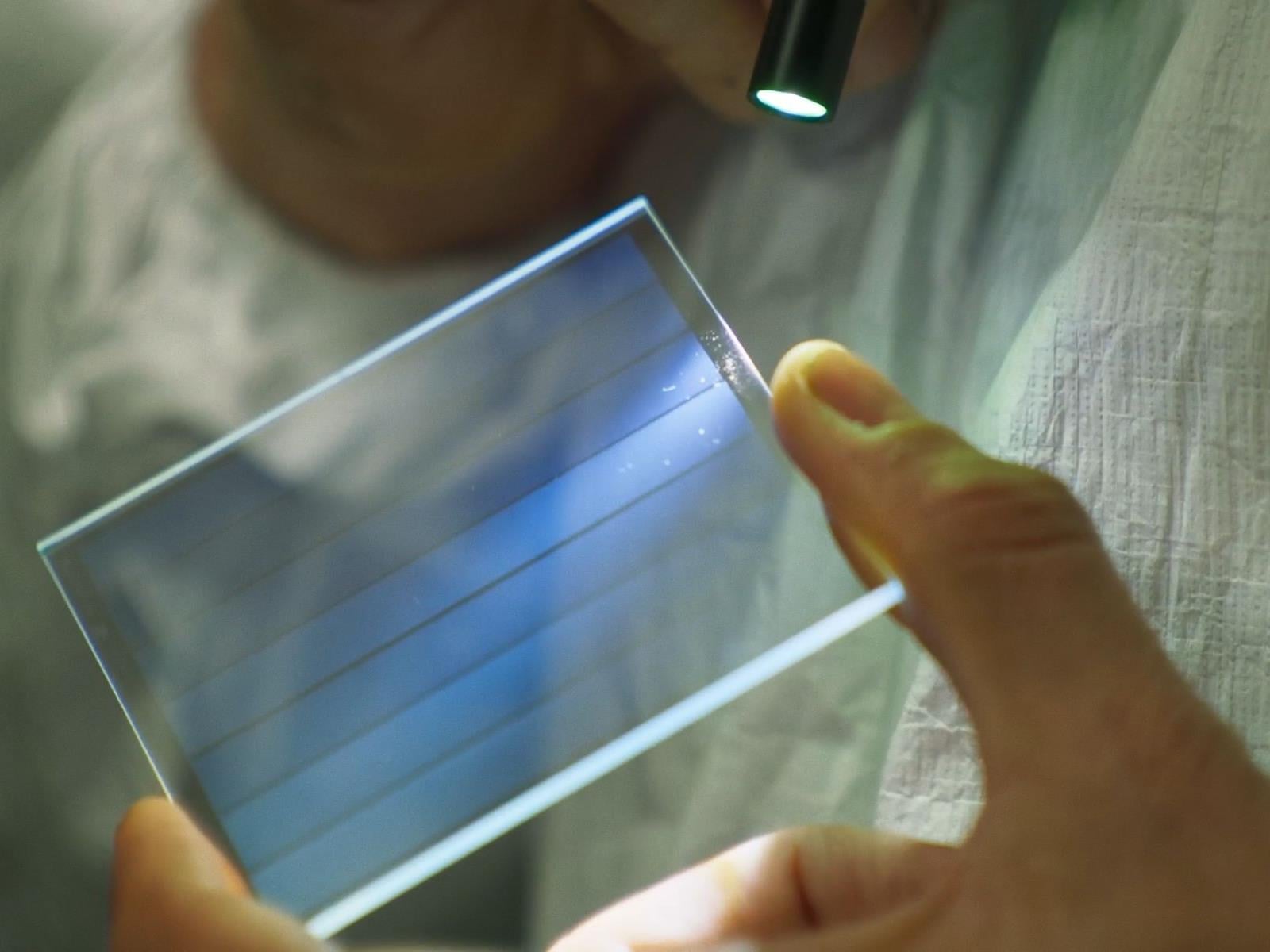
Microsoft’s Project Silica Brings 10,000-Year Glass Storage Closer To Reality

Microsoft's Project Silica Brings 10,000-Year Glass Storage Closer To Reality
Microsoft’s Project Silica has achieved a breakthrough in data preservation by developing a higher-density glass storage system capable of archiving digital data for thousands of years without degradation. By utilizing femtosecond lasers to etch data into quartz glass, researchers have created a medium that is virtually indestructible, resisting

Zero grip, maximum fun: A practical guide to getting into amateur ice racing

In Formula One, grip is everything. The world’s best engineers devote their careers to designing cars that maximize downforce and grip to squeeze every bit of performance out of a set of four humble tires. These cars punish their drivers by slinging them at six Gs through corners and offer similar levels of abuse in braking.

It’s all wildly impressive, but I’ve long maintained that those drivers are not the ones having the most fun. When it comes to sheer enjoyment, grip is highly overrated, and if you want proof of that, you need to try ice racing.

Should you be lucky enough to live somewhere that gets cold enough consistently enough, all you need is a good set of tires and a car that’s willing and able. That, of course, and a desire to spend more time driving sideways than straight. I’ve been ice racing for well over 20 years now, and I’m here to tell you that there’s no greater thrill on four wheels than sliding through a corner a few inches astern of a hard-charging competitor.

Read full article

Comments

Apple iPhone Deals Slash Prices On Grade‑A Refurbs With Full 1‑Year Warranty

Apple iPhone Deals Slash Prices On Grade‑A Refurbs With Full 1‑Year Warranty
Once again, Amazon-owned Woot is hosting a huge sale on Grade-A refurbished Apple iPhone models spanning the iPhone 16 Pro Max all the way down to the iPhone XR, with prices starting at a very low $119.99. In addition, it’s also hawking Grade-A refurbished Apple Watch models, including the Apple Watch Ultra 2nd Gen. If you’ve been wanting

HR Teams Are Drowning in Slop Grievances

Workplace grievances that once fit in a single email are now ballooning into 30-page documents stuffed with irrelevant historical detail, made-up legal precedents, and citations to laws from the wrong country — and UK employment lawyers say generative AI is the likely culprit. Anna Bond, legal director at Lewis Silkin, says the complaints she now sees sometimes cite Canadian legislation or fabricated case law.

Sinead Casey, employment partner at Linklaters, calls such filings “confidently incompetent” — superficially persuasive even to lawyers. The flood of bloated claims is compounding pressure on an already stretched tribunal system: Ministry of Justice figures show new employment cases rose 33% in the three months to September, even as concluded cases fell 10% year over year.

Investor Marc Andreessen, quipping on X: Overheard in Silicon Valley: “Marginal cost of arguing is going to zero.”


Read more of this story at Slashdot.

Hubble Captures Rare Image Of A Galaxy Made Almost Entirely Of Invisible Dark Matter

Hubble Captures Rare Image Of A Galaxy Made Almost Entirely Of Invisible Dark Matter
Scientists using a trio of some of the world’s most powerful observatories, the Hubble Space Telescope, ESA’s Euclid, and the Subaru Telescope, have pulled back the curtain on a ghost galaxy that is nearly 99% dark matter, detected thanks solely to its four associate globular clusters.

The discovery centers on the object named Candidate

Nintendo announces surprise Switch 2 version of sci-fi RPG Xenoblade Chronicles X: Definitive Edition

Last year’s Xenoblade Chronicles X: Definitive Edition was significant for a few reasons. It was the final major first-party Switch game ahead of the Switch 2’s arrival in June, and the last doomed Wii U game to be granted a second life on Nintendo’s infinitely more successful console. Nearly a year on, a Switch 2 update for one of the most technically impressive games Nintendo has ever published has finally arrived.

Somewhat hilariously titled Xenoblade Chronicles X: Definitive Edition – Nintendo Switch 2 Edition (you get the feeling Nintendo has started a naming convention it may come to regret here), the updated version of Monolith Soft’s sprawling sci-fi RPG now supports up to 60fps performance and 4K resolution when docked to a TV.

The sprawling alien world of planet Mira, now enhanced on #NintendoSwitch2 with improved frame rates and up to 4K resolution in TV mode!

Join the fight for survival in #XenobladeChroniclesX: Definitive Edition – Nintendo Switch 2 Edition, available now! pic.twitter.com/raA1XhIimC

— Nintendo of America (@NintendoAmerica) February 19, 2026

As impressive as the Switch remake of the 2015 Wii U game was, given the frankly absurd size of its open-world setting, you could almost feel the hardware creaking under its weight every time you booted the game up, so this patch was much-needed. Unfortunately the graphical and performance enhancements aren’t free for anyone who already owns the Switch version of Xenoblade Chronicles X: Definitive Edition. A $5 upgrade pack is available on the eShop, and the Switch 2 game costs $65 on its own. A physical version is also arriving on April 16.

Xenoblade Chronicles X: Definitive Edition – Nintendo Switch 2 Edition (again, won’t someone please think of us writers) was the last of a number of Xenoblade Chronicles games to make its way to Switch. It’s a bit different to the other entries in the series, with its hard sci-fi story, emphasis on side quests and completely seamless open world to explore. Also, stick with the game long enough and you can eventually fly around the entire planet of Mira in a giant mech, which is as fun as it sounds.

Like the other games in the series, Xenoblade Chronicles X is a standalone experience, so don’t worry about jumping in if you’ve never played one before. The series’ signature MMO-like hybrid real-time combat system takes a bit of getting used to, but it’s part of what makes these games stand out from other RPG series.

The other Xenoblade games in the Switch library, which are Xenoblade Chronicles: Definitive Edition, Xenoblade Chronicles 2 and Xenoblade Chronicles 3, are yet to receive Switch 2 updates, but hopefully they’ll arrive eventually too.

This article originally appeared on Engadget at https://www.engadget.com/gaming/nintendo/nintendo-announces-surprise-switch-2-version-of-sci-fi-rpg-xenoblade-chronicles-x-definitive-edition-153121689.html?src=rss

Every Pair Of Headphones In New Study Found To Contain Toxic Chemicals

Every Pair Of Headphones In New Study Found To Contain Toxic Chemicals
A wide-scale investigation has revealed that the headphones millions of people wear daily for work, exercise, and leisure are leaching a cocktail of hazardous forever chemicals and endocrine disruptors (think BPA) directly into their bodies. Conducted by the ToxFree LIFE for All project and spearheaded by the environmental group Arnika, the

The RAM Crunch Could Kill Products and Even Entire Companies, Memory Exec Admits

Phison CEO Pua Khein-Seng, whose company is one of the leading makers of controller chips for SSDs and other flash memory devices, admitted in a televised interview that the ongoing global RAM shortage could force companies to cut back their product lines in the second half of 2026 — and that some may not survive at all if they cannot secure enough memory.

The interview, conducted in Chinese by Ningguan Chen of Taiwanese broadcaster Next TV, drew an important distinction: it was the interviewer who raised the possibility of shutdowns and product discontinuations, and Khein-Seng largely agreed rather than volunteering the prediction himself. The shortage stems from AI data centers consuming the vast majority of the world’s memory supply, a buildout that has sent RAM prices up by three to six times over the past several months. Only three companies control 93% of the global DRAM market, and all three have chosen to prioritize profits over rapid capacity expansion. Even Nvidia may skip shipping a gaming GPU for the first time in 30 years, and Apple could struggle to secure enough chips. Khein-Seng also expects consumers will increasingly repair broken products rather than replace them.


Read more of this story at Slashdot.

Corsair Drops Limited‑Run PC Cases With Striking Color‑Shift Panels

Corsair Drops Limited‑Run PC Cases With Striking Color‑Shift Panels
Corsair is slapping a fresh coat of paint on its popular Frame 4000D chassis for a limited edition run, and what makes the new color schemes so unique in a sea of PC cases is that the color shifts depending on the viewing angle and ambient lighting. There are two options to choose from, both of which are part of a new Frame 4000D Vault Series:

Amazon Dethrones Walmart as World’s Biggest Company by Sales

An anonymous reader shares a report: Amazon has officially dethroned Walmart as the biggest global company by revenue, a milestone attesting to the massive scale the e-commerce and cloud-computing giant has achieved since its humble beginnings in 1994 as an online bookseller in Jeff Bezos’ Seattle-area garage.

Walmart, which had been the largest company by revenue for more than a decade, on Thursday reported sales of $713.2 billion for the 12 months ending Jan. 31. Amazon, which operates on a fiscal year ending in December, earlier this month reported 2025 sales of $717 billion.

Bezos carefully studied Walmart founder Sam Walton, embracing many of his business strategies while building his company. Over the past decade, Amazon’s revenue has increased at almost 10 times the pace of Walmart’s, fueled by a shift in consumer spending from stores to websites and its rapidly growing cloud-computing business, Amazon Web Services.


Read more of this story at Slashdot.