The Pixel Watch 2 Adds New Sensors, Longer Battery Life, and Better Accuracy

Alongside the Pixel 8 and Android 14, Google today launched the new Pixel Watch 2 — a $350 second-gen smartwatch featuring a faster processor, overhauled sensor array, and longer battery life. The Verge reports: At a glance, the main difference is that the screen sits flush with the digital crown, where the original had a slight cutout. Another change imperceptible to the naked eye: the body is now made of 100 percent recycled aluminum instead of stainless steel. The result is a slightly lighter watch, but not by much. The Pixel Watch weighed 36 grams, while the Pixel Watch 2 is 31g. That’s a bit disappointing, considering the Watch 2’s price remains the same as last year. We’re looking at the same 41mm case size and OLED display on top. But flip the watch over, and you’ll find a completely different sensor array. Instead of a single line of LEDs, there are now multiple LEDs and photodiodes to take measurements from several angles and positions. That then feeds into an algorithm that Fitbit CEO James Park says is 40 percent more accurate for vigorous activities.

This year, Google also added a skin temperature and continuous electrodermal activity (EDA) sensor. Both help enable proactive stress tracking, which Fitbit introduced with its Sense 2. The EDA sensor detects minuscule amounts of sweat, which can help determine bodily stress when combined with metrics like heart rate variability, heart rate, and skin temperature. As with the Sense 2, you’re supposed to get a slightly delayed notification when a stressful event has been detected. You’re then encouraged to log how that event made you feel. Battery life was a major pain point when the Pixel Watch first launched. Park acknowledges that you couldn’t use the always-on display on the first-gen watch if you wanted that 24-hour battery life. This time around, he says that the team has worked hard to make sure the Pixel Watch 2’s 306mAh battery can get 24 hours with the always-on display enabled. Users should also be able to get a 50 percent charge in 30 minutes and a full day’s worth in 75 minutes. Helping that should be Wear OS 4 — which Google says ought to extend battery life — and the new, more power-efficient Qualcomm Snapdragon W5 processor. (Speaking of Wear OS 4, Google says that, at first, it’ll be exclusive to Pixel Watch 2.) Other features include the ability to automatically record workouts and do heart rate zone training; a new Safety Check feature that will alert your loved ones of your location after a preset timer expires (e.g. taking an Uber across town or going on a late-night walk); and support for Google services like Gmail, Google Wallet, and Calendar.

You can learn more about the Pixel Watch 2 here.

Read more of this story at Slashdot.


Source: Slashdot – The Pixel Watch 2 Adds New Sensors, Longer Battery Life, and Better Accuracy

Ahsoka Dropped One Last Major Star Wars Mystery on Us

In Star Wars, nothing is ever really gone, especially if you’re a contemporary streaming show on Disney+ and are in need of another callback to the wider saga. This week’s Ahsoka finale gave us one such callback in its final moments, setting the stage for a fascinating arc—one rooted in Star Wars’ most esoteric Force…

Read more…


Source: Gizmodo – Ahsoka Dropped One Last Major Star Wars Mystery on Us

The Top Comedy Wildlife Photos of 2023

The animal kingdom is a dynamic place, filled with action, splendor, and drama. But freeze any one moment in time, and creatures’ behavior can become hilarious. These images represent the final shortlist of the 2023 annual Comedy Wildlife Photography Awards competition. Previous finalists have included a lion…

Read more…


Source: Gizmodo – The Top Comedy Wildlife Photos of 2023

Everything Google Announced at Its Big Pixel Event

Google hosted its Pixel 8 event today and announced several interesting developments. Their newly-released Pixel 8 phones were the star of the event, with the Pixel Buds Pro and Pixel Watch 2 bringing up the rear. There were also a few announcements on AI, Android 14, and the Bard Assistant.

Read more…


Source: Gizmodo – Everything Google Announced at Its Big Pixel Event

Report: Amazon made $1B with secret algorithm for spiking prices Internet-wide

Report: Amazon made $1B with secret algorithm for spiking prices Internet-wide

Enlarge (credit: Bloomberg / Contributor | Bloomberg)

Last week, the Federal Trade Commission sued Amazon, alleging that the online retailer was illegally maintaining a monopoly. Much of the FTC’s complaint against Amazon was redacted, but The Wall Street Journal yesterday revealed key details obscured in the complaint regarding a secret algorithm. The FTC alleged that Amazon once used the algorithm to raise prices across the most popular online shopping destinations.

People familiar with the FTC’s allegations in the complaint told the Journal that it all started when Amazon developed an algorithm code-named “Project Nessie.” It allegedly works by manipulating rivals’ weaker pricing algorithms and locking competitors into higher prices. The controversial algorithm was allegedly used for years and helped Amazon to “improve its profits on items across shopping categories” and “led competitors to raise their prices and charge customers more,” the WSJ reported.

The FTC’s complaint said:

Read 24 remaining paragraphs | Comments


Source: Ars Technica – Report: Amazon made B with secret algorithm for spiking prices Internet-wide

UK Universities Take $50 Million in Fossil Fuel Funding Since 2022

Major fossil fuel companies have committed tens of millions of pounds in funding to UK universities since 2022, it can be revealed, despite many of these institutions having actively pledged to divest from oil and gas. From a report: According to freedom of information requests submitted by the climate journalism site DeSmog, more than $50m in research agreements, tuition fees, scholarships, grants and consultancy fees have been pledged to 44 UK universities by 32 oil, coal and gas companies since 2022. The largest contributors were Shell, the Malaysian state-owned oil company Petronas, and BP. These three companies account for more than 76% of the total figure awarded, having given $25.5m, $6.30m and $5.94m respectively.

A further 10 companies made up nearly 21% of the remaining contributions during this period: Sinopec, Equinor, BHP Group, Total Energies, Eni SPA, Saudi Aramco, ExxonMobil, Scottish Power, Kellas Midstream and Ithaca Energy. Previous reporting from openDemocracy and the Guardian found that between 2017 and December 2021, $108.1m in funding was given to UK universities by some of the world’s biggest fossil fuel companies. These partnerships have shown no sign of abating, and DeSmog’s research shows an additional $50m has been pledged since 2022, even after 102 higher education institutions promised to stop taking funding from the fossil fuel industry.

Read more of this story at Slashdot.


Source: Slashdot – UK Universities Take Million in Fossil Fuel Funding Since 2022

Dissect Disney Rides and More With the Trailer for Behind the Attraction Season 2

Part of what makes going to a Disney park so magical is trying to figure out how any of it is possible. How do the structures of the rides blend so perfectly into the park? How do they launch fireworks like this every night? Who’s making all of this food? Disney normally prefers to keep all of that a mystery but it doe…

Read more…


Source: Gizmodo – Dissect Disney Rides and More With the Trailer for Behind the Attraction Season 2

Patreon overhauls its platform with free content and more creator control

Patreon announced a rebranding of its platform through a series of updates on Wednesday. New features give creators more personalization and control while offering supporters more ways to follow their favorites. In addition, the platform is integrating more free content, allowing every creator to host communities non-paying members can access. Patreon also tweaked its branding with a new logo, color themes, photography and fonts.

Perhaps the most notable update for creators is the ability to bolster their communities for free members. Creators can now let people join for free, offering content and updates for non-paying members while (optionally) hiding things like early access to podcasts or videos behind a paywall. They can also use a new commerce tool to sell individual pieces of content like recordings, videos and downloadable files. It makes the platform more of an all-in-one social hub for fans who aren’t ready to pay but may decide to later.

Patreon frames its changes as moving creators away from being prisoners to algorithms and back to connecting directly with their most eager and loyal fans. The company says those with early access to the program attracted over 160,000 new fans to their communities.

Patreon marketing image showing her documentary page. A phone shows the creator’s homepage, while floating snippets display various aspects, including messaging and a behind-the-scenes video.
Patreon

Creators now have greater customization over their pages, including their layout, colors and how posts display. “Whether you’re highlighting your most popular posts, organizing your podcast episodes into seasons, or putting together a video series, you have the creative freedom to arrange and present your work in a way that helps your members dive into exactly what they’re looking for and discover new posts to love,” the company wrote in a blog post. Patreon says early testing shows increased discovery and engagement (especially on older posts) when featured in one of the new collections.

Patreon is also adding chats and member profiles. “Chats are led and managed by creators, which means they can shape the culture and set the right tone for their communities,” the company wrote in a post announcing the features. Members can report problematic messages, and creators will have a hub to review them.

Finally, the Patreon app is getting a redesign. The company says the updated app is crafted for the most hardcore fans, prioritizing their experience. Fans’ homepages will now display content as creators arranged it instead of chronologically. “Instead of dropping into a content overload, members log in and instantly see everything they want at a glance,” the company wrote about the new app. “Their homepage is organized by creator, not by post, which means fans can see a creator’s latest work next to their community conversations and anything else going on in their world. It’s creativity in context, the way creators intended.”

This article originally appeared on Engadget at https://www.engadget.com/patreon-overhauls-its-platform-with-free-content-and-more-creator-control-202357279.html?src=rss

Source: Engadget – Patreon overhauls its platform with free content and more creator control

Apple fixes overheating problems and 0-day security flaw with iOS 17.0.3 update

iPhones running iOS 17.

Enlarge / iPhones running iOS 17. (credit: Apple)

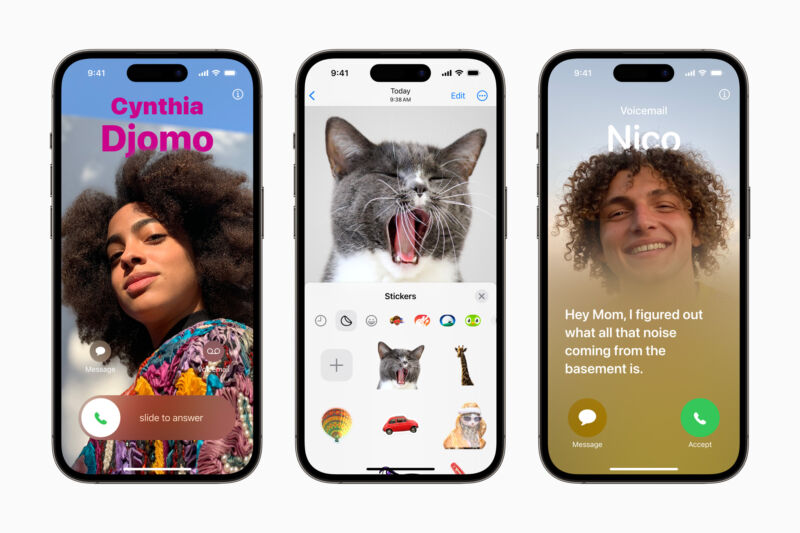
When Apple released its statement about iPhone 15 Pro overheating issues earlier this week, the company indicated that an iOS update would be able to partially address that issue. That update has arrived today in the form of iOS 17.0.3, an update which claims to address “an issue that may cause iPhone to run warmer than expected,” as well as patching a pair of security exploits.

Apple also said that specific apps like Instagram and Uber were also causing phones to heat up and that it was working with developers on fixes. The iPhonedo YouTube channel recently demonstrated that version 302.0 of the Instagram app running on iOS 17 could also make iPhone 14 Pro phones and even an iPad Pro run hot, confirming that the issue wasn’t unique to the new phones.

Initial reports claimed that the iPhone 15 Pro’s new Apple A17 Pro chip, its new 3 nm manufacturing process, and/or the phone’s new titanium frame could be causing or exacerbating the heat problems. Apple has denied these claims. Even after the fix, you can still expect a new iPhone to run a bit warm during and immediately after initial setup, as it downloads apps and data and performs other background tasks.

Read 4 remaining paragraphs | Comments


Source: Ars Technica – Apple fixes overheating problems and 0-day security flaw with iOS 17.0.3 update

Setting up home automation is rough. Google, shockingly, has good ideas for it

Two robots, surrounding their creator, offering tea and maybe sympathy

Enlarge / Claus Scholz is offered tea and moral encouragement by his robots, MM7 and MM8, also known as “Psychotrons,” in 1950 Vienna. This could be us, but many home automation platforms are only playing at being helpful. (credit: Gamma-Keystone via Getty Images)

Google today released a new Android OS with some modest improvements, a smartwatch with an old-but-still-newer chip, and a Pixel 8 whose biggest new feature is seven years of updates. But buried inside all the Google news this week is something that could be genuinely, actually helpful to the humans who get into this kind of gear—help for people setting up automations in their homes.

It’s easy to buy smart home gear, and it’s occasionally easy to set it up, but figuring out all the ways that devices can work with one another can be daunting. Even smart home systems with robust scripting abilities mostly let users develop great ideas for connecting two or more devices. That’s where, according to Google, AI can help.

Google says it will use AI (the company’s broad definition of AI, at least) at two different levels. At an app level, Google Home can start condensing all the notifications from cameras, sensors, and other devices into a streamlined summary, patched together by generative AI, and which you can respond to with natural language.

Read 12 remaining paragraphs | Comments


Source: Ars Technica – Setting up home automation is rough. Google, shockingly, has good ideas for it

Clorox Security Breach Linked to Group Behind Casino Hacks

A notorious group of hackers blamed for recent breaches on major casino companies is also suspected of being behind a recent cyberattack against Clorox that has led to a nationwide shortage of its cleaning products. Bloomberg News: Officials suspect that “Scattered Spider” is responsible for a breach that Clorox first disclosed in August, according to four people familiar with the situation, who asked not to be identified because the information isn’t public. The same group, known for its so-called social engineering tactics, was tied to attacks on Caesars Entertainment and MGM Resorts International in recent weeks, Bloomberg News previously reported.

Scattered Spider hackers specialize in targeting call centers and IT help desks, impersonating employees to trick support staff into coughing up information to gain access to accounts. The fallout from their recent attacks has been profound. At MGM properties, guests couldn’t charge purchases to their rooms, slot machines were shut down and reservation websites weren’t working. The impact on Clorox was arguably much worse. The company didn’t immediately respond to requests for comment. On Friday, Clorox indicated that it was still working to recover from the disruption. “We are ramping up production and working to restock trade inventories,” the company said in a statement. “We are focusing on maximizing shipments and restocking trade inventories.”

Read more of this story at Slashdot.


Source: Slashdot – Clorox Security Breach Linked to Group Behind Casino Hacks

Horror Sensation Terrifer 2 Returning to Theaters With a Terrifer 3 Tease

Forget about switching into a different holiday mode when October is over—November is going to keep Halloween alive thanks to a theatrical re-release of 2022 horror breakout Terrifer 2. And there’s more enticement than big-screen extreme gore: fans can expect their first eyeball-gouging tease of Terrifier 3.

Read more…


Source: Gizmodo – Horror Sensation Terrifer 2 Returning to Theaters With a Terrifer 3 Tease

Sam Bankman-Fried lawyer complains US portrays him as “cartoon villain”

Read 16 remaining paragraphs | Comments


Source: Ars Technica – Sam Bankman-Fried lawyer complains US portrays him as “cartoon villain”

How Planting Artificial Forests Could Backfire

Tree planting projects seem like a great climate solution—lots of trees can sequester lots of carbon that would otherwise be warming the atmosphere. But, surprise surprise, it turns out you can’t just plop any old tree into the ground and expect to reap environmental benefits, new research finds.

Read more…


Source: Gizmodo – How Planting Artificial Forests Could Backfire

Amazon Prepares to Challenge SpaceX’s Starlink With Maiden Satellite Launch

The Bezos-Musk rivalry intensifies this week as Amazon gears up for the launch of two demo internet satellites. This marks the beginning of the Amazon billionaire’s 3,236-satellite-strong megaconstellation that might one day compete with Musk’s leading space-based service, SpaceX—with “one day” being the operative…

Read more…


Source: Gizmodo – Amazon Prepares to Challenge SpaceX’s Starlink With Maiden Satellite Launch

Archax is a $2.7 million pilotable robot for the ultra-wealthy

Robots are already cleaning our homes and patrolling our cities. Now, they’re ready to embody our favorite mecha-themed science fiction indulgences—if you have 400 million yen (about $2.7 million) to splurge.

Tsubame Industries, a Tokyo-based startup, currently has five Archax units, a pilotable robot, available for preorder, as reported by Reuters this week. Tsubame unveiled the robot this summer and plans on demoing the robot at the Japan Mobility Show from October 26 through November 5. Tsubame won’t just have a giant robot on display; the robot will demonstrate movement of its upper body and arms, according to a Google translation of an August report from Japanese publication Robot Start.

Built with human-like proportions, Archax has moving rear legs and front legs and uses front-wheel steering. It also has a movable head (left and right), waist (left and right), shoulders (up and down), elbows, wrists, and fingers.

Read 12 remaining paragraphs | Comments


Source: Ars Technica – Archax is a .7 million pilotable robot for the ultra-wealthy

Nobel Prize in Chemistry Awarded To 3 Scientists for Exploring the Nanoworld

The Nobel Prize in Chemistry was awarded on Wednesday to Moungi G. Bawendi, Louis E. Brus and Alexei I. Ekimov for being pioneers of the nanoworld. The new laureates discovered and developed quantum dots, semiconductors made of particles squeezed so small that their electrons barely have room to breathe. From a report: “For a long time, nobody thought you could ever actually make such small particles,” Johan Aqvist, the chair of the Academy’s Nobel committee for chemistry, said at the news conference announcing the 2023 laureates. Presenting the topic with five colorful flasks lined up in front of him, which he said contained quantum dots in a liquid solution, he said: “But this year’s laureates succeeded.”

Read more of this story at Slashdot.


Source: Slashdot – Nobel Prize in Chemistry Awarded To 3 Scientists for Exploring the Nanoworld

Final Fantasy VII Rebirth's 'Canonical' Cait Sith Pronunciation Raises Messy Questions

The act of already remaking a game as beloved and influential as Final Fantasy VII was always a daunting prospect, even before 2020’s FFVII Remake made an audacious move to reframe itself as more akin to a metatextual exploration of the very idea of remaking FFVII. But when that prospect then has to weigh generations…

Read more…


Source: Gizmodo – Final Fantasy VII Rebirth’s ‘Canonical’ Cait Sith Pronunciation Raises Messy Questions

Gmail unleashes “email emoji reactions” onto an unsuspecting world

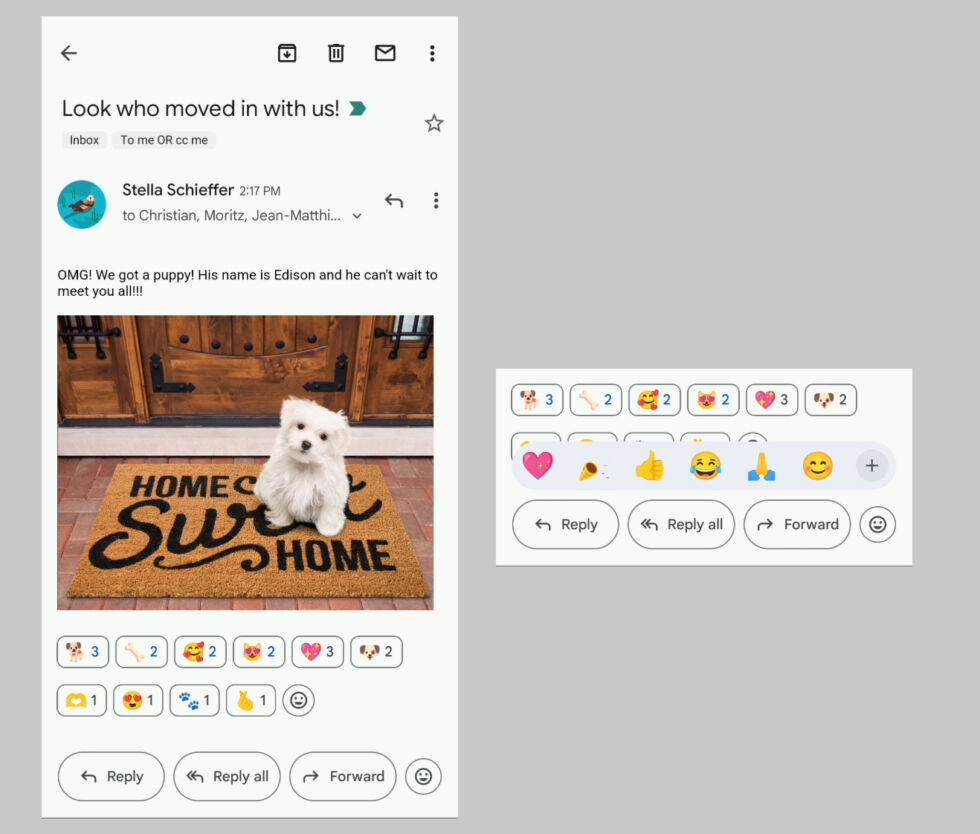
Finally, the feature everyone has been asking for: Gmail 👏 emoji 👏 reactions 👏.

You can now reply to an email just like it’s an instant messaging chat, tacking on a “crying laughing” emoji to an email instead of replying. Google has a whole support article detailing the new feature, which allows you to “express yourself and quickly respond to emails with emojis.” Like a messaging app, a row of emoji reaction counts will appear below your email now, and other people on the thread can tap to add to the reaction count. Currently, it’s only on the Android Gmail app, but it’s presumably coming to other Gmail clients.

Of course, email is from the 1970s and does not natively support emoji reactions. That makes this a Gmail-proprietary feature, which is a problem for federated emails that are expected to work with a million different clients and providers. If you send an emoji reaction and someone on the email chain is not using an official Gmail client, they will get a new, additional email containing your singular reactive emoji. Google is not messing with the email standard, so people not using Gmail will be the most affected.

Read 3 remaining paragraphs | Comments


Source: Ars Technica – Gmail unleashes “email emoji reactions” onto an unsuspecting world