The first two Amazon Kuiper satellites are set to launch on October 6

Amazon’s Kuiper satellites will soon make their debut in orbit. The company is gearing up to deploy its first two satellites, the KuiperSat-1 and the KuiperSat-2, for its Protoflight mission that’s scheduled to launch on October 6. Project Kuiper is Amazon’s answer to SpaceX’s Starlink service. At the moment, its plans entail launching 3,200 satellites over the next six years to form a constellation that can provide internet connectivity even to far-flung places traditional providers can’t reach.

The KuiperSat-1 and KuiperSat-2 are the first version of Amazon’s satellites and will provide the company with an important learning opportunity. They’ll allow the company to conduct a series of tests that would add valuable real-world data to information already collected from the lab. Project Kuiper’s ground team will also get the chance to observe how the network performs, since Protoflight will be testing the satellites’ connection to Kuiper’s ground-based network and to customer terminals. In addition, it will serve as a trial for the launch operations of subsequent satellites.

“We’ve done extensive testing here in our lab and have a high degree of confidence in our satellite design, but there’s no substitute for on-orbit testing,” said Rajeev Badyal, Project Kuiper’s vice president of technology, in a statement. “This is Amazon’s first time putting satellites into space, and we’re going to learn an incredible amount regardless of how the mission unfolds.”

Amazon previously announced its intention to send the first two Kuiper satellites to space on top of a ULA Vulcan Centaur rocket. However, ULA encountered delays with the new rocket’s development, and the satellites will be ferried to space on top of an Atlas V instead. ULA will deploy the satellites at an altitude of 311 miles, and then the Kuiper team will start testing the systems onboard and confirm all electronics are working, establish first contact and deploy the satellites’ solar arrays. After that, the team will send data back and forth to test the network. Amazon says both satellites will be deorbited by the end of the mission.

The company says it’s on track to deploy its first production satellites in the first half of 2024 and to start beta testing with commercial consumers later that year. Presumably, it could incorporate changes to its plans, depending on what it learns from this launch. ULA will be streaming the event live on October 6, with coverage starting at 2PM ET.

This article originally appeared on Engadget at https://www.engadget.com/the-first-two-amazon-kuiper-satellites-are-heading-to-space-on-october-6-054335694.html?src=rss

Source: Engadget – The first two Amazon Kuiper satellites are set to launch on October 6

3D Printer Uses Magnets To Break Speed Limits

An anonymous reader quotes a report from Tom’s Hardware: Resin printer company Peopoly created quite a buzz with the unveiling of a prototype beltless FDM 3D printer, the Magneto X, at the East Coast RepRap Festival. The new printer is a desk top machine with a huge 400 x 300 x 300 mm build volume and print speeds up to 800mm/s. It borrows a design feature seen on CNC machines: magnetic linear motors. Normally, 3D printers move their components with rotating stepper motors attached to gears and pulleys. The linear motor can be thought of as a flat, unrolled motor with the “rotor” attached to the moving component — the tool head — and the stator forming a track along one axis. Dubbed the “MagXY” system, the tool head seems to levitate across the gantry without obvious means. It has a top print speed of 800 mm/s with a max acceleration of 22,000 mm/s, which would make it faster than modern Core XY printers from Bambu Lab.

Peopoly is using and supporting both Klipper firmware and OrcaSlicer, which founder Mark Peng said greatly helped speed up their development time. […] Peopoly is leaning hard into the Open Source community. Not only have they become backers of Klipper firmware, they are also using — and supporting — Open Source OcraSlicer. The Magneto X’s nozzles are compatible with the popular E3D’s V6 volcano which suggests the machine will be open to modification by users. Peopoly also states its machine can be used without joining a cloud-based system and promises customer data will not be collected.

Read more of this story at Slashdot.


Source: Slashdot – 3D Printer Uses Magnets To Break Speed Limits

USFWS Is Creating a Frozen Library of Biodiversity To Help Endangered Species

Kiley Price writes via Inside Climate News: In a new initiative announced on Tuesday, the U.S. Fish & Wildlife Service is working with the nonprofit Revive & Restore and other partners to create a “genetic library” of the country’s endangered species — before it’s too late. Through a process called biobanking, FWS field staff are gathering biological samples such as blood, tissues and reproductive cells from animals to be cryogenically preserved at extremely low temperatures (at least -256 degrees Fahrenheit) and stored at a USDA facility in Colorado. The samples will also be genetically sequenced and this information will be uploaded to a publicly available database called GenBank, where researchers can study them and compare their genomes to other members of their species.

Read more of this story at Slashdot.


Source: Slashdot – USFWS Is Creating a Frozen Library of Biodiversity To Help Endangered Species

Kidnapped By a Runaway Electric Car

Long-time Slashdot reader RockDoctor writes: Regardless of their other potential benefits, modern cars, and modern electric cars in particular, involve complex networks of computer code, hardware, and servo systems cooperating (?) to deliver services to the user, like acceleration, steering and braking. Slashdot nerderati know better than most that such complex networks can never show unexpected, non-designed behavior, due to the infallibility of hardware, program coders and system designers… Yeah. Right. “I’ll have some of what he’s been smoking!” That’s Musk-grade optimism.

On Sunday evening, a middle-aged driver in a “brand new” vehicle found it would not decelerate below 30mph (50kmph). He retained steering control, and avoided crashing until police vehicles “boxed in” his vehicle and helped him exit into a police van (most have sliding side doors) from the moving vehicle. The police then “carried out a controlled halt” on the unmanned vehicle, stopping it from driving away with the van’s brakes until a roadside assistance technician arrived 3 hours later and managed to shut it down. “[W]hen the [technician] got to me […] later, he plugged in the car to do a diagnostic check and there was pages of faults,” said the “kidnapped” driver from Glasgow. “He said he had never seen anything like it and decided he was not willing to turn the engine on to see what was wrong.”

By inference, the vehicle did not have a mechanical brake (“hand brake”: English; “parking brake”: American), which should have been able to keep the vehicle halted regardless of the motor’s actions (even if a “clutch” did get burned out). From the only time I’ve been inside an electric car, I can’t say if that is normal; it’s certainly something I’ll look for if I ever rent another. Had the failure happened at 10 a.m. in the morning, not 10 p.m. in the evening, the body count could have been … substantial.

A dumb question, stemming from my only use of an electric car: do they have a weight sensor under the driver’s seat that locks-out the main motor unless there is (say) 30kg in the driver’s seat? Most have some such sensors — they trigger the “seatbelt not fastened” alarm or silence it for empty seats — but whether they can override the drive system … ?

Read more of this story at Slashdot.


Source: Slashdot – Kidnapped By a Runaway Electric Car

X starts removing headlines from posted links

Posts on X might look quite different, especially if you mainly follow news and media publications. The website formerly known as Twitter has started removing headlines and snippets from posted links, implementing a change Fortune reported in August. Back then, website owner Elon Musk said that the idea came from him directly and that it will “greatly improve the [platform’s] esthetics.” We tested it out by posting one of our stories, and only the article’s image with an overlay of its URL show up when it’s viewed on iOS. On the web, we still see the article snippet and a truncated version of its headline. 

Advertisers reportedly didn’t like the new format when they were shown a preview of it, but the change is clearly still pushing through. X’s main reason for the format switch is apparently to make posts look more compact by fitting more of them in the portion of the timeline that appears on screen. In addition, Musk reportedly thinks that it could help lessen instances of clickbait, which rely on headlines with shock value, on the website. 

While Musk publicly claims that the primary driving force for the change in format is the website’s aesthetic, it’s no secret that he’s been trying to encourage more people to post long-form pieces directly on X. The website expanded Blue subscribers’ post limit to 25,000 characters under his leadership, and he previously tweeted that journalists who want “more freedom to write and a higher income” should “publish directly” on the platform. More recently, he encouraged “more citizen journalism” on X and said that people can do “live video easily” from their phone. 

This article originally appeared on Engadget at https://www.engadget.com/x-starts-removing-headlines-from-posted-links-011446351.html?src=rss

Source: Engadget – X starts removing headlines from posted links

Researchers Say Current AI Watermarks Are Trivial To Remove

Researchers from the University of Maryland (UMD) were able to easily evade the current methods of AI watermarking during testing and found it even easier to add fake emblems to images that weren’t generated by AI. “But beyond testing how easy it is to evade watermarks, one UMD team notably developed a watermark that is near impossible to remove from content without completely compromising the intellectual property,” reports Engadget. “This application makes it possible to detect when products are stolen.” From the report: In a similar collaborative research effort (PDF) between the University of California, Santa Barbara and Carnegie Mellon University, researchers found that through simulated attacks, watermarks were easily removable. The paper discerns that there are two distinct methods for eliminating watermarks through these attacks: destructive and constructive approaches. When it comes to destructive attacks, the bad actors can treat watermarks like it’s a part of the image. Tweaking things like the brightness, contrast or using JPEG compression, or even simply rotating an image can remove a watermark. However, the catch here is that while these methods do get rid of the watermark, they also mess with the image quality, making it noticeably worse. In a constructive attack, watermark removal is a bit more sensitive and uses techniques like the good old Gaussian blur.

Although watermarking AI-generated content needs to improve before it can successfully navigate simulated tests similar to those featured in these research studies, it’s easy to envision a scenario where digital watermarking becomes a competitive race against hackers. Until a new standard is developed, we can only hope for the best when it comes to new tools like Google’s SynthID, an identification tool for generative art, which will continue to get workshopped by developers until it hits the mainstream. Further reading: Researchers Tested AI Watermarks — and Broke All of Them

Read more of this story at Slashdot.


Source: Slashdot – Researchers Say Current AI Watermarks Are Trivial To Remove

Japan is studying a reusable rocket, but it won’t fly before 2030

Read 16 remaining paragraphs | Comments


Source: Ars Technica – Japan is studying a reusable rocket, but it won’t fly before 2030

Linux Tries To Dump Windows' Notoriously Insecure RNDIS Protocol

An anonymous reader quotes a report from ZDNet: Microsoft’s proprietary protocol, Remote Network Driver Interface Specification (RNDIS), started with a good idea. It would enable hardware vendors to add networking support to USB devices without having to build them from scratch. There was only one little problem. RNDIS has no security to speak of. As Greg Kroah-Hartman, the Linux Foundation fellow responsible for stable Linux kernel releases, wrote in November 2022 on the Linux Kernel Mailing List (LKML), “The Microsoft RNDIS protocol is, as designed, insecure and vulnerable on any system that uses it with untrusted hosts or devices. Because the protocol is impossible to make secure, just disable all RNDIS drivers to prevent anyone from using them again.”

He added, in another message, “The protocol was never designed to be used with untrusted devices. It was created, and we implemented support for it, when we trusted USB devices that we plugged into our systems, AND we trusted the systems we plugged our USB devices into.” That’s no longer the case. Kroah-Hartman concluded, “Today, with untrusted hosts and devices, it’s time just to retire this protocol. As I mentioned in the patch comments, Android disabled this many years ago in their devices, with no loss of functionality.”

[…] But now, sick and tired of having a built-in Windows security exploit in Linux, Kroah-Hartman has decided that enough was enough. He’s disabled all the RNDIS protocol drivers in Linux’s Git repository. That means that while the RNDIS code is still in the Linux kernel, if you try to build Linux using this new patch, all your RNDIS drivers will be broken and won’t build. This is one step short of purging RNDIS from Linux.

Read more of this story at Slashdot.


Source: Slashdot – Linux Tries To Dump Windows’ Notoriously Insecure RNDIS Protocol

DIY Tinkerer Invents MacBook Tool That Breaks Apple's Repair Locks

Jason Koebler writes via 404 Media: An independent repair shop in Germany has invented a tool that can break through anti-repair locks Apple has put on a specific sensor on the MacBook Pro and MacBook Air. The Nerd.Tool.1 was invented by Stephan Steins of Dortmund’s Notebook Nerds repair shop. It is specifically designed to allow independent repair shops to replace the display angle sensor on broken MacBook Pro and MacBook Air laptops. This was formerly a replacement that only Apple could do because the replacement part had to be “calibrated” with the specific device, which only Apple could do, until now. This sensor detects when the laptop lid is closed, and turns the screen and fan off, and puts the laptop to sleep. If it’s broken, the laptop’s screen will remain on even when the lid is closed, which drains the battery, can keep the fans running, and generally shorten the life of the computer.

The Nerd.Tool.1 recalibrates replacement sensors, allowing repair techs to replace them without any fuss. “We are calibrating new sensors nearly the same way Apple does,” Steins told me. “They can do it via their T2 [security chip] or their M1/M2 chips. We are using the nerd.tool.1 for this task. The sensor holds all the data. It is not serialized or paired to the logic board so we are just calibrating it.” “We broke Apple’s lock,” independent repair advocate and repair pro Louis Rossmann explained in a YouTube video demoing the Nerd.Tool.1. “To whoever it is at Apple who decided to not make this available to technicians, ‘Fuck you, we win,'” Rossman said.

“We are selling the nerd.tool.1 to be able to spend time in developing other solutions,” added Steins. “We will do our best to get nerd.tool.2 to fix other issues which repair shops are facing. The response has been awesome! The community is very kind, which shows how painful these missing tools are for many independent repair shops.”

Read more of this story at Slashdot.


Source: Slashdot – DIY Tinkerer Invents MacBook Tool That Breaks Apple’s Repair Locks

Quantum Leap's Exec Producer Teases Season 2's Time-Travel Adventures

Quantum Leap returns to NBC this week to catch up with Dr. Ben Song (Raymond Lee), a time-traveler who has no control over where or when he’s going to end up next, but who fortunately has the help of a Los Angeles-based team of badasses and geniuses helping him through each mission.

Read more…


Source: Gizmodo – Quantum Leap’s Exec Producer Teases Season 2’s Time-Travel Adventures

California's Reservoirs Runneth Over in Astounding Reversal From Last Year

A stormy, wet year for California has brought its perilously depleted reservoirs back to life. The state’s “water year” ended this past Saturday, with officials noting that reservoirs throughout California are at 128% of their historical average, the Associated Press reports.

Read more…


Source: Gizmodo – California’s Reservoirs Runneth Over in Astounding Reversal From Last Year

Gmail Unleashes 'Email Emoji Reactions' Onto an Unsuspecting World

An anonymous reader quotes a report from Ars Technica: You can now reply to an email just like it’s an instant messaging chat, tacking on a “crying laughing” emoji to an email instead of replying. Google has a whole support article detailing the new feature, which allows you to “express yourself and quickly respond to emails with emojis.” Like a messaging app, a row of emoji reaction counts will appear below your email now, and other people on the thread can tap to add to the reaction count. Currently, it’s only on the Android Gmail app, but it’s presumably coming to other Gmail clients.

Of course, email is from the 1970s and does not natively support emoji reactions. That makes this a Gmail-proprietary feature, which is a problem for federated emails that are expected to work with a million different clients and providers. If you send an emoji reaction and someone on the email chain is not using an official Gmail client, they will get a new, additional email containing your singular reactive emoji. Google is not messing with the email standard, so people not using Gmail will be the most affected.

Another weird quirk is that because emoji reactions are just emails (that Gmail sends to other clients and hides for itself), any emoji reactions you send can’t be taken back. There’s only Gmail’s “Undo send” feature for taking back reactions, which delays sending emails for about 30 seconds, so you can second-guess yourself. After that, you’re creating a permanent emoji reaction paper trail. […] If the idea of emoji reactions to email has you selecting the puke emoji, as far as we can tell, there’s no way to just turn this off. The report notes that this new feature won’t work on business or school accounts. “Emoji reactions also aren’t available for group email lists, messages with more than 20 recipients, emails on which you’re BCC’d, encrypted emails, and emails where the sender has a custom reply-to address.”

Read more of this story at Slashdot.


Source: Slashdot – Gmail Unleashes ‘Email Emoji Reactions’ Onto an Unsuspecting World

Vulnerabilities in Supermicro BMCs could allow for unkillable server rootkits

Read 13 remaining paragraphs | Comments


Source: Ars Technica – Vulnerabilities in Supermicro BMCs could allow for unkillable server rootkits

Dungeons & Dragons Will No Longer Be Distributed Through Penguin Random House

Starting January 1, 2024, Penguin Random House will no longer be distributing Wizards of the Coast’s seminal TTRPG product, Dungeons & Dragons. The announcement was made via email to various retailers. io9 obtained a copy of this email for confirmation. There is currently a distributor portal live on Wizards’ site.

Read more…


Source: Gizmodo – Dungeons & Dragons Will No Longer Be Distributed Through Penguin Random House

Russia Plans To Block VPN In March 2024

Russia’s communications watchdog plans to block VPNs from March 1 next year, a Russian senator for the ruling United Russia party said on Tuesday. From a report: Demand for VPN services soared after Russia restricted access to some Western social media after President Vladimir Putin ordered troops into Ukraine in February 2022. Senator Artem Sheikin said an order from the Roskomnadzor watchdog would come into force on March 1 that would block VPNs. “From March 1, 2024, an order will come into force to block VPN services providing access to sites banned in Russia,” Sheikin was quoted as saying by state news agency RIA.

Read more of this story at Slashdot.


Source: Slashdot – Russia Plans To Block VPN In March 2024

Amazon’s live audio-streaming platform Amp closes up shop

Amazon is shutting down its short-lived audio app known as Amp, which previously offered a music library for users to create and broadcast custom DJ sets, according to reports by Bloomberg. Amazon’s Amp was available on Android and iOS and has only been live since March of 2022. While a pandemic bubble might have given it some attention, it never really took off. The tool was designed to allow creators to make custom content as modern DJ hosts. On this mobile-forward app, users could overlap conversations and chit-chat with live music, similar to what you would hear on a traditional radio station.

But as we all know, radio is dying as it is. And it’s no question that competition in the streaming space is hot. A lot of creators in the niche subset of online DJing might have already been on mainstream platforms like YouTube and TikTok or on more music-focused platforms like Stationhead or Tidal. The app was even initially reported as “something of a Clubhouse competitor.” Yet, Amazon did not explicitly cite why they made the decision to kill Amp altogether, or how far off it was from saving. In a memo to Bloomberg, Steve Boom, who led Amp at Amazon said that the decision was “not made quickly or easily.”

It may have something to do with the fact that it just never picked up in the mainstream as Amazon would have liked it to. When our very own James Trew put it to the test, he said he had trouble getting listeners. The mobile-first platform had some unusual limitations for how content could be created and listened to — all in all, probably playing to its downfall. For example, you could only play two songs from the same album within a three-hour period, which is a considerable amount of time to block off a DJ from being able to create a truly custom set.

The axing of Amp follows a series of cuts from the big box retailer, namely its Halo division which it dissolved back in April and Amazon Scout, a robot delivery service it killed before it could even start, around this time last year. This could signal some internal restructuring is still well underway at Amazon.

This article originally appeared on Engadget at https://www.engadget.com/amazons-live-audio-streaming-platform-amp-closes-up-shop-214652658.html?src=rss

Source: Engadget – Amazon’s live audio-streaming platform Amp closes up shop

Colorful quantum dots snag 2023 Nobel Prize in Chemistry

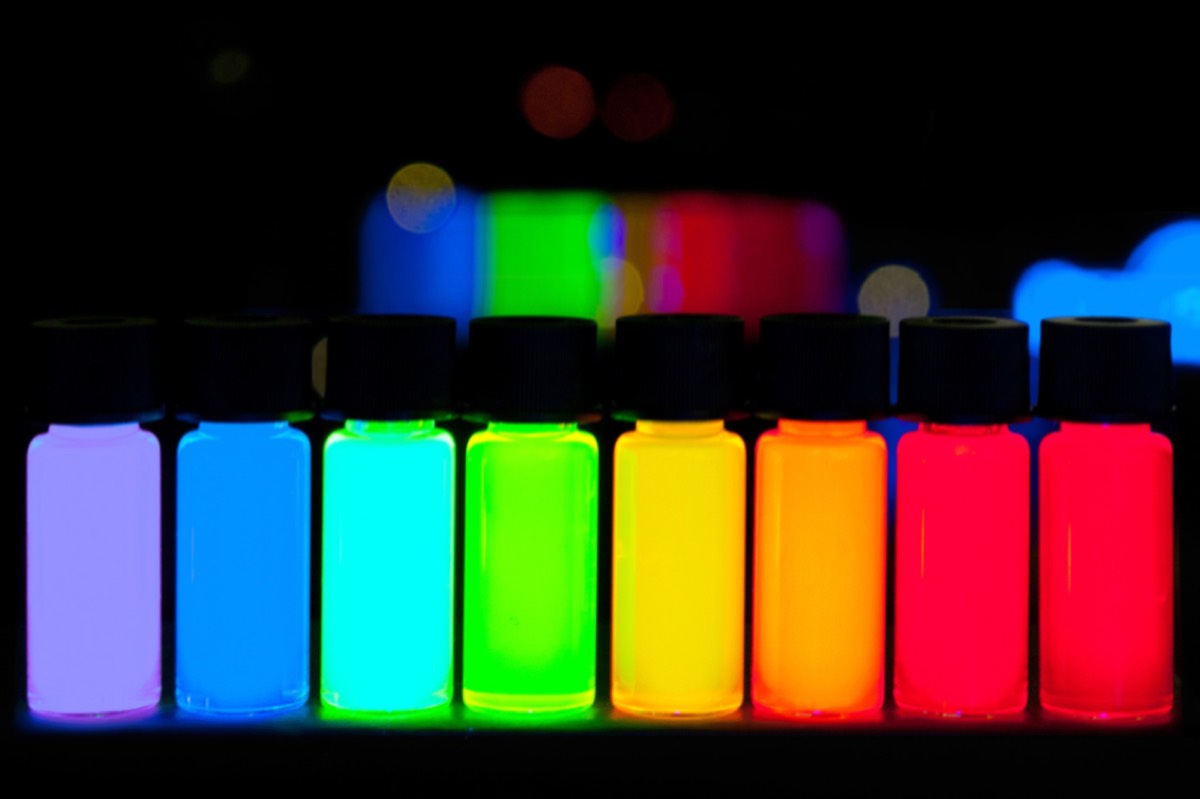
Vials of Quantum dots with gradually stepping emission from violet to deep red

Enlarge / Vials of quantum dots with gradually stepping emission from violet to deep red. (credit: Antipoff/CC BY-SA 3.0)

Once thought impossible to make, quantum dots have become a common component in computer monitors, TV screens, and LED lamps, among other uses. Three of the scientists who pioneered these colorful nanocrystals—Moungi G. Bawendi, Louis E. Brus, and Alexei I. Ekimov—have been awarded the 2023 Nobel Prize in Chemistry by the Royal Swedish Academy of Sciences “for the discovery and synthesis of quantum dots.” The news had already leaked in the Swedish news media—a rare occurrence—when Johan Aqvist, chair of the Academy’s Nobel committee for chemistry, made the official announcement, complete with five flasks containing quantum dots of many colors lined up before him as a visual aid.

A quantum dot is a small semiconducting bead with a few tens of atoms in diameter. Billions could fit on the head of a pin, and the smaller you can make them, the better. At those small scales, quantum effects kick in and give the dots superior electrical and optical properties. They glow brightly when zapped with light, and the color of that light is determined by the size of the quantum dots. Bigger dots emit redder light; smaller dots emit bluer light. So, you can tailor quantum dots to specific frequencies of light just by changing their size.

Physicists had thought since the 1930s that particles at the nanoscale would behave differently. That’s because, according to quantum mechanics, there is much less space for electrons when particles are that small, squeezing electrons together so tightly that material properties can change dramatically. Scientists succeeded in making nanoscale-thin films on top of bulk materials in the 1970s that had size-dependent optical properties, in keeping with those earlier predictions. But making those films required ultra-high vacuum conditions and temperatures near absolute zero, so nobody expected them to have much practical use.

Read 12 remaining paragraphs | Comments


Source: Ars Technica – Colorful quantum dots snag 2023 Nobel Prize in Chemistry

You Get Seven Years of OS Updates with the New Pixel 8

Android users rejoice, you’re finally being treated with the dignity you deserve. Google announced a couple of cool things at their Pixel event today. One of the smaller announcements that stood out was regarding the software policy for the Pixel 8. Google guarantees seven years of OS updates for its latest phone.…

Read more…


Source: Gizmodo – You Get Seven Years of OS Updates with the New Pixel 8

French Police Arrest Five Former Ubisoft Execs Over Sexual Harassment Allegations

French police arrested five former Ubisoft employees this week for sexual assault and harassment allegations dating back to 2020. The French newspaper, Libération, first reported that police detained two chief executives on Wednesday while another three were arrested the previous day following a year-long…

Read more…


Source: Gizmodo – French Police Arrest Five Former Ubisoft Execs Over Sexual Harassment Allegations