Damien Leone teases that fans will see plenty of Terrifier 3 when the second film returns to theaters soon. Get an extended look at Kiernan Shipka’s new time travel slasher film, Totally Killer. Plus, what’s coming on Chucky, Invasion, and more. To me, my spoilers!
American Horror Stories heralds its return. Diane Kruger teases David Cronenberg’s next movie, The Shrouds. Could They Live make a comeback? Plus, James Gunn offers a Superman: Legacy production update. To me, my spoilers!
Mars is a vast, frozen desert. Nowhere is that more evident than at its poles, which are the coldest regions on the planet. However, it looks like the weather forecast for its harsh winters and slightly more forgiving springs could be different from we thought.
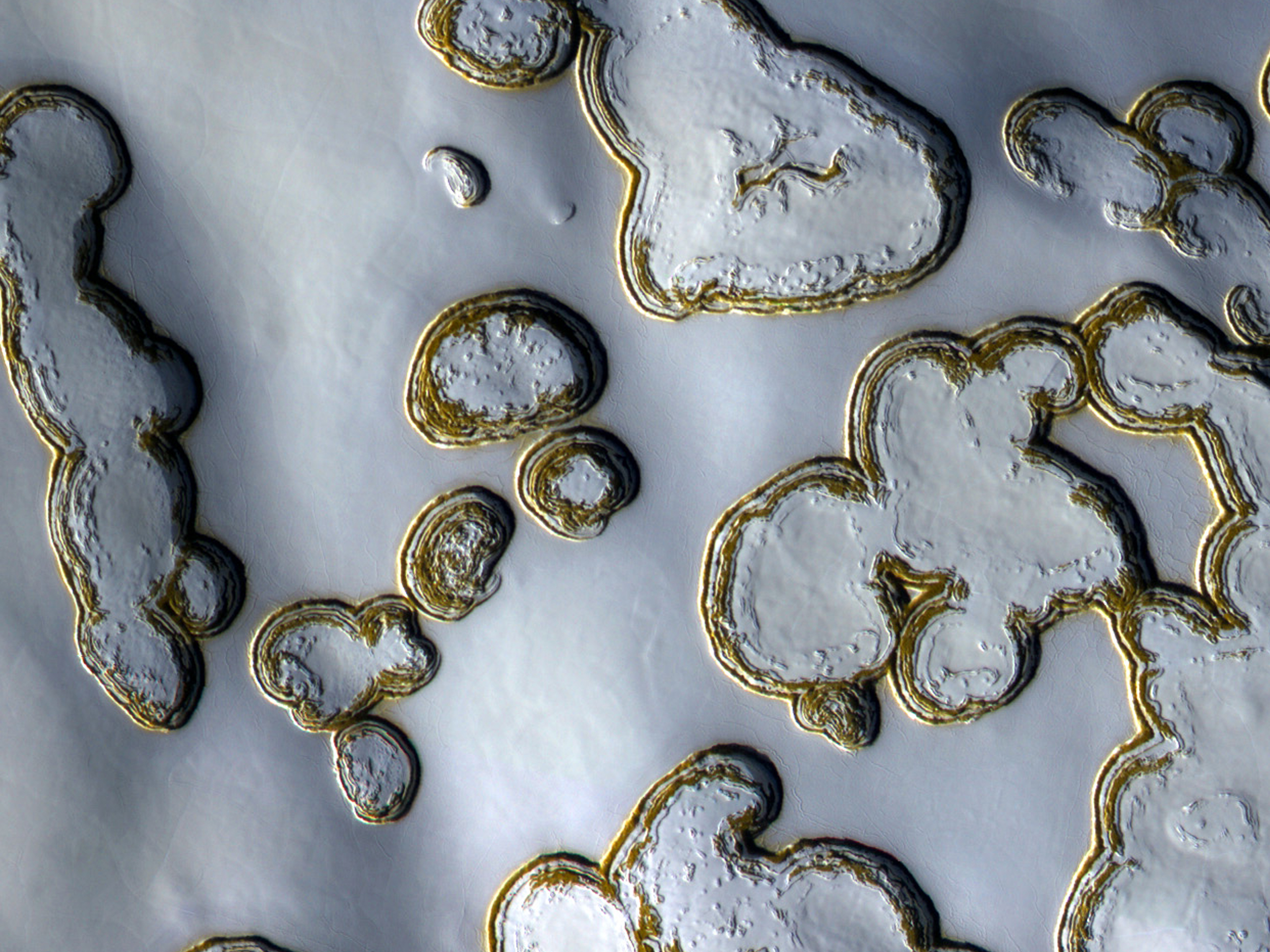
Like Earth, Mars has a volatile cycle that sees snow and ice levels fluctuate as temperatures plummet in the winter and start to rise again in the spring. Unlike Earth, Martian snowfall includes CO2 snow and is influenced by different phenomena. Now, a team of researchers led by Haifeng Xiao of Berlin Technical University in Germany is reexamining the change in snowfall over the course of a year at the Martian north pole. Their findings suggest that forces such as sublimation might mean there is more snow in the winter—and less in the spring—than previously thought.
“We propose to use the shadow variations [of ice blocks] to infer the seasonal depths at high polar latitudes,” Xiao and his team said in a draft manuscript recently published in the Earth and Space Science Open Archive.
Apple held talks with DuckDuckGo to replace Alphabet’s Google as the default search engine for the private mode on Apple’s Safari browser, but ultimately rejected the idea. From a report: The details of those talks — and Apple’s discussions about buying Microsoft’s Bing search engine in 2018 and 2020 — were revealed late Wednesday in transcripts unsealed by the judge overseeing the US government’s antitrust trial against Google. US District Judge Amit Mehta ruled Wednesday that he would unseal the testimony of DuckDuckGo Chief Executive Officer Gabriel Weinberg and Apple executive John Giannandrea, both of whom testified in the Washington trial in closed sessions. Weinberg testified that DuckDuckGo had about 20 meetings and phone calls with Apple executives, including the head of Safari, in 2018 and 2019 about becoming the default search engine for private browsing mode. In private mode, Safari doesn’t track websites that a user visits or keep a history of what a person has accessed.
“We were talking about it, I thought they would launch it,” Weinberg said, noting that Apple had integrated several of DuckDuckGo’s other privacy technologies into Safari. “Multiple times we’ve gotten integrations all the way through the finish line. Really, almost everything we’ve pitched except for search.” But Giannandrea, who joined Apple as the head of search in 2018, said that to his knowledge Apple hadn’t considered switching to DuckDuckGo. In a February 2019 email to other Apple executives, Giannandrea said it was “probably a bad idea” to switch to DuckDuckGo for private browsing in Safari. “The motivating factor for setting DuckDuckGo as the default for private browsing was an assumption” that it would be more private, Giannandrea testified. Because DuckDuckGo relies on Bing for its search information, it also likely provides Microsoft some user information, he said, which led him to believe that DuckDuckGo’s “marketing about privacy is somewhat incongruent with the details.”
Following the success of the Samsung Galaxy SmartTag and SmartTag+, the company announced a third successor in the line on Wednesday: Galaxy SmartTag2. Launching on October 10, the SmartTag2 promises upgrades in several areas which include the SmartThings Find companion app, battery life, design, and security.
Last year, it took reporters digging into Alameda Research’s balance sheet to finally show that ex-FTX CEO Sam Bankman-Fried’s big crypto house of cards was built on a shaky bedrock of customer funds. But according to a new report, a few FTX employees were well aware that Bankman-Fried’s hedge fund Alameda had…
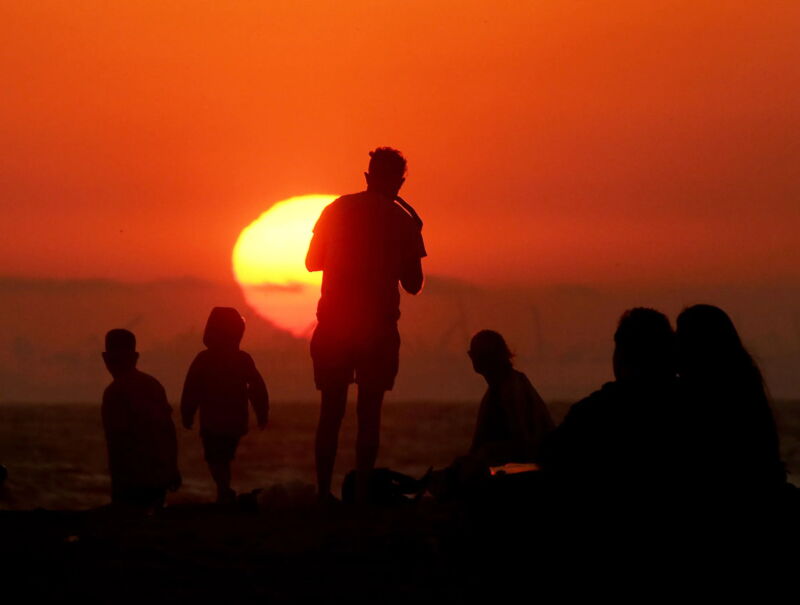
Enlarge (credit: Luis Sinco/Los Angeles Times/Getty Images)
The global temperature numbers for September are in, and they are not good. “This month was, in my professional opinion as a climate scientist—absolutely gobsmackingly bananas,” Zeke Hausfather posted Tuesday on X (formerly known as Twitter).
Kristina Dahl, principal climate scientist at the Union of Concerned Scientists, read that post yesterday. “I’ve been sitting at my desk trying to think of a better way to describe that, but I can’t,” Dahl says. “It’s just shocking.”
“Concerning, worrying, wild—whatever superlative you want to use,” says Kate Marvel, senior scientist at Project Drawdown, a nonprofit that fights climate change. “That’s what it is.”
In an otherwise incremental update, one of macOS Sonoma’s marquee features is interactive desktop widgets. Although Apple now lets you add widgets to the Notification Center on older versions of macOS, with Sonoma you can plop them down right on the desktop. Here’s how to set up and start using customizable widgets on your Mac computer.
Notification Center widgets
First, if you have any existing Notification Center widgets you’d rather put on the desktop, you can now drag them over directly. They’ll move seamlessly back and forth between the two places, and you can reposition them around the desktop to find a spot you like.
How to access the widget gallery
Apple added a widget gallery (similar to the one on iOS) to make setup easy. Start by right-clicking (or ctrl-clicking) on an unused space on your desktop, and choose the “Edit Widgets” option. The widget gallery will open, displaying available ones from installed Mac apps and your iPhone (if you have one).
Will Shanklin / Engadget
The gallery’s main window (above) displays all widgets, while the left sidebar lets you scroll through the list of apps with available ones. If your iPhone’s widgets aren’t showing, ensure your handset is running iOS 17 or later, signed in with the same Apple ID as the Mac and on the same Wi-Fi network.
For apps with both macOS and iOS versions, you’ll see “On This Mac” and “From iPhone” tabs on the upper right where you can switch views. Whichever you choose, tapping on a widget will immediately place it on your desktop, or you can drag it around until you find a spot you like.
How to customize widgets
Once you’ve placed a widget on your desktop, you can right-click (or ctrl-click) on it to view its available options. If you want to make it bigger or smaller, you can switch between sizes in this menu. In addition, “Edit [widget name]” lets you adjust its specific settings (when applicable). You’ll also see the option to “Remove Widget.”
Apple
Many native macOS widgets are interactive, allowing you to change settings or perform other tasks without opening the corresponding app. For example, you can check off to-do list items in Reminders or toggle your lights on or off in the Home app — right from the widget. Unfortunately, iPhone widgets on your Mac aren’t interactive and will prompt you to “open [app] on your iPhone to continue” if you click them.
This article originally appeared on Engadget at https://www.engadget.com/how-to-set-up-widgets-in-macos-sonoma-133045709.html?src=rss
New research appears to show that a ketamine-based nasal spray can outmatch a standard option for people with treatment-resistant depression. The large clinical trial found that people taking the spray in combination with other antidepressants were more likely to experience a sustained remission of their symptoms than…
Elon Musk’s social media venture is getting curiouser and curiouser. Following some bizarre infrastructure changes (like rebranding the entire site’s iconic name and imagery), Musk has now made the decision to strip links of their headlines when they’re shared to the platform.
“Every year the Grace Hopper Celebration, a conference and career fair aimed at non-males, brings women in the tech industry together,” writes long-time Slashdot reader piojo. “This year, a large number of men showed up. The women were not pleased.” Wired reports: AnitaB.org, the nonprofit that runs the conference, said there was “an increase in participation of self-identifying males” at this year’s event. The nonprofit says it believes allyship from men is important and noted it cannot ban men from attending due to federal nondiscrimination protections in the US. Organizers expressed frustration. Past iterations of the conference have “always felt safe and loving and embracing,” said Bo Young Lee, president of advisory at AnitaB.org, in a LinkedIn post. “And this year, I must admit, I didn’t feel this way.”
Cullen White, AnitaB.org’s chief impact officer, said in a video posted to X, formerly Twitter, that some registrants had lied about their gender identity when signing up, and men were now taking up space and time with recruiters that should go to women. “All of those are limited resources to which you have no right,” White said. […] During the conference, videos posted to TikTok showed a sea of men waiting in line to enter the conference or speak with recruiters in the expo hall. Men and women are seen running into the expo as a staffer yells for them to slow down. Avni Barman, the founder of female-talent focused media platform Gen She, says she immediately noticed “tons” more men and a more chaotic scene this time compared to previous years. According to Layoffs.fyi, tech companies around the world laid off more than 400,000 workers in 2022 and 2023. “As job cuts bite, all prospective tech workers have become more desperate for opportunities,” reports Wired.
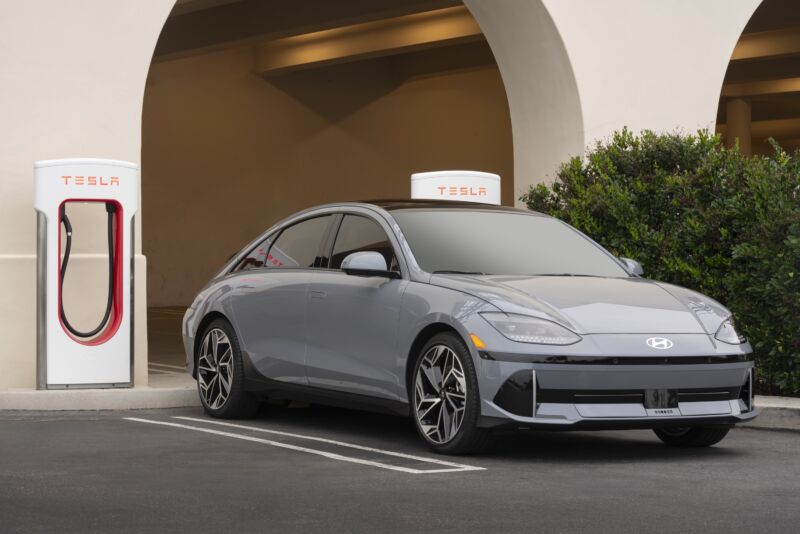
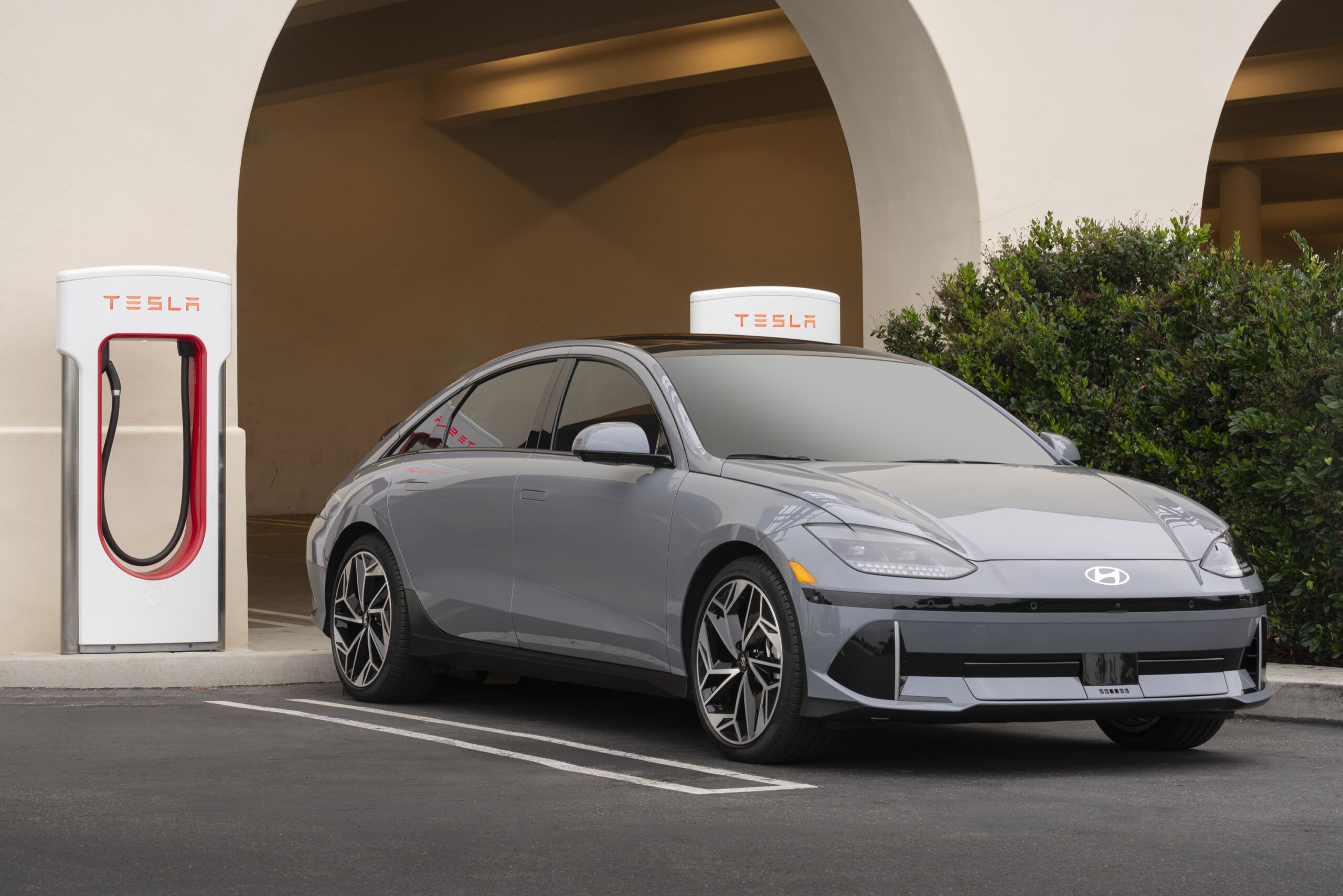
With its popular and well-regarded Ioniq lineup, Hyundai has been conspicuously absent from the list of major automakers signing on to use Tesla’s North America Charging Standard (NACS). Now, the Korean automaker has announced that it has reached a deal to adopt NACS in North America starting in Q4 2024 in the US, with Canada to follow in the first half of 2025.
Hyundai’s EVs with a NACS port will gain access to more than 12,000 Superchargers across North America, doubling the number of DC fast chargers available to customers. “This new alliance will provide Hyundai EV owners confidence in their ability to conveniently charge their vehicles… with at least 30,000 stations across North America,” said Hyundai Motor North America CEO José Muñoz.
Upcoming Hyundai EVs equipped with NACs, including the Ioniq 5, Ioniq 6 and upcoming Ioniq 7, will gain access to the chargers in late 2024. New and older CCS charger-equipped vehicles will be able to use them in the first quarter of 2025, the company said.
Along with access to Tesla’s network, Hyundai is teaming up with BMW, GM, Honda, Hyundai and Mercedes to develop a North American network with at least 30,000 chargers. The first US stations are set to open in the summer of 2024, with chargers in Canada following at a later date.
The lack of fast chargers has been a high hurdle for EV adoption, so most automakers have looked at Tesla as at least a stopgap solution. Hyundai Motors (including Kia) recently overtook GM for second place in US EV sales, but it’s still a distant second to Tesla, which sold 300,000 more EVs last year.
So far, major automakers that have now signed up to use Tesla’s Supercharger network include Hyundai, Fisker, Ford, GM, Honda, Jaguar, Mercedes-Benz, Nissan, Polestar, Rivian and Volvo. Those still in talks reportedly include Stellantis and Volkswagen.
This article originally appeared on Engadget at https://www.engadget.com/hyundai-evs-will-support-teslas-nacs-charging-starting-in-q4-2024-120517284.html?src=rss
On Thursday morning, Hyundai announced that it’s the latest automaker to adopt the North American Charging Standard for its battery electric vehicles. Developed by Tesla, NACS was opened up late last year and, since this May, has seen a flurry of automakers pledge to drop the existing Combined Charging Standard plug for the smaller, lighter NACS alternative, together with deals negotiating access to Tesla’s robust Supercharger network in the process.
Ford went first, and all the subsequent announcements followed the same pattern: native NACS ports built into new EVs from 2025, with a CCS-NACS adapter made available in 2024 to allow those other brands’ EVs to charge at Supercharger stations.
Today’s timeline is slightly different, just to make sure we’re paying attention. Hyundai says that it’s going to start building NACS ports (instead of CCS1) into “all-new or refreshed Hyundai EVs” for the US market in Q4 2024, with Canadian EVs following suit in the first half of 2025.
The first Surface Laptop Go I reviewed back in 2020 started at $550. The second version, from 2022, started at $600. Meanwhile, the new Surface Laptop Go 3 from Microsoft jumps to an $800 starting price. That’s inflation for you, I guess.
Although most of the announcements leaked in advance (all the Pixel 8 news is below), Google had one sort-of surprise. It’s working on fusing Assistant and Bard AI together. During a demo, Google showed the Assistant pulling details from a party invite in Gmail. Ask where the party is, and Assistant with Bard can tell you the location and tap into Google Maps for directions. While you’d be able to ask for directions in the past, now the Assistant can pull the address from other contexts.
You could chat to Bard to whip up a meal plan with a grocery list and export that to Google Docs or Gmail without a keyboard or copy and paste. There’s no release date yet, but Google says Assistant with Bard is coming soon to Android and iOS.
A quick note to anyone who’s tried to subscribe but hasn’t been getting the TMA newsletter, we’ve now upgraded the signup process. Please click here to subscribe!
There’s a temperature sensor on the Pro model too.
Google
The Pixel 8 and Pixel 8 Pro look largely the same as their predecessors, with a couple of key differences. The regular Pixel 8 is slightly smaller, which makes it easier to use with one hand. Meanwhile, the Pro model has a new matte finish, upgraded cameras and an intriguing temperature sensor. Across the Pixel 8 series, we’re getting the company’s Tensor G3 processor and, notably, seven years of Android and security updates, so you might be able to hang on to your Pixel flagship for a lot longer than before.
A new temperature sensor on the Pixel 8 Pro sounds like a gimmick (and it might be?), but in the stale, tired land of smartphones, we’ll take anything different. To take a reading, you’ll have to launch the new Temperature app and select the type of object you’re trying to measure. Google is waiting on FDA approval to enable the Pixel 8 Pro to take body temperature readings.
The new Pixel 8 starts at $699, $100 more than its predecessor, while the Pixel 8 Pro costs $999, another $100 increase over the Pixel 7 Pro.
Company chief Brian Chesky also revealed Airbnb is considering car rentals.
ASSOCIATED PRESS
Airbnb chief executive Brian Chesky told the Financial Times the company is going “a little bit beyond its core business” starting next year. Chesky wants Airbnb to expand its focus and is currently planning a push into long-term rentals. The service already offers monthly rentals, but apparently, only 18 percent of gross nights booked in the second quarter of 2023 come from stays longer than 30 days. Chesky believes the company can do more to drum up interest in long-term bookings.
Patreon announced a wide-ranging rebranding of its platform through a series of updates. It includes offering supporters more ways to follow their favorites while integrating more free content from creators. Creators can now let people join for free sharing content and updates for non-paying members while (optionally) hiding things like early access to podcasts or videos behind a paywall. They can also use a new commerce tool to sell individual pieces of content like recordings, videos and downloadable files.
The three focus areas this year are customization, control and accessibility.
Google is rolling out the public build of Android 14. As ever, Pixel users will be able to download the new version of the operating system first on supported models (Pixel 4a and newer). Samsung, OnePlus and other Android device makers will get access to the update later this year. Deeper customization is a major focus this time around. You’ll be able to choose from a variety of lock screen templates. You’ll have more ways to customize your wallpaper thanks to the addition of generative AI capabilities. Select a text prompt and the AI will whip up a related image for you.
This article originally appeared on Engadget at https://www.engadget.com/the-morning-after-pixel-8-pro-bard-ai-and-everything-else-from-googles-pixel-event-111847562.html?src=rss
Ahead of its Prime Big Deal Days starting next week, Amazon is having a sale on the Apple Watch Series 8 and thanks to a coupon, it’s down to the lowest price we’ve seen to date. You can grab the 41mm model in red for just $225, for a savings of $175 off the regular $400 price (44 percent off). That’s a deal that’s hard to resist, considering that the next-gen Series 9 only came out two weeks ago.
The Series 8 isn’t a huge update over the Series 7, but it does carry some useful new features. The main one is a temperature sensor tied to women’s health, giving female users an estimate on when they may be ovulating. It’s meant to be used overnight, sampling your wrist temperature every five seconds so you can see shifts from your baseline
The other is Crash Detection. Much as current watches can detect a fall, the Series 8 can detect car crashes via a pair of new accelerometers. It works in concert with other sensors to detect four different types of crashes, including rollovers, front impact, back impact and side impact. And of course, all of these Series 8 models have a cellular function, giving you internet connectivity, calls and texts for running, hiking and other activities that don’t require a smartphone.
Finally, like other Apple Watches, you can use it to unlock your Mac, find your other Apple devices and pay with Apple Pay. The main improvements with the Series 9 are the Double Tap and Raise to Speak (Siri) features, so if you can live without those and are good with the red color, $225 is an incredible price.
This article originally appeared on Engadget at https://www.engadget.com/the-apple-watch-series-8-falls-to-a-new-low-of-225-103200743.html?src=rss
An anonymous reader quotes a report from MIT Technology Review: Thirteen US states are now implementing underground thermal energy networks to reduce buildings’ carbon emissions as part of a nationwide push to adopt cleaner energy sources. Thermal energy networks use pipe loops that connect multiple buildings and provide heating and cooling through water-source heat pumps. Geothermal heat is commonly used in these networks, but it is also possible to bring in waste heat from other buildings through the sewer system. When installed, these networks can provide efficient, fossil fuel-free heating and cooling to commercial and residential buildings. Thanks to legislative backing and widespread support from utility companies and labor unions they’re likely to become an increasingly significant part of the future energy mix in the US.
“Heat is the largest source of waste energy and it’s an untapped resource,” says Zeyneb Magavi, co-executive director at clean energy nonprofit HEET (Home Energy Efficiency Team). “Once we have a thermal energy network, we can tap into that resource by moving it to where we need it.” While the projects are still at the planning and regulatory stage in most of the 13 states, construction is already underway in some. […] The advantages of thermal energy networks extend beyond reducing carbon emissions. Scaling them up from a few buildings to a community or utility level can also help make the grid more resilient and efficient. Magavi says every time a “loop” of thermal energy network is added to the grid, its ability to predict and manage power flow becomes more accurate. This interconnectedness helps the system become more resilient in high-stress situations.
Samsung has unveiled the SmartTag 2, an AirTag-like tracking device that’s a successor to the original SmartTag released in 2021. Unlike the original, which had both Bluetooth and ultra-wideband (UWB) variants, the new version will combine both features in a single model. The primary drawback is that it still only works with Samsung smartphones.
The new model sports an all-new ring-shaped design, with metal on the inside of the ring for durability, rather than just having a punch-hole as before. That lets it work better with accessories like clips and keyrings, or attach to bags and luggage. It’s now IP67 dust and water resistant as well, letting you do things like track pets outside.
Samsung
The SmartTag 2 has a new longer-lasting battery as well, with a 700 day range when in Power Saving Mode, or 500 days in Normal Mode — a 50 percent improvement over the last model. Another new feature is the Lost Mode, that lets users input contact information via a message, so that anyone who discovers an itemn with a SmartTag 2 can scan the tag and see the owner’s message and contact information.
As before, the idea is to attach them to important belongings like keys, wallets and suitcases, letting you track them from close range via Bluetooth Low Energy (BLE) or across the world via UWB. The company’s augmented reality (AR) tech can visually guide you toward the item via the Samsung Galaxy smartphone camera. The SmartTag 2 can also control smart home appliances via the SmartThings app.
The downside to the SmartTag 2 is that it only works with Samsung devices for now, so you’d be relying not only on a Galaxy phone for tracking, but also for the worldwide tracking network. Google’s Find My Device network has yet to go live, in part because Google delayed it with personal security in mind as it waits for Apple’s proposed spec. Both companies plan to release a specification for unwanted tracking alerts, both iOS and Android, by the end of 2023.
It’s unclear if Samsung’s devices will support that spec as well — so you may want to wait a bit before jumping in. The SmartTag 2 launches globally on October 11 for $30 in black or white options.
This article originally appeared on Engadget at https://www.engadget.com/samsungs-30-galaxy-smarttag-2-arrives-on-october-11-with-an-all-new-design-082947760.html?src=rss
Becky Ferreira writes via the New York Times: Last November, a satellite in low-Earth orbit unfurled into an expansive array that extends across nearly 700 square feet, about the size of a studio apartment. The satellite, BlueWalker 3, has since become one of the brightest objects in the sky, outshining some of the most radiant stars in the Milky Way, according to a study published on Monday in Nature — and it is just the first of dozens of similar satellites that are in development by AST SpaceMobile, a company that aims to keep smartphones connected from orbit. “The issue is not necessarily that one satellite,” said Siegfried Eggl, an astrophysicist at the University of Illinois, Urbana-Champaign and an author of the new study, “but that it is a predecessor or prototype of a constellation, so there’s going to be a lot of those out there eventually.”
Initially launched in September 2022, BlueWalker 3 is the forerunner of AST SpaceMobile’s BlueBird satellites, which aim to serve as a network of orbital cell towers with the goal “to democratize access to knowledge and information regardless of where people live and work,” a spokesperson for AST SpaceMobile said. Last month, BlueWalker 3 successfully relayed its first 5G connection to a smartphone in a cellular coverage gap on Earth. AST SpaceMobile is one of many companies racing to capture the surging demand for global broadband connectivity. “At the moment, there are 18 constellations that we know are planned all over the world,” Dr. Eggl said. “The total number of satellites is a stunning half a million that people are planning to put up there. This is 100 times more than we already have.”
AST SpaceMobile made BlueWalker 3’s array so large in order to beam strong cellular coverage directly to phones on Earth. The satellite is made of many small antennas that can connect existing smartphones, which is an approach that distinguishes the company from Starlink and other planned constellations that currently rely on ground antennas or dishes. […] AST SpaceMobile said that it was working with astronomers on techniques to reduce disruptions. It also contrasted the number in its constellation with the tens of thousands planned by other companies. The spokesperson said it could “provide substantial global coverage with around 90 satellites.” Though BlueBird satellites would be far fewer in number, they are at least 64 times as big and bright as a Starlink satellite. The SpaceX orbiters are also brightest in the days after their deployment, but they become much fainter once they settle into their target orbits. Astronomers expect that the BlueBird satellites will remain bright in the sky throughout most of their lifetime. As a consequence, one of these satellites could interfere with data captured by astronomical observatories.