Some US Lawmakers Want to Restrict American Companies From Working on RISC-V Chip Technology

An anonymous reader shared this report from Reuters:

In a new front in the U.S.-China tech war, President Joe Biden’s administration is facing pressure from some lawmakers to restrict American companies from working on a freely available chip technology widely used in China — a move that could upend how the global technology industry collaborates across borders…

RISC-V can be used as a key ingredient for anything from a smartphone chip to advanced processors for artificial intelligence… The lawmakers expressed concerns that Beijing is exploiting a culture of open collaboration among American companies to advance its own semiconductor industry, which could erode the current U.S. lead in the chip field and help China modernize its military. Their comments represent the first major effort to put constraints on work by U.S. companies on RISC-V…

Executives from China’s Huawei Technologies have embraced RISC-V as a pillar of that nation’s progress in developing its own chips. But the United States and its allies also have jumped on the technology, with chip giant Qualcomm working with a group of European automotive firms on RISC-V chips and Alphabet’s Google saying it will make Android, the world’s most popular mobile operating system, work on RISC-V chips…

Jack Kang, vice president of business development at SiFive, a Santa Clara, California-based startup using RISC-V, said potential U.S. government restrictions on American companies regarding RISC-V would be a “tremendous tragedy.” “It would be like banning us from working on the internet,” Kang said. “It would be a huge mistake in terms of technology, leadership, innovation and companies and jobs that are being created.”

One U.S. Representative said the Chinese Communist Party was “abusing RISC-V to get around U.S. dominance of the intellectual property needed to design chips.

“U.S. persons should not be supporting a PRC tech transfer strategy that serves to degrade U.S. export control laws.”

Read more of this story at Slashdot.


Source: Slashdot – Some US Lawmakers Want to Restrict American Companies From Working on RISC-V Chip Technology

RIP Shawna Trpcic, Costume Designer for Ahsoka and The Mandalorian

With the end of Ahsoka’s first season on Disney+ comes sad news from behind the scenes of the Star Wars series: costume designer Shawna Trpcic, a lifelong fan of sci-fi and comic books who also brought her talents to The Mandalorian and The Book of Boba Fett, has died at the age of 56.

Read more…


Source: Gizmodo – RIP Shawna Trpcic, Costume Designer for Ahsoka and The Mandalorian

A Meme You'd Nearly Forgotten About Returns to Stoke Terror in This Creepy Short

Horror fans know the sudden appearance of a crate is never, ever a good thing, especially if that crate is old and marked with some kind of warning or other sinister writing. But while Creepshow segment “The Crate” may have inspired the set-up for short film Momo, its monster is of a more newfangled breed.

Read more…


Source: Gizmodo – A Meme You’d Nearly Forgotten About Returns to Stoke Terror in This Creepy Short

Freak Accident in San Francisco Traps Pedestrian Under Robotaxi

In downtown San Francisco two vehicles were stopped at a red light on Monday night, reports the Washington Post — a regular car and a Cruise robotaxi.
Both vehicles advanced when the light turned green, according to witness accounts and video recorded by the Cruise vehicle’s internal cameras and reviewed by The Post. As the cars moved forward, the pedestrian entered the traffic lanes in front of them, according to the video, and was struck by the regular car. The video shows the victim rolling onto that vehicle’s windshield and then being flung into the path of the driverless car, which stopped once it collided with the woman. According to Cruise spokesperson Hannah Lindow, the autonomous vehicle “braked aggressively to minimize the impact” but was unable to stop before rolling over the woman and coming to a halt. Photos published by the San Francisco Chronicle show the woman’s leg sticking out from underneath the car’s left rear wheel.

“According to Cruise, police had directed the company to keep the vehicle stationary, apparently with the pedestrian stuck beneath it,” reports the San Francisco Chronicle.

Also from the San Francisco Chronicle:
Austin Tutone, a bicycle delivery person, saw the woman trapped underneath the Cruise car and tried to reassure her as they waited for first-responders. “I told her, ‘The ambulance is coming’ and that she’d be okay. She was just screaming.” He shared a photo of the aftermath with The Chronicle that appears to show the car tire on the woman’s leg. San Francisco firefighters arrived and used the jaws of life to lift the car off the woman. She was transported to San Francisco General Hospital with “multiple traumatic injuries,” said SFFD Capt. Justin Schorr. The victim was in critical condition as of late Tuesday afternoon, according to the hospital.

It appears that once the Cruise car sensed something underneath its rear axle, it came to a halt and turned on its hazard lights, Schorr said. Firefighters obstructed the sensors of the driverless car to alert the Cruise control center. He said representatives from Cruise responded to firefighters and “immediately disabled the car remotely.”

More from the San Francisco Chronicle:
“When it comes to someone pinned beneath a vehicle, the most effective way to unpin them is to lift the vehicle,” Sgt. Kathryn Winters, a spokesperson for the department, said in an interview. Were a driver to move a vehicle with a person lying there, “you run the risk of causing more injury.” Once the person is freed, the car must stay in place as police gather evidence including “the location of the vehicle and/or vehicles before, during and after the collision,” said Officer Eve Laokwansathitaya, another spokesperson.
The human driver who struck the pedestrian immediately fled the scene, and has not yet been identified.

Read more of this story at Slashdot.


Source: Slashdot – Freak Accident in San Francisco Traps Pedestrian Under Robotaxi

V/H/S/85 Might Be the Horror Series' Best Entry Yet

The V/H/S series has enough built-in fans by now that it’s barely necessary to review the latest release. But anyone feeling ambivalent about the found-footage horror franchise should make it a point to seek out its sixth entry (eighth, if you count the two spin-off films), because V/H/S/85 is excellent.

Read more…


Source: Gizmodo – V/H/S/85 Might Be the Horror Series’ Best Entry Yet

Amazon Luna subscribers can now buy individual Ubisoft games

Late last year, Amazon Luna and Ubisoft deepened their partnership by allowing subscribers to stream the developer’s games that they already own on PC. So it doesn’t really come as a surprise that Amazon has chosen to team up with Ubisoft to debut a new feature on its cloud gaming service: The capability to buy games from the platform and not just stream them. Subscribers can now purchase select Ubisoft games from the developer’s portal on Luna, and the selection includes several Assassin’s Creed titles, the Far Cry games, Child of Light and Watch Dogs. 

Customers will be able to purchase any game they want from within Luna, using their Amazon account and as long as their Ubisoft account is linked. The e-commerce giant says subscribers will own the license for any game they buy, and they’ll be able to play either on Luna-enabled devices or on a computer if they download the title for offline play via the Ubisoft Connect PC launcher. The list of Luna-enabled devices include Fire TV devices, Chromebooks and phones.

All the titles a customer buys will show up in their Luna library, and all their in-game purchases will sync to their Ubisoft account regardless of where they pay for them. Of course, they’ll only be able to stream the games on Luna as long as they’re a subscriber or a Prime member, but they’re not going to lose access to those titles completely if they stop paying for the service. 

As 9to5Google notes, this move gives Luna shades of Google Stadia, which was the only cloud gaming platform that allowed users to purchase games when it was still around. Unfortunately, Amazon didn’t say whether it has plans to expand game purchases and to sell titles from other developers. 

This article originally appeared on Engadget at https://www.engadget.com/amazon-luna-subscribers-can-now-buy-individual-ubisoft-games-130047808.html?src=rss

Source: Engadget – Amazon Luna subscribers can now buy individual Ubisoft games

Android Devices With Backdoored Firmware Found In US Schools

An anonymous reader quotes a report from SecurityWeek: Tens of thousands of Android devices have been shipped to end-users with backdoored firmware, according to a warning from cybersecurity vendor Human Security. As part of the global cybercriminal operation called BadBox (PDF), Human Security found a threat actor relied on supply chain compromise to infect the firmware of more than 70,000 Android smartphones, CTV boxes, and tablet devices with the Triada malware. The infected devices come from at least one Chinese manufacturer but, before they are delivered to resellers, physical retail stores, and e-commerce warehouses, a backdoor was injected into their firmware. “Products known to contain the backdoor have been found on public school networks throughout the United States,” Human says.

Discovered in 2016, Triada is a modular trojan residing in a device’s RAM, relying on the Zygote process to hook all applications on Android, actively using root privileges to substitute system files. Over time, the malware went through various iterations and was found pre-installed on low-cost Android devices on at least two occasions. As part of the BadBox operation that Human Security discovered, the infected low-cost Android devices allow threat actors to carry out various ad-fraud schemes, including one named PeachPit, which at its peak relied on 121,000 Android and 159,000 iOS devices infected with malware, and on 39 Android, iOS, and CTV-centric apps designed to connect to a fake supply-side platform (SSP).

One of the modules delivered to the infected devices from the command-and-control (C&C) server allows the creation of WebViews that are fully hidden from the user, but which “are used to request, render, and click on ads, spoofing the ad requests to look like they’re coming from certain apps, referred by certain websites, and rendered” on specific devices. BadBox, Human Security notes, also includes a residential proxy module that allows the threat actors to sell access to the victim’s network. Furthermore, they can create WhatsApp messaging accounts and Gmail accounts they can then use for other malicious activities. “Finally, because of the backdoor’s connection to C2 servers on BadBox-infected smartphones, tablets, and CTV boxes, new apps or code can be remotely installed by the threat actors without the device owner’s permission. The threat actors behind BadBox could develop entirely new schemes and deploy them on BadBox-infected devices without any interaction from the devices’ owners,” Human notes.

Read more of this story at Slashdot.


Source: Slashdot – Android Devices With Backdoored Firmware Found In US Schools

Exorcist: Believer Director David Gordon Green on the Future of His New Horror Trilogy

The reviews for The Exorcist: Believer haven’t been kind, with far less goodwill being showered upon David Gordon Green’s series revival than his 2018 Halloween sequel. Box office, however, has been decent—the Hollywood Reporter notes it made nearly $3 million in Thursday previews—and the fact that Universal’s said to…

Read more…


Source: Gizmodo – Exorcist: Believer Director David Gordon Green on the Future of His New Horror Trilogy

OpenAI is reportedly considering making its own chips

ChatGPT might be powered by homegrown chips in the future, if OpenAI does indeed decide to make its own. According to Reuters, the company is currently exploring the possibility of making its own artificial intelligence chips and has even evaluated a potential acquisition. OpenAI CEO Sam Altman previously blamed GPU shortages for users’ concerns regarding the company API’s speed and reliability, so he reportedly made acquiring more AI chips a priority. 

In addition to being able to address GPU shortages, OpenAI using its own chips could make costs associated with running its products more manageable. Based on an analysis by Stacy Rasgon from Bernstein Research, each ChatGPT query costs the company around 4 cents. The service reached 100 million monthly users in its first two months, which translates to millions of queries a day, though it did lose users for the first time in July. Rasgon said that if ChatGPT queries reach a tenth of what Google gets, then it would initially need $48.1 billion worth of GPUs and would spend $16 billion a year on chips going forward. 

At the moment, NVIDIA controls the market for chips meant for AI applications — the Microsoft supercomputer OpenAI used to develop its technology, for instance, uses 10,000 NVIDIA GPUs. That’s why other companies — bigger players in the tech industry — have chosen to start developing their own. Microsoft, OpenAI’s biggest backer, has been working on an AI chip of its own since 2019, according to The Information. The product is codenamed Athena, and OpenAI has reportedly been testing the technology. 

OpenAI has yet to decide whether to push through with its plans, Reuters says. And even if it does choose to move forward, it could take years before it can start using it own chips to power its products. 

This article originally appeared on Engadget at https://www.engadget.com/openai-is-reportedly-considering-making-its-own-chips-113010353.html?src=rss

Source: Engadget – OpenAI is reportedly considering making its own chips

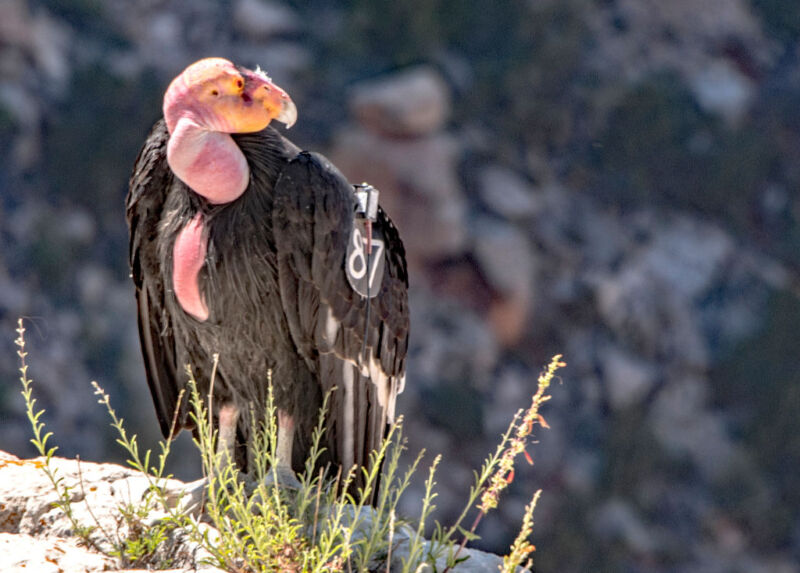
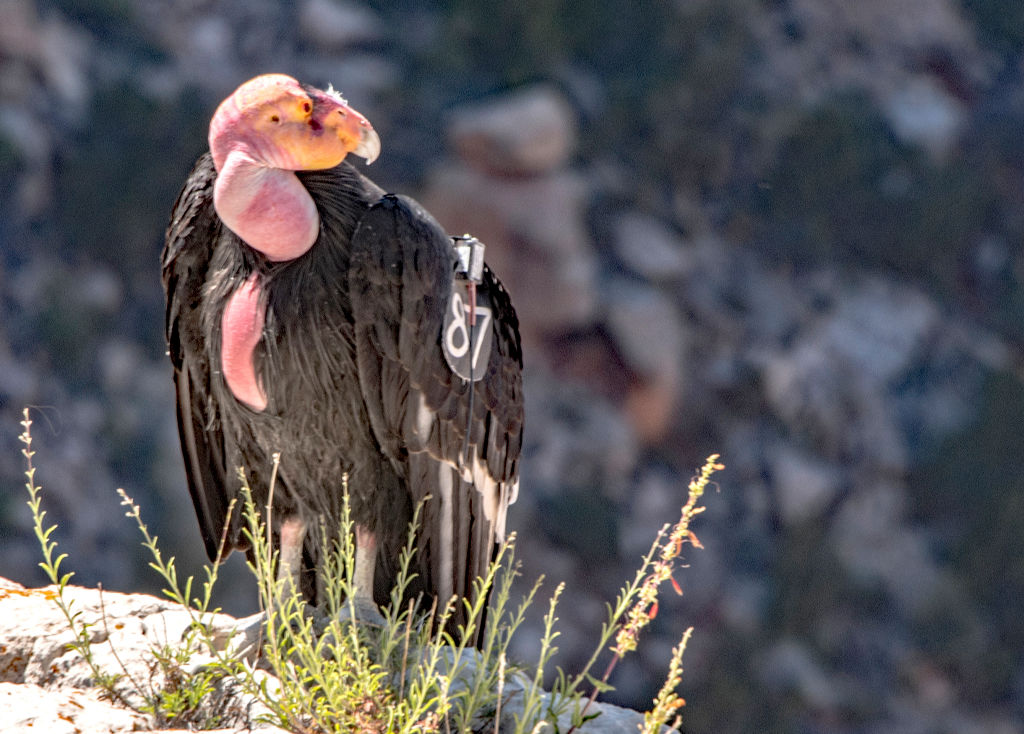
Vaccine may save endangered California condors from succumbing to bird flu

condor

Enlarge / A numbered and tagged California Condor in the wild. (credit: Educational Images via Getty)

Early March last year, an endangered California condor—one of less than 350 of its kind surviving in the wild—perched on an Arizona cliff face staring into space for days. It’s probably sick from lead poisoning, thought Tim Hauck, the condor program director with The Peregrine Fund, a nonprofit conservation group helping to reintroduce condors to the skies above Grand Canyon and Zion. These bald-headed scavengers—weighing up to 25 pounds with black-feathered wings spanning nearly 10 feet—often fall victim to lead exposure when they consume the flesh of cows, coyotes, and other large mammals killed by ranchers and hunters firing lead bullets. Listlessness and droopy posture are telltale signs. “We were like, I bet this bird’s got into something bad,” said Hauck.

His team of eight wildlife biologists stationed at Arizona’s scenic Vermillion Cliffs National Monument, 150 miles north of Flagstaff, hoped the ailing condor would glide down off its 1,000-foot sandstone ledge to visit their feeding station, where they could trap it to do a health examination. The Peregrine Fund provides supplemental food for the condors—most of which were raised in captivity and released into the wild—in part so the biologists can easily catch them for regular checkups, provide therapy for lead poisoning, vaccinate against West Nile virus, and update equipment used to track the condors’ whereabouts.

A week later, when the sick bird did finally get trapped at the feeding station, Hauck immediately noticed something he hadn’t seen before in lead-poisoned condors. Its eyes were cloudy, a condition called corneal edema. He consulted with Stephanie Lamb, a veterinarian who volunteers at Liberty Wildlife Center, a Peregrine Fund partner organization in Phoenix. He wanted to know if she thought the condor might be ill from something more worrisome than lead poisoning: highly pathogenic avian influenza, or HPAI, the virus responsible for the deaths of millions of wild birds and domestic chickens worldwide during the last two years. HPAI kills 90 to 100 percent of domestic poultry it infects, often within 48 hours, though less is known about the mortality rates for wild birds. Corneal edema, Lamb told him, was indeed on the list of symptoms.

Read 32 remaining paragraphs | Comments


Source: Ars Technica – Vaccine may save endangered California condors from succumbing to bird flu

Thousands of Android devices come with unkillable backdoor preinstalled

abstract image

Enlarge (credit: gremlin via Getty Images)

When you buy a TV streaming box, there are certain things you wouldn’t expect it to do. It shouldn’t secretly be laced with malware or start communicating with servers in China when it’s powered up. It definitely should not be acting as a node in an organized crime scheme making millions of dollars through fraud. However, that’s been the reality for thousands of unknowing people who own cheap Android TV devices.

In January, security researcher Daniel Milisic discovered that a cheap Android TV streaming box called the T95 was infected with malware right out of the box, with multiple other researchers confirming the findings. But it was just the tip of the iceberg. This week, cybersecurity firm Human Security is revealing new details about the scope of the infected devices and the hidden, interconnected web of fraud schemes linked to the streaming boxes.

Read 15 remaining paragraphs | Comments


Source: Ars Technica – Thousands of Android devices come with unkillable backdoor preinstalled

US government considers protecting octopuses used in research

Image of an octopus against a blue backdrop

Enlarge (credit: NOAA)

While cephalopods have captured the imagination of marine biologists, science fiction writers, and curious individuals, it’s only recently that the public has become significantly interested in learning more about these animals. Part of their appeal has come from recent studies revealing the intelligence behind some of their sophisticated behaviors.

Now, feeding into this growing recognition, the National Institutes of Health (NIH) announced feedback for proposed guidelines that would, if passed, give various protections to cephalopods studied within a laboratory setting.

This announcement results from years of studies on cephalopod pain sensation, intelligence, and adaptation, combined with letters to US Congress members about the humane treatment of cephalopods.

Read 21 remaining paragraphs | Comments


Source: Ars Technica – US government considers protecting octopuses used in research

Scientists Discover the Highest Energy Gamma-Rays Ever From a Pulsar

Scientists using the H.E.S.S. observatory in Namibia have detected the highest energy gamma rays ever from a dead star called a pulsar. Phys.Org reports: The energy of these gamma rays clocked in at 20 tera-electronvolts, or about 10 trillion times the energy of visible light. This observation is hard to reconcile with the theory of the production of such pulsed gamma rays, as the international team reports in the journal Nature Astronomy. […] The Vela pulsar, located in the Southern sky in the constellation Vela (sail of the ship), is the brightest pulsar in the radio band of the electromagnetic spectrum and the brightest persistent source of cosmic gamma rays in the giga-electronvolts (GeV) range. It rotates about eleven times per second. However, above a few GeV, its radiation ends abruptly, presumably because the electrons reach the end of the pulsar’s magnetosphere and escape from it. But this is not the end of the story: using deep observations with H.E.S.S., a new radiation component at even higher energies has now been discovered, with energies of up to tens of tera-electronvolts (TeV).

“That is about 200 times more energetic than all radiation ever detected before from this object,” says co-author Christo Venter from the North-West University in South Africa. This very high-energy component appears at the same phase intervals as the one observed in the GeV range. However, to attain these energies, the electrons might have to travel even farther than the magnetosphere, yet the rotational emission pattern needs to remain intact. “This result challenges our previous knowledge of pulsars and requires a rethinking of how these natural accelerators work,” says Arache Djannati-Atai from the Astroparticle & Cosmology (APC) laboratory in France, who led the research. “The traditional scheme according to which particles are accelerated along magnetic field lines within or slightly outside the magnetosphere cannot sufficiently explain our observations. Perhaps we are witnessing the acceleration of particles through the so-called magnetic reconnection process beyond the light cylinder, which still somehow preserves the rotational pattern? But even this scenario faces difficulties to explain how such extreme radiation is produced.”

Whatever the explanation, next to its other superlatives, the Vela pulsar now officially holds the record as the pulsar with the highest-energy gamma rays discovered to date. “This discovery opens a new observation window for detection of other pulsars in the tens of teraelectronvolt range with current and upcoming more sensitive gamma-ray telescopes, hence paving the way for a better understanding of the extreme acceleration processes in highly magnetized astrophysical objects,” says Djannati-Atai.

Read more of this story at Slashdot.


Source: Slashdot – Scientists Discover the Highest Energy Gamma-Rays Ever From a Pulsar

AI This Week: AI's Threat to Creative Freedom

  • Meta’s AI-generated stickers, which launched just last week, are already causing mayhem. Users swiftly realized they could use them to create obscene images, like Elon Musk with tits, ones involving child soldiers, and bloodthirsty version of Disney characters. Ditto for Microsoft Bing’s image generation feature,…

Read more…


Source: Gizmodo – AI This Week: AI’s Threat to Creative Freedom

The Ozone Hole Above Antarctica Has Grown To Three Times the Size of Brazil

According to the European Space Agency (ESA), the ozone hole above Antarctica reached approximately 10 million square miles in area on Sept. 16, 2023 — making it one of the largest seasonal holes ever observed. Space.com reports: One possible reason for the higher-than-normal growth is the Hunga Tonga volcanic eruption in January 2022, which introduced massive quantities of water vapor into the air. “The water vapor could have led to the heightened formation of polar stratospheric clouds, where chlorofluorocarbons (CFCs) can react and accelerate ozone depletion,” said Inness. Yet despite experiencing large seasonal growth this year, the ozone hole is still decreasing in size overall. “Based on the Montreal Protocol and the decrease of anthropogenic ozone-depleting substances, scientists currently predict that the global ozone layer will reach its normal state again by around 2050,” said Claus Zehner, ESA’s mission manager for Copernicus Sentinel-5P.

Read more of this story at Slashdot.


Source: Slashdot – The Ozone Hole Above Antarctica Has Grown To Three Times the Size of Brazil

Fluorescent Mammals Are Much More Common Than You'd Think

An anonymous reader quotes a report from The Conversation: Recently, several mammals have been reported to “glow” under ultraviolet (UV) light, including our beloved platypus. But no one knew how common it was among mammals until now. Our research, published in Royal Society Open Science today, found this glow — known as fluorescence — is extremely common. Almost every mammal we studied showed some form of fluorescence. […] We started with the platypus to see if we could replicate the previously reported fluorescence. We photographed preserved and frozen platypus specimens under UV light and observed a fluorescent (although rather faint) glow. […] We repeated this process for other mammals and found clear evidence of fluorescence in the white fur, spines and even skin and nails of koalas, Tasmanian devils, short-beaked echidnas, southern hairy-nosed wombats, quendas (bandicoots), greater bilbies and even cats. Both fresh-frozen and chemically treated museum specimens were fluorescent. This meant it wasn’t preservation chemicals such as borax or arsenic causing the fluorescence. So, we concluded this was a real biological phenomenon.

Using specimens from the Western Australian Museum’s collection, we took the experiment to the next stage. We recorded every species of mammal that was fluorescent when we exposed the specimens to UV light. As a result, we found 125 fluorescent species of mammal, representing all known orders. Fluorescence is clearly common and widely distributed among mammals. In particular, we noticed that white and light-colored fur is fluorescent, with dark pigmentation preventing fluorescence. For example, a zebra’s white stripes fluoresced while the dark stripes didn’t. We then used our dataset to test if fluorescence might be more common in nocturnal species. To do this, we correlated the total area of fluorescence with ecological traits such as nocturnality, diet and locomotion. Nocturnal mammals were indeed more fluorescent, while aquatic species were less fluorescent than those that burrowed, lived in trees, or on land.

Based on our results, we think fluorescence is very common in mammals. In fact, it is likely the default status of hair unless it is heavily pigmented. This doesn’t mean fluorescence has a biological function — it may just be an artifact of the structural properties of unpigmented hair. However, we suggest florescence may be important for brightening pale-colored parts of animals that are used as visual signals. This could improve their visibility, especially in poor light — just like the fluorescent optical brighteners that are added to white paper and clothing.

Read more of this story at Slashdot.


Source: Slashdot – Fluorescent Mammals Are Much More Common Than You’d Think

US Nutrition Panel's Ties To Top Food Giants Revealed In New Report

Tom Perkins writes via The Guardian: Almost half of a federal government panel that helps develop US nutritional guidelines has significant ties to big agriculture, ultra-processed food companies, pharmaceutical companies and other corporate organizations with a significant stake in the process’s outcome. The revelation is part of a new report from US Right to Know, a government transparency group that looked for ties to corporate interests among the 20-member panel of food and nutrition experts that makes recommendations for updating the US government’s official dietary guidelines.

It found nine members had ties to Nestle, Pfizer, Coca-Cola, the National Egg Board and other prominent food lobby groups, among others. The findings raise questions about whether the panel is looking out for Americans’ health or corporate profits, and “erodes confidence in dietary guidelines,” said Gary Ruskin of US Right to Know. “Millions of Americans’ lives are affected by this report and it’s crucial that the report tell the truth to American people and it’s not degraded into another sales pitch for big food and big pharma,” he said. […]

“The guidelines affect the entire US food system quite strongly,” Ruskin said. US Right to Know scoured public records dating back five years for conflicts of interest among the 20 panel members. In addition to the nine it found with “high-risk conflicts of interest” and connections to the food and drug industry, it found four more members who have possible conflicts of interest. It applauded the agencies for appointing seven members who did not appear to have any conflicts. At least four panelists have connections to at least two companies each among Abbott, Novo Nordisk, the National Dairy Council, Eli Lilly and Weight Watchers International. One panel member has received about $240,000 in grant funding from Eli Lilly.

Read more of this story at Slashdot.


Source: Slashdot – US Nutrition Panel’s Ties To Top Food Giants Revealed In New Report

Lenovo To Offer Android PCs, Starting With an All-In-One That Can Pack a Core i9

Simon Sharwood writes via The Register: The Chinese manufacturer that took over IBM’s PC business announced on Thursday that it’s teamed with an outfit named Esper that specializes in custom cuts of Android, plus device management offerings. Android is most commonly used in handheld devices. Lenovo’s taking it in an entirely different direction by making the ThinkCentre M70a: a desktop all-in-one.

The first fruit of the collaboration with Esper, the ThinkCentre M70a boasts a 21 — inch touch screen and offers a choice of 12th-gen Intel core CPUs from the Core i3 to the almost workstation-grade Core i9, at prices from $889 to beyond $1250. What could you do with Android on a Corei9, plus the maximum 16GB DDR4 3200MHz and 512GB PCIe SSD Lenovo’s machines allow? Almost anything — but Lenovo thinks its Android effort will first be appreciated by customers in the retail, hospitality, and healthcare industries. Esper pitches its wares as ideal for point-of-sale systems, kiosks, and digital signage — environments where users don’t need to access diverse apps but do need a machine that reliably boots into custom environments.

Lenovo’s not just doing desktop PCs. The number one PC maker by market share has promised it will also ship Esper’s wares on the small form factor ThinkCentre M70q — a machine designed to be bolted to the back of monitors. The ThinkEdge SE30 — a ruggedized and fanless edge client — will also have an Android option. So will the ThinkCentre M90n-1 IoT [PDF] — another rugged client for edge applications.

Read more of this story at Slashdot.


Source: Slashdot – Lenovo To Offer Android PCs, Starting With an All-In-One That Can Pack a Core i9

23andMe Scraping Incident Leaked Data On 1.3 Million Users

Jonathan Greig writes via The Record: Genetic testing giant 23andMe confirmed that a data scraping incident resulted in hackers gaining access to sensitive user information and selling it on the dark web. The information of nearly 7 million 23andMe users was offered for sale on a cybercriminal forum this week. The information included origin estimation, phenotype, health information, photos, identification data and more. 23andMe processes saliva samples submitted by customers to determine their ancestry.

When asked about the post, the company initially denied that the information was legitimate, calling it a “misleading claim” in a statement to Recorded Future News. The company later said it was aware that certain 23andMe customer profile information was compiled through unauthorized access to individual accounts that were signed up for the DNA Relative feature — which allows users to opt in for the company to show them potential matches for relatives. […] When pressed on how compromising a handful of user accounts would give someone access to millions of users, the spokesperson said the company does not believe the threat actor had access to all of the accounts but rather gained unauthorized entry to a much smaller number of 23andMe accounts and scraped data from their DNA Relative matches.

A researcher approached Recorded Future News after examining the leaked database and found that much of it looked real. […] The researcher downloaded two files from the BreachForums post and found that one had information on 1 million 23andMe users of Ashkenazi heritage. The other file included data on more than 300,000 users of Chinese heritage. The data included profile and account ID numbers, names, gender, birth year, maternal and paternal genetic markers, ancestral heritage results, and data on whether or not each user has opted into 23andme’s health data. The researcher added that he discovered another issue where someone could enter a 23andme profile ID, like the ones included in the leaked data set, into their URL and see someone’s profile. The data available through this only includes profile photos, names, birth years and location but does not include test results.

Read more of this story at Slashdot.


Source: Slashdot – 23andMe Scraping Incident Leaked Data On 1.3 Million Users