Shop the best early deals for October Prime Day 2023

We’re just a couple days away from Amazon’s October Prime Day sale, which kicks off on Tuesday and goes through Wednesday. Prime Big Deal Days is the company’s second site-wide sale of 2023 and there are already plenty of early deals to be found. You’ll need a Prime membership for some, but other discounts are open to everyone. We’ll be rounding up the best of what’s out there on October 10 and 11, but in the meantime, you can get a jump on a few sales that are already live. This week’s best tech deals include lots of Amazon devices like Echo speakers, Echo Show smart displays, Blink cameras, Ring doorbells and the Kindle Kids ereader. As for non-Amazon gadgets, we’re seeing strong prices on JBL speakers, Samsung microSD cards and an Anker 5-in-1 USB-C hub.  

Apple AirPods Pro (USB-C)

pple recently released a new model of the AirPods Pro with a USB-C charging case, improved dust resistance and lossless audio support with the upcoming Vision Pro headset. They’re on sale for $199, which is $50 off their usual price and the same low we’ve seen for the Lightning version. We consider the AirPods Pros the best wireless earphones for those who use an iPhone or lots of Apple devices. They deliver excellent noise cancellation, a pleasingly warm sound profile, a variety of Apple-specific features such as hands-free Siri, quick pairing and switching between Apple devices, and Find My device tracking. With a recent update, they’ve also gained a useful “Adaptive Audio” mode that blends the pair’s ANC and transparency modes dynamically based on your surroundings. The AirPods Pro with the original Lightning charging case are also on sale for the same price. 

Amazon Echo Dot + Kasa Smart Plug Mini

As part of a big Echo speaker sale, the latest Echo Dot is down to $23, and you can get a bundle with the small smart speaker and a Kasa Smart Plug Mini for just $1 more. Considering the Echo Dot is one of our favorite smart speakers and the Kasa smart plug earned a spot on our list of best smart plugs, this is a great bundle for anyone who wants to smarten up their home while sticking to their budget. Also included in this sale are the Echo Pop for $18 and the full-sized Echo for $55.

If you’d like to add a little Star Wars whimsy to your Echo, you can get your speaker in a bundle that throws in Darth Vader, Stormtrooper or Grogu stands. The sets are between 30 and 49 percent off their full price.  

Amazon Echo Show 5

A number of Amazon’s smart displays are on sale ahead of October Prime Day, and that includes the Echo Show 5 for $40. It’s the smallest smart display in the company’s lineup at 5.5 inches, which helps it work well as a sort of smart alarm clock. It has strong audio quality and a sunrise alarm feature, and this updated model included a faster processor and an additional mic for improved Alexa responsiveness. The Echo Show 8 (previous-gen) and the Echo Show 10 are also included in this sale, and there’s a bundle that pairs the Echo Show 5 with a Philips Hue Smart Color Bulb for $42.

Amazon Echo Show 15

The Echo Show 15 is 33 percent off right now and down to a near record-low of $185. It’s the biggest smart display in Amazon’s lineup, with a 15.6-inch touchscreen that you can sit on a countertop or mount on a wall, and it supports both portrait and landscape orientation. In addition to showing widgets like sticky notes, calendar views and more, the Show 15 has Fire TV technology built in, so you can treat it like a mini TV and stream your favorite shows and movies. And when you’re not actively using the display, you can use it to display pictures using the Photo Frame feature.

EarFun Air Pro 3

EarFun’s Air Pro 3 noise-canceling earphones are down to $60 with a $20 on-page coupon. That’s not an all-time low but still $20 off the device’s typical selling price. This is the runner-up pick in our guide to the best budget earbuds. The EarFun Free 2S, our “best under $50” pick in that guide, are also on sale for $36 with a 10 percent coupon.

Amazon Echo Buds (2023)

Prime members can get the latest Amazon Echo Buds for $35, which is $15 off and an all-time low. This is another pick in our guide to the best budget wireless earbuds. Specifically, the Echo Buds should appeal to those who prefer a more open design, one that lets in outside noise but doesn’t insert directly into your ear canal. They can sound solid for the price with a bit of EQ tweaking, and they support features we don’t often see for less than $50, such as wear detection and multipoint connectivity. They also have Alexa baked in, natch. Their IPX2 sweat-resistance rating isn’t enough for workouts, and their five-ish hours of battery life is just average, but they’re worth a look if you’re on a tight budget and hate the feel of traditional in-ear headphones. We gave them a score of 77 earlier this year.

Samsung Galaxy Watch 6 Classic 

Samsung unveiled the new Galaxy Watch 6 Classic alongside the standard Galaxy Watch 6 during its Unpacked event in July. We were particularly delighted by its rotating bezel mechanism, which makes navigating Samsung’s One UI a bit more convenient. We call the Watch 6 series the best Android options for most people in our smartwatch buying guide; compared to the standard model, the Classic is pricier and heavier, but it has a larger display and a more premium stainless steel frame along with that rotating bezel. Right now the watch is seeing a modest eight percent discount, bringing it down to $369 instead of its usual $400. It’s not a huge dip, but it’s still the biggest price drop we’ve seen for the wearable to date.

Samsung Galaxy Z Fold 5

The Samsung Galaxy Z Fold 5 is $300 off ahead of Amazon’s October Prime Day sale at $1,500. This matches the price it hit a few weeks back for Labor Day. This deal applies to the base model with 256GB of storage; the 512GB model, meanwhile, is down to $1,620 from its usual $1,920. We gave the 7.6-inch Z Fold 5 a score of 86 in our review and named it the best foldable for multitasking in our smartphone buying guide. Overall we were impressed by its speedy performance, handy multitasking gestures and improved hinge, which helps eliminates any air gap when the phone is folded. Our biggest concern is its sky-high price, which this discount makes a little less of an issue.  

The Galaxy Z Flip 5 is on sale as well, with the base 256GB model $100 off at $900. That phone got an Engadget review score of 88 and is currently the top flip-style foldable pick in our guide to the best smartphones. 

Amazon Kindle Scribe

Amazon’s Kindle Scribe is 22 percent off right now and down to $265. Unlike the deal we saw last month, you don’t have to be a Prime member to get this sale price. The Scribe is one of the best e-ink tablets on the market right now, and it’ll be best for those that want an easy-to-use ereader that also lets you jot down notes as you read. Users can create notebooks on the Scribe to organize their handwritten musings, though only a handful of titles in the Kindle store are considered “write-on” books that allow you to take notes directly in the margins. We gave the Kindle Scribe a review score of 85 last year. 

Amazon Kindle Kids

Amazon’s Kindle Kids is now on sale for $80, which is five dollars more than it went for during July’s Prime sale. As far as the device goes, it’s the same as the standard Kindle but comes with a cover, a two-year warranty and a year-long subscription to Amazon Kids+, which gives access to kid-appropriate ebooks. With that subscription, you can also use the parent dashboard to check up on your kid’s reading progress, add books or set bedtimes. 

Amazon Fire TV Stick Lite

A handful of Fire TV devices have been discounted before Amazon’s upcoming sale, including the Fire TV Stick Lite down to $18. It may be the most limited streaming dongle in Amazon’s lineup, but for smaller or secondary TVs, it offers 1080p streaming and a useful voice remote. If you’re willing to spend more for a Fire TV streamer that doubles as an Alexa speaker, you can also snag the Fire TV Cube for a low of $110.

JBL Charge 5 speaker

Two models of JBL Bluetooth speakers are on sale ahead of the October Prime sale, including the Charge 5, which is down to $130 instead of $180. That’s about $10 more than the lowest it’s gone for, but still a $50 discount on one of our recommended mid-range speakers. It has a separate tweeter and dual bass radiators plus it’s water-resistant and has a 20-hour battery life. You can also use it to recharge your phone via USB-C in a pinch.

Anker 332 USB-C Hub

Anker’s 332 USB-C Hub is down to $16 with a $2 on-page coupon, which is roughly $9 off its typical street price. As laptops get sleeker, ports disappear, but this 5-in-1 hub can add a 4K HDMI port, two USB-A ports, and either one or two additional USB-C ports (depending on whether you need one for power delivery) back to your device. That means you’ll have more space to connect a mouse, keyboard, flash drive, webcam or what have you.

Amazon Smart Thermostat

Amazon’s Smart Thermostat has dropped to its best price of the year at $56. Note that this sale price is for the model without a C-wire adapter, so you’ll have to make sure your system has a C-wire in order for the thermostat to work. Smart thermostats like this can help you save on energy costs by giving you more granular control over your heating and cooling system. You can use Amazon’s companion app to control your home’s temperature from anywhere, or ask Alexa to turn the temperature up or down as you please.

Amazon Fire HD 8

Amazon’s Fire HD 8 tablet has dropped to $60 as part of a larger tablet sale ahead of Prime Big Deal Days. That’s only $5 more than it was during Prime Day in July. We recommend this slab for those who want a cheap tablet they can give to their kids or use for basic media consumption. This model comes with 32GB of storage, but you can expand that space up to 1TB using a microSD card. Performance isn’t especially fast, and Amazon’s Fire OS is relatively limited — it lacks Google apps, for one — but the whole thing is comfortable and can last more than 10 hours on a charge. If you want a higher-end Fire tablet, the Fire Max 11 is on sale for a low of $150, though that’s a good chunk of change to spend on a Fire OS device. 

Blink security cameras

A range of Blink 3rd- and 4th-gen security cameras are also on sale. These deals are particularly noteworthy for including the 4th-gen Outdoor cameras, as those were just announced at the end of August. A three-pack of those new cameras is half off at $135, and there are a bunch of bundles available as well: a two-pack with a Blink Mini for $100, a three-pack with a Blink Video Doorbell for $165, a whole home bundle for $102 and many more. These wireless security cameras aren’t the most advanced things around, but they still offer two years of rated battery life, motion and audio alerts, two-way talk and night vision.

Google Nest Cam (Battery)

A slew of Google Nest home security devices are on sale at Amazon right now, including the Nest Cam with batteries that can go inside or outside your home. The list price is $180 but it’s down to $120 ahead of October’s Prime Day. It works with smart speakers and displays enabled with Alexa or the Google Assistant and the rechargeable unit can go for up to seven months, depending on the level of activity it picks up. The weather-resistant build and magnetic mount should let you install it on most surfaces. It sends live alerts to your phone and will even allow for on-demand check-ins without a subscription, though it only stores the last three hours for free. For six months of stored footage, you’ll need a Nest Aware membership.  

October’s Prime sale is looking like a good time to save on smart home security as a bunch of cameras and doorbells from Arlo are also on sale right now. We’ve had good experiences with Arlo’s equipment in the past. 

Ring Video Doorbells

There’s a massive Ring sale going on now, which includes the wired Ring Video Doorbell on sale for $35. As the name suggests, you’ll have to hardwire it to your home during installation. If you’d prefer a model that runs on a rechargeable battery, consider the standard Ring Video Doorbell, which is down to $55. The sale also includes Ring Stick Up cameras for inside the home, as well as various Ring Alarm bundles.

Amazon Kindle Paperwhite Kids

A few Kindle Essentials Bundles have been discounted for Prime members ahead of the October Prime sale, including this Kids model on sale for $143. It contains a Kindle Paperwhite Kids ereader with a cover, screen protector, power adapter, two-year warranty and one-year subscription to Amazon’s Kids+ content service. The Kids+ subscription gives access to a selection of child-appropriate ebooks and audiobooks; just remember that the membership will automatically renew after the first year.

Amazon Fire HD 10 Kids Pro

Amazon’s Fire HD 10 Kids Pro is the top recommendation for kids in our tablet buying guide. It has a list price of $200 and often sells for $140, but this early Prime Big Deal Days offer drops it down to an all-time low of $120. The tablet comes with a protective case that also serves as a stand and handle, plus a two-year warranty and a year’s subscription to Amazon Kids+ service. It comes with a fairly robust selection of parental controls as well.

iRobot Roomba j7+ Combo

As part of an Amazon Early Prime Deal iRobot promotion, the iRobot Roomba j7+ Combo is on sale for $799, which is a $300 savings. This is the vac we named the best robot vacuum and mop combo in our guide. It’s an expensive unit for sure, but we found it automatically knows where to mop versus where to vacuum, which other combo units make you dictate manually. It’ll also automatically empty its dry debris, though you’ll still need to fill and empty the water tank. As with many iRobots we’ve tested, we appreciate the obstacle avoidance and strong suction power.   

Amazon Music Unlimited

If you’ve never subscribed to Amazon Music Unlimited, you can now get three months of the music streaming service for free. If you’re an Amazon Prime member who has never subscribed, that jumps to four months. Music Unlimited usually comes with a one-month free trial and goes for $11 a month — or $10 if you use Prime — so this deal saves you either $22 or $30. We highlight Music Unlimited in our guide to the best music streaming services: Its UI and music discovery features aren’t as robust as Apple Music or Spotify, but it offers a large library in CD streaming quality and a wide podcast selection. Naturally, it also works well with Echo speakers and other Amazon devices. Note that your subscription will be set to auto-renew by default, so you’ll have to manually cancel if you’re just looking to snag a few months of music streaming at no cost.

Eero Pro 6E mesh Wi-Fi system

Amazon has discounted most of its Eero 6 Wi-Fi systems as an early Prime Big Deal Days deal, including the most powerful of the bunch, the Eero Pro 6E. You can pick up one router for $180, or spring for a three-pack for $400, both of which are down to record-low prices. Devices with support for Wi-Fi 6E can connect directly to the Eero’s 6 GHz radio band, and if you get the three-pack, you’ll get up to 6,000 square feet of coverage — more than enough for most homes. These Eeros have a built-in smart home hub as well, so you don’t need to have an extra device if you want to build out an IoT ecosystem in your house.

Samsung Pro Plus

If you need more storage for your Nintendo Switch, GoPro or anything else that accepts microSD cards, the 256GB version of the Samsung Pro Plus with Samsung’s USB reader is on sale for $23. We’ve seen the card alone fall as low as $20, but this is just a dollar above the all-time low for the bundle with the reader, which helps the card get closer to its advertised read and write speeds — up to 180 MB/s and 130 MB/s for reading and writing, respectively — on devices that allow them. Normally, this SKU retails for $25. The Pro Plus is the top pick in our guide to the best microSD cards, as it delivered the fastest sequential write speeds and random performance of any card we tested and comes with a 10-year warranty.

Amazon Fire Omni QLED Series TVs

All sizes of Amazon’s Fire TV Omni QLED Series are on sale ahead of October’s sale. The 43-, 50-, 55- and 65-inch models are down to $380, $400, $440 and $590, respectively. Those match or beat the prices we saw for July’s Prime Day. The Fire TV Omni QLED sets are best for people who like Amazon’s Fire interface, which is easy enough to figure out, though the OS tends to push you towards Amazon’s own content. Beyond that, Fire TVs do well to integrate Alexa with a useful voice remote and hands-free smart home support. If you don’t feel like having Alexa listening in, you can turn off the mics with a built-in switch.

Your Fall Prime Day Shopping Guide: See all of our Prime Day coverage. Shop the best Prime Day deals on Yahoo Life. Follow Engadget for Prime Day tech deals. Learn about Prime Day trends on In The Know. Hear from Autoblog’s car experts on must-shop auto-related Prime Day deals and find Prime Day sales to shop on AOL, handpicked just for you.

This article originally appeared on Engadget at https://www.engadget.com/shop-the-best-early-deals-for-october-prime-day-2023-162140872.html?src=rss

Source: Engadget – Shop the best early deals for October Prime Day 2023

States Are Calling For More K-12 CS Classes. Now They Need the Teachers.

Long-time Slashdot reader theodp writes: “42 states to go!” exclaimed Code.org to its 1+ million Twitter followers as it celebrated victorious efforts to pass legislation making North Carolina the 8th state to pass a high school computer science graduation requirement, bringing the tech-backed nonprofit a step closer to its goal of making CS a requirement for a HS diploma in all 50 states. But as states make good on pledges made to tech CEOs to make their schoolchildren CS savvy, Education Week cautions that K-12 CS has a big certified teacher shortage problem.

From the article:

When trying to ensure all students get access to the knowledge they need for college and careers, sometimes policy can get ahead of teacher capacity. Computer science is a case in point. As of 2022, every state in the nation has passed at least one law or policy intended to promote K-12 computer science education, and 53 percent of high schools offered basic computer science courses that year, according to the nonprofit advocacy group Code.org.” “‘There’s big money behind making [course offerings] go up higher and faster,’ thanks to federal and state grants as well as private foundations, said Paul Bruno, an assistant professor of education policy, organization, and leadership at the University of Illinois Urbana-Champaign. “But then that raises the question, well, who are we getting to teach these courses…?”

Bruno’s work in states such as California and North Carolina suggests that few of those new computer science classes are staffed with teachers who are certified in that subject.”

Read more of this story at Slashdot.


Source: Slashdot – States Are Calling For More K-12 CS Classes. Now They Need the Teachers.

Cryptographer Announces $12K Bounty to Find the Lost Seeds to 5 NIST Elliptic Curves

Long-time Slashdot reader mejustme writes: The NIST elliptic curves that power much of modern cryptography were generated in the late ’90s by hashing seeds provided by the NSA. Rumor has it that they are in turn hashes of English sentences, but the person who picked them, Dr. Jerry Solinas, passed away in early 2023 leaving behind a cryptographic mystery.”

That’s from the blog of Filippo Valsorda, who was in charge of cryptography and security on the Go team at Google until 2022, (and was on the Cryptography team at Cloudflare until 2017). But more importantly, he adds that “I’m announcing a $12,288 bounty for cracking these five hashes, tripled to $36,864 if the recipient chooses to donate it to a 501(c)(3) charity of their choice.”

There are hints to which phrase was used as the seed. Dr Jerry Solinas thinks he used something similar to “Jerry deserves a raise.

Read more of this story at Slashdot.


Source: Slashdot – Cryptographer Announces K Bounty to Find the Lost Seeds to 5 NIST Elliptic Curves

Hitting the Books: NASA's Kathy Sullivan and advances in orbital personal hygiene

For the first couple decades of its existence, NASA was the epitome of an Old Boys Club; its astronaut ranks pulled exclusively from the Armed Services’ test pilot programs which, at that time, were exclusively staffed by men. Glass ceilings weren’t the only things broken when Sally Ride, Judy Resnik, Kathy Sullivan, Anna Fisher, Margaret “Rhea” Seddon and Shannon Lucid were admitted to the program in 1978 — numerous spaceflight systems had to be reassessed to accommodate a more diverse workforce. In The Six: The Untold Story of America’s First Women Astronauts, journalist Loren Grush chronicles the numerous trials and challenges these women faced — from institutional sexism to enduring survival training to navigating the personal pressures that the public life of an astronaut entails — in their efforts to reach orbit.

the six cover
Scribner

Adapted from The Six: The Untold Story of America’s First Women Astronauts by Loren Grush. Copyright © 2023 by Loren Grush. Excerpted with permission by Scribner, a division of Simon & Schuster, Inc.


Above the Chisos Mountains sprawling across Big Bend National Park in West Texas, Kathy [Sullivan, PhD, third woman to fly in space and future head of the NOAA] sat in the back seat of NASA’s WB-57F reconnaissance aircraft as it climbed higher into the sky. The pilot, Jim Korkowski, kept his eye on the jet’s altimeter as they ascended. They’d just passed sixty thousand feet, and they weren’t done rising. It was a dizzyingly high altitude, but the plane was made to handle such extremes.

Inside the cockpit, both Kathy and Jim were prepared. They were fully outfitted in the air force’s high-altitude pressure suits. To the untrained observer, the gear looked almost like actual space suits. Each ensemble consisted of a bulky dark onesie, with thick gloves and a thick helmet. The combination was designed to apply pressure to the body as the high-altitude air thinned away and made it almost impossible for the human body to function.

The duo eventually reached their target height: 63,300 feet. At that altitude, their pressure suits were a matter of life and death. The surrounding air pressure was so low that their blood could start to boil if their bodies were left unprotected. But with the suits on, it was an uneventful research expedition. Kathy took images with a specialized infrared camera that could produce color photos, and she also scanned the distant terrain in various wavelengths of light.

They spent just an hour and a half over Big Bend, and the flight lasted just four hours in total. While it may have seemed a quick and easy flight, Kathy made history when she reached that final altitude above West Texas on July 1, 1979. In that moment, she flew higher than any woman ever had, setting an unofficial world aviation record.

The assignment to train with the WB-57 had scared her at first, but Kathy wound up loving those high-flying planes. “That was very fun, other than this little bit of vague concern that, ‘Hope this doesn’t mean I’m falling off the face of the Earth,’” Kathy said. The assignment took her on flights up north to Alaska and down south to Peru. As she’d hoped, she received full qualification to wear the air force’s pressure suits, becoming the first woman to do so. Soon, donning a full-body suit designed to keep her alive became second nature to her.

NASA officials had also sought her out to test a new piece of equipment they were developing for future Shuttle astronauts, one that would let people relieve themselves while in space. During the Apollo and Gemini eras, NASA developed a relatively complex apparatus for astronauts to pee in their flight suits. It was, in essence, a flexible rubber cuff that fit around the penis, which then attached to a collection bag. The condom-like cuffs came in “small,” “medium,” and “large” (though Michael Collins claimed the astronauts gave them their own terms: “extra large,” “immense,” and “unbelievable”). It was certainly not a foolproof system. Urine often escaped from beneath the sheath.

Cuffs certainly weren’t going to work once women entered the astronaut corps. While the Space Shuttle had a fancy new toilet for both men and women to use, the astronauts still needed some outlet for when they were strapped to their seats for hours, awaiting launch or reentry. And if one of the women was to do a spacewalk, she’d need some kind of device during those hours afloat. So, NASA engineers created the Disposable Absorption Containment Trunk (DACT). In its most basic form it was . . . a diaper. It was an easy fix in case astronauts needed to urinate while out of reach of the toilet. It was designed to absorb fecal matter, too, though the women probably opted to wait until they reached orbit for that.

Kathy was the best person to test it out. Often during her high-altitude flights, she’d be trapped in her pressure suit for hours on end, creating the perfect testing conditions to analyze the DACT’s durability. It worked like a charm. And although the first male Shuttle fliers stuck to the cuffs, eventually the DACT became standard equipment for everyone.

After accumulating hundreds of hours in these pressure suits, Kathy hoped to leverage her experience into a flight assignment, one that might let her take a walk outside the Space Shuttle one day. As luck would have it, she ran into Bruce McCandless II in the JSC gym one afternoon. He was the guy to know when it came to spacewalks. NASA officials had put him in charge of developing all the spacewalk procedures and protocols, and at times he seemed to live in the NASA pools. Plus, he was always conscripting one of Kathy’s classmates to do simulated runs with him in the tanks. Kathy wanted to be next. Projecting as much confidence as she could, she asked him to consider her for his next training run.

It worked. Bruce invited Kathy to accompany him to Marshall Space Flight Center in Alabama to take a dive in the tank there. The two would be working on spacewalk techniques that might be used one day to assemble a space station. However, the Space Shuttle suits still weren’t ready to use yet. Kathy had to wear Apollo moonwalker Pete Conrad’s suit, just like Anna had done during her spacewalk simulations. But while the suit swallowed tiny Anna, it was just slightly too small for Kathy, by about an inch. When she put it on, the suit stabbed her shoulders, while parts of it seemed to dig into her chest and back. She tried to stand up and nearly passed out. It took all her strength to walk over to the pool before she flopped into the tank. In the simulated weightless environment, the pain immediately evaporated. But it was still a crucial lesson in space-suit sizes. The suits have to fit their wearers perfectly if the spacewalk is going to work. 

The session may have started off painfully, but once she began tinkering with tools and understanding how to maneuver her arms to shift the rest of her body, she was hooked. She loved spacewalking so much that she’d go on to do dozens more practice dives throughout training.

But it wasn’t enough to practice in the pool. She wanted to go orbital. 

This article originally appeared on Engadget at https://www.engadget.com/hitting-the-books-the-six-loren-grush-scribner-143032524.html?src=rss

Source: Engadget – Hitting the Books: NASA’s Kathy Sullivan and advances in orbital personal hygiene

Chromebook Plus Review: Better Specs Makes Google’s Cheapo Laptop Brand More Enticing

For the last 10 years, Chromebooks have remained just what they are. Chromebooks are Chromebooks. Manufacturers release new models every year with slightly updated specs and Google makes minor additions to the ChromeOS-based platform. But despite that, Chromebooks are still low-end budget laptops for folks who only…

Read more…


Source: Gizmodo – Chromebook Plus Review: Better Specs Makes Google’s Cheapo Laptop Brand More Enticing

NChain's CEO 'Departs', Claims Evidence Craig Wright Manipulated Bitcoin Creation Documents

Bitcoin creator Satoshi Nakamoto may or may not be businessman Craig Wright, who in 2015 founded the blockchain-tech company nChain.

But nChain’s recently-departed CEO Christen Ager-Hanssen’s thinks Wright is not Satoshi — and that’s just the beginning. According to Forbes Ager-Hanssen went as far as “to leak emails suggesting former gambling billionaire Calvin Ayre, who has heavily backed the company doesn’t believe Wright, nChain’s chief scientist, is Satoshi Nakamoto.

The alleged email from Ayre begins by citing Wright’s “litigation disaster”…’

I have been operating under the assumption that you and Ramona have the keys and that you were simply pretending not to have them as part of some strategy that you have trapped yourself in. But now that we are looking at a situation where continuing to deny you have them ruins your life and damages your supporters, I am forced to make a tough decision… There is zero reason to continue to pretend you do not have the keys if you really have them… So either you are a moron for intentionally losing this case, or you are a moron for actually not having the keys… either way, I am not following you over the cliff…

But Ager-Hanssen also shared some thoughts of his own:

I can confirm I have departed from nChain Global as its Group CEO with immediate effect after reporting several serious issues to the board of nChain Group including what I believe is a conspiracy to defraud nChain shareholders orchestrated by a significant shareholder. I also had concerns about the ultimate beneficiary shareholder and the real people behind DW Discovery fund registered in Cayman. The chairman also took instructions from shadow directors which I didn’t accept.

I have also reported that I have found compelling evidence that Dr Craig Wright has manipulated documents with the aim to deceive the court he is Satoshi. I’m today myself convinced that Dr Craig Wright is NOT Satoshi and I’m persuaded he will lose all his legal battles. The board didn’t take action and my job becomes clearly untenable. One of the things I recommended the Chairman of the board was to sack Dr Craig Wright.
I feel sorry for all the great people that work in the company but I don’t want to be part of something I clearly don’t believe in. #faketoshi

Forbes also notes an X (Twitter) account calling itself “Satoshi Nakamoto” with the handle @Satoshi has posted for the first time since 2018 — though X’s community notes feature added: “This isn’t the real Satoshi Nakamoto, creator of bitcoin. Its an account related to Craig Wright, who claims to be Satoshi with no material proof.”

Thanks to long-time Slashdot reader UnknowingFool for sharing the news.

Read more of this story at Slashdot.


Source: Slashdot – NChain’s CEO ‘Departs’, Claims Evidence Craig Wright Manipulated Bitcoin Creation Documents

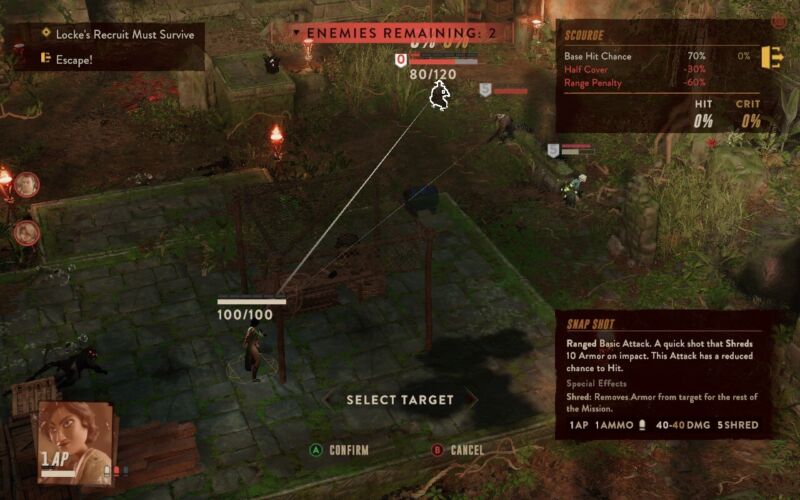
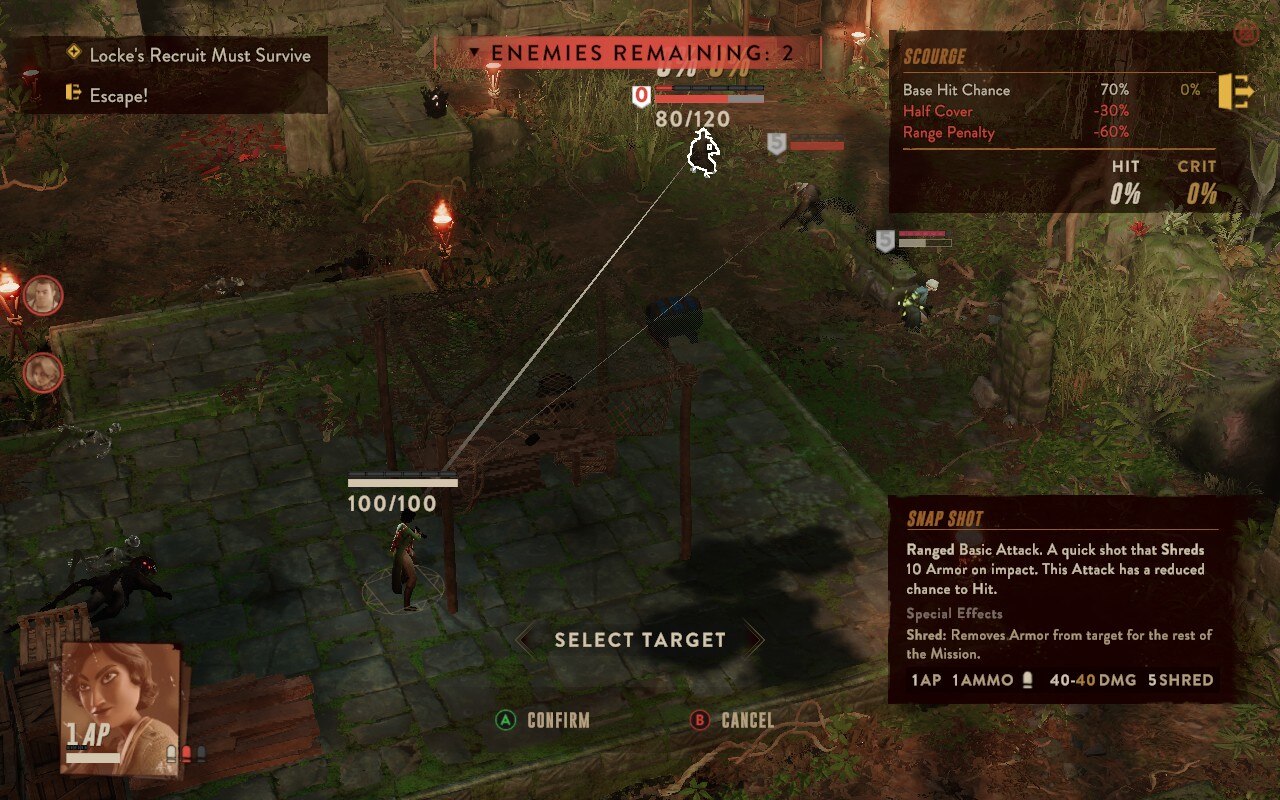
Lamplighters League is light stealth, heavy pulp style, and XCOM gun battles

Screenshot showing character lining up a shot in Lamplighters League

Enlarge / Purnima, the sniper you can recruit, is an assassin who refused to do a job for the evil Council because it involved a child murder. Now, as part of your team, she will kill a gazillion goons. Strange times. (credit: Harebrained Schemes / Paradox Interactive)

Lamplighters League is a modern XCOM-style turn-based strategy game with a Weird War-ish, Indiana Jones-like feel, a light stealth element, and it’s made by the folks who made Battletech and the Shadowrun Returns series. If you pay for Game Pass, or you see this game at any price that feels reasonable (including its debut $50), that should tell you enough about whether to try it. I think you should.

I wanted to get that out of the way because I have some nits to pick with Lamplighters League, some technical and some tactical. But I don’t want to lose sight of how excited I am to have a meaty new tactics game to sink into, especially one based on an original, if heavily referential, world. If you’re a fan of tile-based movements, two actions per turn, home bases full of upgrade potential, and engaging little interactions between your troops, you don’t get that many solid games like this per year, so take note of Lamplighters League. The number of years between XCOM titles is getting longer, not shorter—we need some reserves.

Read 25 remaining paragraphs | Comments


Source: Ars Technica – Lamplighters League is light stealth, heavy pulp style, and XCOM gun battles

Amazon’s Project Kuiper satellites add to astronomers’ light-pollution woes

satellite streaks

Enlarge (credit: Alan Dyer/Getty Images)

Amazon is set to launch two satellite prototypes for its Project Kuiper network, which will eventually number more than 3,200 orbiters. Project Kuiper could become a rival to SpaceX’s Starlink constellation, which is now nearly 4,800 strong. Amazon’s launch is planned for 2 pm Eastern time today, with a backup launch window tomorrow. This rapid growth of the satellite industry has come at a cost for astronomers and fans of the night sky, as two new studies and panels at an international astronomy conference stressed this week.

All spacecraft in low-Earth orbit reflect sunlight, and some glint enough to be visible to the naked eye—artificial constellations that compete with stellar ones. Satellites can cause problems for astronomers when they streak across images, interfere with radio observations, or make hard-earned data less scientifically useful. By one estimate, there could be some 100,000 satellites swarming the skies in the 2030s. While scientists are mainly concerned about this aggregate effect, some individual satellites are very bright indeed. A study published in the journal Nature this week shows that a prototype of AST SpaceMobile’s BlueBird swarm has become one of the brightest objects in the heavens. Another study documents how even deliberately darkened satellites are still twice as bright—if not more—than the limit astronomers have called for to minimize effects on space science.

Such concerns prompted a major conference this week, organized by the International Astronomical Union’s Centre for the Protection of the Dark and Quiet Sky from Satellite Constellation Interference, known as CPS. It’s being held in the Canary Islands, where there are several observatories. It’s the first in-person meeting of its kind, bringing together scores of astronomers, as well as satellite industry representatives, advocates of Indigenous and environmental perspectives, and policy experts.

Read 19 remaining paragraphs | Comments


Source: Ars Technica – Amazon’s Project Kuiper satellites add to astronomers’ light-pollution woes

Greg Kroah-Hartman Chastises Critic, Says Linux Foundation Strongly Supports Kernel Developers

It started when Linux blogger Bryan Lunduke complained about how the Linux Foundation was reducing the six-year long-term support (LTS) window for the Linux kernel to two years. Lunduke argued that the Foundation seemed more interested in funding compliance best practices — as well as artificial intelligence and blockchain projects.

In an online discussion, Linux kernel maintainer Greg Kroah-Hartman had this response:
Did anyone think to actually ask the developer who is maintaining the long-term support kernel versions why he made that change (back in February?), i.e. me…? No, I guess that would take too much effort, and wouldn’t result in such a click-bait headline.
“LTS kernels are no longer supported for 6 years because it turns out no one used them.” doesn’t have that same fun sound…

In a second comment Kroah-Hartman also clarified that in fact “The amount of resources and other stuff that the Linux Foundation provides to the Linux kernel community has increased over the years, including last year. ”

Just because new people are brought in with new projects (that the LF member companies want to host) does not mean that somehow less is being given to the kernel community at all. It is not a zero-sum game here at all, that’s not how the LF works in any way.
Again, this would have been easy to verify if someone just asked us.
So to repeat, no “abandonment” is happening here at all, the opposite is happening, just like it has for the entirety of the Linux Foundation’s existence, support has grown every year.

Thanks to long-time Slashdot reader whoever57 for sharing the news.

Read more of this story at Slashdot.


Source: Slashdot – Greg Kroah-Hartman Chastises Critic, Says Linux Foundation Strongly Supports Kernel Developers

7% of Python Developers Are Still Using Python 2, Annual Survey Finds

“Python 3 was by far the choice over Python 2 in a late-2022 survey of more than 23,000 Python developers,” reports InfoWorld, “but the percentage of respondents using Python 2 actually ticked up compared to the previous year.”

Results of the sixth annual Python Developers Survey, conducted by the Python Software Foundation and software tools maker JetBrains, were released September 27. The Python Developers Survey 2022 report indicates that 93% of respondents had adopted Python 3, while only 7% were still using Python 2.

In the 2021 survey, though, 95% used Python 3 while 5% used Python 2. In 2020, Python 3 held a 94% to 6% edge. Dating back to 2017, 75% used Python 3 and 25% used Python 2…

The 2022 report said 29% of respondents still use Python 2 for data analysis, 24% use Python 2 for computer graphics, and 23% used Python 2 for devops. The survey also found that 45% of respondents are still using Python 3.10, which arrived two years ago, while just 2% still use Python 3.5 or lower. (Python 3.11 was released October 24, 2022, right when the survey was being conducted.)

Other findings from the survey:

21% said they used Python for work only, while 51% said they used it for work and personal/educational use or side projects, and 21% said they used Python only for personal projects.

85% of respondents said Python was their main language (rather than a secondary language).

The survey also gives the the top “secondary languages” for the surveyed Python developers as JavaScript (37%), HTML/CSS (37%), SQL (35%), Bash/Shell (32%), and then C/C++ (27%).

When asked what they used Python for most, 22% said “Web Development”, 18% said “Data Analysis,” 12% said “Machine Learning,” and 10% said “DevOps/System Administration/Writing Automation Scripts.”

Read more of this story at Slashdot.


Source: Slashdot – 7% of Python Developers Are Still Using Python 2, Annual Survey Finds

Germany Will Keep Keep Its Coal Power Plants on Standby For Another Winter

An anonymous reader writes: Amidst a winter marked by scarce gas supplies, the German government has opted to retain its lignite coal power plants on standby for another season. Originally, Germany had planned a phased shutdown of coal plants in exchange for a portion of the government’s €40 billion coal phase-out fund. However, last year, disruptions in Russian gas supplies post-Ukraine war prompted an emergency decision to keep coal plants operational. This measure is now extended for the upcoming winter, maintaining 1.9 GWs of lignite capacity alongside the existing 45 GW of coal power plants. The primary purpose of these lignite plants is to alleviate gas demand during peak times and stabilize prices. Despite the economic benefits, the move raises environmental concerns, given lignite’s status as a major climate polluter. The government acknowledges this and plans to assess the additional carbon emissions resulting from keeping coal plants on standby, estimated to be between 2.5 and 5.6 tonnes of CO2. The German government emphasized the persistence of the goal to ideally complete the coal phase-out by 2030 and meet climate targets.

Read more of this story at Slashdot.


Source: Slashdot – Germany Will Keep Keep Its Coal Power Plants on Standby For Another Winter

How Edwin Hubble Expanded the Universe 100 Years Ago

Black Parrot (Slashdot reader #19,622) pointed out a historic anniversary this week:

On October 6, 1923, Edwin Hubble got a photo of Andromeda that showed that it contained a variable star, and therefore was an actual galaxy, ending the Great Debate over whether the universe consisted of anything beyond our own galaxy. Unless you’re more than 100 years old you grew up with a completely different understanding of the universe than anyone who lived before. Even Einstein did not know about it when he proposed the theory of general relativity. It was later in the decade before Hubble discovered that the universe is expanding.

A century later, the European Space Agency was announcing…

A very rare, strange burst of extraordinarily bright light in the universe just got even stranger â” thanks to the eagle-eye of the NASA/ESA Hubble Space Telescope. The phenomenon, called a Luminous Fast Blue Optical Transient (LFBOT), flashed onto the scene where it wasnâ(TM)t expected to be found, far away from any host galaxy. Only Hubble could pinpoint its location. The Hubble results suggest astronomers know even less about these objects than previously thought by ruling out some possible theories.

Read more of this story at Slashdot.


Source: Slashdot – How Edwin Hubble Expanded the Universe 100 Years Ago

Pentium 5 – a Rare Look Into the CPU That Could Have Been But Never Was

Long-time Slashdot reader alaskana writes: In late 2022 it was revealed that early samples of what was to be the “Pentium 5” processor, codenamed Tejas and Jayhawk were in development and made it as far as being released to board partners for evaluation. A few of these samples made it (of course) onto Ebay and then — not surprisingly — into the hands of a YouTuber. To be fair, tech site Anandtech arguably got the first scoop on this P4 successor way back in 2004, but that story seemingly never gained much traction at that time.

They wrote that Intel Prescott CPUs “could hit 5GHz+ but had huge power and temperature numbers, but Tejas was expected to clock higher than Prescott — with Intel chasing the huge 10GHz CPU clocks within 10 years between 2000 and 2011 — but it ended up not happening at all.”

In what was supposed to be a continuation of the “GHz is king” days of the early aughts, the Pentium 5 was in spirit a continuation of the “faster-is-better” philosophy of the P4 architecture, efficiency be damned. Speeds in excess of 7 GHz(!), and a pipeline upwards of 50 stages were rumored to be targeted by Intel, but reality (and physics) reared their ugly heads as always. WCCF Tech transcribed the remarks of Intel engineer Steve Fischer, who was involved with the project. “The thing had a pipeline depth of around 50 stages and an expected clock target at one point north of 7 GHz. I call the thing “the Death Star of processors” and half-jokingly reasoned that consumer acceptance of liquid-cooled chassis would not be a big deal.”

Intel kicked off Project Tejas in 2003, expected in 2004 and later pushed into 2005 after issues forced Intel to redesign the chip. Before the company could do that, the Tejas Project was shelved on May 7, 2004. In the end efficiency and parallelization was to be the rule of future CPU development, but the fact that Intel had (at least briefly) had planned on taking the P4 paradigm just a wee bit further with a true Pentium 5 is a fascinating look into the past of a future that never was to be for the venerable Pentium line.

Read more of this story at Slashdot.


Source: Slashdot – Pentium 5 – a Rare Look Into the CPU That Could Have Been But Never Was

Florida Man Could Get 10 Years For Shooting Down a Police Drone

An anonymous reader shared
this report from the Associated Press:

A man accused of shooting down a law enforcement drone being used at a business near his Florida home could be sentenced to 10 years in federal prison…
Lake County sheriff’s deputies responded to a burglary at a 10-acre industrial property in July 2021 in Mount Dora, northwest of Orlando, according to a plea agreement. As deputies used a $29,000 drone in the outdoor search, gunfire from a neighboring residential property caused it to crash into a metal roof and catch fire, prosecutors said. Deputies went to the property and found Goney, who said he shot down the drone with a .22-caliber rifle because it had been “harassing” him, investigators said.

The man had 29 previous felony convictions — and federal law prohibits most convicted felons from possessing firearms and ammunition…

Read more of this story at Slashdot.


Source: Slashdot – Florida Man Could Get 10 Years For Shooting Down a Police Drone

Zoom is Launching Its Own AI-Powered Google Docs Competitor

An anonymous reader shared this report from Gizmodo:

Zoom is setting out to compete with Google and Microsoft by introducing Zoom Docs at its annual Zoomtopia 2023 event on Tuesday. Zoom Docs is the company’s own version of an AI-powered workspace that will provide users with AI capabilities to draft, edit, summarize, and include information from meeting discussions.

The company said in a press release that its new feature will be integrated into the meetings feature, and says it will make it “easy for teams and individuals to create, collaborate, manage projects, and stay organized.” It will also reportedly include the option to include tables, charts, and images in the Zoom Doc function, according to the press release…

Zoom’s press release calls it “a next-gen way of collaborating, built from the ground up with AI at its core,” with “traditional document capabilities, as well as wikis and drag-and-drop content blocks for tables, charts, and images”

Zoom Docs users can also leverage its AI-powered functionality to populate docs with content from Zoom Meetings to inform and jumpstart creation, generate content with Zoom AI Companion, summarize content quickly, easily search documents, and more. Zoom Docs is scheduled to be generally available in 2024.
Gizmodo notes that in March Microsoft added ChatGPT to its Suite 365 business software, and Google announced it was adding generative AI to Google Docs and Google Excel.

Read more of this story at Slashdot.


Source: Slashdot – Zoom is Launching Its Own AI-Powered Google Docs Competitor

For 'Cybersecurity Awareness Month' America's Cybersecurity Agency Shares Four Online Safety Tips

Since 2004 October has been designated “Cybersecurity Awareness Month” in America, “a collaborative effort between government and industry to enhance cybersecurity awareness, encourage actions by the public to reduce online risk and generate discussion on cyber threats on a national and global scale.”

That’s according to America’s Cybersecurity and Infrastructure Security Agency (or CISA), the operational lead for federal cybersecurity and national coordinator for critical infrastructure security and resilience (specifically designed for collaboration and partnership). It’s why the NSA is publicizing the ten most common cybersecurity misconfigurations in large organizations.

But in addition, for consumers CISA is introducing a new program this year that “promotes behavioral change across the Nation, with a particular focus on how individuals, families and small to medium-sized businesses can Secure Our World by focusing on the four critical actions…” In a video the director of America’s cyberdefense agency calls them steps “that everyone can take to stay safe online.”

Use Strong Passwords, “meaning long, random, and unique to each account. And use a password manager to generate and to save them.”
Turn on Multi-Factor Authentication on All Accounts That Offer It. “You need more than a password on your most important accounts, like email, social media, and financial accounts.”
Recognize and Report Phishing. “Be cautious of unsolicited emails, texts, or calls asking you for personal information, and don’t click on links or open attachments from unknown sources.
Update Your Software. “In fact, enable automatic updates on your software, so the latest security patches just keep your devices continuously up-to-date.”

The video ends by noting CISA is asking tech companies and software developers to create products that are “secure by design.”

“And let’s secure our families by ensuring that our loved ones know what to look for and how to stay safe online.”

Read more of this story at Slashdot.


Source: Slashdot – For ‘Cybersecurity Awareness Month’ America’s Cybersecurity Agency Shares Four Online Safety Tips

Australian Scientists Use 'Age of Empires' To Simulate Ant Warfare

Slashdot reader TranquilVoid writes: To better understand the battles between native and invasive ants, scientists at Australia’s national science agency have turned to Microsoft’s classic computer game to model ant warfare.

Across Australia, 50 different species of invasive ants have established themselves, including electric ants, fire ants and yellow crazy ants, with hundreds of millions of dollars spent attempting to eradicate them.

“Ants are one of the few groups of animal species in which warfare resembles human warfare, in terms of scale and mortality,” researcher Samuel Lymbery said. The research found small armies of strong soldiers did better in complex terrain-based battlefields and large armies of weaker soldiers fared better in simple open battlefields. In the ant world, a simple battlefield would be a footpath or park while a complex battlefield would be bushland with undergrowth and woody debris.

Dr Lymbery said his work could help develop new approaches to habitat management, like adding undergrowth or more environmental complexity back into urbanised environments, to tip the competitive balance back in favour of native ants.

Read more of this story at Slashdot.


Source: Slashdot – Australian Scientists Use ‘Age of Empires’ To Simulate Ant Warfare

X-Files Alum Vince Gilligan Teases His Return to Sci-Fi With Better Call Saul Star

Vince Gilligan is returning to Albuquerque—and science fiction. The acclaimed creator of AMC’s Breaking Bad and its spin-off Better Call Saul, who also worked for multiple years on Fox’s The X-Files (and co-created spin-off The Lone Gunman) just revealed a tiny bit of information about his new series starring…

Read more…


Source: Gizmodo – X-Files Alum Vince Gilligan Teases His Return to Sci-Fi With Better Call Saul Star

MIT Creates an Implantable Device That Produces Insulin

An announcement from MIT News:

One promising approach to treating Type 1 diabetes is implanting pancreatic islet cells that can produce insulin when needed, which can free patients from giving themselves frequent insulin injections. However, one major obstacle to this approach is that once the cells are implanted, they eventually run out of oxygen and stop producing insulin.

To overcome that hurdle, MIT engineers have designed a new implantable device that not only carries hundreds of thousands of insulin-producing islet cells, but also has its own on-board oxygen factory, which generates oxygen by splitting water vapor found in the body. The researchers showed that when implanted into diabetic mice, this device could keep the mice’s blood glucose levels stable for at least a month. The researchers now hope to create a larger version of the device, about the size of a stick of chewing gum, that could eventually be tested in people with Type 1 diabetes.

“You can think of this as a living medical device that is made from human cells that secrete insulin, along with an electronic life support-system,” says Daniel Anderson, a professor in MIT’s Department of Chemical Engineering, a member of MIT’s Koch Institute for Integrative Cancer Research and Institute for Medical Engineering and Science, and the senior author of the study.

While the researchers’ main focus is on diabetes treatment, they say that this kind of device could also be adapted to treat other diseases that require repeated delivery of therapeutic proteins.
Thanks to Slashdot reader schwit1 for sharing the news.

Read more of this story at Slashdot.


Source: Slashdot – MIT Creates an Implantable Device That Produces Insulin

When Evil Lurks Oozes Dread in Every Detail

In 2018, a skin-crawlingly eerie horror movie from Argentina called Terrified hit Shudder after debuting at Fantastic Fest. Writer-director Demián Rugna is following a similar path (with a theatrical release in between) with his latest, When Evil Lurks, a film which proves Terrified was no fluke while unfurling its…

Read more…


Source: Gizmodo – When Evil Lurks Oozes Dread in Every Detail