Chinese Programmer Ordered To Pay 1 Million Yuan For Using VPN

Amy Hawkins reports via The Guardian: A programmer in northern China has been ordered to pay more than 1 million yuan to the authorities for using a virtual private network (VPN), in what is thought to be the most severe individual financial penalty ever issued for circumventing China’s “great firewall.” The programmer, surnamed Ma, was issued with a penalty notice by the public security bureau of Chengde, a city in Hebei province, on August 18. The notice said Ma had used “unauthorised channels” to connect to international networks to work for a Turkish company. The police confiscated the 1.058m yuan ($145,092) Ma had earned as a software developer between September 2019 and November 2022, describing it as “illegal income,” as well as fining him 200 yuan ($27). Charlie Smith (a pseudonym), the co-founder of GreatFire.org, a website that tracks internet censorship in China, said: “Even if this decision is overturned in court, a message has been sent and damage has been done. Is doing business outside of China now subject to penalties?”

Read more of this story at Slashdot.


Source: Slashdot – Chinese Programmer Ordered To Pay 1 Million Yuan For Using VPN

Europe's First Exascale Supercomputer Will Run On ARM Instead of X86

An anonymous reader quotes a report from ExtremeTech: One of the world’s most powerful supercomputers will soon be online in Europe, but it’s not just the raw speed that will make the Jupiter supercomputer special. Unlike most of the Top 500 list, the exascale Jupiter system will rely on ARM cores instead of x86 parts. Intel and AMD might be disappointed, but Nvidia will get a piece of the Jupiter action. […] Jupiter is a project of the European High-Performance Computing Joint Undertaking (EuroHPC JU), which is working with computing firms Eviden and ParTec to assemble the machine. Europe’s first exascale computer will be installed at the Julich Supercomputing Centre in Munich, and assembly could start as soon as early 2024.

EuroHPC has opted to go with SiPearl’s Rhea processor, which is based on ARM architecture. Most of the top 10 supercomputers in the world are running x86 chips, and only one is running on ARM. While ARM designs were initially popular in mobile devices, the compact, efficient cores have found use in more powerful systems. Apple has recently finished moving all its desktop and laptop computers to the ARM platform, and Qualcomm has new desktop-class chips on its roadmap. Rhea is based on ARM’s Neoverse V1 CPU design, which was developed specifically for high-performance computing (HPC) applications with 72 cores. It supports HBM2e high-bandwidth memory, as well as DDR5, and the cache tops out at an impressive 160MB. The report says the Jupiter system “will have Nvidia’s Booster Module, which includes GPUs and Mellanox ultra-high bandwidth interconnects,” and will likely include the current-gen H100 chips. “When complete, Jupiter will be near the very top of the supercomputer list.”

Read more of this story at Slashdot.


Source: Slashdot – Europe’s First Exascale Supercomputer Will Run On ARM Instead of X86

Unity CEO John Riccitiello stepping down, effective immediately

Unity game developer said that John Riccitiello will step down as president and CEO of the company after nine years in leadership, effective immediately. James Whitehurst, who previously served as senior advisor and president at IBM, will fill in as interim CEO. The leadership transition comes during a turbulent time for the company.

Just a month ago, Unity rolled out some significant concessions to its developer pricing model after widespread backlash over its plan to charge developers for game installations. The move will directly impact developers, publishers and distributors. The upheaval of Unity’s business model came at the same time as a series of massive layoffs. In 2023, the company reduced its headcount three times in an attempt to cut costs.

Despite the recent controversy, Unity said it expects third-quarter revenue to fall somewhere between $540 million to $550 million, which is up 67 to 70 percent from last year.

This article originally appeared on Engadget at https://www.engadget.com/unity-ceo-john-riccitiello-stepping-down-effective-immediately-231422660.html?src=rss

Source: Engadget – Unity CEO John Riccitiello stepping down, effective immediately

John Riccitiello Steps Down As CEO of Unity After Pricing Battle

Dean Takahashi reports via VentureBeat: John Riccitiello, CEO of Unity, has resigned from the company in the wake of a pricing controversy that left developers in open revolt. Unity said in a press release that James M. Whitehurst has been appointed interim CEO and president of the company. Meanwhile, hoping to avoid a stock panic, Unity said that it is reaffirming its previous guidance for its fiscal third quarter financial results, which will be reported on November 9.

Roelof Botha, lead independent director of the Unity board, has been appointed chairman. Riccitiello will continue to advise Unity to ensure a smooth transition, the company said. The news isn’t a surprise as Unity angered a lot of its loyal game developers a few weeks ago after pushing through a price increase based on numbers of downloads — and then retracted it after an uproar. Unity said the board will initiate a comprehensive search process, with the assistance of a leading executive search firm, to identify a permanent CEO. “It’s been a privilege to lead Unity for nearly a decade and serve our employees, customers, developers and partners, all of whom have been instrumental to the company’s growth,” Riccitiello said in a statement. “I look forward to supporting Unity through this transition and following the company’s future success.”

Read more of this story at Slashdot.


Source: Slashdot – John Riccitiello Steps Down As CEO of Unity After Pricing Battle

California Governor Signs Ban On Social Media 'Aiding or Abetting' Child Abuse

Adi Robertson reports via The Verge: California Governor Gavin Newsom has signed AB 1394, a law that would punish web services for “knowingly facilitating, aiding, or abetting commercial sexual exploitation” of children. It’s one of several online regulations that California has passed in recent years, some of which have been challenged as unconstitutional. Newsom’s office indicated in a press release yesterday that he had signed AB 1394, which passed California’s legislature in late September.

The law is set to take effect on January 1, 2025. It adds new rules and liabilities aimed at making social media services crack down on child sexual abuse material, adding punishments for sites that “knowingly” leave reported material online. More broadly, it defines “aiding or abetting” to include “deploy[ing] a system, design, feature, or affordance that is a substantial factor in causing minor users to be victims of commercial sexual exploitation.” Services can limit their risks by conducting regular audits of their systems. As motivation, the bill text cites whistleblower complaints that Facebook responded inadequately to child abuse on the platform and a 2022 Forbes article alleging that TikTok Live had become a haven for adults to prey on teenage users.

Read more of this story at Slashdot.


Source: Slashdot – California Governor Signs Ban On Social Media ‘Aiding or Abetting’ Child Abuse

Porsche’s Macan EV comes out in 2024—we drive the prototype

Several black Porsche Macan prototypes drive east away from the setting sun

Enlarge / The 2024 Porsche Macan is still months away from going on sale, but Porsche let us drive the prototype in Los Angeles this summer. (credit: Porsche)

MARINA DEL REY, Calif.—Porsche’s plans to electrify 80 percent of its product range by 2030 requires the German automaker to offer more than just Taycans. Other than the 911, which probably won’t be a battery-electric vehicle (unless and) until solid-state batteries alter the energy-to-mass calculations, that means everything else in the lineup will need to trade engine, exhaust, and fuel tank for a battery pack and an electric motor or two. And it’s starting with its second-best-selling model, the Macan crossover.

An all-new Macan arrives in showrooms next year for model year 2024 and will confusingly coexist for some time alongside the current gas-burning Macan, which recently went through its midlife refresh. The new version is entirely electric, however, and will be built on a new 800 V architecture called Premium Platform Electric, being developed by Porsche together with its corporate sibling, Audi.

Spy shots of barely disguised Macan EVs have been circulating for some time as Porsche puts on its finishing touches. Some of those test cars have even been spotted here in the US; a couple of years ago, it decided to develop local market prototypes. For our market, that means things like making sure the satellite radio works and that the advanced driver assistance system (or ADAS) can read our road signs and knows that on US highways, faster traffic rarely sticks to the leftmost lane.

Read 11 remaining paragraphs | Comments


Source: Ars Technica – Porsche’s Macan EV comes out in 2024—we drive the prototype

Porsche's electric Macan will be the one to get

The Porsche Taycan is one of the most desirable EVs on the market, quick and lovely and yet somehow practical, too. But, with less than 250 miles of range on a charge and a starting price of at least $90,000, it’s not exactly a mainstream car.

Porsche’s next EV might get a little closer. Meet the electric Macan, which for a time at least will live along-side the gasoline-powered Macan. Porsche doesn’t have all the details to share yet, but this battery-powered SUV will offer upwards of 600 horsepower in a similar, crossover SUV shell. Range? That hasn’t been determined, but I was told it will go “a lot” farther on a charge than the Taycan.

What it will cost, though, remains to be seen. The Macan is one of Porsche’s most attainable cars, starting at just over $60,000, but the all-electric version is liable to be rather more dear than that. What’s it like to drive? Even though it isn’t finished, it’s already a hoot. Come onboard for a spin.

This article originally appeared on Engadget at https://www.engadget.com/porsches-electric-macan-will-be-the-one-to-get-220021814.html?src=rss

Source: Engadget – Porsche’s electric Macan will be the one to get

Writers Guild Members Have Officially, Resoundingly, Ratified Their New Deal

After a tentative fair deal between writers and studios was reached on September 24, you can now remove “tentative” from that: the WGA strike, which began May 2 and put the state of Hollywood production under a microscope, is over-over. The acting union, SAG-AFTRA, has been on strike since July 13 and remains so.

Read more…


Source: Gizmodo – Writers Guild Members Have Officially, Resoundingly, Ratified Their New Deal

Unity CEO John Riccitiello is retiring, effective immediately

Unity CEO John Riccitiello

Enlarge / Former Unity CEO John Riccitiello. (credit: Unity)

John Riccitiello, CEO of Unity, the company whose 3D game engine had recently seen backlash from developers over proposed fee structures, will retire as CEO, president, and board chairman at the company, according to a press release issued late on a Monday afternoon, one many observe as a holiday.

Riccitiello “will continue to advise Unity to ensure a smooth transition,” the company stated, as it seeks to find a permanent CEO. James M. Whitehurst, a former Red Hat and IBM executive, will serve as interim CEO, while Roelof Botha, lead independent director of the Unity board, is now chairman.

“It’s been a privilege to lead Unity for nearly a decade and serve our employees, customers, developers and partners, all of whom have been instrumental to the Company’s growth,” Riccitiello said. “I look forward to supporting Unity through this transition and following the Company’s future success.”

Read 1 remaining paragraphs | Comments


Source: Ars Technica – Unity CEO John Riccitiello is retiring, effective immediately

Hacktivism Erupts In Response To Hamas-Israel War

An anonymous reader quotes a report from TechCrunch: Several groups of hacktivists have targeted Israeli websites with floods of malicious traffic following a surprise land, sea and air attack launched against Israel by militant group Hamas on Saturday, which prompted Israel to declare war and retaliate. Israeli newspaper The Jerusalem Post reported Monday that since Saturday morning its website was down “due to a series of cyberattacks initiated against us.” At the time of writing, the paper’s website still appeared down.

Rob Joyce, director of cybersecurity at the National Security Agency, reportedly said at a conference on Monday that there have been denial of service (DDoS) attacks and defacements of websites, without attributing the cyberattacks to particular groups. “But we’re not yet seeing real [nation] state malicious actors,” Joyce reportedly said. […] Joyce’s remarks appear to confirm findings of security researcher Will Thomas, who told TechCrunch that he has seen more than 60 websites taken down with DDoS attacks, and more than five websites that were defaced as of Monday.

It is common for hacktivist groups to launch cyberattacks during armed conflict, similar to what happened in Ukraine. These hackers are often not affiliated with any governments but rather a decentralized group of politically motivated hackers. Their activities can disrupt websites and services, but are far more limited compared to the activities of nation-state hacking groups. Researchers and government agencies like the NSA say they have only seen activity by hacktivists so far in this Hamas-Israel conflict. “The thing that has surprised me about the hacktivism surrounding this conflict is the amount of international groups involved, such as those allegedly from Bangladesh, Pakistan, and Morocco all also targeting Israel in support of Palestine,” said Thomas. “We also seen long-time threat actors returning who have participated in attacks and spread them using the hashtag #OpIsrael for years.”

“I have seen several posts of cybercriminal service operators such as DDoS-for-Hire or Initial Access Brokers offering their services to those wanting to target Israel or Palestine,” he added.

Read more of this story at Slashdot.


Source: Slashdot – Hacktivism Erupts In Response To Hamas-Israel War

Thousands of WordPress sites have been hacked through tagDiv plugin vulnerability

Thousands of WordPress sites have been hacked through tagDiv plugin vulnerability

Enlarge (credit: Getty Images)

Thousands of sites running the WordPress content management system have been hacked by a prolific threat actor that exploited a recently patched vulnerability in a widely used plugin.

The vulnerable plugin, known as tagDiv Composer, is a mandatory requirement for using two WordPress themes: Newspaper and Newsmag. The themes are available through the Theme Forest and Envato marketplaces and have more than 155,000 downloads.

Tracked as CVE-2023-3169, the vulnerability is what’s known as a cross-site scripting (XSS) flaw that allows hackers to inject malicious code into webpages. Discovered by Vietnamese researcher Truoc Phan, the vulnerability carries a severity rating of 7.1 out of a possible 10. It was partially fixed in tagDiv Composer version 4.1 and fully patched in 4.2.

Read 8 remaining paragraphs | Comments


Source: Ars Technica – Thousands of WordPress sites have been hacked through tagDiv plugin vulnerability

Microsoft Drops Official Support for Python 3.7 in Visual Studio Code

Still using Python 3.7? Even Microsoft thinks it is time to move on after the Windows behemoth finally deprecated support for the language in the October 2023 release of its extension for Visual Studio Code. From a report: Python 3.7 reached its end of life in June but remains popular. According to some statistics, many sites use version 3.7 — 17.2 percent of those using Python 3.x by some estimates. Python 3.6, which reached the end of life in 2021, accounts for 28.9 percent and is still the most popular. Python 3.8 sits between the two, accounting for 23.3 percent.

Doubtless mindful of its popularity, Microsoft confirmed there were no plans to strip the code from the Visual Studio Code extension deliberately, saying: “We expect the extension will continue to work unofficially with Python 3.7 for the foreseeable future.” However, there are no guarantees that something won’t go wrong without official support. Python has moved to an annual cadence for end of life. Python 3.8 is due to reach end of life in October 2024, meaning that official support in Microsoft’s Visual Studio Code extension will end with the first release of 2025, and so on. According to Microsoft, the Python extension for Visual Studio works with all actively supported versions of Python. 3.12 is the latest version and, unsurprisingly, has yet to influence the statistics too much. 3.13 is penciled in for release next year.

Read more of this story at Slashdot.


Source: Slashdot – Microsoft Drops Official Support for Python 3.7 in Visual Studio Code

“Church of Bleach” family gets years in prison for deadly “miracle” solution

Bottles of MMS, a bleach product sold by Genesis II Church of Health and Healing.

Enlarge / Bottles of MMS, the bleach product that Genesis II Church of Health and Healing was ordered to stop selling. (credit: Genesis II Church of Health and Healing)

A federal judge in Miami has handed down years-long prison sentences to a Florida father and his three adult sons who were convicted in July of using a faux church to sell an industrial-strength bleaching agent as a “miracle” solution they falsely claimed could cure serious illnesses such as cancer, HIV/AIDS, and COVID-19.

Father Mark Grenon, 66—the patriarch of the so-called “Church of Bleach”—and one of his sons, Joseph Grenon, 36, were sentenced to 60 months in prison (five years). That’s the statutory maximum sentence for their conviction of conspiring to defraud the US by distributing an unapproved and misbranded drug.

Jonathan Grenon, 37, and Jordan Grenon, 29, received longer sentences of 151 months in prison (12 years and seven months), because they were convicted of contempt of court as well as conspiring to defraud the US.

Read 13 remaining paragraphs | Comments


Source: Ars Technica – “Church of Bleach” family gets years in prison for deadly “miracle” solution

Disney+'s Princess and the Frog-Inspired Series Has a Writer-Director

Get ready for 2024 to be the year of Tiana. Not only is the new Disney Parks attraction based on The Princess and the Frog, Tiana’s Bayou Adventure, slated to open next year, the long-awaited Disney+ series focusing on the movie’s culinarily gifted heroine is finally making big strides forward.

Read more…


Source: Gizmodo – Disney+’s Princess and the Frog-Inspired Series Has a Writer-Director

Postdoc Career Optimism On the Rise

Nature’s global survey finds that postdoctoral researchers still feel as though they are academia’s drudge labourers, but have more confidence about job prospects in a post-pandemic world. Nature: In 2020, respondents to Nature’s first global survey of postdoctoral researchers feared that COVID-19 would jeopardize their work. Eighty per cent said the pandemic had hindered their ability to carry out experiments or collect data, more than half (59%) found it harder to discuss their research with colleagues than before the crisis, and nearly two-thirds (61%) thought that the pandemic was hampering their career prospects.

That outlook has changed, according to Nature’s second global postdoc survey, carried out in June and July this year. Now only 8% of the respondents say the economic impacts of COVID-19 are their biggest concern (down from 40% in 2020). Instead, they are back to worrying about the usual things: competition for funding, not finding jobs in their fields of interest or feeling pressure to sacrifice personal time for work. Overall, 55% say they are satisfied in their current postdoc, a slide from 60% in 2020. This varies by geography, age and subject area. Postdocs aged 30 and younger are more likely to be satisfied (64%) than are those aged 31-40 (53%). Biomedical postdocs — who make up slightly more than half of the respondents — pull the average down, because only 51% say they are satisfied with their jobs.

Read more of this story at Slashdot.


Source: Slashdot – Postdoc Career Optimism On the Rise

Dealmaster: Pre-Amazon Big Deal Days tech deals that don’t require a Prime membership

Amazon’s second big sale-a-thon of the year is coming this week, but you don’t have to wait for the savings to drop during the retailer’s Prime Big Deal Days. There are plenty of bargains to be found from Amazon rivals, including laptops from Lenovo, tech gear and gadgets from Best Buy, and vacuums from Target. Whether you need a new ThinkPad laptop or an Apple MacBook, this list has you covered. Of course, Amazon is inescapable, so we’ve also included a few pre-Prime Day deals as well.

Lenovo deals

  • Lenovo ThinkPad X1 Carbon Gen 11 (14-inch, Intel Core i7-1365U) for $1,615 (was $3,229) at Lenovo
  • Lenovo Yoga 7i (16-inch, Intel Core i5-1340P) for $855 (was $1,140) at Lenovo
  • Lenovo ThinkPad L13 Gen 2 AMD (13-inch, AMD Ryzen 5 Pro 5650U) for $389 (was $1,639) at Lenovo
  • Lenovo IdeaPad 1 (15-inch, AMD Athlon Gold 7220U) for $280 (was $400) at Lenovo
  • Lenovo ThinkBook 15 Gen 4 (15-inch, Intel Core i5-1235U) for $780 (was $1,499) at Lenovo
  • Lenovo Legion Slim 7 Gen 8 (16-inch, AMD Ryzen 7 7840HS and RTX 4060) for $1,400 (was $1,680) at Lenovo
  • Lenovo ThinkPad X1 Carbon Gen 10 (14-inch, Intel Core i7-1270P) for $1,443 (was $3,609) at Lenovo
  • Lenovo ThinkPad P16 Gen 2 (16-inch, Intel Core i9-13950HX and RTX A5000) for $5,469 (was $9,939) at Lenovo
  • Lenovo Slim Pro 7 (14-inch, AMD Ryzen 7 7840HS and RTX 3050) for $1,085 (was $1,450) at Lenovo
  • Lenovo Legion Pro 5i Gen 8 (16-inch, Intel Core i5-13500HX and RTX 4050) for $1,100 (was $1,480) at Lenovo
  • Lenovo ThinkPad E16 Gen 1 (16-inch, Intel Core I5-1335U) for $797 (was $1,449) at Lenovo
  • Lenovo ThinkBook 15 Gen 4 (15-inch, AMD Ryzen 7 5825U) for $764 (was $1,469) at Lenovo
  • Lenovo ThinkPad P14s Gen 4 (14-inch, Intel Core i7-1360P and RTX A500) for $1,859 (was $3,389) at Lenovo
  • Lenovo IdeaPad Slim 3 (15-inch, AMD Ryzen 3 7330U) for $440 (was $650) at Lenovo
  • Lenovo 3i Chromebook (15-inch, Intel Pentium Silver N6000) for $310 (was $440) at Lenovo
  • Lenovo IdeaPad Slim 3i Chromebook (14-inch, Intel Core i3-N305) for $425 (was $550) at Lenovo
  • Lenovo ThinkPad X13 Yoga Gen 2 (13-inch, Intel Core i5-1145G7) for $739 (was $3,129) at Lenovo
  • Lenovo ThinkPad T14s Gen 2 (14-inch, Intel Core i5-1145G7) for $869 (was $3,629) at Lenovo
  • Lenovo ThinkPad X13 Yoga Gen 2 (13-inch, Intel Core i5-1145G7) for $729 (was $3,089) at Lenovo
  • Lenovo ThinkBook 14 Gen 4 (14-inch, Intel Core i5-1235U) for $730 (was $1,404) at Lenovo
  • Lenovo LOQ (16-inch, Intel Core i5-13500H and RTX 4050) for $850 (was $1,200) at Lenovo
  • Lenovo ThinkPad T14s Gen 4 (14-inch, AMD Ryzen 5 Pro 7540U) for $907 (was $1,649) at Lenovo
  • Lenovo LOQ (15-inch, Intel Core i7-13700H and RTX 4050) for $1,050 (was $1,400) at Lenovo
  • Lenovo ThinkPad X13 Gen 4 (13-inch, Intel Core i7-1355U) for $1,094 (was $2,189) at Lenovo
  • Lenovo ThinkPad E14 Gen 4 (14-inch, AMD Ryzen 7 5825U) for $1,204 (was $2,189) at Lenovo
  • Lenovo Legion Slim 5i Gen 8 (16-inch, Intel Core i5-13500H and RTX 4050) for $1,050 (was $1,350) at Lenovo
  • Lenovo ThinkPad T14s Gen 4 (14-inch, Intel Core i5-1345U) for $1,490 (was $2,709) at Lenovo
  • Lenovo ThinkPad P16s Gen 2 (16-inch, Intel Core i7-1360P and RTX A500) for $1,529 (was $2,789) at Lenovo
  • Lenovo ThinkPad P16 Gen 2 (16-inch, Intel Core i7-13700HX and RTX A1000) for $2,139 (was $3,899) at Lenovo
  • Lenovo ThinkPad P1 Gen 6 (16-inch, Intel Core i7-13700H and RTX A2000) for $2,409 (was $4,389) at Lenovo
  • Logitech MX Keys Mini Combo for $150 (was $200) at Lenovo
  • Logitech MK750 Wireless Solar Keyboard and Mouse for $68 (was $85) at Lenovo
  • Logitech Lift for Business (Graphite) mouse for $56 (was $70) at Lenovo

Best Buy

  • Apple MacBook Air 15-inch Laptop – M2 chip for $1,049 (was $1,299) at Best Buy
  • Apple 10.2-Inch iPad (9th Generation) for $270 (was $330) at Best Buy
  • Apple 10.9-Inch iPad Air (5th Generation) for $500 (was $600) at Best Buy
  • Bose Headphones 700 Wireless Noise Cancelling Over-the-Ear Headphones for $299 (was $379) at Best Buy
  • Microsoft Surface Laptop 4 (13.5-inch, AMD Ryzen 5 Surface Edition) for $700 (was $900) at Best Buy
  • Microsoft Surface Laptop 5 (13.5-inch, Intel Evo Platform Core i5) for $900 (was $1,000) at Best Buy
  • Microsoft Surface Laptop Go 2 (12.4-inch, Intel Core i5) for $600 (was $700) at Best Buy
  • Microsoft Surface Laptop Studio (14.4-inch, Intel Core i5) for $1,100 (was $1,600) at Best Buy
  • Alienware AW2523HF 24.5-inch IPS LED FHD monitor for $300 (was $450) at Best Buy
  • Dell S2722QC 27-inch 4K IPS LED UHD monitor for $300 (was $400) at Best Buy
  • Alienware AW3423DWF 34-inch Quantum Dot OLED Curved Ultrawide Gaming Monitor for $900 (was $1,000) at Best Buy
  • Nest Hub 7-inch Smart Display with Google Assistant (2nd Gen) for $60 (was $100) at Best Buy
  • eero Pro 6 AX4200 Tri-Band Mesh Wi-Fi 6 System (3-pack) for $240 (was $400) at Best Buy
  • eero 6+ AX3000 Dual-Band Mesh Wi-Fi 6 System (3-pack) for $195 (was $300) at Best Buy
  • eero Pro 6E AXE5400 Tri-Band Mesh Wi-Fi 6E System (3-pack) for $400 (was $550) at Best Buy
  • Amazon Echo Show 8 (2nd Gen, 2021 release) for $60 (was $130) at Best Buy

Walmart deals

  • Apple Watch SE (1st Gen) GPS, 44 mm Space Gray Aluminum Case for $149 (was $309) at Walmart

Amazon pre-Prime Day deals

  • Amazon Kindle Scribe (16 GB) with Basic Pen for $265 (was $340) at Amazon
  • iRobot Roomba Combo i5 for $249 (was $350) at Amazon
  • LG UltraWide WFHD 29-Inch FHD 1080p Computer Monitor 29WN600-W for $150 (was $200) at Amazon
  • LG 28MQ780-B 28-Inch SDQHD (2560×2880) Nano IPS DualUp Monitor for $653 (was $700) at Amazon
  • LG UltraFine 31.5-Inch Computer Monitor 32UP83A-W for $300 (was $400) at Amazon
  • LG 32-inch Ultragear 4K UHD (3840×2160) Gaming Monitor for $650 (was $700) at Amazon
  • LG gram (2022) Laptop 16Z90Q 16-inch, Intel Evo 12th Gen Core i7 for $1,055 (was $1,200) at Amazon
  • LG 32UN500-W Monitor 32-inch UltraFine (3840×2160) Display for $250 (was $300) at Amazon
  • Dyson Outsize Cordless Vacuum Cleaner for $449 (was $528) at Amazon
  • DeWalt 20V MAX XR Impact Driver, Brushless for $99 (was $149) at Amazon
  • DeWalt 20V MAX Cordless Drill and Impact Driver for $139 (was $239) at Amazon
  • Apple AirPods Pro (2nd Generation, Lightning) Wireless Earbuds for $199 (was $249) at Amazon
  • Apple AirPods (3rd Generation, Lightning) Wireless Earbuds for $150 (was $170) at Amazon
  • Apple AirPods Max Wireless Over-Ear Headphones for $480 (was $549) at Amazon
  • Apple MacBook Air 13.3-inch Laptop M1 for $750 (was $999) at Amazon
  • Apple iPad Air (5th Generation) for $500 (was $599) at Amazon
  • Apple iPad (9th Generation) for $249 (was $329) at Amazon
  • Apple iPad Mini (6th Generation) for $469 (was $499) at Amazon
  • Apple iPad Pro 12.9-inch (6th Generation) for $1,049 (was $1,099) at Amazon
  • Apple AirTag 4 Pack for $89 (was $99) at Amazon

Ars Technica may earn compensation for sales from links on this post through affiliate programs.

Read on Ars Technica | Comments


Source: Ars Technica – Dealmaster: Pre-Amazon Big Deal Days tech deals that don’t require a Prime membership

Decomposing Language Models Into Understandable Components

AI startup Anthropic, writing in a blog post: Neural networks are trained on data, not programmed to follow rules. With each step of training, millions or billions of parameters are updated to make the model better at tasks, and by the end, the model is capable of a dizzying array of behaviors. We understand the math of the trained network exactly — each neuron in a neural network performs simple arithmetic — but we don’t understand why those mathematical operations result in the behaviors we see. This makes it hard to diagnose failure modes, hard to know how to fix them, and hard to certify that a model is truly safe. Neuroscientists face a similar problem with understanding the biological basis for human behavior. The neurons firing in a person’s brain must somehow implement their thoughts, feelings, and decision-making. Decades of neuroscience research has revealed a lot about how the brain works, and enabled targeted treatments for diseases such as epilepsy, but much remains mysterious. Luckily for those of us trying to understand artificial neural networks, experiments are much, much easier to run. We can simultaneously record the activation of every neuron in the network, intervene by silencing or stimulating them, and test the network’s response to any possible input.

Unfortunately, it turns out that the individual neurons do not have consistent relationships to network behavior. For example, a single neuron in a small language model is active in many unrelated contexts, including: academic citations, English dialogue, HTTP requests, and Korean text. In a classic vision model, a single neuron responds to faces of cats and fronts of cars. The activation of one neuron can mean different things in different contexts. In our latest paper, Towards Monosemanticity: Decomposing Language Models With Dictionary Learning , we outline evidence that there are better units of analysis than individual neurons, and we have built machinery that lets us find these units in small transformer models. These units, called features, correspond to patterns (linear combinations) of neuron activations. This provides a path to breaking down complex neural networks into parts we can understand, and builds on previous efforts to interpret high-dimensional systems in neuroscience, machine learning, and statistics. In a transformer language model, we decompose a layer with 512 neurons into more than 4000 features which separately represent things like DNA sequences, legal language, HTTP requests, Hebrew text, nutrition statements, and much, much more. Most of these model properties are invisible when looking at the activations of individual neurons in isolation.

Read more of this story at Slashdot.


Source: Slashdot – Decomposing Language Models Into Understandable Components

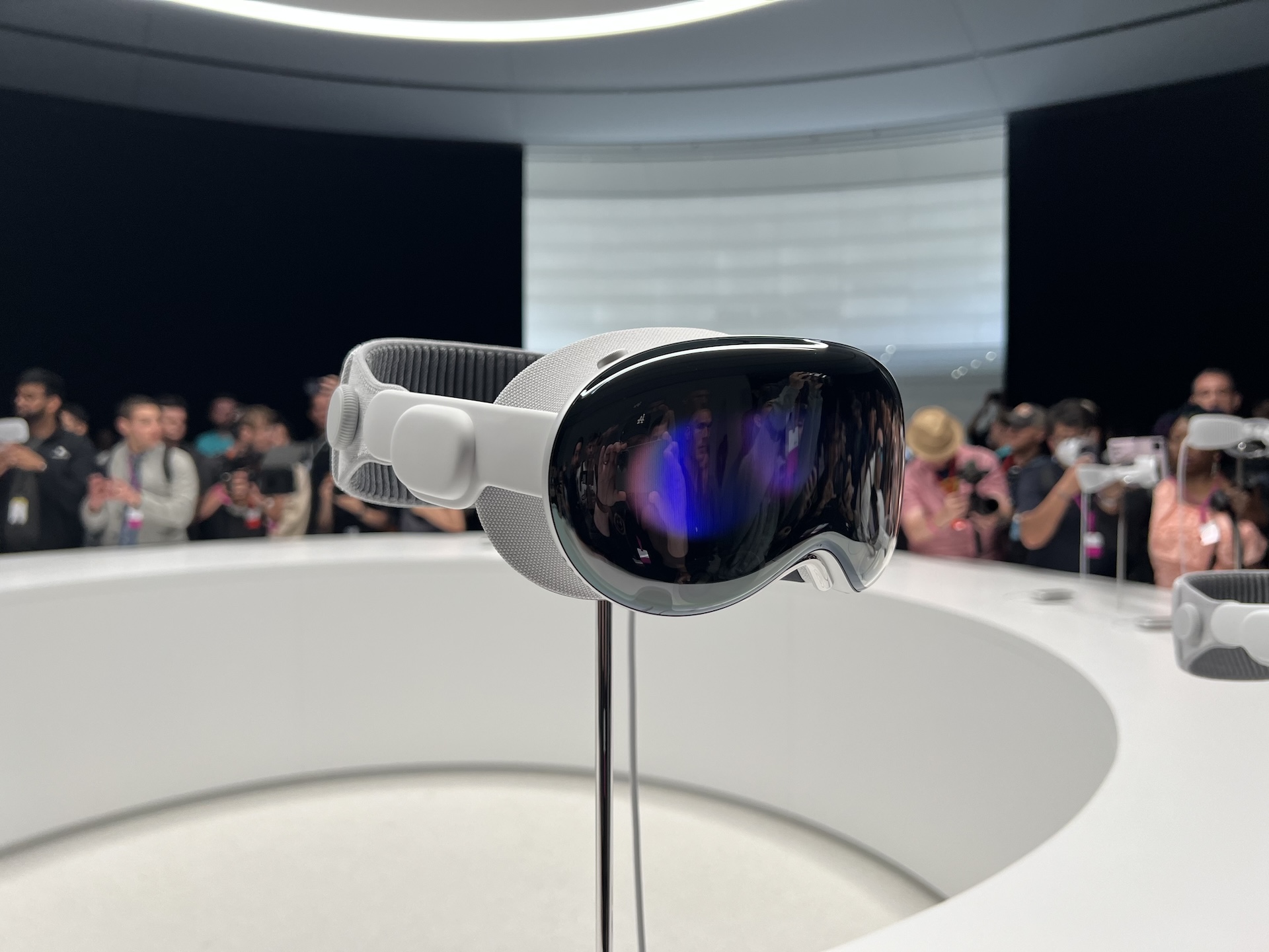
Report: Apple is already designing a lighter Vision Pro to fix “neck strain”

Apple's Vision Pro headset.

Enlarge / Apple’s Vision Pro headset. (credit: Samuel Axon)

When it jumps into a new market for the first time, Apple has a long history of releasing intriguing first-generation devices, followed by second- or third-generation revisions that realize the full potential of the original idea. Examples of this phenomenon include the second-generation iPod, which expanded compatibility beyond the Mac; the iPhone 3G refresh that increased cellular data speeds and ushered in the App Store; the 2010 MacBook Air refresh that switched to all-SSD storage and defined the template for the modern laptop; and the long-lived iPad 2, which did most of the same things as the first iPad but in a much faster and lighter package.

Apple is already working on a next-generation version of its Vision Pro headset to address early complaints about the as-yet-unreleased first-generation model, according to Bloomberg’s Mark Gurman. The headset’s roughly 1-pound weight has apparently “caused neck strain” among some testers, and Apple allegedly sees the not-yet-finalized optional top strap as an imperfect solution to the problem. Apple also wants to reduce the device’s size along with its weight.

Apple is also considering changing the way that prescription lenses are built into the headset. The initial version will use interchangeable Zeiss lenses that attach to the headset magnetically, but next-gen versions could have prescription lenses built-in during manufacturing.

Read 4 remaining paragraphs | Comments


Source: Ars Technica – Report: Apple is already designing a lighter Vision Pro to fix “neck strain”

Maya reservoirs relied on aquatic plants like water lilies to help keep water clean

Lidar-derived hillshade image showing map of reservoirs

Enlarge / Lidar map of Tikal, Guatemala, showing some of its reservoirs. (credit: Image adapted Tankersley et al. 2020)

The ancient Maya city of Tikal relied on urban reservoirs to supply water during periods of drought. They essentially built “constructed wetlands” that relied upon key minerals and aquatic plants and other biota to keep the water supply potable, a “self-cleaning” approach similar to that employed in constructed wetlands today, according to a new paper published in the Proceedings of the National Academy of Sciences.

“Most major southern lowland Maya cities emerged in areas that lacked surface water but had great agricultural soils,” said author Lisa Lucero, an anthropologist at the University of Illinois Urbana-Champaign. “They compensated by constructing reservoir systems that started small and grew in size and complexity.”

Like many Maya cities, Tikal was built on top of porous limestone, which limited access to drinking water during the seasonal droughts, which typically lasted five months, although more severe droughts also occurred, particularly in the ninth century CE. So the people of Tikal relied on collecting rainwater stored in reservoirs to survive. They quarried the limestone for bricks, mortar, and plaster, all used to construct buildings on site. The resulting depressions were plastered to waterproof them as reservoirs. Eventually, the Maya built a system of canals, dams, and sluices to store and transport water. It’s estimated that Tikal’s reservoirs could hold as much as 900,000 cubic meters of water for a population of up to 80,000 people between 600 to 800 CE.

Read 9 remaining paragraphs | Comments


Source: Ars Technica – Maya reservoirs relied on aquatic plants like water lilies to help keep water clean

Bastle’s Outsidify app lets you capture and transform sounds via a smartphone

Popular audio gadget maker Bastle just released an iOS app called Outsidify that lets you capture and transform audio directly from your iPhone’s speakers and microphone. Despite the slightly cringey app name, it looks pretty darned fun, allowing users to explore the ambient noise around them to create some truly unique soundscapes.

Once you capture some audio via the app, use Bastl’s latest creation to make harmonious or discordant feedback, manipulate responses, apply resonant filters and more. You can even use your mouth, speaking directly into the phone’s microphone, to create your own resonant filter.

Additionally, you can capture impulse responses from just about anything, with Bastl using a coffee cup or a construction site pipe as examples. These IRs can then be used to run other audio sources through to create custom reverbs and the like, via a DAW or a standalone piece of hardware. The only caveat here is the phone has to fit inside of the object or the space it’s capturing, so your dreams of having an impulse response from the inside of a toilet paper roll are, sadly, quashed.

The integrated media player allows for full looping and lets you adjust the start and end points. There’s also a speed slider, from ¼ speed to 4x, and a cropping function. As for the recorder, it saves wav files to pass on to other devices, again with adjustable start and end points. You can also speed match recordings, so the recorded speed automatically matches the tempo set in the player while preserving the pitch. Of course, there’s also a countdown timer so you can get in position before the app starts recording.

The audio gets transformed via a feedback pad with adjustment options for amount and tone. There’s even an adjustable delay that changes how long it takes the microphone to reach the feedback pad.

Outsidify is an iOS exclusive that costs $6 when purchased from the official App Store. This app is unique for Bastle, as the company typically manufactures analog gadgets like the battery-powered Kastle portable synthesizer. We’ve also praised Bastle’s Microgranny Monolith granular sampler and the Bestie portable mixer.

This article originally appeared on Engadget at https://www.engadget.com/bastles-outsidify-app-lets-you-capture-and-transform-sounds-via-a-smartphone-185421887.html?src=rss

Source: Engadget – Bastle’s Outsidify app lets you capture and transform sounds via a smartphone