Slack says it is shutting down its SlackStatus account on X, which alerted users of incidents and outages on the platform, Thursday night. The office messaging platform will move its incident status alerts to its website.
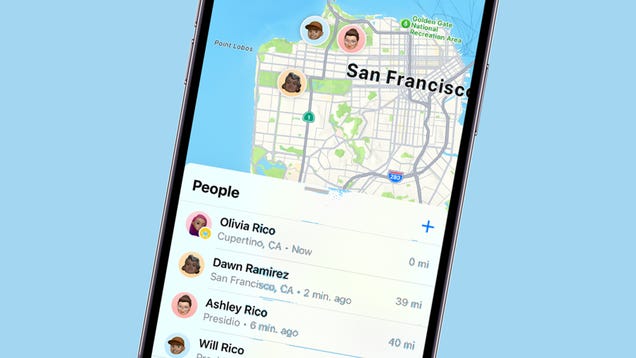
iOS 17 is now with us, and it comes with a range of upgrades, tweaks, and improvements—including new ways to share your whereabouts with other people. Whether you’re meeting friends in town or keeping an eye on the kids at school, you’ve now got more options for doing it on the iPhone.
Enlarge/ My original US-8-150W shortly before being replaced. Don’t judge my zip-tie mounting job—it held for eight years! (credit: Lee Hutchinson)
This morning, I’d like to pour one out for a truly awesome piece of gear that did everything I asked of it without complaint and died before its time: my Unifi 8-port POE switch, model US-8-150W. Farewell, dear switch. You were a real one, and a lightning strike took you from us too soon.
I picked up this switch back in January of 2016, when I was ramping up my quest to replace my shaky home Wi-Fi with something a little more enterprise-y. The results were, on the whole, positive (you can read about how that quest turned out in this piece right here, which contains much reflection on the consequences—good and bad—of going overboard on home networking), and this little 8-port switch proved to be a major enabler of the design I settled on.
Why? Well, it’s a nice enough device—having 802.3af/at and also Ubiquiti’s 24-volt passive PoE option made it universally compatible with just about anything I wanted to hook up to it. But the key feature was the two SFP slots, which technically make this a 10-port switch. I have a detached garage, and I wanted to hook up some PoE-powered security cameras out there, along with an additional wireless access point. The simplest solution would have been to run Ethernet between the house and the garage, but that’s not actually a simple solution at all—running Ethernet underground between two buildings can be electrically problematic unless it’s done by professionals with professional tools, and I am definitely not a professional. A couple of estimates from local companies told me that trenching conduit between my house and the garage was going to cost several hundred dollars, which was more than I wanted to spend.
The use for humans in the world of robotics, even as teachers, is shrinking thanks to AI. NVIDIA Research has announced the creation of Eureka, an AI agent powered by GPT-4 that has trained robots to perform tasks using reward algorithms. Notably, Eureka taught a robotic hand to do pen spinning tricks as well as a human can (honestly, as you can see in the YouTube video below, better than many of us).
Eureka has also taught quadruped, dexterous hands, cobot arms and other robots to open drawers, use scissors, catch balls and nearly 30 different tasks. According to NVIDIA Research, the AI agent’s trial and error-based reward programs are 80 percent more effective than those written by human experts. This shift meant the robots’ performance also improved by over 50 percent. Eureka also self-evaluates based on training results, instructing changes in reward functions as it sees fit.
NVIDIA Research has published a library of its Eureka algorithms, encouraging others to try them out on NVIDIA Isaac Gym, the organization’s “physics simulation reference application for reinforcement learning research.”
The idea of robots teaching robots is seeing increased interest and success. A May 2023 paper published in the Transactions on Machine Learning Research journal presented a new system called SKILL (Shared Knowledge Lifelong Learning), which allowed AI systems to learn 102 different skills, including diagnosing diseases from chest X-rays and identifying species of flowers. The AIs shared their knowledge — acting as teachers in a way — with each other over a communication network and were able to master each of the 102 skills. Researchers at schools like MIT and the University of Bristol have also had success, specifically in using AI to teach robots how to manipulate objects.
This article originally appeared on Engadget at https://www.engadget.com/nvidias-latest-ai-model-helps-robots-perform-pen-spinning-tricks-as-well-as-humans-130004608.html?src=rss
An anonymous reader quotes a report from Reuters: The U.S. Securities and Exchange Commission dropped claims against two Ripple Labs executives in its lawsuit alleging the blockchain company violated U.S. securities law, according to a court filing in New York on Thursday. The agency said in court papers it is dropping claims that Ripple Chief Executive Brad Garlinghouse and co-founder Chris Larsen aided and abetted sales of the cryptocurrency XRP which a judge has found amounted to unregistered sales of securities.
In its December 2020 lawsuit, the SEC accused Ripple of illegally raising more than $1.3 billion in an unregistered securities offering by selling XRP. U.S. District Judge Analisa Torres in Manhattan granted Ripple a partial win in the case in July, finding that sales of XRP on public exchanges were not unregistered securities offerings. Torres subsequently rejected a request by the SEC to appeal that ruling. She also ruled partly in the SEC’s favor, saying the agency had shown the company’s $728.9 million of XRP sales to hedge funds and other sophisticated buyers had violated the law.
Garlinghouse and Larsen, who have harshly criticized the SEC throughout the case, issued lengthy statements accusing the agency of a political agenda to, in Larsen’s words, “suffocate crypto in America.” “Instead of looking for the criminals stealing customer funds on offshore exchanges that were courting political favor, the SEC went after the good guys,” Garlinghouse said, an apparent reference to Sam Bankman-Fried, founder of crypto exchange FTX. The agency said in its papers that the next step in the case is for both sides to present to the judge on what the appropriate penalty is for Ripple.
Also, Deputy Editor Nathan Ingraham discusses why he loves Spider-Man 2 on the PlayStation 5, and we try to make sense of Apple’s new $79 Pencil.
Listen below or subscribe on your podcast app of choice. If you’ve got suggestions or topics you’d like covered on the show, be sure to email us or drop a note in the comments! And be sure to check out our other podcast, Engadget News!
Enlarge/ Space Center Houston’s Shuttle Independence sits atop one of the two Shuttle Carrier Aircraft 747s. (credit: Lee Hutchinson)
Are you an Ars Technica reader? (I hope so, because otherwise, how are you reading these words?) Are you somewhere in or around the greater Houston area, or maybe even somewhere reasonably Houston-adjacent, like Austin or San Antonio? Are you free on the afternoon of November 1, from about 2pm to about 6pm? And, if so, would you like to hang out?
If the answers to these questions are mostly “yes,” then you could do much worse with your time than attending the event we’re hosting on November 1! Ars Technica has partnered up with IBM to bring you guys a set of panel discussions lasting a half-day, titled “Harnessing Big Data: Resiliency, AI, and the future of IT.” On the menu for the day is a talk about modern strategies of fighting ransomware and other disasters; a discussion of managing machine learning data flows; and a talk about what the future of big distributed hybrid app development might look like.
Because this is Houston, we opted for just about the most location-specific event venue that we could find: Space Center Houston, right next door to NASA’s Johnson Space Center and the headquarters of Mission Control. Holding the event at SCH gives us access to some really cool stuff!
Compared to Samsung’s Galaxy Z Fold 5, not only does OnePlus’ first foldable pack two larger displays, it’s also thinner and lighter — as long as you don’t count the hulking camera module. The most impressive thing the Open is doing is putting pressure on the price of big foldables.
Engadget
Starting at $1,700, it costs $100 less than the Z Fold 5 and Google’s Pixel Fold — and that’s before you factor in the launch deal that knocks another $200 off with the trade-in of any phone. We put it through its paces in our full review.
And if you’re more interested in Oppo’s new foldable… well, they’re pretty much the same device.
— Mat Smith
You can get these reports delivered daily direct to your inbox. Subscribe right here!
Elements 2024 can upscale JPEGs and replace visual elements with just a click.
Adobe
Adobe’s latest iterations of Photoshop Elements and Premiere Elements feature plenty of new AI-powered tools, using Adobe’s Sensei AI. On the Photoshop side of things, there’s a new tool that automatically selects objects and backgrounds for removal, editing or replacement. Adobe’s Sensei AI also lets you upscale JPEGs to remove artifacts, creating a “smooth, natural look.” As for Premiere, the popular video-editing software suite now uses AI to automatically create highlight Reels culled from uploaded footage. The company says these AI-created clips will “draw people in by focusing on motion, close-ups and your highest quality footage.”
The lawsuit alleges it defrauded investors of $1 billion.
Gemini Trust Company, a cryptocurrency exchange helmed by the infamous Cameron and Tyler Winklevoss, just got hit with a lawsuit alleging it defrauded investors. The suit was brought forth by New York Attorney General Letitia James, the same AG currently prosecuting former president Donald Trump on sweeping charges of fraud. The suit is directed at two other companies, alongside Gemini Trust, which the civil lawsuit alleges collectively defrauded 230,000 investors of more than $1 billion.
It’ll reclassify broadband as an essential communications service.
The Federal Communications Commission voted along party lines to move forward with a plan to largely restore Obama-era net neutrality protections. All three of the agency’s Democratic commissioners voted in favor, with the two Republican commissioners dissenting. Reclassifying fixed broadband as an essential communications service would give the FCC greater scope to regulate it and more leeway to re-establish net neutrality rules. These rules would mean internet service providers have to give users access to every site, content and app at the same speeds and conditions.
Games Done Quick speedrunning marathons have seen plenty of unusual attempts at beating games as quickly as possible in the name of charity. This time, they’re doing it with a dog called Peanut Butter. Any questions?
This article originally appeared on Engadget at https://www.engadget.com/the-morning-after-oneplus-thinner-more-affordable-flagship-foldable-111532598.html?src=rss
Enlarge/ The Falcon Heavy rocket’s two side boosters returned to Cape Canaveral for landing after sending NASA’s Psyche spacecraft on its way into deep space. (credit: Trevor Mahlmann/Ars Technica)
Welcome to Edition 6.16 of the Rocket Report! Lots of news here today about big rockets, including a push by SpaceX to speed up launch licensing by the Federal Aviation Administration. The full-court press in Washington, DC, comes as the company says its Starship rocket is ready for a second flight test but still awaiting final regulatory approval. The earliest the launch could now occur is during the first half of November.
As always, we welcome reader submissions, and if you don’t want to miss an issue, please subscribe using the box below (the form will not appear on AMP-enabled versions of the site). Each report will include information on small-, medium-, and heavy-lift rockets as well as a quick look ahead at the next three launches on the calendar.
Virgin Galactic to fly sixth mission in six months. The California-based suborbital space tourism company announced this week that its “Galactic 05” mission will take flight as early as November 2. Such a flight would continue Virgin Galactic’s impressive monthly cadence of flying its VSS Unity spacecraft this year. This flight will carry researchers who will use the interior of the space plane as a lab for research.
The United States Justice Department reports that North Korean nationals have been using fake identities to work remotely for US companies as IT professionals in a scheme to fund weapons of mass destruction programs. At a news conference in St. Louis, Missouri, the FBI alleged that thousands of individuals have moved to countries such as Russia and China and posed as freelance IT workers living in the US. Companies in St. Louis and around the US were targeted in this plot.
The bad actors used false information for emails, payment platforms and websites — sometimes paying Americans to use their Wi-Fi and setting up proxy computers. Along with funneling their income to North Korea’s weapons programs, some workers also hacked their employers’ computer networks to take private information and leave the possibility for other schemes, such as extortion.
Special Agent in Charge Jay Greenberg of the FBI St. Louis Division went so far as to say that any company that employs freelance IT workers “more than likely” hired one of these bad actors. “This scheme is so prevalent that companies must be vigilant to verify whom they’re hiring,” Greenberg stated. “At a minimum, the FBI recommends that employers take additional proactive steps with remote IT workers to make it harder for bad actors to hide their identities. Without due diligence, companies risk losing money or being compromised by insider threats they unknowingly invited inside their systems.”
The FBI didn’t disclose when they first learned of the plot or which businesses were impacted. However, the bureau first released a warning to the IT industry-focused scheme in May 2022. The FBI also collected about $1.5 million in money earned by these workers during previously sealed seizures in October 2022 and January 2023.
This article originally appeared on Engadget at https://www.engadget.com/doj-says-north-korean-it-workers-were-sent-abroad-to-help-finance-weapons-programs-101824065.html?src=rss
Is Google laying the groundwork for a true challenger to language learning apps like Duolingo, Memrise and Babbel? In a blog post on Thursday, the search giant announced that it’s rolling out a new Google Search feature designed to help people improve their English speaking skills. TechCrunch’s Kyle Wiggers reports: Rolling out over the next few days for Search on Android devices in Argentina, Colombia, India, Indonesia, Mexico and Venezuela, with more countries and languages to come in the future, the new feature will provide interactive speaking practice for language learners translating to or from English, Google writes in a blog post. “Google Search is already a valuable tool for language learners, providing translations, definitions, and other resources to improve vocabulary,” reads the the post, attributed to Google Research director Christian Plagemann and product manager Katya Cox. “Now, learners translating to or from English on their Android phones will find a new English speaking practice experience with personalized feedback.”
The new experience presents Search users with prompts and asks them to speak the answers using a provided vocabulary word. During each practice session, which last 3 to 5 minutes, Search gives personalized feedback — and the option to sign up for daily reminders to keep practicing and advance to the next stage of difficulty. How personalized is it, exactly? Well, according to Google, the experience gives semantic feedback — indicating whether a response was relevant to a given question and comprehensible to a theoretical conversation partner. It also recommends areas where grammar could be improved, and, to give concrete suggestions for alternative ways to respond, provides a set of example answers at varying levels of language complexity. During practice sessions, learners can tap on any word they don’t understand to see a translation of that word that considers the word in context.
“Designed to be used alongside other learning services and resources, like personal tutoring, mobile apps and classes, the new speaking practice feature on Google Search is another tool to assist learners on their journey,” Plagemann and Cox write. […] “We look forward to expanding to more countries and languages in the future, and to start offering partner practice content soon,” Plagemann and Cox continued. “With these latest updates, which will roll out over the next few days, Google Search has become even more helpful.”
The Problem With Jon Stewart isn’t coming back for a third season at Apple TV+, according to The New York Times. It was already supposed to begin filming for another eight episodes within the next couple of weeks, but Apple and Stewart reportedly decided to part ways before it can start. While neither party has issued a statement yet, the publications said the parties didn’t see eye to eye when it came to hot button topics. The host apparently told production staff that Apple executives had raised concerns about certain subject matters he’s potentially covering in the show, particularly China and artificial intelligence.
Based on The Hollywood Reporter’s confirmation of the news, Apple talked to Stewart about the need to be “aligned” when it comes to show topics and even threatened to cancel the series. Wanting full creative control of The Problem, Stewart chose to walk away instead.
The Problem debuted on Apple TV+ in 2021, with episodes coming out every other week, six years after Stewart left The Daily Show. Its second season started streaming in 2022 and had four more episodes — for a total of 12 — than the first. It also streamed every week with a break of a few months after its sixth episode. The newer season covered controversial topics, as well, including gender identity and the indictment of former president Donald Trump. Although those episodes went out for streaming, The Hollywood Reporter’s sources said there had already been tension between the parties before the third season production kicked off due to the previous themes Stewart had covered on the show. As The Times said, Apple may have been worried about being dragged into political controversies that the series could bring and had agreed to end their partnership.
This article originally appeared on Engadget at https://www.engadget.com/jon-stewarts-apple-tv-show-reportedly-ends-following-clash-over-ai-and-china-080117666.html?src=rss
Tereza Pultarova reports via Space.com: Light pollution is a growing threat to astronomy, but a new streetlamp technology could restore clear views of the night sky. […] A study published earlier this year found that stars are disappearing from the sky at an average rate of 10% per year. This trend affects even the world’s most remote observatories. Germany-based startup StealthTransit recently tested a solution to this growing issue. “Unfortunately, this problem haunts almost all observatories today,” Vlad Pashkovsky, StealthTransit’s founder and CEO, told Space.com in an email. “Modern telescopes are highly sensitive and feel the impact of outdoor lighting of cities located at the distance of 50 or even 200 kilometers [30 to 120 miles]. This means that virtually every observatory on Earth either already needs, or will need in the future 10 years, protection from the light of large cities.”
StealthTransit’s solution relies on three components: A simple device that makes LED lights flicker at a very high frequency that is imperceptible to the human eye, a GPS receiver, and a specially designed shutter on the telescope’s camera that can blink in sync with the LED lights. The GPS technology guides the telescope’s shutter to open only during the fleeting moments when the LED lights are switched off. The experiments, conducted at an observatory in the Caucasus Mountains in Russia, showed that the technology, dubbed the DarkSkyProtector, could reduce unwanted sky glow in astronomical images by 94%. “We can say that the telescope was seeing almost a dark sky at this time,” Pashkovsky said. “The important thing about our technology is that it makes all kinds of lights astronomy-friendly, including outdoor advertising and indoor lighting in apartments, offices and stores.”
The technology could filter out lights from nearby towns and villages as well as those surrounding the observatory itself. It might sound impractical to refit an entire town with devices that allow lamps to blink, but Pashkovsky said that most existing LED lights can operate in the blinking mode and that new lamps designed specifically with sky protection in mind would be no costlier than existing LED technology. The most expensive element of the DarkSkyProtector system is the telescope shutter, which needs to be lightweight and agile enough to blink about 150 times per second. StealthTransit tested the prototype shutter on a 24-inch-wide (60 centimeters) telescope and hopes to make the technology available for larger telescopes. Although StealthTransit’s technology is not yet ready for commercial use, Pashkovsky said, the firm hopes to have a product fit for the world’s best telescopes in five to seven years.
One by one, automakers have started adopting the North American Charging Standard (NACS) used by Tesla’s Superchargers as they move towards their goal of replacing their fleet with electric vehicles. Toyota is the latest company to join the growing list. The automaker has announced that it has reached an agreement with Tesla to incorporate NACS ports into certain Toyota-branded vehicles starting in 2025. Some EVs under its luxury brand, Lexus, will come with the standard’s charging ports, as well.
By using NACS ports on its electric vehicles, Toyota is effectively giving its customers the power to access more than 12,000 Tesla Superchargers across North America. While the company won’t be implementing the standard over the next year, its timeline matches its rival automakers’. To note, customers who already have Toyota and Lexus vehicles equipped with the Combined Charging System (CCS) will be offered access to NACS adapters starting in 2025, as well.
BMW also recently announced that it was adopting the standard for all its EVs in the United States and Canada. A few months ago, GM and Ford revealed they were making the switch starting in 2025, but owners will already be able to access Tesla Superchargers next year with an adopter. Hyundai will adopt the port for its EVs in the US in 2024, with EVs in Canada to follow in 2025. Honda, Toyota’s fellow Japanese automaker, announced its transition to NACS in September and its plans to sell vehicles with the port in two years’ time. It also said, however, that it’s developing an adapter to allow pre-2025 Hondas to charge using Tesla’s system.
This article originally appeared on Engadget at https://www.engadget.com/toyota-and-lexus-are-adopting-teslas-ev-charging-standard-051655109.html?src=rss
Jessica Lyons Hardcastle reports via The Register: Japanese electronics giant Casio said miscreants broke into its ClassPad server and stole a database with personal information belonging to customers in 149 countries. ClassPad is Casio’s education web app, and in a Wednesday statement on its website, the firm said an intruder breached a ClassPad server and swiped hundreds of thousands of “items” belonging to individuals and organizations around the globe. As of October 18, the crooks accessed 91,921 items belonging to Japanese customers, including individuals and 1,108 educational institution customers, as well as 35,049 items belonging to customers from 148 other countries. If Casio finds additional customers were compromised, it promises to update this count.
The data included customers’ names, email addresses, country of residence, purchasing info including order details, payment method and license code, and service usage info including log data and nicknames. Casio noted that it doesn’t not retain customers’ credit card information, so presumably people’s banking info wasn’t compromised in the hack. An employee discovered the incident on October 11 while attempting to work in the corporate dev environment and spotted the database failure. “At this time, it has been confirmed that some of the network security settings in the development environment were disabled due to an operational error of the system by the department in charge and insufficient operational management,” the official notice said. “Casio believes these were the causes of the situation that allowed an external party to gain unauthorized access.” The intruder didn’t access the ClassPad.net app, according to Casio, so that is still available for use.
An anonymous reader quotes a report from VICE News: Canada will legalize medically assisted dying for people who are addicted to drugs next spring, in a move some drug users and activists are calling “eugenics.” The country’s medical assistance in dying (MAID) law, which first came into effect in 2016, will be expanded next March to give access to people whose sole medical condition is mental illness, which can include substance use disorders. Before the changes take place, however, a special parliamentary committee on MAID will regroup to scrutinize the rollout of the new regulations, according to the Toronto Star.
Currently, people are eligible for MAID if they have a “grievous and irremediable medical condition”, such as a serious illness or disability, that has put them in an advanced state of irreversible decline and caused enduring physical or psychological suffering — excluding mental illness. Anyone who receives MAID must also go through two assessments from independent health care providers, among meeting other criteria. […] As Canada prepares to legalize MAID for people with mental disorders, each province will have to develop its own protocol for how to assess people. Dr. Simon Colgan, lead physician for the Community Allied Mobile Palliative Partnership which provides palliative care to homeless people, said MAID requests “must be understood within the context of a person’s lived experience and this takes time and relationship.” He said any MAID protocols for people with substance use disorders should be made with the input of people with lived experiences. “I don’t think it’s fair, and the government doesn’t think it’s fair, to exclude people from eligibility because their medical disorder or their suffering is related to a mental illness,” said Dr. David Martell, physician lead for Addictions Medicine at Nova Scotia Health. “As a subset of that, it’s not fair to exclude people from eligibility purely because their mental disorder might either partly or in full be a substance use disorder. It has to do with treating people equally.”
On the flip side, some drug users and harm reduction advocates say they’re upset drug users are being given access to MAID, as they feel other public health measures are lacking. “I just think that MAID when it has entered the area around mental health and substance use is really rooted in eugenics. And there are people who are really struggling around substance use and people do not actually get the kind of support and help they need,” said Zoe Dodd, a Toronto-based harm reduction advocate.
Karen Ward, a drug user activist in Vancouver, said she considers the expansion of MAID to include people with substance use disorders a “statement in federal law that some people aren’t really human.” “The government has made death accessible while a better life remains impossible,” she said. “Homes for all, guaranteed dignified incomes, access to healthcare, education and employment: these aren’t radical demands.”
theodp writes: In July, Seattle-based and tech-backed nonprofit Code.org announced its 10th policy recommendation for all states “to require all students to take computer science (CS) to earn a high school diploma.” In August, Washington State Senator Lisa Wellman phoned-in her plans to introduce a bill to make computer science a Washington high school graduation requirement to the state’s Board of Education, indicating that the ChatGPT-sparked AI craze and Code.org had helped convince her of the need. Wellman, a former teacher who worked as a Programmer/System Analyst in the 80’s before becoming an Apple VP (Publishing) in the ’90s, also indicated that exposure to CS given to students in fifth grade could be sufficient to satisfy a HS CS requirement. In 2019, Wellman sponsored Microsoft-supported SB 5088 (Bill details), which required all Washington state public high schools to offer a CS class. Wellman also sponsored SB 5299 in 2021, which allows high school students to take a computer science elective in place of a third year math or science course (that may be required for college admission) to count towards graduation requirements.
And in October, Code.org CEO Hadi Partovi appeared before the Washington State Board of Education, driving home points Senator Wellman made in August with a deck containing slides calling for Washington to “require that all students take computer science to earn a high school diploma” and to “require computer science within all teacher certifications.” Like Wellman, Partovi suggested the CS high school requirement might be satisfied by middle school work (he alternatively suggested one year of foreign language could be dropped to accommodate a HS CS course). Partovi noted that Washington contained some of the biggest promoters of K-12 CS in Microsoft Philanthropies’ TEALS (TEALS founder Kevin Wang is a member of the Washington State Board of Education) and Code.org, as well some of the biggest funders of K-12 CS in Amazon and Microsoft — both which are $3,000,000+ Platinum Supporters of Code.org and have top execs on Code.org’s Board of Directors.
Slash_Account_Dot shares a report from 404 Media: Hackers are targeting accounts on Kodex, a platform that connects law enforcement agencies and tech companies and which is designed to verify emergency requests for customer data, according to multiple online conversations between hackers viewed by 404 Media. Screenshots from one of the compromised accounts shows a panel where a law enforcement officer, or a hacker, can potentially ‘create a new request.’ The screenshots show a wide range of companies such as tech giants Meta and Microsoft’s LinkedIn; cryptocurrency exchanges Binance and Coinbase; social media platforms Pinterest, Discord, and Snapchat; financial service Fidelity, and gaming platform Roblox. The compromised account appears to belong to a national police force, but the screenshots do not include the agency’s full name.
There is no evidence that hackers have successfully used compromised Kodex accounts to obtain data from a tech company, and Matt Donahue, the former FBI agent and now CEO of Kodex, said that multiple compromised accounts 404 Media found did not have authorization to make such requests, and that Kodex had shut down those accounts. But the repeated examples of criminal chatter show that Kodex is a target of interest for hackers.
Ty Roush reports via Forbes: Convoy, a Seattle-based digital freight booker with investors that include billionaires Bill Gates and Jeff Bezos, announced Thursday it would be shutting down, according to Bloomberg, after the company failed to find a buyer amid a “massive freight recession.” Convoy’s founder and chief executive Dan Lewis notified employees in an internal memo Thursday that “today is your last day at the company,” noting the company is “exploring and evaluating strategic options for what might come next,” Bloomberg reported.
Lewis said the company had evaluated potential suitors to acquire it, though “none of the options ultimately materialized into anything sufficient to keep the company going in its then current form.” Convoy was in “the middle of a massive freight recession and a contraction in the capital markets,” according to Lewis, who added “this combination ultimately crushed our progress” and likely swayed potential suitors away from acquiring the firm. “Following an exhaustive process, spanning many, many months during which we explored all viable strategic options for the business, the result is where we are today,” Lewis wrote. Convoy was founded in 2015 in an effort to prevent trucks from driving “empty miles” without loads. The idea was to use technology to make freight more efficient by connecting truck drivers with freight companies — reducing shippers’ costs, increasing carriers’ earnings, and eliminating carbon emissions in the process.