iRobot's Roomba s9+ robot vacuum is down to its best price yet

The high-end Roomba s9+ may normally be too expensive for most people to justify spending on a robot vacuum, but a one-day-only deal has shaved the price nearly in half, bringing it down to an all time low of $500. If you’ve been holding off on buying the premium model, which we ranked as one of the best robot vacuums out there, now’s the time to scoop it up.

The Roomba s9+ is a splurge in every sense of the word, and boasts 40x the suction power of iRobot’s more basic vacuums. Its 1.5-foot-tall self-emptying base holds up to 60 days worth of waste. And with a sleek, black and copper design, it isn’t an eyesore. The s9+ is D-shaped, as opposed to being fully circular, meaning its flat edge can more effectively get into corners. We found the s9+ paired quickly with WiFi and the iRobot app for an easy setup, and wasn’t unreasonably loud when it emptied its bin.

The vacuum works on carpets and hard floors, and has multi-surface rubber brushes to handle more difficult types of debris, like hair. It also promises to filter out microscopic particles and allergens like those that might be accumulating around the house from your pets. But, while it’s meant to excel at cleaning up pet hair, its sensors aren’t made for spotting and avoiding pet poop. It does, however, have “Careful Driver” technology to avoid slamming into objects while it cleans. At the current discount, the s9+ offers premium cleaning power at a mid-range price.

Follow @EngadgetDeals on Twitter and subscribe to the Engadget Deals newsletter for the latest tech deals and buying advice.

This article originally appeared on Engadget at https://www.engadget.com/irobots-roomba-s9-robot-vacuum-is-down-to-its-best-price-yet-163052747.html?src=rss

Source: Engadget – iRobot’s Roomba s9+ robot vacuum is down to its best price yet

Dune: Part 2 Should've Been Out This Weekend

Despite being delayed a number of times due to the pandemic and a general pre-release skepticism surrounding it, Denis Villeneuve’s Dune ended up being a well-liked film when it dropped in 2021. And even with a same day release on then-HBO Max, it ended up making a $402 million in theaters and securing  several…

Read more…


Source: Gizmodo – Dune: Part 2 Should’ve Been Out This Weekend

JWST's Disconnect With Cosmology Models Linked to 'Bursty Star Formations'

Images from the James Webb Space Telescope “don’t match scientists’ models of how the universe formed,” reports the Washington Post.

“But it might not be time to dump the standard model of cosmology yet. ”

A recent analysis in the Astrophysical Journal Letters suggests an explanation for the surprisingly massive-seeming galaxies: brilliant, extremely bright bursts of newborn stars.

The galaxies photographed by the telescope looked far too mature and large to have formed so fully so soon after the universe began, raising questions about scientists’ assumptions of galaxy formation. But when researchers ran a variety of computer simulations of the universe’s earliest days, they discovered that the galaxies probably are not as large as they seem. Instead, they attribute their brightness to a phenomenon called “bursty star formation.” As clouds of dust and debris collapse, they form dense, high-temperature cores and become stars. Bursty galaxies spit out new stars in intermittent, bright bursts instead of creating stars more consistently. Usually, these galaxies are low in mass and take long breaks between starbursts.
Because the galaxies in question look so bright in photos produced by the Webb telescope, scientists at first thought they were older and more massive. But bursty systems with the ability to produce extremely bright, abundant light may appear more massive than they really are.
“Not only does this finding explain why young galaxies appear deceptively massive, it also fits within the standard model of cosmology,” explains the announcement:
In the new study, Guochao Sun, who led the study, Northwestern’s, Claude-André Faucher-Giguère, the study’s senior author, and their team used advanced computer simulations to model how galaxies formed right after the Big Bang. The simulations produced cosmic dawn galaxies that were just as bright as those observed by the JWST…

Although other astrophysicists have hypothesized that bursty star formation could be responsible for the unusual brightness of galaxies at cosmic dawn, the Northwestern researchers are the first to use detailed computer simulations to prove it is possible. And they were able to do so without adding new factors that are unaligned with our standard model of the universe.

Read more of this story at Slashdot.


Source: Slashdot – JWST’s Disconnect With Cosmology Models Linked to ‘Bursty Star Formations’

21 Species Moved From 'Endangered' to 'Extinct' in America

Nearly two dozen species are being taken off America’s endangered species list, reports CBS News, “because they are extinct, the U.S. Fish and Wildlife Service said Monday.”

Most of the species were listed under the Endangered Species Act in the 1970s or 1980s and were very low in numbers or likely already extinct at the time of listing. In the years since, “rigorous reviews of the best available science” have been conducted to determine whether the animals are extinct. “Federal protection came too late to reverse these species’ decline, and it’s a wake-up call on the importance of conserving imperiled species before it’s too late,” Service Director Martha Williams said. Scientists in 2019 warned that worldwide, 1 million species of plants and animals were at risk of extinction.

There are more than 1,300 species listed as either endangered or threatened in the United States under the Endangered Species Act. The 21 species being removed include one mammal, 10 types of birds, two species of fish and eight types of mussels. Eight of the 21 species were found in Hawaii.

From the agency’s announcement:
The 21 species extinctions highlight the importance of the Endangered Species Act and efforts to conserve species before declines become irreversible. The circumstances of each also underscore how human activity can drive species decline and extinction by contributing to habitat loss, overuse, and the introduction of invasive species and diseases…

The Endangered Species Act has been highly effective and credited with saving 99% of listed species from extinction. Thus far, more than 100 species of plants and animals have been delisted based on recovery or reclassified from endangered to threatened based on improved conservation status, and hundreds more species are stable or improving thanks to the collaborative actions of Tribes, federal agencies, state and local governments, conservation organizations and private citizens.

An official from the agency said in the announcement “The ultimate goal is to recover these species, so they no longer need the Act’s protection.”

Read more of this story at Slashdot.


Source: Slashdot – 21 Species Moved From ‘Endangered’ to ‘Extinct’ in America

SAG-AFTRA Tells Striking Actors to Avoid Character Costumes for Halloween

Halloween is just over a week away, with parties for the annual holiday likely hitting next weekend. Normally, this year’s festivities would be like any other year: you dress up with your friends as your favorite characters and hang out or watch some horror movies, or you watch other people dress up as your favorite…

Read more…


Source: Gizmodo – SAG-AFTRA Tells Striking Actors to Avoid Character Costumes for Halloween

SpaceX will ramp up its launches in 2024 for Starlink's satellite-to-cell service

SpaceX is planning to launch as many rockets as it can over the next two-and-a-half months in an attempt to fly 100 flights by the end of the year, company exec Bill Gerstenmaier recently told the US Senate Subcommittee on Space and Science. He also revealed that the company has an even more ambitious goal for 2024: To launch around 12 flights a month, for a total of 144 missions for the whole year. According to a company official who talked to Ars Technica, SpaceX intends to ramp up its mission numbers next year, mostly so that it could officially roll out its satellite-to-cell phone service. 

“With our 2 million users, (we) need that constellation refreshed,” the spokesperson told Ars. “We’re also going to look at direct to cell communications with Starlink, and that’s a key feature that gets added next year with those 144 flights.”

The company first announced the service, which will allow normal smartphones to connect with its satellites, back in 2022. It made the revelation alongside T-Mobile, which promised to make the capability accessible to its subscribers. T-Mobile CEO Mike Sievert likened the technology to putting a cellular tower in the sky and said it could eliminate deadzones one day, allowing people to easily get in touch with loved ones even if they’re in the middle of the ocean. SpaceX VP of Starlink enterprise sales Jonathan Hofeller also said earlier this year that the company is gearing up to start testing the service. 

As Ars notes, SpaceX previously said that the capability will require larger satellites that will launch onboard the company’s Starship vehicle. The giant rocket is yet to be operational, though, and the company had to design an intermediate-sized Starlink satellite that can fly on its Falcon 9 rockets. That satellite is bigger than older models but smaller than the ones needed to enable voice and data services. SpaceX doesn’t have plans to roll out Starlink voice and data until 2025, though, and will introduce its direct-to-cell capability with texting coverage only next year. 

This article originally appeared on Engadget at https://www.engadget.com/spacex-will-ramp-up-its-launches-in-2024-for-starlinks-satellite-to-cell-service-133050178.html?src=rss

Source: Engadget – SpaceX will ramp up its launches in 2024 for Starlink’s satellite-to-cell service

China Restricts Exports of Graphite As It Escalates a Global Tech War

An anonymous reader quotes a report from CNN: China has unveiled plans to restrict exports of graphite — a mineral crucial to the manufacture of batteries for electric vehicles (EVs) — on national security grounds, the Ministry of Commerce and the General Administration of Customs said Friday. The announcement comes just days after the United States imposed additional limits on the kinds of semiconductors that American companies can sell to Chinese firms. China, which dominates the world’s production and processing of graphite, says export permits will be needed, starting in December, for synthetic graphite material — including high-purity, high-strength and high-density versions — as well as for natural flake graphite. […]

According to the US Geological Survey (PDF), the market for graphite used in batteries has grown 250% globally since 2018. China was the world’s leading graphite producer last year, accounting for an estimated 65% of global production, it said. Besides EVs, graphite is commonly used in the semiconductor, aerospace, chemical and steel industries. The export curbs were announced as China faces pressure from multiple governments over its commercial and trade practices. For more than a year, it has been embroiled in a tech war with the United States and its allies in Europe and Asia over access to advanced chips and chipmaking equipment. “At the moment both China and Western countries are engaged in a tit for tat, highlighting how protectionist measures often spread. Newton’s third law that every action causes a reaction applies here, too,” said Stefan Legge, head of tax and trade policy research at the University of St Gallen in Switzerland.

“At the same time, both sides of the dispute also realize how costly it is if geopolitics trumps economics,” he added.

Read more of this story at Slashdot.


Source: Slashdot – China Restricts Exports of Graphite As It Escalates a Global Tech War

Space is starting to look like the better mining operation

A truck carrier nickel minerals out of a mining site.

Enlarge / Metallic asteroids contain more than a thousand times as much nickel as the Earth’s crust. (credit: Arne Hodalic/Getty)

Everyone’s into asteroids these days. Space agencies in Japan and the United States recently sent spacecraft to investigate, nudge, or bring back samples from these hurtling space rocks, and after a rocky start, the space mining industry is once again on the ascent. Companies like AstroForge, Trans Astronautica Corporation, and Karman+ are preparing to test their tech in space before venturing toward asteroids themselves.

It’s getting serious enough that economists published a series of papers on October 16 considering the growth of economic activity in space. For instance, a study by Ian Lange of the Colorado School of Mines considers the potential—and challenges—for a fledgling industry that might reach a significant scale in the next several decades, driven by the demand for critical metals used in electronics, solar and wind power, and electric car components, particularly batteries. While other companies are exploring the controversial idea of scooping cobalt, nickel, and platinum from the seafloor, some asteroids could harbor the same minerals in abundance—and have no wildlife that could be harmed during their extraction.

Lange’s study, coauthored with a researcher at the International Monetary Fund, models the growth of space mining relative to Earth mining, depending on trends in the clean energy transition, mineral prices, space launch prices, and how much capital investment and R&D grow. They find that in 30 to 40 years, the production of some metals from space could overtake their production on Earth. By their assessment, metallic asteroids contain more than a thousand times as much nickel as the Earth’s crust, in terms of grams per metric ton. Asteroids also have significant concentrations of cobalt, iron, platinum, and other metals. And thanks to reusable rockets developed by SpaceX, Rocket Lab, and other companies, since 2005 launch costs for payloads have plummeted by a factor of 20 or so per kilogram—and they could drop further.

Read 14 remaining paragraphs | Comments


Source: Ars Technica – Space is starting to look like the better mining operation

Space Wreck is a hardcore, combat-optional, break-the-game RPG that clicks

Character on a CRT-style screen being persuaded by the player, rolling dice on a speech check, succeeding.

Enlarge

“You can sequence break the game,” the developers of Space Wreck suggest on its Steam page. The game is “Inch wide, miles deep,” with “Combat 100% optional.” There is so little artifice to Space Wreck‘s presentation as a “Hardcore role-playing game,” no real sense of wider-audience marketing. Perhaps that’s because, after playing it, you get the sense the developers saved all their creativity for the possibilities inside.

The easiest point of comparison for the just-released Space Wreck are the first two Fallout games, the isometric, click-to-move kind, from the late 1990s. That’s because Space Wreck’s developers, two folks from Latvia, directly point to those games wherever they can. Having sunk hundreds of hours into those games, I see the homage. It’s a game with a post-apocalyptic, used-future aesthetic, intentionally clunky graphics, a wicked sense of humor, turn-based combat, and room for lots of builds and strategies.

Full release trailer for Space Wreck

But Space Wreck offers a whole lot more role-playing than gaming, and that’s a good, refreshing thing. There’s no deep mythology here, very little voice acting, and combat is not all that complicated. Instead, you get, according to the developer, three to eight ways to complete every quest. To get into a room guarded by a gun-toting security guard, you could, of course, win a shootout with the guard. You could persuade him to step aside. You could disguise yourself. You could, if small enough, climb into a nearby vent and sneak into the room. You could reprogram some nearby security bots to take out the guard for you. Nearly every situation in Space Wreck has this kind of flexibility, and some of them far more.

Read 5 remaining paragraphs | Comments


Source: Ars Technica – Space Wreck is a hardcore, combat-optional, break-the-game RPG that clicks

Carbon capture pipeline nixed after widespread opposition

Read 13 remaining paragraphs | Comments


Source: Ars Technica – Carbon capture pipeline nixed after widespread opposition

British Museum Will Digitize Entire Collection At a Cost of $12.1 Million In Response To Thefts

Karen K. Ho reports via ARTnews: British Museum has announced plans to digitize its entire collection in order to increase security and public access, as well as ward off calls for the repatriation of items. The project will require 2.4 million records to upload or upgrade and is estimated to take five years to complete. The museum’s announcement on October 18 came after the news 2,000 items had been stolen from the institution by a former staff member, identified in news reports as former curator Peter Higgs. About 350 have been recovered so far, and last month the museum launched a public appeal for assistance. […]

On the same day the British Museum announced its digitization initiative, Jones and board chairman George Osborne gave oral evidence to the UK Parliament’s Culture, Media and Sport Committee. Their comments included an explanation of how the thefts occurred, policy changes made as a result, and how the museum will handle whistleblower complaints going forward. They also gave more details about the British Museum’s strategy for digitizing its collection, estimated at a cost of $12.1 million. “We are not asking the taxpayer or the Government for the money; we hope to raise it privately,” Osborne said.

The increased digital access to the collection would also be part of the museum’s response to requests for items to be returned or repatriated. “Part of our response can be: “They are available to you. Even if you cannot visit the museum, you are able to access them digitally.” That is already available — we have a pretty good website — but we can use this as a moment to make that a lot better and a lot more accessible,” Osborne said.

Read more of this story at Slashdot.


Source: Slashdot – British Museum Will Digitize Entire Collection At a Cost of .1 Million In Response To Thefts

Supreme Court Blocks Restrictions On Biden Administration Efforts To Get Platforms To Remove Social Media Posts

An anonymous reader quotes a report from NBC News: The Supreme Court on Friday blocked in full a lower court ruling that would have curbed the Biden administration’s ability to communicate with social media companies about contentious content on such issues as Covid-19. The decision in a short unsigned order (PDF) puts on hold a Louisiana-based judge’s ruling in July that specific agencies and officials should be barred from meeting with companies to discuss whether certain content should be stifled. The Supreme Court also agreed to immediately take up the government’s appeal, meaning it will hear arguments and issue a ruling on the merits in its current term, which runs until the end of June. Three conservative justices noted that they would have denied the application: Samuel Alito, Clarence Thomas and Neil Gorsuch.

“At this time in the history of our country, what the court has done, I fear, will be seen by some as giving the government a green light to use heavy-handed tactics to skew the presentation of views on the medium that increasingly dominates the dissemination of news. That is most unfortunate,” Alito wrote in a dissenting opinion. GOP attorneys general in Louisiana and Missouri, along with five social media users, filed the underlying lawsuit, alleging that U.S. government officials went too far in what they characterize as coercion of social media companies to address posts, especially those related to Covid-19. The individual plaintiffs include Covid-19 lockdown opponents and Jim Hoft, the owner of the right-wing website Gateway Pundit. They claim that the government’s actions violated free speech protections under the Constitution’s First Amendment.

Read more of this story at Slashdot.


Source: Slashdot – Supreme Court Blocks Restrictions On Biden Administration Efforts To Get Platforms To Remove Social Media Posts

Jon Stewart's Apple TV Plus Show Ends, Reportedly Over Coverage of AI and China

Shakrai writes: Multiple outlets are reporting that Apple TV Plus has cancelled Jon Stewart’s popular show The Problem with Jon Stewart, reportedly over editorial disagreements with regards to planned stories on the People’s Republic of China and AI. Fans and haters of Apple will both recall that Apple recently made changes to AirDrop, one of the few effective means Chinese dissidents and protesters had for exchanging information off-grid at scale, and will ask why Apple is apparently not only willing, but eager, to carry water for the PRC, overriding both human rights and practical business concerns in the process. “Apple approached Stewart directly and expressed its need for the host and his team to be ‘aligned’ with the company’s views on topics discussed,” reports The Verge, citing The Hollywood Reporter. “Rather than falling in line when Apple threatened to cancel the show, Stewart reportedly decided to walk.”

Read more of this story at Slashdot.


Source: Slashdot – Jon Stewart’s Apple TV Plus Show Ends, Reportedly Over Coverage of AI and China

Amazon Eliminated Plastic Packaging At One of Its Warehouses

Umar Shakir reports via The Verge: Amazon is fulfilling a small part of its promise to switch from using plastic bubble mailers and air pillows to all recyclable paper packaging for its shipments. The company announced that it has outfitted one facility in Euclid, Ohio, with an upgraded packaging machine that can automatically fold custom-fit boxes to wrap some products, use paper mailers for small items, and slide in paper fillers instead of plastic ones in standard boxes.

As Amazon transitions over to curbside recyclable packaging, it will “reduce the company’s plastic waste and the amount of plastic pollution that can reach the seas,” says Matt Littlejohn, senior vice president of Oceana, a conservation organization. However, Littlejohn questions Amazon’s commitment to end plastic use in the US, its largest market, compared to the commitments it made for the UK, Germany, and other markets. Amazon says it’ll be a “multiyear effort” to move US warehouses to recyclable paper. “Unfortunately, Amazon, in this announcement, did not make a clear, quantifiable, and time-bound commitment, so it is unclear when, where, and how much real plastic reduction there will be,” Littlejohn says.

Read more of this story at Slashdot.


Source: Slashdot – Amazon Eliminated Plastic Packaging At One of Its Warehouses

Thousands of Remote IT Workers Sent Wages To North Korea To Help Fund Weapons Program, Says FBI

echo123 shares a report from the Associated Press: Thousands of information technology workers contracting with U.S. companies have for years secretly sent millions of dollars of their wages to North Korea for use in its ballistic missile program, FBI and Department of Justice officials said. The Justice Department said Wednesday that IT workers dispatched and contracted by North Korea to work remotely with companies in St. Louis and elsewhere in the U.S. have been using false identities to get the jobs. The money they earned was funneled to the North Korean weapons program, FBI leaders said at a news conference in St. Louis.

Court documents allege that North Korea’s government dispatched thousands of skilled IT workers to live primarily in China and Russia with the goal of deceiving businesses from the U.S. and elsewhere into hiring them as freelance remote employees. The workers used various techniques to make it look like they were working in the U.S., including paying Americans to use their home Wi-Fi connections, said Jay Greenberg, special agent in charge of the St. Louis FBI office. Greenberg said any company that hired freelance IT workers “more than likely” hired someone participating in the scheme. An FBI spokeswoman said Thursday that the North Koreans contracted with companies across the U.S. and in some other countries. “We can tell you that there are thousands of North Korea IT workers that are part of this,” spokeswoman Rebecca Wu said. Federal authorities announced the seizure of $1.5 million and 17 domain names as part of the investigation, which is ongoing. FBI officials said the scheme is so prevalent that companies must be extra vigilant in verifying whom they are hiring, including requiring interviewees to at least be seen via video.

The IT workers generated millions of dollars a year in their wages to benefit North Korea’s weapons programs. In some instances, the North Korean workers also infiltrated computer networks and stole information from the companies that hired them, the Justice Department said. They also maintained access for future hacking and extortion schemes, the agency said. Officials didn’t name the companies that unknowingly hired North Korean workers, say when the practice began, or elaborate on how investigators became aware of it. But federal authorities have been aware of the scheme for some time.

Read more of this story at Slashdot.


Source: Slashdot – Thousands of Remote IT Workers Sent Wages To North Korea To Help Fund Weapons Program, Says FBI

US Chip Curbs Give Huawei a Chance To Fill the Nvidia Void In China

An anonymous reader quotes a report from Reuters: U.S. measures to limit the export of advanced artificial intelligence (AI) chips to China may create an opening for Huawei to expand in its $7 billion home market as the curbs force Nvidia to retreat, analysts say. While Nvidia has historically been the leading provider of AI chips in China with a market share exceeding 90%, Chinese firms including Huawei have been developing their own versions of Nvidia’s best-selling chips, including the A100 and the H100 graphics processing units (GPU).

Huawei’s Ascend AI chips are comparable to Nvidia’s in terms of raw computing power, analysts and some AI firms such as China’s iFlyTek say, but they still lag behind in performance. Jiang Yifan, chief market analyst at brokerage Guotai Junan Securities, said another key limiting factor for Chinese firms was the reliance of most projects on Nvidia’s chips and software ecosystem, but that could change with the U.S. restrictions. “This U.S. move, in my opinion, is actually giving Huawei’s Ascend chips a huge gift,” Jiang said in a post on his social media Weibo account. This opportunity, however, comes with several challenges.

Many cutting edge AI projects are built with CUDA, a popular programming architecture Nvidia has pioneered, which has in turn given rise to a massive global ecosystem that has become capable of training highly sophisticated AI models such as OpenAI’s GPT-4. Huawei own version is called CANN, and analysts say it is much more limited in terms of the AI models it is capable of training, meaning that Huawei’s chips are far from a plug-and-play substitute for Nvidia. Woz Ahmed, a former chip design executive turned consultant, said that for Huawei to win Chinese clients from Nvidia, it must replicate the ecosystem Nvidia created, including supporting clients to move their data and models to Huawei’s own platform. Intellectual property rights are also a problem, as many U.S. firms already hold key patents for GPUs, Ahmed said. “To get something that’s in the ballpark, it is 5 or 10 years,” he added.

Read more of this story at Slashdot.


Source: Slashdot – US Chip Curbs Give Huawei a Chance To Fill the Nvidia Void In China

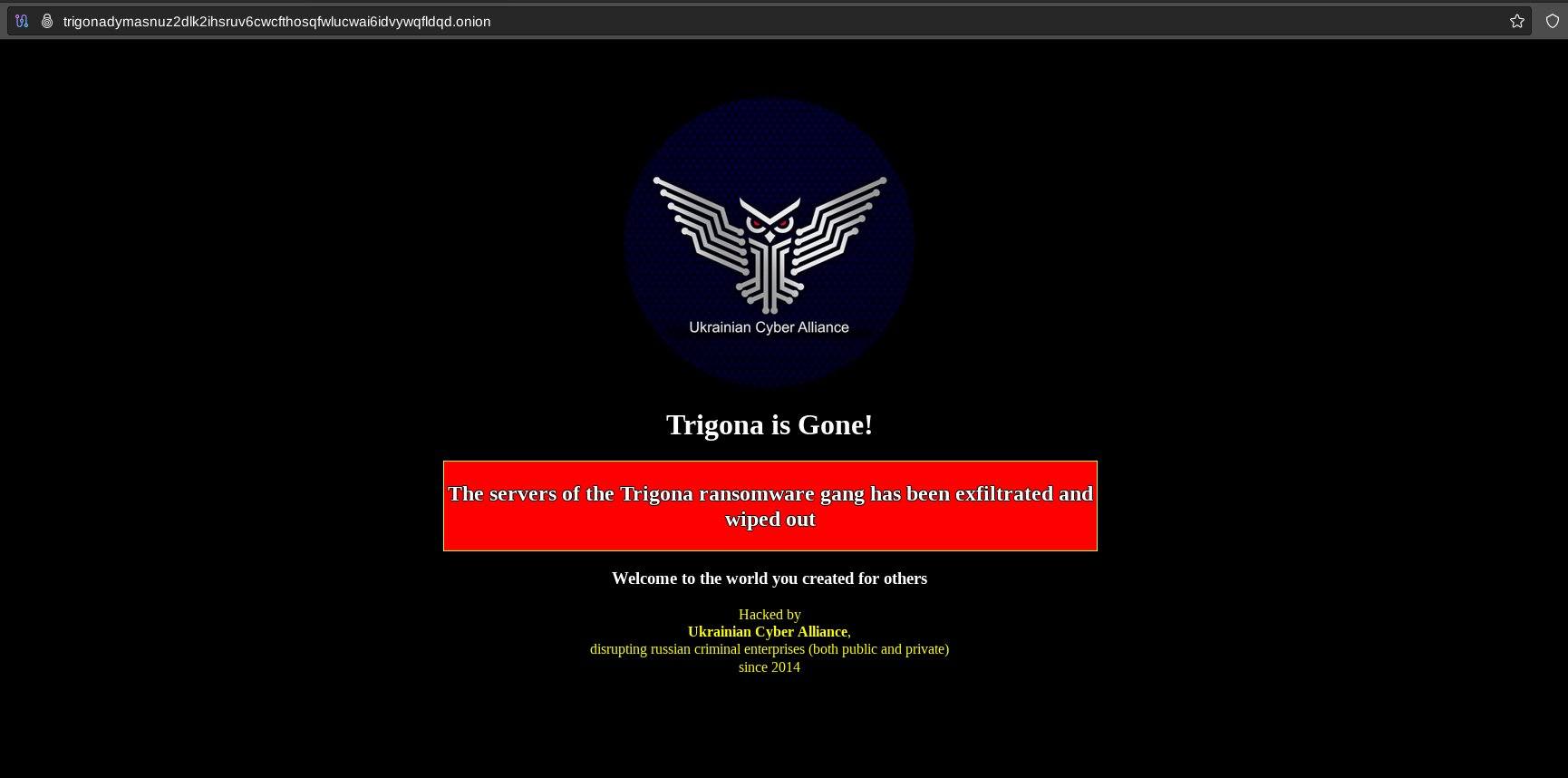
Feel-good story of the week: 2 ransomware gangs meet their demise

Read 11 remaining paragraphs | Comments


Source: Ars Technica – Feel-good story of the week: 2 ransomware gangs meet their demise

Okta says hackers breached its support system and viewed customer files

A cartoon man runs across a white field of ones and zeroes.

Enlarge (credit: Getty Images)

Identity and authentication management provider Okta said hackers managed to view private customer information after gaining access to credentials to its customer support management system.

“The threat actor was able to view files uploaded by certain Okta customers as part of recent support cases,” Okta Chief Security Officer David Bradbury said Friday. He suggested those files comprised HTTP archive, or HAR, files, which company support personnel use to replicate customer browser activity during troubleshooting sessions.

“HAR files can also contain sensitive data, including cookies and session tokens, that malicious actors can use to impersonate valid users,” Bradbury wrote. “Okta has worked with impacted customers to investigate, and has taken measures to protect our customers, including the revocation of embedded session tokens. In general, Okta recommends sanitizing all credentials and cookies/session tokens within a HAR file before sharing it.”

Read 7 remaining paragraphs | Comments


Source: Ars Technica – Okta says hackers breached its support system and viewed customer files