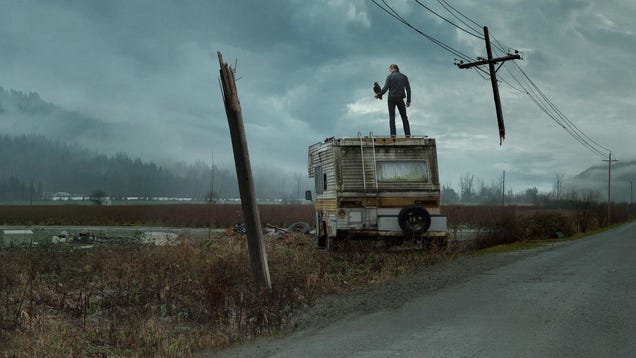
Over 45 years ago, Stephen King released The Stand, his post-apocalyptic dark fantasy novel about a virus that wiped out much of the human race. To this day, it remains an acclaimed book and is highly regarded as one of his best novels period. Like other King books, there’s an extension of that book on the way—though…
This month has been filled with conflicting rumors of an Apple product launch that either will or won’t happen, but Bloomberg’s Mark Gurman now says the October event is on, and it could bring a long overdue iMac upgrade. In the Power On newsletter, Gurman reports that sources close to Apple said a Mac launch is in the works for this month. Based on current retail supplies and shipping dates for certain models, Gurman suggests we could see a new iMac and possibly some new MacBook Pros.
“Apple retail stores are in short supply of the iMac, as well as the 13-inch MacBook Pro and high-end MacBook Pro — two other models that may be due for a refresh,” Gurman wrote, noting that current shipping estimates for these models show delays until November. That, plus the timing of the company’s earnings call — in November this year, instead of October — suggests Apple has something planned. Gurman speculates the launch event may take place on October 30 or 31.
The 24-inch M1 iMac came out in April 2021 and hasn’t been updated since, making it a good candidate for a refresh. The 13-inch M2 MacBook Pro, which was released in June 2022, is also due for an upgrade.
This article originally appeared on Engadget at https://www.engadget.com/apple-may-be-planning-an-october-mac-launch-after-all-153051423.html?src=rss
This month has been filled with conflicting rumors of an Apple product launch that either will or won’t happen, but Bloomberg’s Mark Gurman now says the October event is on, and it could bring a long overdue iMac upgrade. In the Power On newsletter, Gurman reports that sources close to Apple said a Mac launch is in the works for this month. Based on current retail supplies and shipping dates for certain models, Gurman suggests we could see a new iMac and possibly some new MacBook Pros.
“Apple retail stores are in short supply of the iMac, as well as the 13-inch MacBook Pro and high-end MacBook Pro — two other models that may be due for a refresh,” Gurman wrote, noting that current shipping estimates for these models show delays until November. That, plus the timing of the company’s earnings call — in November this year, instead of October — suggests Apple has something planned. Gurman speculates the launch event may take place on October 30 or 31.
The 24-inch M1 iMac came out in April 2021 and hasn’t been updated since, making it a good candidate for a refresh. The 13-inch M2 MacBook Pro, which was released in June 2022, is also due for an upgrade.
This article originally appeared on Engadget at https://www.engadget.com/apples-rumored-october-mac-launch-may-happen-after-all-153051265.html?src=rss
Space isn’t hard only on account of the rocket science. The task of taking a NASA mission from development and funding through construction and launch — all before we even use the thing for science — can span decades. Entire careers have been spent putting a single satellite into space. Nobel-winning NASA physicist John Mather, mind you, has already helped send up two.
In their new book, Inside the Star Factory: The Creation of the James Webb Space Telescope, NASA’s Largest and Most Powerful Space Observatory, author Christopher Wanjek and photographer Chris Gunn take readers on a behind the scenes tour of the James Webb Space Telescope’s own journey from inception to orbit. Weaving examinations of the radical imaging technology that enables us to peer deeper into the early universe than ever before with profiles of the researchers, advisors, managers, engineers and technicians that made it possible through three decades of effort. In this week’s Hitting the Books excerpt, a look at JWST project scientist John Mather and his own improbable journey from rural New Jersey to NASA.
John Mather is a patient man. His 2006 Nobel Prize in Physics was thirty years in the making. That award, for unswerving evidence of the Big Bang, was based on a bus-sized machine called COBE — yet another NASA mission that almost didn’t happen. Design drama? Been there. Navigate unforeseen delays? Done that. For NASA to choose Mather as JWST Project Scientist was pure prescience.
Like Webb, COBE — the Cosmic Background Explorer — was to be a time machine to reveal a snapshot of the early universe. The target era was just 370,000 years after the Big Bang, when the universe was still a fog of elementary particles with no discernable structure. This is called the epoch of recombination, when the hot universe cooled to a point to allow protons to bind with electrons to form the very first atoms, mostly hydrogen with a sprinkling of helium and lithium. As the atoms formed, the fog lifted, and the universe became clear. Light broke through. That ancient light, from the Big Bang itself, is with us today as remnant microwave radiation called the cosmic microwave background.
Tall but never imposing, demanding but never mean, Mather is a study in contrasts. His childhood was spent just a mile from the Appalachian Trail in rural Sussex County, New Jersey, where his friends were consumed by earthly matters such as farm chores. Yet Mather, whose father was a specialist in animal husbandry and statistics, was more intrigued by science and math. At age six he grasped the concept of infinity when he filled up a page in his notebook with a very large number and realized he could go on forever. He loaded himself up with books from a mobile library that visited the farms every couple of weeks. His dad worked for Rutgers University Agriculture Experiment Station and had a laboratory on the farm with radioisotope equipment for studying metabolism and liquid nitrogen tanks with frozen bull semen. His dad also was one of the earliest users of computers in the area, circa 1960, maintaining milk production records of 10,000 cows on punched IBM cards. His mother, an elementary school teacher, was quite learned, as well, and fostered young John’s interest in science.
A chance for some warm, year-round weather ultimately brought Mather in 1968 to University of California, Berkeley, for graduate studies in physics. He would fall in with a crowd intrigued by the newly detected cosmic microwave background, discovered by accident in 1965 by radio astronomers Arno Penzias and Robert Wilson. His thesis advisor devised a balloon experiment to measure the spectrum, or color, of this radiation to see if it really came from the Big Bang. (It does.) The next obvious thing was to make a map of this light to see, as theory suggested, whether the temperature varied ever so slightly across the sky. And years later, that’s just what he and his COBE team found: anisotropy, an unequal distribution of energy. These micro-degree temperature fluctuations imply matter density fluctuations, sufficient to stop the expansion, at least locally. Through the influence of gravity, matter would pool into cosmic lakes to form stars and galaxies hundreds of millions of years later. In essence, Mather and his team captured a sonogram of the infant universe.
Yet the COBE mission, like Webb, was plagued with setbacks. Mather and the team proposed the mission concept (for a second time) in 1976. NASA accepted the proposal but, that year, declared that this satellite and most others from then on would be delivered to orbit by the Space Shuttle, which itself was still in development. History would reveal the foolishness of such a plan. Mather understood immediately. This wedded the design of COBE to the cargo bay of the unbuilt Shuttle. Engineers would need to meet precise mass and volume requirements of a vessel not yet flown. More troublesome, COBE required a polar orbit, difficult for the Space Shuttle to deliver. The COBE team was next saddled with budget cuts and compromises in COBE’s design as a result of cost overruns of another pioneering space science mission, the Infrared Astronomical Satellite, or IRAS. Still, the tedious work continued of designing instruments sensitive enough to detect variations of temperatures just a few degrees above absolute zero, about −270°C. From 1980 onward, Mather was consumed by the creation of COBE all day every day. The team needed to cut corners and make risky decisions to stay within budget. News came that COBE was to be launched on the Space Shuttle mission STS-82-B in 1988 from Vandenberg Air Force Base. All systems go.
Then the Space Shuttle Challenger exploded in 1986, killing all seven of its crew. NASA grounded Shuttle flights indefinitely. COBE, now locked to Shuttle specifications, couldn’t launch on just any other rocket system. COBE was too large for a Delta rocket at this point; ironically, Mather had the Delta in mind in his first sketch in 1974. The team looked to Europe for a launch vehicle, but this was hardly an option for NASA. Instead, the project managers led a redesign to shave off hundreds of pounds, to slim down to a 5,000-pound launch mass, with fuel, which would just make it within the limits of a Delta by a few pounds. Oh, and McDonnell Douglas had to build a Delta rocket from spare parts, having been forced to discontinue the series in favor of the Space Shuttle.
The team worked around the clock over the next two years. The final design challenge was … wait for it … a sunshield that now needed to be folded into the rocket and spring-released once in orbit, a novel approach. COBE got the greenlight to launch from Vandenberg Air Force Base in California, the originally desired site because it would provide easier access to a polar orbit compared to launching a Shuttle from Florida. Launch was set for November 1989. COBE was delivered several months before.
Then, on October 17, the California ground shook hard. A 6.9-magnitude earthquake struck Santa Cruz County, causing widespread damage to structures. Vandenberg, some 200 miles south, felt the jolt. As pure luck would have it, COBE was securely fastened only because two of the engineers minding it secured it that day before going off to get married. The instrument suffered no damage and launched successfully on November 18. More drama came with the high winds on launch day. Myriad worries followed in the first weeks of operation: the cryostat cooled too quickly; sunlight reflecting off of Antarctic ice played havoc with the power system; trapped electrons and protons in the Van Allen belts disrupted the functioning of the electronics; and so on.
All the delays, all the drama, faded into a distant memory for Mather as the results of the COBE experiment came in. Data would take four years to compile. But the results were mind-blowing. The first result came weeks after launch, when Mather showed the spectrum to the American Astronomical Society and received a standing ovation. The Big Bang was safe as a theory. Two years later, at an April 1992 meeting of the American Physical Society, the team showed their first map. Data matched theory perfectly. This was the afterglow of the Big Bang revealing the seeds that would grow into stars and galaxies. Physicist Stephen Hawking called it “the most important discovery of the century, if not of all time.”
Mather spoke humbly of the discovery at his Nobel acceptance speech in 2006, fully crediting his remarkable team and his colleague George Smoot, who shared the prize with him that year. But he didn’t downplay the achievement. He noted that he was thrilled with the now broader “recognition that our work was as important as people in the professional astronomy world have known for so long.”
Mather maintains that realism today. While concerned about delays, threats of cancellation, cost overruns, and not-too-subtle animosity in the broader science community over the “telescope that ate astronomy,” he didn’t let this consume him or his team. “There’s no point in trying to manage other people’s feelings,” he said. “Quite a lot of the community opinion is, ‘well, if it were my nickel, I’d spend it differently.’ But it isn’t their nickel; and the reason why we have the nickel in the first place is because NASA takes on incredibly great challenges. Congress approved of us taking on great challenges. And great challenges aren’t free. My feeling is that the only reason why we have an astronomy program at NASA for anyone to enjoy — or complain about — is that we do astonishingly difficult projects. We are pushing to the edge of what is possible.”
Webb isn’t just a little better than the Hubble Space Telescope, Mather added; it’s a hundred times more powerful. Yet his biggest worry through mission design was not the advanced astronomy instruments but rather the massive sunshield, which needed to unfold. All instruments and all the deployment mechanisms had redundancy engineered into them; there are two or more ways to make them work if the primary method fails. But that’s not the only issue with a sunshield. It would either work or not work.
Now Mather can focus completely on the science to be had. He expects surprises; he’d be surprised if there were no surprises. “Just about everything in astronomy comes as a surprise,” he said. “When you have new equipment, you will get a surprise.” His hunch is that Webb might reveal something weird about the early universe, perhaps an abundance of short-lived objects never before seen that say something about dark energy, the mysterious force that seems to be accelerating the expansion of the universe, or the equally mysterious dark matter. He also can’t wait until Webb turns its cameras to Alpha Centauri, the closest star system to Earth. What if there’s a planet there suitable for life? Webb should have the sensitivity to detect molecules in its atmosphere, if present.
“That would be cool,” Mather said. Hints of life from the closest star system? Yes, cool, indeed.
This article originally appeared on Engadget at https://www.engadget.com/inside-the-star-factory-chris-gunn-christopher-wanjek-mit-press-143046496.html?src=rss
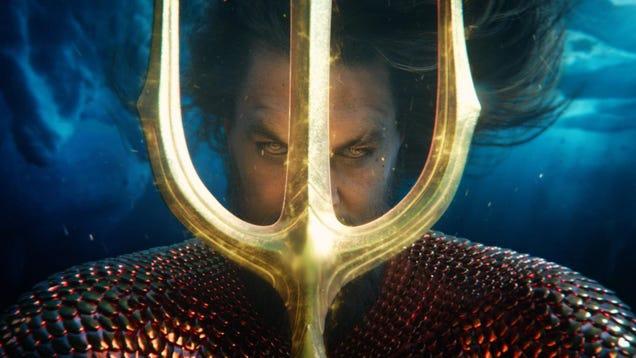
In a little under two months, WB will finally release Aquaman & the Lost Kingdom. Like the original movie, this new film looks like a wild romp that manages to stand out from other blockbuster superhero fare thanks to its visual splendor and weird mishmash of aesthetics. Whatever you may think about these movies, they…
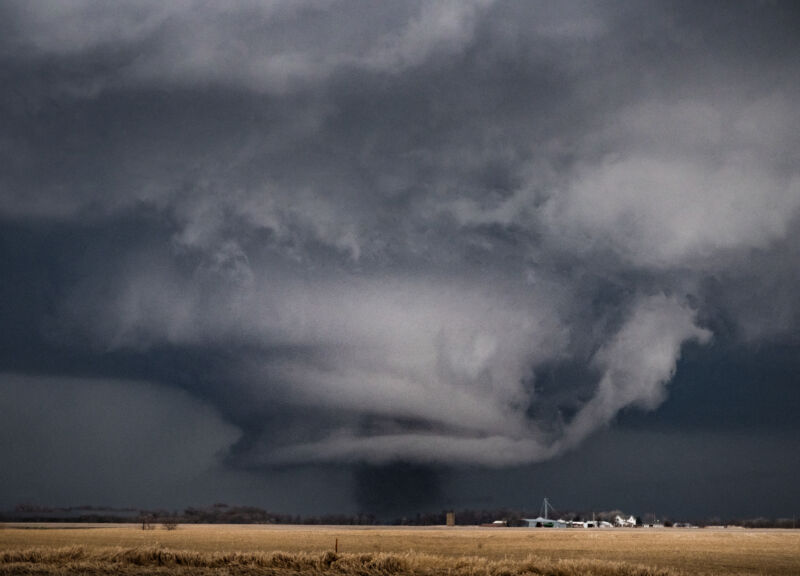
Enlarge/ This stovepipe tornado formed under an intense rotating wall cloud near Keota, Iowa, on March 31, 2023. (credit: Jonah Lange/Getty )
One muggy day in July 1986, a news helicopter was recording footage of a festival in Minneapolis when the pilot and photographer glimpsed a tornado over nearby Brooklyn Park. They moved toward it, filming the powerful twister for 25 minutes, mesmerizing viewers watching it live on TV.
Watching as the helicopter hovered within maybe a half-mile of the twister was Robin Tanamachi, who was a kid growing up in Minneapolis at the time. “We were seeing all this really beautiful interior vortex structure,” she says. “I was just absolutely hooked on that, and I know I was not the only one.” Today, Tanamachi is a research meteorologist at Purdue University in West Lafayette, Indiana, and one of many researchers delving into twisters’ mysteries, searching for details about their formation that may bolster future forecasts.
Tornadoes can be elusive research subjects. Through chasing storms and using computer simulations, scientists have worked out the basic ingredients needed to spin up a twister, but two crucial questions continue to vex them: Why do some thunderstorms form tornadoes while others don’t? And how exactly do tornadoes get their spin?
The Washington Post tells the story of a veteran political operative and a former army intelligence officer hired to help keep in power the president of the west African nation Burkina Faso:
Their company, Percepto International, was a pioneer in what’s known as the disinformation-for-hire business. They were skilled in deceptive tricks of social media, reeling people into an online world comprised of fake journalists, news outlets and everyday citizens whose posts were intended to bolster support for [president Roch Marc] Kaboré’s government and undercut its critics. But as Percepto began to survey the online landscape across Burkina Faso and the surrounding French-speaking Sahel region of Africa in 2021, they quickly saw that the local political adversaries and Islamic extremists they had been hired to combat were not Kaboré’s biggest adversary. The real threat, they concluded, came from Russia, which was running what appeared to be a wide-ranging disinformation campaign aimed at destabilizing Burkina Faso and other democratically-elected governments on its borders.
Pro-Russian fake news sites populated YouTube and pro-Russian groups abounded on Facebook. Local influencers used WhatsApp and Telegram groups to organize pro-Russian demonstrations and praise Russian President Vladimir Putin. Facebook fan pages even hailed the Wagner Group, the Russian paramilitary network run by Yevgeniy Prigozhin, the late one-time Putin ally whose Internet Research Agency launched a disinformation campaign in the United States to influence the 2016 presidential election… Percepto didn’t know the full scope of the operation it had uncovered but it warned Kaboré’s government that it needed to move fast: Launch a counteroffensive online — or risk getting pushed out in a coup.
Three years later, the governments of five former French colonies, including Burkina Faso, have been toppled. The new leaders of two of those countries, Mali and Burkina Faso, are overtly pro-Russian; in a third, Niger, the prime minister installed after a July coup has met recently with the Russian ambassador. In Mali and the Central African Republic, French troops have been replaced with Wagner mercenaries…
Percepto’s experience in French-speaking Africa offers a rare window into the round-the-clock information warfare that is shaping international politics — and the booming business of disinformation-for-hire. Meta, the social media company that operates Facebook, Instagram and WhatsApp, says that since 2017 it has detected more than 200 clandestine influence operations, many of them mercenary campaigns, in 68 countries.
The article also makes an interesting point. “The burden of battling disinformation has fallen entirely on Silicon Valley companies.”
In 1999 cybersecurity pundit Bruce Schneier answered questions from Slashdot’s readers.
24 years later on his personal blog, Schneier is still offering his insights. Last month Schneier said that warnings about millions of vacant cybersecurity positions around the world never made sense to me” — and then shared this alternate theory. From the blog of cybersecurity professional Ben Rothke:
[T]here is not a shortage of security generalists, middle managers, and people who claim to be competent CISOs. Nor is there a shortage of thought leaders, advisors, or self-proclaimed cyber subject matter experts. What there is a shortage of are computer scientists, developers, engineers, and information security professionals who can code, understand technical security architecture, product security and application security specialists, analysts with threat hunting and incident response skills. And this is nothing that can be fixed by a newbie taking a six-month information security boot camp….
In fact, security roles are often not considered entry-level at all. Hiring managers assume you have some other background, usually technical before you are ready for an entry-level security job. Without those specific skills, it is difficult for a candidate to break into the profession. Job seekers learn that entry-level often means at least two to three years of work experience in a related field.
Rothke’s post offers two conclusions:
“Human resources needs to understand how to effectively hire information security professionals. Expecting an HR generalist to find information security specialists is a fruitless endeavor at best.”
“So is there really an information security jobs crisis? Yes, but not in the way most people portray it to be.”
“A company backed by BlackRock has abandoned plans to build a 1,300-mile pipeline across the US Midwest to collect and store carbon emissions from the corn ethanol industry,” reports Ars Technica.
The move comes “following opposition from landowners and some environmental campaigners.”
Navigator CO2 on Friday said developing its carbon capture and storage (CCS) project called Heartland Greenway had been “challenging” because of the unpredictable nature of regulatory and government processes in South Dakota and Iowa. Navigator’s decision to scrap its flagship $3.1 billion project — one of the biggest of its kind in the US — is a blow for a fledgling industry… It also represents a setback for the carbon-intensive corn ethanol refining industry, a pillar of the rural Midwestern economy which is targeting industry-scale CCS as a way to reduce emissions…
The project faced opposition from local landowners, who expressed concerns about safety and property seizures, and some environmentalists who describe CO2 pipelines as dangerous and a way to prop up the fossil fuels industry, which already has a network of such infrastructure. Addressing the decision by Navigator, the Coalition To Stop CO2 Pipelines said it “celebrates this victory,” but added: “we also know that the tax incentives made available by the federal government for carbon capture, transport and storage likely mean another entity will pick up Navigator’s project, or find a different route through Illinois.”
The article cites one analyst at energy research firm Wood Mackenzie who believes this cancellation could benefit rival carbon-capture companies like Summit Carbon Solutions, which is planning an even larger network of CO2 pipelines throughout the Midwest, and could try to sign deals with Navigator’s former customers.
404 Media (working with Court Watch) reports on a $30 Million cash-for-Bitcoin laundering ring operating in the heart of New York
For years, a gang operating in New York allegedly offered a cash-for-Bitcoin service that generated at least $30 million, with men standing on street corners with plastic shopping bags full of money, drive-by pickups, and hundreds of thousands of dollars laid out on tables, according to court records.
The records provide rare insight into an often unseen part of the criminal underworld: how hackers and drug traffickers convert their Bitcoin into cash outside of the online Bitcoin exchanges that ordinary people use. Rather than turning to sites like Coinbase, which often collaborate with and provide records to law enforcement if required, some criminals use underground, in-real-life Bitcoin exchanges like this gang which are allegedly criminal entities in their own right.
In a long spanning investigation by the FBI involving a confidential source and undercover agents, one member of the crew said “that at least some of his clients made money by selling drugs, that his wealthiest clients were hackers, and that he had made approximately $30 million over the prior three years through the exchange of cash for virtual currency,” the court records read.
Thanks to user Slash_Account_Dot for sharing the news.
Google will have to pay over $1 million to an executive who alleged the company discriminated against her based on her gender and later retaliated when she spoke up about it. Ulku Rowe, a Google Cloud engineering director, accused the company of hiring her at a lower level, lower paid position than men with less experience who were hired for similar roles at the same time, according to Bloomberg Law. She also claimed she was passed over for a promotion in favor of a less qualified male colleague.
A New York jury on Friday decided that Google did commit gender-based discrimination, and now owes Rowe a combined $1.15 million for punitive damages and the pain and suffering it caused. Rowe had 23 years of experience when she started at Google in 2017, and the lawsuit claims she was lowballed at hiring to place her at a level that paid significantly less than what men were being offered.
It comes nearly five years after some 20,000 Google employees organized a walkout to demand changes around the company’s handling of sexual misconduct and discrimination. While the company pledged to do better on sexual harassment, its response still left a lot to be desired on the topics of bias. According to Bloomberg Law, the Rowe lawsuit is the first such case Google has faced since the protests.
This article originally appeared on Engadget at https://www.engadget.com/google-ordered-to-pay-1-million-to-female-exec-who-sued-over-pay-discrimination-214702002.html?src=rss
“The Worker as Futurist project assists rank-and-file Amazon workers to write short speculative fiction,” explains its web site. “In a world where massive corporations not only exploit people but monopolize the power of future-making, how can workers and other people fight and write back?”
I couldn’t find any short stories displayed on their site, but there are plans to publish a book next year collecting the workers’ writing about “the world after Amazon” in print, online and in audiobook format. And there’s also a podcast about “the world Amazon is building and the workers and writers struggling for different futures.”
From their web site:
A 2022 pilot project saw over 25 workers gather online to discuss how SF shed light on their working conditions and futures. In 2023, 13 workers started to meet regularly to build their writing skills and learn about the future Amazon is compelling its workers to create… The Worker as Futurist project aims, in a small way, to place the power of the imagination back in the hands of workers. This effort is in solidarity with trade union mobilizations and workers self-organization at Amazon. It is also in solidarity with efforts by civil society to reign in Amazon’s power.
Four people involved with the project shared more details in the socialist magazine Jacobin :
At stake is a kind of corporate storytelling, which goes beyond crass propaganda but works to harness the imagination. Like so many corporations, Amazon presents itself as surfing the wave of the future, responding to the relentless and positive force of the capitalist market with innovation and optimism. Such stories neatly exonerate the company and its beneficiaries from the consequences of their choices for workers and their world…
WWS doesn’t focus on science fiction. But it does show the radical power of the imagination that comes when workers don’t just read inspiring words, but come together to write and thereby take the power of world-building and future-making back into their hands. This isn’t finding individual commercial or literary success, but dignity, imagination, and common struggle… Our “Worker as Futurist” project returns the power of the speculative to workers, in the name of discovering something new about capitalism and the struggle for something different. We have tasked these workers with writing their own futures, in the face of imaginaries cultivated by Amazon that see the techno-overlords bestride the world and the stars.
Thanks to funding from Canada’s arms-length, government-funded Social Sciences and Humanities Research Council, our team of scholars, teachers, writers, and activists has been able to pay Amazon workers (warehouse workers, drivers, copy editors, MTurk workers, and more) to participate in a series of skill-building writing workshops and information sessions. In each of these online forums, we were joined by experts on speculative fiction, on Amazon, and on workers’ struggles. At the end of this series of sessions, the participants were supported to draft the stories they wanted to tell about “The World After Amazon….”
We must envision the futures we want in order to mobilize and fight for them together, rather than cede that future to those who would turn the stars into their own private sandbox. It is in the process of writing and sharing writing we can come to an awareness of something our working bodies know but that we cannot otherwise articulate or express. The rank-and-file worker — the target of daily exploitation, forced to build their boss’s utopia — may have encrypted within them the key to destroying his world and building a new one.
Linus Torvalds has said he bought a Dell XPS-13 with Ubuntu Linux for his daughter. Now ZDNet shares some trivia from the history of “the most well-known Linux laptop,” citing a presentation by Barton George, Dell Technologies’ Developer Community manager, at the Linux/open-source conference All Things Open:
First, however, you should know that Dell has supported Linux desktops and laptops since the middle 2000s. In 2006, Michael Dell told me that Dell would be the first major PC vendor to release and support desktop Linux — and this proved to be a success. Barton George explained that Dell had always done great volume with these computers. Not volume, like the Windows machines, of course, but enough that Dell has always offered Linux-based — primarily Red Hat Enterprise Linux (RHEL) powered — workstations.
Still, none of these machines really appealed to developers… George announced on his personal blog what Dell was planning, and his traffic went from 60 views a day to 15,000. Then, as now, there’s a lot of interest in laptops that come with Linux ready to go… Dell got together with Canonical, Ubuntu Linux’s parent company, to make sure all the drivers were in place for a top-notch Ubuntu Linux developer desktop experience. Indeed, the name ‘Project Sputnik’ is a nod to Mark Shuttleworth, Ubuntu founder and Canonical CEO. A decade before the project itself, Shuttleworth had spent eight days orbiting the Earth in a Soviet Soyuz spacecraft. George and the crew decided “Soyuz” didn’t have an inspiring ring to it, so the company went with “Sputnik” instead.
George continued: “We announced a beta program for the machine with a 10% off offer. We thought, well, we’ll probably get 300 people. Instead, we got 6,000. This is where senior management said OK, you’ve got something real.”
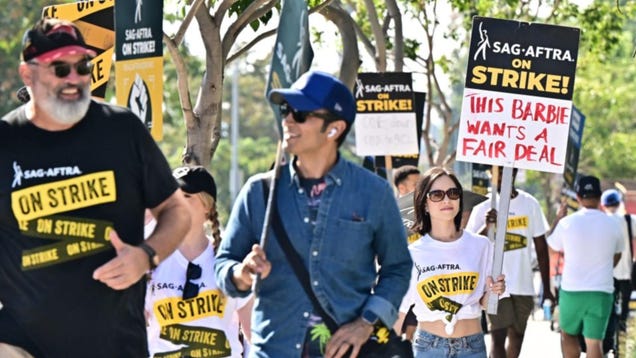
On July 13, 2023, SAG-AFTRA confirmed that its members would indeed go on strike. Much like with the WGA months prior, the organization’s discussions with the Alliance of Motion Picture and Television Producers (AMPTP) failed to result in an acceptable contract regarding streaming revenue, AI concerns, and much more.…
Slashdot reader Striek remembers Silicon Valley’s long history of open source develoipment — and how HashiCorp “made the controversial decision to change licenses from the Mozilla Public License to MariaDB’s Business Source Licesne. The key difference between these two licenses is that the BSL limits its grant to “non-production use”.
HashiCorp’s CEO is now predicting there would be âoeno more open source companies in Silicon Valleyâ unless the community rethinks how it protects innovation, reports The Stack:
While open source advocates had slammed [HashiCorp’s] license switch, CEO Dave McJannet described the reaction from its largest customers as “Great. Because you’re a critical partner to us and we need you to be a big, big company.” Indeed, he claimed that “A lot of the feedback was, ‘we wished you had done that sooner'” — adding that the move had been discussed with the major cloud vendors ahead of the announcement. “Every vendor over the last three or four years that has reached any modicum of scale has come to the same conclusion,” said McJannet. “It’s just the realisation that the open source model has to evolve, given the incentives that are now in the market.”
He claimed the historic model of foundations was broken, as they were dominated by legacy vendors. Citing the case of Hadoop, he said: “They’re a way for big companies to protect themselves from innovation, by making sure that if Hadoop becomes popular, IBM can take it and sell it for less because they are part of that foundation.” The evolution to putting open source products on GitHub had worked “really, really well” but once a project became popular, there was an incentive for “clone vendors to start taking that stuff.” He claimed that “My phone started ringing materially after we made our announcement from every open source startup in Silicon Valley going ‘I think this is the right model’.”
He said the Linux Foundation’s adoption of Open Tofu raised serious questions. “What does it say for the future of open source, if foundations will just take it and give it a home. That is tragic for open source innovation. I will tell you, if that were to happen, there’ll be no more open source companies in Silicon Valley.”
Hashicorp also announced a beta using generative AI to produce new module tests, and HCP Vault Radar, which scans code for secrets, personally identifiable information, dependency vulnerabilities, and non-inclusive language.
Blizzard hasn’t exactly been subtle in marketing Diablo IV, but its latest PR stunt is especially on the nose. To celebrate the release of the game’s new season, Season of Blood, and the high-payoff Blood Harvest events it introduced, Blizzard has launched a month-long blood drive in the US that’ll unlock in-game rewards as more people participate. Once donations reach 666 quarts altogether, players will be able to enter a sweepstakes for “a custom liquid-cooled PC infused with real human blood.”
The first tier of rewards, a batch of five weapons cosmetics, will unlock once donations hit 33 percent of the goal. At the 66 percent mark, players will also be granted access to the Loch Raeth Maor Barbarian armor cosmetic. When donations reach 100 percent of the goal — a total of 666 quarts of blood — the Vermilion Eye Piebald Mount will become available, and the sweepstakes for the custom PC will open.
Aside from the whole “human blood in the coolant” gimmick, the Seasons of Blood custom PC features NVIDIA’s GeForce RTX 4090, an Intel Core i9 CPU, 64GB of DDR5 RAM, 3 TB SSD Storage, and the Quantum Vector GPU Waterblock for cooling. And, the sweepstakes won’t just be reserved for those who donated. Once the goal is met, any player in the US over 18 can enter. The blood drive is open from now through November 20, and you don’t need to go anywhere special to get in on it. Players 18+ can donate at their local blood centers, then submit proof on the Diablo Blood Harvest website.
A typical blood donation is 1 pint, so it’ll take a little over 1,300 donations to hit the final goal. Players can keep track of the blood drive’s progress by visiting the above website and its motivational fountain of gushing blood. At the time of writing, it’s already at 15 percent — or almost halfway to the first goal.
Considering the Red Cross recently announced we’re in the middle of a blood shortage, it’s maybe not the worst idea. All of the rewards will be doled out a few days after the blood drive closes, on November 22. Happy harvest!
This article originally appeared on Engadget at https://www.engadget.com/blizzard-will-raffle-off-a-human-blood-infused-pc-if-diablo-iv-players-donate-666-quarts-192828807.html?src=rss
An anonymous reader shared this report from SciTechDaily:
Since the 1980s, researchers have observed significant periods of unrest in a region of California’s Eastern Sierra Nevada mountains characterized by swarms of earthquakes as well as the ground inflating and rising by almost half an inch per year during these periods. The activity is concerning because the area, called the Long Valley Caldera, sits atop a massive dormant supervolcano… What is behind the increased activity in the last few decades? Could it be that the area is preparing to erupt again? Or could the uptick in activity actually be a sign that the risk of a massive eruption is decreasing?
To answer these questions, Caltech researchers have created the most detailed underground images to date of the Long Valley Caldera, reaching depths up to 10 kilometers within the Earth’s crust. These high-resolution images reveal the structure of the earth beneath the caldera and show that the recent seismic activity is a result of fluids and gases being released as the area cools off and settles down.
The work was conducted in the laboratory of Zhongwen Zhan (PhD ’14), professor of geophysics. A paper describing the research was published on October 18 in the journal Science Advances. “We don’t think the region is gearing up for another supervolcanic eruption, but the cooling process may release enough gas and liquid to cause earthquakes and small eruptions,” says Zhan. “For example, in May 1980, there were four magnitude 6 earthquakes in the region alone.”
With the newly released Marvel’s Spider-Man 2, Insomniac Games introduces Venom to its superhero gaming franchise. The classic Spider-Man nemesis is voiced by Tony Todd and a pretty big dude who’s been featured heavily in the game’s marketing. And given the nature of superhero media, plus the studio’s previous…
Breached web sites distribute malware to visitors by claiming they need to update their browser. But one group of attackers “have developed an ingenious way of keeping their malware from being taken down by security experts or law enforcement,” reports security researcher Brian Krebs.
“By hosting the malicious files on a decentralized, anonymous cryptocurrency blockchain.”
[W]hen Cloudflare blocked those accounts the attackers began storing their malicious files as cryptocurrency transactions in the Binance Smart Chain (BSC), a technology designed to run decentralized apps and “smart contracts,” or coded agreements that execute actions automatically when certain conditions are met. Nati Tal, head of security at Guardio Labs, the research unit at Tel Aviv-based security firm Guardio, said the malicious scripts stitched into hacked WordPress sites will create a new smart contract on the BSC Blockchain, starting with a unique, attacker-controlled blockchain address and a set of instructions that defines the contract’s functions and structure. When that contract is queried by a compromised website, it will return an obfuscated and malicious payload.
“These contracts offer innovative ways to build applications and processes,” Tal wrote along with his Guardio colleague Oleg Zaytsev. “Due to the publicly accessible and unchangeable nature of the blockchain, code can be hosted ‘on-chain’ without the ability for a takedown.” Tal said hosting malicious files on the Binance Smart Chain is ideal for attackers because retrieving the malicious contract is a cost-free operation that was originally designed for the purpose of debugging contract execution issues without any real-world impact. “So you get a free, untracked, and robust way to get your data (the malicious payload) without leaving traces,” Tal said.
In response to questions from KrebsOnSecurity, the BNB Smart Chain (BSC) said its team is aware of the malware abusing its blockchain, and is actively addressing the issue. The company said all addresses associated with the spread of the malware have been blacklisted, and that its technicians had developed a model to detect future smart contracts that use similar methods to host malicious scripts. “This model is designed to proactively identify and mitigate potential threats before they can cause harm,” BNB Smart Chain wrote. “The team is committed to ongoing monitoring of addresses that are involved in spreading malware scripts on the BSC. To enhance their efforts, the tech team is working on linking identified addresses that spread malicious scripts to centralized KYC [Know Your Customer] information, when possible.”
“The major online platforms are breaking up with news,” reports the New York Times:
Campbell Brown, Facebook’s top news executive, said this month that she was leaving the company. Twitter, now known as X, removed headlines from the platform days later. The head of Instagram’s Threads app, an X competitor, reiterated that his social network would not amplify news. Even Google — the strongest partner to news organizations over the past 10 years — has become less dependable, making publishers more wary of their reliance on the search giant. The company has laid off news employees in two recent team reorganizations, and some publishers say traffic from Google has tapered off… Some executives of the largest tech companies, like Adam Mosseri at Instagram, have said in no uncertain terms that hosting news on their sites can often be more trouble than it is worth because it generates polarized debates…
Publishers seem resigned to the idea that traffic from the big tech companies will not return to what it once was. Even in the long-fractious relationship between publishers and tech platforms, the latest rift stands out — and the consequences for the news industry are stark. Many news companies have struggled to survive after the tech companies threw the industry’s business model into upheaval more than a decade ago. One lifeline was the traffic — and, by extension, advertising — that came from sites like Facebook and Twitter. Now that traffic is disappearing. Top news sites got about 11.5% of their web traffic in the United States from social networks in September 2020, according to Similarweb, a data and analytics company. By September this year, it was down to 6.5%…
The sharp decline in referral traffic from social media platforms over the past two years has hit all news publishers, including The New York Times. The Wall Street Journal noticed a decline starting about 18 months ago, according to a recording of a September staff meeting obtained by the Times. “We are at the mercy of social algorithms and tech giants for much of our distribution,” Emma Tucker, the Journal’s editor-in-chief, told the newsroom in the meeting…
Google cut some members of its news partnership team in September, and this week it laid off as many as 45 workers from its Google News team, the Alphabet Workers Union said. (The Information, a tech news website, reported the Google News layoffs earlier.) “We’ve made some internal changes to streamline our organization,” Jenn Crider, a Google spokesperson, said in a statement… Jaffer Zaidi [Google’s vice president of global news partnerships], wrote in an internal memo reviewed by the Times that the team would be adopting more artificial intelligence. “We had to make some difficult decisions to better position our team for what lies ahead,” he wrote…
Privately, a number of publishers have discussed what a post-Google traffic future may look like and how to better prepare if Google’s AI products become more popular and further bury links to news publications.