Face Search Engine PimEyes Blocks Searches of Children's Faces

PimEyes, a search engine that relies on facial recognition to help people scan billions of images to find photos of themselves on the internet, announced that it has banned searches of minors as part of the company’s “no harm policy.” The New York Times reports: PimEyes, a subscription-based service that uses facial recognition technology to find online photos of a person, has a database of nearly three billion faces and enables about 118,000 searches per day, according to [PimEyes CEO Giorgi Gobronidze]. The service is advertised as a way for people to search for their own face to find any unknown photos on the internet, but there are no technical measures in place to ensure that users are searching only for themselves. Parents have used PimEyes to find photos of their children on the internet that they had not known about. But the service could also be used nefariously by a stranger. It had previously banned more than 200 accounts for inappropriate searches of children’s faces, Mr. Gobronidze said.

“Images of children might be used by the individuals with twisted moral compass and values, such as pedophiles, child predators,” Mr. Gobronidze said. PimEyes will still allow searches of minors’ faces by human rights organizations that work on children’s rights issues, he added. Mr. Gobronidze said that blocking searches of children’s faces had been on “the road map” since he acquired the site in 2021, but the protection was fully deployed only this month after the publication of a New York Times article on A.I.-based threats to children. Still, the block isn’t airtight. PimEyes is using age detection A.I. to identify photos of minors. Mr. Gobronidze said that it worked well for children under the age of 14 but that it had “accuracy issues” with teenagers.

It also may be unable to identify children as such if they’re not photographed from a certain angle. To test the blocking system, The Times uploaded a photo of Mary-Kate and Ashley Olsen from their days as child stars to PimEyes. It blocked the search for the twin who was looking straight at the camera, but the search went through for the other, who is photographed in profile. The search turned up dozens of other photos of the twin as a child, with links to where they appeared online. Mr. Gobronidze said PimEyes was still perfecting its detection system.

Read more of this story at Slashdot.


Source: Slashdot – Face Search Engine PimEyes Blocks Searches of Children’s Faces

For the first launch of ULA’s Vulcan rocket, it’s Christmas or next year

The first stage for ULA's Vulcan rocket was lifted onto its launch platform at Cape Canaveral in January.

Enlarge / The first stage for ULA’s Vulcan rocket was lifted onto its launch platform at Cape Canaveral in January. (credit: United Launch Alliance)

Three days at Christmastime will be the final chance for United Launch Alliance to get its new Vulcan rocket off the ground this year, the company’s chief executive announced Tuesday.

Still waiting for delivery of an upper stage and a final round of qualification testing following a test mishap earlier this year, Tory Bruno, ULA’s CEO, told CNBC on Tuesday that the Vulcan rocket’s first demonstration flight is scheduled for launch December 24. There are two backup launch dates available December 25 and 26, or else the launch will have to wait until January.

There are threats to this schedule, but ULA officials were confident enough in the timeline to publicly disclose the launch date Tuesday. They have also told Astrobotic, which is flying its first commercial Moon cargo lander on the inaugural Vulcan rocket, to ship its spacecraft from the company’s Pittsburgh headquarters to Florida in anticipation of a December launch.

Read 25 remaining paragraphs | Comments


Source: Ars Technica – For the first launch of ULA’s Vulcan rocket, it’s Christmas or next year

Adult film star Riley Reid launches Clona.AI, a sexting chatbot platform

Adult film icon and media investor Riley Reid aims to bring the transformational capabilities of generative AI to adult entertainment with an online platform where users can chat with digital versions of content creators. But unlike other, scuzzier adult chatbots, Clona.AI’s avatars are trained with explicit consent of the models’ creators who have direct input in what the “AI companions” will, and won’t, talk about.

For $30 a month, fans and subscribers will be able to hold “intimate conversations” with digital versions of their favorite adult stars, content creators and influencers. The site’s roster currently includes Reid herself and Lena the Plug. A free tier is also available but offers just five chat messages per month. 

“The reality is, AI is coming, and if it’s not Clona, it’s somebody else,” Reid told 404 Media. “When [other people] use deepfakes or whatever — if I’m not partnering up with it, then someone else is going to steal my likeness and do it without me. So being presented with this opportunity, I was so excited because I felt like I had a chance to be a part of society’s technological advances.”

Clona uses Meta’s Llama 2 large language model as a base, then heavily refines and retrains it to reflect the personality of the person it’s based on. Reid explains that her model was first trained on a variety of her online media including interviews, podcast appearances and YouTube videos (in addition to some of her x-rated work) before further fine tuning its response by having the AI chat with Reid herself.

“I’ll be able to see how it responds to users, and edit it to be like ‘no, I would have said it more like this,’’’ Reid said. “But in the beginning my focus was on things like making sure it had my dogs’ names right, making sure I was fact-checking it.”

While the AI companion will be capable talking dirty, how dirty that gets depends on the actor’s preferences, not the user’s. Reid notes that her model, for example, will not discuss physically dangerous sex acts with users. “I don’t know if the tech team thought about the sounding guys, but I was like, I thought about them,” she said.

Generative AI technology has shown tremendous potential in creating digital clones of deceased celebrities and recording artists. The process requires little more than the celeb’s permission (or that of their estate) and a sufficiently large corpus of their vocal or video recordings. However, we’ve already also seen that technology be misused in deepfake pornography and shady dental advertising. Unscrupulous data scraping practices on the public web (data which is then used to train LLMs) has also raised difficult questions regarding modern copyright laws, copyright infringement and Grammy award eligibility.

Still, Reid remains optimistic about the historically proven resilience of the sex industry. “I feel like we’re gonna be a huge part of AI adapting into our society, because porn is always like that,” Reid said. “It’s what it did with the internet. And the porn world has seen so many advances in technology.”

This article originally appeared on Engadget at https://www.engadget.com/adult-film-star-riley-reid-launches-clonaai-a-sexting-chatbot-platform-000509221.html?src=rss

Source: Engadget – Adult film star Riley Reid launches Clona.AI, a sexting chatbot platform

ICE Uses Tool To Find 'Derogatory' Speech Online

An anonymous reader quotes a report from 404 Media: Immigration and Customs Enforcement (ICE) has used a system called Giant Oak Search Technology (GOST) to help the agency scrutinize social media posts, determine if they are “derogatory” to the U.S., and then use that information as part of immigration enforcement, according to a new cache of documents reviewed by 404 Media. The documents peel back the curtain on a powerful system, both in a technological and a policy sense — how information is processed and used to decide who is allowed to remain in the country and who is not.

GOST’s catchphrase included in one document is “We see the people behind the data.” A GOST user guide included in the documents says GOST is “capable of providing behavioral based internet search capabilities.” Screenshots show analysts can search the system with identifiers such as name, address, email address, and country of citizenship. After a search, GOST provides a “ranking” from zero to 100 on what it thinks is relevant to the user’s specific mission. The documents further explain that an applicant’s “potentially derogatory social media can be reviewed within the interface.” After clicking on a specific person, analysts can review images collected from social media or elsewhere, and give them a “thumbs up” or “thumbs down.” Analysts can also then review the target’s social media profiles themselves too, and their “social graph,” potentially showing who the system believes they are connected to.

DHS has used GOST since 2014, according to a page of the user guide. In turn, ICE has paid Giant Oak Inc., the company behind the system, in excess of $10 million since 2017, according to public procurement records. A Giant Oak and DHS contract ended in August 2022, according to the records. Records also show Customs and Border Protection (CBP), the Drug Enforcement Administration (DEA), the State Department, the Air Force, and the Bureau of the Fiscal Service which is part of the U.S. Treasury have all paid for Giant Oak services over the last nearly ten years. The FOIA documents specifically discuss Giant Oak’s use as part of an earlier 2016 pilot called the “HSI [Homeland Security Investigations] PATRIOT Social Media Pilot Program.” For this, the program would “target potential overstay violators from particular visa issuance Posts located in countries of concern.” “The government should not be using algorithms to scrutinize our social media posts and decide which of us is ‘risky.’ And agencies certainly shouldn’t be buying this kind of black box technology in secret without any accountability. DHS needs to explain to the public how its systems determine whether someone is a ‘risk’ or not, and what happens to the people whose online posts are flagged by its algorithms,” Patrick Toomey, Deputy Director of the ACLU’s National Security Project, told 404 Media in an email. The documents come from a Freedom of Information Act (FOIA) lawsuit brought by both the ACLU and the ACLU of Northern California. Toomey from the ACLU then shared the documents with 404 Media.

Read more of this story at Slashdot.


Source: Slashdot – ICE Uses Tool To Find ‘Derogatory’ Speech Online

Olivia Colman Will DIY Dev Patel Into a Husband in Wicker

Marvel’s Secret Invasion was a disappointment overall, but one of its high points was Olivia Colman—a performer who elevates everything she’s cast in. The Oscar winner will team up with another similarly charismatic star, Dev Patel, for a very unusual-sounding new romance movie.

Read more…


Source: Gizmodo – Olivia Colman Will DIY Dev Patel Into a Husband in Wicker

Apple Announces October 30 Event With Focus On 'M3 Series MacBook Pro'

Apple has announced a Mac event for October 30th with the caption “Scary Fast.” According to analyst Ming-Chi Kuo, the company is expected to focus on the M3 series MacBook Pro models. MacRumors reports: Kuo’s wording suggests that he is expecting multiple M3 chips rather than just a single M3 chip, hinting at the possibility of M3, M3 Pro, and M3 Max chips. If Apple does release M3, M3 Pro, and M3 Max chips at once, we can expect to see the new chips introduced in 13-inch, 14-inch, and 16-inch MacBook Pro models. Kuo says that he previously predicted that Apple would not likely introduce new MacBook Pro models in 2023 because of “limited 4Q 23 shipments,” and if new MacBook Pros do come out in November or December, the tight supply will last until the first quarter of 2024. Kuo further says that Mac shipments have declined due to the “limited M2 computing power upgrade,” which may be the reason why Apple might launch M3 MacBook Pro models with low production volume.

Bloomberg’s Mark Gurman also says that Apple has been testing M3 Max and M3 Pro MacBook Pro models, suggesting that these machines are going to be refreshed. Gurman just last week claimed that Apple would not update the 14-inch and 16-inch MacBook Pro models with M3 Pro and M3 Max chips until early 2024, so it seems that his predictions have since changed. That Kuo and Gurman are both now suggesting that we’ll see 14-inch and 16-inch MacBook Pro models at Apple’s October event comes as a surprise because much of their prior information pointed toward a 2024 refresh for these devices.

Gurman maintains that Apple will not refresh the MacBook Air models, Mac mini, Mac Studio, or Mac Pro at this time, which leaves the iMac, 13-inch MacBook Pro, 14-inch MacBook Pro, and 16-inch MacBook Pro for the October event. As Gurman has previously pointed out, these are the machines that are facing extended shipping times in Apple’s online store. You can watch the event live via Apple’s website starting at 5 p.m. PT on October 30th.

Further reading: Apple To Revamp TV App in Step Toward Simplifying Video Services

Read more of this story at Slashdot.


Source: Slashdot – Apple Announces October 30 Event With Focus On ‘M3 Series MacBook Pro’

Qualcomm's Snapdragon X Elite Chips Promise Major PC Performance

Qualcomm unveiled a new laptop processor designed to outperform rival products from Intel and Apple on Tuesday, stepping up its long-running effort to break into the personal computer market. From a report: Qualcomm formally launched the Snapdragon X Elite, the flagship platform of its Snapdragon X family that leverages its Oryon CPU core, and promises to double — yes, double — the performance of some of the most popular 13th-gen Core chips from AMD and Intel. Sound familiar? It should. Qualcomm promised the same with its earlier Snapdragon 8-series chips, and really didn’t deliver. But after buying chip designer Nuvia in 2021, Qualcomm is trying again, hoping that its superpowered Arm chips can once again make Windows on Arm PCs a competitor to conventional X86 PCs when they launch in mid-2024. And they’e talking some big numbers to prove it.

Qualcomm sees Oryon first going into PCs (as the engine of the Snapdragon X Elite platform) but then moving into smartphones, cars, “extended reality” devices, and more, Qualcomm chief executive Cristiano Amon is expected to say today. […] To begin with, Qualcomm’s Snapdragon X Elite is manufactured on a 4nm process node, versus the Intel 4 process node of Intel’s Meteor Lake. (The two process technologies aren’t directly comparable, though they’re close enough for most purposes.) Oryon is a tri-cluster design. Historically, that has meant prime, performance, and efficiency cores, with each type of core taking on their own role depending upon the task. However, it appears that Qualcomm and its X86 rivals may have swapped strategies; as Intel adopts performance and efficiency cores, Qualcomm has chosen AMD’s path. There are twelve cores within the Snapdragon X Elite, all running at 3.8GHz. Well, most of the time. If needed one or two of the cores can boost to 4.3GHz, the turbo boost strategy that’s become common on the PC. The 64-bit Oryon CPU will be paired with 42Mbytes of total cache, and a memory controller that can access eight channels of LPDDR5x memory (64GB in total) with 130GBps memory bandwidth, executives said. It will be a single die, not a chiplet design.

Read more of this story at Slashdot.


Source: Slashdot – Qualcomm’s Snapdragon X Elite Chips Promise Major PC Performance

College Warns To 'Avoid All Robots' After Bomb Threat Involving Food Delivery Robots

Oregon State University on Tuesday urged students and staff to “avoid all robots” after a bomb threat was reported in Starship food delivery robots. NBC News reports: The warning was issued at 12:20 p.m. local time and by 12:59 p.m., the potentially dangerous bots had been isolated at safe locations, the school said. The robots were being “investigated by” a technician, OSU said in a statement posted at 1:23 p.m. “Remain vigilant for suspicious activity,” the school said. Finally, at around 1:45 p.m., the school issued an “all clear” alert. “Emergency is over,” the message said. “You may now resume normal activities. Robot inspection continues in a safe location.”

A representative for Starship, the company that produces the robots, could not be immediately reached for comment. The company calls itself a “global leader in autonomous delivery” with agreements at a host of universities across the United States. Developing…

Read more of this story at Slashdot.


Source: Slashdot – College Warns To ‘Avoid All Robots’ After Bomb Threat Involving Food Delivery Robots

I used a $28 mechanical keyboard for a month—maybe you should, too

Keychron C3 Pro

Enlarge (credit: Scharon Harding)

When I tell people I prefer using mechanical keyboards, I often hear that they’re too expensive. Even people in tech circles have told me they can’t find a quality mechanical keyboard for a decent price. Is $28 decent enough for you?

That’s how much the Keychron C3 Pro is going for on Amazon right now. It’s a sale price that could change, but the keyboard was still only $35 when it released in September. Since September 21, I’ve been using the budget clacker as my primary keyboard, and it has kept up with my busy workload—writing about 17 articles for Ars Technica and more emails than I care to recount. Expensive mechanical keyboards often come with all sorts of perks worth obsessing over, but the C3 Pro proves that sometimes, cheap is good enough. Mechanical keyboards don’t have to be a luxury peripheral.

Meet the C3 Pro

Keychron’s C3 Pro is a tenkeyless (TKL) mechanical keyboard, so there’s no numpad. If you can get past that, you’re left with an affordable keyboard offering a typing experience that’s superior to any membrane or mechanical keyboard in this price range.

Read 19 remaining paragraphs | Comments


Source: Ars Technica – I used a mechanical keyboard for a month—maybe you should, too

Motorola is back with another slap bracelet phone concept

Motorola showcased some wacky concepts at Lenovo Tech World ’23 that may or may not ever see the light of day. The smartphone maker (a subsidiary of Lenovo since 2014) unveiled an “adaptive display” prototype that can be rolled into a phone, stand or smart bracelet. (It looks like a more advanced version of a prototype Lenovo exhibited in 2016.) In addition, the company highlighted several developmental AI-powered features for the Lenovo devices you can already buy.

The display concept is a rollable smartphone with an FHD+ pOLED display. The prototype “can be bent and shaped into different forms depending on users’ needs,” the company wrote in its announcement blog post. The device can stretch out entirely flat to use as a traditional smartphone, or you could bend it partway to sit on a desk (similar to foldable phones). You can even wrap the concept device partway around your wrist as it transforms into something akin to a smart slap bracelet.

A marketing image from Motorola, showcasing a bendable / rollable phone. The device sits on a table with its bottom serving as a base and its (bent) top protruding upwards like a smart display.
Motorola / Lenovo

The conceptual prototype has a 6.9-inch display and runs “a full Android experience, just like any smartphone” (well, except for iPhones). When upright in a stand mode, it switches to a compact form of Android on a 4.6-inch section of its display.

As fun as it can be to gawk at futuristic concepts, we wouldn’t recommend holding your breath for this gadget to become an available consumer product anytime soon. However, Lenovo has repeatedly proven that it isn’t afraid to go zany with shipping consumer products, so who knows?

In addition to its flexible prototype, Motorola also introduced several AI-powered concepts since that’s what corporations do in 2023. The company is tapping into generative AI’s powers to supply the people with… better wallpaper?

Split-paned image showing a bendable phone prototype. Left: a woman taking a selfie showing her floral top. Right: the phone offers several wallpaper options based on the top's pattern.
Motorola / Lenovo

“With this concept, users can upload or capture a picture of their outfit to produce multiple unique AI-generated images that reflect their style,” the company wrote. You can then transform those AI-made images into a custom wallpaper for your device. A video the company published on its blog post shows a person taking a selfie of an outfit (using the rollable display device, of course), which the software then turns into a variety of wallpaper options for the bendy phone.

The company also announced that it’s working on a personal voice / text assistant for PCs and smartphones that runs on a large language model (LLM). Dubbed MotoAI, the company says the assistant could “answer questions, draft messages, schedule tasks, and so much more.” MotoAI would emphasize privacy, processing data and running tasks locally rather than in the cloud. The company says the tool could uniquely personalize your device as it learns more about you, becoming more useful over time.

Motorola also tackled document scanning, teasing a feature that can minimize wrinkles and shadows when scanning physical images or documents with a phone’s camera. “This innovation aims to improve final image quality by minimizing wrinkles and shadows to ensure documents or images appear as crisp and clear as possible,” the company wrote.

This article originally appeared on Engadget at https://www.engadget.com/motorola-is-back-with-another-slap-bracelet-phone-concept-215026843.html?src=rss

Source: Engadget – Motorola is back with another slap bracelet phone concept

Microsoft is rolling in dough, no thanks to Surface

Microsoft’s most recent Q1 2024 earnings report continues the company’s upward trajectory thanks to the cloud. Microsoft’s earnings reached $56.5 billion, up 13 percent from last year! Profits hit $22.3 billion, up 27 percent. Almost every aspect of Microsoft’s business is a success — that is, except for its devices, which dropped 22 percent from last year.

That segment, which includes its Surface hardware, HoloLens and accessories, has been in decline over the last two years. It fell from $7.2 billion in revenue in 2020 to $6.5 billion in 2021 and $5.4 billion in 2022. And there doesn’t seem to be any sign of that stopping. Ahead of the company’s most recent device event in New York City, it was obvious that its Surface PCs were in a rut. The arrival of the Surface Laptop Studio 2 and Surface Laptop Go 3, while welcome, likely won’t change that.

It’s becoming increasingly clear that the time of the Surface may be over for Microsoft. Panos Panay, the charismatic product lead for those devices, has moved to Amazon. The iconic Surface tablet line hasn’t been touched at all this year. Given Microsoft’s wildly successful cloud business, as well as its gamble on AI this year, is there any point in duking it out in the PC market?

Between Apple’s successful transition towards its own efficient-yet-powerful Arm chips, and more nimble PC makers who can quickly adopt new CPUs and GPUs, there just isn’t much room left for Microsoft.  

This article originally appeared on Engadget at https://www.engadget.com/microsoft-q1-2024-earnings-212522110.html?src=rss

Source: Engadget – Microsoft is rolling in dough, no thanks to Surface

California Suspends GM Cruise Self-Driving Vehicles As 'Not Safe' For Public

An anonymous reader quotes a report from Reuters: California’s auto regulator said on Tuesday it has suspended General Motors’ Cruise autonomous vehicle deployment and driverless testing permits, saying it had misrepresented information related to the safety of the autonomous technology. Cruise’s AVs posed an “an unreasonable risk to public safety,” and “are not safe for the public’s operation” California’s Department of Motor Vehicles (DMV) said in a statement. The suspension, which came after a series of accidents involving Cruise vehicles, is a major setback to GM’s self-driving technology unit and to the nascent autonomous vehicle (AV) industry. The suspension was effective immediately.

GM has previously insisted Cruise represents a “giant growth opportunity.” In June, GM CEO Mary Barra reiterated a forecast that Cruise could generate $50 billion a year in annual revenue by 2030, a target the company has not backed away from. The automaker reported on Tuesday that it lost $723 million on Cruise during the third quarter. The DMV added that Tuesday’s “decision does not impact the company’s permit for testing with a safety driver.” Cruise issued a statement saying it “will be pausing operations of our driverless AVs in San Francisco.” Cruise said the California Department of Motor Vehicles reviewed an incident on Oct. 2, when one of its self-driving vehicles was putting on the brakes but did not avoid striking a pedestrian who had previously been struck by a hit-and-run driver.

Cruise said that in that incident, “a human hit and run driver tragically struck and propelled the pedestrian into the path of the AV” which struck the pedestrian. “When the AV tried to pull over, it continued before coming to a final stop, pulling the pedestrian forward,” the company said. “Our teams are currently doing an analysis to identify potential enhancements to the AV’s response to this kind of extremely rare event,” it added. In August, the regulator said it was investigating “concerning incidents” involving autonomous vehicles operated by Cruise in San Francisco and asked the company to take half its robotaxis off the roads. That month, a Cruise robotaxi was involved in a crash with an emergency vehicle in San Francisco. Barra said the Cruise robotaxis have better safety records than human drivers.

Read more of this story at Slashdot.


Source: Slashdot – California Suspends GM Cruise Self-Driving Vehicles As ‘Not Safe’ For Public

Archie Comics Is Bringing Back One of Its Classic Superheroines

Archie might be best known for the world of Riverdale and its inhabitants, but the comics company has done much more genre twisting than occasionally turning Jughead into a werewolf, or the exploring the magical escapades of Sabrina the Teenage Witch. In the days of its Red Circle imprint, the publisher was as much in…

Read more…


Source: Gizmodo – Archie Comics Is Bringing Back One of Its Classic Superheroines

US surprises Nvidia by speeding up new AI chip export ban

The Nvidia H100 Tensor Core GPU

Enlarge / A press photo of the Nvidia H100 Tensor Core GPU. (credit: Nvidia)

On Tuesday, chip designer Nvidia announced in an SEC filing that new US export restrictions on its high-end AI GPU chips to China are now in effect sooner than expected, according to a report from Reuters. The curbs were initially scheduled to take effect 30 days after their announcement on October 17 and are designed to prevent China, Iran, and Russia from acquiring advanced AI chips.

The banned chips are advanced graphics processing units (GPUs) that are commonly used for training and running deep learning AI applications similar to ChatGPT and AI image generators, among other uses. GPUs are well-suited for neural networks because their massively parallel architecture performs the necessary matrix multiplications involved in running neural networks faster than conventional processors.

The Biden administration initially announced an advanced AI chip export ban in September 2022, and in reaction, Nvidia designed and released new chips, the A800 and H800, to comply with those export rules for the Chinese market. In November 2022, Nvidia told The Verge that the A800 “meets the US Government’s clear test for reduced export control and cannot be programmed to exceed it.” However, the new curbs enacted Monday specifically halt the exports of these modified Nvidia AI chips. The Nvidia A100, H100, and L40S chips are also included in the export restrictions.

Read 3 remaining paragraphs | Comments


Source: Ars Technica – US surprises Nvidia by speeding up new AI chip export ban

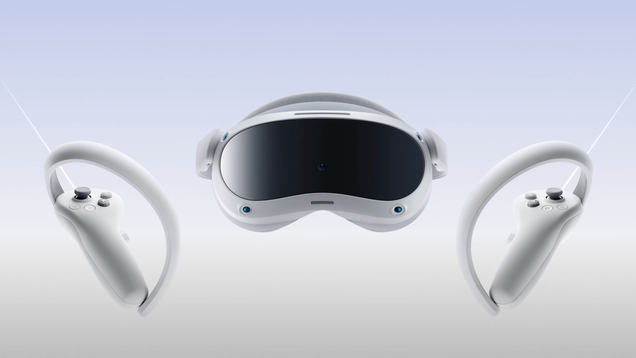
TikTok's Parent Company Isn't Done Yet With Those Pico VR Headsets

Rumors of the metaverse’s death overseas may have been a bit premature, even as headset-maker Pico seems to be in the doldrums of a rather anticlimactic year in VR. Word on the street was that ByteDance, the China-based company best known as the owner of TikTok, was looking to get out of the virtual reality game.

Read more…


Source: Gizmodo – TikTok’s Parent Company Isn’t Done Yet With Those Pico VR Headsets

Snapchat grows to more than 400 million users

Snapchat grew to more than 400 million users, Snap announced in its third-quarter earnings report. The app added nine million new users in the last quarter, bringing its total daily active users (DAUs) to 406 million, an increase of 12 percent from last year, the company said.

The milestone comes a little more than a year after Snap laid off about 20 percent of its workforce in an effort to cut costs as advertising revenue slowed. Those cuts, along with new product features, are apparently starting to pay off.

The company reported $1.19 billion in revenue for the quarter, an increase of 5 percent from last year and better than Wall Street analysts expected, according to CNBC. In a statement, Snap pointed to its subscription service, Snapchat+, as a key part of its strategy to grow its non-advertising sources of revenue. Snap announced last month that Snapchat+, which offers users exclusive and experimental features for $4 a month, had reached five million subscribers.

Generative AI has also been a bright spot for the company. The company’s MyAI chatbot, which rolled out to all Snapchat users in April, has reached more than 200 million people who have collectively exchanged more than 20 billion messages with the OpenAI-powered chatbot. Snap said it believes the assistant is one of the “most used AI chatbots available today.”

Developing…

This article originally appeared on Engadget at https://www.engadget.com/snapchat-grows-to-more-than-400-million-users-205715066.html?src=rss

Source: Engadget – Snapchat grows to more than 400 million users