Enlarge/ This view from an international volcano monitoring system shows the Kolumbo volcanic crater on the seafloor. (credit: SANTORY )
In 1650 CE, the Greek island of Santorini was devastated by the eruption of an underwater volcano called Kolumbo. People first noticed the water boiling and changing color and a cone poking out of the surface of the sea. Next came ejected glowing rocks, fire and lightning, fumes of thick smoke, falling pumice and ash, earthquakes, and a powerful tsunami with waves as high as 20 meters. All this eruptive activity killed around 70 people and hundreds of cattle.
These details are based on contemporary accounts compiled by French geologist Ferdinand A. Fouqué in 1879. A team of German and Greek scientists has now combined that historical knowledge with 3D seismic mapping and computer simulations to determine why the volcano’s violent eruption triggered a tsunami. According to a new paper published in the journal Nature Communications, the tsunami resulted from a landslide followed by the volcanic explosion.
Located some 8 kilometers northeast of Santorini, Kolumbo also erupted around 1630 BCE with catastrophic consequences for ancient Minoan culture. Today, the volcano boasts sulfide-sulfate hydrothermal vents that are home to some rare species of microorganisms typically not found elsewhere near hydrothermal vents. And it remains active and potentially dangerous: A previously unknown magma chamber was discovered last year and is growing at a rate of around 4 million cubic meters per year. At that rate, the chamber will reach the same volume as the amount of magma ejected in the 1650 eruption within the next 150 years.
When Netflix first unveiled its streaming video service in 2007, it felt like a miracle. Netflix’s DVD customers in the US, who were paying between $5.99 to $17.99 a month, instantly had access to 1,000 movies over a web browser. No more waiting for DVDs in the mail, no ads like TV – just hit a button and watch. Instantly! Now that seems like ages ago. Netflix’s most premium 4K streaming plan now costs $23 a month, while its standard subscription without ads costs $15.49 a month. (There is a standard plan with ads for $6.99 a month, but that doesn’t support offline downloads and also doesn’t include some content.)
Netflix has also been cracking down on account sharing recently, which is great for its overall earnings and subscriber count, but bad for anyone trying to save a buck. You’ll have to pay an extra $7.99 a month to add more member slots to the standard and premium plans.
And it’s not just Netflix. Over the past year, just about every major streaming service has raised its prices considerably. Apple TV+ is doubling its original price to $10 a month ($99 annually). Disney+ saw a hefty increase as well to $14 a month for its ad-free premium tier. For those who subscribe to multiple services, it’s easy to think we’re back in the bad old days of cable TV, where we ended up spending gobs of money for hundreds of channels.
But let’s not get dramatic. Subscribing to the streaming services you use the most is still far cheaper than going for a typical cable plan. In my area, Comcast’s most popular plan with over 125 channels is listed at $60 a month, but the company hides the additional $27.80 broadcast network fee and $13.40 regional sport licensing fee. My actual monthly cost starts at $101.20, and that doesn’t include taxes, equipment rental fees (at least $10 a month) and other additions Comcast may coax you into. (Want 300 hours of Cloud DVR? That’s another $20 monthly!)
According to the Bureau of Labor Statistics, the average urban consumer spends an eye-watering $575 a month on cable, satellite or live streaming TV service. To be clear, those numbers reflect some customers spending a ton more on sports and other packages compared to others. But still, even the prospect of spending $370 a month on cable (the BLS’s consumer average from 2010) feels unfathomable. All of a sudden, Netflix creeping toward $25 doesn’t seem so bad — especially since cable customers also have to subscribe to streaming services to see their original shows.
Netflix
While some have argued that streaming price hikes signal the end of the cord-cutting dream, that’s far from true. Cable prices were already high a decade ago, and they’ve risen considerably since then. (Broadcast fees alone were estimated to jump between 8 to 10 percent between 2016 and 2019.) If anything, the case for cord-cutting is even stronger now. With the wealth of content available on streaming services, do you really need to pay hundreds to sit through another HGTV marathon? Especially when you can find some HGTV content on Max, and similar shows on other streamers?
Nobody likes to see their favorite services getting more expensive. You could easily argue that streaming prices hikes fall firmly within Corey Doctorow’s concept of internet enshittification, wherein companies provide cheap and useful services to grow their userbase, but inevitably make the experience worse to squeeze out more money and appease their investors. Unless an online service is being run as a non-profit or completely free side project, enshittification seems inevitable.
But it’s worth acknowledging why streaming services were so cheap to begin with. Netflix’s streaming service was practically an experiment early on — it was rolled into existing subscription plans, and you could only watch up to 18 hours a month. When Netflix launched its standalone streaming subscription in 2010, it was only $7.99 a month — a price that held true until its basic plan jumped a whole dollar in 2019. While the company introduced more expensive standard and premium plans along the way, the entry plan always seemed like a tremendous deal. Who wouldn’t want instant access to thousands of movies and TV shows for the price of two coffees?
Like many startups during the 2010s, Netflix continually raised tons of money (around $5 billion) without making enormous profit — or at least, not profit in line with the tens of billions the company has spent on original content over the last decade. Enticing new subscribers and keeping them was far more important to Netflix than actually being a sustainable business. So it wasn’t too surprising when other services like HBO Max, Disney+ and Apple TV+ launched with low prices competitive with Netflix.
According to Janko Roettgers, author of the newsletter Lowpass, and a former media and technology reporter at Variety, Netflix had an advantage over the competition because its legacy DVD business could fund its streaming ambitions. Other companies like Disney and Warner Bros. had to decide how streaming fit within their existing TV channels and movie studios.
“Now [Netflix is] making money with streaming across the world, and they’re starting to get into gaming,” Roettgers noted on the Engadget Podcast this week. “So they’re pretty quick at following up. And if you look at some of these legacy media companies, well, they still have linear networks. And those are declining slowly and slowly, and it’s taking them a long time to figure out […] Should we get out of this? How many can we keep running? How many of those do we need to shut down?”
With interest rates on the rise and investors worried about the economy, raising prices was the inevitable next step for every streaming provider. And unfortunately, that trend won’t be reversed anytime soon. At best, we can only hope that the threat of losing users and pressure from competition will keep Netflix and others from reaching the dreaded highs of cable.
But don’t forget, there’s one thing you can do with streaming services that’s far more difficult with cable companies: You can cancel and subscribe easily online. You don’t need to set aside time and emotional energy to deal with a customer service rep on the phone, or block out a morning for a technician to visit. That potential for churn hangs over every streaming provider. So if their prices get too high, or they’re not actually providing enough valuable content to watch, just leave.
Still, it’s worth remembering that access to media is cheaper than ever. You don’t have to worry about spending a ton to rent movies from Blockbuster or your local video store. There aren’t any late fees to worry about. And while I miss the heyday of DVDs, buying just one of those discs could cover a month of service across two streaming services today (sometimes three!).
So sure, it stinks that Netflix is getting more expensive. But, personally, I’d easily take these higher prices over life before the streaming era.
This article originally appeared on Engadget at https://www.engadget.com/is-streaming-video-even-still-worth-it-192651141.html?src=rss
Last month, Sony raised the prices for PlayStation Plus by up to 35%. In an interview the company recently gave to Barron’s via ResetEra, the company attempted to justify this price increase.
X is adding two new tiers to its subscription offering, previously known as Twitter Blue. The company is adding a new, $16 per month “Premium+ tier” that eliminates ads in users’ following and “for you” timelines, in addition to the blue checkmark and other existing perks for subscribers. X is also adding a new, lower-cost “basic” tier that costs $3 a month.
The new subscription plans come as X’s advertising business has continued to decline, and the company is increasingly reliant on subscription revenue. X has also recently begun testing a program that requires all new users in some countries to pay $1 per year in order to post and reply to tweets.
introducing Premium+
– no ads in For You or Following – largest boost for your replies (vs other Premium tiers or unverified users) – access to our full suite of creator tools
In addition to removing ads from users’ timeline, X said in a tweet that Premium+ subscribers would get an even bigger algorithmic boost in replies compared with subscribers paying for the cheaper premium level. Of note, it appears that both new tiers are only available via the web, at least for now, which is likely meant to help the company avoid additional fees associated with Apple and Google’s app stores.
The $3 basic tier appears to be a much more limited set of features compared with Premium and Premium+ and, notably, doesn’t include the blue checkmark or revenue-sharing. Instead, it offers extras like tweets editing, longer posts, the ability to download videos. It also offers a “small reply boost” and encrypted direct messages.
The new tiers come amid new reports about Elon Musk’s ambitious plans for X, one year after his takeover of the social media company. Musk, who has often talked about wanting to create an “everything app” reportedly wants to directly challenge YouTube and LinkedIn, according to a new report in Bloomberg. His exact plans aren’t yet clear, but the company has recently teased new video streaming and job posting features on X.
Offering additional subscription services could also tie into Musk’s plans to offer banking and other financial services. (Musk has noted that obtaining users’ credit card information is a key first step.) “In the months to come, we will add comprehensive communications and the ability to conduct your entire financial world,” Musk tweeted in July. And, according to reporting from The Verge, Musk told employees this week that he wants X to be able to completely replace bank accounts by the end of 2024.
This article originally appeared on Engadget at https://www.engadget.com/x-introduces-an-ad-free-premium-tier-for-16-a-month-191523132.html?src=rss
Feast your eyes on Uranus’ glowing edges. We’re serious—a team of astronomers has spotted a new aurora on the seventh planet from the Sun, glowing at infrared wavelengths.
Blue Origin has revealed a life-sized model of its upcoming lunar cargo lander, Blue Moon Mark 1 (MK1), achieving a significant step in its plans to facilitate cargo transport to the Moon’s surface.
There’s no more brilliant tactician in the Galactic Empire than the evil Grand Admiral Thrawn. He’s a smart, cunning killer—and soon, you can put that blue baddie on your shelf and make him your property thanks to the team at Hot Toys.
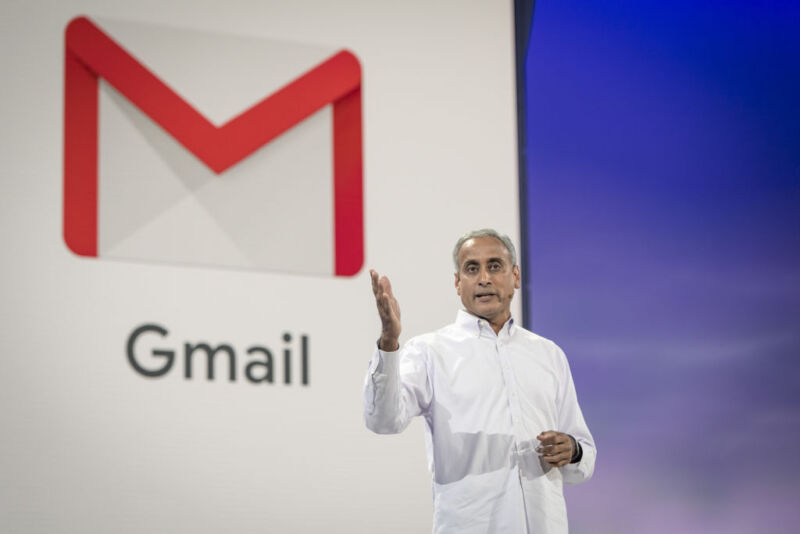
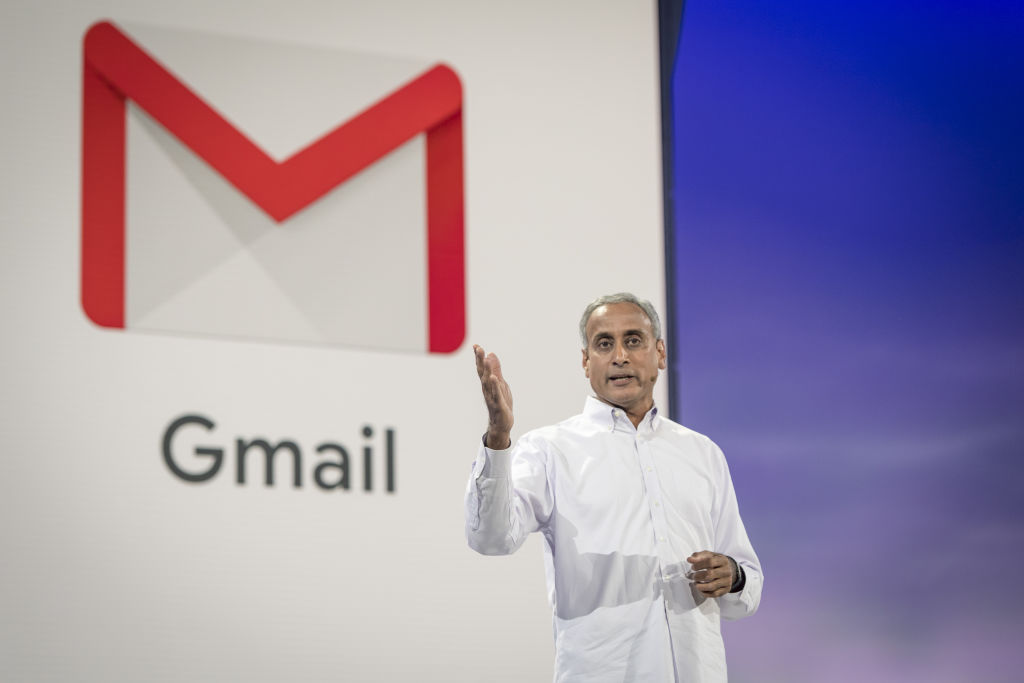
Enlarge/ Prabhakar Raghavan, a senior vice president at Google (where he is responsible for Google Search, Assistant, Geo, Ads, Commerce, and Payments products), speaks during a 2018 event. (credit: Bloomberg / Contributor | Bloomberg)
On Friday, Google started defending its search business during the Justice Department’s monopoly trial. Among the first witnesses called was Google’s senior vice president responsible for search, Prabhakar Raghavan, who testified that Google’s default agreements with makers of popular mobile phones and web browsers were “the company’s biggest cost” in 2021, Bloomberg Law reported.
Raghavan’s testimony for the first time revealed that Google paid $26.3 billion in 2021 for default agreements, seemingly investing in default status for its search engine while raking in $146.4 billion in revenue from search advertising that year. Those numbers had increased “significantly” since 2014, Big Tech on Trial reported, when Google’s search ad revenue was approximately 46 billion and traffic acquisition cost was approximately $7.1 billion.
Prior to Raghavan’s testimony, Google had been carefully guarding this information. According to Bloomberg, Judge Amit Mehta overruled Google’s objections to revealing the numbers, despite Google’s claims that such transparency could harm future deals.
An anonymous reader shares a report: Microsoft is starting to roll out new changes to Windows Ink that let you write anywhere you can type in Windows 11. After months of previewing the changes, the handwriting-to-text conversion now works inside search boxes and other elements of Windows 11 where you’d normally type your input. […] If you have a Surface device with a stylus or any other Windows tablet that supports Windows Ink then you’ll immediately see this new feature if you head into Settings and start to write into a search box, or in other text edit fields in Windows 11.
Apple’s holding another streaming event on October 30 at 8PM ET. Yes, that’s in the dead of night during the spookiest of seasons. The company’s calling it a “Scary Fast” event, which certainly makes it seem like there will be some hardware announcements. You can watch the stream on YouTube, on Apple’s official website and on Apple TV devices. Or, you can just keep this page open, as the stream’s embedded below.
So what’s on the docket for this Halloween-adjacent stream? We already had the big iPhone 15 reveal, so that leaves the company’s desktop and laptop computers. Given the event’s name, it’s highly likely Apple will drop the long-awaited M3 chip. It’s been nearly 17 months since the M2 debuted and, well, Moore’s law and all of that. For reference, it was 19 months between the M1 launch and the M2 debut.
Chips are only as good as the gadgets they power, so there should be a couple of hardware announcements to go along with that “scary fast” M3 chipset. Apple analysts Ming-Chi Kuo and Bloomberg’s Mark Gurman both suggest that an M3-powered MacBook Pro will take center stage at the event.
It’s also high-time that Apple released some new iMacs, as it’s been well over two years since 2021’s colorful refresh. Gurman has reported that the event will likely see the introduction of a new 24-inch iMac, also powered by the rumored M3 chip. He notes that current iMacs are in short supply at retail stores and that this typically indicates a forthcoming upgrade.
There could also be some iPad announcements at the event. If the whole stream revolves around M3-powered products, it’s more likely we’ll get a new iPad Pro than a standard entry-level tablet. However, it’s only been a year since the most recent iPad Pro debuted, though 2022’s release was merely a modest upgrade. Of course, other iPad models could get some love, setting them up to launch just in time for the holidays.
There could be some surprises, but we just got new iPhones and watches, and we know the Vision Pro isn’t due until next year, so that doesn’t leave a whole lot of options. At the very least, Apple presenters will likely be forced to wear Halloween costumes, which should be fun. Maybe we’ll see Tim Cook dressed as that blue smurf cat that blew up on TikTok earlier this month.
This article originally appeared on Engadget at https://www.engadget.com/how-to-watch-apples-scary-fast-event-183040759.html?src=rss
Apple is holding an event on October 30 at 8PM ET. Yes, that’s in the dead of night during the spookiest of seasons. The company’s calling it a “Scary Fast” event, which certainly either means Apple is getting into horror shorts, or it’s going to announce some improved hardware — our bet’s on the latter. You can watch Apple’s October event on YouTube, on Apple’s official website and on Apple TV devices. Or, you can just keep this page open, as the stream’s embedded below.
What to expect at Apple’s October Mac Event
So what’s on the docket for this Halloween-adjacent stream? We already had the big iPhone 15 reveal, so that leaves the company’s desktop and laptop computers. Given the event’s name, it’s highly likely Apple will drop the long-awaited M3 chip. It’s been nearly 17 months since the M2 debuted and, well, Moore’s law and all of that. For reference, it was 19 months between the M1 launch and the M2 debut.
Chips are only as good as the gadgets they power, so there should be a couple of hardware announcements to go along with that “scary fast” M3 chipset. Apple analysts Ming-Chi Kuo and Bloomberg’s Mark Gurman both suggest that an M3-powered MacBook Pro will take center stage at the event.
It’s also high-time that Apple released some new iMacs, as it’s been well over two years since 2021’s colorful refresh. Gurman has reported that the event will likely see the introduction of a new 24-inch iMac, also powered by the rumored M3 chip. He notes that current iMacs are in short supply at retail stores and that this typically indicates a forthcoming upgrade.
There could also be some iPad announcements at the event. If the whole stream revolves around M3-powered products, it’s more likely we’ll get a new iPad Pro than a standard entry-level tablet. However, it’s only been a year since the most recent iPad Pro debuted, though 2022’s release was merely a modest upgrade. Of course, other iPad models could get some love, setting them up to launch just in time for the holidays.
There could be some surprises, but we just got new iPhones and watches, and we know the Vision Pro isn’t due until next year, so that doesn’t leave a whole lot of options. At the very least, Apple presenters will likely be forced to wear Halloween costumes, which should be fun. Maybe we’ll see Tim Cook dressed as that blue smurf cat that blew up on TikTok earlier this month.
This article originally appeared on Engadget at https://www.engadget.com/how-to-watch-apples-scary-fast-event-today-october-30-183040989.html?src=rss
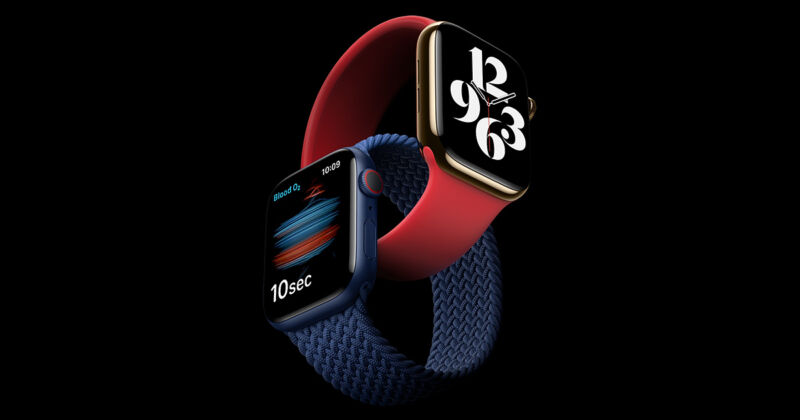
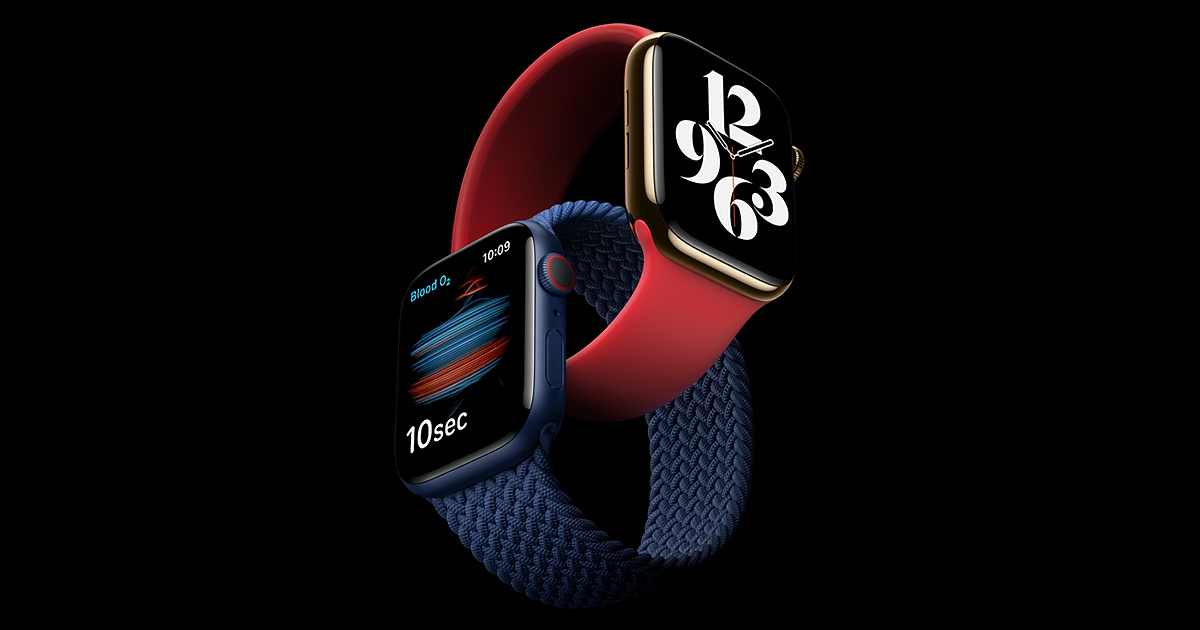
Enlarge/ The Apple Watch Series 6. (credit: Apple)
The Apple Watch violates patents owned by California-based Masimo, the US International Trade Commission (ITC) ruled on Thursday [PDF]. The federal agency issued a limited exclusion order for the smartwatches, meaning the Apple Watch is in jeopardy of an import ban.
The ITC’s ruling upholds a January ruling that found that the Apple Watch infringed on a Masimo patent. The exclusion period recommended on Thursday is supposed to go into effect after 60 days, during which time President Joe Biden can overturn the ruling. Biden previously declined to veto an ITC ruling that found the Apple Watch violated patents of a different company, AliveCor.
The debate is over Masimo’s light-based pulse oximetry. The ITC’s ruling doesn’t specify which watches are affected. But the first Apple Watch to feature blood oxygen monitoring was the Apple Watch Series 6, which came out in 2020.
Disney fans have been waiting a long time to see Rachel Zegler take a bite of that forbidden apple, and now they’re going to have to wait much, much longer.
On Thursday, the US International Trade Commission (ITC) upheld a judge’s earlier ruling that the Apple Watch violated patents from medical technology company Masimo, as reported byReuters. Although the ITC’s order could theoretically lead to an eventual import ban on Apple Watch models, the iPhone maker still has ample opportunity to avoid that outcome.
The decision stems from a lawsuit Masimo filed in 2021, accusing Apple of infringing on the smaller company’s patents related to light-based blood-oxygen monitoring. Apple introduced the feature in the Apple Watch Series 6, its 2020 flagship smartwatch. Its 2023 models, including the Apple Watch Series 9 and Apple Watch Ultra 2, still include blood-oxygen sensors.
Masimo’s filing focuses on the Apple Watch Series 6, which the iPhone maker discontinued in 2021 following the launch of its successor. It isn’t clear whether or to what degree a hypothetical import ban would affect Apple’s latest versions of its flagship wearable. A federal jury took up Masimo’s allegations earlier this year, ending in a mistrial.
The case now moves to the White House as the Biden administration has 60 days to decide whether to veto the import ban based on policy concerns. Reuters notes that US Presidents have rarely rejected bans historically. If Biden opts not to veto, Apple can appeal the ban to the US Court of Appeals for the Federal Circuit after the White House’s review period expires. Other options for the $2.6 trillion company include settling with Masimo or issuing software updates that skirt the patent.
Masimo paints the scenario as a victory for David vs. Goliath. “Today’s ruling by the USITC sends a powerful message that even the world’s largest company is not above the law,” Joe Kiani, Masimo’s CEO, wrote on Thursday. “This important determination is a strong validation of our efforts to hold Apple accountable for unlawfully misappropriating our patented technology,” added Mr. Kiani.
In a statement to Reuters, Apple framed the move as putting lives at risk to boost Masimo’s product portfolio. “Masimo has wrongly attempted to use the ITC to keep a potentially lifesaving product from millions of U.S. consumers while making way for their own watch that copies Apple,” an Apple spokesperson said. “While today’s decision has no immediate impact on sales of Apple Watch, we believe it should be reversed, and will continue our efforts to appeal.”
This article originally appeared on Engadget at https://www.engadget.com/itc-rules-against-apple-in-patent-dispute-setting-up-potential-ban-181123636.html?src=rss
Android 14 has a nasty storage bug that seems to be affecting users of the “multiple profiles” feature. The bug is about as bad as you can get, with users having “unusable” devices due to getting locked out of device storage. A few users are likening the experience to getting hit with “ransomware.”
Earlier reports had this bug limited to the Pixel 6, but Google seemed to ignore those reports, and now with a wider rollout, this does not seem device-specific. Everything upgrading to Android 14 this early seems to be affected: Pixel 6, 6a, 7, 7a, Pixel Fold, and Pixel Tablet.
The Google issue tracker for this is now up to over 350 replies and has had no response from Google. The bug is languishing at only the medium “P2” priority (P0 is the highest) and remains “unassigned,” meaning, assuming the tracker is up to date, no one is looking into it.
As the years have ticked on, electric vehicles have become more and more accessible to the general public. However, some companies in the EV business are rethinking their investments in the tech.
The US v. Google antitrust trial is about many things, but more than anything, it’s about the power of defaults. Even if it’s easy to switch browsers or platforms or search engines, the one that appears when you turn it on matters a lot. Google obviously agrees and has paid a staggering amount to make sure it is the default: testimony in the trial revealed that Google spent a total of $26.3 billion in 2021 to be the default search engine in multiple browsers, phones, and platforms. From a report: That number, the sum total of all of Google’s search distribution deals, came out during the Justice Department’s cross-examination of Google’s search head, Prabhakar Raghavan. It was made public after a debate earlier in the week between the two sides and Judge Amit Mehta over whether the figure should be redacted. Mehta has begun to push for more openness in the trial in general, and this was one of the most significant new pieces of information to be shared openly.
Just to put that $26.3 billion in context: Alphabet, Google’s parent company, announced in its recent earnings report that Google Search ad business brought in about $44 billion over the last three months and about $165 billion in the last year. Its entire ad business — which also includes YouTube ads — made a bit under $90 billion in profit. This is all back-of-the-napkin math, but essentially, Google is giving up about 16 percent of its search revenue and about 29 percent of its profit to those distribution deals.
Rita Ferro, president of global advertising for Disney, is currently focused on next week’s rollout of the Disney+ ad-tier option for subscribers in Europe and beyond, as well as expanding the streamer’s advertising capabilities. But she did have an interesting tidbit to share about how customers have reacted to the…
Antonio Regaladoarchive, reporting for MIT Technology Review: The gene-editing technology CRISPR has been used to change the genes of human babies, to modify animals, and to treat people with sickle-cell disease. Now scientists are attempting a new trick: using CRISPR to permanently cure people of HIV. In a remarkable experiment, a biotechnology company called Excision BioTherapeutics says it added the gene-editing tool to the bodies of three people living with HIV and commanded it to cut, and destroy, the virus wherever it is hiding. The early-stage study is a probing step toward the company’s eventual goal of curing HIV infection with a single intravenous dose of a gene-editing drug. Excision, which is based in San Francisco, says the first patient received treatment about a year ago.
This week, doctors involved in the study reported at a meeting in Brussels that the treatment appeared safe and did not have major side-effects. However, they withheld early data about the treatment’s effects, leaving outside experts guessing whether it had worked. “This is an exceptionally ambitious and important trial,” says Fyodor Urnov, a genome-editing expert at the University of California, Berkeley, who believes it “would be good to know sooner than later” what the effect was — “including, potentially, no effect.”
A failure wouldn’t come as a surprise to anyone familiar with HIV. It has proved a devious adversary: there is still no vaccine, even 40 years after the virus was identified in 1983. Still, pharmaceutical companies did develop antiretroviral drugs, which stop the virus from copying itself. Taking these pills lets people with HIV live normal lives. But if they stop, the virus will quickly rebound and, if left unchecked, cause the fatal syndrome of infections and cancers known as AIDS. One reason the virus can’t be fully wiped out with drugs alone is that it inserts its genetic material into the DNA of our cells, leaving behind hidden copies that can restart the infection.