Judge: xAI can’t claim OpenAI stole trade secrets just by hiring ex-staffers

Elon Musk appears to be grasping at straws in a lawsuit accusing OpenAI of poaching eight xAI employees in an allegedly unlawful bid to access xAI trade secrets connected to its data centers and chatbot, Grok.

In a Tuesday order granting OpenAI’s motion to dismiss, US District Judge Rita F. Lin said that xAI failed to provide evidence of any misconduct from OpenAI.

Instead, xAI seemed fixated on a range of alleged conduct of former employees. But in assessing xAI’s claims, Lin said that xAI failed to show proof that OpenAI induced any of these employees to steal trade secrets “or that these former xAI employees used any stolen trade secrets once employed by OpenAI.”

Read full article

Comments

Skate’s developer is laying off staff before the game leaves early access

Full Circle, the developer behind the new Skate game, has announced that it is restructuring and laying off staff. It’s not yet clear how many roles will be impacted by the changes, but the restructuring is happening less than six months after skate. launched in early access on September 15, 2025.

“We’re reshaping Full Circle to better support skate.’s long-term future,” Full Circle says. “These shifts mean making changes to our team structure, and some roles will be impacted. The teammates affected are talented colleagues and friends who helped build the foundation of skate. Their creativity and dedication are deeply ingrained in what players experience today. This decision is not a reflection of their impact and we’re committed to supporting them through this transition.”

Engadget has contacted Full Circle’s owner EA for more information about the layoffs. We’ll update this article if we hear back.

EA originally formed Full Circle in 2021 with a staff of development talent from the original Skate team. Skate was often positioned as a more realistic competitor to the Tony Hawk’s Pro Skater series, but the new studio has ultimately taken the franchise in a slightly different direction than fans may have expected. Previous Skate games were paid experiences with single-player and multiplayer modes, while skate. is a free-to-play live-service game supported with microtransactions.

Recent history, both the failure of Concord and the ongoing struggles of Highguard, serves as a testament to how hard it is to launch a live service game in the 2020s. Full Circle’s announcement notes the “tens of millions” of players that have tried the new game, but it’s possible a struggle to keep players interested and spending on microtransactions could be why it’s restructuring.

This article originally appeared on Engadget at https://www.engadget.com/gaming/skates-developer-is-laying-off-staff-before-the-game-leaves-early-access-220916797.html?src=rss

Samsung Is Very Confident in the Galaxy S26 Series’ Cameras

It probably will come as no surprise that Samsung claims its new S26 series delivers “the most powerful Galaxy experience yet.” The company announced the new phones during its big Unpacked 2026 event, and, like most new smartphones these days, this year’s models appear to be iterative updates to last year’s S25 phones.

The company particularly touted the S26 series’ cameras, but the interesting thing is, the camera hardware hasn’t much changed. If you look at the on-paper specs, you’ll mostly see the same numbers across the lens and sensor sizes. The S26 and S26+ have three rear cameras, while the S26 Ultra adds a fourth; all three phones have the same 12MP selfie camera. Really, the only hardware change is to the S26 Ultra’s 200MP main camera, which now has an f/1.4 aperture, compared to the f/1.7 aperture on the S25 Ultra’s 200MP camera. Otherwise, Samsung kept things pretty much the same.

The S26 cameras are still a decent upgrade over the S25’s

And yet, there are some clear advantages to the S26 series, especially the S26 Ultra. While the selfie cameras are the same as last year, they now use a new AI processor to bring out more detail: When there’s too much light in a shot, the S26 series can add virtual light to balance out the image. These phones are also better than previous models at filming video in low-light conditions, expanding on the company’s “Nightography” feature, which previously boosted the detail in photos; now, it works for video as well.

Speaking of video, Samsung says the S26 can automatically stabilize shots while maintaining a level image, even if you’re not looking at the frame, using “Super Steady with Horizontal Lock” (catchy name!).

If you pick up the Ultra, you’ll also get some pro video features. First, the phone supports the APV video codec, Samsung’s pro video codec, ideal for professional editors. Presumably, shooting in 8K APV will produce some large file sizes, which is why it’s great that the S26 Ultra supports recording to external storage, like the recent Pro iPhones. If shooting in log, you’ll be able to apply LUTs to your footage, to customize the overall color-grading of your images.

One smaller upgrade is Ocean Mode, which takes detailed images in underwater environments. This feature was previously available to professionals only, but the S26 series gets it as part of the Expert RAW setting.

s26 camera at night

Credit: Samsung/YouTube

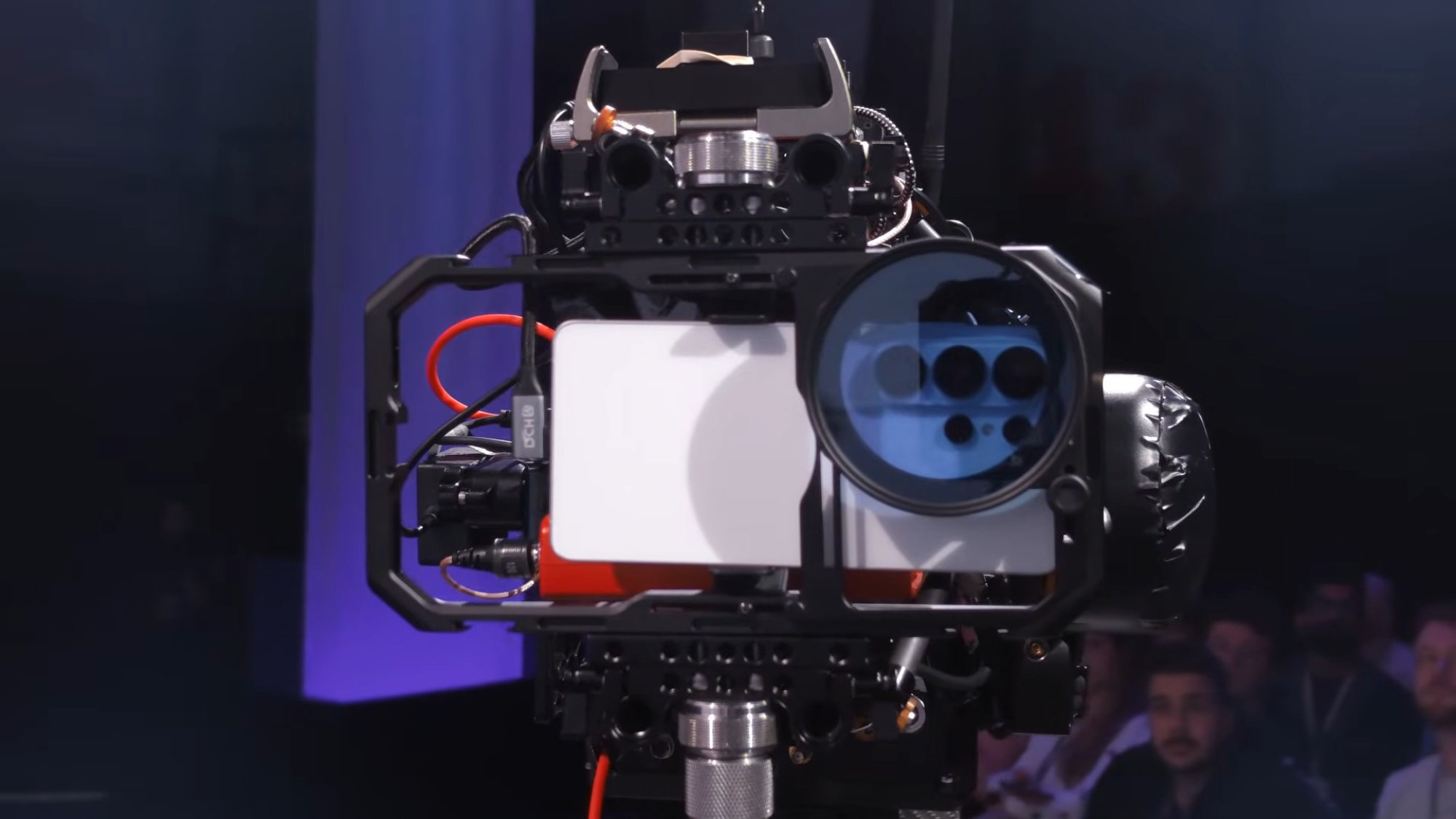
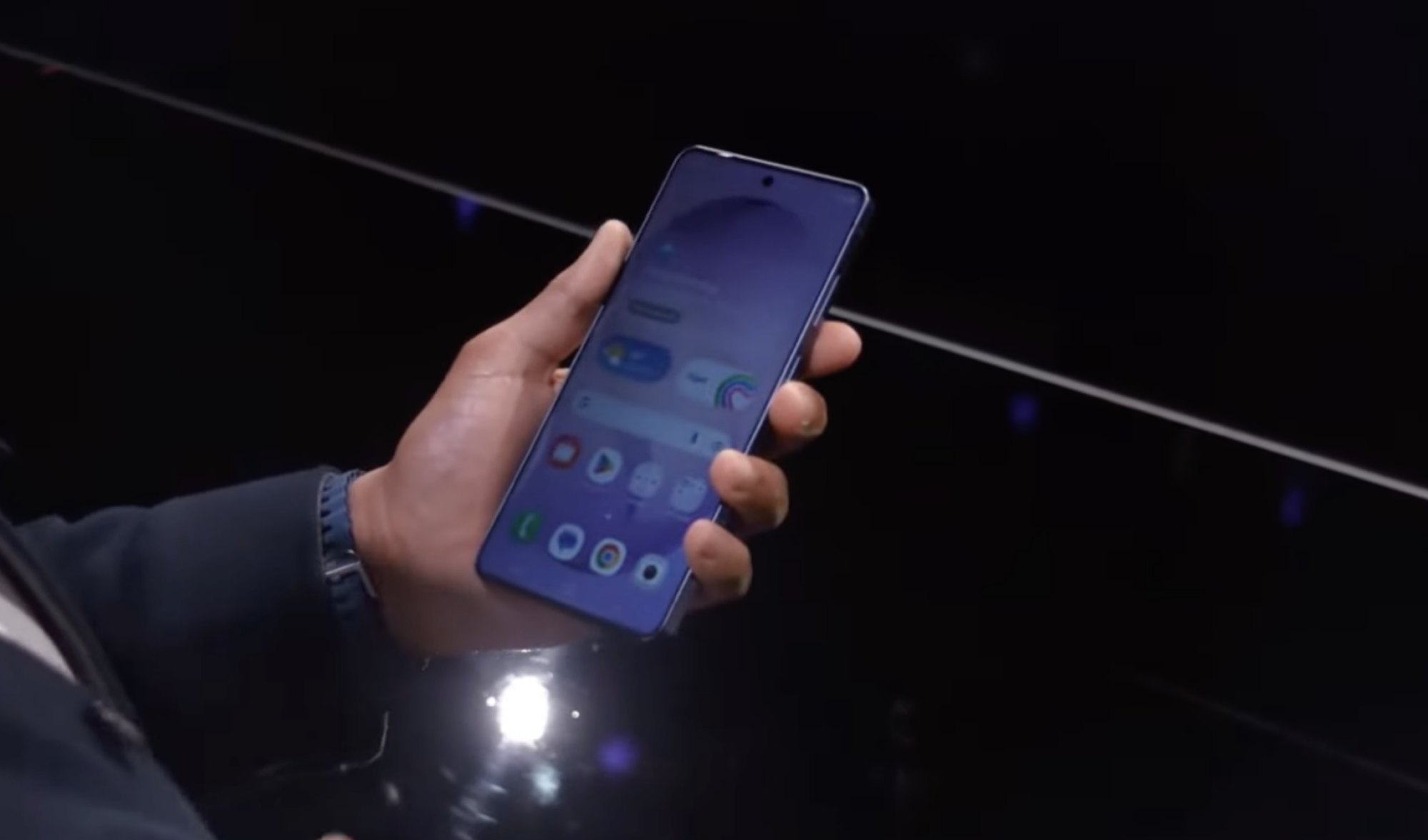
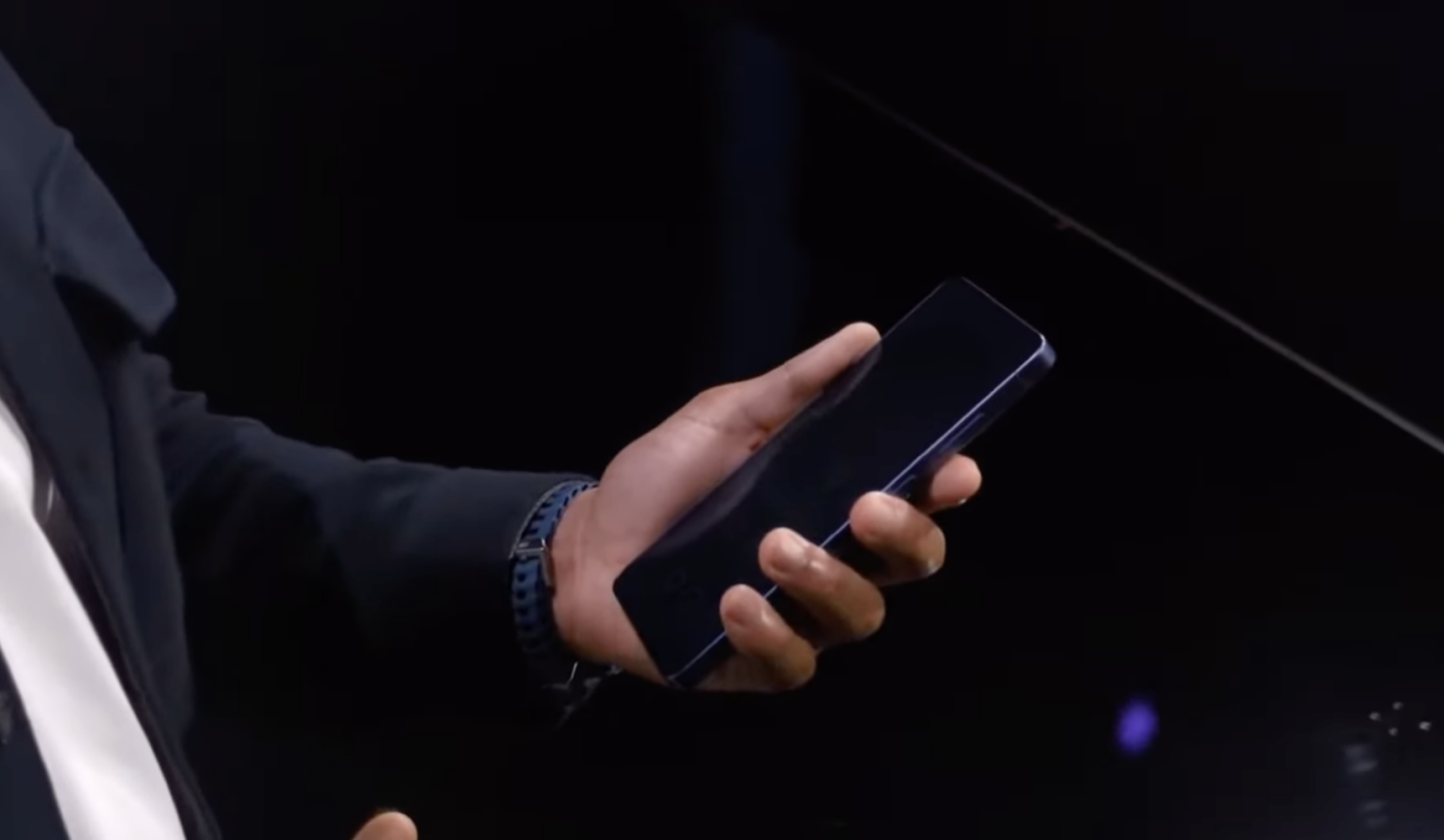
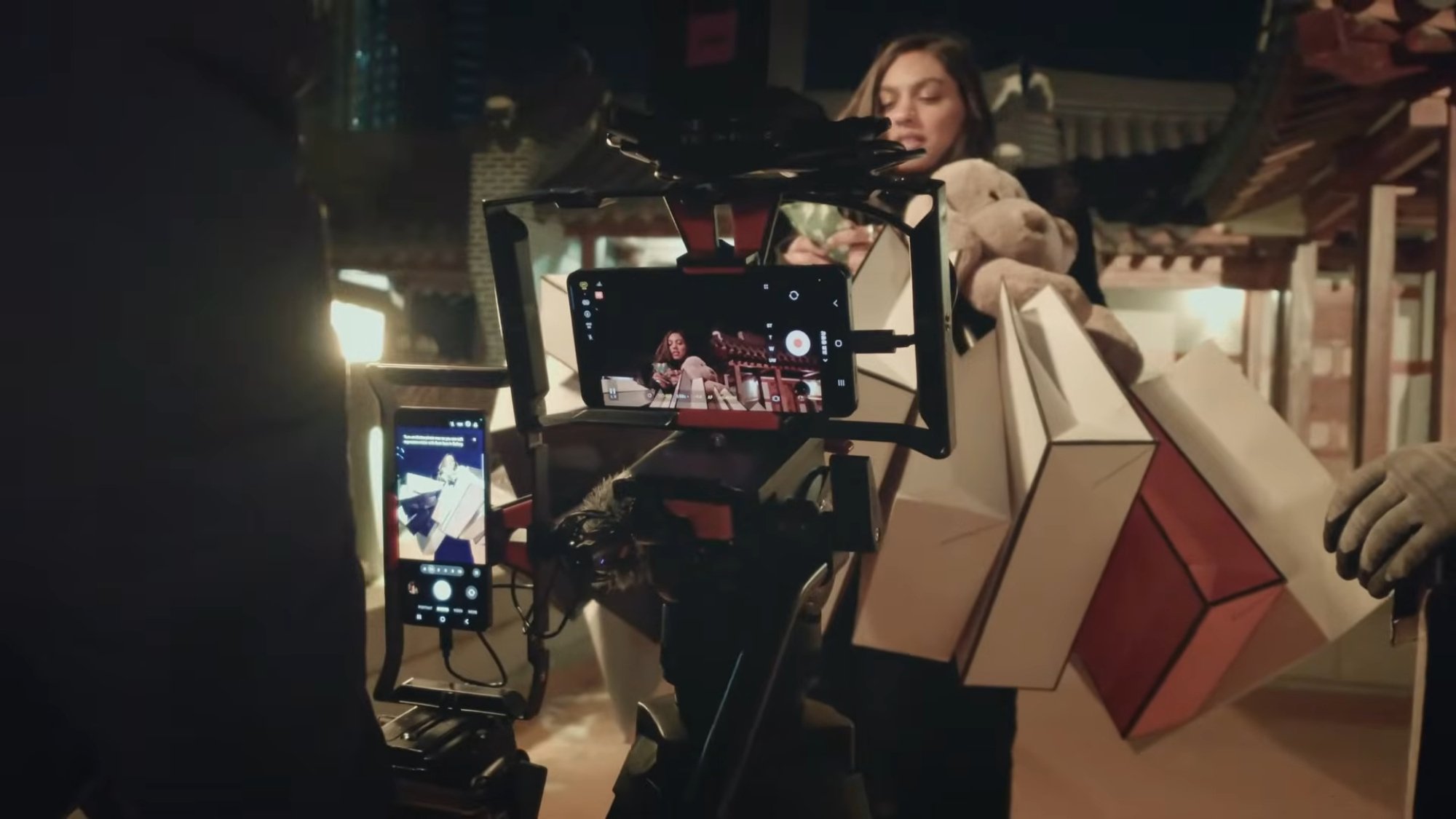
Samsung added a surprise twist to Unpacked, revealing towards the end of the show that the entire livestream was filmed using S26 Ultras. That follows Apple’s playbook of recording events with iPhones, though Apple doesn’t do livestreams anymore. As far as I can tell, this is the first time a company like Samsung has livestreamed its entire presentation on one of its smartphone cameras. (Though both Apple and Samsung also deck out their smartphones with expensive equipment to capture these images.)

samsung ultra livestreaming event

Credit: Samsung/YouTube

Galaxy AI brings new camera features to the S26 too

Samsung’s event focused a lot on Galaxy AI, and its benefits also applied to the cameras. For instance, the document scanner on the S26 can remove extraneous subjects from scans, such as your thumb or finger, and can combine multiple scans into one PDF.

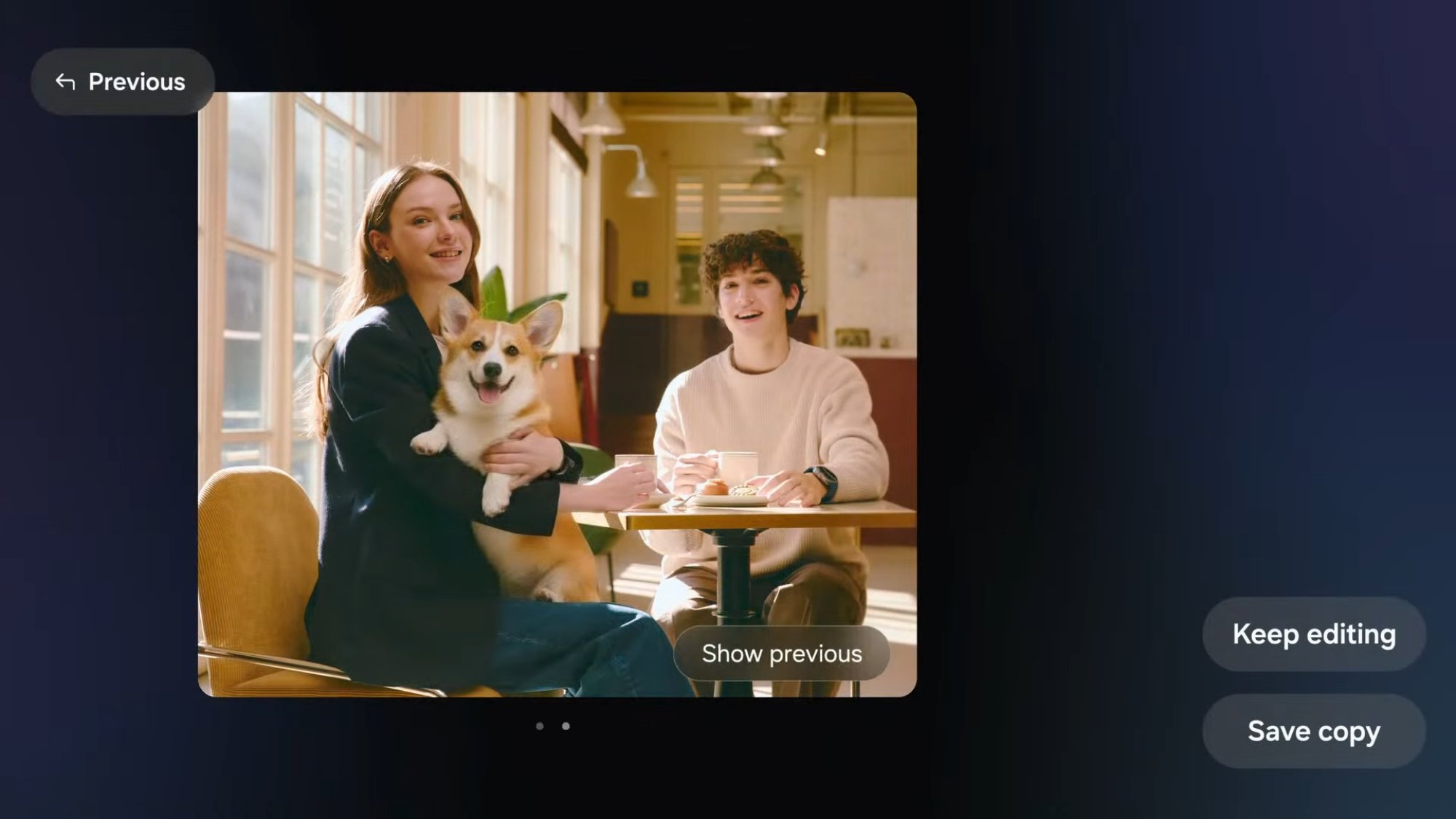
You can also use Galaxy AI for prompt-based editing. Samsung showed off how to merge two photos at once, so that the subject of one image is “seamlessly” edited into another. The example added a dog from one image into the arms of a woman sitting at a coffee shop in another. Other examples of prompt-based edits include swapping outfits in an image, or editing a bite out of a cupcake.

samsung event

Credit: Samsung/YouTube

None of these upgrades alone are necessarily worth upgrading from the S25, but they show that Samsung is quite confident in the features and quality of its cameras. Even if you don’t care for AI editing, it’s helpful to have added details when shooting in low light, and any budding cinematographers may enjoy the pro features—especially codec support and the ability to shoot to external storage. But, as always, we’ll need to wait for reviewers to get their hands on the phones before we know how good these cameras really are.

The Galaxy S26 is faster, more expensive, and even more chock-full of AI

There used to be countless companies making flagship Android phones, but a combination of factors has narrowed the field over time. Today, Samsung is the undisputed king of the Android device ecosystem with its Galaxy S line. So we can safely assume today’s Unpacked has revealed the most popular Android phones for the next year—the Galaxy S26 Ultra, Galaxy S26+, and Galaxy S26.

Samsung didn’t swing for the fences this time around, producing phones with a few cosmetic tweaks and upgraded internals. Meanwhile, Samsung is investing even more in AI, saying the S26 series includes the first “Agentic AI phones.” Despite limited hardware upgrades, the realities of component prices in the age of AI mean the prices of the two cheaper models have gone up by $100 this year. The Ultra remains at an already eye-watering $1,300.

Faster and more private

Looking at the Galaxy S26 family, you’d be hard-pressed to tell them apart from last year’s phones. The camera surround is different, and the measurements of the smallest and largest phone are ever so slightly different. You probably won’t be able to tell just by looking, but the S26 Ultra has regressed from titanium to aluminum, a reversion Apple also made with its latest high-end phones. This phone also retains its S Pen stylus.

Read full article

Comments

Why the Galaxy S26 Got a Price Hike

We may earn a commission from links on this page.

On paper, the Samsung Galaxy S26 lineup seems like a pretty standard upgrade. The phones have received a new chip, some new AI features, slight bumps to the battery life and charging speeds (depending on your model), and even a fancy new gimmick in the Privacy Display. But once you add one of these new handsets to your cart, you’ll notice another detail that’s changed: Two of the Galaxy S26 phones cost $100 more than their Galaxy S25 counterparts did at launch last year.

We were all hoping it wouldn’t happen, but as AI demand makes components like storage, memory and even displays more expensive, the first major tech launch of the year has shown us that we can expect prices to increase in turn. This year, two models of the Galaxy S26 are $100 more expensive—but hey, at least your priciest options got out unscathed.

Why the Galaxy S26 costs $100 more

Maybe the most noticeable casualty in the S26 price hikes was the base model, which went from starting at $799 for the S25 to starting at $899 for the S26. That makes it pricier than an iPhone 17, but you do get a little something in exchange.

Essentially, this is less of a price increase, and more like paring down your options: To coincide with the new price, Samsung has also bumped up the S26’s base storage to 256GB (up from 128GB on the S25). That means Samsung has to produce fewer varieties for its base phone, which will likely help it deal with the ongoing components shortage, while keeping pricing stable for the most popular configurations.

I say “close,” because the 256GB S26 is still a bit more expensive than the 256GB S25. That phone costs $859, so whether the upgrade is worth an additional $40 depends on how much you care about a larger battery, a new chip, and a 0.1-inch larger display. Being the base phone, the S26 doesn’t have the flashiest additions over its predecessor, but it might have fared better than the non-Ultra S26.

The Galaxy S26+ costs as much as an iPhone 17 Pro

Perhaps the bigger victim in Samsung’s S26 price increases is the Galaxy S26+, which now starts at $1,099, up from $999 for the S25+. The price increase here is a bit harder to explain, as it didn’t get any bumps to its base storage to compensate. It still starts at 256GB of storage, still has a 6.7-inch screen, and still has the same 50MP/12MP/10MP rear camera system. The Privacy Display—the Ultra’s flashiest new feature—isn’t even included. The biggest on-paper upgrade is the new chip, the Snapdragon 8 Elite for Galaxy Gen 5.

That means upgrading will only net you slightly faster processing, plus early access to those new AI features that are Galaxy S26 and Pixel 10-exclusive…for now. The lack of distinct selling points emphasizes the awkward space these middle-of-the-road models currently occupy. For instance, you can get an iPhone 17 Pro for the same $1,099, and that will get you Apple’s best technology, minus the slightly larger display and battery on the iPhone 17 Pro Max. If Samsung is charging that much for a Plus model, maybe it makes sense that Apple ditched its own Plus version for the weirder (but unique) iPhone Air.

Granted, the S26+ is still a strong phone. That new chip is no slouch, and while the ultrawide and telephoto lenses are weaker here than on the 17 Pro, the main lens is actually slightly stronger, at 50MP versus 48MP. I wouldn’t be disappointed to get an S26+, but it might be difficult for an S25+ owner to find a reason to upgrade their current phone. It’s basically the same device, but $100 pricier.

The Galaxy S26 Ultra costs the same, probably because that’s the one Samsung wants you to buy

While it’s unclear why Samsung put the S26+ out without making a compelling case for it—the company didn’t even talk about it much during today’s Galaxy Unpacked event—I’d guess that is because the company would much prefer you upgrade to the Galaxy S26 Ultra. This is the model with the most exclusive features, offering the clearest upgrades over its last gen version. It’s also the only model that didn’t see a price hike.

The Galaxy S26 Ultra starts at $1,299, the same as the Galaxy S25 Ultra. But for that cost, you’ll now get a new chip, faster wired charging (up from 45W to 60W), the Privacy Display, and improved nighttime photos as well as access to the APV codec used in professional video shoots. That’s a good amount of upgrades over what the other models offer.

To me, that signals one thing: Samsung is willing to raise its barrier to entry, but is going to do its best to keep pricing for its flagship devices as attractive as possible for as long as possible. If you’re willing to buy the most expensive model, you can avoid a price hike, while also getting the biggest upgrades. Everyone else will have to pay more. I’m curious to see whether Apple will follow this trend when it drops the iPhone 18 later this year.

The next Assassin’s Creed game loses its creative director

Ubisoft’s shakeups continue unabated. The creative director of the next Assassin’s Creed game, codenamed Hexe, has left the company. The departure of Clint Hocking, a 20-year veteran of the company over two stints, was reportedly announced in a staff meeting this week.

Hocking’s resume at Ubisoft included serving as creative director on Splinter Cell: Chaos Theory, Far Cry 2 and Watch Dogs: Legion. The details of why he’s leaving the company haven’t been reported.

Ubisoft told VGC, which first reported on Hocking’s exit, that development on Hexe will continue. Jean Guedson, one of three new leaders of the Assassin’s Creed franchise, will take over as the upcoming title’s new creative director. Guedson had the same role for Assassin’s Creed Origins and Black Flag, two of the franchise’s most well-received entries.

To say sailing hasn’t been smooth of late at Ubisoft would be an understatement. Last year, the company reorganized its corporate structure under a system of “creative houses.” The first, Vantage Studios, is partly owned by Tencent and now oversees Assassin’s Creed. Then in October, franchise head Marc-Alexis Côté left the company. He later claimed he was “asked to step aside” and is suing his former employer.

All of these changes came in the wake of layoffs, big-name flops, more layoffs, studio closures, even more layoffs, strikes and (yep) layoffs again. Earlier this month, Ubisoft even fired an employee who criticized the company’s return-to-office mandate.

But have no fear; some aspects of the company are doing quite well. Take, for example, nepotism. The future is looking bright indeed for a rising company star who is now co-CEO of Vantage Studios. That title belongs to Charlie Guillemot, the son of Ubisoft CEO Yves Guillemot.

This article originally appeared on Engadget at https://www.engadget.com/gaming/the-next-assassins-creed-game-loses-its-creative-director-210119005.html?src=rss

Here’s How to Preorder the Galaxy S26 Series

We may earn a commission from links on this page.

The Galaxy S26 series is official, even if they’re not quite officially here yet. Samsung announced the new smartphones at today’s Unpacked 2026, touting their upgraded chips (Snapdragon 8 Elite Gen 5 for Galaxy), pro camera features, and new Galaxy AI capabilities.

It might be a relatively quiet update, but an update’s an update. If you’re looking for the fastest Galaxy devices on the market, the choice just moved from the S25 to the S26.

When is Samsung releasing the Galaxy S26?

While the entire S26 lineup is currently available to preorder, they aren’t yet available to purchase. Samsung is making users wait a bit—two weeks, to be exact. Preorders start today, Feb. 25, while the units themselves will be available in stores starting March 11.

Still, even if you have two weeks to buy any of the S26 series, you might want to consider preordering them ahead of time if you want to secure your device. The newest smartphones from companies like Samsung tend to sell out on release, pushing shipping dates back further than the official release date. That’s no guarantee it’ll happen this time, but preorder sets your place in line if you’re sure which model you want.

How much does the Galaxy S26 cost?

Three phones, three different starting prices:

  • the Galaxy S26 is the smallest of the bunch, and costs the least, starting at $899.99

  • the S26 Plus starts at $1,099.99

  • the S26 Ultra starts at $1,299.99

Those are just the entry prices, of course—for the base storage for each device. If you want more storage, you’ll need to pay more, though you could save some money, depending on the preorder deal you choose.

Where to preorder the Galaxy S26 series (and the best deals)

There are a number of stores you can preorder the Galaxy S26 series from, but Samsung would obviously prefer you to buy direct. The company is running promotions for preorders, such as trade-in deals, to knock some money off the price tag, but the best reason to go through Samsung is if you want one of their exclusive colors: Silver Shadow and Pinkgold are only available on Samsung’s official site.

Here are the current preorder deals I’m seeing:

Galaxy S26

  • AT&T: As low as $0 per month with eligible trade-in.

  • Amazon: Save $200 off the 512GB model, and get a free gift card.

  • Best Buy: Save $200 off the 512GB model. Trade-in offers accepted.

  • Boost Mobile: $3 per month on the Infinite Access for Galaxy $65 Plan

  • Samsung: Save up to $500 with eligible trade-in, plus $50 off through PayPal code.

  • T-Mobile: As low as $0 per month with eligible trade-in or new line on the Experience Beyond plan.

  • Verizon: As low as $0 per month with Unlimited Ultimate or Unlimited Plus plan.

Galaxy S26 Plus

  • AT&T: As low as $0 per month with eligible trade-in.

  • Amazon: Save $200 off the 512GB model, and get a free gift card.

  • Best Buy: Save $200 off the 512GB model.

  • Boost Mobile: $8.33 per month with the Infinite Access for Galaxy $65 plan.

  • Samsung: Save up to $500 with eligible trade-in, plus $50 off through PayPal code.

  • T-Mobile: As low as $0 per month with eligible trade-in or new line on the Experience Beyond plan.

  • Verizon: As low as $0 per month with Unlimited Ultimate or Unlimited Plus plan.

Galaxy S26 Ultra

  • AT&T: As low as $0 per month with eligible trade-in.

  • Amazon: Save $400 off the 512GB model, and get a free gift card.

  • Best Buy: Save $200 off the 512GB model.

  • Boost Mobile: $13.89 per month with the Infinite Access for Galaxy $64 plan.

  • Samsung: Save up to $900 with eligible trade-in, plus $50 off through PayPal code.

  • T-Mobile: As low as $0 per month with eligible trade-in or new line on the Experience Beyond plan.

  • Verizon: Save up to $36.11 per month with the Unlimited Ultimate plan.

Americans Are Destroying Flock Surveillance Cameras

An anonymous reader shares a report: Brian Merchant, writing for Blood in the Machine, reports that people across the United States are dismantling and destroying Flock surveillance cameras, amid rising public anger that the license plate readers aid U.S. immigration authorities and deportations.

Flock is the Atlanta-based surveillance startup valued at $7.5 billion a year ago and a maker of license plate readers. It has faced criticism for allowing federal authorities access to its massive network of nationwide license plate readers and databases at a time when U.S. Immigration and Customs Enforcement is increasingly relying on data to raid communities as part of the Trump administration’s immigration crackdown.

Flock cameras allow authorities to track where people go and when by taking photos of their license plates from thousands of cameras located across the United States. Flock claims it doesn’t share data with ICE directly, but reports show that local police have shared their own access to Flock cameras and its databases with federal authorities. While some communities are calling on their cities to end their contracts with Flock, others are taking matters into their own hands.


Read more of this story at Slashdot.

Judge doesn’t trust DOJ with search of devices seized from Wash. Post reporter

A federal court will conduct a search of devices seized from a Washington Post reporter after a magistrate judge decided yesterday that the Department of Justice cannot be trusted to perform the search on its own.

US Magistrate Judge William Porter criticized government prosecutors for not including key information in a search warrant application. The court wasn’t aware of a 1980 law that limits searches and seizures of journalists’ work materials when it approved the warrant, Porter acknowledged.

The decision came six weeks after the FBI executed the search warrant at the Virginia home of reporter Hannah Natanson. Porter declined the Post and Natanson’s request to return the devices immediately but decided on a court-led process to ensure that the search is limited to materials that may aid a criminal case against an alleged leaker who was in contact with Natanson. He also rescinded the portion of the search warrant that authorized the government to open, access, review, or otherwise examine the seized data.

Read full article

Comments

Windows 11’s Latest Update Surprises With Speed And Lots Of New Tricks

Windows 11's Latest Update Surprises With Speed And Lots Of New Tricks
The latest Windows 11 update has drawn praise for focusing almost exclusively on new features and performance improvements, rather than deeper AI integration, indicating a possible pivot by Microsoft. Some recent updates and comments from Microsoft leadership focused almost solely on AI, and many users were vocal about their disappointment.

Canadian government demands safety changes from OpenAI

Canadian officials summoned leaders from OpenAI to Ottawa this week to address safety concerns about ChatGPT. The crux of the government concerns was that OpenAI did not notify authorities when it banned the account of a user who allegedly committed a mass shooting in British Columbia earlier this month. 

“The message that we delivered, in no uncertain terms, was that we have ‌an expectation that there are going to ⁠be changes implemented, and if they’re not forthcoming very quickly, the government is going to be making changes,” Justice Minister Sean Fraser said of the company and its AI chatbot. It’s unclear what those government-led changes or rules might be. There have been two previous, unsuccessful attempts to pass an online harms act in Canada.

A recent report by The Wall Street Journal claimed that in 2025, some OpenAI employees flagged the account of the alleged shooter, Jesse Van Rootselaar, as containing potential warnings of committing real-world violence and called for leadership to notify law enforcement. Although Van Rootselaar’s account was banned for policy violations, a company rep said that the account activity did not meet OpenAI’s criteria for engaging the local police. 

“Those reports were deeply disturbing, reports saying that OpenAI did not contact law enforcement in a timely manner,” said Canadian Artificial Intelligence Minister Evan Solomon ahead of the discussion with company leaders. “We will have a sit-down meeting to have an explanation of their safety protocols and when they escalate and their thresholds of escalation to police, so we have a better understanding of what’s happening and what they do.”

OpenAI has been implicated in mulitple wrongful death suits. The company’s ChatGPT was accused of encouraging “paranoid beliefs” before a man killed his mother and himself in a December 2025 lawsuit. It is also at the center of one of several wrongful death lawsuits against the makers of AI chatbots for helping teenagers plan and commit suicides.

This article originally appeared on Engadget at https://www.engadget.com/ai/canadian-government-demands-safety-changes-from-openai-204924604.html?src=rss

Xbox consoles now support 1440p streaming

Microsoft has announced that its rolling out support for streaming games at 1440p on Xbox consoles. Game streaming is a key benefit of paying for a Game Pass subscription, and as of 2025, now also includes games players own that aren’t part of the larger Game Pass library.

The higher bitrate streaming option will let subscribers with an Xbox Series X or S, Xbox One X or Xbox One play their games at a higher resolution, provided the game and their display supports it. Microsoft previously only offered 1440p streams on select Fire TVs, LG TVs, Samsung TVs, web browsers and the Xbox PC app. At least for now, 1440p is only available to Game Pass Ultimate subscribers.

Beyond the new streaming option, Microsoft is also making improvements to the Xbox PC app and the Xbox experience on ROG Xbox Ally handhelds. On PC, the Xbox PC app now includes “navigation sounds” that play when you use the app’s interface with a controller. These new sounds are supposed to make controller input feel more responsive and intuitive. On the ASUS ROG Xbox Ally and Xbox Ally X, meanwhile, Microsoft is making it even easier to format removable storage like microSD cards, and updating drivers to improve compatibility on select games.

The last week has been particularly tumultuous for Microsoft’s gaming division. Former Microsoft Gaming CEO Phil Spencer announced his retirement on Friday, alongside the appointment of Asha Sharma, the President of Microsoft’s CoreAI division, as his replacement. Opinions differ as to whether Sharma’s new position will be good or bad for Xbox, but more changes are likely on the way.

This article originally appeared on Engadget at https://www.engadget.com/gaming/xbox/xbox-consoles-now-support-1440p-streaming-204115304.html?src=rss

Samsung’s New S26 ‘Privacy Display’ Will Make Third-Party Privacy Screens Obsolete

We may earn a commission from links on this page.

I have a bad habit, and you probably do too: When someone opens their phone near me, I instinctively look. I’m not looking for anything intentionally—my eyes glance involuntarily, hovering for a moment before I return someone’s privacy—but I’ve seen everything from harmless wallpapers to lock codes, bank statements, and text messages during relationship fights. 

I’m not a nosy person, nor am I overly concerned about my own privacy when it becomes too inconvenient. But the most common form of privacy invasion is likely the simplest: glancing at someone’s phone screen, or someone glancing at yours. 

Years ago, I protected my privacy with privacy screens on both my laptop and phone, but I let that practice lapse so much that I almost forgot privacy screens existed. Today, at Samsung Galaxy Unpacked, the company introduced the privacy screen I wanted all along. 

The screen of a Samsung Galaxy S26 Ultra with its new privacy display
This is the transition angle where viewability begins to fade.
Credit: Samsung Galaxy Unpacked / Lifehacker

Samsung’s new Privacy Display can narrow the pixel light on your phone screen so it’s only visible to you. The feature can be toggled on and off, and it’s also customizable by app, allowing some apps to be viewable to others while keeping sensitive apps, like your banking app or an HBO show, unviewable to passersby. When the Privacy Display feature is off, pixels are viewable from every angle, but when it’s on, the pixel lights narrow to you. Essentially, you can control when you want people to see your phone from over your shoulder, which is probably rare compared to when you’d rather have your phone protected from side angles. The Privacy Display will be available on the new Galaxy S26 Ultra, but the feature is so useful that it was the most interesting announcement from Galaxy Unpacked, and once competitors catch on, I expect a built-in privacy screen to become the standard in smartphones. It doesn’t take much to imagine third-party privacy screens soon becoming obsolete.

The screen of a Samsung Galaxy S26 Ultra with its new privacy display
This is the angle from the side, where others can no longer view the screen.
Credit: Samsung Galaxy Unpacked / Lifehacker

After expensive device upgrades and buying a long list of accessories, adding a privacy screen protector can feel like a waste of money. To save a few bucks, I simply tell myself that I’ll be more aware of my surroundings. Still, just yesterday on the subway, I noticed someone’s harmless Shadow the Hedgehog screensaver, followed by their private, potentially embarrassing app notifications. Realistically, others have likely glanced at the same kind of information on my phone, too, no matter how “aware of my surroundings” I hope to be.

So far, the new Privacy Display appears to be available only on the new Galaxy S26 Ultra, which will have a starting price of $1,299. Hopefully, the feature will be adopted more broadly, including on the cheaper S26, which will start at $899, and the S26+, which will start at $1,099. I don’t know what took phone manufacturers so long to build such a useful tool, but I would guess it comes down to focusing on clumsily forcing AI into features I’ll rarely use. Samsung Unpacked had plenty of hamfisted AI announcements—you should check out the longer list of those—but the simple utility of the privacy display stole the show. And it’s better late than never.

Xbox Co-founder Says Microsoft is Quietly Sunsetting the Platform

Seamus Blackley, one of the original founders of Xbox who helped convince Bill Gates and Steve Ballmer to back a console project more than 26 years ago, told GamesBeat in an interview that he believes Microsoft is quietly sunsetting the platform under the guise of an AI-driven leadership transition.

Microsoft recently announced that Asha Sharma, whose career has focused on AI and software as a service, will replace Phil Spencer as Xbox CEO, and that COO and president Sarah Bond is leaving the company. Blackley said he expects Sharma’s role to be that of “a palliative care doctor who slides Xbox gently into the night,” arguing that Satya Nadella’s all-consuming bet on generative AI has turned every business unit — Xbox included — into a nail for the same hammer.

He compared the appointment to putting someone who doesn’t like movies in charge of a major motion picture studio, and advised Sharma to either develop a genuine passion for games or find a way to leave the job soon.


Read more of this story at Slashdot.

10 Items to Help You Better Organize Your Fridge

We may earn a commission from links on this page.

A lot of us spend significant time and energy organizing our closets, home offices, and even our kitchen cabinets, but we toss our weekly groceries and daily leftovers into the fridge with little thought. Soon enough, we can’t find the ranch dressing behind all the plastic containers filled with food that looks more like a science experiment.

Even if you don’t let your fridge situation get quite that bad, a lack of organization in there will make it harder to keep it clean and find and grab what you need. If you want to get serious about organizing your fridge, you have to go beyond the standard drawers and shelves most models offer. Here are the products I recommend to turn your chaotic fridge into something more manageable.

Add extra drawers to your fridge

Many refrigerators come with just a few drawers for storing produce or other foods, and that may not be enough to keep things separated. These under-shelf drawers clip into place and provide extra pull-out storage that won’t eat up precious shelf space (though they do, admittedly, reduce the vertical space you can use, so you have to be thoughtful about where to place them).

Use fridge drink organizers

My wife buys a lot of soda. A lot. She used to just shove those cardboard sleeves into the fridge and take cans as she needed them, but the cans would sometimes just roll out onto the floor, the cardboard often got soggy, and it was just ugly. The better choice is to install a can holder—either a stand-up version like this one, or a plastic dispenser like this. Either choice will keep those cans organized and in place, and will make your fridge look neater.

Stackable pull-out drawer bins make use of vertical fridge space

The key to fridge organization is a modular approach, dividing those vast shelf spaces into tidy, stackable components. These plastic bins are a good choice here: They can be stacked up so you can actually use the vertical space in your fridge, and their contents can be accessed via a pull-out drawer, so you don’t need to un-stack them to get to what you need.

Add storage bins with removable colanders for your produce

A great option for folks who eat a lot of produce that needs washing before use, these sturdy, airtight plastic containers stack up in your fridge for maximum neatness and have a built-in colander for quick and easy rinsing before use.

Organize your condiments with a Lazy Susan

A Lazy Susan—a rotating turntable—is an amazing addition to your refrigerator’s interior. It allows you to keep all those condiments and jars of leftover sauce in one place so you can easily access them without excavating the entirety of your refrigerator’s contents.

Use peel and stick fridge organizers to save shelf space

Another way to maximize the vertical space in your fridge is to get those yogurt containers currently eating up so much real estate off the shelves. These peel-and-stick organizers fit four standard yogurt containers—or any similarly sized plastic containers. They can be mounted under shelves or even sideways on the walls of the fridge, keeping them out of the way but easily accessible.

Use shelf dividers to make better use of your fridge door space

The door shelves on your refrigerator are loaded with condiments, milk cartons, and anything else, all of it crammed together. The solution is to divide up the space. These adjustable dividers allow you to corral your bottles and jars, and they can be moved and removed to create different storage solutions as your grocery list changes over time.

Organize your freezer too

If you’ve got packs of meat, frozen meals, vegetables, and/or boxed items stacked up in the freezer, this organizer rack is an easy way to keep everything tidy and easily accessible. It’s designed with built-in handles, so you can easily pull the whole thing out if you need to, or just pluck that one box to defrost for dinner tonight.

Use an egg storage tray to stack a few dozen

There are two kinds of people in this world: Those who enjoy an egg every now and then, and those who fuel their entire life on a steady supply of them. If you fall into the latter category, consider picking up a stackable egg holder or two. They are a far more efficient system than foam egg cartons for storing your eggs.

Use an under-the-shelf bottle rack to free up shelf space

Another way to keep your shelf spaces clear is to get those bottles of soda, beer, wine, or water off of them. This under-the-shelf bottle holder is a great solution. It not only clears up shelf space, it makes it easy to grab your favorite beverage without rooting around in the depths of your refrigerator.

ASML’s Triple-Laser EUV Tech Breakthrough Aims To Boost Chip Production By 50%

ASML's Triple-Laser EUV Tech Breakthrough Aims To Boost Chip Production By 50%
You know who ASML is, right? For those who are just joining us, ASML is the guys who make the tools that the TSMC and Intel and Samsung guys use to make their bleeding-edge chips. The Dutch company is the only firm in the world capable of commercializing Extreme Ultra-Violet (EUV) lithography machines, which are absolutely vital to the production

Tecno just unveiled a ridiculously thin modular smartphone concept design

Tecno just unveiled a rather intriguing modular smartphone concept design at MWC 2026. The standout feature here is likely the size. Most modular smartphone concepts start bulky and only get bulkier once attaching accessories. Tecno’s base smartphone is just 4.9mm thin, which is significantly thinner than a pencil and the iPhone Air.

Of course, the size increases with each attached module. However, snapping on the power bank module makes the thickness comparable to a standard modern smartphone. Another key feature here is how these various modular components stick together. Tecno has developed new interconnection technology that uses both magnets and pin connectors. This should make it easy to both attach and remove components.

The company says this phone has been designed to grow with the user through hardware expansion. To that end, Tecno has developed 10 modules. There are various camera lenses and something that looks like a dedicated gaming controller.

People holding phones.
Tecno

While the magnets are for attaching, the pin connectors assist with power delivery. Data transmission between the phone and the modules is handled wirelessly, with the ability to switch between Wi-Fi, Bluetooth and mmWave depending on where the user is located.

There are two colorways for both the phone and the ecosystem of accessories. There’s a silver-aluminum edition and a nifty-looking grey version. This doesn’t matter to actual consumers because, well, it’s just a concept design. It does look like the company’s magnetic attachment technology could make it to some actual products down the line.

Tecno has always been a company that marched to the beat of its own drummer. It has developed a surprisingly affordable foldable phone, a model with a pop-out portrait lens and a foldable with a novel circular display on the exterior.

The industry hasn’t quite embraced modular smartphones just yet, even though there have been some nifty concept designs. Google’s Project Ara prototype goes back more than a decade, and the same can be said of other concept designs that never saw the light of day.

There have been some modular phones released to the real world, but they weren’t nearly as ambitious as Tecno’s concept. LG launched a semi-modular phone called the G5 back in 2016, but it didn’t move too many units. Moto has also released a couple of semi-modular smartphones, but they didn’t set the world on fire.

This article originally appeared on Engadget at https://www.engadget.com/mobile/smartphones/tecno-just-unveiled-a-ridiculously-thin-modular-smartphone-concept-design-194741776.html?src=rss

This Roborock Vaccum and Mop Combo Is Cheaper Than Ever Right Now

We may earn a commission from links on this page. Deal pricing and availability subject to change after time of publication.

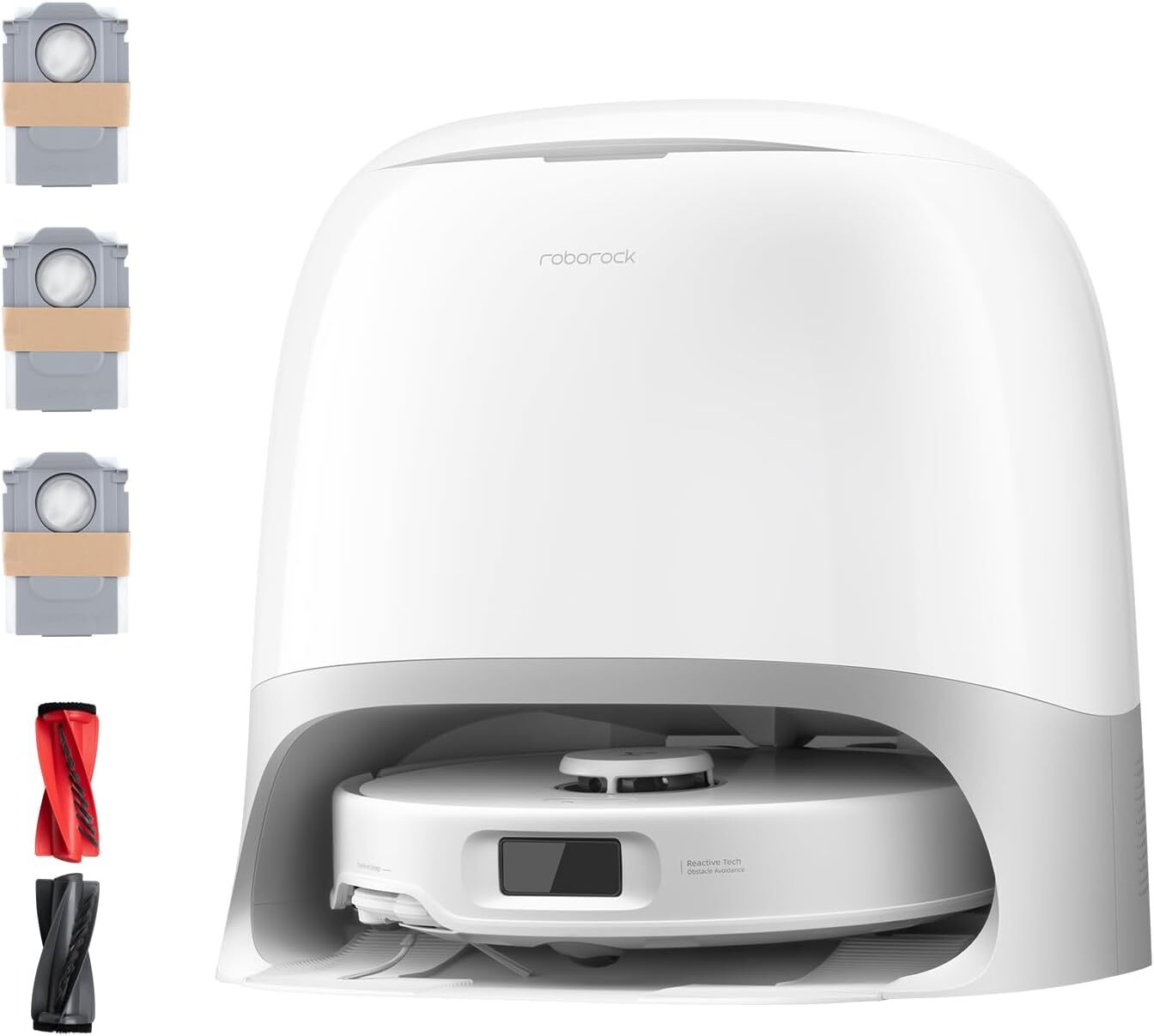
When the Qrevo Curv 2 Flow Robot Vacuum and Mop was released in early 2026 as an upgrade to the original Qrevo Curv, it was dubbed one of the longest-lasting and most powerful automatic cleaners on the market—but it also came at a high price. For those who want similar performance at a more budget-friendly price than the flagship release, the Qrevo Curv S5X Robot Vacuum and Mop is a reliable option that’s now more affordable than ever at $649.99 (originally $1,149.99), marking a 43% drop to its lowest price yet.

It has a powerful suction strength of around 18,500 Pa and a dual anti-tangle brush that prevents pet and human hair from wrapping around it. Paired with a side brush and mop that gets into corners and edges, it easily tackles blind spots. Its dock is also fully automated, which is a big win for convenience, as this low-maintenance model self-empties dust, refills water, washes its own mop pads, and manages dirty water.

It has LiDAR mapping and single-camera reactive obstacle avoidance, and can be automated via the companion app, which automatically generates cleaning modes and adjusts settings. While it does have obstacle avoidance, unlike the Qrevo Curv 2 Flow, it doesn’t raise its body over thresholds, such as carpeting, so it may get stuck on thicker rugs.  Battery life is also shorter at 190 minutes compared to 242 minutes, but this is still sufficient to clean moderately sized homes. It also only supports  2.4GHz wifi. That said, it’s also around .5 centimeters thinner, making it easier to fit under low-profile furniture.

Ultimately, this model has automated features and does most of what the updated Curv does, minus a few top-tier specs like better obstacle avoidance, slightly stronger suction, and hot water washing and drying. If you want strong performance for a significantly lower price tag (a nearly $1,000 difference), the Qrevo Curv S5X Robot Vacuum and Mop is a capable model with no shortage of features.

Our Best Editor-Vetted Tech Deals Right Now

Deals are selected by our commerce team

Could a vaccine prevent dementia? Shingles shot data only getting stronger.

While lifesaving vaccines face a relentless onslaught from the Trump administration—with fervent anti-vaccine advocate Robert F. Kennedy Jr. leading the charge—scientific literature is building a wondrous story: A vaccine appears to prevent dementia, including Alzheimer’s, and may even slow biological aging.

For years, study after study has noted that older adults vaccinated against shingles seemed to have a lower risk of dementia. A study last month suggested the same vaccine appears to slow biological aging, including lowering markers of inflammation.

“Our study adds to a growing body of work suggesting that vaccines may play a role in healthy aging strategies beyond solely preventing acute illness,” study author Eileen Crimmins, of the University of Southern California, said.

Read full article

Comments