Lucid EVs will be able to access Tesla's Superchargers starting in 2025

Lucid’s electric vehicles will be able to plug into over 15,000 Tesla Superchargers in North America starting in 2025. The automaker is the latest entry in the growing list of companies pledging to support the North American Charging Standard (NACS), also known as the Tesla charging standard. Lucid will give customers access to a NACS adapter for its current vehicles, which are equipped with the Combined Charging System (CCS), in 2025. The company intends to start building NACS ports into its EVs within the same year, as well, so that newer models no longer need to use adapters.

Ford was the first automaker to announce this year that it was going to give its customers access to Superchargers after the White House convinced Tesla to share its charging network with vehicles from other companies. In the months after that, Mercedes, Volvo, Polestar, Honda, Toyota (and Lexus), BMW, Hyundai and Subaru revealed that they will also give their customers access to NACS adapters and will ultimately incorporate the standard into their vehicles over the next two years. 

As TechCrunch notes, Lucid vehicles use a 900-volt charging architecture, which became the basis of a Lucid Air promotion that called it the “fastest charging electric vehicle ever.” At the moment, most Superchargers are rated at around 500 volts, and that means charging times won’t be as fast as the company promises. That said, Tesla has started deploying V4 Superchargers that offer higher voltage charging in the US, and supporting NACS could convince potential customers in the region to purchase Lucid EVs. As company CEO Peter Rawlinson said, “[a]dopting NACS is an important next step to providing [its] customers with expanded access to reliable and convenient charging solutions for their Lucid vehicles.”

This article originally appeared on Engadget at https://www.engadget.com/lucid-evs-will-be-able-to-access-teslas-superchargers-starting-in-2025-055045292.html?src=rss

Source: Engadget – Lucid EVs will be able to access Tesla’s Superchargers starting in 2025

Parkinson's Patient Able To Walk Again Without Problems After Spinal Implant

An anonymous reader quotes a report from The Guardian: Marc, 63, from Bordeaux, France, was diagnosed with the degenerative disease more than 20 years ago and had developed severe mobility problems, including balance impairments and freezing of gait. After receiving the implant, which aims to restore normal signaling to the leg muscles from the spine, he has been able to walk more normally and regained his independence. “I practically could not walk any more without falling frequently, several times a day. In some situations, such as entering a lift, I’d trample on the spot, as though I was frozen there, you might say,” he said. “Right now, I’m not even afraid of the stairs any more. Every Sunday I go to the lake, and I walk around 6 kilometers [3.7 miles]. It’s incredible.”

The implant is yet to be tested in a full clinical trial. But the Swiss team, who have a longstanding program to develop brain-machine interfaces to overcome paralysis, hope that their technology could offer an entirely new approach to treating movement deficits in those with Parkinson’s disease. “It is impressive to see how by electrically stimulating the spinal cord in a targeted manner, in the same way as we have done with paraplegic patients, we can correct walking disorders caused by Parkinson’s disease,” said Jocelyne Bloch, neurosurgeon and professor at the CHUV Lausanne University hospital, who co-led the work.

First, the team developed a personalized anatomical map of Marc’s spinal cord that identified the precise locations that were involved in signaling to the leg to move. Electrodes were then implanted at these locations, allowing stimulation to be delivered directly into the spine. The patient wears a movement sensor on each leg and when walking is initiated the implant automatically switches on and begins delivering pulses of stimulation to the spinal neurons. The aim is to correct abnormal signals that are sent from the brain, down the spine, to the legs in order to restore normal movement. “At no point is [the patient] controlled by the machine,” said Prof Eduardo Martin Moraud, of Lausanne University hospital. “It’s just enhancing his capacity to walk.” The study, published in Nature Medicine, found that the implant improved walking and balance deficits and when Marc’s walking was analyzed it more closely resembled that of healthy controls than that of other Parkinson’s patients. Marc also reported significant improvements in his quality of life.

Read more of this story at Slashdot.


Source: Slashdot – Parkinson’s Patient Able To Walk Again Without Problems After Spinal Implant

WeWork files for Chapter 11 bankruptcy protection

There has been another twist in the WeWork saga as the office space rental company has filed for bankruptcy protection. Following reports last week that the company was expected to file for Chapter 11 protection, WeWork’s shares were halted on the New York Stock Exchange (NYSE) on Monday. According to The New York Times, it described its bankruptcy filing as a “comprehensive reorganization” of its business. “As part of today’s filing, WeWork is requesting the ability to reject the leases of certain locations, which are largely nonoperational, and all affected members have received advanced notice,” the company told the publication in a statement. 

A number of factors played into WeWork’s fall, including trying to grow too fast in its early days. The company has attempted to cut costs in recent years (including by closing several co-working spaces in the wake of COVID-19 lockdowns) while its revenue has grown. 

However, WeWork has been toiling in a real estate market that has felt the pinch of inflation and the rising costs of borrowing money. It has also been contending with another pandemic-accelerated change as millions more people are opting to work remotely instead of going to their company’s offices. In its most recent earnings report in August, WeWork said it had “substantial doubt” about its ability to remain operational.

WeWork first attempted to go public in 2019, though it withdrew plans for an initial public offering after investors expressed concerns over profitability and corporate governance. Its S-1 filing showed losses of over $900 million for the first half of 2019 and indicated that WeWork was on the hook for over $47 billion worth of lease payments — WeWork takes out long-term leases on office space and rents it to workers and companies on a short-term basis.

That fiasco led to Softbank, which at one point led an investment round into WeWork when it had a valuation of $47 billion, taking control of the company. Softbank pushed out co-founder and CEO Adam Neumann with an exit package that was said to be worth $445 million.

The business eventually went public in 2021 after it merged with a special-purpose acquisition company. WeWork shares cost more than $400 two years ago, but by Monday the price had dropped to under $1.

WeWork has made more attempts to steady the ship. In September, the company completed a reverse stock split. It said this was conducted to help it continue to comply with the $1 minimum share closing price required to stay listed on the NYSE.

Later that month, WeWork said it would try to renegotiate the vast majority of its leases. At the time, CEO David Tolley pointed out that the company’s lease liabilities amounted to over two-thirds of its operating income in the second quarter of this year.

On October 31, WeWork said it would withhold some interest payments — even though it had the cash to make them — in an attempt to improve its balance sheet. The company then entered a 30-day grace period before an event of default.

Meanwhile, Neumann has a new real estate venture, this time focused on residential rentals. It emerged last year that he had bought more than 3,000 apartments in Miami, Fort Lauderdale, Atlanta and Nashville. Flow, the company that will manage those properties, has reportedly received an investment of $350 million from venture capital firm Andreessen Horowitz.

This article originally appeared on Engadget at https://www.engadget.com/wework-files-for-chapter-11-bankruptcy-protection-030708470.html?src=rss

Source: Engadget – WeWork files for Chapter 11 bankruptcy protection

The Marvels' Blazing Final Trailer Is Here

The first Marvels trailer dropped all the way back in April, giving us our first good glimpse of the movie’s superhero-switcheroo hijinks. Now, of course, we know a lot more about the Captain Marvel sequel—but of course Marvel can’t resist one last tease before the movie itself arrives Friday.

Read more…


Source: Gizmodo – The Marvels’ Blazing Final Trailer Is Here

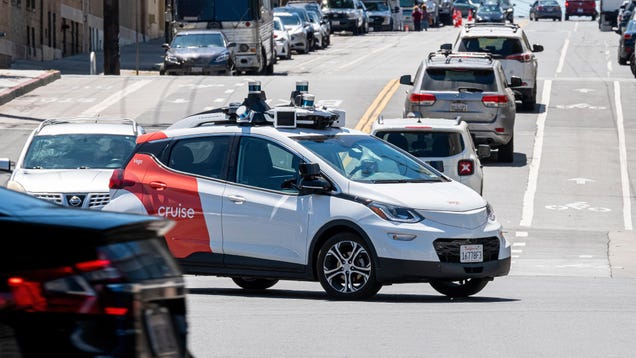
Cruise Robotaxis Require Remote Human Assistance Every 4 to 5 Miles

Things just keep getting worse for Cruise, the troubled robotaxi company that once dreamed of being a leader in the autonomous driving industry. Only a month after a violent collision forced the company to ground all of its fleets nationwide, multiple news outlets have reported that the company’s “self driving” cars…

Read more…


Source: Gizmodo – Cruise Robotaxis Require Remote Human Assistance Every 4 to 5 Miles

US Military Members' Personal Data Being Sold By Online Brokers, Report Finds

Jacob Knutson reports via Axios: Sensitive, highly detailed personal data for thousands of active-duty and veteran U.S. military members can be purchased for as little as one cent per name through data broker websites, according to a new study (PDF) published on Monday by Duke University researchers. […] The data about military personnel purchased as part of the study included full names, physical and email addresses, health and financial information and details about their ethnicity, religious practices and political affiliation. In some cases, the information also included whether the person owned or rented a home, was married or had children. The children’s ages and sexes were accessible, too.

The researchers bought data on up to around 45,000 military personnel for between $0.12 to $0.32 per record. They also bought data belonging to 5,000 friends and family members of military personnel. Larger data purchases of over 1.5 million service members were available for as little as $0.01 per record from at least one broker the researchers contacted. The researchers called on Congress to pass a comprehensive privacy law and for regulatory agencies like the Federal Trade Commission to develop rules to govern military personnel data purchases.

Read more of this story at Slashdot.


Source: Slashdot – US Military Members’ Personal Data Being Sold By Online Brokers, Report Finds

California Wants To End Cupertino's Tax Deal With Apple

William Gallagher reports via Appleinsider: In a move similar in principle to how the EU retrospectively sought to fine Apple over its tax agreement with Ireland, the California Department of Tax and Fee Administration (CDTFA) is changing the company’s arrangement with Cupertino. Since 1998, Apple has declared all of its online sales made in California as having taken place in Cupertino. As first spotted by the San Jose Spotlight, this means that of Apple’s 7.25% sales tax, the local 1% portion goes to the city. Then under the same deal, Cupertino actually returns approximately one third of this revenue to Apple. Consequently the benefit to Apple is clear, but also Cupertino profits because it sees significantly greater sales tax revenue than it otherwise might.

“The CDTFA has done an audit of one of our big taxpayers and has identified that there are dollars being allocated improperly,” Cupertino Assistant City Manager Matt Morley told the publication, “and through that audit they are asking for that process to be corrected.” “The city obviously isn’t happy with this and we don’t believe the CDTFA is on base,” continued Morley. Reportedly, the CDTFA’s state tax officials have concluded that the city of Cupertino owes it $56.5 million. This is for the period from April 2021 to June 2023, though it’s not clear how those dates were determined. At the same time, the tax officials are said to have decided that Apple must reimburse the state $20 million. This figure would then be reallocated to other areas of the state.

The impact on Cupertino could be significant, but the city is appealing the ruling — and the appeal could take anywhere from seven to ten years. Even so, the Cupertino City Council has agreed to set aside the $56.5 million to prepare for the potential future loss. Should the CDTFA prevail, Cupertino’s Morley said non-essential city services could be reduced or even cut. Annually, Cupertino would see a 73% drop in sales tax revenues, and would face having to cut almost a quarter of its operational costs.

Read more of this story at Slashdot.


Source: Slashdot – California Wants To End Cupertino’s Tax Deal With Apple

Meta reportedly won't make its AI advertising tools available to political marketers

Facebook is no stranger to moderating and mitigating misinformation on its platform, having long employed machine learning and artificial intelligence systems to help supplement its human-led moderation efforts. At the start of October, the company extended its machine learning expertise to its advertising efforts with an experimental set of generative AI tools that can perform tasks like generating backgrounds, adjusting image and creating captions for an advertiser’s video content. Reuters reports Monday that Meta will specifically not make those tools available to political marketers ahead of what is expected to be a brutal and divisive national election cycle. 

Meta’s decision to bar the use of generative AI is in line with much of the social media ecosystem, though, as Reuters is quick to point out, the company, “has not yet publicly disclosed the decision in any updates to its advertising standards.” TikTok and Snap both ban political ads on their networks, Google employs a “keyword blacklist” to prevent its generative AI advertising tools from straying into political speech and X (formerly Twitter) is, well, you’ve seen it. 

Meta does allow for a wide latitude of exceptions to this rule. The tool ban only extends to “misleading AI-generated video in all content, including organic non-paid posts, with an exception for parody or satire,” per Reuters. Those exceptions are currently under review by the company’s independent Oversight Board as part of a case in which Meta left up an “altered” video of President Biden because, the company argued, it was not generated by an AI.

Facebook, along with other leading Silicon Valley AI companies, agreed in July to voluntary commitments set out by the White House enacting technical and policy safeguards in the development of their future generative AI systems. Those include expanding adversarial machine learning (aka red-teaming) efforts to root out bad model behavior, sharing trust and safety information both within the industry and with the government, as well as development of a digital watermarking scheme to authenticate official content and make clear that it is not AI-generated. 

This article originally appeared on Engadget at https://www.engadget.com/meta-reportedly-wont-make-its-ai-advertising-tools-available-to-political-marketers-010659679.html?src=rss

Source: Engadget – Meta reportedly won’t make its AI advertising tools available to political marketers

Washington DC Gives Residents Free AirTags To Help Track Stolen Cars

The city of Washington D.C. is planning to give residents Apple AirTags to help officers track down stolen vehicles. PCMag reports: “Last week, we introduced legislation to address recent crime trends; this week, we are equipping residents with technology that will allow MPD to address these crimes, recover vehicles, and hold people accountable,” D.C. Mayor Muriel Bowser said in a statement. “We have had success with similar programs where we make it easier for the community and MPD to work together — from our Private Security Camera Incentive Program to the wheel lock distribution program — and we will continue to use all the tools we have, and add new tools, to keep our city safe.”

At launch, the AirTags will be available to residents in specific areas of the city that have recently seen the largest increase in vehicle thefts. To obtain the tags, residents will have to attend one of three scheduled distribution events next week where officers will install the device on the resident’s cars and help them set up the tracking tag on their mobile devices. The program is currently available for residents who live in Police Service Areas 106, 501, 502, 603, 605, and 606. Check where you live on the MPD’s website.

Read more of this story at Slashdot.


Source: Slashdot – Washington DC Gives Residents Free AirTags To Help Track Stolen Cars

OpenAI Debuts GPT-4 Turbo That's 'More Powerful' and Less Expensive Than GPT-4

An anonymous reader quotes a report from TechCrunch: Today at its first-ever developer conference, OpenAI unveiled GPT-4 Turbo, an improved version of its flagship text-generating AI model, GPT-4, that the company claims is both “more powerful” and less expensive. GPT-4 Turbo comes in two versions: one that’s strictly text-analyzing and a second version that understands the context of both text and images. The text-analyzing model is available in preview via an API starting today, and OpenAI says it plans to make both generally available “in the coming weeks.”

They’re priced at $0.01 per 1,000 input tokens (~750 words), where “tokens” represent bits of raw text — e.g., the word “fantastic” split into “fan,” “tas” and “tic”) and $0.03 per 1,000 output tokens. (Input tokens are tokens fed into the model, while output tokens are tokens that the model generates based on the input tokens.) The pricing of the image-processing GPT-4 Turbo will depend on the image size. For example, passing an image with 1080×1080 pixels to GPT-4 Turbo will cost $0.00765, OpenAI says. “We optimized performance so we’re able to offer GPT-4 Turbo at a 3x cheaper price for input tokens and a 2x cheaper price for output tokens compared to GPT-4,” OpenAI writes in a blog post shared with TechCrunch this morning.

GPT-4 Turbo boasts several improvements over GPT-4 — one being a more recent knowledge base to draw on when responding to requests. […] GPT-4 Turbo offers a 128,000-token context window — four times the size of GPT-4’s and the largest context window of any commercially available model, surpassing even Anthropic’s Claude 2. (Claude 2 supports up to 100,000 tokens; Anthropic claims to be experimenting with a 200,000-token context window but has yet to publicly release it.) 128,000 tokens translates to around 100,000 words or 300 pages, which for reference is around the length of Wuthering Height, Gulliver’s Travels and Harry Potter and the Prisoner of Azkaban. And GPT-4 Turbo supports a new “JSON mode,” which ensures that the model responds with valid JSON — the open standard file format and data interchange format.

Read more of this story at Slashdot.


Source: Slashdot – OpenAI Debuts GPT-4 Turbo That’s ‘More Powerful’ and Less Expensive Than GPT-4

“I cannot wait to possess you”: Reading 18th century letters for the first time

bundles of 18th century letters in three piles

Enlarge / The letters before they were opened and read by Renaud Morieux at The National Archives, Kew. (credit: The National Archives / Renaud Morieux)

University of Cambridge historian Renaud Morieux was poring over materials at the National Archives in Kew when he came across a box holding three piles of sealed letters held together by ribbons. The archivist gave him permission to open the letters, all addressed to 18th century French sailors from their loved ones and seized by Great Britain’s Royal Navy during the Seven Years’ War (1756-1763).

“I realized I was the first person to read these very personal messages since they’re written,” said Morieux, who just published his analysis of the letters in the journal Annales Histoire Sciences Sociales. “These letters are about universal human experiences, they’re not unique to France or the 18th century. They reveal how we all cope with major life challenges. When we are separated from loved ones by events beyond our control like the pandemic or wars, we have to work out how to stay in touch, how to reassure, care for people and keep the passion alive. Today we have Zoom and WhatsApp. In the 18th century, people only had letters, but what they wrote about feels very familiar.”

England and France have a long, complicated history of being at war, most notably the Hundred Years’ War in the 14th and 15th centuries. The two countries were also almost continuously at war during the 18th century, including the Seven Years’ War, which was fought in Europe, the Americas, and Asia-Pacific as England and France tried to establish global dominance with the aid of their respective allies. The war technically evolved out of the North American colonies when England tried to expand into territory the French had already claimed. (Fun fact: A 22-year-old George Washington led a 1754 ambush on a French force at the Battle of Jumonville Glen.) But the conflict soon spread beyond colonial borders, and the British went on to seize hundreds of French ships at sea.

Read 6 remaining paragraphs | Comments


Source: Ars Technica – “I cannot wait to possess you”: Reading 18th century letters for the first time

Critical vulnerability in Atlassian Confluence server is under “mass exploitation”

Critical vulnerability in Atlassian Confluence server is under “mass exploitation”

Enlarge

A critical vulnerability in Atlassian’s Confluence enterprise server app that allows for malicious commands and reset servers is under active exploitation by threat actors in attacks that install ransomware, researchers said.

“Widespread exploitation of the CVE-2023-22518 authentication bypass vulnerability in Atlassian Confluence Server has begun, posing a risk of significant data loss,” Glenn Thorpe, senior director of security research and detection engineering at security firm GreyNoise, wrote on Mastodon on Sunday. “So far, the attacking IPs all include Ukraine in their target.”

He pointed to a page showing that between 12 am and 8 am on Sunday UTC (around 5 pm Saturday to 1 am Sunday Pacific Time), three different IP addresses began exploiting the critical vulnerability, which allows attackers to restore a database and execute malicious commands. The IPs have since stopped those attacks, but he said he suspected the exploits are continuing.

Read 11 remaining paragraphs | Comments


Source: Ars Technica – Critical vulnerability in Atlassian Confluence server is under “mass exploitation”

Blade's Director Wants to Show Another Side of Mahershala Ali

Marvel’s upcoming Blade movie will introduce the beloved vampire hunter to the MCU and mark his first theatrical appearance since Wesley Snipes bowed out of the role with 2007’s Blade Trinity. Much has been made about what the movie is or isn’t, but for director Yann Demange, the film will be a great showcase for star…

Read more…


Source: Gizmodo – Blade’s Director Wants to Show Another Side of Mahershala Ali

OpenAI Offers To Pay For ChatGPT Customers' Copyright Lawsuits

Blake Montgomery reports via The Guardian: Rather than remove copyrighted material from ChatGPT’s training dataset, the chatbot’s creator is offering to cover its clients’ legal costs for copyright infringement suits. OpenAI CEO Sam Altman said on Monday: “We can defend our customers and pay the costs incurred if you face legal claims around copyright infringement and this applies both to ChatGPT Enterprise and the API.” The compensation offer, which OpenAI is calling Copyright Shield, applies to users of the business tier, ChatGPT Enterprise, and to developers using ChatGPT’s application programming interface. Users of the free version of ChatGPT or ChatGPT+ were not included. […] Getty Images, Shutterstock and Adobe have extended similar financial liability protection for their image-making software. The announcement was made at the company’s first-ever developer conference today, where Altman said there are now 100 million weekly ChatGPT users. The company also announced a platform for making custom versions of ChatGPT for specific use cases — no coding required.

Read more of this story at Slashdot.


Source: Slashdot – OpenAI Offers To Pay For ChatGPT Customers’ Copyright Lawsuits

Half of the mass of an early galaxy is in its central black hole

Image of a field of stars with a large purple glow in the center.

Enlarge / Inset shows the JWST image of the galaxy in infrared, along with the X-rays from the black hole seen by the Chandra. While the X-ray source is far smaller than the galaxy, X-rays are much harder to remove. (credit: X-ray: NASA/CXC/SAO/Ákos Bogdán; Infrared: NASA/ESA/CSA/STScI; Image Processing: NASA/CXC/SAO/L. Frattare & K. Arcand)

Researchers combing through some of the earliest galaxies in the Universe have found one that appears to have an actively feeding central black hole. Based on the amount of radiation it’s emitting, the researchers estimate that it accounts for roughly half of the mass of the entire galaxy it’s in—an astonishingly high fraction compared to modern galaxies.

The fact that such a large object can exist only half a billion years after the Big Bang places severe limits on how it could possibly have formed, strongly suggesting that supermassive black holes formed without ever having gone through an intermediate step involving a star.

Old X-rays

The earliest galaxies in the Universe that we know about have been identified using the James Webb Space Telescope, which took advantage of a galaxy cluster in the foreground that magnified more distant ones through gravitational lensing. Using the lens provided by a specific cluster, the Webb identified 11 galaxies that were imaged as they existed less than a billion years after the Big Bang.

Read 15 remaining paragraphs | Comments


Source: Ars Technica – Half of the mass of an early galaxy is in its central black hole

YouTube Tests a 'Play Something' Button

Emma Roth reports via The Verge: YouTube appears to be testing a new “play something” button on its mobile app that directs you to a random video when you don’t know what to watch. As first spotted by Android Police, the prompt shows up between content as you scroll through the feed on your homepage — but only some users are seeing it. While Android Police mentions that the button only directs users to YouTube Shorts, one of my colleagues here at The Verge found that the feature also shows them random full-length videos. It’s still not clear if YouTube takes your watch history into account when picking the random videos it plays or how widely Google is rolling out this feature.

Read more of this story at Slashdot.


Source: Slashdot – YouTube Tests a ‘Play Something’ Button

World of Warcraft Is Letting One of Its Best Characters Grow Older With It

This past weekend at BlizzCon, fresh off the news that Blizzard—and the rest of Activision—would be joining Microsoft officially, the video game developer lifted the lid on the future of its longest-running game, World of Warcraft, in a big way. And in doing so, it reminded us in quite a stark way just how much time…

Read more…


Source: Gizmodo – World of Warcraft Is Letting One of Its Best Characters Grow Older With It

Samsung’s Galaxy S24 Ultra Is Coming for the iPhone 15 Pro With Its Own Titanium Build

It’s nearing the end of the year, which means once holiday shopping and sales are over, we’ll be talking about the next generation of new smartphones. Samsung typically starts us off for the year with the Galaxy flagship lineup. And next year, it could be accompanied by new fancy jargon to compete with the iPhone 15…

Read more…


Source: Gizmodo – Samsung’s Galaxy S24 Ultra Is Coming for the iPhone 15 Pro With Its Own Titanium Build