
The Marvel Cinematic Universe gets the team-up we’ve been waiting for since Captain Marvel and Ms. Marvel with The Marvels.
Source: Gizmodo – The Marvels Delivers a Cosmic Punch of Fun and Avenging Action

The Marvel Cinematic Universe gets the team-up we’ve been waiting for since Captain Marvel and Ms. Marvel with The Marvels.
Source: Gizmodo – The Marvels Delivers a Cosmic Punch of Fun and Avenging Action

On Tuesday, Maine residents voted overwhelmingly in favor of a new automotive right-to-repair ballot initiative forcing car manufacturers to provide independent mechanics and technicians with the same diagnostics they give to authorized repair shops. The landslide vote comes months after the Biden Administration backpe…
Source: io9 – Maine Overwhelmingly Votes ‘Yes’ for Right to Repair Cars
We Met in Virtual Reality, a documentary shot entirely inside VRChat (now available to stream on Max), was one of the highlight’s of last year’s Sundance Film Festival. It deftly showed how people can form genuine friendships and romantic connections inside of virtual worlds — something Mark Zuckerberg could only dream of with his failed metaverse concept. Now the director of that film, Joe Hunting, is making an even bigger bet on virtual reality: He’s launching Painted Clouds, a production studio devoted to making films and series set within VR.
What’s most striking about We Met in Virtual Reality, aside from the Furries and scantily-clad anime avatars, is that it looks like a traditional documentary. Hunting used VRCLens, a tool developed by the developer Hirabiki, to perform cinematic techniques like pulling focus, deliberate camera movements and executing aerial drone shots. Hunting says he aims to “build upon VRCLens to give it more scope and make it even more accessible to new filmmakers,” as well as using it for his own productions.
Additionally, Hunting is launching “Painted Clouds Park,” a world in VRChat that can be used for production settings and events. It’s there that he also plans to run workshops and media events to teach people about the possibilities of virtual reality filmmaking.
His next project, which is set to begin pre-production next year, will be a dramedy focused on a group of online friends exploring an ongoing mystery. Notably, Hunting says it will also be shot with original avatars and production environments, not just cookie-cutter VRChat worlds. His aim is to make it look like a typical animated film — the only difference is that it’ll be shot inside of VR. It’s practically an evolution of the machinima concept, which involved shooting footage inside of game engines, using existing assets.
“Being present in a headset and being in the scene yourself, holding the camera and capturing the output, I find creates a much more immersive filmmaking experience for me, and a much more playful and joyful one, too,” Hunting said. “I can look up and everyone is their characters. They’re not wearing mo-cap [suits] to represent the characters. They just are embodying them. Obviously, that experience doesn’t translate completely on screen as an audience member. But in terms of directing and the kind of relationship I can build with my actors and the team around me, I find that so fun.”
Throughout all of his work, including We Met in Virtual Reality and earlier shorts, Hunting has been focused on capturing virtual worlds for playback on traditional 2D screens. But looking forward, he says he’s interested in exploring 360-degree immersive VR projects as well. It could end up being part of behind-the-scenes footage for his next VR film, as a part of an experimental project in the future. In addition to his dramedy project, Hunting is also working on a short VR documentary, as well as a music video.
This article originally appeared on Engadget at https://www.engadget.com/the-director-of-sundance-darling-we-met-in-virtual-reality-launches-a-vr-studio-164532412.html?src=rss
Source: Engadget – The director of Sundance darling “We Met in Virtual Reality” launches a VR studio

OpenAI’s ChatGPT and API experienced a major outage Wednesday morning affecting millions of users, two days after Sam Altman’s DevDay, where the company tried to entice developers to build on OpenAI products. This is the longest major outage for the company’s API, the main product used by developers, in nine months…
Source: Gizmodo – ChatGPT Experiences Major Outage as It Expands Features

Texans overwhelmingly voted to put billions of dollars towards creating backup energy for the state’s often broken power grid, by funding natural gas power plants. The results of this week’s voting day come over two years after millions experienced outages during a deadly winter storm that likely led to the death of…
Source: Gizmodo – Texans Vote in Favor for Fund to Fix Faulty Grid
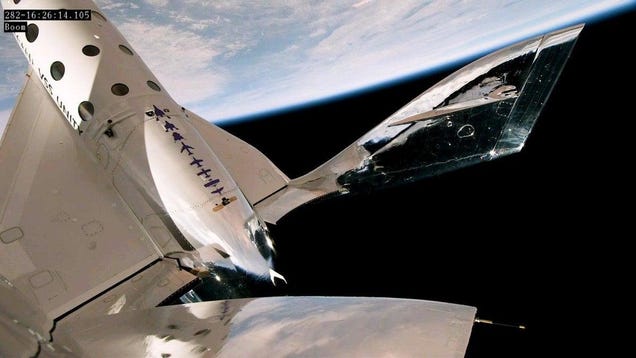
In an effort to cut cost for the sake of the development of its next generation spaceplane, Virgin Galactic will lay off a number of its employees and save on expenses in hopes of bringing in future profits from its commercial flights.
Source: Gizmodo – Virgin Galactic Preps for Its Next Tourist Spaceplane…by Laying Off Staff
The scientific literature is polluted with fake manuscripts churned out by paper mills — businesses that sell bogus work and authorships to researchers who need journal publications for their CVs. But just how large is this paper-mill problem? From a report: An unpublished analysis shared with Nature suggests that over the past two decades, more than 400,000 research articles have been published that show strong textual similarities to known studies produced by paper mills. Around 70,000 of these were published last year alone. The analysis estimates that 1.5-2% of all scientific papers published in 2022 closely resemble paper-mill works. Among biology and medicine papers, the rate rises to 3%.
Without individual investigations, it is impossible to know whether all of these papers are in fact products of paper mills. But the proportion — a few per cent — is a reasonable conservative estimate, says Adam Day, director of scholarly data-services company Clear Skies in London, who conducted the analysis using machine-learning software he developed called the Papermill Alarm. In September, a cross-publisher initiative called the STM Integrity Hub, which aims to help publishers combat fraudulent science, licensed a version of Day’s software for its set of tools to detect potentially fabricated manuscripts.
Paper-mill studies are produced in large batches at speed, and they often follow specific templates, with the occasional word or image swapped. Day set his software to analyse the titles and abstracts of more than 48 million papers published since 2000, as listed in OpenAlex, a giant open index of research papers that launched last year, and to flag manuscripts with text that very closely matched known paper-mill works. These include both retracted articles and suspected paper-mill products spotted by research-integrity sleuths such as Elisabeth Bik, in California, and David Bimler (also known by the pseudonym Smut Clyde), in New Zealand.


Read more of this story at Slashdot.
Source: Slashdot – How Big is Science’s Fake-Paper Problem?
Samsung has joined the generative AI rat race by announcing its own model. Developed by Samsung Research, Gauss (named after mathematician Carl Friedrich Gauss) will power several on-device AI technologies and could make its public debut in the next few months.
Samsung Gauss Language can handle tasks like translations and summarizing documents. The tech will be able to write emails for you too, Samsung says. Samsung Gauss Code is a coding assistant, while Samsung Gauss Image is a generative image model. The latter can whip up images based on prompts and handle edits like style changes and additions. It can upscale low-resolution images too.
Samsung employees are currently using Gauss in-house to bolster productivity, but the company plans to make it available to the public “in the near future.” According to The Korea Times, Samsung is likely to include it in Galaxy S24 devices, which should debut early next year.
Running generative AI features on-device could help give Samsung a leg up over the likes of ChatGPT, which requires cloud connectivity. Qualcomm recently announced the Snapdragon 8 Gen 3 chipset, which supports on-device GAI operations and is likely to be used in Galaxy S24 phones. Google’s Tensor 3, which is used in the Pixel 8 and Pixel 8 Pro, handles certain GAI tasks on-device too.
Meanwhile, Samsung says it is working on “various activities that ensure safe AI usage.” Its AI Red Team is bearing in mind “the principles of AI ethics” as it focuses on potential privacy and security issues including data collection and the GAI model’s output. The company also flagged AI model development and service deployment as possible pitfalls.
Still, this is another instance of Samsung attempting to forge its own path, despite alternatives being available. Bixby never really took off, and despite its users by and large wanting Google Assistant instead, Samsung insisted on making its voice assistant as prevalent as possible on its devices. The list goes on, with things like the Chromium-based Samsung Internet Browser when Chrome is right there.
In fairness, Samsung wants to make its devices distinct from other Android phones and tablets and give them a unique selling point. Its generative AI tech will largely run in the background too, so its not like users will see heavy Samsung branding when they ask Gauss to generate an image. But shareholders who might be feeling skittish about recent financial results may have questions about why Samsung has been investing in its own GAI tech instead of using one of the many other available options.
This article originally appeared on Engadget at https://www.engadget.com/samsungs-gauss-is-the-generative-ai-that-nobody-asked-for-163009407.html?src=rss
Source: Engadget – Samsung’s Gauss is the generative AI that nobody asked for

Earlier this year, io9 revealed the cover for LySandra Vuong’s Covenant, Oni Press’ graphic novel publication of the wildly popular Webtoon digital comic. Today, we’re thrilled to share the first chapter from the book, as well as some commentary from Vuong, aka Explodikid, ahead of the April 2024 release.
Source: Gizmodo – Read the First Chapter of LySandra Vuong’s Covenant Graphic Novel
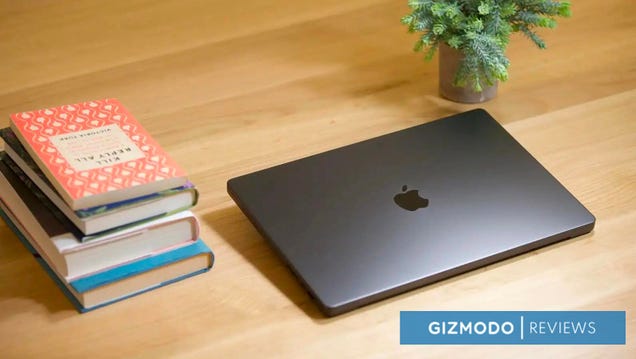
Apple released 14 and 16-inch variants of the MacBook Pros touting its newly-released M3 chips. It doesn’t bring a lot of new upgrades and doesn’t make much sense if you’re on an M2-series chip already. However, if you’re one of those Intel or M1 MacBook Pro holdouts, now might be the time for a change.
Probably one of…
Source: Gizmodo – 14-Inch Apple MacBook Pro with M3 Review: The Start of the M3 Era Has Begun
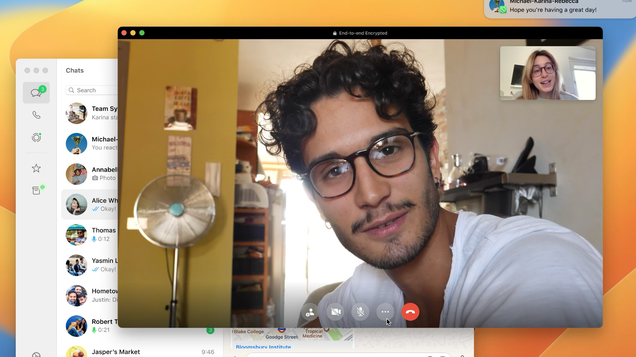
WhatsApp has recently been added to Apple’s App Store for Mac. I know it seems weird that it wasn’t there this whole time. You’ve not gone crazy, I swear.
Source: Gizmodo – WhatsApp Finally Got Added to Apple’s App Store for Mac
Amazon Prime subscribers now have access to a deeply discounted One Medical membership for primary care services. The company announced today that Prime members can sign up for just $99 a year, or $9 per month. A One Medical membership typically costs $199 annually. In addition to the individual plan, Prime members who sign up for One Medical can add up to five other people for $6 each.
Amazon announced its acquisition of One Medical in 2022 and finalized the $3.9 billion deal in February, when it began offering a temporary discount for One Medical memberships at $144 per year. It’s now slashed that even further. One Medical has offices in major cities across the US, all of which will be available to Prime members who sign up. It also offers round-the-clock virtual care and drop-in lab services. The membership doesn’t cover the cost of visits though; patients will still have to bill through their insurance or pay out of pocket.
Amazon has been pushing heavily into healthcare in recent years, with prescription services and even its own video- and text-based virtual clinic now among the perks of a Prime subscription. The company made its Amazon Clinic available to all states in the US over the summer, and began offering generic prescriptions for $5 a month with its RxPass at the beginning of the year. Amazon has also started offering drone deliveries for prescriptions in College Station, Texas.
This article originally appeared on Engadget at https://www.engadget.com/amazon-prime-now-comes-with-discounted-access-to-one-medical-health-services-161500277.html?src=rssChances are your new laptop has fewer ports than you’d like. For years, companies have been prioritizing thinness and lightness to the detriment of connectivity options. Docking stations give you back some of that versatility — and then some — by combining monitor, Ethernet, USB and other ports into one package. Unlike simple USB hubs, docking stations tend to have more slots and usually incorporate a DC power supply, making them bigger and far less portable than small hubs. But that also means they can be the connective matrix of sorts that powers your home office setup. Ultimately, which dock works best for you depends on what you need to connect, but it’s safe to say the vast sea of choices out there can be overwhelming. We tested out 12 options from brands we trust to see which are worth your money.
First and foremost, consider what you need to plug in. This will likely be the deciding factor when you go to actually buy a docking station. Do you need three screens for an expanded work view? A quick way to upload photos from an SD card? Are you looking to plug in a webcam, mic and streaming light, while simultaneously taking advantage of faster Ethernet connections? Once you’ve settled on the type of ports you need, you may also want to consider the generation of those ports as well; even ports with the same shape can have different capabilities. Here’s a brief overview of the connectivity different docking stations offer.
External monitors typically need one of three ports to connect to a PC: HDMI, DisplayPort or USB-C. HDMI connections are more common than DisplayPort and the cables and devices that use them are sometimes more affordable. The most popular version of the DisplayPort interface (v1.4) can handle higher resolutions and refresh rates than the most common HDMI version (2.0). All of the docking stations with HDMI sockets that we recommend here use version 2.0, which can handle 4K resolution at 60Hz or 1080p up to 240Hz. The DisplayPort-enabled docks support either version 1.2, which allows for 4K resolution at 60Hz, or version 1.4, which can handle 8K at 60Hz or 4K at 120Hz.
You can also use your dock’s downstream (non-host) Thunderbolt ports to hook up your monitors. If your external display has a USB-C socket, you can connect directly. If you have an HDMI or DisplayPort-only monitor, you can use an adapter or a conversion cable that has one of each type of connector.
Of course, the number of monitors you can connect and the resolutions/rates they’ll achieve depend on both your computer’s GPU and your monitors — and the more monitors you plug in can bring down those numbers as well. Be sure to also use cables that support the bandwidth you’re hoping for. MacOS users should keep in mind that the MacBook Air with the standard M1 chip supports just one external monitor. M2 MacBooks (the newer Airs and 13-inch Pro) can handle two external monitors, but each monitor needs its own onboard port (i.e., a dock plugged into a single port can’t power two monitors). M2 Pro and M2 Max Macs can run multiple displays from a single port.
Most docking stations offer a few USB Type-A ports, which are great for peripherals like wired mice and keyboards, bus-powered ring lights and flash drives. For faster data transfer speeds to your flash drive, go for USB-A sockets labeled 3.1 or 3.2 — or better yet, use a USB-C Thunderbolt port.
Type-C USB ports come in many different flavors. The Thunderbolt 3, 4 and USB4 protocols are newer, more capable specifications that support power delivery of up to 100W, multiple 4K displays and data transfer speeds of up to 40Gbps. Other USB-C ports come in a range of versions, with some supporting video, data and power and some only able to manage data and power. Transfer rates and wattages can vary from port to port, but most docks list the wattage or GB/s on either the dock itself or on the product page. And again, achieving the fastest speeds will depend on factors like the cables you use and the devices you’re transferring data to.
Nearly every dock available today connects to a computer via USB-C, often Thunderbolt, and those host ports are nearly always labeled with a laptop icon. They also allow power delivery to your laptop: available wattage varies, but most docks are rated between 85 and 100 watts. That should be enough to keep most computers powered — and it also means you won’t have to take up an extra laptop connector for charging.
None of our currently recommended laptops include an Ethernet jack; a docking station is a great way to get that connection back. We all know objectively that wired internet is faster than Wi-Fi, but it might take running a basic speed comparison test to really get it on a gut level. For reference, on Wi-Fi I get about a 45 megabit-per-second download speed. Over Ethernet, it’s 925 Mbps. If you pay for a high-speed plan, but only ever connect wirelessly, you’re probably leaving a lot of bandwidth on the table. Every docking station I tested includes an Ethernet port, and it could be the connector you end up getting the most use out of.
Just two of our favorite laptops have SD card readers, and if you need a quick way to upload files from cameras or audio recorders, you may want to get a dock with one of those slots. Of the docks we tested, about half had SD readers. For now, most (but not all) laptops still include a 3.5mm audio jack, but if you prefer wired headphones and want a more accessible place to plug them in, many docking stations will provide.
When you’re counting up the ports for your new dock, remember that most companies include the host port (the one that connects to your computer) in the total number. So if you’re looking for a dock with three Thunderbolt connections, be sure to check whether one of them will be used to plug in your laptop.
Most docking stations have either a lay-flat or upright design. Most docks put the more “permanent” connections in back — such as Ethernet, DC power, monitor connections and a few USBs. Up-front USB ports can be used for flash drive transfers, or even plugging in your phone for a charge (just make sure the port can deliver the power you need). USBs in the rear are best for keyboards, mice, webcams and other things you’re likely to always use. Some docks position the host port up front, which might make it easier to plug in your laptop when you return to your desk, but a host port in back may look neater overall.
We started out by looking at online reviews, spec sheets from various brands and docking stations that our fellow tech sites have covered. We considered brands we’ve tested before and have liked, and weeded out anything that didn’t have what we consider a modern suite of connections (such as a dock with no downstream USB-C ports). We narrowed it down to 12 contenders and I tested each dock on an M1 MacBook Pro, a Dell XPS 13 Plus and an Acer Chromebook Spin 514. I plugged in and evaluated the quality of the connections for 12 different peripherals including a 4K and an HD monitor, a 4K and an HD webcam, plus USB devices like a mouse, keyboard, streaming light and mic. I plugged in wired earbuds, and transferred data to a USB-C flash drive and an external SSD. I ran basic speed tests on the Ethernet connections as well as the file transfers. I judged how easy the docks were to use as well as the various design factors I described earlier. I made spreadsheets and had enough wires snaking around my work area that my cat stayed off my desk for three weeks (a new record).
The Satechi Dual Dock Stand is different from all the other docks we tested in two respects: it doesn’t require a power source and it goes beneath your MacBook instead of beside it. You could almost classify it as a hub, but I think the high number of ports earns it docking-station status. It also gets around the single-monitor limitation some Macs present by plugging into two USB-C ports at once. That means if you have a MacBook with a standard M2 chip (the 13-inch MacBook Pro or either size MacBook Air), you’ll be able to plug two external monitors into the back of the dock and enjoy an extended view, instead of just a mirrored third display.
Since the Dual Dock works without power, it’s a lot easier to set up than other docks with transformer boxes and DC cables. I found it made the most sense to just use the MagSafe connector on the laptop, but you can also supply power to the dock using the non-data USB-C port and it will pass 75 watts to your machine.
Both the 4K and HD monitors I tested looked great and worked well in extended mode. There are two USB-Cs for a webcam and mic, plus two USB-As which could be used for a dongle mouse and a streaming light — that’s likely enough ports for conferencing or even a basic video creator setup. The dock is ultimately limited by the fact that none of the USB-C connections are Thunderbolt and there are only two USB-A sockets to work with. But it’s a great choice for extending productivity in a way that tucks beneath a MacBook, neatly moving the cords to the back of the machine and out of the way.
Satechi Dual Dock Stand specs
Host connection: 2 x USB-C
Power delivery to host: 75W (USB-C)
USB-C: 1 x USB 3.0, 1 x 3.1
USB-A: 2
Monitor: 2 x HDMI 2.0, 1 x DisplayPort 1.4
Aux 3.5mm: No
SD Card: No
For those who want the extra speed and connectivity of the latest Thunderbolt interface, I recommend Kensington’s AD2010T4 Thunderbolt 4 Dual 4K Docking Station. Of all the TB4 docking stations tested, the AD2010 is the only one under $300, yet it performed on par with and even offered a better selection of ports than some of the others I tested. It gives you two Thunderbolt 4 connections, one for the host and one for accessories, plus an additional 3.2 USB-C. Dual HDMI 2.0 sockets can handle two external screens with up to 4K resolution (at 60Hz). But if you need three additional monitors or have an 8K screen, you can tap into the Thunderbolt port.
There’s a total of four USB-As, which is enough for a wired mouse or keyboard and a couple other peripherals. It has an SD and a microSD card slot, a 3.5mm audio combo jack and an Ethernet jack. There are even two Kensington lock slots that let you physically secure your dock with a cable.
The device itself has a solid feel and an attractive metal design. My only gripe is with the lay-flat orientation and that nearly half of the ports are on the front edge — I think upright docks that keep most connections around back have an overall neater look on a desk. However, I should point out that Kensington sells mounts for its docks, which could help with aesthetics.
Kensington AD2010T4 specs
Host connection: Thunderbolt 4
Max power delivery to host: 96W (DC)
USB-C: 1 x TB4, 1 x 3.2
USB-A: 4
Monitor: 2 x HDMI 2.0
Aux 3.5mm: Yes
SD Card: SD and microSD
There’s a lot to appreciate about CalDigit’s TS4 docking station: It has a sturdy, upright design with a host connection at the rear and a whopping five downstream USB-C ports, two of which are Thunderbolt 4. Up front, you get an SD and a microSD card slot along with a headphone jack, two USB-C and a USB-A connector. In back, there’s room for four more USB-A devices and two 3.5mm jacks, one for audio in and one for audio out. One area where the dock may feel lacking is in display inputs. It only has one DisplayPort 1.4, but it has plenty of TB4 ports, which you can easily use to outfit a full command center (if you don’t have a USB-C monitor, there are plenty of adapters).
The multi-gig Ethernet jack can handle up to 2.5Gbps, so if you’re paying for a screaming-fast internet plan, this dock can help you take advantage of it. The TS4 can deliver up to 98W of power to your laptop, though like any docking station, the wattage goes down when other items are also drawing power.
The TS4 worked equally well with my MacBook Pro and the Dell XPS13 Plus and was even compatible with a Chromebook. I tested read/write speeds on a Samsung T7 SSD via a Thunderbolt port and got 734 MB/s read and 655 MB/s write speeds on the Mac and 1048/994 on the Dell. Compared to the other docks, that was in the lower-middle range for the Mac and the fastest overall for the PC. On PC, it also handled a 1GB folder transfer to a flash drive faster than any other dock and delivered the fastest connection speeds over the Ethernet. It’s the only unit that let me plug in every single peripheral I had on hand at once. If you’ve got lots of tech you want to use simultaneously (and money isn’t a concern), this is the one to get.
CalDigit TS4
Host connection: Thunderbolt 4
Power delivery to host: 98W (DC)
USB-C: 2 x TB4, 3 x 3.2
USB-A: 5
Monitor: 1 x DisplayPort 1.4
Aux 3.5mm: 1 x audio combo, 1 x audio in, 1 x audio out
SD Card: SD and microSD
The Kensington SD4780P Dual 4K typically requires a DisplayLink driver, but any Chromebook made after 2017 supports the connection from the jump. Finding a docking station that works with ChromeOS is tough; of the 12 units I tested, only four connected at all with the Acer Chromebook Spin 514, and one of those four couldn’t run two monitors. The SD4780P uses a USB-C host connection, through which it offers a maximum power delivery of 100W and was able to run both the 4K and HD screens cleanly.
It allows for a wide range of USB-A peripherals through five such ports, but there’s only a single downstream USB-C, so I wasn’t able to use both a webcam and mic at the same time. That means you’ll need to use your Chromebook’s built-in ports if you want more than one of those types of devices set up. The plastic build makes it look a little cheap and I’m not crazy about the lay-flat design, but the host port is in the back, which will make your setup neater. If all you’re looking for is a way to get a few extra monitors and use your wired USB accessories, this is a good pick for Chromebooks.
Kensington SD4780P specs
Host connection: USB-C
Power delivery to host: 100W (DC)
USB-C: 1 x 3.1
USB-A: 5
Monitor: 2 x HDMI 2.0, 2 x DisplayPort 1.2
Aux 3.5mm: 1 x audio combo
SD Card: No
When I pulled the Plugable TBT4-UDZ Thunderbolt 4 out of the box, I was convinced it would make the cut: It has a practical upright design, an attractive metal finish, and the host connection is TB4. While there are plenty of USB-A and monitor ports, there’s just one downstream USB-C. A modern dock, particularly one that costs $300, should let you run, say, a USB-C cam and mic at the same time. Otherwise, it’s pretty limiting.
At $250 (and more often $235), the Anker 575 USB-C could make for a good budget pick for Windows. It performed well with the Dell XPS 13 Plus, but had trouble with the third screen, the 4K webcam and headphone jack when connected to the MacBook Pro. It’s quite compact, which means it can get wobbly when a bunch of cables are plugged in, but it has a good selection of ports and was able to handle my basic setup well.
Belkin’s Connect Pro Thunderbolt 4 Dock is a contender for a Thunderbolt 4 alternative. It has nearly the same ports as the AD2010 (minus the microSD slot) and an attractive rounded design — but it’s $90 more, so I’d only recommend getting it if you find it on sale.
Acer’s USB Type-C Dock D501 costs $10 more than our Kensington pick for Chromebooks, but it performs similarly and is worth a mention. It has nearly the same ports (including the rather limiting single downstream USB-C) but both the Ethernet and data transfer speeds were faster.
Docking stations are worth it if you have more accessories to plug in than your laptop permits. Say you have a USB-C camera and mic, plus a USB-A mouse, keyboard and streaming light; very few modern laptops have enough connections to support all of that at once. A docking station can make that setup feasible while also giving you extra ports like an Ethernet connection, and supplying power to your laptop. However, if you just need a few extra USB sockets, you might be better off going with a hub, as those tend to be cheaper.
Laptop docks range in price from around $150 to $450. Higher priced units tend to have more ports and more powerful connections, such as Thunderbolt 4.
Nearly all docking stations allow you to charge your laptop through the host connection (the cable running from the dock to your computer). That capability, plus the higher number of ports is what separates a docking station from a hub. Docks can pass on between 65W and 100W of power to laptops, and nearly all include a DC adapter.
No, not all docking stations are compatible with every laptop. In our tests, the Chromebook had the biggest compatibility issues, the Dell PC had the least, and the MacBook fell somewhere in between. All docks will list which brands and models they work with on the online product page — be sure to also check the generation of your laptop as some docks can’t support certain chips.
This article originally appeared on Engadget at https://www.engadget.com/best-docking-station-160041863.html?src=rss
Source: Engadget – The best docking stations for laptops in 2023
The App Defense Alliance (ADA), an initiative set up by Google back in 2019 to combat malicious Android apps infiltrating the Play app store, has joined the Joint Development Foundation (JDF), a Linux Foundation project focused on helping organizations working on technical specifications, standards, and related efforts. From a report: The App Defense Alliance had, in fact, already expanded beyond its original Android malware detection roots, covering areas such as malware mitigation, mobile app security assessments (MASA), and cloud app security assessments (CASA). And while its founding members included mobile security firms such as ESET, Lookout and Zimperium, it has ushered in new members through the years including Trend Micro and McAfee. Today’s news, effectively, sees ADA join an independent foundation, a move designed to open up the appeal to other big tech companies, such as Facebook parent Meta and Microsoft, both of which are now joining the ADA’s steering committee. The ultimate goal is to “improve app security” through fostering greater “collaborative implementation of industry standards,” according to a joint statement today.


Read more of this story at Slashdot.
Source: Slashdot – Google-led App Defense Alliance Joins Linux Foundation

General Motors recalled 950 of its Cruise robotaxis on Wednesday after a pedestrian was dragged under the vehicle in San Francisco last month. The company said the recall was “voluntary” and would include a software update to its autonomous vehicles’ post-collision response.
Source: Gizmodo – Cruise Recalls Robotaxis Following a Dragging of Pedestrian

Who you gonna call when there’s an incoming apocalyptic death chill scenario? Ghostbusters!
Source: Gizmodo – Ghostbusters: Frozen Empire’s First Trailer Makes Climate Change the True Fear

Enlarge / Dikembe Mutombo rejects your flawed publication. (credit: DAVID MAXWELL / Getty Images)
In a move that surprised very few people, the journal Nature retracted a paper claiming a major advance in high-temperature superconductivity. This marks the second paper the journal retracted over the objections of Ranga P. Dias, a faculty member at the University of Rochester who led the research. Or at least it’s implied that he objected to this retraction, as he apparently refused to respond to Nature about the matter.
Dias’ work on superconductivity has focused on hydrogen-rich chemicals that form under extreme pressures. Other research groups have shown that the pressure forces hydrogen into crystals within the material, where it encourages the formation of electron pairs that enable superconductivity. This allows these chemicals to superconduct at elevated temperatures. Dias’ two papers purportedly described one chemical that could superconduct at room temperatures and extreme pressures and a second that did so under somewhat lower pressures, putting it within reach of more readily available lab equipment.
But problems with the first of these papers became apparent as the research community dug into the details of the work. Dias’ team apparently used a non-standard method for calculating the background noise in a key experiment and didn’t include the details of how this was done in the paper. In other words, the data in the paper looked good, but it wasn’t clear whether it accurately reflected the experimental results. As a result, Nature retracted it, although all nine authors of the paper objected to this decision at the time.
Read 5 remaining paragraphs | Comments
Source: Ars Technica – Nature retracts a second high-temperature superconductor study
OpenAI’s extremely popular ChatGPT service is currently down and non-functional for its 100 million weekly active users. The service went down just before 9AM ET, so it’s been well over an hour. OpenAI has acknowledged the outage and said that it’s also impacting the company’s API services.
Instead of a working platform, ChatGPT users are greeted with a warning message that says it’s “at capacity right now.” OpenAI writes in an error report that it has “identified an issue resulting in high error rates across the API and ChatGPT, and we are working on remediation.” The company hasn’t given a time frame for this remediation.
The services were also impacted for a few hours last night, but this was just a partial outage that didn’t impact all users. OpenAI’s chatbot platform has had very few, if any, operational issues until last night. The service has grown at a steady clip, reaching that aforementioned 100 million weekly user milestone without any hiccups. Also, there are over 2 million developers on the API side of things.
OpenAI has been making announcements left and right, teasing customizable AI bots that anyone can create and even considering making its own chips to power the service. We’ll update this post when we hear more about the outage.
This article originally appeared on Engadget at https://www.engadget.com/chatgpt-is-down-after-a-major-openai-outage-154223315.html?src=rss
Source: Engadget – ChatGPT is down after a major OpenAI outage

Google sent a letter to European regulators asking them to free up Apple’s iMessage for all platforms, according to a report from the Financial Times Wednesday. The EU Commission said Apple is gatekeeping iMessage in September, and Google’s letter unnecessarily chimes in to say “we agree.”
Source: Gizmodo – Google Asks Regulators to Liberate Apple’s Blue Text Bubbles
It’s rare, but now and then a company will go out on a limb and create a truly cutting-edge device, even if its books take a hit. That’s exactly what HP has done with the Spectre Fold. Despite having the same processor as last year’s ASUS Zenbook 17 OLED, HP’s take on a flexible-screen laptop is thinner, lighter and more polished than anything that’s come before it. The Spectre Fold represents a true leap when it comes to next-gen hybrid design to the point where you might even want to buy one. The issue is that at $5,000, this thing will blow up pretty much anyone’s budget.
The centerpiece of the Spectre Fold is its 17-inch 2,560 x 1,920 OLED panel from LG, which features plenty of brightness (400 nits for SDR content or up to 500 nits with HDR) and an impressive color gamut (99.5 percent of DCI-P3). More importantly, it’s got thin bezels and only the faintest hint of a crease. This means in laptop mode, the Spectre Fold looks almost like any other small ultraportable, with what is effectively a 12.5-inch screen. But at a moment’s notice, you can pull its keyboard down to create what HP calls Expanded mode (which gives you the equivalent of one and a half screens) or prop the system up on its kickstand to use its full 17-inch panel. So depending on your needs, you get the perfect-sized display for your content or working space. And as a kid who grew up watching Transformers, there’s something magical about a portable all-in-one that you can pack up and easily toss in a bag. (I still haven’t decided if the Spectre Fold is more like Perceptor or closer to a bot like Reflector though.)
However, where HP really flexes its skills is with the Spectre Fold’s design. Unlike the Zenbook 17 Fold which had a clunky design and flaky peripherals, it feels like HP has accounted for every detail. There’s a kickstand that folds flush against the body of the system, so it disappears when not in use. And its keyboard fits neatly inside the system when closed, while hidden magnetic charging coils keep both the keyboard and HP’s included stylus topped up so they’re always ready to go. The whole kit weighs just 3.58 pounds and measures 0.84 inches thick (when closed), which is significantly thinner and lighter than ASUS’ flexible Zenbook (4.04 pounds, 1.25 inches).
Also, unlike the ASUS, there was virtually no setup involved. The keyboard automatically paired itself during the Spectre Fold’s initial boot and its Bluetooth connection was rock solid. And while the Spectre’s two USB-C ports with Thunderbolt 4 might seem awkwardly placed at first, having them on opposite sides of the device means there’s always at least one within reach regardless of what mode the system is in. To ensure the Spectre Fold is never short on connectivity, there’s an included dongle that adds two more USB-A ports and an HDMI jack. The result is a device that feels surprisingly polished, especially when you consider that this class of laptop has only existed for just a few years.
The one awkward thing about the Spectre Fold is that, while it has a sharp 5-MP webcam with support for Windows Hello, the orientation of the camera itself can be an issue depending on what mode the laptop is in. When set up as an all-in-one, the webcam is in portrait mode instead of landscape. And when you combine that with a sensor that’s located on the left bezel of its display, it can be difficult to frame yourself properly while keeping the laptop centered.
The Spectre Fold’s processor is the one part of its spec sheet that doesn’t feel quite as sophisticated. There’s only a single configuration that features an Intel Core i7-1250U chip along with 16GB of RAM and a 1TB SSD. This isn’t very impressive for a system this pricey, though HP says it chose that chip to ensure it would fit inside the Spectre Fold’s super thin chassis (just 0.33 inches unfolded). Regardless, for general productivity, this thing is speedy enough. Just don’t expect to do any sort of serious gaming or video editing.
Typically on gadgets like this that are basically glorified concept devices, battery life is an afterthought. But the Spectre Fold defies those expectations with longevity that’s on par with more-traditional ultraportables. On PCMark10’s Open Office rundown test, it lasted 10 hours and 29 minutes, which is just 10 minutes shorter than the ASUS Zenbook S13’s time of 10:39. Though that was in laptop mode. With its 17-inch panel fully unfolded, battery life dropped by two hours to 8:31.
A lot of people remain skeptical about gadgets with flexible displays (for good reason, I might add), but the $5,000 Spectre Fold is the best example yet of what this tech can offer. It’s a sleek machine that fits in tight spaces but also expands when you have more room to work. And when you need to pack up and go, it tucks away neatly in a bag. It gives you all the benefits of carrying around a portable monitor but with practically none of the drawbacks, while also addressing nearly every shortcoming from previous bendy attempts by Lenovo and ASUS.
However, putting a concrete score on something like this feels like it would be missing the point. Sure, it’s insanely expensive, but HP’s goal wasn’t to make something with mass appeal. The mission was to take the most advanced components and design principles available today to showcase the true potential of next-gen hybrid devices. And to that end, I think this device is a success. With the Spectre Fold, HP has made the first flexible-screen laptop you might want to buy. But now comes the hard part: making one that people can actually afford.
This article originally appeared on Engadget at https://www.engadget.com/hp-spectre-fold-review-cutting-edge-at-all-costs-specs-price-153025668.html?src=rss