NY AG: Valve’s loot boxes can get kids hooked on gambling

New York Attorney General Letitia James has accused Valve of promoting illegal gambling through its video games in a lawsuit filed by her office. According to the AG’s announcement, her office conducted an investigation and had concluded that Valve enabled gambling by enticing users to pay for a chance at rare items from loot boxes in Counter-Strike 2, Team Fortress 2 and Dota 2. In the lawsuit, the New York AG stressed that Valve’s loot boxes are “particularly pernicious,” because the games are popular among children and teenagers.

The lawsuit described the loot box model, which requires a player to open a mystery chest for the possibility of winning rare items, as “quintessential gambling.” It argued that people introduced to gambling at an early age are at a significantly higher risk of developing gambling addictions later on, based on research. In addition, it explained that gambling is mostly illegal in New York.

Players have to pay for chests or boxes and the keys to be able to open them in Valve’s games, and the company has reportedly sold billions of dollars’ worth of keys for Counter-Strike alone. The lawsuit said that Valve has made tens of millions of dollars in fees from the sale of virtual items on the Steam Community Market, as well. In addition to being able to sell items on Steam for funds directly credited to their Steam Wallet, players can also sell on third-party marketplaces for cash.

According to James’ office, Valve facilitates and even assists third-party marketplaces in their operations, based on its investigation. Engadget has asked Valve for a statement about the lawsuit, but we have yet to hear back. However, the company previously denied being involved with third-party marketplaces that allow the sales of its game items for real-world money. In a response to an inquiry by the Danish Gambling Authority, Valve explained that those third-party websites create sock puppet accounts to sell and receive items on Steam in exchange for cash. “[T]his behavior is in violation of our terms of service,” Valve said.

The lawsuit also pointed out that there’s a huge market for Counter-Strike skins and referenced a Bloomberg article from 2025, which reported that the market for those skins had already surpassed $4.3 billion. As an example of in-game items sold for real money, it cited the sale of a Counter-Strike 2 AK-47 skin in 2024 for $1 million. The Attorney General’s Office wants the court to stop Valve from violating New York laws, to give up money it allegedly earned from illegal activities and to pay a fine three times what it allegedly earned from illegal business practices.

The most expensive skin in Counterstrike history was publicly sold this morning, a StatTrak Factory New AK-47 Blue Gem pattern 661

For over $1 million pic.twitter.com/1FdxoNM2ov

— Jake Lucky � GDC (@JakeSucky) June 5, 2024

This article originally appeared on Engadget at https://www.engadget.com/gaming/ny-ag-valves-loot-boxes-can-get-kids-hooked-on-gambling-122503556.html?src=rss

Americans Are Leaving the US in Record Numbers

An anonymous reader shares a report: In its 250th year, is America, land of immigration, becoming a country of emigration? Last year the U.S. experienced something that hasn’t definitively occurred since the Great Depression: More people moved out than moved in. The Trump administration has hailed the exodus — negative net migration — as the fulfillment of its promise to ramp up deportations and restrict new visas. Beneath the stormy optics of that immigration crackdown, however, lies a less-noticed reversal: America’s own citizens are leaving in record numbers, replanting themselves and their families in lands they find more affordable and safe.

Since the Eisenhower administration, the U.S. hasn’t collected comprehensive statistics on the number of citizens leaving. Yet data on residence permits, foreign home purchases, student enrollments and other metrics from more than 50 countries show that Americans are voting with their feet to an unprecedented degree. A millions-strong diaspora is studying, telecommuting and retiring overseas. The new American dream, for some of its citizens, is to no longer live there.

In the cobblestoned streets of Lisbon, so many Americans are snapping up apartments that the newest arrivals complain they mostly hear their own language — not Portuguese. One of every 15 residents in Dublin’s trendy Grand Canal Dock district was born in the U.S., according to realtors, higher than the percentage of Americans born in Ireland during the 19th-century influx following the Potato Famine. In Bali, Colombia and Thailand, the strains of housing American remote workers paid in dollars have inspired locals to mount protests against a wave of gentrification. More than 100,000 young students are enrolled abroad for a more affordable university degree. In nursing homes mushrooming across the Mexican border, elderly Americans are turning up for low-cost care.

[…] The U.S. experienced net negative migration — an estimated loss of some 150,000 people — in 2025, and the outflow will likely increase in 2026, according to calculations by the Brookings Institution, a public-policy think tank. The number could be larger or smaller because official U.S. data doesn’t yet fully capture the number of people leaving, Brookings analysts noted. The total in-migration was between around 2.6 and 2.7 million in 2025, down from a peak of almost 6 million in 2023. The U.S. saw 675,000 deportations and 2.2 million “self-deportations” last year, according to data from the Department of Homeland Security. A Wall Street Journal analysis of 15 countries providing full or partial 2025 data showed that at least 180,000 Americans joined them — a number likely to be far higher when other countries report full statistics.


Read more of this story at Slashdot.

Instagram will alert parents if teens repeatedly search for suicide or self-harm content

Instagram is adding a new alert for the parents of teen users of its social media platform. The network will alert the adult if their child repeatedly searches for terms about suicide or self-harm in a short time frame. From that notification, the parent will optionally be able to access resources for having conversations with their teen about these topics. These alerts will begin rolling out for parental supervision users in the US, UK, Australia and Canada next week, with later regions to be added in the future.

“We chose a threshold that requires a few searches within a short period of time, while still erring on the side of caution,” Instagram’s blog post explains. “While that means we may sometimes notify parents when there may not be real cause for concern, we feel — and experts agree — that this is the right starting point, and we’ll continue to monitor and listen to feedback to make sure we’re in the right place.” 

The platform reiterated that search results for terms connected to suicide and self-harm are blocked for teen younger users, and content about those topics is not shown to them under its current policies. Instagram also noted that a similar parental alert feature is in the works for its AI tools, but news on that isn’t expected until later this year.

This article originally appeared on Engadget at https://www.engadget.com/social-media/instagram-will-alert-parents-if-teens-repeatedly-search-for-suicide-or-self-harm-content-120000156.html?src=rss

Gaming accessory maker and publisher Nacon files for insolvency

French AA gaming developer and accessory manufacturer Nacon has filed for insolvency after its majority shareholder Bigben failed to make a loan repayment, the company said in a press release. “To date, the company reports available assets do not allow it to meet its liabilities,” Nacon wrote. The objective with insolvency, it said, was to allow “continued operation, protect employees and maintain jobs while renegotiating with its creditors.” 

Nacon is behind the games Styx: Blades of Greed and was set to publish Terminator: Survivors before that title was delayed. It published Hell is Us last year to some praise, but Test Drive Unlimited Solar Crown was buggy on release and failed to find much of an audience. The company will stream its next Nacon Connect presentation on March 4, and will supposedly show off some new games and footage for previously revealed games like Endurance Motorsport Series and Cthulhu: The Cosmic Abyss. 

The company also makes hardware like controllers and headsets and racing sim accessories via its Revosim brand. Those products never really caught on with mainstream gamers but did have some success with the pro gaming crowd. 

With Nacon’s insolvency, the future of those games and accessories is now in question. A court will decide on the company’s insolvency request at a hearing in early March, but in the meantime, trading of its shares is suspended. 

This article originally appeared on Engadget at https://www.engadget.com/gaming/gaming-accessory-maker-and-publisher-nacon-files-for-insolvency-104832702.html?src=rss

Uber Employees Have Built an AI Clone of Their CEO To Practice Presentations Before the Real Thing

An anonymous reader shares a report: Some Uber employees have built an AI clone of CEO Dara Khosrowshahi — internally dubbed “Dara AI” — and have been using it to rehearse and fine-tune presentations before delivering them to the actual Khosrowshahi, he revealed on a recent podcast.

Khosrowshahi said a team member told him that some teams “make the presentation to the Dara AI as a prep for making a presentation to me,” and that the bot helps them adjust their slides and sharpen their delivery. Asked by the podcast host whether employees might eventually show Dara AI to the board, Khosrowshahi laughed but noted that AI models still can’t process and act on new information the way executives do. “When the models can learn in real-time, that is the point at which I’m going to think that, yeah, we are all replaceable,” he said.


Read more of this story at Slashdot.

AI Can Find Hundreds of Software Bugs — Fixing Them Is Another Story

Anthropic last week promoted Claude Code Security, a research preview capability that uses its Claude Opus 4.6 model to hunt for software vulnerabilities, claiming its red team had surfaced over 500 bugs in production open-source codebases — but security researchers say the real bottleneck was never discovery.

Guy Azari, a former security researcher at Microsoft and Palo Alto Networks, told The Register that only two to three of those 500 vulnerabilities have been fixed and none have received CVE assignments. The National Vulnerability Database already carried a backlog of roughly 30,000 CVE entries awaiting analysis in 2025, and nearly two-thirds of reported open-source vulnerabilities lacked an NVD severity score.

The curl project closed its bug bounty program because maintainers could no longer handle the flood of poorly crafted reports from AI tools and humans alike. Feross Aboukhadijeh, CEO of security firm Socket, said discovery is becoming dramatically cheaper but validating findings, coordinating with maintainers, and developing architecture-aligned patches remains slow, human-intensive work.


Read more of this story at Slashdot.

Prediction Market Platform Kalshi Discloses First Insider Trading Enforcement Action

Kalshi, the prediction market platform regulated by the Commodity Futures Trading Commission, has for the first time publicly disclosed the results of an insider trading investigation, naming an editor for YouTube’s biggest creator as the offender.

The company identified Artem Kaptur, an editor for MrBeast, who it says traded around $4,000 on markets tied to the streamer and achieved “near-perfect trading success” on low-odds bets — a pattern investigators flagged as suspicious. Kalshi froze Kaptur’s account before he could withdraw any profits, fined him $20,000, suspended him for two years, and reported the case to the CFTC.


Read more of this story at Slashdot.

New Webb Telescope photos show off the Exposed Cranium Nebula

It’s always a fun day for the space nerds when a NASA team has new images to share from the James Webb Space Telescope. Today’s pair has brains on the brain, with a look at the fittingly named Exposed Cranium Nebula. More officially, this cloud of space dust and debris is known as Nebula PMR 1. The images shared today may capture a moment in the final stages of a star, as well as giving hints as to how the nebula got its brain-like shape.  

“The nebula appears to have distinct regions that capture different phases of its evolution — an outer shell of gas that was blown off first and consists mostly of hydrogen, and an inner cloud with more structure that contains a mix of different gases,” NASA’s blog post reads. The dark line that runs vertically through the nebula, giving it the cranial appearance, could be the result of “an outburst or outflow from the central star, which typically occurs as twin jets burst out in opposite directions.” Both Webb’s Near-Infrared Camera (NIRCam) and its Mid-Infrared Instrument (MIRI) were used to document the nebula.

This article originally appeared on Engadget at https://www.engadget.com/science/space/new-webb-telescope-photos-show-off-the-exposed-cranium-nebula-235609619.html?src=rss

World Record Longest Quadrocopter Flight: 3 Hours, 31 Minutes

Determined to beat the previous longest drone flight world record of 3 hours 12 minutes, this is a video of Luke Maximo Bell designing, building, and flying a carbon fiber massively propellered quadrocopter for 3 hours and 31 minutes. But did it deliver any drugs? You may previously recall Luke setting the world record for fastest quadrocopter drone, with this 363MPH electric missile. The man loves drones. Me? I love good food and fine wine. I’m kidding, I love fast food and Mad Dog 20/20s. *shrug* We all have our Achilles’ heel. Mine just happens to be in both heels, plus gout.

10 Hacks Every Telegram User Should Know

Telegram is among the most popular WhatsApp alternatives around. Telegram supports messaging individuals and groups, but it also has social media-like channels where you can post to thousands of subscribers at once. In this piece, I’ll be focusing more on Telegram as a messenger, since that’s how I use it the most. In my decade of using the app, I’ve learned quite a bit about it, and I’m here to share the best Telegram hacks that you should know.

You need to manually enable end-to-end encryption

Unlike Signal or WhatsApp, Telegram is not end-to-end encrypted by default. End-to-end encryption ensures that your messages cannot be read by anyone without accessing either your device or the recipient’s device, and at this point, it’s become an industry standard security protocol for messaging apps. You can enable end-to-end encryption in Telegram, but it requires a few extra steps, and even then, the implementation is not very user-friendly. Secret Chat is Telegram’s name for messages that have end-to-end encryption, and to access it, follow these steps:

  1. Open Telegram and start a chat with a contact.

  2. In the chat window, tap the name of the contact up top.

  3. On the next page, tap more, and select Start Secret Chat.

  4. You now need to wait for the recipient to come online and accept your request to start a Secret Chat. When they do, that conversation will become end-to-end encrypted.

Sadly, you’ll have to repeat this process with each of your contacts, which leaves you with two different chats per contact (a Secret Chat and a normal chat). The other limitation is that you can’t access Secret Chats on multiple devices. They’re limited to your phone and the recipient’s phone, and won’t show up on Telegram’s desktop app. It’s great for security, but not as good for convenience.

Don’t forget to delete your old profile photos

When you add a new profile picture to your Telegram account, it does not automatically delete the previous picture. That means your contacts can still go to your profile and see your older profile pictures. To fix this, open the Telegram app and go to the Settings page (which is within the bottom bar on iOS and hidden under the three-lines menu on other platforms). Tap your profile photo, select the Edit button, and delete the pictures you don’t want to keep.

Disable unwanted notifications

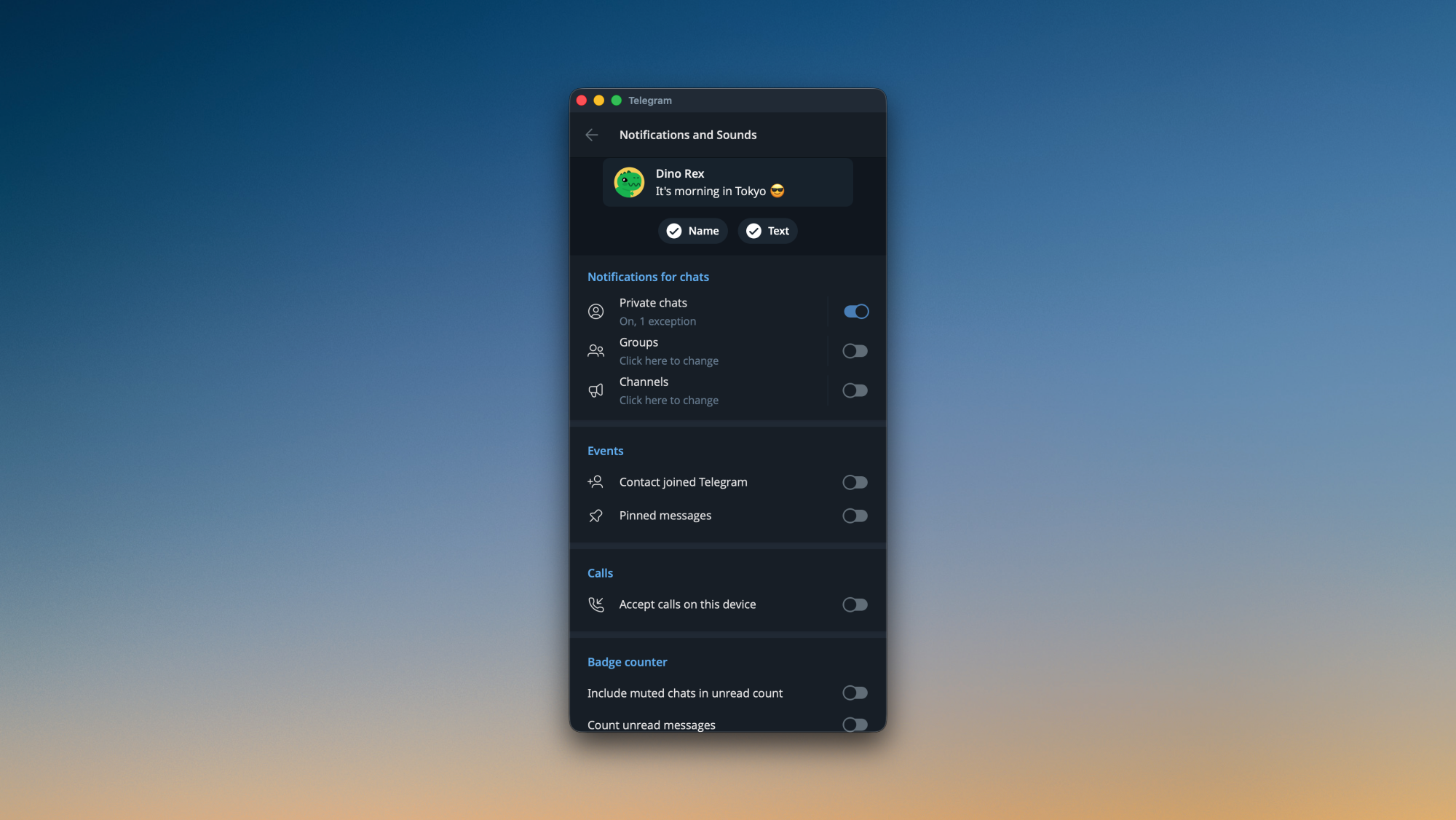
Telegram notification settings on Mac.

Credit: Pranay Parab

Telegram tends to be a bit spammy with its notifications. By default, you’ll get an alert whenever any of your contacts joins Telegram, which gets tiring very fast. You can disable these unwanted notifications by going to Telegram Settings > Notifications and Sounds and disabling New Contacts. While you’re on this page, you can take a moment to disable any other notification types you might not want to see, including Group Chats, Stories, Channels, Reactions, etc.

Change when Telegram auto-deletes your account

Telegram is a bit aggressive about deleting inactive accounts. It will automatically delete your account if you don’t use the app for six months. This isn’t going to bother regular users, but it’s a good idea to customize this duration based on your needs. Telegram lets you set the auto-delete timer for anywhere from 1 month to 24 months, so you can pick the option that’s best for you. Go to Telegram Settings > Privacy and Security > If Away For to make the change.

You can block Telegram calls

Telegram supports voice and video calls, which is pretty standard for messaging apps. Unlike most of its competitors, though, Telegram allows you to block voice and video calls entirely. Just head over to Telegram Settings > Privacy and Security > Calls and select Nobody.

Enhance your Telegram account’s security

It’s never a bad idea to add a few extra layers of security to your Telegram account. The app supports two-step verification and passkeys, and you can enable both by going to Telegram Settings > Privacy and Security. Both options are located near the top of this page.

Lower your data usage

One of Telegram’s best features is granular controls for its various settings, including how much data the app uses. This is great for people with metered internet connections. You can access these options under Telegram Settings > Data and Storage. Go to Using Cellular and Using Wi-Fi to customize how much data the app uses. If you set data usage to Low, Telegram will compress media to preserve bandwidth. On the same page, you can also disable all auto-downloads for photos, stories, videos, and files. Or, if you tap any of these options, you can individually disable auto-downloads based on the type of chat. For instance, Telegram lets you disable automatic downloads of photos, videos, files, and stories from only group chats or only channels. This way, it’ll still automatically download media sent in private chats, but not in group chats.

You can also go to the Data and Storage settings page, and enable Use Less Data for Calls. This will compress audio a little bit, but can be helpful for staying under data limits.

Automate the built-in power saving mode

Telegram has a built-in power saving mode that conserves battery by reducing animations or disabling autoplaying videos and other intensive processes. Set it up by going to Telegram Settings > Power Saving. The slider at the top lets you set a battery percentage, and power saving will automatically turn on if your phone dips below it. I’ve set it to 30%, but you can choose a different number if you like. On the same page, you can also manually disable resource intensive processes, which I’ve used it to turn off autoplaying videos and gifs entirely.

Telegram groups have useful granular controls

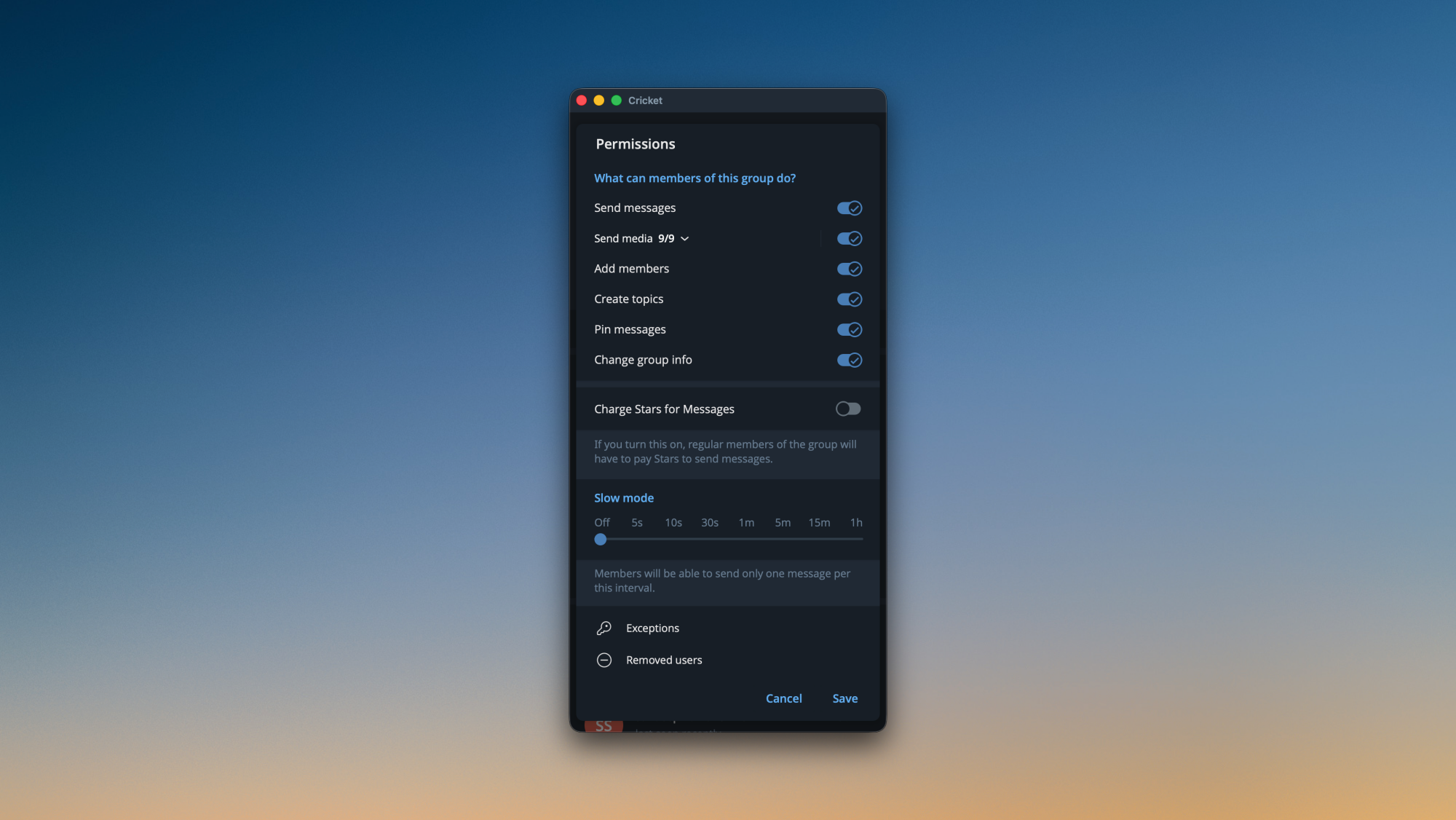
Group permissions in Telegram on Mac.

Credit: Pranay Parab

Group messaging is one area where Telegram allows you to do a lot more than its competition. After creating a group, tap the group’s name, select Group Settings, and you’ll see a plethora of options. Under Permissions, you’ll be able to decide if group members can send messages, voice notes, photos, videos, music, links, add members, pin messages, etc. On the same page, you can also enable Slow Mode, which enforces a minimum delay between two messages from the same member. If you set this to 1 minute, then members will have to wait a minute before sending their second message.

I would love to see other apps also implement a version of Slow Mode, as it stops people from spamming the group with multiple short messages in a row. Additional settings include enabling Topics, which lets you create different “channels” within a group to keep discussions from going astray (separate from the social media “channels” mentioned at the start of this guide). You can think of these like separate channels in Slack or IRC, so in larger groups, you can have separate topics to discuss sport or politics. This keeps the main feed free of unnecessary messages and assigns dedicated spots for different topics.

Telegram Premium adds features you probably don’t need

Telegram has a subscription service ($5/mo) that lets you access features such as unlimited cloud storage (with a maximum of 4GB per document), chat transcription, automatic translation of incoming messages, support for checklists in the app, the ability to see when someone was last seen online (bypassing their privacy settings), and more. These features are great for people who have channels with a large following, but for most people, none of these features are essential. Other than the generous cloud storage, you can get all of these features in other apps for free. And even cloud storage has strong alternatives, including small providers like Proton or larger ones like Google and Apple.

Oh Wow: Cat Claw Fingernails

Because who doesn’t wish they were more feline (I’d love to just sleep all day and knock things off tables), these are several shots of the cat claw inspired nails crafted by Jane of 2hi4dis.nails, complete with fleshy quicks. She even provides a video tutorial (2nd video below) if you want to make your own. Could you even imagine getting your back scratched with those? Just a total bloodbath.

@2hi4dis.nails

���

♬ Purr – The E-Z-Purr

@2hi4dis.nails Replying to @blu ��#nailinspo #claws ♬ Fashion Show – Beatdohostil

Tech Firms Aren’t Just Encouraging Their Workers To Use AI. They’re Enforcing It.

Tech companies ranging from 300-person startups to giants like Amazon, Google, Meta, Microsoft and Salesforce have moved beyond encouraging employees to use AI tools and are now actively tracking adoption and, in several cases, tying it to performance reviews. Google is factoring AI use into some software engineer reviews for the first time this year, and Meta’s new performance review system will do the same — it can track how many lines of code an engineer wrote with AI assistance.

Amazon Web Services managers have dashboards showing individual engineer AI-tool usage and consider adoption when evaluating promotions. About 42% of tech-industry workers said their direct manager expects AI use in daily work as of last October, up from 32% eight months earlier, according to AI consulting firm Section. At software maker Autodesk, CEO Andrew Anagnost acknowledged that some employees had been using initially blocked coding tools like Cursor stealthily — and warned that AI holdouts “probably won’t survive long term.”


Read more of this story at Slashdot.

Snap is hosting its own creator awards show

It seems like any and every industry can have its own awards show these days. And why not? Most of us appreciate a chance to bust out the sequins and satin from time to time. If you can celebrate excellent work or make some extra biz dev bucks at the same time, all the better. Snap is the latest social media company to launch its own take on the glitz and glam. The Snappy Awards Show will be held at the company’s headquarters on March 31. Comedian and content creator Matt Friend will host the event.

Snapchat has been adding more tools for influencers to build audiences, most recently launching individual creator subscriptions. An awards show seems to be part of that same agenda, spotlighting popular personalities from many different fields. There will be Snappys handed out for categories such as Spotlight MVP, Best Storyteller and Breakout Creator of the Year, plus awards for collaboration, cultural impact and success in single subjects.

Snapchat isn’t the first social media platform to honor the personalities using it. TikTok hosted its inaugural awards show in the US last year.

This article originally appeared on Engadget at https://www.engadget.com/social-media/snap-is-hosting-its-own-creator-awards-show-221859681.html?src=rss

Judge: xAI can’t claim OpenAI stole trade secrets just by hiring ex-staffers

Elon Musk appears to be grasping at straws in a lawsuit accusing OpenAI of poaching eight xAI employees in an allegedly unlawful bid to access xAI trade secrets connected to its data centers and chatbot, Grok.

In a Tuesday order granting OpenAI’s motion to dismiss, US District Judge Rita F. Lin said that xAI failed to provide evidence of any misconduct from OpenAI.

Instead, xAI seemed fixated on a range of alleged conduct of former employees. But in assessing xAI’s claims, Lin said that xAI failed to show proof that OpenAI induced any of these employees to steal trade secrets “or that these former xAI employees used any stolen trade secrets once employed by OpenAI.”

Read full article

Comments

Skate’s developer is laying off staff before the game leaves early access

Full Circle, the developer behind the new Skate game, has announced that it is restructuring and laying off staff. It’s not yet clear how many roles will be impacted by the changes, but the restructuring is happening less than six months after skate. launched in early access on September 15, 2025.

“We’re reshaping Full Circle to better support skate.’s long-term future,” Full Circle says. “These shifts mean making changes to our team structure, and some roles will be impacted. The teammates affected are talented colleagues and friends who helped build the foundation of skate. Their creativity and dedication are deeply ingrained in what players experience today. This decision is not a reflection of their impact and we’re committed to supporting them through this transition.”

Engadget has contacted Full Circle’s owner EA for more information about the layoffs. We’ll update this article if we hear back.

EA originally formed Full Circle in 2021 with a staff of development talent from the original Skate team. Skate was often positioned as a more realistic competitor to the Tony Hawk’s Pro Skater series, but the new studio has ultimately taken the franchise in a slightly different direction than fans may have expected. Previous Skate games were paid experiences with single-player and multiplayer modes, while skate. is a free-to-play live-service game supported with microtransactions.

Recent history, both the failure of Concord and the ongoing struggles of Highguard, serves as a testament to how hard it is to launch a live service game in the 2020s. Full Circle’s announcement notes the “tens of millions” of players that have tried the new game, but it’s possible a struggle to keep players interested and spending on microtransactions could be why it’s restructuring.

This article originally appeared on Engadget at https://www.engadget.com/gaming/skates-developer-is-laying-off-staff-before-the-game-leaves-early-access-220916797.html?src=rss

Samsung Is Very Confident in the Galaxy S26 Series’ Cameras

It probably will come as no surprise that Samsung claims its new S26 series delivers “the most powerful Galaxy experience yet.” The company announced the new phones during its big Unpacked 2026 event, and, like most new smartphones these days, this year’s models appear to be iterative updates to last year’s S25 phones.

The company particularly touted the S26 series’ cameras, but the interesting thing is, the camera hardware hasn’t much changed. If you look at the on-paper specs, you’ll mostly see the same numbers across the lens and sensor sizes. The S26 and S26+ have three rear cameras, while the S26 Ultra adds a fourth; all three phones have the same 12MP selfie camera. Really, the only hardware change is to the S26 Ultra’s 200MP main camera, which now has an f/1.4 aperture, compared to the f/1.7 aperture on the S25 Ultra’s 200MP camera. Otherwise, Samsung kept things pretty much the same.

The S26 cameras are still a decent upgrade over the S25’s

And yet, there are some clear advantages to the S26 series, especially the S26 Ultra. While the selfie cameras are the same as last year, they now use a new AI processor to bring out more detail: When there’s too much light in a shot, the S26 series can add virtual light to balance out the image. These phones are also better than previous models at filming video in low-light conditions, expanding on the company’s “Nightography” feature, which previously boosted the detail in photos; now, it works for video as well.

Speaking of video, Samsung says the S26 can automatically stabilize shots while maintaining a level image, even if you’re not looking at the frame, using “Super Steady with Horizontal Lock” (catchy name!).

If you pick up the Ultra, you’ll also get some pro video features. First, the phone supports the APV video codec, Samsung’s pro video codec, ideal for professional editors. Presumably, shooting in 8K APV will produce some large file sizes, which is why it’s great that the S26 Ultra supports recording to external storage, like the recent Pro iPhones. If shooting in log, you’ll be able to apply LUTs to your footage, to customize the overall color-grading of your images.

One smaller upgrade is Ocean Mode, which takes detailed images in underwater environments. This feature was previously available to professionals only, but the S26 series gets it as part of the Expert RAW setting.

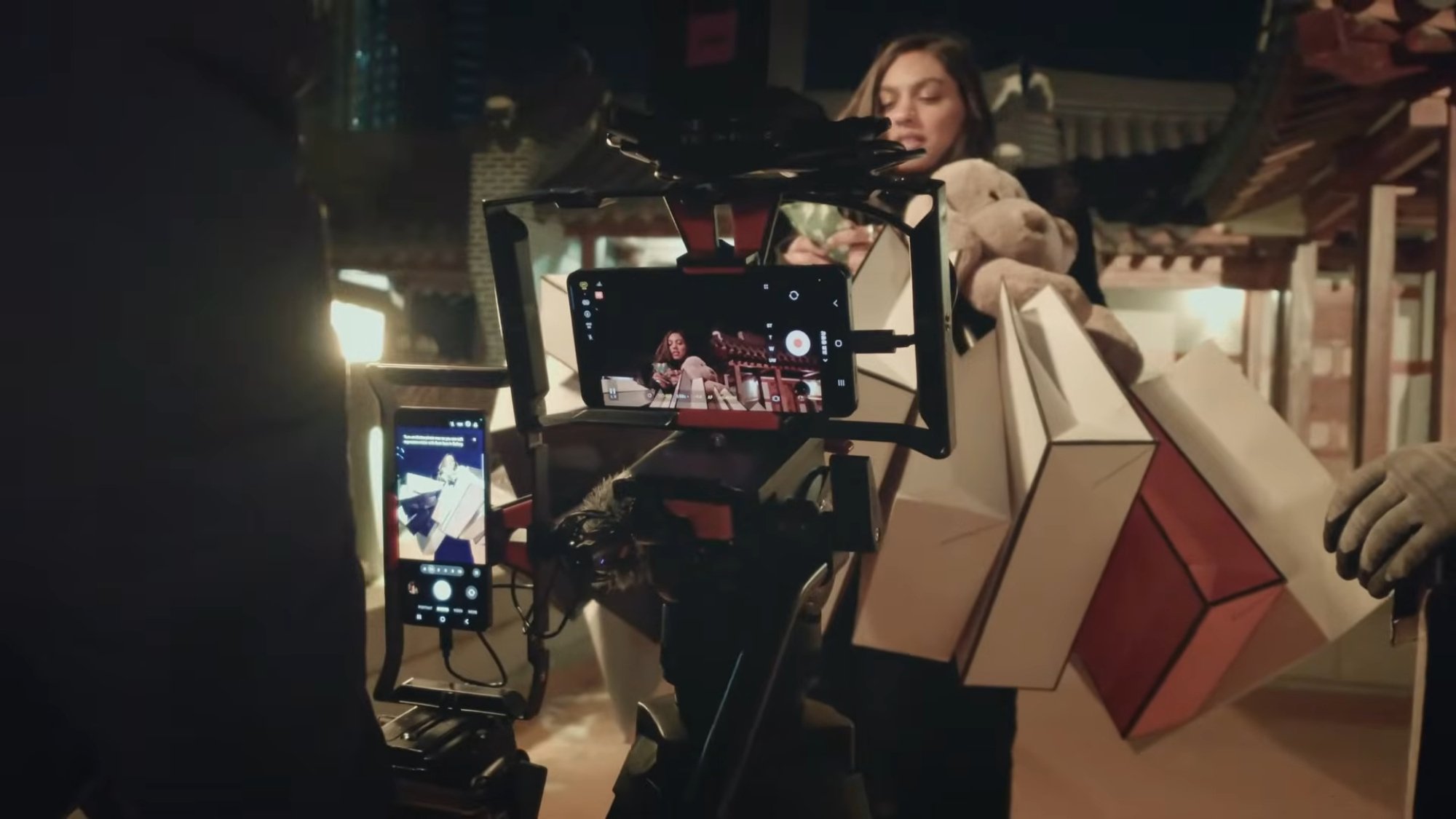
s26 camera at night

Credit: Samsung/YouTube

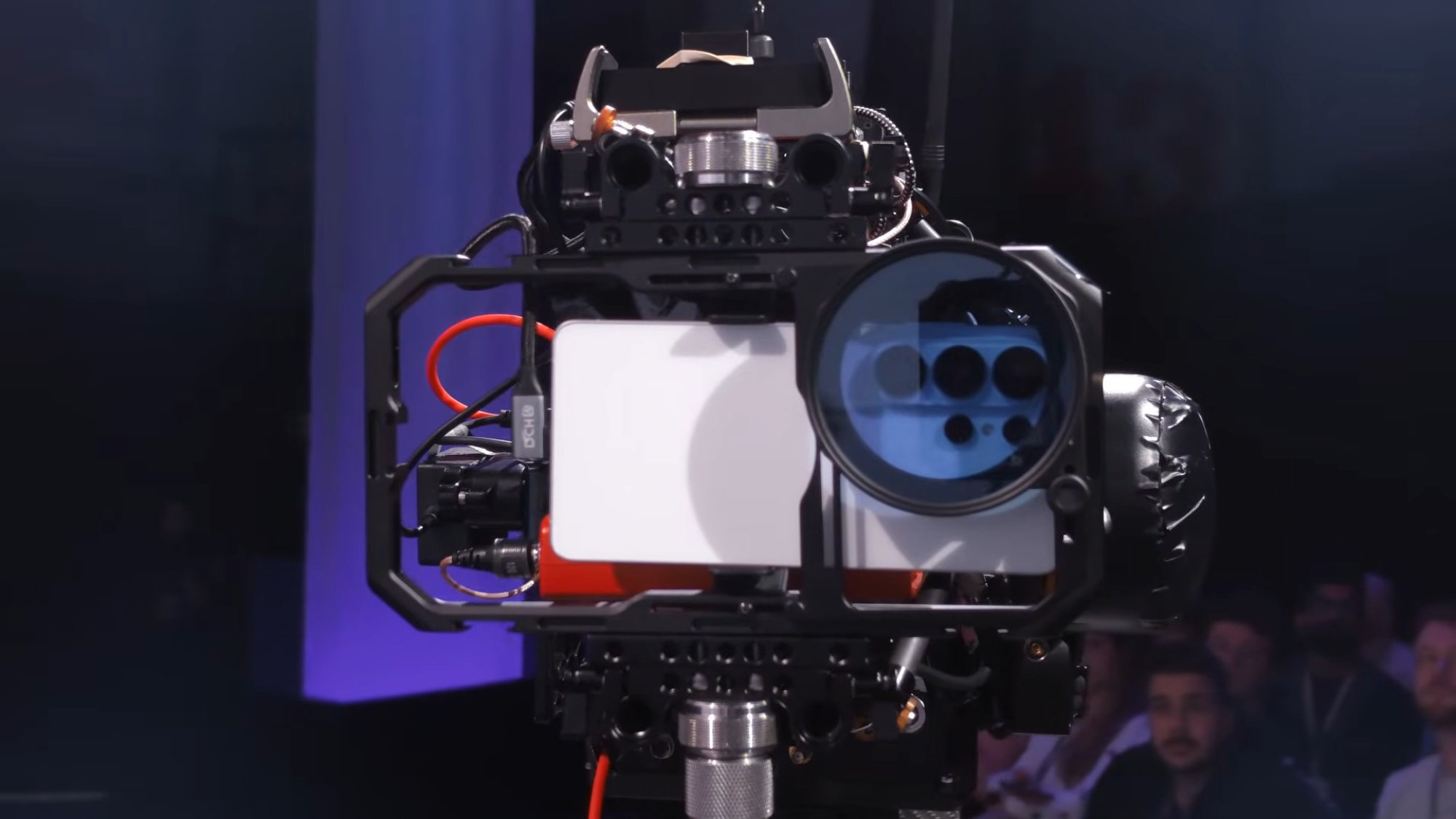
Samsung added a surprise twist to Unpacked, revealing towards the end of the show that the entire livestream was filmed using S26 Ultras. That follows Apple’s playbook of recording events with iPhones, though Apple doesn’t do livestreams anymore. As far as I can tell, this is the first time a company like Samsung has livestreamed its entire presentation on one of its smartphone cameras. (Though both Apple and Samsung also deck out their smartphones with expensive equipment to capture these images.)

samsung ultra livestreaming event

Credit: Samsung/YouTube

Galaxy AI brings new camera features to the S26 too

Samsung’s event focused a lot on Galaxy AI, and its benefits also applied to the cameras. For instance, the document scanner on the S26 can remove extraneous subjects from scans, such as your thumb or finger, and can combine multiple scans into one PDF.

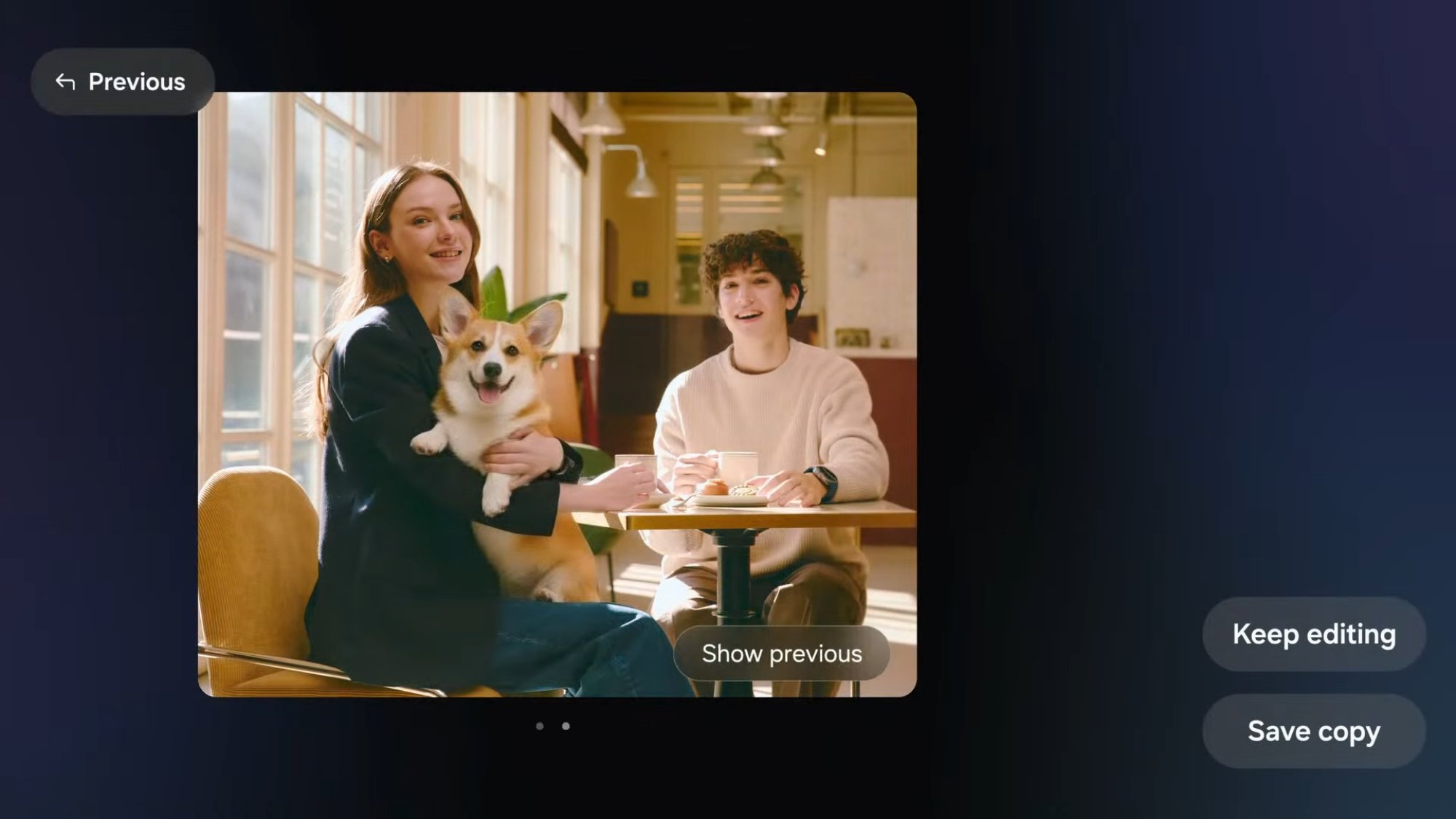
You can also use Galaxy AI for prompt-based editing. Samsung showed off how to merge two photos at once, so that the subject of one image is “seamlessly” edited into another. The example added a dog from one image into the arms of a woman sitting at a coffee shop in another. Other examples of prompt-based edits include swapping outfits in an image, or editing a bite out of a cupcake.

samsung event

Credit: Samsung/YouTube

None of these upgrades alone are necessarily worth upgrading from the S25, but they show that Samsung is quite confident in the features and quality of its cameras. Even if you don’t care for AI editing, it’s helpful to have added details when shooting in low light, and any budding cinematographers may enjoy the pro features—especially codec support and the ability to shoot to external storage. But, as always, we’ll need to wait for reviewers to get their hands on the phones before we know how good these cameras really are.

The Galaxy S26 is faster, more expensive, and even more chock-full of AI

There used to be countless companies making flagship Android phones, but a combination of factors has narrowed the field over time. Today, Samsung is the undisputed king of the Android device ecosystem with its Galaxy S line. So we can safely assume today’s Unpacked has revealed the most popular Android phones for the next year—the Galaxy S26 Ultra, Galaxy S26+, and Galaxy S26.

Samsung didn’t swing for the fences this time around, producing phones with a few cosmetic tweaks and upgraded internals. Meanwhile, Samsung is investing even more in AI, saying the S26 series includes the first “Agentic AI phones.” Despite limited hardware upgrades, the realities of component prices in the age of AI mean the prices of the two cheaper models have gone up by $100 this year. The Ultra remains at an already eye-watering $1,300.

Faster and more private

Looking at the Galaxy S26 family, you’d be hard-pressed to tell them apart from last year’s phones. The camera surround is different, and the measurements of the smallest and largest phone are ever so slightly different. You probably won’t be able to tell just by looking, but the S26 Ultra has regressed from titanium to aluminum, a reversion Apple also made with its latest high-end phones. This phone also retains its S Pen stylus.

Read full article

Comments

Why the Galaxy S26 Got a Price Hike

We may earn a commission from links on this page.

On paper, the Samsung Galaxy S26 lineup seems like a pretty standard upgrade. The phones have received a new chip, some new AI features, slight bumps to the battery life and charging speeds (depending on your model), and even a fancy new gimmick in the Privacy Display. But once you add one of these new handsets to your cart, you’ll notice another detail that’s changed: Two of the Galaxy S26 phones cost $100 more than their Galaxy S25 counterparts did at launch last year.

We were all hoping it wouldn’t happen, but as AI demand makes components like storage, memory and even displays more expensive, the first major tech launch of the year has shown us that we can expect prices to increase in turn. This year, two models of the Galaxy S26 are $100 more expensive—but hey, at least your priciest options got out unscathed.

Why the Galaxy S26 costs $100 more

Maybe the most noticeable casualty in the S26 price hikes was the base model, which went from starting at $799 for the S25 to starting at $899 for the S26. That makes it pricier than an iPhone 17, but you do get a little something in exchange.

Essentially, this is less of a price increase, and more like paring down your options: To coincide with the new price, Samsung has also bumped up the S26’s base storage to 256GB (up from 128GB on the S25). That means Samsung has to produce fewer varieties for its base phone, which will likely help it deal with the ongoing components shortage, while keeping pricing stable for the most popular configurations.

I say “close,” because the 256GB S26 is still a bit more expensive than the 256GB S25. That phone costs $859, so whether the upgrade is worth an additional $40 depends on how much you care about a larger battery, a new chip, and a 0.1-inch larger display. Being the base phone, the S26 doesn’t have the flashiest additions over its predecessor, but it might have fared better than the non-Ultra S26.

The Galaxy S26+ costs as much as an iPhone 17 Pro

Perhaps the bigger victim in Samsung’s S26 price increases is the Galaxy S26+, which now starts at $1,099, up from $999 for the S25+. The price increase here is a bit harder to explain, as it didn’t get any bumps to its base storage to compensate. It still starts at 256GB of storage, still has a 6.7-inch screen, and still has the same 50MP/12MP/10MP rear camera system. The Privacy Display—the Ultra’s flashiest new feature—isn’t even included. The biggest on-paper upgrade is the new chip, the Snapdragon 8 Elite for Galaxy Gen 5.

That means upgrading will only net you slightly faster processing, plus early access to those new AI features that are Galaxy S26 and Pixel 10-exclusive…for now. The lack of distinct selling points emphasizes the awkward space these middle-of-the-road models currently occupy. For instance, you can get an iPhone 17 Pro for the same $1,099, and that will get you Apple’s best technology, minus the slightly larger display and battery on the iPhone 17 Pro Max. If Samsung is charging that much for a Plus model, maybe it makes sense that Apple ditched its own Plus version for the weirder (but unique) iPhone Air.

Granted, the S26+ is still a strong phone. That new chip is no slouch, and while the ultrawide and telephoto lenses are weaker here than on the 17 Pro, the main lens is actually slightly stronger, at 50MP versus 48MP. I wouldn’t be disappointed to get an S26+, but it might be difficult for an S25+ owner to find a reason to upgrade their current phone. It’s basically the same device, but $100 pricier.

The Galaxy S26 Ultra costs the same, probably because that’s the one Samsung wants you to buy

While it’s unclear why Samsung put the S26+ out without making a compelling case for it—the company didn’t even talk about it much during today’s Galaxy Unpacked event—I’d guess that is because the company would much prefer you upgrade to the Galaxy S26 Ultra. This is the model with the most exclusive features, offering the clearest upgrades over its last gen version. It’s also the only model that didn’t see a price hike.

The Galaxy S26 Ultra starts at $1,299, the same as the Galaxy S25 Ultra. But for that cost, you’ll now get a new chip, faster wired charging (up from 45W to 60W), the Privacy Display, and improved nighttime photos as well as access to the APV codec used in professional video shoots. That’s a good amount of upgrades over what the other models offer.

To me, that signals one thing: Samsung is willing to raise its barrier to entry, but is going to do its best to keep pricing for its flagship devices as attractive as possible for as long as possible. If you’re willing to buy the most expensive model, you can avoid a price hike, while also getting the biggest upgrades. Everyone else will have to pay more. I’m curious to see whether Apple will follow this trend when it drops the iPhone 18 later this year.

The next Assassin’s Creed game loses its creative director

Ubisoft’s shakeups continue unabated. The creative director of the next Assassin’s Creed game, codenamed Hexe, has left the company. The departure of Clint Hocking, a 20-year veteran of the company over two stints, was reportedly announced in a staff meeting this week.

Hocking’s resume at Ubisoft included serving as creative director on Splinter Cell: Chaos Theory, Far Cry 2 and Watch Dogs: Legion. The details of why he’s leaving the company haven’t been reported.

Ubisoft told VGC, which first reported on Hocking’s exit, that development on Hexe will continue. Jean Guedson, one of three new leaders of the Assassin’s Creed franchise, will take over as the upcoming title’s new creative director. Guedson had the same role for Assassin’s Creed Origins and Black Flag, two of the franchise’s most well-received entries.

To say sailing hasn’t been smooth of late at Ubisoft would be an understatement. Last year, the company reorganized its corporate structure under a system of “creative houses.” The first, Vantage Studios, is partly owned by Tencent and now oversees Assassin’s Creed. Then in October, franchise head Marc-Alexis Côté left the company. He later claimed he was “asked to step aside” and is suing his former employer.

All of these changes came in the wake of layoffs, big-name flops, more layoffs, studio closures, even more layoffs, strikes and (yep) layoffs again. Earlier this month, Ubisoft even fired an employee who criticized the company’s return-to-office mandate.

But have no fear; some aspects of the company are doing quite well. Take, for example, nepotism. The future is looking bright indeed for a rising company star who is now co-CEO of Vantage Studios. That title belongs to Charlie Guillemot, the son of Ubisoft CEO Yves Guillemot.

This article originally appeared on Engadget at https://www.engadget.com/gaming/the-next-assassins-creed-game-loses-its-creative-director-210119005.html?src=rss

Here’s How to Preorder the Galaxy S26 Series

We may earn a commission from links on this page.

The Galaxy S26 series is official, even if they’re not quite officially here yet. Samsung announced the new smartphones at today’s Unpacked 2026, touting their upgraded chips (Snapdragon 8 Elite Gen 5 for Galaxy), pro camera features, and new Galaxy AI capabilities.

It might be a relatively quiet update, but an update’s an update. If you’re looking for the fastest Galaxy devices on the market, the choice just moved from the S25 to the S26.

When is Samsung releasing the Galaxy S26?

While the entire S26 lineup is currently available to preorder, they aren’t yet available to purchase. Samsung is making users wait a bit—two weeks, to be exact. Preorders start today, Feb. 25, while the units themselves will be available in stores starting March 11.

Still, even if you have two weeks to buy any of the S26 series, you might want to consider preordering them ahead of time if you want to secure your device. The newest smartphones from companies like Samsung tend to sell out on release, pushing shipping dates back further than the official release date. That’s no guarantee it’ll happen this time, but preorder sets your place in line if you’re sure which model you want.

How much does the Galaxy S26 cost?

Three phones, three different starting prices:

  • the Galaxy S26 is the smallest of the bunch, and costs the least, starting at $899.99

  • the S26 Plus starts at $1,099.99

  • the S26 Ultra starts at $1,299.99

Those are just the entry prices, of course—for the base storage for each device. If you want more storage, you’ll need to pay more, though you could save some money, depending on the preorder deal you choose.

Where to preorder the Galaxy S26 series (and the best deals)

There are a number of stores you can preorder the Galaxy S26 series from, but Samsung would obviously prefer you to buy direct. The company is running promotions for preorders, such as trade-in deals, to knock some money off the price tag, but the best reason to go through Samsung is if you want one of their exclusive colors: Silver Shadow and Pinkgold are only available on Samsung’s official site.

Here are the current preorder deals I’m seeing:

Galaxy S26

  • AT&T: As low as $0 per month with eligible trade-in.

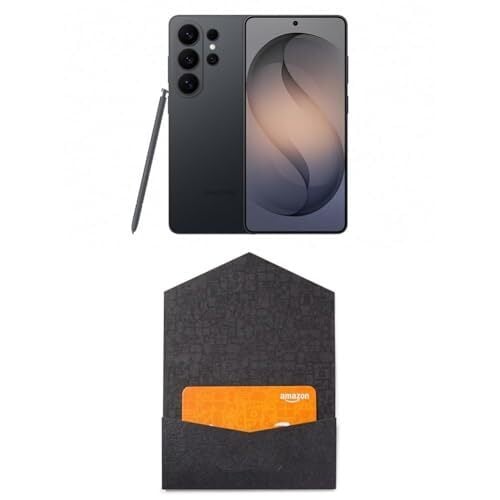
  • Amazon: Save $200 off the 512GB model, and get a free gift card.

  • Best Buy: Save $200 off the 512GB model. Trade-in offers accepted.

  • Boost Mobile: $3 per month on the Infinite Access for Galaxy $65 Plan

  • Samsung: Save up to $500 with eligible trade-in, plus $50 off through PayPal code.

  • T-Mobile: As low as $0 per month with eligible trade-in or new line on the Experience Beyond plan.

  • Verizon: As low as $0 per month with Unlimited Ultimate or Unlimited Plus plan.

Galaxy S26 Plus

  • AT&T: As low as $0 per month with eligible trade-in.

  • Amazon: Save $200 off the 512GB model, and get a free gift card.

  • Best Buy: Save $200 off the 512GB model.

  • Boost Mobile: $8.33 per month with the Infinite Access for Galaxy $65 plan.

  • Samsung: Save up to $500 with eligible trade-in, plus $50 off through PayPal code.

  • T-Mobile: As low as $0 per month with eligible trade-in or new line on the Experience Beyond plan.

  • Verizon: As low as $0 per month with Unlimited Ultimate or Unlimited Plus plan.

Galaxy S26 Ultra

  • AT&T: As low as $0 per month with eligible trade-in.

  • Amazon: Save $400 off the 512GB model, and get a free gift card.

  • Best Buy: Save $200 off the 512GB model.

  • Boost Mobile: $13.89 per month with the Infinite Access for Galaxy $64 plan.

  • Samsung: Save up to $900 with eligible trade-in, plus $50 off through PayPal code.

  • T-Mobile: As low as $0 per month with eligible trade-in or new line on the Experience Beyond plan.

  • Verizon: Save up to $36.11 per month with the Unlimited Ultimate plan.