Lowpass: Amazon has been working on a new operating system to replace Android on Fire TVs, smart displays and other connected devices, I have learned from talking to multiple sources with knowledge of these plans, as well as job listings and other materials referencing these efforts. Development of the new operating system, which is internally known as Vega, appears fairly advanced. The system has already been tested on Fire TV streaming adapters, and Amazon has told select partners about its plans to transition to a new application framework in the near future. A source with knowledge of the company’s plans suggested that it could start shipping Vega on select Fire TV devices as early as next year.
Doctors made medical history by successfully transplanting a whole eye. The donated eye has reportedly survived inside the patient for six months with no major issues so far and shows signs of good health. At this point, however, the patient has not regained any functional sight as a result.
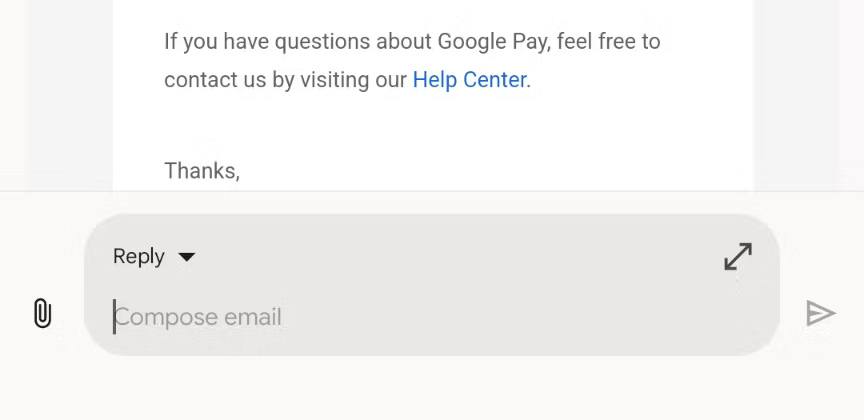
Gmail’s reply bar. A very strange interface for email. [credit: Android Police
]
Does Gmail want to be an instant messaging client? Last month the popular webmail app shipped an emoji reactions bar in the mobile app, where a single tap would send a new email with your emoji response. Now, a wild new UI experiment spotted by Android Police goes another step further: a quick reply bar that looks just like instant messaging input.
Rather than the usual input block you get for writing paragraphs of overly formal text, this new Gmail experiment has a one-line input bar at the bottom for replies. A drop down just above it lets you pick from the usual “reply,” “reply all,” or “Forward” options. Besides that you get an attachment and send button. An “expand” button will presumably launch the usual compose interface.
So far this seems to be an extremely rare test that only one person has gotten, so it’s not necessarily going to roll out to everyone. Given the recent emoji launch, though, Gmail certainly seems jealous of its instant-messaging cousins.
The Spotify TV app has been revamped to make the big-screen app experience resemble the popular mobile version of the digital music and podcast streaming service. The home page will have a “Now Playing View” and feature shortcuts to recently played content. The TV app will also recommend new songs and podcasts based on your listening history on the main screen, similar to what you might get on the mobile app.
The TV app home page doesn’t just look different. You can now more easily switch between different Spotify accounts. The most recently active profile will always appear in the top right corner of a screen. Say you share a TV in the living room and you want to stop listening to your mom’s playlist – now you can select the profile image of a paired account when you want to switch.
In the past, if you listened to music on your TV through the app, you could only see the next song that was lined up. But now you can use the “Playback Queue” tool to select what you want to play next. Also, you can now turn on dark mode on your TV, meaning you can stream a curated playlist during your next house party and minimize the visuals and screen brightness.
The new Spotify TV app updates are available to free and premium subscribers using the app on supported Smart TVs, gaming consoles and media streaming devices. The effort to revitalize the user experience on the big screen isn’t a huge shocker. Spotify rolled out similar updates for its Desktop app earlier this year in an effort to make streaming more enjoyable when you’re not using your phone.
This article originally appeared on Engadget at https://www.engadget.com/spotify-for-tvs-gets-a-new-look-and-features-to-match-the-mobile-app-195050535.html?src=rss
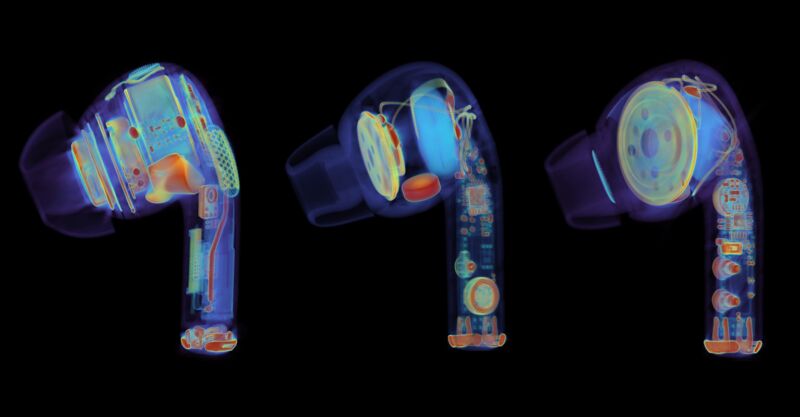
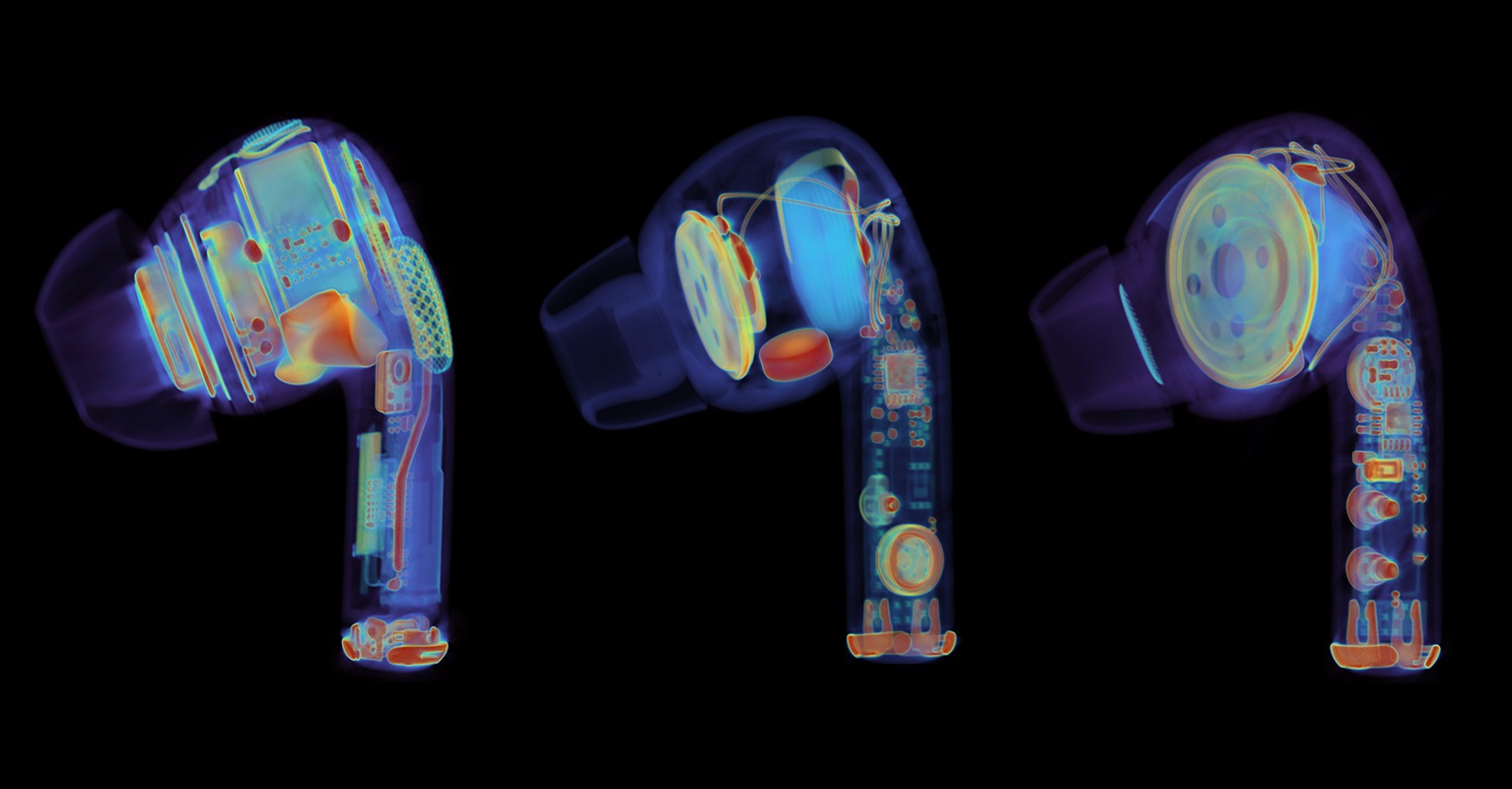
Enlarge/ Lumafield’s blog shared this image showing CT scans of three earbuds. The left is a real AirPods Pro (2nd Gen). The wire-riddled two on the right are fakes. (credit: Lumafield)
Whether they’re products pretending to be made by a brand or devices claiming to be something they’re not, (like a microSD card posing as an SSD), fraudulent electronics pose a threat to unsuspecting shoppers’ wallets and, at times, their safety. With their popularity and high prices, scammers often target Apple products. But what’s actually inside those faux Apple devices?
To find out, Lumafield busted out its $75,000 CT scanner to illustrate what people get when they end up with counterfeit MacBook chargers or knockoff AirPods Pro.
Lumafield makes industrial CT scanners and software. Lately, it has been using its Neptune scanner to examine electronics, like Apple’s $130 Thunderbolt 4 cable. This week, Lumafield provided CT scans (which you can play with via Lumafield’s online Voyager software) of the AirPods Pro 2nd Generation (here), two counterfeits (here and here), as well as a look at Apple’s 85 W MagSafe 2 Power Adapter (here) and a fake (here).
The trusty Falcon 9 is packed with 6,504 pounds of supplies destined for the International Space Station, including experiments like NASA’s ILLUMA-T project, which will test laser communications from space, and the Atmospheric Waves Experiment (AWE), which will explore atmospheric gravity waves and their effects on…
Apple’s cofounder Steve Wozniak was hospitalized on Wednesday after suffering a possible stroke in Mexico City, according to local news outlet Reforma. The 73-year-old technology legend, who was in Mexico to speak at the World Business Forum, was admitted to ABC Hospital in the city.
Google — under fire in court for allegedly resting on its laurels thanks to its 90% market dominance — only made an effort to beef up the quality of its search engine in the European Union after being hit by a record antitrust fine, according to internal documents revealed in the US Justice Department’s monopolization case against the tech giant. From a report: The Justice Department is arguing at a trial in Washington that Google’s failure to improve its products — unless put under pressure — proves that it’s illegally maintaining its monopoly. Alphabet’s Google planned to improve its European search results only after a record 2018 European antitrust fine, according to the documents, which revealed that Google executives discussed a plan dubbed “Go Big in Europe.”
The plan aimed to improve results in France and Germany in 2019 and 2020 with changes such as adding post-game soccer video highlights, more local content and news, pronunciation practice for different languages and more information on local television options available for streaming. The catalyst was a 2018 EU antitrust order that forced Google to offer a choice screen giving Android phone users five search engine options to choose from, according to US antitrust enforcers trying the case.
On Thursday, a top European court ruled that Austria cannot force Google, Meta, and TikTok to pay millions in fines if they fail to delete hate speech from their popular social media platforms.
Austria had attempted to hold platforms accountable for hate speech and other illegal content after passing a law in 2021 requiring tech giants to publish reports as often as every six months detailing content takedowns. Like the European Union’s recently adopted Digital Services Act, the Austrian law sought to impose fines—up to $10.69 million, Reuters reported—for failing to tackle illegal or harmful content.
However, soon after Austria tried to enforce the law, Google, Meta, and TikTok—each with EU operations based in Ireland—challenged it in an Austrian court. The tech companies insisted that Austria’s law conflicted with an EU law that says that platforms are only subject to laws in EU member states where they’re established.
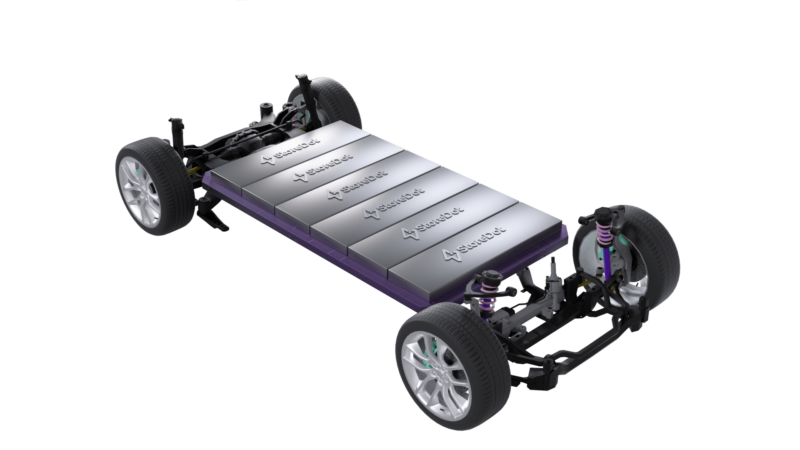
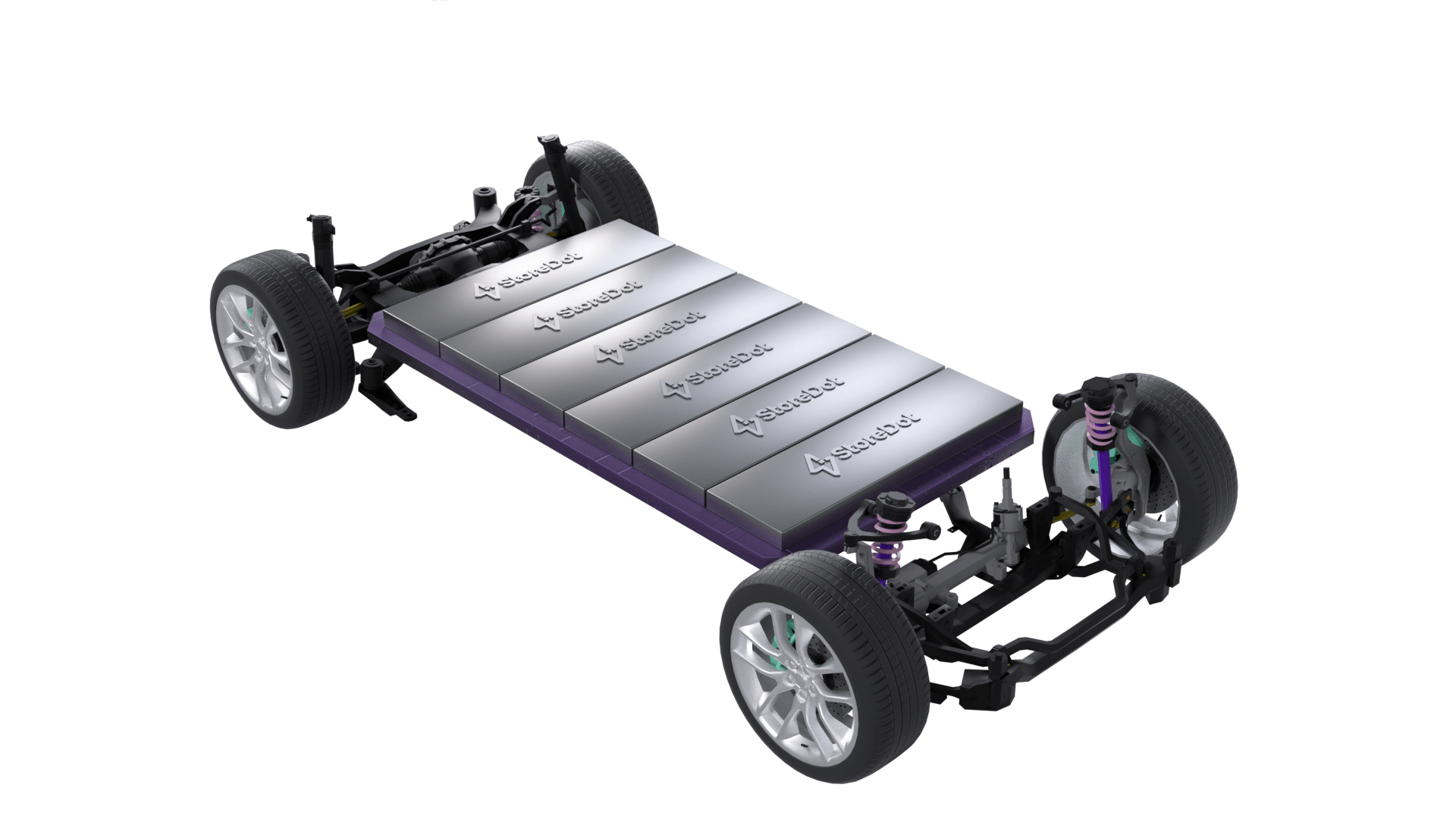
There’s a lot to like about electric vehicles. They’re quiet, reliable, and about twice as efficient as the most frugal hybrid, not to mention that whole “instant torque” thing. But there’s no denying that vehicles with internal combustion engines have a big advantage when driving distances requiring more energy than you set off with. A battery company called StoreDot may have a solution, though—an extremely fast charging cell that could add 100 miles (160 km) of range in just five minutes. And its pack will be tested in a Polestar 5.
More than a century has conditioned us to think that refueling a car should take just a few minutes, so the 30–60 minutes that most EVs require to fast-charge seems offensive to many motorists. And that’s assuming the chargers work flawlessly—far from a safe assumption in 21st century America, unfortunately.
Right now, most automakers’ solution to this problem is to throw lithium-ion at it, building EVs with such big battery storage capacities that an unaerodynamic pickup truck could go more than 400 miles between plug-ins. There are, of course, problems with this approach.
Elon Musk’s rocket company won a court order to block the U.S. Department of Justice’s (DOJ) lawsuit that accused SpaceX of hiring discrimination against refugees and asylum seekers.
An update to Valve’s handheld PC gaming system, a “Limited Edition” Steam Deck OLED, will be available next week. The new version improves the screen quality, the amount of battery, and the Wi-Fi capacity, plus a “6nm APU.” Starting at $549 for the 512GB storage version, the OLED Decks are available beginning November 16, with “highly limited” quantities.
LCD models of the Steam Deck are also being phased out, with discounts on the 64GB and 512 GB versions while supplies last.
Valve claims the Steam Deck OLED will offer “brighter colors, blacker blacks,” with “amazing motion rendition,” shoring up one of the major nitpicks about the Deck’s launch version. The OLED model also touts 30–50 percent more battery life, weighs 30 g less than the original, and can download up to three times faster.
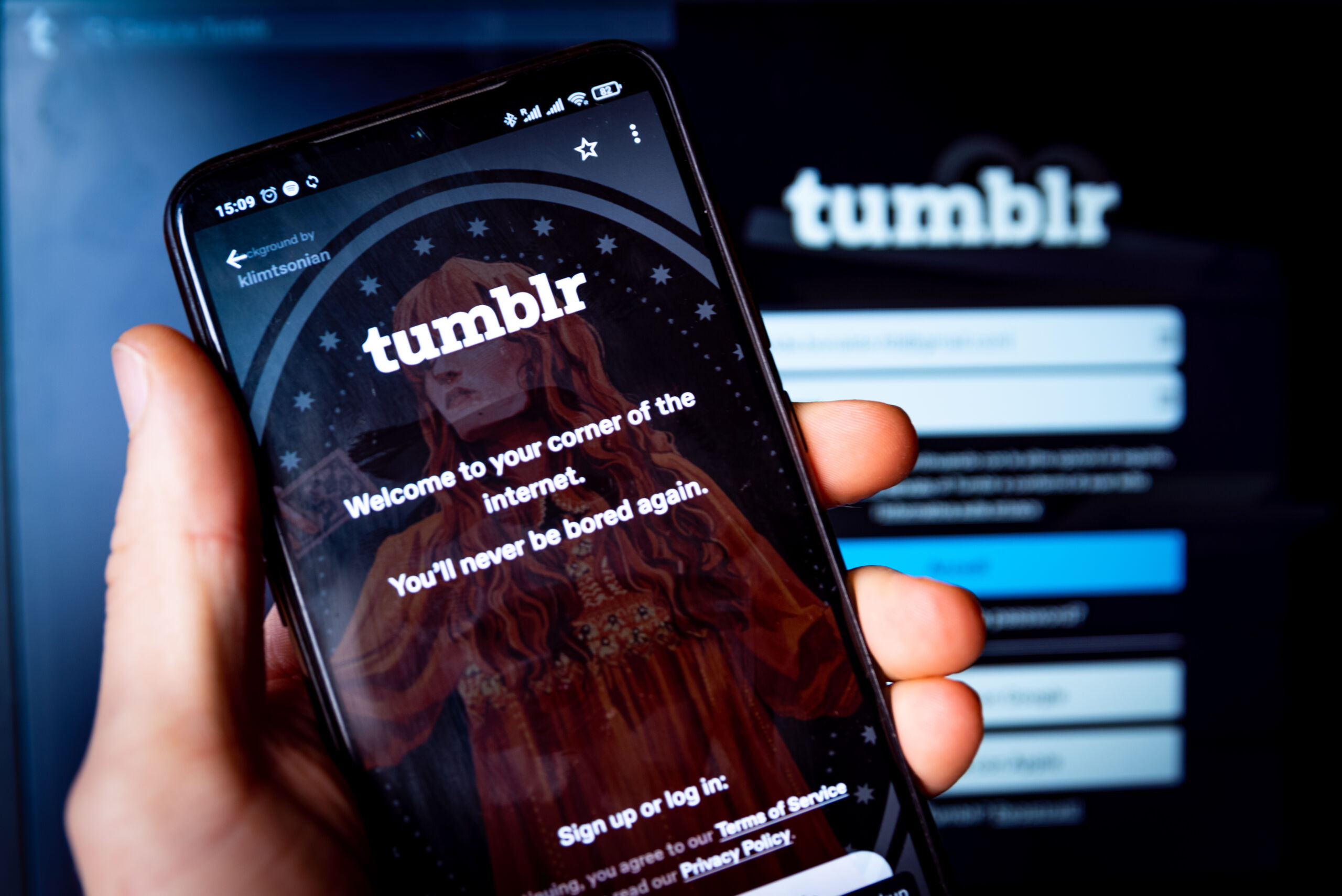
Enlarge/ “You’ll never be bored again” is one of the more fitting slogans attached to Tumblr. (credit: Getty Images)
It’s not quite the end of Tumblr, but when management is supposedly sending memos with the Lord Tennyson quote about having “loved and lost,” it doesn’t look like there’s much of a future.
Internet statesman and Waxy.org proprietor Andy Baio posted what is “apparently an internal Automattic memo making the rounds on Tumblr” to Threads. The memo, written to employees at WordPress.com parent company Automattic, which bought Tumblr from Verizon’s media arm in 2019, is titled or subtitled “You win or you learn.” The posted memo states that a majority of the 139 employees working on product and marketing at Tumblr (in a team apparently named “Bumblr”) will “switch to other divisions.” Those working in “Happiness” (Automattic’s customer support and service division) and “T&S” (trust and safety) would remain.
“We are at the point where after 600+ person-years of effort put into Tumblr since the acquisition in 2019, we have not gotten the expected results from our effort, which was to have revenue and usage above its previous peaks,” the posted memo reads. After quotes and anecdotes about love, loss, mountain climbing, and learning on the journey, the memo notes that nobody will be let go and that team members can make a ranked list of their top three preferred assignments elsewhere inside Automattic.
It’s not yet December, but NASA is already in a festive mood: the Webb and Hubble space telescopes recently imaged MACS0416, a pair of colliding galaxy clusters 4.3 billion light-years from Earth that is bedecked in sparkling lights.
Enlarge/ Host James Burke returns for a reboot of his classic science series Connections on Curiosity Stream. (credit: Curiosity Stream)
Some 15 years ago, a friend recommended I check out a vintage BBC science documentary series called Connections: “I just think it will resonate with how your mind works.” He was right. I was immediately hooked and devoured every available episode, following host James Burke down countless fascinating historical rabbit holes before arriving at an unexpected final destination—although in retrospect, the haphazard journey somehow made perfect sense. Connections was the science documentary series for compulsively curious people who weren’t necessarily drawn to more traditional science and nature documentaries. And now Burke is back and better than ever with six new episodes of a rebooted Connections, thanks to the folks at Curiosity Stream.
The series had been around for decades before I made my belated discovery. The BBC first aired Connections to the UK back in 1978, expanding to the US the following year. Produced and directed by Mick Jackson, each episode would start with some past innovation or event—the invention of the cannon and subsequent changes to castle fortifications to eliminate blind spots, for example. Then Burke would spend the remainder of the episode tracking a path through a series of seemingly unrelated events—maps, limelight, incandescent bulbs, substituting guncotton for ivory in billiard balls, the zoopraxiscope, the telegraph—to demonstrate how they all connected to produce a modern-day breakthrough: the movie projector.
Much of the delight came from all those surprising and unexpected connections. But Burke also had an overarching philosophy about the nature of change and innovation, arguing that rather than progress occurring in a conventional linear fashion, it occurred nonlinearly via an intricate web of interconnected events. In short, one simply could not understand a new modern scientific breakthrough or technology in isolation. That’s why the series was subtitled “An Alternative View of Change.”
The Sonos Beam has been our top pick for compact soundbars for a while now. It offers a lot in a small package and the second-gen version also supports more immersive Dolby Atmos audio. The Beam doesn’t have any upfiring drivers though, so the impact of that spatial sound is limited. That’s not an issue with the Ambeo Soundbar Mini ($799.95), Sennheiser’s smallest soundbar yet to feature its impressive Ambeo 3D audio technology. It cranks out more sonic oomph with dual upfiring woofers on top of all of its virtualization tricks, in a unit roughly the same size as the Beam. The bigger sound comes at a significantly higher price, though.
The design
While the overall shape of the Ambeo Soundbar Mini is similar to the Sonos Beam, there are differences in the details. Most notably, Sennheiser has opted for illuminated (dimmable) Ambeo branding on the front right corner. The top panel of the mini also slopes back to front and the sides are wrapped in a fabric all the way around. Up top, there are controls for volume, playback, Bluetooth, input selection and muting the microphone. There’s also a white light that gets longer from left to right as you increase the volume.
The Ambeo Mini is about an inch and a half wider than the Beam at around 27.25 inches, but the height and depth are nearly identical. Not that you’ll be moving the speaker around much, but the Mini is also almost a pound heavier than its primary competition. Still, this is a compact unit that’s perfectly sized for smaller living rooms and spaces where you don’t have the real estate for a bigger soundbar.
Inside, there are four 1.6-inch full-range drivers. Two of them are front facing while two more are at the ends, angled slightly outward. A pair of four-inch woofers are positioned near the middle of the soundbar, but they face upward. Sennheiser has also included six class D amplifiers capable of 250 watts of power. Four far-field microphones handle the room calibration and you’ll need to make sure they’re unmuted before that process can be completed.
Sound quality
Sennheiser
It’s impressive what Sennheiser has managed to get out of a small speaker. When listening to music, there’s great bass that provides plenty of low-end thump to the driving drum beats of TesseracT’s prog metal and the hip-hop musings of Kaytraminé. Even if a soundbar has woofers, most of the living room speakers can’t muster enough bass for them to be useful as a music setup without an additional sub. That’s not the case here. Still, you’ll want to consider an Ambeo Sub if you’re planning to use it in a medium-to-large room as the bass tends to get lost in bigger spaces. The Mini also supports Sony’s 360 Reality Audio and MPEG-H if you’re into them, but the Ambeo does a great job upscaling stereo content.
The Ambeo Soundbar Mini’s key feature is Sennheiser’s 3D audio tech. It has been a staple of the company’s soundbars since the first Ambeo model in 2019. Both of the larger, pricier Sennheiser soundbars have more drivers, including two upfiring units in addition to the two upwards facing woofers inside the Ambeo Soundbar Plus. The Mini does a solid job with Dolby Atmos and DTS:X content, but the effect isn’t as enveloping since it’s more reliant on virtualization. I particularly enjoyed the immersive, directional audio in quidditch matches during my annual fall viewing of the Harry Potter series.This soundbar still gives you a 7.1.4 setup after the room calibration places virtual speakers around. That’s the same channel layout as the Plus, though that bigger unit has seven total drivers and two woofers for a fuller sound and more immersive experience.
Software and features
Like a lot of smaller soundbars these days, the Ambeo Mini connects to your TV via HDMI eARC. It supports HDMI 2.1, which is the latest spec that allows higher resolution (up to 10K) and higher frame rates (up to 120fps) thanks to increased bandwidth. Most new TVs have at least one HDMI 2.1 port and both PS5 and Xbox Series X support it.
All of the settings for the Ambeo Soundbar Mini are accessible in Sennheiser’s Smart Control app. This includes the initial setup and room calibration, the latter of which takes about three minutes to complete. First, you have the ability to change the sources between HDMI, Bluetooth or Spotify Connect. There’s a volume slider here too and just below reside the Ambeo 3D audio on/off buttons. The company offers a few sound presets next, with Adaptive, Music, Movie, News, Neutral and Sports as the choices. During my tests, I found Adaptive best suited for most viewing and listening, so I kept it locked there. Lastly, the app’s main interface provides access to Night Mode and Voice Enhancement features should you need those.
Photo by Billy Steele/Engadget
There’s a more detailed settings menu, but I’ll only point out one item. Under both Audio and System is where you’ll need to go to add an Ambeo Subwoofer to the Mini (the same stuff is available from both places). Once you do, you’ll have the ability to adjust the additional speaker’s volume and enable a tool called Phase 180. This balances out the low-end from the sub when it’s positioned close to the soundbar. Sennheiser says otherwise the bass can have a hollow character and this helps correct that. You’ll also need to recalibrate the system once you add a sub, which you can do from this menu.
The Mini runs Sennheiser’s Ambeo OS, which allows a whole host of connectivity options. You’ll primarily connect via Wi-Fi, but as I’ve already mentioned Bluetooth is here as well. Wi-Fi gives you the choice of Apple AirPlay 2, Spotify Connect and Tidal Connect, in addition to Alexa built-in and Google Chromecast. The wireless connectivity allows you to easily use the Mini as part of a multiroom setup too. I was able to select it and a HomePod from the connections menu in Apple Music with no additional setup required. The company promises “a future-proof experience” thanks to “regular” Ambeo OS updates as well.
The competition
Photo by Billy Steele/Engadget
As you’ve probably guessed, the Ambeo Mini’s primary competition is the Sonos Beam. The second-generation version of which debuted in 2021, most notably delivering Dolby Atmos and a new cover. While the speaker sounds great and does an admirable job with Atmos, it doesn’t have any upfiring drivers, so the effect of the immersive audio is limited. However, Sonos still achieves a level of immersiveness through some virtualization tricks with extra height and surround channels. Plus, it’s $300 cheaper than the Mini, even after Sonos raised the price to $499. You’ll probably want a sub for the Beam too, which is another $429 or $799 depending on which model you choose (there is a Beam and Sub Mini bundle that saves you $45).
If you’re sold on the Ambeo tech no matter the cost, the Plus and Max soundbars are worth a look. Sennheiser has dropped the prices since their debuts as the Plus is now $1,119.95 and the Max is $1,999.95. Like the Mini, neither of those come with an Ambeo Sub which is an additional $599.95 and the only one these soundbars are compatible with. There’s no denying these Ambeo models can muster some amazing audio, but you’ll pay a premium for the tech.
Wrap-up
With its smallest soundbar yet, Sennheiser continues to show how good its 3D audio tech is. The Ambeo Soundbar Mini offers impressive sound in a small package, including great low-end thump without a dedicated wireless sub. It does an admirable job with Dolby Atmos content, though the Mini does its best work in smaller rooms. There’s no denying this is a very good home entertainment speaker for the size, but the company makes you pay dearly for its fancy technology.
This article originally appeared on Engadget at https://www.engadget.com/sennheiser-ambeo-soundbar-mini-review-excellent-and-expensive-183045244.html?src=rss
Reverb has refurbished Native Instruments Maschine MK3 units on sale now for half off the sticker price in an early Black Friday sale. The device’s interface is friendly to beginner and advanced beatmakers, providing music-making software and hardware in one package. Typically costing $599 new, Reverb’s “great quality” refurbs of the standalone groovebox cost $299 and come with a 90-day warranty.
NI describes the Maschine line as “whatever you want it to be — a standalone groovebox, a compact drum machine, a versatile synthesiser, or a fully fledged production system.” It can create entire songs on the device or pair it with a desktop DAW like Logic Pro or Ableton for finer tuning after laying down a foundation on the all-in-one controller.
The standalone system includes a sampler, arranger, mixer and “pro-quality” FX like a filter, EQ, delay, reverb and compressor. Its built-in sounds include thousands of drum kits, synth presets and loops, and it supports up to 12 expansions. On the device’s face are 16 “ultra-sensitive” drum pads, two color displays, touch-sensitive knobs, a smart strip, and more.
The Maschine MK3 is compatible with Mac (10.13 or higher) and Windows (7 and up) using a bundled USB 2.0 cable.
Reverb says its refurbished models are cleaned and tested as fully operational, and they include a 90-day warranty in case you run into any problems. The online retailer also accepts returns within seven days of delivery — but only if it’s “lost, damaged, or doesn’t match its description.” (So don’t expect Reverb to accept a buyer’s remorse return if the Maschine MK3 works as advertised but doesn’t quite do it for you.)
This article originally appeared on Engadget at https://www.engadget.com/take-half-off-a-refurbished-native-instruments-maschine-mk3-for-black-friday-182541536.html?src=rss