Apple reaches $25M settlement with the DOJ for discriminating against US residents during hiring

Apple will pay $25 million in backpay and civil penalties to settle allegations that it favored visa holders and discriminated against US citizens and permanent residents during its hiring process, the Department of Justice said in a statement on Thursday. This is the largest amount that the DOJ has collected under the anti-discrimination provision of the Immigration and Nationality Act.

At the heart of the issue is a federal program administered by the Department of Labor and the Department of Homeland Security called the Permanent Labor Certification Program (PERM). PERM allows US employers to file for foreign workers on visas to become permanent US residents. As part of the PERM process, employers are required to prominently advertise open positions so that anyone can apply to them regardless of citizenship status.

The DOJ said that Apple violated these rules by not advertising PERM positions on their recruiting website, and also made it harder for people to apply by requiring mailed-in paper applications, something that it did not do for regular, non-PERM positions. As a result, a DOJ investigation found that Apple received few or no applications for these positions from US citizens or permanent residents who do not require work visas.

As part of the settlement, Apple will pay $6.75 million in civil penalties and set up a $18.25 million fund to pay back eligible discrimination victims, the DOJ’s statement said. 

Apple disagreed with the DOJ’s characterization. “Apple proudly employs more than 90,000 people in the United States and continues to invest nationwide, creating millions of jobs,” a company spokesperson told CNBC. “When we realized we had unintentionally not been following the DOJ standard, we agreed to a settlement addressing their concerns. We have implemented a robust remediation plan to comply with the requirements of various government agencies as we continue to hire American workers and grow in the US”

This article originally appeared on Engadget at https://www.engadget.com/apple-reaches-25m-settlement-with-the-doj-for-discriminating-against-us-residents-during-hiring-225857162.html?src=rss

Source: Engadget – Apple reaches M settlement with the DOJ for discriminating against US residents during hiring

Valve Says It Has Sold 'Multiple Millions' of Steam Decks

Valve designers Lawrence Yang and Pierre-Loup Griffais say the company has sold “multiple millions” Steam Deck handheld gaming PCs. The Verge reports: The Steam Deck has been a hit for Valve right from its launch; when the device first went up for preorders in July 2021 (has it really been that long?), the demand created some major issues for Valve’s Steam store. And the handheld gaming PC is often at or near the top of Steam’s top-selling chart — even just two months after the device’s official February 2022 launch, it was clear that the Steam Deck was not a flop. The company apparently even made a cake to celebrate selling 1 million units. The company is probably set to sell a lot more after recently unveiling a new revision with an OLED screen, longer battery life, and faster Wi-Fi.

Read more of this story at Slashdot.


Source: Slashdot – Valve Says It Has Sold ‘Multiple Millions’ of Steam Decks

Why we had to wait nearly two years for an OLED Steam Deck

Mood lighting orb not included.

Enlarge / Mood lighting orb not included. (credit: Valve)

Given the 2021 launch of Nintendo’s Switch OLED, it might seem a little weird that we’ve had to wait nearly two years after the original Steam Deck launch for today’s announcement of an OLED-equipped version. In interviews surrounding that announcement, though, Valve says an OLED screen was never in the cards for the original Steam Deck, given the timeline involved.

Valve designer Jeremy Selan tells IGN that “the display technology for the HDR display, we kicked that off prior to even having shipped the first [Steam Deck].” Selan added to Rock Paper Shotgun that work on this OLED update started “basically immediately” after the original unit was released.

“We knew we needed a better display, even from day one,” Selan told RPS. “It just takes multiple years, it takes a lot of money.”

Read 9 remaining paragraphs | Comments


Source: Ars Technica – Why we had to wait nearly two years for an OLED Steam Deck

Apple Co-Founder Steve Wozniak Hospitalized In Mexico City

Long-time Slashdot reader Alain Williams writes: Apple co-founder Steve Wozniak is in the hospital in Mexico, according to multiple reports.

It is not currently clear what the cause is. The 73-year-old was in Mexico City attending the World Business Forum (WBF), a business conference. [According to TMZ, Wozniak finished his speech but then told his wife he was “feeling strange.” She reportedly insisted he go to the hospital.] An unnamed source from the WBF said that Mr Wozniak fainted on Wednesday at the event [minutes before his participation], according to CNN. TMZ reports that Wozniak was hospitalized after “suffering what appears to be vertigo.” Mexican media outlets were reporting that it was due to a possible stroke.

Read more of this story at Slashdot.


Source: Slashdot – Apple Co-Founder Steve Wozniak Hospitalized In Mexico City

Bored Ape creator says UV lights at ApeFest burned attendees’ eyes and skin

People walk by a Bored Ape Yacht Club NFT billboard in Times Square on June 23, 2022 in New York City. Sunglasses would have been a good idea for this year's ApeFest.

Enlarge / People walk by a Bored Ape Yacht Club NFT billboard in Times Square on June 23, 2022 in New York City. Sunglasses would have been a good idea for this year’s ApeFest. (credit: Getty | Noam Galai)

Lamps emitting ultraviolet light in the corner of a Bored Ape NFT event in Hong Kong last Saturday are the likely cause of severe eye and skin injuries among attendees, according to Yuga Labs, the creator of Bored Ape Yacht Club (BAYC) and host of the event.

The injuries reportedly occurred during “ApeFest,” a three-day annual meet-up of people who own Bored Ape NFTs—which sell for tens of thousands of dollars and, amid the 2021 NFT craze, saw highly inflated prices of hundreds of thousands of dollars. However regretful, owners of the cryptocurrency-backed, digital images of nonchalant cartoon primates are automatic members of the BAYC. This year, their annual club event ran from November 3–5 and promised “mayhem” and “One big night full of surprises.”

Soon after an ApeFest party Saturday night, some attendees reported severe pain and burning sensations in their eyes, as well as vision problems and skin irritation, according to Yuga Labs. Doctors and others on the Internet quickly speculated that the cause was UV exposure and photokeratitis (aka snow blindness, arc eye, or welder’s flash), which is akin to a sunburn on the cornea (the clear tissue covering the front of your eye) due to exposure to UV light. The New York Times reported as of Tuesday that the number of attendees injured was over 20.

Read 5 remaining paragraphs | Comments


Source: Ars Technica – Bored Ape creator says UV lights at ApeFest burned attendees’ eyes and skin

Avatar: The Last Airbender's Trailer Bends the Anime Into Live-Action

Netflix made clear its intent to create a live-action version of Avatar: The Last Airbender years ago, with occasional information in the form of casting for the first season’s various characters. Things really began to kick into gear earlier this year as the streamer planted the show’s flag for a 2024 release, and…

Read more…


Source: Gizmodo – Avatar: The Last Airbender’s Trailer Bends the Anime Into Live-Action

Fakespot Chat, Mozilla's First LLM, Lets Online Shoppers Research Products Via an AI Chatbot

An anonymous reader quotes a report from TechCrunch: Earlier this year, Mozilla acquired Fakespot, a startup that leverages AI and machine learning to identify fake and deceptive product reviews. Now, Mozilla is launching its first LLM (large language model) with the arrival of Fakespot Chat, an AI agent that will help consumers as they shop online by answering questions about the product or even suggesting questions that could be useful in your product research. […] Fakespot has been using AI, including generative AI technologies, to make the online shopping process more trustworthy, not less. For instance, it launched a generative AI feature called Pros and Cons last year, that could replace the need for reading reviews by writing up its own summaries of a product’s positives and negatives. The feature was trained on billions of data points, with the model itself using five different models under its hood, the company said.

This week, Fakespot Chat launched into testing, allowing shoppers to ask an AI chatbot about a product they’re considering, similar to how you could ask a salesperson for help if you were shopping in a physical store in the real world. The technology uses AI and machine learning to sort through the product reviews, sorting real from fake, to answer the user’s questions. The information from your chat session is saved to improve the experience for others, Mozilla notes, but users don’t have to create an account or divulge personal information for the experience to work. The feature is available via the Fakespot Analyzer or it can be used on an Amazon.com product from Fakespot’s browser extension. For the former, you’d copy and paste the URL of the product into the analyzer to ask your questions, but if using the browser add-on, the analysis starts automatically. When the analysis is complete, Fakespot Chat appears on the right-hand side of the analysis page alongside other features, like Pros and Cons, as well as Fakespot’s Review Grades and Highlights. You can then interrogate the AI agent about the product as you weigh your purchase decisions.

Read more of this story at Slashdot.


Source: Slashdot – Fakespot Chat, Mozilla’s First LLM, Lets Online Shoppers Research Products Via an AI Chatbot

Tumblr’s staff is reportedly reduced to a skeleton crew

Tumblr, a flailing social media site from a bygone era, may be run by a skeleton crew from now on. An alleged internal memo from parent company Automattic has made the rounds on social platforms (including Threads), stating it has “not gotten the expected results from our effort.” The decision appears to mark a sharp U-turn from a separate leak this summer, claiming Automattic was building a TikTok-like algorithmic feed into the aging site.

Although this doesn’t quite appear to be the end of the road for Tumblr, the note doesn’t sound promising for the platform’s future. It says “the majority of the 139 people” will switch to other Automattic projects, leaving a barebones gang of Trust & Safety and support workers to oversee Tumblr’s smoldering embers. Given how many brutal layoffs we’ve seen this year, handling the transition in a way that avoids job losses could be a silver lining.

Automattic, the company behind the blogging tool WordPress, acquired Tumblr in 2019 from Verizon, which landed the platform through its purchase of Yahoo! (Engadget’s parent company) in 2017. It likely didn’t help that its ownership turned into a game of musical chairs, and none of them seemed to find the right formula to get the microblogging network back on its feet. (Its controversial ban on adult content likely had something to do with that.)

“We are at the point where after 600+ person-years of effort put into Tumblr since the acquisition in 2019, we have not gotten the expected results from our effort, which was to have its revenue and usage above its previous peaks,” the alleged memo reads. After throwing in cliches about climbing mountains and being better to try and fail than not to try at all, the note claims the team’s next step is to “reflect and decide where else we should concentrate our energy together.”

Engadget reached out to Automattic for comment and confirmation but didn’t immediately receive a response. We’ll update this article if we hear back.

In addition to WordPress, Automattic’s other brands include the journaling app Day One, the e-commerce plugin WooCommerce, Gravatar and the note-taking app SimpleNote.

This article originally appeared on Engadget at https://www.engadget.com/tumblrs-staff-is-reportedly-reduced-to-a-skeleton-crew-215853169.html?src=rss

Source: Engadget – Tumblr’s staff is reportedly reduced to a skeleton crew

OpenAI wants to work with organizations to build new AI training datasets

OpenAI is rolling out a new partnership program to collect datasets from third parties that it intends to use to train its AI models. The initiative, OpenAI Data Partnerships, will seek large-scale private and public information that it says is “not already easily accessible online to the public.” The company says the data it will collect doesn’t necessarily have to be quantitative or in text formats — the program will also accept images, audio or video.

Notably, the company says it’s on the lookout for data on “any topic” and in “any language” so long as it “expresses human intention,” which it likens to long-form essays or transcribed conversations. Human-centric data collected by OpenAI is expected to help the company improve tools like its automatic speech recognition technology which is used to transcribe spoken words. This initiative also lines up with ChatGPT’s recent expansion to support voice queries to engage with users in a conversational manner. Exposing its AI models to more information that teaches it how to hold up human-like conversations will only further improve this feature and other tools that will follow in function.

The model testing conducted throughout the data partnership program will also naturally expand the capabilities of OpenAI’s consumer-facing GPT-4 Turbo, which has been updated to provide users with more complex and meaningful responses. OpenAI says it has already started working with interested organizations, including authoritative bodies like the Icelandic government. Through curated datasets, OpenAI says its working to improve GPT-4’s ability to comprehend queries made in the Icelandic language.

If a private or public organization wants to participate in the program, a representative can submit a form on the company’s website and share information on the data type and size that they intend to share. There are two pathways for datasets. The first is the Open-Source archive, which is ideal for datasets relevant to training language models. However, submissions made to it will be public for anyone to use. Alternatively, OpenAI says a company can submit information through its private dataset pathway which will be funneled to train proprietary AI models, which the company says includes their “foundation models” and “fine-tuned and custom models.” This is recommended for companies or institutions that want to keep their data confidential. But in that same regard, OpenAI says it is not looking for datasets that contain sensitive or personal information.

ChatGPT has already set records for its soaring user base. It has about 100 million weekly active users around the world, meaning privacy will only continue to be a focal point for the tool. Previously, Samsung employees were put in the hot seat for leaking sensitive data to the AI model. While OpenAI claims it does not use data generated by its API to train its models unless a user explicitly submits information through an opt-in form, all eyes will be on how the company handles the data collected through this initiative, especially the private datasets.

This article originally appeared on Engadget at https://www.engadget.com/openai-wants-to-work-with-organizations-to-build-new-ai-training-datasets-214548902.html?src=rss

Source: Engadget – OpenAI wants to work with organizations to build new AI training datasets

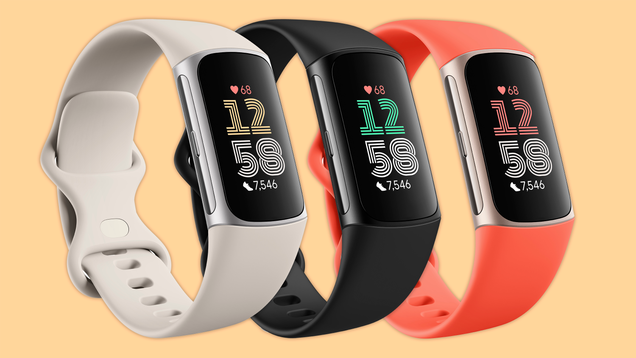
Google Stops Selling Fitbits in Regions Where it Doesn't Sell Pixels

It’s a weird time to be a Fitbit user. Google has stopped selling Fitbit devices in key markets around the world. The company quietly pulled several models of its fitness-centric wearables from store shelves in countries across several continents.

Read more…


Source: Gizmodo – Google Stops Selling Fitbits in Regions Where it Doesn’t Sell Pixels

A neural network can map large icebergs 10,000 times faster than humans

One of the major benefits of certain artificial intelligence models is that they can speed up menial or time-consuming tasks —- and not just to whip up terrible “art” based on a brief text input. University of Leeds researchers have unveiled a neural network that they claim can map an outline of a large iceberg in just 0.01 seconds.

Scientists are able to track the locations of large icebergs manually. After all, one that was included in this study was the size of Singapore when it broke off from Antarctica a decade ago. But it’s not feasible to manually track changes in icebergs’ area and thickness — or how much water and nutrients they’re releasing into seas.

“Giant icebergs are important components of the Antarctic environment,” Anne Braakmann-Folgmann, lead author of a paper on the neural network, told the European Space Agency. “They impact ocean physics, chemistry, biology and, of course, maritime operations. Therefore, it is crucial to locate icebergs and monitor their extent, to quantify how much meltwater they release into the ocean.”

Until now, manual mapping has proven to be more accurate than automated approaches, but it can take a human analyst several minutes to outline a single iceberg. That can rapidly become a time- and labor-intensive process when multiple icebergs are concerned.

The researchers trained an algorithm called U-net using imagery captured by the ESA’s Copernicus Sentinel-1 Earth-monitoring satellites. The algorithm was tested on seven icebergs. The smallest had an area roughly the same as Bern, Switzerland and the largest had approximately the same area as Hong Kong.

With 99 percent accuracy, the new model is said to surpass previous attempts at automation, which often struggled to tell the difference between icebergs and sea ice and other features. It’s also 10,000 times faster than humans at mapping icebergs.

“Being able to map iceberg extent automatically with enhanced speed and accuracy will enable us to observe changes in iceberg area for several giant icebergs more easily and paves the way for an operational application,” Dr. Braakmann-Folgmann said.

This article originally appeared on Engadget at https://www.engadget.com/a-neural-network-can-map-large-icebergs-10000-times-faster-than-humans-212855550.html?src=rss

Source: Engadget – A neural network can map large icebergs 10,000 times faster than humans

Number of Species at Risk of Extinction Doubles To 2 Million, Says Study

Two million species are at risk of extinction, a figure that is double previous UN estimates, new analysis has found. From a report: While scientists have long documented the decline of species of plants and vertebrates, there has always been significant uncertainty over insects, with the UN making a “tentative estimate” of 10% threatened with extinction in 2019. Since then, more data has been collected on insects, showing the proportion at risk of extinction is much higher than previously estimated. Because there are so many insect species, this doubles the global number of species at risk, according to the paper, published in Plos One on Wednesday.

Lead researcher, Axel Hochkirch, from the Musee National d’Histoire Naturelle in Luxembourg, said: “What our study does is really highlight that insects are as threatened as other taxa. And because they are the most species-rich group of animals on our planet, this is really something which should be addressed.” Understanding what is happening to global insect populations has been challenging because of the lack of data – but 97% of all animals are invertebrates. Of that group, about 90% are classified as insects. They provide vital ecosystem services: pollinating crops, recycling nutrients into soils, and decomposing waste. “Without insects, our planet will not be able to survive,” Hochkirch said. The team looked at all European species on the International Union for Conservation of Nature’s red list of threatened species. This is considered the most comprehensive source of information on species at risk. They found a fifth of European species were at risk of extinction, with 24% of invertebrates at risk, as well as 27% of all plants and 18% of vertebrates.

Read more of this story at Slashdot.


Source: Slashdot – Number of Species at Risk of Extinction Doubles To 2 Million, Says Study

The Umbrella Academy Shares a Delightfully Useless Glimpse of Season 4

The Umbrella Academy is getting a fourth and final season on Netflix. It will add Megan Mullally, Nick Offerman, and David Cross to its ensemble cast. We knew all of this already, and today’s Geeked Week release regarding the series doesn’t reveal much more. But it’s been such a long time since season three—we miss…

Read more…


Source: Gizmodo – The Umbrella Academy Shares a Delightfully Useless Glimpse of Season 4

Arcane's Second Season Is Coming in November 2024

Next to Castlevania, one of Netflix’s most well-known animated properties has to be Arcane. The 2021 series was so popular and beloved it took on a life of its own beyond its source material League of Legends, winning multiple awards and, as of last month, becoming part of the game’s canon. It’s both an example of how…

Read more…


Source: Gizmodo – Arcane’s Second Season Is Coming in November 2024

The Expanse's James S.A. Corey Announces a New Sci-Fi Trilogy

The Expanse book series ended in 2021 with ninth entry Leviathan Falls, and the TV series adaptation wrapped up after six seasons in 2022. And while Daniel Abraham and Ty Franck—who write together as James S.A. Corey—have nixed any return to the world of The Expanse, they’re still working on sci-fi projects together,…

Read more…


Source: Gizmodo – The Expanse’s James S.A. Corey Announces a New Sci-Fi Trilogy

These sonar-equipped glasses could pave the way for better VR body tracking

Researchers at Cornell University have developed a wearable with batlike sonar that could improve upper-body tracking in virtual reality and other applications. The Cornell team fitted a generic pair of eyeglasses with a tiny sonar system, demonstrating how acoustic signals can be used instead of cameras to capture the body’s movement. 

Not only would sonar be more efficient in terms of battery consumption, the team told the Cornell Chronicle, but it would also do away with the privacy risks that come with headsets’ externally facing cameras. The system, dubbed PoseSonic, uses two pairs of microphones and speakers to send and receive acoustic signals, according to a recently published paper. With help from their deep learning model, it can then estimate 3D poses at nine different points — the shoulders, elbows, wrists, hips and nose — as these signals bounce off the upper body.

The team tested it both in the lab and “semi-in-the-wild,” and found it wasn’t negatively affected by environmental noise in any significant way. With this technique, “we use less instrumentation on the body, which is more practical, and battery performance is significantly better for everyday use,” senior author Cheng Zhang told the Cornell Chronicle.

In addition to its potential use in augmented and virtual reality, the researchers say sonar could make for better health tracking by capturing more detailed information on the body’s movements. They’ve only got the upper-body covered at the moment, though — VR legs continue to elude us.

This article originally appeared on Engadget at https://www.engadget.com/these-sonar-equipped-glasses-could-pave-the-way-for-better-vr-body-tracking-201958516.html?src=rss

Source: Engadget – These sonar-equipped glasses could pave the way for better VR body tracking

Five big carmakers beat lawsuits alleging infotainment systems invade privacy

Read 14 remaining paragraphs | Comments


Source: Ars Technica – Five big carmakers beat lawsuits alleging infotainment systems invade privacy

Amazon reportedly plans to dump Android for a homemade Fire OS replacement

Amazon reportedly plans to remove the Android core from future Fire TVs, smart displays and other devices. Writing for Lowpass, veteran journalist Janko Roettgers cites “multiple sources with knowledge of these plans” along with job listings and other materials supporting Amazon’s alleged move to a new Linux-based operating system. The OS supposedly uses the internal codename “Vega” and runs on devices like Fire TV Sticks, TVs, and other connected devices.

Roettgers says Amazon has been working on the idea for years, with the company supposedly floating the idea to chipmakers as far back as 2017. “Hundreds of people” in Amazon’s Device OS group have reportedly worked on the software, including Zibi Braniecki, a former Mozilla engineer who joined Amazon in 2022. Earlier this year, he allegedly posted on LinkedIn (a comment that appears to have since been deleted) that he was “working on a next generation Operating System for Smart Home, Automotive, and other Amazon Devices product lines.”

The report doesn’t list a release timeline but mentions that “most of the OS development is already done.” Amazon is now apparently focusing on readying an SDK and planning perks to convince developers to invest their time and money.

The alleged move would allow Amazon to cut ties with Google’s Android Open Source Project, which lies at the heart of the current Fire OS. That dependence has led to Amazon’s software falling several generations behind the most recent Android versions. For example, the current-gen Fire TV software is based on Android 9, Google’s big software update from five years ago. Switching to Vega could also let Amazon cut underlying bloat from its OS; Android contains code enabling it to work on many different devices stretching far beyond the relatively minimal needs of Amazon’s smart-home gear.

Lowpass claims the Linux-based Vega would use React Native for app development. The Meta-created framework uses a single codebase for iOS and Android, and Amazon likely hopes that will help with cross-platform development. The report doesn’t specifically address whether the OS will eventually run on Fire tablets, which become much more versatile when users sideload the Google Play Store to run a wider variety of Android apps.

Roettgers’s report says Amazon plans to eventually make a clean break with Android on all new devices. The company allegedly designed Vega to run on systems as diverse as car infotainment systems and “other future hardware products.”

This article originally appeared on Engadget at https://www.engadget.com/amazon-reportedly-plans-to-dump-android-for-a-homemade-fire-os-replacement-200144781.html?src=rss

Source: Engadget – Amazon reportedly plans to dump Android for a homemade Fire OS replacement