Crunchyroll Will Discontinue Its Own Manga App Next Month

Along with being one of the biggest platforms to watch anime, Crunchyroll is also a hub to read manga on your phone or computer. While not as big as say, Shonen Jump, it’s managed to stick around for a little over a decade…which makes it tragic irony to reveal that the service is going to be delisted a full month…

Read more…


Source: Gizmodo – Crunchyroll Will Discontinue Its Own Manga App Next Month

James Gunn is Keeping Superman: Legacy In Its Original Release Slot

The Man of Steel is staying right where he is on the calendar. On X (formerly Twitter), director/writer James Gunn revealed his next film, Superman: Legacy, would be sticking to its previously announced date of July 11, 2025 now that the SAG-AFTRA strike has (seemingly/hopefully) reached its end.

Read more…


Source: Gizmodo – James Gunn is Keeping Superman: Legacy In Its Original Release Slot

Covid Lockdowns 'Were Worth It', Argues Infectious Disease Expert on CNN

A new book argues lockdowns during the pandemic were “a failure.” But in response CNN published an opinion piece disagreeing — written by physician/infectious disease expert Kent Sepkowitz from the Memorial Sloan Kettering Cancer Center in New York — who argues “You bet it was worth it.”

[Authors Joe Nocera and Bethany McLean] consider the lockdown a single activity stretched across the entire pandemic; in contrast, I would distinguish the initial lockdown, which was crucial, from the off-and-on lockdowns as therapies, vaccines and overall care improved. There is an argument to be made that these were not anywhere near as effective… One only had to work in health care in New York City to see the difference between early 2020, when the explosion of cases overwhelmed the city, versus later in 2020 when an effective therapy had been identified, supplies and diagnostic testing had been greatly improved (though still completely inadequate) and the makeshift ICUs and emergency rooms had been set in place. It was still a nightmare to be sure, but it was a vastly more organized nightmare.

The “short-term benefits” at the start of the pandemic are simple to characterize: Every infection that was delayed due to the lockdowns was a day to the good, a day closer to the release of the mRNA vaccines in December 2020, a less-hectic day for the health care workers, a day for clinical trials to mature. Therefore, the authors’ statement that lockdowns “were a mistake that should not be repeated” because they had no “purpose other than keeping hospitals from being overrun in the short-term” is to me a fundamental misunderstanding of the day-to-day work that was being done. Most disturbing to me about this assessment and the others that have come along are the minimal mention of the death and debility the infection caused. A reminder for those who have forgotten just how brutal the pandemic was: Worldwide there have been 7 million deaths. In the U.S., there have been more than a million deaths, millions have some post-infection debility and many health care workers remain profoundly demoralized. [By these figures the U.S., with 4.2% of the world’s population, had 14% of Covid fatalities.]

In this context, many of the outcomes of concern listed by Nocera and McLean — suicidal thoughts in teens, alcoholism and drug use increases, violence — are as easily explained by this staggering death toll as by the cabin fever brought on by lockdowns. Once again: About 1 out of every 350 Americans died in the Covid-19 pandemic. Another way to consider the impact of so many deaths is examination of life expectancy. Of note, life expectancy in the U.S. fell in 2020 (1.8 years) and 2021 (0.6 years), the sharpest drop since the 1920s; per the US Centers for Disease Control and Prevention, 74% of the drop was attributed to Covid-19… To fall more than two years so precipitously requires the deaths of many in their 30s and 40s and 50s, as occurred with the first year of the pandemic.

Read more of this story at Slashdot.


Source: Slashdot – Covid Lockdowns ‘Were Worth It’, Argues Infectious Disease Expert on CNN

Domestic Cats Have Wiped Out the Scottish Wildcat. Only 'Hybrid Swarm' Remains

Slashdot reader sciencehabit writes:

The Scottish wildcat–a fierce, solitary feline with striking stripes and a legendary reputation in Scotland–may be extinct, due to breeding with domestic cats. Domestic cats and European wildcats (a species to which the Scottish wildcat belongs) shared Europe for more than 2000 years without interbreeding, according to a new study. But around 70 years ago, something changed.

In the mid-1950s, more than 5% of the genetic markers in Scottish wildcats began to resemble those of domestic cats, according to a second new study. After 1997, that figure jumped to as high as 74%. In the wild, the markings of the Scottish wildcat became muddled and spotted, its short, bushy tail replaced by the long, thin tail of domestic cats. Today, the genome of the Scottish wildcat is so “swamped” with domestic cat DNA that the animal is “genomically extinct,” the authors conclude. All that’s left in nature is a “hybrid swarm,” they write, a confused mix of wild and domestic DNA. “Everything these wildcats have evolved over thousands of years is being lost in a few generations,” says the study’s lead author, Jo Howard-McCombe, a conservation geneticist at the Royal Zoological Society of Scotland.

The reason appears to be a shrinking wildcat population in Scotland—the last stronghold of the European wildcat in Britain—and human encroachment, both of which forced the wildcats to breed with domestic cats. The only hope may lie in a captive population of Scottish wildcats, which researchers have begun releasing into the wild, far from domestic felines. The team hopes that as the animals adapt to their environment over several generations, they’ll begin to shed their domestic DNA. It may be an uphill battle, but the project’s lead, Helen Senn, says, “We’ve got to start somewhere.”

Read more of this story at Slashdot.


Source: Slashdot – Domestic Cats Have Wiped Out the Scottish Wildcat. Only ‘Hybrid Swarm’ Remains

Coyote vs. Acme's Cancellation Has Broken Its Crew's Heart

Days ago, Warner Bros. Discovery announced it’d shelved another film: Coyote vs. Acme, which was intended to be the newest film for the Looney Toons brand. Originally meant for Max before getting bumped up to a theatrical release, WBD said the completed film would be vaulted and never see the light of day. And much…

Read more…


Source: Gizmodo – Coyote vs. Acme’s Cancellation Has Broken Its Crew’s Heart

Dbrand’s artisan keycaps are here to curse you out and stab you

Gadget accessory maker Dbrand has released a pair of novelty mechanical keyboard keycaps, and they’re just as absurd as fans might expect. The company has been teasing its artisan keycaps for months, and their launch today coincides with Dbrand’s 12th anniversary.

One of the aluminum keycaps, a replacement for the Escape key, is a pyramid designed to stab you when you press it — because, according to Dbrand’s tongue-in-cheek announcement, “there is no escape.” The second is for the Enter key, and has a message for whoever is looking at it: “F off.” They’ll both be available in black, silver, and a colorful neochrome. 

Dbrand is selling the keycaps through NovelKeys for $60 (Pyramid) — nearly the cost of its PS5 Darkplates — and $40 (F*** Off) in a limited drop. They’ll ship in two waves, with the first going out immediately and the second set for the last week of November.

This article originally appeared on Engadget at https://www.engadget.com/dbrands-artisan-keycaps-are-here-to-curse-you-out-and-stab-you-170254661.html?src=rss

Source: Engadget – Dbrand’s artisan keycaps are here to curse you out and stab you

Five Republican Presidential Candidates Call for TikTok to Be Banned in America

Wednesday five of the U.S. Republican candidates for president gathered for their third debate in Miami — where they again urged the banning of TikTok in America:

Moderator: Last week congressman Mike Gallagher, who is chairman of the House bipartisan select committee on the Chinese Community party, published a long essay on TikTok… [H]e called the app “predatory… controlled by America’s preeminent adversary,” used to push propaganda and divide America. It’s “spyware,” he said — a means of surveillance.
Governor Christie, do you agree with chairman Gallgaher, and if so would you ban or force the sale of TikTok.
Chris Christie: I agree 100% with chairman Gallagher, and let me say this. TikTok is not only spyware. it is polluting the minds of American young people, all throughout this country. And they’re doing it intentionally… This is China trying to further divide the United States of America…

In my first week as president, we would ban TikTok. They want to go ahead and sell it, let ’em go ahead and sell it. But I’ll tell you another reason we would do it. Facebook’s not in China. X is not in China. They’re not permitting a free flow of information to the Chinese people from our social media companies. Yet we just open the door and let them do what they’re doing. TikTok should be banned because they are poisoning American minds, and I would do it Week One… [Applause from audience.]
Ron DeSantis: [DeSantis began by saying he would also ban TikTok.] I think that China’s the top threat we face. They’ve been very effective at infiltrating different parts of our society… And as the dad of a 6-, 5-, and a 3-year-old, I’m concerned about the data that they’re getting from our young people, and what they’re doing to pollute the minds of our young people… Their role in our culture? If we ignore that, we’re not going to be able to win the fight…

Vivek Ramaswamy: In the last debate [Nikki Haley] made fun of me for joining TikTok? Well her own daughter was actually using the app for a long time, so you might want to take care of your family first… [Audience boos]

Nikki Haley: Leave my daughter out of your voice.

Vivek Ramaswamy: The next generation of Americans are using it, and that’s actually the point… Here’s the truth. The easy answer is actually to say that we’re just going to ban one app. We gotta go further. We have to ban any U.S. company actually transferring U.S. data to the Chinese. Here’s a story most people don’t know. Airbnb hands over U.S. user data to the CCP. Now that’s a U.S.-owned company… Even U.S. companies in Silicon Valley are regularly doing it…

Tim Scott: What we should do is ban TikTok, period… If you cannot ban TikTok, you should eliminate the Chinese presence on the app. Period.

In the previous debate Nikki Haley made her own position clear. “We can’t have TikTok in our kids’ lives. We need to ban it.”

Read more of this story at Slashdot.


Source: Slashdot – Five Republican Presidential Candidates Call for TikTok to Be Banned in America

Oldest, Massive Black Hole Discovered With JWST Data. Confirms 'Collapsed Gas Cloud' Theory

“Scientists have discovered the oldest black hole yet,” reports the CBC, calling it “a cosmic beast formed a mere 470 million years after the Big Bang.”
“The findings, published Monday, confirm what until now were theories that supermassive black holes existed at the dawn of the universe…”
Given the universe is 13.7 billion years old, that puts the age of this black hole at 13.2 billion years. Even more astounding to scientists, this black hole is a whopper — 10 times bigger than the black hole in our own Milky Way. It’s believed to weigh anywhere from 10 to 100 per cent the mass of all the stars in its galaxy, said lead author Akos Bogdan of the Harvard-Smithsonian Center for Astrophysics. That is nowhere near the miniscule ratio of the black holes in our Milky Way and other nearby galaxies — an estimated 0.1 per cent, he noted. “It’s just really early on in the universe to be such a behemoth,” said Yale University’s Priyamvada Natarajan, who took part in the study published in the journal Nature Astronomy. A companion article appeared in the Astrophysical Journal Letters…

The researchers believe the black hole formed from colossal clouds of gas that collapsed in a galaxy next door to one with stars. The two galaxies merged, and the black hole took over.
The researchers combined data from NASA’s Chandra X-ray Observatory and NASA’s James Webb Space Telescope, reports NASA:
“We needed Webb to find this remarkably distant galaxy and Chandra to find its supermassive black hole,” said Akos Bogdan of the Center for Astrophysics/Harvard & Smithsonian who leads a new paper in the journal Nature Astronomy describing these results. “We also took advantage of a cosmic magnifying glass that boosted the amount of light we detected.” This magnifying effect is known as gravitational lensing…

This discovery is important for understanding how some supermassive black holes can reach colossal masses soon after the big bang. Do they form directly from the collapse of massive clouds of gas, creating black holes weighing between about 10,000 and 100,000 Suns? Or do they come from explosions of the first stars that create black holes weighing only between about 10 and 100 Suns…? Bogdan’s team has found strong evidence that the newly discovered black hole was born massive… The large mass of the black hole at a young age, plus the amount of X-rays it produces and the brightness of the galaxy detected by Webb, all agree with theoretical predictions in 2017 by co-author Priyamvada Natarajan of Yale University for an “Outsize Black Hole” that directly formed from the collapse of a huge cloud of gas.

“We think that this is the first detection of an ‘Outsize Black Hole’ and the best evidence yet obtained that some black holes form from massive clouds of gas,” said Natarajan. “For the first time we are seeing a brief stage where a supermassive black hole weighs about as much as the stars in its galaxy, before it falls behind.” The researchers plan to use this and other results pouring in from Webb and those combining data from other telescopes to fill out a larger picture of the early universe.

Read more of this story at Slashdot.


Source: Slashdot – Oldest, Massive Black Hole Discovered With JWST Data. Confirms ‘Collapsed Gas Cloud’ Theory

Blue Beetle Suits Up on Max Next Week

This past summer, Warner Bros. released its other swan song to the DCEU in Blue Beetle. If you were one of the folks who didn’t see the movie when it was in theaters back in mid-August and forwent the physical release in favor of streaming, good news: it’s hitting Max next Friday, October 17.

Read more…


Source: Gizmodo – Blue Beetle Suits Up on Max Next Week

The 10 Saddest Robots Ever Built

As 2023 stumbles towards its close, it’s clear we’re preparing to enter a world that will soon be filled to the brim with robots. Science fiction tells us that AI will soon gain sentience and inevitably crush humanity in its never-ending quest for power. I’ll believe it when I see it. For now, the robots that surround…

Read more…


Source: Gizmodo – The 10 Saddest Robots Ever Built

How To Translate Websites in Any Browser

We live in a multilingual world, which is represented in the billions of pages published on the web—but just because a website isn’t written in your native tongue doesn’t mean that you can’t read it. All of the most popular browsers come with translation tools built-in on desktop and mobile, so you don’t have to limit…

Read more…


Source: Gizmodo – How To Translate Websites in Any Browser

Netflix teases the live-action YuYu Hakusho series before it arrives in December

The live-action adaptation of the classic shonen manga and anime YuYu Hakusho is hitting Netflix on December 14, and the streaming service has given fans some idea of what they can expect in a short teaser video. Live-action adaptations of anime shows are a hit or miss. Some, like Netflix’s Death Note, were generally panned and poorly received, while others like the Rurouni Kenshin movies starring Takeru Satoh and Netflix’s One Piece had managed to win over existing fans and new audiences alike. 

As a long-time fan of Yoshihiro Togashi’s YuYu Hakusho, I have witnessed fellow fans dread its arrival after the streaming service published the first posters for the series. Certain actors were a miscast, they said, and even the actors in YuYu Hakusho’s stage production had better costumes and styling. The teaser, however, actually looked pretty good, and fans seem to be hopeful that the show will end up becoming of the better anime adaptations out there. 

When Netflix announced the series’ streaming date, it hinted that it will not be an exact copy of the manga and the anime. “The series breathes new life into the story, and fans old and new can expect to encounter their favorite characters in ways that have never been seen before,” it said. The teaser’s too short to reveal most of the changes the show has made, but eagle-eyed viewers might find some in the video below. 

This article originally appeared on Engadget at https://www.engadget.com/netflix-teases-the-live-action-yuyu-hakusho-series-before-it-arrives-in-december-140055463.html?src=rss

Source: Engadget – Netflix teases the live-action YuYu Hakusho series before it arrives in December

NY AG Issues $450K Penalty To US Radiology After Unpatched Bug Led To Ransomware

An anonymous reader quotes a report from The Record: One of the nation’s largest private radiology companies agreed to pay a $450,000 fine after a 2021 ransomware attack led to the exposure of sensitive information from nearly 200,000 patients. In an agreement announced on Wednesday, New York Attorney General Letitia James said US Radiology failed to remediate a vulnerability announced by security company SonicWall in January 2021. US Radiology used the company’s firewall to protect its network and provide managed services for many of its partner companies, including the Windsong Radiology Group, which has six facilities across Western New York.

The vulnerability highlighted by the attorney general — CVE-2021-20016 — was used by ransomware gangs in several attacks. US Radiology was unable to install the firmware patch for the zero-day because its SonicWall hardware was at an end-of-life stage and was no longer supported. The company planned to replace the hardware in July 2021, but the project was delayed “due to competing priorities and resource restraints.” The vulnerability was never addressed, and the company was attacked by an unnamed ransomware gang on December 8, 2021.

An investigation determined that the hacker was able to gain access to files that included the names, dates of birth, patient IDs, dates of service, provider names, types of radiology exams, diagnoses and/or health insurance ID numbers of 198,260 patients. The data exposed during the incident also included driver’s license numbers, passport numbers, and Social Security numbers for 82,478 New Yorkers. […] In addition to the $450,000 penalty, the company will have to upgrade its IT network, hire someone to manage its data security program, encrypt all sensitive patient information and develop a penetration testing program. The company will have to delete patient data “when there is no reasonable business purpose to retain it” and submit compliance reports to the state for two years. “When patients visit a medical facility, they deserve confidence in knowing that their personal information will not be compromised when they are receiving care,” said Attorney General James. “US Radiology failed to protect New Yorkers’ data and was vulnerable to attack because of outdated equipment. In the face of increasing cyberattacks and more sophisticated scams to steal private data, I urge all companies to make necessary upgrades and security fixes to their computer hardware and systems.”

Read more of this story at Slashdot.


Source: Slashdot – NY AG Issues 0K Penalty To US Radiology After Unpatched Bug Led To Ransomware

Netflix's The Witcher: Sirens of the Deep animated film will feature Geralt's original voice actor

Netflix has given The Witcher fans their first look at a new animated film that’s set to hit the streaming service in late 2024. The Witcher: Sirens of the Deep is based on A Little Sacrifice, a short story written by the universe’s creator Andrzej Sapkowski. It will have Geralt of Rivia investigating a series of attacks in a seaside village in the midst of rising conflict between its human inhabitants and merpeople from the ocean. Netflix says the film is set between episodes 5 and 6 of the live-action series’ first season, and it does show: The Geralt in the film resembles original Witcher actor Henry Cavill more than the Geralt in the games. 

The live action’s stars Anya Chalotra and Joey Batey will also be reprising their roles as Yennefer of Vengerberg and Jaskier in the animated film. But Geralt will be voiced by Doug Cockle, who’s known for voicing the White Wolf in the Witcher games. The movie is directed by Kang Hei Chul, who served as a storyboard artist for The Witcher: Nightmare of the Wolf, which featured the story of Vesemir before he became Geralt’s mentor. It was also animated by Studio MIR, the same South Korean studio that worked on Nightmare of the Wolf. 

The film may be the last time those who were particularly fond of Cavill as Geralt can see, well, a version of him play the role. He left the live-action show after its third season and is set to be replaced by Liam Hemsworth. 

This article originally appeared on Engadget at https://www.engadget.com/netflixs-the-witcher-sirens-of-the-deep-animated-film-will-feature-geralts-original-voice-actor-120020251.html?src=rss

Source: Engadget – Netflix’s The Witcher: Sirens of the Deep animated film will feature Geralt’s original voice actor

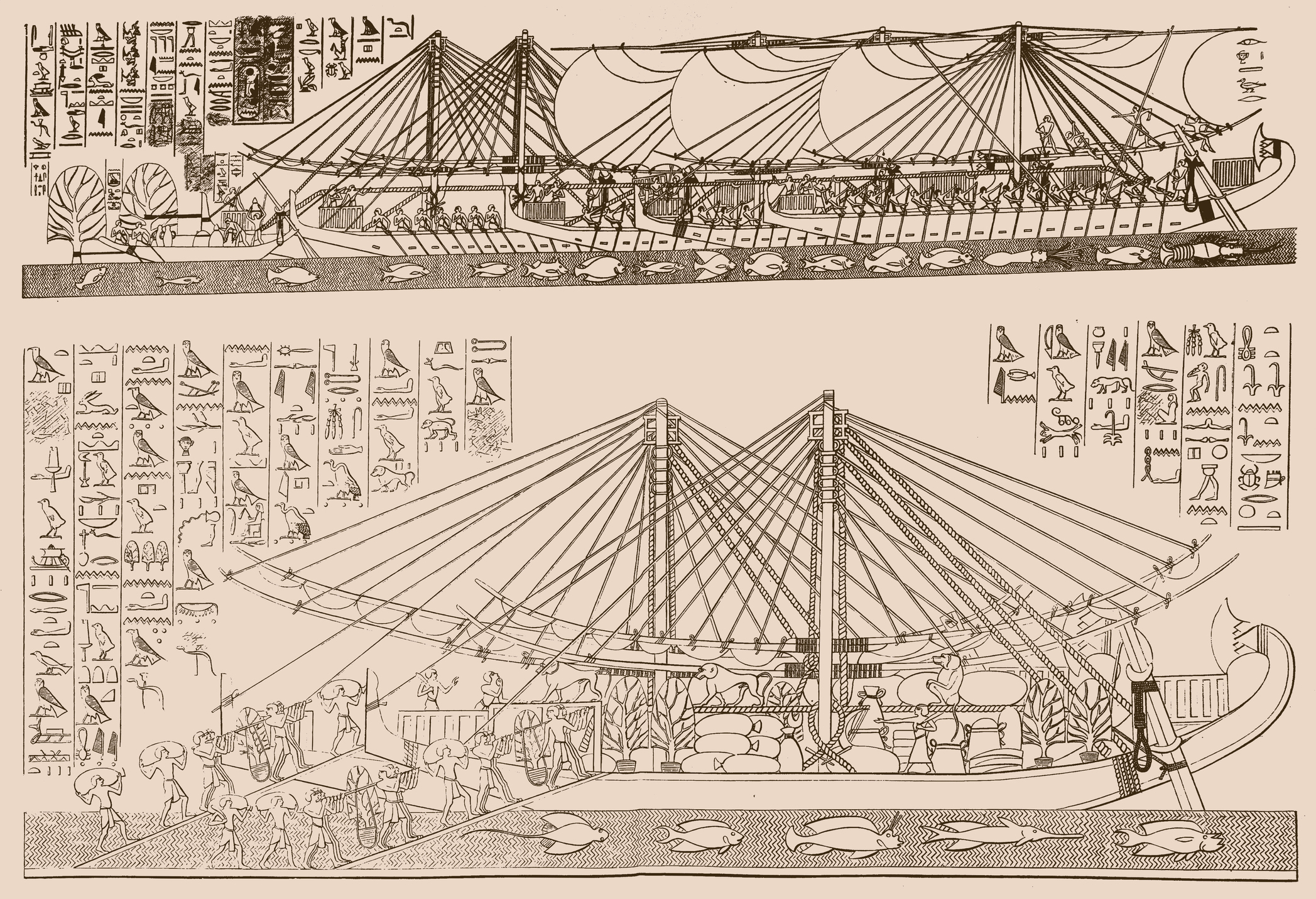
Mummified baboons point to the direction of the fabled land of Punt

Line drawing of ancient ships with people loading goods on board. The ships are surrounded by hieroglyphics.

Enlarge / Drawing of a trade expedition to Punt during the reign of Queen Hatshepsut. Note the presence of baboons on board the lower ship. (credit: Nastasic)

One of the most enduring mysteries within archaeology revolves around the identity of Punt, an otherworldly “land of plenty” revered by the ancient Egyptians. Punt had it all—fragrant myrrh and frankincense, precious electrum (a mixed alloy of gold and silver) and malachite, and coveted leopard skins, among other exotic luxury goods.

Despite being a trading partner for over a millennium, the ancient Egyptians never disclosed Punt’s exact whereabouts except for vague descriptions of voyages along what’s now the Red Sea. That could mean anywhere from southern Sudan to Somalia and even Yemen.

Now, according to a recent paper published in the journal eLife, Punt may have been the same as another legendary port city in modern-day Eritrea, known as Adulis by the Romans. The conclusion comes from a genetic analysis of a baboon that was mummified during ancient Egypt’s Late Period (around 800 and 500 BCE). The genetics indicate the animal originated close to where Adulis would be known to come into existence centuries later.

Read 21 remaining paragraphs | Comments


Source: Ars Technica – Mummified baboons point to the direction of the fabled land of Punt

NVIDIA may soon announce new AI chips for China to get around US export restrictions

NVIDIA really, really doesn’t want to lose access to China’s massive AI chip market. The company is developing three new AI chips especially for China that don’t run afoul of the latest export restrictions in the US, according to The Wall Street Journal and Reuters. Last year, the US government notified the chipmaker that it would restrict the export of computer chips meant for supercomputers and artificial intelligence applications to Russia and China due to concerns that the components could be used for military purposes. That rule prevented NVIDIA from selling certain A100 and H100 chips in the country, so it designed the A800 and H800 chips specifically for the Chinese market. 

However, the US government recently issued an updated set of restrictions that puts a limit on how much computing power a chip can have when it’s meant for export to the aforementioned countries. The A800 and the H800 are no longer eligible for export under the new rules, along with NVIDIA’s other products, which include its top-of-the-line RTX 4090 consumer GPU. Some reports even suggest that the company could end up canceling over $5 billion worth of advanced chip orders in China. 

The new chips meant for the Chinese market are called the HGX H20, the L20 and the L2, based on the specs sent to distributors. While the H20 is supposed to be the most powerful model out of the three, all of them don’t go beyond the computing power threshold set by the US government’s new export rules. That means customers using them for AI applications may need more chips than they would if they had access to higher-spec models. 

Chinese companies, including Baidu, Huawei, Xiaomi and Oppo, have already started designing their own semiconductor to prepare for a possible future wherein they could longer be able to import chips from the US and other countries. Old NVIDIA customers may prefer sticking to the company’s components, however, due to its reputation and its software, which The Journal says is some of the most robust for AI development. NVIDIA, according to the source, may announce the new chips as soon as November 16 and start selling them before the year ends. 

This article originally appeared on Engadget at https://www.engadget.com/nvidia-may-soon-announce-new-ai-chips-for-china-to-get-around-us-export-restrictions-100509873.html?src=rss

Source: Engadget – NVIDIA may soon announce new AI chips for China to get around US export restrictions

Scientists Build Yeast With Artificial DNA

Alison Snyder reports via Axios: For more than 15 years, scientists have worked to build a complex cell with an entire genome built from scratch. This week they announced a major milestone: They’ve created synthetic versions of the 16 chromosomes in a yeast cell and successfully combined some of them in one cell. The feat is revealing new information about fundamental processes in cells, and it is a key step toward some scientists’ vision of creating programmable cellular factories to produce biofuels, materials, medicines and other products.

The changes researchers made to yeast chromosomes fall into three main categories: increasing stability of the genome, repurposing codons (genetic sequences that carry instructions for reading DNA or RNA) and introducing a system that allows scientists to make millions of cells, each with different genetic properties. “A big problem is a lot of the things you want to make are actually toxic to the cells,” [says Benjamin Blount, a synthetic biologist at the University of Nottingham in the U.K. and co-author of some of the scientific papers in a series published this week in Cell and Cell Genomics detailing the work]. With the system that reshuffles the genome and effectively mimics evolution, scientists can make many variants of yeast and pick the ones “that are really good at growing in the presence of what you’re trying to make.” Then, they’re able to look at what’s happened to their genomes to enable that particular strain to grow and make the desired product, and use that genetic information to develop strains of yeast suited for an industrial process.

The chromosomes still have to be combined in one cell that can survive, which means they have to be “basically indiscernible” from natural chromosomes in terms of the cell’s fitness, Blount says. That required a lot of debugging of the genome, similar to what’s done for computer code. One team was able to combine multiple chromosomes in one cell and it survived and reproduced, demonstrating a mechanism for bringing them together. Building the genomes — and seeing when the cell doesn’t work as expected as the result of one change or another — has revealed fundamental information about genome biology, Blount says. For example, the team identified sequences in genes that interrupted a key process in the cell and led to mitochondria dysfunction, which is involved in some human diseases.

Read more of this story at Slashdot.


Source: Slashdot – Scientists Build Yeast With Artificial DNA

Frank Borman, Commander of Apollo 8, Dies At 95

Long-time Slashdot reader HanzoSpam shares a report from Ars Technica: Frank Borman, an Air Force test pilot, astronaut, and accomplished businessman who led the first crew to fly to the Moon in 1968, died Tuesday in Montana, NASA said Thursday. He was 95 years old. Borman, joined by crewmates Jim Lovell and Bill Anders, orbited the Moon 10 times over the course of about 20 hours. They were the first people to see the Earth from another world, a memory of “wonderment” Borman recalled decades later. Apollo 8 produced one of the most famous photos ever taken, the iconic “Earthrise” showing a blue orb — the setting for all of human history until then — suspended in the blackness of space over the charcoal gray of the Moon’s cratered surface.

Borman was born in Gary, Indiana, on March 14, 1928, and raised in Tucson, Arizona. He learned to fly airplanes as a teenager, then attended the US Military Academy at West Point before earning his commission in the Air Force to start training as a fighter pilot. Following a similar career path as other early astronauts, Borman became an experimental test pilot, receiving a master’s degree in aeronautical engineering from Caltech, and served a stint as an assistant professor at West Point. NASA accepted applications for a second class of astronauts in 1962 to follow the original Mercury Seven. Borman was one of the “New Nine” astronauts, and he reported for training in Houston. “Today we remember one of NASA’s best,” NASA Administrator Bill Nelson said in a statement. “Astronaut Frank Borman was a true American hero. Among his many accomplishments, he served as the commander of the Apollo 8 mission, humanity’s first mission around the Moon in 1968.”

Read more of this story at Slashdot.


Source: Slashdot – Frank Borman, Commander of Apollo 8, Dies At 95

Amazon reportedly blocks 'junk ads' on Apple product pages

Amazon gives Apple’s product pages the special treatment and keeps them relatively clear of unrelated ads, signifying an arrangement between the companies, according to Insider. When the Federal Trade Commission filed an antitrust lawsuit against the e-commerce retailer in September, it accused Amazon of “deliberately increasing junk ads that worsen search quality.” However, Insider found that the pages for Apple products, such as “iPhone” and “iPad,” show a clean page layout with no ads or recommendation. Meanwhile, products from rival brands, including Samsung Galaxy and Microsoft Surface, show multiple banner ads and several sponsored recommendations from other brands. 

We tried it out ourselves and did find that Apple’s product pages do look cleaner. Microsoft Surface Pro’s, however, showed a carousel of sponsored listings “4 stars and above,” along with products related to the specific item and multiple banner ads. Insider says Apple asked Amazon to keep its product pages free of ad clutter back in 2018, based on an email shared by the House Judiciary Committee. “We understand that Apple does not want to drive sales to competing brands in search or detail pages,” Jeff Wilke, who was then Amazon’s retail CEO, reportedly wrote. 

Apple has admitted to the publication that it has some sort of an agreement with Amazon that prevents other companies from buying ads for “specific Apple-related brand queries” on the latter’s marketplace. They can still buy ads for key phrases with an Apple name, say “iPad keyboard case,” but not for “iPad” itself. “Apple’s goal for the Agreements was to create the best possible customer experience, and others are free to do the same,” Apple’s representative said in a statement. They added that the deal was also meant to address the company’s issues with counterfeit products on the platform, because it used to send Amazon “hundreds of thousands of take-down notices” before then. 

While it’s not clear whether money exchanged hands between the two companies, the email shared by the House talked about a potential financial deal. Amazon reportedly turned down Apple’s request at first, but Wilke wrote in the email: “We cannot alter our organic search algorithm to return only Apple products in the search results when an Apple team is searched… Apple would need to purchase these placements or compensate Amazon for the lost ad revenue.”

This article originally appeared on Engadget at https://www.engadget.com/amazon-reportedly-blocks-junk-ads-on-apple-product-pages-045018125.html?src=rss

Source: Engadget – Amazon reportedly blocks ‘junk ads’ on Apple product pages