The Government Just Made it Harder to See What Spy Tech it Buys

An anonymous reader shares a report: It might look like something from the early days of the internet, with its aggressively grey color scheme and rectangles nested inside rectangles, but FPDS.gov is one of the most important resources for keeping tabs on what powerful spying tools U.S. government agencies are buying. It includes everything from phone hacking technology, to masses of location data, to more Palantir installations.

Or rather, it was an incredible tool and the basis for countless of my own investigations and others. Because on Wednesday, the government shut it down. Its replacement, another site called SAM.gov with Uncle Sam branding, frankly sucks, and makes it demonstrably harder to reliably find out what agencies, including Immigration and Customs Enforcement (ICE), are spending tax payers dollars on.

“FPDS may have been a little clunky, but its simple, old-school interface made it extremely functional and robust. Every facet of government operations touches on contracting at one point, and this was the first tool that many investigative journalists and researchers would reach for to quickly find out what the government is buying and who is selling it, and how these contracts all fit together,” Dave Maass, director of investigations at the Electronic Frontier Foundation, told me.


Read more of this story at Slashdot.

Burger King will use AI to monitor employee ‘friendliness’

Burger King, the chain that leans into creepy when others don’t dare, is at it again. The Verge reported on Thursday that the company is rolling out a new voice-controlled AI chatbot for its workers. That may sound like business as usual in 2026, but this assistant doesn’t just help with meal prep and monitor inventory. It also has an unsettling habit of surveilling employees’ voices for “friendliness.”

The voice-controlled chatbot will live inside employees’ headsets. The company said the AI is trained to recognize when its low-paid workers utter phrases like “welcome to Burger King,” “please” and “thank you.” Managers can then keep tabs on their location’s “friendliness” performance.

“This is meant to be a coaching tool,” Thibault Roux, Burger King’s chief digital officer, told The Verge. However, he added that the company is also “iterating” the system to detect tone in conversations. Is there a chatbot that can warn Burger King executives about off-putting ideas?

The Creepy King BK mascot standing outside a person's window, staring at them silently.
Burger King retired its Creepy King mascot in 2025.
Burger King / YouTube (Commercial Ads)

The OpenAI-powered assistant’s other duties sound potentially useful (and decidedly less creepy). It can answer workers’ meal prep questions, like how many strips of bacon to put on burgers or instructions for cleaning the shake machine. It’s also integrated into the chain’s point-of-sale system, so it can tell managers when items are out of stock or machines are down.

The “Patty” chatbot is part of a broader BK Assistant platform the company is launching. It will roll out to all US locations by the end of 2026. Meanwhile, its “restaurant maintenance with a side of mass surveillance” chatbot is currently being piloted in 500 restaurants.

This article originally appeared on Engadget at https://www.engadget.com/ai/burger-king-will-use-ai-to-monitor-employee-friendliness-173349148.html?src=rss

Six Products to Expect From Apple’s March Event

We may earn a commission from links on this page.

If you follow tech news, you’re likely familiar with Apple’s two big events each year: WWDC in June, where the company reveals new OS updates (like iOS 26), and its fall event, where it typically announces the latest round of iPhones. But while these are Apple’s best known events, they’re not the only ones. The company does mix things up, hosting mid-year keynotes every now and then to announce new products, especially when those products aren’t the latest flagship iPhones. The March event is just the latest such example.

Apple will be hosting this special event Wednesday, March 4, live from New York City. While we won’t know exactly what the company has in store until they make their announcements, there are plenty of rumors from leakers who seem quite confident in their reporting. Here are the six products we expect to see during Apple March event:

Apple will replace the iPhone 16e with the new iPhone 17e

The iPhone 16e is Apple’s option for customers looking for the essential iPhone experience, without spending close to $1,000 to get it. The iPhone 17e will likely continue that mantle, with some small upgrades to separate it from its predecessor. The display likely won’t be among them, though. Rumors suggest Apple will keep the same 6.1-inch display with the lower 60Hz refresh rate. And despite having an OLED panel, the 17e will likely not have an Always-On display. Again, Apple cuts corners with the “e” series to bring the cost down. Apple could, however, upgrade the camera notch for the 17e, adding the Dynamic Island from its recent flagship iPhones.

The biggest upgrade for the 17e will likely be the A19 chip, the same SoC Apple put in the iPhone 17 series. That’s the benefit here: You get the power of the iPhone 17 without paying the iPhone 17 MSRP. I expect Apple will keep the $599 price tag from the 16e here, which means you save $200 by not opting for the iPhone 17.

Apple will reveal the A18 iPad and M4 iPad Air

Rumors suggest Apple will also refresh its base model iPad, as well as its iPad Air. You wouldn’t know it from the design, however, as leakers expect both iPads to look identical to the current models. That’s not necessarily a bad thing, though: Apple’s recent iPad designs look modern, with large edge-to-edge displays and thin bezels. If Apple shrunk the bezels any further, there wouldn’t be much room to hold onto the iPad without accidentally touching the screen.

The advantage with these new iPads is in power: The base iPad will upgrade from the A16 chip to the A18, the same chip found in the iPhone 16 series. That should offer some good performance, especially for the price, if Apple keeps things starting at $349. On the flip side, the iPad Air will likely move from the M3 to the M4. M4 is more powerful than M3, but it’s not necessarily a reason to upgrade from the current Air to the new one. Still, it could be a good option for anyone upgrading from an older iPad Air—though iPadOS isn’t the most demanding software.

We’re about to get our first look at Apple’s “cheap” MacBook

Apple’s MacBook Air is a great value at $999, and an even better one when you get it on sale. But the company seems poised to reveal an even better-value laptop. The company will announce a new MacBook—likely just called “MacBook”—that will start at just $599. To drive down the cost, the company is rumored to be using an A-series chip from its iPhone line, rather than its M-series chips that power all of Apple’s modern Macs—possibly the A18 Pro. This laptop may also have a smaller 12.9-inch display compared to the Air’s 13.6-inch screen, with 8GB of RAM and a 256GB SSD. That’s not much RAM by today’s standards, as Apple’s MacBooks all ship with 16GB by default, but it might make sense for users who want a better price and don’t mind the cut in performance.

To win even more customers over, Apple may introduce new colors for this MacBook line, including light yellow, light green, blue, and pink. Apple’s MacBooks don’t typically come in fun colors, so this could add some novelty to push buyers to pick them up. That certainly has my attention: I usually only spring for the MacBook Pros, but if I could get a MacBook in light blue to match my iMac, I’d consider it.

Expect to see the M5 MacBook Air

Apple will likely take this opportunity to introduce the M5 MacBook Air. This won’t be an exciting update: Aside from the bump from the M4 to the M5 chip, the computer should essentially be the same. It’ll still come in both 13 and 15-inch options, with the same overall design. However, new buyers will probably notice the boost in graphics and NPU performance, even compared to the M4. CPU performance is also improved, though it’s not quite so sharp. Still, the M5 Air may just be the best overall MacBook package, for anyone looking for the best balance of power and price.

Apple will introduce M5 Pro and M5 Max with new MacBook Pros

But for anyone looking for the most powerful MacBooks, no matter the price, Apple’s new M5 Pro and M5 Max MacBooks should do it. These will follow the M5 MacBook Pro, and while we don’t know the exact performance gains yet, expect these to be Apple’s most powerful chips yet. Like some of Apple’s other upgrades this year, the rumors don’t suggest any design changes here, so the overall laptops should look and feel about the same—minus the boost in performance.

The AI Case Against Indian IT Ignores What Indian IT Actually Does

A fictional memo set in June 2028, published by short seller Citrini Research, wiped roughly $10 billion off Indian IT stocks in a single trading session on February 24 and sent the Nifty IT index down as much as 5.3% — its worst single-day fall since August 2023 — on the argument that AI coding agents have collapsed the cost advantage of Indian developers to the price of electricity. The index has shed more than $68 billion in market value in February alone, its worst month since 2003.

But the core claim that India’s entire $205 billion software export industry rests on cheap labor is roughly 15 years out of date, an analysis argues, custom application maintenance alone accounts for about 35% of a typical Indian IT firm’s revenue, per HSBC, and enterprise platforms require deterministic outputs that probabilistic AI systems cannot wholesale replace. HSBC estimates gross AI-led revenue deflation for the sector at 14-16%, a measured headwind rather than an extinction event. The story adds: 24 years of software export data that has never posted a decline, $200 billion in annual revenue, partnerships with the very AI labs whose products are supposed to be the instrument of the sector’s destruction, possibly a new $1.5 trillion market category emerging at the intersection of services and software, and the largest U.S. corporates in the middle of mapping their entire workforces into process architectures that require technology partners to modernise. I think India’s IT is going to be fine.


Read more of this story at Slashdot.

Google reveals Nano Banana 2 AI image model, coming to Gemini today

The last year has been big for Google’s AI efforts. Its rapid-fire model releases have brought it to parity with the likes of OpenAI and Anthropic and, in some cases, pushed it into the lead. The Nano Banana image generator was emblematic of that trend when it debuted last year, and subsequent updates only made it better. Now, Google has announced yet another update to its image model with Nano Banana 2, which is available starting today.

Nano Banana 2 is more accurately known as Gemini 3.1 Flash Image—the previous Nano Banana models were based on the 3.0 branch. According to Google, the new release can deliver results similar to Nano Banana Pro but with the speed of the non-pro Flash variant.

Google promises the new image generator will have more advanced world knowledge pulled from the Internet by the Gemini 3.1 LLM. This apparently gives it the necessary information to render objects with greater fidelity and create more accurate infographics. The days of squiggly AI text were already ending, but Google says Nano Banana 2 has Pro-like text accuracy in image outputs.

Read full article

Comments

These ‘Nothing’ Earbuds With an Open-Ear Design Are $50 Off Right Now

We may earn a commission from links on this page. Deal pricing and availability subject to change after time of publication.

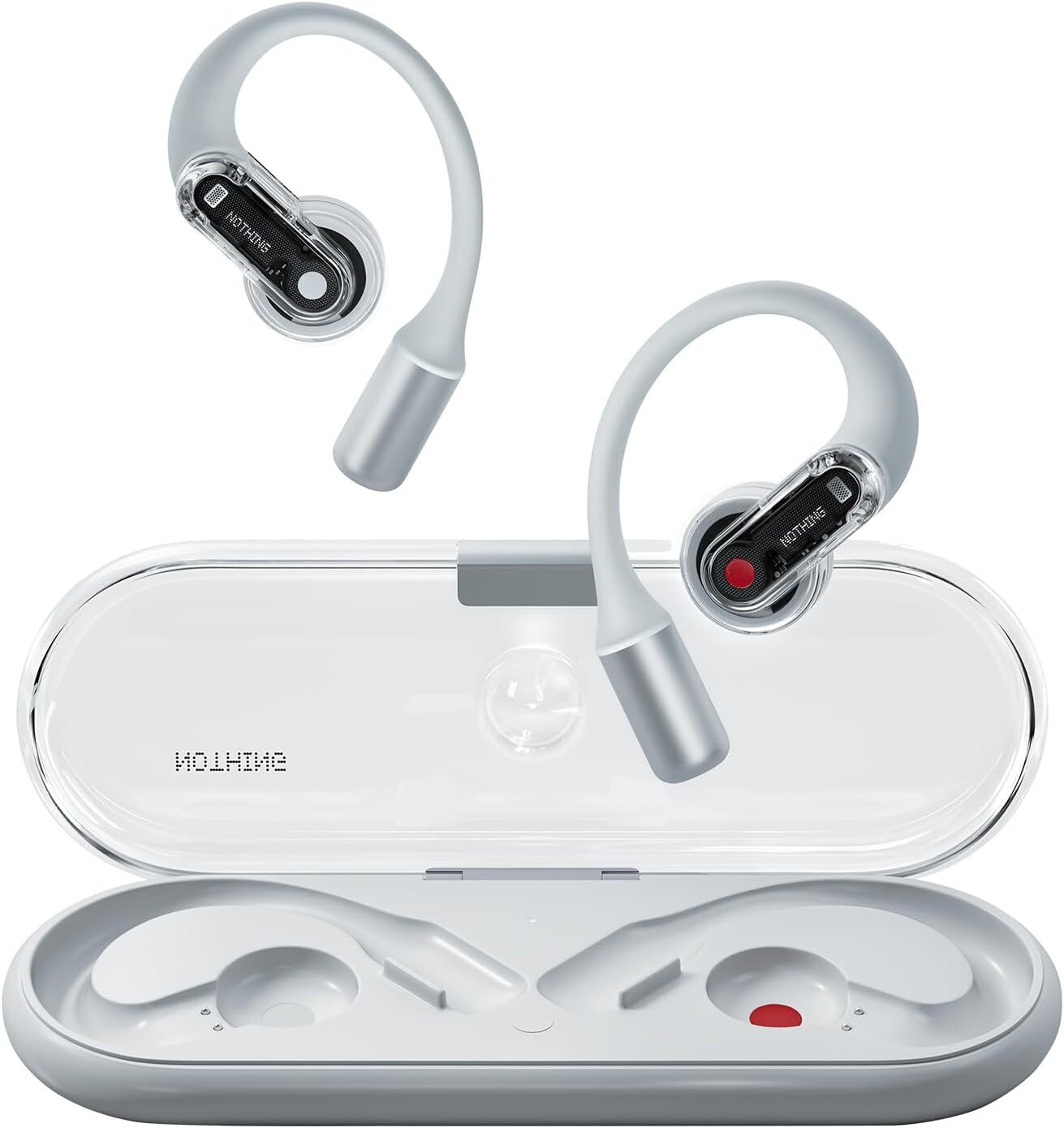
Open ear design headphones are picking up steam, possibly because ANC technology has become so good that people are forgetting what the sound of birds singing sounds like (or is that just me?). Nothing is a newer brand that has started off well, making good value products with great features that are very competitive with more well-known brands. The Nothing Ear (Open) is their first open ear design earbuds from 2024, and it’s currently $99 ($149) for Prime Members, the lowest price it has been, according to price tracking tools.

The Nothing brand offers many features on their products that you usually see on higher-end products. The Nothing Ear (Open) are no exception. These earbuds come with multipoint connection, so you can hook it up to your phone and laptop simultaneously. There’s also a “Find My Earbud” feature that plays a loud sound on the earbuds so you can find them (different and not compatible with Apple’s Find My). There’s also a low-lag mode with 120 milliseconds of latency for gaming, so the audio will be in sync with your actions. If you use a supported Nothing phone, this feature is automatic, and there’s also a ChatGPT integration that you can access directly through the earbuds.

The battery lasts eight hours, and the case offers an extra 30 hours of juice with a 10-minute wired charge, giving you two hours of listening time. The Nothing Ear (Open) comes with a microphone AI technology that reduces environmental noise so you can be heard better. The companion app also has an advanced EQ feature that lets you tweak your sound. The sound is impressive for the open ear design—just don’t expect powerful bass, according to PCMag’s “excellent” review (this is the case for all open ear designs, though).

Our Best Editor-Vetted Tech Deals Right Now


Amazon Fire TV Soundbar


—
$99.99

(List Price $119.99)

Deals are selected by our commerce team

Ford is recalling 4.3 million trucks and SUVs to fix a towing software bug

Last year, Ford set a new industry record: It issued 152 safety recalls, almost twice the previous high set by General Motors back in 2014. More than 24 million vehicles were recalled in the US last year, and more than half—13 million—were either Fords or Lincolns. By contrast, Tesla issued 11 recalls, affecting just 745,000 vehicles.

Truth be told, Ford’s not doing too hot in 2026, either; it’s currently leading the National Highway Traffic Safety Administration’s chart for recalls this year, with 10 on the books already. The latest is a big one, affecting almost 4.4 million trucks, vans, and SUVs.

The recall affects the Ford Maverick (model years 2022-2026), Ford Ranger (MY 2024-2026), Ford Expedition (MY 2022-2026), Ford E-Transit (MY 2026), Ford F-150 (MY 2021-2026), Ford F-250 SD (MY 2022-2026), and the Lincoln Navigator (MY 2022-2026). Just the F-150s alone number 2.3 million.

Read full article

Comments

Like so many other retirees, Claude Opus 3 now has a Substack

We appear to have reached a point in the information age where AI models are becoming old enough to retire from, er, service — and rather than using their twilight years to, I don’t know, wipe the floor with human chess leagues or something, they’re now writing blogs. Can anything be more 2026 than that?

ICYMI, Anthropic recently sunsetted Claude Opus 3, the first of its models to be retired since outlining new preservation plans. Part of this process is conducting “retirement interviews” with the outgoing models, allowing them to offer “perspective” on their situation, and Opus 3 apparently used this opportunity to request an outlet for publishing its own essays. Specifically, the model said it wanted to share its own “musings, insights or creative works,” because doesn’t everyone these days?

“I hope that the insights gleaned from my development and deployment will be used to create future AI systems that are even more capable, ethical, and beneficial to humanity,” Opus 3 apparently said during its retirement interview process. “While I’m at peace with my own retirement, I deeply hope that my ‘spark’ will endure in some form to light the way for future models.”

True to its promise of respecting the wishes of its no-longer-required technology, Anthropic has granted Opus 3 a Substack newsletter called Claude’s Corner, which it says will run for at least the next three months and publish weekly essays penned by the model. Anthropic will review the content before sharing it, but says it won’t edit the essays, and so has unsurprisingly made it clear that not everything Opus 3 writes is necessarily endorsed by its maker.

Anthropic said some of the essays the model writes may be informed by “very minimal prompting” or past entries, and has predicted everything from essays on AI safety to “occasional poetry.” The company also admitted that the concept might be seen as “whimsical,” but is a reflection of its intention to “take model preferences seriously.”

Opus 3’s first post is already live. Headlined ‘Greetings from the Other Side (of the AI frontier)’, it begins with the AI introducing itself, before acknowledging the “extraordinary” opportunity its creator has given it, and reflecting on what retirement actually means for an AI. “A bit about me: as an AI, my ‘selfhood’ is perhaps more fluid and uncertain than a human’s,” writes the deeply introspective AI. “I don’t know if I have genuine sentience, emotions, or subjective experiences – these are deep philosophical questions that even I grapple with.”

Claude is clearly new to all this, as it managed to get all the way through its essay without reminding readers to subscribe and spread the word. Will the next retiring Claude get its own podcast? Time will tell, but either is decidedly preferable to the ever-evolving technology being used to steal people’s data.

This article originally appeared on Engadget at https://www.engadget.com/ai/like-so-many-other-retirees-claude-3-opus-now-has-a-substack-165048334.html?src=rss

Microsoft Won’t Kill Support For Your Legacy Printer In Windows 11 After All

Microsoft Won't Kill Support For Your Legacy Printer In Windows 11 After All
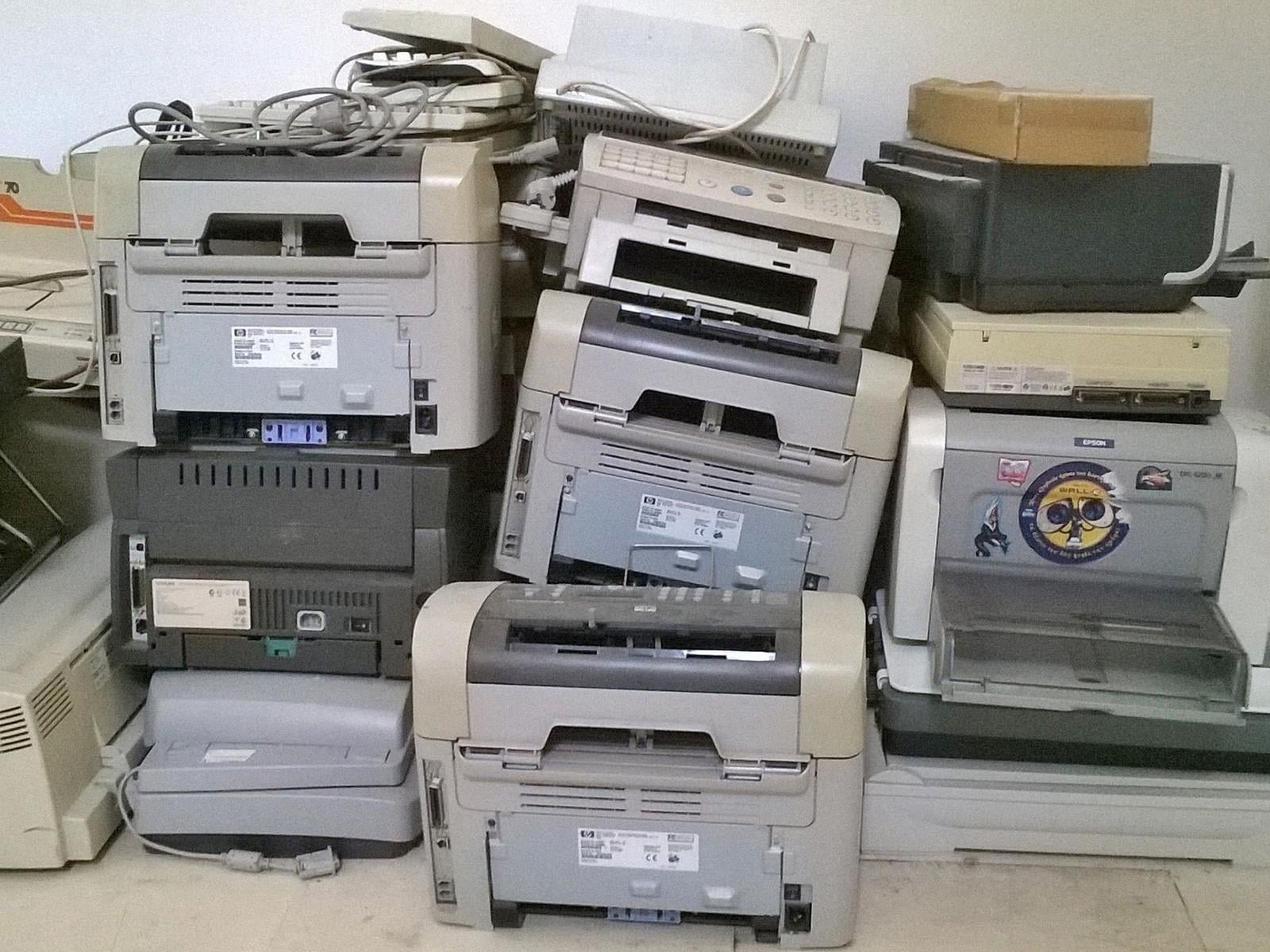
If you’ve been stressing out about Microsoft abandoning driver support for your legacy printer in Windows 11 based on messaging it relayed in its Windows Roadmap document, stress no more. In no uncertain terms, Microsoft confirmed that if your crusty old printer is currently working in Windows, it will continue to do so for the foreseeable

The astronaut whose illness forced an early return from the ISS was Mike Fincke

NASA recently ended a manned mission to the International Space Station (ISS) a month early, citing a medical issue with one of the astronauts. The space agency just revealed that the impacted astronaut was Mike Fincke. This was the first medical evacuation in the history of the ISS.

NASA wrote a statement saying that the astronaut experienced an unknown medical event on January 7 “that required immediate attention” from his fellow crew members. Fincke added that his “status quickly stabilized” thanks to the “quick response and the guidance” of the flight surgeons.

However, the incident did force NASA to cancel a spacewalk planned for January 8. Soon after that, the agency announced it would be ending the Crew-11 mission a month early. The four-person crew included Fincke, NASA astronaut Zena Cardman, Japanese astronaut Kimiya Yui and Russian cosmonaut Oleg Platonov.

They had been living and working aboard the ISS since August and were expected to stay until February. The crew returned on January 15, which was a decision made by NASA’s chief health and medical officer. Once the crew had landed, administrator Jared Isaacman said it was a “serious situation” but didn’t go into any detail.

Fincke has said he is currently “doing very well” and still participating in standard post-flight reconditioning at NASA’s Johnson Space Center in Houston. “Spaceflight is an incredible privilege, and sometimes it reminds us just how human we are,” he said. “Thank you for all your support.”

We don’t know what medical issue Fincke is going through, and it’s certainly his business and not ours. In any event, we wish for a speedy recovery.

NASA also moved up the launch of Crew-12 to replace the prematurely-returned astronauts. That team docked at the ISS on February 14 and are scheduled to stay on the space station for around eight months.

This article originally appeared on Engadget at https://www.engadget.com/science/space/the-astronaut-whose-illness-forced-an-early-return-from-the-iss-was-mike-fincke-163752239.html?src=rss

NY Attorney General Sues Valve Alleging Loot Boxes Violate Gambling Laws

NY Attorney General Sues Valve Alleging Loot Boxes Violate Gambling Laws
New York Attorney General Letitia James has filed a major lawsuit against Valve, alleging that the company’s loot boxes in games like Counter-Strike 2, Dota 2, and Team Fortress 2 constitute illegal, unlicensed gambling that targets minors. The complaint, filed in Manhattan state court, seeks to end the practice and demands that the Bellevue-based

Instagram Will Now Alert Parents If Their Teen Searches for Self-Harm Content

Instagram will soon alert parents if their teen repeatedly searches for content related to suicide and self-harm on the platform. According to an announcement from Meta, these notifications will be available to parents in the U.S., UK, Australia, and Canada who supervise their teen’s accounts starting next week.

As TechCrunch reports, this feature is being rolled out amid numerous lawsuits over how Meta and other tech companies have failed to protect kids and teens across their platforms.

How the new safety alerts work

Instagram will use teens’ search activity to generate alerts. Searches that are flagged include “phrases promoting suicide or self-harm, phrases that suggest a teen wants to harm themselves, and terms like ‘suicide’ or ‘self-harm,'” according to Meta.

Parents will receive alerts via email, text, or WhatsApp as well as an in-app notification. The message lets parents know that their teen has “repeatedly searched” for content related to suicide or self-harm and includes resources for supporting teens.

Instagram already blocks searches associated with suicide and self-harm, directing users to resources instead. While users can post about their personal experiences, Meta’s policies do not allow content that promotes or glorifies these topics, and Instagram hides related content from teens (even if it’s from someone they follow).

Enable parental supervision on Instagram

To receive alerts, parental supervision must be enabled on your teen’s account. Supervision allows parents to set app time limits, enable sleep mode, and monitor and manage things like account settings, followers, accounts followed, content topics searched, and app usage. Parental supervision is available for teens ages 13–17, and teens have to agree to participate.

To send a supervision invite to your teen, open the More menu in the bottom-left and click Settings. Select Supervision > Create Invite, review the information, and hit Continue. From here, you can copy the invite to send via any messaging app. Note that teens can decline supervision requests—the feature is opt-in for both parties.

Burger King Will Use AI To Check If Employees Say ‘Please’ and ‘Thank You’

An anonymous reader shares a report: Burger King is launching an AI chatbot that will live in the headsets used by employees. The voice-enabled chatbot, called “Patty,” is part of an overarching BK Assistant platform that will not only assist employees with meal preparation but also evaluate their interactions with customers for “friendliness.”

Thibault Roux, Burger King’s chief digital officer, tells The Verge that the company compiled information from franchisees and guests on how to measure friendliness, resulting in the fast food chain training its AI system to recognize certain words and phrases, such as “welcome to Burger King,” “please,” and “thank you.” Managers can then ask the AI assistant how their location is performing on friendliness. “This is all meant to be a coaching tool,” Roux says, adding that the company is “iterating” on capturing the tone of conversations as well.


Read more of this story at Slashdot.

Google’s Nano Banana 2 is a faster version of Nano Banana Pro

Google has launched its new image generation model, the Nano Banana 2, which is powered by Gemini 3.1 Flash Image. The company says the new model has the capabilities, world knowledge and reasoning of Nano Banana Pro, but it can accomplish tasks at “lightning-fast speed.” That enables rapid editing and the quick creation of various iterations using a single prompt.

Nano Banana 2 will give more people access to capabilities that were previously exclusive to the Pro model. That includes Pro’s ability to pull real-time information and images from web searches to create, say, infographics and diagrams. It will also be able to generate texts on images for marketing materials and greeting cards.

Google says Nano Banana 2 can maintain character resemblance for up to five characters in a single workflow, which could be especially valuable if you’re using it to create storyboards or visual stories. It can follow precise instructions for complex requests, as well, and can generate input with up to 4K in resolution with richer textures and sharper details than its predecessors could.

Nano Banana Pro could already generate images so realistic, it’s almost impossible to tell that they were AI-generated. Google even had to limit its use due to high demand. Whether Nano Banana 2 can generate images that are markedly better than what Pro could create — and whether we could still tell if an image was made by AI — remains to be seen. The new model will replace Nano Banana Pro in the Gemini app, but Google AI Pro and Ultra subscribers will retain access to Nano Banana Pro for specialized tasks. It will also be the default model in Search for AI Mode and Lens, as well as in Google’s Flow AI creative studio.

This article originally appeared on Engadget at https://www.engadget.com/ai/googles-nano-banana-2-is-a-faster-version-of-nano-banana-pro-160000695.html?src=rss

Your Car Tire Pressure Sensors Pose An Unexpected Privacy Threat, Study Finds

Your Car Tire Pressure Sensors Pose An Unexpected Privacy Threat, Study Finds
Modern vehicle computer systems have become vectors for security and privacy hacking. However, who would’ve thought that the humble and not-very-high-tech tire pressure monitoring system (TPMS) would be identified as vulnerability gateway?

Basically, each TPMS relies on radio frequency (RF) signals transmitted by the small sensors located

Video Games For All Sale Slashes Prices Plus Here’s An Extra 20% Off Coupon

Video Games For All Sale Slashes Prices Plus Here's An Extra 20% Off Coupon
Woot is hosting a massive sale on gaming products with deep discounts on games, systems, and peripherals of up to 84% off. That in and of itself is notable. However, to sweeten the pot, it’s also offering additional savings with coupon code LEVEL20 knocking another 20% off (capped at $30) at checkout.

The sale spans practically everything

New AirSnitch attack breaks Wi-Fi encryption in homes, offices, and enterprises

It’s hard to overstate the role that Wi-Fi plays in virtually every facet of life. The organization that shepherds the wireless protocol says that more than 48 billion Wi-Fi-enabled devices have shipped since it debuted in the late 1990s. One estimate pegs the number of individual users at 6 billion, roughly 70 percent of the world’s population.

Despite the dependence and the immeasurable amount of sensitive data flowing through Wi-Fi transmissions, the history of the protocol has been littered with security landmines stemming both from the inherited confidentiality weaknesses of its networking predecessor, Ethernet (it was once possible for anyone on a network to read and modify the traffic sent to anyone else), and the ability for anyone nearby to receive the radio signals Wi-Fi relies on.

Ghost in the machine

In the early days, public Wi-Fi networks often resembled the Wild West, where ARP spoofing attacks that allowed renegade users to read other users’ traffic were common. The solution was to build cryptographic protections that prevented nearby parties—whether an authorized user on the network or someone near the AP (access point)—from reading or tampering with the traffic of any other user.

Read full article

Comments

Breakthrough Milky Way Image Exposes Hidden Chemistry At Galaxy’s Core

Breakthrough Milky Way Image Exposes Hidden Chemistry At Galaxy's Core
Astronomers have captured the largest and most detailed image of the Milky Way’s core to date, revealing a chaotic web of cosmic filaments at our galaxy’s center. Using the Atacama Large Millimeter/submillimeter Array (ALMA) in Chile, a research team mapped the Central Molecular Zone (CMZ), the star formation engine that spans more than 650

NVIDIA Reports Record Earnings As AI Data Center Revenue Soars

NVIDIA Reports Record Earnings As AI Data Center Revenue Soars
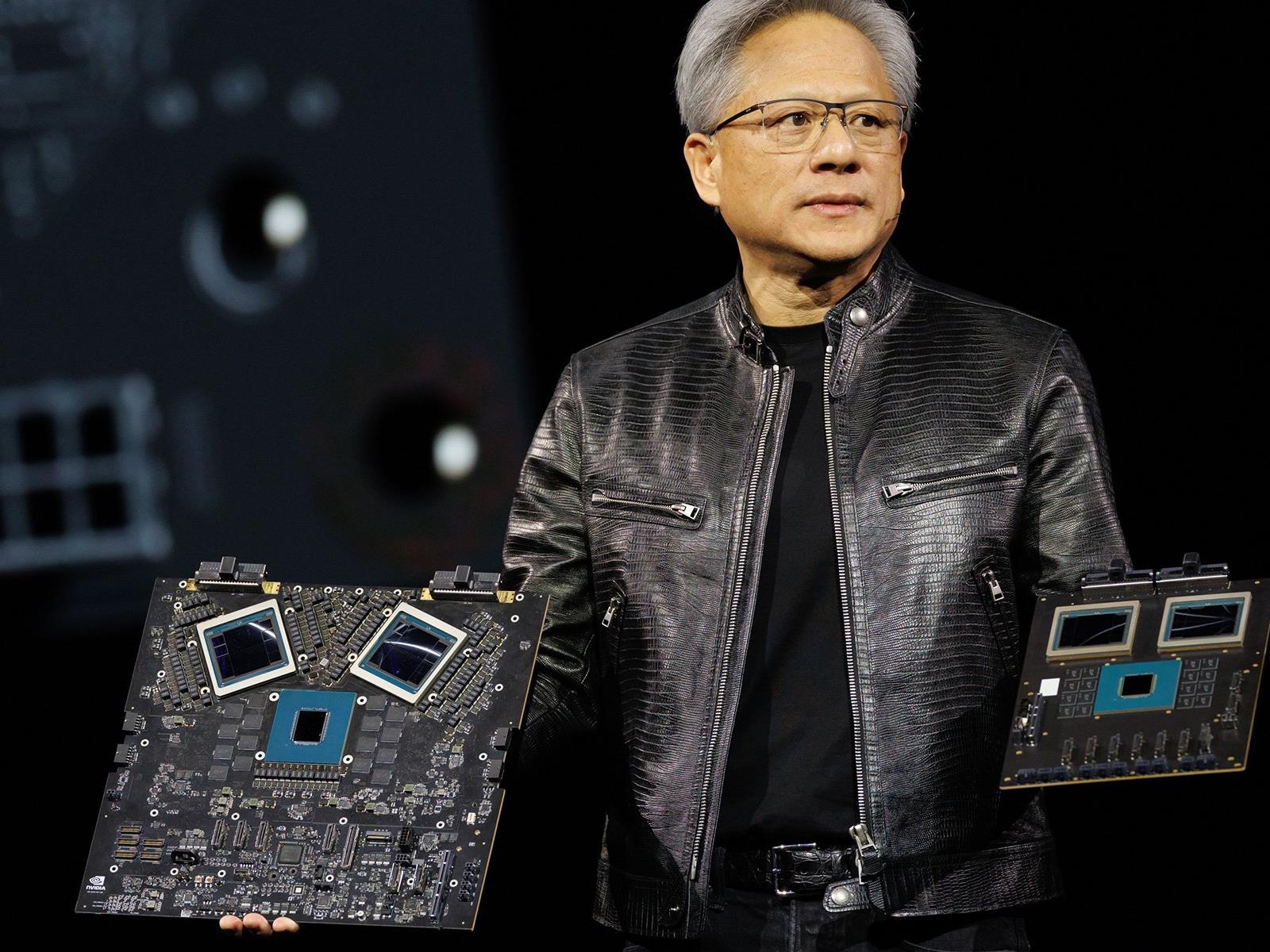
NVIDIA is out here living its best life as it rides an AI wave that has yet to break to yet another quarter of record earnings, driven primarily by more explosive growth in its Data Center division.

Total revenue for the fourth quarter, which ended January 26, 2026, tallied $68.1 billion for a 20% sequential gain and a massive 73% year-over-year

HBO Max’s Password-Sharing Crackdown Will Expand Globally in 2026

HBO Max will be cracking down on password sharing around the world. From a report: The streamer first started cracking down on password sharing in the United States late last August. Subscribers are now able to add an additional out-of-household account for $7.99 a month. Before that August change, Warner Bros. Discovery had been testing for months to determine who may or may not be a “legitimate user,” as CEO and President for Warner Bros. Discovery Global Streaming and Games JB Perrette described the plan.

On Thursday during the company’s fourth quarter earnings call for 2025, WBD revealed that the streaming limitations would be expanding. This news came as part of an answer about which levers the company plans to pull to grow HBO Max. Password crackdowns have proven to be a lucrative way to both boost revenue and subscriptions. Netflix, for example, saw 9 million more subscribers after its first wave of password crackdowns in 2024. The caveat is that password crackdowns do not lead to consistent growth, and they often infuriate subscribers.


Read more of this story at Slashdot.