Enlarge/ SpaceX’s Starship rocket on its launch pad in South Texas.
The Federal Aviation Administration approved a commercial launch license Wednesday for SpaceX to fly its second full-scale Starship rocket as soon as Friday, seven months after the giant vehicle’s first test flight.
“The FAA has given license authorization for the second launch of the SpaceX Starship Super Heavy vehicles,” the FAA said in a statement. “The FAA determined SpaceX met all safety, environmental, policy and financial responsibility requirements.”
The nearly 400-foot-tall rocket is scheduled to lift off from SpaceX’s privately owned Starbase spaceport in South Texas during a two-hour launch window opening at 7 am CT (13:00 UTC) Friday, shortly after sunrise on the Texas Gulf Coast. The weather forecast looks favorable for launch Friday morning, but the launch team will evaluate upper-level wind conditions throughout the countdown before giving the green light for liftoff.
In what may be a potentially confusing rebranding move, Microsoft today has rebranded Bing Chat to Copilot, sharing the same brand name as multiple other Microsoft AI products. Search Engine Land reports: Bing is no longer “your AI-powered copilot for the web.” However, Microsoft Bing will still provide a combined Search and chat experience. It will just be called CoPilot heading forward. For people who may not want that combined experience, CoPilot will have its own standalone ChatGPT-style experience at https://copilot.microsoft.com/.
Microsoft said the rebrand is to unify the Copilot experience: “Our efforts to simplify the user experience and make Copilot more accessible to everyone starts with Bing, our leading experience for the web. Beginning today, Bing Chat and Bing Chat Enterprise are becoming Copilot, with commercial data protection enforced when any eligible user is signed in with Microsoft Entra ID.”
While it’s definitely a more unified experience, it also seems a bit confusing because Microsoft’s chatbot “companion” is used across multiple apps, including Microsoft 365, Edge, Windows and more — some free, some not. In addition to Bing Chat, Bing Chat Enterprise is also rebranded as Copilot Pro. It offers the same chat functionality with greater commercial data protection for Microsoft 365 subscribers.
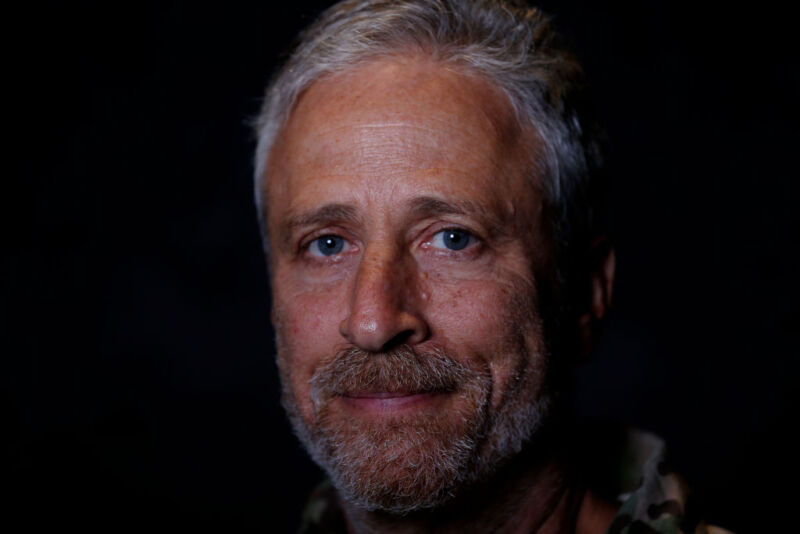
In a letter to Apple CEO Tim Cook, the Republican and Democratic leaders of the House of Representatives’ Select Committee on Competition with the Chinese Communist Party urged Apple to explain its decision to end production of The Problem with Jon Stewart and “accelerate its efforts to reduce its dependence on” China. These steps, lawmakers wrote, are critical to help address “broader concerns about indirect Chinese Communist Party (CCP) influence over the creative expression of American artists and companies on CCP-related topics.”
While lawmakers acknowledged that Apple has “the right to determine what content is appropriate for their streaming service,” they argued that “the coercive tactics of a foreign power should not be directly or indirectly influencing these determinations.”
With an FAA launch license in hand, SpaceX is set for the second test flight of a fully integrated Starship rocket. Success or failure, it’s guaranteed to be a visual spectacle. Here’s how you’ll be able to take in the action.
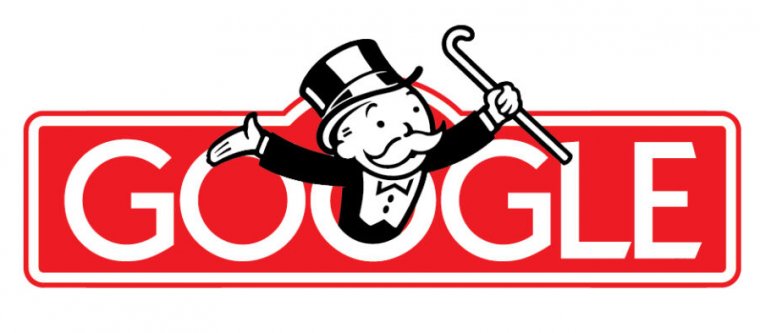
Enlarge/ Let’s see, you landed on my “Google Ads” space, and with three houses… that will be $1,400. (credit: Ron Amadeo / Hasbro)
The biggest slip-up of the Department of Justice’s Google search monopoly trial was the reveal that Google pays Apple 36 percent of Safari search revenue to remain the default search engine. Google stated it didn’t want that number getting out because it “would unreasonably undermine Google’s competitive standing in relation to both competitors and other counterparties.” Google attorney John Schmidtlein apparently “visibly cringed” when the number was revealed by its witness (it was later confirmed by Google CEO Sundar Pichai) because Google knows it now has a mess on its hands.
Many of those “competitors and other counterparties” Google is worried about are Android manufacturers. They all get paid some amount of search revenue share, but seeing the huge amount Apple gets paid has probably ruffled some feathers.
How much more does Google pay for an Apple user than an Android one? A lot. It was recently revealed in the Epic v. Google trial (Google has a few monopoly lawsuits going on) that the highest tier of search revenue share for cooperative Android OEMs is only 12 percent, a third of what Google pays Apple. In terms of total cash amount, it’s reasonable to assume Apple gets more total money than many smaller companies but to see the direct breakdown that each Apple user is worth three times more than an Android user is a new insight.
An anonymous reader quotes a report from Ars Technica: If you’ve only ever used standard Qi chargers with devices that don’t have their own schemes, the Wireless Power Consortium’s announcement today of the first Qi 2.0 devices being ready to launch before the holidays, with more than 100 in the queue behind them, is great. Qi2 sports a “Magnetic Power Profile” (MPP), created with help by Apple’s MagSafe team, to help align devices and chargers’ coils for faster, more efficient charging. Qi2-certified devices set onto Qi2 chargers can achieve 15 W charging, up from 7.5 W in the standard Qi scheme.
That brings Qi2 devices up to the same speed as iPhones on MagSafe chargers, and it clears up some consumer confusion about how fast a device might charge on Qi, MagSafe, or proprietary chargers. Should a phone and charger be Qi2 certified, you can now expect about 15 W out of it, regardless of whatever Google, Apple, or third party is behind them. Android and iPhone users alike are no longer beholden to their primary hardware vendor if they want 15 W of wireless juice. This announcement does not, however, bring the Qi2 standard close to the far-out speeds that proprietary setups now offer. […]
A number of accessory makers, including stalwarts Anker and Belkin, had already lined up their Qi2-compatible offerings, waiting for the certification to drop. It will be interesting to see if Qi2 brings a wave of magnet mania to Android phones, akin to the MagSafe-induced blitz a few years back. Magnetic charging packs, wallets, wireless charging for a non-wireless-charging phone — there’s a lot to work with, especially at now somewhat more respectable charging speeds. Regarding speed, the WPC told Android Authority back in January that the Qi2 standards group intends to standardize charging speeds above 15 W by mid-2024. If you need a fast charge, plugging in the right cable to a well-powered source is still the most certain route. But with magnetic alignment and a good deal more universal compatibility, Qi2 drags the broader wireless charging market forward.
For astronauts living aboard the International Space Station (ISS), space germs are bad news. The confined environment, plus a weakened immunity system, and more aggressive bacteria, means that catching a cold in space is way worse than on Earth. In order to help stop the spread of viruses in space, Boeing developed…
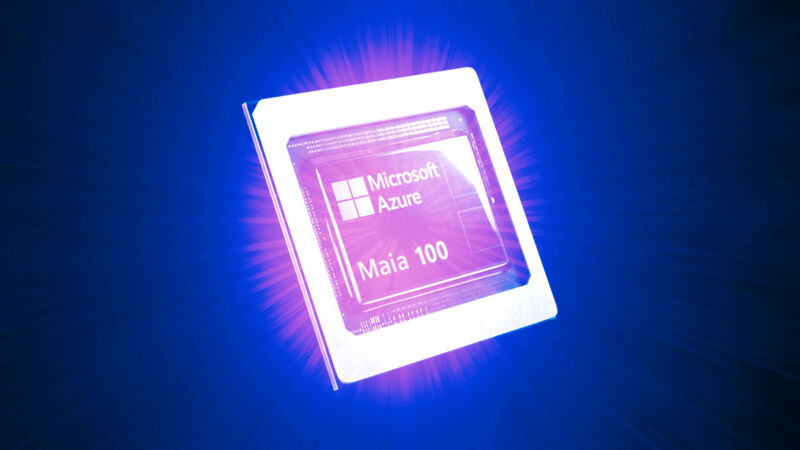
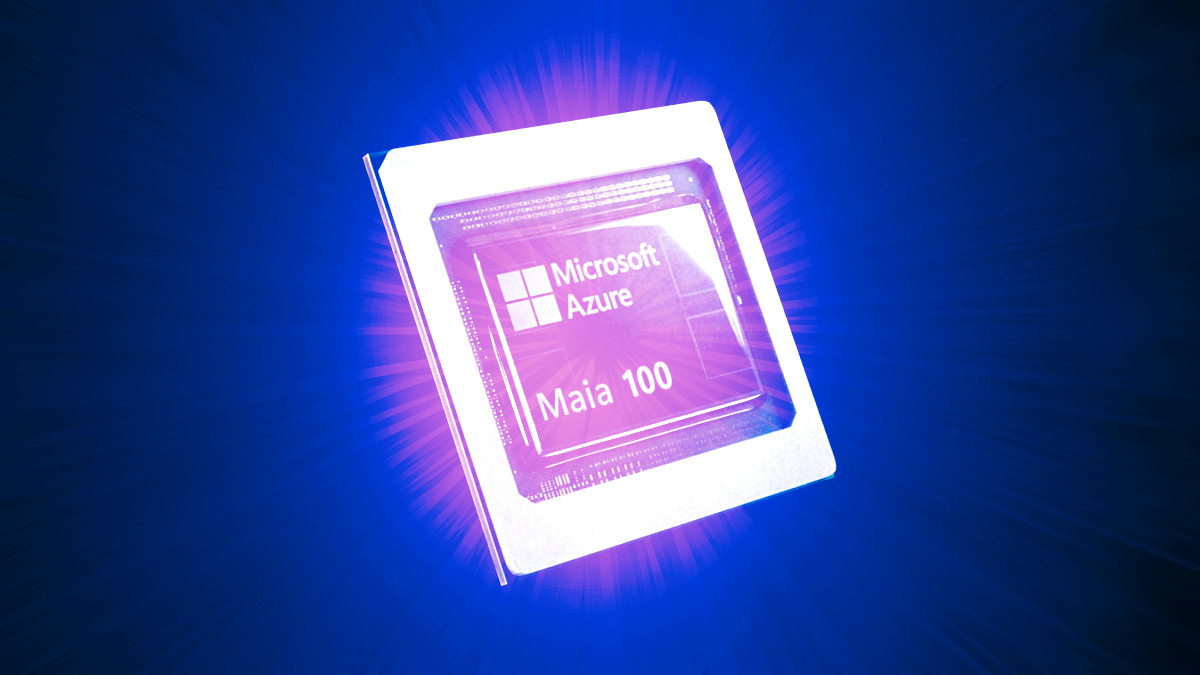
Enlarge/ A photo of the Microsoft Azure Maia 100 chip that has been altered with splashes of color by the author to look as if AI itself were bursting forth from its silicon substrate. (credit: Microsoft | Benj Edwards)
On Wednesday at the Microsoft Ignite conference, Microsoft announced two custom chips designed for accelerating in-house AI workloads through its Azure cloud computing service: Microsoft Azure Maia 100 AI Accelerator and the Microsoft Azure Cobalt 100 CPU.
Microsoft designed Maia specifically to run large language models like GPT 3.5 Turbo and GPT-4, which underpin its Azure OpenAI services and Microsoft Copilot (formerly Bing Chat). Maia has 105 billion transistors that are manufactured on a 5-nm TSMC process. Meanwhile, Cobalt is a 128-core ARM-based CPU designed to do conventional computing tasks like power Microsoft Teams. Microsoft has no plans to sell either one, preferring them for internal use only.
As we’ve previously seen, Microsoft wants to be “the Copilot company,” and it will need a lot of computing power to meet that goal. According to Reuters, Microsoft and other tech firms have struggled with the high cost of delivering AI services that can cost 10 times more than services like search engines.
Synex Medical, a Toronto-based biotech research firm backed by Sam Altman (the CEO of OpenAI), has developed a tool that can measure your blood glucose levels without a finger prick. It uses a combination of low-field magnets and low-frequency radio waves to directly measure blood sugar levels non-invasively when a user inserts a finger into the device.
The tool uses magnetic resonance spectroscopy (MRS), which is similar to an MRI. Jamie Near, an Associate Professor at the University of Toronto who specializes in the research of MRS technology told Engadget that, “[an] MRI uses magnetic fields to make images of the distribution of hydrogen protons in water that is abundant in our body tissues. In MRS, the same basic principles are used to detect other chemicals that contain hydrogen.” When a user’s fingertip is placed inside the magnetic field, the frequency of a specific molecule, in this case glucose, is measured in parts per million. While the focus was on glucose for this project, MRS could be used to measure metabolites, according to the Synex, including lactate, ketones and amino acids.
Synex Medical
Matthew Rosen, a Harvard physicist whose research spans from fundamental physics to bioimaging in the field of MRI, told Engadget that he thinks the device is “clever” and “a great idea.” Magnetic resonance technology is a common technique used for chemical analysis of compounds, however, traditional resonance technologies operate at high magnetic fields and they’re very expensive.
Synex found a way to get clear readings from low magnetic fields. “They’ve overcome the challenges really by developing a method that has high sensitivity and high specificity,” Rosen says. “Honestly, I have been doing magnetic resonance for thirty years. I never thought people could do glucose with a benchtop machine… you could do it with a big machine no problem.”
Professor Andre Simpson, a researcher and center director at the University of Toronto also told Engadget that he thinks Synex’s device is the “real deal.” “MRI machines can fit an entire human body and have been used to target molecule concentrations in the brain through localized spectroscopy,” he explained. “Synex has shrunk this technology to measure concentrations in a finger. I have reviewed their white paper and seen the instrument work.” Simpson said Synex’s ability to retrofit MRS technology into a small box is an engineering feat.
As of now, there are no commercially available devices that can measure blood glucose non-invasively. While there are continuous glucose monitors on the market that use microneedles, which are minimally invasive, there is still a risk of infection.
But there is competition in the space for no-prick diagnostics tools. Know Labs is trying to get approval for a portable glucose monitor that relies on a custom-made Bio-RFID sensing technology, which uses radio waves to detect blood glucose levels in the palm of your hand. When the Know Labs device was tested up against a Dexcom G6 continuous glucose monitor in a study, readings of blood glucose levels using its palm sensor technology were “within threshold” only 46 percent of the time. While the readings are technically in accordance with FDA accuracy limits for a new blood glucose monitor, Know Labs is still working out kinks through scientific research before it can begin FDA clinical trials.
Another start-up, German company DiaMonTech, is currently developing a pocket-sized diagnostic device that is still being tested and fine-tuned to measure glucose through “photothermal detection.” It uses mid-infrared lasers that essentially scan the tissue fluid at the fingertip to detect glucose molecules. CNBCand Bloomberg reported that even Apple has been “quietly developing” a sensor that can check your blood sugar levels through its wearables, though the company never confirmed. A scientific director at Synex, Mohana Ray, told Engadget that eventually, the company would like to develop a wearable. But further miniaturization was needed before they could bring a commercial product to market.
Rosen says he isn’t sure how the sensor technology can be retrofitted for smartwatches or wearables just yet. But he can imagine a world where these tools complement blood-based diagnostics. “Is it good enough for clinical use? I have to leave that for what clinicians have to say.”
This article originally appeared on Engadget at https://www.engadget.com/researchers-use-magnetic-fields-for-non-invasive-blood-glucose-monitoring-215052628.html?src=rss
David DePape—the man accused of violently attacking former House Speaker Nancy Pelosi’s husband in the couple’s California home last year—said at his trial this week that online searches for video game strategies ended up serving as his inadvertent introduction to a rabbit hole of far-right personalities and conspiratorial thought.
KQED reports that DePape said he’d look up strategies for defeating a video game boss, for instance, when he would stumble on a video that would “be a total different person, and these people would talk about how toxic Anita Sarkeesian is, over and over and over.” DePape said these videos inspired him to research more about Sarkeesian, the Feminist Frequency founder who was a long-time target for the amorphous, 4chan-inspired, anti-feminist online movement known as Gamergate. “I wanted to find out what was going on here. I wanted to get both sides of the story.”
This isn’t the first time DePape has been linked to Gamergate; The New York Times reported last December that DePape’s online writings explicitly referenced the group as inspiration for his politics. “How did I get into all this,” Mr. DePape wrote in a blog post. “Gamer Gate it was gamer gate.”
Amazon has begun notifying Comixology users that they’ll no longer be able to read comics on the app come December 4. Comixology is merging with the Kindle app, and users’ libraries will soon only be accessible via the latter. The move caps off the ruination of Comixology that began nearly two years ago, when Amazon started chipping away at the platform’s native features and general usability in order to force a fit with its own ecosystem.
The Comixology app will officially be dead as of December 4, according to Amazon. From that point on, all of the comics, manga and graphic novels a user has purchased or borrowed on Comixology will live exclusively in the Kindle app. While Amazon says things like reading progress will be synced, you’ll have to redownload everything in the Kindle app if you want to pick up where you left off, even on the same device. There are filters to see “Comics & Manga” or “Books” only, for anyone not thrilled about having it all jumbled together.
The writing was on the wall for Comixology for some time, and while the termination of the app may not entirely come as a surprise for longtime users, it’s surely a bummer. Amazon has owned Comixology since 2014, but only in recent years has it really started to impose its influence on the product in a noticeable way.
ICYMI: We’ve shared an important update regarding the comics reading experience — the Comixology app is merging into the Kindle app, including all the features you’re used to:
The browser version of Comixology shut down in early 2022, and the alternative — using the Kindle app or Amazon’s own browser-based reader — made a lot of comics more or less unreadable. Integration with the Amazon store made for a clunky search experience when looking for specific titles, especially at first. And at the start of 2023, Amazon laid off thousands of employees, including Comixology staff, signaling doom for the service’s future.
Moving forward, the process of purchasing comics through Amazon’s Comixology storefront will be the same. Comixology Unlimited subscriptions will also remain intact, according to Amazon.
This article originally appeared on Engadget at https://www.engadget.com/amazon-is-officially-killing-the-comixology-app-forcing-users-over-to-kindle-213911500.html?src=rss
The U.S. Fish and Wildlife Service has finalized its environmental assessment of SpaceX’s new water deluge system, concluding that it’s no more dangerous than a seasonal rain shower. With that assessment out of the way, and with the Federal Aviation Administration (FAA) also satisfied with its own evaluation, the…
Good news, iPhone users. A year after introducing the feature to its walled garden, Apple has extended free access to Emergency SOS via satellite to the iPhone 14/14 Pro for another year. As previously expected, you get three years of Emergency SOS via satellite services instead of two.
Nasa’s James Webb space telescope has revealed a planet where specks of sand fall as rain, in groundbreaking observations. From a report: The planet, Wasp-107b, lies 200 light years away in the Virgo constellation and had already caught the attention of astronomers because it is very large but very light, earning it the nickname the “candy floss” planet. The latest observations give an unprecedented glimpse of a strange and exotic world beyond our solar system that features silicate sand clouds and rain, scorching temperatures, raging winds and the distinct burnt-matches scent of sulphur dioxide. “Our knowledge of other planets is based on what we know from Earth,” said Prof Leen Decin, of the Catholic Institute (KU) Leuven and first author of the research. “That’s a very restricted knowledge.”
The planet was discovered in 2017 after astronomers spotted a telltale periodic flickering of light from its host star each time the planet passed in front of it. “It’s like a fly in front of a street lamp,” said Decin. “You see a slight dimming of the light.” James Webb takes these observations to the next level by measuring starlight that is filtered through the planet’s atmosphere. Because different elements absorb different wavelengths of light, the spectrum of starlight indicates which gases are present. Wasp-107b is similar in mass to Neptune but almost the size of Jupiter, and its vast, diffuse nature allows the James Webb telescope to peer deep into its atmosphere.
Microsoft will now make its own chips to power Azure, Copilot, and ChatGPT, CEO Satya Nadella announced at the Microsoft Ignite conference Wednesday. The Maia 100 can be used to train AI models and will start rolling out into Azure data centers early next year, reducing the company’s reliance on Nvidia GPUs.
This week, some of the biggest tech companies found out that Section 230 immunity doesn’t shield them from some of the biggest complaints alleging that social media platform designs are defective and harming children and teen users.
On Tuesday, US district judge Yvonne Gonzalez Rogers ruled that discovery can proceed in a lawsuit documenting individual cases involving hundreds of children and teens allegedly harmed by social media use across 30 states. Their complaint alleged that tech companies were guilty of negligently operating platforms with many design defects—including lack of parental controls, insufficient age verification, complicated account deletion processes, appearance-altering filters, and requirements forcing users to log in to report child sexual abuse materials (CSAM)—and failed to warn young users and their parents about those defects.
Defendants are companies operating “the world’s most used social media platforms: Meta’s Facebook and Instagram, Google’s YouTube, ByteDance’s TikTok, and Snapchat.” All of these companies moved to dismiss the multi-district litigation entirely, hoping that the First Amendment and Section 230 immunity would effectively bar all the plaintiffs’ claims—including, apparently, claims that companies ignored addressing when moving to dismiss.
The current Warner Bros. Discovery regime is making headlines with its take-backsies on the James Gunn-produced Looney Tunes feature Coyote vs. Acme, which was briefly shelved before thankfully getting shopped around instead. As the WB strips away its legacy in its 100th year, head honcho David Zaslav is out…
Akihabara News (Tokyo) — In a significant strategic move, Sega Sammy Holdings and its subsidiary Sega Sammy Creation have revealed plans to acquire GAN Limited (GAN), which is a Nasdaq-listed Software as a Service provider for casino operators in the United States as well as an online gaming operator in Europe and South America.
This acquisition, set to be completed through a newly established special purpose company in Bermuda, has received support from GAN’s board of directors. However, the finalization of the deal is contingent upon approval from GAN shareholders, regulatory approvals in relevant jurisdictions, and the fulfillment of customary conditions.
The closing date is expected to come at the end of next year.
Sega Sammy, known for its ventures such as Paradise City in collaboration with South Korea’s Paradise Co. and contributions to casino gaming equipment, is looking to benefit from the rapidly expanding online gambling market in the United States. This market was valued at approximately US$12 billion last year, is expected to reach US$16.5 billion this year and a staggering US$27 billion in 2027.
The agreed-upon acquisition price is set at US$1.97 per share, with GAN shareholders receiving the consideration in cash. Following the merger, GAN will become a wholly-owned subsidiary of Sega Sammy Creation.
GAN’s market-leading online gaming technologies, featuring the Player Account Management System and Remote Gaming Server, are considered highly competitive in the US market. Sega Sammy anticipates that the synergy between GAN’s technology and its own customer base and content development capabilities will lead to expanded distribution and an increased customer reach.
A set of features rolling out to Google Photos today will make it much easier to declutter your photo library, the company announced in a blog post. Google Photos will now automatically identify similar photos that you took in rapid succession – helpful for those times when you clicked 50 shots of that gorgeous sunset to get the one perfect frame you will never look at again – and group them in a single “stack” to clean up your library.
The service will select a top pick that best represents the moment, but you can manually choose an image you want too. If you prefer to have multiple sunsets littering your library, you can turn off stacking.
Google
Photos will also automatically organize your pictures, separating IDs, receipts, and tickets into different albums, a feature that seems like it should have been there ages ago given how good Google Photos is at recognizing what’s in your images. You can also add an event to your calendar directly from a screenshot or a photo of a ticket, which seems really useful.
Unsurprisingly, Google says that all these features are powered by AI, something that the company has lately been cramming into all its products in general. Google Photos, however, has always been powered by AI. For years, the service sucked up all your photos and stored them in exchange for training its machine learning algorithms on them to be able to recognize their contents. That’s why you can search Google Photos for pictures of dogs or the beach, for instance, so easily (Google stopped providing free storage for Photos a couple of years ago).
Earlier this year, Google added another AI-powered feature to Photos that creates personalized scrapbook montages. Google’s algorithms sort your photos into relevant categories and create titles that you can modify if you want. Google also lets people use AI to easily make edits, such as removing unwanted people or objects from photos.
This article originally appeared on Engadget at https://www.engadget.com/google-photos-has-new-ai-powered-features-to-clean-up-your-library-204512642.html?src=rss